Archive

2026

Browsing

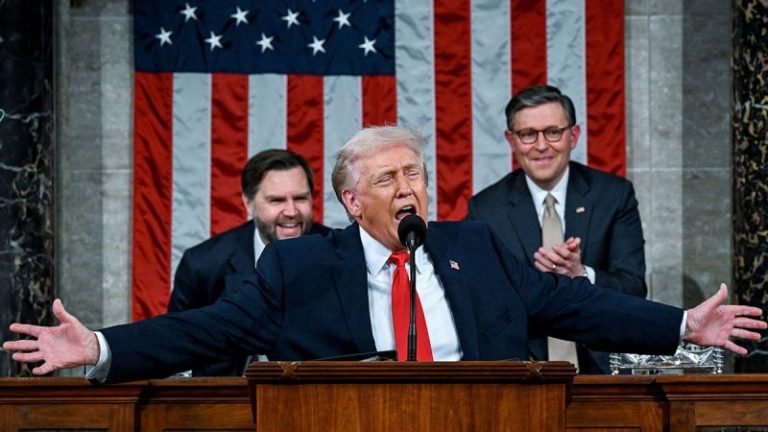
Iran lashed out after President Donald Trump put the regime on notice in his State of the Union address, delivering a forceful warning about Tehran’s ambitions while world leaders largely stayed silent in the immediate aftermath of the speech.

Speaking amid the largest deployment of U.S. aircraft and warships to the Middle East since the 2003 Iraq War buildup, Trump said he wanted to resolve tensions with Iran through diplomacy while accusing Tehran of expanding its missile capabilities.

‘They’ve already developed missiles that can threaten Europe and our bases overseas,’ he said. ‘And they’re working to build missiles that will soon reach the United States of America.’

‘My preference is to solve this problem through diplomacy,’ Trump added. ‘They want to make a deal. But we haven’t heard those secret words: we will never have a nuclear weapon.’

‘But one thing is certain, I will never allow the world’s number one sponsor of terror… to have a nuclear weapon. Can’t let that happen.’

Trump argued that previous U.S. action, including the ‘Operation Midnight Hammer’ strike in June, had severely degraded Iran’s capabilities but warned the threat had not disappeared.

‘We wiped it out and they want to start all over again and are at this moment again pursuing their sinister ambitions,’ he said.

Tehran sharply rejected Trump’s claims about its missile and nuclear programs. According to The Associated Press, Iranian officials characterized U.S. statements as propaganda while stopping short of closing the door on diplomacy ahead of the Geneva talks.

The Times of India reported that Iranian officials warned that any U.S. military strike, even a ‘limited’ one, would be treated as aggression and met with a decisive response.

The exchange underscored the widening gap between public rhetoric and ongoing diplomatic efforts as Washington and Tehran prepared for another round of nuclear talks in Geneva.

Trump also linked his foreign policy agenda to broader regional security efforts, pointing to recent operations in the Western Hemisphere and the U.S. campaign against drug cartels.

‘We’re also restoring American security and dominance in the Western Hemisphere, acting to secure our national interests and defend our country from violence, drugs, terrorism, and foreign interference,’ he said. ‘Large swaths of territory in our region, including large parts of Mexico… have been controlled by murderous drug cartels. That’s why I designated these cartels as foreign terrorist organizations… We’ve also taken down one of the most sinister cartel kingpins of all. You saw that yesterday,’ he said, referring to the operation that killed Mexican drug lord El Mencho.

European coverage portrayed the speech as assertive and confrontational, with analysts watching closely for implications for NATO coordination, Ukraine policy and trade relations. Reporting emphasized Trump’s linkage between diplomacy and military readiness, as well as the administration’s broader posture toward alliances and deterrence.

‘NATO countries… have just agreed, at my very strong request, to pay 5% of GDP for military defense rather than the 2%,’ Trump said during the address, presenting the move as evidence of shifting burden-sharing within the alliance.

Across global media, one theme emerged clearly: the address appeared primarily geared toward domestic political messaging while still carrying international signaling effects.

Trump repeatedly tied American military power to deterrence, telling lawmakers the United States would ‘never hesitate to confront threats to America wherever we must,’ while emphasizing a broader strategy of ‘peace through strength,’ according to Reuters coverage of the speech.

Foreign policy analysts cited in international reporting described the address as reinforcing a transactional approach to global security, with diplomacy presented as conditional and backed by force.

For Tehran, the message was unmistakable. Trump framed the nuclear issue as non-negotiable in outcome, as the next round of negotiations is set to start in Geneva on Thursday.

The Associated Press and Reuters contributed to this report.
Related Article

Iran’s top diplomat says nation’s power lies in defying pressure: ‘No to the great powers’
This post appeared first on FOX NEWS

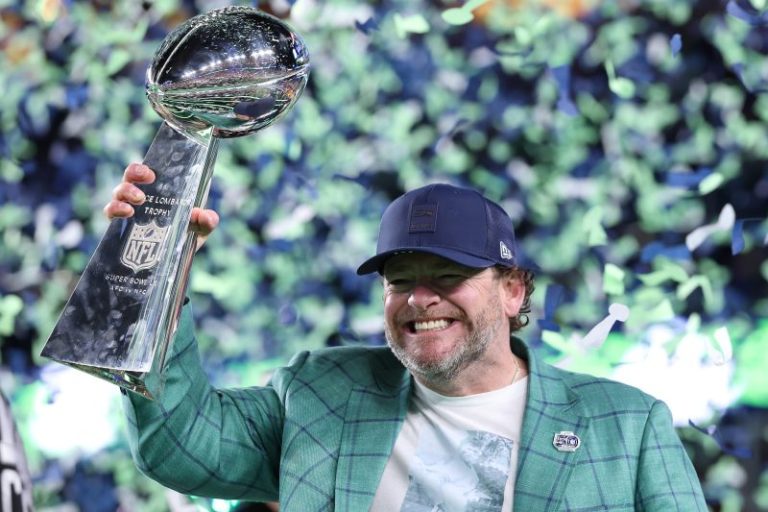
INDIANAPOLIS – A Super Bowl parade is one thing, but there’s also some type of victory lap to be had at the NFL scouting combine for guys like John Schneider.

A little more than two weeks since winning Super Bowl 60, the Seattle Seahawks general manager can bask in the glory showered by colleagues across the league who can truly appreciate the achievement that they are all hell-bent on grasping. But barely bask.

“People come up and say ‘congrats’ and that type of stuff. That’s cool,” Schneider told USA TODAY Sports on Feb. 24.

Then there’s his next thought, knowing exactly what the purpose of the combine is in the grand scheme of ramping up for another season.

“Instant reset,” Schneider added. “It’s like a reset. Like every year. Like how do we get ready for what’s coming? That’s the way I view it.”

Since the convincing beatdown of the New England Patriots, Schneider said he had all of one day off – on Feb. 22, when he spent the day with his wife, Traci, before traveling to the site of the NFL’s annual hub of activity to break down another crop of draft prospects and ramp up for the start of free agency, which officially opens on March 11.

“The week after the Super Bowl, we were in draft meetings,” Schneider said. “And I wanted to take a picture and send it to my family, like, ‘What a difference a week makes. Last week we were in beautiful, sunny California, and now here we are in the draft room.’ ”

In one sense, catching up is a good problem for Schneider to have about now – and one that 31 other NFL GMs wouldn’t mind because they’ve won the ultimate prize. Sure, the offseason is “shorter,” but Schneider is quick to point to the work from his supporting staff that, Super Bowl or not, has set the table for what’s ahead in the coming weeks. He ripped off some of the names – Nolan Teasley (assistant GM), Matt Berry (VP of player acquisition), Trent Kirchner (VP of player personnel) and Aaron Hineline (college scouting director) – and hailed the work of the scouting staff.

“Everybody’s been just killing it,” Schneider said. “Those guys have crushed the meetings. They’ve been doing a great job. Now it’s about me catching up.”

He paused, then added, “Catching up with the private study time.”

Schneider clears air on Seahawks-Kenneth Walker II negotiations

Of course, you could make the case that Schneider, who also built the team that won the franchise’s first Super Bowl crown in 2014, did have another “off-day” when he celebrated during the victory parade in Seattle the Wednesday after the Super Bowl.

That’s when Schneider made headlines as he addressed the status of Super Bowl MVP Kenneth Walker III, the running back poised to hit the free agent market after playing out his rookie contract.

“He tried negotiating with me five minutes ago,”  Schneider told the cheering crowd at the celebration. “It was really weird.

“Anyway, hey, M-V-P! M-V-P!”

Turns out, Schneider was joking about the “negotiation” and the joke fell flat.

Walker and his new agent, David Canter, quickly dispelled the narrative. Walker went to Instagram and posted: “Must’ve been da liquor he drinking cuz I never said dat s—.”

The MVP added emphasis by completing his IG post with laughing emojis.

Asked about it during his Feb. 24 podium session with the media, Schneider also walked back his joke and denied that they talked contract on the day of the parade.

“You know, I kind of lost it,” Schneider said from the podium. “I got nervous talking in front of those people that day.”

In any event, Schneider doesn’t hesitate to set the record straight. He’s hopeful that the Seahawks can strike a deal that keeps Walker in the fold.

“We’d love to keep him,” Schneider told USA TODAY Sports. “That’s what this week is about. Trying to figure out the landscape. I was just so happy for him.”

Schneider recalled his exchange with Walker during the final minutes of the 29-13 victory, to which Walker contributed 135 rushing yards and 26 receiving yards.

“I came down right toward the end of the game and he was looking up at the scoreboard,” Schneider remembered. “I went up to him; I was like, ‘You’re going to be the Super Bowl MVP, man.’

“He’s like, ‘Do you really think so?’

“Like, ‘Yeah. I think that’s happening, dude.’ ”

Walker is the first running back named Super Bowl MVP since Terrell Davis in 1998.

Now Schneider is pressed to keep Walker, who teamed with Zach Charbonnet for a 1-2 punch throughout the season, then carried the load in the playoffs after Charbonnet went down with a season-ending injury.

It could get sticky, given a market that is typically tight for running backs. Walker, 25, could be looking at the best negotiating position of his career.

I asked Schneider to summarize his pitch to Walker.

“Obviously, we want to run it back,” he said. “We want as many people back as we possibly can.”

Schneider hopes to make up some ground on that front this week.

“So, no, we’re not far along with him yet,” Schneider said, alluding to looming talks with Canter. “That’s literally this week.”

And that’s only one of the challenges. Rashid Shaheed, the star receiver/returner, is also set to hit the market. Ditto for edge rusher Boye Mafe, and cornerbacks Riq Woolen and Josh Jobe.

These are the problems of champions. Raises are due.

Which is another way of saying that next year is almost here for Schneider and the Seahawks.

Contact Bell at jbell@usatoday.com or follow on X: @JarrettBell

This post appeared first on USA TODAY

After losing at South Carolina on Sunday to finish a grueling stretch where Ole Miss lost three of four games in a seven-day span, Coach Yolette McPhee-McCuin hoped her team wouldn’t get penalized by pollsters and bracketologists.

“I hadn’t seen any other team get punished after losing to South Carolina, so hopefully we don’t, and that’s for who needs to hear it, you know? … So if we move, I’m going to be shocked,” McPhee-McCuin said. “Obviously, the next two games are very important to us. I don’t think we can afford to drop those.”

While Coach Yo made a compelling case for the Rebels to project as a top 16 seed in the NCAA Tournament, the numbers simply disagree with her.

In USA Today Sports’ latest bracketology, Ole Miss is projected to be the 19th overall seed, firmly on the five-line.

Now, Coach Yo is right in one regard: The Rebels’ next two games are important. They can’t afford to lose to teams like Florida and Texas A&M who are not projected to be in the field of 68. And despite her complaints about the SEC Tournament, Ole Miss likely needs to win a game or two in Greenville, South Carolina, next week to bolster their chances of securing a top 16 seed for the first time since 1992.

“I do believe that we can make a run in March,” McPhee-McCuin said. “I’m not gonna let my team sit around and sulk. … You know, anybody who counts us out can’t count.”

Here’s USA Today Sports’ projection of the entire field of the NCAA Women’s Tournament as of Wednesday, Feb. 25:

Fort Worth 1

Storrs, Connecticut

1 UConn
16 Farleigh Dickinson / Howard
8 Oregon
9 Illinois

East Lansing, Michigan

5 Ole Miss
12 Gonzaga
4 Michigan State
13 Miami Ohio

Louisville, Kentucky

6 Texas Tech
11 Syracuse / Mississippi State
3 Louisville
14 Green Bay

Iowa City, Iowa

7 Tennessee
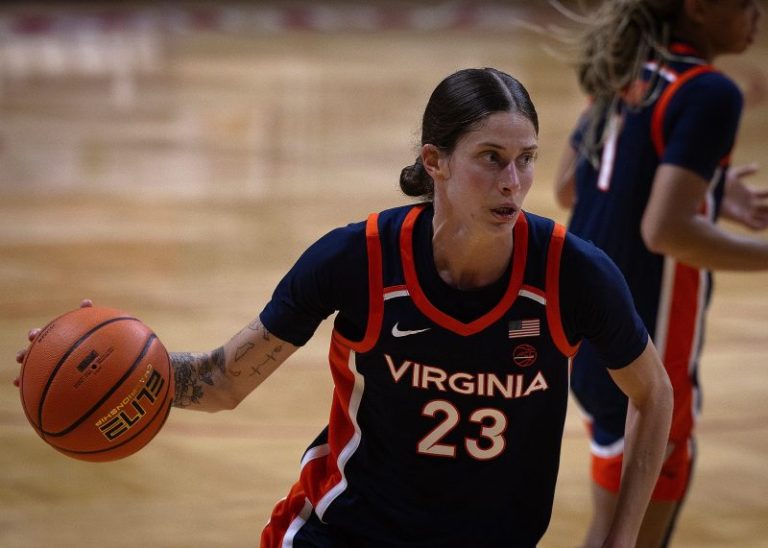
10 Virginia
2 Iowa
15 Idaho

Sacramento 2

Los Angeles, California

1 UCLA
16 Cal Baptist
8 Iowa State
9 Princeton

Lexington, Kentucky

5 Minnesota
12 Troy
4 Kentucky
13 Louisiana Tech

Durham, North Carolina

6 Baylor
11 Columbia
3 Duke
14 Vermont

Nashville, Tennessee

7 NC State
10 Fairfield
2 Vanderbilt
15 High Point

Fort Worth 3

Columbia, South Carolina

1 South Carolina
16 Alabama A&M / Chattanooga
8 Washington
9 Villanova

College Park, Maryland

5 West Virginia
12 Richmond / Virginia Tech
4 Maryland
13 UC Irvine

Norman, Oklahoma

6 USC
11 Rhode Island
3 Oklahoma
14 Western Illinois

Ann Arbor, Michigan

7 Georgia
10 Clemson
2 Michigan
15 Navy

Sacramento 4

Austin, Texas

1 Texas
16 Eastern Kentucky
8 Nebraska
9 Oklahoma State

Columbus, Ohio

5 North Carolina
12 San Diego State
4 Ohio State
13 Murray State

Fort Worth, Texas

6 Alabama
11 Rice
3 TCU
14 McNeese

Baton Rouge, Louisiana

7 Notre Dame
10 North Dakota State
2 LSU
15 Charleston

Bubble Watch

Last Four Byes: Villanova, Princeton, Virginia, Clemson
Last Four In: Syracuse, Mississippi State, Virginia Tech, Richmond
First Four Out: Colorado, Arizona State, South Dakota State, Stanford
Next Four Out: Utah, Kansas, Cal, James Madison

Clemson and Virginia each of them notched signature Quad 1 wins on Sunday. The Cavaliers went into Louisville and hung on to a two-point victory thanks to Romi Levy’s 3-pointer with 13 seconds left. Hannah Kohn sank a 3-pointer with three seconds left to give Clemson the edge over Duke, snapping the Blue Devils’ 17-game win streak.

Virginia now has two Quad 1 wins and Clemson has three. In Shawn Poppie’s second season with the Tigers, they’ve reached double-digit wins in ACC play for the first time since the 2000-01 season. That’s also the last time the Tigers defeated both NC State and Duke in the same season.

There are a few other bubble teams who could use marquee wins, but the opportunities are waning. Arizona State has a chance to get one on Sunday when it travels to Texas Tech. That would go down as the Sun Devils’ first Quad 1 victory of the season.

Both Arizona State and Colorado will likely need multiple victories in the Big 12 Tournament to improve their resumes.

This post appeared first on USA TODAY

MESA, AZ —They screamed and high-fived, they ran around, and then the chants began:

“USA-USA-USA.’

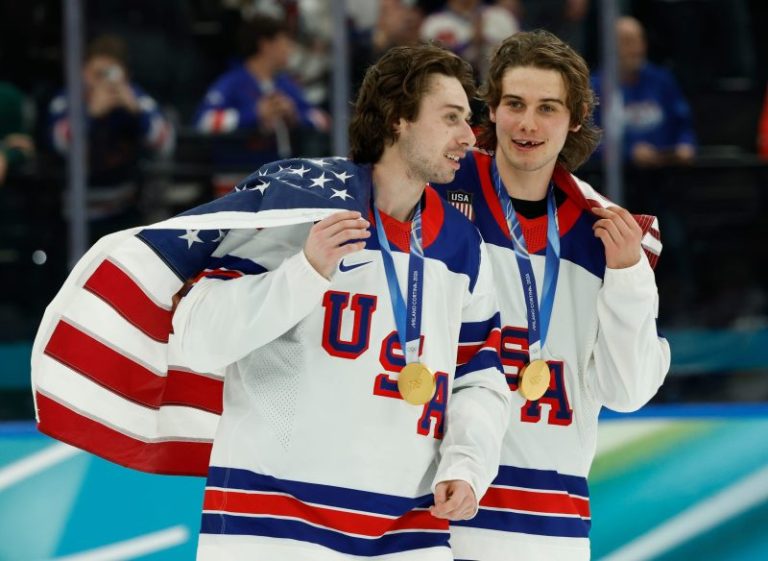
This was the scene in the Chicago Cubs and San Francisco Giants’ clubhouses along with plenty of others throughout spring training Sunday morning, the moment Jack Hughes scored the winning overtime goal to beat Canada for USA’s first men’s hockey gold medal since 1980 – two days after the women’s gold medal victory over Canada.

“I mean, we were all in here just going crazy, jumping up and down when Hughes scored,’ Cubs All-Star third baseman Alex Bregman told USA TODAY Sports. “I mean, if that doesn’t fire you up to play for your country, I don’t know what does.’’

New York Mets pitcher Nolan McLean, who will pitch for Team USA in the World Baseball Classic, echoed Bregman’s sentiments talking to reporters in Port St. Lucie, Florida: “Just watching the hockey game, how hard these guys [competed] for their country, I think that is something that’s firing me up even more than I already was.’

Says Cubs center fielder Pete Crow-Armstrong, who also is playing for Team USA in the WBC: “Man, we were all in here geeking. It’s so cool. And now we get a chance to go for the gold, too.’

Two years from now, Major League Baseball hopes to replicate the same emotional scene in the 2028 Summer Olympics in Los Angeles. They are expecting to allow their big-league players to participate in the Olympics for the first time in history.

“I think people have come to appreciate that the Olympics on U.S. soil is a unique marketing opportunity for the game,” commissioner Rob Manfred said earlier in February. “I think we’ve got a lot of players interested in doing it and I feel pretty good about the idea that we’ll get there.”

Celebrate USA Hockey gold d with commemorative book

Will MLB players play in 2028 Olympics?

The MLB proposal with LA28 organizers still must be approved by the Major League Baseball Players’ Association, but the tentative plan is an extended All-Star breaks, permitting the major-league players to play in the Olympics at Dodger Stadium. MLB still would have an All-Star Game around its normal date, which likely would be played in San Diego, San Francisco or Las Vegas. The selected players could then proceed to play in the six-day, six-team Olympics tournament from July 13-19.

It’s also why the WBC, which begins March 5, has greater significance since the top two teams – besides the USA – would automatically qualify to be among in the Olympics. USA gets an automatic berth since it’s the host country.

“I think everyone is super fired up for the Olympics after watching the hockey game,’ Cubs infielder/outfielder Matt Shaw said. “We had like 60 guys in here watching and yelling. It was such a cool thing. I mean, if there was ever such an opportunity to play in the Olympics, it would be so awesome.

“Right now, the WBC is our Olympics. I love watching that as much as the World Seires. But to actually play in the Olympics, wow.’

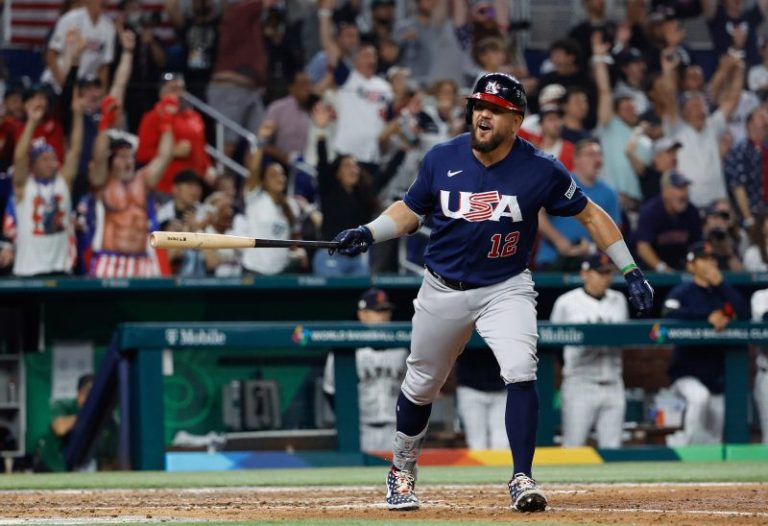
MVPs and All-Stars from Philadelphia Phillies first baseman Bryce Harper to Los Angeles Dodgers shortstop Mookie Betts and Phillies DH Kyle Schwarber have been advocating for years for the opportunity to play in the Olympics. Now, after negotiations with the LA28 organizers, all that remains is the union signing off to finalize their childhood dreams.

“Representing your country,’ Harper told reporters in Florida, “there’s nothing better. The feeling of putting ‘USA’ on your chest and playing for something so much bigger than yourself, representing your whole country, there’s nothing greater.’’

Says Betts: “Absolutely, absolutely I want to play in the Olympics. It would be an unbelievable honor.’

Harper and other players on Team USA in the WBC were emotional talking about USA hockey’s gold medal victory, calling it inspirational for their bid to win the gold again after losing to Japan in the 2023 title game.

“This is our time to represent our country,” Schwarber told reporters after USA’s gold medal victory. “It gives you that motivation, you know. Being that we’re going to be heading into that and knowing what to expect. Obviously, we’re not Olympians. But it’s our mini-Olympics.’’

The Americans’ hockey gold medal games actually reinforced Dodgers manager Dave Roberts’ desire to become USA’s Olympic coach.

Roberts, the son of a U.S. Marines Sergeant, certainly is the natural choice with the USA games at Dodger Stadum where he has led the Dodgers to three World Series championships. Roberts, who also graduated from UCLA, has international experience, too, representing the United States at the 1999 Pan American Games. The tournament helped qualify the USA team for the 2000 Sydney Olympics, where USA won the gold medal with Dodgers Hall of Fame manager Tommy Lasorda.

“We talk about doing things bigger than yourselves,’ Roberts said, “and then being part of something for your country and watching the U.S. hockey team. That was fun for both men and women. So, if I do have that opportunity, that would be something I’d be very excited about and very humbled.

“It’s hard to imagine a bigger honor.’

Olympics bigger than the WBC?

While players relish playing in the WBC, they didn’t grow up watching the WBC. It only came into existence in 2006.

But virtually everyone grew up watching the Olympics at some juncture of their lives.

“I mean, I love the Olympics,’ said Cubs starter Matthew Boyd, who will be playing for the first time in the WBC. “I love hockey. Growing up, USA could never beat Canada. They just had such a lineup of dudes. Canada was so superior in the sport. You were always fired up USA vs. Canada.

“So, I mean it’s very cool that we can go represent our country right after that. It really fires me up. That’s so exciting for us.’

Schwarber, who will be playing in his second WBC, says the Olympic experience would take it to a whole different level.

“We all grew up watching the Olympics, and being kids, just tuning into all different kinds of events,’ Schwarber said. “Back in the day, the TV dinners, go get the pull-out tray, throw it on the couch, all the family sitting down at night.

“We’re watching the Olympics. We’re watching the gymnasts, the swimming, the diving. Those were all big ones. I loved watching the sprinters run.

“It’d just be great for our game in general. Everyone would see it, and it might reach a broader audience than just some countries that are really in tune to it.”

This will be the third time that Los Angeles is hosting the Summer Olympics, last in 1984. The Americans finished runner-up in the baseball demonstration tournament, losing to Japan in the championship game.

That collegiate team featured future stars like Hall of Famer Barry Larkin, home run champion Mark McGwire, and All-Stars Will Clark and Bobby Witt. There were 13 players drafted in the first round of the 1985 draft that year.

Now, more than 40 years later, Witt’s son, Bobby Witt Jr., could be playing in the Olympics, too. He’ll be a primary shortstop on the American’s WBC team this year.

“It’s so cool representing your country,’ Witt Jr. said, “and you’re coming together as one. What’s better than that?’

When Ohtani and Dodgers starter Yosihinobu Yamamoto were asked this spring which meant more to them, winning the World Series for the Dodgers or winning a gold medal for Japan, they said it was impossible to choose.

“That would be so cool, playing for your country,’ Dodgers teammate Blake Snell said. “That’s the ultimate, playing for your country. It would be way bigger than the WBC.’

Perhaps Dodgers reliever Jack Dreyer best summed up the feelings by every player dreaming one day to be selected for that 2028 Olympic team.

“It would be incredible to be an Olympian,’’ Dreyer said. “I think the only thing more special than playing in the big leagues would be to represent your country. The World Baseball Classic is great, but the Olympics is just unreal.

“Can you imagine?’’

Follow Nightengale on X: @Bnightengale

This post appeared first on USA TODAY

When an American team wins a championship or gold medal during the Olympic games, they are often invited to visit the White House in Washington, D.C.

The tradition continued after the U.S. men’s and women’s hockey teams both defeated Canada to bring the gold back to the USA, President Donald Trump inviting both teams to the Oval Office and his State of the Union address.

The men’s team took Trump up on his offer, which came over the phone after the gold medal win. The U.S. women’s team, however, declined the invitation due to ‘timing and previously scheduled academic and professional commitments.’ A team spokesperson said the team was honored to be invited.

All but five players on the men’s team toured the White House, the 20 players who did go to D.C. also expected to attend the State of the Union.

Celebrate Olympic hockey gold medals with our new book

See what Trump said about the U.S. men’s hockey team at the 2026 State of the Union address:

President Trump remarks about U.S. men’s hockey team at State of the Union

After talking about how much ‘winning’ the United States has been doing, Trump introduced the U.S. men’s hockey team, which entered to chants of ‘USA!’

Trump, referring to the Democrats in the room, remarked of the ovation: ‘That’s the first time I’ve ever seen them get up.’

‘And actually, not all of them did get up,’ Trump added.

He went on to say the USA men ‘beat a fantastic Canadian team in overtime, as we all saw. As did the American women, who will soon be coming to the White House.’

The women’s team had declined attending Tuesday’s events due to ‘timing and previously scheduled academic and professional commitments.’

‘I’ve never seen a goaltender play as well as goalie Connor Hellebuyck,’ Trump went on to say. Trump said he will be presenting Hellebuyck, who made over 40 saves in the championship game, with the Presidential Medal of Freedom, the United States’ highest civilian honor.

‘What a special job you did. What special champions you are. Thank you very much,’ Trump concluded.

Trump call with USA men’s hockey team

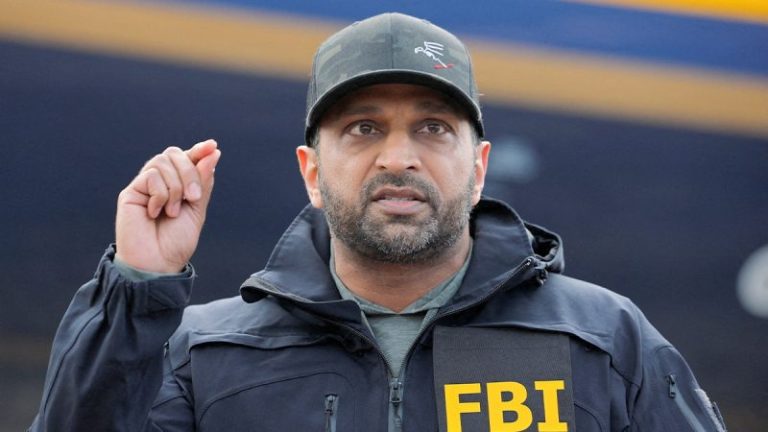
Trump invited the men’s team on a phone call with FBI director Kash Patel, who celebrated the Olympic championship with players and coaches in the locker room, after it defeated Canada in the gold medal game.

‘What would really be cool, and we’ll do the White House next time, we’ll just have some fun, we have medals for you guys,’ Trump said on the call. ‘And we have to, I must tell you, we’re gonna have to bring the women’s team, you do know that?”

He added: ‘I do believe I probably would be impeached’ if the women’s team wasn’t invited.

Some of the team had a chuckle about the remark, which upset supporters of the women’s team.

‘People are so negative about things. I think everyone in that locker room knows how much we support them, how proud we are of them, and we know the same way we feel about them, they feel about us,’ overtime scorer Jack Hughes said about the comments and the men’s team’s reaction.

This post appeared first on USA TODAY

The one-year anniversary of FBI Director Kash Patel’s term has arrived. As a badge of honor, Patel is under constant attack by partisan Democrats and other conspiracy theorists – including even some whackjobs on the right. Contrary to these smears, Patel has boldly and decisively led back the FBI to where it should be: the premier law enforcement agency in the world.

Patel, after many long days of work to ensure our American athletes and dignitaries remained safe at the Olympic Games in Italy, got invited into the locker room of the men’s U.S. hockey team after their gold medal triumph over Canada. Because this was the first gold for the American men since the Miracle on Ice team in 1980, this became a significant moment. Patel, justifiably, allowed himself to enjoy the historic moment of American patriotism and pride. The athletes clearly enjoyed the presence of a senior U.S. official (and fellow hockey player), which became even more significant when Patel called President Trump to praise the gold medal-winning U.S. team.

Democrats, who are quicker to defend a sitting Democrat U.S. senator splitting margaritas with an alleged human-trafficking and wife-beating illegal immigrant than a senior U.S. government official celebrating a U.S. gold medal with American Olympians, predictably attacked Patel for his appearance in the postgame locker room. To anyone with a pulse, it’s obvious too many of today’sDemocrats are nothing more than dreadful, anti-American Marxists losers. It’s hard to imagine anything lower than knocking a senior U.S. official for celebrating an iconic U.S. victory at the Olympics.

In response to the Patel (and America) haters, this is a good time to educate America about Trump FBI Director Kash Patel’s unprecedented success in his first year.

On Sept. 10, 2025, a degenerate assassinated Charlie Kirk. Thousands of Americans attended the event on the Utah campus. The FBI, under Patel’s leadership, took command. Within two days, law enforcement took into custody 22-year-old Tyler Robinson. His father turned Robinson in after the Patel FBI broadcast images, cultivated from many sources of video surveillance, to the public. Robinson now awaits the swift justice he richly deserves. Despite the ravings of online conspiracy instigators, there are almost no unanswered questions in the Kirk case, thanks to Patel’s quick and decisive leadership.

Venezuelan dictator Nicolas Maduro became a primary culprit in the mass-importation of illicit drugs into the United States. Last month, the Patel FBI — with the assistance of military special forces—arrested Maduro and his wife at their fortress in Caracas. U.S. forces quickly scooped up the Maduros and took them out of Venezuela with no American casualties. They now sit in a Brooklyn jail. They faced a 2020 federal indictment but remained free for the entirety of the Biden administration. This operation adds to Patel’s record of over 2,100 kilos of fentanyl seized (up 31%), enough to kill 150 million Americans, and the disruption of 1,800 gangs and criminal enterprises, a 210% increase year over year.

The FBI’s Ten Most Wanted list represents the worst of the worst in terms of fugitives. Murderers, pedophiles, drug kingpins, and terrorists make up most of its occupants. Under Patel’s leadership, six of the Ten Most Wanted are now captured, collectively on the run for over 50 years, which exceeds in one year all such captures during the Biden administration (four in four years). Drug traffickers like Ryan Wedding, a former Canadian Olympian who made the list, garner a lot of media attention when captured, but other barbarians are off the streets thanks to Patel’s leadership.

Just last month, Alejandro Rosales Castillo’s turn came to face justice. This coward hid in Mexico for nearly a decade after murdering a 23-year-old co-worker in Charlotte, North Carolina. Cindy Rodriguez Singh, another monster, met the same fate. Singh allegedly murdered her 5-year-old child and fled to India. Thanks to Patel’s FBI, she got captured in New Delhi less than two months after her addition to the list. Overall, arrests under Patel’s FBI are up 197% year-to-year, and over 6,000 child victims have been located, a 22% increase year over year. Dedicated ‘crimes against children’ operations like Restore Justice, Enduring Justice, and Relentless Justice resulted in 730 arrests and over 450 victims identified.

For years, the domestic terrorists who comprise Antifa have wreaked havoc on American cities. On July 4, 2025, two dozen of them allegedly attacked the Prairieland Detention Center, an ICE holding facility in Alvarado, Texas. The domestic terrorists allegedly fired upon ICE agents, and a responding police officer almost lost his life after one terrorist allegedly shot him in the neck.

It is crucial to remember into what the FBI had degenerated during the Biden administration. The Biden DOJ wasted massive FBI resources for years hunting down every individual who had taken a selfie in the Capitol on Jan. 6, 2021, even if the individuals had not acted violently. Other FBI resources went toward investigating parents at school board meetings and mass-attending Catholics out of supposed concerns the parents and devout Catholics became domestic terrorists.

Biden Special Counsel Jack Smith spent over $50 million in an ultimately unsuccessful effort to imprison President Trump. Prosecutors use law enforcement to conduct investigations, and Smith had the FBI at his disposal. Even before Smith’s arrival in November 2022, the FBI had raided President Trump’s home at Mar-a-Lago under orders from Biden Attorney General Merrick Garland.

No longer is the FBI wasting its resources. Under Patel’s leadership, agents are not targeting pro-life Christians; they are capturing foreign drug kingpins and narco-terrorist leaders. Agents are not investigating parents at school board meetings; they are bringing to justice parents who murdered their children. Agents are not wasting years on January 6; they are spending time bringing violent Antifa domestic terrorists to justice and capturing assassins like Tyler Robinson in short order. Agents are not participating in Jack Smith’s witch hunt; they are investigating the perpetrators of the unprecedented, republic-ending Obama and Biden lawfare.

Special operations and surge initiatives, like Summer Heat, have resulted in nearly 9,000 arrests in just three months, while over 450 human traffickers have been identified (up 23% year over year), and espionage arrests are up 35% year over year. Patel has led a rapid turnaround of the FBI from a decaying and weaponized agency back to the one that, growing up, Americans respected. For that, Patel deserves immense credit.

Related Article

FBI investigating ‘a lot more’ than 20 people in Discord chats with suspected Charlie Kirk assassin
This post appeared first on FOX NEWS

It might be more difficult than ever to identify a true NFL draft sleeper prospect.

There aren’t any true unknowns among the 319 prospects invited to the NFL Scouting Combine in Indianapolis this week. Meanwhile, many players who might have been small-school darlings in years past have gravitated toward higher payouts and brighter spotlights in the NIL era.

Between the proliferation of pre-draft information and changing college enrollment dynamics, that’s left the notion of a sleeper somewhat hard to define in 2026. A player who might seem to satisfy the criteria for one person might seem like an established entity to another.

With all that said, here are eight less-heralded players who could stand out at the combine:

RB Robert Henry Jr., Texas-San Antonio

In a fairly lackluster running back class – at least beyond Notre Dame’s Jeremiyah Love – teams might be best served to pursue players with a distinct calling card rather than trying to find a true lead ball carrier. Henry has a few strengths in his elastic running style and rapid acceleration, which he utilized to average 6.9 yards per carry last season. He should be a Day 3 draw for teams looking to add a bit of juice to their backfield without investing significant resources. Though he still has to exhibit more patience as a runner, the key to aiding his stock while he’s in Indianapolis might be demonstrating more capabilities as a potential third-down weapon, as he logged just 18 carries for 114 yards last season.

WR Ted Hurst, Georgia State

The word might already be out on Hurst, a 1,000-yard receiver for the Panthers who also built a considerable buzz at the Senior Bowl. At 6-foot-3 and 207 pounds with plenty of build-up speed, he’s exactly the kind of deep threat teams seek to diversify their passing attacks and stress defenses. It will still bear watching just how he sizes up against a deep class of receivers, with many of them having faced a higher level of competition. Hurst still has work to do to fully leverage his advantages on downfield contested catches, but it seems likely that his pre-draft ascent will only continue at the combine.

WR Eric McAlister, TCU

The Horned Frogs have had a stellar run of speedy receivers in recent years, and McAlister has kept that lineage alive and well. The 6-3, 193-pound Boise State transfer is entirely at home working vertically and racing past cornerbacks to haul in big gains. Most other components of his game are still a work in progress, which leaves him a good bit behind some of the other speedy threats in this year’s group of pass catchers. Yet after this week, several NFL coaching staffs might be eager to be the ones tasked with helping polish his approach.

WR Malik Benson, Oregon

Noticing a theme here? Game-breaking speed is a major selling point for receivers outside of the first-round mix, and few have a higher ceiling in that area than Benson. The former junior college standout has had a somewhat nomadic and unfulfilled college career that included stops at Alabama and Florida State, but he showed off his potential with the Ducks by averaging 16.7 yards per catch and reeling off a handful of long scores. Like many former track standouts, the 5-11, 185-pound target poses some weighty questions on whether he can become a more complete receiver or whether he’ll need to have touches schemed for him to compensate for shortcomings in his route-running. But he’s a legitimate threat to challenge other speed merchants in Mississippi State’s Brenen Thompson and LSU’s Barion Brown and Chris Hilton Jr. for the combine’s fastest 40-yard dash time.

TE John Michael Gyllenborg, Wyoming

He’s got a name of an ’80s action movie star, as well the athleticism of one. The 6-5, 251-pounder has all the requisite traits to be a serious seam threat at the next level. It’s up to him to make good on them, however, as he never put together the kind of breakout season one would have hoped to see coming of a player who faced a lower level of competition, with just 24 catches for 217 yards and one touchdown as a senior. He’ll need to serve up a reminder of his upside at the combine or risk getting lost in a fairly muddled picture at tight end.

DT Kaleb Proctor, Southeastern Louisiana

In terms of pure disruptiveness from the interior, Proctor gets at it with the best of them. He notched nine sacks last season, an output that doesn’t capture just how problematic he was for opposing offenses. And at the East-West Shrine Bowl, he hardly looked out of place against more highly touted foes. The 6-1, 275-pounder will only be a fit for teams are willing to sacrifice a bit of strength for playmaking ability. In the right scheme, however, he could continue continue to regularly make himself at home in opponents’ backfields, even if only in a part-time role to begin.

DE/OLB Nadame Tucker, Western Michigan

Any pass rusher who ties with Texas Tech’s David Bailey, a potential top-five pick, for the Football Bowl Subdivision lead in sacks (14½) is clearly doing something right. Tucker isn’t a household name, but he combines plenty of burst and knowhow to consistently get in the face of quarterbacks. Measuring in under 6-2 and 246 pounds at the Senior Bowl, he might be reduced to a designated pass rusher in the early going, serving in a Josh Uche-lite role to shield him from being engulfed by bigger blockers in the run game. As a late-round flier, though, he’s an intriguing option for any defensive staff willing to get a little creative with his usage.

OLB Jaishawn Barham, Michigan

After a stellar start to his career at Maryland, Barham still seems to be defined by the notion of some unrealized potential. He’ll work out at the combine with the edge rushers, and it’s easy to see why teams might be drawn toward utilizing the 6-3, 243-pounder in that role. Not only is he explosive and fluid when pursuing the quarterback, he also matches those traits with his forcefulness at the point of attack. Don’t be surprised if he ends up with one of the more impressive testing profiles of the defensive prospects.

This post appeared first on USA TODAY

First, the particulars, because three years later, it still makes no sense. 

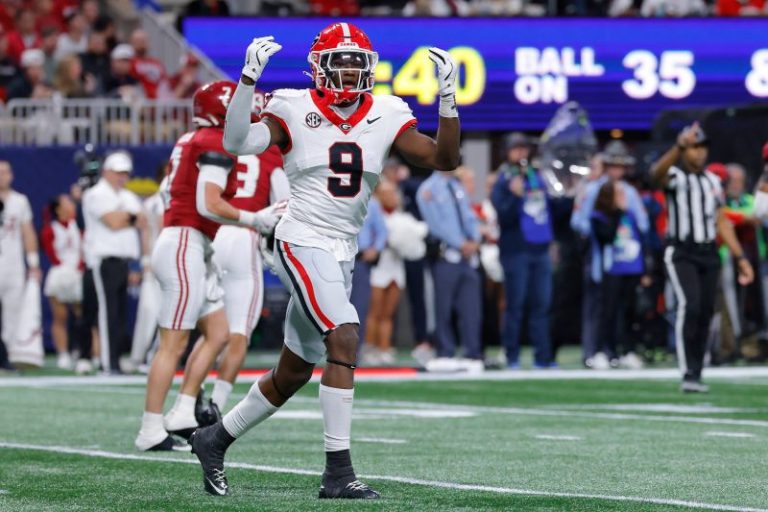
A Georgia football player died in January 2023 while a car he was riding in was racing other Georgia football players. More than 20 Georgia players have since been cited or arrested for speeding and/or reckless driving — including two last week.

But before we jump on Georgia coach Kirby Smart about discipline and direction and leading young men, maybe it’s time we go to the source: players. 

Maybe it’s time we take a detailed look at what we’re doing in the NIL world, and how young men flush with cash now feel bulletproof.

Wasn’t that long ago when the cycle of pandering and prostitution of athletes included cutting corners, skipping classes and answers to tests. All before they even reached high school.

From there it was academic fraud — including ACT and SAT college entrance exam fraud — and shady middlemen who brokered financial deals with colleges under the table.   

A car here, a bag of cash there. A house for Mom, and a job for Dad. All part of the game. 

Until much of the seen and unseen of this dirty dalliance no one wanted to admit was revealed with the advent of the NIL era. At least, the machinations of it all. 

Because one thing still stands clear: There were no rules in the shadows then, there are no rules in the sunlight now.   

We’ve gone from pushing players through school despite them not knowing the work — in some cases, not being able to read — to throwing millions of dollars at them before they step on a college campus.

Just to be clear: The enabling sins of the past haven’t ended. They’ve been — if you can believe this utter nonsense — reinforced with foundational money and free player movement that has soiled the entire college experience. 

Higher education is as much about academics as it is proving you can live on your own with individual responsibilities (and vices), and figuring a way to grow and prosper as a human — much less an athlete.

Now throw millions of dollars into that equation. Then add the built-in excuses and reset of free player movement.

No wonder players feel bulletproof. No wonder the greatest concern for NFL scouts now isn’t playing ability, but life skills and maturity.

How else can you explain Georgia players — after Devin Willock’s tragic death while riding in a car racing other teammates at speeds in excess of 100 mph — doing the same thing? Over and over and over. 

How else do you explain Georgia linebacker Chris Cole, one of the SEC’s top young players with a bright professional future, last week racing teammate Darren Ikinnagbon and driving 105 mph in a 65 mph zone on Outer Loop 10 in Athens, Ga.? 

Or about 2-3 miles from where Willock lost his life.

Smart can suspend players (he’s done that), he can kick them off the team (he’s done that, too). He can talk to players about the inherent danger, or have law enforcement explain the odds of significant injury and bodily harm when racing (yep, check). 

But at the end of the day, this is an individual making a poor decision.

An individual who, in many cases, has been given whatever he wants, whenever he wants, because he’s elite at the sport he plays. 

Make no mistake, players deserve their fair share of the billions in media rights universities earn every year. We’re well down that road, and there’s no going back.

The problem: We’ve taken consequences completely out of the equation.

If it doesn’t work at this school, it’ll work at that one. If this coach doesn’t like me, that coach will give me another chance. 

If I underperformed my NIL deal at this school, that school will still give me cash. 

There’s no pause in the process like there once was, no opportunity of reflection or a life reorg while sitting out a transfer season. It’s one deal to the next until you reach the NFL. 

Or you don’t, and then what have we accomplished ― other than temporary wealth? 

If Smart dismisses Cole or Ikinnagbon, there will be a line of schools waiting to take them, give them cash and further exacerbate the problem.

Three years later, it still makes no sense.  

This post appeared first on USA TODAY

The 2026 Winter Olympics are over, the United States won its first gold medal since 1980 and now Olympians are rejoining their NHL teams for the stretch run.

The league is starting up again on Wednesday, Feb. 25, and NHL games will be played for the first time since Feb. 5. The Detroit Red Wings, Pittsburgh Penguins, New York Islanders, Buffalo Sabres, Boston Bruins, Seattle Kraken, Utah Mammoth and Anaheim Ducks sit in a playoff position after missing the postseason in 2024-25.

The trade deadline is around the corner and the rush to a playoff berth is on before the regular season ends on April 16.

Here’s a look at key questions as the NHL regular season resumes:

Will the trade deadline be busy?

The date is March 6 this year, so teams don’t have a lot of time to work something out.

There was a major trade right before the Olympic freeze when the Rangers moved Artemi Panarin to the Kings. Once the freeze lifted, the Avalanche traded defenseman Samuel Girard to the Penguins for Brett Kulak on Feb. 24.

There’s an opportunity for more trades because there’s a gap between the haves and the have-nots, and top teams have needs. The last-place Canucks, who already moved Quinn Hughes and Kiefer Sherwood, have Evander Kane and Teddy Blueger as pending free agents. The Rangers could move Vincent Trocheck, Flames center Nazem Kadri would be coveted and the Blues could be sellers.

Will the Panthers keep their Stanley Cup hopes alive?

They won the last two Stanley Cup titles, went to the Final the year before that and were Presidents’ Trophy winners in 2021-22. But that string of success suffered a serious blow when captain and Selke Trophy winner Aleksander Barkov needed ACL surgery after being injured on his first day of practice in September.

They’re also missing defensemen Dmitry Kulikov and Seth Jones and sit in last place in the Atlantic Division with 61 points, eight points out of a playoff spot. The good news is Matthew Tkachuk returned before the break and that Jones is skating with a non-contact jersey. Bill Zito is a creative general manager and Paul Maurice a top-notch coach. They have 25 games to make up those points, which is possible if they come out strong after the break. And as they showed the last three years, if they make it into the postseason, they can go far.

Can the Sabres end their playoff drought?

Their 14 years out of the playoffs is an NHL record. It looked like it might reach 15 when they started slowly. But things turned around when they fired general manager Kevyn Adams and promoted Jarmo Kekalainen. They pushed a winning streak to 10 games and now sit in the first wild-card spot in the Eastern Conference. But they lost three out of four heading into the break and will need to remedy that, especially when they will be facing the Lightning and Golden Knights two times each in the next 11 games.

Can the Red Wings end their playoff drought?

They haven’t made the playoffs in nine years and are sitting in third place in the tough Atlantic Division. Other teams have a game or more in hand. But their goaltending is better than in the past because of John Gibson, and they have plenty of cap space to make a move at the deadline.

Can Kings overcome the loss of Kevin Fiala?

Fiala broke his leg while playing for Switzerland at the Olympics, had surgery and will miss the rest of the regular season. The Kings have Panarin now, but his acquisition was designed to boost an offense that had Fiala in the lineup. Fiala leads the Kings with 17 power-play points. Los Angeles is three points out of a playoff spot, so it might need to make another trade.

This post appeared first on USA TODAY

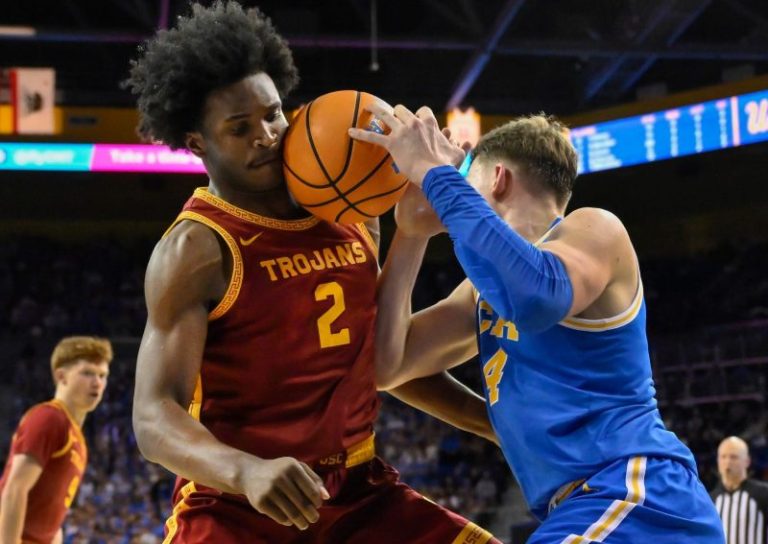
UCLA men’s basketball flat-out outplayed USC in Tuesday night’s 81-62 win. The archrivals met for the first of their two Big Ten clashes on Feb. 24 in what was a crucial game for two teams on the bubble in USA TODAY Sports’ latest Bracketology.

The two have been on opposite trajectories as of late, with the Bruins entering Tuesday fresh off Donovan Dent’s overtime buzzer-beater to beat No. 11 Illinois and secure a much-needed quad 1 win. The Trojans, meanwhile, entered the night in the midst of a three-game losing streak capped off by a stunning 71-70 home loss to Oregon in which they led by six points with 59 seconds to go.

Those trends played continued as UCLA’s physical defense and a 30-point gem from Donovan Dent derailed a Trojans team that couldn’t find much offense from anyone not named Chad Baker-Mazara (25 points, eight rebounds, two assists).

‘They’re a very athletic team, obviously Baker-Mazara is a potent offensive player that can turn your lights out. Proud of the guys that got the job done,’ Bruins head coach Mick Cronin said postgame. ‘This late in the year, guys are just trying to win and stay healthy. … Happy with the win, and nobody got injured. So, onward.’

Here are the winners and losers from the first leg of the USC-UCLA rivalry:

WINNERS

UCLA’s tournament hopes

The Bruins entered the day as one of the last four teams in, and they just got one step closer to March with a big quad 2 win – over their biggest rivals, nonetheless. After the Illinois game on Saturday, Feb. 21, players said they’re feeling like they’re at their highest point as a team right now.

Cronin sees it a little differently.

‘I’m glad they feel that way,’ he said. ‘I would say you’re only as good as your next game. When you win, your team’s going to have a better feeling about those things. Sometimes you can play well and lose, though. We could’ve lost that game, I still thought it was one of the best comebacks we had played. … But we got a little goal here for the end of the year. We got two down, three to go.’

Donovan Dent

Dent followed up his heroics from the Illinois game with another stellar performance. He led all scorers with 30 points, two rebounds and seven assists (which also led the game). He shot 62.5% from the floor and was five-for-six from deep.

‘I’m hoping this groove continues,’ he said. ‘This is the best time to get a groove, honestly. I was struggling early this season, so for me to get in a groove right now I feel like would be huge for our team and huge for myself.’

UCLA’s offensive attack

It wasn’t just Dent who shared the love on Tuesday. The team overall moved the ball especially well, finishing the game with 18 assists, seven more than USC. Trent Perry (four assists) and Skyy Clark (three) did their part in finding the open man.

‘When we share the ball we’re a very high level offense. When we share the ball,’ Cronin said. ‘That said, Donnie had a great game. Got Tyler (Bilodeau) some balls late. … Got some different contributions (too).’

LOSERS

USC still outside the bubble

With Tuesday’s loss, the Trojans have now dropped their fourth consecutive Big Ten game and second straight quad 1 game. All 10 of their losses this season have come in conference play. They took another step back, and now their tournament hopes are standing at the edge of a cliff.

‘We’re not in the tournament,’ USC head coach Eric Musselman said. ‘We’re outside looking in. We have to figure out a way to win a game before we even worry about anything of that magnitude. We have three opportunities left, and then we have the Big Ten tournament.

‘We’re a team that has been on the bubble with three games left and we haven’t played good basketball last four games, and obviously the Northwestern loss and the Oregon loss is going to hurt us for sure.’

Growing pains for Alijah Arenas

It wasn’t all bad. Arenas finished with 10 points to be the only Trojan besides Baker-Mazara to score in double figures. A lot wasn’t good either, though. He didn’t make his first field goal of the game until late in the second half as his opportunities to make an impact early in the game were limited by foul trouble. He also had five turnovers.

But these bumps on the road are to be expected for Arenas, who didn’t make his season debut until late January due to a torn right meniscus.

‘It’s a learning curve for him,’ Musselman said. ‘We’re trying to balance his minutes and teaching him on the fly and it’s super difficult because he missed all the summer, and he missed the first half of Big Ten, and he’s a reclassification.

‘He’s an incredible talent who’s got an awesome ceiling, and he’s got an incredible future. … But it’s a process when you don’t – he doesn’t have the whole summer. He doesn’t have non-conference play, and so we’re asking him to do a lot for sure.’

This post appeared first on USA TODAY