Archive

2026

Browsing

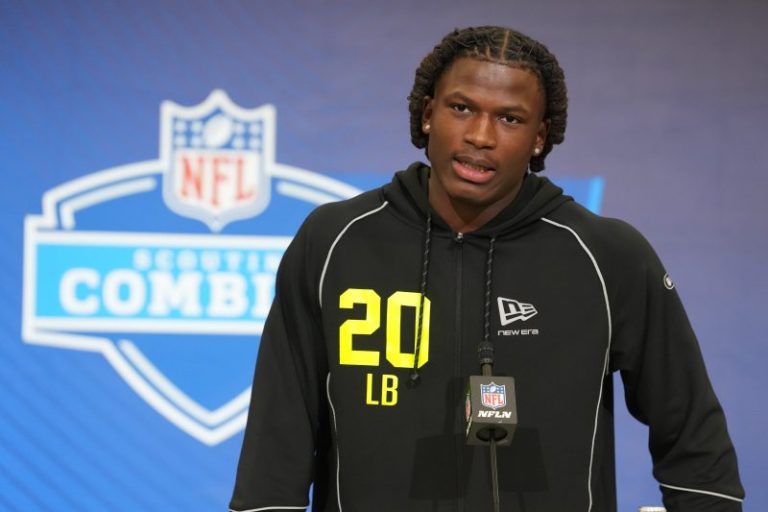
Kinder Bueno’s ‘Yes Bueno’ Super Bowl commercial pitches the candy as a way to turn around life’s ‘no bueno’ moments.

William Fichtner co-stars with Paige DeSorbo in a Super Bowl debut for the candy brand, which is increasing its footprint in North America. Fichtner is also making his first big game appearance and told USA TODAY that ‘it’s not just any commercial. It’s iconic to be on that day.’ He was familiar with the candy having spent time living in Europe.

‘When I checked into my hotel (to shoot the commercial), there were half a dozen Kinder Bueno bars,’ Fichtner said. ‘I’m like, ‘Oh that’s nice, I’ll take them with me.’ Yeah, that lasted about 24 hours.’

Rate every 2026 Super Bowl commercial!

Kinder ‘Yes Bueno’ Super Bowl ad with Paige DeSorbo

This post appeared first on USA TODAY
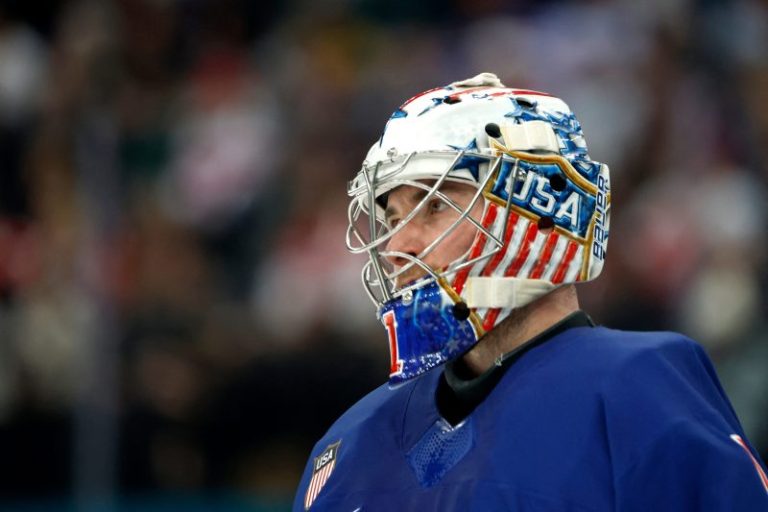
The ‘twisties,’ a mental block causing athletes to lose their sense of direction in the air, can affect Winter Olympians as well as gymnasts like Simone Biles.
Winter athletes, including skiers and snowboarders, describe the phenomenon as a dangerous loss of spatial awareness during complex aerial maneuvers.
Athletes rely on extensive practice and an ‘internal clock’ to execute tricks, but the mental block can still occur despite their training.

LIVIGNO, Italy — Five years ago, Simone Biles introduced the world to a term many outside of gymnastics were unfamiliar with: twisties.

Biles’ mental-health struggles leading to the Tokyo Summer Olympics manifested in being unable to keep track of where she was in the air while pulling off massive flips and turns, a dangerous situation for an athlete flying above the ground.

Turns out, the twisties can affect Winter Olympians, too.

‘I don’t quite do the maneuvers that Simone does, but that same thing can happen,’ moguls and aerials free skier Jaelin Kauf said. ‘Our sport is so mental. There’s so much that goes into trying to be on your game mentally as best as you can.’

Kauf, a silver-medalist at the 2022 Winter Olympics in China, said that she does not practice her tricks on a trampoline much anymore. Two summers ago, every time she tried to do an off-axis trick on the trampoline it resulted in vertigo. She had no idea where she was. All she could do was hope to make it to the inflated landing bed in a safe position.  

That summer training is essential to create and become comfortable landing tricks, though. That way, Kauf said, when athletes bring the tricks to snow, they are confident and typically have a 90% chance of landing it. That doesn’t mean the nerves evaporate while standing in the starting gate.

‘We’re so confident we’re going to be able to land and execute them, at least get (the skis) around to our feet if we have to,’ Kauf said. ‘We spend so much time on the air awareness and being comfortable flipping around.’

Chloe Kim, a two-time champion in the women’s snowboard halfpipe, said the idea of experiencing the twisties had never crossed her mind for the majority of her career.

‘You know what’s so funny? No. But then, recently, I started feeling it,’ she told USA TODAY Sports. ‘I think it does happen. At the end of the day, probably not to the extent that gymnasts feel it because they’re doing the craziest things. I can’t even fathom how they’re able to do what they do. It’s insane to me.”

One condition gymnasts don’t have to consider, compared to most winter athletes, is the weather. Cloudier days are tougher than ‘bluebird’ ones because the snow and sky can meld into one visual, Kim said.  

‘There are times where you could get completely lost and think that the sky is the snow and vice versa,’ Kim said. ‘So, accidents do happen. You do get lost in tricks sometimes. I’m fortunate enough to not have dealt with it to an extreme level but, yeah.” 

Snowboarder Alessandro Barbieri, part of the men’s halfpipe team, said it requires many hours of practice to feel confident while soaring above a ledge.

‘I feel like we all have an internal clock in our mind,’ he told USA TODAY Sports. ‘We have, I don’t know, a second-and-a-half of airtime. So we know to get it done by then. When you’re doing all of these flips, you’re not really looking somewhere except where you’re landing. It’s all feel, like an internal clock or compass.’

Although the ‘twisties’ is not a diagnosed medical term, it is obviously serious for high-performance athletes. In a social-media post at the time she battled the ‘twisties,’ Biles wrote that she ‘literally can not tell up from down.”

‘It’s the craziest feeling ever,’ she wrote. ‘Not having an inch of control over your body. What’s even scarier is since I have no idea where I am in the air I also have NO idea how I’m going to land. Or what I’m going to land on.’

“After the performance I did, I just didn’t want to go on,’ Biles added. “I have to focus on my mental health. I just think mental health is more prevalent in sports right now. We have to protect our minds and our bodies and not just go out and do what the world wants us to do. I don’t trust myself as much anymore.”

This post appeared first on USA TODAY
CORTINA d’AMPEZZO, Italy — I actually do work for USA TODAY and although I am not a doctor, either, I can very confidently say Greg Graber’s opinion about Lindsey Vonn is ill-informed, condescending and misogynistic.

How do I know this? Because unlike Graber, I have actual, applicable knowledge on this topic after covering skiing for more than a decade. I have watched Vonn dominate the World Cup circuit this season — how many athletes ‘past their prime’ are smoking the competition race after race? — and have heard her explain why she decided to make a comeback.

It’s not because she can’t see herself as anything besides a skier or is trying to compensate for something lacking in her life. Her foundation, commercial ventures, family and friends were more than enough to fill her time while she was retired. (Pro trip, Greg: Before making assumptions about people, maybe use the Google machine.)

Vonn came back because she could. Because she was given a second chance to end her career on her terms, something so few athletes get to do. Because she loves skiing.

And because, even at 41, she is still really freaking good.

To equate her with Mike Tyson, who is almost two decades older than Vonn and was pummeled by a YouTuber, was as ignorant as it was insulting. Contrary to what Graber wrote (again, Greg, Google can be your friend), Vonn is not skiing’s equivalent of Willie Mays.

She’s been on the podium in every downhill race so far this season, winning two of them. She also was on the podium in two of her first three super-G races and was fourth in the third.

Even with a torn ACL, Vonn had posted the third-fastest time in a training run Saturday, Feb. 7, before it was canceled due to fog and snow. A training run at the Olympics, I might add.

But even if Vonn was struggling to keep pace, so what! Did Graber run to his keyboard to psychoanalyze and chastise Phillip Rivers when he returned to the NFL this season? Is he banging the drum for LeBron James to retire?

Doubtful.

Which is the larger problem with Graber’s opinion piece, and it’s one every woman can, sadly, recognize: Without any expertise, experience or knowledge, too many men feel free to police the actions, motivations and bodies of women. They think they know best, and demand women give their opinions deference that is neither earned nor deserved.

I did reach out to Graber for comment, by the way.

Graber claims he’s a mental performance coach for elite athletes. That and regional sales managers at food companies. But does he regularly work with Olympians? Or elite Alpine skiers? No? Then maybe he should have sat this one out. Because while there are some commonalities among athletes, there also are far too many differences to make broad, sweeping generalities.

But Graber got a thought about Vonn in his head and decided one of the greatest skiers of all-time needed to hear it. She has a team of medical professionals and coaches around her whose literal job it is to provide her with honest, fact-based advice, but Graber knows better. His opinion is based on pure conjecture and projection, yet he thinks it should carry more weight than Vonn’s lived experiences and access to the best resources in sports medicine.  

It’s the living embodiment of the “No, but I stayed at a Holiday Inn Express last night” commercial.

Not every single thought needs to be shared with the world. Graber has written a book entitled, in part, “Slow Your Roll.” Next time, rather than doling out unsolicited advice, he should do everyone a favor and follow his own.

Follow USA TODAY Sports columnist Nancy Armour on social media @nrarmour.

This post appeared first on USA TODAY
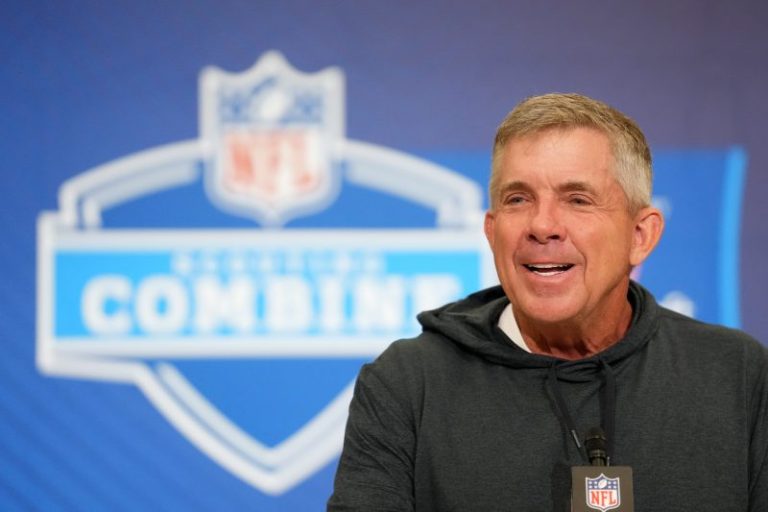
Being a professional football player was never Terry Schmidt’s goal. He wanted to be a dentist.

But there Schmidt was, on the field in Houston, staring at Earl Campbell, who was churning toward him.

‘He broke free,’ says Schmidt, a former NFL defensive back in the 1970s and 1980s, ‘and it was me and the end zone or Earl.’

Schmidt recalls hitting the future Hall of Fame running back on the 10-yard line, and getting him to the ground at the 2.

‘I think, even with that, I was having fun,’ Schmidt recalls today. He lets loose a hearty laugh, which reappeared several times during our conversation.

Schmidt lasted 11 years, retiring after 143 games in the league, and playing his final season for the 1984 Bears. That’s right, he missed winning a Super Bowl on one of the best – if not the best – NFL teams of all time.

He doesn’t regret the decision for a moment. His response as to why winds you through a brutal training camp with a future Hall of Fame coach but happier days at Chicago’s Soldier Field, and to the Amazon and Africa.

Schmidt laid out his life in football, and his one as a father to two kids.

‘My son was playing Little League baseball and he loved baseball, but they selected an all-star team, (and) the guy that coached, his son was a catcher, too, and my son never played,’ Schmidt told USA TODAY Sports. ‘We were driving home from a game and he said, ‘Dad why doesn’t that guy like me?’ And I didn’t have an answer for that and then he quit playing baseball. He just gave it up and it was a shame because he was a really good baseball player.’

We spoke with Schmidt, 73, about how his insight through a lifetime of experience can help you and your young athlete:

(Questions and responses are edited for length and clarity.)

‘I can really do this’: When we’re supported in sports, we’re full of confidence

Terry grew up in Columbus, Indiana, about 40 minutes south of Indianapolis. He loved open-wheel racing, and played high school basketball games in some of the old arenas you see in the movie ‘Hoosiers.’

‘My dad never really said, ‘Let’s go play catch,’ ” he says. “But when I was at school, I’d see kids playing baseball and stuff and I got interested and just started playing. And he helped coach but it wasn’t like one of these things like, ‘Well you need to do this, you need to do that.’ It was just, ‘If you want to play, ‘Fine.’ ”

Schmidt became a three-sport athlete in high school (football, basketball, track) and played football at Ball State. He never dreamed how far he would go from there.

USA TODAY: How did you come to be a professional football player?

Terry Schmidt: I was recruited as a wide receiver. After my freshman year, the head coach was changed (to Dave McClain). I was pretty fast, I guess, and he said, “We’re really deep at wide receiver.’ So, I started at safety spring ball of my freshman year and played all four years as a safety, and played in the East West Shrine game. He said, “You could probably play professional football.” I said, ‘Coach, ‘I don’t know. I’m gonna be a dentist.’ I was drafted by New Orleans, Hawaii (World Football League) and Winnipeg (Canadian Football League).

I thought what the heck, I’m gonna just give this a shot. One of the first strikes ever in the NFL was 1974, and so they brought in a bunch of rookies, free agents, whatever, whoever wandered to cross the picket line. And so, the veterans didn’t come in until after third preseason game. I had a really, really good training camp, and I ended up starting as a rookie for the Saints at corner.

It just kind of happened. I would watch guys on TV, and I’d go, “I’m not that.” But then when I got to training camp and realized, I said, “Yeah, I can do this. I really can do this.’

An egomaniac coach holds a team back, even if you’re Hank Stram

During his third NFL training camp, Schmidt found himself playing for Hank Stram, a future Hall of Fame coach who had led the Chiefs to an AFL championship and and a Super Bowl title.

“I think he was probably a great coach back when they won the Super Bowl, but as the players evolved, he didn’t evolve with them,’ Schmidt says.

After a wild training camp, the Saints traded Schmidt to Chicago before the 1976 season.

USAT: It’s a brutal game, right? I mean, every year was probably really tough to get through.

TS: In the NFL we did two-a-days and Stram, when he came in, we did three-a-days. The evening practice, it was 7-on-7; the linemen didn’t really do anything. So we were running all day long. By the time I got to the Bears, my legs were shot, they really were. Back in the day,  players were conformist. When Stram first came to the Saints, that’s when they couldn’t stop you.

Stram was a good coach, but he was a egotist. We’d be on the bus, and once he got on the bus, everybody left. If you weren’t on the bus when Stram got on the bus, you got left behind. (If) the bus you were on tried to pass the bus Stram was on, he’d tell them to slow down. He had to be in the lead bus.

There was an article that came out in the (New Orleans) Times-Picayune that (owner) John Mecom said something about Stram spending too much money. The very next day, Mecom shows up at training camp and says, “I don’t know what you boys read, but I just wanted you to know that Hank’s my man and whatever Hank wants, Hank gets.” I was walking out after the meeting and I happened to be behind Mecom. I was gonna ask him something about (Indy) racing. I heard him turn to Stram and say, “Is that what you wanted me to say?”

Other tough coaches, like Mike Ditka, learn to compromise

Jim Finks, the Bears general manager, apparently had seen Schmidt play and liked him.

As an athlete, you never know who is watching you when you play, or whom you might run into down the road.

USAT: What happened with your career in Chicago?

TS: Allan Ellis, a great defensive back, got hurt right before the first game (of) the ’78 season. And I started playing at corner and never, ever turned back. We were playing a Thanksgiving game one time and by this time Stram had been fired (after going 7-21 over two seasons with the Saints) and I think he was doing radio for CBS. I happened to walk by Hank in this hallway, so I said, “Trading me was the best thing you ever did in my career.” And his response was, “Well, you know, Terry, we make mistakes from time to time.”

USAT: What were your experiences like with Ditka?

TS: In 1981, it was apparent (head coach) Neill Armstrong was going to be fired at the end of the season.  We had made great strides as a defense under Buddy Ryan and as a defensive squad we collectively felt it would be best if the defensive staff remained.  So we defensive players wrote a letter to (owner) George Halas, requesting he keep the defensive staff.  About a week (later) he came to practice.  Normally the whole team would gather around him.  But today when the offensive players and coaches, including Neill, came to the group, Halas basically told them to “Beat it.”

He said the letter was beautiful and that to his knowledge no other group of players had ever written to attempt to save a coach’s job.  Him being one of the founders of the NFL, that was most likely true.  He told us not to worry, that Buddy and the staff would be retained.

So Mike had to keep Buddy, and his defensive system, when he was hired in 1982. Mike did always support the players, but sometimes I think it is difficult for great players to coach some players. Not all players had his play-through-anything (attitude) – pain, injury, etc.  I heard he played with a very bad ankle sprain that was so intense it altered his running style, which led to hip problems (and) he eventually had it replaced.  Some players did not share that same attitude.

Ditka (was a) complex individual, good coach, good man, very sarcastic at times. Interestingly, despite their differences, Mike came to Buddy’s funeral.

There’s always someone better than you, but you can always grow from an athletic experience

Schmidt would go in and talk to Ryan after the season. By 1984, he says, he was playing the game more mentally than physically.

“What do you think?” he asked Ryan.

“I think it’s time to plan your retirement party,” the coach said.

Schmidt had always planned on dental school, and he says the Bears had set aside money to pay for it over his last three contracts.

USAT: You just missed out on the ‘85 team. What was that like?

TS: You just never know. We made the playoffs in ’77 and ’79. And we got beat in the wild card. And then in ’84, we made it to the NFC Championship. So I figured, what’s the odds of them making it next year?

George Halas really embraced his boys – that they planned for the future, you don’t know how long you’re gonna play, or they’re always looking for somebody to replace you. So, when I asked for money for dental school, they had no qualms at all. The only restriction was that I had to go; they set aside about 50 grand and they just said you have to go to get it and that was fine with me.

And as I look back on my dental career in school, I don’t think I was mature enough for the rigors of dental school when I was 22 and 23. When I went to school, I was 34, and I had a lot of classmates who were just right out of undergrad. They were 22, 23, 24, and they just didn’t concentrate on school. I wanted to be the best dentist I could be. I was ready for the rigors of dental school. Because it’s like a job.

What we miss out on sometimes leads to a bigger opportunity

Schmidt became a dentist for the Department of Veterans Affairs. He worked in Chicago but also in Tampa, Florida, Asheville, North Carolina, and Johnson City, Tennessee, and continues his missionary work in retirement.

“One of the coolest trips we did was a boat trip on the Amazon River (that) stopped at five different villages,” he says. “Once you get up in the jungle where we were, you have a village that’s just carved out. You’ve got anywhere between 30 to maybe 80 homes, and everybody’s got a boat. Every house is up on stilts. And one house has a satellite dish and a generator so if Brazil’s in the World Cup, they get a chance to watch it. They call it football, but every village has got a soccer field and has got soccer balls.”

His kids, Jake and Jennifer, who are now adults, kept loving sports, too. They excelled at volleyball, and his daughter had speed and ran track, like her dad.

Jennifer’s son, Derek, plays rugby at Spring Hill College in Mobile, Alabama.

“It’s a brutal game,” his grandfather says. “They don’t wear any pads.”

USAT: Do you have any advice for families that are trying to go through all this with sports?

TS: I coached one year, and the parents … Why are you taking my kid out? What do you mean? We had a meeting with the parents and said, ‘Look, this is not professional baseball. These kids aren’t doing this for a living. We want to get everybody a chance to play.’

The one thing I didn’t like about volleyball is that one year Jennifer got involved in club volleyball, and that was a nightmare. They go all over the place and I just kept telling my kids, ‘You just can’t concentrate on one sport. If you want to, OK, but I’m just telling you, based on my history.’

Don’t push anything on your kids and have a piece of tape over your mouth. You don’t need to be yelling at the umpires, don’t be yelling at the coaches. Go there and enjoy your son or your daughter playing. And just just let ‘em play.

When I would get beat up, I was still having fun out there. If the first thought that goes through your head when Earl Campbell breaks free is, “I’m gonna get hurt,” you need to quit.

 Borelli, aka Coach Steve, has been an editor and writer with USA TODAY since 1999. He spent 10 years coaching his two sons’ baseball and basketball teams. He and his wife, Colleen, are now sports parents for two high schoolers. His Coach Steve column is posted weekly. For his past columns, click here.

This post appeared first on USA TODAY
SAN JOSE, CA — When it comes to special teams in the NFL, nearly every team talks the talk – even if it’s merely lip service – regarding their often-crucial importance. But the NFC champion Seattle Seahawks walk the walk.

“We have such a good group of core guys – everybody’s bought in. I think that’s shown when we flipped some games,” Seattle kicker Jason Myers, who led the league with 171 points scored this season, told USA TODAY Sports.

“Everyone always says it’s one-third of the game, but not a lot of places where that’s true. Obviously, we do (believe it).”

Myers was quick to cite the investment from Seahawks general manager John Schneider, who signed him in free agency coming off a Pro Bowl season with the New York Jets in 2018 and added a four-year extension in 2023.

Schneider spent a fifth-round draft pick in 2018 − rare currency for a punter − on Michael Dickson, a second-team All-Pro who’s now on his third contract with the team. Then there was the midseason acquisition of wideout Rashid Shaheed, who’s had a massive special teams impact for the Seahawks – including three TD returns, highlighted by a 95-yarder to open (and effectively end?) the game in Seattle’s 41-6 divisional-round playoff rout of the San Francisco 49ers.

That was among many examples where a special teams play – particularly late in the season – proved pivotal for the Seahawks on their way to the NFC’s top playoff seed and, ultimately, their berth in Super Bowl 60:

In an 18-16 win over the Indianapolis Colts in Week 15, Shaheed had 137 return yards while Myers accounted for all the scoring (6-for-6 on field goals) on a day when Seattle’s offense couldn’t find the end zone.

In their riveting 38-37 defeat of the Los Angeles Rams in Week 16, a victory that put the Seahawks in control of the conference’s No. 1 seed, Shaheed’s 58-yard punt return for a TD midway through the third quarter sparked their comeback from a 30-14 deficit.

Dickson’s towering third-quarter punt in windy conditions during the NFC championship game proved too much for the Rams’ Xavier Smith to handle, Seattle’s Dareke Young recovering the muff and setting up a TD pass from quarterback Sam Darnold on the next play (LA never led in the game from that point forward).

“They’re talented players,” Seahawks special teams coach Jay Harbaugh told USA TODAY Sports.

“We just have guys that are so about the team, from the weekly preparation to how they operate on game day. When a group of people has that mindset, it’s crazy how good you can get over time. I’m really thankful to be able to coach them. It’s been a blast.”

Jay Harbaugh, ‘underrated hero’

One of Seattle head coach Mike Macdonald’s first orders of business when the team hired him in 2024 was to recruit Harbaugh, with whom Macdonald had overlapped while with the Baltimore Ravens and University of Michigan.

“He’s kind of like an underrated hero behind this whole operation,” Macdonald said of Harbaugh amidst the Seahawks’ preparations to face the New England Patriots on Sunday.

“Great eye for talent, the way he got buy-in, and the way that he creatively coached these awesome fundamentals. … It was, like, a very, very easy decision to beg him to come to Seattle – and he’s done a tremendous job from Day One.

“Jay’s awesome.”

Harbaugh – the son of Los Angeles Chargers coach Jim Harbaugh, who will be in attendance Sunday with the rare opportunity to see one of his son’s games in person, and nephew of New York Giants coach John Harbaugh, his boss for three years in Baltimore – reciprocates his praise for Macdonald.

“Mike makes it really important,” Jay Harbaugh told USA TODAY Sports regarding Seattle’s investment in special teams, including the support of fellow coordinators Klint Kubiak (offense) and Aden Durde (defense).

“You’re never battling any of that, which happens in a lot of places. So, getting the staff support and buy-in is a great thing. And then the players making it their own and taking ownership and being able to provide their input and ideas – them being committed to the success of each unit and not chasing their own stats.”

Harbaugh specifically name-checked fullback Brady Russell as a player who could probably attain special teams stardom, such as it is, but willingly plays within the confines of the system for the betterment of the group. An undrafted free agent in 2023, Russell has played nearly 1,000 special teams snaps during his time in Seattle compared to 107 on offense. He has 24 tackles over the past two seasons.

But big tackles – just like big kicks and returns – can change the tide of a game, especially when teams are evenly matched, as they theoretically are in a Super Bowl.

“It goes both ways. It really can spark your team and the stadium,” said Harbaugh. “We’ve had a couple of instances where we’ve been on the wrong end of that – you feel that the other way, too. One thing Mike talks about is just the complementary football – which is cliché, but like most clichés, they’re that way because they’re true. … When you have a great play on special teams, and then the offense goes and punches it in after a long return, or the kickoff team gets a really violent tackle at the 25-yard line – you just kind of build that momentum.

“The team feeds off each other, it’s like a family in that sense.”

Brenden Schooler, an All-Pro special teams player who succeeded the great Matthew Slater in New England, has admired Harbaugh and the Seahawks from afar.

“I mean, (Seattle) literally flips a game in one play. You just feel the energy shift,” Schooler told USA TODAY Sports. “Being on the short end of that stick is not fun.’

He added Harbaugh and the Seahawks are “ahead of the curve” while scheming blocks on kickoff returns.

“I’ve watched them all year long,” said Schooler, “it’s been a lot of fun to watch those guys go to work.”

New England special teams coach Jeremy Springer told USA TODAY Sports: “They’ve got the right pieces in the right places – Jay’s done an unbelievable job for them.”

Patriots also thrive on special teams

In addition to Schooler, the Pats also have an All-Pro player in the third phase, return ace Marcus Jones – one of the team’s captains who also doubles as a slot cornerback.

“It’s like having a really good quarterback – you always have the opportunity to score,” Springer said of the impact of a dangerous return man. “When you have a really good returner back there, guys just block harder. Because they know, they don’t want to be the block that doesn’t spring the guy to a touchdown – so your guys play harder for him.

“He just elevates the team.”

While Springer lauded Shaheed’s speed and acceleration, he believes the gift possessed by Jones, who has three punt return TDs in four NFL seasons, is setting up his blocks.

New England is less experienced in the kicking game, long snapper Julian Ashby and kicker Andy Borregales both rookies – though Springer says both are “even keel” and not effectively rookies at this stage of the season.

“We’ve got some good players, too, and at the end of the day, it’s gonna be an identity war,” said Springer, “their identity on special teams and our identity.”

Will opportunity knock in the Super Bowl?

It’s been nearly three decades since Green Bay Packers returner Desmond Howard was named the MVP of Super Bowl 31, the only special teamer who’s ever garnered that honor. If someone is to replicate it Sunday, the key is being prepared to maximize a chance.

“As a specialist, returner – you can’t really force the game,” said Myers. “So you’ve just got to be ready for your opportunity.”

Newly elected Hall of Fame kicker Adam Vinatieri was a frequent Super Bowl hero for the Patriots. Ten players have returned a kickoff all the way, but none since Seattle’s Percy Harvin 12 years ago.

No one has ever returned a punt for a TD in the Super Bowl. Springer also notes that teams are generally at the point of the season when it’s harder to get quality special teams repetitions in practice.

“It’s pretty likely that if you’re on offense or defense, there’s something that you’re dying to call – that you’ve worked on and you’ve schemed up, (and) you’re probably gonna get to call it,” said Harbaugh, explaining that executing a specific special teams play requires so many conditions to be in proper alignment.

“You’ve got be ready to take advantage of the moment when it comes. That’s part of the nature of the beast for us.”

Unlike Candlestick Park, the 49ers’ previous home, Levi’s Stadium – the Super Bowl 60 venue, far removed from the windier bay – isn’t known for erratic conditions that can play havoc with the kicking game. Frankly, it’s much warmer and calmer than Seattle or New England at this time of year.

Maybe what’s expected to be ideal weather can foster a big play from the unsung guys often viewed as having suboptimal NFL jobs.

“I think you’ve got to be a little crazy to do this, running full speed into somebody. At the end of the day, man, it’s doing whatever you can to help the team – whether that’s me running down as a gunner, me covering kicks, blocking for Marcus,” said Schooler.

“It’s whatever you can do to help the team.”

This post appeared first on USA TODAY

MILAN — Team USA has made its picks for who can secure figure skating team event gold at the 2026 Winter Games, and it will include the ‘Quad God.’

The competition day will also feature pairs’ and women’s free skate. Amber Glenn will make her Olympic debut for the women, with Ellie Kam and Danny O’Shea doing the pairs again.

Whether Malinin would do both men’s events in the team event was a big question and gave the U.S. a complex decision for its young prodigy given the schedule. Doing both events means he has a quick turnaround for the all-important men’s individual event, which begins Tuesday, Feb. 10.

The plan going into the team event, according to people with knowledge of the situation who were not allowed to speak publicly on the matter, was for Malinin to skate the men’s short program only, then U.S. officials would assess the its medal position to decide if he was is needed in the long program.

Turns out, the U.S. is aggressively going for gold.

Malinin skated the men’s short program on Saturday, Feb. 7 and didn’t have a spectacular performance with a second place finish behind Japan’s Yuma Kagiyama, earning Team USA nine points. Afterward, Madison Chock and Evan Bates skated the ice dance free dance and earned another 10 points for the U.S., ending Day 2 in first place with 44 total points. Japan is in second place (39) and Italy is in third with (37).

Malinin’s inclusion indicates Team USA feels it needs him to secure first place, and doesn’t feel comfortable about going with the other Olympic men skaters in Maxim Naumov and Andrew Torgashev. The men are the final group to perform in the team event, so the U.S. will have a good sense of what is needed from Malinin in order to win the team event.

He certainly can cement the U.S. winning team gold, but the wobbly performance in the short program does raise some concern. That’s on top of the major focus of him now having to do a total of four performances in one week, questioning if it will fatigue Malinin and hurt his chances of capturing men’s singles gold.

Malinin told reporters after his short program he came into the competition ‘with only 50% of my full potential’ as ‘that’s the way I pace myself, leading up to the individual’ men’s event.

‘Of course, that wasn’t the perfect, ideal 100% skate that I would’ve wanted to have,’ he said, ‘but for the standard I set myself today, I think I achieved that.’

Glenn gets the nod in the women’s free skate after Alysa Liu handled the short program. Liu finished in second − behind Japan’s Kaori Sakamoto − to earn the U.S. nine points. Japan will again be a stiff challenge, but the reigning U.S. champion is capable of a first place finish and get another 10 points.

Kam and O’Shea will return after they did the short program. Despite a performance that included a big fall, the pair finished in fifth and earned six points.

Listen to ‘Milan Magic’ on Apple, Spotify, or wherever you get your podcasts. Watch full episodes on YouTube or on USA TODAY.

Olympic figure skating team event day 3 schedule

The final day of the figure skating team event at the 2026 Winter Olympics takes place on Sunday, Feb. 8.

Women’s free skate: 1:30 p.m. ET
Pair’s free skate: 2:45 p.m. ET
Men’s free skate: 3:55 p.m. ET

This post appeared first on USA TODAY
CORTINA D’AMPEZZO, Italy — Cortina has a special place in Lindsey Vonn’s heart. And on her résumé.

‘Cortina has always been a place that’s been so special to me,’ Vonn said. ‘I just have a lot of amazing memories, so it wasn’t really a leap for me to say I want to come back and compete in these Olympics.’

Vonn’s 12 wins in Cortina are her second-most at one site, behind her 18 victories at Lake Louise in Alberta, Canada. The Olimpia delle Tofane is a course she’s always understood, Vonn said, and it helped her learn how to be successful in downhill at the World Cup level.

‘I just have a good connection with the mountain. I know what it needs. I know what it takes to win there,’ Vonn said.

‘I’ve always felt really at home (there). It’s such a beautiful place, it’s hard not to stand on the top of that mountain and not really realize why you love the sport,’ she added. ‘So I’m excited to go back there and see the sunrise, the top of the Tofanaschuss, one more time.’

Here are all the times Lindsey Vonn has raced in Cortina, site of the women’s Alpine races at the 2026 Winter Olympics:

2025

Jan. 19: World Cup, super-G. DNF
Jan. 18: World Cup, downhill. 20th.

2019

Jan. 20: World Cup, super-G. DNF
Jan. 19: World Cup, downhill. 9th.
Jan. 18: World Cup, downhill. 15th.

2018

Jan. 21: World Cup, super-G. 6th.
Jan. 20: World Cup, downhill. WIN.
Jan. 19: World Cup, downhill, 2nd.

2017

Jan. 29: World Cup, super-G. 12th.
Jan. 28: World Cup, downhill. DNF.

2016

Jan. 24: World Cup, super-G. WIN
Jan. 23: World Cup, downhill. WIN

2015

Jan. 19: World Cup, super-G. WIN
Jan. 18: World Cup, downhill. WIN
Jan. 16: World Cup, downhill. 10th.

2013

Jan. 20: World Cup, super-G. 7th.
Jan. 19: World Cup, downhill. WIN.

2012

Jan. 15: World Cup, super-G. WIN.
Jan. 14: World Cup, downhill. 2nd.

2011

Jan. 23: World Cup, super-G. WIN.
Jan. 22: World Cup, downhill. 3rd.
Jan. 21: World Cup, super-G. WIN.

2010

Jan. 24: World Cup, giant slalom. 19th.
Jan. 23: World Cup, downhill. WIN.
Jan. 22: World Cup, super-G. WIN.

2009

Jan. 26: World Cup, super-G. 8th.
Jan. 25: World Cup, giant slalom. 10th.
Jan. 24: World Cup, downhill. 2nd.

2008

Jan. 21: World Cup, super-G. 4th.
Jan. 20: World Cup, super-G. 5th.
Jan. 19: World Cup, downhill. WIN.

2007

Jan. 20: World Cup, downhill, DNF.
Jan. 19: World Cup, super-G. 4th.

2006

Jan. 29: World Cup, giant slalom. DNF.
Jan. 28: World Cup, downhill. 9th.
Jan. 27: World Cup, super-G. 3rd.

2005

Jan. 16: World Cup, downhill. 18th.
Jan. 15: World Cup, downhill. 3rd.
Jan. 14: World Cup, super-G. 2nd.
Jan. 12: World Cup, super-G. 4th.

2004

Jan. 18: World Cup, downhill. 3rd.
Jan. 17: World Cup, downhill. 5th.
Jan. 16: World Cup, super-G. 43rd.
Jan. 14: World Cup, super-G. 53rd.

2002

Jan. 25: World Cup, super-G. DNF.

The USA TODAY app gets you to the heart of the news — fastDownload for award-winning coverage, crosswords, audio storytelling, the eNewspaper and more.

This post appeared first on USA TODAY
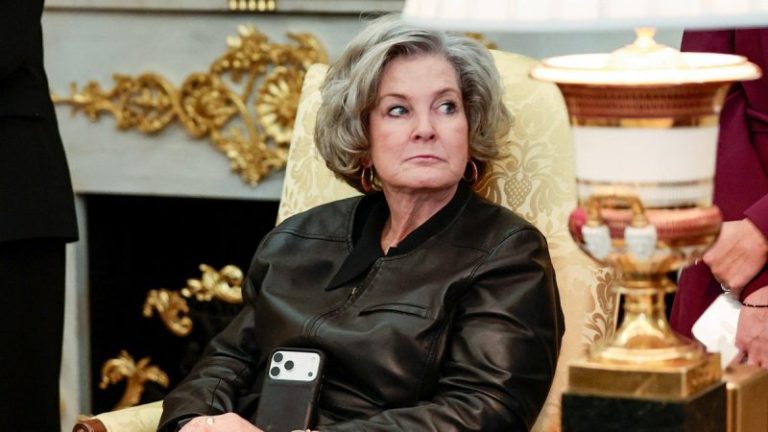
CORTINA D’AMPEZZO, Italy – Mikaela Shiffrin, the most decorated Alpine skier of all time, is grateful to be at her fourth Winter Olympics. It’s an ‘honor’ and a ‘privilege’ to be part of this event with the red, white and blue on her chest, she said Saturday, Feb. 7 during media availability in Cortina.

But Shiffrin wants to make it clear that she’s representing her own personal values at these Games, not those of President Donald Trump’s administration back home.

Shiffrin came to Cortina prepared to be asked about whether she felt conflicted competing on behalf of the United States given the international backlash to immigration raids championed by the White House. She wrote down, in full, the Nelson Mandela quote actor Charlize Theron read aloud during the Milano Cortina opening ceremony the night before:

‘Peace is not just the absence of conflict. Peace is the creation of an environment where we can all flourish regardless of race, color, creed, religion, gender, class, caste or any other social markers of difference.’

She added, in her own words: ‘For me, as this related to the Olympics, I really hope to show up and represent my own values. Of diversity, and kindness, and sharing. Tenacity, work ethic, showing up with my team every single day.

‘… My greatest hope for this Olympic Games, from a broader perspective, is that it is a beautiful show of cooperation and of competition.’

Team USA athletes here in Italy known they are the face of their home country this month, at a time when political decisions by the Trump administration have earned worldwide criticism.

Shiffrin acknowledged the presence of ‘hardship,’ ‘heartbreak’ and ‘violence’ around the globe, which ‘can be tough to reconcile … when you’re also competing for medals in an Olympic event.’ In the U.S. specifically, ICE raids ordered by the Trump administration have led to the killing of two civilians in Minnesota: Alex Pretti and Renee Good. The Guardian reported Jan. 28 that eight people have been killed by ICE or died while in ICE custody in 2026.

American athletes at Milan’s opening ceremony Friday night received raucous applause from the stadium of 80,000. But when the camera cut to vice president JD Vance, their whoops quickly changed to boos. That message of disapproval came after IOC president Kirsty Coventry urged fans to be ‘respectful’ toward the U.S. contingent.

Reach USA TODAY Network sports reporter Payton Titus at ptitus@gannett.com, and follow her on X @petitus25.

This post appeared first on USA TODAY

Summer Britcher posted the fastest times for the Team USA during women’s singles luge training runs at the Cortina Sliding Centre on Sunday, Feb. 8.

Britcher’s time of 53.172 seconds on her fifth run was the ninth-best time recorded during the training session, tops among the three American competitors. The women’s luge course at the 2026 Winter Olympics is approximately 1,201 meters (1,313 yards) long.

Germany’s Merle Malou Fraebel and Julia Taubitz posted the top times in Sunday’s two training runs. Taubitz had the fastest time in the six training runs at 52.750, flying down the Cortina Sliding Centre track at a top speed of 119.4 kilometers per hour (approximately 74 mph).

The women’s singles luge medal competition starts Monday, Feb. 9 with two timed runs for each competitor beginning at 11 a.m. ET. There will be two more final timed runs beginning at 11 a.m. ET on Tuesday, Feb. 10. The combined times from all four runs determines the medal winners.

Germany, which won gold and silver in women’s singles luge at the 2022 Olympics, has won the most luge Olympic medals of any country, with 43 overall and 22 gold.

Emily Fischnaller is Team USA’s most decorated women’s luge competitor at the 2026 Winter Olympics. The 32-year-old is the second American to have won multiple luge singles medals, winning bronze at both the 2019 and 2025 World Championships.

Women’s singles luge fastest times for each run

Run 1 — Sandra Robatscher, Italy: 53.553 (Top Team USA finish: Emily Fischnaller, ninth: 53.820)

Run 2 — Elina Bota, Latvia: 53.541 (Top Team USA finish: Ashley Farquharson, eighth: 53.753)

Run 3 — Julia Taubitz, Germany: 53.268 (Top Team USA finish: Emily Fischnaller, 11th: 53.583)

Run 4 — Julia Taubitz, Germany: 53.408 (Top Team USA finish: Emily Fischnaller, fifth: 53.642

Run 5 – Merle Malou Fraebel, Germany: 52.855 (Top Team USA finish: Summer Britcher, seventh: 53.152)

Run 6 — Julia Taubitz, Germany: 52.750 (Top Team USA finish: Summer Britcher, third: 53.172)

This post appeared first on USA TODAY

Japan took gold and silver in men’s snowboarding big air thanks to some big tricks from Kira Kimura and Ryoma Kimata. Defending gold medalist Su Yiming of China overtook 17-year-old American Ollie Martin for bronze to keep Team USA from winning its first medal of the 2026 Milano Cortina Winter Olympics.

But apparently, that all wasn’t enough for NBC broadcaster Todd Richards.

‘That was boring,’ he was caught saying on a hot mic immediately after the event concluded on Peacock. ‘That was so boring. The qualifier was way more exciting.’

Richards is commentating his sixth Winter Olympics. A former professional snowboarder, he competed in halfpipe at the 1998 Nagano Games, where snowboarding made its Olympic debut. He’s also a four-time Winter X Games medalist, winning gold in the halfpipe in 1997, the inaugural year of the Winter X Games.

NBC referred USA TODAY Sports to Richards’ Instagram post on the topic when reached for comment:

Richards stood by his opinion but also expressed his admiration for the competitors.

This story has been updated with new information.

This post appeared first on USA TODAY