Archive

2026

Browsing

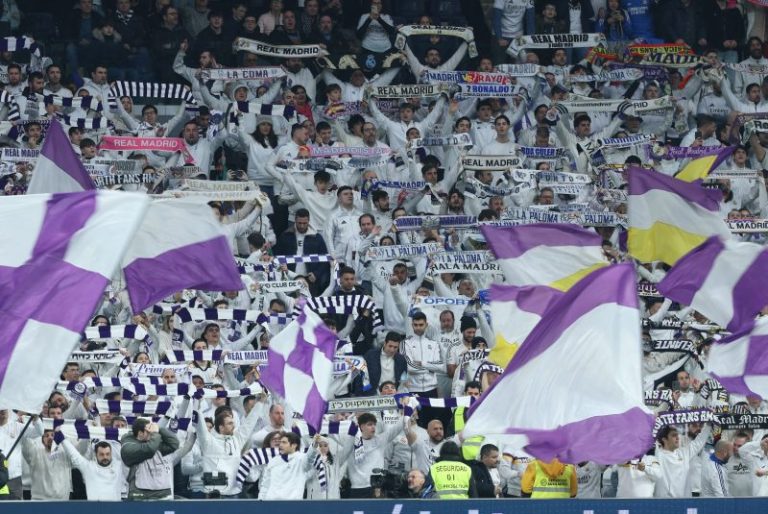
Real Madrid has initiated proceedings to ban a fan who was caught on camera making a Nazi salute prior to Wednesday’s Champions League game against Benfica.

The club said the fan was caught by television cameras ahead of the Champions League playoff second leg at the Santiago Bernabéu Stadium, which Madrid won 2-1 to reach the round of 16.

According to Real Madrid, the fan was immediately expelled from the stadium.

‘Real Madrid C. F. announces that it has urgently requested the club’s Disciplinary Committee to initiate an immediate expulsion procedure for the member who was caught on television cameras performing the Nazi salute in the area where the Animation Stand is located, moments before the start of the match between Real Madrid and Benfica,’ a club statement read.

‘This member was identified by the club’s security staff moments after appearing on the broadcast and was immediately expelled from the Santiago Bernabéu Stadium.

‘Real Madrid condemns this type of gesture and expression that incites violence and hatred in sports and society.’

Real Madrid fans unveiled a large “no to racism” banner prior to the game, a nod to the events of the previous week.

Benfica’s Gianluca Prestianni was banned for the second leg after accusations that he directed a racial insult toward Real Madrid star Vinícius Jr during the first leg.

Prestianni has denied using a racial slur, saying that Vinícius ‘misinterpreted what he thought he heard.’

Vinícius would go on to score in both legs, with his 80th-minute goal on Wednesday giving Madrid breathing room as it advanced via a 3-1 scoreline.

This post appeared first on USA TODAY
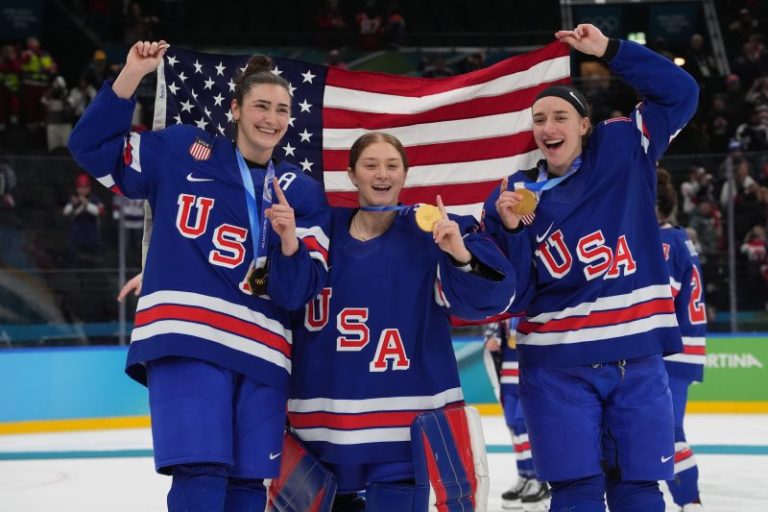
Retired American soccer players Abby Wambach and Julie Foudy said they wish the U.S. Men’s Hockey Team rejected President Donald Trump’s offer to visit the White House after their gold medal win and took accountability for their response to the president’s comments about also having to invite the women’s team.

‘Stop laughing. Don’t laugh and just, I don’t know, knock it all the (expletive) way off,’ Wambach said during a recent episode of her ‘Welcome to the Party’ podcast with Foudy. ‘That is how I feel. Stop (expletive) laughing at things that aren’t funny.’

Following an Olympic win for the men’s hockey team, Trump spoke to the players on a locker room phone call, inviting the team to the State of the Union address on Tuesday, Feb. 24, which most of the players accepted. The president briefly mentioned the women’s hockey team, which also brought home gold, saying he had to invite them too, or he would be ‘impeached.’ The comment sparked a collective laugh among the men’s hockey team, which has not been received well by many women athletes or fans.

Foudy said though she can understand that the men may have been caught up in the moment after the big win, she wishes more accountability would have been taken in the aftermath.

‘After, when realizing what happened, in its full capacity, the thing that sticks with us is, how do you not then say, ‘That was wrong. We shouldn’t have done that,” Foudy said. ‘You should reject the offer to go to the State of the Union and instead, many of them, accepted it because now, you’re not apologizing, you’re doubling down.’

Hilary Knight: ‘Distasteful’

Olympian Hilary Knight, captain of the U.S. women’s hockey team, called Trump’s comments ‘distasteful’ during an interview with ‘Good Morning America’ on Thursday, Feb. 26.

‘Our words matter and how we speak about women matters, and we need to celebrate this team as we’ve earned our celebrations,’ she said.

Kelly Pannek: ‘Don’t know why we expect differently’

Fellow Olympian Kelly Pannek echoed her teammate, Knight.

‘Our experiences with the men’s team (are) different, I think, and that’s something that we all know being there what it felt like to have their support throughout the tournament,’ Pannek said during a recent interview.

As for the men’s call with the president, Pannek said she wasn’t surprised by it.

‘I don’t know why we expect differently,’ she said with a nervous laugh. ‘I think for us, it’s just about getting back to the focus on our team and what our team accomplished.’

Ilona Maher: ‘Not particularly shocked but definitely disappointed’

Olympian gold medalist and professional rugby player Ilona Maher took to her Instagram story on Feb. 25 to share a short, straightforward message: ‘For real, I’m not particularly shocked but definitely disappointed.’

Megan Rapinoe: ‘Hell no.’

During a news conference on Wednesday, Feb. 25, retired American soccer player Megan Rapinoe said the ‘wretched phone call’ with the president should not overshadow the historic win.

‘I think everybody who watched that clip or saw that moment said, ‘hell no.’ You might not be for everybody, whatever, but you’re for us. You’re ours here in Seattle. You’re ours here in America,’ Rapinoe told members of the women’s hockey team. ‘Thank you for this incredible moment that you gave us that will be memories for the rest of our lives.’

Greta Cross is a national trending reporter at USA TODAY. Story idea? Email her at gcross@usatoday.com.

This post appeared first on USA TODAY
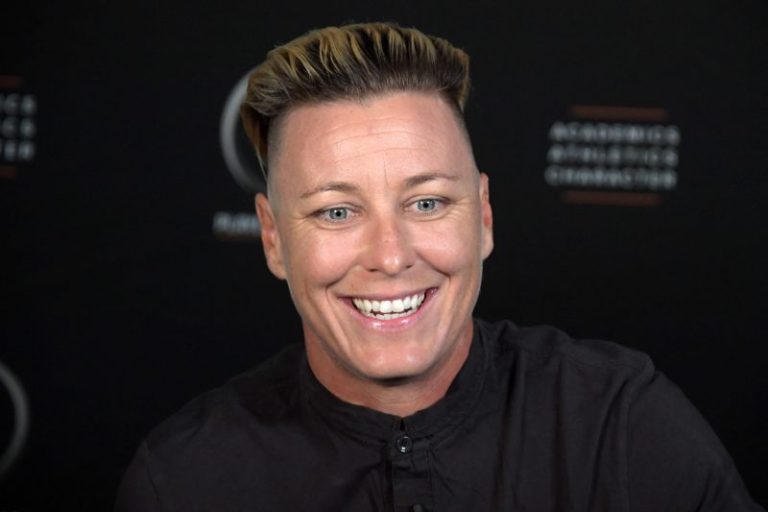
Nebraska made history last month when it became the first school at the Power 4 level to add women’s flag football as a varsity sport.

On Thursday, the Cornhuskers announced the leaders of its newest team, hiring Liz and Katie Sowers. Liz will serve as the head coach while Katie — who brings NFL experience — will be the associate head coach.

“We are thrilled to bring Liz and Katie Sowers to Lincoln to build our women’s flag football program,” Nebraska athletic director Troy Dannen said. “Together they have built a championship program at the NAIA level and have experienced success working with national teams. They have a great vision for what flag football can become at the University of Nebraska and also understand the potential for the sport and the opportunities it will provide for young women across the collegiate landscape.”

Liz Sowers currently serves as the head coach at Ottawa University in Kansas, where she has guided the Braves to five consecutive NAIA National Championships. She’s won the conference’s Coach of the Year award three times and has an overall record of 88-8. Liz has recruited athletes from 17 different states and four different countries to help build Ottawa into a powerhouse program.

In addition to her career at Ottawa, Liz has coached with the U.S. national team. She was the defensive coordinator for the squad in 2023, which won a Continental Championships gold medal and allowed the fewest points in Team USA history. Liz also served as the head coach of the 17U Girls Junior National Team in 2022, which won a gold medal at the Junior National Championships.

After playing college basketball at Oakland University, Liz played flag and tackle football professionally.

‘This is the start of a new era, and we intend to set the standard,” Liz said. “It’s an honor to lead the first flag football program at Nebraska, and even more meaningful to build it alongside my twin sister in a place with such deep tradition. We want young girls across Nebraska to see this team and know there’s a future here for them.’

Katie has been alongside Liz as the associate head coach and defensive coordinator at Ottawa for their five NAIA championships. She also served as the head coach for the Italian Women’s National Flag Football team for two years.

Additionally, Katie has coaching experience in the NFL, having worked with the Kansas City Chiefs, San Francisco 49ers and Atlanta Falcons. From 2015 to 2017, she was a player personnel scout for the Falcons, then worked as an offensive quality control coach with the 49ers, and coached the Chiefs’ tight ends in 2021. When the 49ers made the Super Bowl in 2020, Sowers was the first woman and openly gay person to coach in the NFL’s biggest game.

“This is a fanbase that lives and breathes excellence, and I can’t wait to give this amazing fanbase another sport to rally behind,” Katie said.

Women’s flag football has been on the rise at the college level this year. In January, the NCAA added it to the Emerging Sports for Women program, putting it on a path to reach championship status. To become a championship sport, one that would feature an official NCAA Tournament, the sport has to be sponsored by at least 40 schools and meet minimums in games played and player participation.

But flag football seems to be well on its way to reaching that mark. Last week, Binghamton became the 16th Division I school to announce it was adding a varsity team. Dozens of other schools sponsor women’s flag football teams at the Division II and III levels.

Ahead of its debut at the 2028 Olympics in Los Angeles, the NFL is playing a big role in pushing women’s flag football. The Carolina Panthers are supporting Conference Carolinas, and the Eastern College Athletic Conference will launch a women’s flag football league — made up of club and varsity teams — this spring with a $1 million backing from the New York Jets.

A vote to establish women’s flag football as a championship sport could happen as early as 2027 at the NCAA’s annual convention. In the meantime, the organization behind the Fiesta Bowl is hosting a national championship tournament this spring in Arizona.

This post appeared first on USA TODAY
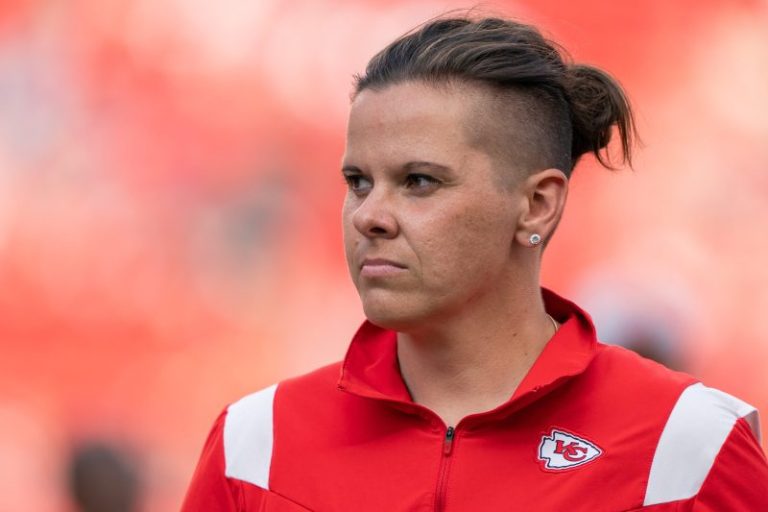
Denmark will head to the polls on March 24 after Prime Minister Mette Frederiksen called a snap parliamentary election, a move widely viewed as an attempt to consolidate rising public support tied to her handling of tensions with President Donald Trump over Greenland.

Frederiksen announced the early vote on Wednesday, arguing that Denmark needs political clarity at a time of mounting geopolitical pressure. According to Reuters, she said the country faces ‘a serious foreign policy situation,’ and that voters should have a say in how Denmark navigates it.

Her center-left Social Democratic government has seen a lift in opinion polls in recent weeks after taking a firm stance that Greenland is not for sale and that Danish sovereignty is non-negotiable. 

The dispute with Washington has reshaped the domestic political conversation, pushing Arctic security and national sovereignty to the forefront of Danish politics.

Frederiksen, who has led Denmark since mid-2019, has spent much of the past year managing the fallout from Trump’s renewed push to acquire Greenland, the vast Arctic island that is an autonomous territory within the Kingdom of Denmark. Tensions escalated sharply last month when Trump threatened to impose new tariffs on Denmark and several other European Union countries.

Trump has argued that the United States needs control of the North Atlantic island for national security reasons, citing increased activity by Russia and China in the Arctic. The region has grown in strategic importance as melting ice opens shipping routes and access to natural resources, intensifying competition among major powers.

The standoff appeared to ease after Trump announced that a framework agreement to strengthen Arctic security had been reached following talks with NATO Secretary General Mark Rutte on the sidelines of the World Economic Forum in Davos. After that announcement, U.S., Danish and Greenlandic officials began technical discussions on implementing the arrangement, focusing on security coordination rather than any change in sovereignty.

Throughout the crisis, Frederiksen and other senior Danish officials repeatedly emphasized that Greenland’s status is not up for negotiation. Speaking at the Munich Security Conference earlier in February, Frederiksen cautioned that she did not believe the crisis had fully passed and suggested Washington could still harbor ambitions to annex the island.

According to The Guardian, Danish commentators have described the prime minister’s polling boost as a ‘Greenland bounce,’ reflecting growing domestic approval of her firm posture toward Washington.

Frederiksen’s decision to call early elections appears aimed at converting that surge into a renewed mandate. Denmark’s next general election had not been scheduled until later this year, but the prime minister argued that the current security climate justifies seeking fresh voter backing.

Greenland, home to roughly 56,000 people, has long been strategically significant due to its location between North America and Europe. The United States maintains a military presence there at Pituffik Space Base, formerly known as Thule Air Base. Any suggestion of U.S. acquisition has historically been sensitive in both Copenhagen and Nuuk, Greenland’s capital.

Euronews reported that Frederiksen’s government has stressed cooperation with allies while firmly rejecting any negotiations over Greenland’s sovereignty. European leaders have signaled support for Denmark, reinforcing the view that Arctic stability is increasingly central to NATO and EU planning.

Opposition parties have criticized the timing of the snap election, arguing that Frederiksen is seeking political advantage during a moment of heightened nationalism. Others, however, have largely backed the government’s line on Greenland, suggesting that the sovereignty issue may transcend traditional party divides.

The March 24 vote will determine whether Frederiksen can strengthen her coalition or whether voters will shift the parliamentary balance. It will also serve as a broader test of how Danes believe their country should manage its relationship with Washington as Arctic security becomes a defining issue of global competition.

Related Article

Trump tells Davos US alone can secure Greenland, insists he won’t ‘use force’
This post appeared first on FOX NEWS

The NHL season has resumed after the Olympic break and if a game is tied after 60 minutes, there will be a 3-on-3 overtime, followed by a shootout.

Just like the Olympics.

But when the NHL rolls around to the playoffs, it will switch to a 5-on-5 overtime.

The Olympics doesn’t do that, though. It goes from a five-minute 3-on-3 overtime in the preliminary round, plus a shootout if necessary, to 10 minutes and a potential shootout in the knockout rounds up to the bronze medal. Even though the gold medal game’s overtime lasts for however long it takes for the first goal to be scored it’s still 3-on-3.

‘It’s not a format we would have chosen, but we respect the rules of the tournaments we participate in,’ NHL deputy commissioner Bill Daly told USA TODAY Sports.

When Jack Hughes scored in the Feb. 22 gold-medal game to give the USA its first gold since 1980, it was done at 3-on-3.

‘You take four players off the ice, hockey’s not hockey anymore,’ Canada coach Jon Cooper said after that game. ‘There’s a reason overtime and shootouts are in play. It’s all TV driven to end games. So there’s not a long time. There’s a reason it’s not in the Stanley Cup Finals or playoffs because it gets ended in five.’

He backtracked later in the news conference.

‘All the teams know the rules going into these beforehand. So you can’t come up here and say we’re the losing team because we lost in a 3-on-3 and that’s not fair,’ he said. ‘We knew the rules coming in. We won a game in this tournament 3-on-3 (against Czechia), so that’s not the way it is.’

Here’s a look at the impact of 3-on-3 overtime at the Olympics:

Why was 3-on-3 overtime adopted?

The NHL has been using 3-on-3 (changed from 4-on-4) in the regular season since 2015-16 in an attempt to cut down on the number of games that go to a shootout.

It’s incumbent early in the Olympics to have games not last forever because up to three games a day are played at the same arena.

The International Ice Hockey Federation kept a shootout for all games until recently, and a few gold medal games went to a shootout. The 1994 Swedish men’s team won on the famed Peter Forsberg move. The 2018 USA women’s team beat Canada in a shootout. Overtime was played at 4-on-4 in that year and the 2010 gold medal overtime won by Canada.

‘The IIHF has tried various formats over the years – some years ago it was decided to align all overtime formats into (3-on-3) and as such it was also used for the Olympics,’ said IIHF spokesperson Noémi Villamarin.

When did 3-on-3 overtime start at the Olympics?

The 2022 Olympics were the first to use 3-on-3 overtimes and to drop the shootout for the gold medal game.

The NHL originally was scheduled to send players to the Beijing Games but backed out to make up league games postponed by COVID.

Despite the 3-on-3, three men’s games went through a full overtime to a shootout, including the USA’s loss to Slovakia in the quarterfinals and Russia’s semifinal win against Sweden. Two preliminary round games were settled in overtime, one after two minutes and the other after four minutes.

Overtime at the 2026 Olympics

The 3-on-3 overtime in 2026 drew notice because NHL players – and therefore elite skill – were on the ice for the first time since 2014.

There were five overtime games in the men’s tournament and no shootouts. One was in the preliminary round, three in the quarterfinals and the one in the final. The women’s gold- and bronze-medal games also went to overtime.

The longest men’s overtime lasted 3 minutes, 27 seconds when the USA’s Quinn Hughes, Jack’s brother, scored to defeat Sweden in the quarterfinals.

‘That’s as nervous as I’ve been ever in a hockey game,’ said Dylan Larkin, who had scored in regulation. ‘Just the way 3-on-3 goes, it’s really just being opportunistic. Someone could fall, some puck could bounce, anything could happen, especially with the ice out there.’

The USA took advantage the wider-open ice of 3-on-3 in the gold medal game. Jack Hughes pushed the puck past Canada’s Cale Makar, Zach Werenski fought off a defensive play and fed Hughes for the winning goal at 1:41.

‘It’s still skilled players out there making skilled plays,’ Cooper said. ‘And the U.S. team has some skilled players – as do we. They made one more play than we did in overtime.’

What’s next for best-of-best hockey overtime?

The 2025 4 Nations Face-Off was the start of a commitment of the NHL to best-on-best international tournaments.

‘The 4 Nations Face-Off was our tournament with our rules,’ Daly said.

A 2028 World Cup of Hockey is in the works. The NHL also has committed to send its players to the 2030 Winter Olympics in France.

Could there be a change in the overtime format before then?

‘The IIHF is continuously evaluating all aspects of the game, also the OT format and will make decisions accordingly,’ Villamarin said.

This post appeared first on USA TODAY
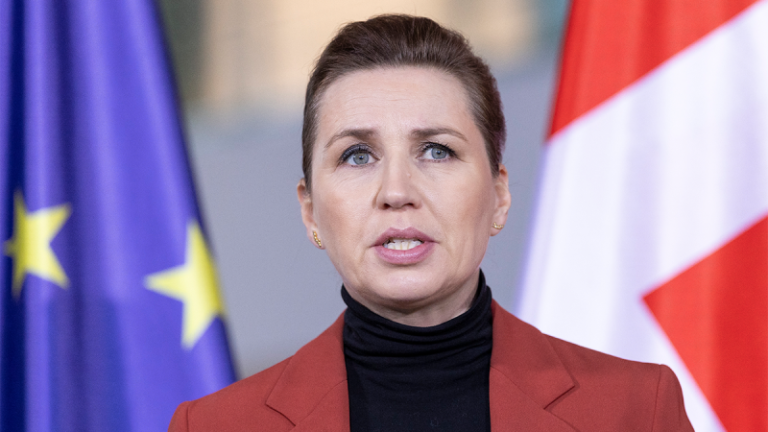
The New York Jets and Tennessee Titans are kickstarting the player movement portion of the 2026 NFL offseason by swinging a rare, player-for-player trade.

The Jets are sending defensive end Jermaine Johnson to the Titans for defensive tackle T’Vondre Sweat, according to multiple reports.

While the Jets and Titans have agreed to the deal, it cannot be processed until the start of the new league year on Wednesday, March 11.

Johnson, 27, was selected by the Jets in the first round of the 2022 NFL Draft. He generated 13 sacks across 47 games in New York – including a career-best 7.5 during his Pro Bowl, 2023 campaign – and will reunite with Robert Saleh in Tennessee.

Sweat, 24, is a hulking run-stuffer who tips the scales at 6-4, 366 pounds. The 2024 second-round pick posted 34 tackles and two sacks across 12 games for the Titans last season, grading as Pro Football Focus’ fifth-best overall interior defender and its fourth-best in run defense.

The Jets will be hoping Sweat can help improve a run defense that allowed the fourth-most rushing yards per game last season (139.5).

Trading Johnson also positions New York to potentially select an edge rusher like David Bailey, Rueben Bain Jr. or hybrid linebacker Arvell Reese with the No. 2 overall pick in the 2026 NFL Draft.

Jermaine Johnson stats

2025

Games: 14
Tackles: 43
Sacks: 3
TFL: 5
Forced fumbles: 0
Pass defenses: 2
INTs: 0

Career

Games: 47
Tackles: 131
Sacks: 13
TFL: 20
Forced fumbles: 1
Pass defenses: 9
INTs: 1

T’Vondre Sweat stats

2025

Games: 12
Tackles: 34
Sacks: 2
TFL: 4
Forced fumbles: 0
Pass defenses: 1
INTs: 0

Career

Games: 29
Tackles: 85
Sacks: 3
TFL: 8
Forced fumbles: 1
Pass defenses: 2
INTs: 0

(This story will be updated as more information becomes available.)

This post appeared first on USA TODAY
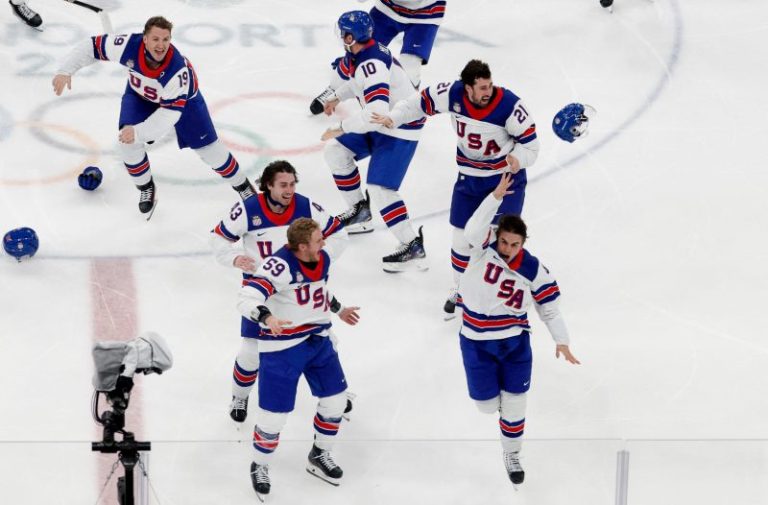
MILAN — Both medal games at the 2026 Winter Olympics women’s hockey tournament came down to overtime.

Megan Keller lifted the U.S. women’s national team to its first gold medal since 2018 after her sudden-death, golden goal secured Team USA’s 2-1 comeback win over Canada on Feb. 19. Earlier in the day, Switzerland’s Alina Müller scored a game-winning goal over Sweden in the bronze-medal game.

‘When (Keller) got the puck, I was like, ‘I know where she’s going to score that,’ and she did,’ Müller said of Keller’s overtime goal in the gold-medal game, the most-watched women’s hockey game on record. ‘Pretty sick move for a defenseman. But yeah we’re going to have a lot of fun back in Boston.’

Both Keller and Muller are members of the Boston Fleet of the Professional Women’s Hockey League, whose fingerprints could be seen all over the 2026 Winter Olympics. Sixty-one PWHL players participated in the Games and 45 competed in the two medal games, showcasing the global talent in the league.

And you don’t have to wait four years to see Olympic stars return to the ice.

BUY: Team USA hockey book: “RED, WHITE & GOLD.”

The second half of the 2025-26 PWHL resumes Thursday with a matchup between the New York Sirens and Montréal Victoire, home to Marie‑Philip Poulin, who became the all-time leading goal scorer in Olympic women’s hockey (20) at the Milan Games.

The Seattle Torrent — which features Hilary Knight, Cayla Barnes, Hannah Bilka and Alex Carpenter from the U.S. women’s gold-medal winning team —  will face off against the Toronto Sceptres on Saturday.

‘The Olympics are every four years, but the development, the rivalries and the world-class standard of play are being built daily in the PWHL,’ Jayna Hefford, PWHL Executive Vice President of Hockey Operations and Hockey Hall of Famer, said in a statement to USA TODAY Sports.

‘As we head into the second half of our third season and an exciting race for the Walter Cup, we hope fans were inspired by the games in Milan and will continue following these players in the PWHL to see this level of hockey every night.”

PWHL lifts women’s hockey

The PWHL didn’t exist ahead of the 2022 Beijing Winter Games. But in the two years since its launch in 2024, the league has created a competitive pipeline that has transformed the sport. The results were on display in Milan.

Forty-one PWHL players earned medals at the 2026 Winter Olympics, with all eight PWHL franchises being represented. Switzerland won its second bronze medal in Olympic history and the first since 2014. USA and Canada faced off in the gold-medal game for the seventh time in Olympic history, but parity across the world has grown.

‘This is just a new normal. … PWHL is definitely what’s best for women’s hockey,’ Canadian head coach Troy Ryan, who also coaches the PWHL’s Toronto Sceptres, said after Canada’s 2-1 loss in the gold-medal game. ‘Largely because of the impact of the PWHL, you saw a lot of closer games. You saw international teams that have PWHL players in it showcase better than they previously did.”

The PWHL has provided viable salaries, health care, dedicated training facilities and staff, in addition to year-round competition and invaluable reps against the world’s elite. As Hefford puts it, ‘Iron sharpens iron, and the growth of the game comes from the best players in the world pushing one another over the course of a full season in the PWHL.’

USA defender Lee Stecklein, who plays for the two-time champion Minnesota Frost, is one player who has benefited from the league. The four-time Olympian credited the PWHL with lengthening her career and told USA TODAY Sports that she’s ‘grateful.’

‘Not only has it elevated all of women’s hockey I believe, but as a player it’s given me the chance to continue getting better I think with more games, more practices, more resources, all of that,’ Stecklein said. ‘Hopefully it’s just continuing to push the women’s game forward and I hope everyone saw that here, this tournament.’

Sweden’s captain Anna Kjellbin, who also plays on the Toronto Sceptres, hopes the limelight on PWHL players on the Olympic stage will inspire more girls to pick up a hockey stick, especially in her home country.

‘Obviously playing against and together with the best in the world, it definitely makes you develop your own hockey,’ Kjellbin told USA TODAY Sports following Sweden’s loss in the bronze-medal game. ‘I hope that for me as a Swede, that more Swedish girls will go over there.’

Record growth, viewership

Team USA’s overtime gold medal win over Canada marked the most-watched women’s hockey game on record, according to NBC. The broadcast averaged 5.3 million viewers between USA Network and Peacock and peaked at 7.7 million viewers in overtime.

‘Every year (women’s hockey) is getting more exciting, getting more physical, more athletic, faster game,’ Müller said. ‘The stadiums are filling up. Just a few years ago there would have been 100 people in the stands and it’s crazy to see.’

The PWHL is expected to get a boost from the 2026 Games as Olympians are set to return to their PWHL clubs. Hefford said fans can expect the same level of excitement and skill as the chase for the Walter Cup resumes.

‘The gold medal game showcased the elite level of women’s hockey that’s been elevated since the PWHL launched in 2024,’ said Hefford, a four-time Olympic gold medalist with the Canadian team. ‘The world has now seen the speed, skill and physicality of the sport on full display and a competitive balance that’s stronger than ever.’

Reach USA TODAY National Women’s Sports Reporter Cydney Henderson at chenderson@gannett.com and follow her on X at @CydHenderson.

The USA TODAY app gets you to the heart of the news — fast. Download for award-winning coverage, crosswords, audio storytelling, the eNewspaper and more.

This post appeared first on USA TODAY
Talks between Iran and the U.S. wrapped up in Geneva Thursday as officials cited ‘significant progress’ and announced a next meeting set for Vienna within days.

Yet despite senior U.S. officials describing the third round as ‘positive,’ per Axios, Iranian state television also reported that Tehran will continue enriching uranium and rejected proposals to transfer it abroad.

According to The Associated Press , the reports claimed Iran would also push for the lifting of international sanctions — signaling it is not prepared to meet President Donald Trump’s demands.

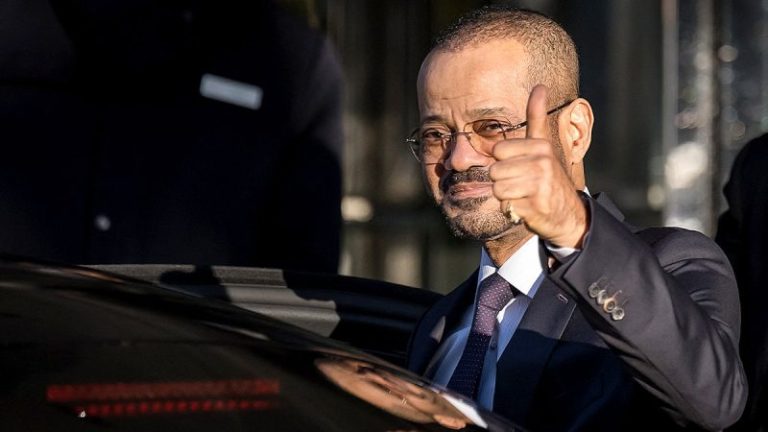
The negotiations were carried out primarily indirectly, with Omani Foreign Minister Badr al-Busaidi relaying messages between the two sides.

In a post on X, al-Busaidi confirmed that the round had concluded and said discussions would resume soon.

‘We have finished the day after significant progress in the negotiation between the United States and Iran,’ he said on X.

‘We will resume soon after consultation in the respective capitals. Discussions on a technical level will take place next week in Vienna. I am grateful to all concerned for their efforts: the negotiators, the IAEA, and our hosts, the Swiss government,’ al-Busaidi said.

There was no immediate public statement from U.S. or Iranian officials after the session.

Trump’s special Middle East envoy, Steve Witkoff, attended the three-hour negotiations with Iranian Foreign Minister Abbas Araghchi.

IAEA Director General Rafael Grossi was also involved, with Iranian officials presenting a draft proposal for a potential nuclear agreement with the U.S., which has key demands.

Iran insists it has the right to enrich uranium and has appeared to refuse to negotiate over other issues, including its long-range missile program and support for armed groups such as Hamas and Hezbollah.

Trump, meanwhile, insists on a deal to curb Iran’s nuclear program. In his State of the Union address Feb. 24, the president said he prefers a diplomatic solution.

‘My preference is to solve this problem through diplomacy, but one thing is certain: I will never allow the world’s number one sponsor of terror, which they are by far, to have a nuclear weapon,’ the president said. ‘Can’t let that happen.’

As the Geneva talks unfolded Thursday, Ali Shamkhani, a senior adviser to Iran’s Supreme Leader, Ayatollah Ali Khamenei, also wrote on X that if the main U.S. concern is preventing a nuclear weapon, that stance ‘aligns’ with Khamenei’s fatwa and Iran’s defensive doctrine.

He added that Iranian Foreign Minister Abbas Araghchi has ‘sufficient support and authority’ to come to a final agreement in the talks.

The development came as the U.S. continues assembling military assets, including a fleet of aircraft and warships in the Middle East.

Fox News Digital has reached out to the White House for comment.

Related Article

Witkoff warns Iran is ‘a week away’ from ‘bomb-making material’ as Trump weighs action
This post appeared first on FOX NEWS

A resolution led by Reps. Thomas Massie, R-Ky., and Ro Khanna, D-Calif., aimed at curbing President Donald Trump’s war powers in Iran is getting the blessing of the House of Representatives’ top Democrat.

House Minority Leader Hakeem Jeffries, D-N.Y., released a statement alongside other Democratic leaders Thursday announcing that they will force a vote on Massie’s resolution next week.

‘As soon as Congress reconvenes next week, we will compel a vote of the full House of Representatives on the bipartisan Khanna-Massie War Powers resolution,’ the joint statement read.

‘This legislation would require the President to come to Congress to make the case for using military force against Iran. The Iranian regime is brutal and destabilizing, seen most recently in the killing of thousands of protesters. However, undertaking a war of choice in the Middle East, without a full understanding of all the attendant risks to our servicemembers and to escalation, is reckless.’

Jeffries and other top Democrats argued that any military force against Iran would be illegal without approval from Capitol Hill.

‘We maintain that any such action would be unconstitutional without consultation with and authorization from Congress. Next week, every Member will have the opportunity to go on the record as to whether they support military action against Iran absent Congressional approval,’ they said.

Massie cited Congress’ war powers in the Constitution in unveiling the legislation earlier this month alongside Khanna.

‘Congress must vote on war according to our Constitution,’ he posted on X. ‘[Khanna] and I will be forcing that vote to happen in the House as soon as possible. I will vote to put America first, which means voting against more war in the Middle East.’

There are multiple mechanisms for forcing a vote over the will of House leadership. But the quickest route is called a ‘privileged resolution,’ which mandates that a specific piece of legislation is considered by the full chamber within two legislative days of its introduction.

Before a vote on the measure itself, however, House GOP leaders can call for a preliminary vote to ‘table’ the legislation or refer it to the relevant committee, both ways of effectively killing those resolutions. 

It’s considered easier for lawmakers in the majority party to vote to kill resolutions on that procedural vote before they have to take a vote on the bill itself.

Privileged resolutions, which are traditionally seldom used, have gained popularity in recent years as Republicans grapple with a razor-thin House majority.

In this case, Speaker Mike Johnson, R-La., can only afford one GOP defection if all Democrats vote to proceed with blocking Trump’s war powers. 

Because Massie is already likely to vote with the minority party, all remaining Republicans in the chamber must vote in lockstep to block the resolution.

Related Article

Kaine wants to rein in Trump’s war powers, but never did the same for Biden, Obama
This post appeared first on FOX NEWS

The U.S. State Department had issued a shelter-in-place advisory for U.S. citizens in Mexico following the violence.
Miami, a co-host city, is seeing a 200 percent increase in hotel bookings for the World Cup period.

MIAMI — The wave of violence that rocked Mexico and led the U.S. State Department to advise U.S. citizens to shelter in place has caught the attention of FIFA President Gianni Infantino in the buildup to the 2026 World Cup, although Infantino said he remains confident matches hosted in Mexico this summer will be a celebration of the sport.

Following the killing of drug-cartel leader Nemesio Oseguera by Mexican security forces, violence broke out in multiple cities including Guadalajara, leading to flight cancellations, roadblocks and the shelter in place order. With the disturbances appearing to wane, normalcy is beginning to return, but only after dozens were reported dead.

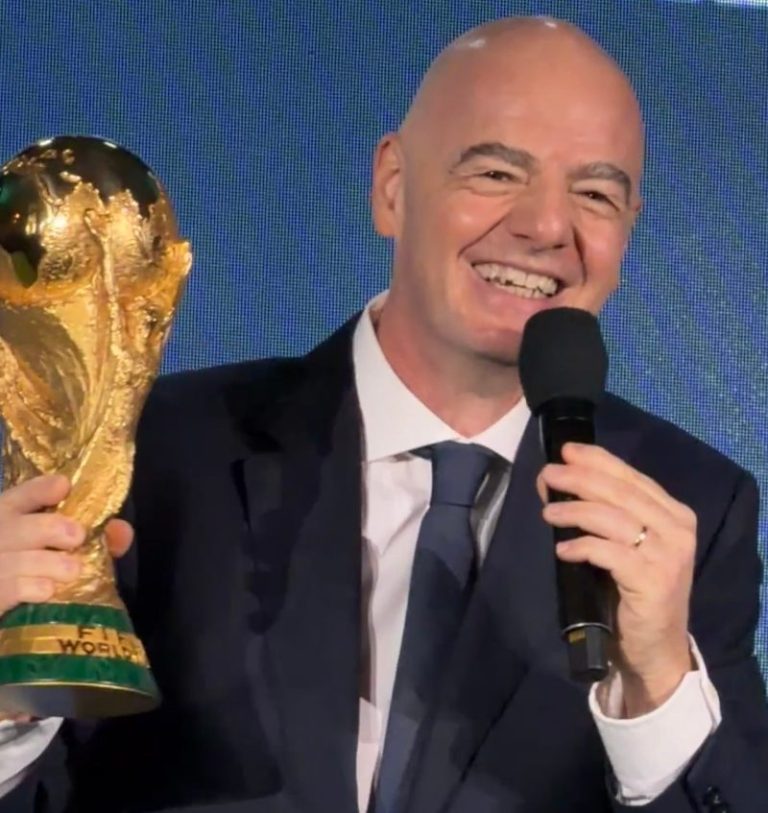
Infantino, speaking at an event Feb. 25 to celebrate the opening of a FIFA museum at Miami’s Freedom Tower, said FIFA has been in constant contact with Mexican President Claudia Sheinbaum.

“We monitor the situation, we look at the situation, and things happen in the world,” Infantino said. “We don’t live on the moon; we live in the world. And when things happen, we have to trust the situation, authorities, the state, the police. We have to trust them with all our confidence and support Mexico, support a country that has suffered, that deserves the World Cup to be a party. And it will be a party.”

Mexico is co-hosting the World Cup with the United States and Canada. Mexico City’s historic Estadio Azteca is scheduled to stage the tournament’s opening match, Mexico vs. South Africa, on June 11.

But Infantino has more pressing concerns before that. Guadalajara, which also will host World Cup matches, is scheduled to host two matches March 26 to help to determine the survivor of a six-team playoff.

“Nobody has to move anything,” Infantino said.

Multiple league matches over the past several days, however, have been postponed.

Infantino spoke on a panel that included Miami Host City Co-Chair Rodney Barreto, Inter Miami owner Jorge Más and Miami Dade College President Madeline Pumariega.

World Cup in Miami updates

Here are some key takeaways from the gathering:

Barreto said the early returns he’s receiving from the Greater Miami Convention & Visitors Bureau show a 200 percent increase in hotel bookings during the World Cup. After the recent killings of Reneé Good and Alex Pretti in Minneapolis by ICE officers, there were calls for a boycott of World Cup matches in the United States.

Seven World Cup matches will be staged at Hard Rock Stadium in Miami Gardens, including a quarterfinal and the consolation match. All eyes are on the June 27 match featuring Colombia vs. Portugal. FIFA officials said that match drew more than 30 million ticket requests — the most of any match in the 48-team tournament, including even the Cup final. The least-expensive tickets for Colombia-Portugal start at more than $2,200 on the secondary market.

England’s national team, ranked fourth by FIFA, is close to finalizing plans for two World Cup tune-up matches at Inter Miami’s soon-to-open Freedom Park near Miami International Airport.

Barreto said the Fan Fest scheduled for Bayfront Park in downtown Miami will go on as planned. Ray Martinez, COO of the Miami Host Committee, told The New York Times this week that the festival could be scrapped unless the committee receives funding from the federal government. Last week, New York scrapped a festival that had been planned for Liberty State Park.

Barreto said plans will be announced to handle traffic, public transportation and security. The transportation plan will include Brightline, Tri-Rail and ride-sharing, he said.

The FIFA museum, a first in the United States celebrating the history of the sport, is open Wednesdays through Sundays from 10 a.m. to 6 p.m. Entry is $18 per person, with discounts available to students. It’s a permanent exhibit at the Freedom Tower, 600 Biscayne Blvd.

Regarding the Fan Fest, Barreto said, “Our Fan Fest is happening. We’re committed to it. It’s all being staged. We have an agreement with the City of Miami, with Bayfront Park.”

Barreto, longtime head of South Florida’s Super Bowl Host Committees, added, “We’ve done this with numerous Super Bowls.”

Martinez had expressed reservations because unlike Super Bowl festivals, which last about a week, the FIFA event is planned to stretch over 23 days.

Barreto said, “We’re hitting all our marks internally with respect to fundraising and cooperation between city, county, state government and federal government, so we feel good. Thank God I’m not the chairman of the Guadalajara Host Committee. But Miami is ready.” 

Más expressed confidence that Miami Freedom Park will be ready for its debut April 4. Más said Lionel Messi, who led Inter Miami to the MLS Cup last season, is focused on assuring Argentina retains the World Cup.

Más couldn’t help but reflect on how far his group and the region have come since Major League Soccer granted him a franchise seven years ago.

“We were sitting in a conference room in our office with a blank board and sort of saying, ‘Oh, what do we do next?’ to today, having a club that’s considered really a giant in global football. Our visibility is global. We’re the best-selling jersey on the planet (Messi’s No. 10). We have the world’s best player here. We’re the MLS Cup champions. We have the World Cup in our city. We live in the best city in the world.

“I mean, things can’t get better. It’s a pinch-me moment.”

This post appeared first on USA TODAY