Archive

2026

Browsing

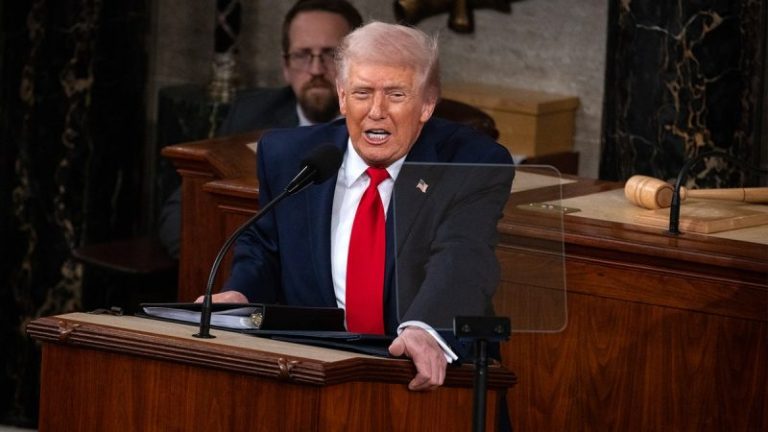
President Donald Trump on Friday said he was ordering every federal government agency to stop using Athropic AI immediately.

‘THE UNITED STATES OF AMERICA WILL NEVER ALLOW A RADICAL LEFT, WOKE COMPANY TO DICTATE HOW OUR GREAT MILITARY FIGHTS AND WINS WARS! That decision belongs to YOUR COMMANDER-IN-CHIEF, and the tremendous leaders I appoint to run our Military,’ Trump began in a lengthy Truth Social post Friday afternoon.

He added, ‘The Leftwing nut jobs at Anthropic have made a DISASTROUS MISTAKE trying to STRONG-ARM the Department of War, and force them to obey their Terms of Service instead of our Constitution. Their selfishness is putting AMERICAN LIVES at risk, our Troops in danger, and our National Security in JEOPARDY.’

The president said he would immediately direct every federal agency to stop using Anthropic technology.

‘We don’t need it, we don’t want it, and will not do business with them again!’ he continued.

There will be a six-month phase out period for agencies such as the Department of War, he added.

‘Anthropic better get their act together, and be helpful during this phase out period, or I will use the Full Power of the Presidency to make them comply, with major civil and criminal consequences to follow,’ he wrote.

He continued, ‘WE will decide the fate of our Country — NOT some out-of-control, Radical Left AI company run by people who have no idea what the real World is all about.’

Earlier this week, Anthropic CEO Dario Amodei refused demands from the Department of War to use its artificial intelligence for ‘all lawful purposes,’ but Amodei said no, concerned over the possibility it could be used for ‘mass domestic surveillance’ or ‘fully autonomous weapons.’

‘The Department of War has stated they will only contract with AI companies who accede to ‘any lawful use’ and remove safeguards in the cases mentioned above. They have threatened to remove us from their systems if we maintain these safeguards; they have also threatened to designate us a ‘supply chain risk’ — a label reserved for US adversaries, never before applied to an American company — and to invoke the Defense Production Act to force the safeguards’ removal,’ Amodei said in a Thursday statement.

He declared that the ‘threats do not change our position: we cannot in good conscience accede to their request.’

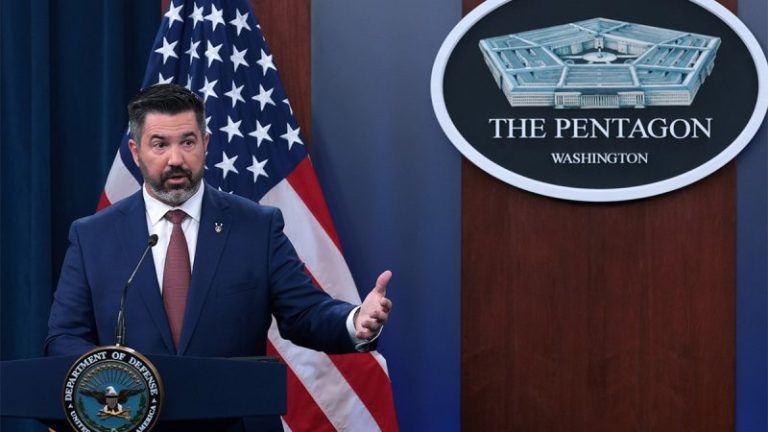
Assistant to the Secretary of War for Public Affairs Sean Parnell declared in a post on X that the department does not want to engage in either of those activities but is asking to use Anthropic’s AI for all legal purposes.

‘The Department of War has no interest in using AI to conduct mass surveillance of Americans (which is illegal) nor do we want to use AI to develop autonomous weapons that operate without human involvement,’ Parnell said in the post. ‘Here’s what we’re asking: Allow the Pentagon to use Anthropic’s model for all lawful purposes.’

‘This is a simple, common-sense request that will prevent Anthropic from jeopardizing critical military operations and potentially putting our warfighters at risk. We will not let ANY company dictate the terms regarding how we make operational decisions. They have until 5:01 PM ET on Friday to decide. Otherwise, we will terminate our partnership with Anthropic and deem them a supply chain risk for DOW,’ he noted.

Under Secretary of War for Research and Engineering Emil Michael accused Anthropic and Amodei of lying.

In a post on X, Michael called Amodei ‘a liar’ who ‘has a God-complex.’ 

‘He wants nothing more than to try to personally control the US Military and is ok putting our nation’s safety at risk. The @DeptofWar will ALWAYS adhere to the law but not bend to whims of any one for-profit tech company,’ he asserted.

In another post he asserted, ‘Anthropic is lying. The @DeptofWar doesn’t do mass surveillance as that is already illegal. What we are talking about is allowing our warfighters to use AI without having to call @DarioAmodei for permission to shoot down an enemy drone swarms that would kill Americans.’

‘It is the Department’s prerogative to select contractors most aligned with their vision. But given the substantial value that Anthropic’s technology provides to our armed forces, we hope they reconsider,’ Amodei said in a statement sent on Thursday to Fox News Digital. ‘Our strong preference is to continue to serve the Department and our warfighters — with our two requested safeguards in place. Should the Department choose to offboard Anthropic, we will work to enable a smooth transition to another provider, avoiding any disruption to ongoing military planning, operations, or other critical missions. Our models will be available on the expansive terms we have proposed for as long as required.’

‘We remain ready to continue our work to support the national security of the United States,’ he added.

On Friday, after Trump’s announcement, Hegseth claimed Anthropic ‘delivered a master class in arrogance and betrayal as well as a textbook case of how not to do business with the United States Government or the Pentagon.’

He added in a lengthy X post: ‘Our position has never wavered and will never waver: the Department of War must have full, unrestricted access to Anthropic’s models for every LAWFUL purpose in defense of the Republic.’

‘In conjunction with the President’s directive for the Federal Government to cease all use of Anthropic’s technology, I am directing the Department of War to designate Anthropic a Supply-Chain Risk to National Security,’ he added. ‘Effective immediately, no contractor, supplier, or partner that does business with the United States military may conduct any commercial activity with Anthropic. Anthropic will continue to provide the Department of War its services for a period of no more than six months to allow for a seamless transition to a better and more patriotic service.’

The General Services Administration also announced on Friday it was removing Anthropic from USAi.gov and their Multiple Award Schedule (MAS). 

‘GSA stands with the President in rejecting attempts to politicize work dedicated to America’s national security,’ GSA Administrator Edward C. Forst said in a statement. ‘Building resilient, secure, and scalable AI solutions demands alignment, trust, and a willingness to make hard calls. We’re committed to delivering results for Americans, and working with our AI industry partners who fit the bill.’

Anthropic did not immediately respond to Fox News Digital’s request for comment. 

Fox News Digital’s Alex Nitzberg contributed to this report.
Related Article

Tech company refuses Pentagon demands on unrestricted use of its AI
This post appeared first on FOX NEWS

The United Nations Human Rights Council (UNHRC) abruptly cut off a video statement after the speaker began criticizing several United Nations officials, including one who has been sanctioned by the Trump administration. The video message was being played during a U.N. session in Geneva, Switzerland, Friday morning.

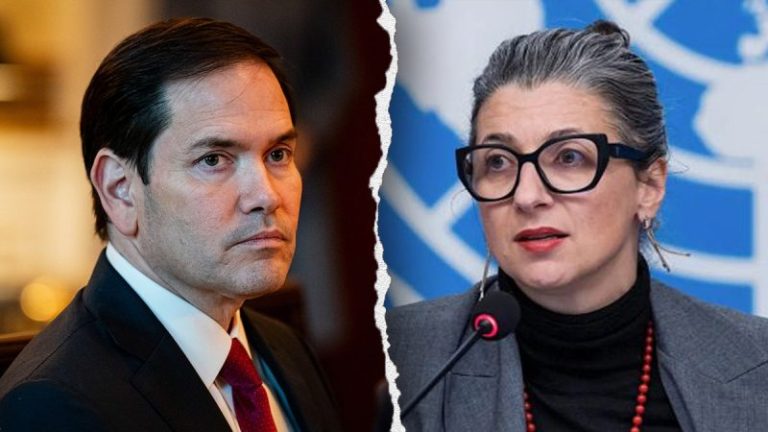
Anne Bayefsky, director of the Touro Institute on Human Rights and the and president of Human Rights, called out several U.N. officials in her message, including U.N. High Commissioner for Human Rights Volker Türk and special rapporteur Francesca Albanese, who is the subject of U.S. sanctions.

Secretary of State Marco Rubio announced sanctions against Albanese July 9, 2025, saying that she ‘has spewed unabashed antisemitism, expressed support for terrorism and open contempt for the United States, Israel and the West.’

‘That bias has been apparent across the span of her career, including recommending that the ICC, without a legitimate basis, issue arrest warrants targeting Israeli Prime Minister Benjamin Netanyahu and former Defense Minister Yoav Gallant,’ Rubio added.

‘I was the only American U.N.-accredited NGO with a speaking slot, and I wasn’t allowed even to conclude my 90 seconds of allotted time. Free speech is non-existent at the U.N. so-called ‘Human Rights Council,” Bayefsky told Fox News Digital.

Bayefsky noted the irony of the council cutting off her video in a proceeding that was said to be an ‘interactive dialogue,’ an event during which experts are allowed to speak to the council about human rights issues.

‘I was cut off after naming Francesca Albanese, Navi Pillay and Chris Sidoti for covering up Palestinian use of rape as a weapon of war and trafficking in blatant antisemitism. I named the prosecutor of the International Criminal Court, Karim Khan, who is facing disturbing sexual assault allegations but still unaccountable almost two years later. Those are the people and the facts that the United Nations wants to protect and hide,’ Bayefsky told Fox News Digital.

‘It is an outrage that I am silenced and singled out for criticism on the basis of naming names.’

Bayefsky’s statement was cut off as she accused Albanese and Navi Pillay, the former chair of the U.N. Independent International Commission of Inquiry on the Occupied Palestinian Territory; and Chris Sidoti, a commissioner of the U.N. Independent International Commission of Inquiry on the Occupied Palestinian Territory. She also slammed Khan, who has faced rape allegations. Khan has denied the sexual misconduct allegations against him.

Had her video message been played in full, Bayefsky would have gone on to criticize Türk’s recent report for not demanding accountability for the atrocities committed by Hamas Oct. 7, 2023.

When the video was cut short, Human Rights Council President Ambassador Sidharto Reza Suryodipuro characterized Bayefsky’s remarks as ‘derogatory, insulting and inflammatory’ and said that they were ‘not acceptable.’

‘The language used by the speaker cannot be allowed as it has exceeded the limits of tolerance and respect within the framework of the council which we all in this room hold to,’ Suryodipuro said.

In response to Fox News Digital’s request for comment, Human Rights Council Media Officer Pascal Sim said the council has had long-established rules on what it considers to be acceptable language.

‘Rulings regarding the form and language of interventions in the Human Rights Council are established practices that have been in place throughout the existence of the council and used by all council presidents when it comes to ensuring respect, tolerance and dignity inherent to the discussion of human rights issues,’ Sim told Fox News Digital.

When asked if the video had been reviewed ahead of time, Sim said it was assessed for length and audio quality to allow for interpretation, but that the speakers are ultimately ‘responsible for the content of their statement.’

‘The video statement by the NGO ‘Touro Law Center, The Institute on Human Rights and The Holocaust’ was interrupted when it was deemed that the language exceeded the limits of tolerance and respect within the framework of the council and could not be tolerated,’ Sim said.

‘As the presiding officer explained at the time, all speakers are to remain within the appropriate framework and terminology used in the council’s work, which is well known by speakers who routinely participate in council proceedings. Following that ruling, none of the member states of the council have objected to it.’

While Bayefsky’s statement was cut off, other statements accusing Israel of genocide and ethnic cleansing were allowed to be played and read in full.

This is not the first time that Bayefsky was interrupted. Exactly one year ago, on Feb. 27, 2025, her video was cut off when she mentioned the fate of Ariel and Kfir Bibas. Jürg Lauber, president of the U.N. Human Rights Council at the time, stopped the video and declared that Bayefsky had used inappropriate language.

Bayefsky began the speech by saying, ‘The world now knows Palestinian savages murdered 9-month-old baby Kfir,’ and she ws almost immediately cut off by Lauber.

‘Sorry, I have to interrupt,’ Lauber abruptly said as the video of Bayefsky was paused. Lauber briefly objected to the ‘language’ used in the video, but then allowed it to continue. After a few more seconds, the video was shut off entirely. 

Lauber reiterated that ‘the language that’s used by the speaker cannot be tolerated,’ adding that it ‘exceeds clearly the limits of tolerance and respect.’

Last year, when the previous incident occurred, Bayefsky said she believed the whole thing was ‘stage-managed,’ as the council had advanced access to her video and a transcript and knew what she would say.

Related Article

UN chief blasted as ‘abjectly tone-deaf’ over message to Iran marking revolution anniversary
This post appeared first on FOX NEWS

Frigid negotiations between the White House and Senate Democrats appear to be thawing, with the Trump administration submitting what it calls a ‘serious’ offer to reopen the government.

‘Yesterday, the White House made another serious counteroffer,’ a White House official told Fox News Digital. ‘Democrats need to make a move to end the shutdown before more Americans are harmed by a lack of funding for critical services like disaster relief.’

It’s the second offer from the White House in an ongoing back-and-forth that has left the Department of Homeland Security (DHS) without funding for two weeks. 

With lawmakers away from Washington, D.C., for the weekend, the shutdown will stretch into a third week.

The latest development comes after a week of stalled negotiations between Senate Democrats and the administration, along with concerns that an off-ramp from the shutdown remained out of reach.

Senate Minority Leader Chuck Schumer, D-N.Y., and House Minority Leader Hakeem Jeffries, D-N.Y., both acknowledged receiving the offer in a joint statement Friday.

‘We have received the White House’s counteroffer and are reviewing it closely. Democrats remain committed to keep fighting for real reforms to rein in ICE and stop the violence,’ they said. 

Congressional Democrats have spent much of the week accusing the White House of not taking the negotiations seriously, while Republicans contend their counterparts are asking for too much.

Schumer and Senate Democrats earlier this week blocked another attempt by Senate Majority Leader John Thune, R-S.D., and Republicans to fund DHS using the original compromise funding bill.

‘It seems like the Democrats concluded this is maybe good politics for them. It’s not for the people whose lives are affected on a daily basis,’ Thune said earlier this week. ‘So, we’ll keep pressing to try and get folks to the table. But I think the White House — you know — they continue to exchange paper and trade paper and all that, and hopefully they’ll find a sweet spot.’

Democrats want stringent reforms to Immigration and Customs Enforcement, including requiring agents to obtain judicial warrants and identify themselves during enforcement actions, changes Republicans and the administration say are red lines.

Democrats argue the White House has not shown the urgency they would have expected, given that an agency central to President Donald Trump’s immigration agenda has been shuttered for nearly three weeks.

‘They haven’t indicated that they’re concerned about the closure of DHS,’ Sen. Elizabeth Warren, D-Mass., told Fox News Digital. ‘They’ve been slow to come back on the proposals that the Democrats have made.

‘And no one has ever explained why there should be only one police force in the entire country that should not have to follow the same kind of rules as everyone else.’

Related Article

Agency that nabbed ‘El Chapo,’ ‘Diddy’ threatened as Democrats’ DHS shutdown drags on
This post appeared first on FOX NEWS

When you open a chatbot, stream a show or back up photos to the cloud, you are tapping into a vast network of data centers. These facilities power artificial intelligence, search engines and online services we use every day. Now there is a growing debate over who should pay for the electricity those data centers consume.

During President Trump’s State of the Union address this week, he introduced a new initiative called the ‘ratepayer protection pledge’ to shift AI-driven electricity costs away from consumers. The core idea is simple. 

Tech companies that run energy-intensive AI data centers should cover the cost of the extra electricity they require rather than passing those costs on to everyday customers through higher utility rates.

It sounds simple. The hard part is what happens next.

Get my best tech tips, urgent security alerts and exclusive deals delivered straight to your inbox. Plus, you’ll get instant access to my Ultimate Scam Survival Guide — free when you join my CYBERGUY.COM newsletter.

Why AI is driving a surge in electricity demand

AI systems require enormous computing power. That computing power requires enormous electricity. Today’s data centers can consume as much power as a small city. As AI tools expand across business, healthcare, finance and consumer apps, energy demand has risen sharply in certain regions.

Utilities have warned that the current grid in many parts of the country was not built for this level of concentrated demand. Upgrading substations, transmission lines and generation capacity costs money. Traditionally, those costs can influence rates paid by homes and small businesses. That is where the pledge comes in.

What the ratepayer protection pledge is designed to do

Under the ratepayer protection pledge, large technology companies would:

Cover the full cost of additional electricity tied to their data centers
Build their own on-site power generation to reduce strain on the public grid

Supporters say this approach separates residential energy costs from large-scale AI expansion. In other words, your household bill should not rise simply because a new AI data center opens nearby. So far, Anthropic is the clearest public backer. CyberGuy reached out to Anthropic for a comment on its role in the pledge. A company spokesperson referred us to a tweet from Anthropic Head of External Affairs Sarah Heck.

‘American families shouldn’t pick up the tab for AI,’ Heck wrote in a post on X. ‘In support of the White House ratepayer protection pledge, Anthropic has committed to covering 100% of electricity price increases that consumers face from our data centers.’

That makes Anthropic one of the first major AI companies to publicly state it will absorb consumer electricity price increases tied to its data center operations. Other major firms may be close behind. The White House reportedly plans to host Microsoft, Meta and Anthropic in early March to discuss formalizing a broader deal, though attendance and final terms have not been confirmed publicly.

Microsoft also expressed support for the initiative. 

‘The ratepayer protection pledge is an important step,’ Brad Smith, Microsoft vice chair and president, said in a statement to CyberGuy. ‘We appreciate the administration’s work to ensure that data centers don’t contribute to higher electricity prices for consumers.’  

Industry groups also point to companies such as Google and utilities including Duke Energy and Georgia Power as making consumer-focused commitments tied to data center growth. However, enforcement mechanisms and long-term regulatory details remain unclear.

How this could change the economics of AI

AI infrastructure is already one of the most expensive technology buildouts in history. Companies are investing billions in chips, servers and real estate. If firms must also finance dedicated power plants or pay premium rates for grid upgrades, the cost of running AI systems increases further. That could lead to:

Slower expansion in some markets
Greater investment in renewable energy and storage
More partnerships between tech firms and utilities

Energy strategy may become just as important as computing strategy. For consumers, this shift signals that electricity is now a central part of the AI conversation. AI is no longer only about software. It is also about infrastructure.

The bigger consumer tech picture

AI is becoming embedded in smartphones, search engines, office software and home devices. As adoption grows, so does the hidden infrastructure supporting it. Energy is now part of the conversation around everyday technology. Every AI-generated image, voice command or cloud backup depends on a power-hungry network of servers.

By asking companies to account more directly for their electricity use, policymakers are acknowledging a new reality. The digital world runs on very physical resources. For you, that shift could mean more transparency. It also raises new questions about sustainability, local impact and long-term costs.

What this means for you

If you are a homeowner or renter, the practical question is simple. Will this protect my electric bill? In theory, separating data center energy costs from residential rates could reduce the risk of price spikes tied to AI growth. If companies fund their own generation or grid upgrades, utilities may have less reason to spread those costs among all customers.

That said, utility pricing is complex. It depends on state regulators, long-term planning and local energy markets.

Here is what you can watch for in your area:

New data center construction announcements
Utility filings that mention large commercial load growth
Public service commission decisions on rate adjustments

Even if you rarely use AI tools, your community could feel the effects of a nearby data center. The pledge is intended to keep those large-scale power demands from showing up in your monthly bill.

Think your devices and data are truly protected? Take this quick quiz to see where your digital habits stand. From passwords to Wi-Fi settings, you’ll get a personalized breakdown of what you’re doing right and what needs improvement. Take my Quiz here: Cyberguy.com.

Kurt’s key takeaways

The ratepayer protection pledge highlights an important turning point. AI is no longer only about innovation and speed. It is also about energy and accountability. If tech companies truly absorb the cost of their expanding power needs, households may avoid some of the financial strain tied to rapid AI growth. If not, utility bills could become an unexpected front line in the AI era.

As AI tools become part of daily life, how much extra power are you willing to support to keep them running? Let us know by writing to us at Cyberguy.com.

Get my best tech tips, urgent security alerts and exclusive deals delivered straight to your inbox. Plus, you’ll get instant access to my Ultimate Scam Survival Guide – free when you join my CYBERGUY.COM newsletter.

Copyright 2026 CyberGuy.com. All rights reserved.

Related Article

Scoop: Trump brings Big Tech to White House to curb power costs amid AI boom
This post appeared first on FOX NEWS

Fernando Mendoza will, most likely, be in silver-and-black by the time April 24 rolls round. That is, as long as doesn’t end up in the back of a black-and-white.

The NFL combine is a time for prospects to meet with prospective employers, and those 32 NFL franchises have something of a reputation of asking questions and making statements that can be considered not only out of the box, but out of a box in left field.

On Feb. 27, Mendoza, the presumptive No. 1 overall pick in the 2026 NFL Draft sat down with CBS Sports and said that a representative from one team was – hopefully – joking when he suggested Mendoza should be arrested so he could slide down draft boards.

‘It was, ‘hey, maybe you should get arrested,’ and I was a little confused, but then I was like, the slide … so you could slide in the draft,’ Mendoza said when asked about the most bizarre question he fielded at the NFL combine.

Mendoza said it wasn’t a team that he had a formal interview with, and opted not to name who it was.

‘So, hopefully I don’t get arrested,’ Mendoza said with a smile.

There’s no denying that Mendoza has an arresting personality, and the talent the match. The 2025 Heisman Trophy winner helped steer Indiana to its first national championship victory, setting himself up to be the first name called come the first round of the 2026 draft.

He finished the 2025 season with 3,535 passing yards, 41 touchdowns and just six interceptions. That production has labeled him the consensus No. 1 quarterback this year.

This post appeared first on USA TODAY

NHL trade deadline season pushes the 2026 Winter Olympics into the rearview mirror.

The March 6 deadline is approaching quickly as the trade action and speculation pick up.

Every year, we see more players end up in trade speculation than those who ultimately get moved. Not every star on the trade block switches teams, while other under-the-radar players can get swapped.

As TheHockeyNews.com ranks the top 25 trade candidates, we could not simply go in order of the best players. Some of them have surfaced in rumors and speculation but might not be as likely to get moved as a mid-tier veteran. We chose instead to go with a combination of the likelihood a player gets traded as well as their impact.

Here are the 25 players to look out for the most over the next week.

NHL trade deadline board

1. Nazem Kadri, C, Calgary Flames

$7 million cap hit, three more years

Kadri has long said he’s wanted to stay in Calgary, but his no-movement clause became a 13-team no-trade list this season. The Flames are closer to the bottom than the playoffs, so a trade feels inevitable for the team’s leading scorer, who has 39 points in 56 games. TSN’s Darren Dreger reported the 35-year-old wants to be traded at this point, while his colleague, Chris Johnston, linked the center to the Colorado Avalanche, where he won a Stanley Cup in 2022.

2. Dougie Hamilton, D, New Jersey Devils

$9 million cap hit, two more years

Hamilton might not be the same defenseman who signed a seven-year, $63 million contract with the Devils in 2021. But he can still be effective on the power play. The only question is whether Hamilton, who reportedly blocked a move to San Jose, will waive his modified no-trade clause, and how much salary New Jersey will have to retain to make a deal happen.

3. Vincent Trocheck, C, New York Rangers

$5.625 million cap hit, three more years

The New York Rangers made it clear they’re retooling, having traded Artemi Panarin already. Trocheck, 32, could be next if the team doesn’t plan on going for the playoffs over the next couple of seasons. With 36 points in 43 games, Trocheck is another middle-six center who’s effective at the faceoff dot and brings cost certainty. He has a 12-team no-trade list.

4. Brayden Schenn, C, St. Louis Blues

$6.5 million cap hit, two more years

Schenn became the topic of trade speculation last season before the Blues went on a franchise-record 12-game winning streak and snuck into the playoffs. Sitting near last place, the Blues should get what they can for their 34-year-old captain, whose scoring has dropped this season.

5. Ryan O’Reilly, C, Nashville Predators

$4.5 million cap hit, one more year

Nashville’s leading scorer sure seems happier these days. But that hasn’t stopped speculation that the 34-year-old could get moved, with Toronto, Washington and Colorado as potential destinations. He doesn’t have a no-trade clause but is being treated as if he does.

6. Tyler Myers, D, Vancouver Canucks

$3 million cap hit, one more year

The Canucks held Myers out of the lineup on Feb. 25 for roster management reasons. He has a no-movement clause, so he must make a decision about his future while Vancouver protects him from getting injured in a game. The 36-year-old reportedly wasn’t crazy about whatever trade the Canucks were working on, according to Sportsnet’s Elliotte Friedman.

7. Bobby McMann, LW/RW, Toronto Maple Leafs

$1.35 million cap hit, pending UFA

The Maple Leafs are outside of a playoff spot, but the team hasn’t leaned toward buying or selling. McMann, 29, has 19 goals and 32 points in 57 games, making him an effective secondary scorer on a relatively cheap salary. If the Leafs are unsure about re-signing him, they should try to restock their prospect and draft pick cupboard.

8. Evander Kane, RW, Vancouver Canucks

$5.125 million cap hit, pending UFA

There’s reportedly some interest in the trade market for 34-year-old Kane. The Canucks are headed toward the draft lottery and not the playoffs, so they could retain up to half of Kane’s $5.15 million cap hit. He has 26 points this season, and after missing all of last regular season, he put up six goals and 12 points in 21 playoff games for the Edmonton Oilers.

9. Blake Coleman, RW/LW/C, Calgary Flames

$4.9 million cap hit, one more year

Coleman told reporters he’s aware of the trade speculation and is a Flame until he’s told he’s not. He’s a versatile forward who can provide depth scoring, kill penalties and get physical. The Tampa Bay Lightning acquired him in 2020 before winning the Stanley Cup twice together.

10. Zach Whitecloud, D, Calgary Flames

$2.75 million cap hit, two more years

Calgary acquired Whitecloud on Jan. 18 in the Rasmus Andersson trade with Vegas. The defensive defenseman’s ice time increased significantly in Calgary, which could help raise his trade value if the team wants to flip him for more future assets. Would Boston go after him after missing out on Andersson?

11. Michael Bunting, LW/RW, Nashville Predators

$4.5 million cap hit, pending UFA

The Predators are in the playoff hunt, which could affect how they handle their pending UFAs. With 30 points, Bunting can provide a lot of offense in limited minutes, and he isn’t afraid to drive the net and get in opponents’ faces. Who wouldn’t want him on a playoff contender?

12. Justin Faulk, D, St. Louis Blues

$6.5 million cap hit, one more year

Faulk has been a frequent topic of trade speculation lately. At 33, he’s still providing a decent amount of offense from the blueline, with 11 goals and 30 points in 57 games. He’s also averaging more than 22 minutes of ice time. RG.Org’s James Murphy connected Faulk to the Bruins.

13. Connor Murphy, D, Chicago Blackhawks

$4.4 million cap hit, pending UFA

It felt like every year, Murphy has surfaced as a trade candidate, but it didn’t make enough sense for the Blackhawks to trade him when they already have a very young defense corps. As a pending UFA, however, if there’s any time to trade him, it’s now. He leads Chicago in blocked shots, and teams struggling to reduce goals against should want this veteran.

14. Logan Stanley, D, Winnipeg Jets

$1.25 million cap hit, pending UFA

Stanley is a 6-foot-7 defensive defenseman with a low cap hit and a career-high nine goals and 18 points. Any team that needs defensive depth, such as the Maple Leafs, should consider bringing on the pending UFA, who doesn’t appear to be deep in extension talks with the Jets.

15. Elias Pettersson, C, Vancouver Canucks

$11.6 million cap hit, six more years

The Canucks already traded Quinn Hughes and Kiefer Sherwood this season. But if they are going to go full rebuild, then maybe it’s also time to move on from Pettersson. According to Sportsnet’s Nick Kypreos, Carolina, Detroit and Los Angeles are just some of the teams that could be interested in the 27-year-old.

16. Scott Laughton, C, Toronto Maple Leafs

$3 million cap hit, pending UFA

The Maple Leafs acquired Laughton from the Philadelphia Flyers a year ago, and his scoring dropped significantly. He only has 11 points this season. In the right situation, Laughton can provide at least double the production while playing a gritty depth role and possessing strong leadership skills. Toronto could re-sign him, but otherwise, it should get a return to salvage last year’s trade.

17. Jordan Kyrou, RW, St. Louis Blues

$8.125 million cap hit, five more years

If it were any likelier that Kyrou would get traded, he would be at the top of this list. The 27-year-old should be entering his prime years, but he’s had a bit of an off year as the Blues struggle overall. His average ice time has dropped as well. With three 70-point seasons under his belt, the asking price would be very high, making Kyrou a likelier offseason trade candidate instead if the Blues want to make a hockey trade.

18. Jake DeBrusk, LW, Vancouver Canucks

$5.5 million cap hit, five more years  

These past two seasons have been a culture shock for DeBrusk, who told reporters, ‘I’ve never lost this many games in a row in my life,’ back in January. It’s another way of saying that DeBrusk, who made the playoffs in each of his seven years in Boston, is used to winning. And with 27 career goals in 86 post-season games, he certainly can produce.  

19. Rasmus Ristolainen, D, Philadelphia Flyers

$5.1 million cap hit, one more year

Ristolainen is once again in the trade rumor mill, but he was there in 2024 and 2025 and ultimately wasn’t moved. Daily Faceoff’s Anthony Di Marco reported six teams were interested in Ristolainen, who’s a 31-year-old defensive defenseman who shoots right and stands 6-foot-4. His cap hit is an obstacle, but the Flyers need a center, and perhaps Ristolainen can help them get one.

20. Andrew Mangiapane, LW, Edmonton Oilers

$3.6 million cap hit, one more year

The Oilers are reportedly trying to trade Mangiapane, who’s been a failed experiment in Edmonton, with 12 points through 50 games. His scoring began to drop last season with the Washington Capitals. If he can bounce back, he’s an effective secondary scorer, recording at least 30 points in five seasons and at least 40 in three.

21. Jordan Binnington, G, St. Louis Blues

$6 million cap hit, one more year

Binnington stopped 26 of 28 shots in the Olympic gold medal game for Canada, and the goals he conceded were a breakaway deke and a point-blank shot off a cross-ice pass. He had a strong tournament. Whether that makes up for his .864 save percentage and 3.65 goals-against average with the Blues this season is up to other GMs to decide. But he’s consistently improved his play in high-pressure moments.

22. Charlie Coyle, C, Columbus Blue Jackets

$5.25 million cap hit, pending UFA

The Blue Jackets looked ready to sell pending UFAs before they went on a hot streak under new coach Rick Bowness. The team must make a judgment call by next week, because Coyle has 42 points in 57 games and would be a valuable addition to another contender should Columbus decide to trade him for the third time in the past year.

23. MacKenzie Weegar, D, Calgary Flames

$6.25 million cap hit, five more years

Weegar has a no-trade clause, but at 32 years old with only 20 playoff career games, he could have a better opportunity of winning the Stanley Cup elsewhere for the rest of his contract. He shoots right, is an effective two-way defenseman and can play over 23 minutes a night.

24. Luke Schenn, D, Winnipeg Jets

$2.75 million cap hit, pending UFA

Will the Schenn brothers ever get to play together in the NHL? In any case, the Jets will have a very difficult time climbing back into a playoff spot, and Schenn remains a serviceable defensive defenseman who leads Winnipeg in hits. The Jets paid a second-round pick and a fourth-rounder to acquire him last year.

25. Jesperi Kotkaniemi, C, Carolina Hurricanes

$4.82 million cap hit, four more years

Friedman reported in January that Carolina was considering trade offers for Kotkaniemi. A fresh start would make sense at this point, as his ice time has dropped this season, and so has his production. He had 33 points last year and 43 two years before that. He’s a project, but teams that need a center should consider him.

Others to keep an eye on: Robert Thomas (STL), Brandon Carlo (TOR), Steven Stamkos (NSH), Jonathan Marchessault (NSH), Shane Wright (SEA), Patrik Laine (MTL), Warren Foegele (LA), Conor Garland (VAN)

For action-packed issues, access to the entire magazine archive and a free issue, subscribe to The Hockey News at THN.com/free. Get the latest news and trending stories by subscribing to our newsletter here. And share your thoughts by commenting below the article on THN.com or creating your own post in our community forum.

This post appeared first on USA TODAY

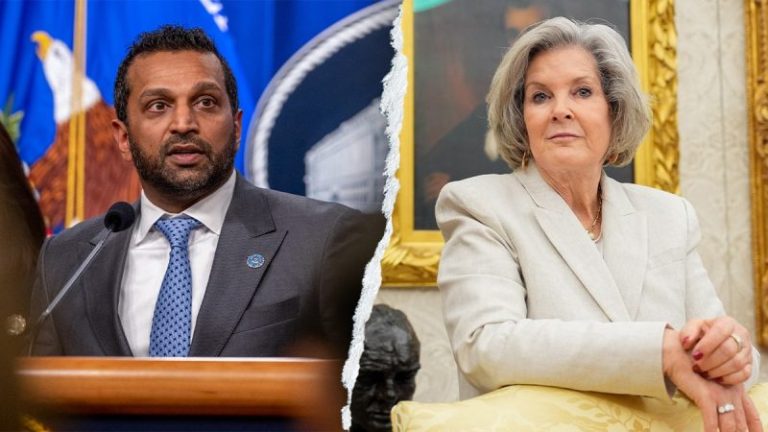
At least a dozen FBI employees were fired this week after revelations that the bureau under the Biden administration allegedly subpoenaed Kash Patel and Susie Wiles’ phone records in 2022 and 2023 as part of a federal probe into then-former President Donald Trump.

More than 10 FBI employees were fired Wednesday, with at least two additional FBI personnel terminated Friday, Fox News has learned.

The FBI allegedly subpoenaed Patel’s and Wiles’ records in 2022 and 2023 while they were private citizens.

Patel now serves as the director of the FBI and Wiles serves as the White House chief of staff.

The names of the fired bureau employees were not shared due to privacy reasons, with the FBI Agents Association (FBIAA) criticizing the firings earlier in the week. 

‘The FBIAA condemns today’s unlawful termination of FBI Special Agents, which—like other firings by Director Patel—violates the due process rights of those who risk their lives to protect our country,’ the organization said in a statement.

‘These actions weaken the Bureau by stripping away critical expertise and destabilizing the workforce, undermining trust in leadership and jeopardizing the Bureau’s ability to meet its recruitment goals—ultimately putting the nation at greater risk.’

Reuters first disclosed the subpoenas, which were issued during the Biden administration, while Special Counsel Jack Smith was investigating Trump’s efforts to overturn the 2020 election and his handling of classified documents at Mar-a-Lago, Florida. 

Smith ended up charging Trump in 2023 with multiple felony offenses related to alleged efforts to challenge the results of the 2020 election and Trump’s handling of the documents after he left office.

A federal judge later dismissed the election interference case after Smith moved to drop it following Trump’s re-election, citing a Justice Department policy against prosecuting a sitting president. 

Smith also dropped the Justice Department’s appeal of a separate ruling that dismissed the classified documents case. Trump has denied any wrongdoing in both matters.

In a statement to Fox News Wednesday, Patel called the move to seize the phone records ‘outrageous and deeply alarming.’ 

‘It is outrageous and deeply alarming that the previous FBI leadership secretly subpoenaed my own phone records — along with those of now White House chief of staff Susie Wiles — using flimsy pretexts and burying the entire process in prohibited case files designed to evade all oversight,’ he said.

The FBI said it discovered the information in the bureau’s newly discovered ‘prohibited case file.’

Patel also said he recently ended the FBI’s ability to categorize files as ‘prohibited.’

Fox News also learned from two FBI officials that in 2023, FBI agents allegedly recorded a phone call between Wiles and her attorney.

According to those officials, Wiles’ attorney was aware the call was being recorded and consented, but Wiles was not informed.

Wiles’ 2023 attorney disputes those claims. 

‘If I ever pulled a stunt like that I wouldn’t — and shouldn’t — have a license to practice law,’ the unidentified attorney said, according to Axios. ‘I’m as shocked as Susie.’ 

Smith testified in 2025 that records of members’ calls helped investigators verify the timeline of events surrounding the Jan. 6 Capitol riot.

He said prosecutors ‘followed all legal requirements in getting those records’ and told a House panel the records obtained from lawmakers did not include the content of conversations. 

Fox News’ Emma Bussey and Emma Colton contributed to this report.

Related Article

Biden’s FBI subpoenaed Kash Patel’s and Susie Wiles’ phone records during federal Trump investigation
This post appeared first on FOX NEWS

Former President Bill Clinton broke his silence on the now-infamous photo of himself in a hot tub that was among the millions of pages in the Department of Justice’s (DOJ’s) Jeffrey Epstein files release.

Clinton was asked about the photo, which appears to show him and a woman whose identity has been redacted, during his closed-door deposition before the House Oversight Committee on Friday.

He said in response to questioning that he did not know who the woman was and that he did not have sex with her, multiple people who were granted anonymity to speak freely confirmed to Fox News Digital.

One of the sources said Clinton intimated that the photo depicted a public hotel pool and that no one pushed back or questioned it.

Clinton is in the hot seat for the committee’s bipartisan investigation into the late financier and sex trafficker for what is expected to be an all-day session of questions into his relationship with Epstein and his accomplice Ghislaine Maxwell.

In his opening statement this morning, Clinton told lawmakers that he had ‘no idea’ of Epstein’s crimes.

‘Now, let me say what you’re going to hear from me. First, I had no idea of the crimes Epstein was committing. No matter how many photos you show me, I have two things that, at the end of the day, matter more than your interpretation of those 20-year-old photos,’ Clinton said, according to his prepared opening remarks.

‘I know what I saw and more importantly, what I didn’t see. I know what I did and more importantly, what I didn’t do. I saw nothing and I did nothing wrong.’

Clinton also warned lawmakers, ‘You’ll often hear me say that I don’t recall,’ but said he would not speculate when asked questions.

‘That might be unsatisfying, but I’m not going to say something I’m not sure of. This was all a long time ago, and I’m bound by my oath not to speculate or to guess. This is not merely for my benefit, but because it doesn’t help you for me to play detective 24 years later,’ Clinton said.

Meanwhile, House Oversight Committee Chairman James Comer, R-Ky., suggested he had an abundance of questions for the former president ahead of the deposition.

‘I think everyone’s seen that there are a lot of photos that have been released by the Department of Justice (DOJ) as well as the Epstein estate. There are a lot of email correspondence that included President Clinton,’ Comer said when asked what he needed to hear.

‘Secretary Clinton confirmed this yesterday: Jeffrey Epstein was in the White House 17 times while Bill Clinton was president. We know that Bill Clinton flew on Jeffrey Epstein’s plane at least 27 times. So those are questions that we’re going to ask.’

But Clinton said in his opening remarks that he would not have ridden on the plane if he knew the illicit things that took place there.

‘As someone who grew up in a home with domestic abuse, not only would I have not flown on his plane if I had any inkling of what he was doing — I would have turned him in myself and led the call for justice for his crimes, not sweetheart deals,’ Clinton said.

‘But even with 20/20 hindsight, I saw nothing that ever gave me pause. We are only here because he hid it from everyone so well for so long, and by the time it came to light with his 2008 guilty plea, I had long stopped associating with him.’

Comer also said questions would pertain to Epstein and to Clinton’s relationship with Ghislaine Maxwell, the late financier’s accomplice who is serving out a prison term in Texas after being convicted on federal sex trafficking charges.

Comer told reporters that his list of questions for Clinton had ‘increased’ in the wake of former Secretary of State Hillary Clinton’s own deposition before the committee on Thursday.

‘Mrs. Clinton deferred a lot of questions to her husband today. There were at least a dozen times when she said, ‘You’ll have to ask my husband that. I can’t answer that,” the chairman said.

He said that many of those deferrals had to do with the Clintons’ nonprofit work.

‘There are so many examples in the evidence the Department of Justice released, in correspondence where Epstein bragged about how involved he was initially in setting up the Clinton Global Initiative and the Clinton Foundation,’ he said.

‘We asked those questions to Secretary Clinton yesterday, and she kept saying she was in the Senate at that time. She wasn’t focused on it. ‘You’ll have to ask my husband.’ So a lot of the Clinton Global Initiative questions yesterday went unanswered because Mrs. Clinton deferred to her husband.’

The former president defended his wife during his opening statement as well, telling lawmakers that ‘before we start, I have to get personal.’

‘You made Hillary come in. She had nothing to do with Jeffrey Epstein. Nothing. She has no memory of even meeting him,’ Clinton said. ‘She neither traveled with him nor visited any of his properties. Whether you subpoenaed 10 people or 10,000, including her, was simply not right.’

Like Hillary Clinton did in her opening remarks, he said Epstein’s victims deserve both ‘justice’ and ‘healing,’ telling lawmakers that it was for them that he was appearing before the committee.

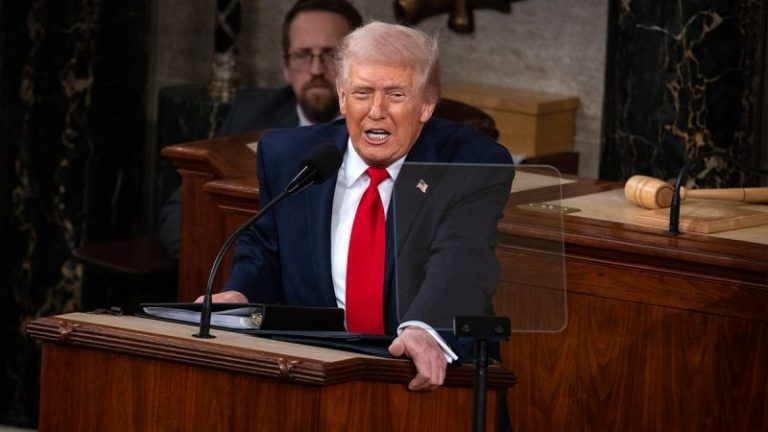
President Donald Trump was also asked about Clinton’s testimony on Friday and told reporters, ‘I don’t like seeing him deposed.’

Clinton’s deposition began a few minutes after 11 a.m. on Friday, a person familiar with planning told Fox News Digital.

Comer told reporters on Thursday after Hillary Clinton’s sitdown that he expected the ordeal to be ‘even longer’ on Friday. 

Her deposition lasted roughly six hours from start to finish, with a brief lunch break in between.

Neither of the Clintons has been accused of anything related to Epstein’s crimes. But the former president’s name appears multiple times in documents released by the DOJ and the House Oversight Committee pertaining to the investigation into Epstein.

Like his wife’s testimony, Clinton will speak to the committee behind closed doors and under oath. 

The interview will be transcribed, with a video likely to be released within a week of its conclusion.

Related Article

Clintons cave: Comer says Bill and Hillary to testify in Epstein probe
This post appeared first on FOX NEWS

When you open a chatbot, stream a show or back up photos to the cloud, you are tapping into a vast network of data centers. These facilities power artificial intelligence, search engines and online services we use every day. Now there is a growing debate over who should pay for the electricity those data centers consume.

During President Trump’s State of the Union address this week, he introduced a new initiative called the Rate Payer Protection Pledge to shift AI-driven electricity costs away from consumers. The core idea is simple. Tech companies that run energy-intensive AI data centers should cover the cost of the extra electricity they require, rather than passing those costs on to everyday customers through higher utility rates.

It sounds simple. The hard part is what happens next.

Get my best tech tips, urgent security alerts and exclusive deals delivered straight to your inbox. Plus, you’ll get instant access to my Ultimate Scam Survival Guide – free when you join my CYBERGUY.COM newsletter.


Why AI is driving a surge in electricity demand

AI systems require enormous computing power. That computing power requires enormous electricity. Today’s data centers can consume as much power as a small city. As AI tools expand across business, healthcare, finance and consumer apps, energy demand has risen sharply in certain regions.

Utilities have warned that the current grid in many parts of the country was not built for this level of concentrated demand. Upgrading substations, transmission lines and generation capacity costs money. Traditionally, those costs can influence rates paid by homes and small businesses. That is where the pledge comes in.

What the Rate Payer Protection Pledge is designed to do

Under the Rate Payer Protection Pledge, large technology companies would:

Cover the full cost of additional electricity tied to their data centers
Build their own on-site power generation to reduce strain on the public grid

Supporters say this approach separates residential energy costs from large-scale AI expansion. In other words, your household bill should not rise simply because a new AI data center opens nearby. So far, Anthropic is the clearest public backer. CyberGuy reached out to Anthropic for a comment on its role in the pledge. A company spokesperson referred us to a tweet from Anthropic’s Head of External Affairs, Sarah Heck.

‘American families shouldn’t pick up the tab for AI,’ Heck wrote in a post on X. ‘In support of the White House rate payer protection pledge, Anthropic has committed to covering 100% of electricity price increases that consumers face from our data centers.’

That makes Anthropic one of the first major AI companies to publicly state it will absorb consumer electricity price increases tied to its data center operations. Other major firms may be close behind. The White House reportedly plans to host Microsoft, Meta and Anthropic in early March to discuss formalizing a broader deal, though attendance and final terms have not been confirmed publicly.

Microsoft also expressed support for the initiative. 

‘The Ratepayer Protection Pledge is an important step,’ Brad Smith, Microsoft vice chair and president, said in a statement to CyberGuy. ‘We appreciate the Administration’s work to ensure that data centers don’t contribute to higher electricity prices for consumers.’  

Industry groups also point to companies such as Google and utilities including Duke Energy and Georgia Power as making consumer-focused commitments tied to data center growth. However, enforcement mechanisms and long-term regulatory details remain unclear.

How this could change the economics of AI

AI infrastructure is already one of the most expensive technology buildouts in history. Companies are investing billions in chips, servers and real estate. If firms must also finance dedicated power plants or pay premium rates for grid upgrades, the cost of running AI systems increases further. That could lead to:

Slower expansion in some markets
Greater investment in renewable energy and storage
More partnerships between tech firms and utilities

Energy strategy may become just as important as computing strategy. For consumers, this shift signals that electricity is now a central part of the AI conversation. AI is no longer only about software. It is also about infrastructure.

The bigger consumer tech picture

AI is becoming embedded in smartphones, search engines, office software and home devices. As adoption grows, so does the hidden infrastructure supporting it. Energy is now part of the conversation around everyday technology. Every AI-generated image, voice command or cloud backup depends on a power-hungry network of servers.

By asking companies to account more directly for their electricity use, policymakers are acknowledging a new reality. The digital world runs on very physical resources. For you, that shift could mean more transparency. It also raises new questions about sustainability, local impact and long-term costs.

What this means for you

If you are a homeowner or renter, the practical question is simple. Will this protect my electric bill? In theory, separating data center energy costs from residential rates could reduce the risk of price spikes tied to AI growth. If companies fund their own generation or grid upgrades, utilities may have less reason to spread those costs across all customers.

That said, utility pricing is complex. It depends on state regulators, long-term planning and local energy markets.

Here is what you can watch for in your area:

New data center construction announcements
Utility filings that mention large commercial load growth
Public service commission decisions on rate adjustments

Even if you rarely use AI tools, your community could feel the effects of a nearby data center. The pledge is intended to keep those large-scale power demands from showing up in your monthly bill.

Think your devices and data are truly protected? Take this quick quiz to see where your digital habits stand. From passwords to Wi-Fi settings, you’ll get a personalized breakdown of what you’re doing right and what needs improvement. Take my Quiz here: Cyberguy.com.

Kurt’s key takeaways

The Rate Payer Protection Pledge highlights an important turning point. AI is no longer only about innovation and speed. It is also about energy and accountability. If tech companies truly absorb the cost of their expanding power needs, households may avoid some of the financial strain tied to rapid AI growth. If not, utility bills could become an unexpected front line in the AI era.

As AI tools become part of daily life, how much extra power are you willing to support to keep them running? Let us know by writing to us at Cyberguy.com.

Get my best tech tips, urgent security alerts and exclusive deals delivered straight to your inbox. Plus, you’ll get instant access to my Ultimate Scam Survival Guide – free when you join my CYBERGUY.COM newsletter.

Copyright 2026 CyberGuy.com. All rights reserved.

Related Article

Scoop: Trump brings Big Tech to White House to curb power costs amid AI boom
This post appeared first on FOX NEWS

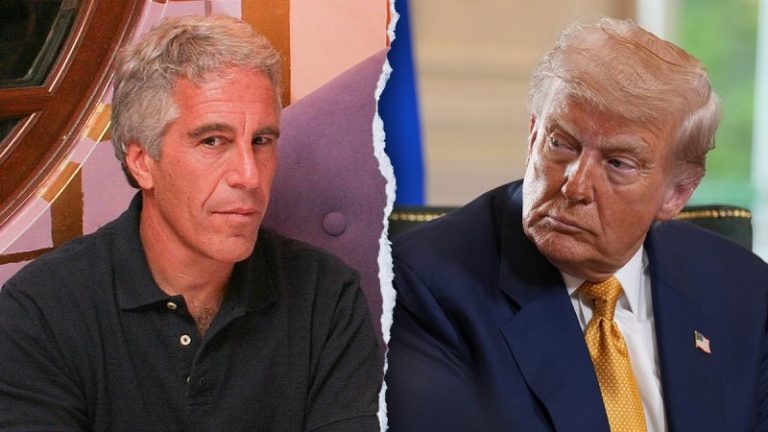
Former President Bill Clinton suggested he could not recall President Donald Trump ever implicating himself in Jeffrey Epstein’s crimes, one of the Republicans deposing him said Friday.

House Oversight Committee Chairman James Comer, R-Ky., briefly updated reporters during Clinton’s deposition in the panel’s Epstein probe. The deposition began a little after 11 a.m. and is expected to continue into early Friday evening.

‘I know there’s a lot of obsession about President Trump from the media, a lot of curiosity about President Trump from media. I want to make a statement because they’ll probably not mention this when they come out here,’ Comer said, referring to Democrats on the committee.

He said the panel’s top Democrat, Rep. Robert Garcia, D-Calif., asked Clinton if Trump should be called before the committee like he was.

‘That’s for you to decide,’ Clinton said, according to Comer.

‘The president went on to say that the president, Trump, ‘has never said anything to me to make me think he was involved,’ and he meant with Epstein,’ Comer said. ‘I thought that was an interesting thing that President Clinton said.’

His deposition, and that of former Secretary of State Hillary Clinton before him, are taking place in the Chappaqua Performing Arts Center in Westchester County, N.Y.

The Clintons have claimed the New York City suburb as their permanent residence since leaving the White House in early 2000.

Democrats who emerged from the performing arts center minutes later to update reporters signaled they did not agree with Comer’s account but would not go into details on their own.

Garcia suggested there was an agreement between all parties not to discuss details of the deposition as it was happening.

‘I think the best response with that is for you to view the complete record what actually he said, which, look, we’re not going to disclose what was said because that’s not in the rules. But Republicans keep breaking the rules,’ the California Democrat told reporters.

‘President Clinton did bring up some additional information about discussions with President Trump. I think that the way Chairman Comer described it, I don’t think it’s a complete, accurate description of what actually was said. 

‘So, let’s release the full transcript, and you can all get a full record of what actually was said, which brings up some very important new questions about comments that President Trump has actually said in the past.’

Trump has been a main topic in the increasingly partisan divide in the House Oversight Committee’s probe.

Democrats have accused the GOP side of covering up for Trump at the expense of Epstein’s victims, while Republicans have accused Democrats of using the pedophile and his heinous crimes as a tool for attacking the commander in chief.

Trump told reporters Friday when asked about Clinton, ‘I don’t like seeing him deposed.’

The deposition is ongoing behind closed doors, but the committee is expected to release a video and transcript of the entire sit-down within days of its conclusion. The same is true for Hillary Clinton’s deposition, the video for which could be released as early as this weekend.

The only portion of Clinton’s testimony that is public so far is his opening statement in which he denied knowing anything about Epstein’s crimes.

‘Now, let me say what you’re going to hear from me. First, I had no idea of the crimes Epstein was committing. No matter how many photos you show me, I have two things that, at the end of the day, matter more than your interpretation of those 20-year-old photos,’ Clinton said, according to his prepared opening remarks.

‘I know what I saw and, more importantly, what I didn’t see. I know what I did and, more importantly, what I didn’t do. I saw nothing and I did nothing wrong.’

Neither Trump nor Clinton have been implicated in any wrongdoing associated with Epstein or his accomplice, Ghislaine Maxwell.

Related Article

Bill Clinton comes out swinging against Comer for rejecting public Epstein hearing: ‘Stop the games’
This post appeared first on FOX NEWS