Archive

2026

Browsing

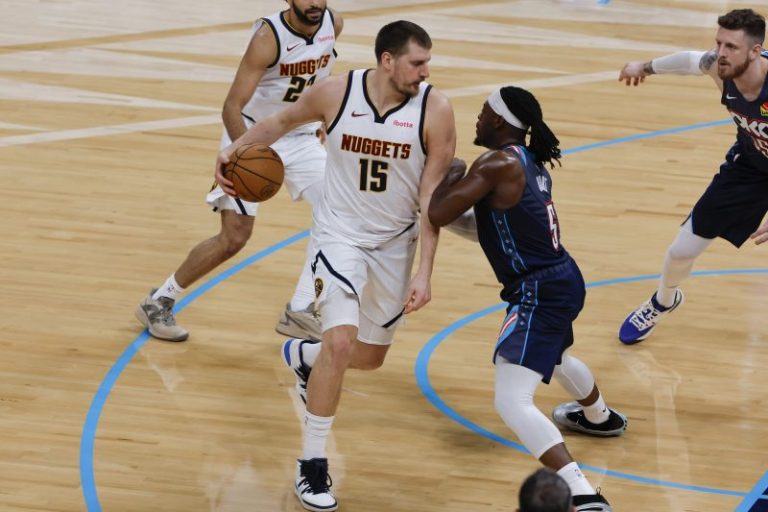
The Denver Nuggets and Oklahoma City Thunder are among two of the top teams in the Western Conference this season. That was on display as the two teams played in a tightly contested game that went into overtime at the Paycom Center on Friday, Feb. 27.

Tensions were running high during the game between the two championship contenders.

Luguentz Dort was ejected following a Flagrant 2 foul after it was considered unnecessary and excessive by the officials.

Dort tripped Nuggets star Nikola Jokic while the Thunder had a 90-88 lead with 8:03 left in the fourth quarter.

Jokic was upset and immediately approached Dort. Jokic and Jaylin Williams received technical fouls for pushing and shoving one another following the initial tripping incident. The fouls offset.

Dort scored eight points and six rebounds in 28 minutes of play before the ejection. Even with Dort ejected and reigning league MVP Shai Gilgeous-Alexander sitting out the overtime period, Oklahoma City prevailed, 127-121.

Nuggets vs. Thunder postgame reaction:

Here’s what Nikola Jokic had to say regarding the incident.

Here’s what Crew Chief James Williams had say about the incident during the pool report interview.

The biggest stories, every morning. Stay up-to-date on all the key sports developments by subscribing to USA TODAY Sports’ newsletter.

This post appeared first on USA TODAY

Iran launched missile and drone strikes targeting U.S. military facilities in multiple Middle Eastern countries Friday, retaliating after coordinated U.S.–Israeli strikes on Iranian military and nuclear-linked sites.

Explosions were reported in or near areas hosting American forces in Bahrain, Qatar, the United Arab Emirates, Kuwait and Jordan, according to regional officials and state media accounts. Several of those governments said their air defense systems intercepted incoming projectiles.

It remains unclear whether any U.S. service members were killed or injured, and the extent of potential damage to American facilities has not yet been confirmed. U.S. officials have not publicly released casualty figures or formal damage assessments.

Iran’s Islamic Revolutionary Guard Corps (IRGC) described the operation as a direct response to what Tehran called ‘aggression’ against Iranian territory earlier in the day. Iranian officials claimed they targeted U.S. military infrastructure and command facilities.

The United States military earlier carried out strikes against what officials described as high-value Iranian targets, including IRGC facilities, naval assets and underground sites believed to be associated with Iran’s nuclear program. One U.S. official told Fox News that American forces had ‘suppressed’ Iranian air defenses in the initial wave of strikes.

Tomahawk cruise missiles were used in the opening phase of the U.S. operation, according to a U.S. official. The campaign was described as a multi-geographic operation designed to overwhelm Iran’s defensive capabilities and could continue for multiple days. Officials also indicated the U.S. employed one-way attack drones in combat for the first time.

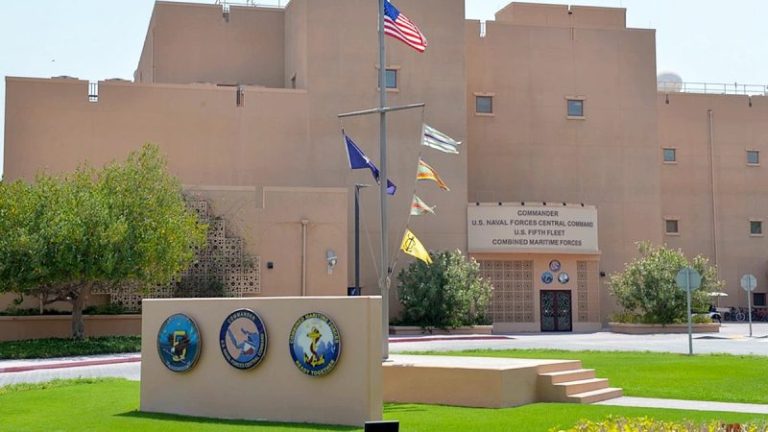
Iran’s retaliatory barrage targeted countries that host American forces, including Bahrain — home to the U.S. Navy’s Fifth Fleet — as well as Qatar’s Al Udeid Air Base and the UAE’s Al Dhafra Air Base. Authorities in those nations reported intercepting many of the incoming missiles. At least one civilian was killed in the UAE by falling debris, according to local authorities.

Iranian officials characterized their response as proportionate and warned of additional action if strikes continue. A senior U.S. official described the Iranian retaliation as ‘ineffective,’ though independent assessments of the overall impact are still developing.

Regional governments condemned the strikes on their territory as violations of sovereignty, raising the risk that additional countries could become directly involved if escalation continues.

The situation remains fluid, with military and diplomatic channels active across the region. Pentagon officials are expected to provide further updates as damage assessments and casualty reviews are completed.

Fox News’ Jennifer Griffin contributed to this report. 

Related Article

Iraq War flashbacks? Experts say Trump’s Iran buildup signals pressure campaign, not regime change
This post appeared first on FOX NEWS

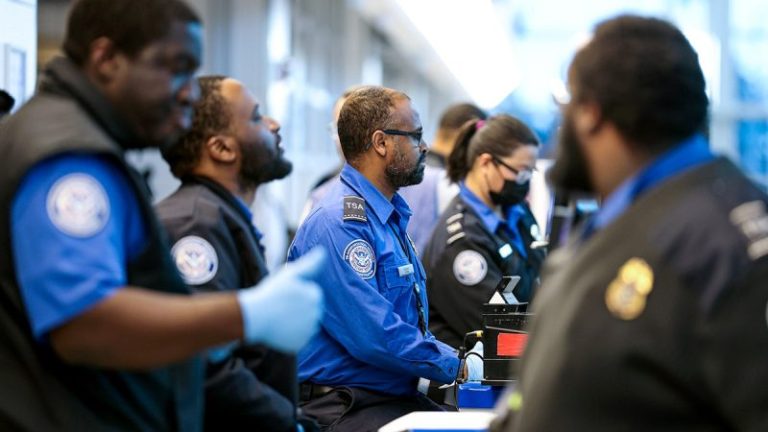
Transportation Security Administration (TSA) workers are on the cusp of working without pay, and there is no backup plan in place to ensure they don’t miss a check.

During the longest government shutdown in history last year, the White House was able to shift around funding from the GOP’s ‘big, beautiful bill’ to ensure that military service members were paid. But TSA workers won’t get the same treatment.

Over 60,000 TSA workers are set to receive partial paychecks this week for the work they did before funding expired earlier this month. They won’t get another paycheck until Congress can land on a deal to fund the agency.

And the likelihood of that wrapping sooner rather than later is low.

Senate Majority Leader John Thune, R-S.D., said that if the Trump administration could ‘figure out a way to pay government employees, absolutely.’

‘I mean, these are people who have jobs and have commitments and have families,’ Thune said. ‘And, you know, it’s going to be really unfortunate if we get to a point where I hope we don’t, where people aren’t getting paid because the Democrats continue to insist on changes to things that are just not feasible or tenable.’

But a White House official told Fox News Digital in a statement that, like the 43-day shutdown, the Trump administration would be able to transfer funding ‘to cover certain employees at DHS that were funded by the bill — namely law enforcement and active-duty military such as USCG.’

‘TSA has not been part of that, as they have a different funding stream from these other agencies,’ the official said.

Republicans believe that a key difference maker in the shutdown could be longer lines at airports and flight cancellations start to stack up as workers go without pay and take time off. A similar scenario played out during the previous shutdown, when cancellations compounded day after day.

‘When people start missing paychecks, and you start having disruptions in travel and that sort of thing, it’s going to get more and more painful,’ Thune said. ‘So it’d be nice to fix this before and to avoid all that, but we’ve got to have a partner that actually wants to make a deal.’

The White House and Senate Democrats, led by Senate Minority Leader Chuck Schumer, D-N.Y., have been at odds over finding a compromise deal to fund the Department of Homeland Security (DHS), with hopes for a quick resolution to the ongoing shutdown quickly fading this week.

Both sides have rejected back-and-forth offers over the last two weeks. Senate Democrats argued that, for now, whether the agency would be reopened and TSA workers get paid was in the White House and Republicans’ hands.

Senate Democrats portrayed negotiations as having totally flatlined and put the onus of further conversations on the Trump administration.

‘We told them what our priorities were, they answered with a very, very weak, limited response,’ Sen. Patty Murray, D-Wash., said. ‘And we said, ‘No, this is what our requests were. We made a few changes,’ nothing back.’

When asked if she believed the White House was negotiating in good faith, Murray said, ‘Not yet.’

But Senate Republicans said that talks were happening on the side among members.

Sen. Katie Britt, R-Ala., hoped that she could convince enough Senate Democrats to come around and ensure that TSA agents, and others, wouldn’t go without pay for the foreseeable future.

‘I am working on talking to people,’ Britt said.

Related Article

Agency that nabbed ‘El Chapo,’ ‘Diddy’ threatened as Democrats’ DHS shutdown drags on
This post appeared first on FOX NEWS

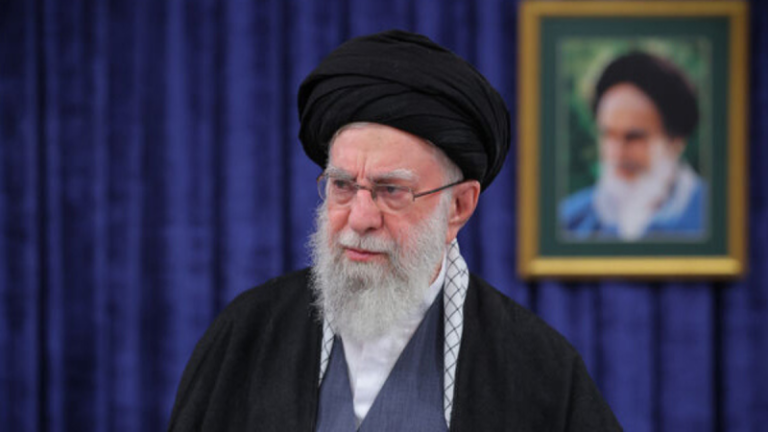
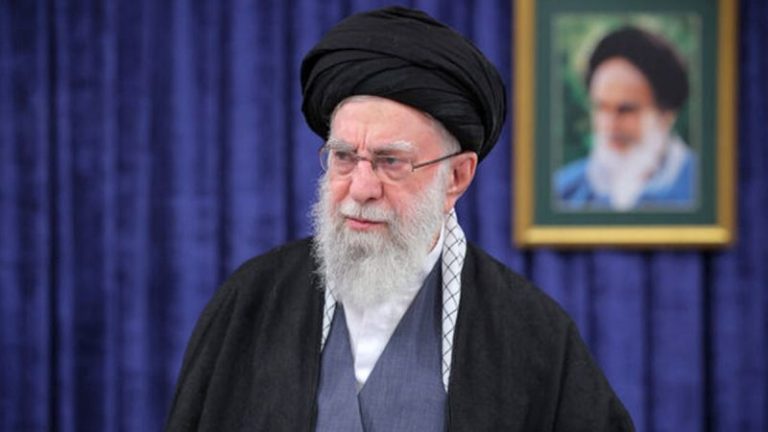
In a sweeping pre-dawn bombing campaign across Iran, Israeli forces targeted sites linked to Iran’s Supreme Leader Ayatollah Ali Khamenei, a senior Israeli official confirmed to Fox News. The official said Iran’s president was also targeted as part of the joint U.S. operation, dubbed Operation Epic Fury.

Reuters reported that Khamenei was not in Tehran during the strikes and was instead transferred to a secure location. 

President Donald Trump described the ‘massive and ongoing’ operation as the opening phase of a campaign that he said would devastate Iran’s military, dismantle its nuclear program and ultimately bring about regime change. 

‘It will be yours to take,’ Trump said in a video statement addressing the Iranian public.

Hours later, Tehran signaled it would not back down, saying it would defend itself against any attack.

‘This will be probably your only chance for generations,’ he added. Officials in Tehran said the country would defend itself against any attack.

Ahead of the strikes, the U.S. military amassed what Trump previously called an ‘armada’ in Iran’s backyard. Mapped out across the Persian Gulf and beyond, the deployment tells its own story, one of calculated pressure backed by credible capability.

The buildup coincided with indirect negotiations between Washington and Tehran over Iran’s disputed nuclear program. Trump has warned that the regime must fully dismantle its nuclear infrastructure or face consequences. 

At the heart of America’s force projection are the USS Abraham Lincoln and USS Gerald Ford aircraft carrier strike groups — dual mobile fortresses at sea, guarded by destroyers and equipped to unleash precision strikes at a moment’s notice. 

More than a dozen other U.S. warships are also in the region to support.

For Iran, it means U.S. forces are not concentrated in a single vulnerable location — they are distributed, layered and positioned to operate from multiple directions at once. 

It was not immediately clear how or when Iran might respond. But with senior leaders targeted and U.S. naval assets positioned across the region, the latest exchange marks one of the most volatile moments in the decades-long standoff between Israel, Iran and the United States.

Related Article

Trump tells Iranians the ‘hour of your freedom is at hand’ as US-Israel launch strikes against Iran
This post appeared first on FOX NEWS

As U.S. and Israeli forces strike deep inside Iran — reportedly targeting senior regime officials including Supreme Leader Ayatollah Ali Khamenei and President Masoud Pezeshkian — the question of who would lead Iran if the Islamic Republic collapses is no longer theoretical.

Iran has retaliated with missile barrages against U.S. positions across the Middle East, and while Iranian state media says top leaders remain alive and have been moved to secure locations, the direct targeting of political and military leadership marks a dramatic escalation.

Yet despite the intensity of the moment, regional analysts say there is no obvious successor poised to take control of the country.

The real power center: security forces

Experts consistently point to one determining factor: whether Iran’s coercive institutions — particularly the Islamic Revolutionary Guard Corps (IRGC) — fracture or consolidate.

If the IRGC remains cohesive, the most likely outcome is not democratic transition but a harder, more openly security-dominated system. A clerical reshuffle or military-led consolidation could preserve much of the existing power structure even if key figures are removed.

If, however, segments of the IRGC or regular armed forces defect or splinter under pressure from war and internal unrest, a political opening could emerge.

At this stage, there is no confirmed evidence of widespread security defections.

Reza Pahlavi: visible but long in exile

One of the most prominent opposition figures abroad is Reza Pahlavi, son of Iran’s last shah. He has lived outside Iran since the 1979 revolution and has spent decades advocating for a secular, democratic system.

In a recent statement, Pahlavi called the U.S. strikes a ‘humanitarian intervention’ and urged Iran’s military and security forces to abandon the clerical regime. He declared that the Islamic Republic is ‘collapsing’ and called on Iranians to prepare to return to the streets at the appropriate time.

But while Pahlavi has name recognition and support among parts of the diaspora, his actual base of support inside Iran is difficult to measure. He has not lived in the country for more than four decades, and many Iranians remain divided over the legacy of the monarchy.

Analysts note that symbolic visibility — including chants heard during past protests — does not necessarily translate into the organizational infrastructure needed to govern a country of nearly 90 million people.

Maryam Rajavi and the NCRI: organized but controversial

Maryam Rajavi, leader of the National Council of Resistance of Iran (NCRI), has taken a different approach. Her organization announced a provisional government framework aimed at transferring sovereignty to the Iranian people and establishing a democratic republic based on her longstanding ten-point plan.

In a subsequent message, Rajavi called on ‘patriotic personnel in the armed forces’ to stand with the Iranian people and urged regime forces to ‘lay down their arms and surrender.’ She also rejected both clerical rule and what she described as ‘monarchical fascism,’ an apparent reference to restorationist movements linked to the former royal family.

The plan calls for dissolving the IRGC and other security institutions, separating religion from the state, abolishing the death penalty, guaranteeing gender equality and holding elections for a constituent assembly.

The NCRI presents itself as a ready governing alternative.

But the group — closely associated with the Mujahedin-e Khalq (MEK) — remains deeply controversial. Its history of armed struggle and years spent in exile have led many analysts to question the depth of its support inside Iran, particularly among younger generations.

While some Western political figures have expressed backing over the years, domestic legitimacy remains uncertain.

No clear heir apparent

Despite bold statements from opposition figures, experts caution that Iran’s future leadership is more likely to be shaped inside military barracks and security compounds than in exile press conferences.

Four decades of repression have hollowed out internal political alternatives. No widely recognized civilian leader inside Iran has emerged with cross-factional legitimacy.

If the regime’s leadership were to fall quickly, the immediate struggle would likely be among security elites — not between rival exile figures.

For now, analysts say, Iran has competing visions but no consensus successor. Whether the country transitions toward a new political system, hardens into military rule or experiences prolonged instability will depend less on declarations abroad and more on whether the regime’s core power structures fracture from within.

Related Article

Trump tells Iranians the ‘hour of your freedom is at hand’ as US-Israel launch strikes against Iran
This post appeared first on FOX NEWS

The players on the U.S. Olympic hockey teams don’t deserve this.

Instead of simply being paraded in the Red, White and Blue, our two gold medal-winning hockey teams are being pilloried in the tiresome refrain of Red vs. Blue.

It needs to stop. Just celebrate these teams.

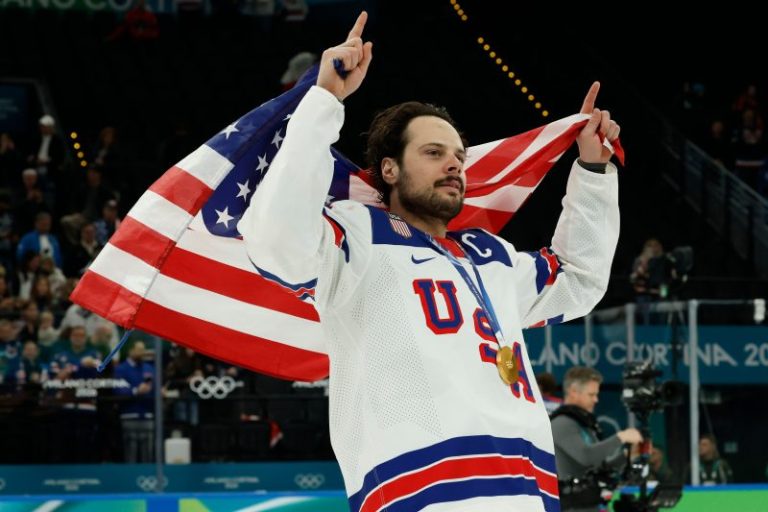
Team USA captain Auston Matthews shouldn’t be returning to his NHL team in Toronto to questions about President Donald Trump’s geopolitical intentions related to Canada or columns questioning his loyalty to the Maple Leafs’ playoff run, simply for going to the White House and his teammates attending the State of the Union address in Washington, D.C.

We should be celebrating the first Mexican-American to win an Olympic gold medal — against Canada, no less — not debating whether Maple Leafs fans will boo or cheer him in his first NHL game back.

Every one of Matthews’ U.S. teammates shouldn’t have to answer for President Donald Trump’s congratulatory locker-room phone call that included comments about the women’s team. They shouldn’t be called a ‘clown’ by Megan Rapinoe, and ‘Miracle on Ice’ hero Mike Eruzione shouldn’t feel compelled to blast the people criticizing the men’s players.

We’ve forced our nation’s Olympic heroes into the impossible position of having to pick a side in the culture war both major political parties allowed to foment over the past decade. These are hockey players who won gold medals at the Olympics, not statesmen returning from abroad. These are issues that go far beyond a president’s phone call, or a State of the Union appearance.

‘The team that wins the Stanley Cup every year accepts the White House invitation to go,’ Matthews told reporters earlier this week. ‘I just think it’s something that you do because we are proud Americans and whatever your political beliefs may be, hopefully something like this will bring more unity to the country. But for us, we believe it’s a great honor no matter who is in office.’

So much for bringing people together.

Blame Trump for bad joke, not Team USA

Is part of the problem that the current media landscape values controversy over nuance? You bet. What’s actually newsworthy too often takes a back seat to what’s trending. A standing ovation for Jack Hughes isn’t just celebrated as a show of appreciation and patriotism anymore. It’s viewed through the prism of left and right that overtook this hockey game over the past week.

But that’s not fair to these players, who really did nothing wrong other than, in a split-second, elect to laugh at a crude, unfunny joke the president never should have made when he called to congratulate them. It’s hard for me to hold that against them, to allow it to diminish that they’re the first U.S. men’s hockey team in 46 years to win a gold medal at the Olympics.

Almost a week later, ever since Trump’s locker-room call set off an avalanche of opinions here and north of the border, it’s perhaps lost that this controversy boils down to one man’s failed attempt at humor.

Was he trying to crack a sexist joke by minimizing the women’s hockey team’s gold-medal accomplishment while telling the men’s team, “We’re going to have to bring the women’s team, you do know that?’

Or was he trying to get a laugh at the expense of Democrats when he added, ‘I do believe I probably would be impeached” if he didn’t invite the women’s team to the White House.

But we’ve collectively spent the days since then somehow trying to make sure what Trump said to the U.S. men’s hockey team lingers longer than what the U.S. men’s hockey team pulled off in Milan.

See, this never was about whether the men’s players should have gone to the White House, or to the State of the Union, to be fêted after an incredible accomplishment. Of course, they should have if they wanted.

This isn’t even about whether Trump should have called the men’s hockey team after its win. Of course, he should have if he wanted. U.S. Presidents have been making those sort of congratulatory calls for decades.

This is about a bad joke, and a group of hockey players who deserve better from us.

This post appeared first on USA TODAY

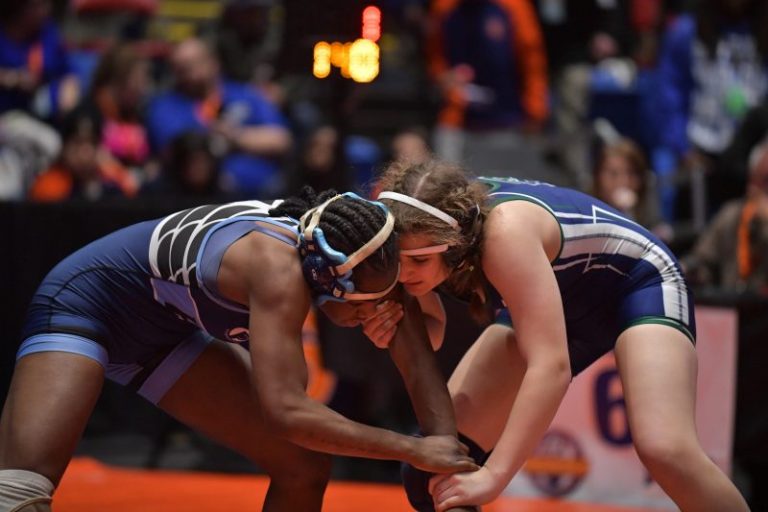
This is Part 1 of a two-part series examining girls wrestling, one of the fastest growing sports for high schoolers. We spoke with the Giller family, who successfully navigated equal high school access for their daughter in Illinois, and Karissa Niehoff, chief executive officer at the National Federation of State High School Associations (NFHS), about how you can ensure your child has it, too.

Jillian Giller started wrestling in seventh grade. She took to it immediately, her parents say.

“It’s one of the last sports,” says her mother, Jenifer, “particularly in the more competitive area, where you don’t need to start when you’re 6 in the community league, and there’s still an opportunity.”

Giller and her husband, Scott, a former high school and collegiate wrestler, made sure their daughter had the platform and opportunities to excel at it.

But when she reached her public high school in suburban Chicago, there wasn’t a girls team. She became the only girl on an all-male freshman team.

Jillian’s parents weren’t sure other girls at school knew they could be wrestling, too. The Illinois High School Association had just sanctioned girls wrestling as a sport for that 2021-2022 school year.

Eventually, as Jillian advanced grades, the school formed a girls team, but the optics screamed of inequity.

“They told the girls they couldn’t have more warmups,” Scott says, “(that) they only had  enough for the boys. That’s like a real thing that happened.”

He and his wife looked at the programs at other schools – their schedules and equipment, among other details – and came up with a plan. Over about 15 months, they say, they spent hundreds of hours of research and writing and meeting with people they thought could help them, including the school’s athletic director, principal and Title IX coordinator, and the president and vice president of the school board.

“You always think you’re gonna find an adult in the room and we just never did,” Scott tells USA TODAY Sports. “All they did was keep affirming what their people were saying.”

The family’s complaint, which wound up in the Department of Education’s Office of Civil Rights, eventually yielded the equal resources they wanted.

Their prolonged struggle highlights recent cases – in their state and in other parts of the country – where wrestlers and parents feel schools are violating Title IX protections.

“Our schools do a good job and our state associations do a good job of keeping Title IX in the forefront,” says NFHS CEO Karissa Niehoff, who wasn’t familiar with the Giller’s case. “I think if there’s anything to point to, it would be, if we have separate facilities or access to facilities, what does the differential look like?

“But in terms of programming, we have really not heard from around the country about a glaring issue. I do think the issues are out there and it may be an educational issue. Do schools and districts understand what Title IX means? If they don’t, they should.” 

We spoke with Scott and Jenifer Giller, whose story eventually helped lead their daughter’s high school to establishing what they call a “best-in-class” girls wrestling program, and with Niehoff, a former Division 1 athlete and high school coach and administrator before she joined the NFHS. They spoke as resources for families seeking equal access for their daughters through high school sports.

What is Title IX and how is girls high school wrestling protected under it?

Title IX, which passed in 1972, is a civil rights law that requires equity across a wide range of areas in academics and athletics and bans sex discrimination against students, employees and others at public schools, colleges and universities that receive federal funding.

As it pertains to high school athletes, it requires schools to offer equal athletic opportunities for boys and girls in such areas as facilities, scheduling, competent coaching and publicity.

Over 25 years, through the help of Title IX, girls high school wrestling has grown from under 2,500 participants to more than 74,000, according to the 2024-25 NFHS survey.

Forty-seven state high school associations (including Washington, D.C., which has its own association) are holding official state championships for girls wrestling this school year. 

This weekend, numerous wrestling state championships are being held across the country, including in California, a state where more than 8,800 high school girls compete.

“It continues to grow,” says Ron Nocetti, the executive director of the California Interscholastic Federation. California’s participation has risen by 3,500 wrestlers and nearly 100 schools participating in girls wrestling since 2018.

“I think our school districts do an excellent job in handling matters when a parent does bring a concern to them,” Nocetti says. “If there are concerns our schools and school districts work extremely well together to resolve any complaints that are offered. I think their goal is to avoid those to begin with and provide the opportunity for girls that want to participate in wrestling to be able to do so.”

Niehoff, the NFHS CEO, says the spirit of Title IX underscores not just dollar-to-dollar funding, but access and opportunities: the number of athletic programs offered, funding and facilities that support programs appropriately and even attention in school media like the athletic handbook.

“Do we talk about our boys and our girls’ programs equally?” Niehoff says. “Do we fund the coaching needs? Do we provide coach education? Do we provide access to celebratory nights? You have a boys football Friday night, guys wearing the jerseys in the hallways; do we celebrate the girls in the same way? So I think a lot of context around Title IX is important.

“The biggest area that we have discussed over the last few years is really facilities based, not program based. So, for example, the baseball fields for boys could have really nice dugouts and lights and such, whereas the girls softball fields don’t have those things.”

How can you determined if you have a Title IX argument against your school’s athletics department?

Complaints and issues with equal opportunity and access in girls wrestling have arisen at other schools in suburban Chicago. There are documented cases in Oregon and Tennessee where Title IX lawsuits have been filed citing, among other allegations, unequal training space for boys and girls wrestlers and mistreatment of the girls team by a male coach.

“We were always in the corner, always pushed aside, and I don’t think that’s a good role model for a head coach, especially for your female athletes who are in a very male-dominated space,” said Cleveland (Oregon) High senior Kiera Callahan, according to a December 2025 story on Fox 12 Oregon’s website.

During Jillian Giller’s freshman year of high school, her parents say, she was offered either a boys singlet or basketball rash guard and shorts for her uniform. The next season, when the team added two more girls wrestlers, they spoke to the school about adding more than three tournaments (far fewer than the boys team had scheduled).

(The Gillers requested USA TODAY Sports not mention the name of Jillian’s high school to prevent reopening an issue that has been resolved.)

The first step in the process, they said, was making the formal ask. But before they did that, they looked around at how other schools in their area were constructing girls wrestling programs.

They had branded girls-cut singlets, a full schedule of tournaments (the Gillers collected about a half-dozen schedules to prove what the schools were doing) and a dedicated girls coach, not whichever coach was available or free from the boys team.

The Gillers said their school fixed a lot of the optics. It provided the girls with warm-up gear the day after Scott mentioned them to the principal, and branded singlets the following week.

“I think one of the real struggles with this sport is that there is a perception among people who don’t know wrestling well that girls wrestling is still an up-and-coming sport,” Jennifer Giller says. “That’s kind of how our complaint was treated when we went through the school was that, ‘Well, you know, it’s a new sport,’ and it almost suggested the lack of opportunity within the sport when that’s just not the case.”

If you are facing perceived Title IX inequality, what steps can you take?

Niehoff suggests starting with your school, where you’ll need evidence that there’s a Title IX issue.

“If you have a handful of kids that want to play something, to go say, ‘You should sanction this,’ is not appropriate,” she says.

High schools aren’t mandated to have a girls wrestling program. But if you can prove there is wider interest than just a few girls, you can better make your case. Niehoff said most states provide opportunities to co-op with other schools to have a combined program.

Once a program is established, Title IX runs much deeper than what we see in girls enrollment numbers and how teams present themselves in public. Its essence lies in how we treat one another.

“We have to pay attention if you have boys and girls wrestling program then, just like basketball, if you schedule the boys for 2 ½ hours in the gym, then give (it to) the girls,” Niehoff says. “If you have the wrestling mats down, practice for two hours or what have you, the girls should get the same time. And the cleanliness of the wrestling match is a big deal. So I would say maybe you flip flop, some days the boys go first, some days the girls go first. You clean the mats in between, because wrestling is a huge health issue, skin issue.

“So I think equity in time and access is huge, making sure the facilities are clean and time access is fair and equal. But if the boys are getting new uniforms every year, then the girls should. It’s practice that really is the focus.”

In the Gillers’ case, as the girls program started to emerge at Jillian’s school, they saw a pattern of alienation and harassment from coaches toward their daughter. Scott first emailed then spoke directly with the coach. After the conversation, the Gillers filed a complaint with the school’s Title IX coordinator.

Their complaint, they say, triggered an internal investigation that revealed a lack of transparency on the issue from the school.

“I didn’t want to be that dad,” Scott Giller says. “I didn’t want to be a guy going (against the) world, and, like, no one was doing it and it just seemed unreasonable. And I think it took a lot of time because we wanted to make sure what we were asking for was reasonable. We didn’t know what that was, until we started digging into (everything).”

They found their main resource for understanding their rights under Title IX came through the Office of Civil Rights’ website. The most helpful section was one that detailed Title IX criteria around athletics.

It’s general statement for athletics: No person shall, on the basis of sex, be excluded from participation in, be denied the benefits of, be treated differently from another person or otherwise be discriminated against in any interscholastic, intercollegiate, club or intramural athletics offered by a recipient, and no recipient shall provide any such athletics separately on such basis.

‘Try and be reasonable’ with your Title IX-related request

The Gillers say they decided to file their complaint through the Office of Civil Rights only after their school and school board channels were exhausted.

“I think what was great about raising awareness locally and what was at least in part responsible for moving that needle was it made it harder to say, ‘Well, there’s less for girls because less exists for girls,’ ‘ Jenifer Giller says. ‘Like the reality (behind) fighting for more was there was so much out there for the girls to participate in.”

She and her husband documented the pattern of harassment of their daughter in writing. They said preserving text messages, emails, photos helped make their case.

“I think the best way to start is, (with the athletic director and/or principal) try to work it out and be reasonable,” Scott says. “Know what you’re trying to accomplish. You want more matches, you want equal equipment, you want a coach but I think you could work a lot of that out optically without causing a lot of problems.”

Scott and Jenifer said, due to legal constraints, they can’t share details on their work with the Office of Civil Rights. But they said their goal from the beginning – when they sat down with school administrators in early 2023 – was a girls wrestling program that provides resources, opportunities and treatment comparable to what the boys receive. They say that was the end result. 

By her senior year, Jillian’s girls high school team had 12 or 13 wrestlers and two coaches. She’s now a freshman on the women’s wrestling team at Illinois Wesleyan University.

“We’re seeing every year there are more collegiate programs and with that comes opportunity for girls who might not even realize that the opportunity to wrestle exists,” Jenifer Giller says. “So it’s hard to see that opportunity pass girls by because the schools aren’t willing to commit the resources that they’re technically supposed to under Title IX.

“I think these are girls who might not have ever excelled in another sport, but can really excel at wrestling.”

Part II coming Sunday: Checking in on California, which is No. 1 among states in girls wrestling participation.

Borelli, aka Coach Steve, has been an editor and writer with USA TODAY since 1999. He spent 10 years coaching his two sons’ baseball and basketball teams. He and his wife, Colleen, are now sports parents for two high schoolers. His Coach Steve column is posted weekly. For his past columns, click here.

This post appeared first on USA TODAY

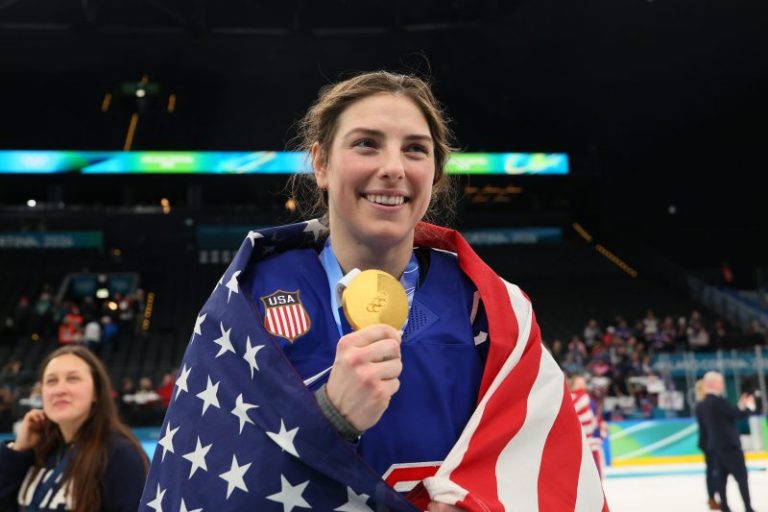
Team USA women’s hockey captain Hilary Knight saved a gold medal win and set U.S. Olympic career scoring records in Milan.

She also did it while injured.

The Seattle Torrent, Knight’s team in the Professional Women’s Hockey League, announced that the forward and team captain suffered a lower-body injury at the 2026 Winter Olympics and will be going on long-term injured reserve. She is out indefinitely.

“While we’re eager to be at full strength and recognize the anticipation of Hilary’s return, we’re focused on putting her and our team in the best position for a playoff push,’ Torrent general manager Meghan Turner said in a statement. ‘Hilary’s leadership extends beyond her gameplay, and as we rely on her in other ways to start this half, we’re supporting her in full as she recovers.” 

While she is out, Knight and USA’s men hockey gold medal winners Jack and Quinn Hughes are scheduled to appear on ‘The Tonight Show with Jimmy Fallon’ on Monday, March 2.

The USA women were trailing Canada 1-0 in the third period of the gold medal game when Knight tipped in a Laila Edwards shot with 2:04 left to tie the game and force overtime. It was her 15th career goal and 33rd career point, setting U.S. Olympic records.

Knight also proposed to U.S. speed skater Brittany Bowe at the Games and was one of the U.S. flag bearers at the closing ceremony.

Knight, 36, has three goals and seven assists in 14 games with the last-place Torrent. The team signed 24-year-old forward Sydney Langseth.

Kendall Coyne-Schofield also going on LTIR

The PWHL’s Minnesota Frost placed captain Kendall Coyne-Schofield on LTIR, saying she suffered an upper-body injury at the Olympics. The third-place team signed forward Élizabeth Giguère, 28.

Coyne-Schofield, 33, scored three goals for the USA at the Olympics, including two in the quarterfinals against Italy.

This post appeared first on USA TODAY
The WNBPA made additional concessions in the latest CBA proposal it submitted to the WNBA, a person with knowledge of the situation told USA TODAY Sports. The person spoke on condition of anonymity because they’re not authorized to speak publicly about ongoing negotiations.

They confirmed the players’ union submitted a counterproposal in response to the WNBA’s Feb. 20 submission. In Friday’s proposal, the WNBPA requested 25% of gross revenue in the first year, increasing over the life of the agreement to an average of roughly 26%. The union’s proposed salary cap remains under $9.5 million.

The latest revenue share request is a reduction from a previous proposal where the WNBPA requested 25% of gross revenue in the first year, increasing over the life of the agreement to an average of roughly 27.5%. According to a person with knowledge of the situation, the reduction would allegedly save the league $100 million over the life of the deal based on the league’s projections.

Friday’s proposal also included changes to the union’s housing requests. It reduced the percentage of the fully guaranteed max salary and cut the length of the contract to one year for players to be ineligible for housing provided by teams.

In a Feb. 17 proposal, the WNBPA advocated for housing to continue in the early years of a player’s career. The union proposed housing could be shed in later years of a contract and be adjusted and phased out with players who make a certain amount of money on a multi-year, fully guaranteed contract.

The WNBPA’s latest proposal comes after the union held a virtual meeting Tuesday, Feb. 24, to discuss the current CBA negotiations and how to proceed, a person with knowledge of the situation confirmed to USA TODAY.

The conversation, which included at least 30 players on the call, was ‘at times tough, but productive.’ The call ended with the majority of player leadership reaffirming their alignment with a December vote to authorize a strike if necessary, despite a few players changing their minds.

The person also told USA TODAY the ‘consistency’ of calls between players has experienced ‘growth over time’ and is ‘at an all-time high.’ According to the person, players are engaged and asking questions, even with information being distributed quickly. Among the current topics discussed was a March 10 date provided by the league that a term sheet for a new CBA must be completed by to avoid a delay in the start of the 2026 season. Opening day is scheduled for May 8.

According to a person with knowledge of the situation, the March 10 date ‘was not received well’ by players. The source says a point of frustration with the March date was the union waiting nearly six weeks to receive a counterproposal from the WNBA after it submitted a proposal in December.

When is the WNBA CBA deadline?

The WNBA said a term sheet for a new CBA must be completed by March 10, to avoid a delay in the start of the 2026 season. Opening day is scheduled for May 8.

WNBA recent collective bargaining negotiations

The league and WNBPA last met virtually on Feb. 23. On the call were more than 50 WNBA players, including the entire WNBPA executive committee, along with league staff, the labor relations committee and owners as CBA negotiations continue.

It’s worth noting even if an agreement is reached by the March 10 deadline, it could take several weeks to ratify the deal. Additionally, the expansion drafts for the Portland Fire and Toronto Tempo need to be held along with free agency and the 2026 WNBA Draft before the season can start.

What are the key issues between WNBA players and owners?

Revenue sharing and the salary cap remain the top sticking points. Here is where the two sides stand:

Revenue sharing: The WNBPA requested 25% of gross revenue in the first year, increasing over the life of the agreement to an average of roughly 27.5%. The WNBA is currently offering more than 70% of league and team net revenue.
The union also proposed a salary cap of less than $9.5 million. The WNBA is proposing a salary cap of $5.65 million per year, rising with league revenues.

Will WNBA players go on strike?

‘The players have spoken,’ the WNBPA said in a statement obtained by USA TODAY Sports. ‘Through a decisive vote with historic participation, our membership has authorized the WNBPA’s Executive Committee to call a strike when necessary. The players’ decision is an unavoidable response to the state of negotiations with the WNBA and its teams.’

The WNBPA said the strike authorization vote resulted in 98% yes votes with 93% participation among players.

Has WNBA ever had a lockout?

Despite previously tense rounds of collective bargaining between the owners and players’ union, the league has never been forced to cancel games due to a labor dispute. However, the 2003 WNBA draft and preseason were delayed during negotiations.

2026 WNBA season key dates

May 8: Opening Night
June 1-June 17: Commissioner’s Cup
July 24-27: All-Star Weekend (Chicago)
September 1- September 16: FIBA Break
September 24: Last day of regular season

This post appeared first on USA TODAY
Size matters in the NFL.

Height, arm length, wingspan, hand size and more headline the list of measurements taken ahead of the NFL draft. In some cases, being average isn’t good enough and, in fact, it might be enough to send a prospect tumbling down the board.

While arm length is having a moment, height is still a key factor for teams looking to draft a quarterback.

Being on the shorter side might make it hard to reach the top shelf at the grocery store or make certain cabinets in the kitchen useless, but those are easily fixed with a stool – something quarterbacks don’t have the luxury of using during a game.

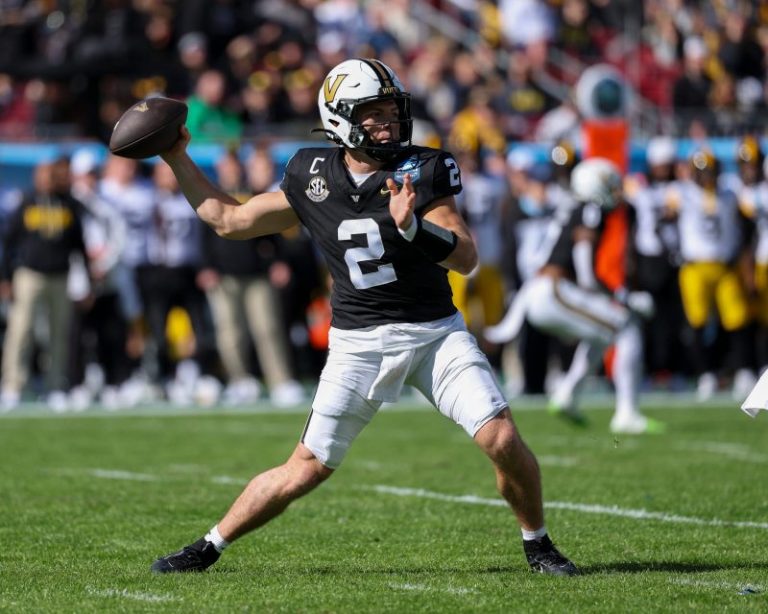
Look no further than Vanderbilt QB Diego Pavia. While he starred on Saturdays for the Commodores, his ability to play on Sundays could come down to a measuring stick.

Pavia will hope to hear his name called at the 2026 NFL Draft in April, but his potential entrance into the NFL would also come with admission into an exclusive club. Here’s a look at the shortest quarterbacks in NFL history.

Shortest QBs in NFL history

Pard Pearce is the shortest quarterback in NFL history, standing at 5-5. He was the quarterback for the Decatur Staleys, now known as the Chicago Bears, from 1920 to 1922. Davey O’Brien, who played for the Philadelphia Eagles in 1939-1940, measured 5-7. He is also the smallest player to ever win the Heisman Trophy.

The honor of being the shortest quarterback in NFL history is often attributed to Eddie LaBaron, who was listed at 5-9 and played 11 seasons with Washington and the Dallas Cowboys from 1952 to 1963.

That list has gotten significantly smaller since the NFL merger – with 5-10 being the shortest height of any quarterback to play a game. Only four players have achieved that feat – Doug Flutie, Joe Hamilton, Kyler Murray and Bryce Young.

Interestingly, all four of them are the same height and two of them, Murray and Young, are active quarterbacks. Perhaps it’s a sign that the league cares less about height than it used to, but the odds still aren’t in favor of the vertically challenged when it comes to playing quarterback in the NFL.

How tall is Diego Pavia?

Pavia was officially listed by Vanderbilt at 6-0, but measurements at the Senior Bowl put the Vanderbilt quarterback at about 5-9 7/8 inches.

This post appeared first on USA TODAY