Archive

2026

Browsing

It’s no longer a whisper; the NBA has a brazen and embarrassing tanking problem.

The Utah Jazz closed the third quarter Monday, Feb. 9 against the Miami Heat up by three. They had been dominating Miami in the paint on both ends. Their size was the big reason why.

Forward Jaren Jackson Jr., the prized acquisition Utah made just one week prior, was at 22 points through 25 minutes. Star forward Lauri Markkanen added 17 in 24:38. Veteran center Jusuf Nurkić was a problem all night to the tune of 10 points and 16 rebounds.

Yet, with a victory in sight, Jazz coach Will Hardy took self-sabotage and shameless tanking to a new level, sitting the trio for the entire fourth quarter.

In a twist of karmic justice, Miami was so poor down the stretch that the Jazz somehow overcame a late five-point deficit to win, 115-111.

This was the second consecutive game that Hardy had pulled the stunt.  Even worse: it appears this will be Utah’s standard operating procedure moving forward.

After the game, a reporter asked Hardy how close he was to subbing Jackson or Markkanen back in.

“I wasn’t,” Hardy responded, plainly and without elaboration.

This is an existential problem, one NBA commissioner Adam Silver and the Board of Governors must fix. Yes, the draft is expected to feature at least three elite-level players, but if the NBA doesn’t take prompt action, anti-competitive behavior will spread to other teams also looking to manipulate outcomes.

It’s out in the open now, and this will come to stain the last quarter of the season. The product will suffer. And fans, as they should, will flee. As such, the NBA is compromised.

And with the explosive growth of online sports gambling and prediction markets, these actions only invite further cracks in the integrity and competitive balance of the sport.

The NBA’s player participation policy is designed to foil tanks by mandating that teams play their stars with regularity. But the Jazz have found a workaround to the rule. Their impact players start games, they just don’t finish them. And thus, they make a mockery of the policy.

“We’ve got to find a way to win against teams that are, I guess you can say, trying to lose,” Heat center Bam Adebayo told reporters after the game.

Frankly, though Hardy will never admit this publicly, the directive to tank is almost certainly coming from his bosses.

Utah’s 2026 first-round pick is top-eight protected, which means that if the lottery places its selection anywhere from Nos. 1 through 8, the pick stays with the team. If it drops to No. 9 or below, that pick is conveyed to the Oklahoma City Thunder.

And while it makes total economic sense — the good fortune of drafting a franchise-altering player instantly pumps millions in value — the flagrant tanking debases the sport and insults the fan who invests time and capital.

Utah (17-37) isn’t alone. The Washington Wizards (14-38) traded for a pair of veterans, Anthony Davis and Trae Young, who have 14 combined All-Star appearances. They were curious win-now moves for a team that’s currently second-to-last in the East.

Davis and Young were both hurt when they were acquired, and it’s unclear when they’ll make their return — if they do at all.

A recent NBA TV report indicated that Davis was not expected to return the rest of the season with left hand and groin injuries.

Young has been dealing with a sprained knee. The timeline for both is nebulous, at best.

Wizards general manager Will Dawkins recently responded to the report and said Davis would return to Dallas to finish his rehab and that he would be reevaluated over the NBA All-Star break.

Davis’ original timeline for a return was four-to-six weeks; Dawkins, though, put it closer to 10.

The Wizards, similar to Utah, have also cycled through young lineups, particularly when facing some of the NBA’s weaker teams.

And also like Utah, Washington’s 2026 first-round pick is top-eight protected.

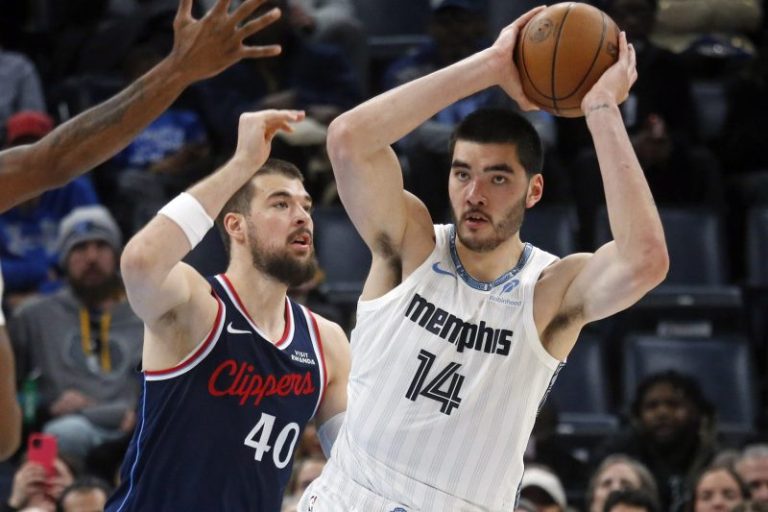
The Indiana Pacers (13-40) traded for Ivica Zubac, who was away from the Clippers, his former team, for the birth of his first child. Zubac had played in the previous nine games before the trade. Yet, Pacers coach Rick Carlisle said Zubac’s debut with Indiana would be delayed because of a sprained ankle that hadn’t been listed on prior injury reports.

Indiana’s 2026 first-round pick? If you guessed that it was protected, you would be correct, for Nos. 1-4 and 10-30.

The young Brooklyn Nets (15-37) waived Cam Thomas after they couldn’t find a trade partner. They, too, appear to be in tank mode.

The Milwaukee Bucks (21-30) might convince Giannis Antetokounmpo to take his time from his calf strain to preserve their draft positioning.

Same for the Dallas Mavericks (19-33) with Kyrie Irving and his torn anterior cruciate ligament.

The Sacramento Kings (12-43) are simply without direction.

The tanking feels like it will get worse. And while the temptation might be to say it’s harmless jockeying, the flip side is that it impacts seeding for the teams actually competing and vying for spots in the playoffs.

In some ways, the timing of the All-Star break is convenient; it provides a respite for Silver and league executives to brainstorm ways to eradicate this from the league.

If they don’t come out strong with precise and targeted measures, then why even play the games? And, if you’re a fan, why even watch?

This post appeared first on USA TODAY

The top two congressional Democrats have, for now, rejected President Donald Trump and Republicans’ offer to avert a shutdown as the deadline rapidly approaches.

For several hours Monday night, both Republicans and Democrats were near-radio silent about the nature of the counter-offer from the White House. That was, in part, because some lawmakers had no idea what was in it.

But the silence appeared to spell yet another positive step toward averting the shutdown of the Department of Homeland Security (DHS). Until Senate Minority Leader Chuck Schumer, D-N.Y., and House Minority Leader Hakeem Jeffries, D-N.Y., trashed the offer Monday night.

‘Republicans shared an outline of a counterproposal, which included neither details nor legislative text,’ the duo said in a joint statement.

‘The initial GOP response is both incomplete and insufficient in terms of addressing the concerns Americans have about [Immigration and Customs Enforcement’s] lawless conduct,’ they continued. ‘Democrats await additional detail and text.’

While not the death knell for negotiations to fund DHS or to agree to a short-term funding extension, it does slow some of the optimistic momentum that Senate Majority Leader John Thune, R-S.D., said was building over the weekend.

Democrats’ prime objective is reining in Immigration and Customs Enforcement (ICE), following the fatal shootings of Alex Pretti and Renee Nicole Good. They finally turned over their legislative proposals to rein in DHS and ICE to Republicans on Saturday.

The proposal they submitted included items that are a bridge too far for Republicans, including requiring ICE agents to get judicial warrants, unmask and have identification ready — some in the GOP warn doing so would lead to more agents being doxxed, when a person’s private information is made public, like their address.

The White House’s counter-offer was in response to Democrats’ list of demands and has been kept under heavy lock and key.

Before Schumer and Jeffries’ rebellion, Republicans were already mulling turning to another short-term funding extension, known as a continuing resolution (CR), for DHS. That’s because after the House passed the Trump-Schumer funding deal last week, lawmakers had only eight days to figure out how to fund the trickiest of all federal agencies.

Now, the Friday deadline is quickly bearing down on Congress, and lawmakers are set to leave Washington, D.C., on Thursday for a weeklong recess. Many will head to Germany for the Munich Security Conference.

Thune said that he would likely tee up another CR on Tuesday, and at the time was optimistic that negotiations were moving in a direction that could lead some Democrats to support the move.

‘We will have to vote on something, obviously, if there’s additional time that’s needed, and hopefully Democrats will be amenable to doing another — an extension,’ Thune said.

This post appeared first on FOX NEWS

A damning new report was released Tuesday morning ahead of a House Ways & Means Committee hearing aimed at exposing foreign actors sending money to U.S. nonprofits.

The hearing, which is titled, ‘Foreign Influence in American Non-profits: Unmasking Threats from Beijing and Beyond,’ will begin around 10:00 a.m. EST.

Six foreign entities have funneled more than $2.65 billion into American politics, according to a new report by conservative watchdog Americans for Public Trust (APT), which highlights a loophole that APT says allows foreign nationals to funnel money to influence American politics ‘virtually unchecked.’   

Foreign nationals are prohibited from donating directly to political campaigns, but money supporting U.S. candidates for office or their viewpoints can also come from 501(c)(3) and (c)(4) nonprofits.   

‘Foreign donors can currently fund U.S.-based advocacy groups – most often 501(c)(3)s and 501(c)(4)s – virtually unchecked,’ the report alleges. It adds that while the money APT uncovered is ‘highly concerning’ solely on its own, there is ‘undoubtedly even more overseas funding sources backing and influencing U.S. advocacy efforts.’

The six entities highlighted in APT’s report come from Switzerland, Denmark and the United Kingdom. The largest donor identified in the report was Switzerland-based Oak Foundation, established by British billionaire retail mogul Alan Parker, which has given around $753 million to U.S.-based advocacy groups. 

Through the Oak Foundation, Parker has supported left-wing environmental groups like Greenpeace, the Environmental Law Institute, the World Resources Institute and the World Wildlife Fund, according to the Capital Research Center’s Influence Watch, which cited the group’s grant database that now appears to be removed. 

Influence Watch added that through its grants, the Oak Foundation has positioned itself as a major supporter of China’s Belt and Road Initiative, which China critics argue is part of a geopolitical strategy disguised as infrastructure investment. 

APT’s report also points out that the Swiss-based Oak Foundation has poured tens of millions into the Arabella network of left-wing advocacy groups, including $67 million to the New Venture Fund, $12 million to the Windward Fund and $2.8 million to the Hopewell Fund. The left-wing Tides Foundation has also received money from the Oak Foundation.


The left-wing Arabella network received funding from the Copenhagen-based KR Foundation and the Swiss-based Laudes Foundation as well, according to APT, which found these two groups have passed a combined $55.6 million to U.S. advocacy groups. The KR Foundation was founded by the descendants of Villum Kann Rasmussen, a Danish civil engineer and businessman who founded the VKR Group, while the Laudes Foundation was established by the Brenninkmeijer family, a German-Dutch business dynasty.          

Entities founded by Swiss billionaire Hansjörg Wyss came in second on APT’s list of six foreign donor organizations. The Wyss Foundation and the Berger Action Fund have reportedly passed more than $673 million to U.S.-based advocacy groups. 

‘The groups funded by Wyss utilize their immense resources to advance a progressive agenda, mold policy debates and decisions, and influence American elections. His foreign funding network focuses on policy priorities such as radical environmentalism, championing sweeping changes to election laws, and directly engaging in campaign activities, including voter mobilization efforts and political attack ads,’ APT’s report states. ‘Wyss’ foreign money has found its way to prominent left-wing organizations including Fund for a Better Future, the League of Conservation Voters, the National Redistricting Action Fund, Planned Parenthood, and Indivisible.’

The remaining two foreign entities mentioned in APT’s report, the U.K.-based Children’s Investment Fund Foundation (CIFF) and the Quadrature Climate Foundation, have allegedly passed hundreds of millions of dollars to U.S.-based groups, respectively, similar to Parker’s and Wyss’ groups. 

CIFF has passed approximately $638.2 million to U.S. advocacy groups, while Quadrature Climate Foundation has passed over around $532.5 million, according to APT.

CIFF, backed by British billionaire Christopher Hohn, has engaged in ‘aggressive left-wing advocacy’ around climate change and social justice, including a group wanting to ban gas stoves, according to APT. Among the funding is also more than $10 million to two Arabella-managed nonprofits, according to the report.

APT also accuses CIFF of fostering ‘alarming ties to groups in China linked to the Chinese Communist Party,’ pointing out its CEO is part of a member organization overseen by the CCP and holds a position with ‘the Belt and Road International Green Development Coalition.’

Meanwhile, the Quadrature Climate Foundation, which also donates to the Arabella network, has been described as sending its grants to ‘some of the world’s most influential campaign groups and scientific institutions’ in an effort to steer ‘both research and lobbying on the green transition.’ It is the philanthropic arm of the London-based hedge fund Quadrature Capital, founded by billionaires Greg Skinner and Suneil Setiya.  

Quadrature Climate Foundation’s largest recipient, according to APT, was ClimateWorks Foundation, which got $147 million from them. 25 million dollars of that money went ‘to support the acceleration of electric vehicles,’ while another $6 million was reportedly earmarked for financial regulation efforts aimed at mitigating climate change risks.

‘For years, foreign organizations and megadonors have quietly poured billions of dollars into the U.S. political sphere with little to no accountability,’ APT complained in its report. ‘Foreign funding has infiltrated nearly every sector of the U.S. political sphere.’

This post appeared first on FOX NEWS

The NBA All-Star Weekend is not only an opportunity for the league to showcase its biggest and brightest stars, but also its future.

The NBA’s Rising Stars Game will feature the league’s young stars, including rookies Cooper Flagg (Dallas Mavericks), Kon Knueppel (Charlotte Hornets) and VJ Edgecombe (Philadelphia 76ers).

The trio also makes up the top 3 in the NBA’s Rookie of the Year race, according to odds on BetMGM.

Flagg (-1000) is considered the favorite, followed by Knueppel (+600) and Edgecombe (+8000).

Flagg has averaged 20.3 points, 6.6 rebounds and 4.2 assists per game in 48 games played this season.

All three rookies were selected in the first round by the game’s honorary coaches. NBA alumnus Carmelo Anthony, Tracy McGrady and Vince Carter are serving as the honorary coaches for the three respective teams. Austin Rivers will also coach a team made up of G League players.

The four teams will compete in a mini tournament at the Intuit Dome. A winner will be decided in the semifinal games when a team is the first to reach or surpass 40 points. The championship game winner will be decided with the first team to reach or surpass 25 points.

Baron Davis and Quentin Richardson were among the former NBA players to have played in the game.

Richardson was a participant in the game when it was referred to as the NBA Rookie-Sophomore Challenge in 2002. Davis competed in the game a year prior.

Looking ahead at this year’s talent, Davis mentioned Flagg, Edgecombe, Derik Queen and Kyshawn George as players he’s excited to watch.

“All these young kids are so good now,” Davis said. “To watch them play and go at each other will be a different type of vibe and be highly competitive. They all want to be No. 1.”

Richardson believes the game and weekend will serve as a rewarding experience for the younger talent, especially those willing to make the most of it.

“I would say to take part in the weekend,” Richardson said. “I know, as some of the younger players, they will have to make appearances and things like that, but that was one of the things I was happy to do. … Sometimes you go to those events and have a great time and meet people you wouldn’t have met.

“Don’t be the guy who’s just turning things down. That’s what the weekend is about: Having fun, but there’s also a lot of business around that weekend.”

Even in the years following his retirement, Davis has served as an example for the younger generation of players when it comes to staying involved within the NBA off-court community and activities.

Davis served as a host for a competition put on by the NBA Foundation and the LA Clippers.

The All-Star pitch competition brought Los Angeles-based companies focused on driving community impact to pitch innovation solutions to a panel of business leaders, investors and other entrepreneurs.

The competitors are competing for $200,000 in total cash prizes.

“What is super exciting is that there are so many young and great minds, especially in this city of Los Angeles, that are building businesses that can be extremely explosive and that can create a lot of jobs,” Davis said. “What the NBA is doing with the foundation and really pouring into the entrepreneurs is not just with the competition, but it’s also the time and the platform they are allowing them to stand on.”

Who will play in the NBA Rising Stars Game?

Team Melo: Cooper Flagg, Stephon Castle, Dylan Harper, Jeremiah Fears, Donovan Clingan, Collin Murray-Boyles

Team T-Mac: Kon Knueppel, Kel’el Ware, Alex Sarr, Tre  Johnson, Ajay Mitchell, Jaylon Tyson, Cam Spencer.

Team Vince: VJ Edgecombe, Derik Queen, Kyshawn George, Matas Buzelis, Egor Demin, Cedric Coward, Jaylen Wells.

Team Austin: Sean East II, Ron Harper Jr., Yanic Konan Niederhauser, Alijah Martin, Tristen Newton, Yang Hansen, Mac McClung, David Jones Garcia.

NBA Rising Stars Game Schedule

Game 1: Team Melo vs. Team Austin
Game 2: Team Vince vs. Team T-Mac
Rising Stars Championship: (G1 winner vs. G2 winner)

How to watch NBA Rising Stars Game?

When: Friday, Feb. 13, 6 p.m. PT (9 p.m. ET)
TV/Stream: Peacock
Where: Intuit Dome (Inglewood, California) | Tickets

This post appeared first on USA TODAY

MILAN — U.S. cross-country skier Jessie Diggins failed to make it out of the women’s sprint classic quarterfinals at the 2026 Winter Olympics on Tuesday, the same event she medaled in at the 2022 Beijing Games.

Diggins finished fourth out of six racers in her quarterfinal heat with a time of 3:59.33. In the sprint classic, the top two finishers from five different quarterfinal rounds advance to the semifinals, plus two ‘lucky losers’ with the fastest time that didn’t already qualify. American Julia Kern was one of the ‘lucky losers’ to advance.

The result ended Diggins’ streak of finishing in the top 10 in all six women’s events in both the 2018 and 2022 Games. She won a bronze medal in the sprint classic 2022 to become the first American to win an individual sprint medal. Diggins finished in eighth place in the women’s 10km + 10km skiathlon on Saturday, her first event of the 2026 Winter Olympics, but suffered a ‘big crash’ that had some lingering effects heading into Tuesday.

Diggins told NBC that she bruised her ribs during Saturday’s crash, which made it difficult to breathe and ‘really hurt’ during the sprint qualifying rounds. She recorded a time of 3:46.67 in the qualifying round.

Watch Winter Olympics on Peacock

CHASING GOLD: Why Jessie Diggins keeps Olympic medals packed away and values joy above all

On Saturday, Diggins got caught in some downhill traffic on the first lap and fell alongside several other racers. Diggins immediately returned to her skis and continued on, but the crash cost her valuable time.

Diggins, the most decorated cross-country skier in U.S. history, will have more opportunities to add to her hardware. She’ll be back on the snow Tuesday for the women’s cross-country skiing 10km freestyle.

Diggins won Team USA’s first Olympic gold in cross country in team sprint alongside Kikkan Randall at the 2018 Pyeongchang Games. Diggins won a silver in the 30k freestyle at the 2022 Beijing Winter Olympics.

The USA TODAY app gets you to the heart of the news — fastDownload for award-winning coverage, crosswords, audio storytelling, the eNewspaper and more.

This post appeared first on USA TODAY

As March Madness approaches, so does the coaching carousel for the women’s college basketball season.

The sport already has two openings as of early February, with Joe McKeown’s retirement looming at Northwestern and Beth O’Boyle being fired at VCU.

Last season, there were more than 60 head coaching changes in Division I women’s college basketball. This year, there could be more. Multiple sources indicated to USA TODAY Sports that some athletic directors were hesitant to make changes a year ago because of the uncertainty around the House Settlement and how it might impact budgets. Obviously, much more is known now.

As the spin cycle begins for coaches in 2026, these are the names fans should get familiar with as searches get underway.

Mid-major leaders who could move up

Women’s basketball fans are likely already familiar with George Mason’s Vanessa Blair-Lewis, Richmond’s Aaron Roussell and Fairfield’s Carly Thibault-DuDonis — coaches who have built mid-majors up into NCAA Tournament contenders, developing a knack for knocking off Power 4 teams in non-conference play. The three of them will undoubtedly get calls about bigger jobs this spring.

Here’s some other rising mid-major coaches to know:

Destinee Rogers, Arkansas State

The Red Wolves made the NCAA Tournament for the first time in school history under Rogers last season, winning the Sun Belt tournament. This season, Rogers has Arkansas State on track to make it again, and probably get a better seed, at 20-5 in the top 85 of NET and WAB — better than the Arkansas Razorbacks in the SEC. At 36 years old, Rogers should be viewed as one of the top young head coaches in the sport.

Lindsay Edmonds, Rice

Edmonds has never had a losing record in five seasons at Rice, her first stop as a head coach after spending eight seasons as an assistant at NC State. The Owls went to the NCAA Tournament in 2024, their first year in the American. This season, Rice is 10-0 in the American and 20-3 overall and likely headed back to the Big Dance. The native of Winston-Salem, North Carolina, has roots in the ACC’s footprint, as a graduate of App State. She also coached at James Madison under Kenny Brooks and at NC State under Wes Moore.

Ayla Guzzardo, McNeese State

Before coming to McNeese, Guzzardo was the head coach at Southeastern Louisiana where she guided the Lions to their only NCAA Tournament appearance and conference championships in program history. This season, her first at McNeese, the Cowgirls are 20-4 overall and 14-1 in Southland play — already their second-best record in conference games in program history. Simply put, Guzzardo has won big at places where doing so is incredibly rare. If McNeese goes to the NCAA Tournament, it could be a quick stepping stone to a bigger gig.

Jory Collins, North Dakota State

If the season ended today and North Dakota State didn’t win the Summit League tournament, the Bison would be in position to earn an at-large bid to the NCAA Tournament. That’s how good they’ve been under Collins, with a 22-2 record. It would be NDSU’s first March Madness appearance since jumping up to Division I two decades ago. Collins was previously an assistant at Kansas and head coach at Division II Emporia State, where he went to six NCAA Tournaments — and a Final Four — in seven seasons while racking up nearly 200 wins.

Alisa Kresge, Vermont

The Catamounts are 20-6 and 9-2 in America East play, eyeing what would be their third NCAA Tournament appearance in the past four seasons under Kresge. A native of New Jersey and graduate of Marist — where she’s the program’s all-time leader in assists — Kresge got the Vermont job in 2018. This will be the fifth straight season the Catamounts have won at least 20 games, the longest streak in program history.

Others to watch: Erin Dickerson-Davis (William & Mary), Ashton Feldhaus (Morehead State), Ty Grace (Howard), Megan Griffith (Columbia), Neil Harrow (Long Island), Kim McNeil (East Carolina), Michael Meek (Portland), Carrie Moore (Harvard), Loree Payne (Santa Clara), Tammi Reiss (Rhode Island), Chanda Rigby (Troy), Kim Rosamond (Tennessee Tech), Greg Todd (Eastern Kentucky)

Assistant coaches ready for the big chair

Britney Anderson, Illinois

In three stops as an assistant, Anderson’s teams played in the postseason. Illinois went to March Madness last season, which was the seventh trip to the NCAA Tournament for Anderson as an assistant coach or player, a run that includes a national championship win with Stanford in 2021. In addition to coaching under the great Tara VanDerveer, Anderson also worked under Kenny Brooks at her alma mater Virginia Tech. With players Anderson helped recruit and mold, Illinois won an NCAA Tournament game last season for the first time since 2000.

Michelle Sword, Villanova

After playing at Saint Joseph’s, Sword remained in Philadelphia’s Big 5 rivalry by getting her coaching start under Denise Dillon at Drexel in 2012. She’s remained with Dillon since and is now on her staff at Villanova, where the Wildcats are second in the Big East standings. Sword has helped Dillon-coached teams make two NCAA Tournaments, capture a WNIT title and play in the WBIT championship. With Sword on staff, Dillon’s teams have eclipsed 20 wins 10 times in the last 13 years.

Jason Jeschke, Minnesota

Since 2017, Jeschke has been Dawn Plitzuweit’s top lieutenant at South Dakota, West Virginia and now Minnesota, helping her teams make four NCAA Tournaments. A fifth is expected this season as the Gophers are projected to safely be in the field, especially after upsetting Iowa this week, giving Minnesota its first road win over a top-10 team since 2003. Before joining Plitzuweit at South Dakota – where she won 81% of her games in six seasons — Jeschke was the head coach at NAIA Oklahoma Wesleyan University, where he had a high-powered offense that ranked fifth nationally in scoring.

Nina Davis, Middle Tennessee State

After spending some time in broadcasting, Davis pivoted her post-playing career to coaching six years ago and has helped MTSU to three NCAA Tournaments. One of those trips included a first-round upset of Louisville. Davis often works with post players at MTSU, developing a handful of players into all-conference talents. She was also named to the WBCA’s 30 under 30 list in 2023, which highlights rising coaching stars. Davis had a decorated career as a player starring for Kim Mulkey at Baylor where she was a two-time All-American and the Big 12 Player of the Year.

Gabe Lazo, Tennessee

Regarded as one of the top recruiters in the sport, this might be the year where Lazo gets a shot at leading a program. In two seasons in Knoxville, he’s helped Kim Caldwell sign multiple McDonald’s All-Americans while landing talented players from the transfer portal. Prior to joining the Lady Vols, he worked at Mississippi State, George Washington, Stony Brook and FIU, going to three NCAA Tournaments. After his playing days, Lazo worked as a head coach in the high school and AAU ranks around Miami, where he was a three-time high school coach of the year and led his AAU team to the Nike Nationals.

Others to watch: Katherine Bixby (North Carolina), Tasha Brown (UCLA), Mandi Carver (Oklahoma State), Latara King (Washington), Elena Lovato (Texas), Brittany Morris (Louisville), Brittany Pinkney (Richmond), Steve Pogue (St. John’s), Jordann Reese (Michigan)

Former head coaches to consider

Mike Neighbors

Neighbors, 56, guided Washington to the program’s lone Final Four appearance in 2016. He then coached at Arkansas from 2017 to 2025 before being forced out. He had two losing seasons and took the Razorbacks to a pair of NCAA Tournaments. Neighbors spent the 2025 WNBA season working as an assistant for the LA Sparks — reuniting with former Washington guard Kelsey Plum — and is now doing analyst work for ESPN and the SEC Network.

Noelle Quinn

Quinn was the head coach of the WNBA’s Seattle Storm for five seasons and, despite making the playoffs in four times, was fired in September. The 41-year-old is currently coaching Breeze BC in Unrivaled and has never led a college team, but sources told USA TODAY Sports she could be interested in West Caost job. Quinn played at UCLA where she was a three-time All-Pac-12 selection. In 2020, she was inducted into the Bruins’ Hall of Fame.

Missy Traversi

Army went 25-8 last season under Traversi’s watch — its best record in a decade — and the Black Knights finished second in the Patriot League and won a game in the WNIT. Traversi resigned to be closer to her family, but sources told USA TODAY Sports she’s ready to get back into coaching. Traversi won big at her previous stop too, Division II Adelphi, with two conference championships. This season, the Army team made up of mostly players Traversi recruited is 15-4. If the right job in New England opens up this spring, Traversi could be in the mix.

Amanda Butler

Butler is in her second season as an assistant on Jeff Walz’s staff at Louisville, but before that had been a head coach at three different programs across 18 seasons. Butler won 40 games in two seasons at Charlotte before taking the reins at her alma mater, Florida. In 10 seasons in Gainesville, she went to the NCAA Tournament four times and had six seasons of at least 20 wins. Finally, at Clemson, she went to one March Madness in six seasons before being fired. Butler has north of 300 career wins. If she wants to be a head coach again, opportunities could exist in this cycle.

This post appeared first on USA TODAY
CORTINA d’AMPEZZO, Italy — Lindsey Vonn suffered a complex tibia fracture during the women’s downhill event on Sunday, Feb. 8 at the 2026 Winter Olympics. Vonn, who was skiing on a torn ACL suffered during pre-Olympics training, crashed after her arm hooked the fourth gate during her run.

Vonn was in obvious pain after the crash, but she was moving her arms, head and neck.

‘While yesterday did not end the way I had hoped, and despite the intense physical pain it caused, I have no regrets,” Vonn said in an Instagram post on Feb. 9, after the horrific crash. ‘Standing in the starting gate yesterday was an incredible feeling that I will never forget. Knowing I stood there having a chance to win was a victory in and of itself.

“I also knew that racing was a risk. It always was and always will be an incredibly dangerous sport.”

Vonn said her torn ACL, suffered the week prior to the Winter Games, had nothing to do with the crash. She injured her left knee – she also had bone bruising and meniscus damage – in another crash on Jan. 30 in the final downhill before the Olympics.

‘In downhill ski racing the difference between a strategic line and a catastrophic injury can be as small as 5 inches. I was simply 5 inches too tight on my line when my right arm hooked inside of the gate, twisting me and resulted in my crash,” Vonn said. “My ACL and past injuries had nothing to do with my crash whatsoever.”

What happened to Lindsey Vonn?

Lindsey Vonn hooked the fourth gate with her right arm, and it spun her off-balance. She fought to regain control, but her legs had already splayed and her weight quickly shifted to the back of her skis, pulling her backward. She fell to her right and then tumbled headfirst in the snow.

‘Things just happen so quick in this sport,’ U.S. teammate Bella Wright said after the race. ‘It looked like Lindsey had incredible speed out of that turn, and she hooked her arm and it’s just over just like that.’

The three-time Olympic medalist remained prone in the snow, and she could be heard wailing in pain. The gasps and groans from fans faded into shocked silence as medics worked on her. Vonn remained on the course for approximately 13 minutes before being loaded into a helicopter.

Lindsey Vonn injury update after brutal crash

U.S. Ski said on Sunday, Feb. 8 that Lindsey Vonn was in stable condition. She was treated by a multidisciplinary team and “underwent an orthopedic operation to stabilize a fracture reported in her left leg,” the Ca’ Foncello hospital said in a statement to the AP.

“She’ll be OK, but it’s going to be a bit of a process,” Anouk Patty, chief of sport for U.S. Ski and Snowboard told AP. “This sport’s brutal and people need to remember when they’re watching (that) these athletes are throwing themselves down a mountain and going really, really fast.”

What is a complex tibia fracture?

A tibia fracture is a break in the shin bone that is an emergency needing immediate treatment.

‘Your tibias are some of the strongest bones in your body. It usually takes a lot of force to break one,’ according to the Cleveland Clinic. ‘You probably won’t be able to stand, walk or put weight on your leg if you have a broken shin bone.’

A complex fracture involves multiple breaks in a bone and damaged soft tissue, according Yale Medicine. Symptoms include extreme pain, numbness and, sometimes, a bone that protrudes through the skin. Treatment involves stabilization and surgery.

Lindsey Vonn swaps texts with downhill medalist Sofia Goggia

Lindsey Vonn is feeling well enough to text with friends. Italian skiing star Sofia Goggia, one of Vonn’s closest friends, said Tuesday that she and Vonn had texted a day earlier.

‘I’m really sorry for her. She didn’t deserve this,’ Goggia said after crashing in the downhill portion of the team combined event. Goggia won bronze in the individual downhill two days prior and lit the cauldron in Cortina during the opening ceremoney.

Vonn suffered a complex tibial fracture in a crash during the Olympic downhill Sunday, Feb. 8, and she said it will require multiple surgeries.

‘I’m really sorry for her,’ Goggia said. ‘I feel the suffering that she has inside of herself.’ − Nancy Armour

Lindsey Vonn crash video

USA TODAY Sports’ Samantha Cardona-Norberg breaks down Linsdey Vonn’s crash just after it happened.

Fans went silent as soon as Vonn crash, reacting with shock, grief and later support as the helicopter lifted her into the sky. USA TODAY Sports talked to some fans after the crash.

NBC edits down Lindsey Vonn’s crash for post-Super Bowl broadcast

A replay of Lindsey Vonn’s crash was shown during the NBC broadcast in the moments that followed the conclusion of Super Bowl 60. The broadcast was edited down, spending just three minutes on Vonn, from the start of her race at the gate to her being airlifted off the course and taken to a hospital.

The three-minute window also included two replays and showed the reactions from some of her peers who were also competing.

Lindsey Vonn torn ACL

It was second time in as many weeks Vonn left a mountaintop on a chopper. She fully ruptured her left ACL, sustaining meniscus damage and bone bruising, in a downhill crash on Jan. 30, in the final World Cup event prior to the start of the Olympics.

Vonn was also skiing with a partial replacement of her right knee. She had dominated the sport before the crash, making the podium in all five downhill races this season and winning two of them.

Despite the latest injury, Vonn was determined to race at her fifth and final Olympics. She said her knee felt stable and strong, and she had spent the last week doing intense rehab, pool workouts, weight lifting and plyometrics. She skied both training runs, posting the third-fastest time in the second run before it was canceled because of fog and snow.

Vonn is 41 and was skiing in her fifth Winter Olympics (2002, 2006, 2010, 2018, 2026). She has won three Olympic medals (1 gold, 2 bronze).

Lindsey Vonn injury history

Here’s a list of Vonn’s significant injuries throughout her career:

January 2026: Torn ACL in left knee.
January 2019: Impact injury to peroneal nerve.
November 2018: Torn lateral collateral ligament and meniscus in left knee, three tibial plateau fractures from crash during training at Copper Mountain, Colorado.
November 2016: Fractured humerus in right arm from crash during training at Copper Mountain, Colorado.
August 2015: Broken ankle from crash during training in New Zealand.
February 2016: Multiple fractures in left knee from crash during World Cup super-G in Andorra.
December 2013: MCL sprain in right knee.
November 2013: Torn right ACL from crash in training at Copper Mountain, Colorado.
February 2013: Torn ACL and MCL in right knee and tibial plateau fracture in right leg following crash in super-G at world championships.
February 2010: Broken right pinkie from crash in giant slalom at Vancouver Olympics. (Where she’d previously won the downhill gold.)
December 2009: Microfractures in left forearm after crash during giant slalom in Lienz, Austria.
February 2009: Severed tendon in right thumb cutting open champagne bottle at world championships in Val d’Isère, France.
February 2007: Sprained right ACL after crash during training at the world championships in Åre, Sweden.

Subscribe to USA TODAY’s newsletter: Chasing Gold: Your guide to the 2026 Milano Cortina Winter Olympics.

This post appeared first on USA TODAY
The biggest rivalry in women’s hockey resumes on Tuesday, Feb. 10, when the USA and Canada meet in a preliminary round game at the 2026 Winter Olympics.

And as it often does, the game has major meaning.

The 3-0 USA has nine points and the 2-0 Canadians have six points. If the USA wins in its final game in group play, it clinches the top seed in Group A. Canada also wins the group if it wins in regulation. If rhe Canadians win in overtime, Canada’s rescheduled game against Finland on Feb. 12 would come into play.

Canada and the USA have met in the gold medal game six of the seven times since women’s hockey was introduced to the Olympics in 1998. Canada has won four times, including rallying from a 2-0 deficit in 2014 with less than five minutes left to win in overtime. A U.S. clearing attempt toward the empty net hit the post before Canada tied the game.

The Canadians are 7-2 overall vs. the USA at the Olympics with the Americans winning gold medals in 1998 and 2018.

But the USA entered this year’s Olympics as a favorite after winning the last world championships and sweeping the Rivalry Series.

Here’s a look at the Olympics history between the United States and Canada:

USA vs. Canada Olympic results

1998 gold medal game: 3-1 USA

2002 gold-medal game: 3-2 Canada

2010 gold-medal game: 2-0 Canada

2014 preliminary round: 3-2 Canada

2014 gold medal game: 3-2 Canada (OT)

2018 preliminary round: 2-1 Canada

2018 gold medal game: 3-2 USA (shootout)

2022 preliminary round: 4-2 Canada

2022 gold-medal game: 3-2 Canada

The USA TODAY app gets you to the heart of the news — fast.Download for award-winning coverage, crosswords, audio storytelling, the eNewspaper and more.

This post appeared first on USA TODAY
Spanish skater Tomàs-Llorenç Guarino Sabaté’s Minions-themed Olympic program almost didn’t get cleared due to music copyright issues.
Music licensing has become a significant challenge for figure skaters since lyrics were allowed in programs in 2014.
Sabaté’s music was eventually cleared after public outcry and intervention from a licensing platform founder.
Some skaters try to avoid copyright problems by directly contacting artists for permission to use their music.

MILAN — Who knew the Minions – the comedic, yellow creature always engaged in shenanigans in the ‘Despicable Me” franchise – would be such a hot topic at the 2026 Winter Olympics?

One of the several unusual storylines from Milano Cortina centers around Spanish skater Tomàs-Llorenç Guarino Sabaté. His short program is inspired by the Minions, using music from the 2015 animated movie, all while dressed like one of Gru’s chaotic henchmen.

It was expected to be a crowd favorite at the Olympics, but it was in jeopardy of not being performed due to music copyright issues. Sabaté publicly said on Monday, Feb. 2 the music wasn’t cleared to be used, just over one week before he was scheduled to perform.

The news drew outrage from the figure skating world, but also from skaters themselves, all who felt like they were being robbed of a must-see performance.

“I told people they were gonna see the minions of the Olympics, and I don’t want to be a liar,” U.S. figure skater Amber Glenn said. 

Thankfully, figure skating fans weren’t upset for long. They rejoiced a few days later when Sabaté announced the music was cleared, meaning the Minions would make it to the rink. 

This isn’t the biggest storyline in figure skating. It’s centered around bringing a fun, enticing program to the Olympics. But it highlights a larger issue that has plagued figure skating, despite attempts to fix it.

“It’s something that we kind of all worry about,” U.S. skater Ilia Malinin said. “I like to pick really unique pieces of music that I skate to, and there’s a lot of the challenges of whether people will like it, but also it’s whether you’ll be able to skate to it.”

Why music causes problems in figure skating

Coming up with the music for programs is already a challenging task. The whole program is built around it, finding the right medley and parts of songs that dictate choreography and costumes. 

Then comes making sure the music is good to use. It had been a long process before where skaters had to figure out who owned the music, negotiate with them and pay to get permission. But that was when music was usually classical and instrumental.

It wasn’t until 2014 when the International Skating Union allowed music with lyrics it became a bigger problem. Artists and record labels own the songs and a license is needed from every song rightsholder.

Headaches throughout figure skating led to the ISU partnering with ClicknClear, a licensing platform that works with record labels and publishers to pre-clear music so it can easily be used, all that is needed to pay for it. Seems simple, but it still hasn’t fixed the problem.

The issue came to focus at the 2022 Winter Olympics, when music group Heavy Young Heathens sued NBC, U.S. Figure Skating and pair Alexa Knierim and Brandon Frazier, alleging they violated the copyright of the song ‘House of the Rising Sun.” The lawsuit was eventually settled.

“We have tried our hardest to get everything clear, do what we can, and honestly, a producer could just decide no … We don’t have 100,000% control,” Glenn said. “I’ve honestly just seen from what avenues I have available to me that it is clear, and then I’m just hoping and praying that I don’t get an email saying, ‘Oh, by the way, they reached out and they said they don’t want you to use it.’”

“It’s been a very strenuous process for many of us,” she added.

How Minions got approved for Olympics

The issue for Sabaté was the music was owned by Universal Pictures, which owns the rights to the Minions. The music was restricted and Sabaté’s team tried for individual one-off clearances, but got denied, ClicknClear founder Chantal Epps told USA TODAY Sports.

“Because of the increasing risk of using music unlicensed across figure skating and other sports, (Sabaté) and his federation made the decision to not proceed with the program, because obviously there’d have been some legal dispute,” Epps said.

Sabaté could have used an old program, but Epps said that music wasn’t cleared, so “it would have been just as much work, if not more, because we’d be starting from scratch.” Epps decided to get involved and work with Universal Pictures to get approval. 

By Tuesday, Feb. 3, two of the songs were good to use. A third song was inputted in the system wrong and actually had clearance, so it was good. The last holdup was “Freedom” by Pharrell Williams, which Epps said took the longest to get because the master side of it is restricted under the deal with Sony.

“I went around on a wild goose chase trying to get through to the person who could actually give us approval, made a lot of calls,” Epps said. “It was approved by (Friday, Feb. 6) morning. I let Thomas know on Friday morning that it was all approved, and now the world is going to be very happy that we’re going to see Minions on the ice.”

A happy ending, but a roller coaster of a ride that shows how difficult it can be, and not everyone is as fortunate. Epps added the publicity from Sabaté helped in getting the approvals.

Glenn nearly had an issue for these Games. Her free skate includes the song ‘The Return’ by artist Seb McKinnon, and he posted on social media the song was used without his permission. However, Glenn had done the process correctly and McKinnon didn’t know his label approved the use. He congratulated her when he learned she earned team gold, and Glenn put out a statement on Feb. 10 that ‘sometimes new friendships start in unexpected ways.’

‘It was a dream come true to perform at the Olympic Games and to have Seb acknowledge my performance and congratulate me afterward made the moment even more special. It’s my sincere hope that I was able to help create new fans of both figure skating and Seb,’ she wrote.

How figure skaters try to avoid music problems

Some U.S. skaters have built-in ways to avoid issues. The main one is simply connecting with those who make the music, something Malinin makes it a point to do.

“I always try to reach out to whoever’s in charge of that decision for music, and especially, I like to reach out to the artist directly,” he said. “Try that as an option, and most of the time, it usually works out in my favor.”

Other examples include Alysa Liu, who skates her short program to “Promise” by Laufey. The reigning world champion has a public friendship with the artist, even connecting at one of Laufey’s concerts. After Liu skated the program in the team event on Friday, Feb. 6, Laufey posted a TikTok dedicated to the skater with the caption “that’s OUR olympian alysa liu.”

Glenn’s short program is to “Like a Prayer” by Madonna, and she hasn’t heard anything from the iconic artist. If Madonna decided to tell Glenn she didn’t want her to use the song, she wouldn’t see it as the worst thing.

“If I do get a message from Madonna saying she doesn’t want me to skate to her music, I mean, I’ll just be excited to get a message from Madonna,” Glenn joked.

It appears Glenn won’t have to worry about this one though, recently revealing Madonna follows her on Instagram.Safe to assume nearly all of the figure skating audience will enjoy watching Sabaté skate his program, knowing the fight it took to make it happen. Skaters around the world hope they won’t have to go through the same thing.

“You really don’t know what you’re getting into, but you kind of just have to hope everything works out,” Malinin said.

Get our Chasing Gold Olympics newsletter in your inbox for coverage of your favorite Team USA athletes

This post appeared first on USA TODAY
Four players were ejected following a fight during the third quarter of a game between the Detroit Pistons and Charlotte Hornets on Monday, Feb. 9.

Suspensions could follow.

The brawl began bubbling when the Hornets’ Moussa Diabate delivered a hard foul on Pistons center Jalen Duren with more than seven minutes remaining in the quarter. The players exchanged words.

Duren shoved Diabate in the face, and Charlotte forward Miles Bridges shoved Duren. Diabate threw a punch at Duren and had to be held back by coaches and teammates, according to the Detroit Free Press, part of the USA TODAY Network. Pistons forward Tobias Harris also was among the many attempting to hold Diabate back.

Moments later, Bridges punched toward Duren. Pistons forward Isaiah Stewart, who was not in the game, rushed the floor and threw haymakers at Bridges. Although none connected, Stewart managed to put Bridges in a headlock. Players from both teams swarmed in to separate them.

‘Miles got some blows in,’ one announcer said on the broadcast of the game.

All four were ejected from the game, which the Pistons won 110-104.

‘Our guys deal with a lot, right? But they’re not the one’s that initiate it. They’re not the ones that crossed the line,’ Pistons head coach J.B. Bickerstaff said to reporters after the game. ‘It was clear, through frustration, because of what JD [Jalen Duren] was doing, that they crossed the line.

‘I hate that it got as ugly as it got. That’s not something that you ever want to see, but if a guy throws a punch at you, you have a responsibility to protect yourself. And, that’s what happened tonight. You go back and watch the film, they’re the ones that initiate it and crossing the line and our guy had to defend himself.’

Will Pistons and Hornets players be suspended for brawl? 

Once the NBA assesses its discipline from this fight, expect several suspensions and fines to be levied, particularly for those such as Isaiah Stewart, who came off the bench. 

‘You see it one way, I see it another way,’ Bickerstaff said after the game regarding Stewart’s involvement. ‘Obviously, I repeat, we don’t want to see it get to that point. When you go back and watch the film, they ran multiple guys at JD. JD [Duren] and Stew [Stewart] consider themselves to be brothers. If you run two guys at one guy, you’ve already crossed the line. Human instinct tells him to protect his little brother.’

According to the NBA rulebook, during fights or altercations, players who aren’t subbed in must remain on the sidelines, “in the immediate vicinity of their bench.” The league also stipulates that violators will be subject to an automatic one-game suspension without pay, with an additional fine of $50,000. 

Because Stewart also threw punches and made contact with Hornets players, his suspension might be for multiple games.

‘I hate to see it again, but that’s the nature of what happened,’ Bickerstaff said. ‘I hate it for Stew because of the things that are going to follow. But again, we weren’t the ones that crossed the line tonight and initiated this.’

This post appeared first on USA TODAY