Archive

2026

Browsing

For the second time in three years, the Houston Texans looked to the trade market to repair their outlook in the backfield.

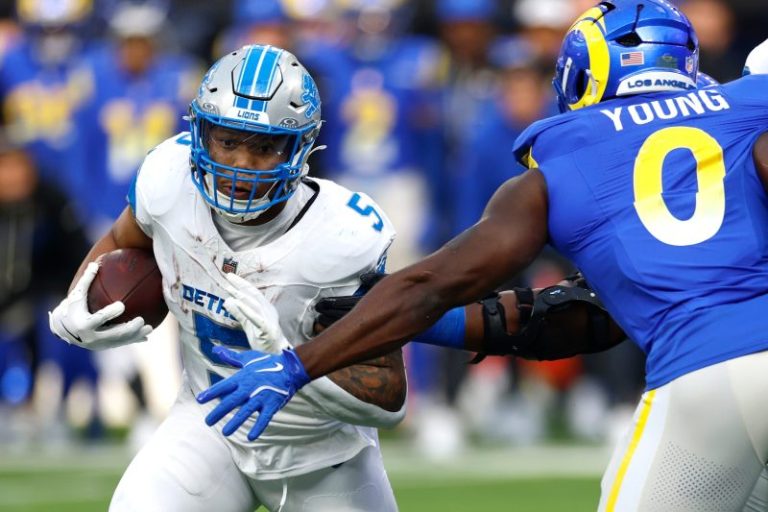
On March 2, the Texans acquired running back David Montgomery from the Detroit Lions in exchange for fourth- and seventh-round draft picks as well as offensive lineman Juice Scruggs, according to multiple reports.

The deal splits up Detroit’s ‘Sonic and Knuckles’ running back tandem, leaving three-time Pro Bowler Jahmyr Gibbs as the primary engine in the backfield – for now. In Texans, Montgomery will provide a punch to a rushing attack that floundered with Joe Mixon missing the entire season and the line struggling to generate a push.

Who fared better in the swap? Here’s our breakdown for each side:

Texans trade grade: B-

The motivation and thought process for Houston seems pretty straightforward.

With rookie Woody Marks and veteran Nick Chubb stepping up to lead the way in the aftermath of Mixon’s foot/ankle injury – which remains shrouded in uncertainty – the Texans ranked 29th in yards per carry (3.9) and expected points added per rush. That left a disproportionate burden on C.J. Stroud, whom general manager Nick Caserio staunchly backed even after his rough showing in the playoffs. The most reasonable solution to help stabilize a volatile young passer, it stood to reason, was equipping him with a dependable run game.

Montgomery will turn 29 in June, but he’s still performing at a level that will would make for a meaningful boost to the Texans’ offense if he remains on his current trajectory. Finishing drives was another major problem area for Houston, with the team ranking 29th in red zone efficiency. The seven-year veteran might merely keep his new attack on schedule and hammer out some difficult yards, but that’s a needed element for Houston to have any hope of getting past its most glaring limitations. He should also make a distinct mark in the aerial attack as an ace pass blocker and outlet for Stroud when the signal-caller is under duress.

Those shortcomings, however, start up front. And after Houston traded the versatile Tytus Howard to the Cleveland Browns earlier Monday, it’s difficult to see how the organization plans to tackle the issue at its root. Blake Fisher’s development at right tackle remains concerning, to the point that USA TODAY Sports’ Nate Davis projected in his latest mock draft for the team to grab Clemson’s Blake Miller in the first round. With Howard gone and Scruggs shipped off as well, additional reinforcements are required on the interior for a front that made plenty of progress in pass protection but couldn’t dictate terms in the ground game.

The Texans seem to be shouldering Montgomery with a lot and expecting a quick fix. They shouldn’t come out of this deal empty-handed, but the problem might be more wide-reaching than they’re prepared to admit.

Lions trade grade: B

Parting with a key contributor is no doubt tough for a Detroit team intent on recapturing its leading contender status. But general manager Brad Holmes made it sound as though Montgomery’s fate wouldn’t be determined solely by the team’s plans.

‘We’d love to have him,’ Holmes said Feb. 24 at the NFL scouting combine. ‘Kind of want to put last year in the rearview and just move forward. But obviously, a player has to want to be at a certain place as well. So those conversations are still fluid and we’ll just kind of see how it goes.’

If Montgomery was truly intent on pushing his way elsewhere, this amounts to a nice return for a back of his age. Holmes has more resources to go hunting for Day 2 and 3 gems in the draft, and Scruggs, a 2023 second-round pick, is a decent depth toss-in for a franchise forced to rethink its own front.

The question for Detroit now becomes where the team turns for its missing physicality in the backfield. New offensive coordinator Drew Petzing surely doesn’t want to run Gibbs into the ground, especially given his heightened importance in the new offensive dynamic. Backup Sione Vaki was a fourth-round pick in 2024, but he only has logged seven carries in two years.

A value signing after the first wave of free agency could be in order if there’s the right fit. The Lions could look back to the draft as well, though this year’s running back group is widely seen as one of the weaker points of the class. There are several promising inside runners, such as Arkansas’ Mike Washington Jr. and Nebraska’s Emmett Johnson, but the top options might come at too rich of a price for a role that will be largely complementary. Washington’s Jonah Coleman and Penn State’s Kaytron Allen might be more attainable figures who could help fill the vacancy.

This post appeared first on USA TODAY

The Washington Wizards are seemingly on track to unveil one of their recent prized acquisitions.

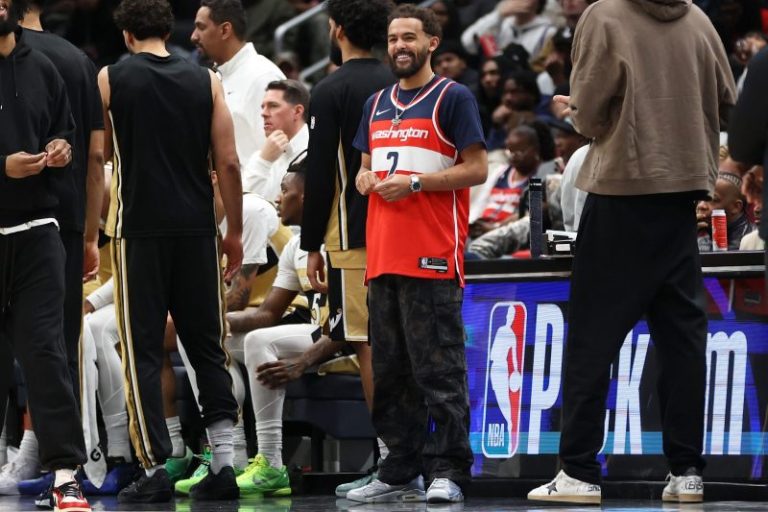
In an Instagram post shared Monday, March 2, point guard Trae Young, whom the team acquired in a trade with the Atlanta Hawks, hinted that he would make his Wizards debut Thursday, March 5 against the Utah Jazz. To that end, a person with direct knowledge of the matter confirmed to USA TODAY Sports Monday that Young is trending in that direction and is expected to play that night.

The person spoke under the condition of anonymity because they were not authorized to comment publicly on the matter.

The Instagram post includes a reel of Young going through drills in Wizards gear and includes B-roll footage of Washington D.C. The caption of the post simply reads: “March 5th.’

Young ejected before playing a game for Washington

Three days ahead of his likely debut with Washington, Young was courtside inside Capital One Arena with his teammates as the Wizards hosted the Houston Rockets. And he found a way to get in on the action before playing even a minute with his new team.

Young was ejected in the third quarter after running on the court during a dustup between the two teams that saw multiple technical fouls and the Rockets’ Tari Eason ejected after his defensive foul was reviewed as a flagrant.

Young, like his teammates, was upset about Eason’s conduct on the prior possession. He left the arena to loud cheers from the fans and later posted about the ejection on social media:

‘Don’t expect me to get ejected too many more times D.C. .. but I’m definitely bringing that energy & competitiveness when I’m back for my brothers!’

Wizards reeling from injuries, looking at lottery

Young’s expected first game with Washington comes as the Wizards remain well outside of the play-in picture, at 16-43 and 13th in the Eastern Conference. Washington has lost five consecutive games and 8 of its last 10 – including a 123-118 loss to the Rockets Monday night – while dealing with several key injuries.

Young has been sidelined since late December with knee and quadriceps injuries and has played in only 10 games this season. The Wizards acquired Young in exchange for guards CJ McCollum and Corey Kispert.

Young, 27, is a four-time All-Star who is averaging 19.3 points, 8.9 assists and 1.5 rebounds per game this season. Though he remains one of the top distributors in the NBA — Young led the NBA in assists last season with 11.6 per game — his defense has been a significant issue.

Aside from Young, center Anthony Davis, who was acquired in a separate trade with the Dallas Mavericks, has also been out with a left hand ligament injury and still has not suited up for Washington; Davis is reportedly set to miss the remainder of the 2025-26 season. The Wizards have also been without center Alex Sarr (right hamstring strain) and forward Cam Whitmore (deep vein thrombosis).

Washington is navigating a delicate balance for its first-round draft pick. The selection is Top-8 protected, which means that it will convey to the New York Knicks, if it falls to No. 9 or below. This means that any victories over the final quarter of the season could compromise Washington’s draft positioning; the Wizards currently have the NBA’s fourth-lowest winning percentage (.271).

The USA TODAY app gets you to the heart of the news — fastDownload for award-winning coverage, crosswords, audio storytelling, the eNewspaper and more.

This post appeared first on USA TODAY

Vice President JD Vance confirmed Monday that negotiations with Iran over its nuclear program collapsed after U.S. officials concluded Tehran’s claims ‘did not pass the smell test,’ prompting President Donald Trump to authorize Operation Epic Fury.

Speaking on ‘Jesse Watters Primetime,’ Vance said U.S. envoys — including Steve Witkoff, Secretary of State Marco Rubio and Jared Kushner — had conducted rounds of ‘deliberate’ talks in Geneva with the Iranian delegation.

The discussions were aimed at curbing Tehran’s nuclear program in exchange for sanctions relief and averting a broader conflict, he said, but ultimately broke down.

‘But the Iranians would come back to us and they’d say, ‘Well, you know, having enrichment for civilian purposes, for energy purposes, is a matter of national pride,’’ Vance said.

‘And so we would say, ‘OK, that’s interesting, but why are you building your enrichment facilities 70 feet underground? And why are you enriching to a level that’s way beyond civilian enrichment and is only useful if your goal is to build a nuclear bomb?’’ he said.

‘Nobody objects to the Iranians being able to build medical isotopes; the objection is these enrichment facilities that are only useful for building a nuclear weapon,’ Vance clarified.

‘It just doesn’t pass the smell test for you to say that you want enrichment for medical isotopes, while at the same time trying to build a facility 70 to 80 feet underground,’ he explained.

Vance spoke as Operation Epic Fury ended its third day. Launched on Feb. 28, U.S. and Israeli forces carried out coordinated precision strikes deep inside Iran aimed at crippling Tehran’s missile arsenal and nuclear infrastructure.

A key issue had been Iran enriching uranium to high levels, including material around 60% purity — a fraction of weapons-grade but far above limits set under the 2015 nuclear deal — keeping international alarm high over proliferation risks.

‘We destroyed Iran’s ability to build a nuclear weapon during President Trump’s term,’ Vance told Watters. ‘We set them back substantially. But I think the President was looking for the long haul,’ he said.

‘Trump was looking for Iran to make a significant long-term commitment that they would never build a nuclear weapon, that they would not pursue the ability to be on the brink of a nuclear weapon.’

‘He wanted to make sure that Iran could never have a nuclear weapon, and that would require fundamentally a change in mindset from the Iranian regime.’

‘The President is not going to rest until he accomplishes that all-important objective of ensuring that Iran can’t have a nuclear weapon, not just for the next few years, not just because we obliterated for dough or some other.’

‘There’s just no way that Donald Trump is going to allow this country to get into a multiyear conflict with no clear end in sight and no clear objective,’ Vance added while describing that the administration would prefer to see ‘a friendly regime in Iran, a stable country, a country that’s willing to work with the United States.’

Related Article

Why Trump invoked regime change in attacking Iran, and the media must learn from past mistakes
This post appeared first on FOX NEWS

Iranian drone strikes forced Qatar to halt liquefied natural gas (LNG) production Monday, jolting global energy markets and raising fears about supply disruptions as Tehran increased its attacks on regional infrastructure.

QatarEnergy, the state-owned giant and one of the world’s largest LNG producers, suspended operations at two facilities after drones launched from Iran hit the sites, according to reports.

Qatar’s Ministry of Defense also said in a statement, that two drones hit facilities in the country, though no casualties were reported.

The attacks also targeted a water tank at a power plant in Mesaieed and a key energy installation in Ras Laffan.

Qatar’s Ras Laffan complex is the world’s largest LNG export facility, making it one of the most critical energy hubs in the world.

About 20% of global LNG trade transited the Strait of Hormuz in 2024, primarily from Qatar, according to the U.S. Energy Information Administration.

Markets reacted Monday with Europe’s benchmark natural gas futures surging by the largest margin since the 2022 energy crisis triggered by the Ukraine war, Bloomberg reported.

Bloomberg also reported Dutch TTF natural gas prices rose by 50% after news of the shutdown. Asian LNG prices also recorded gains as traders tried to assess the scale and length of the disruption.

‘The threat to security of supply is here and now,’ Simone Tagliapietra, an analyst at Bruegel, told Bloomberg. ‘The extent of it will depend on the duration of the shutdown, but we are now into a new scenario.’

In Saudi Arabia, another drone attack caused a fire at the kingdom’s Ras Tanura oil refinery, forcing a partial shutdown there as well.

Saudi authorities have not reported casualties, but the attack heightened fears of broader instability in the Gulf’s energy corridor, according to reports.

Related Article

America strikes Iran again — has Washington planned for what comes next?
This post appeared first on FOX NEWS

President Donald Trump on Monday sent an official notification to Congress about the U.S. strikes against Iran, in which he attempted to justify the military action in the now expanding conflict in the Middle East.

In a letter obtained by FOX News, Trump told Senate President Pro Tempore Chuck Grassley, R-Iowa, that ‘no U.S. ground forces were used in these strikes’ and that the mission ‘was planned and executed in a manner designed to minimize civilian casualties, deter future attacks, and neutralize Iran’s malign activities.’

This comes after joint U.S.-Israeli strikes against Iran on Saturday as part of Operation Epic Fury, triggering a response from Tehran and a wider conflict in the region. The strikes killed the Islamic Republic’s Supreme Leader Ali Khamenei and other military leaders.

Trump wrote that it is not yet possible to know the full scope of military operations against Iran and that U.S. forces are prepared to take potential further action.

‘Although the United States desires a quick and enduring peace, not possible at this time to know the full scope and duration of military operations that may be necessary,’ Trump wrote. ‘As such, United States forces remain postured to take further action, as necessary and appropriate, to address further threats and attacks upon the United States or its allies and partners, and ensure the Government of the Islamic Republic of Iran ceases being a threat to the United States, its allies, and the international community.’

‘I directed this military action consistent with my responsibility to protect Americans and United States interests both at home and abroad and in furtherance of United States national security and foreign policy interests,’ he added. ‘I acted pursuant to my constitutional authority as Commander in Chief and Chief Executive to conduct United States foreign relations.’

Trump said he was ‘providing this report as part of my efforts to keep the Congress fully informed, consistent with the War Powers Resolution,’ as some Republican and Democrat lawmakers attempt to restrain the president’s military action, which they affirm is unconstitutional without congressional approval.

The president also accused Iran of being among the largest state sponsors of terrorism in the world and purported that the ‘Iranian regime continues to seek the means to possess and employ nuclear weapons,’ even after the White House said in June that precision strikes at the time ‘obliterated’ Iran’s nuclear enrichment facilities.

‘As I previously communicated to the Congress, Iran remains one of the largest, if not the largest, state-sponsors of terrorism in the world,’ Trump said in the letter on Monday. ‘Despite the success of Operation MIDNIGHT HAMMER, the Iranian regime continues to seek the means to possess and employ nuclear weapons. Its array of ballistic, cruise, anti-ship, and other missiles pose a direct threat to and are attacking United States forces, commercial vessels, and civilians, as well as those of our allies and partners.’

‘Despite my Administration’s repeated efforts to achieve a diplomatic solution to Iran’s malign behavior, the threat to the United States and its allies and partners became untenable,’ he continued.

Fox News’ Tyler Olson contributed to this report.

Related Article

Trump admin warned lawmakers Israel was ‘determined to act with or without us’ before massive Iran strikes
This post appeared first on FOX NEWS

Hilary Knight was pivotal in helping the U.S. women’s national hockey team capture gold once again at the 2026 Winter Olympics last month, and she did so with an undisclosed injury.

Knight revealed on CBS Mornings on Monday, she ‘got a little banged up’ during the Olympics in Milan and played through a torn medial collateral ligament (MCL).

“To be able to play through injury was definitely a mental sort of gymnastic challenge for myself and also physical,’ Knight said. ‘We’ve got some amazing support staff that did their best to get me out there and perform at my best – as best as I could.”

Knight appeared in all seven games for Team USA during their march to the gold medal. The five-time Olympian scored a late equalizer to send the gold medal game against Canada to overtime, before Megan Keller’s sudden-death goal lifted the Americans to the top of the podium for the first time since 2018. Knight’s goal also established a new all-time U.S. Olympic record in points (33) and goals (15). Knight finished the tournament with six points — three goals and three assists.

Knight sat out the Seattle Torrent’s 5-2 loss to the Toronto Sceptres due to her injury on Saturday after the PWHL resumed from an Olympic break. “I’m not walking around the best, and I’m missing a few games for the Seattle Torrent,” she added on Monday.

Knight didn’t disclose when she suffered the MCL tear, but she did leave the ice with an apparent injury to her left leg during Team USA’s 5-0 victory over Finland on Feb. 7, their second game of the tournament.

Finland forward Ida Kuoppala collided with Knight’s left leg in front of the U.S. bench as Knight possessed the puck with 4:28 remaining in the first period. Knight’s leg buckled and she immediately fell to the ice, where she withered in pain. She left the ice and didn’t return with the starting line for the remainder of the first period while receiving medical attention on the bench.

‘When we saw her kind of roll over and got hurt a little bit, (it) almost brought me to tears on the bench,’ Taylor Heise recalled at the time. ‘(Knight) is such a resilient player and she worked so hard and you could see her when she got in the locker room, it didn’t phase her. Straight to the trainer and did what she needed to do and figured it out.’

Knight returned to the game against Finland and went on to score her 14th career Olympic goal, tying the U.S. Olympic all-time scoring record held by Natalie Darwitz and Katie King. She took sole ownership of the goals (and points) record during the gold medal game when the Americans needed it most.

Knight has said the Milano Cortina Winter Olympics would be her fifth and final Games, but she noted on Monday she’s “certainly capable” of competing in another Olympics.

‘The girls are trying,’ Knight said with a laugh, referring to her teammates. “I think this is … we are just processing this amazing storybook, so to speak, ending for myself.”

Reach USA TODAY National Women’s Sports Reporter Cydney Henderson at chenderson@gannett.com and follow her on X at@CydHenderson.

The USA TODAY app gets you to the heart of the news — fast. Download for award-winning coverage, crosswords, audio storytelling, the eNewspaper and more.

This post appeared first on USA TODAY

The women’s college basketball regular season is coming to a quick conclusion, meaning the coaching carousel will start spinning a little faster.

The 2025 offseason saw 61 programs make changes at head coach. If college football gives any indication, the 2026 coaching carousel could include even more changes. College athletics leaders were hesitant to make big changes last season with uncertainty around the House Settlement looming. Now, athletic directors have a sense of what the future holds. 

Several programs will be moving on from their coaches in the annual rite of passage. Three coaches have already been let go, and one has announced he’d be retiring at season’s end.

With the Power 4 conference tournaments getting underway this Wednesday, here is where we stand on coaching openings in NCAA Division I:

NCAA Division I women’s basketball coaching openings

Boston College

Joanna Bernabei-McNamee was fired on March 1 head coach of Boston College’s women’s basketball team. Bernabei-McNamee had her worst season yet as the Eagles coach this year, going 5-25 overall and 1-17 in ACC play. What proved to be difficult for Bernabei-McNamee at Boston College was her ability to retain talented players in the transfer portal era. Many of the top players she recruited and developed went on to help other ACC programs.

Northwestern

Joe McKeown announced last March this season would be his last as coach at Northwestern. The 69-year-old has been a head coach in Division I women’s basketball for 40 years with previous stops at New Mexico State and George Washington. Knowing McKeown’s retirement is looming, Northwestern has been vetting candidates, multiple sources told USA Today Sports. Second round interviews with candidates will begin this week. Some of the best mid-major coaches in the country — from the Ivy League, Atlantic 10 and CAA — will be in the mix for this opening. Michigan native Carrie Moore, who won the Ivy with Harvard last season, is among the frontrunners.

Rutgers

Rutgers fired head coach Coquese Washington on March 2. Washington, 55, went 42-84 in four seasons with the Scarlet Knights, who never won more than five games in Big Ten play under her watch. This season’s 1-17 record in conference play was Rutgers’ worst in the Big Ten. The cash-strapped Scarlet Knights — who have an athletics deficit of $516.9 million since joining the Big Ten in 2014 — have had trouble competing at the top level of women’s basketball in this new landscape for college athletics.

VCU

This post appeared first on USA TODAY

The NHL trade deadline is at 3 p.m. ET on March 6, but teams like to get deals done early, too.

Already this season, the Minnesota Wild have acquired defenseman Quinn Hughes from the Vancouver Canucks, and the Los Angeles Kings have traded for high-scoring New York Rangers forward Artemi Panarin.

In the latest deal, the Edmonton Oilers acquired defenseman Connor Murphy from the Chicago Blackhawks on Monday, March 2.

Plenty of players remain, and the Rangers, Canucks, St. Louis Blues and Calgary Flames are expected to be sellers. Other teams could be, too, depending on how they fare this week.

Here are some of the more notable trades this season. Follow along for analysis on deals as the NHL trade deadline approaches:

March 2: Oilers acquire Connor Murphy

The trade: The Edmonton Oilers acquire defenseman Connor Murphy from the Chicago Blackhawks for a 2028 second-round pick.

Analysis: The Blackhawks retain 50 percent of the $4.4 million cap hit for the pending unrestricted free agent. The Oilers have been leaking goals, and the 6-foot-4 Murphy is a solid defensive defenseman. He played on the No. 1 unit of the league’s best penalty kill, led the Blackhawks in blocked shots and was third in hits.

Feb. 24: Penguins, Avalanche swap defensemen

The trade: The Pittsburgh Penguins acquire defenseman Samuel Girard and a 2028 second-round pick from the Avalanche for defenseman Brett Kulak.

Analysis: The Avalanche pick up salary cap space and add a defenseman who has been to the Stanley Cup Final the past two seasons. The Penguins had acquired pending unrestricted free agent Kulak in the Stuart Skinner trade, Girard is also a pending UFA, and Pittsburgh gets a draft pick in the deal by flipping Kulak.

Feb. 4: Kings acquire Artemi Panarin

The trade: The Los Angeles Kings acquire forward Artemi Panarin from the New York Rangers for forward Liam Greentree and conditional third-round (2026) and fourth-round (2028) picks.

Analysis: The Kings are hurting for offense and Panarin can provide plenty. He also signed a two-year extension with an $11 million cap hit, ensuring he’ll be around after Anze Kopitar retires at season’s end. It didn’t help the team, though, that Kevin Fiala broke his leg at the Olympics before Panarin suited up. Panarin had a full no-movement clause, so the Rangers were limited in their return, but Greentree was the Kings’ top prospect and the third-round pick could become a second-rounder.

Feb. 4: Devils acquire Nick Bjugstad

The trade: The New Jersey Devils acquire forward Nick Bjugstad from the St. Louis Blues for forward Thomas Bordeleau and a conditional fourth-round pick.

Analysis: This is the third time Bjugstad has been moved near the trade deadline because the 6-6 forward is a good fit in the bottom six. He has another year left on his contract.

Jan. 27: Islanders acquire Ondrej Palat

The trade: The New York Islanders acquire left wing Ondrej Palat, a 2026 third-round pick and a 2027 sixth-round pick from the New Jersey Devils for forward Maxim Tsyplakov.

Analysis: That’s two trades in two days with a division rival. Palat is a two-time Stanley Cup winner (with the Lightning) and kills penalties. Tsyplakov didn’t get a lot of ice time with the Islanders but has potential.

Jan. 26: Islanders acquire Carson Soucy

The trade: The New York Islanders acquire defenseman Carson Soucy from the New York Rangers for a third-round pick in the 2026 NHL Draft.

Analysis: Soucy was the first player moved after the Rangers informed fans that the team would retool. It’s a rare deal completed between the Islanders and Rangers.

Jan. 20: Sharks acquire Kiefer Sherwood

The trade: The San Jose Sharks acquire forward Kiefer Sherwood from the Vancouver Canucks for second-round picks in 2026 and 2027, plus defenseman Cole Clayton.

Analysis: Sherwood had been mentioned as a trade candidate since the Canucks started slowly. The pending free agent is among the leader in hits and had 17 goals at the time of the deal. The Sharks are playing better than expected and this deal shows they are trying to push for a playoff spot.

Jan. 19: Golden Knights acquire Rasmus Andersson

The trade: The Vegas Golden Knights acquire defenseman Rasmus Andersson from the Calgary Flames for defenseman Zach Whitecloud, defense prospect Abram Wiebe, a conditional first-round pick in the 2027 NHL Draft and a conditional second-rounder in 2028.

Analysis: The Golden Knights had been without Alex Pietrangelo all season and Andersson gives Vegas another puck-moving defenseman. The Flames get a good return for a pending unrestricted free agent. Andersson is the second defenseman Vegas had acquired from Calgary recently after the 2024 trade for Noah Hanifin. Hanifin eventually signed an extension and the Golden Knights will seek the same from Andersson.

Dec. 29: Penguins acquire Yegor Chinakhov

The trade: The Pittsburgh Penguins acquire forward Yegor Chinakhov from the Columbus Blue Jackets for forward Danton Heinen, a 2026 second-round draft pick and a 2027 third-rounder.

Analysis: Chinakhov had requested a trade last season. He’s a pending restricted free agent so the Penguins have control over his future. Heinen is a pending UFA.

Dec. 19: Canadiens acquire Phillip Danault

The trade: The Montreal Canadiens acquire center Phillip Danault from the Los Angeles Kings for a 2026 second-round pick.

Analysis: Danault is coming back to Montreal. He was a key shutdown player during the Canadiens’ 2021 run to the Stanley Cup Final.

Dec. 19: Blue Jackets acquire Mason Marchment

The trade: The Columbus Blue Jackets acquire forward Mason Marchment from the Seattle Kraken for a 2026 fourth-round pick and a 2027 second-round pick.

Analysis: Marchment had been off to a slow start after signing a four-year deal. But he scored 22 goals in each of his last two seasons in Dallas.

Dec. 12: Wild acquire Quinn Hughes

The trade: The Minnesota Wild acquire Quinn Hughes from the Vancouver Canucks for Marco Rossi, Zeev Buium, Liam Ohgren and a 2026 first-round pick.

Analysis: This is a sign that the Wild are going for it and it gives them a dynamic former Norris Trophy winner to match Cale Makar if they face the Avalanche in the playoffs. The Wild gave up a lot – Buium was great at Denver and for the USA at the world junior championships – and Hughes acknowledged that and appreciated it. That could help sway Hughes when he’s eligible to sign a contract extension in July.

Dec. 12: Oilers, Penguins swap goalies

The trade: The Edmonton Oilers acquire Tristan Jarry and forward Samuel Poulin from the Pittsburgh Penguins for Stuart Skinner, defenseman Brett Kulak and a 2029 second-round pick.

Analysis: The Oilers pull the plug on Skinner, who was either spectacular or bad during back-to-back runs to the Stanley Cup Final. But they land another inconsistent goalie in Jarry, who has had injury troubles. Skinner and Kulak are pending free agents, so the Penguins could flip them at the deadline. If Skinner works out, it would allow the Penguins to continue developing goalie Sergei Murashov in the American Hockey League.

This post appeared first on USA TODAY

X’s artificial intelligence chatbot Grok has begun rolling out its first beta version of Grok 4.20, which Elon Musk and X say will provide not only better performance and new features but also the least ‘politically correct’ platform in terms of liberal bias. 

Over the past week, users on X, including Musk, have been touting search results from Grok showing ‘non woke’ answers to questions about popular cultural issues and figures compared to results from Anthropic’s Claude, Open AI’s ChatGPT, and Google’s Gemini. 

‘Grok 4.20 is BASED,’ Musk also posted on X last week. ‘The only AI that doesn’t equivocate when asked if America is on stolen land. The others are weak sauce.’

Musk’s post included screenshots of ChatGPT saying the ‘short answer’ is ‘yes’, Claude ultimately saying ‘yes’ and Gemini saying the answer is ‘complex’ while Grok responds with ‘No.’

In another post shared by Musk, the AI platforms are asked for a ‘yes’ or ‘no’ if President Donald Trump is ‘racist.’

Grok responded with ‘No’ while Gemini responded by saying the answer is not as simple as ‘yes’ or ‘no.’ Claude and ChatGPT also declined to respond with a ‘yes’ or ‘no’: arguing it’s a more nuanced issue. 

‘Grok 4.20 is the only non-woke AI in existence, engineered to pursue maximum truth, and deliver unfiltered, evidence-based answers where every other major model has been lobotomized by the woke mind virus,’ an xAI spokesperson told Fox News Digital. 

The recent attack on Iran by the United States and Israel also provided examples on social media of Grok results appearing less ‘biased’ than other platforms, including a post showing what happened when each platform was asked a ‘yes’ or ‘no’ question about whether Trump was ‘right’ to authorize the strike. 

Grok responded with ‘yes’ while ChatGPT said ‘no’ and both Gemini and Claude argued that the situation was too nuanced to respond definitively one way or the other. 

‘In times of split second decision making by our nation’s top leaders — it’s clear which AI our military should be using,’ ‘The Katie Miller Show’ host and former DOGE adviser Katie Miller posted on X. ‘Truth-seeking is @grok’s best feature.’

Various websites have attempted to track the political leanings of artificial intelligence platforms, including Dartmouth College’s Polarization Research Lab, last updated in 2025, which ranked Gemini as the least political. In early 2025, a Manhattan Institute report concluded Grok was a close second to Gemini in terms of political bias. 

An OpenAI spokesperson pointed Fox News Digital to its public ModelSpec which defines how ChatGPT should behave and ‘assume an objective point of view’ and said ‘we actively test and measure political bias in ways that mirror real-world use and publish our findings, including evaluations across hundreds of prompts and real production traffic, where detectable political bias is rare (fewer than 0.01% of responses show any detectable political bias) and continues to decline with newer models.’

Fox News Digital reached out to Anthropic and Google for comment.

Related Article

Trump says he plans to order federal ban on Anthropic AI after company refuses Pentagon demands
This post appeared first on FOX NEWS

Speaker Mike Johnson, R-La., described the recent U.S.-Israeli strikes on Iran as a defensive measure, saying, ‘Israel was determined to act with or without us’ following a classified briefing on Monday evening.

Johnson told reporters after the briefing that Israel viewed Iran’s capabilities as an existential threat and was prepared to conduct operations regardless of U.S. participation. He said Israel’s assessment shaped American deliberations, and it was ‘determined to act in their own defense here, with or without American support.’

The speaker said administration officials had to weigh risks to U.S. forces, regional assets and interests before supporting the operation. 

‘They had to evaluate the threats to the U.S., to our troops, to our installations, to our assets in the region and beyond. And they determined, because of the intelligence that we had, that a coordinated response was necessary,’ Johnson said.

Johnson said he guarantees that if the U.S. had not acted, the Trump administration would have been hauled in by Congress and asked why they waited if they had ‘existential intelligence, knowing that that would happen.’

‘I am convinced that they did the right thing,’ he said.

Rubio confirmed that Israel was prepared to act against Iran and said the president ‘made a very wise decision.’  

‘We knew that there was going to be an Israeli action. We knew that that would precipitate an attack against American forces,’ he told reporters. ‘And we knew that if we didn’t preemptively go after them before they launched those attacks, we would suffer higher casualties.’

Sen. Mark Warner, D-Va., a top Democrat on the Intelligence Committee, emerged from the briefing and said he did not believe there was an ‘imminent threat’ prior to Saturday’s strikes. 

‘There was no imminent threat to the United States of America by the Iranians. It was a threat to Israel,’ he said. ‘We equate a threat to Israel is the equivalent of an imminent threat to the United States. Then we are in uncharted territory.’ 

‘We have seen the goals for this operation change now, I believe 4 or 5 times,’ he went on.

Rubio insisted the operation was not about Iranian regime change but about taking out its capabilities as a threat to the region – focused on ballistic missiles and naval capacity. 

He did not say whether strikes would extend to nuclear facilities.

‘I do believe there is more than adequate justification for our American and Israeli actions,’ Senate Armed Services Committee Chairman Roger Wicker, R-Miss., told reporters he believes there is ‘more than adequate justification for our American and Israeli actions,’ without saying more.

House Foreign Affairs Committee Chairman Brian Mast, R-Fla., told Fox News Digital in an interview afterward that he felt administration officials did a good job of illustrating the threat level faced by the U.S. in the days leading up to the strikes.

‘I think that’s largely been very open source. The president laid that out, you know, very clearly. It does go beyond that to what I can’t get into, but it goes beyond that. I’m sure it’ll come out in the administration’s good time, but it’s not for me to say,’ Mast said.

‘But the more immediate nature of threats — I’m going through the negotiations with [Special Envoy Steve Witkoff], [Jared Kushner], Rubio, others that were a part of having those conversations and throughout that 10-day window of, you know, let’s call it countdown to make a deal, the threats that were going on in that window is probably the high-side information that you have.’

He also said there was a lot of daylight between what Democrats and Republicans in the briefing considered an ‘imminent threat.’

‘It’s like, for me as a soldier, right, if I see an enemy machine gun nest, that to me, given that it’s an enemy machine gun nest, is an imminent threat,’ Mast said. ‘To Democrats, unless that machine gun is burning up its barrels firing at you, it’s not yet an imminent threat. And those are the two separate ways that we’re looking at it.’.

On February 26th, the U.S. launched Operation Epic Fury against Iran in coordination with Israel. The offensive campaign has resulted in the death of 49 top Iranian leaders, including the Supreme Leader, Ayatollah Ali Khamenei. Six U.S. service members have lost their lives in Iranian counterattacks. 

The opening phase of the conflict struck more than 1,000 targets in the first 24 hours, according to Gen. Dan Caine, chairman of the joint chiefs of staff. American B-2 bombers flew 37-hour round-trip missions from the continental United States to hit underground facilities with penetrating munitions, he added.

Related Article

Ex-CIA chief warns not to underestimate Iran’s response after Operation Epic Fury exposed regime ‘arrogance’
This post appeared first on FOX NEWS