Archive

2026

Browsing

MILAN — Andrew Torgashev wondered why he was doing this to himself. Then he decided to embrace the experience.

Having traded in pizza and Panda Express for healthy cooking, Torgashev looks and feels like an Olympian athlete. He put the exclamation point on that with his performance in the 2026 Winter Games men’s short program. The 24-year-old performed so well he was in lead with an 88.94 score after his program, and while that didn’t last long, he secured his advance to the free skate with a performance nothing short of exuberant.

‘I chose to embrace the rock and roll of my program,’ Torgashev said Tuesday, Feb. 10 at Milano Ice Skating Arena. ‘I always feel like I want to be a rock star on the stage, like breaking the guitar, like having the time of my life so I was able to do that and it’s pretty sick.’

Torgashev’s performance caps a turbulent stretch in which he didn’t finish in the top five of his Grand Prix events, only to reset and rebound with a stellar outing in the free skate that earned him a second-place finish at nationals.

Still, the Olympics are a different stage, and in the lead-up to the short program, Torgashev’s nerves prickled.

‘I was shaking, I was like, why did I wish this for myself,’ he said. ‘But once I got out there, the training just took over. I have so much muscle memory with this program and with these elements that no matter how much I doubt myself, I hope it will always pull through now.

‘The first toe that I did out there before the music started, it was so wonky, I was not confident for the quad. But I’ve done this program every single day at this quality since I’ve been here so I have the reps and it’s just about executing in the moment so I’m glad I did that.’

The 5-foot-7 Floridian credited his fluidity partly to being in the best shape he’s been since he was 18.

‘I’m learning that it helps a lot to eat cleaner and be skinny, to jump and jump easily and have better consistency,’ he said. ‘The skinnier you are, the easier it is so I’m in great shape.’

Torgashev had gotten into a habit of having food delivered after long training sessions, and his choices weren’t what dietitians would prescribe for anyone. Now he eats lean proteins and vegetables and food that infuses energy rather than drains it.

‘There’s no door dashing with my mom around,’ he said. ‘I was at the rink so long, from like 9 to 6 every day, that afterwards I can get lazy at times and anytime you eat out consistently, even if you’re trying to be healthy, the calories just add up and especially at night, it’s just not good. It was everything – pizza, Panda Express, tacos.’

It’s not all lentils and lean protein now though, Torgashev planned to celebrate his short program success with a ‘slice of pizza,’ he said, and come Friday’s free skate, ‘just know I’m going to go ham.’

This post appeared first on USA TODAY

LOS ANGELES — The world’s biggest social media companies face several landmark trials this year that seek to hold them responsible for harms to children who use their platforms. Opening statements for the first, in Los Angeles County Superior Court, begin this week.

Instagram’s parent company Meta and Google’s YouTube will face claims that their platforms deliberately addict and harm children. TikTok and Snap, which were originally named in the lawsuit, settled for undisclosed sums.

“This was only the first case — there are hundreds of parents and school districts in the social media addiction trials that start today, and sadly, new families every day who are speaking out and bringing Big Tech to court for its deliberately harmful products,” said Sacha Haworth, executive director of the nonprofit Tech Oversight Project.

At the core of the case is a 19-year-old identified only by the initials “KGM,” whose case could determine how thousands of other, similar lawsuits against social media companies will play out. She and two other plaintiffs have been selected for bellwether trials — essentially test cases for both sides to see how their arguments play out before a jury and what damages, if any, may be awarded, said Clay Calvert, a nonresident senior fellow of technology policy studies at the American Enterprise Institute.

It’s the first time the companies will argue their case before a jury, and the outcome could have profound effects on their businesses and how they will handle children using their platforms.

KGM claims that her use of social media from an early age addicted her to the technology and exacerbated depression and suicidal thoughts. Importantly, the lawsuit claims that this was done through deliberate design choices made by companies that sought to make their platforms more addictive to children to boost profits. This argument, if successful, could sidestep the companies’ First Amendment shield and Section 230, which protects tech companies from liability for material posted on their platforms.

“Borrowing heavily from the behavioral and neurobiological techniques used by slot machines and exploited by the cigarette industry, Defendants deliberately embedded in their products an array of design features aimed at maximizing youth engagement to drive advertising revenue,” the lawsuit says.

Executives, including Meta CEO Mark Zuckerberg, are expected to testify at the trial, which will last six to eight weeks. Experts have drawn similarities to the Big Tobacco trials that led to a 1998 settlement requiring cigarette companies to pay billions in health care costs and restrict marketing targeting minors.

“Plaintiffs are not merely the collateral damage of Defendants’ products,” the lawsuit says. “They are the direct victims of the intentional product design choices made by each Defendant. They are the intended targets of the harmful features that pushed them into self-destructive feedback loops.”

The tech companies dispute the claims that their products deliberately harm children, citing a bevy of safeguards they have added over the years and arguing that they are not liable for content posted on their sites by third parties.

“Recently, a number of lawsuits have attempted to place the blame for teen mental health struggles squarely on social media companies,” Meta said in a recent blog post. “But this oversimplifies a serious issue. Clinicians and researchers find that mental health is a deeply complex and multifaceted issue, and trends regarding teens’ well-being aren’t clear-cut or universal. Narrowing the challenges faced by teens to a single factor ignores the scientific research and the many stressors impacting young people today, like academic pressure, school safety, socio-economic challenges and substance abuse.”

A Meta spokesperson said in a recent statement that the company strongly disagrees with the allegations outlined in the lawsuit and that it’s “confident the evidence will show our longstanding commitment to supporting young people.”

José Castañeda, a Google Spokesperson, said that the allegations against YouTube are “simply not true.” In a statement, he said, “Providing young people with a safer, healthier experience has always been core to our work.”

The case will be the first in a slew of cases beginning this year that seek to hold social media companies responsible for harming children’s mental well-being.

In New Mexico, opening statements begin Monday for trial on allegations that Meta and its social media platforms have failed to protect young users from sexual exploitation, following an undercover online investigation. Attorney General Raúl Torrez in late 2023 sued Meta and Zuckerberg, who was later dropped from the suit.

Prosecutors have said that New Mexico is not seeking to hold Meta accountable for its content but rather its role in pushing out that content through complex algorithms that proliferate material that can be harmful, saying they uncovered internal documents in which Meta employees estimate that about 100,000 children every day are subjected to sexual harassment on the company’s platforms.

Meta denies the civil charges while accusing Torrez of cherry-picking select documents and making “sensationalist” arguments. The company says it has consulted with parents and law enforcement to introduce built-in protections to social media accounts, along with settings and tools for parents.

A federal bellwether trial beginning in June in Oakland, California, will be the first to represent school districts that have sued social media platforms over harms to children.

In addition, more than 40 state attorneys general have filed lawsuits against Meta, claiming it is harming young people and contributing to the youth mental health crisis by deliberately designing features on Instagram and Facebook that addict children to its platforms. The majority of cases filed their lawsuits in federal court, but some sued in their respective states.

TikTok also faces similar lawsuits in more than a dozen states.

This post appeared first on NBC NEWS

More information is emerging regarding the early morning shooting of San Francisco 49ers defensive lineman Keion White on Feb. 9.

According to the San Francisco Police Department, officers responded to a business located on the 1700 block of Mission Street in San Francisco regarding a shooting. When officers arrived at the scene, they found a victim suffering from an apparent gunshot wound.

It was later revealed it was White who suffered a gunshot wound to his ankle.

Paramedics arrived at the scene and transported White to a local hospital for treatment for non-life-threatening injuries. White underwent surgery on Monday and USA TODAY Sports received a statement from the 49ers about the procedure.

“Keion underwent successful surgery (Monday),” the 49ers said in a statement.

A preliminary investigation revealed a verbal altercation occurred between two groups inside a business, per the San Francisco Police Department.

Jonah Owen Lamb of the San Francisco Standard reported that the altercation involved White and Grammy-award winning rapper Lil Baby, who’s real name is Dominique Jones, when the rapper and his entourage tried to enter White’s private event. Lamb noted a witness went upstairs to get assistance from management to deescalate the situation and heard two gun shots. When they returned downstairs, White had been shot in the left leg.

According to the San Francisco Police Department, the shots were fired by an unknown suspect and the preliminary investigation is still ongoing.

White is the second 49ers player to be shot in recent years. Wide receiver Ricky Pearsall was shot in August of 2024 in an attempted robbery. Fortunately, Pearsall returned to the playing field. The 49ers didn’t provide a timetable for White to return to play.

The 49ers acquired White in a trade with the New England Patriots in October 2025. He had 12 tackles, 1.5 sacks and two tackles for loss in nine regular-season games with San Francisco.  

This post appeared first on USA TODAY

Another day of competition is in the books at the 2026 Milano Cortina Winter Olympics.

Athletes from more than 90 countries are battling in 116 events over 16 days, and USA TODAY is keeping a tally of every nation finishing on the podium. Here’s a look at the latest medal standings after all the action wrapped up on Tuesday, Feb. 10.

Find the upcoming medal event schedule below.

USA TODAY Sports has a team of more than a dozen journalists on the ground in Italy to bring you behind the scenes with Team USA and keep you up to date with every medal win, big moment and triumphant finish. Get our Chasing Gold newsletter in your inbox every morning and join our WhatsApp channel to get the latest updates right in your texts.

Broadcast coverage of the 2026 Milano Cortino Winter Olympics is airing exclusively airing across NBC’s suite of networks with many competitions airing live on its streaming service, Peacock, which you can sign up for here .

What is the medal count at the 2026 Milano Cortina Olympics?

All data accurate as of Tuesday, Feb. 10, 2026, at 6:02 a.m.

Meet Team USA 2026: Get to know the athletes behind the games

1. Norway: 12 Total (6 Gold, 2 Silver, 4 Bronze)
2. Italy: 11 Total (2 Gold, 2 Silver, 7 Bronze)
3. Japan: 8 Total (2 Gold, 2 Silver, 4 Bronze)
4. United States: 7 Total (2 Gold, 3 Silver, 2 Bronze)
5. Germany: 6 Total (3 Gold, 2 Silver, 1 Bronze)
6. Sweden: 6 Total (3 Gold, 2 Silver, 1 Bronze)
7. Switzerland: 5 Total (3 Gold, 1 Silver, 1 Bronze)
8. Austria: 5 Total (2 Gold, 3 Silver, 0 Bronze)
9. France: 3 Total (1 Gold, 2 Silver, 0 Bronze)
10. Canada: 3 Total (0 Gold, 1 Silver, 2 Bronze)
11. Czech Republic: 2 Total (1 Gold, 1 Silver, 0 Bronze)
12. Netherlands: 2 Total (1 Gold, 1 Silver, 0 Bronze)
13. Slovenia: 2 Total (1 Gold, 1 Silver, 0 Bronze) Bulgaria: 1 Total (0 Gold, 0 Silver, 1 Bronze)
14. China: 2 Total (0 Gold, 1 Silver, 1 Bronze)
15. New Zealand: 2 Total (0 Gold, 1 Silver, 1 Bronze)
16. South Korea: 2 Total (0 Gold, 1 Silver, 1 Bronze)
17. Latvia: 1 Total (0 Gold, 1 Silver, 0 Bronze)
18. Poland: 1 Total (0 Gold, 1 Silver, 0 Bronze)
19. Belgium: 1 Total (0 Gold, 0 Silver, 1 Bronze)
20. Bulgaria: 1 Total (0 Gold, 0 Silver, 1 Bronze)

2026 Winter Olympics medal events upcoming schedule

Feb. 11

ALPINE SKIING: Men’s Super-G
NORDIC COMBINED: Men’s Normal Hill 10km
FREESTYLE SKIING: Women’s Moguls
BIATHLON: Women’s 15km Individual
LUGE: Women’s, Men’s Doubles Run 2
FIGURE SKATING: Ice Dance Free Dance
SPEED SKATING: Men’s 1000m

Feb. 12

ALPINE SKIING: Women’s Super-G
FREESTYLE SKIING: Men’s Moguls Final
CROSS-COUNTRY SKIING: Women’s 10km Interval Start Free
SNOWBOARDING: Men’s Cross Final
SPEED SKATING: Women’s 5000m
LUGE: Team Relay
SNOWBOARDING: Women’s Halfpipe Final
SHORT TRACK: Women’s 500m & Men’s

Feb. 13

CROSS-COUNTRY SKIING: Men’s 10km Interval Start Free
BIATHLON: Men’s 10km Sprint
SNOWBOARDING: Women’s Cross Final
SPEED SKATING: Men’s 10000m
FIGURE SKATING: Men’s Free Skate
SNOWBOARDING: Men’s Halfpipe Final
SKELETON: Men’s Heat 4

Feb. 14

FREESTYLE SKIING: Women’s Dual Moguls Final
CROSS-COUNTRY SKIING: Women’s 4×7.5km Relay
ALPINE SKIING: Men’s Giant Slalom Final
BIATHLON: Women’s 7.5km Sprint
SPEED SKATING: Men’s 500m
SKELETON: Women’s Final
SKI JUMPING: Men’s Large Hill
SHORT TRACK: Men’s 1500m

Feb. 15

BIATHLON: Men’s 12.5km Pursuit
FREESTYLE SKIING: Men’s Dual Moguls Final
CROSS-COUNTRY SKIING: Men’s 4×7.5km Relay
ALPINE SKIING: Women’s Giant Slalom
SNOWBOARDING: Mixed Team Cross Final
BIATHLON: Women’s 10km Pursuit
SPEED SKATING: Women’s 500m
SKELETON: Mixed Team
SKI JUMPING: Women’s Large Hill

Feb. 16

SHORT TRACK: Women’s 1000m
ALPINE SKIING: Men’s Slalom
FIGURE SKATING: Pair Skating Free Skate
FREESTYLE SKIING: Women’s Big Air Final
SKI JUMPING: Men’s Super Team Final Round
BOBSLED: Women’s Singles

Feb. 17

NORDIC COMBINED: Large Hill/10km: 10km
SNOWBOARDING: Women’s Slopestyle Final
BIATHLON: Men’s 4×7.5km Relay
SPEED SKATING: Men’s, Women’s Team Pursuit Finals
BOBSLED: Men’s Doubles

Feb. 18

CROSS-COUNTRY SKIING: Women’s, Men’s Team Sprint Free Final
FREESTYLE SKIING: Women’s Aerials Final
SNOWBOARDING: Men’s Slopestyle Final
ALPINE SKIING: Women’s Slalom
BIATHLON: Women’s 4x6km Relay
SHORT TRACK: Women’s 3000m Relay
SHORT TRACK: Men’s 500m

Feb. 19

FREESTYLE SKIING: Men’s Aerials Final
SKI MOUNTAINEERING: Women’s, Men’s Sprint
NORDIC COMBINED: Team Sprint/Large Hill 2×7.5km
ICE HOCKEY: Women’s Final
SPEED SKATING: Men’s 1500m
FIGURE SKATING: Women’s Free Skate

Feb. 20

FREESTYLE SKIING: Women’s Cross Final
BIATHLON: Men’s 15km Mass Start
SPEED SKATING: Women’s 1500m
CURLING: Men’s Bronze Medal Game
FREESTYLE SKIING: Men’s Halfpipe Final
SHORT TRACK: Men’s 5000m Relay Final
SHORT TRACK: Women’s 1500m Final

Feb. 21

CROSS-COUNTRY SKIING: Men’s 50km Mass Start Classic
FREESTYLE SKIING: Mixed Team Aerials Final
FREESTYLE SKIING: Men’s Cross Final
SKI MOUNTAINEERING: Mixed Relay
CURLING: Men’s Gold Medal Game, Women’s Bronze Medal Game
BIATHLON: Women’s 12.5km Mass Start
SPEED SKATING: Men’s, Women’s Mass Start
FREESTYLE SKIING: Women’s Halfpipe Final
ICE HOCKEY: Men’s Bronze Medal Game
BOBSLED: Women’s Doubles: Heat 4

Feb. 22

CROSS-COUNTRY SKIING: Women’s 50km Mass Start Classic
CURLING: Women’s Gold Medal Game
BOBSLED: Men’s Quads Final
ICE HOCKEY: Men’s Gold Medal Game

This post appeared first on USA TODAY

The defending American League champions have been rocked by injury before spring training even begins.

And finally, right-hander Bowden Francis, who started 14 games last season, will undergo UCL reconstruction surgery and miss the entire season, Schneider said.

Santander, 31, was limited to just 54 regular season games in 2025, the first year of a five-year, $92.5 million contract, due to a left shoulder subluxation. He returned in time to play in five playoff games, but a back injury forced his removal from the ALCS roster, ending his season.

His loss will put additional pressure on a bevy of Blue Jays − infielder/outfielder Addison Barger, utilityman Davis Schneider and newcomer Kazuma Okamoto, an infielder, will all bear some of that burden.

‘We built this team planned for setbacks. Different guys will have to step up,’ general manager Ross Atkins said. ‘That versatility we have and the depth we have, hopefully, we’ll be able to do that again.’

Bieber, who returned from Tommy John surgery late last season, had an offseason MRI that revealed only fatigue, Schneider said. Given his ramp-up, slow playing Bieber’s progression made sense this spring, though it will leave a void initially.

‘We’re going to make sure he’s in a very, very strong position to help us win as many games as possible,’ Atkins said.

The Blue Jays acquired Bieber at the trade deadline before he’d made his season debut. He made his season debut Aug. 22, started seven regular season games and four more in the postseason before giving up Will Smith’s go-ahead home run in the 11th inning of the Blue Jays’ Game 7 World Series loss to the Los Angeles Dodgers.

He picked up his player option for 2025, fueling speculation that his health was still shy of optimal.

Fortunately for the Blue Jays, they invested heavily in pitching this offseason, signing Dylan Cease to a seven-year, $210 million contract and Cody Ponce − returning from Japan − to a three-year, $30 million deal. They’ll join Kevin Gausman and Trey Yesavage atop the opening-day rotation, though Yesavage may face innings limits this season after unexpectedly pitching into November as a rookie.

This post appeared first on USA TODAY
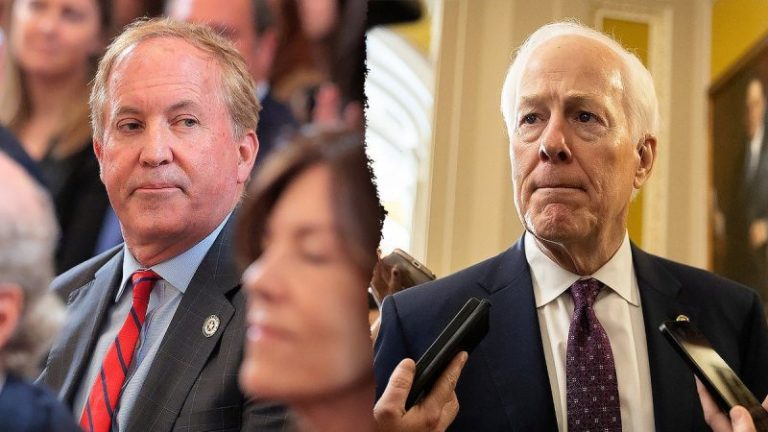
Yet another bowl game has disappeared from college football’s postseason calendar.

The GameAbove Sports Bowl, which has been played annually in Detroit for nearly 30 years, is folding, according to a report from On3 Sports on Tuesday, February 10.

It becomes the third bowl game to cease operations in the past year. The LA Bowl confirmed it was shutting down last month after just five years. The Bahamas Bowl was canceled before the start of the 2025 season and was replaced by the Xbox Bowl in Frisco, Texas.

The GameAbove Sports Bowl was the latest sponsor name for a game that debuted in 1997 as the Motor City Bowl. It was known as the Little Caesars Pizza Bowl from 2009-13 and the Quick Lane Bowl from 2014-23.

The game, which was often played in the days immediately after Christmas, regularly featured a team from the Mid-American Conference going up against a program from either the ACC (which had a tie-in from 2014-19) or the Big Ten (from 2020-25). In what would be the final GameAbove Sports Bowl, Northwestern defeated Central Michigan 34-7.

Though the College Football Playoff has made lower-tier bowl games more nakedly irrelevant, and as those same bowls have increasingly struggled to get bowl-eligible teams to accept invitations, bowl games continue to be a valuable source of inventory for television networks. 

ESPN’s broadcasts of the 33 non-College Football Playoff postseason games drew an average viewership of 3.1 million people, up 13% from the previous year. Northwestern’s win against Central Michigan in the final GameAbove Sports Bowl peaked at 2.7 million viewers.

Like many bowls, though, the GameAbove Sports Bowl struggled with attendance in its final years. The 2025 iteration of the game had only 27,857 fans inside 65,000-seat Ford Field, the home stadium of the NFL’s Detroit Lions. The previous year, just 26,219 fans were on hand for Toledo’s thrilling 48-46 win over Pitt in six overtimes.

This post appeared first on USA TODAY
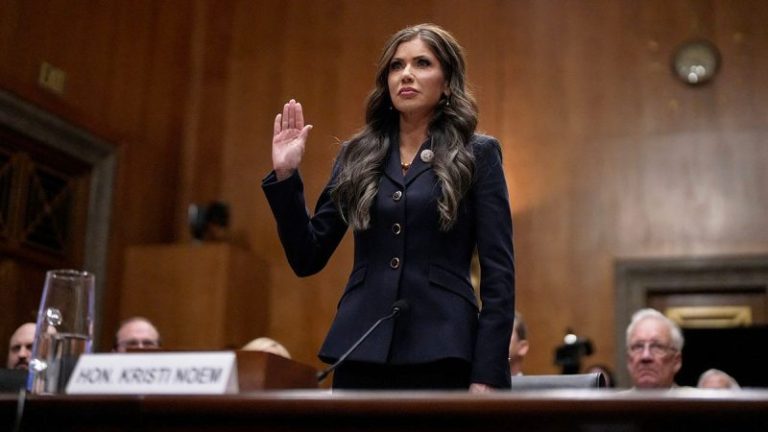
CORTINA D’AMPEZZO, Italy — Cory Thiesse and Korey Dropkin are Olympic medalists.

The tandem, known affectionately as “Girl Cory” and “Boy Korey,” won silver in the mixed doubles curling event Tuesday, Feb. 10, after falling 6-5 to Sweden in the gold-medal match.

The 2026 Winter Olympic Games were the third to include mixed doubles curling, and Thiesse and Dropkin’s performance earned Team USA its first ever medal in the event.

‘It’s certainly bittersweet. We would have loved to have won the gold today, but it’s huge to be on that podium,’ Thiesse said. ‘… the whole goal of this team was to make it to the Olympics, and we made it here, and we’re going home with a medal. We just can’t ask for much more.’

Watch Winter Olympics on Peacock

With the Americans in second, and the Swedes in first, the Italians rounded out the podium defeating Great Britain 5-3 in the bronze-medal game, which was also played Tuesday.

Thiesse and Dropkin defeated Sweden 8-7 in round-robin play to clinch a spot in the semifinals. After dropping their last match of round-robin play to Italy 7-6 Monday morning, they bested the home team 9-8 for a shot at gold. In falling to Sweden Tuesday, Thiesse and Dropkin finished with a 7-4 overall record.

Their bus was caught in heavy traffic on the way to the game. Thiesse and Dropkin could see Cortina Curling Olympic Stadium from the logjam and asked the driver if they could just get out and walk. ‘Luckily he let us,’ Thiesse said. She was adamant that the unplanned stroll had no impact on the gold medal game and gave a shoutout to sports psychologist Carly Anderson for helping the team ‘expect the unexpected’ this week in the Dolomites.

In the gold-medal match, Team USA won the first and third ends 1-0, but a 2-0 Sweden advantage in the second set gave sibling duo Isabella and Rasmus Wranaa the 3-2 edge after four ends. Isabella had a 97% shot success rate heading the break.

A perfectly placed yellow stone in the fifth end pulled Thiesse and Dropkin even 3-3 with the Wranaas and prompted ‘USA’ chants from the mostly American crowd. As 20 or so full-sized American flags billowed in the stands, Dropkin pumped his arms for more.

‘We love them, and we loved having them here cheering us on,’ Dropkin said. ‘Because, who knows what would have happened without them? It helped energize me and helped energize us, and it just added to how surreal the environment out there was. Everyone who came out to support their their team, not just from the U.S., but Team Sweden, the Italians that were out there, the Swiss, the Great British folks. I mean, it was an amazing atmosphere. And it adds to just the moment and how special this whole week has been.’

Team USA took a 5-4 lead into the eighth end after getting two on the board in the seventh. The Americans weren’t as accurate as the Swedes, putting together a shot success percentage of 73% to their 83%. But the margin was much closer in take-outs, with a 70% shot success metric for the U.S. and 72% for Sweden.

Thiesse and Dropkin’s second-to-last stone of the eighth end had too much power behind it, sliding past the button. Which meant their last stone had to be perfect. It did knock the Swedes’ red stone off the middle, but they had the final stone of the game.

Their silver medal is a culmination of two lifetimes on the ice. Thiesse, 31, and Dropkin, 30, came up in the sport together, at first succeeding separately. Each won their first junior national title in 2012 and their first senior national title nine years later.

In April of 2022, Dropkin asked Thiesse for a drink at Pickwick Restaurant & Pub in Duluth, Minnesota. The establishment, owned by two national champion curlers Tim and Amy Wright, is where Dropkin asked Thiesse to be his doubles partner. A year later, they became the first U.S. mixed doubles pair to win a world championship.

Now, they’re Olympic medalists.

Where will the mercury-testing lab technician and realtor keep their new hardware?

‘That’s a great question, I have not thought about yet,’ Thiesse said.

‘Right now,’ Dropkin chimed in, ‘it’s around my neck. And it’s gonna stay there for a little while.’

Thiesse agreed: ‘Might sleep with it for a little while.’

Reach USA TODAY Network sports reporter Payton Titus at ptitus@gannett.com, and follow her on X @petitus25.

This post appeared first on USA TODAY

Mike Tirico simultaneously hosted NBC’s Super Bowl 60 and 2026 Winter Olympics coverage.
This was Tirico’s first time calling a Super Bowl.
Immediately after the Super Bowl, Tirico flew from California to Milan to continue his Olympic hosting duties.

LIVIGNO, Italy – This is not Mike Tirico’s first rodeo – or first February trip crisscrossing the globe to announce the world’s most popular sporting events, the Super Bowl and the Olympics.

Tirico was simultaneously the centerpiece of NBC’s Super Bowl 60 production and the network’s 2026 Milano Cortina Winter Olympics coverage. He hosted the opening ceremony from Beijing in 2022 ahead of Super Bowl 56 coverage, flew to Los Angeles for his ‘Football Night in America’ hosting duties on top of his Olympic responsibilities and stayed stateside (at NBC headquarters in Stamford, Connecticut) for the remainder of the Games.

But this year was the first time Tirico led play-by-play for the Super Bowl, a 29-13 Seattle Seahawks victory over the New England Patriots, before hopping a plane for Italy and the Olympics.

“It was as great as I could have imagined,” Tirico told USA TODAY Sports by phone from Milan. “At no point did I sit there and go ‘It’s over a billion people watching.’ There was none of that.”

NBC Sports executive producer Rob Hyland checked in with Tirico last week and reminded him to enjoy the experience. That remained in the back of his mind. The gorgeous California day that greeted Super Bowl attendees only reinforced it.

“I had a blast … it was as enjoyable a day as I’ve had in this business,” he said.

Tirico spent the halftime show featuring Bad Bunny on an Olympics production call – Bruce Springsteen was the only act he would have skipped it for, he joked. He was part of Sunday night’s Olympics coverage and contributed with confetti strewn at his feet from the field at Levi’s Stadium in Santa Clara, California. There was the familiarity with hosting in that environment from Super Bowl 56, but he didn’t have to host the Lombardi Trophy presentation onstage this time.

“It was actually easier this time around,” he said.

Lindsey Vonn’s crash starts Tirico’s Super Sunday at 2:30 a.m.

Earlier that morning, at roughly 2:30 a.m. Pacific time, Tirico woke up to watch Lindsey Vonn, whose crash resulted in a complex tibia fracture.  

“You just feel awful for her,” said Tirico, who’s gotten to know Vonn over the past three Winter Games cycles.

Although he missed Breezy Johnson’s gold-medal-winning women’s downhill run live, he stayed awake to watch her clinch the top spot. Then he went back to sleep for 90 minutes before starting his day.

After the Super Bowl, Tirico and about a dozen fellow NBC staffers boarded a private Bombardier Global 7500 for the 10.5-hour flight from the West Coast to Milan.

“So appreciative that we were able to get over on time, and very comfortabl(y),” Tirico said. “It’s, again, not something that you get to do ever in life and it was just the ideal way to get off the plane and be ready to do the prime-time show (Feb. 9), with enough time to do it as well.”

Tirico slept for about half of the flight and spent the other half watching the prime-time show. He also reviewed materials for the Feb. 9 show. Tirico said he’s watched highlights of the Super Bowl but hasn’t sat down to rewatch the broadcast and critique it, something that might not happen until after the Olympics. He’ll have plenty of time during his NBA travels once the Olympics end or during his eventual, actual offseason, he said.

Wheels down in Milan, Tirico stays prepped for East Coast time

The group landed just before 9 p.m. Milan time and Tirico was in another production meeting during the drive from the airport to his hotel. After about an hour there, he was at the International Broadcast Center and hosted “Primetime in Milan” from 11:30 p.m. local time. After the show, he was even able to unpack back at the hotel.

But there was a point Monday night that the travel and work had Tirico feeling tired for a few minutes. But hardly 16 hours after landing in Italy, he’s back in his Paris 2024 Summer Olympics routine – and the key is to keep his body on East Coast time.

After the Feb. 9 show, he slept for five hours, snuck in a 25-minute session on the treadmill and headed to work.

Tirico’s Olympic preparation has lasted years, he said. He hosted the World Figure Skating Championships in March 2025. He sat down with stars such as Vonn and Mikaela Shiffrin prior to the NFL season and was able to concentrate on the Super Bowl throughout January – once NBC’s playoff games during the wild-card round and divisional round concluded.

“All these building blocks were in place, and you’re just adding on,” Tirico said. “So I’d say it was probably a little heavier toward the Super Bowl, but a lot of the Olympics planning was hay in the barn already.”

Tirico said he has full trust and confidence in NBC’s producers and editorial crew to address topics that expand beyond the realm of sport, such as president Donald Trump’s social-media criticism of men’s free skier Hunter Hess.

“That’s not what Americans are tuning in for in prime time,” Tirico said.

Tirico said he’d love to have the chance to pop up to Cortina were it a 40-minute train ride, but that’s not the case. He still expects these games to be “a helluva lot better than Beijing” in terms of having the chance to showcase Milan and the rest of northern Italy where the Olympics are taking place.

“There’s a feel in Milan of things that are going on,” said Tirico, who had only been in Italy for one night.

Not that he needed much sleep anyway.

This post appeared first on USA TODAY

Team USA captain Hilary Knight, appearing in her fifth Olympics, has tied two career U.S. Olympic records at the 2026 Winter Olympics in Milan.

Her assist against Canada on Tuesday, Feb. 10, gave her 32 career points, tying U.S. recordholder Jenny Potter. She picked up an assist on Caroline Harvey’s opening goal, though it wasn’t awarded until later in the game.

Knight earlier tied a U.S. Olympics women’s hockey record when she scored in the 5-0 win against Finland on Saturday, Feb. 7. That gave Knight her 14th career Olympic goal, matching the U.S. record jointly held by Natalie Darwitz and Katie King.

Knight next suits up in the quarterfinals against host Italy (time and date TBA).

Here’s what to know about Team USA women’s hockey captain Hilary Knight:

How many Olympic goals and points does Hilary Knight have?

Knight has 14 goals, tying the U.S. Olympic record shared by Natalie Darwitz and Katie King. She has 32 points, tying Jenny Potter’s U.S. Olympic record. Her 18 assists are three behind Potter’s record of 21.

How many Olympics has Hilary Knight played in?

Milano Cortina is Hilary Knight’s fifth Olympic appearance. She also played in Vancouver (2010), Sochi (2014), Pyeongchang (2018) and Beijing (2022).

How many medals does Hilary Knight have?

She won a gold medal in 2018 and silver medals in 2010, 2014 and 2022.

Where does Hilary Knight play in the PWHL?

Knight plays for the expansion Seattle Torrent in the Professional Women’s Hockey League. She played for Boston the previous two seasons.

How old is Hilary Knight?

Knight is 36 years old.

This post appeared first on USA TODAY
MILAN — The men of figure skating took their first turn in the singles competition at the 2026 Winter Olympics on Tuesday, and ‘Quad God’ Ilia Malinin lived up to the hype with a short program that scored a 108.16 and drew a massive standing ovation from the crowd.

“I definitely felt like I was in a better zone this time,” he said.

The gold medal favorite sits atop the standings entering the free skate on Feb. 13, after which medals will be awarded.

“Having that attention, all those eyes on you, that pressure really shows you who you truly are on the ice,” he said. “It’s another skill to be able to perform it under pressure. I think that’s something I really enjoy.”

Watch Olympics figure skating on Peacock

Teammate Maxim Naumov, making his Olympic debut, skated second in the lineup, scoring a season-best 85.65. In the kiss-and-cry section after, the 24-year-old held with him a photo of him as a 3-year-old with his parents, who died the plane crash that killed 67 people near Washington D.C. just more than a year ago. Fellow American Andrew Torgashev turned in a score of 88.94, putting him in second through Group 3.

The men’s singles competition began just two days after Malinin’s clutch performance earned the U.S. gold in the team event. There were 29 skaters in the field and the top 20 advance to the free skate on Feb. 13, after which medals will be awarded.

Follow along below for USA TODAY Sports’ live results and highlights from the men’s short program.

Ilia Malinin short program

Ilia Malinin screamed in joy halfway through his short program in the men’s competition Tuesday night at the 2026 Winter Olympics. He had just completed his three industrial strength jumping passes without a hitch, including two majestic quadruple jumps. Now he was flying past center ice, and his emotions got the better of him, and he let out a yelp into the icy arena air. He was back, and he knew it.

His score? 108.16 points, a healthy five points ahead of Japan’s Yuma Kagiyama, who had 103.07. With a long program packed with his record-breaking seven quads, Malinin is back to being the strong favorite to win the gold medal Friday night. How things have changed for him since his shaky short program in the team event over the weekend. 

Figure skating live results, updates

Here are the standings after the short program of the men’s singles competition.

Ilia Malinin (United States): 108.16 total segment score, 62.35 technical elements score, 45.81 program components score.
Yuma Kagiyama (Japan): 103.07 total segment score, 56.50 technical elements score, 46.57 program components score.
Adam Siao Him Fa (France): 102.55 total segment score, 57.27 technical elements score, 45.28 program components score.
Daniel Grassl (Italy): 93.46 total segment score, 52.73 technical elements score, 40.73 program components score.
Mikhail Shaidorov (Kazakhstan): 92.90 total segment score, 52.45 technical elements score, 40.49 program components score.
Junhwan Cha (Korea): 92.72 total segment score, 50.08 technical elements score, 42.64 program components score.
Kevin Aymoz (France): 92.64 total segment score, 48.55 technical elements score, 44.09 program components score.
Andrew Torgashev (United States): 88.94 total segment score, 48.56 technical elements score, 40.38 program components score.
Shun Sato (Japan): 88.70 total segment score, 46.77 technical elements score, 41.93 program components score.
Stephen Gogolev (Canada): 87.41 total segment score, 48.23 technical elements score, 39.18 program components score.
Kyrylo Marsak (Ukraine): 86.99 total segment score, 49.20 technical elements score, 37.69 program components score.
Petr Gumennik (Neutral Athlete): 86.72 total segment score, 48.43 technical elements score, 38.29 program components score.
Boyang Jin (China): 86.55 total segment score, 47.79 technical elements score, 38.76 program components score.
Maxim Naumov (United States): 85.65 total segment score, 47.77 technical elements score, 37.88 program components score.
Nika Egadze (Georgia): 85.11 total segment score, 45.85 technical elements score, 39.26 program components score.
Matteo Rizzo (Italy): 84.30 total segment score, 42.49 technical elements score, 41.81 program components score.
Deniss Vasiljevs (Latvia): 82.44 total segment score, 42.34 technical elements score, 40.10 program components score.
Aleksandr Selevko (Estonia): 82.02 total segment score, 41.33 technical elements score, 41.69 program components score.
Lukas Britschgi (Switzerland): 80.87 total segment score, 40.61 technical elements score, 40.26 program components score.
Adam Hagara (Slovakia): 80.30 total segment score, 45.17 technical elements score, 35.13 program components score.
Vladimir Samoilov (Poland): 77.57 total segment score, 40.88 technical elements score, 36.69 program components score.
Kao Miura (Japan): 76.77 total segment score, 37.44 technical elements score, 40.33 program components score.
Donovan Carrillo (Mexico): 75.56 total segment score, 39.71 technical elements score, 36.85 program components score.
Yu-Hsiang Li (Chinese Taipei): 72.41 total segment score, 39.84 technical elements score, 32.57 program components score.
Tomàs-Llorenç Guarino Sabaté (Spain): 69.80 total segment score, 34.25 technical elements score, 35.55 program components score.
Hyungyeom Kim (Korea): 69.30 total segment score, 37.92 technical elements score, 32.38 program components score.
Andreas Nordeback (Sweden): 67.15 total segment score, 31.45 technical elements score, 35.70 program components score.
Fedora Kuliss (Latvia): 66.86 total segment score, 35.83 technical elements score, 32.03 program components score.
Vladimir Litvintsev (Azerbaijan): 63.63 total segment score, 31.13 technical elements score, 32.50 program components score.

When does Ilia Malinin skate next?

After the short program Tuesday, Malinin will next perform his free skate Friday, Feb. 13 at 1 p.m. ET. After the free skate, medals will be awarded for the men’s individual competition, which combines scores from both the long and short programs.

Are backflips allowed in figure skating?

They are now. For nearly 50 years, the backflip was banned in figure skating, after American skater Terry Kubicka became the first one to execute it at the 1976 Innsbruck Games. French skater Surya Bonaly did it at the 1998 Winter Olympics, landing it on one blade, but the move was illegal and she was deducted for it. 

The International Skating Union reversed course and made the move legal in 2024, paving the way for it to be done at the 2026 Winter Olympics, 50 years after it was first done.

Maxim Naumov’s parents

Maxim Naumov made sure to bring the memory of his parents to the 2026 Winter Olympics. 

The U.S. figure skater made his Olympic debut Tuesday, Feb. 10 in the men’s short program, fulfilling the lifelong dream of his parents, former skaters Vadim Naumov and Evgenia Shishkova. 

Naumov’s parents died in the midair collision between American Airlines Flight 5342 and an Army helicopter near Washington, D.C in January 2025 that killed 67 people. Vadim and Evgenia were among the 28 figure skating coaches, young athletes and parents killed who were returning from a development camp.

After delivering an emotional performance inside the Milano Ice Skating Arena, Naumov held up a picture of his parents in the kiss-and-cry section as he waited to hear his scores. Before a skater begins their program, a message from them is displayed on the Jumbotron inside Milano Ice Skating Arena. His message was, ‘Mom and Dad, this is for you.’

He was the second skater of the 29 scheduled to compete on the day, and Naumov was clean in his program, starting it off strong with a quad Salchow. By the end of it, he earned a score of 86.65, a season-best.

Andrew Torgashev nails program

There were no misses from the “pizza king,” as Andrew Torgashev stunned on the ice to deliver a season-best performance and catapult himself up the leaderboard for the moment.

He executed his first two elements in the quad toeloop and the triple Axel in perfect fashion, with no slip-ups for the rest of the performance. He got a score of 88.94, becoming the second American to have a season-best on the night after Maxim Naumov did it earlier.

It’s a stellar start for Torgashev as the short program wasn’t necessarily his strong suit; the free skate is where he has really shined. But he has carried a huge amount of momentum ever since 2026 began, and it puts him in the conversation for a high finish in the long program.

AIN at Olympics? It’s not a country

Officially, Russia is banned from the Olympics because Russian president Vladimir Putin ordered the invasion of Ukraine in 2022. At the 2026 Winter Games in Milano Cortina, there will be no Russian flags, no Russian anthems and no Russian national colors incoporated in the competition. (The same holds true for Belarus, which has supported Russia in the war.)

But there will be athletes with Russian and Belarussian passports competing as ‘Individual Neutral Athletes,’ or AINs for short, if they meet specific conditions. That contingent will include 13 Russians and seven Belarussians, the International Olympic Committee (IOC) announced Jan. 29. Read the full explainer about AIN. — Josh Peter

When did figure skating start in the Olympics?

Figure skating first made its Olympic debut at the Summer Games in London in 1908 and made another appearance in Antwerp in 1920, before becoming a Winter Olympic staple at the inaugural 1924 Chamonix Winter Games with men’s singles, women’s singles and pair skating events. Ice dancing was added to the program at the 1976 Innsbruck Winter Olympics, and the team event was first contested at the 2014 Sochi Winter Olympics.

Ilia Malinin backflip

The ‘Quad God’ performed his first skate during the team event Saturday, Feb. 7, and he became the first skater since 1998 to perform a backflip at the Games, and the first since it was unbanned.

Malinin closed his performance with the stunning move than wowed the crowd at the Milano Ice Skating Arena. However, Malinin finished second in the event with a score of 98.00 after Japan’s Yuma Kagiyama pulled off a stunning routine that received 108.67 points.

Malinin then landed a backflip on one foot during his long program of the team event. Malinin was the first to pull off the one-foot move since French figure skater Surya Bonaly at the 1998 Nagano Winter Games. Bonaly landed it on one blade despite it being banned at the time and was deducted for it.

Tomàs-Llorenç Guarino Sabaté‘s short program

After a whirlwind of a saga over music, Tomàs-Llorenç Guarino Sabaté got to skate his beloved program at the 2026 Winter Olympics in the men’s short program on Tuesday, Feb. 10. Donning the signature Minion outfit, he skated to the music from the animated movie, with the crowd happily cheering him on every step of the way.

Sabaté was able to skate to his program after he revealed one week before the Olympics began he wouldn’t be able to use it due to copyright issues. It drew outrage from fans and even U.S. figure skaters who were eager to see it.

Shortly afterward, ClicknClear, a company that helps figure skaters use licensed music, got involved and worked with Universal Pictures and Sony to get all of the music approved just in time before the men’s singles event began.

Andrew Torgashev, what to know

An up-and-down 2025-26 season ended on high with Torgashev making his first Olympics. It didn’t seem possible a few months ago, when he didn’t finish in the top five of his Grand Prix events. However, all was fixed when he came up big at the U.S. championships, capped by a stellar outing in the free skate that earned him a second-place finish at nationals for the second straight year.

‘Took some time to just completely reset, reconnected with family, reconnected with my roots, and got back to skating,” Torgashev said after he made Team USA. “I knew I was capable, and some things were tight. Worked out the kinks and performed when I needed to.”

Facts about figure skating

Athleticism meets grace in figure skating, one of the most popular sports at the Winter Olympics. Whether skaters are performing gravity-defying jumps or experiencing a wide array of emotions in the designated ‘Kiss and Cry’ area, figure skating has captivated Olympic audiences across the world for more than a century. The 2026 Milano Cortina Games will be no different.

Here’s everything you need to know about figure skating and how it works at the 2026 Winter Olympics.

Team USA figure skating roster

Men: Ilia Malinin, Maxim Naumov, Andrew Torgashev
Women:Amber Glenn, Alysa Liu, Isabeau Levito
Pairs: Ellie Kam and Danny O’Shea; Emily Chan and Spencer Akira Howe
Ice dance: Madison Chock and Evan Bates; Emilea Zingas and Vadym Kolesnik; Christina Carreira and Anthony Ponomarenko

How is figure skating scored?

A figure skating routine is made up of two scores: Technical elements score and program components score. The technical elements score is exactly what it sounds like: It’s for the jumps, spins and step sequences in a performance. The program components score is made of up composition, presentation and skating skills.

Why was the backflip banned in figure skating?

After American skater Terry Kubicka became the first person to execute a backflip at the 1976 Innsbruck Games, the International Skating Union banned it within a year because it believed it was too dangerous of a move.

Quad axel in figure skating

Malinin is the only skater in history to achieve a quadruple axel in competition. That feat earned him the nickname ‘Quad God.’

What is a quad axel though? Here’s a full explanation of Malinin’s iconic move. A quadruple axel requires four-and-a-half rotations in order to complete. It’s so difficult, in fact, that it was once considered impossible to perform.

Who is Maxim Naumov?

After Maxim Naumov finished in fourth place at the 2025 U.S. figure skating championships for the third straight year, his father, Vadim, wanted to game plan.

Vadim and Maxim’s mother, Evgenia Shishkova, were two-time Olympic pair skaters for Russia, and they knew Maxim’s upcoming year was critical with the 2026 Winter Olympics on the horizon.

A few days later, Vadim and Shishkova were among the 67 people killed in the midair collision between American Airlines Flight 5342 and an Army helicopter near Washington, D.C. They were among the 28 figure skating coaches, young athletes and parents who were returning from a development camp. An unimaginable tragedy, and Naumov didn’t know if he could skate anymore.

Read the full story from reporter Jordan Mendoza.

Listen to ‘Milan Magic’ on Apple, Spotify, or wherever you get your podcasts. Watch full episodes on YouTube or on USA TODAY.

Figure skating jump types

Toe jump: A skater drives the toe pick of their non-takeoff foot into the ice to launch themselves into the air and generate momentum into the jump.

Toe loop: A skater takes off backward and lands on the same back edge of their blade.
Lutz: A skater moving backward jumps off the back outside edge of their skate and uses the toe-pick of their other skate to catapult into the air in the opposite direction and lands on the back outside edge of the picking leg.
Flip: A skater launches off the back inside edge of one skate and lands on the back outside edge of the other skate.

Edge jump: A skater takes off not with their toe pick but off the edge of their skate.

Salchow: A skater launches off the back inside edge of one skate and lands on the back outside edge of their other skate.
Axel: The only forward-facing jump, a skater lands on the back outside edge of their non-takeoff foot while traveling backward. The axel is the hardest jump because of the extra half-revolution that comes with a forward takeoff and a backward landing.
Loop: The skater jumps off a back outside edge of their skate and lands on the same edge.

This post appeared first on USA TODAY