Archive

2026

Browsing

January 2026 marks one year into President Donald Trump’s second term, and there can be no honest conversation without acknowledging that he is one of the most consequential presidents in American history. Love him or loathe him, Trump remains the fixed star around which our politics has revolved for the better part of a decade. Every debate, whether on leadership, law, legacy or lack thereof, turns on the outsized presence of one man. His shadow looms across every institution sacred to America, from colleges to the church to the Capitol, forcing each to declare with whom it stands and why. 

Trump has not simply challenged institutions; he has recharted their course. He has created a political environment where presence, leverage and speed prevail — conditions future leaders will inherit whether they admire his legacy or admonish it. What matters now is not merely what Trump disrupted, but what he set in motion. Among other things, Trump reminds us how quickly and how personally a single executive can impact law, markets and society, for better or worse. 

Long after the rallies fade and the indictments recede, Trump’s imprint will continue to shape American life. A remade Supreme Court of hand-picked justices has altered constitutional doctrine for generations to come. Capital markets have come to treat presidential volatility as a warning sign and tradable risk. Tariffs, trade and industrial policy have been recast as blunt instruments of executive will, designed to serve voters as much as economists. Even the once-fringe world of digital assets and crypto has been reframed from libertarian experiment to strategic asset class challenging sovereignty, regulation and power. 

In many other ways, Trump has altered expectations as much as outcomes. He mandated institutions to move faster and challenged political actors to think bigger. That inheritance will not be easily unwound. History’s students of power understand that consequence is measured not only by outcomes, but by what follows, and few made that point more clearly than Henry Kissinger. ‘Trump may be one of those figures in history who appears from time to time to mark the end of an era and to force it to give up its old pretenses.’

More than anyone else, Trump recognizes that power today flows not only from institutions but from attention. From the time he entered the arena, Trump has perfected one principle: never surrender the stage. Pundits once mocked his early bid for office as self-promotion. It became a populist revolt instead. His blunt voice pierces decades of polite debate. While Washington was accustomed to civility, his words are often raw, sometimes reckless, but always real. Trump’s mastery of attention strains conventional guardrails and has exposed institutional rot long ignored. He leverages disruption to push the boundaries of trust and normalize chaos, conflict and controversy. 

The Trump presidency breaks precedent almost daily — so often it is futile to flag and hard to keep score. He confronts China’s mercantilism with tariffs when others fear retaliation. He moved the U.S. Embassy to Jerusalem, upending decades of diplomatic orthodoxy. He stepped across the DMZ to meet North Korean leader Kim Jong Un and rolled out the red carpet for Russian President Vladimir Putin. He bombs Venezuelan speed boats presumed to carry contraband and dares the reigning despot to respond, let alone retaliate. And he brusquely deports the undocumented with steely bravado. All of which would have been derided or thought folly not long ago, but now is political reality.  

Supporters see courage; opponents see chaos. Two things can be true. Trump leads by instinct, improvising his own score to the established symphony of power. Policy wonks measure process; his allies measure presence. Rallies replaced town halls. Tweets replaced press conferences. Identity replaced ideology. To millions who felt unseen, he proved they exist. He showed up, stood up and spoke up in a way American presidents never have, and may never again.

Every scandal was forecast as fatal. None has been. Each prosecution, revelation and rebuke only deepened the myth. His mug shot became merchandise, his trials became theater, his adversaries became amplifiers. History honors endurance as much as elegance, if not more. Trump embodies that fact. Cast down, counted out and condemned by critics, his ascendance reflects the character of a long ignored American electorate — disruptive, defiant, determined to be seen.  

Grave legal and ethical questions have dogged the president to be sure. But the paradox persists: efforts to diminish Trump through lawfare have mostly enlarged and emboldened him politically and prompted questions as to whether prosecution has advanced justice or accelerated division. 

Washington still misunderstands the Trump phenomenon. He thrives on friction, force and fear. Attention is both fuel and fortress. While pundits count approval ratings, he commandeers airtime. Flooding the zone is more than a football play; it is a governing philosophy for Trump, who understands that in today’s politics, silence equals extinction. The simple act of tagging opponents with amusingly accurate nicknames bespeaks both instinct and popular appeal; at the same time brilliant and brutal.

Populism in America is cyclical. President Andrew Jackson fought banks; politician William Jennings Bryan fought barons; Louisiana Gov. and then Sen. Huey Long fought inequality; Trump fights systems of every stripe. His crusade is part grievance and part gospel, speaking to a republic that distrusts its own elite institutions and their caretakers. Trump excels at stretching politics into follow-through performance. After all, who else would dare prepend his name to the John F. Kennedy Center for Performing Arts and the U.S. Institute of Peace in real time. 

Foreign-policy mandarins dismiss his unorthodox diplomacy, yet the Abraham Accords reordered alliances few believed possible. Energy independence became a reality under his watch. Europe, once warned about Russian gas dependency, now concedes he was right. NATO member states shoulder greater — though not altogether equitable — burdens. Even critics grudgingly credit him for forcing movement on issues long considered intractable, thus the Nobel nominations. 

American politics has long relished showmanship and public performance, from Jefferson’s pamphlets to Lincoln’s debates. Trump is the latest iteration of that tradition, and the most complete legacy of the social media age. He channels a culture that values performance as proof of conviction. As such, he reflects some of our own national contradictions: moral yet mercenary, religious yet rebellious, democratic yet drawn to dominance.

Scholars will debate Trump’s impact for decades, but his ubiquity is unquestionable. He imbues every poll, every platform, every party calculus. Democrats campaign against him; Republicans campaign around him. He remains bolder and busier than ever. Trump did not just reform the GOP; he broke the mold and recast it as Trump, MAGA and America First. 

Every scandal was forecast as fatal. None has been. Each prosecution, revelation and rebuke only deepened the myth. His mug shot became merchandise, his trials became theater, his adversaries became amplifiers.

Trump’s evangelical supporters remind us that the great men of old were seldom polished and never perfect. Moses killed, yet led his people to freedom. David sinned, yet ruled with vision. Paul persecuted, yet became the greatest apostle. Scripture teaches that imperfection often precedes purpose, and greatness is rarely graceful. The Christian faithful rely on these proverbial lessons when explaining their loyal and unapologetic allegiance to such a coarse Christian. Unlike Elijah, it will be impossible to take up his mantle.

While canonizing Trump would be a stretch, dismissing him would be dishonest. From TV ownership to tariffs to trade and beyond, Trump compels America to confront convention and contradiction at the same time. He challenges America’s heritage of confidence and doubt, conviction and compassion, strength and restraint. And challenges us to rethink long-held axioms. 

Sports analysts often speak of exceptionally gifted athletes as ‘generational talent’ — those who have the extraordinary ability to change the game. That is Trump.

For those hoping to walk in his shoes, there is no blueprint for replication. He ushered in a unique political reality that history must acknowledge even if it cannot be repeated. As the most consequential political figure of this century thus far, Donald Trump offers history a compelling study in transformational leadership. He is implacable, irreplaceable and impossible to ignore. There has never been, nor will there ever be, another like him. 

Foremost and finally, Trump embodies a new political maxim for today’s America. If you dare to lead, you do not have to be perfect, but you must be present. 

This post appeared first on FOX NEWS

With margins tight in both chambers, control of Congress in 2026 is expected to hinge on a small group of competitive Senate contests and House districts sensitive to national trends. As America plunges into a new year, here are the races that are most likely to define the midterm races.

Senate majority-making or majority-breaking races to watch

Senate Republicans are looking to maintain their razor-thin majority after flipping the upper chamber in 2024. There are 33 seats in-cycle in the forthcoming midterms, which often act as a check on an incumbent president’s performance.

The GOP is hoping to replicate the Election Day successes that helped preserve its majority at the midpoint of President Donald Trump’s first term, entering 2026 with what many analysts consider a favorable map.

Georgia

 Georgia is the top prize of Senate Republicans and their campaign arm, the National Republican Senatorial Committee (NRSC). Incumbent Sen. Jon Ossoff, D-Ga., is vulnerable in his first attempt at re-election to the Senate and will be met with the full weight of the NRSC’s campaign war chest. 

Before the general election, Republicans will first have to let the dust settle on a bloody, four-way primary fight among Reps. Buddy Carter, R-Ga., Mike Collins, R-Ga., former University of Tennessee head football coach Derek Dooley and horse trainer Reagan Box. Republicans’ prized candidate, Georgia Gov. Brian Kemp, opted not to enter the contest, leaving a wide open playing field for the GOP to fight over. 

North Carolina

In the heat of the Senate advancing Trump’s ‘big, beautiful bill,’ Sen. Thom Tillis, R-N.C., announced his retirement. What would likely have been a gimme race for the GOP has now turned into a wide open contest for an open seat. 

Democrats believe they can flip the seat for the first time since 2008 and hope that former North Carolina Gov. Roy Cooper will carry them to victory and provide a crucial win to tip the balance of power. Republicans scored their preferred candidate, too, in former Republican National Committee Chair Michael Whatley. He will have a primary challenge though from Michele Morrow. 

Michigan

 Similar to North Carolina, Democrats lost their incumbent Sen. Gary Peters, D-Mich., to retirement. Both parties are now gunning for the open seat, but Democrats’ have a tangled primary to survive first before their true candidate emerges. 

Rep. Haley Stevens, D-Mich., state Sen. Mallory McMorrow and physician Abdul El-Sayed, are all in on the Democratic side, while Trump and Republicans have coalesced behind former Rep. Mike Rogers, who narrowly lost to Sen. Elissa Slotkin last year. 

Maine

 Incumbent Sen. Susan Collins, R-Maine, is Senate Democrats’ top target in the midterms. Collins, who is looking to score a sixth term in the Senate, could face a formidable opponent in the general election with the full backing of Senate Minority Leader Chuck Schumer, D-N.Y., or an upstart progressive candidate that’s looking to throw a wrench into Democrats’ plans. 

There are several local candidates that have jumped in on both sides of the race, but the main contenders are Collins, popular Democratic Gov. Janet Mills and oyster farmer Graham Platner, who has rubbed shoulders with progressive heavyweights Sen. Bernie Sanders, I-Vt., and Rep. Alexandria Ocasio-Cortez, D-N.Y. 

Ohio

 Sen. Jon Husted, R-Ohio, who was appointed to replace Vice President JD Vance earlier this year, will look to finish out the remaining two years of his predecessor’s term. But he’ll face a tough opponent in former Sen. Sherrod Brown, D-Ohio, who narrowly lost last year.  

Schumer and Democrats scored their best chance at picking up a seat in Ohio, again trying to turn the state purple after Brown’s loss to Sen. Bernie Moreno, R-Ohio. And there will be eye-popping amounts of money thrown at this contest. 

New Hampshire

 Democrats took yet another hit from the retirement train when Sen. Jeanne Shaheen, D-N.H., announced she’d leave Congress at the end of her term. That has opened up the field to several familiar Republican names jumping into the contest in the hopes of turning part of the Granite State red. 

Republicans have two prime candidates, former Sen. John Sununu, R-N.H., and former Rep. Scott Brown, R-Mass., who also served as an ambassador for Trump, to pick from. Meanwhile, Rep. Chris Pappas, D-N.H., is the likely heir apparent on the Democratic side. 

House races that will decide the majority

Control of the House is likely to hinge on fewer than two dozen districts nationwide, as both parties focus their resources on a small set of competitive seats that could decide the chamber. The battlegrounds span suburbs, rural communities and diverse metro areas, underscoring how varied the path to a majority has become.

Colorado’s 8th District, Northern Denver suburbs and Greeley

 With GOP Rep. Gabe Evans defending the seat, Colorado’s 8th District remains one of the most competitive House districts in the country. Drawn as a true swing seat after redistricting, it has flipped parties in back-to-back cycles and is often decided by slim margins.

Whether Latino and working-class voters break decisively toward one party and whether the race is decided by a narrow margin. A comfortable win here typically signals momentum heading into other battleground House races.

Iowa’s 1st District, Eastern Iowa

With a history of close results, Iowa’s 1st District is once again a top battleground as Republican Rep. Mariannette Miller-Meeks seeks re-election.

The district spans college towns, rural counties and small manufacturing hubs, creating an electorate that frequently splits its ticket. Even as Iowa trends red at the presidential level, the seat continues to hover in toss-up territory and is often among the last House races decided on election night.

New Jersey’s 7th District, North Jersey suburbs

Held by GOP Rep. Tom Kean Jr., New Jersey’s 7th is a high-income, college-educated suburban district that has repeatedly swung with the national political climate and historically punished incumbents during unfavorable cycles.

Whether suburban voters continue drifting away from Republicans or stabilize in a midterm environment. A shift here would offer an early read on how educated suburbs are responding to the party in power.

New York’s 17th District, Hudson Valley and NYC’s northern suburbs

New York’s 17th District, which previously backed former President Joe Biden, is represented by GOP Rep. Mike Lawler and is expected to play an outsized role in determining House control.

Whether Democrats can effectively harness heavy national spending and messaging in a district expected to draw intense attention.

Pennsylvania’s 7th District, Lehigh Valley and Allentown

Held by Republican Rep. Chris Mackenzie, Pennsylvania’s 7th is a true purple district in a must-win swing state. This area is made up of a politically diverse electorate that has previously mirrored statewide results.

Economic pressures and immigration debates are expected to shape how working-class and Latino voters approach the race.

California’s 22nd District, Central Valley

California’s 22nd, represented by GOP Rep. David Valadao, has remained a perennial battleground for more than a decade, shaped by its agricultural economy and a large Latino electorate sensitive to turnout swings.

Whether Democrats can boost turnout enough to flip the seat, and whether Central Valley races help offset Republican gains elsewhere in the country.

This post appeared first on FOX NEWS

President Donald Trump warned early Friday that the U.S. would intervene if Iran started killing protesters. 

Writing on Truth Social, the president said if Iran shoots and ‘violently kills peaceful protesters, which is their custom, the United States of America will come to their rescue.’ 

‘We are locked and loaded and ready to go,’ Trump said. 

Trump’s warning comes as demonstrations triggered by Iran’s deteriorating economy expand beyond the capital and raise concerns about a potential heavy-handed crackdown by security forces. At least seven people — including protesters and members of Iran’s security services — have been reported killed during clashes, according to international reporting.

Some of the most severe violence has been reported in western Iran, where videos circulating online appeared to show fires burning in streets and the sound of gunfire during nighttime protests. 

The unrest marks Iran’s most significant protests since 2022, when the death of 22-year-old Mahsa Amini in police custody sparked nationwide demonstrations. Officials say the current protests have not yet reached the same scale or intensity, but they have spread to multiple regions and include chants directed at Iran’s theocratic leadership.

Iran’s civilian government under reformist President Masoud Pezeshkian has signaled a willingness to engage with protesters, but the administration faces limited options as the country’s economy continues to deteriorate. Iran’s currency has sharply depreciated, with roughly 1.4 million rials now required to buy a single U.S. dollar, intensifying public anger and eroding confidence in the government.

State television reported the arrests of several people accused of exploiting the unrest, including individuals it described as monarchists and others allegedly linked to Europe-based groups. Authorities also claimed security forces seized smuggled weapons during related operations, though details remain limited.

The demonstrations come amid heightened regional tensions following a 12-day conflict with Israel in June, during which the United States bombed Iranian nuclear sites. Iranian officials have since said the country is no longer enriching uranium, attempting to signal openness to renewed negotiations over its nuclear program to ease sanctions.

However, talks have yet to resume, as both Trump and Israeli Prime Minister Benjamin Netanyahu have warned Tehran against reconstituting its nuclear capabilities — adding further pressure on Iran’s leadership as protests continue.

The Associated Press contributed to this report.

This post appeared first on FOX NEWS

Indiana football made quite an emphatic statement in its College Football Playoff Rose Bowl quarterfinal matchup against No. 9 Alabama.

Behind a three-touchdown afternoon from Fernando Mendoza and some relentless defense, the top-seeded Hoosiers embarrassed the ninth-seeded Crimson Tide 38-3 in ‘The Granddaddy of Them All’ on Thursday, Jan. 1 at the Rose Bowl in Pasadena, California to advance to their first CFP semifinal.

The Hoosiers’ dominant ‘business trip’ to the Rose Bowl made some history, as it is tied for the fourth-largest blowout win in the history of the College Football Playoff and the worst loss Alabama has sustained since 1998. It is the first bowl win for the Hoosiers since the 1991 Copper Bowl.

A 17-0 halftime lead for Indiana quickly snowballed into a 38-3 lead for the Hoosiers following Roman Hemby’s 18-yard rushing touchdown at the 10:33 mark of the fourth quarter. Mendoza’s 1-yard pass to Omar Cooper Jr. with 17 seconds remaining in the second quarter started a four-consecutive drive stretch for the Hoosiers where they scored a touchdown

With its win, Indiana now heads to Atlanta for another date against No. 5 Oregon on Friday, Jan. 9 in the CFP Peach Bowl semifinal, where the Hoosiers will look to beat the Ducks for the second time this season.

Here’s what to know on the biggest blowout win in College Football Playoff history:

What is the biggest blowout win in CFP history?

Georgia owns the record for the biggest blowout win in the history of the College Football Playoff at 58 points against TCU in the 2022-23 CFP Championship game. The Bulldogs surpassed Oregon’s previous record against Florida State in the 2015 Rose Bowl with a 39-point margin win.

With its win in the Rose Bowl, Indiana surpassed Penn State for the record for the biggest blowout win in the 12-team CFP era at 35 points. The Nittany Lions previously held it at 28 points from its 38-10 first-round win over SMU last season at Beaver Stadium in Happy Valley.

Biggest blowout wins in CFP history

Here’s a look at the top 10 biggest blowout wins in the history of the College Football Playoff, including where Indiana’s 35-point win over Alabama ranks amongst them:

1. No. 1 Georgia 65, No. 4 TCU 7 (58 points) (2022-23 CFP Championship game)
2. No. 2 Oregon 59, No. 3 Florida State 20 (39 points) (2014-15 CFP Rose Bowl semifinal)
3. No. 2 Alabama 38, No. 3 Michigan State 0 (38 points) (2015-16 CFP Cotton Bowl semifinal)
T-4. No. 1 Indiana 38, No. 9 Alabama 3 (35 points) (2025-26 CFP Rose Bowl quarterfinal)
T-4. No. 1 LSU 63, No. 4 Oklahoma 28 (35 points) (2019-20 CFP Peach Bowl semifinal)
6. No. 2 Clemson 31, No. 3 Ohio State 0 (31 points) (2016-17 CFP Fiesta Bowl semifinal)
T-7. No. 6 Penn State 38, No. 11 SMU 10 (28 points) (2024-25 CFP First-Round)
T-7. No. 2 Clemson 44, No. 1 Alabama 16 (28 points) (2018-19 CFP Championship game)
T-7. No. 1 Alabama 52, No. 3 Ohio State 24 (28 points) (2020-21 CFP Championship game)
10. No. 2 Clemson 30, No. 3 Notre Dame 3 (27 points) (2018-19 CFP Cotton Bowl semifinal)

The USA TODAY app gets you to the heart of the news — fastDownload for award-winning coverage, crosswords, audio storytelling, the eNewspaper and more.

This post appeared first on USA TODAY

Troy Aikman, a Pro Football Hall of Famer and current ESPN analyst, is expected to serve as a consultant for the Miami Dolphins’ general manager search, according to multiple reports.

Chris Grier served as a general manager from 2016 to 2025 before mutually deciding to part ways with the organization on Halloween. Entering Week 18, the Dolphins have compiled an 82-82 record in the previous 10 seasons. Champ Kelly has served as the Dolphins’ interim general manager.

Aikman is not likely to leave his role with ESPN and is unlikely to stay with the Dolphins in the long term.

Aikman won three Super Bowls during his 12-year career as a quarterback for the Dallas Cowboys.

The former quarterback is still scheduled to serve as a broadcaster for ESPN on Saturday, Jan. 3 for the game between the Seattle Seahawks and the San Francisco 49ers.

The California native is no stranger to assisting in a candidate search.

Aikman, who played quarterback at UCLA for two seasons (1987-88), served as a member of the Bruins’ coaching search committee in 2017 that led to the hiring of Chip Kelly. Kelly compiled a 35-34 record from 2018 to 2023 at UCLA.

Aikman was a prominent name and contributor to the college football program, alongside sports executive and fellow UCLA graduate Casey Wasserman. 

Aikman was not named to UCLA’s most recent search committee for its head football coaching vacancy during the 2025 season.

Wasserman was instead joined by UCLA alumni Bob Myers (former Golden State Warriors general manager) and Adam Peters (Washington Commanders general manager).

This post appeared first on USA TODAY
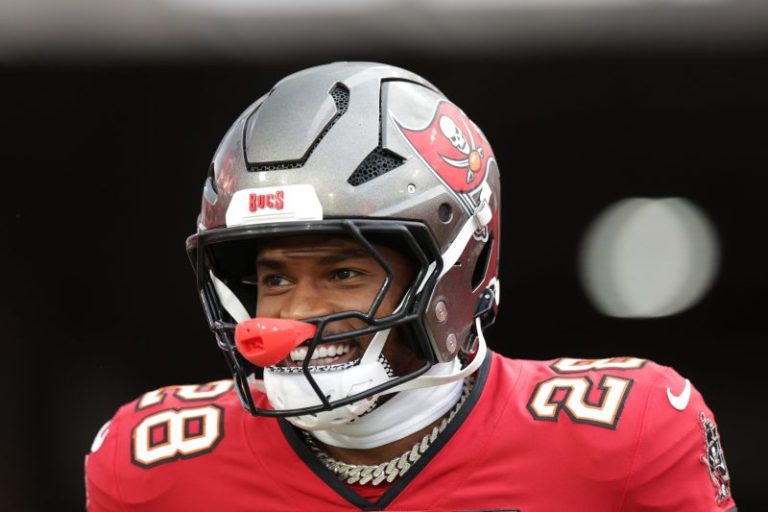
He was knocked out by Anthony Joshua after getting knocked down three other times during the heavyweight fight on Dec. 19.

He fell to the canvas on his own accord at least six times during the bout.

And now he has tumbled again — out of the WBA cruiserweight rankings.

Paul, who was ranked No. 14, is absent from the list of updated rankings for contenders issued by the WBA on Dec. 31.

Generally speaking, boxers need to be in the top 15 to qualify for a title fight sanctioned by one of the respective four sanctioning bodies: WBA, WBC, WBO and IBF.

Paul, 28, broke into the WBA’s top 15 after beating Julio Cesar Chavez Jr. by unanimous decision in June. It was the first time he’d been ranked in the top 15 by any of the sanctioning bodies.

Paul, who suffered a broken jaw when Joshua delivered the knockout punch in their highly anticipated fight, said he plans to box again and pursue a world cruiserweight title. But there’s no firm timetable for that after Paul had surgery on Dec. 20.

Paul is 12-2 with seven knockouts.

This post appeared first on USA TODAY
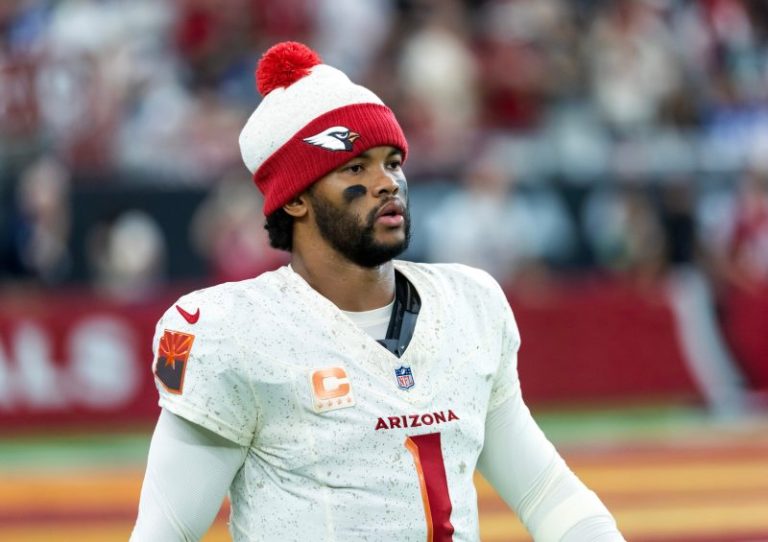
MIAMI GARDENS, FL – The obvious takeaway from this snapshot in time, this clear distinction between what is and what you want it to be, is how much money are the billionaire boosters at Texas Tech willing to spend?

How much more money will it cost to take a magical season for the ages, and push through the stratosphere of competing with the Big Ten and SEC? 

Because that’s how far away the highest-paid roster in college football looked from competing with the elite of the sport in Thursday’s humbling 23-0 loss to Oregon in the College Football Playoff Orange Bowl quarterfinal. 

Reached shortly after the loss, Texas Tech booster Cody Campbell, the financial architect of this made-for-championships roster, told USA TODAY Sports of the 2026 season, ‘We will double down.’

And there’s your cold, hard truth of an answer. This thing is just beginning at Texas Tech.

The scary thing for Campbell and his billionaire partners from Double Eagle Capital, who fund the Texas Tech NIL Matador Club and spent $25 million on this year’s roster to get the Red Raiders up to speed with the big boys of college football: Oregon isn’t exactly the top of the food chain. 

Then again, the Ducks didn’t need to be. They simply had to hang around and let the Texas Tech offense implode to move onto next week’s CFP Peach Bowl semifinal. 

‘It’s no fun being in that locker room,’ said Texas Tech coach Joey McGuire, the former legendary Texas high school coach who deftly pieced together this team of West Texas lifers and one-year transfer portal mercenaries. ‘When you do something that’s never been done, the standard is set. That’s when you come back and build something really special.’

The 2.0 buildout for 2026 will begin and end on offense, the unit that sputtered often during the season with an injured quarterback and a shaky offensive line ― but was saved week after week by one of the nation’s best defenses. Those flaws were exposed over and over by Oregon, which kept getting gifts from the Texas Tech offense and eventually converted them into points.

Texas Tech had six turnovers: two interceptions (one in the end zone), two fumbles and two turnovers on downs. The Red Raiders also missed a field goal, lined up offsides on a punt that gave Oregon a first down to extend a drive, and wobbled through six three-and-outs on offense.

The team that won each of its 12 games by at least 22 points, had season lows in total yards (215), rushing yards (78) and explosion plays. Quarterback Behren Morton barely completed 50% of his passes, and the offense was shutout for the first time since 2021. 

The Texas Tech pass game averaged a measly 4.3 yards per attempt ― or half of what it averaged during a rare season that included the most wins in school history (12) and the first Big 12 championship in school history.

But while Oregon smoked victory cigars in the Hard Rock Stadium locker room and watched the Rose Bowl to see who was next, Morton could barely compose himself in the postgame aftermath. A Lubbock native who battled injuries over his entire career at Texas Tech, he ran off the field with his chin tight to his chest while green and gold confetti fell.

This isn’t how it was supposed to end. It’s more than just a Big Ten or SEC patch on your jersey, it’s the fight in the West Texas dog.

It’s about reeling in the Big Ten and SEC, and showing ― on the big stage for all to see ― what this unique experiment had become in such a short time.

‘I love this university,’ Morton said, pausing to collect himself. ‘I’ve been a Red Raider since I was a little kid. It has been so much fun to put Texas Tech on the map.’

Now here’s the difficult part: defining that map.

The transfer portal opens Friday, and the quick fix rush is on all over the college football landscape. The Red Raiders need a quarterback (Cincinnati’s Brendan Sorsby is a top target), and the offensive line must get bigger and stronger and push around elite teams.

Championship life extends outside the Big 12, and Texas Tech’s ability to stretch its legs and find its stride depends on the financial investment from The Matador Club and McGuire’s continued ability to assimilate one-year guns for hire and what he’s organically building.

Texas Tech has the nation’s No. 18 recruiting class, according to the 247Sports composite rankings, a group that includes six blue-chip signees (two five-star, four four-star) ― four of which are among the top 120 players in the nation.

Not surprisingly, two of those four are offensive linemen, including Felix Ojo, the No.1 offensive tackle in high school football who signed with Texas Tech over Ohio State and Texas. That’s what real financial investment can do.

That’s how Double Eagle’s cash and McGuire and his staff’s development moved Texas Tech from a middling Big 12 team, to a team that now sees itself mirroring Oregon.

A year ago, Oregon ― like Texas Tech, the benefactor of cash commitments from a billionaire booster (see: Nike’s Phil Knight) ― took an unbeaten season into the CFP and were blown out by eventual national champion Ohio State in the quarterfinals.

‘I know how they feel right now,’ Oregon coach Dan Lanning said. ‘It’s no fun.’

But Oregon responded with four critical additions on offense from the portal (three offensive linemen), and four on defense. Guess who won the line of scrimmage Thursday afternoon?

All it needed this time around was a little motivation, and Oregon got it when James Madison scored 34 points on the Ducks in the first round of the CFP. That meant Oregon had given up 75 points in two career CFP games under Lanning and his defense-first mentality.

It’s not hard to see where this was headed.

Oregon was better on the line of scrimmage, and was faster and more athletic. It made Texas Tech’s run-first offense one-dimensional and inadequate at just about everything.

Were it not for a 50-yard run off a broken tackle by Texas Tech’s J’Koby Williams, the Red Raiders would’ve had 28 rushing yards on 29 carries.  

“When you get embarrassed like we did defensively, there’s only one response,” Oregon linebacker Bryce Boettcher said. 

How fitting. How Texas Tech responds to this embarrassment — by throwing more money at the problem — will go a long way in determining if the Red Raiders are built to last. 

Or just a bad investment away from a poor rate of return. 

This post appeared first on USA TODAY
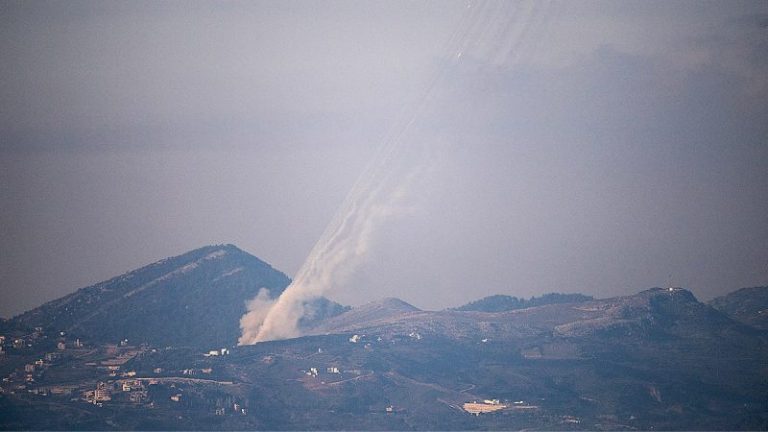
Alabama football went down at the Rose Bowl in embarrassing fashion.

In one of the worst losses and performances for the Crimson Tide in the Kalen DeBoer era, No. 1 Indiana defeated No. 9 Alabama 38-3 on Thursday, Jan. 1 in the Rose Bowl, a College Football Playoff quarterfinal game.

The Crimson Tide were kept to a third-quarter field goal and just 193 total yards of offense on the afternoon by the Hoosiers’ defense. Alabama quarterback Ty Simpson was benched in the third quarter by DeBoer in what was described by ESPN as a ‘coach’s decision’ after Simpson sustained an injury following a hit he took in the second quarter.

The 35-point loss for the Crimson Tide is tied for the fourth-largest blowout in the history of the College Football Playoff.

The loss for Alabama also gives the Crimson Tide back-to-back four-loss seasons under DeBoer, which is something that hasn’t happened in Tuscaloosa since the 2006 and 2007 seasons, the latter of which was Nick Saban’s first season.

Heisman Trophy winner Fernando Mendoza threw for 192 yards and three touchdowns in the Hoosiers’ first bowl win since the 1991 Copper Bowl. The Hoosiers will now advance to the Peach Bowl, a CFP semifinal game against No. 5 Oregon on Friday, Jan. 9.

Given the dominance by the Hoosiers and the ugliness of the Crimson Tide’s performance at the Rose Bowl, college football social media didn’t hold back. Here’s a snippet of the reactions to the outcome of the CFP quarterfinal game:

College football reacts to Alabama’s performance vs Indiana in Rose Bowl:

Here’s a look at social media after Alabama’s performance in the Rose Bowl:

This post appeared first on USA TODAY
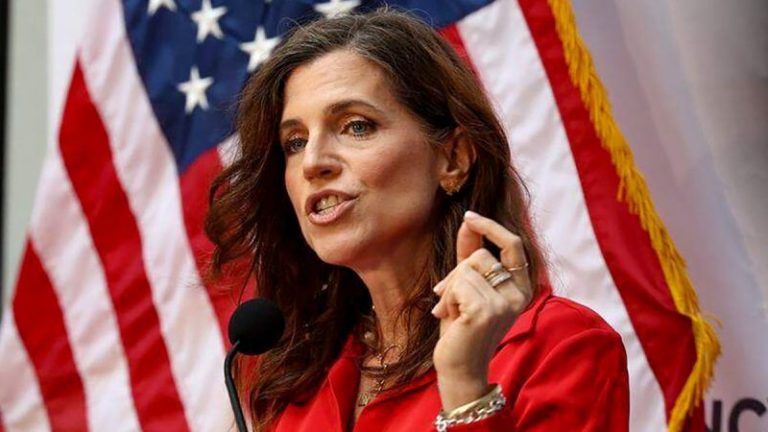
Guard Tonie Morgan hit the winning 3-pointer with 0.5 seconds remaining to lift the No. 12-ranked Kentucky women’s basketball team over No. 5 LSU, 80-78, at the Pete Maravich Assembly Center in Baton Rogue, Louisiana, on Thursday.

It was the first loss for the Tigers (14-1, 0-1 SEC), who set an NCAA record earlier this season by scoring 100-plus points in eight consecutive games.

Morgan led the Wildcats (14-1, 1-0 SEC) with 24 points, including three 3-pointers. She added 12 assists for her third double-double of the season. Teonni Key added 17 points and 16 rebounds for a double-double of her own. Clara Strack had 15 points and nine rebounds.

Kentucky had 17 offensive rebounds and 18 second-chance points, compared to four for LSU.

The Tigers led 75-69 with 5:03 to go in the game. They failed to score a field goal the rest of the way. Mikaylah Williams scored 26 points to lead four players in double figures for LSU.

This post appeared first on USA TODAY
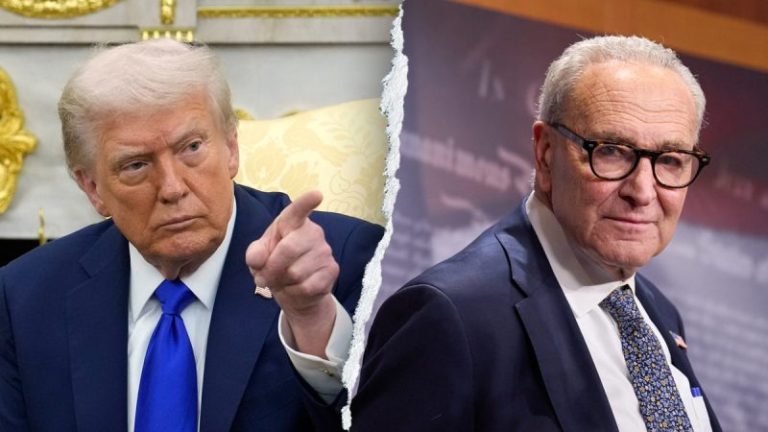
Indiana eliminated Alabama from the College Football Playoff in a quarterfinal game at the Rose Bowl.
Alabama’s inability to establish a running game was a key factor in its season-ending loss.
Costly mistakes, including a failed fourth-down conversion and a fumble, led to Indiana touchdowns.
For the third straight postseason game, the Crimson Tide fell behind by double digits in the first half.

PASADENA, CA — A hundred years to the day after Alabama football upset Washington in the Rose Bowl to win its first national championship, the Crimson Tide’s season ended with a thud in the very same place. Indiana eliminated Alabama from the College Football Playoff with a 38-3 win in quarterfinal action.

Here are a few quick thoughts from the outcome:

Talking points

1) Alabama’s utter inability to run the ball offensively finally caught up with it in a season-ending way. That was always going to be the flaw that prevented the Crimson Tide from winning a national championship − it’s too basic a requirement for playoff football − the only question being when it would become UA’s undoing. The answer came Thursday. It’s somewhat remarkable that the worst rushing Alabama team in my memory even reached a CFP quarterfinal, but it was only a matter of time before it bit Alabama where it hurts. Indiana had some balance in its attack, Alabama didn’t, and that was largely the difference in the Hoosiers’ victory.

2) Indiana’s defense made the first big stand of the afternoon, stuffing Alabama on a fourth-and-1 attempt from the Crimson Tide’s 35-yard line early in the second quarter. It was an ill-advised risk by the UA coach Kalen DeBoer, and one that would eventually come back to sting. Initially, UA came out in a punt formation, shifted to an offensive set, and tried to draw the Hoosiers offsides for a free first down. But when IU didn’t jump, Alabama called a timeout, then ran a jet sweep to Germie Bernard from the wildcat formation, and the play went nowhere. IU converted the short field into its first touchdown.

3) The lone turnover of the first half was a costly one for the Crimson Tide. Quarterback Ty Simpson fumbled at the end of a scramble that would have been good for a first down in IU territory. It killed a solid opportunity to get on the scoreboard. Instead, the Hoosiers, holding a 10-0 lead, took over at their own 42-yard line and posted another touchdown off the miscue.

4) For the third consecutive postseason game, Alabama fell behind by double digits in the first half. Georgia, Oklahoma and Indiana all built sizeable early leads, repeatedly testing the Crimson Tide’s comeback mettle. UA was blown out by the Bulldogs in Atlanta, responded with a comeback against OU, but couldn’t come from behind in Pasadena.

Turning point

Fernando Mendoza’s 1-yard touchdown pass to Omar Cooper Jr. opened up a 17-0 lead just before halftime, putting Alabama in desperation mode. Earlier in the drive, Mendoza converted a key third down with a 7-yard run and calmly completed all three of his passes on the possession. Indiana’s score right before the half put Alabama in too deep a hole for its struggling offense to overcome.

By the numbers

15 – The Alabama running back tandem of Daniel Hill and Kevin Riley combined for just 15 yards on eight carries. Senior Jam Miller? Nary a carry.

What I liked

Alabama’s pass rush was surprisingly effective, sacking Indiana QB Fernando Mendoza three times. The pressure came early, as Yhonzae Pierre and Bray Hubbard came up with sacks on two of IU’s first three offensive snaps. Pierre would later add a sack midway through the second quarter. This effectiveness came against Indiana pass protection that had allowed Mendoza to be sacked just 18 times in 13 previous games.

What I didn’t like

Alabama’s defense lost its edge in the second half. It’s hard to hang the loss on Kane Wommack’s unit when the offense did absolutely nothing to help, but IU made easy work of Alabama’s defense in the second half, going on touchdown marches of 79 and 75 yards to complete the blowout.

Tuscaloosa News columnist Chase Goodbread is also the weekly co-host of Crimson Cover TV on WVUA-23. Reach him at cgoodbread@gannett.com. Follow on X.com @chasegoodbread.

This post appeared first on USA TODAY