Archive

2026

Browsing

The game of hockey is no stranger to familial connections. In a sport that has seen the Niedermayers and Staals play alongside and against each other, contemporarily we have the Tkachuks and, of course, the Hugheses. The latter are going to be well-represented in Milano Cortina, with both Quinn and Jack representing Team USA on the men’s side and the matriarch, Ellen Weinberg-Hughes, serving as a consultant for the women.

While their father Jim has a hockey background of his own — having played in the now-defunct International Hockey League and the American Hockey League while also coaching — it is Ellen who has some hardware in the family trophy case. Weinberg-Hughes (née Weinberg) helped bring the United States a silver medal in the 1992 IIHF Women’s World Championship as a blue-liner, getting an All-Star nod in the process after notching four assists.

In the NHL, the Hughes family tree has roots that run deep. Jack plays with Luke (who is not on Team USA and was placed on long-term IR in late January) on the Devils while Quinn has become a top defenseman for the Wild since being traded from the Canucks in December. Indeed, he already has the most three-point games by a Minnesota defenseman in a season with five, in just 26 games.

However, while the brothers are making an impact on the ice on the men’s side, Weinberg-Hughes will be a big contributing factor in what the women send out. She is a player development consultant for Team USA, and one of the reasons it is favored to win gold in Milano Cortina. She and coach John Wroblewski are incredibly close, and the roster is closer still.

Here’s a look at the Hughes family connections, and why their influence will be all over the ice in Italy.

Father Jim Hughes

The Hughes brothers’ father, Jim, has a strong hockey background in his own right.

He had 92 points in four seasons at Providence, including back-to-back 30-point seasons and a 10-goal season in his senior year. Hughes went on to play for Springfield in the IHL before joining the AHL with the Albany Choppers. Hughes didn’t see the ice much in his minor-league days and eventually turned to coaching.

As a coach, Hughes largely was an assistant. He spent two seasons in the NHL as an assistant with the Bruins, and became a head coach for the Manchester Monarchs for a year. His longest stint was as the director of player development with the Toronto Maple Leafs from 2009-15. He is now the director of player development for CAA, the agency that represents Jack, Quinn and Luke.

Mother Ellen Weinberg-Hughes

Weinberg-Hughes, a three-sport college athlete, is largely responsible for the kids’ skating acumen. Just ask Jim.

‘We didn’t know what sport it would be, but I guess we thought our kids would be in athletics, some sort of competitive sports,’ Jim said in 2018, per The Detroit News. ‘And my wife got them involved in skating when they were very young. That’s what we did. We were a hockey family.’

Weinberg-Hughes played hockey for the University of New Hampshire, along with lacrosse and soccer. She notched 70 points, including 11 goals, and she won a silver medal with the USA women in Finland at the 1992 World Championships. She was named to the All-Star team of the tournament with four assists. Canada took gold in that tournament.

Now, Weinberg-Hughes serves as a development consultant for the USA women, who are favored to win gold in Italy. It’s her third year working with the United States, and she holds an extremely close relationship with Wroblewski, who at one point had coached Quinn, Jack and Luke.

Quinn Hughes, Minnesota Wild defenseman, 26

The oldest of the Hughes brothers, Quinn played hockey at the University of Michigan and was drafted seventh overall by the Canucks in 2018.

Known for his outstanding vision from the point, Quinn followed in his mother’s footsteps to play defense. He was a sought-after trade candidate when it became apparent the Canucks were looking to move him early in the 2025-26 season, with several teams showing interest. Among them were the Devils, where Jack and Luke currently play, and the Red Wings, which would be a homecoming of sorts for the star.

Ultimately, the Wild sent a king’s ransom for Hughes, locking him up with former first-round picks Marco Rossi, Zeev Buium and Liam Öhgren, plus a 2026 first-round pick. Quinn has five three-point-plus games with the Wild in just 26 games, already a record for a Wild defenseman.

Jack Hughes, New Jersey Devils center, 24

Jack Hughes was picked first overall in the 2019 NHL Draft and has since become a face of the franchise.

His first goal came against Quinn’s Canucks. Jack’s breakout year came in 2021-22, when he scored 56 points with 26 goals, but his best season came the year after in 2022-23. He scored a franchise-record 99 points and 46 goals, helping get the Devils to the playoffs for the first time in five seasons.

While the Devils have disappointed so far this season and Jack has dealt with a few injuries, he will look to be a strong contributor on the United States’ forward lines.

Luke Hughes, Devils defenseman, 22

Rounding out the Hughes brothers is Luke Hughes, a 2021 first-round pick out of Michigan who went fourth overall, making him the middle child by draft position although he’s the youngest.

Hughes’ first goal was in overtime against the Capitals, a wraparound goal off a rebound from a shot in the slot to give the Devils a win.

Hughes, who signed a seven-year, $63 million contract late in training camp, has had a tough season at moments. He suffered a pair of own goals against the Carolina Hurricanes and was booed by home fans, but was praised when he sat and talked to media after the fact. Luke is now on long-term IR with a shoulder injury he suffered against the Flames.

This post appeared first on USA TODAY

CORTINA D’AMPEZZO, Italy — This is the last chance to see the speed racers in Alpine skiing. 

Today’s super-G is the last speed event on the calendar for the Milano Cortina Olympics. The super-G is shorter than the downhill and with more gates, but has faster speeds than the giant slalom. Or, as newly minted downhill gold medalist Breezy Johnson calls it, ‘a hot mess.’ 

‘You’re suddenly going from an F1 car on a nice F1 track to a rally car. But in the woods,’ Johnson said. 

There was no shortage of chaos in the race as 17 of 43 skiers did not finish.

But there was also jubilation and redemption as Italian star Federica Brignone captured the gold medal less than a year after suffering multiple fractures and a torn ACL in her left leg.

Despite only returning to competitive skiing recently following surgery and rehab, Brignone raced with no hesitation and finished with a top time of 1:23.41. France’s Romane Miradoli took silver with a time of 1:23.82, and Austria’s Cornelia Huetter earned bronze 1:23.93.

Johnson was one of four Americans in the race, but she was also one of thee 17 DNFs, along with American teammate Mary Bocock. Jackie Wiles was the highest finishing American in 13th, while Keely Cashman finished 15th.

USA TODAY had full coverage of the Olympic women’s super-G. Scroll below for full results and highlights:

Olympic women’s super-G results

Federica Brignone, Italy ….. 1:23.41
Romane Miradoli, France ….. 1:23.82
Cornelia Huetter, Austria ….. 1:23.93
Ariane Raedler, Austria ….. 1:23.94
Kajsa Vickhoff Lie, Norway ….. 1:24.17
Laura Pirovano, Italy ….. 1:24.17
Elena Curtoni, Italy ….. 1:24.18
Camille Cerutti, France ….. 1:24.44
Alice Robinson, New Zealand ….. 1:24.44
Malorie Blanc, Switzerland ….. 1:24.65
Corinne Suter, Switzerland ….. 1:24.80
Laura Gauche, France ….. 1:25.02
Jackie Wiles, USA ….. 1:25.40
Barbora Novakova, Czechia ….. 1:25.58
Keely Cashman, USA ….. 1:25.61
Elvedina Muzaferija, Bosnia and Herzegovina ….. 1:25.85
Delia Durrer, Switzerland ….. 1:25.95
Maryna Gasienica-Daniel, Poland ….. 1:26.07
Julia Pleshkova, Individual Neutral Athletes ….. 1:26.32
Alena Labastova, Czech Republic ….. 1:27.94
Rebeka Jancova, Slovakia ….. 1:28.51
Nicole Bedue, Argentina ….. 1:28.68
Rosa Pohjolainen, Finland ….. 1:29.18
Elisa Maria Negri, Czechia ….. 1:29.21
Alexandra Skorokhodova, Kazakhstan ….. 1:31.22
Sarah Schleper, Mexico ….. 1:31.37
Kira Weidle-Winkelmann ….. DNF
Mirjam Puchner, Austria ….. DNF
Emma Aicher, Germany ….. DNF
Ester Ledecka, Czech Republic ….. DNF
Sofia Goggia, Italy ….. DNF
Ilka Stuhec, Slovenia ….. DNF
Breezy Johnson, USA ….. DNF
Mary Bocock, USA ….. DNF
Nina Ortlieb, Austria ….. DNF
Janine Schmitt, Switzerland ….. DNF
Valerie Grenier, Canada ….. DNF
Jordina Caminal Santure, Andorra ….. DNF
Cassidy Gray, Canada …. DNF
Francesca Baruzzi Farriol, Argentina ….. DNF
Anastasiia Shepilenko, Ukraine ….. DNF
Matile Schwencke, Chile ….. DNF
Kiana Kryeziu, Kosovo …..DNF

Stream the 2026 Winter Olympics on Peacock

Flyover in Cortina commemorates Italian gold

Italian military completed a flyover – trailing red, white and green behind them – over Tofane Alpine Skiing Centre in Cortina d’Ampezzo to celebrate the gold medal won by Federica Brignone in super-G.

Mexican Mom make history in super-G

Mexico’s Sarah Schleper, who turns 47 next week, was last in the super-G and she didn’t care one bit. Schleper was celebrating when she was in the start gate and wore a big smile when she skied into the finish area. She pumped her first at the cheering crowd, then shook her head like, “Whew!”

Schleper is now the oldest female Alpine skier to compete in a Olympic Winter Games

US skiers shut out of super-G medals

There’ll be no medal for the Americans.

Jackie Wiles, the last U.s. skier to go in the super-G, skied into 13th place, one spot ahead of Keely Cashman. There are still more than a dozen skiers to go.

But at least Wiles and Cashman finished. teammates Breezy Johnson and Mary Bocock both crashed during their runs

American Mary Bocock goes for wild ride

Mary Bocock has crashed in her Olympic debut. She got too much air off a jump, was already off-balance in the air and landed sideways, her skis splayed in front  of her.

Nasty as the crash looked, Bocock was able to get right back up. Breezy Johnson skied down to the finish during the break between the runs of Bocock and another American Jackie Wiles, smiling and waving at the crowd. 

Downhill champ Breezy Johnson crashes in super-G

About 20 seconds into her run, American star Breezy Johnson got off her line off a jump and clipped the next gate. It spun her around and launched her into the safety netting at the side of the course.

Johnson, who won the gold medal in downhill earlier this week, was able to get back up and ski away from the fence.

Add Italian star Sofia Goggia to DNF list

Make that five of nine DNFs in the Olympic women’s super-G. Italian star Sofia Goggia was going hair on fire and it bit her. The 2026 downhill bronze medalist couldn’t make the turn in time and missed a gate

Czech star Ester Ledeka also can’t finish

Ester Ledecka is out, too. The Czech star was within sight of the finish line and got off balance on the landing of a jump. Looked as if she might be able to save it but then gravity kicked in.

For those counting, that’s four DNFs in first eight skiers

Germany’s top skiing star out

Emma Aicher’s hopes for a medal in a third consecutive event are over. The German skied out during her super-G run, becoming the third DNF in seven skiers so far.

Italian star Federica Brignone takes the lead

And Brignone has the lead! The Italian fans are going nuts in the grandstands as Brignone waves and pumps her first at them.

Olympic super-G produces two early DNFs

Got some early carnage at the super-G! Two of the first four skiers have skied out. There are some very tricky turns and it’s a fine line between carrying speed and being able to navigate the curves

Who are the favorites in Olympic women’s super-G?

This is the rare race where the U.S. women don’t have a medal contender. So who is favored? Italy’s Sofia Goggia leads the season super-G standings. Also keep an eye on New Zealand’s Alice Robinson and Switzerland’s Malorie Blanc, who won the last World Cup race. 

It’d be a great story if Italy’s Federica Brignone got on the podium. Last year’s overall champion blew out her knee in April and is still working her way back. When she’s healthy, she’s absolutely a medal threat.

And keep an eye on Ester Ledecka. The 2018 Olympic champ skied in parallel snowboard earlier in the Games – and that took place nowhere close to Cortina!

What time is the women’s super-G at the 2026 Olympics?

Women will compete in Alpine skiing’s super-G beginning at 5:30 a.m. ET (11:30 a.m. local time).

What TV channel is the Olympic women’s super-G on?

USA Network will have live coverage of the women’s super-G at the 2026 Winter Olympics, beginning at 5:30 a.m. ET.

Where is the women’s super-G held at the 2026 Olympics?

The women’s super-G takes place on the world renowned Olympia delle Tofane course at the Tofane Alpine Skiing Centre in Cortina d’Ampezzo, Italy.

Is there a live stream of the Olympc women’s super-G?

The women’s super-G at the 2026 Winter Olympics can be streamed on Peacock.

This post appeared first on USA TODAY
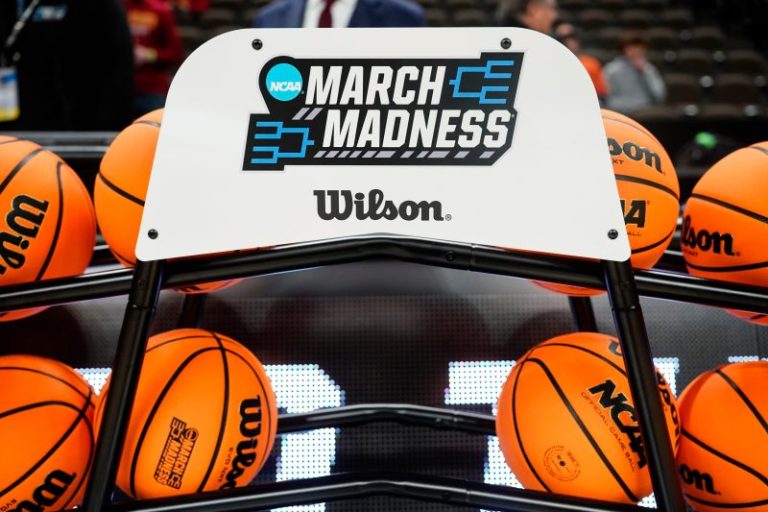
MILAN Madison Chock and Evan Bates’ teammates say the U.S. ice dance pair are their champions.

The husband-and-wife duo turned in a season-best free skate on Wednesday at the 2026 Winter Olympics, which will likely be the couple’s fourth and final Games, but Chock and Bates fell 1.43 points short of gold-medal winners Laurence Fournier Beaudry and Guillaume Cizeron of France.

Fellow American pair Emilea Zingas and Vadym Kolesnik, who finished fifth in the ice dance competition, embraced their veteran compatriots after Chock and Bates finished their matador-and-bull themed free skate.

‘They’ve had an amazing career and I mean for the last three seasons, they’ve demonstrated technical proficiency, artistic excellence,’ Zingas said. ‘I’m in awe of her all the time, and I think they skated fabulously today. It’s disappointing to me that they didn’t get the gold for me.’

Zingas added, ‘If it was my gold to give, I’d give it to them … I thought they were amazing in both segments of this competition. And I’ll always support them.’

Watch Winter Olympics on Peacock

Zingas is one of several U.S. figure skaters, both past and present, speaking out in support of Chock and Bates.

Under a Team USA Instagram post of Chock and Bates, fellow American ice dance duo Christina Carreira and Anthony Ponomarenko each individually called the veteran couple ‘my champions.’

Ponomarenko, who finished in 11th place in the ice dance event alongside Carreira, added ‘forever and always.’

American pairs skater Ellie Kam, who won gold alongside Chock and Bates in the team event earlier this week, described her teammates as ‘truly gold medalists inside and out.’

Olympic gold-medalist Evan Lysaceck, whose gold-medal win at the 2010 Vancouver Games ended USA’s 22-year drought in the men’s singles event, said Chock and Bates ‘are my golden couple.’

‘America’s golden couple,’ Lysaceck added. ‘We love you and you have made us so proud. You also win gold for most beautiful couple!’

Chock called their silver-medal ‘bittersweet,’ but noted she wouldn’t change a thing.

‘It was our gold medal performance. It was the best that we could skate,’ Bates added. ‘It was a personal best score. It was a fourth performance over six days. It took a lot of mental strength and discipline to be locked in and to continue to go out and skate well and we did everything that we could.’

The USA TODAY app gets you to the heart of the news — fastDownload for award-winning coverage, crosswords, audio storytelling, the eNewspaper and more.

This post appeared first on USA TODAY
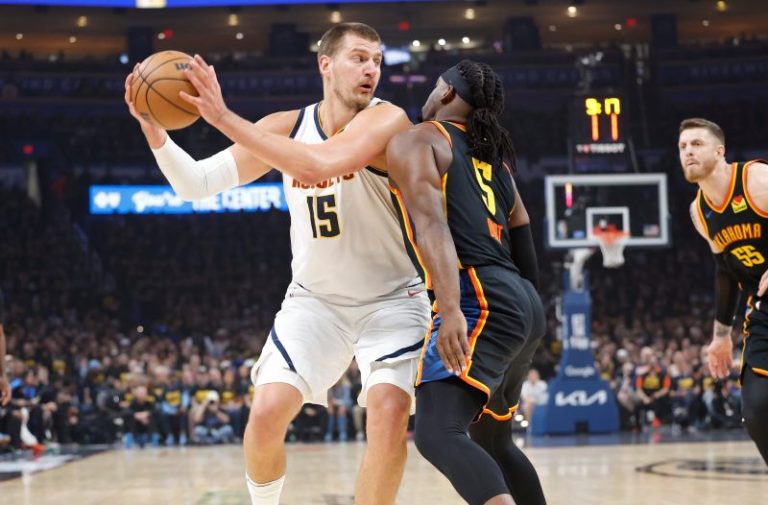
If you build it, they will come?

Some Iowa state senators introduced a bill this week that would expand the state’s major economic growth attraction program, creating financial incentives that could lure an NFL team seeking to build a stadium in the Hawkeye State.

Their target? The Chicago Bears.

‘After years of Bears fans seeking refuge across the Mississippi River from the incompetence, corruption and punitive tax and regulatory climate in the state of Illinois, it is time for the team to join their fans on the west side of the river,’ Republican Scott Webster, one of the legislation’s sponsors said in a statement.

‘Iowa can offer the Bears everything they need to build a world-class facility, tax certainty and the public infrastructure they need in a state led by common-sense conservatives.’

The recruitment pitch didn’t end there.

‘While Illinois and Indiana squabble over this issue, we are ready to get off the sidelines and into the game,’ Kerry Gruenhagen, another senator sponsoring the bill, said in a statement. ‘Bringing an NFL team to Iowa would attract jobs, tourism and fans to our state and give us the opportunity to showcase what Iowa really has to offer. Iowans have dedicated themselves to our college sports teams, and we’re ready to attract a professional team to our great state.’

While Iowa was the stage for ‘Field of Dreams,’ it isn’t home to any major professional sports franchises.

One of the NFL’s original franchises, born in 1920 as the Decatur Staleys, the Bears have been seeking a new stadium for years. Tenants of historic Soldier Field, the league’s smallest venue in terms of capacity (61,500) in downtown Chicago since 1971, the Bears had planned to move to suburban Arlington Heights, where they own a 326-acre tract of land that used to be the site of Arlington International Racecourse.

But team president Kevin Warren wrote in a letter to season ticket-holders in December that an inability to get assistance from the state of Illinois in offsetting infrastructure costs around the proposed project had led the team to consider alternatives. The team has committed to paying for construction of a new stadium itself.

‘We have not asked for state taxpayer dollars to build the stadium at Arlington Park. We asked only for a commitment to essential local infrastructure (roads, utilities, and site improvements) which is more than typical for projects of this size,’ Warren wrote. ‘Additionally, we sought reasonable property tax certainty to secure financing. We listened to state leadership and relied on their direction and guidance, yet our efforts have been met with no legislative partnership.

‘We have been told directly by State leadership, our project will not be a priority in 2026.’

Warren specifically cited Northwest Indiana as a potential locale to build a new stadium.

However, Illinois officials continue working to find a solution that would keep the Bears, a beloved team and one on the rise after winning the NFC North for the first time since 2018, in the Chicagoland area, where they’ve played since 1921.

‘There’s a lot of discussion, a lot of ongoing conversation with the Bears, and indeed, frankly, progress that’s been made. So I’m pleased about that,’ Gov. JB Pritzker said Monday.

‘But I’m going to let the Bears talk about what it is that they want to get done and how they want to get it done. And I’m obviously involved in negotiations and so are my entire team, as well as the members of the Legislature.’

This post appeared first on USA TODAY

CORTINA D’AMPEZZO, Italy — A Ukrainian skeleton athlete has been disqualified from the 2026 Milano Cortina Olympics after insisting on wearing a helmet honoring fellow athletes killed in Russia’s unprovoked invasion of his country.

The International Olympic Committee announced the decision on Thursday, Feb. 12, after Vladyslav Heraskevych met with IOC president Kirsty Coventry before the start of the skeleton competition.

‘The IOC was very keen for Mr Heraskevych to compete,’ the IOC said in a statement. ‘This is why the IOC sat down with him to look for the most respectful way to address his desire to remember his fellow athletes who have lost their lives following Russia’s invasion of Ukraine. The essence of this case is not about the message, it is about where he wanted to express it.’

Heraskevych said he will appeal the IOC’s decision to bar him from competition to the Court of Arbitration for Sport.

The men’s individual skeleton competition began Thursday. The mixed team event is Sunday, Feb. 15.

‘It’s hard to say or put into words. It’s emptiness,” Heraskevych told reporters outside the sliding center.

Heraskevych is being allowed to stay at the Games after Coventry intervened.

‘No one, especially me, is disagreeing with the messaging. The messaging is a powerful message. It’s a message of remembrance. It’s a message of memory,’ Coventry said after meeting with Heraskevych. ‘It’s not about the messaging; it’s literally about the rules and the regulations.’

Heraskevych’s helmet has images of more than 20 athletes and coaches killed since Russia invaded Ukraine almost four years ago. They include figure skater Dmytro Sharpar, who competed with Heraskevych during the 2016 Winter Youth Olympics

The IOC says the helmet violates its rules against making political statements on the field of play, and said it offered Heraskevych alternatives, including wearing a black armband or a black ribbon. It also said Heraskevych could carry the helmet with him in the mixed zone after he was done competing.

But Heraskevych has rebuffed the options, saying his helmet is not a political statement.

‘This is price of our dignity,’ he said in a post on X after the IOC’s decision.

Heraskevych had seemed to anticipate the IOC’s decision in a post Wednesday night thanking people for their support. 

‘For me, the sacrifice of the people depicted on the helmet means more than any medal ever could – because they gave the most precious thing they had,’ he wrote.

This is not the first time Heraskevych has used his Olympic platform to protest Russia’s aggression toward his country. He displayed a small sign with ‘No war in Ukraine’ after his final run at the 2022 Olympics in Beijing.

Russia invaded Ukraine two weeks later.

This post appeared first on USA TODAY

Russia will temporarily suspend flights to Cuba after airlines reported difficulties refueling aircraft on the island, aviation authorities said Wednesday.

Russia’s Federal Air Transport Agency Rosaviatsia said in a statement posted on Telegram that the airlines Rossiya, part of the Aeroflot Group, and Nordwind were forced to adjust their flight programs due to problems securing fuel in Cuba.

In the coming days, Rossiya will operate several outbound-only flights from Havana and Varadero to Moscow to return Russian tourists home before halting service.

After those repatriation flights are completed, the airline’s Cuba program will be suspended until the situation improves, the agency said, calling the decision one made ‘in the interests of passengers.’

The Transport Ministry and Rosaviatsia said they are maintaining close contact with Cuban aviation authorities and are exploring alternative options to restore two-way service.

The announcement comes two weeks after President Donald Trump declared a national emergency over Cuba and authorized new measures aimed at choking off the island’s oil supplies.

In a Jan. 29 executive order, Trump said Cuba poses an ‘unusual and extraordinary threat’ to U.S. national security and empowered his administration to impose tariffs on goods from any country that ‘directly or indirectly sells or otherwise provides any oil to Cuba.’

The order, which took effect Jan. 30, allows additional duties on imports from countries found to be supplying oil to Havana, part of what Trump described as a ‘zero tolerance’ policy toward the Cuban government.

The Federal Aviation Administration’s website shows a Notice to Airmen, or NOTAM, an official alert issued to pilots about hazards or operational disruptions, was posted Feb. 10 for nine Cuban airports warning that Jet A-1 fuel is not available.

The advisory covers Havana (MUHA), Varadero (MUVR), Cienfuegos (MUCF), Santa Clara (MUSC), Camagüey (MUCM), Cayo Coco (MUCC), Holguín (MUHG), Santiago de Cuba (MUCU) and Manzanillo (MUMZ), and remains in effect through March 11.

This post appeared first on FOX NEWS

Since President Trump resumed office, leftists have run to the courts in a desperate attempt to stop — or, at the very least, stall — his agenda. To defeat this lawfare, President Trump needs the Senate’s help to put constitutionalists on the bench. Democrat senators’ obstruction is unsurprising; not even one has voted for one of President Trump’s appellate court nominees. Many Republican senators, however, are lagging in streamlining nominations. The most serious breakdown is in filling district court vacancies in deep-red states, especially Texas, Oklahoma and Kansas. With the midterms rapidly approaching, this glacial pace must accelerate in short order.

District courts are the engines of the federal judiciary, and vacancies there create immediate and tangible harm. These courts handle the bulk of federal litigation, from immigration to criminal prosecutions to constitutional challenges. Yet confirming district judges often proves harder than confirming Supreme Court justices. The problem lies in the blue-slip process. Home-state senators have a de facto veto on district court nominees, U.S. attorney nominees and U.S. marshal nominees.

For over a century, U.S. senators have had the power to hand-select the U.S. attorneys who could prosecute them, U.S. district judges who could oversee their trials, and U.S. marshals who could escort them to prison. Senators will never give up this veto power. Sen. Thom Tillis of North Carolina, a lame-duck Republican who sits on the powerful Senate Judiciary Committee, made it crystal clear that he will oppose any nominee who lacks support from both home-state senators. Senate Judiciary Committee Chairman Chuck Grassley can do nothing about blue-slip obstruction when even one committee Republican can team up with Democrats to block any nominee.

There are roughly 15 district court vacancies in states with at least one Democrat senator. Because the blue slip is not going anywhere, it is unlikely that President Trump can fill many of these vacancies. Democrats are more obstructionist than ever. They caused the longest government shutdown in our history just a few months ago.

The far more troubling problem is the sheer number of vacancies in states represented by two Republican senators. Staggeringly, there are nearly two dozen district court vacancies in red states (i.e., states with two Republican senators). The most dire vacancy crises lie in Texas, Oklahoma, and Kansas. There are seven vacancies throughout Texas’ several judicial districts, for example. Texas deals with a massive amount of immigration litigation because it is a border state. There is no excuse for a deep-red state like Texas, which President Trump won by 14%, to have seven vacancies.

Texas sadly is not alone when it comes to an unacceptably slow pace in filling vacancies. Other deep-red states combined have over a dozen: one each in South Carolina, Louisiana, Alaska and Alabama; two each in Ohio, Oklahoma and Florida; and three in Kansas. President Trump won each of these states by double digits and most by over 20%. These states deserve judges who are strong constitutionalists in line with President Trump’s vision of the law.

If Senate Minority Leader Chuck Schumer reassumes the position of majority leader next year, he will grind the Trump judicial-confirmations train to a screeching halt. Grassley is a workhorse, so it is certain that he will expeditiously streamline President Trump’s nominees through the process this year. Senate Majority Leader John Thune has demonstrated remarkable efficiency in getting nominees swiftly confirmed. No judicial nominees remain on the Senate Executive Calendar. Only four remain in the Judiciary Committee, and they just had their confirmation hearing last week, meaning they will be on the floor and ready for a vote by the end of the month. Leader Thune and Grassley cannot process nominations if there are no nominees.

Republican home-state senators need to focus on this crucial task and understand the urgency of the moment. Since the Senate sits only 3.5 days a week in most weeks, floor time is limited. Should a Supreme Court vacancy arise, Judiciary Committee time and resources must be invested overwhelmingly in confirming President Trump’s nominee. Delay is a recipe for disastrous defeat, and it must end instantly.

Republican senators must get moving in filling judicial vacancies.

This post appeared first on FOX NEWS

CORTINA D’AMPEZZO, Italy — A Ukrainian skeleton athlete has been kicked out of the Milano Cortina Olympics for insisting on wearing a helmet honoring fellow athletes killed in Russia’s unprovoked invasion of his country.

The International Olympic Committee announced the decision on Thursday, Feb. 12, after Vladyslav Heraskevych met with IOC president Kirsty Coventry before the start of the skeleton competition.

‘The IOC was very keen for Mr Heraskevych to compete,’ the IOC said in a statement. ‘This is why the IOC sat down with him to look for the most respectful way to address his desire to remember his fellow athletes who have lost their lives following Russia’s invasion of Ukraine. The essence of this case is not about the message, it is about where he wanted to express it.’

Heraskevych said he will appeal the IOC’s decision to the Court of Arbitration for Sport.

‘It’s hard to say or put into words. It’s emptiness,” he told reporters outside the sliding center.

Heraskevych’s helmet has images of more than 20 athletes and coaches killed since Russia invaded Ukraine almost four years ago. They include figure skater Dmytro Sharpar, who competed with Heraskevych during the 2016 Winter Youth Olympics

The IOC says the helmet violates its rules against making political statements on the field of play, and said it offered Heraskevych alternatives, including wearing a black armband or a black ribbon. It also said Heraskevych could carry the helmet with him in the mixed zone after he was done competing.

But Heraskevych has rebuffed the options, saying his helmet is not a political statement.

‘This is price of our dignity,’ he said in a post on X after the IOC’s decision.

Heraskevych had seemed to anticipate the IOC’s decision in a post Wednesday night thanking people for their support. 

‘For me, the sacrifice of the people depicted on the helmet means more than any medal ever could – because they gave the most precious thing they had,’ he wrote.

This is not the first time Heraskevych has used his Olympic platform to protest Russia’s aggression toward his country. He displayed a small sign with ‘No war in Ukraine’ after his final run at the 2022 Olympics in Beijing.

Russia invaded Ukraine two weeks later.

This post appeared first on USA TODAY

MILAN — Madison Chock took a long pause to gather her thoughts. Her eyes already red, and tears on the verge of flowing again.

With the lights at their brightest, they gave the performance of a lifetime. Ice dance gold was on the line, and what transpired over four minutes on the ice indicated it was in sight. After falling short so many times, Chock and Evan Bates weren’t going to be denied from reaching figure skating immortality.

When the dust settled, they had done it. Chock and Bates finally won a Winter Olympic ice dance medal. 

Just one thing: it wasn’t gold. 

In a result that has sent shockwaves through the figure skating world, one of the most decorated U.S. duos was upset, taking silver as the controversial French team of Laurence Fournier Beaudry and Guillaume Cizeron were crowned Olympic champions.

In the immediate aftermath, Chock and Bates stayed stoic. They smiled and waved when their name was called as the second-place team. They smiled with their fellow medalists for a picture. They carried the U.S. flag around the ice with pride, sending love to the crowd.

The husband-and-wife tried to keep it together, but eventually, as they went away from the crowd, the emotions couldn’t be held back any longer. 

More than an hour after the results were finalized, Chock and Bates were still trying to grasp the result. It was two days ago when Bates said the goal was gold, but it wouldn’t be a failure if they weren’t at the top of the podium.

Yet after their second-place finish, it felt like the ultimate let down.

“It’s definitely a little bittersweet,” Chock said with tissues in hand. 

Most figure skating fans – and even the casual viewer – would argue Chock and Bates outperformed Beaudry and Cizeron. Even though the French team started the night in first place, only .46 separated them in the standings. The slightest advantage could help the Americans leap over them.

It was done with a free dance that has captivated audiences every single time it was performed. Chock and Bates brought the fire and intensity with their matadora and bull story, and most importantly, skated clean. 

Like so many times before, they achieved a season-best score of 134.67. In their eyes, they secured what they set out to get. 

Chock went on to say how happy they were with their performance, trying to speak through the tears that started to flow. Neither of them said it, but there was a real belief the competition was decided by the time their performance was done.

‘It was our gold medal performance,” Bates said. ‘It was the best that we could skate.”

Yet, there were still the leaders going into the night. Beaudry and Cizeron did exceptionally well, but it didn’t feel as clean as it needed to be. It definitely wasn’t obvious or a given they would keep the lead. The crowd collectively stilled waiting for the results.

The judges thought the opposite. The French score was .97 better, finishing with a victory margin of 1.43.

You couldn’t have asked for more from Chock and Bates, who had a chaotic schedule of four performances in six days. It took so much physical and mental work to go through such a rigorous grind, and they still found a way to collect a medal.

Even with a literal silver lining, they struggled to find the happiness in finally crossing off that Olympic achievement. There are plenty of people who feel like Chock and Bates, who have been the face of American ice dance for nearly a decade, were robbed, with teammates vouching for the symbolic mom and dad of Team USA.

‘It’s disappointing to me that they didn’t get the gold,’ said fellow U.S. ice dancer Emilea Zingas, who finished fifth with partner Vadym Kolesnik.

It’s going to take some time to process the result for Chock and Bates.

“There’s so many emotions that come through after a week like this,” Bates said. “I think when things settle, we’ll be super proud and look back on our time here and be happy with everything that was up to us. We really did our best.”

The night was building toward a coronation where Chock and Bates would cement themselves as one of the most successful ice dance pairs to grace the ice. They still did that, even if it wasn’t with a gold medal. Neither have said this is the end of the line for their Olympic careers, Chock being 33 and Bates nearly 37, but it very well could be.

‘I wouldn’t change anything about how we approached each performance. What we delivered in each performance, we really gave it our best,” Chock said. ‘Sometimes that’s just how it shakes out. This is the story for us, and I wouldn’t change anything.”

Get Olympics updates in your texts! Join USA TODAY Sports’ WhatsApp Channel

This post appeared first on USA TODAY

LIVIGNO, Italy — You haven’t seen anything yet.

That was Alessandro Barbieri’s message after the 17-year-old American finished fourth in the Olympic men’s halfpipe qualifier on Feb. 11 at Livigno Snow Park.

Barbieri, the highest finisher of the three Americans who advanced into the 12-man final on Feb. 13, posted an 88.50 on the third overall run of the competition. Though he’d ultimately finish behind Australian star Scotty James (94) and Japan’s Yuto Totuska (91.25) and Ryusei Yamada (90.25), it was a highly encouraging Olympics debut for the confident youngster from Portland, Oregon.

And get this:

‘What I really have in my head is a 10. That was more like a six,’ Barbieri said. ‘I have a lot more in the tank. … I kind of expect myself to be near the top after all this hard work I’ve put. I’m pleased, but not too shocked.’

On a second run that set up more as a practice run, Barbieri suffered an odd fall, slipping after landing a trick and setting up for the next.

Barbieri’s big Olympic debut in Livigno happening in front of snowboarding legend Shaun White, who pointed to Barbieri as one to watch in these Games.

‘We need another guy like Shaun,’ Barbieri said. ‘We have really good snowboarders. Obviously, no one to the level of Shaun and his dominance. But we need the U.S. back on the podium or even on the top step.

Barbieri will be joined in the final by American teammates Chase Josey and Jake Pates, who finished 11th and 12th, making them the final two riders to advance out of the 25-man qualifying event after a tense wait until the finish line.

Josey, 30, fell on his second run after earning a 76.50 score on an initial run that was based largely on execution – he grabbed the board mid-air through his legs at one point – than high-flying acrobatics.

‘Those are the little things that the judges look for,’ Josey said, ‘and that’s what I’ve got to do to compete with some of these Japanese guys who are doing triples and really at the top of the game. I’m fighting for this opportunity to be in the finals, but it’s nice to see that run get rewarded.’

Pates, 27, fell on his first run and responded with a clutch performance, scoring 75.50 when he needed to exceed a 74 to move into 12th place, placing him right on the cut line.

From there, he and Josey each had to wait out nine more competitors.

‘When I was put into 12th. I had a crazy level of anxiety kind of come over me,’ Pates said with a laugh. ‘I’m just excited to be here and to be a part of this.’

A fourth Team USA rider in the field, Chase Blackwell, scored a 69 and finished 15th.

This post appeared first on USA TODAY