Archive

2026

Browsing

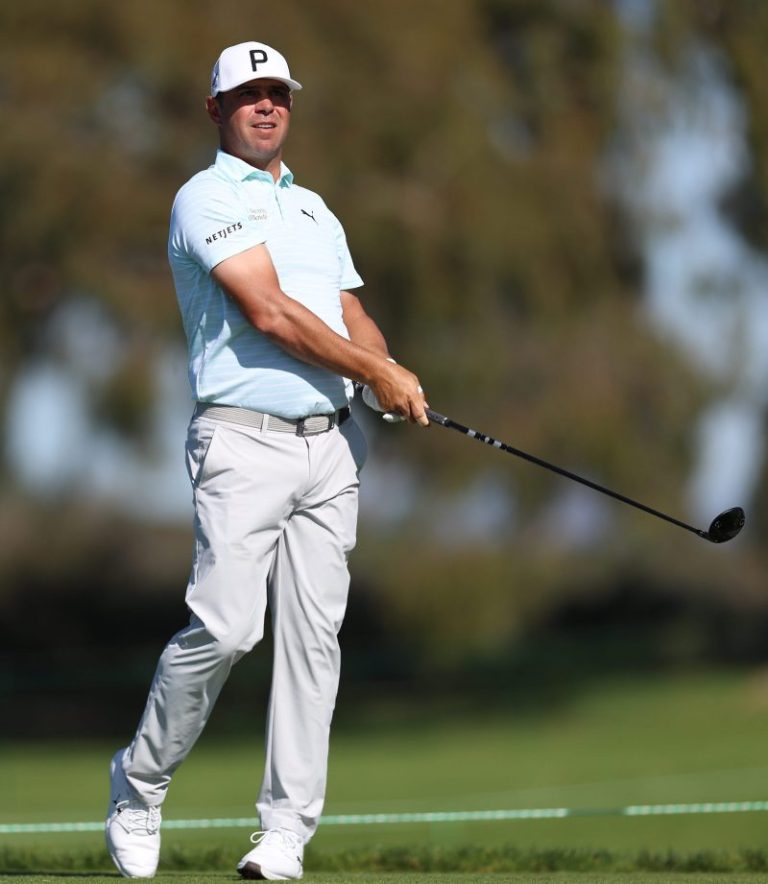
Golfer Gary Woodland said he is battling post-traumatic stress disorder after having brain surgery in 2023, adding he is not going to ‘waste energy’ trying to hide it.

Woodland, who won the U.S. Open in 2019 and has four PGA Tour victories, had tests that revealed a lesion pressing on his brain and had surgery in September 2023. Woodland returned to the PGA Tour in 2024, but was experiencing symptoms as doctors could not remove the entire tumor.

‘Every week, I come out and everyone is so excited and happy that I’m back. I hear that every week: ‘It’s so nice to see you passed this. It’s so nice to see you 100%,” Woodland said to the Golf Channel. ‘And I appreciate that love and support, but inside, I feel like I’m dying. I feel like I’m living a lie. And I don’t want to waste energy on that anymore. I want to focus my energy on me and my recovery, my dreams out here, my family. I don’t want to waste energy hiding this.’

Woodland said that while playing in the Procore Championship last September, a scorer in his group got a little too close to him, which scared him, but he continued to play in the tournament. He said he would wear sunglasses and go into bathrooms to cry.

‘I stepped aside, I pulled my caddie and said, ‘This stuff is hitting me, man. You can’t let anybody get behind me,” he said. ‘Next thing you know, I couldn’t remember what I was doing. My eyesight started to get blurry. And a hole later, I just said, ‘Butch, I can’t handle it.’ And I start bawling in the middle of the fairway. It was my turn to hit, and I couldn’t hit.’

Woodland, 41, is in the field for this week’s Players Championship at TPC Sawgrass in Ponte Vedra Beach, Florida.

‘Doctors have said in an ideal world, I’m probably not playing,’ Woodland said. ‘I’m probably not in a stressful, overstimulating environment. But my response was, in an ideal world, I don’t have (PTSD). (Golf) is my dream, this is what I’m going to do, and no matter how hard it is, I’m going to play.’

This post appeared first on USA TODAY

Senate Democrats are preparing a series of war powers votes aimed at curbing President Donald Trump’s authority to continue military operations against Iran — and forcing the administration to publicly defend its actions.

Several Senate Democrats filed war powers resolutions last week meant to handcuff Trump and his continued conflict in the Middle East. It’s a power play by the group, who say the administration has not shown enough evidence that the U.S. should have struck Iran in the first place, much less continue fighting in the region.

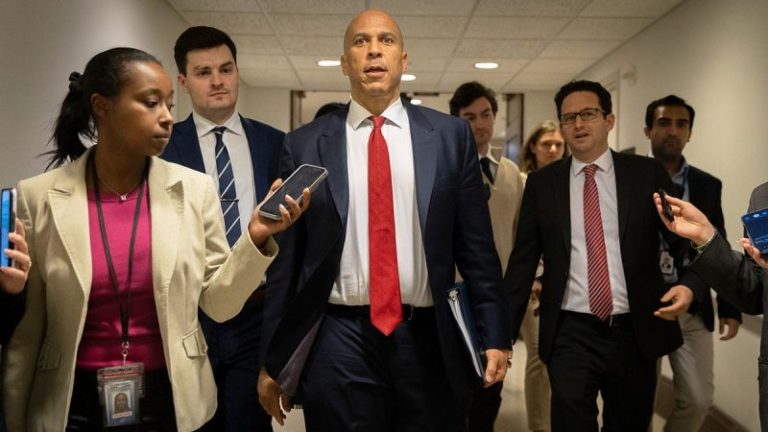
Sens. Chris Murphy, D-Conn., Cory Booker, D-N.J., Adam Schiff, D-Calif., and Tammy Baldwin, D-Wis., collectively filed five war powers resolutions last week, and they’re joined by Sens. Tammy Duckworth, D-Ill., and Tim Kaine, D-Va. Kaine has filed resolution after resolution to curb Trump’s war authority since he took office for his second term.

Those resolutions, barring an official slate of hearings with Secretary of State Marco Rubio and Secretary of Defense Pete Hegseth, could hit the Senate next week and grind down floor time.

‘This Congress should be focused on the biggest military action since the Afghanistan war, and we’re not even holding hearings on that,’ Booker told Fox News Digital. 

Murphy said that the resolutions could hit the Senate floor as soon as next week, and warned that if hearings are set in motion, Democrats would be able to ‘call up a vote every day on war powers and force at least a short debate and vote every day.’

‘There’s no excuse to hide what the administration is doing from the public,’ Murphy said. 

While the group wouldn’t reveal exactly what their gridlock-inducing floor strategy would look like, they contended that the chairs of the Senate Armed Services and Senate Foreign Relations committees had already requested that Rubio and Hegseth testify.

Senate Foreign Relations Committee Chair Jim Risch, R-Idaho, wouldn’t say whether he had requested Rubio to appear before his panel but blamed Senate Democrats for helping the Iranian Revolutionary Guard.

‘You’ll notice the Democrats are the only entity on this planet who are helping the IRGC,’ Risch told Fox News Digital, referring to the Islamic Revolutionary Guard Corps.

The group argued that Rubio and Hegseth should make the case for the war in Iran to the public and that closed-door, classified briefings on the matter weren’t enough to convince them that the war was necessary.

‘I was absolutely not convinced. In fact, nothing was offered to show me that we were under imminent attack,’ Baldwin said. ‘That we were under imminent attack, or that it was reasonable to believe that we were at risk — and that’s what would trigger the president’s authority to use military force without coming to Congress first.’

Senate Majority Leader John Thune, R-S.D., acknowledged that Democrats’ strategy would eat away at floor time but cautioned that ‘we’ll see how the next few days in the conflict go.’

‘I’m sure there’ll be some decisions made around that, but maybe that’ll affect whether or not they try to trigger all those,’ Thune said.

Thune said that ‘there always are’ hearings and noted that the Senate Armed Services Committee would be holding hearings soon on the annual National Defense Authorization Act.

‘So they’re going to have all those folks coming through on a fairly routine basis anyway, and I’m sure this will be a subject of discussion,’ Thune said.

This post appeared first on FOX NEWS

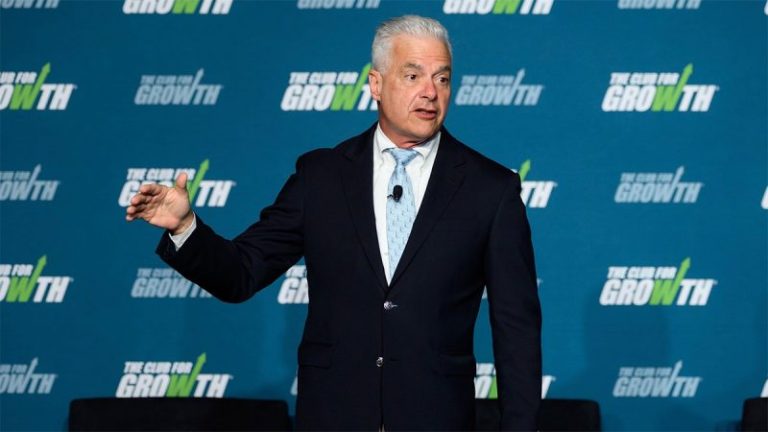
. — As Republicans aim to hold their fragile House and Senate majorities in the 2026 midterm elections, they’ve got an ally in the politically potent and deep-pocketed fiscally conservative group Club for Growth.

Framing the midterms, Club for Growth President David McIntosh emphasized in an exclusive Fox News Digital interview on the sidelines of the group’s annual economic conference ‘what’s at stake’ in the midterms.

‘It’s the difference between all the great progress, the jobs, the good economy, turning America around,’ that McIntosh said President Donald Trump and Republicans on Capitol Hill have accomplished over the past year, ‘versus letting the socialists back in, they’ll shut it all down.’ 

For a quarter-century, the club has been one of the biggest backers of Republican candidates and causes, as it pushes its pro-growth and limited-government conservative agenda.

McIntosh, in a presentation to major donors to the group, highlighted that the club spent more than $160 million in the GOP primaries and general election during the 2024 election cycle, ‘and won nearly 80%’ of its races.

In 2026, the group aims to raise and spend $175 million in the midterms, and says it’s already brought in $65 million from donors.

The club plans to spend $75 million on Senate races, $55 million on House showdowns, $20 million in ballot box battles for governors, and $20 million — mostly already spent — on issue advocacy in support of Trump’s tax cuts, school choice efforts and the push for congressional redistricting.

‘I think the House is the most vulnerable,’ McIntosh said as he pointed to the GOP’s fragile 218–214 majority. 

‘So we’ve already started raising money for the general. I’ve got a House fund, an ambitious goal of $40 million to help our guys win,’ he added as he spotlighted a fund for vulnerable House Republican incumbents.

As the party in power, Republicans are facing traditional political headwinds which usually result in the loss of congressional seats in the midterms. And Democrats are energized, thanks to a slew of ballot box victories and overperformances in off-year and special elections in the 14 months since Trump returned to the White House, as they stay laser focused on affordability amid persistent inflation.

But the GOP also is dealing with a low propensity midterms issue that it didn’t have to worry about before Trump upended the political order: MAGA voters who don’t always go to the polls when Trump’s name isn’t on the ballot.

‘We’ve got to get the folks who voted for President Trump,’ McIntosh said. ‘They don’t necessarily come out in the midterms. We have to share with them what’s at stake.’ 

‘We’re going to work with President Trump on that so they know he wants them to vote,’ he said. ‘He wants them to come out. He needs them so he can keep going.’

McIntosh said the Club will highlight that ‘Republicans have a plan that will help make things more affordable. It will keep cutting taxes. They will see the benefits.’

‘But the bigger message is going to be, you can’t let the Democrats back in, because they’ll shut everything down,’ he claimed. ‘It’ll be back to the Biden days, high inflation, higher taxes, fewer jobs. That’s what’s at stake, and our job is to tell the voters, we need you to vote because it makes all the difference.’

The economy, and specifically inflation, was a key issue that boosted Trump and Republicans to sweeping victories in 2024. But affordability boosted Democrats at the ballot box in 2025 and so far in 2026. 

And with oil and gas prices surging since the start of the U.S. and Israeli attacks on Iran a week and a half ago, Republicans face more potential political headaches.

But McIntosh predicted that ‘by the end of the year, we’re going to be back to a robust economy because the Trump tax cuts are going to kick in. People will keep more of their money. There’s a huge incentive for companies to build factories back here in America again, and that will kick in. People will say, ‘Yeah, I like the direction we’re going. Things are turned around. We can’t let the Democrats ruin that.’’

Most Democrats obviously disagree with the political narrative coming from the club.

And the Democratic National Committee has long criticized the group for its ‘extreme positions on banning abortion and cutting Social Security and Medicare.’

While the club is ramping up for the general election showdowns, it’s already playing in this year’s GOP primaries.

In the battle for the Senate, the club recently made a major endorsement, backing Rep. Mike Collins of Georgia, who’s involved in an ugly three-way fist fight for the Republican nomination in the race to take on Democratic Sen. Jon Ossoff in the southeastern swing state.

‘We’re definitely going to be there in Georgia to help Mike Collins win,’ McIntosh pledged.

The club enjoyed a major victory March 3, as the candidate it was backing, Texas state Rep. Steve Toth, toppled high-profile incumbent U.S. Rep. Dan Crenshaw, a former Navy SEAL officer, in the GOP primary for a Houston-area congressional seat.

But in this case, the club kept quiet its efforts to support Toth, as it put its funding in an aligned startup PAC.

McIntosh said he ‘knew if Club for Growth came in guns blazing, then the Washington money would come in to help Crenshaw.’

‘We don’t need the glory. We don’t need to take credit for it,’ McIntosh said. And pointing to Tosh, he added, ‘He did the job, but we were able to bring the funds in that let the voters know what their choice was.’

This post appeared first on FOX NEWS

Rep. Erin Houchin, R-Ind., was in college when her father was ‘raking up thousands of dollars of debt’ while battling a crippling gambling addiction she says was brought on by medication to treat his Parkinson’s disease diagnosis.

Now, the Indiana Republican is working to make sure other American families can seek help for their loved ones before facing the same monetary problems.

‘The POINTS Act is about helping people who are struggling with gambling addiction, by utilizing existing excise tax revenue to issue grants to states and jurisdictions, including Indian tribes across the country, for the use of education and training on preventing and treating gambling addiction,’ Houchin told Fox News Digital.

Her bipartisan bill, the Providing Opportunities for Individuals in Need of Treatment and Support (POINTS) Act, is a rare bipartisan initiative in Congress being co-led with Rep. Andrea Salinas, D-Ore.

It’s an issue Houchin said she is passionate about, given her own family history — which she said is ‘not unique.’

‘Unfortunately, many families across the country have had similar experiences, if not from Parkinson’s, but from other illnesses and just suffering from addiction in general,’ she said. ‘And it can cripple families and ruin their future if it’s not treated.’

Her own father was 55 when he was diagnosed with Parkinson’s, Houchin said, and the gambling addiction set in soon after.

‘My mom would tell stories that, you know, they often would go out west if they’d take a vacation, and it would be difficult for her to get him through the airport at Las Vegas because of the casino that’s right there as you pass through,’ Houchin said.

She told Fox News Digital that her father’s doctors knew little about why the medication caused his gambling addiction, but suggested it took her family years to financially recover.

‘My mom just let me know that she just paid off a second mortgage, took her about 10 to 15 years to pay it off, around $91,000 of gambling debt that my dad had raked up over the course of his illness after being prescribed this medication,’ Houchin said. ‘So we want other families to have the support system necessary to have the resources to treat gambling addiction.’

Her legislation, which is also backed by Reps. Mariannette Miller-Meeks, R-Iowa, and Troy Carter, D-La., would create a first-of-its-kind federal fund dedicated to specifically addressing gambling addiction.

She also pointed out that it would not be funded by any new taxes on Americans.

‘This is existing excise taxes that are going to be distributed in the form of grants for states that adhere to the principles in the POINTS Act, which is providing resources, not just to healthcare professionals, but also for families on how to access gambling addiction treatment,’ Houchin said.

Both she and Salinas also argued the legislation was critical now, given the meteoric rise of sports betting via apps and other easily accessible means.

‘As sports betting and online gambling continue to expand across the country, we have a responsibility to ensure people struggling with addiction are not left behind. Gambling addiction can devastate individuals and families, yet too many communities still lack the resources needed to provide prevention, treatment, and recovery support,’ Salinas told Fox News Digital.

‘The POINTS Act helps close that gap by investing existing gambling excise tax revenue into programs that expand care, raise awareness, and connect people to the help they need.’

This post appeared first on FOX NEWS
The Trump administration, citing Iran, is taking more action against the Muslim Brotherhood—this time in one of the world’s worst conflicts: the civil war in Sudan.

On Monday, the State Department declared the Sudanese Muslim Brotherhood (SMB) to be a ‘Designated Global Terrorist and intends to designate the group as a Foreign Terrorist Organization, effective March 16, 2026.’ The statement also contained a warning to Iran regarding its meddling in the conflict.

‘The SMB has contributed upwards of 20,000 fighters to the war in Sudan, many receiving training and other support from Iran’s Islamic Revolutionary Guard Corps,’ the statement noted. 

It added, ‘As the world’s leading state sponsor of terrorism, the Iranian regime has financed and directed malign activities globally through its IRGC. The United States will use all available tools to deprive the Iranian regime and Muslim Brotherhood chapters of the resources to engage in or support terrorism.’

In November, the State Department sanctioned the Muslim Brotherhood in Egypt, Jordan and Lebanon, declaring it to be a terrorist organization in those countries.

The organization, the State Department noted, is ‘composed of the Sudanese Islamic Movement and its armed wing – the al-Baraa Bin Malik Brigade (BBMB), (and) uses unrestrained violence against civilians to undermine efforts to resolve the conflict in Sudan and advance its violent Islamist ideology.’

The statement added that the group’s ‘fighters have conducted mass executions of civilians in areas they captured, and repeatedly and summarily executed civilians based on race, ethnicity or perceived affiliation with opposition groups.’

Edmund Fitton-Brown, a senior fellow at the Foundation for Defense of Democracies (FDD), told Fox News Digital that the Muslim Brotherhood’s links within the Sudanese government’s Sudanese Armed Forces (SAF) are deep and contribute aggressively in the war against the Rapid Support Forces.

Fitton-Brown, a former U.K. ambassador to Yemen, added that the Brotherhood has a ‘strong component’ in the Sudanese regular army.

Adding that the Brotherhood in Sudan has historical links with Osama Bin Laden, responsible with al Qaeda for the 9/11 terrorist attack, Fitton-Brown stated that the State Department’s move is significant. ‘It is the first concrete indication that the November executive order was only the start of a process.’

On the sanctioning of the Brotherhood in several countries in the region, he said, ‘I expect there will be many more, possibly starting with al-Islah in Yemen.’ He said the move ‘puts Sudan under political pressure because it is effectively associating its government with a terrorist entity.’

The effects of the nearly three-year-long civil war on the people of Sudan are dire. Last month, the Council on Foreign Relations’ global conflict tracker stated the ‘death toll estimates vary widely, with the former U.S. envoy for Sudan suggesting as many as 400,000 have been killed since the conflict began on April 15, 2023. More than 11 million have been displaced, giving rise to the worst displacement crisis in the world.

On Monday, the chairman of the Senate Foreign Relations Committee, Sen. Jim Risch, R-Idaho., posted on X, ‘This is a vital step to curb the Muslim Brotherhood’s influence in the region, especially as hardline Islamists seek to reassert themselves. Now, we must also seriously consider the same FTO designation for the genocidal Rapid Support Forces and their terror campaign in Sudan.’

Fitton-Brown said the State Department’s designation against the Brotherhood in Sudan ‘is good because it objectively targets a group of people who have brought untold misery to Sudan over decades. It is not a statement of support for the RSF. It is potentially empowering of democratic forces inside Sudan, although it will not be sufficient to change the way Sudan is governed or end the civil war, without much more proactive external involvement in the country.’

Nicholas Coghlan, a former Canadian diplomat in Khartoum, was not as hopeful, telling Toronto’s Globe and Mail that hardline factions within leader Abdel Fattah al-Burhan’s government alliance ‘will push him now to ignore the U.S. and other potential mediators and go all out,’ adding ‘they have nothing further to lose by holding back.’

This post appeared first on FOX NEWS
The Big Ten and SEC see this differently than others. They’ve built their brands, they’ve done the heavy lifting. Why share the benefits now?

So let’s break down this thing to its purest form, beyond the white papers and presidential roundtables and putting the toothpaste back into the tube. 

What did the presidents and chancellors of the Big Ten and SEC learn from last week’s clown show of a presidential roundtable? 

It’s time to go.

Time to pull up stakes, say it was good knowing and competing with everyone else in FBS and FCS, but we’re taking our multibillion dollar product and starting — in the words of Mr. Toothpaste Back In The Tube himself — our own big, beautiful association.

That’s 34 schools from Seattle to Gainesville, Piscataway to Los Angeles, Minneapolis to Austin — and all points between. A true blue national association of the best collegiate sports has to offer. 

An association where they’ll make the rules, run the show and make (more) billions doing it.

Hey, when the rubber meets the road, financial sovereignty makes strange bedfellows. Even two superconferences who can’t agree on anything of late.

Speaking Monday on the SEC Network with Paul Finebaum, SEC commissioner Greg Sankey was asked if the SEC would go it alone.

‘How do we work with colleagues to solve problems? Can we do that collectively?’ Sankey said. ‘If there’s a point at which we cannot do so, I think the conversation that informs the question that you ask, ‘Is there something you’d do alone?’ I think that that starts to generate more and more interest.’

It’s not as difficult as you’d think.

The Big Ten and SEC could collectively bargain with players and player representatives, and have stringent player movement rules because they’ll have real player contracts. They’ll have a salary cap, and strict rules against private NIL supplementing player procurement.

The days of he with the most money wins will be long gone.  

The first time a school uses illegal private NIL to secure a player, they’re eliminated from the postseason for two years. The second time: They’re out the association. 

This is no time to fool around with those who flout rules or push the envelope. This is a multibillion dollar business with more than 100 other schools begging for their ticket to the show.

It’s much easier to kick out a school for blatant disregard of association rules than it is because they’re fortunate enough to have been part of the SEC or Big Ten when they were formed.

This won’t be just a football move. The SEC and Big Ten can play each other exclusively in all sports, from football to basketball and baseball, and all Olympic sports. No more creampuffs, no more guarantee games.  

They’ll have their own football playoff, basketball tournaments and baseball and softball playoffs. And make an absolute financial killing.  

A television and streaming rights bonanza the likes of which collegiate sports has never seen. If you think college sports could get 50% more by pooling its media rights among all 10 FBS conferences — that’s the projection by those pushing the idea — imagine what a Big Ten/SEC association will fetch. 

This is where we are, OK? It doesn’t matter how we got here, or that the Big Ten and SEC are as much at fault as anyone for college sports unraveling into a financial and player movement free-for-all. 

This is about money.

It’s not about player movement (though that’s a critical component), or exorbitant coaching buyouts or a lack of rules enforcement. And it’s certainly not about academics. 

This is about staying ahead of two massively mistaken moves made by two conferences that should’ve known better. Two moves that led to generational instability in collegiate sports, and now have the President of the United States and Congress involved in their business.

The irony of it all is this: The presidents and chancellors of the Big Ten and SEC made expansion moves five years ago based on a cash-grab philosophy. Now they’re fighting to not give it away. 

In a perfect world where the leaders of academia spoke and wanted the best for all, the SEC presidents and chancellors would’ve reached out to their counterparts at the Big Ten when Texas and Oklahoma decided they wanted to leave the Big 12.

In a perfect world, one (or preferably more) of those then 28 presidents and chancellors of the Big Ten and SEC would’ve had the foresight to see a chain reaction of expansion moves dangerous to the health and welfare of the collective. You know, like the last one a mere decade earlier that eliminated the Big East.  

Someone, anyone, saying we’re on the verge of eating another power conference ― so neither the SEC nor the Big Ten are taking Texas and Oklahoma, thank you. Or we’re standing on the precipice of paradigm change so drastic, we won’t recognize what we’ve done until we’re sitting at the White House and the leader of the free world’s answer to the madness we’ve created by our own sins and souls is, “let’s go back to the old way.”

Now the only answer is to break away and form their own association.

Because these two titans of collegiate sports, these two money-making machines, aren’t going to supplement the rest of college sports. No matter how you look at pooled revenue sharing — even if it guarantees the SEC and Big Ten won’t lose money — it’s still watering down their products by eliminating some (not all) of their prime Saturday TV windows.

And, of course, eliminating any chance of individual financial growth.

The Big Ten and SEC see this differently than others. They’ve built their brands, they’ve done the heavy lifting. Why share the benefits now? 

It’s time to go. 

If you don’t think the SEC and Big Ten will make such a drastic move, you’re the same person trying to shove the toothpaste back in the tube. 

This post appeared first on USA TODAY

The initial wave of NFL free agency is upon us. 

Teams were permitted to begin contract negotiations with players at noon Monday, and a flurry of moves followed, although they can’t be made official until Wednesday when the league allows signings to begin. 

The Kansas City Chiefs found a Super Bowl champion running back in Kenneth Walker III, wide receiver Mike Evans decided to head west to San Francisco, the Las Vegas Raiders agreed to terms with Tyler Linderbaum to make him the highest-paid interior lineman in NFL history and the Carolina Panthers made a splash move by landing edge rusher Jaelan Phillips. 

USA TODAY Sports’ Tyler Dragon breaks down the moves that stood out the most on the initial day of free agency negotiations. 

Chiefs bolster backfield in major way; Travis Kelce re-signs

Kansas City’s biggest move was the addition of Super Bowl 60 MVP Kenneth Walker to its backfield.  

Walker is the type of running back the Chiefs have been yearning for after they averaged just 105.9 rushing yards per game (27th in the NFL) and 3.7 yards per carry (31st in the NFL) since 2024. Walker rushed for 1,027 yards and averaged 4.6 yards per carry in 2025. He accumulated most of his yards on outside runs last year, though he also can run in between the tackles. 

Patrick Mahomes hasn’t had a running back rush for 1,000 yards since he became the Chiefs starting quarterback. Walker’s rushing ability gives the Chiefs offense some balance and will help ease the load off Mahomes, who is expected to be back in action in 2026 after a knee injury ended his 2025 season.  

Tight end Travis Kelce’s decision to return to Kansas City for a 14th season garnered plenty of headlines, but Walker was the biggest move of the day for the Chiefs.  

Kelce is past his prime, but he’s still a productive tight end and a reliable security blanket for Mahomes. His 76 catches were tied for sixth most among all tight ends last season, and he led the Chiefs in catches and receiving yards in his 13th season. 

Michael Pittman Jr. gives Steelers much-needed second wideout

DK Metcalf was Pittsburgh’s only reliable wide receiver in 2025. That’ll change in 2026.

The Steelers acquired Pittman from the Colts and immediately agreed to terms on a three-year, $59 million deal, a person close to the situation confirmed to USA TODAY Sports. They spoke on condition of anonymity because the contract isn’t official yet.  

Pittman is the type of receiver who can be a primary pass catcher or a co-star to Metcalf. He’s produced two 1,000-yard receiving seasons in his career.

Metcalf and Pittman are both 6-foot-4, so the addition of Pittman gives Pittsburgh one of the most physically imposing receiver duos in the NFL.

The Colts’ decision to prioritize wide receiver Alec Pierce over Pittman is a little perplexing. Pittman led the Colts with 80 receptions last year and he’s tallied at least 69 catches for five straight seasons. Pierce, who led the NFL in yards per catch, has never had a season of over 47 receptions. Indianapolis gave Pierce No. 1-receiver money, but he’s never been the primary receiver.

New quarterback in Miami

New Miami coach Jeff Hafley and new general manager Jon-Eric Sullivan know Malik Willis well from their time together in Green Bay, so it makes sense that the Dolphins will sign the quarterback. The three can help usher in a new era after Miami parted ways with Tua Tagovailoa.

Willis, who started three games with the Titans as a rookie in 2022, deserves a regular starting opportunity after performing well in spot duty with the Packers. He completed 78% of his passes in 11 total games in Green Bay.  

Now he’ll be the face of Miami’s rebuild.  

Rams bring Kansas City flavor to defensive backfield

Perhaps no teams had a better start to March than the Los Angeles Rams.  

The Rams significantly upgraded their weakest position group by acquiring CB Trent McDuffie in a trade with the Chiefs and then they decided to spin the block in Kansas City when they agreed to terms with CB Jaylen Watson on Monday.

The Rams’ defense allowed 276 passing yards and 26 points per game last postseason, and shortcomings in the secondary were a big reason why the team didn’t advance to Super Bowl 60. 

The Rams’ additions in the secondary make them an early Super Bowl 61 favorite. They were tied Monday with the Seattle Seahawks for the best Super Bowl odds, per BET MGM. Keep in mind, Super Bowl 61 is in Los Angeles, and the Rams lifted the Lombardi Trophy the last time LA hosted the Super Bowl.

Panthers make splash with Jaelan Phillips

Jaelan Phillips agreeing to terms with the Panthers on a four-year deal reportedly worth $120 million was the most surprising deal of the Monday.

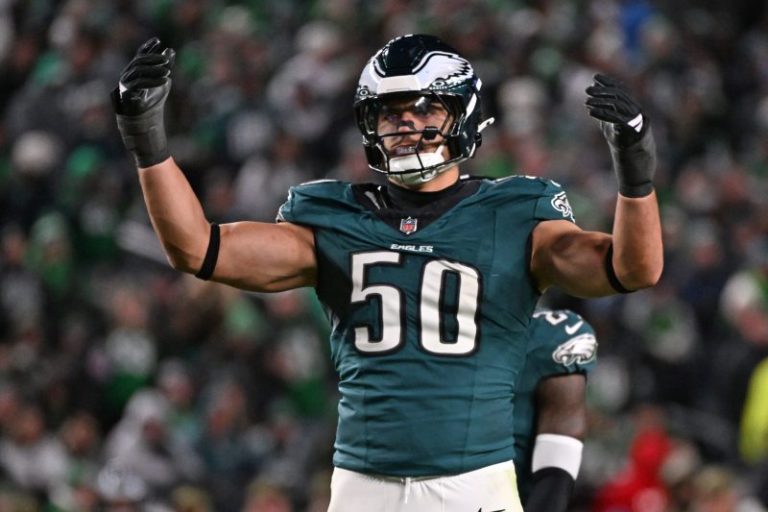
Phillips led the Eagles with 34 pressures since joining the team in Week 10 of the 2025 season.

Edge rusher was the biggest position of need for the Panthers. Carolina finished 24th in pass rush win rate and last in run stop win rate this past season, per ESPN. Consequently, the defense produced 30 sacks, only the New York Jets and San Francisco 49ers had fewer. The unit also gave up more than 120 rushing yards per game and allowed over four yards a carry, both ranked toward the bottom of the league. 

Isaiah Likely reunites with John Harbaugh

Giants quarterback Jaxson Dart should be a happy man.

Tight end Isaiah Likely agreed to a three-year, $40 million contract with the New York Giants, a person with knowledge of the deal confirmed to USA TODAY Sports. The person spoke on condition of anonymity because the deal isn’t official yet.  

Likely was never Baltimore’s primary tight end because of Mark Andrews, but he’ll likely be asked to be the top tight end and a primary pass catcher for the Giants, along with wideout Malik Nabers who is coming off a knee injury.

The Giants’ pursuit of Likely is a sign new New York and previous Baltimore coach John Harbaugh believes the athletic tight end is ready for a larger role. Likely had just one drop and a 66.7% contested catch rate last season.

Mike Evans upgrades 49ers’ receiving corps

Wide reciever Mike Evans announced through his agency his decision to leave Tampa Bay after 12 seasons. He departs as the franchise’s all-time leading receiver.  

A receiver was the 49ers’ biggest offseason need after general manager John Lynch said it’s “safe to say” Brandon Aiyuk has played his last snap in San Francisco. Evans is still a No. 1 caliber X wide receiver even though he’s a little past his prime. He still thrives at contested catches and in the red zone. According to Pro Football Focus, quarterbacks have had a 96.9 passer rating when targeting Evans.

The 49ers didn’t have a No. 1 wideout in Aiyuk’s prolonged absence. Jauan Jennings, who led all 49ers WRs in catches, receiving yards and touchdowns, is a free agent.

Follow USA TODAY Sports’ Tyler Dragon on X @TheTylerDragon.

This post appeared first on USA TODAY

War Secretary Pete Hegseth said Tuesday that Russia ‘should not be involved’ in the escalating conflict between the United States, Israel and Iran, even as analysts point to Russian military activity that aligns with reports Moscow may be aiding Tehran.

‘The president maintains strong relationships with world leaders, which creates opportunities and options for us in very dynamic ways,’ Hegseth said when asked about President Donald Trump’s recent call with Russian President Vladimir Putin. 

But as it relates to the Middle East conflict, he added, Russia ‘should not be involved.’

The administration’s messaging comes amid reports that Russia has provided information that could help Iran identify U.S. military assets in the Middle East. Moscow has not publicly confirmed the claims. 

Intelligence assessments have reportedly said Russia provided Iran with information that could help identify the locations of American warships, aircraft and other military assets. Officials reportedly stressed there is no public evidence that Moscow is directing Iranian strikes, but said the information could assist Tehran’s targeting efforts.

The scope, timing and operational impact of that information have not been publicly detailed.

While there is no public evidence definitively proving Russia is providing real-time targeting data, George Barros, a Russia expert at the Institute for the Study of War, said open-source indicators are consistent with the type of support described in the reports.

Barros pointed to Russian military reconnaissance satellites, including Cosmos-2550, a radar and electronic signature spacecraft that recently passed over the Persian Gulf and Arabian Sea — areas where U.S. forces have been operating.

‘They’re specialized for naval reconnaissance and detecting ships, because the radar signature off the water really pings it quite well,’ Barros said. ‘These are known capabilities of the Russians.’

Such radar systems can detect maritime targets and electronic emissions that reveal force positioning. Barros said those capabilities align with known gaps in Iran’s own space-based intelligence collection.

Although he cautioned that he does not have dispositive proof of real-time targeting support, Barros said the convergence of Russian reconnaissance capabilities, satellite positioning and reported cooperation ‘makes total sense.’

Trump on Monday described his recent conversation with Putin as ‘very good’ and ‘constructive,’ saying the Russian leader ‘wants to be very constructive.’ Trump suggested Moscow could be more helpful by helping bring the war in Ukraine to an end.

Iran’s foreign minister, Abbas Araghchi, acknowledged over the weekend that Russia is assisting Iran ‘in many different directions’ in its war with the United States and Israel. Pressed on whether that includes intelligence sharing, Araghchi said, ‘They are helping us in many different directions,’ but added, ‘I don’t have any detailed information.’

Beyond intelligence collection, analysts say battlefield patterns suggest tactical cross-pollination between Russia and Iran. 

During the war in Ukraine, Iran supplied Russia with Shahed one-way attack drones, which Moscow deployed extensively against Ukrainian cities and infrastructure. Over time, Russian forces refined strike packages combining drones, cruise missiles and ballistic missiles to overwhelm integrated Western air defense systems.

‘The Russians got really, really good at learning how to launch drones against integrated Western air defense systems,’ Barros said.

Those lessons, he said, appear to have informed Iranian strike tactics in the Middle East, where Tehran has launched large-scale combined missile and drone attacks against U.S. and allied targets.

If confirmed, Barros argued, intelligence sharing that materially supports Iranian targeting would amount to Moscow acting as a ‘co-belligerent.’

‘The Russians are coming out with Iran as a co-belligerent,’ he said, adding that the Kremlin has long viewed the United States as a geopolitical adversary.

At the same time, Russia remains constrained in how far it can go. 

Russian ground forces are tied down in Ukraine and are not in a position to deploy to assist Iran. Analysts say any Russian support is far more likely to come in the form of intelligence sharing, technology transfers or drone production rather than boots on the ground.

One potential avenue involves drone manufacturing.

Russia operates large-scale Shahed-derived drone production facilities that were initially enabled by Iranian technology transfers. If Iran’s domestic drone factories are degraded by strikes, Russian production could theoretically help sustain Tehran’s aerial campaign, though there is no confirmed evidence that such transfers are occurring.

Defense officials have publicly downplayed the operational impact of any reported Russian assistance, saying U.S. commanders are tracking foreign intelligence activity and factoring it into planning.

The contrast between Trump’s characterization of Putin as ‘constructive’ and Hegseth’s warning that Russia should stay out of the conflict underscores the delicate balance the administration is attempting to strike — pursuing diplomacy in Ukraine while confronting the possibility of deeper cooperation between Moscow and Tehran in the Middle East.

For now, analysts say the evidence stops short of conclusive proof. But the alignment of Russian reconnaissance capabilities, battlefield tactics refined in Ukraine and Tehran’s own acknowledgment of assistance has intensified scrutiny of Moscow’s role as the regional war unfolds.

Russia has not publicly responded to the allegation of intelligence sharing with Iran, but has broadly called for de-escalation of the conflict. 

The Russian embassy could not immediately be reached for comment.

This post appeared first on FOX NEWS
A week and a half into the U.S. and Israeli strikes against Iran, the latest national public opinion poll indicates that more than half of American voters oppose U.S. military action.

But the survey from Quinnipiac University in Connecticut is the latest to indicate a wide partisan divide when it comes to support for the U.S. military operation, known as Epic Fury, which has resulted in the death of Iran’s Supreme Leader, Ayatollah Ali Khamenei, and the decimation of the country’s military.

Fifty-three percent of voters questioned in the poll, which was conducted Friday through Sunday, said they oppose the U.S. military action against Iran, which was ordered by President Donald Trump, with 40% supporting the operation.

The Quinnipiac poll joins other recent surveys from NPR/PBS/Marist (44%–55%), CBS News (44%–56%), NBC News (41%–54%), Washington Post (39%–52%), CNN (41%–59%), and Reuters/Ipsos (27%–43%), in indicating minority support for U.S. military action.

But the latest Fox News poll, conducted Feb. 28–March 2, showed Americans split at 50% in their support or opposition to the fighting.

And three other national polls conducted over the past week and a half indicated majority or plurality support for the operation.

The surveys highlight the divergence between Democrats and Republicans over the fighting.

More than 8 in 10 Republicans surveyed by Fox News said they approved of the U.S. use of force against Iran, with 6 in 10 saying the president’s actions on Iran are making the U.S. safer. 

But nearly 8 in 10 Democrats and 6 in 10 independents disapproved of the U.S. strikes and said things are less safe because of Trump’s performance.

The vast majority of Democrats surveyed by Quinnipiac University, as well as 6-in-10 independents, said they opposed the strikes on Iran, with 85% of Republicans supporting the military action.

A majority (55%) questioned by Quinnipiac said they didn’t think Iran posed an imminent military threat to the U.S. before the attacks, with nearly four in ten disagreeing. 

Again, there was a partisan divide, with 83% of Democrats and 63% of independents saying Iran didn’t pose an imminent threat, while nearly three quarters of Republicans said Tehran did pose an imminent threat.

But there was no partisan gap when it came to the possibility of sending U.S. ground troops into Iran.

Nearly three quarters of voters opposed sending U.S. ground troops into Iran, including 95% of Democrats, 75% of independents and 52% of Republicans.

Trump and Defense Secretary Pete Hegseth have repeatedly not ruled out using ground troops in Iran.

Asked how long the fighting between the U.S. and Iran, which has retaliated with strikes against Israel and other nations in the volatile Middle East, will last, just 3% of Quinnipiac pollees said days, 18% offered weeks, 32% guessed months, 13% thought the attacks could last a year, and just over a quarter said more than a year.

‘Very soon,’ Trump said at a news conference Monday, when asked when the strikes would end. ‘Look, everything they have is gone, including their leadership.’

And the president described the operation as an ‘excursion.’

Quinnipiac University Polling Analyst Peter Malloy noted that ‘perhaps compelled by memories of long wars, Americans see no early end to the enormous upheaval in the Middle East.’

Trump recently dismissed the polling on Iran, telling the New York Post March 2: ‘I don’t care about polling. I have to do the right thing. I have to do the right thing. This should have been done a long time ago.’

Trump’s overall approval rating stood at 37% in the Quinnipiac poll, with 57% giving the president a thumbs down on the job he’s doing in the White House.

The president stood at 43% approval in the Fox News poll, and at 44% in the NBC News survey. An average of the latest national surveys that gauged the president’s performance put Trump at 43% approval and 54% disapproval.

This post appeared first on FOX NEWS

March Madness captivates audiences across the country. But which markets have been tuned in all yearlong for the men’s and women’s 2025-26 basketball season?

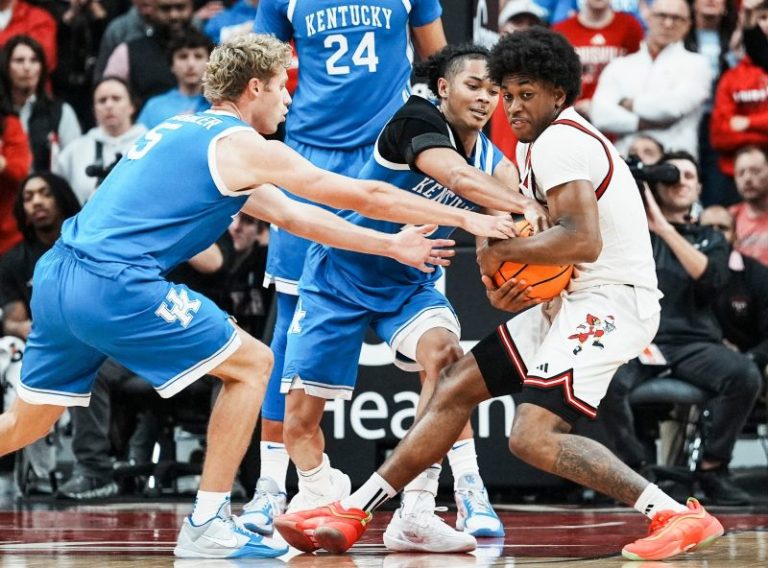
The Nielsen ratings for this season are out, and Louisville got the spot, which isn’t entirely surprising since it’s basically a Holy Trinity of Hoops with Indiana, Louisville and Kentucky fans. Plus, the Cardinals’ men’s (No. 24) and women’s (No. 12) teams are having decent seasons,

Indianapolis is No. 2 on the list. Purdue began the season ranked No. 1 in the country, but has stumbled down the stretch, and Indiana also has been a rough watch lately. But basketball is king in the Hoosier State.

UConn’s men’s and women’s basketball success puts the Hartford/New Haven market in the top 3. And Ohio is well-represented with three cities from the Buckeye State cracking the top-10.

Here’s a look at this year’s top 10 markets:

Top TV markets for 2025-26 college basketball season

Louisville
Indianapolis
Hartford/New Haven
Columbus, Ohio
Detroit
Milwaukee
Dayton
Cincinnati
Minneapolis/St. Paul
Greensboro/Winston-Salem/High Point

This post appeared first on USA TODAY