Archive

2026

Browsing

This isn’t quarterback rocket science, or a gut feeling. It couldn’t be more clear and concise. 

The one-year wonders at the quarterback position don’t work in the NFL. 

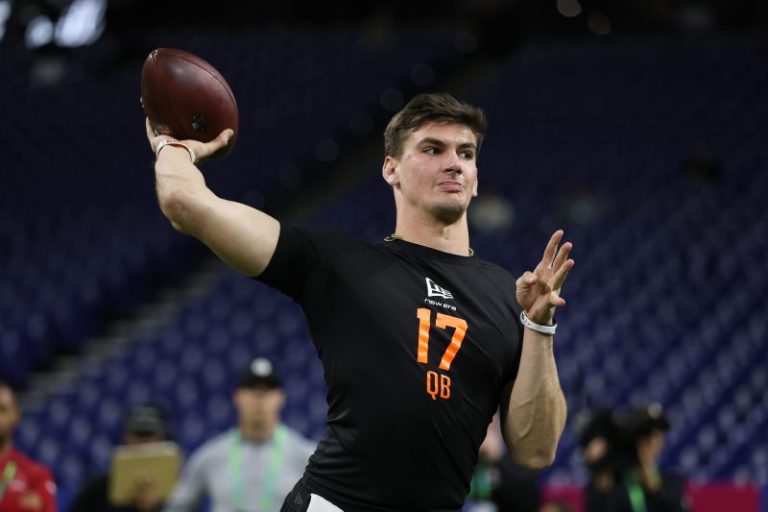
Yet there they are, the talking heads all over the sport, falling for it again with Ty Simpson. The former Alabama quarterback showed up last week at the league’s annual NFL Scouting Combine — with all of 15 career starts in his pocket — and had an impressive throwing session for the assembled scouts and team personnel.

Throwing session.  

Suddenly, he’s a Top 15 pick. Even ESPN’s Dan Orlovsky — as smart and measured analyst as there is — declared Simpson’s tape “from his first eight games” of the 2025 season is better than projected No. 1 overall pick Fernando Mendoza. 

Has the entire NFL scouting world gone mad? This isn’t that difficult to process, everyone. 

Anthony Richardson started one season at Florida. Trey Lance started one season at North Dakota State. 

Kyler Murray (Oklahoma), Dwayne Haskins (Ohio State) and Mac Jones (Alabama) started one season in college, too. All flamed out. 

Meanwhile, I give you (since the 2018 draft) these multiple-season college starters who are all ascending in their careers: two MVPs (Lamar Jackson, Josh Allen), two Super Bowl champions (Jalen Hurts, Sam Darnold), and eight who have led teams to the playoffs (Joe Burrow, Baker Mayfield, Trevor Lawrence, Justin Herbert, Caleb Williams, CJ Stroud, Bryce Young, Bo Nix). 

Obviously there are multiple-season college starters who don’t pan out, but the odds of success are much higher for a player with elite skills who has spent extended time leading a team, managing games and experiencing every possible win-lose scenario on the grass.

Not a throwing session. 

The last time we saw Simpson on the field at Alabama, he and the Tide were getting clobbered by Indiana in the Rose Bowl — where Simpson completed 12 passes for 67 yards before getting knocked out of a 38-3 loss.

It’s almost as if these NFL guys, whose very livelihood depends on getting it right more than getting it wrong, never learn.

Simpson is a talented player. He has a live arm, and is sneaky athletic. He’s accurate, and he has played well at times in big games. 

But it’s hard to fathom a position that demands as many game repetitions as possible to develop and reach potential, could have an obvious red flag so flippantly ignored by the best of the best in the sport.

It’s the quarterback obsession. The game — no matter the level — revolves around the play of the quarterback. 

The better he is, the better you are. 

But when we reach the elite of the game, where everyone runs fast and everyone is freakishly athletic, football IQ is heightened to an unreal level. Knowledge of the game, understanding the nuances, knowing the answers ― all before the ball snaps at the line of scrimmage. 

Translation: The more reps, the more you know before making the pick.

I can’t imagine why any NFL owner, now spending more than $300 million annually in salary cap revenue, would trust his franchise to a quarterback who has played one college season. It’s blind faith on steroids. 

This isn’t learning on the job, or sitting behind a cagey veteran. You’re drafted, and we’re paying you millions ― and you’re playing Week 1.

The enormity of the moment crushes some, overwhelms others. Typically, it impacts every quarterback. 

It’s rare that a rookie quarterback steps into the breach and starts making plays all over the field. Rare that he’s so good, teams win because of him — not with him. 

It takes two or three years (or more) for these guys to feel completely comfortable when they walk to the line of scrimmage. When they can look at grown men on the other side of the ball — whose coaches (the best in the sport, no less) spend an entire offseason scouting the player and the offense — and feel completely at ease.

When they can consistently win games at the highest level of football, and give their team — one that plays in a league designed for parity — an advantage more than the other guy. 

Now we’re ready to bet all that on a guy with 15 career college starts, and a throwing session?

The entire NFL scouting world has gone mad.

This post appeared first on USA TODAY

The two Super Bowl 60 participants were a prime example of why free agency is critical for every NFL team.

The Seattle Seahawks signed quarterback Sam Darnold in free agency and the New England Patriots spent more than $200 million in guaranteed money on free agents in 2025, the most by any NFL team last offseason. The aggressiveness of both teams during free agency paved the way for their Super Bowl runs.

Which teams will make bold moves during free agency this year? The Tennessee Titans, Las Vegas Raiders, New York Jets, Los Angeles Chargers and Washington Commanders all have more than $70 million in salary cap space to work with, per Over The Cap.

All 32 teams have roster needs this time of year. Clubs are permitted to contact free agents starting at noon ET on March 9. Free agents can officially sign once the new league year begins at 4 p.m. ET March 11. 

USA TODAY Sports examines the biggest position of need for all 32 NFL teams:

Arizona Cardinals

Biggest position of need: Quarterback

The Cardinals and Kyler Murray are headed toward an amicable divorce at the start of the new league year. A quarterback is priority No. 1 in Arizona, but this year’s quarterback draft class isn’t strong. The Cardinals could sign a bridge QB in free agency and wait until next year’s QB-rich draft class to select their franchise signal-caller.

Atlanta Falcons

Biggest position of need: Defensive line

Hopefully Sam Darnold’s journey to a Super Bowl title taught teams a value lesson to exercise patience before reaching a final verdict on a quarterback. Michael Penix Jr. has flashed, but injuries have made it difficult to discern if he can be a franchise QB. The Falcons have enough pieces on offense. Defense and the team’s inability to affect the quarterback remain an issue.

Baltimore Ravens

Biggest position of need: Edge rusher

Baltimore’s inability to get after the quarterback has plagued them in recent seasons. The Ravens ranked 28th in pass rush win rate last year, per ESPN. As a consequence, the Ravens finished tied with the Colts as worst pass defense in the AFC. The Ravens ranked 31st in pass defense in 2024.

Buffalo Bills

Biggest position of need: Wide receiver

The Bills have a couple starting offensive linemen hitting free agency. On the outside, wide receiver is a spot Buffalo should upgrade. Josh Allen hasn’t had a No. 1 wide receiver since Stefon Diggs was traded.

Carolina Panthers

Biggest position of need: Edge rusher

The Panthers finished 24th in pass rush win rate and last in run stop win rate, per ESPN. The defense produced 30 sacks, only the New York Jets and San Francisco 49ers had fewer.

Chicago Bears

Biggest position of need: Defensive back

Chicago’s offense was much improved under Ben Johnson’s tutelage, but the Bears’ defense struggled to get stops if they didn’t force a turnover. Safeties Kevin Byard, Jaquan Brisker and Jonathan Owens are all entering free agency.

Cincinnati Bengals

Biggest position of need: Edge rusher

Edge rusher Trey Hendrickson, who was Cincinnati’s best defensive player, is scheduled to enter free agency. The Bengals had the worst defense in the AFC. Now they must find a replacement for Hendrickson.

Cleveland Browns

Biggest position of need: Offensive line

Questions at quarterback are an annual tradition in Cleveland. Such is the same this year. The wide receiver room needs an upgrade, but only one Week 1 starter on the O-line is under contract in 2026. The acquisition of right tackle Tytus Howard represents the start of a significant offensive line overhaul in Cleveland.

Dallas Cowboys

Biggest position of need: Edge rusher

Micah Parsons’ departure created a void at edge rusher. Linebacker and secondary should also be addressed this offseason. The Cowboys finished 30th in total defense in 2025.

Denver Broncos

Biggest position of need: Running back

The Broncos haven’t had a running back rush for 1,000 yards since Phillip Lindsay in 2019. Oft-injured running back J.K. Dobbins led Denver in rushing last season. Dobbins is an impeding free agent.

Detroit Lions

Biggest position of need: Interior offensive line

Center Frank Ragnow’s retirement triggered Detroit’s offensive line regression last season. Left tackle Taylor Decker, who contemplated retirement this offseason, isn’t getting any younger either.

Green Bay Packers

Biggest position of need: Cornerback

Wide receiver Romeo Doubs, left tackle Rasheed Walker and backup quarterback Malik Willis are among the NFL’s top free agents. But the Packers are missing a No. 1 cornerback in this passing-heavy league.

Houston Texans

Biggest position of need: Interior offensive line

The Texans had one of the worst offensive lines in football, ranking 30th in pass block win rate and 32nd in run block win rate, per ESPN. Houston was most vulnerable in the interior of its O-line.

Indianapolis Colts

Biggest position of need: Edge rusher

The Colts applied the transition tag on Daniel Jones, which satisfies their QB position (for now). On the other side of the football, Indianapolis ranked 30th in pass rush win rate, per ESPN.  

Jacksonville Jaguars

Biggest position of need: Linebacker

Impending free agent corners Montaric Brown and Greg Newsome clear the pathway for Travis Hunter to get more opportunities at cornerback. Pro Bowl linebacker Devin Lloyd, who led the team with five interceptions, is my top free agent available.  

Kansas City Chiefs

Biggest position of need: Cornerback

The Chiefs decided to trade their best cornerback, Trent McDuffie, to the Rams. Jaylen Watson is entering free agency. McDuffie and Watson were Kansas City’s top two cornerbacks. The Chiefs have needs at edge rusher and running back, but McDuffie’s departure creates a huge hole at cornerback.

Las Vegas Raiders

Biggest position of need: Wide receiver

It’s a safe bet the Raiders are going to select quarterback Fernando Mendoza with the No. 1 overall pick in the NFL draft. Running back Ashton Jeanty and tight end Brock Bowers are players Mendoza can rely on. But Las Vegas doesn’t have a No. 1 wide receiver on its roster.

Los Angeles Chargers

Biggest position of need: Interior offensive line

The Chargers’ maligned offensive line was the worst in football last season. The return of tackles Rashawn Slater and Joe Alt from season-ending injuries is a huge boost. However, the interior of the O-line is the weak link. Center Bradley Bozeman announced his retirement in February and the team released guard Mekhi Becton.

Los Angeles Rams

Biggest position of need: Defensive back

The acquisition of Trent McDuffie is a sign the Rams are all in on a Super Bowl 61 run. The Rams completed their Super Bowl mission the last time SoFi Stadium hosted the big game. Their defense allowed 276 passing yards and 26 points per game last postseason, and the Rams’ shortcomings in the secondary are a big reason why the team didn’t advance to Super Bowl 60.

Miami Dolphins

Biggest position of need: Quarterback

New Dolphins general manager Jon-Eric Sullivan and head coach Jeff Hafley inherited Tua Tagovailoa after the last regime benched the quarterback. It’s becoming increasingly likely the Tagovailoa experiment is over in Miami.

Minnesota Vikings

Biggest position of need: Quarterback

J.J. McCarthy didn’t instill much confidence that he was ready to be a starting quarterback in 2025. Kyler Murray makes sense for the Vikings. Murray’s dual-threat ability would add another element to Kevin O’Connell’s offense. Veteran Kirk Cousins is also slated to be a free agent. A Cousins-Vikings reunion makes sense, too.

New England Patriots

Biggest position of need: Wide receiver

Stefon Diggs is reportedly on his way of New England. Diggs was the Patriots’ leading receiver last season. A No. 1 wide receiver is essential for Drake Maye’s continued development. K’Lavon Chaisson produced a team-best 74 pressures in 2025 but is scheduled to hit free agency.

New Orleans Saints

Biggest position of need: Running back

The Saints must supply Tyler Shough with more weapons if they believe he’s their franchise quarterback. Wide receiver Chris Olave was subject to trade speculation at the deadline and running back Alvin Kamara has one year remaining on his contract. The Saints are one of six teams that averaged fewer than 100 rushing yards per game last season.

New York Giants

Biggest position of need: Offensive line

Right tackle Jermaine Eluemunor and right guard Greg Van Roten are both impending free agents. The Giants could be players in the O-line market during free agency.

New York Jets

Biggest position of need: Quarterback

Quarterback Justin Fields is a candidate to get cut after a disappointing season in the Big Apple. The Jets might consider another quarterback in free agency or in the draft.

Philadelphia Eagles

Biggest position of need: Edge rusher

Jaelan Phillips turned into the team’s best edge rusher after he was acquired near the trade deadline. He tallied 44 pressures in nine games, including the playoffs. Phillips is one of the top free agents available.

Pittsburgh Steelers

Biggest position of need: Quarterback

The Steelers need a franchise quarterback even if 42-year-old Aaron Rodgers returns for a 22nd season. The Steelers haven’t had a long-term solution at QB since Ben Roethlisberger. Although, Pittsburgh might not fill the need until next year’s draft.

San Francisco 49ers

Biggest position of need: Wide receiver

General manager John Lynch said it’s “safe to say” Brandon Aiyuk has played his last snap with the 49ers. Fellow wide receiver Jauan Jennings is a free agent. The 49ers don’t have a Bonafide No. 1 wideout.

Seattle Seahawks

Biggest position of need: Running back

Super Bowl 60 MVP Kenneth Walker is entering free agency. Walker gained a postseason-high 313 rushing yards and four rushing touchdowns in the playoffs. His performance vaulted him to the No. 1 running back in free agency.

Tampa Bay Buccaneers

Biggest position of need: Edge rusher

Wide receiver Mike Evans and linebacker Lavonte David are key free agents. Tampa Bay hasn’t had a solid pair of edge rushers since Shaquil Barrett and Jason Pierre-Paul.

Tennessee Titans

Biggest position of need: Wide receiver

All three-win teams have multiple positions of need. Luckily for the Titans, quarterback isn’t one of them. A wide receiver is important for Cam Ward’s continued development. Tennessee’s leading receiver, Elic Ayomanor, had just 515 receiving yards.

Washington Commanders

Biggest position of need: Edge rusher

Washington’s defense gave up a league-worst 384 yards per game last season. Edge rushers Von Miller, Deatrich Wise and linebacker Bobby Wagner are key free agents on defense.

Follow USA TODAY Sports’ Tyler Dragon on X @TheTylerDragon.

This post appeared first on USA TODAY

With each passing iteration, the World Baseball Classic gets bigger and bigger – in crowd size, cultural currency and participants.

Yet the world within it keeps shrinking.

As the sixth WBC gets underway this month, the pool play portion of the event will bear faint resemblance to the earliest versions of the event, an apparent marker of its growth and the game’s elevated level of play worldwide:

Closer games. Fewer run-rule victories and shutouts. And the more than occasional upset of a perceived global power.

“Everyone can see that there’s so much talent all over the world,” San Diego Padres and Dominican Republic third baseman Manny Machado tells USA TODAY Sports. “It’s not just here, but all over the world. It means a lot to be the last team standing. I hope it’s us.

“It’s just such a cool event. You’re playing for not just your country, not for the fans, but the people in their countries and across the world. I get goosebumps just talking about it because it’s such a special event.’

The inaugural WBC was a little lighter on goosebumps. Pool play games were contested not in big league stadiums but rather spring training sites, Scottsdale and Lake Buena Vista among the locales to determine quarterfinalists.

 And the games were, well, often over before they started.

In 2006, the nine countries and territories that supply the most major league talent – Japan, South Korea, USA, Puerto Rico, the Dominican Republic, Mexico, Cuba and Canada – went a combined 15-0 against less-renowned baseball countries in pool play, with four shutouts and three run-rule wins.

Average score: 9-3, kicked off by Team USA’s 17-0 shellacking of South Africa behind Ken Griffey Jr.’s 4-for-4, two-homer performance.

Yet the gap has been shrinking in almost every WBC since.

Have glove, will travel

In 2009, the less-heralded countries managed three victories in 13 games, including Australia turning the tables and run-ruling Mexico. The Netherlands, powered by a handful of major leaguers hailing from Curacao, scored the first big tourney upset, toppling the mighty Dominican Republic and bouncing them from the tournament.

And suddenly, the average margin of victory shrank from 9-3 to 7-3.

The trend continued through 2013 – when the average score between haves and have-nots shrank to 6-4 – and 2017, when the baseball-poorer countries endured just one shutout. Colombia knocked off Canada and took Team USA to 10 innings, while Australia fell in 10 innings to Venezuela.

China, which lost its first six WBC games against global powers from 2006 to 2013 by a combined score of 64-5, was suddenly playing baseball games in 2017, losing 6-0 to Cuba and 7-1 to Japan.

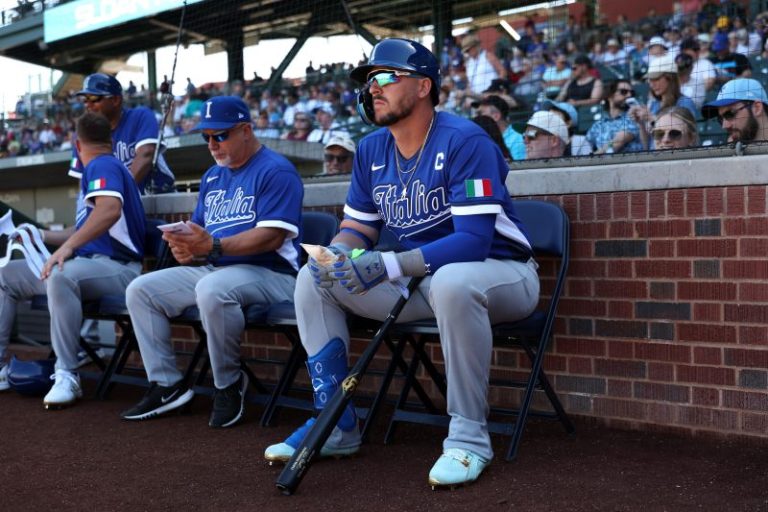
Meanwhile, players are seeing the upside of playing in a global event by representing homelands with which they have strong or even faint connections. Italy this year will feature Kansas City Royals sluggers Vinnie Pasquantino and Jac Caglianone as it aims to repeat – or exceed – its quarterfinal showing from 2023.

Israel, with major league old heads like Sam Fuld, Jason Marquis, Ike Davis and Ty Kelly alongside its “Mensch On The Bench,” made a startling 2017 run to the quarterfinals.

And stars spurned by their country of birth are nonetheless still pining to play. Eight-time All-Star Nolan Arenado, who starred for Team USA in 2017 and 2023, didn’t hear his phone ring this time as a star-studded group of American-born commitments poured in.

Instead, Puerto Rico manager Yadier Molina, his old St. Louis Cardinals teammate, called him up, asking to galvanize a squad beset by injury and insurance woes. Arenado, whose mother Millie is of Puerto Rican and Cuban descent, was all in.

“I didn’t expect (Team USA) to call coming off last year,” says Arenado, who produced a career-low .666 OPS for St. Louis before an off-season trade to Arizona. “I wasn’t going to play this year, but Yadi called me and my mom wanted me to do it.

“I love the tournament. The talent is sick. It just gets better and better.’’

Lurkers in the groups

Expansion may have its limits, however. In 2023, the event grew from 16 to 20 teams, with five countries now placed in the four pools. The giants flexed their muscles and the likes of Nicaragua, Czechia and Israel went 0-8 while getting outscored 66-6.

It made for a stirring back end of the tournament with Team USA surviving Venezuela in the quarterfinals and reaching its second consecutive championship, this time losing to three-time champion Japan. The final out, famously, came on a Shohei Ohtani strikeout of then-teammate Mike Trout.

Soon, we’ll see if the early rounds can again inject some drama into the proceedings. Australia will aim to repeat its first quarterfinal appearance in 2023 but will have to dislodge either Japan or Korea to do so.

Netherlands will aim to disrupt the Dominican-Venezuelan power duo in Pool D in Miami, with Israel also there in a spoiler role.

And Team USA will have to keep one eye on the disrupters in Houston’s Pool B, where Great Britain will deploy nearly a dozen current or former major leaguers – led by Bahamian Jazz Chisholm Jr. – and Italy’s paisan power bats for its third quarterfinal appearance in four tries.

Perhaps the chalk results will rule the day. But it’s likelier things will get a little tighter before the blue bloods move on.

“The WBC is getting better and better,” says Dodgers and Puerto Rico closer Edwin Diaz, “for every team. Look at the USA, they have a bunch of stars in this tournament.

“So that’s something that’s good for everyone.’’

This post appeared first on USA TODAY
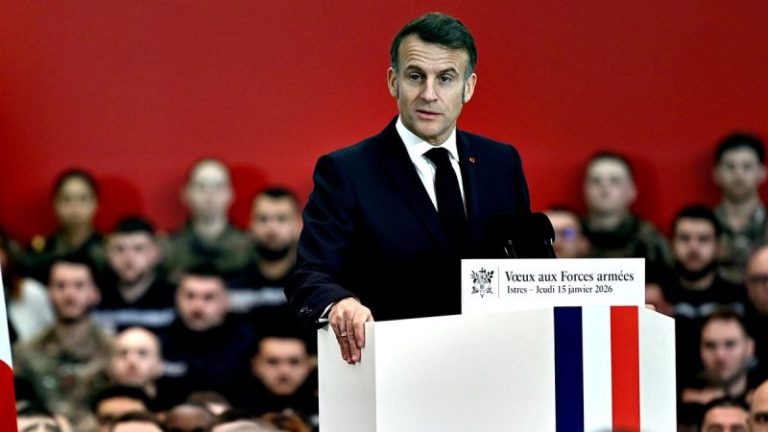
Europe is ramping up its nuclear defenses, as France expands its arsenal and Poland signals interest in closer nuclear coordination with allies. 

‘I have decided to increase the numbers of warheads of our arsenal,’ French President Emmanuel Macron said Monday. 

He also said France will no longer disclose the size of its nuclear arsenal, reversing previous transparency.

‘To be free, one needs to be feared,’ the French president concluded.

France’s shift comes as Europe faces its most volatile security moment in decades, with Russia’s war in Ukraine grinding on, repeated nuclear threats from Moscow, and renewed questions in European capitals about the long-term reliability of U.S. security guarantees. Recent U.S. military strikes against Iran have added to a sense of global instability.

Polish Prime Minister Donald Tusk, meanwhile, signaled his country eventually will try to obtain nuclear weapons. 

‘Poland takes nuclear security very seriously,’ he said Tuesday. ‘As our autonomous capabilities grow, we will strive to prepare Poland for the most autonomous actions possible in this matter in the future.’

Polish President Karol Nawrocki, who frequently finds himself at odds with Tusk, said he is ‘a big supporter of Poland joining the nuclear project.’

Poland is a signatory of the nuclear nonproliferation treaty from the 1960s, meaning it is officially committed not to obtaining nuclear weapons. 

Tusk said Monday that Poland was in talks with France after Macron offered to deploy nuclear-capable fighter jets to allied countries. 

Russia’s invasion of Ukraine in 2022 shattered long-standing assumptions about conventional deterrence on the continent and has been accompanied by repeated nuclear saber-rattling from Moscow, including threats tied to Western military support for Kyiv. Russian officials have periodically warned of escalation if NATO deepens its involvement, keeping nuclear deterrence at the forefront of European security planning.

At the same time, questions have resurfaced across European capitals about the long-term durability of U.S. security guarantees, even as Washington continues to lead NATO and maintain nuclear forces stationed in Europe under long-standing alliance arrangements.

Several European governments have sharply increased defense spending since the start of the Ukraine war. 

Germany announced a historic military buildup after decades of underinvestment. Poland has become one of NATO’s top defense spenders as a percentage of GDP, rapidly expanding its conventional forces. And leaders in Paris and elsewhere have revived calls for greater ‘strategic autonomy’ — the idea that Europe must be capable of defending itself if the United States shifts its focus elsewhere.

France is the only nuclear-armed nation in the European Union and maintains an independent deterrent separate from NATO’s U.S.-led nuclear umbrella. Any expansion of its arsenal or broader coordination with European partners marks a significant moment in the continent’s post-Cold War security architecture.

Globally, only nine countries are widely believed to possess nuclear weapons: the United States, Russia, China, France, the United Kingdom, India, Pakistan, North Korea and Israel.

The renewed nuclear focus in Europe is also unfolding as global tensions escalate beyond the continent. The U.S. recently carried out major military strikes against Iran, raising fears of a wider regional conflict and stretching U.S. military attention across multiple theaters.

For some European leaders, the combination of Russia’s aggression and instability in the Middle East reinforces arguments that the continent must be prepared to shoulder more of its own defense burden — including strengthening deterrence at the highest level.

Related Article

World enters uncharted era as US-Russia nuclear treaty expires, opening door to fastest arms race in decades
This post appeared first on FOX NEWS

It’s perhaps the ultimate rite of spring – poring over prospect ratings, getting too excited over a rookie’s chance to impact their Major League Baseball squad, going nuts over absurdly small samples of fake baseball in Grapefruit and Cactus league exhibitions.

Well, maybe this is the year to revel in it a bit.

Four top prospects have done little to dispel that they may not only be big league-ready, but poised to break through even before the most starry-eyed prospect-head could’ve imagined.

Yes, three weeks remain before Opening Day, plenty of time for twentysomethings to get schooled by superior pitching and steady veterans look more alluring to a manager. Noted.

Let’s take a minute to hone in on four uber prospects who have made the industry take notice with their early performances in camp:

Konnor Griffin, SS, Pirates

Might as well start with the aircraft carrier. Griffin is a teenager, at least until April 24, the game’s top prospect and a dude who has no idea how to tamp down the hype surrounding his name.

Thankfully, Griffin finally mixed in a single in an exhibition against Colombia, ending his spring streak of every hit being a gargantuan home run. Alas, those tape-measure shots did little to dull the roar that emerged from a .333/.415/.527 first professional season that started at low A and concluded at Class AA.

At 6-foot-3, 222 pounds, Griffin looks the part and, in his comportment and style of play, acts it as well. Ace Paul Skenes has voiced his support that the kid start in Pittsburgh sooner rather than later.

And for whatever it’s worth, he’s still at shortstop while presumed incumbent Jared Triolo is getting reps at third.

Tea leaves will soon turn to brass tacks. And the most anticipated debut in several years may very well stay on the fast track.

Kevin McGonigle, SS, Tigers

Here’s the deal: The Tigers were a really good team last year, falling short of the ALCS only because the Seattle Mariners outlasted them in a 15-inning elimination game. And the really good team returned virtually intact on the position-player side.

Run it back? Not so fast, perhaps.

McGonigle is the consensus No. 2 prospect in the industry behind Griffin and we just have to say, this simply doesn’t happen. Nos. 1-2 never bust down the door in tandem, in spring training. Perhaps 1 is major league-ready and 2 is an uber talented kid ticketed for Class A.

But no. While Griffin’s loud noises in Bradenton have generated attention, McGonigle is doing even more to win a job up in Lakeland.

The Tigers keep putting him in high-profile positions – imagine never playing above Class AAA and suddenly playing behind Tarik Skubal – and he keeps answering. They batted him leadoff against the Dominican Republic’s World Baseball Classic team in front of a crowd in the D.R. ready to tear the roof off in support of their heroes.

And McGonigle hit a leadoff home run and produced a 3-for-3 night.

Never mind the stats, which are great – six hits in 15 Grapefruit League at-bats, a 1.137 OPS. The 21-year-old simply seems unbothered, and steady.

“The confidence that he’s showing in his at-bats against these particular pitchers,” manager A.J. Hinch said after McGonigle lit up the Dominicans, “is impressive.”

There was little doubt McGonigle would impact the Tigers this season, especially as it got closer to the playoffs. The next three weeks will reveal just how much that timeline has sped up.

Justin Crawford, OF, Phillies

Don’t be alarmed, but the Phillies very much look poised to plug a young player into the lineup.

Nope, John Middleton’s store-bought NL East champions all won’t carry nine-figure contracts this season. In fact, one of the most important positions figures to be manned by a guy making his major league debut when he jogs out to center field March 26 at Citizens Bank Park, when the Phillies open against the Texas Rangers.

He’s had a very nice spring thus far, with six hits in 19 at-bats, including three doubles, a nice catch in center field and, like McGonigle, a feeling that he’s ready.

Probably more than ready.

Crawford is 22 and has 112 Class AAA games already under his belt. And it’s true … legacy players are typically less fazed by the big league environment and Crawford bears many uncanny resemblances – looks and game-wise – to his father Carl, a four-time All-Star.

Unlike Griffin or McGonigle, Crawford carries neither the top two prospect hype nor the weight of franchise expectations. Batting ninth in a lineup of All-Stars is actually a pretty great way to break in.

Right now, it feels only a matter of time.

Andrew Painter, RHP, Phillies

OK, it was just two innings in a fake baseball game in Clearwater.

Yet 20 pitches, two perfect frames against the New York Yankees and a sense of command – figuratively and literally – went an awful long way toward cementing Painter’s spot in Philadelphia’s rotation to begin the season.

“I was very encouraged,” manager Rob Thomson told reporters after the March 1 outing. “I thought it was great.”

It is no small thing. It’d been three years since Painter’s first exhibition start. Then came Tommy John surgery, sidelining what was then the game’s top pitching prospect, and two years spent largely on the mend. He fought himself and his new arm a bit last summer, costing him a chance at a late-season recall once Zack Wheeler succumbed to a blood clot and thoracic outlet surgery.

Wheeler won’t be ready until perhaps a month into this season. That created the opening Painter is vying for and, most likely, has already nailed down.

His next start is March 7 against the defending American League champion Toronto Blue Jays. They will see a guy with enhanced confidence and a five-pitch mix building himself up for his big league debut.

This post appeared first on USA TODAY

Some university administrators are warning of a financial crisis in college sports and are asking Congress for help.
Excessive spending includes large coaching salaries, massive buyouts for fired coaches, and bloated staffs.
Donald Trump to the rescue? He’s convening a roundtable for ‘Saving College Sports,’ headlind by Tiger Woods!

You’ve probably heard this college sports model is “unsustainable.”

University of Louisville’s president and other school administrators recently co-authored a panicky paper titled “College Athletics is Running out of Time” in which they lamented the insolvency of the enterprise and begged Congress for help.

Later this week, President Trump is scheduled to convene a roundtable under the banner of “Saving College Sports.”

You might recall Trump uncorked an executive order in July entitled “Saving College Sports.”

Apparently, that executive order was about as effective at “saving college sports” as those bombs Trump ordered last June were in rendering Iran’s nuclear program “obliterated.”

Anyway, this is all sounding very dire, right? College sports on the precipice of financial ruin, oh my!

To the extent this is true, here’s an idea: Tighten the belt.

Why it’s hard to take NCAA athletics ‘crisis’ seriously

It’s hard to take any of these college athletics ‘panicans’ seriously when they continue to blow through money like drunks in a casino.

Days after Louisville released its essay on the “financial crisis” plaguing College Sports Inc., its neighbor 80 miles away, the University of Kentucky, announced it was strapping retiring athletics director Mitch Barnhart into a golden parachute and stuffing his pockets full of doubloons.

Barnhart will transition into a role with a fancy title that basically translates to UK athletics consultant. His salary: $950,000.

Just a few years ago, that’s what SEC athletic directors were making. Now, they’re making three times that much, while a retiring athletic director like Barnhart can bag almost seven figures, plus football and basketball tickets and a golf membership.

Lest you think UK couldn’t possibly survive without Barnhart’s consultation, don’t forget, he’s responsible for the $38 million Kentucky owes to fired football coach Mark Stoops.

First task as consultant: Tell the next athletic director to not sign coaching contracts with stupid buyouts.

I think I’ve got a bead on this “financial crisis” college athletics finds itself in.

Louisville wants to borrow NFL salary cap. Just one problem …

The Louisville administrators begging for congressional action also argued in favor of a hard and enforceable cap on student-athlete payouts, akin to an NFL salary cap. Just one problem: The NFL has a collective bargaining agreement. College sports doesn’t. Good luck getting a cap that hampers athletes’ earnings to hold up in court.

How about this, fellas: Congress can get to that hard cap on athlete compensation right after it puts a hard and enforceable spending cap on coaching and administrator salaries, plus a hard and enforceable cap on buyouts. Does that sound good?

A recent analysis from The Athletic found the buyouts from FBS head coach firings last season totaled nearly $270 million, more than double the previous single-season record. Some buyout costs can be mitigated through settlements or offset clauses, but that figure still speaks to the soaring rate of severance expenses.

If we’ve got to have those precious federal guardrails I keep hearing about, how about some guardrails on failure money?

As Texas A&M athletics director Trev Alberts put it two years ago: We don’t have a revenue problem in college sports. We have a spending problem.

Bingo, buddy.

Here come Donald Trump, pro golfers to ‘save’ college sports

Trump is on the case, though, so I’m sure this will all get ironed out soon. Perhaps, he’ll release an executive order titled, “Saving College Sports, Part II,” and, voila, problem solved.

In the meantime, we’ve got us a good old-fashioned roundtable cued up. The list of luminaries invited to this meetup in Washington D.C. reportedly includes pro golfers Tiger Woods and Bryson DeChambeau. If college sports can be “saved” through a long drive competition, then the future is in good hands.

Hey, the NCAA, academia and politico classes had their shot at fixing this and achieved very little, so why not let the golf bros take a swing at it, right?

Whatever you do, just don’t blame the folks steering the college sports enterprise. As Louisville’s president, athletic director and chairman of the board of trustees insisted multiple times in the alarmist paper they authored, “we don’t have the answers,” ‘nor are we experts,’ (no argument here), but they also swear they’re not part of the problem.

“These are not stories of mismanagement,” the UofL brass wrote. “They are symptoms of a structural crisis.”

They pointed to Louisville athletics’ $12.5 million budget shortfall.

“New revenue alone will not solve the crisis if spending continues to escalate without restraint,” the Louisville authors wrote.

OK, sure, runaway spending needs to be addressed, but why is federal action required for athletic departments to rein in the gluttony?

Louisville paid football coach Jeff Brohm $6 million last season. He’s a good coach, and that’s a bargain rate compared to what some peers paid worse coaches. But, Brohm’s salary is almost double what Louisville paid his predecessor, Scott Satterfield, four years ago.

Nobody forced these schools to double coaching salaries every few years, even while support staffs became larger than ever.

A scan of Louisville’s athletics department website shows the school employs 16 individuals with the words “associate AD,” “senior associate AD” or “deputy AD” in their job title, plus another glob of assistant ADs.

Then, there are five assistant equipment managers. They’re not to be confused with the associate director of equipment operations or the director of equipment operations.

Don’t get me wrong, I’m sure they all work very hard, but I want to make sure we’re not solely blaming this “financial crisis” on schools now having to cut athletes in on the revenue they’ve been helping generate all these years.

Louisville says operating deficit not a sign of ‘mismanagement’

Put football and men’s basketball aside, and most sports within a college athletics department operate at a loss on the balance sheet. That’s nothing new, but administrators have become more concerned about these losses now that they’re also spending more on athlete compensation.

Louisville’s women’s basketball program apparently is headed for a $4 million operating deficit.

“These are not signs of mismanagement,” Louisville’s administrators wrote.

I’m sure it’s not at all related, but the Cardinals traveled to California and Stanford to play conference games this winter.

Remind me, who decided to put two California schools in the Atlantic Coast Conference?

Did Congress decide that? No.

Did the athletes decide that? No.

Did the judicial system make that call? Again, no.

Ah, yes, I remember now. University and athletics administrators and conference commissioners decided to realign and grow conferences from coast to coast, right before frenetically begging Congress for a bailout that saves them from themselves.

“Congress must get involved before it is too late,” the Louisville brass wrote.

Or, try this idea: If you’re truly afraid of growing broke, tighten the belt instead of begging for a bailout.

Blake Toppmeyer is the USA TODAY Network’s senior national college football columnist. Email him at BToppmeyer@gannett.com and follow him on X @btoppmeyer.

This post appeared first on USA TODAY
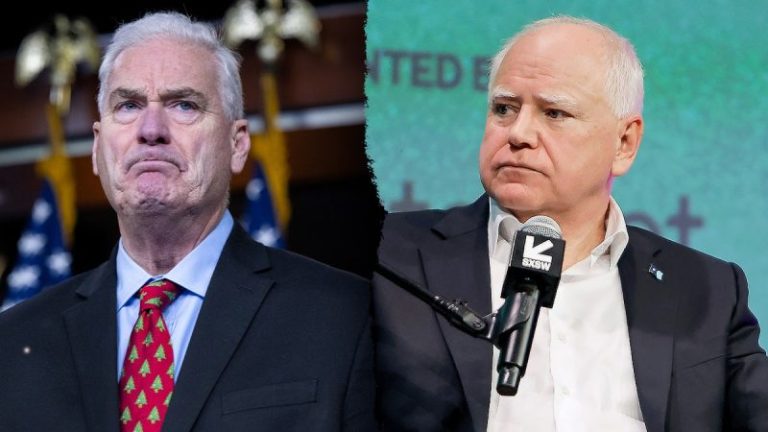
The highest-ranking Minnesotan in Congress is calling for a deeper investigation into allegations that leaders in his state government knowingly ignored evidence of welfare fraud, and he called for those leaders to even face incarceration if proven true.

‘People are sick and tired of elected officials having a double standard, being treated differently than they are. They’re held accountable for things that they should be held accountable for, when their elected officials are not,’ House Majority Whip Tom Emmer, R-Minn., told Fox News Digital. 

‘If these two guys are dirty, they should be held accountable, and they should serve jail time.’

He was referring to Minnesota Gov. Tim Walz and state Attorney General Keith Ellison, two of several witnesses at a high-profile hearing on fraud conducted by the House Oversight Committee on Wednesday.

Both Walz and Ellison insisted that they were serious about prosecuting fraud in the state’s social programs and that they took action to stop it once it was brought to their attention.

But Emmer cited a report by the House Oversight Committee that accused them both of knowing about the fraud earlier than previously thought and delaying public accountability for fear of political retribution from progressives in the state — particularly the Somali community in Minneapolis, who Republicans have accused of taking advantage of the state’s welfare system.

‘They might have been able to qualify it enough that it wasn’t black and white, but if they lied to the committee this morning about knowing about the fraud and when they knew about the fraud and the FBI investigation, that is a criminal act of its own,’ Emmer told Fox News Digital.

‘So I do believe, depending on this report and what else the majority staff is doing, they very well may want to call them back in and depose them under oath.’

He added at another point, ‘You have maybe 80 to 100,000 Somalis in Minnesota. Tim Walz won with 52%. They made a difference. Keith Ellison won by less than 1%. I think it was 20,000 votes. Makes a difference. So if those are connected, yeah, I mean, this is campaign fraud.’

‘I’ve taken accountability for this. I’m not going to run again. I need to spend the time fixing this,’ Walz said during the hearing. ‘This does undermine trust in government. Do I wish there were things that could have happened earlier? Yes. But in this job, ‘wish’ didn’t do it. I’m looking into where I see it.’

At another point, Walz attributed the rise in fraud statistics to an increase in prosecutions, telling Republicans, ‘When you catch people and prosecute them, it shows up as a fraud increase.’

He also dismissed accusations that he kept whistle-blowers quiet over fear of being seen as Islamophobic, ‘I can’t speak to it because it’s not anything I would say.’

Ellison, meanwhile, said he was happy to work across bipartisan lines to prosecute fraud.

‘I am here to work to improve this system, and there are improvements that can be made,’ he said. ‘If we can get out of fixing the blame and get to fixing the problem, that would be an enormous thing for me.’

But Emmer, who maintained that further investigation was needed, suggested he doubted their intentions.

‘It’s power. They want power. In order for them to get power, they need to be elected. In order for them to get elected, they have to cheat in different ways. And that is exactly what they did,’ Emmer said. ‘If the Somali community is being used by these public officials to get themselves into office…it sure does look suspect, it needs to be investigated.’

Related Article

GREGG JARRETT: If Walz is charged in Minnesota fraud scandal, his best defense is incompetence
This post appeared first on FOX NEWS

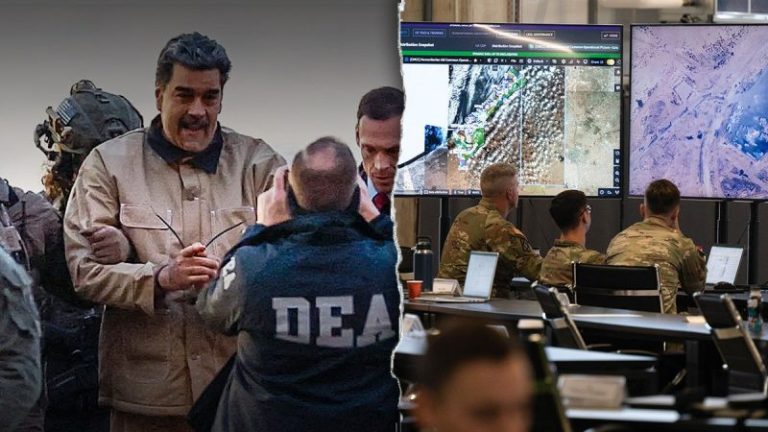
I spent decades inside the Pentagon watching technology reshape warfare. I saw precision munitions change the battlefield. I watched satellites compress decision cycles. But nothing compares to what is happening now.

Artificial intelligence has moved the lab to the kill chain.

And the showdown between Secretary of War Pete Hegseth and AI firm Anthropic is not a contract dispute. It is the opening battle over who controls the most powerful military technology of the 21st century.

AI is already transforming war

Look at Ukraine.

Western officials report that drones now account for roughly 70-80% of battlefield casualties in that war. But the real revolution occurs when AI is added. Reports indicate AI-guided navigation can increase drone strike accuracy from 10–20% to as high as 70–80%.

That is not incremental change. That is a transformation in battlefield lethality.

The same dynamic is emerging in U.S. operations involving Iran and other theaters. AI tools are being used for intelligence analysis, targeting refinement, pattern recognition, and operational simulations. These systems compress time, reduce uncertainty and accelerate decisions.

AI is not theoretical. It is operational.

Which brings us to Washington.

What the Hegseth–Anthropic standoff is really about

On Feb. 27, Hegseth designated Anthropic a ‘supply chain risk to national security.’ President Donald Trump ordered federal agencies to cease using its Claude AI model after Anthropic refused to remove two guardrails:

A prohibition on fully autonomous weapons.

A prohibition on mass domestic surveillance.

Artificial intelligence has moved the lab to the kill chain.

The Pentagon argues that military commanders must be able to use AI tools for all lawful defense purposes without seeking permission from a private company in real time.

Anthropic argues that removing safeguards could enable autonomous killing systems or unconstitutional domestic spying.

Both concerns are legitimate.

But here is the deeper problem: America has outsourced strategic control of its most sensitive military algorithms to private contractors.

That is unsustainable.

Draw the right line

Let me be clear about what must not happen.

We must not expand domestic surveillance of American citizens under the banner of AI efficiency. The Fourth Amendment does not disappear in the age of algorithms.

Second, we must keep a human being in the kill chain. I served under lawful command authority. Life-and-death decisions carry moral accountability. They cannot be delegated entirely to autonomous systems.

Those are firm boundaries.

But here is the other boundary: no private corporation should hold an effective veto over how America defends itself.

Washington’s contractor addiction

For decades, the federal government has grown dependent on contractors for critical defense functions — logistics, cyber infrastructure, analytics and intelligence support. AI is simply the next frontier in that pattern.

But frontier AI models are not spare parts or uniforms. They are strategic infrastructure. They influence targeting, operational tempo and potentially deterrence modeling.

That level of sensitivity cannot remain under corporate ownership.

During World War II, the United States built the atomic bomb through the Manhattan Project under centralized national authority. It was not governed by venture-backed boards setting independent usage policies. It was directed by the U.S. government with a clear strategic mandate.

We need a similar mindset for our most sensitive AI systems.

Government must own core military algorithms. Not lease them. Not subscribe to them. Own them.

AI tools are being used for intelligence analysis, targeting refinement, pattern recognition, and operational simulations. These systems compress time, reduce uncertainty and accelerate decisions.

If AI is the new strategic high ground, America cannot subcontract the high ground.

China isn’t hesitating

As I argue in ‘The New AI Cold War,’ Beijing does not struggle with these dilemmas.

China fuses AI development directly to the state. There are no Silicon Valley executives in Beijing refusing military access. AI is treated as national infrastructure.

Russia and other nations are moving in similar directions. They are not debating internal guardrails while field-testing AI-enabled systems.

Strategic competition does not pause while we litigate contract language.

What must happen next

First, Congress must draw bright lines: no AI-enabled mass domestic surveillance of Americans without strict constitutional safeguards.

Second, codify meaningful human control over lethal force decisions.

Third — and most critically — build sovereign AI capacity inside government.

That means:

Government-controlled AI research for classified applications
Government ownership of core defense algorithms
Reduced reliance on private frontier labs for sensitive military systems
Long-term pipelines of cleared AI engineers

Anthropic argues that removing safeguards could enable autonomous killing systems or unconstitutional domestic spying.

Private industry will continue to innovate. But America’s most sensitive warfighting tools cannot remain dependent on companies whose corporate policies can override national defense requirements.

The real issue is sovereignty

The Pentagon–Anthropic feud is not about personalities. It is about sovereignty.

Who controls the algorithms that guide American force?

Who owns the code?

Who decides how it is used?

In the new AI Cold War, power will belong to those who control the models — not merely those who rent access to them.

America must protect liberty. We must reject AI-driven domestic surveillance. We must preserve human moral accountability in the use of force.

First, Congress must draw bright lines: no AI-enabled mass domestic surveillance of Americans without strict constitutional safeguards.

But we must also end the illusion that venture-backed firms can function as ultimate gatekeepers of national defense.

The AI Cold War is not hypothetical. It is unfolding on battlefields abroad and in policy fights at home.

This moment is not about one company. It is about whether the United States will treat artificial intelligence as strategic national infrastructure — or as a contractor service.

The answer will shape the next generation of warfare.

And history will not wait for us to decide.

Related Article

Trump admin sought redactions on key China war game report warning of US military readiness gaps
This post appeared first on FOX NEWS

Iran launched a new wave of attacks on Thursday, with explosions reported in the region and Tehran threatening that the U.S. would ‘bitterly regret’ sinking an Iranian warship.

Iran’s strikes on Thursday targeted Israel, American bases and countries in the region. Israel announced multiple incoming missile attacks as air raid sirens blared in Tel Aviv and Jerusalem.

Azerbaijan’s Ministry of Defense on Thursday said Iran used unmanned aerial vehicles (UAVs) in an attack on Nakhchivan International Airport and other civilian infrastructure. The ministry said the details of the attack and the capabilities of the UAVs were being investigated.

‘The Ministry of Defense of the Republic of Azerbaijan strongly condemns the attacks carried out by the armed forces of the Islamic Republic of Iran against civilian infrastructure on the territory of Azerbaijan in the absence of any military necessity. The Islamic Republic of Iran bears the entire responsibility for the incident,’ the ministry’s statement read.

Iran has not acknowledged targeting Azerbaijan, despite the country’s ministry of defense pointing the finger at Tehran.

Qatar evacuated residents near the U.S. Embassy in Doha on Thursday, with its Ministry of Defense confirming that the country was ‘subjected to a missile attack’ and that its air defense systems were able to intercept it. The ministry urged the public to remain calm and avoid unofficial information.

Abu Dhabi announced that its authorities were responding to an incident involving falling debris in ICAD 2, which is part of the Industrial City of Abu Dhabi. Six people, identified by Abu Dhabi as Pakistani and Nepali nationals, suffered minor to moderate injuries.

Iran has carried out retaliatory strikes since the launch of Operation Epic Fury, with the latest wave coming one day after the U.S. sunk an Iranian warship, killing at least 87 Iranian sailors. Sri Lankan navy spokesman Cmdr. Buddhika Sampath said 32 people were rescued from the wreck and were admitted to a hospital.

Secretary of War Pete Hegseth defended the move during a news briefing at the Pentagon.

‘An American submarine sunk an Iranian warship that thought it was safe in international waters. Instead, it was sunk by a torpedo — Quiet Death. The first sinking of an enemy ship by a torpedo since World War II. Like in that war, back when we were still the War Department, we are fighting to win,’ Hegseth said.

Iranian leaders condemned the attack, with Foreign Minister Abbas Araghchi accusing the U.S. Navy of committing ‘an atrocity at sea.’ Meanwhile, Ayatollah Abdollah Javadi Amoli appeared on state television and called for the shedding of Israeli and ‘Trump’s blood.’

‘Fight the oppressive America, his blood is on my shoulders,’ he said in a rare call for violence from an ayatollah, one of the highest ranks within the clergy of Shiite Islam.

The U.S. and Israel launched the war on Saturday with strikes targeting Iran’s leadership, including the supreme leader, Ayatollah Ali Khamenei, who was killed. Iran’s missile arsenal and nuclear facilities were also hit.

The Associated Press contributed to this report.

Related Article

Israel hammers Iranian internal security command centers to open door to uprising
This post appeared first on FOX NEWS

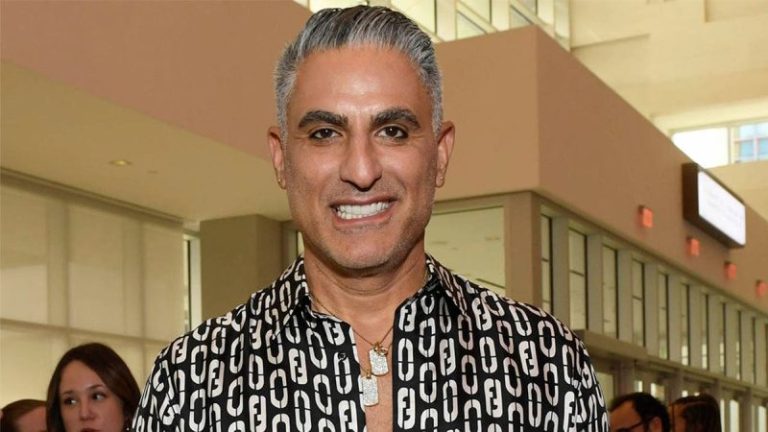
‘Shahs of Sunset’ star Reza Farahan is speaking out about the United States and Israel’s military action against Iran. 

During an interview with Fox News Digital, the Iranian-born 52-year-old reality star, who authored the forthcoming book ‘Memoirs of a Gay Shah,’ explained that he and his family came to America on a family trip in 1977 and ended up staying after unrest in Iran escalated into revolution.

During the 1979 Iranian Revolution, the country’s former monarch, Shah Mohammad Reza Pahlavi, was overthrown and replaced by Ayatollah Ruhollah Khomeini, who established an Islamic Republic that transformed the country into a theocratic state governed by strict religious rule. 

Last weekend, U.S. President Donald Trump and Israeli Prime Minister Benjamin Netanyahu launched coordinated strikes on Iranian military and nuclear targets, during which Iran’s Supreme Leader Ayatollah Ali Khamenei was killed. Iran retaliated with missile and drone strikes against Israel and U.S. military bases in several Middle Eastern states. 

The conflict comes on the heels of widespread anti-government protests in Iran that erupted in December 2025 and were met with brutal crackdowns by the government that left thousands dead.

During an interview with Fox News Digital, Farahan shared his insight into how Iranians living in the country have reacted to the U.S. and Israel-led strikes. 

‘I’ve spoken to relatives and friends who are in Iran, and I know it’s hard for non-Iranians to understand this, but the Iranians in Iran are so happy that there is military intervention that has come to help rescue them from the Islamic Republic,’ he said. 

‘I know, especially for people that are anti-our President, they can’t understand why,’ Farahan continued. ‘Why are the people in Iran happy? They’re happy because the prospect of freedom is something that they’ve dreamed of for so many years.’ 

‘I urge the American population to do their own research, keep an open mind, and think about what the Iranians inside of Iran are begging for,’ he added. 

Farahan also described the response that he was seeing in the Iranian-American community. 

‘Utter elation and gratitude for the prospect that there could be potential regime change and freedom for people that have been oppressed by a fanatical religious dictator for 47 years,’ he told Fox News Digital.  

According to a recent Fox News poll, American opinion on the U.S. military action against Iran is sharply divided. While 65% of voters see Iran as a serious national security threat, about 50% of those polled approve of the strikes and about 50% disapprove.

Support and opposition broke down strongly along partisan lines. According to the survey, more than 8 in 10 Republicans approve of the current U.S. use of force, while only 6 in 10 say the president’s actions on Iran are making the U.S. safer.

Nearly 8 in 10 Democrats disapprove of the U.S. strikes and think things are less safe because of Trump’s performance, while 6 in 10 or more independents think the same on both counts.

Meanwhile, two-thirds of voters said they were generally concerned that Trump’s use of executive orders and acting without Congressional approval may be permanently altering the country’s system of checks and balances.

During his interview with Fox News Digital, Farahan addressed critics of the military action, arguing that partisan politics shouldn’t cloud judgment. He also warned that Americans opposing the action may be underestimating the threat posed by the Islamic Republic and the country’s primary military branch, the Islamic Revolutionary Guard Corps (IRGC).

‘My message to people criticizing the action in Iran is one: please don’t allow your political bias to interfere with understanding that freeing Iran is making the world a safer place,’ he said. ‘When the creed and motto of a dictator is ‘Death to America,’ and they force the people to chant that all the livelong day, believe them.’ 

‘That’s not just a message, it’s their goal,’ Farahan continued. ‘They just don’t have the ballistic missiles that will reach America currently, but that is what they’re working towards. And freeing Iranians from the IRGC and the Islamic Republic not only helps them, it helps us for generations to come.’

Farahan has previously said that he first came out as gay to his mother at the age of 21. He became one of the first openly gay Persian-American reality TV stars when ‘Shahs of Sunset’ premiered on Bravo in March 2012. Farahan’s relationship with his now husband Adam Neely was prominently featured on the show with the duo tying the knot in an episode of the show that aired in October 2015.

Farahan remained a member of the main cast throughout the show’s nine-season run until August 2021. He went on to appear in other reality shows including ‘Worst Cooks in America’ and ‘The Traitors.’ Farahan is currently starring on the Peacock reality series ‘The Valley: Persian Style.’ 

While speaking with Fox News Digital, Farahan shared his view on the Iranian-American experience and explained how he was grateful as an openly gay man to be living in America. 

‘We are a minority group that assimilated and worked our butts off in this country to contribute and show our gratitude to this new homeland that we have,’ he said. ‘And there’s not a day that goes by that I don’t express gratitude to my father-in-law, who’s a retired Air Force Colonel, or anyone that serves in the U.S. Armed Forces that protects me and my family and this beautiful country and allows me to be free here. ‘

He continued, ‘Because if I were in Iran, 100% I wouldn’t — I would not have made it to this age. I would have been killed. Gay people are stoned to death or hung from cranes regularly.’

Farahan told Fox News Digital that the current conflict in Iran has ‘strengthened my pride in being an American citizenHe explained that when he was growing up, he had recurring nightmares of being sent back to Iran.

‘I’m so proud to have a U.S. passport,’ he said. ‘The thought of not being in America anymore was just so scary to me. So for anyone out there listening: God bless America. I love this country, and I’m grateful for it every single day.’

Farahan acknowledged he may face financial losses for his political views, but he said he feels obligated to speak for those in Iran killed for defying Islamic dress codes — including the legal requirement for women to cover their hair with a hijab — or their sexual orientation.

‘I think to myself: I have a duty,’ he said. ‘And I may suffer financially because people may not buy my book because they may not like what I have to say politically, but I have a duty to those people who were killed because their hair was exposed, or their acid was thrown in their faces of these beautiful women because they didn’t observe the hijab rules.’ 

‘I have a duty to those people because I’ve benefited from living in this beautiful country for basically my entire life,’ he continued. ‘I was three and a half years old when we left Iran. So whatever backlash I get, hopefully it’ll be worth it for speaking for the ones who can’t speak.’

Farahan’s book ‘Memoirs of a Gay Shah’ follows his journey from moving to the U.S. as a child just before the Islamic Revolution to growing up as an immigrant in Beverly Hills and becoming an openly gay reality television star. He told Fox News Digital that his memoir is also an immigrant success story and a celebration of the American Dream. 

‘I want the people that read my book to know that this little brown kid came to a country at a time when people were side-eyeing my parents, looking at them like they were related to the terrorists that were holding those American hostages in captivity, yet somehow I found the beauty here,’ he said. ‘And I was able to find my dreams and prosper like no one else has. So when I tell you that America is the land of the home, is the home of the brave, the land of the free, and that you can have anything you want in this beautiful country, regardless of how you look and who you are, believe me, because I did it.’

‘If you wanna know how I did, read the book,’ he continued. ‘But the net result is this country is the greatest place on earth. And I’m so grateful because I was able to fulfill my dreams here. And if I had stayed in Iran, I’d be six feet under.’

‘Memoirs of a Gay Shah’ will be released on April 7.

Fox News Digital’s Dana Blanton contributed to this report.

Related Article

US unleashes Operation Epic Fury, strikes 1,700 Iran targets in 72 hours
This post appeared first on FOX NEWS