Archive

2026

Browsing

Coach Curt Cignetti publicly criticized his team’s practice to motivate them after a 26-day layoff.
The Hoosiers’ victory broke a trend of top-seeded teams losing after a first-round bye in the 12-team playoff format.
Indiana’s defense and disciplined play allowed them to capitalize on Alabama’s mistakes.

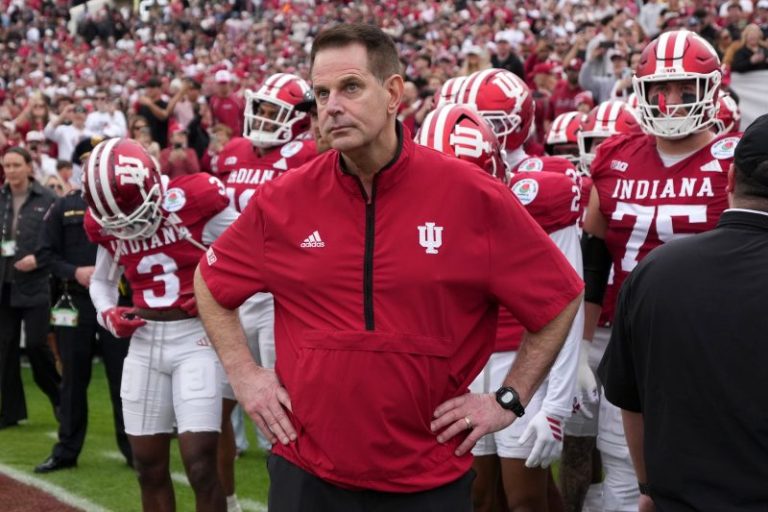
PASADENA, CA — Indiana coach Curt Cignetti made it known prior to the 2026 Rose Bowl he didn’t like the long layoff his team had, last playing in the Big Ten championship game 26 days ago on Dec. 6.

A day before kickoff, he told the media he didn’t like how his team had been preparing. Practice “didn’t meet the standard,” giving an inkling the No. 1 Hoosiers may be in trouble.

But you know those times when someone loudly says something to another, with the intent someone else will hear it? 

That’s exactly what Cignetti was doing. It wasn’t meant for the media, it was directed right at his team. He didn’t want his team just eavesdropping, he was “eavesthrowing,” trying to get a message through his players.

“Sometimes my messaging is intended for the players to hear to further reinforce my message to them,” Cignetti said.

They heard it loud and clear.

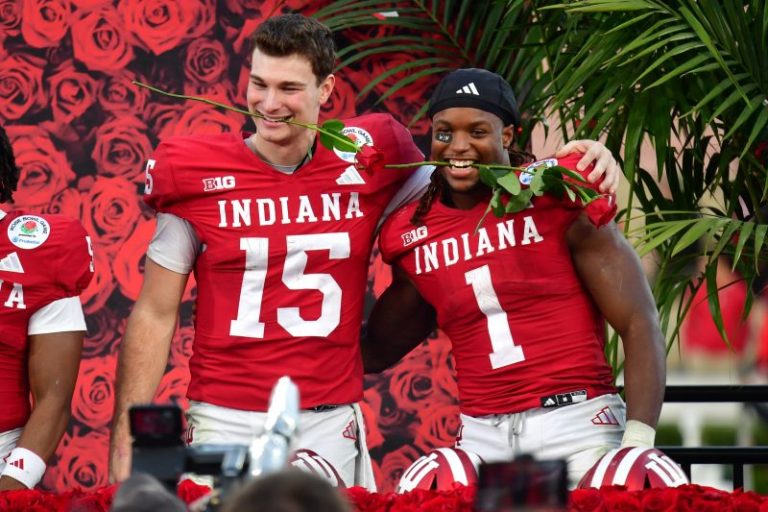
There was no slip up as Indiana showed no rust in their dominant 38-3 victory over No. 9 seed Alabama in the College Football Playoff quarterfinal, proving that this team has what it takes to win its first national championship.

It hasn’t been easy to come off such a long layoff in the 12-team format. All the top-four seeds last season made one-and-done appearances. This season’s playoff started the same way with Ohio State and Texas Tech falling flat in its opening games.

Six games into this new postseason system had people wondering whether there really is something wrong with how this is structured – then Indiana put that theory to bed.

Why? It sounds too simple, but Cignetti and Indiana were just prepared, showing this program that isn’t used to these moments knows exactly how to thrive in them. Cignetti made it seem like this team might be shaky, but in reality it was more than prepared the moment they learned Alabama was next.

“I thought our mindset was really good,” Cignetti said. “I liked our prep, for the most part, once we knew who the opponent was.”

Indiana doesn’t panic, stays on course

It didn’t start out smooth. Indiana went three-and-out on the opening possession that ended with Fernando Mendoza getting sacked.

Would that cause panic? That just wasn’t going to be Indiana. It stuck to what has worked all season: let the defense flex it muscle and the offense will deliver the lethal blows. Alabama was the ones that needed to get creative.

Both happened, with the Hoosiers letting the Crimson Tide make those self-inflicted mistakes and not straying away from its identity. 

“Indiana did a great job of doing, playing their game,” said Alabama defensive lineman Tim Keenan III. “They capitalized on our mistakes. Indiana had a great plan for us and they executed well.”

There aren’t many things that scare Cignetti and Indiana, but one thing they are “afraid to death” of is complacency, said Indiana center and Rose Bowl offensive MVP Pat Coogan. This team isn’t just content with making it to the big stage, instead insistent on putting on an exceptional performance the moment the stage lights turn on. 

Indiana sent a message to the country there is a right way to prepare when you don’t play a game for nearly a month and the entire season rides on it.

Maybe team that get first-round byes ought to take a page or crash course from Cignetti. Even though it seems like he continues to shatter expectations and wow the sport, how he had Indiana more than ready for Alabama may be one of his most impressive feats yet.

Now the Hoosiers have just eight days before playing Oregon in the Peach Bowl semifinal. The Ducks better be ready, because the Hoosiers absolutely will.

“Once we got our feet wet, we got the ball rolling and we got back to playing Indiana brand of football,” Mendoza said. “I think it was great overcoming that challenge as a team, having such a long time off. I think we overcame that challenge and that showed on the field today.”
This post appeared first on USA TODAY

No Lane, no problem.

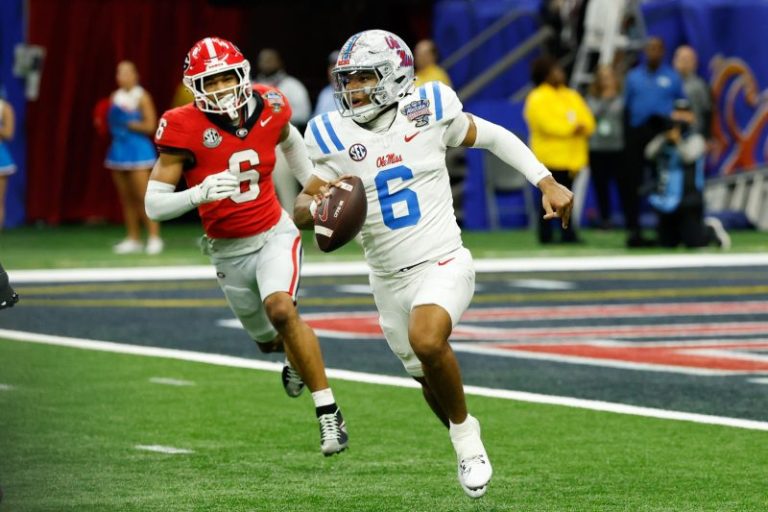
Behind a historic second-half performance from Trinidad Chambliss and a game-winning 47-yard field goal from Lucas Carneiro, No. 6 Mississippi was able to win a shootout and pull off the come-from-behind victory over No. 3 Georgia in the CFP Sugar Bowl quarterfinal on Thursday, Jan. 1, advancing to the CFP Fiesta Bowl semifinal.

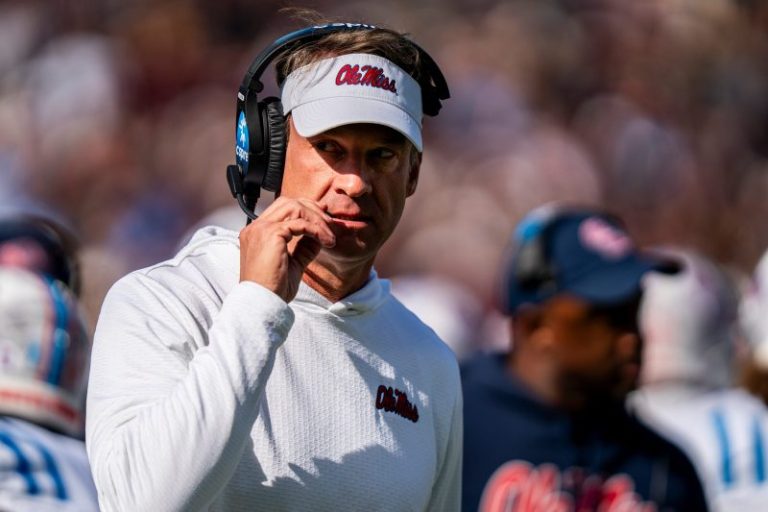
And the Rebels did it all without the coach who led them to their first-ever CFP berth in Lane Kiffin.

Chambliss set a new Sugar Bowl record by completing 13 consecutive passes, which included two ridiculous throws on the run to Kewan Lacey in the fourth quarter, before an incompletion on a batted down pass at the 6:19 mark of the fourth quarter. He finished 30-of-46 passes for 362 yards and two touchdown passes.

The Rebels’ five-point win over the Bulldogs served to be the closest game of the CFP quarterfinals, and the closest game of the 2025-26 College Football Playoff. Next up for the Rebels will be No. 10 Miami in the CFP Fiesta Bowl semifinal on Thursday, Jan. 8 at 7:30 p.m. ET at State Farm Stadium in Glendale, Arizona.

Given the nature of the upset and the fact Kiffin infamously left the Rebels before their CFP berth, social media didn’t hold back when it decided to roast the current Tigers coach, who spent the day watching Kim Mulkey and the LSU women’s basketball team get upset by Kentucky.

Here’s a snippet of those reactions:

College football social media roasts Lane Kiffin after Ole Miss CFP win

Here’s a look at social media after Ole Miss’ win over Georgia in the CFP Sugar Bowl quarterfinal:

This post appeared first on USA TODAY

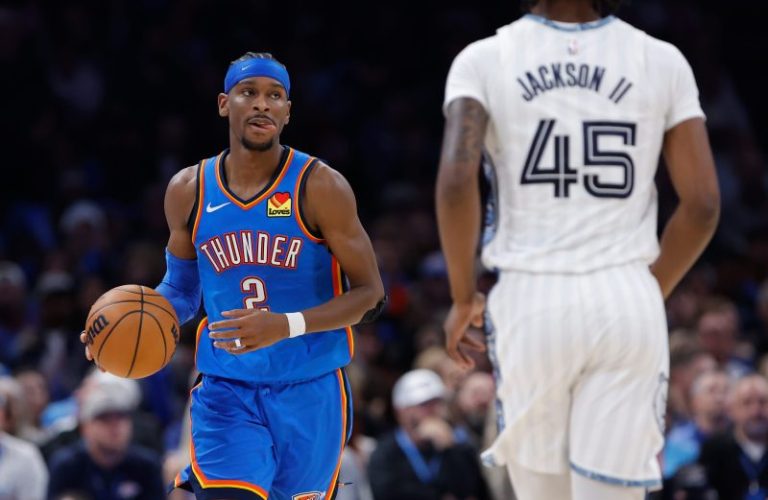
Oklahoma City Thunder guard Shai Gilgeous-Alexander, who is the reigning NBA Most Valuable Player and led the franchise to its first NBA championship, was named the 2025 Sports Illustrated’s Sportsperson of the Year.

Gilgeous-Alexander is the first NBA player to win the award since Warriors guard Stephen Curry in 2022, when he led Golden State to their fourth championship in eight years. He is also the first Canadian to win the award outright since 1982, when Wayne Gretzky took home the honors.

The 27-year-old Gilgeous-Alexander capped off a remarkable year by becoming the third Thunder player to win the regular-season MVP.

Led by Gilgeous-Alexander, the Thunder won 68 regular-season games. He also won his first scoring title, averaging 32.1 points per game, along with five rebounds and a career-high 6.4 assists, helping Oklahoma City finish first in defensive rating and third in offensive rating.

Gilgeous-Alexander, a three-time All-NBA First Team selection, then took the Thunder to the mountaintop with a seven-game NBA Finals victory over the Indiana Pacers. He averaged 30.3 points a game in the series and was named the Finals MVP.

The team rewarded that faith by giving him a four-year, $285 million supermax contract extension, keeping him with Oklahoma City through the 2030-31 season.

SGA told the magazine he realizes how lucky he is to win a title, considering the Thunder once had future MVPs Kevin Durant, Russell Westbrook, and James Harden on the roster at the same time and each departed without a championship.

“That team had three MVP talents and anybody would have bet the house that they were going to eventually figure it out and win,” he said. “But you just never know with life and how things work out.” 

This season, Oklahoma City has gotten off to a 29-5 start, led by Gilgeous-Alexander, who is averaging 32.1 points, 6.4 assists, and 4.7 rebounds a game

This post appeared first on USA TODAY

Mississippi football closed out the College Football Playoff quarterfinals with a thrilling second-half performance from Trinidad Chambliss and Co. to pick up a shocking 39-34 upset over No. 3 Georgia in the Sugar Bowl on Thursday, Jan. 1 inside Caesars Superdome in New Orleans.

The Rebels’ biggest win in program history didn’t happen without some chaos and drama.

Following the go-ahead 47-yard field goal from Ole Miss kicker Lucas Carneiro, the Rebels were awarded a safety after the Bulldogs’ attempt to run a trick play on the ensuing kickoff resulted in a fumble that hit the pylon. The game was originally ruled over, but after an official review, a second was added back onto the clock.

The chaos didn’t end there.

Georgia then successfully converted an 11-yard onside kick from Peyton Woodring. The 11th-hour attempt should have ended the game again. However, because Ole Miss players didn’t touch the ball, and Georgia recovered the ball past the line to gain, that one second on the clock was not removed.

‘If the ball is recovered legally after it goes 10 yards by a grounded player, the clock does not run,’ ESPN rules analyst Matt Austin said on the broadcast. ‘… If you just fall on it, then there is no time off.’

That miscue by Ole Miss provided Georgia with a shot at a Hail Mary play that began with a 4-yard pass from Gunner Stockton to Colbie Young. From there, the Bulldogs threw a few backward passes and laterals in hopes of finding a hole to get down the field. It failed for numerous reasons: Adrian Maddox was eventually tackled and Georgia was called for a block in the back.

The chaotic ending to the Sugar Bowl necessitated the removal of the postgame stage from the field several times, and loud boos, presumably from Rebels fans, were audible over the ESPN broadcast.

Next up for Ole Miss will be a date with Carson Beck and No. 10 Miami in the CFP Fiesta Bowl semifinal on Thursday, Jan. 8 in Arizona.

The USA TODAY app gets you to the heart of the news — fastDownload for award-winning coverage, crosswords, audio storytelling, the eNewspaper and more.

This post appeared first on USA TODAY

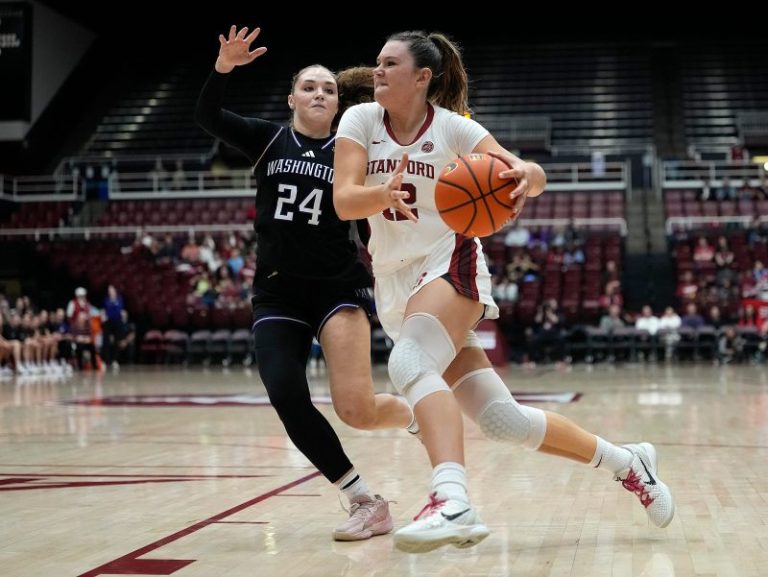
By its own well-established standards, last season was a massive disappointment for Stanford’s women’s basketball team.

In their first campaign in the Atlantic Coast Conference and without longtime coach Tara VanDerveer patrolling the sidelines, the Cardinal missed the NCAA Tournament for the first time since the Reagan Administration.

Between 1988 and 2024, 36 NCAA women’s college basketball tournaments were contested and Stanford was part of every single one. The Cardinal made 15 Final Fours and won three national championships. Like UConn, Tennessee, Notre Dame and Baylor, Stanford had established itself as one of the sport’s blue bloods and a consistent contender.

So last season was seen as an aberration. In Kate Paye’s first season as head coach, Stanford went 16-15 and 8-10 in ACC action as they adjusted to the coast-to-coast league. The Cardinal were eliminated in the first round of the conference tournament by a Clemson team with a losing record. Then, they lost to Portland at home in the second-tier WBIT.

But this is still Stanford. The standard is still high.

In women’s basketball, this program is supposed to compete for championships.

And, in Paye’s second year in charge, the Cardinal seem to be well on their way to righting the ship.

They entered their first ACC road swing this week with 12 victories, including wins over rival Cal, former Pac-12 foes Washington and Oregon and at Gonzaga. Powered by talented rookies like Lara Somfai and Hailee Swain, and guided by steady-handed veterans like Nunu Agara, Chloe Clardy and Courtney Ogden, this Stanford team looks more like the standard and not the group that stumbled time and time again a year ago.

But on Thursday, they fell hard. In front of a sold-out crowd at the historic Reynolds Coliseum in Raleigh, North Carolina, the Cardinal lost 74-46 to North Carolina State. Stanford was outscored 23-9 in the fourth quarter, turned the ball over 21 times, and shot a season-low 30% from the floor.

“I just felt like things kind of snowballed on us, and the wheels kind of came off the wagon. For the first time, I think our defense let us down,” Paye told USA Today. “It was a good, old-fashioned ass kicking.”

This is the hurdle for Stanford now, the one it failed to clear most of the time last season. Paye’s team has to figure out how to win conference road games time zones away from California. The Cardinal were 2-7 in such games last season.

If Stanford has aspirations of making the NCAA Tournament this March, that mark has to be better. What went down at N.C. State on Thursday can’t happen again.

“Up into this point, our defense had really been something we hang our hat on,” Paye said. “We’ve rebounded decently. I just feel like we’ve yet to really get our flow offensively, and I think because of that, it puts a lot of pressure on our defense. But our defense has really been our strength, our togetherness.”

Defense and rebounding has been crucial to Stanford’s success this season. Nationally, entering Thursday, they ranked seventh in assists allowed per game (8.6), 11th in defensive rebounding rate (76.4) and 28th in points allowed per scoring attempt (0.88). The women’s basketball analytics site HerHoopStats also gives the Cardinal a defensive rating of 81.0, which is 37th in the country. In their wins over Cal, Oregon, Washington and Gonzaga, Stanford won the rebounding margin in three of those clashes, losing the battle on the boards to only the Huskies.

Somfai has been a big help in that department this season. The 6-foot-4 freshman from Australia — tabbed as a top 12 recruit in the 2025 class by ESPN — grabbed 16 rebounds against N.C. State. With averages of 10.5 points and 10.3 rebounds per game, she and Bonnie Deas of Arkansas are the only freshmen in the country averaging double-doubles.

“Lara is an incredible rebounder. She’s physical in there. She has a great nose for the ball,” Paye said. “And, you know, it’s hard when you’re a freshman — like, we’re counting on you.”

Somfai isn’t the only rookie Stanford is leaning on. Point guard Hailee Swain was the eighth-ranked recruit in her class by ESPN and is averaging 9.6 points and 1.5 assists per game.

“They’re in the starting lineup for a reason. It is not easy being a freshman. There’s a lot coming at you, but they’ve done fantastic. And I just think as they get more experience, they’re going to get better and better, and you’re going to kind of see some of the other stuff in their game really shine,” Paye said. “… But we need more from them.”

Somfai and Swain were Stanford’s most high-profile acquisitions of the offseason. In the era of the transfer portal, NIL and revenue sharing, the Cardinal are doing some things the traditional way: bringing in freshmen with potential and developing them. 

Among all Power 4 programs, Stanford has the least number of transfers on its roster. Junior forward Mary Ashley Stevenson, who is in her second season with Stanford after leaving Purdue, is the lone player on the roster who didn’t begin her collegiate career as a member of the Cardinal. Stanford is also tied with Washington for the Power 4 programs who had the least amount of portal movement last offseason, in terms of the combined number of players coming in or going out. The Cardinal had two players transfer out from last season’s squad: Tess Heal to Kansas State and Jzaniya Harriel to SMU.

“What it means to me is loyalty,” junior Nunu Agara said at ACC Tip-Off. “It speaks to what Stanford is about as a program.”

Stanford’s continuity could give it an advantage in its second season in the ACC. Most of the players on the roster have endured the long cross-country flights. With the conference largely playing a schedule that has games on Thursdays and Sundays, Stanford typically doesn’t fly home between road games, instead making a hotel their home for a few days at a time. These players have done that.

“We have the flow and the rhythm,” Paye said. “We certainly learned things last year in terms of travel logistics and little things we can do that we feel like can help our team.”

Ahead is another opportunity for Stanford to get a signature road victory in the ACC. On Sunday, they’ll play in Chapel Hill against the North Carolina Tar Heels, who are ranked 15th in the latest USA Today Sports Coaches Poll.

The common throughline in Stanford’s three losses so far — to Florida Gulf Coast, Tennessee and N.C. State — is turnovers. They’ve had 18 or more in each defeat. And Courtney Banghart’s Tar Heels force 19.6 per game.

“We really have to improve our offensive execution,” Paye said. “We have to move the ball better.”

The expectations are clear for the Cardinal. An early ACC road win could help Stanford meet them.

This post appeared first on USA TODAY

Indiana’s 38-3 blowout victory against Alabama in the College Football Playoff quarterfinals on New Year’s Day was the latest step for a program that’s enjoying an unprecedented rise.

It’s a remarkable story — one that the Hoosiers’ coach thinks is worthy of something more than just on-field success.

Shortly after his team’s 35-point win in the Rose Bowl, the second-year Indiana coach Curt Cignetti said in a postgame interview with ESPN that his team’s journey to becoming the No. 1 team in the sport would “be a hell of a movie.”

Hired away from James Madison after the 2023 season, Cignetti took over what had been the losingest program in FBS history until earlier this season. After a stellar debut season, with an 11-2 finish in 2024 that ended with a berth in the inaugural 12-team playoff, Indiana has gotten even better this year, with a 14-0 mark following the throttling of Alabama. It’s a program single-season record for wins. Thursday’s bowl win was Indiana’s first since the 1991 Copper Bowl.

A Rose Bowl victory would have been unimaginable for the Hoosiers as recently as 24 months ago. Over 21 seasons, from 1994-2014, they made just one bowl and in the 27 seasons before Cignetti got there, Indiana went just 113-204. In 82 of the program’s first 126 seasons, it finished with a losing record.

It didn’t just beat Alabama, but manhandled it, outgaining it by a 407-193 margin and scoring touchdowns on five of its final six full drives.

“Why should (the moment) be too big? Because our name’s Indiana?” Cignetti said in a postgame interview with ESPN. “We’ve got a lot of veteran starters who have played a lot of successful football in their careers. They have a lot of character. We’ve got great leadership and character on this football team. We’ve come through in the clutch moments. I’m proud of the way that they responded and prepared and met this challenge.”

With their latest win, the Hoosiers will take on No. 5 Oregon in the playoff semifinals at the Peach Bowl in Atlanta on Jan. 9.

Before he and his team head back to Indiana, Cignetti may even be able to take a quick detour from Pasadena to Los Angeles to pitch his Hollywood-worthy underdog story.

The USA TODAY app gets you to the heart of the news fast. Download for award-winning coverage, crosswords, audio storytelling, the eNewspaper and more.

This post appeared first on USA TODAY

With 2026 now officially underway, the college football season is nearly at its end. But before we wrap things up in the Bowl Subdivision with next week’s College Football Playoff semifinals and the subsequent title game, we have one more full day of bowl games to enjoy.

If it’s big-name programs you want, Friday’s lineup might not appeal to you. But the slate does feature a couple of squads in the US LBM Coaches Poll, as well as some of the nation’s premier academic institutions. One of the prime-time contests will hopefully live up to our placement in the bowl rankings – several of which, we freely admit, were wildly off the mark. Here are the Friday bowl offerings.

Armed Forces Bowl: Texas State vs. Rice

Time/TV: 1 p.m. ET, ESPN in Fort Worth, Texas.

Why watch: The last full day of the bowl season kicks off with a pair of Lone Star State squads without much shared history. These same two teams did, however, square off in the First Responder Bowl two years ago, with the Bobcats taking a 45-21 decision. The 2025 campaign wasn’t a huge success for either program, but both should enjoy this opportunity. Unfortunately, Owls starting QB Chase Jenkins and backup Drew Devillier have announced plans to transfer, meaning either Lucas Scheerhorn or Patrick Crayton Jr., both little-used freshmen, will be pressed into service. The Bobcats should have most of their primary contributors, including QB Brad Jackson and WRs Beau Sparks and Chris Dawn.

Why it could disappoint: Texas State generates a ton of long scoring plays, and the Owls tend to give them up. That certainly looks ominous from a competitive standpoint.

Liberty Bowl: No. 25 Navy vs. Cincinnati

Time/TV: 4:30 p.m. ET, ESPN in Memphis, Tenn.

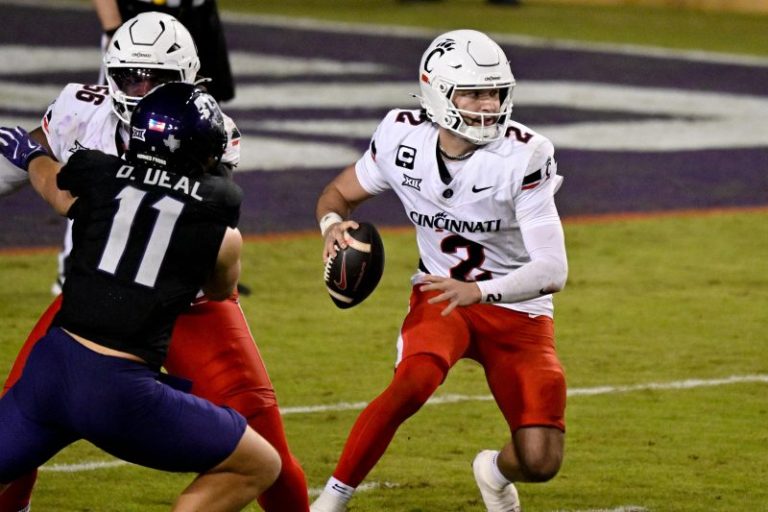
Why watch: With a double-digit win season and the Commander in Chief’s Trophy secured, the Midshipmen have one more goal to attain, a Top 25 ranking to finish the campaign. The Bearcats briefly cracked the poll themselves this fall before closing the year on a four-game skid. Cincinnati QB Brendan Sorsby is in the portal, so the start will go to Brady Lichtenberg, who has attempted just six passes but completed four of them. Navy QB Blake Horvath will look to close out his outstanding career on a high note, with help as usual from RB Alex Tecza and SB Eli Heidenreich.

Why it could disappoint: It shouldn’t. Even with most of its regular lineup, Navy doesn’t usually win with wide margins but by executing better in the details. Expect a close one here.

Duke’s Mayo Bowl: Wake Forest vs. Mississippi State

Time/TV: 8 p.m. ET, ESPN in Charlotte, N.C.

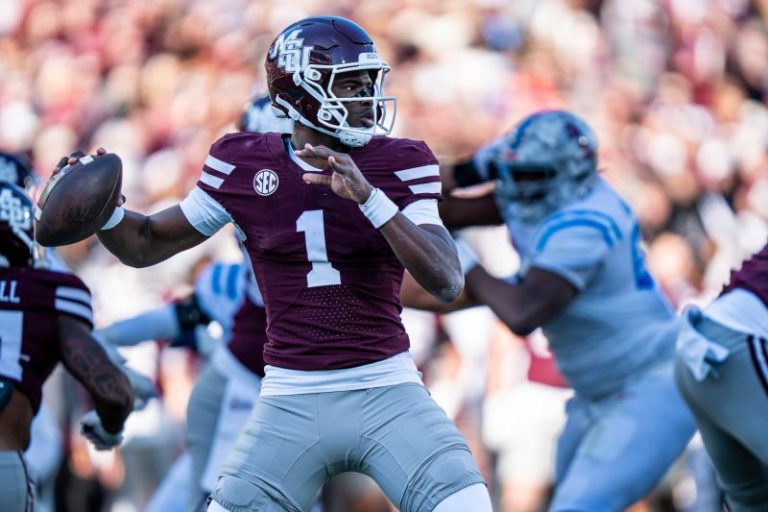
Why watch: Year one in Winston-Salem, North Carolina, under Jake Dickert unquestionably exceeded expectations. The Demon Deacons now look to close out the year by giving their new head coach a mayo bath. The Bulldogs managed just one victory in SEC play but were within a score on a couple other occasions. Wake QB Robby Ashford wasn’t always an accurate passer but usually got the ball where it needed to go. He will be without draft-bound RB Demond Claiborne and breakout WR Chris Barnes who is in the portal. The Mississippi State offense will be in the hands of freshman Kamario Taylor, who didn’t have much luck in his Egg Bowl start against Ole Miss but does have some speedy weapons at his disposal.

Why it could disappoint: Wake’s most significant strides this fall were on the defensive side, which was demonstrably not the case for the Bulldogs. Miss State could win a shootout, so it might behoove the Deacons to moderate the tempo.

Holiday Bowl: No. 20 Arizona vs. SMU

Time/TV: 8 p.m. ET, Fox in San Diego.

Why watch: The non-playoff bowl calendar closes in – usually – sunny San Diego, where the Wildcats and Mustangs could put on an offensive show. Both teams should have most of their top producers participating. Arizona QB Noah Fifita threw for 2,963 yards and 26 TDs, with WR Kris Hutson serving as primary target and RB Ismail Mahdi leading the ground game. SMU counters with QB Kevin Jennings, who also has 26 scoring tosses but twice as many picks with 10 on the season. He spreads the ball well, but TE Matthew Hibner is a valuable weapon in the red zone.

Why it could disappoint: We hope this one delivers the goods, but both teams have opportunistic defenses that thrive on takeaways. It might get away if those occur early, as happened to SMU in last year’s playoff appearance.

This post appeared first on USA TODAY

The college football transfer portal is set to create a major shift in quarterback lineups for the upcoming season.
Several top programs, including Miami, LSU, and Florida, are expected to pursue new quarterbacks through the portal.
Many potential transfers involve quarterbacks reuniting with former coaches at new schools.

The opening of the college football transfer portal will trigger a game of musical chairs at quarterback guaranteed to impact next year’s race for the national championship.

As evidence, just look at this year’s College Football Playoff, where over half the teams in the field started a transfer under center – Indiana, Ohio State, Oregon, Mississippi, Oklahoma, Miami and Tulane.

One team that could influence how things unfold is Oregon, which is waiting on Dante Moore’s NFL draft decision. If he leaves, the Ducks will be near the top of the list for every high-profile transfer, potentially shaping plans for other contenders searching for a new starter.

As the portal heats up, let’s connect 10 Power Four programs with the best possible transfer fit:

Miami

Should Moore return, Miami’s recent success with Cam Ward and Carson Beck will make Coral Gables the most desirable destination for this year’s transfer class. One strong match is former Arizona State starter Sam Leavitt, who burst onto the national scene in 2024 but struggled through an injury-marred redshirt sophomore year. After a pair of one-year rentals, Mario Cristobal and the Hurricanes could be enticed by the chance to secure someone who could be a multiple-season solution.

Texas Tech

Texas Tech is waiting on Cincinnati transfer Brendan Sorsby, a native Texan who has starting experience, Big 12 experience and a dual-threat skill set that fits nicely in the Red Raiders’ scheme with Behren Morton moving on. Sorsby, however, could choose to forego his final season for the NFL if he receives a strong draft grade.

Indiana

Look for Curt Cignetti’s search for Fernando Mendoza’s replacement to land on TCU transfer Josh Hoover, who blossomed over two-plus years as the starter in Sonny Dykes’ scheme. While he’ll need to trim his turnovers, the rising senior has the makeup to help maintain the Hoosiers’ evolution into a Power Four powerhouse. As a high school recruit, Hoover was verbally committed to Indiana before flipping to the Horned Frogs.

Penn State

Drew Allar has exhausted his eligibility and replacement Ethan Grunkemeyer has an uncertain future. This one isn’t complicated: New coach Matt Campbell should be reunited with rising senior Rocco Becht, who started 39 games for Campbell at Iowa State and would ease his transition to the Big Ten.

LSU

Portal options might be tripping over themselves to get to the front of the line to play for Lane Kiffin at LSU. One is DJ Lagway, who oozes talent but never put things together in his two years at Florida. But Kiffin and the Tigers are likely waiting on a possible eligibility waiver for current Ole Miss starter Trinidad Chambliss, who has petitioned the NCAA for a sixth year. If he’s successful, Baton Rouge would be the obvious fit.

Florida

With Lagway gone and new coach Jon Sumrall in, the Gators could be in the market for multiple transfers to add to what is currently a thin quarterback room. One immediate connection is with Georgia Tech transfer Aaron Philo, who impressed in eight appearances over the past two years under new Florida coordinator Buster Faulkner. In his one start in 2025, Philo completed 21 of 28 passes for 373 yards against Gardner-Webb.

Auburn

Like Penn State, Auburn likely won’t look far for its new quarterback. As a first-year starter in 2025 under new coach Alex Golesh at South Florida, Byrum Brown threw for 3,158 yards, ran for 1,008 yards, had 42 combined touchdowns and might’ve been the nation’s most unheralded player. Landing Brown would really help speed up Golesh’s rebuilding project.

Clemson

Clemson could ignore the portal and roll with rising junior Christopher Vizzina, who threw for 406 yards in an uneven 2025 season as the primary backup, or redshirt freshman Chris Denson. But the Tigers really have to increase their options in what might be a make-or-break year. They should be in the mix for Sorsby, Lagway and others. One transfer who could bring some valuable athleticism to the competition is former Old Dominion starter Colton Joseph, who joined Brown as the only quarterbacks to throw for at least 2,000 yards and run for another 1,000 this season.

Tennessee

The idea of handing the keys to redshirt freshman George MacIntyre or incoming freshman Faizon Brandon should demand the addition of at least one experienced passer. Should the Volunteers be looking for a one-year rental before handing the keys to MacIntyre or Brandon in 2027, one option who checks the boxes is James Madison transfer Alonza Barnett III, a rising senior with the legs to bring an interesting new dimension to Josh Heupel’s offense.

Nebraska

The Cornhuskers will be looking for an offensive reboot built around a more athletic option. Rising sophomore TJ Lateef replaced an injured Dylan Raiola in early November and helped land the team in the Las Vegas Bowl, though he played poorly after an impressive debut against UCLA. One player who matches what Matt Rhule is looking for is Notre Dame transfer Kenny Minchey, a rising junior who pushed for the starting role this past summer and has looked very good in his limited opportunities.

This post appeared first on USA TODAY

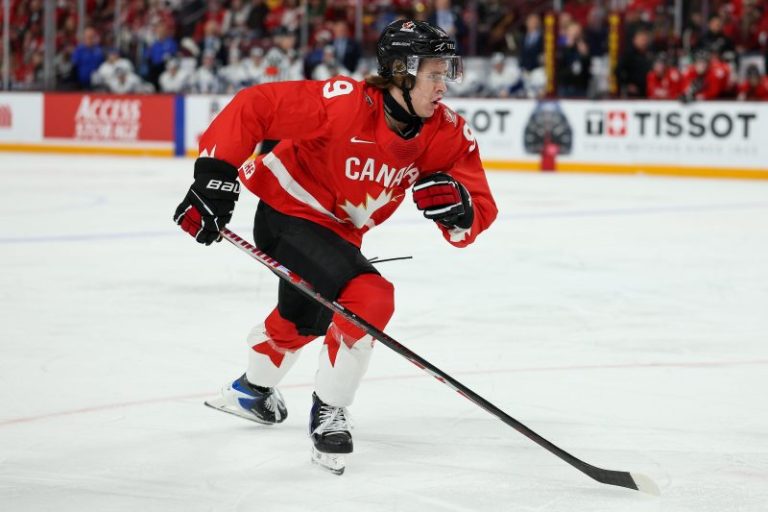
With the World Junior Championship well underway, fans have gotten to see some of the top available talent for the 2026 NHL Draft put their talent on full display on junior hockey’s biggest stage.

Top players like Canada’s Gavin McKenna, Sweden’s Ivar Stenberg and Latvia’s Alberts Smits have all excelled in the opening games of the tournament. With the quarterfinals taking place on Friday, the stakes will only get higher for these players looking to raise their stocks for draft day.

Considering the current NHL standings, the organizational needs of the teams positioned to select in the lottery, and how the ongoing World Junior Championship has impacted their stock, let’s look at one of many ways the top 16 picks in the draft could fall next summer.

(Draft order determined by standings, sorted by points percentage, before games on Jan. 1, 2026)

NHL mock draft: Top 16 picks

1. Winnipeg Jets: Penn State (NCAA) left wing Gavin McKenna

McKenna is tied for the lead in scoring at the world juniors with eight points through Canada’s first four games of the tournament. He recorded four primary assists in the opening two games, showcasing his playmaking creativity and overall offensive vision. He’s taken advantage of this opportunity, but with each game ultimately bringing a bigger stage than the last, he’ll have to prove he can meet the moment.

2. Chicago Blackhawks: Frolunda (Sweden) left wing Ivar Stenberg

Stenberg has recorded points in all but one of Sweden’s world junior games, but he hasn’t dominated in the way that would make him the clear-cut No. 1 pick yet. His production this season in Sweden’s top professional league is likely more indicative of the high-end talent he possesses, but there hasn’t been a true takeover game like many anticipated there would be for Stenberg on this stage just yet.

3. Vancouver Canucks: North Dakota (NCAA) defenseman Keaton Verhoeff

Verhoeff has been pretty sheltered throughout the world juniors, as expected, playing just under 15 minutes against Denmark and nine minutes against Finland after being scratched for the opening two games of Canada’s tournament. There are times when he’s looked overwhelmed, but there are also some great moments of poise, which are reasonable. He’s still been a dominant force at the NCAA level and is undoubtedly the top defender in this class for the time being.

4. St. Louis Blues: Muskegon (USHL) center Tynan Lawrence

Lawrence would be a fantastic pick at the fourth overall spot, possessing all of the tools to become a top-six center who dominates in transition and has the defensive motor that coaches love. He’s smart enough to be deployed in any on-ice situation, and he dictates the pace of play when he carries the puck. Lawrence is a complete 200-foot player who would fit strongly in the Blues’ system, which lacks center depth in its prospect pipeline.

5. Utah Mammoth: Sault Ste. Marie (OHL) defenseman Chase Reid

With Cole Hutson out of the lineup for Team USA, Chase Reid has taken on a larger role than anticipated and has continued to exceed expectations at every level he’s played in. Reid is a dynamic skater who defends with purpose and processes offense at a very high level. He’s quickly become a must-watch prospect from this class and has been on an impressive rise this season.

6. Calgary Flames: Windsor (OHL) left wing Ethan Belchetz

Belchetz is the next-best star power forward who would instantly become a fan favorite in Calgary with his tenacious play, high-end handling and hockey sense. At 6-foot-5 and 228 pounds, Belchetz has the frame of an enforcer with the vision of a playmaker, making him a one-of-a-kind prospect in this class. He’s on pace for 43 goals this season with Windsor, and there’s a case to be made that he is a top-three talent in this class.

7. New York Rangers: Jukurit (Finland) defenseman Alberts Smits

Smits is a high-end competitor who’s taken on a leadership role with Latvia at the world juniors and has thrived while defending against the best competition. He’s also taken on an incredibly heavy workload, notably playing over 26 minutes in his three-point effort against Denmark. His aggressive, puck-dominant play can sometimes work against him, but there’s no question he’s got one of the highest ceilings in this class of defenders.

8. Nashville Predators: Tappara (Finland) center Oliver Suvanto

While this selection would likely be considered a reach, Suvanto, being the best center available after Lawrence, could make him a big target for the Nashville Predators, which are in desperate need of some long-term solutions up the middle. Suvanto has been impressive at the world juniors with Finland despite seeing less ice time, putting up two goals while using his large frame to create advantages over opponents and kill plays on the defensive end.

9. Columbus Blue Jackets: Blainville-Boisbriand (QMJHL) defenseman Xavier Villeneuve

Villeneuve is a dynamic skater and overall confident offensive talent who’s been tearing up the QMJHL from the blueline with 36 points in 33 games this season. His deception, skating and shooting allow him to essentially act as a fourth forward, making him unique within this class and a highly coveted prospect on draft day. While Zach Werenski will be glued to the Blue Jackets’ top power play, Villeneuve would fit perfectly as a secondary option.

10. Seattle Kraken: Spokane (WHL) right wing Mathis Preston

The Kraken have a decent setup in the middle of the ice with Chandler Stephenson, Matty Beniers and Shane Wright, but they undoubtedly need an injection of youth on the wing. Preston is a speedy flank with a wicked shot that’s helped him heat up offensively in the WHL, putting up 13 points in his last 10 games with the Spokane Chiefs. He has all the tools to become a top-six scorer in the NHL.

11. Boston Bruins: Prince Albert (WHL) defenseman Daxon Rudolph

Outside of having comparable physical profiles, Rudolph has a lot of Charlie McAvoy in his game. The 6-foot-2, 209-pound defenseman is a smooth skater who is polished in his defensive habits and can shut down opposing players with his rangy, active stick. He’s also on pace for 34 goals and 72 points this season, but his defensive game is what may make him one of the safest, most projectable defenders in this class.

12. San Jose Sharks: Vancouver (WHL) defenseman Ryan Lin

Lin has become more assertive as an offensive threat with the Vancouver Giants, and it’s reflected in his production, leading draft-eligible defenseman in the WHL with 45 points in 37 games. That offensive dominance hasn’t affected his defensive details either, which are among the best in this class. Don’t be surprised if Lin ends up much higher on draft boards by the end of the season.

13. Boston Bruins (via Toronto): Djurgarden (Sweden) right wing Viggo Bjorck

After landing Rudolph, the Bruins could get a winger in Bjorck to play alongside James Hagens. Bjorck is tied for second in goals (3) and points (5) on a Sweden roster at the world juniors that is filled with NHL-drafted talent. He’s been dangerous on the power play while also being trusted enough to kill penalties, showing a great motor and detailed game that will translate well to the NHL level regardless of his size disadvantages.

14. Ottawa Senators: Forfeited draft pick

The Ottawa Senators must forfeit this year’s first-round draft pick for failing to disclose Evgenii Dadonov’s limited no-trade clause when they sent him to Vegas in 2021, leading to an invalidated trade between the Golden Knights and Anaheim Ducks the following season. The last time a team forfeited its first-round pick was in 2021 with the Arizona Coyotes, which violated the NHL’s combine testing policy.

15. Los Angeles Kings: Peterborough (OHL) left wing Adam Novotny

Novotny has really shown off his defensive details with Czechia at the world juniors, which would fit perfectly in the Los Angeles Kings’ system. His work along the walls and his relentless pursuit of opposing puck carriers make him a nightmare matchup for high-end players and a constant threat to cause turnovers in vulnerable areas of the ice. If he can elevate his offensive game, he could easily be a top-10 selection at this draft.

16. New Jersey Devils: Niagara (OHL) Ryan Roobroeck

Roobroeck has been heating up offensively, putting up 21 in his last 13 games since appearing in the CHL USA Prospects Challenge. His shot is among the best in this class, and he has the physical frame to gain advantages over his opponents when creating offense. Unfortunately, the game-breaking traits he possesses have only come in flashes, and he’ll have to carry this offensive streak into the second half of the season to truly be considered a lottery pick.

This post appeared first on USA TODAY

The Fiesta Bowl semifinal pits No. 6 Ole Miss against No. 10 Miami, with the outcome likely decided in the trenches.
Miami’s success hinges on its defensive line dominating and its offense establishing a strong running game.
Ole Miss looks to counter with quarterback Trinidad Chambliss’s mobility and an offense that excelled against Georgia.

The Fiesta Bowl will be decided on the line of scrimmage.

The College Football Playoff national semifinal between No. 6 seed Mississippi and No. 10 Miami will come down to whether the Hurricanes can dictate things up front, much like they did in dispatching defending national champion Ohio State in the Cotton Bowl.

That win sent a clear message about how capably coach Mario Cristobal has installed his inside-out blueprint for rebuilding the program.

Ole Miss moved to 2-0 without Lane Kiffin by reversing a 21-12 deficit against No. 3 Georgia and winning the Sugar Bowl 39-34.

Whie losers to the Bulldogs during the regular season, the Rebels began to take control in the third quarter thanks to quarterback Trinidad Chambliss, who finished with 362 yards and two touchdowns.

Even with Kiffin off to LSU, the offense totaled with 473 yards on 6.5 yards per play.

Key factors for Miami

Now the Hurricanes will face the same challenge of slowing Ole Miss. Whether Miami advances to the championship game depends on two factors: its ability to command the ball on offense and whether its defensive line can dominate for the second game in a row.

Offensively, the Hurricanes will look to establish the run behind junior Mark Fletcher Jr. and a rapidly improving front. If successful, a solid running game opens things up for senior quarterback Carson Beck, who played things safe against the Buckeyes and was without an interception for the fifth time in six games.

On defense, Miami’s defensive front has the potential to give the Rebels fits and take over the Fiesta Bowl. This group bullied the Buckeyes’ offensive line and fazed a normally unflappable Julian Sayin, who had his worst game since the season opener against Texas.

How Ole Miss beats Miami

But based on its play against No. 11 Tulane and Georgia, Ole Miss could make the Hurricanes one-dimensional by limiting Fletcher’s impact. While hit or miss during the regular season, the Rebels’ run defense held the Green Wave to 115 yards and the Bulldogs to 124 yards, both on 3.4 yards per carry.

Slowing down the Hurricanes’ ground game will place pressure on Beck to deliver through the air against a pass defense that ranked first in the SEC during the regular season in opposing completion percentage (56.2) and gave up only 6.4 yards per attempt.

Whether Ole Miss can protect Chambliss is likely one of the game’s deciding factors. The Rebels have given up 18 sacks in 14 games and held the Bulldogs to just three tackles for loss. The Hurricanes added five sacks against OSU and now has a Bowl Subdivision-best 46 on the year.

Chambliss is the game’s key player

Chambliss’s mobility will help. The senior is able to keep plays alive with his legs and make plays on the move, occasionally tucking and running to extend drives. He has run for 520 yards, second on the team, and eight scores.

If able to get into a rhythm, Chambliss, running back Kewan Lacey and Ole Miss will be hard to keep under wraps. One factor that played into Miami’s hands in the Cotton Bowl was Ohio State’s tendency to play at a much slower tempo than Ole Miss. The Rebels often sprint to the line as soon as a play ends and look to snap the ball soon after.

So Miami has to disrupt that rhythm by winning on first down and setting Chambliss into longer third-down conversions. But even that isn’t a sure thing. Heading into the Sugar Bowl, the senior led the SEC with a 154.3 efficiency rating on third down.

This post appeared first on USA TODAY