Archive

2026

Browsing

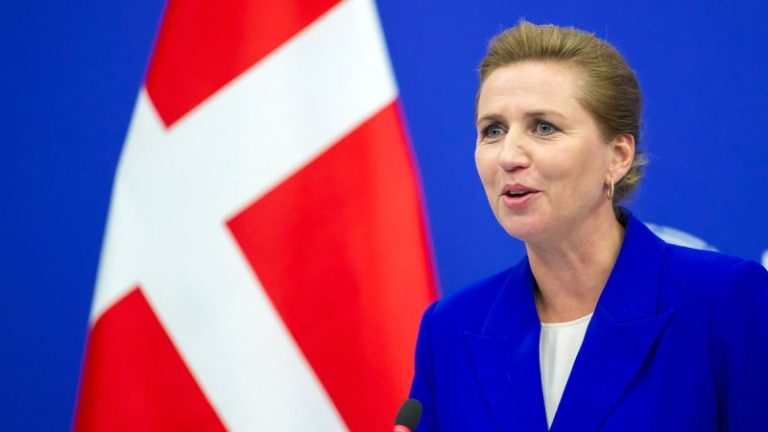
Danish Prime Minister Mette Frederiksen on Monday warned about the implications of President Donald Trump’s threats to annex Greenland, saying it could be the end of the North Atlantic Treaty Organization (NATO).

Frederiksen told Danish broadcaster TV2 in an interview that Trump’s threats about Greenland should be taken seriously.

‘But I also want to make it clear that if the U.S. chooses to attack another NATO country militarily, then everything stops. Including our NATO and thus the security that has been provided since the end of the Second World War,’ she said, according to the outlet.

President Donald Trump told reporters on Air Force One over the weekend that the U.S. needs Greenland, a Danish territory, for ‘national security.’

European and Nordic leaders pushed back against the comments, with Finnish President Alexander Stubb, Norwegian Prime Minister Jonas Gahr Støre and Denmark’s Ambassador to the United States Jesper Møller Sørensen underscoring their support for Denmark’s sovereignty over Greenland and stressing that its future must be determined by Greenland and Denmark alone.

White House deputy chief of staff for policy Stephen Miller doubled down on Trump’s remarks, telling CNN in an interview on Monday that Greenland ‘should be part of the United States.’

CNN anchor Jake Tapper pressed Miller about whether the Trump administration could rule out military action against the Arctic island.

‘Greenland has a population of 30,000 people,’ Miller said. ‘The real question is by what right does Denmark assert control over Greenland. What is the basis of their territorial claim? What is their basis of having Greenland as a colony of Denmark?’

‘The United States is the power of NATO. For the United States to secure the Arctic region, to protect and defend NATO and NATO interests, obviously Greenland should be part of the United States,’ he added.

Greenlandic Prime Minister Jens-Frederik Nielsen said in a Monday statement posted on Facebook that his country is ‘not an object of superpower rhetoric.’

‘We are a people. A land. And democracy. This has to be respected. Especially by close and loyal friends,’ Nielsen wrote in part.

‘Threats, pressure and talk of annexation do not belong anywhere between friends,’ he added. ‘That’s not how you talk to a people who have repeatedly shown responsibility, stability and loyalty. This is enough.’

This post appeared first on FOX NEWS

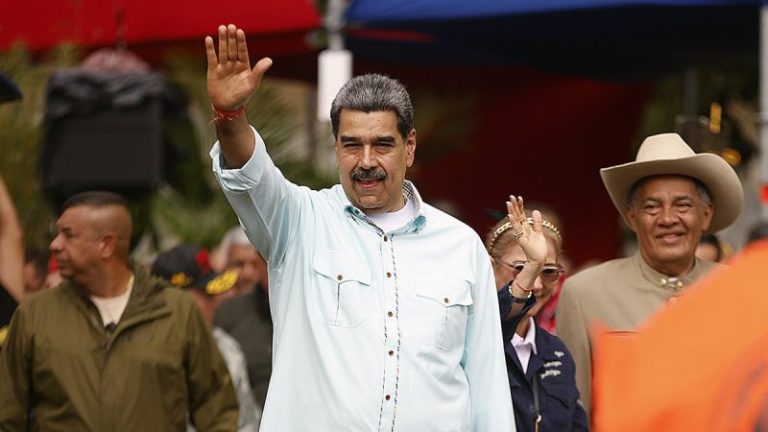
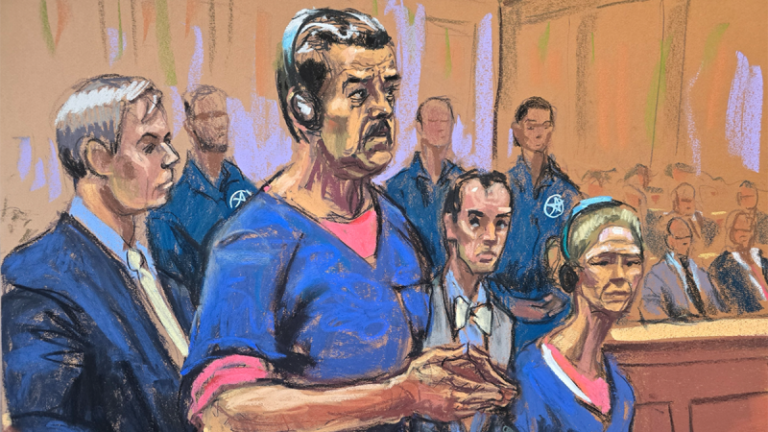
Venezuelan President Nicolás Maduro’s wife arrived to court in New York City wearing bandages on her face and complaining of bruises on her ribs, according to her lawyer.

Her attorney, veteran prosecutor Mark Donnelly, told the court that Cilia Flores suffered ‘significant injuries’ when U.S. forces raided the couple’s compound in Caracas on Saturday. Donnelly requested that Flores receive a full X-ray to determine whether she fractured a rib in the incident.

Flores was already wearing two bandages on her face, one on her forehead and another above her eye.

Both she and her husband pleaded not guilty to narco-terrorism and other charges in their first appearance on Monday.

Maduro faces four charges: narco-terrorism conspiracy, cocaine importation conspiracy, possession of machine guns and destructive devices and conspiracy to possess machine guns and destructive devices.

Flores faces three charges, including cocaine importation conspiracy, possession of machine guns and destructive devices, and conspiracy to possess machine guns and destructive devices.

Donnelly filed a motion to serve as counsel for Flores earlier Monday. He previously served 12 years at the Department of Justice, including as senior advisor to the United States Attorney for the Southern District of Texas.

‘Mark has extensive experience investigating white collar cases, having run the Southern District’s fraud division for over two years. His white collar practice included FCPA investigations, Healthcare Fraud, joint SEC matters, large scale investor fraud, and cyber security matters,’ Donnelly’s biography on the website for the Parker Sanchez & Donnelly law firm reads.

The Texas House of Representatives also enlisted Donnelly to assist in the 2023 investigation and impeachment trial for Texas Attorney General Ken Paxton. Paxton’s impeachment case made it to the Texas Senate, but he was ultimately acquitted on all charges.

Maduro and Flores, who have been married for 12 years, were first introduced while working closely with Maduro’s predecessor, Hugo Chávez. At the time, Maduro described her as having a ‘fiery character,’ according to Reuters.

The pair did not marry until nearly two decades after first meeting, after Maduro was elected president in 2013.

Fox News’ Emma Bussey contributed to this report.

This post appeared first on FOX NEWS

Venezuelan opposition leader Maria Corina Machado has vowed to return to Venezuela ‘as soon as possible’ following America’s capture of dictator Nicolás Maduro, warning that the current regime is escalating an internal crackdown on dissent and journalists.

Speaking to ‘Hannity’ on Monday, Machado said the moment is now right for her return after spending more than a year in hiding. She secretly escaped Venezuela last month and traveled to Norway to receive the Nobel Peace Prize, which she dedicated to President Donald Trump.

‘Well, first of all, I’m planning to go back to Venezuela as soon as possible,’ Machado said. 

‘As I’ve always said, Sean, every day I make a decision where I am more useful for our cause. That’s why I stayed in hiding for over 16 months, and that’s why I decided to go out, because I believed that at this moment I’m more useful to our cause, being able to speak out from where I’m at right now. But I’m going to go as soon possible back home.’

Machado said developments in the past 24 hours have been deeply concerning, pointing to what she described as a sweeping executive order signed by Maduro on the same day he was captured and flown out of the country by U.S. forces.

‘What we’re seeing right now in the last 24 hours is really alarming,’ she said.

Machado said the order mandates the persecution of Venezuelans who support Trump’s actions and claimed at least 14 journalists have been detained. A state of emergency decree issued Saturday, but published Monday, orders police to ‘immediately begin the national search and capture of everyone involved in the promotion or support for the armed attack by the United States,’ the text of the decree reads, according to Reuters.

She said the situation must be closely monitored by the United States and the Venezuelan people, arguing that the transition away from Maduro must continue.

‘So this is very alarming. This is something that has to be followed carefully, I’m sure, by the United States government and by the Venezuelan people,’ she said. ‘And certainly we believe that this transition should move forward.’

Machado also sharply criticized Venezuelan Vice President Delcy Rodríguez, calling her unfit to lead any transitional authority. Rodríguez, who has been vice president under Maduro since 2018, was sworn in as interim president on Monday.

‘Delcy Rodriguez, as you know, is one of the main architects of torture, persecution, corruption, narco trafficking,’ Machado said. ‘She’s the main ally and liaison with Russia, China, Iran, certainly not an individual that could be trusted by international investors. And she’s really rejected, repudiated by the Venezuelan people.’

Machado’s comments came just two days after the Trump administration announced that U.S. forces had captured the dictator and his wife, Cilia Flores, after successful ‘large-scale’ military strikes targeting the Venezuelan government. The dictator and his wife are now being held in New York while they await trial on narco-terrorism charges.

Fox News’ Maria Lencki and Louis Casiano contributed to this report.

This post appeared first on FOX NEWS

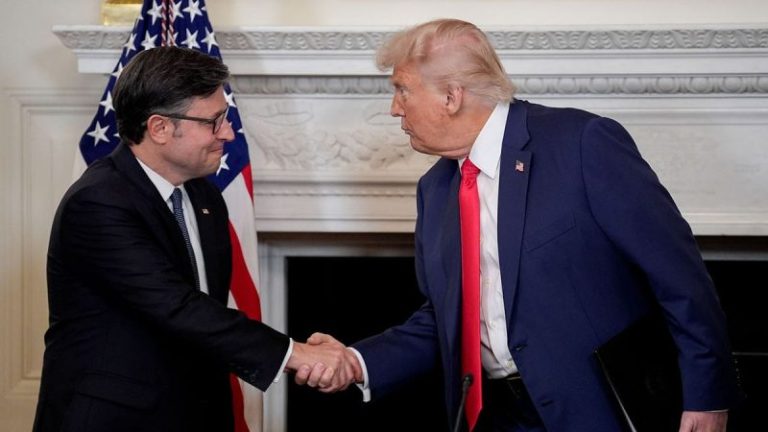
President Donald Trump is set to huddle with House Republicans on Tuesday morning, days after the U.S. government executed strikes in Venezuela and captured the country’s leader Nicolás Maduro. 

Trump will address GOP lawmakers at the newly renamed Donald J. Trump and John F. Kennedy Memorial Center for the Performing Arts, multiple sources told Fox News Digital. 

A White House schedule released late on Monday said Trump will speak around 10 a.m., and that his remarks will be streamed live.

House Republicans will be at the Trump Kennedy Center for an all-day policy forum Tuesday aimed at discussing their agenda for 2026, according to an email obtained by Fox News Digital.

It comes the day House lawmakers return from a two-week recess for the end-of-year holiday period.

Part of the day’s agenda was meant to include remarks by Trump to rally Republicans around their legislative priorities, but three sources told Fox News Digital they anticipate Venezuela will be a focus of the day as well.

‘My guess is he does 30 minutes on Venezuela and five on policy,’ one House GOP source told Fox News Digital.

Another source told Fox News Digital, ‘I would expect him to give a pretty typical rally-type speech … but who knows.’

That source expressed frustration that Republicans were waiting ‘until we get back to work to strategize.’

Meanwhile, Rep. Mike Haridopolos, R-Fla., also said he expected Trump’s remarks to focus heavily on Venezuela.

‘I think the president is going to walk through not only the justification he had for it, which is the court of law in the United States, but also the fact that, how legitimate is a country if the… Canadians, the [European Union], and the United States, no one recognizes this guy? The only people who recognize him are our enemies,’ the Florida Republican said.

Rep. Wesley Hunt, R-Texas, who is challenging Sen. John Cornyn, R-Texas, for his Senate seat, said he anticipated Trump to discuss November’s elections as well.

Asked what he thought he’d hear from the president, Hunt told Fox News Digital he could see Trump discussing ‘the successes of the administration, how important it’s been, what happened in Caracas a couple of days ago…codifying his agenda, and winning the midterms.’

‘I think we’re going to hear a lot of that,’ Hunt said.

This post appeared first on FOX NEWS

President Donald Trump’s announcement that the United States will temporarily ‘run’ Venezuela following the capture of Nicolás Maduro may prove to be a defining moment for the Western Hemisphere — either a disciplined effort to restore regional stability or the opening chapter of an avoidable, open-ended entanglement.

At his Mar-a-Lago press conference on Saturday, the president stated plainly, ‘We will run the country until such time as we can do a safe, proper and judicious transition.’ He added that members of his national security team standing behind him would oversee the effort and did not rule out ‘boots on the ground.’ Hours later, speaking aboard Air Force One, he sharpened the message further: ‘We’re going to run it, fix it.’

The strategic logic is easy to understand. Venezuela sits atop the world’s largest proven oil reserves and has become a hub for narcotics trafficking, corruption and malign outside influence. The administration’s December 2025 National Security Strategy explicitly embraces what it calls a ‘Trump Corollary’ to the Monroe Doctrine — pledging to deny non-hemispheric competitors such as China, Russia and Iran control over strategically vital assets in the Americas. In that framework, Venezuela is not merely a humanitarian tragedy; it is a test case.

But this is precisely where experience should sober ambition.

The first problem: Who is actually in charge?

A central contradiction now confronts Washington. How does the United States ‘run’ Venezuela when its constitutionally designated vice president, Delcy Rodríguez, has already been sworn in domestically as interim president following Maduro’s removal?

Rodríguez’s claim to authority — backed by Venezuela’s Supreme Tribunal of Justice and regime-loyal institutions — is rejected by Washington as illegitimate. Yet in practical terms, ministries, security forces and regional authorities inside Venezuela remain staffed by officials loyal to the old system. That means the United States is not governing Venezuela in name, law or day-to-day administration — even as presidential rhetoric suggests otherwise.

This disconnect between declared authority and actual control is where post-conflict operations often fail.

Lessons written in blood: Iraq and the cost of improvisation

I learned that lesson firsthand. In 2002 and 2003, I served as a member of then–Defense Secretary Donald Rumsfeld’s Military Analyst Group. We were given extensive access — briefings, travel and candid discussions with officials planning both the Iraq invasion and what would follow.

In early 2003, several of us met with retired officers outlining postwar governance plans. We asked basic but essential questions: Who would secure ministries? How would local governance function? How would electricity, water and fuel distribution be restored? The answers were often vague, more aspirational than operational.

After the invasion, I visited Baghdad and met with Coalition Provisional Authority officials under Ambassador Paul Bremer. Again, the gaps were obvious. We had removed a regime but had not built the machinery needed to prevent the vacuum that follows. 

One decision still echoes: the CPA’s order dissolving Iraq’s security institutions, including the Ministry of Defense. RAND’s official history records that the order was issued with little objection at senior levels, even as misunderstandings were masked by apparent consensus. The result was predictable — security collapsed, insurgency surged and the U.S. presence expanded far beyond its original scope.

Venezuela now risks a similar mistake. Capturing Maduro may prove to be the easy part. Governing what comes next is the hard part — and the part America has too often improvised.

Panama is the wrong analogy

Some have compared Venezuela today to Panama in 1989, when U.S. forces captured Manuel Noriega and quickly installed Guillermo Endara as president. The comparison is tempting — and deeply misleading.

Panama was small, U.S. forces were already present, and a recognized successor government was ready to assume power. Venezuela, by contrast, has 30 million people, no broadly accepted transitional authority and entrenched military-criminal networks embedded throughout the state. What worked in Panama cannot simply be scaled up to Caracas.

‘Not day-to-day governance’— what that really means

Secretary of State Marco Rubio has since clarified that the United States does not intend to govern Venezuela ‘day-to-day.’ That clarification matters — but it raises its own questions. If Washington is not running ministries, courts, budgets or police forces, what does that leadership look like?

In real terms, it appears the administration is signaling a model of indirect control rather than occupation. The primary lever is economic, especially oil.

Venezuela’s political and military elites survive on access to oil revenues. Whoever controls export permissions, sanctions relief, insurance access and dollar-denominated transactions controls the real center of gravity. Conditioning access to those revenues — while freezing assets abroad and coordinating sanctions enforcement with allies — offers Washington leverage over the top of the system without governing the country outright.

That approach amounts to influence without occupation: pressure without American administrators running Caracas.

A narco-state is not a one-man show

There is also a dangerous illusion at work — that removing Maduro dismantles the regime.

Maduro sat at the apex of a narco-state and was indicted in U.S. courts on charges of drug trafficking and narco-terrorism. But he did not act alone. His power rested on a network of generals, intelligence chiefs, judges, energy officials and cartel intermediaries who enriched themselves under the existing system. Many of those figures remain in place today.

They are unlikely to surrender quietly. Some will seek accommodation; others will resist through bureaucratic sabotage, violence or the manipulation of public fear. Without a credible transitional framework anchored in Venezuelan civil society and supported by international legitimacy, the system Maduro built may survive him.

The questions that must be answered — now

If the administration wants to avoid repeating Iraq, it must answer several questions publicly and soon.

What is the legal basis — and limit — of U.S. authority? Who provides immediate security, and under what rules? Which Venezuelan partners will be empowered to lead? What economic plan serves Venezuelans first, not just foreign interests? And how does this mission end?

Once the United States assumes responsibility for ‘running’ another country, it inherits responsibility not only for success but for failure.

The Trump administration can still make Venezuela a model rather than a warning. But doing so will require discipline: clearly defined objectives, credible Venezuelan partners, continuity in security forces, transparent reconstruction tied to humanitarian relief and an exit strategy that is real — not rhetorical.

Venezuela is not Iraq. But history has a way of repeating itself when preparation yields to improvisation.

This post appeared first on FOX NEWS

NCAA women’s hockey returned in full force following the holiday break.

Dozens of games were on the schedule, including Minnesota-Duluth, Harvard, Quinnipiac and Boston University facing off in Belfast, Northern Ireland, as part of the Friendship Series.

Teams are in their final stretch before many of the top players in NCAA women’s hockey travel to Italy for the 2026 Olympics, a departure that will significantly affect some of the top programs in the nation. With that change coming, teams wasted no time fighting for positioning in the standings as they returned to action.

Here’s a look at the top 10 NCAA women’s hockey programs this week:

Women’s college hockey power rankings

1. University of Wisconsin (WCHA)

The powerhouse program didn’t play, but it did see Laila Edwards, Kirsten Simms, Caroline Harvey and Ava McNaughton named to USA’s Olympic women’s hockey team. They will face Minnesota-Duluth, which is coming off a pair of disappointing losses in Europe this week, which should tip the scales further in Wisconsin’s favor. Until someone proves otherwise, the Badgers look like the team to beat.

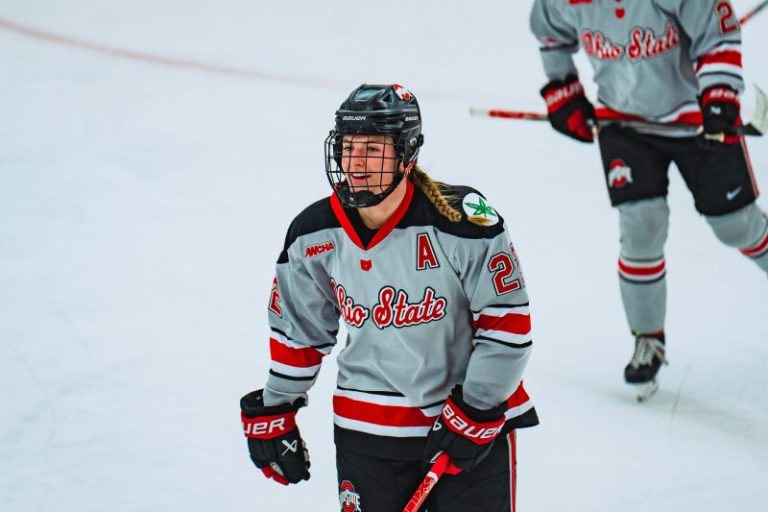
2. Ohio State University (WCHA)

Ohio State swept the top team from Atlantic Hockey America, Penn State, handing the Nittany Lions their second and third losses of the season. Ohio State showed the WCHA’s dominance, outshooting No. 4 Penn State 85-45 in the two-game series, earning 4-1 and 5-1 wins. Senior Sloane Matthews, who will enter the 2026 PWHL Draft, led the way offensively with two goals and four points.

3. University of Minnesota (WCHA)

Minnesota had a walk in the park facing Sacred Heart. They set a program record, scoring 14 goals in the second game of their series and outscoring the NEWHA program 18-2. The series allowed American national team member Abbey Murphy to catapult into the national scoring lead as she recorded nine points in Minnesota’s lopsided wins.

4. Penn State (Atlantic Hockey America)

Penn State failed to hold their ground against Ohio State but also weren’t completely outplayed in their series loss despite being outscored 9-2 across two games. Tessa Janecke and Maddy Christian, in particular, were threats for Penn State. The Nittany Lions vastly improved in the second game, a 4-1 loss to Ohio State. If it were not for a trio of power-play goals by the Buckeyes, things could have been different.

5. Quinnipiac (ECAC)

Playing in Northern Ireland, Quinnipiac skated to a 2-2 tie against Boston University, before a shootout sent BU to the final and the Bobcats to a third-place matchup against Minnesota-Duluth. In the third-place game, the Bobcats responded by upsetting Minnesota-Duluth. Quinnipiac was backed by strong netminding from Felicia Frank and the offensive play of Kahlen Lamarche, who sits second in the nation in goals with 23.

6. University of Minnesota-Duluth (WCHA)

Minnesota-Duluth struggled to find their way through the jet lag of travelling to Belfast for the Friendship Series. They fell in overtime to unranked Harvard, then dropped a 3-1 decision to Quinnipiac. Scoring has remained an issue for the Bulldogs this season as they’ve recorded only 58 goals, tied for 14th in the nation.

7. Northeastern (Hockey East)

Northeastern didn’t play, but they’ll face Yale in an upcoming midweek game and have the historic Beanpot approaching. Captain Lily Shannon is having a season to remember, vaulting herself up the PWHL draft charts, while young stars including Stryker Zablocki, Lisa Jonsson, Alessia Baechler, Eloise Caron and Morgan Jackson continue to show that Northeastern is a program that will continue to improve this season and into the future.

8. Cornell (ECAC)

Cornell’s lone game following the holiday break was a tightly contested 1-0 loss to Penn State. Cornell outshot Penn State 35-32 in the loss, but couldn’t solve Katie DeSa in net. It wasn’t until Lindzi Avar took a five-minute major for hitting from behind late in the game that Penn State capitalized on the power play with only 4:24 remaining to decide the game.

9. Princeton (ECAC)

Princeton had an easy weekend, outscoring Stonehill 18-1 in a pair of wins. More important than the wins was the chance for Princeton’s top players to gain confidence heading into the final stretch. Issy Wunder had five goals and nine points in the series, while Mackenzie Alexander had five goals and eight points. 

10. Connecticut (Hockey East)

UConn easily handled Providence, sweeping their weekend series. Tia Chan was spectacular in net, stopping 62 of 63 shots, including a 31-save 5-0 shutout to conclude the series. UConn has been waiting for the duo of Claire Murdoch and Julia Pellerin to heat up this season, and they showed positive signs this weekend, with Murdoch scoring in both games and Pellerin recording a goal and three assists.

This post appeared first on USA TODAY

MILWAUKEE, WI —The U.S. Speedskating team is complete.

Sarah Warren, who narrowly missed the Olympic team four years ago, secured her spot at the Milano Cortina Games by winning the 500-meter race on Monday night. She was one of four skaters added to the U.S. team in the final day of the Olympic trials.

Zach Stoppelmoor qualified in the 500 meters; Ethan Cepuran got a spot in the mass start; and Giorgia Birkdale was nominated as a team pursuit specialist. They join:

Jordan Stolz (500, 1,000, 1,500 meters and mass start)
Cooper McLeod (500 and 1,000 meters)
Casey Dawson (1,500, 5,000, 10,000 meters and team pursuit)
Emery Lehman (1,500 meters and team pursuit)
Conor McDermott-Mostowy (1,000 meters)
Erin Jackson (500 and 1,000 meters)
Brittany Bowe (1,000 and 1,500 meters)
Mia Manganello (mass start and team pursuit)
Greta Myers (1,500 meters and team pursuit)

Stolz will be a gold-medal favorite in all of his events, while the men’s team pursuit also will be favorites for gold. Jackson and Bowe will be contenders at both of their distances, while Mia Manganello has a chance to medal in the mass start. The women’s team pursuit also has medal potential.

‘I think it’s really good,’ Stolz said when asked to assess the team. ‘I think we have some good (medal) opportunities.’

Warren earning her spot was one of the more emotional moments of the night.

After playing soccer at the University of Illinois, Warren returned to speed skating in 2021. She nearly made the U.S. team for the 2022 Olympics in Beijing, finishing fourth in the 500 meters and fifth in both the 1,000 and 1,500 meters.

She’s had nine knee surgeries over the course of her career, and another on her ankle.

Jackson, the reigning Olympic champion in the 500 meters, had pre-qualified her spot through her success in the World Cups this season. The person with the next-fastest time after a 500-meter race Sunday and another Monday would join her.

Warren was second to Jackson on Sunday. With Jackson not racing Monday, Warren posted the fastest time to clinch her Olympic spot. When she crossed the finish line, Warren screamed and began crying.

The 2026 Milano Cortina Winter Olympics are coming! Sign up for our Chasing Gold newsletter.

This post appeared first on USA TODAY

The Seattle Seahawks and Denver Broncos have clinched the No. 1 seeds in their respective conferences.
Wild-card weekend features six matchups, including a Monday night game between the Texans and Steelers.

The NFL playoffs are officially here. The roadmap to Santa Clara is set.

In the NFC, all things go through Seattle with the Seahawks as the No. 1 seed in the conference. The Seahawks earned the No. 1 seed for the first time since 2014. While in the AFC, the Denver Broncos clinched the top seed in the conference for the first time since 2015 season.

The Seahawks and Broncos have much-deserved byes during the wild-card round.

Wild-card weekend kicks off in North Carolina with the Los Angeles Rams vs. Carolina Panthers. Saturday night features an NFC North matchup between the Green Bay Packers and Chicago Bears.

Sunday begins with the Buffalo Bills vs. Jacksonville Jaguars. Then the defending Super Bowl champion Philadelphia Eagles play host to the San Francisco 49ers. The main event Sunday night will be the Los Angeles Chargers vs. the New England Patriots.

Wild card weekend ends when the Houston Texans pay a visit to Pittsburgh to take on the Steelers for a ‘Monday Night Football’ tilt.

USA TODAY Sports provides the early predictions for the wild-card round:

NFL wild card predictions, picks

Los Angeles Rams vs. Carolina Panthers

Date: Saturday, Jan. 10

Time: 4:30 p.m. ET

Location: Bank of America Stadium, Charlotte, NC

TV: FOX

Streaming: FUBO

Spread: Rams (-10)

Tyler Dragon, USA TODAY: Rams 27, Panthers 20

Carolina beat the Rams at home in Week 13 in what was probably the worst game of Matthew Stafford’s MVP-caliber season. The Rams committed three turnovers in the loss in which hardly anything went their way. I predict the Rams take better care of the football and send the Panthers packing this time. Los Angeles is the more talented team. However, the Panthers have a lot of bulletin-board material because they are a big home underdog.

Green Bay Packers vs. Chicago Bears

Date: Saturday, Jan. 10

Time: 8 p.m. ET

Location: Soldier Field, Chicago

TV: N/A

Streaming: Prime Video

Spread: Bears (-1)

Tyler Dragon, USA TODAY: Packers 27, Bears 24

These two NFC North rivals split the season series, each winning on their home turf. The season-ending injury to Micah Parsons lowers Green Bay’s ceiling. But Jordan Love, Josh Jacobs and the Packers have a lot of firepower on offense. This will mark Chicago’s first playoff game since 2020. It’ll also be the biggest game of Caleb Williams’ young career. Will Williams rise to the moment? I think Williams plays well but the Bears falter against Green Bay.

Buffalo Bills vs. Jacksonville Jaguars

Date: Sunday, Jan. 11

Time: 1 p.m. ET

Location: EverBank Stadium, Jacksonville, FL

TV: CBS

Streaming: FUBO

Spread: Bills (-1.5)

Tyler Dragon, USA TODAY: Jaguars 26, Bills 22

The Jaguars enter the postseason on an eight-game winning streak, the second longest active winning streak in the NFL. Coach of the year candidate Liam Coen has Trevor Lawrence playing the best football of his career. The Bills are too dependent on Josh Allen. I think Buffalo’s reliance on Allen comes back to bite the Bills.

San Francisco 49ers vs. Philadelphia Eagles

Date: Sunday, Jan. 11

Time: 4:30 p.m. ET

Location: Lincoln Financial Field, Philadelphia

TV: FOX

Streaming: FUBO

Spread: Eagles (-3.5)

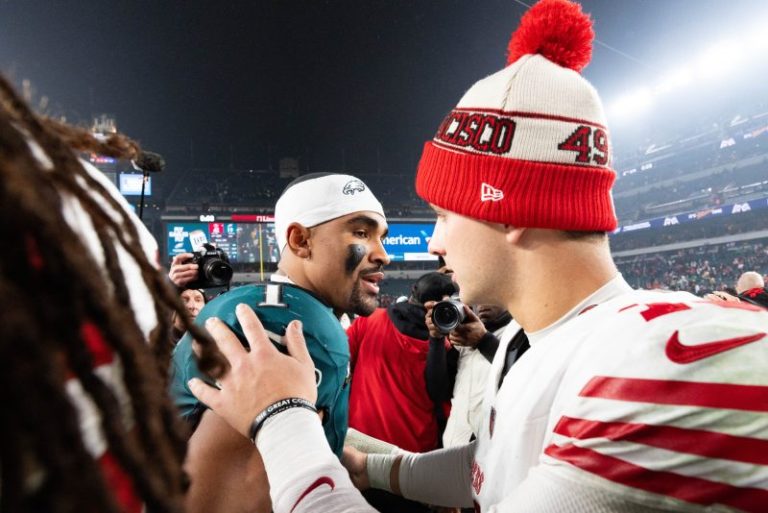
Tyler Dragon, USA TODAY: Eagles 25, 49ers 20

The 49ers have been ravaged by injuries all season. Fred Warner and Nick Bosa suffered season-ending injuries. Brandon Aiyuk didn’t even play this year. It’s a testament to Kyle Shanahan that the 49ers are even in the playoffs. This version of the 49ers can’t beat the Eagles, even if Philly doesn’t play its best brand of football. The defending Super Bowl champs are the most dangerous team in the playoffs.

Los Angeles Chargers vs. New England Patriots

Date: Sunday, Jan. 11

Time: 8 p.m. ET

Location: Gillette Stadium, Foxborough, MA

TV: NBC

Streaming: Peacock

Spread: Patriots (-3.5)

Tyler Dragon, USA TODAY: Chargers 23, Patriots 22

Justin Herbert’s never won a playoff game. Drake Maye’s never played in a playoff game. The Chargers have the NFL’s worst pass block win rate and rank second to last in run block win rate. However, the Patriots don’t have a formidable pass rush. Herbert and the Chargers pull off the biggest upset of wild-card weekend.

Houston Texans vs. Pittsburgh Steelers

Date: Monday, Jan. 12

Time: 8:15 p.m. ET

Location: Acrisure Stadium, Pittsburgh

TV: ESPN

Streaming: FUBO

Spread: Texans (-3.5)

Tyler Dragon, USA TODAY: Texans 24, Steelers 19

Tyler Loop’s 44-yard shanked field goal saved Pittsburgh’s season. The Steelers will welcome back DK Metcalf, who they’ve sorely missed. However, the Texans have the NFL’s top defense. Will Anderson Jr. and Danielle Hunter have combined for 27 sacks. Derek Stingley Jr. and Kamari Lassiter each matchup well against Metcalf. The Texans should win as long as C.J. Stroud manages the game and takes care of the football.

Follow USA TODAY Sports’ Tyler Dragon on X @TheTylerDragon.

This post appeared first on USA TODAY

The New Year is bringing some parity to the NBA.

No team is flashing the dominance that we had seen over recent stretches, as the longest active winning streak going in the league is just three games, currently held by the Boston Celtics and Philadelphia 76ers.

It’s interesting because the Celtics suddenly are creeping up the standings and are making a case for the second spot in the East – and with star player Jayson Tatum yet to play a game and possibly out all season. All of this begs the question: if Boston remains competitive deep into the season, and if Tatum is eventually cleared to return, how should the Celtics handle that?

Here are USA TODAY Sports’ NBA power rankings after Week 10 of the 2025-26 regular season:

USA TODAY Sports NBA power rankings

Note: Records and stats through Jan. 4. Parentheses show movement from last week’s rankings.

NBA Week 11 power rankings: Top 10

1. Oklahoma City Thunder, 30-6 (+1)

2. Detroit Pistons, 26-9 (+1)

3. San Antonio Spurs, 25-10 (-2)

4. Boston Celtics, 22-12 (+2)

5. Denver Nuggets, 23-12 (—)

6. New York Knicks, 23-12 (-2)

7. Minnesota Timberwolves, 23-13 (—)

8. Los Angeles Lakers, 22-11 (+1)

9. Houston Rockets, 21-11 (-1)

10. Phoenix Suns, 21-14 (—)

After prying away the top spot from the Thunder last week, the Spurs have lost three of their last five as Victor Wembanyama suffered another injury scare. So, even though the Thunder have been vulnerable, and even though they have struggled against teams with defensive length and athleticism at the wing, OKC regains No. 1 status.

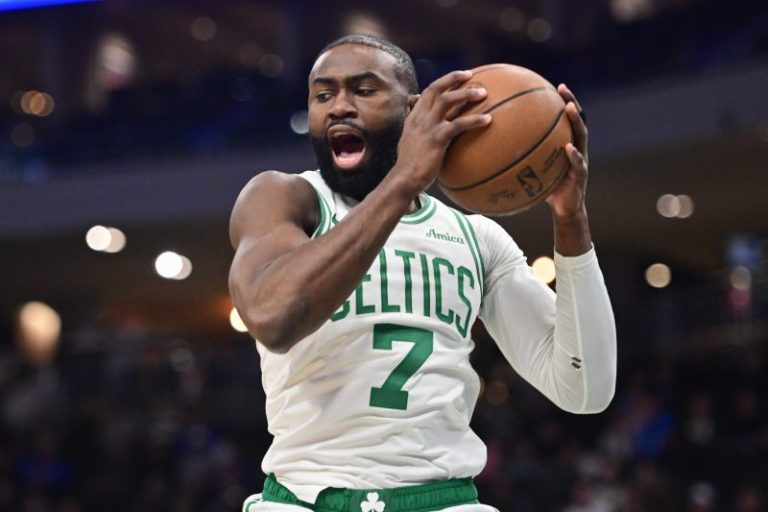
The Celtics, though, have been quiet risers behind Jaylen Brown, who is having an MVP-caliber season without Jayson Tatum (Achilles); Boston suddenly has the NBA’s second-ranked offensive rating. The Lakers are seemingly dealing with internal tension amid lingering questions about their subpar defense and offensive fit issues with Luka Dončić and LeBron James, but L.A. keeps on winning.

NBA Week 11 power rankings: Nos. 11-20

11. Toronto Raptors, 21-15 (+1)

12. Philadelphia 76ers, 19-14 (+3)

13. Miami Heat, 20-16 (—)

14. Orlando Magic, 20-16 (-3)

15. Cleveland Cavaliers, 20-17 (-1)

16. Golden State Warriors, 19-17 (—)

17. Chicago Bulls, 17-18 (+1)

18. Milwaukee Bucks, 16-20 (+1)

19. Portland Trail Blazers, 16-20 (+2)

20. Atlanta Hawks, 15-18 (-5)

Joel Embiid is playing more minutes for the Sixers and is averaging 28.7 points per game over his last seven. The Heat, after losing nine of 11 throughout December, have course corrected and have returned to their offensive pace with Norman Powell making an All-Star push. Miami has won five of its last six, including one against the top seed in the East, the Pistons.

The Magic have to figure out how to incorporate Paolo Banchero into the offense more efficiently, as his on-off numbers remain relatively underwhelming. And the Hawks are simply out of sorts – whether Trae Young is on the floor or not – losing 12 of their last 16 games.

NBA Week 11 power rankings: Nos. 21-30

21. Los Angeles Clippers, 12-22 (+2)

22. Memphis Grizzlies, 15-20 (-5)

23. Dallas Mavericks, 13-23 (+1)

24. Utah Jazz, 12-22 (-2)

25. Charlotte Hornets, 12-23 (—)

26. Brooklyn Nets, 11-22 (—)

27. Washington Wizards, 9-25 (+2)

28. New Orleans Pelicans, 8-29 (-1)

29. Sacramento Kings, 8-28 (-1)

30. Indiana Pacers, 6-30 (—)

Are the Clippers all the way back? Over their last 10 games, no team has posted a higher offensive rating than Los Angeles (123.0), and Kawhi Leonard has been on an absolute heater, averaging 36.6 points per game over his last seven. The Mavericks got Anthony Davis back and upset the Rockets on Jan. 3, but Dallas will need the big man healthy to climb into the playoff picture.

The Nets have been more competitive on defense, but that hasn’t led to consistency with victories. Winners of four of their last six, the Wizards are getting decent contributions from young starters and from Justin Champagnie and Bub Carrington off the bench.  

This post appeared first on USA TODAY

The WNBA and WNBPA appear to be at an impasse as the deadline for new collective bargaining agreement approaches on Friday, Jan. 9.

The league has not moved off of any of the numbers from its last offer reported in December.

‘We are at a bit of standstill,’ WNBPA vice president Napheesa Collier said when asked about the CBA on ‘Good Morning America’ on Monday, Jan. 5. ‘The timeline is coming up in a couple of days. It’s gonna expire.’

Collier, who was appearing on GMA to tout the second season of Unrivaled, a 3-on-3 league she co-founded with Breanna Stewart, said no one wants a work stoppage but the players will continue to ask for what they believe they deserve.

‘We’re just excited to show at Unrivaled that it is possible to pay the players and create a successful business,’ Collier said. ‘And that’s what we hope to do in the WNBA as well.

‘We feel really confident in what we’re asking for, and I just feel really blessed to be able to play and create something that is already showing that these things are possible.’

WNBA players voted to authorize the WNBPA’s executive committee to ‘call a strike when necessary,’ in late December. The current CBA is set to expire on Jan. 9, 2026, following two extensions from the original Oct. 31 deadline.

The league has proposed a system where players would receive in excess of 70% of net revenue, a person with direct knowledge of the situation told USA TODAY Sports. The WNBA’s offer includes a maximum $1 million base salary, with a projected revenue sharing component that raises players’ max total earnings to more than $1.3 million in 2026. The maximum salary would grow to nearly $2 million over the life of the agreement. The proposal raises the minimum salary to more $250K and the average salary to more than $530K, growing to more than $780,000 over the life of the deal.

The players have prioritized increased revenue sharing and salary structures in negotiations. According to The Athletic, the league has offered revenue sharing at 15% while the union has proposed 30%. The sides also differ on how that percentage, as well as the salary cap, would be calculated.

When asked to comment on the bargaining, WNPBA executive director Terri Jackson sent this statement to USA TODAY Sports:

“The players know the difference between doing business and creating click-bait. They are focused on the system. Despite what the league and the teams are trying to do, the players are not confused by the numbers. The players want a meaningful share of the revenue they are creating. They want to be properly valued in these negotiations and this next CBA. They do not want to be paid last with only a fraction of the dollars left over. 

‘I cannot comment on the specifics of any proposal but I can speak hypothetically.  The players would not have opted out of the 2020 CBA with a fixed salary system giving them less than 10% of the revenue that their labor drives only to agree to a salary system that is arguably tied to revenue but now gives them less than 15%. The business has grown considerably and the league and the teams project incredible sustainable growth into the (foreseeable) future.

‘How do the capital investors, Changemakers, any one who cares about women’s sports, supports women athletes, understands the value of this investment believe this could be a good deal? Again, hypothetically speaking.”

This post appeared first on USA TODAY