Archive

2026

Browsing

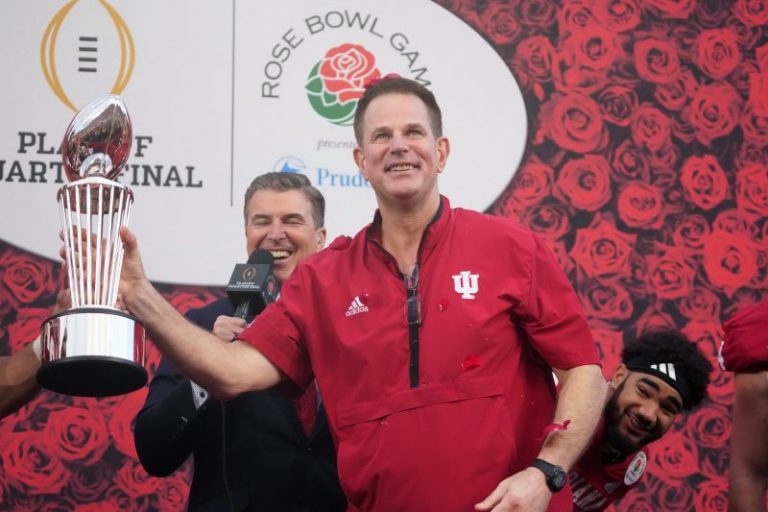
Curt Cignetti embraced what Lane Kiffin failed to fully appreciate. It’s good to be the Portal King.
Indiana wins with transfers, just as Lane Kiffin did at Ole Miss before choosing different avenue at LSU.
TCU quarterback Josh Hoover headed to Indiana as part of Hoosiers’ transfer haul.

Curt Cignetti embraced what Lane Kiffin failed to fully appreciate.

When you’re the Portal King, with a strong NIL collective at your disposal, you can acquire the talent necessary to win a national championship.

An Indiana or Mississippi national championship would offer proof of concept. The Hoosiers and Rebels were the most transfer-leaning teams in the College Football Playoff field.

Kiffin played the transfer game as well as anyone these past several seasons. At Mississippi, he de-emphasized high school recruiting in favor of building rosters with proven transfers. Kiffin earned his crown, as the ruler of the transfer kingdom. Then, he abdicated his throne when he left Ole Miss for LSU.

Kiffin plans to evolve his roster building strategy at LSU. In Louisiana, a superior in-state recruiting base makes it easier to sign four- and five-star high school recruits than it is at Ole Miss — or Indiana.

As Kiffin told ESPN, he intends to “build through high school” recruiting and supplement “through the portal.”

That aligns with how Georgia, Alabama, Texas and Tennessee build rosters. Notably, none of those schools reached the playoff semifinals. In fact, Oregon is the only semifinalist that signed a top-10 recruiting class a year ago.

For someone who prides himself on being a non-conformist revolutionary, Kiffin’s swap of Ole Miss for LSU amounts to an embrace of conventional wisdom, which says the teams signing the most high school blue-chippers enjoy the inside track to a national title.

Cignetti might like a word.

Transfers win. Google it.

Curt Cignetti becomes Portal King, as Lane Kiffin gives up throne

Cignetti seems only too happy to inherit Kiffin’s crown and wield the scepter in the Portal Kingdom.

The Hoosiers arecleaningup in these early days of the portal sweepstakes.

Quarterback Josh Hoover (TCU) and wide receiver Nick Marsh (Michigan State) highlight Indiana’s transfer haul that’s trending toward being Cignetti’s best portal class yet.

Indiana’s haul, so far, dwarfs Kiffin’s at LSU.

Shoot, the Hoosiers even secured a running back named Turbo. You can’t make this up. The Hoosiers’ run game is now Turbo charged! That’s the royal work of the new Portal King.

Who needs top-100 high school prospects? Not Cignetti. Nearly all of Indiana’s prep signees are three-star prospects.

That aligns with Indiana’s history. The Hoosiers recruit from a state that’s not exactly overflowing with blue-chippers.

Mostly, Indiana’s stars are transfers, including Heisman Trophy-winning quarterback Fernando Mendoza.

Cignetti doesn’t build by collecting SEC backups, either. He’s not seeking guys who couldn’t play at their last school. Indiana thrives by assembling standouts from places like California, James Madison, Kent State, NC State and Maryland.

Blend the transfers, supplement with some homegrown three-star recruits, and voila, you’re No. 1 and undefeated.

“The one thing I can say about Coach Cig is, the stuff that you get in his office on a visit and he’s telling you this and that, it’s actually true,” said wide receiver Elijah Sarratt, in explanation of why Indiana’s transfers vibe with Cignetti.

“He’s not going to say it’s going to be easy, … but you see the vision that he gives you, and you really believe that you can achieve it.”

Sarratt, like several other Hoosiers, followed Cignetti from James Madison.

“We are all blessed to have the opportunity to come with Cig here,” said running back Kaelon Black, one of those JMU transfers.

Indiana doubles down on transfer strategy

Cignetti can’t count on bringing in his former players anymore, but that’s not slowing his transfer roll.

If anything, Indiana’s success makes it a more appealing destination for transfers.

Perhaps, it’s not as simple as I’m making it sound or Cignetti’s making it look, but he’s not alone.

Kiffin made it look easy, too, throughout his six seasons acquiring and meshing transfer talent at Ole Miss. Kiffin’s approach allowed the Rebels to compete with the SEC’s blue bloods in a way they hadn’t since the Johnny Vaught era.

The Rebels’ stars came from places like Missouri, Nebraska, Oklahoma State and Wake Forest. Kiffin paired them with a quarterback from Division II Ferris State. The concoction became good enough that Ole Miss set a school record with 13 wins.

Kiffin left for LSU, but the transfers he left behind gained steam. The Rebels avenged a lone loss to Georgia with a comeback win in the playoff quarterfinals.

Every CFP semifinalist starts a transfer quarterback. Three of those quarterbacks are in their first season at their current school, including the Rebels’ Trinidad Chambliss.

Last year’s championship pitted quarterback Will Howard against Riley Leonard, transfers in their first and only seasons playing for Ohio State and Notre Dame, respectively.

Each of the past four Heisman winners transferred during his career.

Kiffin told ESPN “the sky’s the limit” at LSU with his strategy of roster building with blue-chip recruits, including an emphasis on in-state talent. He’ll shift to using transfers as supplements, although he’ll need numerous transfers in the short term, at least, as he attempts to rebuild the roster.

Maybe, that’ll work, particularly if he acquires a quarterback as good as Chambliss has been for Ole Miss. Nothing prohibits LSU from pursuing a national championship with Kiffin’s adapted strategy. Kirby Smart won back-to-back SEC championships the past two seasons at Georgia while relying on developing premier high school talent.

And still, Cignetti declined to pivot in that direction. Like Kiffin, Cignetti could have pretty much called his shot in this active coaching carousel. A job hop to Penn State or Florida would’ve better positioned Cignetti to chase top-10 recruiting classes. Instead, he inked an extension and accepted a raise to stay at Indiana for the long haul.

“I plan on retiring as a Hooiser,” Cignetti said earlier this season.

That’ll come with more portal raids.

Cignetti must appreciate that it’s good to be the king.

Blake Toppmeyer is the USA TODAY Network’s senior national college football columnist. Email him at BToppmeyer@gannett.com and follow him on X @btoppmeyer.
This post appeared first on USA TODAY

The winners at the first major on the tennis calendar this year will be a little richer than any of their predecessors.

Tennis Australia announced on Tuesday, Jan. 6 that players at the 2026 Australian Open will compete for a record $74.9 million in prize money, which represents a 16% increase from last year’s event. The winners in men’s and women’s singles will take home about $2.79 million, up from $2.35 million in 2025.

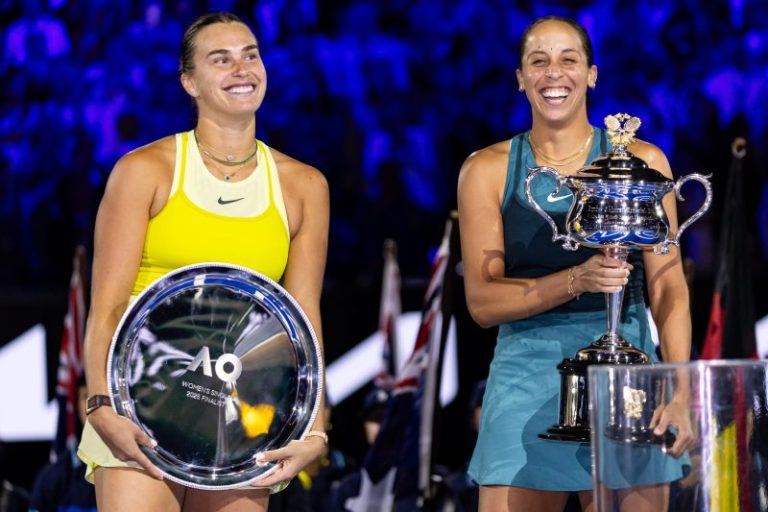
There are also increases in prize money throughout the bracket for participants who lose in earlier rounds, as well as qualifiers. Those who lose in the first round of the men’s and women’s singles competition will earn more than $100,000. Jannik Sinner is the defending Australian Open champion in men’s singles and American Madison Keys won the women’s singles title by upsetting world No. 1 Aryna Sabalenka in Melbourne in 2025.

Here’s a breakdown of the prize money at the 2026 Australian Open, as well as an updated schedule ahead of the first major on the tennis calendar:

2026 Australian Open prize money

The Australian Open will award a record $74.9 million in prize money at the 2026 tournament. Here’s a breakdown of how the money will be doled out for the men’s and women’s singles competition:

All values approximate due to AUD to USD conversion

Winner: $2.79 million
Runner-up: $1.44 million
Semifinalists: $842,306
Quarterfinalists: $505,383
Fourth round: $323,445
Third round: $220,852
Second round: $151,615
First round: 101,076
Q1: $27,290
Q2: $38,409
Q3: $56,266

Australian Open 2026: Main draw schedule

The 2026 Australian Open qualifying begins on Monday, Jan. 12, with the main draw beginning on Sunday, Jan. 18 and concluding on Sunday, Feb. 1.

Sunday, January 18 to Sunday, January 25: Rounds 1-4
Monday, January 26 to Tuesday, January 27: Quarterfinals
Wednesday, January 28: Women’s semifinals
Thursday, January 29: Men’s semifinals
Friday, January 30: Women’s finals
Saturday, Feb. 1: Men’s finals

This post appeared first on USA TODAY

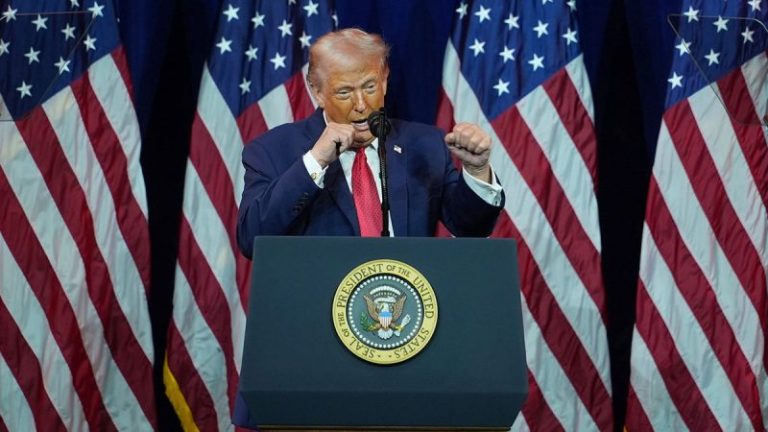
Pro-life activists and groups are taking issue with President Donald Trump’s remarks to Republican lawmakers to be ‘flexible’ on a law that bans the use of federal funds for most abortions as health care talks continue in Congress. 

‘Any healthcare plan that prioritizes a ‘deal’ over saving lives — in and out of the womb — deserves to die, not children,’ Students for Life Action President Kristan Hawkins said in a statement Tuesday following Trump’s address. ‘Republicans need to fix what the Democrats profoundly broke. Former President Barack Obama destroyed the American healthcare system with Obamacare, driving up costs and pushing life-ending policies with taxpayer funds. The GOP must work not for any deal, but for the right deal.’ 

Trump joined Republican House lawmakers Tuesday morning at the newly renamed Trump–Kennedy Center during their annual policy retreat to discuss the party’s agenda for the coming year — a high-stakes election cycle with the midterms just over a year away. Lawmakers are working to revive Obamacare enhanced subsidies after they expired in 2025, with some Republicans new restrictions on federal funds as they relate to abortion services under Obamacare plans. 

Trump said Tuesday lawmakers should be ‘flexible’ on the Hyde Amendment — a long-standing appropriations rider enacted in 1976 — that bars most federal funding for abortion, including through Medicaid, with limited exceptions.

‘You have to be a little flexible on Hyde, you know that,’ Trump said. ‘You gotta be a little flexible. You gotta work something … we’re all big fans of everything. But you have to have flexibility.’ 

The comment set off criticism among conservatives and pro-lifers on social media, with many remarking they can’t be ‘flexible’ when it comes to the life a child. 

‘No President Trump, we will NEVER compromise on the Hyde Amendment. NO taxpayer funding of abortions. Period,’ pro-life outlet Life News posted to X. 

‘For decades, opposition to taxpayer funding of abortion and support for the Hyde Amendment has been an unshakeable bedrock principle and a minimum standard in the Republican Party. To suggest Republicans should be ‘flexible’ is an abandonment of this decades-long commitment. If Republicans abandon Hyde, they are sure to lose this November,’ SBA Pro-Life America President Marjorie Dannenfelser said in a statement. 

”You have to be a little flexible on Hyde’ when passing healthcare legislation, President Donald Trump just told the House Republican retreat. The Hyde Amendment prevents your taxpayer money from funding elective abortions not carried out due to rape or incest. Hard pass,’ Eastern Orthodox priest Ben Johnson posted to X. 

Sen. James Lankford (R-OK) told Politico after Trump’s address that: ‘I’m not flexible on the value of every child’s life. Children are valuable, and so I’d have to get up to the context of what he meant by that.’ 

‘I almost fell out of my chair,’ another lawmaker told the outlet under the condition of anonymity. 

Fox News Digital reached out to the White House Tuesday for additional details on Trump’s comment and response to conservatives’ concerns, but did not immediately receive a reply. 

Just nearly a year ago, Trump doubled down on his support for the Hyde Amendment when he signed an executive order four days after he was sworn back into office titled, ‘ENFORCING THE HYDE AMENDMENT.’

The executive order directed federal agencies to implement restrictions on the use of federal funds for abortion, while reinforcing the long-standing Hyde Amendment and rescinding previous Biden-era orders that expanded abortion access. 

‘It is the policy of the United States, consistent with the Hyde Amendment, to end the forced use of Federal taxpayer dollars to fund or promote elective abortion,’ the executive order stated. 

Democrats campaigned against Trump in 2024 on claims he would wipe out abortion access and impose a national abortion ban, which the campaign brushed off as unrealistic. While some conservatives have previously taken issue with Trump for not being more vocal in his support of pro-life policies, including in 2024 when the GOP platform only mentioned abortion once, instead focusing on the preservation of life and returning power to the states when developing laws surrounding abortion.

This post appeared first on FOX NEWS

In the aftermath of Nicolás Maduro’s capture by United States forces, paramilitary groups tied to the Venezuelan leader’s regime have initiated an aggressive campaign to maintain control over the country.

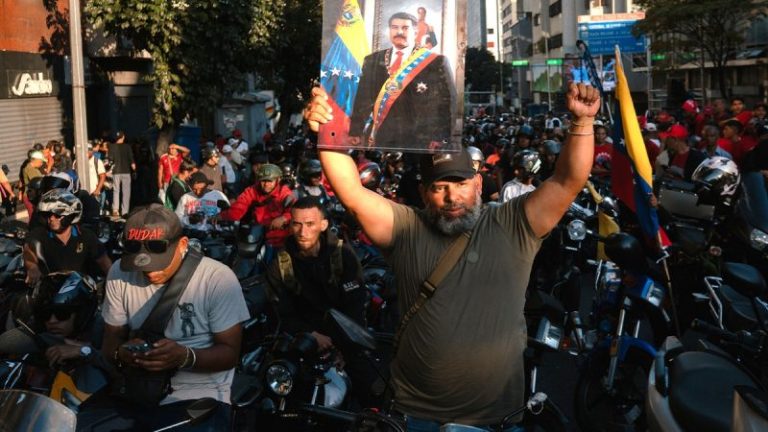
Mobs of motorcycle-riding civilians often armed with assault rifles, known as colectivos, have been conducting intrusive searches and establishing checkpoints to identify and punish anyone showing support for Maduro’s removal from power, Reuters reported.

The National Union of Press Workers of Venezuela reported that armed forces briefly detained fourteen journalists during Monday’s induction of Vice President Delcy Rodríguez as the country’s interim leader. Residents have also reported that some Venezuelans have been afraid to leave their homes, fearing that armed forces would seize and scour their phones for signs of dissent, The Telegraph said.

‘The future is uncertain, the Colectivos have weapons, the Colombian guerrilla is already here in Venezuela, so we don’t know what’s going to happen, time will tell,’ Oswaldo, a 69-year-old Venezuelan shop owner, told The Telegraph.

The colectivos are largely controlled by Nicolás Maduro’s close ally, Diosdado Cabello, who has a $25 million bounty from the U.S. State Department largely for his role in corruption and drug trafficking.

Cabello, who serves as the state’s Minister of Interior, Justice and Peace, is widely known for suppressing political dissent in Venezuela. The presence of colectivos, who often serve as an unofficial arm of state repression, suggests that Maduro loyalists are desperately trying to maintain their grip on the country.

The reported crackdown began with a government directive to root out dissent against the Venezuelan regime. According to Reuters, a state of emergency decree published on Monday ordered police to ‘immediately begin the national search and capture of everyone involved in the promotion or support of the armed attack by the United States.’

As someone who conducts state-run domestic espionage through widespread coordination of surveillance and counterintelligence agencies, Cabello remains a major unpredictable and dangerous figure in the wake of Maduro’s capture, Reuters reported.

‘The focus is now on Diosdado Cabello,’ Venezuelan military strategist Jose Garcia told the outlet. ‘Because he is the most ideological, violent and unpredictable element of the Venezuelan regime.’

Reuters reported that the former military officer was also recently spotted patrolling Venezuelan streets with security forces.

In a social media post by the Venezuelan government, footage reportedly showed Cabello posing with a crowd of armed militia as they shouted, ‘Always loyal, never traitors.’

Reuters added that in recent weeks, Cabello was also seen on television ordering Venezuela’s military counterintelligence agency to ‘go and get the terrorists’ and warning ‘whoever strays, we will know.’

He reportedly repeated the same rhetoric in a state television appearance Saturday, wearing a flak jacket and helmet and surrounded by heavily armed guards.

Despite the removal of Maduro, the loyalist crackdown on dissent and the media suggests that the ruling party has no intention of relinquishing its grip on power.

Reuters contributed to this report.

This post appeared first on FOX NEWS

President Donald Trump has adopted an interventionist posture to justify toppling dictator Nicolás Maduro’s regime in Venezuela and has signaled he’ll take the same approach with other Latin American countries next as his administration seeks to assert dominance in the Western Hemisphere.

Interventionism is a foreign policy approach by which one country intervenes in another state’s affairs. The U.S. has engaged in several interventions abroad, including launching an invasion of Iraq in 2003 that led to the toppling of Iraqi dictator Saddam Hussein’s regime. 

While Trump has blasted previous administrations for actions in the Middle East and vowed he would bring an end to ‘endless wars’ while ushering in an ‘America First’ agenda prioritizing U.S. interests, Trump signed off on conducting a ‘large scale strike’ against Venezuela and capturing Maduro Saturday, prompting concern, primarily from Democrats, about starting another lengthy conflict. 

The strikes in Venezuela come on the heels of several other major military operations from the Trump administration, including strikes in Nigeria on Christmas Day against Islamic State militants in response to attacks against Christians in the region, strikes in Syria in December against Islamic State operatives after an ambush against U.S. troops there, and strikes in June against the Iranian nuclear sites of Fordow, Natanz and Isfahan. 

But unlike the strikes in the Middle East, the operations in Venezuela require additional U.S. involvement. Trump said Sunday that the U.S. will run Caracas, Venezuela, until a safe transition can occur, thrusting the U.S. into the most significant military intervention of Trump’s presidencies as he wages a campaign to ‘reassert American dominance in the Western Hemisphere.’

‘Trump has never been an advocate of regime change, but that is what he has on his hands now. Unlike the Fordow strikes, where Trump acted and then said, ‘The fight is over,’ he will not have that luxury here in Venezuela,’ retired Rear Adm. Mark Montgomery, now a senior fellow with the Foundation for the Defense of Democracies, said in a statement Saturday. 

Most Republicans have backed Trump’s actions in Venezuela, although some from the more anti-interventionist camp of the GOP have voiced skepticism, including outgoing Rep. Marjorie Taylor Greene, R-Ga., who said in a social media post Saturday, ‘This is what many in MAGA thought they voted to end.’

Meanwhile, Democrats have issued caution that the U.S. may be entangling itself in another complicated conflict. For example, Senate Minority Leader Chuck Schumer, D-N.Y., claimed that the U.S. is on the path to another ‘endless war.’

‘The American people are worried that this is creating an endless war,’ Schumer said in an interview with ABC News Sunday. ‘The very thing that Donald Trump campaigned against over and over and over again was no more endless wars. And, right now, we’re headed right into one with no barriers, with no discussion.’

Trump announced Saturday that U.S. special forces conducted a strike against Caracas, Venezuela, and seized Maduro and his wife, Cilia Flores. The two were taken to New York and appeared in a Manhattan federal court on Monday on drug charges. Both pleaded not guilty. 

In addition to running Venezuela, Trump said the U.S. was ‘ready to stage a second and much larger attack’ if needed in Caracas. Likewise, he signaled Sunday that other Latin American countries could also face regime change, singling out Cuba and issuing a word of caution to Colombia’s president, Gustavo Petro.

‘Cuba only survives because of Venezuela,’ Trump said.

‘Colombia is very sick too — run by a sick man who likes making cocaine and sending it to the United States, and he’s not going to be doing it very long,’ Trump said. 

Trump’s words and actions come as he’s revived the Monroe Doctrine, rebranded as the ‘Don-roe Doctrine,’ that originally sought to limit European influence in Latin America and to protect U.S. influence in the region.

The Monroe Doctrine, first introduced in 1823 by President James Monroe, specifically cautioned European nations against further colonization in Central and South America. Later, it was used to justify U.S. actions in the region as an ‘international police power’ under former President Theodore Roosevelt, according to the National Archives.

‘The Monroe Doctrine is a big deal. But we’ve superseded it by a lot, by a lot,’ Trump said Saturday. ‘They now call it the ‘Don-roe Doctrine.’ … We sort of forgot about it. It was very important, but we forgot about it. We don’t forget about it anymore. Under our new national security strategy, American dominance in the Western Hemisphere will never be questioned again.’

Katherine Thompson, a senior fellow in defense and foreign policy studies at the libertarian think tank the Cato Institute, told Fox News Digital Tuesday it’s too early to tell if Trump’s future approach to the Western Hemisphere will include more interventionist activity.

However, she said the ‘expansive’ definition of what America’s core interests are ‘opens the administration up to risk of strategic drift away from the ‘America First’ framework, diminishes the principle of prioritization and allows greater tolerance for an interventionist approach.’ 

So far, Trump has claimed his actions in Venezuela are complementary to his ‘America First’ priorities because he wants the U.S. to have ‘good neighbors.’ 

Retired Vice Adm. Robert Harward, a Jewish Institute for National Security of America (JINSA) 2022 General and Admirals Program participant and a member of JINSA’s Iran Policy Project, said Trump’s actions in Venezuela are on the same page as the president’s ‘America First’ agenda.

That means holding other nations who mistreat their people accountable for their own benefit and for the benefit of the American people, he said. 

‘They’re clearly aligned. This is exactly what he’s talked about. … This is an accountability for them,’ Harward said.

For those concerned about the U.S. military’s actions in Venezuela, Vice President JD Vance has attempted to soothe their fears. Vance leans toward the non-interventionist wing of the Trump administration and historically has backed a foreign policy doctrine that supports minimal interference with other nations’ affairs.

‘I understand the anxiety over the use of military force, but are we just supposed to allow a communist to steal our stuff in our hemisphere and do nothing?’ Vance said in a social media post Sunday. ‘Great powers don’t act like that.’ 

Secretary of State Marco Rubio claimed the U.S. did not require approval from Congress to conduct the strike since it wasn’t an ‘invasion’ and claimed actions in Caracas, Venezuela, were part of a ‘law enforcement function to capture a drug trafficker.’ 

The Trump administration repeatedly stated that it did not recognize Maduro as a legitimate head of state and insisted he was the leader of a drug cartel. 

But lawmakers, especially Democrats, have called into question the legality of the operation in Venezuela, which was conducted without Congress’ approval. 

‘This has been a profound constitutional failure,’ the top Democrat on the Senate Armed Services Committee, Sen. Jack Reed, D-R.I., said in a statement Saturday. ‘Congress — not the President — has the sole power to authorize war. Pursuing regime change without the consent of the American people is a reckless overreach and an abuse of power.

‘The question now is not whether Maduro deserved removal — it is what precedent the United States has just set, and what comes next.’ 

This post appeared first on FOX NEWS

When Nicolás Maduro was removed from power by the United States, many in Washington expected the U.S. to rally behind Venezuela’s most prominent opposition leader.

Instead, the Trump administration moved to engage a longtime Maduro loyalist, signaling a transition strategy driven less by democratic symbolism than by concerns over stability on the ground.

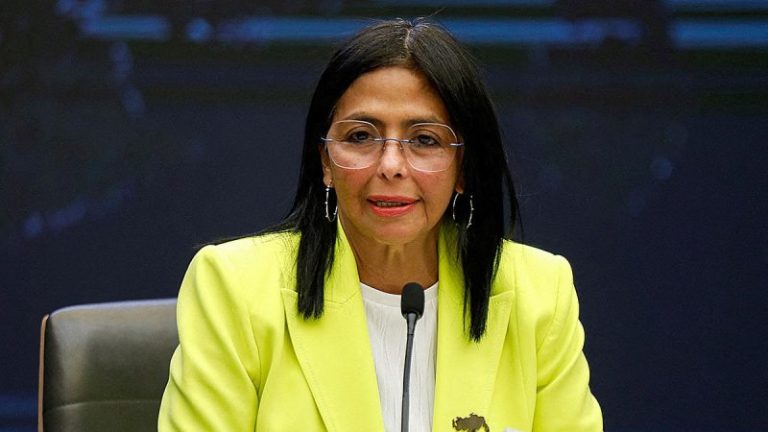
The approach sidelined María Corina Machado, the opposition leader who claims the strongest popular mandate and international profile, while elevating Delcy Rodríguez, Maduro’s vice president and a central figure in the outgoing regime.

Administration officials and outside analysts say the shift reflects a calculated effort to avoid a power vacuum and maintain control during a fragile transition, even as it complicates Washington’s longstanding support for Venezuela’s democratic opposition. 

And President Donald Trump is betting Rodríguez now lives in fear of what might happen to her if she defies the U.S. 

Trump, describing his phone call with Rodríguez, said she offered: ‘We’ll do whatever you need.’

‘I think she was quite gracious,’ he said. 

But in a separate interview with The Atlantic he warned: ‘If she doesn’t do what’s right, she is going to pay a very big price, probably bigger than Maduro.’

Following Maduro’s removal, Delcy Rodríguez was sworn in as Venezuela’s interim president after the Supreme Court ruled she should assume power in his absence. 

Under Venezuela’s constitution, the vice president can serve on an interim basis while the country determines whether and when new elections will be held. While the constitution generally calls for elections within 30 days if a president is permanently unable to serve, authorities have so far described Maduro’s removal as temporary, allowing Rodríguez to remain in office as the timeline for a political transition is debated.

A classified CIA intelligence assessment examined who would be best positioned to lead a temporary government in Caracas, Venezuela, and maintain short-term stability, a source familiar with the intelligence told Fox News Digital. The report, requested by senior policymakers and presented to Trump, aimed to offer the president ‘comprehensive and objective analysis’ on possible scenarios after Maduro’s capture.

A source familiar with the assessment told Fox News Digital that the assessment attempted to analyze the domestic situation in Venezuela, but did not describe how Maduro could lose power or advocate for his removal.

Trump senior policymakers requested the assessment — specifically one that addressed who would be best able to stabilize Venezuela ‘immediately’ following a Maduro removal. 

‘There was sentiment among senior officials that Machado lacked the necessary support in Venezuela if Maduro was to be removed,’ the source familiar told Fox News Digital. 

One of the reasons for that, the source told Fox News Digital, was because Machado was not in Venezuela, though she has vowed to return. 

The report found Rodríguez would be best positioned to lead a temporary government in Caracas, Venezuela, and Gonzalez and Machado would struggle to gain support from security services. 

While Machado has been widely embraced by Western governments and democracy advocates, U.S. officials and analysts say that support has not translated into leverage over Venezuela’s military or security services.

Trump’s skepticism also has been shaped by frustration from his first term, when international backing and opposition momentum failed to produce a transfer of power.

‘Machado has an inherent problem from the get-go,’ said Pedro Garmendia, a Venezuela expert and Washington-based geopolitical risk analyst. ‘She doesn’t control troops or hold any sort of power in Venezuela.’

At the same time, ‘Rodríguez is an ideologue,’ he said. ‘In the long term, the Trump administration might find itself having trouble reining her in.’

Trump has been more blunt in explaining why the administration has not rallied behind Machado. Speaking after the operation that removed Maduro from power, Trump questioned whether she could lead Venezuela in a transition, saying she lacked sufficient support inside the country. 

‘I think it would be very tough for her to be the leader,’ Trump said. ‘She doesn’t have the support within or the respect within the country.’

A Washington Post report had claimed that Trump was upset Machado accepted this year’s Nobel Peace Prize — an award he coveted and that she dedicated to him. But the White House insisted Trump’s actions were the result of internal briefings.

‘President Trump is routinely briefed on domestic political dynamics all over the world. The President and his national security team are making realistic decisions to finally ensure Venezuela aligns with the interests of the United States, and becomes a better country for the Venezuelan people,’ said White House press secretary Karoline Leavitt. 

Rubio has sought to frame the decision as mission-driven rather than personal, pointing to past U.S. interventions as cautionary examples. 

‘I have tremendous admiration for María Corina Machado. I have admiration for Edmundo,’ Rubio said Sunday on CBS’ ‘Face the Nation.’ ‘But there’s the mission that we are on right now. … A lot of people analyze everything that happens in foreign policy through the lens of Iraq, Libya, or Afghanistan. This is not the Middle East. This is the Western Hemisphere, and our mission here is very different.’

The administration’s caution also is shaped by a long history of U.S. intervention in Latin America, where American-backed coups and political engineering have left deep skepticism toward Washington’s motives. Installing an opposition leader immediately after a U.S. military operation, analysts warn, could revive those suspicions and undermine any transition before it begins.

‘If they were to bring María Machado and presumably Edmundo González back to the country and install them as president, it would look a lot like the United States installing a new president,’ said Eric O’Neill, a former FBI counterintelligence operative. ‘That would actually cause civil unrest.’

‘Venezuelans are proud people, and they need to elect their next president,’ O’Neill added.

But Garmendia said Rodríguez is ‘just as illegitimate as Maduro was — and probably even less popular.’ 

He said Rodríguez lacks the charisma and mass appeal that traditionally have sustained Venezuela’s ruling movement, and that her authority rests largely on internal bargaining and elite control rather than public support.

In the interim, locals have reports of armed gangs patrolling the streets. Venezuelan authorities have detained at least 14 journalists since Maduro’s capture, according to the union representing Venezuelan reporters. 

‘There’s going to be a lot of instability in the next couple of weeks,’ Garmendia said.

This post appeared first on FOX NEWS

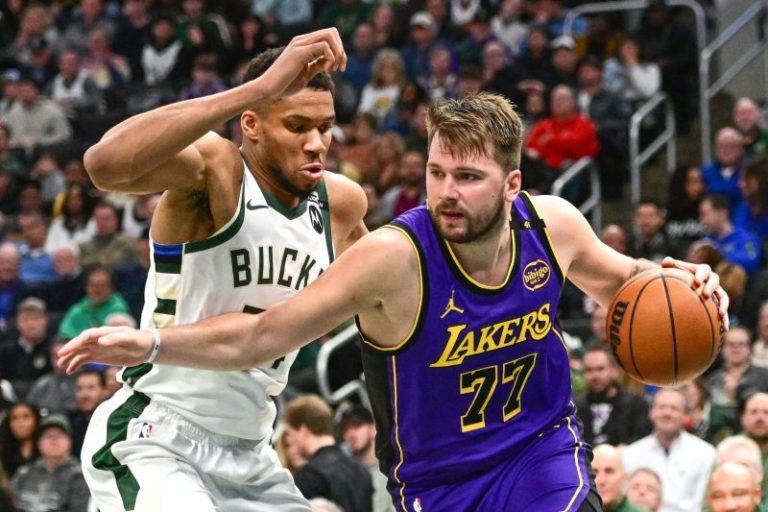
The top of the NBA All-Star Game voting results held steady in the latest round of fan returns released by the league on Tuesday, Jan. 6. Luka Dončić and Giannis Antetokounmpo both remain the leaders in their respective conferences, with Dončić currently topping the entire league with 2,229,811 votes.

The top five in the West remain unchanged from the previous week, with Nikola Jokić, Steph Curry, Shai Gilgeous-Alexander and Victor Wembanyama all standing firm. In the East, Jalen Brunson overtook Tyrese Maxey for second place.

With the fan vote heading into its final week, here’s everything you need to know about the 2026 All-Star Game:

Who are the Top 10 vote getters from the Western Conference?

Here is where the Top 10 stands in the West as of Tuesday afternoon:

Luka Dončić, Los Angeles Lakers
Nikola Jokić, Denver Nuggets
Stephen Curry, Golden State Warriors
Shai Gilgeous-Alexander, Oklahoma City Thunder
Victor Wembanyama, San Antonio Spurs
Anthony Edwards, Minnesota Timberwolves
Deni Avdija, Portland Trail Blazers
LeBron James, Los Angeles Lakers
Kevin Durant, Houston Rockets
Alperen Sengun, Houston Rockets

Austin Reaves sits in 11th place trailing Sengun by just under 100,000 votes, while James Harden and Kawhi Leonard are 12th and 13th, respectively.

Who are the Top 10 vote getters from the Eastern Conference?

Here are the Top 10 in the East as of Tuesday afternoon:

Giannis Antetokounmpo, Milwaukee Bucks
Jalen Brunson, New York Knicks
Tyrese Maxey, Philadelphia 76ers
Cade Cunningham, Detroit Pistons
Donovan Mitchell, Cleveland Cavaliers
Jaylen Brown, Boston Celtics
Karl-Anthony Towns, New York Knicks
Jalen Johnson, Atlanta Hawks
Michael Porter Jr, Brooklyn Nets
Pascal Siakam, Indiana Pacers

Brandon Ingram is just outside the top 10 and is just under 20,000 votes behind Siakam, but both LaMelo Ball and OG Anunoby are within reach as well.

When does fan voting for the NBA All-Star Game conclude?

Voting will close on Wednesday, Jan. 14 at 11:59 p.m. ET, or 8:59 p.m. PST for fans voting on the west coast. Fans can vote via the NBA app or on NBA.com.

The fan vote accounts for 50% of the total vote towards the starting five from each respective conference, with current players and media each accounting for another 25% of the total vote.

When will the starters be announced?

The starters will be announced a week later on Monday, Jan. 19 on NBC and Peacock during their broadcast slate.

When is the 2026 NBA All-Star Game?

This year’s All-Star Game will be held on Sunday, Feb. 15 at the Intuit Dome in Los Angeles. This will be a record seventh time Los Angeles has hosted All-Star Weekend, with the most recent being 2018 at the then-Staples Center (now Crypto.com Arena).

The Dunk Contest and Three-Point Contest will be on Saturday, Feb. 14, while the celebrity game is set to kick off the weekend on Friday, Feb. 13.

This post appeared first on USA TODAY

The U.S. figure skating championships help select the 16 athletes who will represent Team USA at the 2026 Winter Olympics.
Selection for the Olympic team is based on a skater’s body of work over the past two seasons, not just their performance at the national championships.
Ilia Malinin and Amber Glenn are considered strong contenders for the Olympic team in the men’s and women’s singles events.
Veteran Jason Brown is likely to secure a spot, while the final men’s position is expected to be a contest between Andrew Torgashev and Max Naumov.

The U.S. figure skating championships can best be described as the final, dramatic step in the selection of the 16 skaters who will represent the country at the 2026 Winter Olympic Games in Milan, Italy.

Three men and three women singles skaters will be chosen, as will three ice dance teams and two pairs, 16 athletes in all. This very well could be the greatest U.S. figure skating team in history, with a fighting chance to win four of the five gold medals that will be given out in Italy. The previous best performances? Two golds each, all the way back at the 1956 and again at the 1960 Olympics, when there were only three figure skating events.

Over the next few days, there will be a lot of conversation about what’s at stake at the U.S. Olympic figure skating trials in St. Louis. The only problem is that the competition isn’t exactly an Olympic trials. 

Get our Chasing Gold Olympics newsletter in your inbox for coverage of your favorite Team USA athletes

We actually already know who some of the U.S. skaters will be at the Olympics. Let’s focus on the two singles categories, men and women.

Ilia Malinin and how US figure skating team is picked for Olympics

Two-time world champion and three-time national champion Ilia Malinin could fall five times at this week’s national championships and still make the Olympic team. That said, he won’t fall five times. He probably won’t fall at all. He is the self-proclaimed “Quad God,” the 21-year-old jumping dynamo from the Washington, D.C., suburbs who landed a record seven quadruple jumps in his long program at last month’s Grand Prix Final.

But were he to stumble, it won’t matter in terms of his Olympic berth; U.S. Figure Skating, like some other national governing bodies, does not use the familiar and strict placements of timed sports like swimming and track and field to pick its Olympic team. It’s not just about finishing in the top three. That’s helpful, but not the whole story. The USFS selection process includes past performances, focusing on the athlete’s body of work over the past two seasons. This isn’t cheating, or unfair. It’s often a smart way to pick an Olympic team.

But it can trigger some controversy. Four years ago, Malinin finished second in the men’s event at the U.S. nationals but was passed over for the Olympic team in favor of a more veteran skater. Giving a prodigy like Malinin Olympic experience at age 17 would have been a great gift for the youngster, but USFS chose a different path.

Now, four years later, the stakes are still high for Malinin as the pressure builds to Milan. 

“Specifically in this year, being an Olympic year, I really don’t want to take any unnecessary risk, especially with me just having new skates right now,” he said, referring to the ritual of breaking in a new pair of skates for the rest of the season. “So I’m really trying to play it a little more safe and just think ahead for the Olympics, how I want to put myself at 100 percent for the Olympics.”

Get Olympics updates in your texts! Join USA TODAY Sports’ WhatsApp Channel

Jason Brown’s Olympic chances

Veteran Jason Brown, 31, a magnificent stylist on the ice and trusted veteran of two previous Olympic teams (he was the skater chosen to go to the 2022 Olympics instead of Malinin), very likely will make the team unless he performs poorly at the nationals, but the third men’s spot is wide open. 

Which US figure skater will nab final spot on men’s side?

Two 24-year-old skaters — Andrew Torgashev and Max Naumov — will likely vie for it. Torgashev finished second at last year’s national championships and third in 2023. Naumov finished fourth at the last three nationals. 

But Naumov’s skating story took an awful turn when his parents, who also were his coaches, were killed in the mid-air collision over Washington Jan. 29, 2025, as they were returning home from the nationals. For months, Naumov was uncertain if he wanted to keep competing, but he ultimately returned to the sport. If he makes the U.S. team, there will be no more sentimental or emotional moment in this Olympic season.

Amber Glenn’s particularly meaningful US figure skating championships

In the women’s event, for Amber Glenn, the two-time defending women’s national champion, a spot on the Olympic team is all but certain, yet because she has had trouble putting together clean programs at key moments, this nationals is especially meaningful. At 26, the age by which some skating stars have long since retired, it would be her first Winter Games.

“I have to remind myself that my path has been so different that it’s going to be my story, which I’m writing right now, because of course my head automatically goes to this dream, standing in the Kiss and Cry: ‘Yes, I did it. I won nationals, and I’m going to the Olympics!’” Glenn said.

“Those are dream moments that I never thought I would experience. … And I have to remind myself, ‘Hey, you do what you need to do.’ I want to go out and have two performances that I enjoy and that I’m proud of, and wherever that lands me, I know that I feel good and that I’m happy about it, and I know if I do my job, then I will more than likely end up being in Milan, and that is more than I ever thought I could accomplish.”

There’s nothing wrong with not winning a national title in the Olympic year. In 2002, Sarah Hughes finished third behind perennial national champion Michelle Kwan and Sasha Cohen at the U.S. nationals. A month later, Hughes won the Olympic gold medal in Salt Lake City in a stunning upset. 

Eight years later, Evan Lysacek finished second in the men’s competition at the nationals. But the next month, he won the gold medal at the 2010 Vancouver Games. 

This post appeared first on USA TODAY

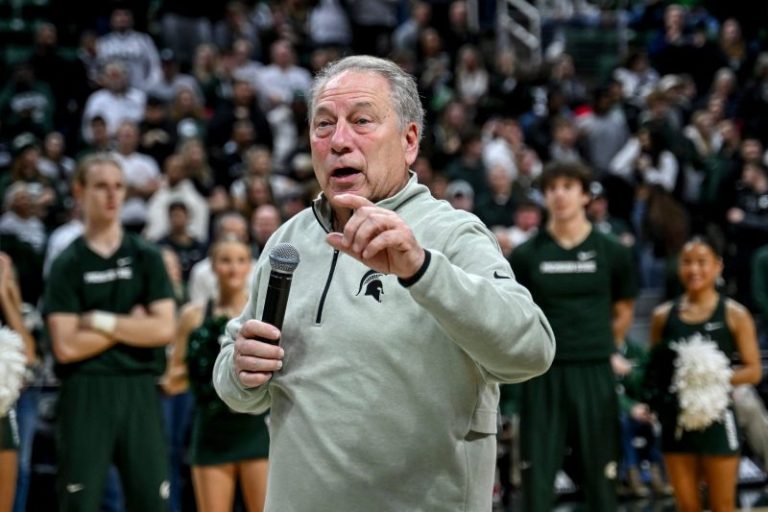
In what had to be a first in Michigan State basketball history, men’s coach Tom Izzo had one of his (former) players ejected from Monday night’s game.

The odd incident came late in the second half of the Spartans’ blowout win over USC on Jan. 5.

With just over six minutes left on the clock and Michigan State leading 67-46, veteran referee Jeffrey Anderson stopped play after a spectator said something. Turns out, that spectator was former Spartans forward Paul Davis − a four-year starter for Izzo from 2002-06.

Anderson walked over to the Michigan State bench to talk to Izzo, who then exasperatedly waved his arms in Davis’ direction. On the television broadcast, he could be seen saying, ‘What are you doing?’

A few seconds later, Anderson asked security personnel to remove Davis from his courtside seat.

Across the court, an animated Izzo waved his arm toward Davis and motioned him to leave.

The Hall of Fame coach was asked about the incident after the game, but didn’t provide any specifics. ‘Let’s not get carried away. It wasn’t something racial, it wasn’t something sexual. It was just the wrong thing to say. I’ll leave it at that,’ Izzo said.

Davis, a 6-11 power forward, averaged 13.2 points and 7.0 rebounds per game over his four-year career at Michigan State. He helped lead the Spartans to NCAA Tournament berths every season, including a loss in the 2005 Final Four to eventual national champion North Carolina.

A second-round pick by the Los Angeles Clippers in the 2006 NBA Draft, Davis played four seasons in the league − three with the Clippers and one with the Washington Wizards.

What did Paul Davis say to get ejected?

‘I love Paul Davis, I really do. He’s one of my favorite guys,’ Izzo said. ‘What he said, he should never say anywhere in the world. That ticked me off. Just because it’s 25, 20 years later, I’m gonna have to call him tomorrow and tell him what I thought of it. And you know what he’ll say? ‘I screwed up, coach. I’m sorry.’’

This post appeared first on USA TODAY

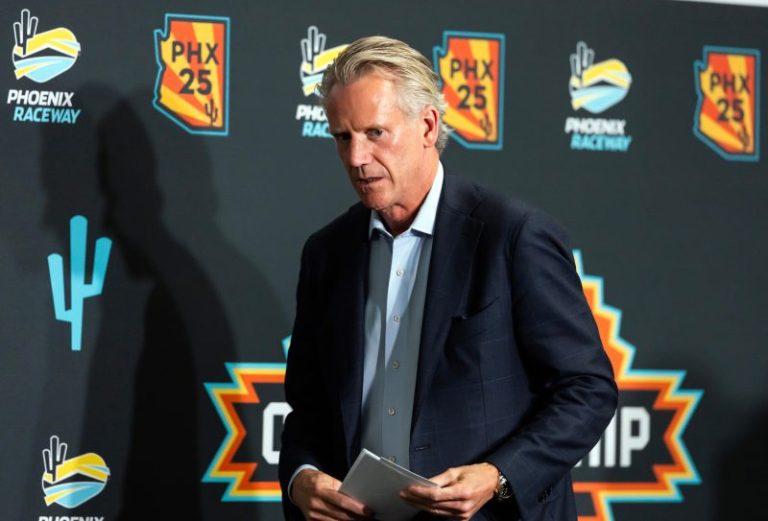
NASCAR’s first-ever commissioner, Steve Phelps, has resigned after two decades with the organization, he announced in a statement on Tuesday, Jan. 5.

Stock racing’s top series said hiring a new commissioner is not in its plans, and Phelps’ duties will be handed down to other NASCAR executives.

Phelps, who started at NASCAR in 2005 as a vice president of corporate marketing, will leave the company at the end of the month.

‘As a lifelong race fan, it gives me immense pride to have served as NASCAR’s first Commissioner and to lead our great sport through so many incredible challenges, opportunities and firsts over my 20 years,’ Phelps said in a statement. ‘Our sport is built on the passion of our fans, the dedication of our teams and partners and the commitment of our wonderful employees.’

Phelps’s departure comes weeks after a federal antitrust lawsuit by 23XI Racing, co-owned by Basketball Hall of Famer Michael Jordan and Front Row Motorsports, against NASCAR.

During the lawsuit, it was revealed in the discovery process that Phelps had called team owner Richard Childress a ‘stupid redneck’ who ‘needs to be taken out back and flogged’ during a 2023 text exchange with NASCAR executive Brian Herbst. Phelps also called Childress as a ‘total ass-clown.’

Bass Pro Shops founder and CEO Johnny Morris then wrote a letter to NASCAR and the France family, who own the company, demanding that Phelps step down.

‘We can’t help but wonder what would happen if Major League Baseball brought in a new commissioner and he or she trash talked one of the true legends who built the game like Willie Mays, Hank Aaron, Ted Williams, Mickey Mantle or Babe Ruth?’ Morris wrote. ‘Such blatant disrespect would probably not sit well with the fans – such a commissioner most likely wouldn’t, or shouldn’t, keep his or her job for very long!’

The day after Morris’ letter was revealed, NASCAR settled the lawsuit with 23XI Racing and Front Row Motorsports, following a week of testimony.

This post appeared first on USA TODAY