Archive

2026

Browsing

The NFL’s coaching carousel has been greased for weeks. But it started to really crank Sunday night, when the Falcons fired head man Raheem Morris after just two seasons. (GM Terry Fontenot was also dismissed following five years rife with bizarre and, ultimately, fruitless personnel decisions.) Two-time NFL Coach of the Year Kevin Stefanski was ousted by the Browns on Monday morning. Pete Carroll was unsurprisingly sacked by the Raiders shortly thereafter, followed by Jonathan Gannon’s demise in the Arizona desert.

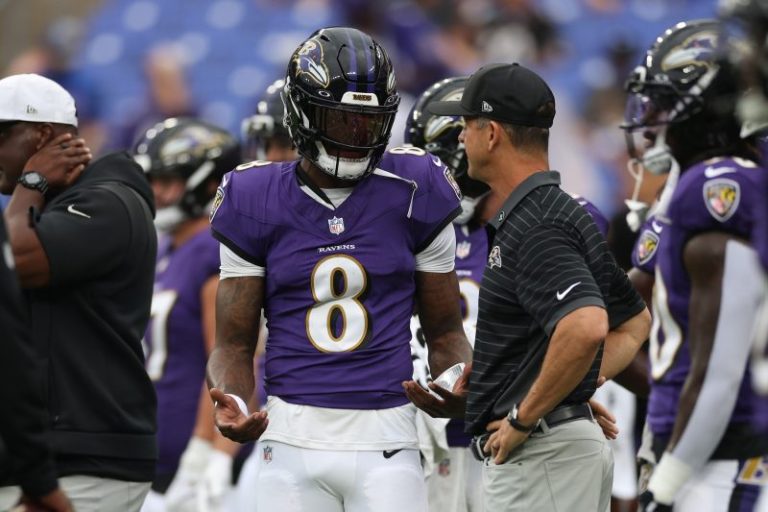
However the biggest change of command occurred Tuesday, when John Harbaugh, who’d been the longest-tenured coach in the league aside from Pittsburgh’s Mike Tomlin, and the Ravens parted ways after 18 seasons.

That makes seven HC openings, the new vacancies joining those of the Giants and Titans after those clubs offed their former coaches long before the 2025 regular season ended.

History – at least dating to the inception of the Super Bowl era in 1966 – tells us six or seven teams make sweeping coaching changes in a typical offseason, and 2026 has already met that threshold.

But while acknowledging more axes may fall in the coming days and maybe even weeks, let’s assess the *seven jobs that are presently open − ranked from most attractive to least. (*Subject to change.)

1. Baltimore Ravens

Quarterback situation

They don’t come much better than two-time league MVP Lamar Jackson, who’s as dynamic as anyone who’s ever played the position. Naturally, he has detractors − not yet able to win the Super Bowl and more pointed recent questions about his work ethic and relationship with Harbaugh. Jackson also tends to get banged up and misses a lot of practice time. Still, most teams would love to have such problems behind center.

However there’s a major financial issue facing Jackson and the team in the aftermath of what was a massively disappointing season for him personally and the team as a whole. Jackson carries a $74.5 million salary cap number in both 2026 and 2027, the final two years of his five-year, $260 million extension. Those are untenable figures for any team looking to maintain or improve a roster, suggesting some kind of renegotiation or new extension is needed − assuming Jackson remains in Baltimore.

Backup Tyler Huntley is about to hit free agency. Cooper Rush, who was signed to be the primary backup a year ago but struggled when Jackson was out and eventually replaced by Huntley, is signed for the 2026 season but could be a cap casualty.

Roster

Heading into the 2025 season, the Ravens were widely viewed as a team with one of the best talent quotients in the league. Yet it’s fair to say the team added up to much less than the sum of its parts in an 8-9 campaign. Baltimore wound up with six players earning Pro Bowl honors in a season when Jackson and star RB Derrick Henry didn’t. Kyle Hamilton is arguably the game’s best safety, leading a talent-laden secondary. But there’s clearly work to be done on both lines.

Salary cap

GM Eric DeCosta is set to have about $28 million at his disposal this year, per Over The Cap, putting the team in the upper half of the league in terms of spending power. However Jackson’s contract muddies that outlook. Pro Bowl C Tyler Linderbaum, TE Isaiah Likely, Pro Bowl P Jordan Stout, S Alohi Gilman, LB Kyle Van Noy and Pro Bowl FB Patrick Ricard are among the team’s pending free agents.

2026 NFL draft

Baltimore is scheduled to pick 14th in the first round this year, which would match the earliest spot it has selected in the past decade. Given the roster holes free agency is likely to create, DeCosta is likely to have a busy offseason.

Outlook

As currently constructed, the Ravens remain one of the league’s most formidable teams − yet probably one that needed a new voice and philosophy after Harbaugh held sway for nearly two decades. He maintained them as a near-perennial contender and won Super Bowl 47 but has been dogged in recent years by rampant tactical failures and repeated challenges holding onto fourth-quarter leads. The organization should have its pick from plenty of qualified candidates, but the main priority may be finding someone who will jibe with Jackson while getting the rest of the roster to play all the way up to its estimable potential.

2. New York Giants

Quarterback situation

Jaxson Dart’s rookie season was a mixed bag, his swagger a nice fit in the Big Apple even if his typically reckless on-field approach too often undermined his health and availability. After the Giants traded back into last year’s first round to obtain Dart, it will be incumbent on the next coach and his staff to rein in the young slinger enough to reasonably protect himself while also giving him sufficient leeway to leverage his multi-dimensional play-making ability and get this offense truly humming. Russell Wilson’s one-year stay is up, but Jameis Winston remains in 2026 as one of the league’s top backups.

Roster

The team’s enviable young core is damaged but not irreparably so. Incandescent WR Malik Nabers (ACL) and rookie RB Cam Skattebo (ankle) didn’t survive the 2025 season. OLB Abdul Carter, the third overall pick of last year’s draft, could wind up being the best player on the team – but he’s got plenty to work on in terms of his professionalism, on and off the field. Veteran OLB Brian Burns, DL Dexter Lawrence II and LT Andrew Thomas are all Pro Bowl-caliber players. The defense needs extensive work behind its front, and Thomas is the only player whose name should be written in pen on the O-line … when he’s healthy enough to play.

Salary cap

GM Joe Schoen, who’s running the coaching search and will retain his post despite coach Brian Daboll’s firing in November, is currently set to have about $11 million in cap space. It’s a figure that has the Giants middle of the pack league-wide, but the clubs above them have significantly more spending power – especially if they decide to target WR Wan’Dale Robinson, who’s coming off his first 1,000-yard season, or frontline Cor’Dale Flott, who are both headed for free agency.

2026 NFL draft

In contention for the No. 1 overall pick barely a week ago, the Giants will now select fifth in this year’s first round. They still owe the Houston Texans their third-rounder to consummate last year’s draft night deal to get Dart.

Outlook

Despite largely residing in the wilderness since they won Super Bowl 46 to cap the 2011 season, the Giants remain one of the league’s flagship franchises and a plum job – even if the organizational stability they boasted for years seems to have largely evaporated. Schoen has made questionable decisions during the draft and free agency but has also amassed an ample amount of talented players to win – and maybe fairly quickly if the right coach is able to translate potential into production.

3. Cleveland Browns

Quarterback situation

Insert shrug emoji? As much national interest as they generated in 2025, Dillon Gabriel and Shedeur Sanders − mostly Sanders − were a mixed bag as rookies. They have fairly distinct skill sets, yet both flashed their positive traits while also raising enough questions to suggest neither is likely to be instantly anointed QB1 in 2026 by Stefanski’s successor. Deshaun Watson is under contract for one more season – for a fully guaranteed $46 million – and returned to practice late in the season after undergoing multiple Achilles surgeries after originally being injured during the 2024 season. He could obviously rejoin the mix, yet also (still) seems like a problematic figure – in a football context and otherwise – as the next staff tries to get this club back to the playoffs. Going fishing for another option in the 2026 draft is certainly on the table.

Roster

It’s fair to call DE Myles Garrett legendary at this point, and he might legitimately be the best player in the NFL. He’s also one whose prime is being wasted and only a year removed from requesting a trade after expressing a belief he’d never win a Super Bowl in Cleveland – which tracks given no player ever has. Yet there’s a lot to like around Garrett, particularly a highly promising 2025 draft class that includes DT Mason Graham, LB Carson Schwesinger, TE Harold Fannin Jr., WR Isaiah Bond, RBs Quinshon Judkins and Dylan Sampson … and maybe one or both quarterbacks. WR Jerry Jeudy and CB Denzel Ward are generally among the league’s better players at their respective positions, though 2025 wasn’t a banner year for either. With Gs Wyatt Teller and Joel Bitonio out of contract, it’s high time to reconstruct the offensive line – particularly if GM Andrew Berry and the next coach target another young QB.

Salary cap

Currently, Berry will need to trim more than $12 million to simply be cap-compliant once free agency starts, and he and the team won’t get relief from ownership’s Watson gaffe for another year – whether or not he’s on the roster in 2026. TE David Njoku is the most high-profile pending free agent, but Fannin and the cap crunch likely make him expendable.

2026 NFL draft

The Browns own the sixth overall pick this year plus the first-rounder of the Jacksonville Jaguars, wherever that lands. Berry could put together a package to target a specific quarterback, but such a gambit could be quite expensive given what appears like a dearth of high-end prospects at the position this year. And continuing to load up on needed talent elsewhere wouldn’t be a bad fallback as Cleveland resets − while also potentially giving Sanders, Gabriel or someone else the opportunity to run with the reins a little longer.

Outlook

Dismissing Stefanski was a bold (and perhaps misguided) choice given what he’d accomplished despite the drawbacks of this job – especially after he and Berry got saddled with Watson and had to prematurely offload Baker Mayfield. Moving forward, quarterback remains the obvious issue holding back a team that will likely continue to look up at the rest of the AFC North until it’s solved. But, if it gets rectified by Berry and the next coach in short order, this team could emerge as a powerhouse in almost no time.

4. Tennessee Titans

Quarterback situation

Cam Ward, the No. 1 pick of the 2025 draft, was basically treated to a learning experience as a rookie. He was hamstrung by the lack of talent around him, to say nothing of the consequential chaos that firing coach Brian Callahan at midseason created. Ward made his fair share of mistakes, too, taking way too many sacks – which certainly isn’t to suggest all of the league-high 55 he absorbed were his fault – while also regularly reverting to his college habit of trying to extend plays that probably wouldn’t have good outcomes under most circumstances. But given the challenges he faced, it’s hard to give Ward a fair evaluation for 2025 – and, to his credit, he remained accountable and didn’t back away from the leadership chops that helped make him such a coveted prospect to begin with.

Will Levis, the 33rd overall pick of the 2023 draft, presents an interesting dilemma. This team obviously belongs to Ward, which would theoretically make Levis, who’s under contract for 2026, somewhat intriguing trade bait entering an offseason when quarterback-needy teams may not have a lot of alternatives. But he’s also coming off surgery to his throwing shoulder, which kept him on injured reserve for all of 2025. It might be worth trying to showcase Levis in the preseason in hopes of getting something in return for him.

Roster

Ward needs to be a foundational piece and should get at least another two years to prove as much. Otherwise, there’s not much to hang your hat on here aside from Pro Bowl DT Jeffery Simmons, whom the team refused to trade at last year’s deadline, and maybe OL Peter Skoronski. Much of the damage here was done via misguided forays into free agency by the front office that preceded first-year GM Mike Borgonzi.

Salary cap

Borgonzi is projected to have upwards of $105 million to spend in free agency this year, more fiscal resourcing than any other team has. However he’d probably be wise to be far more measured than his predecessors given this team seems at least a year away from being a year away. Borgonzi’s time in Kansas City would suggest he’ll spend intentionally in the short term while establishing a new culture as he focuses on drafting the players who will need to get the Titans off the mat.

2026 NFL draft

Tennessee’s 3-14 record once again tied for the league’s worst. But this year, the tiebreakers didn’t pan out in Borgonzi’s favor, the Titans slotted with the No. 4 pick. They’ll certainly get an excellent prospect, just no opportunity to leverage the value of a first or second overall selection.

Outlook

Borgonzi should have plenty of discretion to chart a path as he now gets to pick his own guy to run the team. But it will be interesting to see how things play out given the disconnect in the recent past between former coach Mike Vrabel, the front office and ownership. And there probably will be some pressure to try and microwave a winner here as the franchise plans to move into its new stadium in 2027 − preferably with a bang.

5. Las Vegas Raiders

Quarterback situation

It’s bad. Right now. The decision to trade for and extend Geno Smith last year smacked of an organization unwilling to embrace an obviously needed rebuild. Aidan O’Connell and Kenny Pickett seem like quality backups at best – and there’s probably not much reason for Pickett to re-sign here. All that aside, a team that holds the No. 1 pick of the 2026 draft seems almost certain to invest anew at the position, whether it’s for Heisman Trophy winner Fernando Mendoza or someone else.

Roster

It’s bad. Right now. Pro Bowl DE Maxx Crosby has long been a loyal warrior, but even he was disillusioned by the end of the 2025 campaign given how his injury situation was handled. Kolton Miller is a solid left tackle. He’s also 30 and missed 13 games this season. Recent first-rounders Brock Bowers and Ashton Jeanty should be cornerstones – but good luck finding a winner that was built around a tight end and running back, respectively … and the decision to select Jeanty sixth overall last year deserves even more scrutiny now than it did at the time.

Salary cap

It’s great. Right now. The Raiders also have upwards of $100 million in their free agency coffers. But whether it’s minority owner Tom Brady or GM John Spytek who earmarks those funds, they’d be wise to not throw more good money after bad at a talent deficit that obviously requires longer-term thinking and an infusion of young players from the draft.

2026 NFL draft

Vegas won’t pick atop every round but pretty close to it. The Raiders also picked up a fourth-rounder for dealing WR Jakobi Meyers, who was unabashedly eager to leave Sin City, at the trade deadline. The big question is whether they actually pull the trigger for a quarterback off the top … or try to flip the pick and address their numerous needs elsewhere before replacing Smith in earnest further down the road.

Outlook

This operation is nicely set up to rise from the ashes … provided it recognizes it’s covered in ashes and shouldn’t be pursuing coaches in their seventies. But it’s also worth monitoring how things proceed. It’s widely assumed Brady is calling a lot of the shots behind the scenes even as Spytek and Carroll were the ones front and center answering questions about the franchise’s direction and philosophy − and still hard to say what those are exactly after a categorically disastrous and wasted year.

6. Atlanta Falcons

Quarterback situation

Uh, yeah. What seemed like a powder keg two years ago when Fontenot signed Kirk Cousins to a massive free agent contract before taking oft-injured Michael Penix Jr. eighth overall in the 2024 draft – without revealing that strategy to Cousins from the jump – has indeed blown up in this franchise’s face. Penix hardly set the league on fire in his second season and is now dealing with his latest ACL injury, one that seems likely to keep him off the field at the start of next season. Meanwhile, Cousins now knows he’s a placeholder but may very well be needed in that role given the unknowns with Penix. However Cousins does only have $10 million guaranteed remaining on the final two years of his contract, which should theoretically make him far easier to trade or release if the next regime so chooses.

Roster

There are certainly some studs in house. RB Bijan Robinson, WR Drake London and G Chris Lindstrom all rank among the best players at their respective positions – Robinson seemingly on the cusp of being one of the league’s faces. Rookie pass rushers Jalon Walker and James Pearce Jr. and S Xavier Watts gave the defense a much-needed boost and should form its nucleus for years to come. The cupboard’s hardly bare beyond that, though much will depend on how the existing depth chart aligns with the preferences of the next decision makers.

Salary cap

Fontenot’s replacement will have to trim about $4 million off the books before free agency begins in March, a pretty easy lift. The issue is that Atlanta has little bandwidth to retain pending free agents like TE Kyle Pitts, OLB Arnold Ebiketie or RB Tyler Allgeier – a valuable sidekick who spares Robinson a lot of the harder miles. London is already somewhat overdue for a contract extension, and Robinson is newly eligible for one – and his price tag could get astronomical, relative to his position, the longer the team waits to reward him. Unloading Cousins in some fashion would cause a lot of money to flow back into the budget – but such a decision obviously comes with its own ramifications.

2026 NFL draft

A year after the shocking selection of Penix, Fontenot dealt back into the bottom of the 2025 draft’s first round for Pearce – and he unequivocally has the makings of a good player, leading the Falcons with 10½ sacks. But the opportunity cost of what seemed like something of a desperate reach at the time is the loss of this year’s Round 1 choice – No. 13 overall – which now belongs to the Los Angeles Rams. Fontenot also spent this year’s fifth-rounder in a separate trade in 2025 – but that’s aging well so far given it put Atlanta in position to choose Watts.

Outlook

The quarterbacking morass is a major issue – and that probably would have been the case even if Penix was fully healthy. There are some enticing components of this roster, though another of Fontenot’s unorthodox strategies – which hasn’t borne the desired results – was pouring so much first-round capital into offensive skill players. The good news is that winning the NFC South should remain a bar that’s not all that difficult to clear – and Atlanta was only one win shy of doing it this season. But whether or not the Falcons are sensibly constructed for the long haul is another question entirely, as desperate as 83-year-old owner Arthur Blank is to win the franchise’s first Super Bowl.

7. Arizona Cardinals

Quarterback situation

Unclear as it was whether deposed Gannon would move forward with Kyler Murray, it’s equally unclear if another coaching staff would embrace a player who tends to freelance and hasn’t done much to craft a rep as the locker room CEO most successful NFL quarterbacks are. Murray is guaranteed $36.8 million in 2026, and cutting him would incur a cap hit of nearly $55 million – though that’s hardly prohibitive in this era of the ballooning salary scale. A decision on his future could be further accelerated given nearly $20 million more will be guaranteed to Murray in 2027 if he remains on the roster on March 15. The two-time Pro Bowler and top pick of the 2019 draft is also only 28 and might yet fetch something on the trade market – especially if the Cards are willing to eat some money to facilitate a transaction.

But moving on from him – if that winds up being the eventual course of action – isn’t as daunting a prospect on the field given career backup and occasional bridge QB Jacoby Brissett remains under contract after operating the offense at a much higher efficiency level than Murray did in 2025.

Roster

The makings of a really good passing game are in place (though a more balanced offense would likely benefit the greater good). Trey McBride has emerged as the league’s best receiving tight end, WR Michael Wilson was a revelation late in the season, and Paris Johnson is a top-shelf left tackle. WR Marvin Harrison Jr. continues to be something of a disappointment – especially relative to draft mates like Nabers, Brian Thomas Jr. and even Ladd McConkey. First-round DL Walter Nolen III only appeared in six games before suffering a season-ending knee injury. Elsewhere, OLBs Josh Sweat and Zaven Collins had solid seasons. Otherwise, there’s a lot of work to be done here on both sides of the ball.

Salary cap

Similar to the Giants, GM Monti Ossenfort has some spending power with a projected $21 million budget. While that’s much more than some teams have, it’s a lot less than those that are shaping up as the significant free agent power brokers in 2026. Murray’s situation also seems bound to have further impact here.

2026 NFL draft

Ossenfort has a full complement of picks, including No. 3 overall – though that would likely force him to reach for a quarterback this year if that’s the way the franchise wants to go. Like the three other 3-14 teams from the 2025 season, the Cards will rotate near the top of every round.

Outlook

It appeared like they were building toward a positive crescendo under Gannon. But Murray’s health – and whatever else is going on there – a torrent of other injuries and simple bad luck (in the form of eight losses by one score) caused the bottom to fall out over the past few months. Arizona’s issues are further amplified by its membership in the NFC West, which currently serves as the home of three of the league’s very best teams. The road back to relevance here seems to remain long and winding.
This post appeared first on USA TODAY

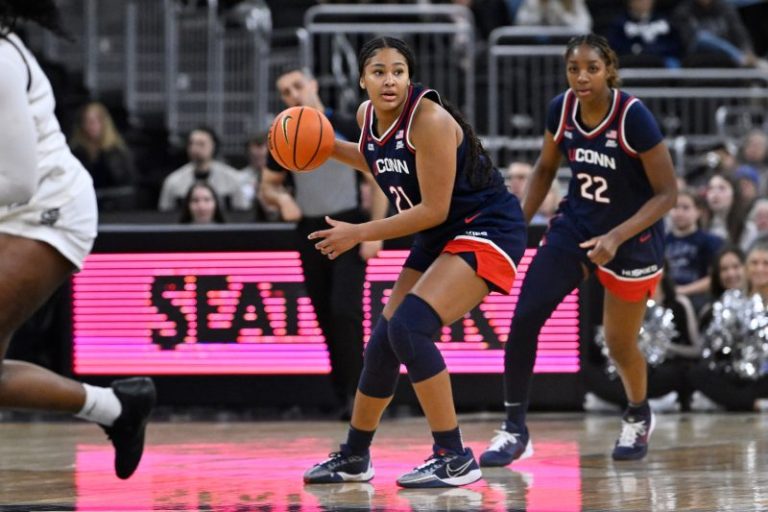
HARTFORD, CT — The No. 1 ranked UConn women’s basketball team looks to keep its Big East winning streak alive against St. John’s on Wednesday, Jan. 7, at PeoplesBank Arena.

The Huskies, who have won 53 straight conference games, have been winning, in part, thanks to their stingy defense. UConn is No. 5 in the country in scoring defense, third in turnover margin and sixth in steals per game. Forward Sarah Strong has a case for defensive player of the year.

‘There are glimpses that we can be everything we need to be to have the kind of success we want to have this season,’ coach Geno Auriemma said Saturday when asked about the defense. ‘We’re getting a little bit better at those things, at reading each other, making the right rotations, doing a pretty good job of keeping people off the free throw line.

‘Little by little, I think we’re improving. … It’s the one thing that you have to work on every single day in practice the entire year.’

Strong leads the Huskies (15-0, 6-0 Big East) in scoring (18 points a game) and rebounds (8.1). Azzi Fudd adds 17.9 points per game.

St. John’s (13-3, 3-2) is led by Brooke Moore, who averages 14.4 points and 5.7 rebounds a game.

What time is UConn vs St. John’s women’s basketball?

The UConn Huskies host the St. John’s Red Storm on Wednesday, Jan. 8, at 7:30 p.m. ET at PeoplesBank Arena in Hartford, Connecticut.

UConn vs St. John’s: TV, streaming

Date: Wednesday, Jan. 8
Time: 7:30 p.m. ET (4:30 p.m. PT)
Location: PeoplesBank Arena (Hartford, Connecticut)
TV: TruTV
Stream: Fubo

Stream live sports with Fubo

This post appeared first on USA TODAY

China on Tuesday banned exports of goods that could be used for military purposes to Japan, a move that escalates tensions between Beijing and a key U.S. ally as disputes intensify over Taiwan.

The Chinese Commerce Ministry said in a statement that any items that have a dual use — civilian and military — would no longer be exported to Japan. 

The government did not offer specifics on which items would be included in the ban. But state-affiliated media said Beijing was considering whether to include rare-earth minerals.

Japanese leaders have increasingly linked Taiwan’s fate to Japan’s own security, with Japan’s Prime Minister Sanae Takaichi warning that a Chinese move against the island could amount to a ‘survival-threatening situation’ for Japan — a legal threshold that could permit military action under Japan’s self-defense laws.

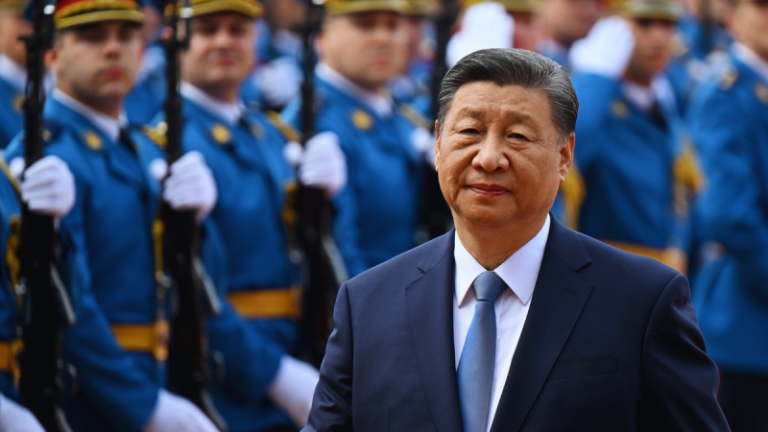
In his New Year’s address, Chinese President Xi Jinping called the ‘reunification’ of China and Taiwan ‘unstoppable.’ His remarks came days after China concluded live-fire drills to simulate a blockade of the island. 

The export crackdown echoes a 2010 episode when China halted rare-earth exports to Japan for nearly two months during a territorial dispute.

The rare earths dispute became an early example of China’s willingness to weaponize trade, prompting U.S. and allied defense planners to reassess how deeply military supply chains depended on Beijing. The episode accelerated efforts to diversify sourcing, though China remains a dominant player in several critical sectors.

China controls roughly two-thirds of global rare-earth mining and the vast majority of processing capacity, a dominance that prompted the Trump administration to push to diversify supply chains and revive domestic production as a national security priority.

For years, Washington had largely left rare earths to the market, even as U.S. mines closed and production migrated to China.

The Trump administration broke with decades of hands-off policy by using Pentagon funding and emergency authorities to support MP Materials at California’s Mountain Pass mine, one of the first direct U.S. government interventions to restore rare earth processing capacity seen as critical to modern weapons systems.

This post appeared first on FOX NEWS

The arrest of former Venezuelan President Nicolás Maduro has reopened debate over whether the country’s long-isolated economy could soon re-engage with global markets, but analysts caution that sanctions relief and recovery are far from guaranteed.

Venezuela is among the world’s most heavily sanctioned countries, alongside Russia, Iran, Syria, North Korea and Cuba, a status that has severely restricted its access to international finance and trade.

Andres Martinez-Fernandez, a senior policy analyst at the Heritage Foundation’s Allison Center for National Security, warned that lifting those sanctions now would be premature, saying Maduro’s removal has not yet translated into meaningful institutional change.

‘It would be a mistake for any nation to remove sanctions on Venezuela at this moment,’ Martinez-Fernandez said, noting that ‘the remnants of the Maduro regime remain in control of key institutions in Venezuela and have not yet made commitments to a transition that would fully halt the threat posed to the United States and restore stability and democracy to Venezuela.’

‘Maduro’s arrest opens up a path for sanctions to press the regime toward a necessary transition,’ he added, saying that ‘premature removal of this pressure would send the wrong message to Caracas.’

His comments reflect concerns among U.S. policymakers that Venezuela’s military, courts, central bank and state oil company remain dominated by officials appointed under Maduro, many of whom are still sanctioned by Washington. That reality complicates hopes that Maduro’s capture could quickly unlock Venezuela’s oil sector or stabilize an economy that has been in prolonged decline.

At the same time, energy experts say that even if sanctions remain in place, uncertainty over who now controls Venezuela’s economic levers is already weighing on prospects for oil production and exports — the country’s primary source of revenue.

David Goldwyn, chair of the Atlantic Council Global Energy Center’s Energy Advisory Group, said markets are still operating in the dark.

‘For now, we have no details about how these fiscal and legal arrangements will evolve,’ Goldwyn said. ‘Until there is clarity on sanctions and licensing and more information on who is actually managing the central bank and ministry of finance, the prospects for Venezuelan oil production and exports will remain uncertain.’

That uncertainty is compounded by the condition of Venezuela’s energy sector itself.

Julia Buxton, a law professor at Liverpool John Moores University, told Fox News Digital that ‘the national oil infrastructure is devastated and will require billions in investment to fix.’

‘There are ongoing legal claims that need to be settled, including compensation claims for expropriation and non-payment of Venezuelan oil bonds,’ added Buxton, who is also a regional head at Oxford Analytica, a Dow Jones–owned geopolitical analysis and advisory firm, covering Venezuela.

Those liabilities, Buxton said, could further complicate efforts to attract foreign capital or restart large-scale oil production, underscoring that Maduro’s capture alone is unlikely to deliver a quick economic turnaround.

Venezuela once had all the makings of an economic powerhouse, with a lengthy Caribbean Sea coastline and abundant petroleum, natural gas and mineral resources.

What remains is a much smaller, debt-laden one.

While precise figures are difficult to verify since Venezuela has not published comprehensive debt statistics in years, the International Monetary Fund estimates the country’s economy will total about $82.8 billion in 2025. Debt levels, however, stand at nearly 200% of that total, meaning Venezuela owes nearly two dollars for every dollar it produces.

Venezuela holds some of the world’s largest proven oil reserves, but years of underinvestment, corruption, sanctions and infrastructure decay have slashed output. 

Even as some investors and energy companies see Maduro’s capture as an opening for renewed engagement, Goldwyn said uncertainty over who controls state finances and oil policy continues to weigh on prospects.

Martinez-Fernandez said sanctions relief could eventually follow, but only if Venezuela’s leadership demonstrates ‘concrete, irreversible steps’ toward political and institutional reform.

‘Once those commitments and concrete, irreversible steps are taken in Venezuela,’ he said, ‘I imagine a drawing down of U.S. economic and military pressure would follow.’

For now, U.S. officials and energy markets alike remain focused less on Maduro’s fate than on whether Venezuela’s leadership can translate a moment of upheaval into durable political and economic change.

This post appeared first on FOX NEWS

A major state audit in Minnesota conducted by the nonpartisan Office of the Legislative Auditor found widespread failures and internal control problems in the Department of Human Services’ Behavioral Health Administration (BHA) grant program, reaffirming concerns about massive fraud issues.

The report, released on Monday, found that between July 1, 2022, and Dec. 31, 2024, DHS dished out more than $425 million in grants to 830 organizations, the majority being nongovernmental, and did not show proper oversight in watching over those taxpayer funds, which in many cases were meant to help those with addiction and mental health issues.

The audit found missing progress reports and discovered BHA could not show it had completed all required monitoring visits and had no documentation at all for some of them. 

Additionally, auditors discovered what appeared to be backdated or newly created documentation that did not exist before the audit, suggesting an effort to retroactively manufacture paperwork to show compliance.

In one instance, the report found that a grant manager approved over $600,000 in payments and later left the government agency to work for the grantee.

‘The OLA report shows a complete breakdown in how DHS’s Behavioral Health Administration manages hundreds of millions in taxpayer-funded grants,’ Republican State Sen. Mark Koran said in a press release. ‘BHA failed to verify that grantees were providing the services they were paid for, failed to put basic financial controls in place, and then created documentation after the fact to mislead auditors.

‘Minnesotans deserve integrity from state agencies. Fabricating evidence after an audit begins is unacceptable. It obstructs the OLA’s work and prevents DHS from correcting its failures. The finding that a DHS manager approved a large grant and later became a paid consultant for that same grantee is a blatant conflict of interest. This kind of misconduct erodes public trust and undermines the effectiveness of grant programs.’

The audit also found that when employees were surveyed, 73% of them said they did not receive the necessary training to properly administer manage grants, with one employee saying, ‘Executive leadership has repetitively shown staff that they won’t take the staff’s concerns or questions seriously until something serious happens or it makes the news.’

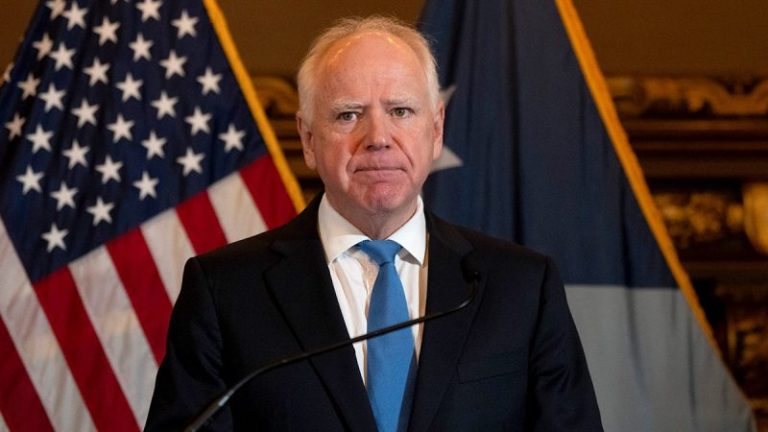
Minnesota’s government agencies are already under heavy scrutiny amid a fraud scandal that prosecutors say could total as much as $9 billion and has already forced Gov. Tim Walz to drop his re-election bid.

‘Today’s shocking report by the Legislative Auditor shows a culture of pervasive fraud, negligence, and deception,’ Republican House Speaker DeMuth said about the report.

‘We need answers immediately about the apparent backdating and potential falsification of documents found during the audit…It’s time to clean house and restore honesty and accountability in state agencies.’

Ultimately, the report concluded that the state government ‘did not comply with most requirements tested for mental health and substance use disorder grants and did not have adequate internal controls over grant funds.’

‘The audit makes clear that DHS leadership has failed at every level. Employees were not properly trained, oversight was ignored, and accountability was missing, from Governor Walz, to Temporary DHS Commissioner Gandhi, to BHA managers. DHS needs a full reset, starting with leadership, training, ethics, and oversight,’ Koran said in the press release.

The report was immediately picked up on social media, including from an account on X run by hundreds of anonymous DHS staff members.

‘Yes, MN DHS will falsify documents and data. Worst of all, they do it to state legislature to demand more state funding,’ Minnesota Staff Fraud Reporting Commentary posted on X. ‘And yes, MN DHS has lied to federal government. So.. fire Shireen Gandhi.’

‘Minnesota’s Legislative Auditor just dropped a BOMBSHELL,’ Townhall columnist Dustin Grage posted on X. ‘Tim Walz’s DHS fabricated records, had zero internal controls, and employees ignored oversight on more than $400 MILLION in grants. The fraud and corruption continues.’

Fox News Digital reached out to Walz’s office for comment.

Gandhi, the acting DHS commissioner, said on Monday that the ‘findings provide us with a roadmap for our focus going forward to continue strengthening oversight and integrity of behavioral health grants.’

‘I take the report seriously, I accept responsibility for the findings.’

This post appeared first on FOX NEWS

Selection Sunday for the 2026 women’s NCAA Tournament is less than 10 weeks away and the field of 68 is becoming a bit clearer.

For now, the teams on the one-line seem to be locked in. UConn and Texas remain undefeated and South Carolina and UCLA have one loss a piece, but their resumes are bolstered by great wins. Teams like Kentucky and Oklahoma are looming and late-season surges always happen, but it’s likely going to take a few impressive upsets to shake up the top of the bracket.

Heading into the last half of the season, the top overall seed seems to be the Huskies to lose. The reigning national champs are first in NET, HerHoopStats rating, both national polls, and are atop ESPN’s latest bracketology. They’re also second — to only UCLA — in the new metric the selection committee is using this season: Wins Above Bubble, or simply WAB.

Led by Sarah Strong and Azzi Fudd, UConn is probably going to be a double-digit favorite in every game on their regular-season schedule. While a few Big East teams like Villanova are playing well, the conference doesn’t seem to have a squad that’s truly capable of challenging the Huskies. Left on the non-conference slate for Geno Auriemma’s squad are Notre Dame and Tennessee, who don’t seem quite as strong as last season.

If Texas were to tear through the SEC, they might have the metrics for the top overall seed, but that’s easier said than done. With teams like South Carolina, Kentucky, Oklahoma, Vanderbilt, LSU and Ole Miss, the SEC is looking like the deepest and most competitive conference in the sport again.

Here’s USA Today’s projection of the top 16 seeds in the NCAA Tournament as of Wednesday, Jan. 7:

1. UConn

2. Texas

3. South Carolina

4. UCLA

5. Kentucky

6. Michigan

7. Oklahoma

8. Vanderbilt

9. Maryland

10. Louisville

11. TCU

12. LSU

13. Iowa

14. Michigan State

16. Texas Tech

In the hunt: Baylor, North Carolina, Ole Miss, USC

A season ago, all three schools based in North Carolina’s Research Triangle — Duke, UNC and N.C. State — grabbed top 16 seeds and hosted NCAA Tournament games during the opening weekend of March Madness. In what is shaping up to be a down year for the ACC, it’s quite possible that no venue on Tobacco Road will host this season, and perhaps just one ACC team lands inside the top 16.

However, Duke is surging, N.C. State is playing better and Stanford just grabbed a signature win in Chapel Hill. Over these final two months of the season, the ACC has work to do.

Bubble Watch

Last Four In: Utah, Arizona State, BYU, Syracuse

First Four Out: Richmond, South Dakota State, Virginia, Georgia

It should be said, Richmond and South Dakota State will obviously get into the field if they win their respective conference tournaments. Should they not do that though, the Spiders and Jackrabbits have put themselves in decent positions to grab at-large bids by playing challenging non-conference schedules. South Dakota State owns wins over Gonzaga and Kansas State, and is a combined 6-1 in Quad 2 and 3 games. Richmond is 4-2 in such games, owns a Power 4 win over Penn State, and should be challenged in another strong season for the Atlantic-10, which could be a multi-bid league again.

After playing soft non-conference schedules, Virginia and Georgia both need to pull together a few statement victories to be taken seriously by the selection committee.

This post appeared first on USA TODAY

Conference play is underway and we’ve reached the midpoint of the 2025-26 women’s college basketball season.

UConn, Texas, UCLA and South Carolina all look capable of making the Final Four again. Huskies forward Sarah Strong has made a sophomore leap may be the odds-on favorite for player of the year. Oklahoma’s Aaliyah Chavez and USC’s Jazzy Davidson are meeting high expectations as freshmen.

But there have been a few surprises, too. Texas Tech and Vanderbilt are among the four remaining undefeated teams. Iowa State’s Audi Crooks is leading the country in scoring. The nation’s top rebounder, sophomore Kourtney Grossman, plays at Eastern Washington. In her first year at Kentucky, Tonie Morgan is nearly averaging double-digit assists.

USA Today’s Studio IX reporters covering women’s sports have considered all the developments and are handing out midseason awards.

Player of the Year

Mitchell Northam: Audi Crooks, Iowa State, C, Jr.

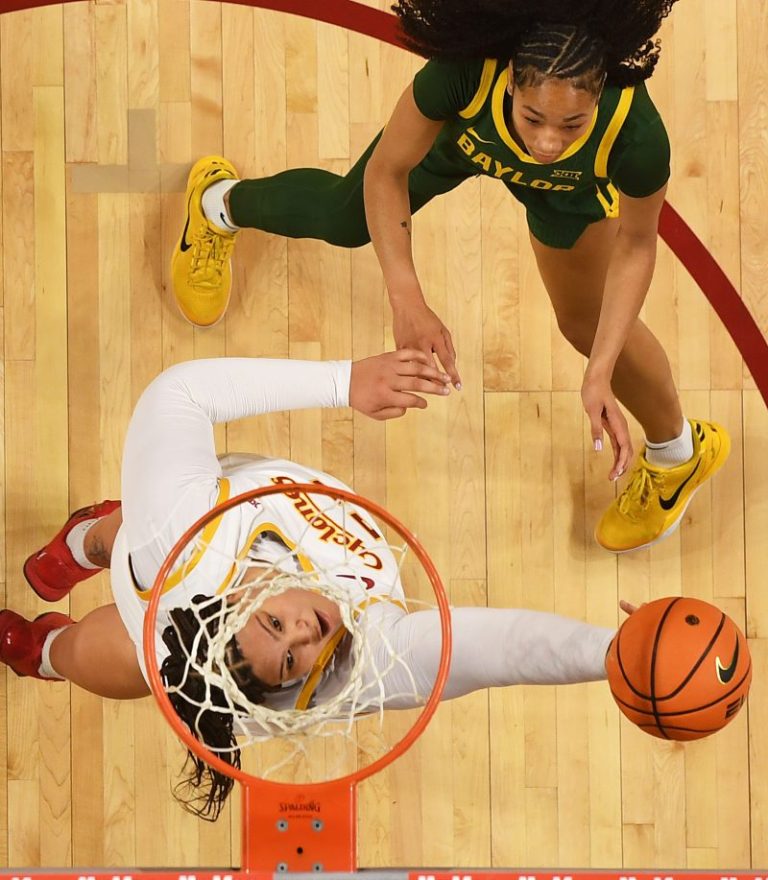
Yes, the state of Iowa is home to the leading scorer in women’s college basketball once again. Crooks isn’t swishing 3-pointers from midcourt like Caitlin Clark, but instead wowing fans and dizzying opponents with her smooth work in the post. The 6-foot-3 junior center is averaging an astounding 29.1 points per game and shooting 71% from the floor. She’s scored 30 points or more in six games this season, four of them coming against Power 4 opponents. Crooks has something in common with another former Iowa superstar too: Since 2009, she and Megan Gustafson are the only two players who have shot north of 70% from the field while attempting at least 15 shots per game, according to HerHoopStats, and Crooks is doing it more efficiently and in less minutes. A case can be made for UConn’s Sarah Strong, but as conference play begins, Crooks is going to be playing against better competition in a Big 12 that features four teams in USA Today’s Sports coaches poll, while Strong will be playing in a Big East that earned just two bids to the NCAA Tournament last season.

Meghan Hall: Sarah Strong, UConn, F, So.

Strong is one of the best two-way players in the country. She’s a three-level scorer who can make you pay from all over the court while averaging 18 points and 8.1 rebounds a game. Strong is an underrated facilitator with immaculate vision who is averaging a career-high 4.5 assists per game. The sophomore is also fundamentally sound as a defender and rarely gets sped up or pushed out of position. She has veteran instincts which help her dissect plays long before they develop. Strong currently leads the undefeated Huskies (15-0) in points, rebounds, steals and blocks.

Cydney Henderson: Mikayla Blakes, Vanderbilt, G, So.

Blakes is a certified bucket. That’s undeniable. She’s powered Vanderbilt (15-0) to the second-longest winning streak in program history, which the Commodores showed it’s no fluke by taking down No. 5 LSU. Blakes leads the Commodores with 25.2 points per game (third in the nation) and 3.7 steals (eighth in the nation). The 5-foot-8 guard has reach double-digit points in every game this season and has recorded four 30-point games, including a 32-point performance in Vanderbilt’s comeback victory to hand LSU their second consecutive loss in SEC play. Blakes scored 10 of Vanderbilt’s final 13 points to seal the win. As Vanderbilt head coach Shea Ralph said, “She is her.”

Defensive Player of the Year

Northam: Hannah Hidalgo, Notre Dame, G, Jr.

The two-time reigning Defensive Player of the Year in the ACC, Hidalgo has a real chance to win the national award this season. Often roaming the court and reading defenses like a free safety — think about if Troy Polamalu played for Niele Ivey — Hidalgo has proven to be one of the best at picking off passes and stripping opponents of the ball. She leads the nation in steals with 5.9 a game and is also grabbing a career-high 6.3 rebounds a game this season, not too shabby for a 5-foot-6 guard. Earlier this season, Hidalgo set the NCAA record for steals in a single game with 16 and is closing in on Skylar Diggins’ program record for the Irish.

Hall: Sarah Strong, UConn, F, So.

Strong is wise beyond her years and can cover space as a patient defender. What makes Strong so good on the defensive end is she allows things to develop before deciding to attack. That patience creates opportunities to press her opponents into making mistakes, and it also helps her maintain a top-15 ranking in steals per game (3.47). Strong is also the ultimate anchor to UConn’s fifth-ranked scoring defense allowing opponents 52.2 points per game.

Henderson: Sarah Strong, UConn, F, So.

Strong, a 6-foot-2 forward, may be a sophomore, but her game is well-rounded. She leads the undefeated Huskies in points (18 per game), rebounds (8.1), steals (3.5) and blocks (1.6). Strong has turned in four double-doubles this season, including a monster 16-point, 20-rebound performance against Michigan on Nov. 21. Fueled by Strong, UConn has the fifth-best defense in the nation and ranks sixth in steals per game (15.4). UConn head coach Geno Auriemma has been around a lot of stars, but he said Strong has “an aura” he hasn’t seen before. 

Freshman of the Year

Northam: Lauren Whittaker, Gonzaga, F, Fr.

The frontrunners for this award are obviously USC’s Jazzy Davidson and Oklahoma’s Aaliyah Chavez, but Whittaker looks like the next great Gonzaga player. The 6-foot-3 forward from New Zealand has eight double-doubles this season and is averaging 19.5 points and 9.9 rebounds per game while shooting 56.5% from the floor. She’s one of five players nationally posting at least 19 points and nine rebounds per game and the only rookie doing so. In a tough mid-major league like the West Coast Conference, Whittaker looks like a difference maker.

Hall: Jazzy Davidson, USC, G, Fr.

It’s rare to find the combination length and athleticism Davidson has as a freshman. At 6-1, she’s a taller guard, whose height immediately causes problems for defenders. Davidson uses her speed and quickness to break down defensive coverages, especially in one-on-one situations. The USC guard also utilizes that same length and speed as a defender, often cutting off lanes and creating stifling ball pressure. With teammate JuJu Watkins out for the season, she likely has more on her plate than most first year players, which makes it all the more impressive that she leads the Trojans in points (16.3 per game), rebounds (6.4) and blocks (2.7) and is tied for second in steals (1.8).

Henderson: Aaliyah Chavez, Oklahoma, G, Fr.

Oklahoma (14-1) is on a 13-game winning streak, the second-longest in program history, thanks in large part to Aaliyah Chavez. The 5-10 guard leads the Sooners and all true freshmen in scoring with 18.9 points per game, contributing to the nation’s second-best offense (94.5 points per game). Chavez has scored in double-digits in all but one game this season and has six 20-point performances, the most among all true freshmen. Chavez has racked up five SEC freshman of the week honors so far. National freshman of the year could be next. 

Most Improved Player

Northam: Tessa Johnson, South Carolina, G, Jr.

While Joyce Edwards and Madina Okot have been impressive in the paint for Dawn Staley’s Gamecocks this season, South Carolina is powered by a trio of superb guards. Johnson has been a big part of that shift as she raises her game. Now in a starting role as a junior, she’s improved in nearly every statistical category, elevating her scoring average by five points, her assists by 1.4 per game, her rebounding by 2.6, and pushing her field goal and 3-point shooting percentages to new heights. Johnson’s 45.1% success rate on shots from behind the arc ranks 15th nationally, and her effective field goal mark of 60.8% is 30th in the country.

Hall: Chazadi “Chit-Chat” Wright, Iowa, G, So.

The Georgia Tech transfer found a new home in Iowa, and she’s making the most of it. Once a rotational player with the Yellow Jackets, Wright is starting at point guard for the Hawkeyes, averaging career highs in points (13.1 per game), assists (3.9) and steals (1.6). What’s been most impressive about her improvement this season is her efficiency. She’s shooting 48% from the field (up from 37% last season) and 49% from 3-point range, good for fifth in the nation.

Henderson: Joyce Edwards, South Carolina, F, So.

Joyce Edwards has taken a large step this season. The 6-foot-3 forward slid into the starting lineup after senior forward Chloe Kitts was ruled out for the season with an ACL tear in her right knee. Edwards has powered South Carolina to the fifth-best scoring offense in the nation (91.1 points per game). She’s averaging a team-high 21 points in 16 starts, up from 12.7 points her freshman year. Her stat line is rounded out by 6.3 rebounds, 2.6 assists and a team-high 1.9 steals per game. Edwards came off the bench for the Gamecocks last year, making one start in 39 games, and averaged 5 rebounds and 1.2 assists.

Coach of the Year

Northam: Brenda Frese, Maryland

Few coaches have adapted as well to the transfer portal as well as Frese. Success in college basketball is now a year-to-year proposition, and Frese seems to reload and reshuffle Maryland into a team capable of deep runs in March Madness. Last year’s three leading scorers are absent: Sarah Te-Biasu and Shyanne Sellers exhausted their eligibility. Kaylene Smikle is out for the year with an injury as is Bri McDaniel, who started 25 games as a sophomore. Without them, Duke transfer Oluchi Okananwa has emerged as Maryland’s bus driver, averaging career highs across the board. Rookie Addi Mack has been thrust into a big role, and Indiana transfer Yarden Garzon is providing a punch. The Terps are 15-1 as Big Ten play gets underway. Some faces have changed, but Maryland’s standard under Frese remains high.

Hall: Vic Schaefer, Texas

For the last several years, the Longhorns have been near the top of the women’s college basketball world, but something feels different about this season’s roster. Perhaps it’s the bitter taste of losing in the 2025 Final Four to South Carolina, but the Longhorns have turned up the intensity. Under Schaefer, Texas is undefeated (17-0) and has the third-best scoring offense in the country (91.6 points a game). The Longhorns are shooting 51.8% from the field, good for third in women’s college basketball and have the country’s second-largest scoring margin per game (38.4 points). The Longhorns are also first in turnover margin (14.7) and second in assist to turnover ratio (1.94). Finally, Schaefer’s team has six ranked wins this season, including top-five wins over UCLA and South Carolina.

Henderson: Jennie Baranczyk, Oklahoma

Baranczyk has the Sooners back in the top 5 for the first time since the 2008-09 season in her fifth year as head coach. Oklahoma has the second-best scoring offense in the nation (94.5 points per game) and ranks first overall in rebounds per game (53.1) behind dominant center Raegan Beers and freshman sensation Aaliyah Chavez. The Sooners suffered a blowout loss to No. 3 UCLA two games into the season, but responded with 13 consecutive wins, the second-longest streak in program history. Last season, Baranczyk guided the Sooners to the Sweet 16 for the first time since 2013. If Oklahoma continues to play like this, an even longer postseason run could be in their future.

Final Four predictions

Northam: UConn, Texas, UCLA, Oklahoma

UConn, reigning national champ, is undefeated and may not lose a game in the regular season. Texas owns an unblemished record too, and while they might face some tough games in a stacked SEC, the Longhorns have the look of a contender with Madison Booker and Rori Harmon leading the way. UCLA’s only loss is to Texas, and the Bruins — anchored by likely No. 1 overall WNBA Draft pick Lauren Betts — look elite on both ends of the floor.

In each of the last six NCAA tournaments, at least one team not seeded on the one-line has made the Final Four. This year, that could be Oklahoma, who may pose a matchup problem during March Madness. They have a dominant post in Raegan Beers, a dynamic guard in Aaliyah Chavez, and a strong supporting cast that includes Peyton Verhulst, Sahara Williams and Zya Vann. The Sooners lead the nation in rebounding, grabbing 53.1 boards per game, and are holding their opponents to 29.8% shooting from the floor, which also leads the country.

Hall: UConn, Texas, UCLA, South Carolina

UConn, Texas and UCLA all look like well-oiled machines, and I fully expect all three teams to make it to the Final Four in Phoenix. The Huskies likely have the easiest path, with one ranked opponent on the schedule ahead of the tournament. UCLA and Texas have harder paths to postseason play, but both have dependable anchors. The Bruins have five potential 2026 WNBA draft prospects, including Lauren Betts, and the Longhorns have the talented trio of Madison Booker, Rori Harmon and Jordan Lee leading the way. That leaves one spot for Phoenix and while I don’t feel overly confident in the Gamecocks being the fourth team — their defense has been too shaky at times for my liking — I’m hard pressed to think they won’t be there. Conference play and tournament time is typically when South Carolina plays its best basketball. LSU deserves consideration but at the midway point of the season, I can’t put them in the Final Four.

Henderson: UConn, Texas, UCLA, LSU

UConn and Texas are among the few undefeated teams remaining in women’s college basketball. The Huskies’ title defense is off to a 15-0 start, including a gritty win over No. 6 Michigan. The Huskies will likely run the table in the conference and add to their 53-game streak against Big East opponents. Texas looks equally dominant behind the one-two punch of Madison Booker and Rori Harmon. The Longhorns own ranked wins over UCLA and South Carolina, two teams they could face in Phoenix. UCLA has rattled off eight consecutive wins since its loss to Texas with potential WNBA No. 1 pick Lauren Betts finding her stride. The Bruins’ tougher non-conference schedule should pay dividends as they’ve already fought through some adversity. The final spot will likely come down to an SEC powerhouse, like South Carolina or LSU. The Tigers boast the highest scoring offense in the nation, but dropped two consecutive conference games, leaving more questions than answers. LSU has the talent to make the Final Four with the Big 3 of MiLaysia Fulwiley, Flau’jae Johnson and Mikaylah Williams, but it’ll come down to how the Tigers respond in the second half of the season.

This post appeared first on USA TODAY

Dallas Mavericks guard Brandon Williams provided late-game heroics for his squad as they downed the Sacramento Kings, 100-98, on Wednesday, Jan. 6, at Golden 1 Center in Sacramento, California.

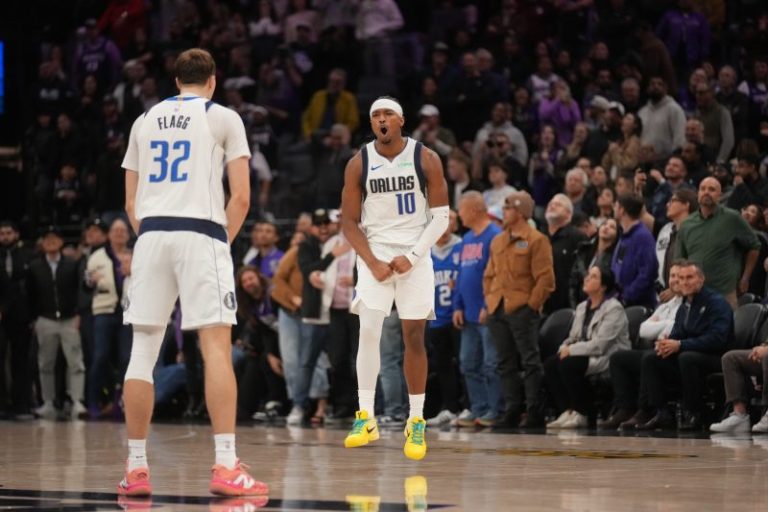
Williams scored 18 points off the bench on 7-of-13 from the field and made his only three-pointer in the game to give Dallas their lead with 33.9 seconds remaining.

It was the sixth consecutive loss for the Kings, who were led by DeMar DeRozan with 21 points. DeRozan missed a potential game-winning three-point attempt – a running, one-legged heave from 29 feet – as time expired.

‘I wish we could’ve got – to my point – just being more organized, understanding what we can get instead of trying to rely on a one-legged, 30-footer,’ DeRozan said to reporters after the game regarding the final shot.

Other contributors for the Kings were Zach LaVine with 20 points in 37 minutes in his second game back from injury. He was moved to a starter after coming off the bench against the Milwaukee Bucks on Jan. 4.

Kings rookie center Maxime Raynaud had 14 points and nine rebounds. He fouled out with 8.1 seconds left in the game.

Sacramento led 58-46 at the half but came out in the third quarter and allowed Dallas to go on an immediate 7-0 run.

By the end of the quarter, the Kings lead was only two and it became a back-and-forth battle in the fourth quarter.

‘Holding them to 100 points, defensively, is solid enough to win a game,’ Kings head coach Doug Christie said. ‘I have to figure out a way to help them offensively. The ball has to move. We came out in the third quarter and just it wasn’t it. We have to make sure that we’re finding the ability to move the ball and move bodies. That means the ball has to go from one side of the floor to the other.’

The Mavericks were led by their rookie Cooper Flagg with 20 points on 8-of-15 shooting from the field. He also added eight rebounds and six assists.

Flagg had an injury scare after center Anthony Davis fell into his knee causing Flagg to go down with 7:42 remaining in the third quarter. He went to the locker room but came back to the bench and immediately reentered the ballgame.

Davis had a big double-double, 19 points and 16 rebounds, despite a 7-of-23 shooting performance.

Dallas is now 14-23 and 11th place in the Western Conference standings. Sacramento at 8-29 is 14th in the conference, 0.5 games away from last place.

Kings vs Mavericks highlights

Kings next five games

Jan. 9 at Golden State Warriors
Jan. 11 vs. Houston Rockets
Jan. 12 vs. Los Angeles Lakers
Jan. 14 vs. New York Knicks
Jan. 16 vs. Washington Wizards

This post appeared first on USA TODAY

‘Are You Not Entertained?’ With the country’s economy improving and other issues losing traction with the public, Democrats are increasingly turning to the one thing lacking in Washington: impeachment.

As they work to take back the House in the midterms, Democrats are again promising voters the equivalent of the Roman Games by restarting impeachment proceedings against President Donald Trump. For many liberal voters, impeachment has become the thrilling cage match of lawfare.

Facing a challenger on the left in New York, Rep. Dan Goldman, D-N.Y., was the latest to dangle impeachment before his constituents. He insisted that Trump can be removed for the capture of Venezuelan President Nicolás Maduro and his wife.

The same people who introduced what I called an abusive ‘snap impeachment’ against Trump are now suggesting that he can be impeached for an act that was previously upheld as lawful in the courts.

According to Goldman, the operation constitutes an undeclared war and is thus impeachable.

The professed shock over the operation is nothing short of comical from leaders who said nothing when Democratic presidents engaged in similar actions.

There were no widespread calls for impeachment when President Bill Clinton attacked Bosnia or President Barack Obama attacked Libya. In the latter case, I represented several members of Congress to challenge the undeclared war in Libya. Obama, like Trump, dismissed any need to get congressional approval before attacking the capital city of a foreign nation and military sites to force regime change. Figures like then-Secretary of State Hillary Clinton were lionized for their tough action in Libya.

Democratic members have combined a lack of memory with an equally startling lack of knowledge. Sen. Tim Kaine, D-Va., declared on national television that ‘the Constitution does not give the president the right to initiate military action.’ It is, of course, entirely untrue.

Presidents cannot declare war under the Constitution, but they can certainly order the use of military forces without such a declaration. Kaine did not appear aggrieved when Democratic presidents repeatedly and routinely attacked foreign targets without prior congressional consultation, let alone approval. That includes President Barack Obama killing an American citizen who was not charged with any crime in a drone attack under his ‘kill list’ policy.

Moreover, some House and Senate Democrats have stated that they either support or do not object to the capture.

I have long opposed undeclared wars and such unilateral actions. However, as a legal analyst, I am asked whether a president has the legal authority under governing case law to carry out such operations. Trump has that authority. We lost the Libyan case, and other challenges to such unilateral action have also failed.

This includes the litigation surrounding the capture and prosecution of former Panamanian dictator Manuel Noriega. That also involved an attack on a foreign country. Indeed, it was a larger military operation that took days on the ground to capture Noriega, followed by regime change.

Noriega raised the same international and U.S. authorities being cited today by pundits and lost across the board. In appeals that went all the way to the U.S. Supreme Court, Noriega lost on his head-of-state immunity and other claims.

If there are grounds for such claims, Maduro is even less credible in making them. Roughly 50 countries refused to recognize him as the head of Venezuela after he lost the last election and seized control of the country. While he proclaimed in court this week that ‘I am still president of my country,’ he has about the same claim to that office as Rep. Goldman.

There are good-faith objections to such military attacks on foreign countries under international law. This is a claim that other nations, such as China or Russia, could use to justify their own actions. However, this is a matter that will be resolved under U.S. law. While Mexican President Claudia Sheinbaum declared that the action violated Article 2 of the United Nations Charter, it will be Article II of the U.S. Constitution that will dictate the outcome of this case.

Now, back to the impeachment games.

Goldman and others are suggesting that they will impeach President Trump for a capture that is virtually identical to the one involving Noriega and was declared lawful by the courts. Even putting aside the criminal prosecution, they would impeach him for attacks that are legally no different from those carried out by a long list of presidents, including Democratic presidents over the last two decades.

Neither history nor the Constitution matters in the impeachment games.

In the movie ‘Gladiator,’ Emperor Commodus noted to the game organizer that the recreation of the Battle of Carthage seemed to get the conclusion wrong when the barbarians won: ‘My history’s a little hazy, Cassius, but shouldn’t the barbarians lose the Battle of Carthage?’ He then said that it did not matter. After all, these are the games, and ‘I rather enjoy surprises.’

The impulsive use of impeachment is about good entertainment, not good government. For politicians fighting to stay in power like Goldman, a flash impeachment is the same call to the mob. 

To paraphrase Senator Gracchus from the movie, ‘I think he knows what Rome is. Rome is the mob. Conjure magic for them and they’ll be distracted. … The beating heart of Rome is not the marble of the Senate, it’s the sand of the Colosseum. He’ll bring them [impeachments], and they will love him for it.’

This post appeared first on FOX NEWS

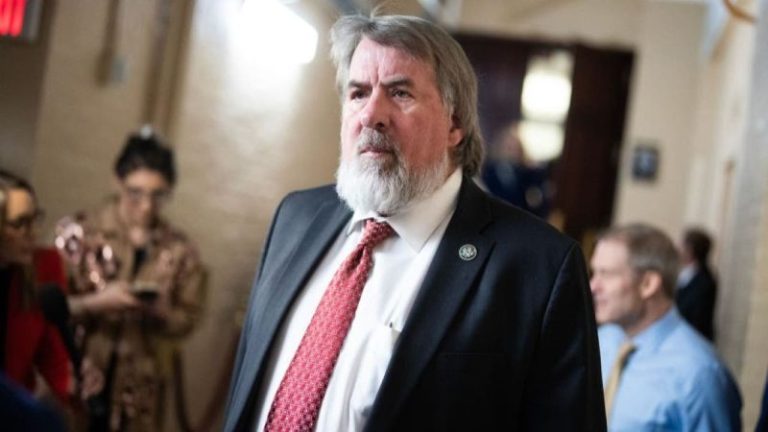
The death of Rep. Doug LaMalfa, R-Calif., has shrunk the Republican majority in the House of Representatives to the minimum of 218 seats, presenting fresh challenges for Speaker Mike Johnson as the party heads into an election year.

LaMalfa, 65, died suddenly on Tuesday during an emergency surgery. He was a staunch ally of President Donald Trump and a reliable vote for Johnson’s priorities. His death means Johnson can only lose two Republican votes and still pass legislation along party lines.

Trump rallied behind Johnson during a retreat for House GOP lawmakers at the Trump-Kennedy Center on Tuesday.

‘A lot of times they’ll say, ‘I wish Mike were tougher,’’ Trump told assembled Republicans. ‘He’s tough. He’s tough as anybody in the room, actually. But can’t be tough when you have a majority of three, and now sadly, a little bit less than that.’

LaMalfa’s death landed on the same day that Republican Rep. Marjorie Taylor Greene’s resignation went into effect. The now-former Georgia congresswoman’s seat won’t be filled until a March 10 special election. Meanwhile, California Gov. Gavin Newsom is required by state law to hold an election for LaMalfa’s seat within the next two weeks.

Democrats are also poised to refill their ranks in the coming weeks, however. Rep. Sylvester Turner, D-Texas, died in March and an election to fill his seat is scheduled for the end of January. Likewise, Rep. Mikie Sherrill, D-N.J., was elected governor of her state in November. Her seat is set to be filled in a special election in April.

Trump dedicated his Tuesday address to LaMalfa, saying he had considered canceling the speech to Republican lawmakers.

‘I spoke to Doug, but I didn’t speak to him, you know? I mean, we never had a problem. I was really saddened by his passing and was thinking about not even doing the speech in his honor,’ Trump said. ‘But then I decided that I have to do it in his honor. I’ll do it in his honor because he would’ve wanted it that way.’

‘He would’ve said, ‘Do that speech! Are you kidding me? Do the speech,” he continued. ‘He was a fantastic person. Man, that was a quick one. I don’t know quite yet what happened, but boy is that a tough one. He was just with us. He was our friend. All of us, every one of us.’

LaMalfa was known as a champion of conservative causes as well as a kind man to both reporters and his fellow House lawmakers.

The congressman represented the 1st Congressional District in Northern California and was chair of the Congressional Western Caucus.

This post appeared first on FOX NEWS