Archive

2026

Browsing

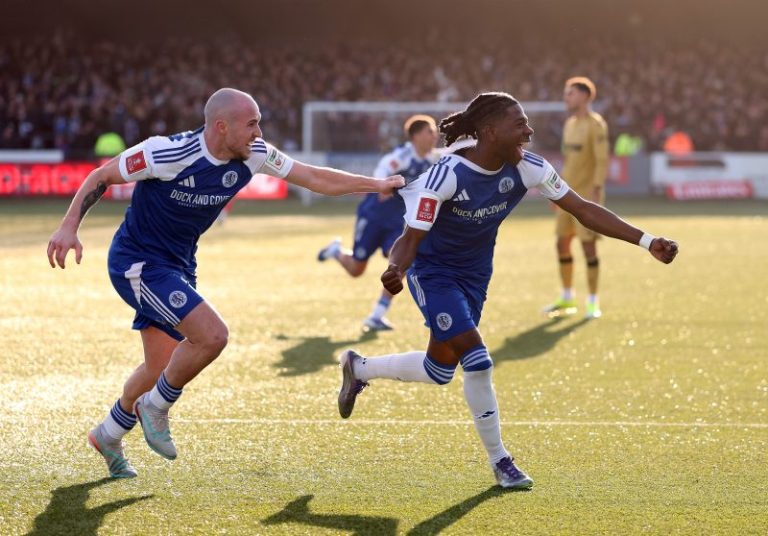
Macclesfield has pulled off one of the biggest upsets in FA Cup history, knocking out defending champion Crystal Palace with a 2-1 win on Saturday.

In terms of league places, Macclesfield’s win is the biggest upset in FA Cup history. The home side plays in the sixth-tier National League North, 117 league places below Premier League side Palace.

The home side scored on either side of halftime, with Paul Dawson grabbing the opener just before the break and Isaac Buckley-Ricketts adding a second in the 61st minute.

Yeremy Pino pulled a goal back for Palace with a 90th-minute free kick, but the home side held on to secure an upset for the ages.

It’s the first time since 1909 the holders have been knocked out by a non-league side.

Crystal Palace fielded a team with international players like Marc Guéhi, Chris Richards and Adam Wharton — all of whom would likely be worth more than Macclesfield’s entire team combined.

But Macclesfield, the lowest-ranked team left in the competition, was good value for its win at Leasing.com Stadium. 

Dawson opened the scoring with a header off a free kick, as the Silkmen captain gave his side a 43rd-minute lead.

Buckley-Ricketts doubled his side’s advantage after a massive scramble in the box, scoring with an improvised finish that trickled past goalkeeper Walter Benítez.

Palace defeated Manchester City in the 2024-25 final, securing the club’s first major trophy.

But Oliver Glasner’s side had its run ended in the third round this time around, seeing its winless streak extended to nine games across all competitions.

This post appeared first on USA TODAY

‘I hereby plead incompetence and stupidity.’

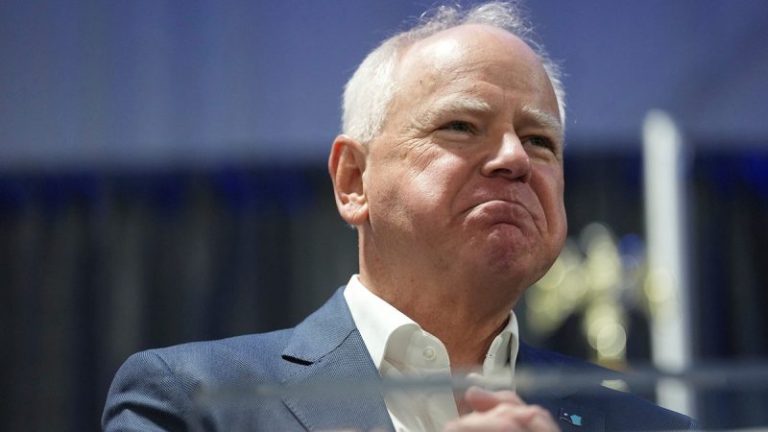
That’s probably the best defense that Minnesota Gov. Tim Walz can offer if he is criminally charged in the shocking multi-billion-dollar taxpayer ripoffs that grow larger by the day.

Given his earned reputation, his excuse of incompetence would be credible.

Nearly every social service program receiving federal dollars was fleeced by fraudsters right under Walz’s nose, including child nutrition, daycare, healthcare, housing, and autism aid. Most of the perpetrators were Somalians who comprise a powerful voting block that the governor treasures like gold.

Walz was repeatedly warned of the swindles as far back as 2019 when he first took office. Instead of stopping the scams and prosecuting the grifters, he indulged them by establishing a culture of permissible fraud.

The scandal has already claimed Walz’s political career, forcing him to abandon his bid for re-election. But if he reckoned that quitting would somehow shield him from legal culpability, he is mistaken. There is mounting evidence that Walz was willfully complicit, deliberately refusing to expose or pursue the monumental thefts and, instead, launching aggressive measures to scuttle any legal scrutiny and criminal consequence.  

The governor’s own state workers at the Department of Human Services issued a blistering statement blaming him as 100% responsible. Witnesses say he retaliated against whistleblowers and schemed to discredit the well-documented fraud reports.

If true, Walz’s aberrant actions run dangerously close to criminal behavior involving cover-ups and obstruction.  

Nine federal agencies, including the FBI, are now working to unravel the full breadth and depth of the colossal cons.  The Department of Justice (DOJ) has sent scores of investigators and lawyers to Minnesota to prosecute the web of fraud and deceit.

They will inevitably weigh whether Walz should face criminal charges himself.

Possible Federal Charges

There are several federal statutes to consider. 18 USC 371 makes it a crime to conspire with others to defraud the government. At present, there is no known evidence that Walz directly participated in the scams themselves or accepted money.

However, if he plotted to cover up the fraud by impairing, obstructing or defeating efforts to bring the fraudsters to justice, the conspiracy statute is applicable. So, too, are the various obstruction of justice laws.

There is also 18 USC 2, the aiding and abetting statute where accomplices are treated the same as the main perpetrators. That law gave rise to the ‘willful blindness doctrine’ recognized by our courts.

An example is a businessman who intentionally ignores or turns a blind eye to his partner’s money laundering, resulting in charges against both. Similarly, a public official such as Walz can be indicted for deliberate inaction where he has a clear duty to act.

Finally, 18 USC 3 is relevant whenever concealment occurs. Whoever knows that a crime has been committed but ‘hinders apprehension, trial or punishment,’ is guilty of accessory after the fact. That bears a striking resemblance to what Walz is accused of doing.

All of this invites the question of the governor’s motive. If not money, how did he stand to benefit by suppressing the avalanche of fraud? That’s the easy part. Votes.

Walz, together with liberal elites and their media handmaidens, have long dismissed the rumors and reports of Somali-engineered fraud as ‘racist.’ Apparently, in Minnesota it is politically incorrect to enforce the law against immigrants from that particular East African country. It’s just not fashionable.

God forbid that putting criminals behind bars might lose electoral support. It’s chic to turn the other cheek.

So, the Somalian fraudsters were gifted a ‘get-out-of-jail’ free card, courtesy of the governor and his cronies. Walz, in turn, secured their votes. It was a nifty quid pro quo, but with an alternate currency —votes. As protection rackets go, it was slick.   

That cozy arrangement is manifested in a recently uncovered audio recording of a 2021 conversation between Walz’s Attorney General Keith Ellison and Somali hustlers who were soon after convicted of scamming millions of dollars. They were heard leaning hard on the AG to ‘protect’ them in exchange for support and campaign donations.  

Ellison eagerly capitulated but now denies any wrongdoing. He returned the cash.           

Walz’s Incompetence Defense

It is too early to know whether a criminal case will be filed against Minnesota’s beleaguered governor. The U.S. Attorney and DOJ lawyers are still digging through the mountains of evidence.

However, as noted above, the only tenable defense Walz may be able to conjure up is incompetence and stupidity. It is something that jurors might readily accept.

After all, ineptitude became the governor’s calling card. He infamously conceded his own buffoonery in the 2024 Vice Presidential debate when he called himself a ‘knucklehead.’ He was such a gaffe factory that the Kamala Harris campaign squirreled him away from the media.     

Walz achieved the impossible. He made his running mate look like a genius. His bizarre on-stage antics were constant fodder for mockery. Baffling verbal goofs, such as boasting that he had ‘become friends with school shooters,’ left voters scratching their heads or snickering.  

A series of demonstrable lies about his military service and his peculiar treks to China only compounded the impression of a man who is either a serial fabricator or not right in the head. Maybe both are true.  

And who can forget his epic bungling of the George Floyd riots in 2020. He radicalized the tragic death, thereby ginning up the ensuing violence. As Minneapolis burned, Walz dithered. Afterwards, he blamed the looting and torched buildings on systemic racism.

So, it’s not a stretch to imagine that an indictment alleging Walz was wittingly complicit in his state’s massive welfare fraud scandal might be met with a defense of ‘misfeasance’ (careless or incompetent execution of a lawful duty) to combat the incriminating evidence of ‘malfeasance’ (a deliberate, unlawful act).   

It’s a distinction that can mean the difference between conviction and acquittal.

Should Walz find himself in the dock sometime soon… don’t be surprised if he portrays himself as a blockhead who was intellectually incapable of grasping the obvious.

Minnesota jurors who know the governor would understand completely.

This post appeared first on FOX NEWS

Amber Glenn won the U.S. figure skating championship for the third consecutive year.
Alysa Liu and Isabeau Levito were on hand to watch Glenn achieve the win and they all celebrated together.
Even though the night belonged to her, Glenn made sure to highlight her fellow skaters as they are Winter Olympic-bound.

ST. LOUIS — Alysa Liu and Isabeau Levito had to watch.

The figure skaters had just finished their own sensational free skates and stuck around near the rink to watch Amber Glenn cap off an epic night on the ice here at the 2026 U.S. figure skating championships.

When Glenn stepped inside the rink, on the verge of securing her third consecutive national title, she felt like she was going to throw up, trying to fake it until she could make it.

“I was just trying to get in touch with my body and get a feel of the ice,” she said.

One triple Axel into the skate was all it took to know there was no faking this. This was Glenn’s night — and she became U.S. champion for the third straight year.

Milan Magic: Listen on Apple, Spotify or wherever you get your podcasts.

Glenn and coach Damon Allen burst with shock and elation and tears when her season-best score of 150.50 posted. They sat with each other in the kiss-and-cry, soaking in Glenn being the first woman to win three straight titles since Michelle Kwan’s reign of dominance from 1998-2005.

But Glenn wasn’t going to revel in this moment without Liu and Levito. She brought them into the kiss-and-cry with her, and they shared a long embrace, expressing appreciation for one another.

“I’m still in disbelief,” Glenn said. “Honestly, the ladies were on fire this competition, and I couldn’t be more proud of how far we’ve come as Team USA.”

Just two days prior, the women put on a performance for the ages in the short program, leaving some to wonder if they witnessed the greatest night in U.S. women’s figure skating history. How were these women going to top that?

But they wound up doing just that as the final three performances of the night, each scoring a season-high mark. Levito was elegant and graceful in her “Cinema Paradiso” performance. Liu’s revamped “Lady Gaga” medley looked massively improved compared to a few months ago. 

Then Glenn put the bow on it all with a fierce program that showed no hints of a nervous skater. Rather, she performed like someone who has made immense progress in handling the pressure and expectations that come with being one of the top skaters in the country.

“I’ve been working on the mental and physical side for a while now, and I’m happy to see it come together,” Glenn said. “I just need to embrace that nothing’s going to be perfect all the time, and as long as I keep that in mind, then I should be able to go forward without feeling too impostery.”

Her free skate left the audience wowed, and made for a great time to watch for Liu and Levito. Levito told Glenn she wasn’t worried at all because Glenn looked like she had it down, while Liu was just trying to put herself in Glenn’s shoes and just breathe. 

“Everyone’s telling me it was fun to watch. I’m like, I agree,” she said. “Watching Amber was really fun for me.”

For as much as this night belongs to Glenn, she was keen on making it about the trio. She could hear Lady Gaga playing for Liu and the roars of the crowd, and she caught the second half of Levito’s program.

Knowing her fellow skaters rocked the arena as much as she did, Glenn wanted to share the stage with Liu and Levito. It was just another example of how this generation of stars are set on sharing love and accomplishments with each other.

This trio left no doubt that they will be the three women representing the U.S. at the 2026 Winter Olympics. Even better, they are formidable contenders to break the 20-year Olympic medal drought in women’s skating.

When that happens, you can bet it’ll be just like Friday night in St. Louis, all celebrating together.

Get our Chasing Gold Olympics newsletter in your inbox for coverage of your favorite Team USA athletes

This post appeared first on USA TODAY

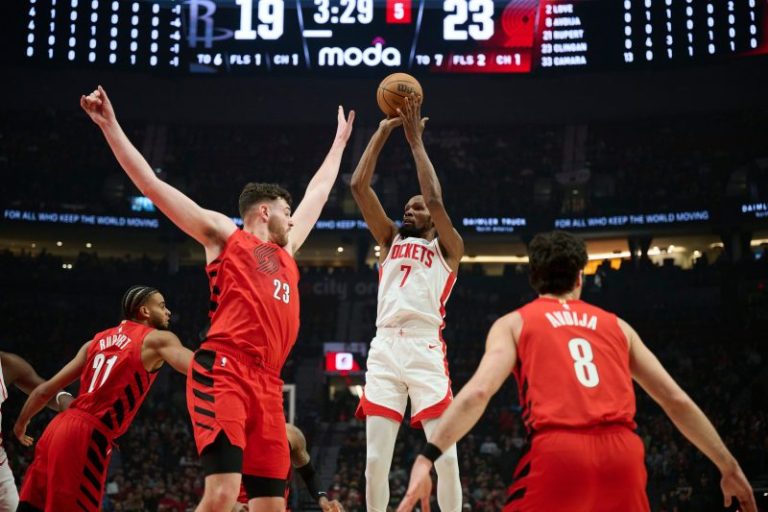
Houston Rockets star Kevin Durant moved into seventh place on the NBA’s all-time scoring list in a 111-105 loss to the Portland Trail Blazers on Friday.

The four-time scoring champion needed 15 points to pass Wilt Chamberlain, who had 31,419 career points, on the list. Durant reached the mark with 7:56 left in the third quarter, on a 3-point shot.

Durant finished with a game-high 30 points and now has 31,435 career points. He will next chase Dallas Mavericks legend Dirk Nowitzki (31,560 points) for sixth on the list.

Kevin Durant, Rockets vs. Trail Blazers highlights

Kevin Durant stats vs. Portland Trail Blazers

Points: 30
FG: 11-for-20 (4-for-9 from 3-point line)
Free Throws: 4-for-4
Rebounds: 12
Assists: 4
Steals: 0
Blocks: 2
Turnovers: 2
Fouls: 0
Minutes: 39

When do Rockets play next?

The Rockets will play the Sacramento Kings on Saturday, Jan. 11 at 9 p.m. ET (6 p.m. PT).

This story has been updated with new information.

This post appeared first on USA TODAY

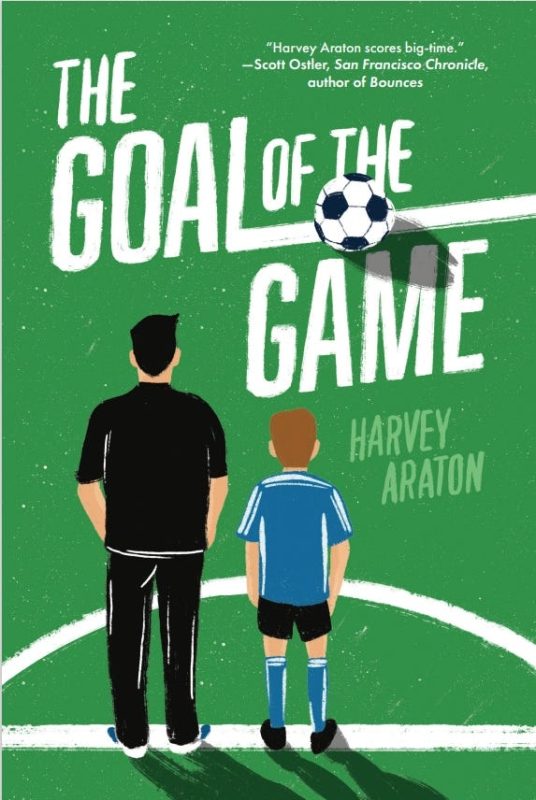
“The Goal of the Game.”

It’s a statement but also a question we can ask ourselves as sports parents.

It’s driven into our kids very early, often by us.

Is it to win?

Is it to be the “best?’

Or is it to just enjoy the experience?

“Dad, according to Mom, asked the parents in our group not to worry about how good we were, or weren’t,” writes author Harvey Araton, through the eyes of a kid named “Z,” in a new middle-grade novel.

Z’s dad was the coach of the boy’s first soccer team. It’s a neighborhood collection of grade school buddies. Dad didn’t just roll out the ball, though. He orchestrated drills that mimicked game situations that gave everyone a shot at the action.

“You scrimmage too much, and the same kids, the stronger players, will dominate the ball, and then how do the other kids get better?” Z overhears his dad telling his mom early in the book.

Everyone notices, in fiction and reality, when others don’t have this growth mentality.

Z and his teammates hear opposing parents scream for blood, or at least a foul, when his team, once a doormat, incrementally starts to get better and begins to dominate.

The kids of manic youth sports parents, one of whom Araton admits to once being himself, is whom he wants to reach. The veteran sportswriter, most recently with The New York Times for 25 years, covered the Danny Almonte age scandal at the 2001 Little League World Series, and the ensuing escalation of Little League World Series coverage into American living rooms.

He has pondered or written about (or both) kids choosing between club and high school soccer and early sports specialization.

He also played the role of sports dad to two now-grown sons (36 and 32). 

“Kids learn playing sports,” Araton tells USA TODAY Sports. “I think there’s a joy in that. I just feel, especially at these early years, it’s becoming infected with this ambition that there could be a pot of gold at the end of the rainbow and I think too many parents become obsessed with turning their children into potential cash machines.”

Araton launched the book last week with a signing at his local bookstore in Montclair, New Jersey. He made sure to also include a panel discussion about youth sports. He spoke with us about how his novel imitates the raucous life America lives within it, and the lessons he has gleaned from it.

YOUTH SPORTS SURVIVAL GUIDE: Pre-order Coach Steve’s upcoming book for young athletes and their parents

Is it your child’s ambition or your ambition? Ask them

Araton is from Staten Island, which he describes as New York City’s last developed borough. It still has large swaths of parks and fields, where his story is set.

He had grown up on the basketball courts near his public housing development. The free play felt natural as it took him to the local Jewish community center and high school. He eventually played at a health club in Brooklyn as an adult and even worked in Madison Square Garden, where he covered the Knicks, the team he had idolized as a kid.

His competitive juices carried him into fatherhood when his older son, Alex, was in first grade and had the option of going out for a travel team. It’s a decision many of us have faced.

“I remember asking him if he wanted to try out,” Araton says. “And he was kind of a naturally cautious kid and said, ‘Not really,’ and I remember being disappointed, a little deflated. Maybe I already was thinking, ‘If he doesn’t go into this next level, he’ll fall behind and never catch up, (and) there will go any chance of playing in high school.’ I mean, I could look at my kids, look at their size even at that age and know that they weren’t likely to be D1 college athletes.

“But I remember being disappointed and over the next couple of weeks, I came up with five or six different ways to pose the same question. Well, Nick’s trying out, you sure you don’t want (to)? And he kept saying no. And then the last time that I asked, he said, ‘No, dad.’ And then he looked at me and said, ‘But if I don’t play travel, can I still play in the town league?’

“And I remember feeling this sensation of shame because I realized in that moment that I was projecting my own ambitions and my own sports values onto this 6-year-old kid. And all he wanted to do at that point in his life was just run around and play with a bunch of kids he knew and maybe take one or two things out of any game and feel good about himself and look forward to the snacks.”

It’s all Z wanted to do, too.

Consider if your youth sports world is ‘completely out of control’

The book’s central character, who tells the story in the first person, is a combination of Araton’s two sons. Charly, Alex’s younger brother, was 4-foot-11 when he entered high school but played on the basketball team for four years.

Z is left-footed with really good field vision like Alex and he’s small and feisty like Charly was. It doesn’t seem to bother Z when his young team is losing because he knows he will celebrate the things they all did well, or at least enjoyed, at Big Mitch’s restaurant afterward.

Big Mitch is the father of his friend and teammate, Lloyd.

“You only let in, like, seven or eight goals on an undefeated travel team,” he tells Lloyd, the team’s goalie, in the book. “Do you think a kid who was out of shape could do that?”

Z becomes less comfortable when sports becomes more and more competitive. His father has a horrific accident and the team eventually gets a coach from England, who adopts a similar skills-first mindset with the kids. Kevin, the coach, who has also had a traumatic experience with his father, takes Z under his wing.

As the boys and girls on the team continue to rise in competition level, and travel further and further away from Staten Island, Z gets a much more transactional coach.

He feels himself immersed in a world over which he has less and less control, similar to the experiences Araton observed and felt as a soccer dad.

“The reason why I chose soccer is because I probably was most closely involved with that, whether it was as coaching them in the early grades or just being at the games and kind of like, living for it a little bit,” he says. “I understand why parents are so heavily involved. After a week of work you really look forward to the experience of the games. It’s like an adrenaline rush but also I think, it created a whole social network with the parents of their teammates and friends and everything. So I get the temptation, and the seductiveness, of it all, but (it) all got completely out of control, as well.”

‘Children are not investments. They’re developing human beings.’

While Araton was growing up on Staten Island, the borough’s Mid-Island Little League won it all in Williamsport. Years later, as a sportswriter, Araton caught up with Danny Yaccarino, who came within one strike of a perfect game during that 1964 Little League World Series against Monterrey, Mexico. 

He wrote a column, (‘After Perfection at the Age of 12, What’s Next?’) detailing how Yaccarino became a very good high school pitcher and reached the Baltimore Orioles organization and yet, he was always haunted by the feeling of coming so close to near-perfection as a Little Leaguer and not getting it.

“Not only did he get a lot of bench jockeying and all that stuff throughout his career, but he also put incredible pressure on himself,” Araton says. “He turned out to be a minor league pitcher and he never went very far. But he told me that he finished his career feeling like an abject failure.”

Z feels an emptiness, too, at the climax of the book. It’s a feeling that can be induced by us.

‘Parents, being vulnerable, and easily manipulated into spending vast sums of money, (wind) up treating their children like they are speculating on a stock, an investment,’ Araton says. ‘They’re not stocks that will pay off at 8 or 9 or 10 years; they’re developing human beings.’

Avoid the ‘temptation’ that you have a sports genius

“Z, we’re running behind,” his mother yells upstairs, trying to get him moving for his U-13 fall season-opening game. She’s now the team’s driven parent-manager.

“Are you all dressed?”

It’s a red flag for all of us.

“The construction of this story is really about Z coming to an understanding of what role sports should play in his life,” Araton says. “And when I say that, I mean, at that particular time, kids are always subject to change. He’s at a point in his life where he’s experienced family trauma, and, when he looks around, he doesn’t see the friends who he loves, the kids that he grew up playing with. He sees a lot of strange kids. And that’s not what he wants. More than playing at an elite level, he wants to play with kids who know him, who know what he’s gone through.

“He realizes that he still loves the game, but will only play it under his terms.”

Isn’t that what we all want? What about our kids, too?

“You could offer them the higher-level stuff,” Araton says, “but if it’s being forced upon them, and if you’re calling up to their bedroom every time there’s practice, then it’s clear that they don’t really want to do it.

“I wouldn’t deny an exceptional child that kind of pathway any more than you would, say, if you had a child who (was) a mathematical genius or a classical violinist, you would want them to have the best teachers to best capitalize on their special talent. But the temptation is so great because sports is the most visible thing in the community. …

‘It’ll become pretty obvious to a parent if they have someone special. But this whole notion that they can create one by spending significant sums of money, I think it’s really overstated.”

‘Chill’ and let your kid truly experience sports

Araton points to another interview he did, with Yael Averbuch, the general manager of the New Jersey/New York Gotham FC of the National Women’s Soccer League (NWSL). She played for an exclusive club team in high school, won two national championships playing for the University of North Carolina and was drafted professionally.

Her mother said she never had to yell upstairs for practice. Yael was the one yelling to them.

Araton’s sons, like Z, had to figure out where sports fit into their lives. It worked out for them, too.

Alex, who played high school soccer, is a special education teacher and Charly, the high school basketball player (who has grown to about 5-foot-9 today), works in marketing strategies for a fashion brand. He still plays in men’s leagues.

Araton says those middle-grade age groups – 8 to 12, give or take – are the ages where people know the least amount about who their children are as athletes.

“Don’t be disappointed if at the age of 8, they are not willing to do all this stuff and make all that sacrifice,” he says. “They might be ready when they’re 11. Kids do things on their own time schedules. So just accept who they are and let them experience sports in the way they want to. They’ll enjoy it more and get more out of it.

“If they’re not playing for the idea of feeling good about themselves, about learning to be a coachable kid, and be a good teammate, to play with kids from all different backgrounds and develop their skills at the fundamental level at the age of 7, 8, 9, 10,” Araton says, “then they’re playing for the wrong reasons.

“Each shall develop at their own rate. I just think that parents have to chill and let the kids experience it for themselves.”

Borelli, aka Coach Steve, has been an editor and writer with USA TODAY since 1999. He spent 10 years coaching his two sons’ baseball and basketball teams. He and his wife, Colleen, are now sports parents for two high schoolers. His Coach Steve column is posted weekly. For his past columns, click here.

This post appeared first on USA TODAY

SAN FRANCISCO — The Golden State Warriors handed the Sacramento Kings their seventh consecutive defeat with a 137-103 win in front of a sold out crowd at Chase Center on Jan. 9.

The Warriors were led by guard Stephen Curry who recorded a double-double with 27 points and 10 assists on the evening. De’Anthony Melton had 19 points off the bench, a game-high for all reserves. Draymond Green had 11 points, including 3-of-4 from three, and eight assists.

The Kings were right there with the Warriors after Dennis Schroder tied the game at 84 with 3:13 left in the third quarter. After that it was another collapse by Sacramento, mostly with Curry on the bench.

‘The end of the third quarter was the key to the game,’ Warriors head coach Steve Kerr said. ‘They played well and hung with us. We never really got much going defensively in the first 32 minutes of the game or so. Good stretch at the end of the third to go up I think 14 going into the fourth to get some separation and obviously a great fourth as well.’

Kerr added: ‘Really good close to a game that we weren’t really handling very well through most of the first three quarters.’

Kerr said the early game lull wasn’t a concern but rather ‘to be expected.’

‘Sometimes, some of these games this time of year turn into a little bit of a pickup game for a while and loose. I think understanding how difficult it is to get through the 82 (games) and how hard these guys play night in and night out,’ Kerr said. ‘It’s just going to be nights when you don’t have that defensive edge. As a coach you pick your spots when to get on them a little bit and when to leave them alone. Tonight was a leave it alone night and trust that they’re going to find their way and they did.’

Kings crumble in the third quarter … again

Kings head coach Doug Christie addressed the third quarter collapse with the team in the locker room immediately after the game before speaking to reporters, he said.

‘It’s unacceptable. It can’t happen,’ Christie told reporters after the game. ‘It’s been a theme. Good enough to win, but also good enough to hang in there and get beat. So there’s a nastiness and a fire, it has to make you mad for you to break through.’

The Kings were led by DeMar DeRozan with 24 points on 10-of-19 shooting. Zach LaVine and Schroder each scored 15 while Russell Westbrook added 13 points and seven assists.

‘The competitiveness has been there, but there’s a two-minute, three-minute span where it’s not there. In our game, that’s enough to do it,’ Christie said. ‘That’s why a 20-point lead in our game really isn’t that much anymore. It just takes a couple minutes, make some threes, get a couple stops, momentum changes and that’s what happened.’

What happened to the Warriors-Kings ‘rivalry’?

There was once thought to be a budding rivalry between these two teams, following a seven-game series won by the Warriors during the 2023 NBA Playoffs. The Kings got revenge the following year knocking out Golden State in the NBA Play-In Tournament.

The Warriors (21-18) look to turn the page during their eight-game home stretch, where they’ve defeated the Milwaukee Bucks and now the Kings with six games left in the stand.

Despite being on the end of their dynasty run Golden State is out to prove that they have something left in the tank.

The Warriors are now 14-6 in their previous 20 regular-season meetings with Sacramento. The Kings won their first meeting with Golden State, 121-116, on Nov. 5, 2025.

Since they moved to Sacramento in 1985, the Kings’ all-time record against the Warriors is 77-91.

Curry shared his thoughts on whether a rivalry with the Kings exists.

‘Geographically, yes,’ Curry told USA TODAY Sports with a smile on his face. ‘That’s about it.’

Kings vs. Warriors highlights

This post appeared first on USA TODAY
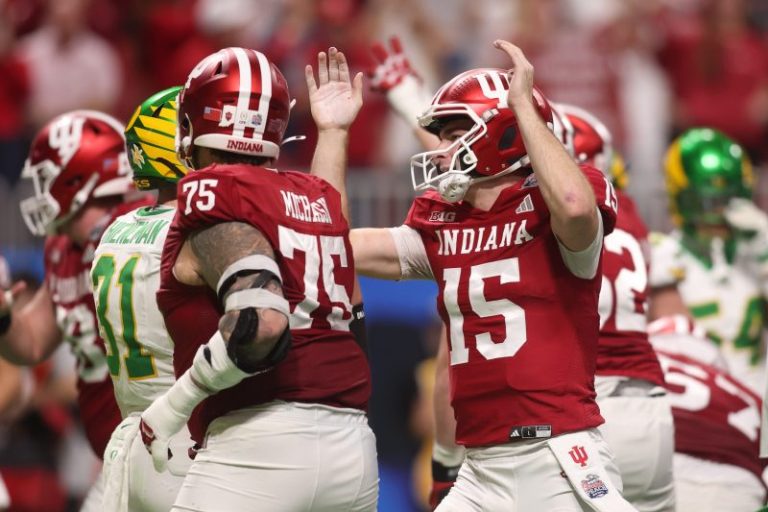
ATLANTA — No. 1 seed Indiana took control with an interception return for a touchdown on the first play from scrimmage and never let go for a 56-22 rout of No. 5 Oregon in the College Football Playoff semifinals at the Peach Bowl.

The pick-six by D’Angelo Ponds sparked the latest jaw-dropping victory for a team that stands one win away from the most unexpected national championship in Bowl Subdivision history. Indiana will face No. 10 Miami in the title game on Monday, Jan. 19, at Hard Rock Stadium in Miami Gardens, Florida.

The Peach Bowl was a rematch of the Hoosiers’ 30-20 win at Autzen Stadium in October. Indiana becomes just the second team to beat an opponent in the regular season and then again in the playoff since the format debuted in 2014.

Heisman Trophy winner Fernando Mendoza was nearly perfect, completing 17 of 20 throws for 177 yards and finishing with more touchdowns, five, than incompletions. Wide receiver Elijah Surrat had 75 yards receiving and two touchdowns. Kaelon Black led the running game with a team-high 63 yards on 12 carries and two scores.

Donte Moore completed 24 of 38 passes for Oregon for 285 yards, two touchdowns and one interception. Dierre Hill Jr. led the Ducks with 85 rushing yards, 71 coming on one long run, and Jay Harris added 35 yards on 16 carries.

A junior who had only 26 carries on the year heading into Friday night, Harris was thrust into a bigger role because of injuries to leading rusher Noah Whittington and top backup Jordon Davison.

It took the Hoosiers only 11 seconds to get on the board. After a short kickoff return placed Oregon at its 20-yard line, Moore threw an out route to the left sideline that Ponds jumped and ran back 25 yards for a 7-0 lead, delighting a Mercedes-Benz Stadium crowd that leaned heavily toward Indiana.

Oregon’s offense settled down to even the score on the ensuing possession, converting three third downs as part of a 14-play, nearly eight-minute drive capped by Moore’s 19-yard touchdown pass to tight end Jamari Johnson with 7:11 remaining in the first quarter.

Indiana’s offense responded on its first drive. Mendoza completed all four of his attempts for 41 yards, including an 8-yard score to receiver Omar Cooper Jr., as part of a 75-yard drive that put the Hoosiers back in front 14-7 with 40 seconds left in the opening frame.

After punting on the next possession, the Ducks stopped a promising Indiana drive by stripping and sacking Mendoza on third down and took over at their 13-yard line.

But Moore fumbled on the next play for his second costly turnover. Winding up to deliver a screen to his left, the sophomore’s hand hit Hill on the shoulder and bounced away before being recovered by IU at the 3-yard line.

Black then punched it from a yard out to put Indiana up 21-7 with 8:17 left in the half.

The lead would mushroom by the end of the half to put the Ducks in an insurmountable hole.

First, another Oregon punt led to a 61-yard touchdown drive ending with Mendoza finding receiver Charlie Becker on a perfectly thrown 36-yard heave, pushing IU ahead 28-7 with 3:13 to go.

Then Moore was sacked and fumbled again, setting up the Hoosiers on the lip of the red zone. Six plays later, Mendoza hit Sarratt from 2 yards to make it 35-7 with 59 seconds left before the break.

Both teams exchanged scores coming out of the locker room, with the Ducks converting the two-point try after a short Harris touchdown run to make it 42-15 midway through the third quarter. Oregon looked to make it a three-touchdown game late in the quarter but was stopped on fourth-and-short at the Indiana 31-yard line.

The Hoosiers’ exclamation point came after an Oregon punt near its own goal line was blocked with just 13:04 to play. Under two minutes later, Mendoza hit Sarratt from 3 yards out on third-and-goal to make it 49-15.

But the Hoosiers weren’t done yet. After forcing a turnover on downs, IU ran five times for 65 yards, ending with Black’s 23-yard score, to go ahead 52-15 with 5:13 remaining.

A Moore touchdown pass to Roger Saleapaga with 22 seconds completed the scoring and helped the Ducks avoid the biggest loss in Peach Bowl history.

With a win against Miami, the Hoosiers would become the first 16-0 national champion since Yale in 1894. Prior to hiring coach Curt Cignetti, Indiana had won 16 games in a two-year span just once (1987-88) in program history.

This post appeared first on USA TODAY
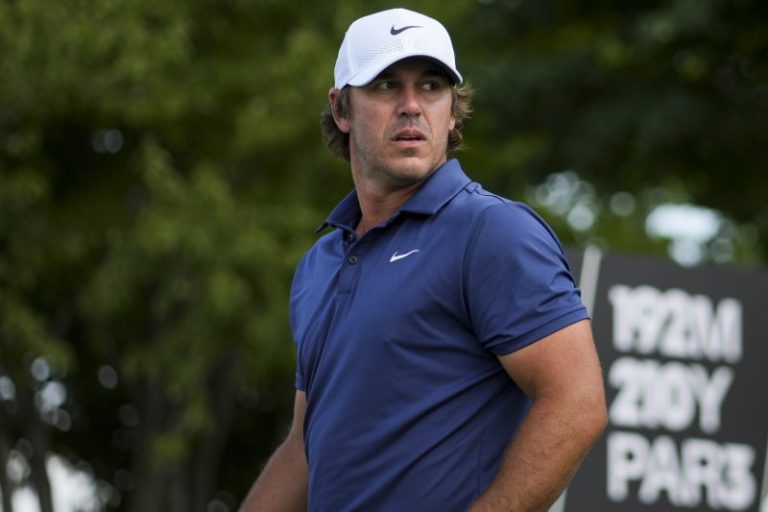
American golfer Brooks Koepka applied for reinstatement of his PGA Tour membership on Friday, according to ESPN.  Koepka is a five-time major champion who was a member of the tour from 2014 to 2022.

Koepka, who recently left LIV Golf, is ranked No. 244 in the Official World Golf  Ranking because LIV golfers were not receiving points for those respective events in the standings.

Despite his ranking, Koepka could compete in the four major tournaments in 2026 because of his five-year exemption as a result of winning the 2023 PGA Championship.

Koepka decided to leave the PGA Tour in 2022 to join the newly formed LIV tour.

He won just five events during his LIV tenure from 2022-25 and completed a 3-0 playoff record, earning a victory in three consecutive years.

Koepka had a year remaining on his tour, which was financed by a Saudi Arabian group, but decided to leave early. LIV Golf CEO Scott O’Neil said Koepka and the league ‘mutually agreed’ that he would no longer compete as a member in December.

The PGA had not commented on Koepka’s potential return. Koepka cited family reasons as part of his decision to leave LIV and explore his options. Koepka’s wife, Jena, posted on Instagram last October that she had suffered a miscarriage. 

This post appeared first on USA TODAY

The national championship game for the 2025-26 College Football Playoff has been set between No. 1 Indiana and No. 10 Miami.

So, who is going to win?

That’s a question college football pundits and fans will be debating for the next 10 days until the big game on Monday, Jan. 19 at 7:30 p.m. ET. Oddsmakers, for their part, have already declared a favorite as the season winds down in Hard Rock Stadium in Miami Gardens, Florida.

Opening odds from BetMGM have the Hoosiers as the early betting favorite to win the national title following their dominating Peach Bowl win over No. 5 Oregon.

Fernando Mendoza finished with five touchdown passes against the Ducks’ defense, and the Hoosiers scored 21 of their 56 points off turnovers, including D’Angelo Ponds’ pick-6 on the first play of the game. Indiana’s win over Oregon improved its record to 26-2 under Curt Cignetti in just two seasons.

Carson Beck gave the Hurricanes a ‘home’ game for the national championship with his 3-yard rushing touchdown in the winding seconds of the fourth quarter in the Fiesta Bowl against No. 6 Ole Miss. After sneaking into the 12-team field, the Hurricanes have been playing some of their best football in the last three games, led by Beck and star defensive players Rueben Bain Jr. and Akheem Mesidor.

Both teams are appearing in the national championship game for the first time in the CFP era.

Here’s what you need to know on who is favored in the national championship game from the opening odds:

Indiana vs Miami national championship game odds

Odds courtesy of BetMGM as of Friday, Jan. 9 at 11:30 p.m. ET

Spread: Indiana -7.5
Over/under: 48.5
Moneyline: Indiana (-300) | Miami (+240)

When is national championship game? Date, time, where, TV channel

Date: Monday, Jan. 19
Time: 7:30 p.m. ET
Location: Hard Rock Stadium (Miami Gardens, Fla.)

The 2026 CFP Championship between Indiana and Miami is set for 7:30 p.m. ET on Monday, Jan. 19 inside Hard Rock Stadium in Miami Gardens, Florida.

This post appeared first on USA TODAY
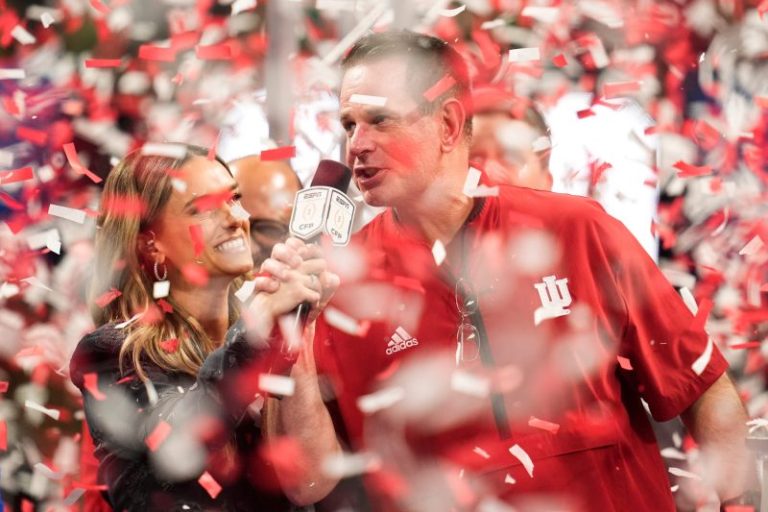
Indiana football coach Curt Cignetti isn’t one to smile on the sidelines.

But there appears to be something that can get a smile — even if only for a second — out of the Hoosiers coach, who has orchestrated one of the more remarkable turnarounds in college football history in just two seasons in Bloomington: a cold beer.

‘I’m really not thinking about the next game. I’m thinking about cracking open a beer,’ Cignetti told ESPN’s Molly McGrath following No. 1 Indiana’s 56-22 win over No. 5 Oregon in the College Football Playoff Peach Bowl semifinal.

Indiana opened the game with a pick-6 from D’Angelo Ponds, the defensive player of the Peach Bowl, on the first play from scrimmage. It didn’t stop there, as they scored seven touchdowns on 10 drives (excluding the final drive, where they went into victory formation).

Fernando Mendoza was once again phenomenal for Cignetti’s program in the Peach Bowl, completing 17-of-20 passes for 177 yards and five touchdowns.

Indiana’s 34-point win over Oregon is the sixth-largest win in CFP history. It is also just the second time in CFP history that a team has beaten the same team in the regular-season and the CFP in the same season. The team that lost the regular-season meeting entered Friday’s Peach Bowl with a 4-1 record in the rematch.

With its win, Indiana picked up its 26th overall win under the 64-year-old coach. The Hoosiers will now face No. 10 Miami in the national championship game on Monday, Jan. 19 at 7:30 p.m. ET inside Hard Rock Stadium in Miami Gardens, Florida.

The USA TODAY app gets you to the heart of the news — fastDownload for award-winning coverage, crosswords, audio storytelling, the eNewspaper and more.

This post appeared first on USA TODAY