Archive

2026

Browsing

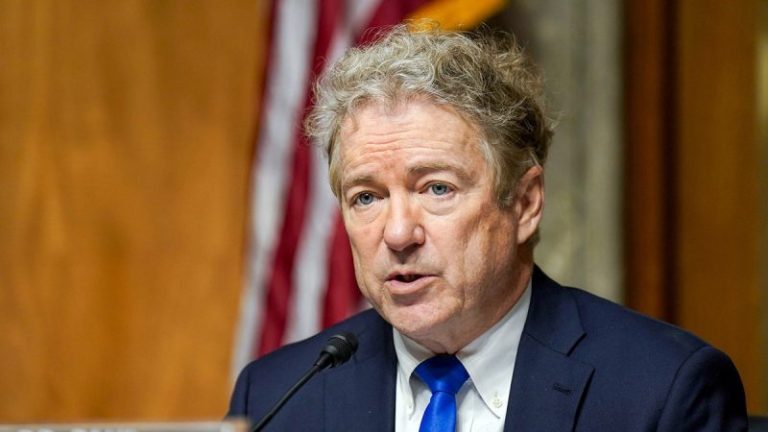
Sen. Rand Paul, R-Ky., on Sunday spoke out against President Donald Trump’s threats to bomb Iran, warning that such an attack may backfire as the U.S. government monitors the Middle Eastern country’s response to widespread protests.

During an appearance on ABC’s ‘This Week,’ Paul said he is unsure that striking Iran ‘will have the effect that is intended.’

‘I don’t think I have ever heard a president say they may take military action to protect protesters,’ Paul said. ‘Certainly, with Soleimani, when the Trump administration hit him, there were massive protests against America. But they are shouting ‘death to the Ayatollah.”

‘We wish them the best,’ he added. ‘We wish freedom and liberation the best across the world, but I don’t think it’s the job of the American government to be involved with every freedom movement around the world.’

Paul also stressed concern about how the Trump administration would distinguish Iranian protesters from law enforcement if the president were to seek military action.

‘How do you drop a bomb in the middle of a crowd or a protest and protect the people there?’ Paul asked.

The Republican lawmaker also warned that attacking Iran may unintentionally rally protesters behind the Ayatollah.

‘If you bomb the government, do you then rally people to their flag who are upset with the Ayatollah, but then say, ‘Well, gosh, we can’t have a foreign government invading or bombing our country?” Paul said.

‘It tends to have people rally to the cause,’ he continued. ‘So, I think the protests are directed at the Ayatollah, justifiably so.’

Paul added: ‘The best way is to encourage them and say that, of course, we would recognize a government that is a freedom-loving government that allows free elections, but bombing is not the answer.’

The liberty-minded senator also affirmed that presidents cannot strike other countries without the approval of Congress.

‘There is this sticking point of the Constitution that we won’t let presidents bomb countries just when they feel like it,’ Paul emphasized. ‘They’re supposed to ask the people, through the Congress, for permission.’

Protests erupted in Iran in recent weeks over the country’s economic free fall, and many have begun to demand total regime change as the demonstrations continue.

Thousands have been arrested, according to reports. Agencies have been unable to confirm the total death toll because of an internet blackout as the country’s leaders seek to quell the dissent, but The Associated Press reported that more than 500 were killed.

Trump warned Iranian leaders on Friday that they ‘better not start shooting, because we’ll start shooting, too.’

‘Iran is looking at FREEDOM, perhaps like never before. The USA stands ready to help!!!’ Trump wrote on Truth Social on Saturday.

Paul has opposed Trump in various instances in recent months when it has come to military strikes, including against Iran and Venezuela.

He helped the Senate advance a resolution last week that would limit Trump’s ability to conduct further attacks against Venezuela after the U.S. military’s recent move to strike the country and capture its president, Nicolás Maduro, which the Kentucky Republican said amounts to war.

‘I think bombing a capital and removing the head of state is, by all definitions, war,’ Paul told reporters before the vote last week. ‘Does this mean we have carte blanche that the president can make the decision any time, anywhere, to invade a foreign country and remove people that we’ve accused of a crime?’

Paul has also criticized the administration’s military strikes on boats near Venezuela it accuses, without evidence, of carrying narco-terrorists, raising concerns about killing people without due process and the possibility of killing innocent people. The senator previously cited Coast Guard statistics that show a significant percentage of boats boarded on suspicion of drug trafficking are innocent.

This post appeared first on FOX NEWS
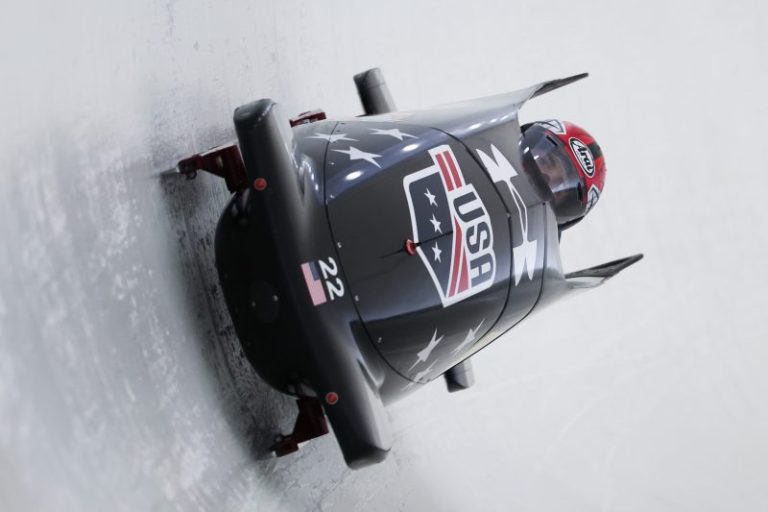
United States bobsled driver Kris Horn went for a frightening solo ride down a track in St. Moritz, Switzerland, during a World Cup event on Sunday, Jan. 11.

Horn was the only passenger in the bobsled after his three American teammates, who make up the four-man sled team, did not make it into the bobsled after the initial push at the top of the track.

Horn is the team’s driver and is expected to be the first one in the bobsled. Not having his teammates on board led to trouble navigating the course.

The sled moved swiftly down the course with Horn at the front of the sled in his usual seat before managing to position himself at the back, where he could pull on the brake in a reasonable time and prevent serious injuries, reaching a speed of 75 mph during the run that lasted just over a minute, according to the Associated Press.

Horn started his bobsledding career as a brakeman and that knowledge helped prepare him for Sunday’s scary situation.

‘We are fortunate it wasn’t worse,’ USA Bobsled head coach Chris Fogt said in a text message to the AP.

Pushers Ryan Rager, Hunter Powell and Caleb Furnell had trouble getting in the bobsled, which left Horn in a position to try and maneuver the sled down the twisty course with no additional weight or anyone to pull the brakes.

Rager was seen in a video stumbling as he tried to get into the sled, which affected the ability of Powell and Furnell to also jump in. The trio hit the ice before sliding briefly behind the sled. The team confirmed that the three pushers all avoided serious injuries, and the X-rays for each of them came back negative.

There is one World Cup race weekend left before USA Bobsled and Skeleton picks its team for the 2026 Milan Cortina Winter Olympics. Horn is a strong contender to make the team as one of the men’s bobsled drivers.

This post appeared first on USA TODAY

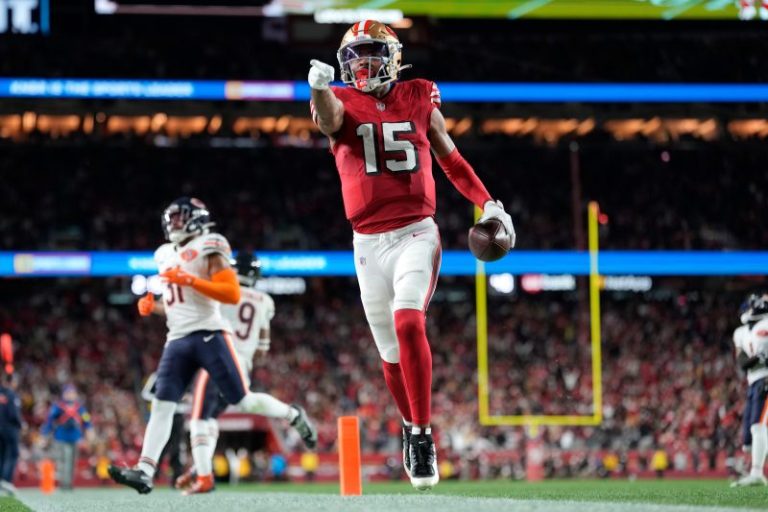
San Francisco 49ers wide receiver Jauan Jennings periodically shows off his quarterback skills. He did so again Jan. 11, tossing a critical touchdown in the 49ers’ 23-19 win over the defending Super Bowl champion Philadelphia Eagles.

49ers coach Kyle Shanahan dialed up a double reverse to Jennings in the fourth quarter. Jennings retrieved the football and threw a perfect pass to running back Christian McCaffrey who caught the ball and ran it into the end zone.

The touchdown and extra point gave San Francisco a 17-16 lead in the fourth quarter.

Shanahan’s play call was well-timed as it resulted in a touchdown. But Jennings is also an ideal player to catch the defense off guard with a trick pass play.

Did Jauan Jennings play QB in high school?

Coming out of high school in 2015, Jennings was rated as a four-star dual-threat quarterback out of Murfreesboro, Tennessee. He was rated above the likes of Lamar Jackson, Joe Burrow and Sam Darnold in the 2015 recruiting class, per 247Sports.

Jennings completed 125 of 219 passes for 2,155 yards and 22 touchdowns with just three interceptions during his senior season. He added 883 yards and 17 TDs rushing en route to being named a Tennessee Mr. Football winner in the state’s largest public school classification.

Jennings went on to sign with Tennessee, where he converted to wide receiver after arriving on campus.

The 49ers drafted Jennings in the seventh round of the 2020 NFL draft.

Jauan Jennings stats

The fifth-year wide receiver has 210 receptions, 2,581 receiving yards and 22 touchdowns in his career. He was the 49ers’ leading wide receiver this season and led the team with nine touchdown receptions. Jennings also had a passing touchdown in the 2023 playoffs.

This post appeared first on USA TODAY

SACRAMENTO ― The Sacramento Kings ended their seven-game losing streak for their first win, and first lit beam, of 2026 in a 111-98 victory against the Houston Rockets at Golden 1 Center on Sunday, Jan. 11.

Sacramento fans walked away with free pizza and a sighting of their purple beam that shoots into the air from Golden 1 Center with each win, something that has been a rare sight during the 2025-26 season.

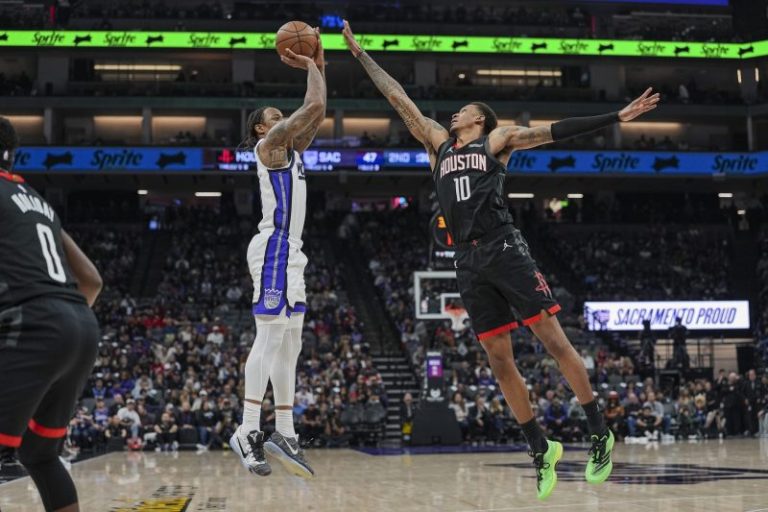
The Kings were led by DeMar DeRozan, who became the 23rd player in NBA history to reach 26,000 career points after a 14-foot fadeaway jumper with 7:09 remaining in the second quarter. DeRozan ended the game with a team-high 22 points, while shooting 8-of-13 (61%) from the field.

‘It’s always satisfying getting a win,’ DeRozan told reporters after the game about scoring his 26,000th point. ‘I think as far as everything else, scoring and points, I think that really won’t hit me until it’s all said and done.’

Sacramento received contributions from everywhere. Guard Zach LaVine finished with 18 points. Russell Westbrook added 15 points, six rebounds and 10 assists in the win. Maxime Raynaud notched a double-double with 12 points and 10 rebounds.

Malik Monk, who had been previously in and out the rotation, saw 26 minutes off the bench against the Rockets and scored 15 points.

‘That’s kind of been my role since I’ve been in the NBA, being a backup ballhandler and taking the pressure off the point, the first group so I was out there flowing and free. It felt good though,’ Monk said.

He received a loud standing ovation when he was first subbed into the game off the bench.

‘It takes a lot of weight off my shoulders,’ Monk told USA TODAY Sports about his warm welcome from the fans. ‘I can go out there and miss two, three shots in a row and the fans (are) still going to be on my side. So it’s always good to get a win in front of the fans. It’s always good to go out there and perform like I did today.’

The Kings got bursts of energy whenever rookie center Dylan Cardwell stepped on the floor. He hustled, grabbed rebounds, finished under the rim and hyped up the crowd nearly every chance he got.

Cardwell finished with nine points and 10 rebounds in 19 minutes. He was even selected to light the Kings’ victory beam at the end of the game, and still then he was hyping the crowd up.

After the game, King coach Doug Christie smiled and told USA TODAY Sports that Cardwell is ‘the spirit animal.’

‘Dylan is a special young man. He has an energy about him,’ Christie said. ‘Whenever we talk basketball, whether it’s me sitting down with him showing him film or him coming up and saying ‘coach, let me have it, what you got for me, how can I get better?’ Those are moments that you just, as a coach, I personally love because there’s teaching, there’s communication.’

He added: ‘Watching him rebound the basketball, play with joy, physicality, I think our team is confident when he’s protecting the paint. I know from being a player that when you have somebody back there protecting the paint it allows you on the perimeter to be a little more aggressive and he continues to impress.’

The Rockets were led by guard Amen Thompson as he scored 31 points, including 16 in the third quarter.

Rockets forward Kevin Durant finished with 23. Alperen Sengun had 19 points and nine rebound for Houston.

The Kings play the Los Angeles Lakers at Golden 1 Center on Monday, Jan. 12. Tip-off is 7 p.m. PT (10 p.m. ET).

‘The win is for the team,’ Christie told USA TODAY Sports. ‘I take all the shots. As soon as I walk out of here, I’m thinking about the Lakers. I love it and appreciate it but it’s on to the next.’

Kings vs. Rockets highlights

Game recap

Kings were behind by a point, 23-22, after the first quarter.

Zach LaVine led the Kings in the first period, scoring eight points. The Kings had five first quarter turnovers for eight points.

Kevin Durant had seven points in opening period for Houston. Rockets center Alperen Sengun had five points in the first quarter.

Sacramento made it a back-and-forth affair in the second quarter with the Rockets.

There were a couple of standout moments in the second.

DeRozan had his milestone moment with 7:09 in the second quarter, surpassing 26,000 points in his NBA career, the 23rd player in NBA history to do so.

Minutes later, Kings guard Malik Monk brought the house down, electrifying the Golden 1 Center crowd with a thunderous slam as he rose over the top of Rockets center Alperen Sengun for two with 4:34 in the second period.

The Kings settled in the game and had zero turnovers in the second period. They turned their defense up, forcing the Rockets to commit four turnovers in the quarter.

DeRozan had 13 points in the first half after hitting a baseline fadeaway at the end of the first half. The Kings went into the locker room holding on to a narrow, 51-48, lead after 24 minutes.

Sacramento made attempts to pull away from Houston as LaVine and DeRozan combined for 14 points in the third.

However, the Rockets were carried in the third quarter by Amen Thompson. He scored 16 points in the period. He, too, had a monstrous dunk in the game, going down the lane over Kings rookie Dylan Cardwell.

Things got physical with 40 seconds remaining in the third quarter as Cardwell and Rockets forward Dorian Finney-Smith were jockeying for position on a rebound when Finney-Smith shoved Cardwell who had just leaped airborne for the board.

Players had to be separated after a brief confrontation that resulted in a Finney-Smith flagrant one penalty and a technical foul assessed to Monk.

DeRozan followed with a mid-range shot through contact and made the awarded free throw. The Kings led 78-76 after the third quarter.

The Kings continued to pour it on in the fourth quarter. Monk hit back-to-back 3s to give the Kings some life as the Rockets kept with them.

No moment was probably bigger for the Sacramento fans than when Sengun missed consecutive free throws with 4:49 left in the fourth quarter, awarding Kings fans with free pizza.

Westbrook knocked down a 3-pointer with two minutes left in the game to give the Kings a 107-94 lead.

Sacramento would hang on to the win the game, 111-98.

This post appeared first on USA TODAY

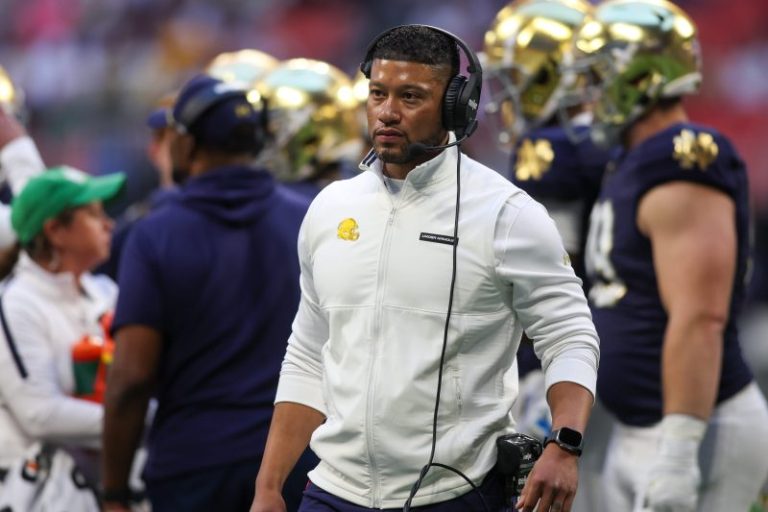
A prep wrestling coach has accused Notre Dame football coach Marcus Freeman of battery following an incident at a high school meet on Jan. 3.

The South Bend Tribune, part of the USA TODAY Network, reported on Sunday, Jan. 11, that New Prairie (Indiana) High School assistant wrestling coach Chris Fleeger filed a police report last week alleging Freeman made physical contact with him in a hallway after Freeman’s son Vinny — a senior at Penn High School — lost his match.

According to the Tribune, Freeman, his son and Penn head coach Brad Harper were leaving the gym when Fleeger allegedly began exchanging words with the group. Per the Tribune, Fleeger and Freeman’s wife Joanna ‘engaged in a shouting match’ before local law enforcement officers and school officials separated everyone.

‘Vinny Freeman, head coach Marcus Freeman’s son, was verbally accosted during and after his wrestling match by a local wrestling coach. Marcus and Joanna Freeman intervened and removed Vinny from the situation,’ Notre Dame said in a statement. ‘At no point did Coach Freeman physically engage with anyone. We believe that the police report, which includes video evidence, fully exonerates Coach Freeman and makes clear these accusations are totally unfounded.’

Mishawaka (Indiana) Police investigated and turned over the completed report to the prosecutor’s office to determine if any charges will be filed.

This post appeared first on USA TODAY

The college football transfer portal remains open until Jan. 16, with an extra five-day window (Jan. 20-24) for teams playing in the national championship.

Thousands of players remain available. We’ll keep you posted with daily live updates of portal commitments.

Transfers by conference: SEC | Big Ten | ACC | Big 12

HIT REFRESH FOR UPDATES.

Today’s CFB transfer portal commitments

QB

Braden Atkinson: Mercer to Oregon State
Tayven Jackson: UCF to North Texas
Deuce Knight: Auburn to Ole Miss
Ajani Sheppard: Washington State to Temple
Davin Wydner: West Georgia to Louisville
Walker White: Baylor to Central Arkansas
Brayden Fowler-Nicolosi: Colorado State to Michigan
Deshawn Purdie: Wake Forest to Liberty
Landen Clark: Elon to LSU

RB

Brendan Haygood: Missouri to North Texas
Datrell Jones: Boston College to Holy Cross
Rodney Nelson: Monmouth to Miami (Ohio)
Hollywood Smothers: NC State to Texas (after flipping previous commitment to Alabama)
L.J. Phillips: South Dakota to Iowa
Chris Johnson Jr.: SMU to Clemson
Cedric Baxter Jr.: Texas to Kentucky
Jabree Coleman: Penn State to South Carolina

WR

Kai Black: Iowa State to Northern Iowa
Tristan Gardner: Missouri State to Coastal Carolina
Reginald Vick Jr.: Wake Forest to Colorado State
Jackson Voth: Drake to Louisville
Ny Carr: Miami to Wake Forest
Zion Ragins: Oklahoma to Mississippi State
Cam Vaughn: West Virginia to Miami
Cam Coleman: Auburn to Texas
Mackenzie Alleyne: Washington State to Oklahoma
Jaime Ffrench: Texas to Michigan
Xavier Townsend: Iowa State to Purdue
Lawayne McCoy: Florida State to Louisville
Chris Marshall: Boise State to Arkansas
Isaiah Horton: Alabama to Texas A&M

TE

Cameron Kossman: Florida to Boston College
Jelani Thurman: Ohio State to North Carolina
Randy Pittman: Florida State to SMU
Josh Sapp: Clemson to West Virginia
Andrew Olesh: Penn State to Oregon
Luke Reynolds: Penn State to Virginia Tech
Kylan Fox: UCF to Purdue

OL

Jaquez Joiner: UCF to Marshall
Sean Na’a: Arizona State to UCLA
Micah DeBose: Alabama to Vanderbilt
Nate Hale: San Jose State to Arizona
Seth Smith: Northern Arizona to South Carolina
Mario Nash: Florida State to Mississippi State
Jireh Moe: San Jose State to Utah
Alec Johnson: Georgia State to Western Kentucky

DL

Justin Benton: East Carolina to North Texas
Harvey Dyson: Tulane to NC State
Jayden Fry: Boston College to Sam Houston
Jaden Jones: Florida State to Missouri
Sahir West: James Madison to UCLA
Syrdir Mitchell: LSU to Wake Forest
Zavion Hardy: South Carolina to Baylor
Brian Allen: Iowa to Vanderbilt
Kelby Collins: Alabama to South Carolina
Tommy Ziesmer: Eastern Kentucky to Louisville
CJ Wesley: Howard to Clemson
Lavon Johnson: Texas to Maryland
Angelo McCullom: Illinois to Texas A&M
Cortez Harris: Penn State to Virginia Tech
Mylachi Williams: Penn State to Virginia Tech
Donta Simpson: Miami to Missouri
Eliyt Nairne: Tulane to Pitt
Sedrick Smith: Maryland to Colorado
Achilles Woods: South Alabama to LSU
Vili Taufatofua: San Jose State to Colorado

LB

Elijah Barnes: Texas to Kentucky
Rashad Henry: UMass to UCF
Derek McDonald: Syracuse to North Carolina

DB

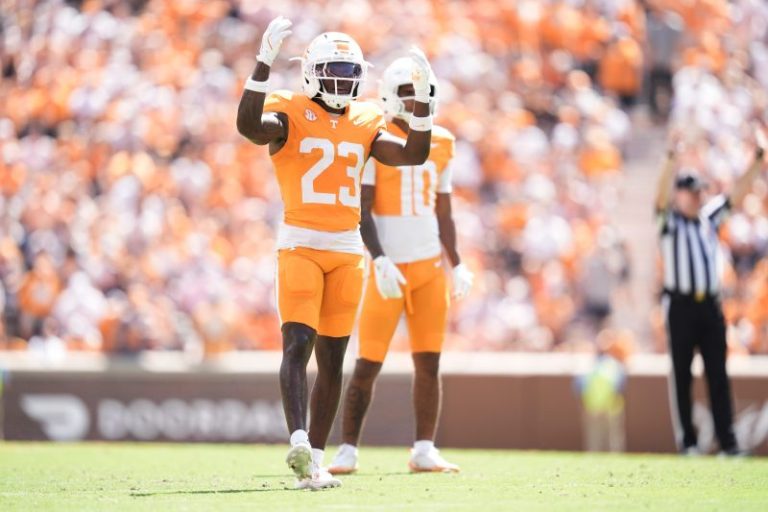
Boo Carter: Tennessee to Colorado
Victor Evans III: FIU to Nebraska
Jaylen Heyward: UCF to Arkansas State
Cyrus Reyes: Mississippi State to Kentucky
CJ Richard: Illinois State to Florida State
Donovan Saunders: Utah to Purdue
Tony Williams: UCF to Kennesaw State
Earl Little Jr.: Florida State to Ohio State
Daniel Cobbs: Kansas State to Baylor
Carson Williams: Montana State to Indiana
Mark Manfred III: Missouri to Kentucky
Nazir Ward: Western Kentucky to Syracuse
Dwight Bootle: Charlotte to Arizona
Taebron Bennie-Powell: Notre Dame to Boise State
Randon Fontenette: Vanderbilt to Colorado
Ian Williams: Memphis to Arkansas
Ricardo Jones: Clemson to Vanderbilt

K

P

Caleb McGrath: Minnesota to North Dakota State

LS

Conlan Greene: Temple to Youngstown State

College football 2026 transfer portal dates: When does transfer portal close?

The portal period now runs from Jan. 2-16, with an extra five-day window (Jan. 20-24) for teams playing in the national championship. The spring portal window in April is no longer a part of the schedule, so January is the only open window for teams to add via the portal in 2026.

This post appeared first on USA TODAY

The setup for the second weekend of the NFL playoffs is coming into focus.

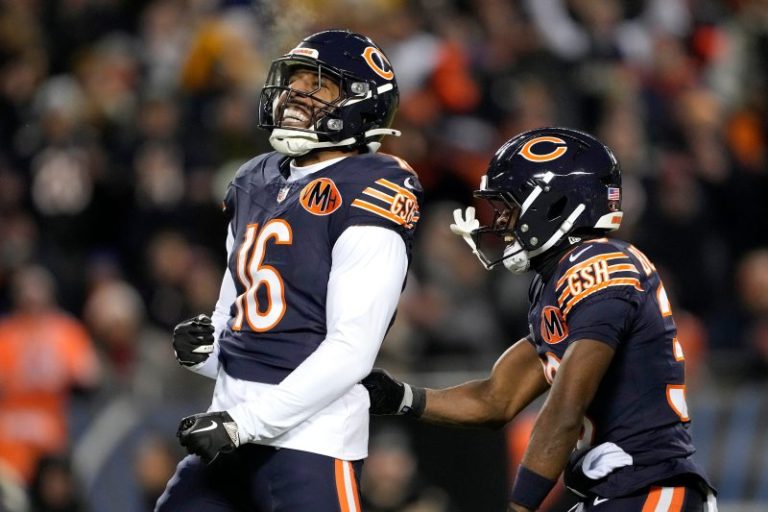
Before the divisional round can be fully set, however, more pieces of wild-card weekend will have to fall into place. The NFC configuration is now in place, with the the Los Angeles Rams, who outlasted the Carolina Panthers, set to face the Chicago Bears, who pushed past the Green Bay Packers. The top-seeded Seattle Seahawks, meanwhile, will host the San Francisco 49ers, who knocked off the defending-champion Philadelphia Eagles.

But the AFC still remains up in the air heading into Sunday night.

Here’s the latest on what we know about the NFL divisional-round schedule:

NFL playoff divisional-round schedule

Jan. 17

TBD at TBD
TBD at TBD

Jan. 18

TBD at TBD
TBD at TBD

NFL conference championship game schedule

Jan. 25

AFC championship, TBD
NFC championship, TBD

Super Bowl 60 schedule

Feb. 8

AFC champion vs. NFC champion, NBC

This post appeared first on USA TODAY

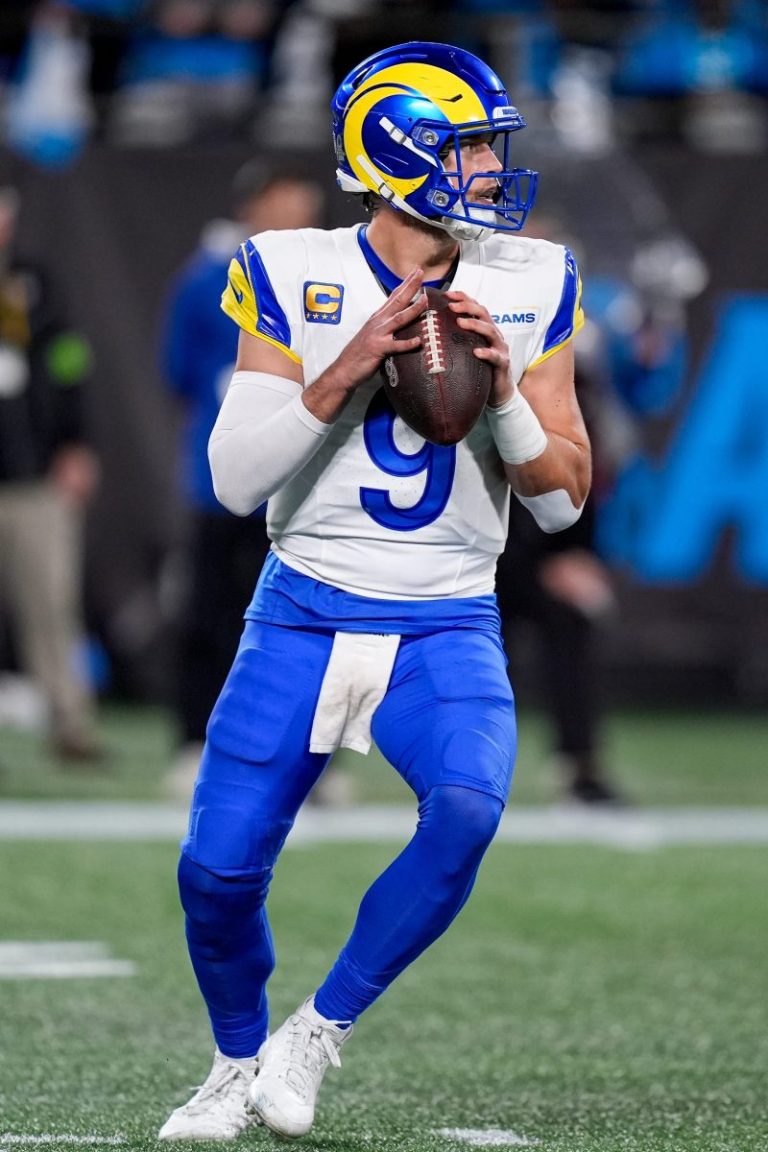
Los Angeles Rams quarterback Matthew Stafford played every offensive snap of his team’s 34-31 wild-card win over the Carolina Panthers but wasn’t quite at 100% while doing so.

Stafford suffered an injury to his throwing hand while attempting a pass at the end of the first half. The 37-year-old quarterback banged his hand on D.J. Wonnum’s arm while trying to follow through.

Stafford immediately recoiled in pain after the play and doubled over on the ground, clutching his hand.

Stafford was able to stay in the game despite the injury and immediately flashed a thumbs-up to Sean McVay after the play. Nonetheless, the veteran quarterback endured some uncharacteristic struggles with his accuracy throughout the third quarter, leading many to wonder about the severity of his potential injury.

Here’s what to know about Stafford’s hand as the Rams start to look ahead toward the NFL’s divisional round.

Report: X-rays negative on Matthew Stafford’s injured finger

NFL Media’s Ian Rapoport reported Sunday morning that Stafford had X-rays on his injured finger.

“X-rays were negative,’ Rapoport said while discussing Stafford’s injury. ‘[He] did not suffer a dislocation. Really, just got it bent back really bad.’

The Rams have yet to comment on Stafford’s injury as of Sunday evening.

Report: Matthew Stafford set for tests on injured finger

The Rams have not provided an update on Stafford’s condition as of Sunday morning.

Matthew Stafford comments on injury

Stafford was asked about his hand injury during a postgame news conference. He told reporters he ‘got a finger bent back’ on the play in question, which led to his reaction on the field.

‘They saw it on the TV on the sideline or whatever. I didn’t obviously know exactly what had happened,’ Stafford explained. ‘It wasn’t pleasant. It wasn’t great.’

Stafford didn’t seem overly worried about the injury being a long-term issue for him.

‘We’ll see what it is,’ Stafford said. ‘I was obviously able to finish the game and throw it decent. Once the ball’s snapped, the adrenaline’s pretty good. So we’ll hopefully just keep it going.’

Nonetheless, Stafford’s practice status will warrant monitoring as the Rams prepare for their divisional-round playoff game.

Who is the Rams backup QB?

If Stafford’s injury ends up being worse in severity than initially anticipated, Los Angeles would turn to Jimmy Garoppolo to lead it as the team chases a Super Bowl.

Garoppolo, 34, is in his second season with the Rams. He didn’t attempt a pass this season but went 0-1 as a starter for Sean McVay’s squad last year while completing 27 of 41 passes for 334 yards, two touchdowns and an interception.

Garoppolo has started 64 games across his 12 NFL seasons since being a second-round pick by the New England Patriots in the 2014 NFL Draft. The Eastern Illinois product has a 43-21 career record across those starts and helped lead the San Francisco 49ers to Super Bowl 54. They lost that game 31-20 to the Kansas City Chiefs in what was Patrick Mahomes’ first career Super Bowl win.

Rams QB depth chart

The Rams have three quarterbacks on their 53-man roster. Below is a look at the pecking order within the group:

Matthew Stafford
Jimmy Garoppolo
Stetson Bennett IV

Bennett was a fourth-round pick in the 2023 NFL draft. He played collegiately at Georgia and helped lead the Bulldogs to two national championships.

Bennett has not yet played a snap at the NFL level but was designated the team’s emergency third quarterback for the team’s wild-card win over the Panthers.

This post appeared first on USA TODAY

The Philadelphia Eagles took a three-point lead over the San Francisco 49ers into halftime of their wild-card matchup, but the first half wasn’t without sideline drama for the reigning Super Bowl champions.

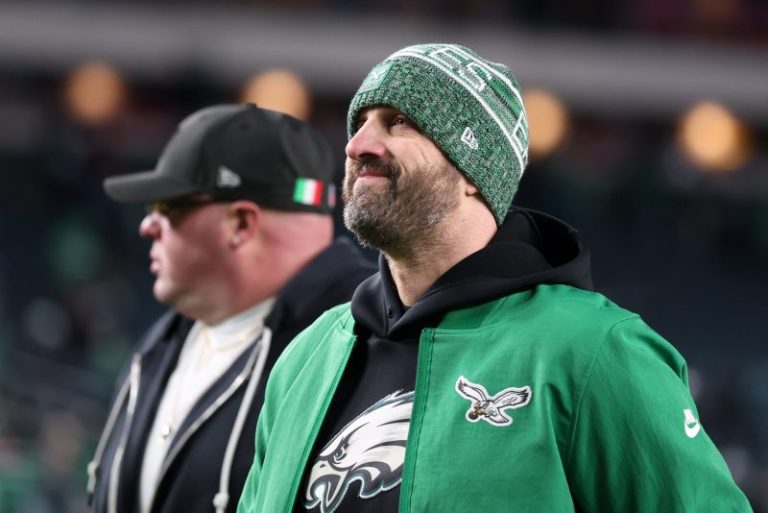
After the Eagles were forced to punt after a three-and-out possession, their head coach, Nick Sirianni, sprinted down the sideline to confront wide receiver A.J. Brown. Fox cameras caught Sirianni and Brown jawing back and forth at each other before Eagles senior advisor to the general manager ‘Big Dom’ DiSandro stepped in to separate the two.

Quarterback Jalen Hurts had targeted Brown on his two throws immediately prior to Philadelphia’s punt near the end of the first half. Despite both throws landing near the wideout, Brown was unable to come away with a reception on either play.

After the ensuing punt, the Eagles managed to prevent the 49ers from scoring before halftime. That kept the reigning champs ahead with a 13-10 lead with 30 minutes to play in the final NFC wild-card game.

‘Emotions, they run high, especially in the playoffs,’ Sirianni said of the confrontation, per Fox sideline reporter Erin Andrews. ‘We’re just fine, thanks.’

Brown had been the subject of several off-the-field storylines during the regular season. The Eagles’ star wide receiver publicly aired several grievances about his usage on social media and on a video game livestream on the website Twitch.tv. Brown said he was ‘struggling’ and told fantasy managers with him on their teams to drop him, all while playing as the Eagles in the Madden NFL video game and quipping about getting himself the ball in the simulated game.

Philadelphia’s lead wideout ended the 2025 regular season with 78 catches for 1,003 yards and seven touchdowns.

Brown finished the first half against the 49ers with three catches on five targets for 25 yards on Jan. 11.

This post appeared first on USA TODAY

Iran is not merely experiencing another wave of street protests. It is facing a crisis that strikes at the core of the Islamic Republic—and, for the first time in years, places the regime’s survival in real doubt.

Across Iran, demonstrations sparked by economic collapse and corruption have rapidly transformed into direct challenges to clerical rule. Security forces have responded with live fire, mass arrests, and communications blackouts. International reporting cites hundreds of people killed and thousands detained. Internet shutdowns point to a regime determined to suppress not only dissent, but proof of it.

Iran has behaved this way before. What has changed is the strategic environment—and the growing sense among Iranians that the system itself is failing.

Still, one must be clear-eyed: Iran’s leaders will not go quietly. They do not see themselves as ordinary autocrats clinging to power. In their own theology, they see themselves as executing Allah’s will.

A Regime That Sees Repression as Divine Duty

Since 1979, the Islamic Republic has framed its authority through velayat-e faqih—the rule of the Islamic jurist. Under this doctrine, Supreme Leader Ayatollah Ali Khamenei is not simply a political figure. He is the guardian of an Islamic revolution believed to be divinely sanctioned.

That theological worldview directly shapes how the regime responds to dissent. When Iranian security forces fire into crowds, the regime does not see itself as suppressing political opposition; it sees itself as crushing heresy, sedition, and rebellion against God’s order. Protesters are routinely labeled ‘corrupt on earth,’ a Quranic phrase historically used to justify severe punishment.

Public condemnation and moral appeals alone will not move Tehran. Its rulers believe endurance, sacrifice, and violence are virtues—especially when used to preserve the revolution.

Even regimes driven by religious certainty can collapse once their power structures fracture.

Why this moment differs from 2009—or 2022

Iran has seen mass protests before. In 2009, the Green Movement threatened the regime after a disputed election. In 2022, nationwide protests erupted following the death of Mahsa Amini, a 22-year-old Iranian woman who died in morality-police custody after being detained for allegedly violating Iran’s hijab rules. Each time, the regime survived.

Several factors suggest this moment is different.

First, the economy is far worse. Iran faces sustained currency devaluation, unemployment, and inflation that has crushed the middle class and hollowed out state legitimacy. That pressure is compounded by a deepening water crisis that has crippled agriculture, strained urban life, and fueled unrest in multiple provinces. Economic despair is no longer peripheral; it now sits at the center.

Beyond economics, Iran’s external deterrence has eroded. The war with Israel in 2025 inflicted real damage. Senior Iranian commanders were killed. Air defenses were penetrated. Missile and drone infrastructure was disrupted. Iran’s aura of invulnerability—carefully cultivated over decades—was badly shaken.

At the same time, Iran’s proxy network is under strain. Hamas has been devastated. Hezbollah has suffered significant losses and now faces domestic pressure in Lebanon. The Houthis remain disruptive but isolated. Tehran’s so-called ‘axis of resistance’ looks less like an unstoppable force and more like a series of costly liabilities.

Most importantly, the regime’s coercive apparatus is under stress. And this is where the future of Iran will be decided.

Watch the IRGC and the Basij—the outcome may hinge on their choices

No institutions matter more right now than the Islamic Revolutionary Guard Corps (IRGC) and its paramilitary arm, the Basij.

Often described as the regime’s ‘eyes and ears,’ the Basij are not a conventional military force but a nationwide population-control and internal surveillance network. Embedded in neighborhoods, universities, factories, and mosques, they monitor dissent, identify protest organizers, and move quickly to intimidate or detain them—often before demonstrations can spread. 

During past unrest, including the 2009 Green Movement and the 2022 Mahsa Amini protests, Basij units played a central role in suppressing resistance through beatings, arrests, and close coordination with IRGC security forces. Their value to the regime lies not in battlefield strength, but in omnipresence and ideological loyalty.

Their mission is to control dissent at the local level—before it becomes national. As long as the Basij remain loyal and effective in towns, neighborhoods, and campuses, the regime can contain unrest. If they hesitate, defect, or stand aside, Tehran’s grip weakens rapidly.

The Basij are the real instrument of population control. If the regime is forced to deploy the IRGC widely for internal order, it signals that local control has failed—and that the system is under far greater strain.

The Trump administration should be careful not to hand Tehran the propaganda victory it wants. Loud declarations about regime change from Washington risk delegitimizing Iranian voices. Support the people. Isolate the killers. Let the regime own its crimes.

The IRGC, by contrast, controls the military and functions as an economic empire. Beyond internal security, the IRGC also shapes Iran’s foreign policy—overseeing missile forces, regional proxies, and external operations. It exists to defend the revolution abroad, while the Basij exists to control society at home.

Over the past three decades, the IRGC has embedded itself in Iran’s most important industries—energy, construction, telecommunications, transportation, ports, and black-market finance. Entire sectors of the Iranian economy now depend on IRGC-controlled firms and foundations.

This creates a decisive tension. On one hand, the IRGC has every reason to defend the regime that enriched it. On the other, prolonged instability, sanctions, and economic collapse threaten the very assets the Guards control. At some point, self-preservation may begin to compete with ideological loyalty.

That is why Iran’s future may depend less on what protesters do in the streets—and more on whom the IRGC ultimately chooses to back.

Three outcomes appear plausible.

The first is repression. The Basij could maintain local control while the IRGC backs the Supreme Leader, allowing the regime to crush dissent, and impose order through overwhelming force. This would preserve the Islamic Republic, but at the cost of deeper isolation and long-term decay.

The second is continuity without clerical dominance. A ‘soft coup’ could sideline aging clerics in favor of a military-nationalist leadership that preserves core power structures while shedding the regime’s most unpopular religious figures. The system would remain authoritarian—but altered.

The third is fracture. If parts of the Basij splinter or stand aside—and the IRGC hesitates to intervene broadly—the regime’s internal control could unravel quickly. This is the least likely outcome, but the most transformative—and the one most favorable to long-term regional stability.

Revolutions tend to succeed not because crowds grow larger, but because security forces eventually stop obeying orders.

America’s strategic objective: clarity without ownership

The United States must be disciplined about its goal.

America should not seek to ‘run Iran,’ redraw its culture, or impose a leader. That approach has failed elsewhere. But neither should Washington pretend neutrality between an abusive theocracy and a population demanding dignity.

Our strategy is clear:

Prevent Iran from acquiring nuclear weapons.

End Iran’s export of terrorism and proxy war.

Push Iran toward regional stability rather than disruption.

Encourage a government that derives legitimacy from its people, not coercion.

Achieving that outcome requires pressure without provocation.

What the Trump administration and allies should do now

First, expose repression relentlessly. Iran’s internet blackouts are a weapon. The U.S. and allies should support every lawful means of keeping Iranians connected and atrocities visible.

Second, target the regime’s enforcers—not the public. Sanctions should focus on specific IRGC units, Basij commanders, judges, and security officials responsible for killings and mass arrests. Collective punishment only strengthens regime propaganda.

Third, signal consequences—and off-ramps. Those ordering violence must know they will be held accountable. Those who refuse unlawful orders should know the world is watching—and remembering.

Fourth, deter external escalation. Tehran may try to unify the nation through confrontation abroad. Strong regional missile defense, maritime security, and allied coordination reduce the regime’s ability to change the subject with war.

Finally, do not hand Tehran the propaganda victory it wants. Loud declarations about regime change from Washington risk delegitimizing Iranian voices. Support the people. Isolate the killers. Let the regime own its crimes.

The bottom line

Iran’s rulers believe they are carrying out divine will. That makes them dangerous—and stubborn. But it does not make them immortal.

Every revolutionary regime eventually faces a moment when fear stops working, money runs out, and loyalty fractures. Iran may be approaching that moment now.

The outcome will not be decided by speeches in Washington, but by choices in Tehran—especially inside the IRGC.

If the Guards conclude their future lies with the people rather than the clerics, Iran could finally turn a page. If they do not, repression will prevail—for a time.

America’s task is not to force history, but to shape the conditions under which it unfolds—with care, strategy, and moral clarity.

Because when the Islamic Republic finally faces its reckoning, the world must be ready—not to occupy Iran, but to ensure that what replaces the tyranny is not simply the same regime in a different uniform.

This post appeared first on FOX NEWS