Archive

2026

Browsing

The LA Bowl, a lower-tier college football postseason game, has ceased operations.
While its closure was rumored for weeks, the game said no decision had been made until now
The LA Bowl was known for its unique naming rights, once being named after comedian Jimmy Kimmel.

College football is losing another lower-tier postseason bowl game. The LA Bowl confirmed Wednesday, Jan. 14 that it will cease operations after Washington beat Boise State, 38-10, in its final game last month at SoFi Stadium in Inglewood, California.

While the game’s demise was rumored for the past several weeks, its management said no decision had been made until recently.

After five great years, the LA Bowl at SoFi Stadium has come to an end,” the game’s management said in a statement.’ The event finished on a high note on December 13, 2025, with the Washington Huskies hoisting the final trophy in a victory over the Boise State Broncos. We thank all the fans and partners who supported this innovative bowl game.”

What the LA Bowl’s decision means

The decision comes as bowl games are trying to find their way in the evolving industry of college football. The 12-team College Football Playoff makes the lower-tier games less relevant for some teams such as Notre Dame, which declined to play in one this postseason after finishing the season 10-2. Iowa State and Kansas State also declined to play in bowl games, drawing a $500,000 fine from the Big 12 Conference for not helping the league fulfill its bowl game contracts.

The closing of a bowl game is nothing new, however. Bowl games have come and gone throughout college football history, each making a decision based on their market and business model. In the last decade, the Poinsettia Bowl in San Diego and Redbox Bowl in Santa Clara, California have ceased operations. The Bahamas Bowl owned by ESPN Events was replaced by another game in Frisco, Texas – The Xbox Bowl.

There were 41 bowl games this past season in major college football, including six that are part of the playoff. Of those 41, 16 are owned by ESPN Events, a division of ESPN. Almost all the rest are owned by local nonprofit organizations except for three that are owned by pro teams or their owners. The LA Bowl was owned by Hollywood Park and Los Angeles Rams owner Stan Kroenke. The New York Yankees own the Pinstripe Bowl in New York. The Detroit Lions own the GameAbove Sports Bowl in Detroit.

What set the LA Bowl apart

In the LA Bowl’s case, the announced attendance for its last game was 23,269, well short of the game’s record of 32,780 in 2023, when it hosted the hometown UCLA Bruins in a stadium that seats 70,000. The game was supposed to start in 2020 but was canceled then because of the COVID-19 pandemic.

Since then it was known for its colorful sideshows and unusual reverse-naming rights sponsorships, which included being named after a comedian and hosted by former NFL tight end Rob Gronkowski.

It was called the Jimmy Kimmel LA Bowl back in 2021, the first bowl game to be named after a person and not a weed eater, agricultural product or other corporate sponsor. (That doesn’t count the old John Hancock Bowl in El Paso, which was named after an insurance company sponsor and not the American Revolution leader with the big signature.) This year it was called the Bucked Up LA Bowl hosted by Gronk, named after a fitness supplement company.

But neither Kimmel nor Gronkowski paid to be in the game’s name, unlike other title or presenting sponsors for bowl games, as confirmed by the LA Bowl. It was to get attention in a crowded bowl field. And it worked to some degree until it didn’t, especially after the old Pac-12 Conference fell apart and left it without a western power conference as a future partner.

Follow reporter Brent Schrotenboer @Schrotenboer. Email: bschrotenb@usatoday.com
This post appeared first on USA TODAY

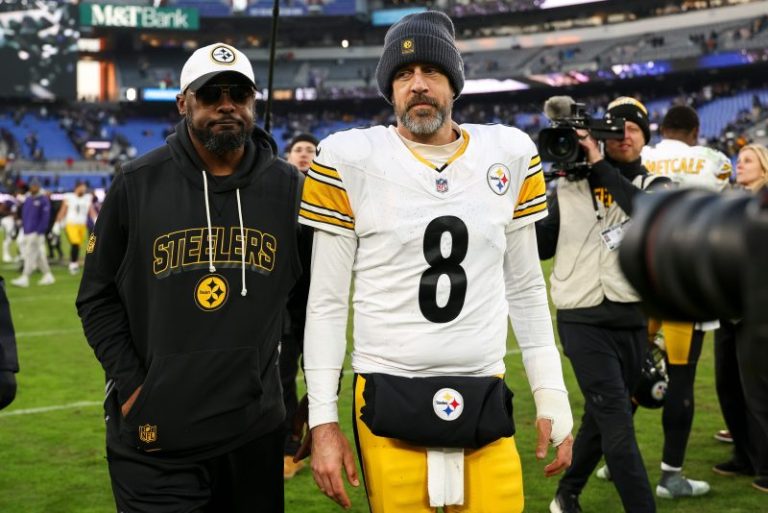
Mike Tomlin’s decision to step down might be the first of several major offseason changes for the Pittsburgh Steelers.

One day after Tomlin opted to end his 19-year run as the franchise’s coach, Steelers president Art Rooney II indicated that he believes quarterback Aaron Rodgers won’t be back with the team in 2026.

‘Aaron came here to play for Mike,’ Rooney said in a news conference. ‘So I think it will most likely affect his decision.’

Rodgers, 42, signed a one-year contract with the Steelers in June, citing Tomlin as a driving factor in his decision to link up with the team after a tumultuous two-year run with the New York Jets. The four-time NFL MVP said shortly after reaching his contract that he was ‘pretty sure’ that 2025 would be his final season, but in late December he left open the possibility of playing on – whether in Pittsburgh or elsewhere.

‘I’m thinking about this week, but obviously I’m 42 years old and I’m on a one-year deal,’ Rodgers said. ‘So you know what the situation is. Whenever the season ends, I’ll be a free agent. So that’ll give me a lot of options if I still want to play. I mean, not a lot of options, but there’ll be options, I would think, maybe one or two, if I decide I still want to play.’

After a season-ending wild-card loss to the Houston Texans on Monday, Rodgers said he would take his time while weighing retirement against returning for a 22nd season.

‘I’m not going to make any emotional decisions at this point,’ Rodgers said. ‘Such a fun year. A lot of adversity, but a lot of fun. Been a great year overall in my life in the last year, and this is a really good part of that, coming here and being a part of this team. So it’s disappointing to be sitting here with the season over.’

The Steelers currently have Mason Rudolph and 2025 sixth-round pick Will Howard as the only quarterbacks under contract with the team.

This post appeared first on USA TODAY

The NWSL Players Association (NWSLPA) has filed a formal grievance challenging the league’s High Impact Player rule.

The NWSL announced the new rule last month. The mechanism allows teams to exceed the NWSL’s salary cap by up to $1 million for certain ‘high-impact’ players, with the aim of keeping some of the league’s biggest stars from seeking out bigger paydays in Europe.

But the rule has proven controversial due to some of the criteria needed to be considered a high-impact player.

In addition to accomplishments like earning NWSL Best XI or MVP honors, a player could also meet the threshold by being named to the SportsPro Media Top 150 Most Marketable Athletes list, or being selected on the short list for awards such as the Ballon d’Or.

The NWSLPA said in a statement that it ‘is seeking immediate rescission of the HIP rule.’

The union claims that the NWSL implemented the rule unilaterally in violation of the league’s Collective Bargaining Agreement (CBA) and federal labor law.

Rather than enacting the High Impact Player rule, the NWSLPA said that it has ‘proposed instead that the NWSL simply increase the salary cap by $1 million.’

“This was a unilateral decision by the league to change how a player’s fair market value is evaluated,” said Meghann Burke, executive director of the NWSLPA.

“We agree that increasing investment in player compensation is necessary to remain competitive in the global labor market. The solution is straightforward and collectively bargained by raising the salary cap. What the league cannot do is invent a parallel pay system outside the salary cap that was never negotiated, then limit access to compensation through league-controlled criteria that excludes some players.’

The NWSL is under increasing pressure from teams in Europe that don’t have to deal with a salary cap. Several prominent players have left for England over the past year including Naomi Girma, Alyssa Thompson and Sam Coffey.

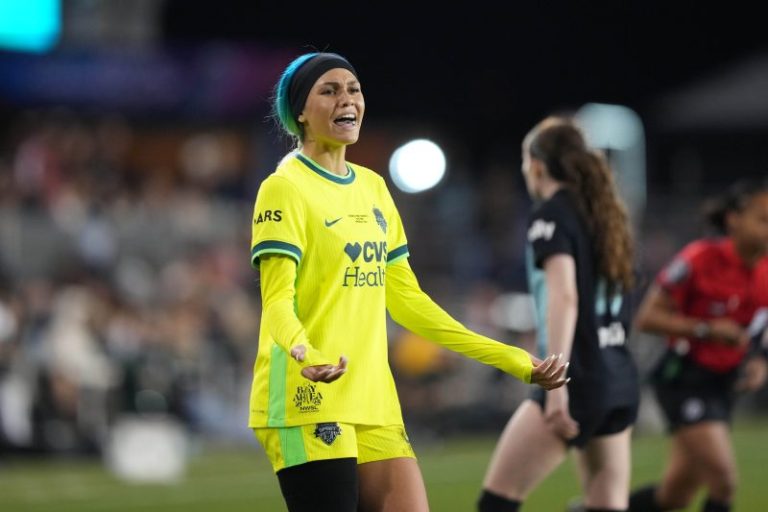
Trinity Rodman, one of the most high-profile players in the NWSL, is currently a free agent after her Washington Spirit contract expired at the end of 2025. Several European clubs have shown an interest in the 23-year-old, who has yet to decide her future.

This post appeared first on USA TODAY

Josh Heupel is a skilled quarterback developer, but his inability to acquire transfers lurks as a liability.
Tennessee’s quarterback issue intensifies if Joey Aguilar does not get another season of eligibility.
Lane Kiffin revives past as Tennessee villain, boxing out Vols for Sam Leavitt.

Call it the Big Orange conundrum. The mystery of East Tennessee. The insoluble problem of Vols-ville.

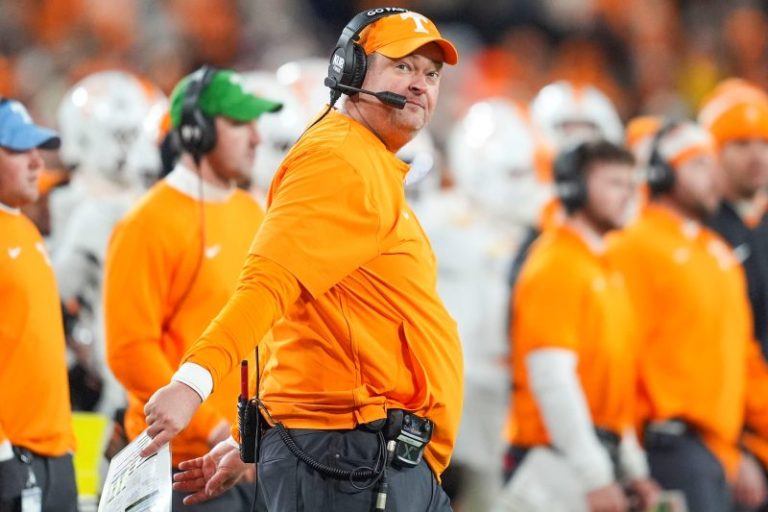
Why can’t Josh Heupel land a transfer quarterback?

It defies logic, that this former Heisman runner-up, whose Tennessee offenses have never ranked outside of the top 20 nationally, cannot secure purchase of a transfer trigger.

It’s like Gordon Ramsay being unable to get his hands on a good cut of meat. Picasso can’t procure a paint brush.

The Vols’ empty pursuit of a transfer quarterback has become one of the top head-scratchers of the portal sweepstakes.

One of the nation’s most proven quarterback developers, coaching an SEC school with a national brand, can’t wrap his fingers around a prize.

Strange.

Unless outbound Tennessee quarterback Joey Aguilar wins his courtroom bid for another season of eligibility or a quarterback pops into the portal at the 11th hour, the Vols are going to find themselves in a bit of a pickle at a position of need.

How did it come to this for Tennessee?

Tennessee didn’t pounce quickly enough on Brendan Sorsby. The Vols watched as the Cincinnati transfer zipped to Texas Tech. Sorsby said last summer he’d like to play in Neyland Stadium. Tennessee couldn’t land him.

Ironically, for a coach who prides himself on warp-speed offense, Heupel and the Vols came off the line too slowly.

The Vols whiffed on Sam Leavitt. Old nemesis Lane Kiffin literally swooped into Knoxville and outdueled Heupel for the premier prize from Arizona State. Kiffin also scooped up Landen Clark, a big-armed FCS quarterback from Elon.

If you’re scoring at home, that’s Kiffin 2, Heupel 0.

Come to think of it, Kiffin nabbed edge rusher Jordan Ross off Tennessee’s squad, too.

Kiffin 3, Heupel 0.

While Tennessee fruitlessly pursued Leavitt, former Missouri quarterback Beau Pribula jumped aboard with Virginia.

Utah changed coaches, but its talented quarterback Devon Dampier announced he’s staying put. So much for that idea.

While programs from Missouri to Baylor to Northwestern secured quarterbacks with SEC or Big Ten experience, the coach who helped mold Sam Bradford, Drew Lock and Hendon Hooker keeps having sand slip between his fingers.

It’s curious, no?

As Heupel enters a pivotal sixth season at Tennessee, his best quarterback was signed by predecessor Jeremy Pruitt, a man who wouldn’t know how to operate a quarterback if it came with an instruction manual.

It’s as if Tennessee needs to bring back its former coach as a special adviser. Let Pruitt grab a few Chick-fil-A bags and do some shopping. Then, have Heupel coach them. Tennessee never looked better throughout this millennium than when Heupel cooked with Pruitt’s ingredients.

Pruitt wouldn’t have known what to do with Hooker, but Heupel found him stashed in the cupboard. Together, they took Tennessee on a joy ride.

Trouble is, Pruitt’s guys are gone now, and a head coach who’s got plenty of cred as a quarterback developer can’t coax a transfer into a competition that badly needs a veteran.

Josh Heupel not securing a transfer QB boggles the brain

Heupel’s just never had much juice in the portal. He almost brings to mind Dabo Swinney, another solid coach who’s a proven developer but is no slick operator in the portal.

It’s not as if Tennessee’s coffers are dry.

The Tuscaloosa News, citing a person close to Simpson, reported the Vols offered the Alabama quarterback $4 million if he’d transfer to Tennessee and put the NFL on hold for a season. Simpson passed.

Tennessee’s best additions this offseason came on defense after Heupel had the good sense to hire coordinator Jim Knowles from Penn State.  

Now, if only a coach who specializes in quarterbacks could secure a quarterback.

This is no small problem. Transfers pave the roadway to glory.

Six of the eight quarterbacks to start in College Football Playoff semifinal games since the format expanded to 12 teams were transfers.

What would Heupel achieve with a proven four- or five-star transfer, someone like Josh Hoover? Tennessee fans would love to know but might never find out. Hoover rebuffed Tennessee’s pursuits last spring before transferring to Indiana from TCU after this season.

Meanwhile, Heupel plies his craft squeezing juice out of project players like Joe Milton and Aguilar, who led the nation in interceptions at Appalachian State before improving under Heupel.

While SEC peers LSU, Auburn, Missouri and Kentucky made quarterback upgrades via portal acquisitions, Tennessee’s options consist of five-star true freshman Faizon Brandon and rising redshirt freshman George MacIntyre.

Brandon will be a newbie at a position that favors veterans. Heupel last started a true freshman while UCF’s coach in 2019.

MacIntyre barely played as a freshman. His arm is capable, but his bean-pole build looks susceptible to a breeze. Never mind an SEC pass rusher. You have to wonder about his durability.

Tennessee’s interest in a transfer quarterback tells you the staff realizes it needs help in 2026. A peek at the portal rankings tells you nearly all of the top quarterback options are off the board.

So, Tennessee’s predicament lingers.

There are few coaches I’d trust more than Heupel to develop a transfer quarterback, but top transfers sure don’t seem too eager to play for him.

Blake Toppmeyer is the USA TODAY Network’s senior national college football columnist. Email him at BToppmeyer@gannett.com and follow him on X @btoppmeyer.

This post appeared first on USA TODAY

The No. 2-ranked South Carolina women’s basketball team will have a new addition when it takes on No. 4 Texas on Thursday night.

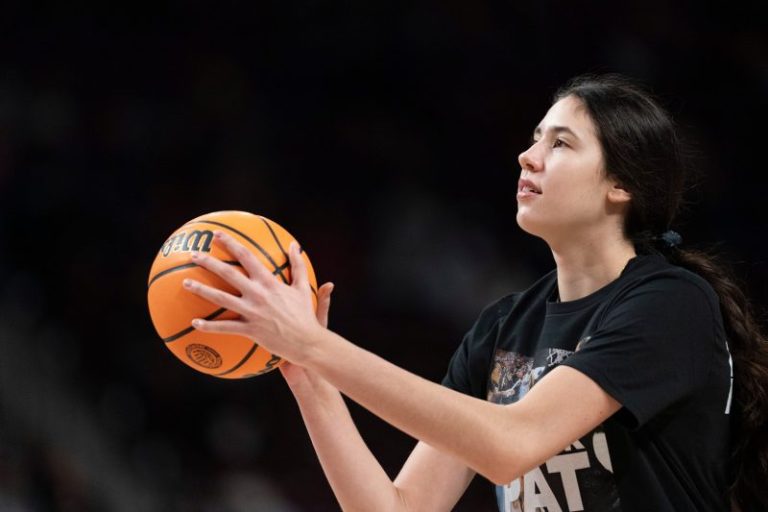
Midseason add Alicia Tournebize will be available to play, coach Dawn Staley confirmed in a media availability on Wednesday.

The 6-foot-7 forward played professionally in France for a few years before announcing she would join the Gamecocks in December. Tournebize, 18, arrived in Columbia, South Carolina, on Jan. 1 and has been practicing since Jan. 6, according to the Greenville News. She warmed up with South Carolina before they beat Georgia 65-43 on Sunday, but didn’t take the court.

‘She looked good,’ Staley told reporters Wednesday. ‘She’ll play, she’ll definitely play.’

Tournebize, who hails from Vichy, France, averaged 12.1 points, 8.9 rebounds, and 1.4 assists in the 2025 U18 EuroBasket Tournament for her country. She has also garnered attention for effortlessly throwing down one-handed dunks.

Since joining South Carolina, she’s impressed her teammates with not only her skills, but basketball IQ.

‘She’s smart like she catches on things fast,’ Gamecocks sophomore Joyce Edwards told reporters. ‘Her defense is great. Offensively she can shoot, she can space the floor out. I feel like nobody has played her so it’s going to be hard to scout against her and I’m just excited to see her out there playing.’

Tournebize is part of a wave of international players with professional experience coming into women’s college basketball. Belgian forward Nastja Claessens — who was drafted by the WNBA’s Washington Mystics in 2024 but never signed a contract with them — joined Kansas State this season and is averaging 11.4 points and 4.2 rebounds per game. Liza Astakhova played professionally in Russia before signing with North Carolina this season.

This post appeared first on USA TODAY

The NFL’s divisional round has a lot to live up to after a thrilling start to the playoffs during wild-card action. The opening four games all came down to a final possession, with fourth-quarter heroics needed by the Los Angeles Rams, Chicago Bears, Buffalo Bills and San Francisco 49ers in order to advance.

The Denver Broncos and Seattle Seahawks join the fray this week after receiving byes as the No. 1 seeds in their respective conferences, with the New England Patriots and Houston Texans also winning last week to be among the final eight teams in pursuit of a Super Bowl title.

Here’s a look at the complete NFL playoff bracket updated ahead of the divisional round games, as well as the postseason schedule leading into Super Bowl 60 next month:

Printable NFL playoff bracket

Get your very own playoff bracket to fill out and prognosticate accordingly.

Printable NFL bracket: Click here to download a PDF of the 2026 bracket

NFL playoff schedule: Divisional round

Saturday, Jan. 17:

Buffalo Bills at Denver Broncos: 4:30 p.m. ET on CBS, Paramount+, NFL+, Fubo
San Francisco 49ers at Seattle Seahawks: 8 p.m. ET on FOX, NFL+, Fubo

Sunday, Jan. 18:

Houston Texans at New England Patriots: 3 p.m. ET on ESPN, ESPN Unlimited, NFL+, Fubo
Los Angeles Rams at Chicago Bears: 6:30 p.m. ET on NBC, Peacock, NFL+, Fubo

Watch the NFL playoffs with Fubo

Conference championships

The NFC and AFC championship games will take place on Sunday, Jan. 25. The highest remaining seeds from the divisional rounds will receive home-field advantage.

When is Super Bowl 2026?

Super Bowl LX will be played at Levi’s Stadium in Santa Clara, California, on Feb. 8, 2026.

NFL playoff schedule: Wild-card round results

Saturday, Jan. 10:

Los Angeles Rams 34, Carolina Panthers 31
Chicago Bears 31, Green Bay Packers 27

Sunday, Jan. 11:

Buffalo Bills 27, Jacksonville Jaguars 24
San Francisco 49ers 23, Philadelphia Eagles 19
New England Patriots 16, Los Angeles Chargers 3

Monday, Jan. 12:

Houston Texans 30, Pittsburgh Steelers 6

This post appeared first on USA TODAY

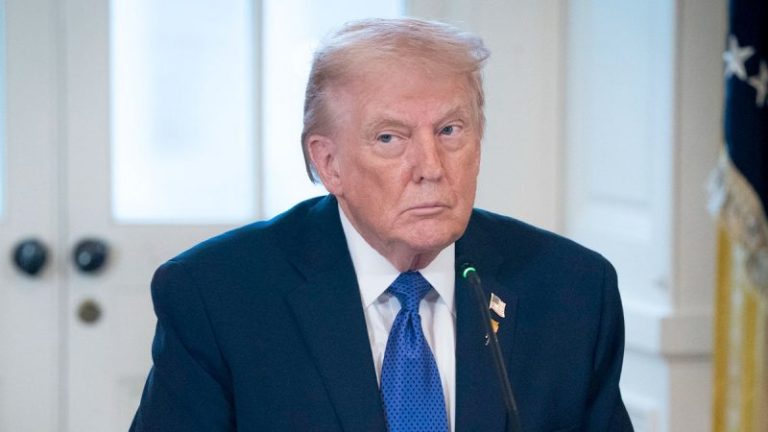
Senate Republicans successfully spiked a bipartisan attempt to curb President Donald Trump’s war powers authority after a pair of key GOP lawmakers reversed their positions. 

Republicans turned to a rarely used Senate procedure previously used by Senate Democrats in a similar situation to nullify the Venezuela war powers resolution from Sen. Tim Kaine, D-Va. The successful effort came after five Senate Republicans joined all Senate Democrats to advance the resolution last week. 

Their move drew heavy criticism and anger from Trump, who demanded that they ‘should never be elected to office again.’ 

The resolution was tanked on a 51 to 50 vote, with Vice President JD Vance coming in to break a tie in favor of Trump. 

Turning to the arcane procedural move served as a victory for both the president and Senate Majority Leader John Thune, R-S.D., after last week’s rare defeat on the floor.  

Thune, like several other Republicans, contended that the resolution was not germane to the issues at hand in Venezuela. 

‘We don’t have troops in Venezuela. There is no kinetic action, there are no operations,’ Thune said. ‘There are no boots on the ground. And I think the question is whether or not there ought to be expedited consideration or privilege accorded to something that’s brought to the floor that doesn’t reflect what’s what is current reality in Venezuela.’

‘And so I think it’s very fair for Republicans to question why we ought to be having this discussion right now, particularly at a time when we’re trying to do appropriations bills,’ he continued.

Thune, Senate Republican leadership, Trump and several administration officials launched a pressure campaign on the five original defectors who helped Senate Democrats advance the bill. While not every lawmaker flipped, Sens. Josh Hawley, R-Mo., and Todd Young, R-Ind., proved the decisive votes to help kill the resolution. 

Hawley’s primary concern was whether the administration would place troops in Venezuela, but after several meetings and conversations with Trump administration officials, he was convinced that no further military action would take place. 

‘To me, this is all about going forward,’ Hawley said of his reversal. ‘If the president decides we need to put troops on the ground in Venezuela, then Congress will need to weigh in.’

Young kept tight-lipped about his plan until the vote opened, and explained before walking onto the Senate floor that the deliverables and guarantees he had received from Secretary of State Marco Rubio and the administration were enough for him. 

Among those were promises that if Trump did want to use force against Venezuela, he would first request authorization from Congress, and that Rubio would appear before the Senate Foreign Relations Committee for a public hearing in the coming weeks to give an update on the situation in the region.

‘Those who understand how Congress works, the good and the bad and the ugly, understand that votes like this, in the end, are communications exercises,’ Young said. ‘They’re important communications exercises, but unless you can secure sufficient votes, not only to pass the United States Senate, but to get out of the House, with which is highly questionable, right, and then to override what was an inevitable presidential veto, which is impossible. No one can tell me how we get there.’ 

‘I had to accept that this was all a communications exercise,’ he continued. ‘I think we use this moment to shine a bright light on Congress’ shortcomings as it relates to war powers in recent history.’

Still, Sens. Susan Collins, R-Maine, Lisa Murkowski, R-Alaska, and Rand Paul, R-Ky., joined Senate Democrats to try and save the effort. 

Most Senate Republicans who were briefed on the matter last week argued that the strikes in Venezuela were justified and that the military was used to assist in a law enforcement operation to capture Maduro.

Rubio, in a letter to Senate Foreign Relations Chair James Risch, R-Idaho, affirmed, ‘There are currently no U.S. Armed Forces in Venezuela.’

‘Should there be any new military operations that introduce U.S. Armed Forces into hostilities, they will be undertaken consistent with the Constitution of the United States, and we will transmit written notifications consistent with section 4(a) of the War Powers Resolution (Public Law 93-148),’ Rubio wrote.

Kaine, who was confident that he would have the votes, panned that move ahead of the vote.

‘If people want to just say, ‘Hey, President Trump, do whatever the hell you want,’ Let them vote that way, but don’t change the rules of the Senate in a way that might disable future Senates that do have a backbone,’ Kaine told reporters.

This post appeared first on FOX NEWS

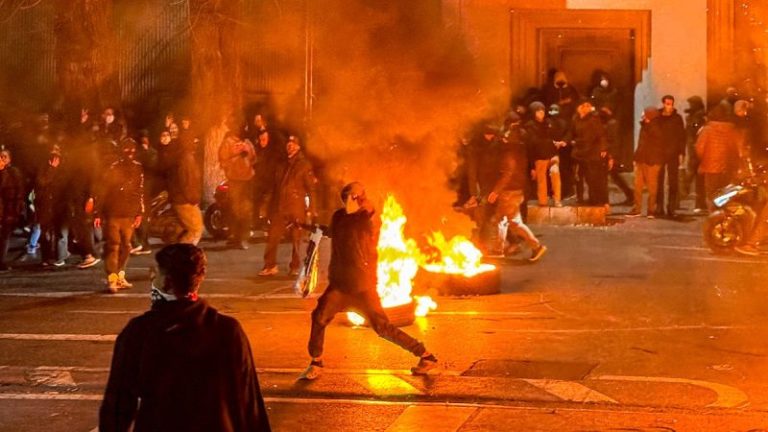
The Iranian regime has allegedly broadcast at least 97 ‘coercive confessions’ from detained protesters on state television in just over two weeks, human rights groups say, as residents endure the longest internet blackout on record.

The videos reportedly feature handcuffed detainees with blurred faces showing remorse for their actions since the protests began Dec. 28, according to a rights group tracking the videos.

It said ominous music can be heard, and edited footage shows attacks on security forces, according to reporting by The Associated Press and data from the Human Rights Activists News Agency (HRANA).

Other rights groups also claim the confession videos are coerced and obtained under duress, with protesters ‘dragged before cameras under the threat of torture and execution.’

‘The regime’s broadcast of so-called confessions by detained protesters is a threadbare and worn tactic,’ Ali Safavi, a senior official with the National Council of Resistance of Iran (NCRI), told Fox News Digital.

‘Time and time again, the henchmen drag arrested demonstrators before cameras under the threat of torture and execution, coercing them to recant their beliefs or invent absurd stories.’

The broadcasts come amid nationwide protests sparked by public anger over political repression, economic collapse and alleged abuses by security forces.

Demonstrations have spread across major cities despite mass arrests, lethal force and sweeping restrictions on communication.

Safavi said the confessions serve a dual purpose. 

‘First, they are meant to justify the mass slaughter of protesters, no fewer than 3,000, which NCRI President-elect Maryam Rajavi has stated constitute manifest crimes against humanity,’ he said.

‘These forced confessions are designed to demoralize the Iranian people and sow fear and doubt.’

But he said any mass executions or staged confessions ‘won’t achieve that because no amount of televised coercion or repression will break the protesters’ resolve.’

U.S.-based HRANA has warned that forced confessions in Iran frequently follow psychological or physical torture and can carry severe consequences, including death sentences.

‘These rights violations compound on top of each other and lead to horrific outcomes,’ Skylar Thompson, HRANA group’s deputy director, told The Associated Press, adding that the scale of broadcasts is unprecedented.

The confession campaign coincides with a sweeping internet shutdown that has effectively cut the public off from independent information.

According to NetBlocks, Iran’s internet blackout has surpassed 144 consecutive hours, making it one of the longest disruptions ever recorded.

‘The shutdown is still ongoing, making it one of the longest blackouts on record,’ Isik Mater, NetBlocks’ director of research, told Fox News Digital.

‘State TV continues to operate normally via satellite transmission, which does not depend on the public internet, which means households can still watch Iranian state channels even during a near-total shutdown.’

Mater said the blackout magnifies the impact of state propaganda because ‘while the public is cut off, the state relies on broadcast media and its domestic National Information Network to control what people see,’ he said, likening Iran’s information strategy to that of North Korea.

‘A useful comparison is North Korea where the vast majority of citizens there have little to no access to the global internet, yet the state TV and radio broadcast regime propaganda 24/7,’ he said.

‘Information flows through closed systems, like North Korea’s domestic intranet Kwangmyong and not the open internet.’

Mater added that shutdowns are highly selective, with senior officials and state institutions retaining connectivity through ‘whitelisted networks.’

‘Senior officials and state institutions retain connectivity via whitelisted government networks and private links,’ Mater said.

‘This is why Ali Khamenei and other government officials continue posting on global social media platforms during the blackout, enabling the regime to shape the narrative internationally while citizens are unable to document events or even respond.’

This post appeared first on FOX NEWS

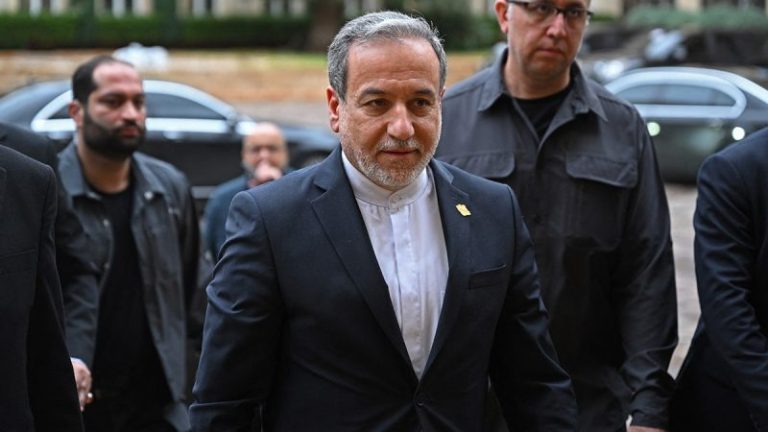
Iranian Foreign Minister Abbas Araghchi rejected claims of mass casualties amid a recent surge in protests within the Islamic country and blamed any killings that have taken place on an ‘Israeli plot’ intended to create a large number of casualties. 

The claim came during a wide-ranging interview on Fox News’ ‘Special Report with Brett Baier’ Wednesday evening, during which Araghchi was told estimates have indicated the death toll in his country could be anywhere between 2,500 to more than 12,000 protesters. But, according to the top Iranian official, the number is in the hundreds. 

‘When terrorist elements led from outside, entered this, you know, protests and started to shoot, you know, police forces, police officers and security forces. And there were terrorist cells. They came in, they used Daesh-style terrorist operations. They got police officers, burned them alive, they beheaded them, and they started shooting at police officers and also to the people. So as a result, for three days, we had, in fact, fighting against terrorists, and not with the protesters,’ Araghchi said. ‘It was completely a different story.’

According to Araghchi, these rogue, terrorist-like actors he spoke of started shooting at civilians for ‘one reason,’ which he said was to draw the United States into the conflict. 

‘They wanted to increase the number of deaths. Why? Because President Trump has said that if there are killings, he would intervene. And they wanted to drag him into this conflict,’ the Iranian Foreign Minister continued. ‘And that was exactly an Israeli plot. They started to increase the number of deaths by killing ordinary people, by killing police officers, by starting a kind of, you know, fighting inside the different cities.’

Iran has seen widespread unrest since the last week of December, as the country faces a massive economic crash that spurred many in Iran to take to the streets in protest.


Contrary to Araghchi’s claims are eyewitness reports that describe government forces in Iran firing upon unarmed protesters. Some even spoke of snipers taking aim at innocent Iranians, according to testimony shared with the New York Times.

During Baier’s interview with Iran’s Foreign Minister, Araghchi also insisted that there are no imminent plans to hang, or otherwise execute, protesters. The top Iranian official tried to downplay the unrest erupting in his country as well, arguing there is now ‘a calm.’    

‘We are in full control,’ Araghchi added. ‘And let’s, you know, hope that wisdom would prevail. And we don’t go for a high level of tension, which could be disastrous for everybody.’

This post appeared first on FOX NEWS

The House of Representatives passed a roughly $80 billion spending package Wednesday evening, taking a significant step toward averting a government shutdown at the end of this month.

The package combines two of Congress’ 12 annual appropriations bills in what’s called a ‘minibus.’ It covers funding for the State Department and related national security, as well as federal financial services and general government operations.

The bill passed with overwhelming bipartisan support in a 341-79 vote.

Glaring questions still remain, however, over funding for the Department of Homeland Security (DHS) as progressives threaten to withhold support from any such bill unless it’s paired with significant reforms to Immigration and Customs Enforcement (ICE).

The push comes from the left in response to an ICE agent shooting 37-year-old Renee Nicole Good, a U.S. citizen who was driving her car when it made physical contact with a law enforcement official who then fatally shot her.

Partisan divisions have erupted over the narrative, with GOP officials like DHS Secretary Kristi Noem saying the agent acted in self-defense, while Democrats on Capitol Hill have called for criminal investigations.

DHS funding was initially expected to be part of this minibus, but House Appropriations Committee Chairman Tom Cole, R-Okla., told reporters earlier this week he would like to see the bill as part of the final package that’s also expected to include funding for the Department of War, Department of Transportation, Department of Labor, the Education Department and Health and Human Services, among others.

But the top Democrat on the panel, Rep. Rosa DeLauro, D-Conn., told reporters Tuesday she wanted to see DHS funding as a separate bill.

‘It’s got to be by itself,’ DeLauro said. ‘It’s got to be separate.’

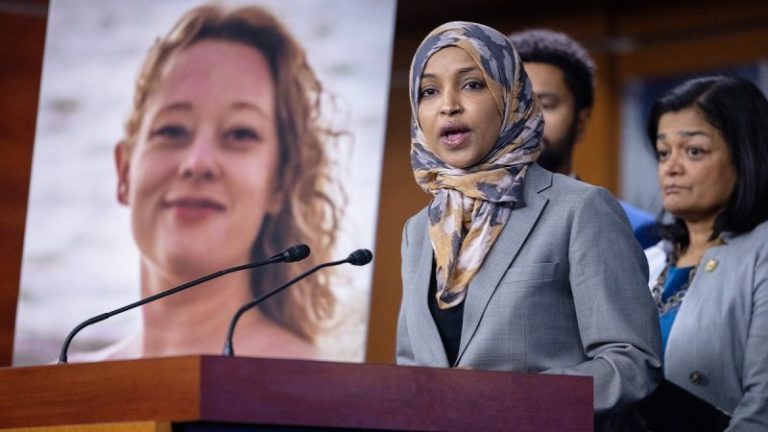
Meanwhile, the Congressional Progressive Caucus is formally threatening to oppose any DHS funding that does not change immigration enforcement policy, Rep. Ilhan Omar, D-Minn., announced.

‘Our caucus members will oppose all funding for immigration enforcement in any appropriation bills until meaningful reforms are enacted to end militarized policing practices. We cannot, and we should not continue to fund agencies that operate with impunity,’ she told reporters.

But the bill that passed Wednesday did so with wide bipartisan support, as expected.

All federal spending bills after last year’s government shutdown are a product of bipartisan discussions between the House and Senate.

The recent package totals just over $76 billion in federal funds and is now headed to the Senate for its approval before reaching President Donald Trump’s desk.

The State Department and national security bill includes $850 million for an ‘America First Opportunity Fund,’ aimed at giving the secretary of state funding to respond to potential unforeseen circumstances.

Both Republicans and Democrats touted different victories in the legislation, with a summary by House Appropriations Committee Republicans stating the bill supports ‘President Trump’s America First foreign policy by eliminating wasteful spending on DEI or woke programming, climate change mandates, and divisive gender ideologies.’

Democrats said the bill ‘supports women globally’ by ‘protecting funding for bilateral family planning and the United Nations Population Fund (UNFPA)’ and pointed to $6.8 billion for a new account ‘that supports the activities previously funded under Development Assistance.’ 

The bill also provides millions in security assistance for Israel and Taiwan, among other global partners across the world.

The latter bill provides just over $13 billion for the U.S. Treasury for the remainder of fiscal year 2026, while also including a provision that stops the IRS ‘from targeting individuals or groups for exercising their First Amendment rights or ideological beliefs,’ according to Republicans.

It also provides $872 million for the Executive Office of the President and $9.69 billion in discretionary funding for the Federal Judiciary.

Across the Capitol, the Senate is expected to vote on and pass the previous three-bill funding package on Thursday before leaving Washington, D.C., for a weeklong recess.

Neither side appears willing to thrust the government into another shutdown, with Senate Democrats in particular viewing the package as an opportunity to fund several of their priorities. But there is a growing consensus that a short-term funding patch will be needed to allow lawmakers to finish work on the thornier DHS bill.

‘Homeland is obviously the hardest one, and it’s possible that, if we can’t get agreement, that there could be some sort of CR that funds some of these bills into next year,’ Senate Majority Leader John Thune, R-S.D., said.

Still, bipartisan funding talks are still happening, a stark departure from the last government funding deadline in October. But lawmakers in the upper chamber won’t be able to tackle the two-bill package until they return toward the end of the month.

This post appeared first on FOX NEWS