Archive

2026

Browsing

Athletes from more than 90 countries will compete for Winter Olympic medals in 116 events over 16 days, and USA TODAY is keeping a tally of every nation finishing on the podium. Here’s a look at the latest medal standings on the morning of Saturday, Feb. 14, as well as when each medal event will take place.

USA TODAY Sports has a team of more than a dozen journalists on the ground in Italy to bring you behind the scenes with Team USA and keep you up to date with every medal win, big moment and triumphant finish. Get our Chasing Gold newsletter in your inbox every morning and join our WhatsApp channel to get the latest updates right in your texts.

Broadcast coverage of the 2026 Milano Cortino Winter Olympics is airing exclusively airing across NBC’s suite of networks with many competitions airing live on its streaming service, Peacock, which you can sign up for here .

What is the medal count at the 2026 Milano Cortina Olympics?

All data accurate as of Saturday, Feb. 14, 2026, at 8:49 a.m.

Meet Team USA 2026: Get to know the athletes behind the games

1. Norway: 19 Total (9 Gold, 3 Silver, 7 Bronze)
2. Italy: 18 Total (6 Gold, 3 Silver, 9 Bronze)
3. United States: 16 Total (4 Gold, 8 Silver, 4 Bronze)
4. Japan: 14 Total (3 Gold, 3 Silver, 8 Bronze)
5. Austria: 12 Total (3 Gold, 6 Silver, 3 Bronze)
6. Germany: 11 Total (4 Gold, 4 Silver, 3 Bronze)
7. France: 10 Total (4 Gold, 5 Silver, 1 Bronze)
8. Sweden: 9 Total (4 Gold, 4 Silver, 1 Bronze)
9. Switzerland: 7 Total (4 Gold, 1 Silver, 2 Bronze)
10. Netherlands: 7 Total (3 Gold, 3 Silver, 1 Bronze)
11. Canada: 7 Total (0 Gold, 3 Silver, 4 Bronze)
12. Czech Republic: 4 Total (2 Gold, 2 Silver, 0 Bronze)
13. South Korea: 4 Total (1 Gold, 1 Silver, 2 Bronze)
14. China: 4 Total (0 Gold, 2 Silver, 2 Bronze)
15. Australia: 4 Total (3 Gold, 1 Silver, 0 Bronze)
16. Slovenia: 2 Total (1 Gold, 1 Silver, 0 Bronze)
17. Poland: 2 Total (0 Gold, 2 Silver, 0 Bronze)
18. New Zealand: 2 Total (0 Gold, 1 Silver, 1 Bronze)
19. Bulgaria: 2 Total (0 Gold, 0 Silver, 2 Bronze)
20. Finland: 2 Total (0 Gold, 0 Silver, 2 Bronze)
21. Kazakhstan: 1 Total (1 Gold, 0 Silver, 0 Bronze)
22. Latvia: 1 Total (0 Gold, 1 Silver, 0 Bronze)
23. Belgium: 1 Total (0 Gold, 0 Silver, 1 Bronze)
24. Great Britain: 1 Total (1 Gold, 0 Silver, 0 Bronze)

2026 Winter Olympics medal events schedule

Feb. 14

FREESTYLE SKIING: Women’s Dual Moguls Final
CROSS-COUNTRY SKIING: Women’s 4×7.5km Relay
ALPINE SKIING: Men’s Giant Slalom Final
BIATHLON: Women’s 7.5km Sprint
SPEED SKATING: Men’s 500m
SKELETON: Women’s Final
SKI JUMPING: Men’s Large Hill
SHORT TRACK: Men’s 1500m

Feb. 15

BIATHLON: Men’s 12.5km Pursuit
FREESTYLE SKIING: Men’s Dual Moguls Final
CROSS-COUNTRY SKIING: Men’s 4×7.5km Relay
ALPINE SKIING: Women’s Giant Slalom
SNOWBOARDING: Mixed Team Cross Final
BIATHLON: Women’s 10km Pursuit
SPEED SKATING: Women’s 500m
SKELETON: Mixed Team
SKI JUMPING: Women’s Large Hill

Feb. 16

SHORT TRACK: Women’s 1000m
ALPINE SKIING: Men’s Slalom
FIGURE SKATING: Pair Skating Free Skate
FREESTYLE SKIING: Women’s Big Air Final
SKI JUMPING: Men’s Super Team Final Round
BOBSLED: Women’s Singles

Feb. 17

NORDIC COMBINED: Large Hill/10km: 10km
SNOWBOARDING: Women’s Slopestyle Final
BIATHLON: Men’s 4×7.5km Relay
SPEED SKATING: Men’s, Women’s Team Pursuit Finals
BOBSLED: Men’s Doubles

Feb. 18

CROSS-COUNTRY SKIING: Women’s, Men’s Team Sprint Free Final
FREESTYLE SKIING: Women’s Aerials Final
SNOWBOARDING: Men’s Slopestyle Final
ALPINE SKIING: Women’s Slalom
BIATHLON: Women’s 4x6km Relay
SHORT TRACK: Women’s 3000m Relay
SHORT TRACK: Men’s 500m

Feb. 19

FREESTYLE SKIING: Men’s Aerials Final
SKI MOUNTAINEERING: Women’s, Men’s Sprint
NORDIC COMBINED: Team Sprint/Large Hill 2×7.5km
ICE HOCKEY: Women’s Final
SPEED SKATING: Men’s 1500m
FIGURE SKATING: Women’s Free Skate

Feb. 20

FREESTYLE SKIING: Women’s Cross Final
BIATHLON: Men’s 15km Mass Start
SPEED SKATING: Women’s 1500m
CURLING: Men’s Bronze Medal Game
FREESTYLE SKIING: Men’s Halfpipe Final
SHORT TRACK: Men’s 5000m Relay Final
SHORT TRACK: Women’s 1500m Final

Feb. 21

CROSS-COUNTRY SKIING: Men’s 50km Mass Start Classic
FREESTYLE SKIING: Mixed Team Aerials Final
FREESTYLE SKIING: Men’s Cross Final
SKI MOUNTAINEERING: Mixed Relay
CURLING: Men’s Gold Medal Game, Women’s Bronze Medal Game
BIATHLON: Women’s 12.5km Mass Start
SPEED SKATING: Men’s, Women’s Mass Start
FREESTYLE SKIING: Women’s Halfpipe Final
ICE HOCKEY: Men’s Bronze Medal Game
BOBSLED: Women’s Doubles: Heat 4

Feb. 22

CROSS-COUNTRY SKIING: Women’s 50km Mass Start Classic
CURLING: Women’s Gold Medal Game
BOBSLED: Men’s Quads Final
ICE HOCKEY: Men’s Gold Medal Game

This post appeared first on USA TODAY

CORTINA D’AMPEZZO, Italy — The Ukrainian skeleton racer disqualified from the 2026 Milano Cortina Olympics over his remembrance helmet has received his country’s Order of Freedom.

Ukraine president Volodymyr Zelenskyy presented Vladyslav Heraskevych with the honor during a meeting in Munich, Germany, on Friday, Feb. 13, hours after the Court of Arbitration for Sport denied the athlete’s appeal of his disqualification. CAS said that while it sympathized with Heraskevych’s wish to memorialize athletes killed in Russia’s unprovoked war on Ukraine, the helmet was a violation of the International Olympic Committee’s ban on political statements on the field of play.

‘Remembrance is not a violation,’ Zelenskyy wrote in a social media post that included photos of him meeting with Heraskevych and his father, Mykhailo, who is also his coach.

‘Ukraine will always have champions and Olympians. But above all, Ukraine’s greatest asset is Ukrainians – those who cherish the truth and the memory of the athletes killed by Russia, athletes who will never compete again because of the Russian aggression,’ Zelenskyy said. ‘Thank you for your stance, your strength, and your courage. Glory to Ukraine!’

Heraskevych’s helmet has images of more than 20 athletes and coaches killed since Russia invaded Ukraine almost four years ago. They include figure skater Dmytro Sharpar, who competed with Heraskevych during the 2016 Winter Youth Olympics.

The IOC had told Heraskevych repeatedly he could not wear the helmet during competition and offered him alternatives, including a black armband while he raced and the ability to carry the helmet with him afterward. But Heraskevych resisted, saying the helmet was a remembrance, not a political statement.

He met with IOC president Kirsty Coventry Thursday, Feb. 12, hours before the men’s skeleton competition was to begin. When he said he still intended to wear the helmet, he was disqualified.

Heraskevych’s case has roiled the Winter Olympics, with his defenders saying this is yet another example of the IOC going out of its way to accommodate Russia. Ukrainian athletes in other sports, as well as some of Heraskevych’s competitors, have knelt in protest or expressed their support for his cause.

This is not the first time Heraskevych has used his Olympic platform to protest Russia’s aggression toward his country. He displayed a small sign with ‘No war in Ukraine’ after his final run at the 2022 Olympics in Beijing.

Russia invaded Ukraine two weeks later.

This post appeared first on USA TODAY

MILAN — It was set to be a coronation inside Milano Ice Skating Arena. The American prodigy, the “Quad God” Ilia Malinin was going to take his place in figure skating lore and become the 2026 Winter Olympic champion.

He felt good throughout Friday, Feb. 13. He figured all he needed to was just trust the process he had gone through for the past two years of his dominant run. He has trained and practiced his whole life for this moment. 

All was well — until it was time to take the ice. 

Before he stepped out into a full arena, eager to celebrate an historic achievement, he knew something was wrong, and it planted the first seeds of a disastrous night.

“Going into that starting post,” Malinin said. “I just felt like all the just traumatic moments of my life really just started flooding my head. There’s just so many negative thoughts that just flooded into there.

‘I just did not handle it.’

It was a stunner in the men’s singles free skate, as not only did the 21-year-old U.S. star not win gold, but he didn’t even reach the podium, finishing in eighth place, the worst competition result of his senior career since March 2022.

There are so many questions as to what happened. After the short program, Malinin set himself up for another victory. After so many other skaters before him struggled, it was as if the gold medal was being handed to him on a golden platter.

Even though he had a bad feeling, immediately after the program he was still trying to understand how everything unraveled.

‘I still haven’t been able to process what just happened,’ he said. ‘It’s a lot of mixed emotions.”

The first sign of trouble came on his planned quad Axel; his signature move, and one he had yet to do in Milano Cortina. He geared up for it — only to bail on it midair, resulting in just a single Axel.

Still, everything felt fine. Then there was the botched quad loop, scored as a double loop. The quad lutz? Also missed. Things just continued to unravel, and by the time he landed a backflip in the later part of his program, it didn’t matter. Gold, and an Olympic medal, just slipped through his hands.

For such a shocking result, everyone wants to know what happened. Given how so many skaters prior to Malinin kept falling, was there something up with the ice?

‘Maybe the ice was also not the best condition for what I would like to have,” Malinin said. ‘That’s something I cannot complain about, because we’re all put in that situation where we have to skate no matter what happens.’

Was this some sort of karma for him not making the 2022 Olympic team in Beijing?

‘I think if I went to ’22, then I would have had more experience and know how to handle this Olympic environment. But also, I don’t know what the next stages of my life would look like if I went there,’ Malinin said.

OK, so what was it?

If he had to pinpoint it, the pressure just got to him, at the worst possible time.

“People only realized the pressure and the nerves that actually happened from the inside. It was really just something that overwhelmed me,” he said. ‘I just felt like I had no control.’

You didn’t need to really know figure skating to know the expectations for Malinin. He was hyped up as the next great American athlete, a once-in-a-generation skater. All the build-up around the Winter Olympics was he didn’t just have a chance to win gold, he was going to win it. The only real question was if he was going to shatter Nathan Chen’s Olympic and world record scores.

But then we were reminded: nothing is guaranteed in sports. When the lights are at its brightest, when the world is watching – and expecting – perfection, it can break you. Especially for someone that was just able to order alcohol in the U.S. two months ago, and still feels like a teenager.

‘It’s not easy,” he said. ‘Being the Olympic gold hopeful is really just a lot to deal with, especially for my age.”

There is no doubt this will be something that will sting for some time. It’s going to be something that will hover above his head, and something he will have to work to shake off for the next four years until the 2030 Winter Olympics in the French Alps. Until then, people are going to remember what happened in 2026.

So where does the ‘Quad God’ go from here?

‘It wasn’t my best skate, and it was definitely something I wasn’t expecting, and it’s done,” he said. ‘I can’t go back and change it, even though I would love to do it. But from here, it’s just regrouping, figuring out what to do next.”

A devastating outcome that turned a coronation into a funeral.

‘I felt like this is what I wanted to do. This is what we plan. This is what I practice, and really just needed to go out there and just do what I always do,” he added. ‘That did not happen, and I don’t know why.”

This post appeared first on USA TODAY
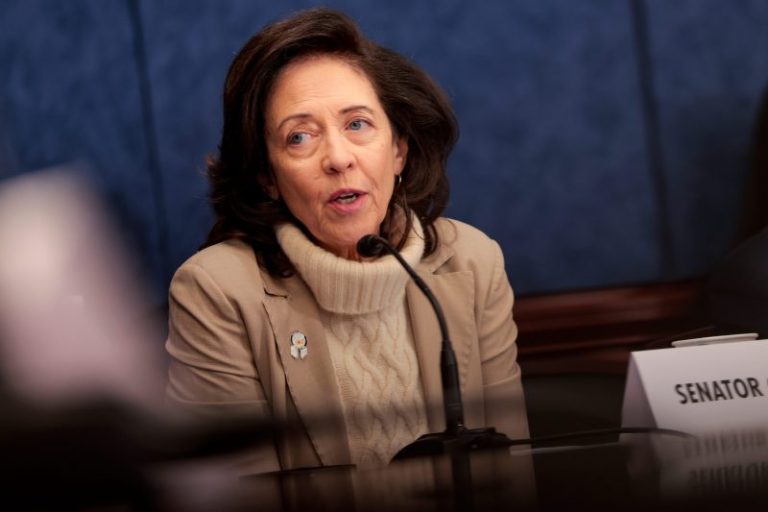
Team USA’s Mikaela Shiffrin has not produced a strong start to the 2026 Milano Cortina Winter Olympics.

She failed to medal in her first event, having competed in the women’s team combined event and finishing fourth. Shiffrin did a slalom run but finished 15th among the racers in the event. 

She will compete in the women’s slalom run and women’s giant slalom individual events in the coming days. 

The four-time Olympian has three medals, but didn’t produce a medal during the Olympics in 2022.

She decided to limit her Olympics schedule this year. Instead of competing in all six Alpine skiing events, she’s put all her focus into the slalom events.

When is Mikaela Shiffrin competing at 2026 Winter Olympics?

Here’s a look at Shiffrin’s remaining competition schedule for the 2026 Winter Olympics:

Feb. 15: Women’s giant slalom run 1 | 4 a.m. ET
Feb. 15: Women’s giant slalom run 2 | 7:30 a.m. ET
Feb. 18: Women’s slalom run 1 | 4 a.m. ET
Feb. 18: Women’s slalom run 2 | 7:30 a.m. ET

How to watch 2026 Winter Olympics

Here’s how to watch Shiffrin and the rest of Team USA at the 2026 Winter Olympics in Italy:

TV channel: NBC, USA Network
Streaming: Peacock

Watch the 2026 Winter Olympics on Peacock

This post appeared first on USA TODAY
It’s still possible that rain could spoil the Daytona 500, the season opener for NASCAR’s Cup Series on Sunday.

The latest forecasts show a 55% chance of rain on Sunday with the added possibility of thunderstorms.

In the past 15 years, the Great American Race has been moved to or finished on Monday because of inclement weather in 2012, 2020 and 2024. In 2021, the race was delayed six hours and didn’t finish until after midnight.

Kyle Busch – who has never won the Daytona 500 – is the pole sitter for Sunday’s race, the 68th edition of the historic competition. Chase Briscoe, Joey Logano, Chase Elliott and Ryan Blaney round out the starting top five. The race will also feature seven-time Cup Series champion Jimmie Johnson.

Buy your copy of our commemorative Dale Earnhardt book!

Daytona 500 weather forecast

Here’s the latest AccuWeather forecast for Daytona Beach, Florida:

Saturday, Feb. 14: Partly cloudy with a high temperature of 72 degrees and a low of 58. Chance of precipitation: 2%.
Sunday, Feb. 15: Breezy and cloudy. Rain showers and thunderstorms are increasingly possible in spots late in the afternoon. High temperature of 77 degrees and a low of 62. Chance of precipitation: 55%
Monday, Feb. 16: Passing showers are likely in the morning. In the afternoon, it’ll be breezy and the sun is expected to peek through the clouds. High temperature of 69 degrees and a low of 53. Chance of precipitation: 55%.

When is the 2026 Daytona 500?

Date: Sunday, Feb. 15
Start time: 2:30 p.m. ET
Location: Daytona International Speedway (Daytona Beach, Florida)
TV: Fox
Streaming: Fubo (free trial), Sling
Defending champion: William Byron

Daytona 500, Speedweek schedule

All times Eastern

Saturday, Feb. 14: O’Reilly Auto Parts Series qualifying | 10 a.m. | CW
Saturday, Feb. 14: General Tire 200 (ARCA Menards Series) | Noon | Fox
Saturday, Feb. 14: United Rentals 300 (O’Reilly Auto Parts Series) | 5 p.m. | CW
Sunday, Feb. 15: Daytona 500 | 2:30 p.m. | Fox

This post appeared first on USA TODAY
Los Angeles Kings forward Kevin Fiala will be sidelined with an injury for the remainder of the 2026 Milano Cortina Winter Olympics.

The 6-foot forward got tangled up along the boards with Tom Wilson in the third period of Switzerland’s 5-1 loss against a loaded Canada team on Friday, Feb. 13 at the Milano Santagiulia Ice Hockey Arena in Milan.

Switzerland provided an update on Fiala’s injury in a news release on Feb. 13. ‘Kevin Fiala was injured in the second group game against Canada and will miss the rest of the Olympic tournament,’ the Swiss said in a social media post accompanying the release.

A translation of the release says Fiala suffered a ‘lower leg injury.’

Fiala is one of 147 NHL players representing their native country in the 2026 Winter Games, and one of 11 players on Switzerland’s roster.

‘Very hard,’ Swiss forward Nico Hischier said after the game, according to The Athletic. ‘Stuff like that is hard to watch. Kevin’s a big part of our group. In hockey, stuff like that happens. But it’s tough to watch and didn’t look great. I hope it’s better than it looked like.’

Added Wilson: ‘It’s the Olympic Games and I feel terrible that he may not be able to keep playing. Just sending his family and him my best. You never want to see a guy go down — in a tournament like this, especially. Sucks for the country, for their team. Just wishing him a quick recovery.’

In 56 games this season for the Kings, Fiala has recorded 18 goals. Switzerland returns to action on Sunday, Feb. 15 at 6:10 a.m. ET against Czechia inside the Milano Santagiulia Ice Hockey Arena.

The USA TODAY app gets you to the heart of the news — fastDownload for award-winning coverage, crosswords, audio storytelling, the eNewspaper and more.

This post appeared first on USA TODAY
LIVIGNO, Italy – They’re already calling a spectacular men’s final at the 2026 Winter Olympics the greatest halfpipe display ever in snowboarding.

It’s just a shame Team USA can’t claim a bigger piece of it.

Three Americans in this final – Jake Pates, Alessandro Barbieri and Chase Josey – each had their moments. They each pulled off impressive tricks and produced at least one relatively clean run.

But none of the USA’s riders finished better than eighth out of 12, and that wasn’t a matter of it not being their night. It genuinely felt like the Americans – except for possibly the 17-year-old Barbieri – were outgunned from the start. Especially by the riders from Japan.

Were there any lingering doubts about the extent of the Japanese takeover of this event, this final should’ve cleared that up. Australian star Scotty James’ silver medal was all that kept Japan from sweeping the podium. Four of the top seven finishers were Japanese, and the lowest on that list – Ayumu Hirano in seventh – was the gold-medalist in 2022 in Beijing.

In 2026, Yuto Totsuka won with a 95, and Ryusei Yamada claimed bronze with a 92.

“Ayumu landed an incredible run that was probably better than his run in 2022 Beijing,” said Team USA’s Josey of Hirano’s 86.50. “It just goes to show that four years progression really goes fast.”

In the past four Olympics, Japan has six of 12 possible medals in men’s halfpipe. The U.S. has one – Shaun White’s gold from PyeongChang in 2018.

In 2030, it’ll be 20 years since any American other than White claimed any medal in men’s halfpipe. And it isn’t that the U.S. is getting worse at snowboarding. It’s that other nations are getting better a lot faster.

“It’s really just putting a run together with all of those tricks and pushing the amplitude, the style, the execution,” said Josey, who finished 11th at Livigno Snow Park. “It’s just a combination of all of those. So for the U.S. to get on that level? We’re not far behind, really. They are just so consistent and clutch. We’re pretty hot on their heels, and I think Alessandro is going to have his moment on the podium before we know it.”

Barbieri, clearly, is the brightest future hope for the U.S. in halfpipe. He finished fourth in qualifying to reach this Olympic final, and he opened with a 75 in his first run before failing to make it cleanly through his next two.

The difficulty was there. Barbieri didn’t back down. He went for it. That’s why he’ll have better Olympics ahead of him. He just couldn’t stay upright enough this time.

He was 10th in his first Olympic final – and he took the result hard.

“If I didn’t feel like I was up there (with the world’s best), I wouldn’t be bawling my eyes out,” Barbieri said. “… Obviously, if I would have landed my runs, I would have been probably up there. Good job to other guys who made it. Three of the very best. It was cool to watch.

“But, yeah, I’ll be back.”

Pates, in eighth place, was the USA’s highest finisher in this Olympics with a score of 77.50. He’s a great story. It’s remarkable to think someone who gave up snowboarding for about four years can jump back into it only recently and participate in an Olympic final like this.

But, hey, guess where Pates traveled last summer to get his form back so quickly?

Yup. Japan. “That’s the only way I’ve been able to come back and do this at all,” he said.

Basically, Pates said, the Japanese are putting more into the sport in different ways. There are gaps in funding and resources as well as the “dedication on the U.S. riders’ side of things, to be honest,’ he said.

“They’re just hungry,” Josey said of the Japanese riders, “and they know they have to ride hard to get the respect that they want. They’re just fired up, and they’re strong, and they are ready to push the limits beyond what’s been seen. That’s inspiring.

“Beyond that, they do have a really good airbag facility in Japan that’s next level. It’s like it mimics a halfpipe takeoff and landing. That’s something the U.S. doesn’t have right now.”

And in snowboarding’s marquee men’s event at the 2026 Olympics, a spectacularly entertaining, memorable evening that’ll reverberate through this sport for years, it was difficult to envision how the U.S. ever had much of a chance.

Reach sports columnist Gentry Estes at gestes@gannett.com and hang out with him on Bluesky @gentryestes.bsky.social

This post appeared first on USA TODAY
Baltimore Orioles catcher Maverick Handley advises young athletes to embrace the team aspect of sports.
Handley emphasizes that burnout is real and it is acceptable for athletes to take breaks.
Handley encourages players to communicate their struggles and seek help, stating it is a sign of maturity.

We tend to think of getting drafted by a major league sports team as a glamorous endeavor.

Sports was never the solution to his problems. It was more like a tonic to help combat them.

“I recently went through my kindergarten, preschool reports that the teachers would send to my parents,” said Handley, a 27-year-old catcher the Baltimore Orioles drafted in 2019. “I read through them, and it said, ‘Your child is extremely competitive, everything’s competition,’ and my parents were like, ‘We know. We’re working on it. This is kind of how he’s wired.’”

Handley started T-ball at age 3. He played football, basketball and, growing up in Colorado, skied until he was 12 and took a nasty fall.

He learned spills like that come at you as you get older, in and out of sports. Travel baseball became so intense at age 14 he wanted to quit. Then came the low minor leagues, where everyone else is really good and Handley said it felt like every man for himself.

When he felt alone, he could go back to what was familiar – his family, his routine, his difficult experiences endured with teammates and classmates – for help and comfort.

“You are going to struggle,” he told a group of youth and high school baseball players last month. “Talk about it. At Stanford, we had a term called ‘duck syndrome.’ From the outside, everything looks calm and smooth — like a duck gliding on the water.

“But underneath, the duck is paddling like crazy. College is hard. Baseball is hard. Life is hard. Everyone struggles. Communicate when you do. There are resources and people who want to help you.

“Reaching out is not weakness. It’s maturity.”

Handley was the guest speaker at an event hosted by my son’s travel team for high school seniors who had committed to play the sport in college. He offered them tips on what to expect within intercollegiate athletics. I caught up with him afterward to talk about how his experiences and advice can help all young athletes:

It’s not as much fun to play for yourself. Embrace the team aspect of sports.

Handley constantly needed to be doing something. His parents, Jill and Jeff, threw him into sports.

Maverick joined a serious club baseball program at 12, and it enveloped him. His parents couldn’t afford it, so they picked up shifts in a bingo hall the team owned. Their son got a scholarship to play on the team.

It was an early lesson he got about being a part of something larger than himself. He felt it again when he debuted in the major leagues on April 29, 2025, after more than seven seasons in the minors.

He and everyone around him, it seemed, were just trying to contribute positively in any way they could for a win.

“The big leagues is great,” Handley says. “That’s the best baseball and the best feeling of winning with a team, especially when you’re playing against guys who are also so talented.

“There’s been much more self-doubt in pro ball than there was in high school or college. I think what I really enjoyed about high school and college is the feeling of a team and feeling like you’re really playing for the guys around you. If you don’t play well, but you guys still win, there’s still, like, a sense of victory.

“And in pro ball, sometimes it can feel a little bit different because if you do really well, your team loses, it can sometimes be a better thing because it says you’re ready to move on to the next level, especially if you’re the only one succeeding. So, it feels like sometimes you’re not really playing to win, you’re just playing for yourself, which can be difficult, not as fun.”

Handley had been there before, and he leaned on that experience.

Burnout is real. It’s OK to take a break.

When he was 14, Handley was at a wood bat tournament. It was one of the first times he really struggled.

“I just sucked,” he says. “I was terrible, my confidence was down. And in that pain, I was like, ‘I don’t want to keep playing.’”

Jill and Jeff told him they wouldn’t force him to play baseball. Instead, their son says, they allowed him to take off the rest of the summer season (about a month). He played fall and winter sports and was back on the diamond in the spring, feeling recharged.

“They kind of sympathized,” he said, “They were like, ‘OK, we hear you, we’re gonna make a change.’ It allowed me to kind of come back to the sport.”

To this day, when he and his wife go on a vacation after the season, he takes two weeks completely off where, “I just try not to even think about baseball.”

There are no shortcuts: ‘How you do one thing is how you do everything’

Handley’s father had to pay his own way through Vanderbilt, and the expectation was the same for his son.

Jeff Handley had played football in high school, and realized the value of sports, but his son wasn’t allowed to play if his grades lagged behind. The expectation was to get A’s, and Maverick missed practice at times to catch up on homework.

“It was very clear,” Maverick said, “‘I’m gonna help you get as many scholarships, and I wanna make sure you take APs, and I’m gonna make sure that you are in the best situation going into college, but I’m not paying for your college.’ So I think that he motivated me to do well in school so that I would get more money, more opportunity in college, not have to bear the burden of debt.

“I definitely felt overwhelmed at times. I’m not proud to admit it, but I cheated once or twice in high school to make sure I got a good grade. I’m not super proud about it, but it is a reality. I knew that I had to get an A. But, for the most part, I succeeded pretty well and kept up with my work and spent a lot of time on it.”

He said cheating didn’t feel good, and he only did it once or twice, the guilt overcoming him.

“I think it was, like, a pointless quiz that really wouldn’t have impacted my grade if I had struggled, but I felt that pressure of not being allowed to struggle in a sense, and so I cheated.

“In college, you couldn’t cheat on the test. Either you knew it or you didn’t.”  

As we grow as athletes and people, we watch those who are successful around us and feed off of them. The best piece of advice Handley gleaned from watching professional players: How you do one thing is how you do everything.

We can be as intentional about how we stretch and take care of our bodies as how we present ourselves as students in class. If we get into a routine with our lives, we find comfort and satisfaction in it, and we show others how relentless we can be, no matter what the results.

“Part of what makes Stanford athletics great is we are willing to adjust to the kid as much as we can. We understand what an unbelievable opportunity it is for these kids to go to school,” then-Cardinal assistant coach Jack Marder told the Associated Press for a 2019 profile about Handley. “If he’s trying to be an orthopedic surgeon and we’re going to get in the way of that so he can make baseball practice, to me that’s ridiculous, so we’re going to find a way, any way we can, to still develop him as a player with allowing him to do what he needs to do from the academic side of it. My obligation is just to be available to him.”

Find your edge and take advantage of your opportunity

Stanford discovered Handley when a scout was at a game during his junior year of high school to check out Bo Weiss, a pitcher and the son of former major leaguer and current Atlanta Braves manager Walt Weiss.

Handley was catching for Weiss and had a big day. He had good grades, and his dad had forced him to start taking standardized tests as a freshman.

“The (Stanford) coach followed up with my club ball coach and was able to show I got like a 30 on the ACT as a sophomore,” he said. “And so they were very interested at that point. If I was an even talent with some other catchers, I had the academic benefit. I’m a believer that if you take care of your grades, that kind of communicates to the coach that he doesn’t have to worry about you off the field, especially in college.”

When we get to a college, or even a high school team, we can easily be humbled. We’re sometimes not one of the top players, and we sit on the bench for long periods of time. When that happens, though, we observe everything and learn.

Support your teammates who are playing, which college coaches love.

Your older teammates, Handley said, likely were in your exact position not long ago. Ask them what they did and what worked: “Then don’t just copy them — do it better.”

At Stanford, Handley says he was the bullpen catcher for 23 of the first 24 games of a season.

“I thought I was better than the guys ahead of me, but they were older and had earned the coach’s trust,” he said.

Then, in one weekend, he played well as an injury replacement. He caught the next 34 games in a row.

All we can really control, Handley has learned, is our attitude and our effort.

“Don’t pout if you’re not playing,” he told the group assembled for my son’s awards banquet. “If you show how upset you are on the bench, all you’re doing is annoying the coach — and your opportunities will disappear.

“My coach used to say, ‘You are never that locked into a starting position … and you are never that far away from one.’”

Make sure your identity is not tied to your performance

If you play baseball, you know you fail much more than you succeed. The feeling can be all-consuming when you’re away from home and in direct competition for promotions.

“When your identity is rooted in your performance, it can lead to a lot of insecurity,” Handley says. “So making sure you’re filled up by something outside of your performance, I think, is really important.”

Handley likes to have a physical hobby, a creative hobby and what he calls a mental hobby. He goes to church, he does volunteer work, he reads and he plays chess, where, he says, there’s a huge underground dynamic in professional baseball.

He finished his bioengineering degree from Stanford in March 2021, completing it online during spring training. He is open to various possibilities when he’s done playing.

“I can realistically say I think I have 3 to 8 years left in the game,” he said. “I had two great roads of professional baseball and then medical school. And now I’m several years removed from school and I’d have to take my MCAT, I’d have to go work in some labs. And so just to even get back into med school would be a multi-year process. And I’m married. I want to start a family. And so those goals and priorities have kind of changed in a sense.”

He thinks about going to school to become a physician’s assistant, or to law school, to go into coaching as a volunteer in college, where he could get a master’s degree.

Whatever he does, he knows he has a circle – his wife (Abby), his parents, his older sister (Sydney) and younger brother (Knox) – that has been a crucial part of his support system.

“When it’s time to hang up the cleats, make sure you got everything you could out of it,” he told the group of college baseball commits at the banquet. “And one last thing: Don’t forget to call your mom.”

Borelli, aka Coach Steve, has been an editor and writer with USA TODAY since 1999. He spent 10 years coaching his two sons’ baseball and basketball teams. He and his wife, Colleen, are now sports parents for two high schoolers. His Coach Steve column is posted weekly. For his past columns, click here.

This post appeared first on USA TODAY
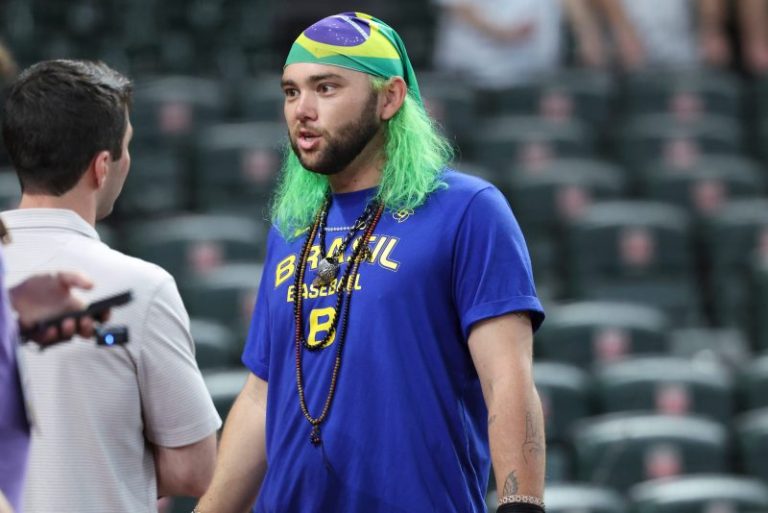
American figure skater Ilia Malinin crumbled during the men’s free skate at the 2026 Winter Olympics.
The gold medal favorite fell multiple times and bailed out of several planned quadruple jumps.
Malinin finished in eighth place, his worst result since November 2023.
His final score of 264.49 was significantly lower than the gold medal winner’s total.

MILAN — What could have been a gold medal-winning long program ended in total collapse by Ilia Malinin on Friday at the 2026 Winter Olymipcs.

The American figure skating star, who was the gold medal favorite entering these Games, shockingly crumbled in the men’s free skate, landing him in eighth place and resulting in his worst finish since November 2023. Had the program been executed well, it would have almost certainly earned the ‘Quad God’ the win in dominant fashion. But wound up falling multiple times and bailing out of jumps.

Here’s a breakdown every element from Malinin’s free skate program, looking at what was planned compared to what actually happened.

Watch Ilia Malinin Olympics video on Peacock

Element No. 1

What was planned: Quad flip
What he actually performed: Quad flip
Malinin executed his first jump in picture-perfect fashion.
Score: 15.71.

Element No. 2

What was planned: Quad Axel
What he actually performed: Single Axel
The first sign of trouble came on the second element. Malinin was expected to perform his signature quad Axel, but he bailed on the jump midway, resulting in just a single Axel. What could have been a gigantic score barely netted him a point.
Score: 1.04.

Element No. 3

What was planned: Quad Lutz
What he actually performed: Quad Lutz
Malinin got back on program, landing his second quad jump to briefly restore back hope that the single Axel was just a minor bump.
Score: 15.61.

Element No. 4

What was planned: Quad loop
What he actually performed: Double loop
Another sign of trouble, Malinin again ditched a quad jump. Instead of going for a quad loop, he settled for an awkward looking double loop, resulting in another low score.
Score: 1.77.

Element No. 5

What was planned: Change foot camel spin
What he actually performed: Change foot camel spin − Grade 3.
In Malinin’s planned move, he is given a Grade 3 out of 4 on the change foot camel spin. These elements are not high-scoring.
Score: 3.44.

Element No. 6

What was planned: Step sequence
What he actually performed: Step sequence − Grade 3
In the artistic element of his program, Malinin got another Grade 3 on the step sequence.
Score: 4.20.

Element No. 7

What was planned: Quad Lutz + single euler + triple flip
What he actually performed: Quad Lutz
This is where things really begin to ravel. In a sequence that involves several leaps, Malinin performed only one because he completely fell on the quad Lutz. He hit the ice, resulting in a low score in what could have been a massive program booster.
Score: 3.11.

Element No. 8

What was planned: Quad toeloop + triple toeloop
What he actually performed: Quad toeloop + single euler+ triple flip
Even though it wasn’t the planned one, Malinin executed arguably his best element of the program. He switcheed it up with a quad toeloop − his third landed quad jump − and added a euler and triple flip to it, resulting in his highest-scoring jumps.
Score: 19.54.

Element No. 9

What was planned: Quad salchow + triple Axel + sequence
What he actually performed: Double Salchow
Malinin attempted another quad jump sequence, and it ended in disaster. Not only did he bail on it, lowering it to a double salchow, but he also fell again. He abandoned the rest of the sequence, and since he didn’t land what is a relatively easy jump for skaters, this turned out to be his lowest scored element. This was his final jump, and moment the world realized he would not win gold.
Score: 0.78.

Element No. 10

What was planned: Choreo sequence
What he actually performed: Choreo sequence − Grade 1
A simple part of the program, Malinin earned a base score. This is where he executed a backflip. Although it’s impressive and challenging and fun for the audience, it does not earn points toward the technical score.
Score: 4.36.

Element No. 11

What was planned: Choreo sequence
What he actually performed: Flying sit spin − Grade 3
Malinin got another Grade 3 score on an element in the flying sit spin.
Score: 2.90.

Element No. 12

What was planned: Change foot combination spin
What he actually performed: Change foot combination spin − Grade 4
The last element of Malinin’s program got the highest grade possible with a Grade 4.
Score: 4.15.

Ilia Malinin free skate score

Technical score: 76.61, which is 38.07 points lower than gold medal winner Mikhail Shaidorov’s technical socre.
Component score: 81.72, which is 2.24 points lower than Shaidorov’s components score.
Deductions: -2.00.
Free skate score: 156.33, which is 42.31 points lower than Shaidorov’s free skate score.
Total score: 264.49, which is 27.09 points lower than Shaidorov’s total score.

This post appeared first on USA TODAY
The government entered a partial shutdown at midnight Friday after Congress failed to reach a funding deal — and some lawmakers’ decision to attend an international gathering in Europe this weekend is drawing criticism from colleagues on both sides of the aisle.

‘It’s absurd, I hope the American people are paying attention,’ Rep. Eric Burlison, R-Mo., told Fox News Digital.

The deadline to fund the Department of Homeland Security (DHS) by the end of the week came with a built-in complication: members of both chambers were scheduled to attend the annual Munich Security Conference, with many set to depart by day’s end Thursday.

Without a deal in place, Congress left Washington, D.C., on Thursday after the Senate failed to pass both a full-year funding bill for DHS and a temporary, two-week funding extension.

At midnight Friday — with several lawmakers already in Germany — DHS shut down.

Both Republican leaders warned members to be prepared to return if a deal was reached. Senate Majority Leader John Thune, R-S.D., gave senators 24 hours’ notice to return, while House Speaker Mike Johnson, R-La., allowed a 48-hour window.

Despite the conference being scheduled months in advance, some lawmakers said leaving Washington — or even the country — during an active funding standoff sent the wrong message.

Sen. Rick Scott, R-Fla., blamed Senate Minority Leader Chuck Schumer, D-N.Y., arguing that Democrats blocked Republican-led efforts to prevent a partial DHS shutdown.

‘Schumer’s what’s deciding this,’ Scott told Fox News Digital. ‘I mean, he’s deciding that he’s more interested in people going to Munich than he is in funding DHS.’

Several lawmakers from both chambers are attending the conference, participating in side discussions and panels during the annual forum, where heads of state and top decision-makers gather to debate international security policy.

Members of the House expressed frustration that senators would leave amid stalled negotiations between Senate Democrats and the White House.

‘The Senate started out a week ago saying, ‘I don’t think anybody should leave town,’’ Rep. Mark Amodei, R-Nev., told Fox News Digital. ‘Now they’re doing the Munich thing. At least [the House] sent a bill over…not a great pride moment for the federal government, is it?’

Sens. Lindsey Graham, R-S.C., and Sheldon Whitehouse, D-R.I., led a bipartisan delegation of 11 senators to the conference.

When asked whether the shutdown would affect his travel plans, Whitehouse said, ‘I hope not.’

Sen. Richard Blumenthal, D-Conn., who was scheduled to participate in a panel with Graham titled ‘The State of Russia,’ according to the conference agenda, said lawmakers should have resolved outstanding issues before leaving town.

‘I’m not delighted with Republican resistance and unresponsiveness, but it’s on them at this point,’ Blumenthal said.

House rules prohibit official congressional delegations, also known as CODELs, during a shutdown. Still, several House members made the trip to Bavaria. At least a handful of House Democrats, including Rep. Alexandria Ocasio-Cortez, D-N.Y., attended the conference.

House Appropriations Committee Chair Tom Cole, R-Okla., said during a hearing on the impact of a DHS shutdown that it would be ‘unconscionable if Congress leaves and does not solve the problem.’

‘I’m sure Munich is a great place. I’ve been there many times. The beer is outstanding,’ Cole said. ‘But we don’t need to go to a defense conference someplace in Europe when we’re not taking care of the defense of the United States of America.’

Lawmakers are expected to continue negotiations throughout the weekend while many are abroad. Senate Democrats have signaled they may present a counteroffer to the White House but have not finalized a proposal.

If an agreement is reached, it would still take time to draft the legislative text and bring the measure to the Senate floor. Even so, some lawmakers argued that stepping away from negotiations — whether returning home or traveling overseas — was the wrong move.

‘I’ve been pretty outspoken to say we need to stay as long as we have to be here to be able to get things resolved so we don’t ever have a shutdown,’ Sen. James Lankford, R-Okla., told Fox News Digital.

‘That’s the easiest way to resolve it is to say ‘no one walks away from the table,’’ he added. ‘We stay at the table.’

Rep. Joe Morelle, D-N.Y., told Fox News Digital the situation reflects poorly on GOP leadership’s handling of funding priorities, though he acknowledged the significance of the international conference.

‘There’s a certain irony that we would not be here to fund essential services of our government, but we have enough time and energy to go to the Munich Security Conference, which admittedly is a very important international gathering,’ Morelle said. ‘But I think it says a lot about the lack of leadership…we can’t do the fundamentals of this job.’

This post appeared first on FOX NEWS