Archive

2026

Browsing

Vice President JD Vance will not attend the Munich Security Conference in 2026, Fox News Digital has learned. 

The move comes after Vance attended the conference in 2025 and issued some harsh words for European leaders — prompting some backlash from allies on the other side of the pond. 

A source familiar with Vance’s plans confirmed to Fox News Digital that Vance would not participate in the conference in 2026, but no reason was provided for his absence. Bloomberg first reported that Vance would not attend the conference. 

The 2026 conference will be held in February in Munich. 

Vance’s absence comes as he’s publicly been more focused on domestic issues like fraud cases in Minnesota recently, while President Donald Trump and Secretary of State Marco Rubio appear to be spearheading the administration’s foreign policy agenda. 

Meanwhile, Vance in 2025 cautioned that Russia and China don’t pose as great a threat to European nations as the ‘threat from within,’ in regard to issues like censorship and illegal immigration. Likewise, Vance claimed that European voters didn’t endorse opening the ‘floodgates to millions of unvetted immigrants.’

‘To many of us on the other side of the Atlantic, it looks more and more like old entrenched interests hiding behind ugly Soviet-era words like misinformation and disinformation, who simply don’t like the idea that somebody with an alternative viewpoint might express a different opinion or, God forbid, vote a different way, or even worse, win an election,’ Vance said at the 2025 conference, which was held in February. 

European leaders challenged the remarks, and German Defense Minister Boris Pistorius said shortly after Vance delivered the statement that he perceived the statements as a comparison to ‘conditions in parts of Europe with those in authoritarian regimes.’

‘That is unacceptable, and it is not the Europe and not the democracy in which I live and am currently campaigning,’ Pistorius said. 

Meanwhile, Norwegian Prime Minister Jonas Gahr Støre claimed that Vance was off base on his comments about immigration in Europe.

‘He speaks as though we are not focused on immigration in Europe,’ Gahr Støre said. ‘I mean, this is the big theme in every country, that we want to have control of our borders.’

Fox News Digital reached out to conference officials for comment on Vance’s absence and has not yet received a reply. 

The Associated Press contributed to this report. 

This post appeared first on FOX NEWS

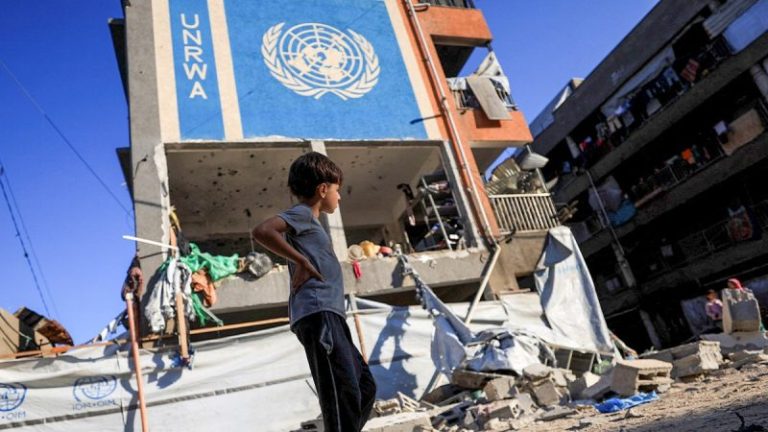
UNRWA officials urged congressional staffers to oppose a potential Trump administration move to designate the U.N. agency as a foreign terrorist organization, and discussed UNRWA’s ongoing operations in Gaza and the West Bank, including cash-based assistance, during a Dec. 17 briefing, Fox News Digital has learned.

The video conference was organized by UNRWA USA, the American nonprofit that supports the agency through advocacy and fundraising. UNRWA USA Executive Director Mara Kronenfeld opened the briefing by saying the goal was to make clear that UNRWA ‘is still on the ground’ in Gaza and the West Bank despite what she described as ‘the Netanyahu government’s insidious efforts to systematically prevent UNRWA from continuing its life-saving humanitarian work.’

During the meeting, briefers also raised reports that the U.S. government was considering designating UNRWA as a foreign terrorist organization and discussed with congressional offices what steps could be taken to ‘help prevent that and support UNRWA in its critical work,’ according to meeting details reviewed by Fox News Digital.

Bill Deere, UNRWA’s director in Washington, said ‘press reports appear to be true’ that the administration was considering a foreign terrorist organization designation for the agency.

‘This would be unprecedented for a U.N. agency to consider this. It is certainly unwarranted,’ Deere said, asserting that ‘four separate independent investigations’ dispute Israel’s allegations regarding UNRWA’s workforce. 

Deere urged congressional offices to respond forcefully.

‘You can loudly express your displeasure,’ Deere said, arguing that the ramifications would extend beyond UNRWA and set a precedent affecting the broader U.N. system.

‘If they go ahead and do this, our recourse with regard to this is limited,’ he said, adding that one step that could be taken is that ‘Congress can override the designation.’

The meeting featured UNRWA field leadership describing conditions and operations in Gaza and the West Bank.

Sam Rose, director of UNRWA affairs in Gaza, told participants that international staff were not entering Gaza because of the Israeli Knesset legislation, and that operations were being managed remotely.

Rose said that despite claims that UNRWA has been blocked, the agency’s services in Gaza haven’t stopped for a single day, pointing to primary healthcare, education, water and sanitation work, shelter operations and the use of UNRWA facilities as emergency shelters.

Rose also described the agency’s ability to operate programs that do not rely on immediate supply deliveries.

‘Cash assistance and job creation programs are also able to continue,’ he said and added, ‘we’re able to operate at scale.’

Roland Friedrich, introduced as director of UNRWA affairs in the West Bank, described UNRWA’s scale in the territory, including education, healthcare and assistance programs. He said UNRWA provides support to hundreds of thousands of Palestinian refugees, including aid that ‘can be cash assistance,’ along with other forms such as food vouchers and social protection payments.

Friedrich also described ‘cash for rent’ assistance for displaced people, and argued that UNRWA’s presence plays a stabilizing role across multiple countries in the region.

The officials also discussed workarounds that allow UNRWA to keep operating under restrictions.

Rose said UNRWA was still able to receive fuel and that certain coordination occurred through third parties, describing indirect engagement involving U.N. channels. He said fuel could run power generators and water pumps and emphasized the importance of keeping basic services running.

On aid flows, Rose said Israel was reporting truck numbers that reached 600 per day, and he said he did not have reason to doubt the overall count. At the same time, he argued that the mix of goods entering had shifted, with commercial supplies playing a larger role while certain humanitarian items remained restricted for U.N. agencies. He described what he called a two-tier system, where some items blocked from U.N. use could enter through private channels.

Beyond the operational discussion, the briefing included explicit advocacy aimed at congressional offices.

Kronenfeld urged participants to support legislation described in the meeting as the UNRWA Funding Emergency Restoration Act of 2025, and she thanked offices already backing efforts to restore U.S. funding, describing the United States as historically UNRWA’s largest donor before the funding halt in 2024.

UNRWA USA did not respond to multiple requests for comment from Fox News Digital. UNRWA also did not respond.

William Deere, director of the UNRWA Representative Office in Washington, D.C., provided the following statement in response to a request for comment from Fox News Digital:

‘UNRWA participates in briefings hosted by the UNRWA USA National Committee and attended by bicameral groups of Republican and Democratic staff from Capitol Hill, as well as think tanks and nongovernmental organizations. Briefings like these are important opportunities for the Agency to respond to the government of Israel’s ongoing disinformation campaign suggesting that UNRWA is no longer actively working in Gaza. Quite the opposite is true. Every day, UNRWA staff are delivering critical services in Gaza and the West Bank, including East Jerusalem. In fact, in a recent letter to the U.S. Government Accountability Office, UNRWA thanked President Trump for negotiating the ceasefire, which allows the world to turn to Gaza’s future.’

Deere added: ‘In Gaza, UNRWA medical personnel deliver 40 percent of primary healthcare and play a critical role in distributing water, promoting public health through immunization campaigns, pest control, nutrition screenings, and the disposal of solid waste. UNRWA is also leading the way in Gaza education, stepping up its ‘back to learning’ program, with almost 70,000 children now accessing the Agency’s in-person learning activities. The West Bank, including East Jerusalem, is also a challenging area in which to work, especially given the various laws approved by the Israeli Knesset, and policymakers are always interested to hear the impacts of these laws firsthand from our experts.’

This post appeared first on FOX NEWS

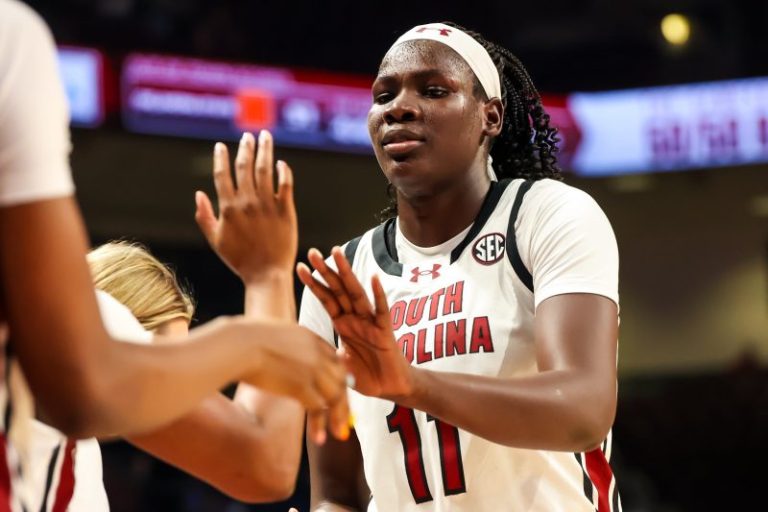
COLUMBIA, SC — It seemed like miles separated Madina Okot and the nearest Texas defender.

South Carolina was up by a single point when Raven Johnson flipped the ball over to Okot, who was standing on the left wing with 3:36 to play Thursday night. Points had been hard to come by in this matchup between the defensive-minded Gamecocks and Longhorns. As each team committed season-highs in turnovers, possessions became precious. Making shots was crucial.

A full second passed between the time Okot caught the ball and when she began her motion to shoot an improbable 3-pointer. All five Texas defenders glanced at Okot, but none made their way to defend.

Why would they? The 6-foot-6 Okot typically plays like a traditional center. She scores her points in the paint, not behind the arc. She was 2-of-6 from 3-point range on the season. Surely, in this pivotal moment of the game, she wouldn’t dare attempt a deep shot.

If the Longhorns thought that, they were wrong.

Okot aimed and fired, and the ball fell softly through the hoop.

“I’ve been practicing for it,” Okot said through a smile. “In today’s game, I was like, ‘Wait, I’m open, let me try it.’ And it went in.”

The sold-out crowd inside Colonial Life Arena erupted. South Carolina had a four-point advantage in a grind-it-out game where two-possession lead felt like a 20-point margin. Okot’s unlikely 3-pointer was a dagger to Texas, which lost back-to-back games for the first time since November 2022.

“Probably the play of the game is Okot’s 3,” Texas coach Vic Schaefer said. “Other than that, it was just a heavyweight title fight.”

Okot finished with 10 points and five rebounds in South Carolina’s 68-65 victory over the Longhorns. She was a difference-maker, and her signature moment pointed to something larger: Okot is playing with confidence, she’s struggled through her ups and downs since transferring in from Mississippi State, and she’s emerging as an important contributor for the Gamecocks in their quest to go to the Final Four for the sixth consecutive season.

“She couldn’t have hit it at a more important time, for her and for us,” Gamecocks coach Dawn Staley said of Okot’s 3-pointer. “She’s got to take something from this game that she’s got to feel good about. She’s working through some things. And sometimes, when players are working through things, they just got to get to the other side.”

This is Okot’s second season of college basketball. A native of Mumias, Kenya who has featured for her country’s national team, she didn’t start playing the sport until six years ago. 

After spending some time at a university in Kenya, she arrived at Mississippi State last season where she quickly established herself as a player who could battle with some of the best bigs in the country, averaging 11.3 points and 9.6 rebounds in 22.6 minutes per game. She ranked fourth nationally last season in field goal percentage with a 64.9% clip and was third in rebounds-per-40-minutes with 16.9.

So, when Okot went into the transfer portal last spring, she was highly sought after as a mobile big with room to sharpen her skills. She wound up at one of the most successful programs in the country, one with a knack for developing post players into WNBA prospects.

Staley’s best teams at South Carolina, the ones who have won national championships, have played through a dominant center, from A’ja Wilson and Aliyah Boston, to more recently Kamilla Cardoso. Even Sania Feagin became a WNBA draft pick last season. Okot seemed poised to be next in line.

But this group of Gamecocks are different.

On each of Staley’s last five South Carolina teams, no more than three players averaged double figures in scoring. This year, all five starters are scoring in double digits.

And Okot is one of them at 15.1 points per game, but the scoring is more spread out. Guards, like Johnson, a fifth-year senior — who is averaging a career-high 10.2 points per game — are being asked to put the ball in the basket more often.

So the Gamecocks aren’t leaning on Okot the same way they did with Boston or Cardoso. Part of that is seemingly by design as Staley and her staff get Okot up to speed and more comfortable with all that comes with being a Gamecock.

“They’re all just growing pains,” Staley said of what Okot has experienced. “She hasn’t been in this situation. It’s unfamiliar territory for her regarding big stakes, big games, everybody is watching. It takes some time to get used to it… I hope she can see we’re still winning with her not even at her best.”

The hurdles Staley has eluded to are hard to find on stat sheets. She’s tallied double-doubles in 13 of 18 games this season and she’s still shooting north of 60% from the floor. Okot is also third nationally in defensive rating with a 63.5 mark, according to Her Hoop Stats.

For a lot of players, the numbers Okot is posting would be the ceiling. Staley and the Gamecocks seem to think the sky is the limit in this case.

That includes Okot’s roommate, the most veteran player on the roster, Johnson. She’s constantly in Okot’s ear about how she can get better.

“I get on her about little things. I was telling Madina about a play she messed up last game, and I was on her butt. I’m trying to hold her accountable,” Johnson said. “She’s very hard on herself. She wants to be great. She wants to be one of the best post players to come out of here. So, I’m trying to be a really good point guard to her.”

South Carolina is hoping they’ll have more time to help Okot realize her potential. While this is only her second season of college basketball, the NCAA has deemed her a senior because of the time she spent at a Kenyan university and in the FIBA Africa League. Staley said earlier this season the Gamecocks are fighting “like heck” to petition the NCAA for another year of eligibility.

Okot has proven she’s capable of making game-winning plays under the bright lights against elite opponents. Even if South Carolina isn’t successful with its appeal to the NCAA, she might be good enough to help the Gamecocks reach their lofty goals for this season.

This post appeared first on USA TODAY

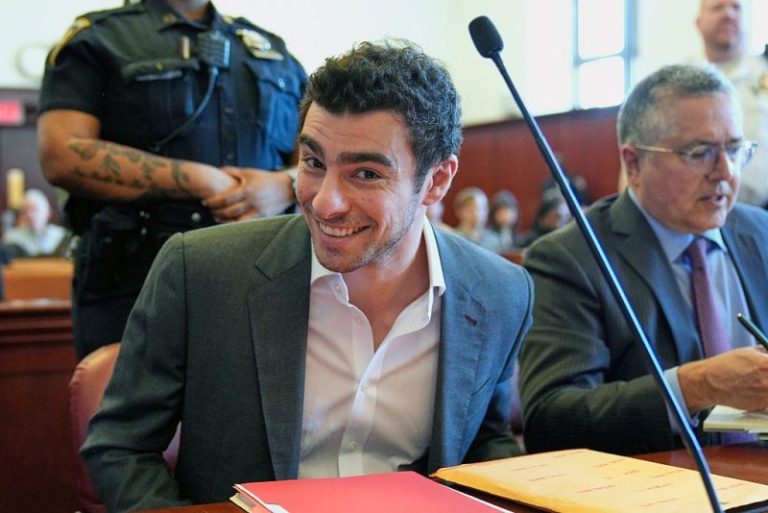
A cousin of the man accused of killing a healthcare executive signed a deal with the professional soccer team Brooklyn FC.  

Peter Mangione, 24, whose cousin Luigi Mangione is awaiting trial for the Dec. 4, 2024, murder of UnitedHealthcare CEO Brian Thompson, inked a deal with the United Soccer League squad that will begin its first year in the league in March. The deal is pending league and federation approval, the team announced.

Mangione played collegiately at Penn State, was named Big Ten Offensive Player of the Year in 2021 and 2023, and finished his career with 32 goals.

Mangione suited up for FC Cincinnati 2 in 2025, making 26 starts and scoring two goals with 5 assists.

Brooklyn FC starts its 2026 campaign at home in the USL Championship on March 8 against Indy Eleven.

Luigi Mangione, who has pleaded not guilty, has been at the Metropolitan Detention Center in Brooklyn and faces a second-degree murder charge and multiple counts of illegal weapons possession.

This post appeared first on USA TODAY

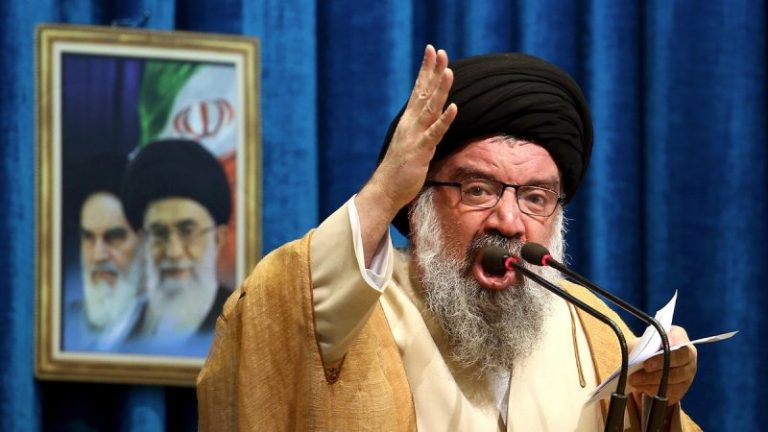
An Iranian cleric has called for the death penalty for protesters detained during a nationwide crackdown amid ongoing unrest against the Islamic regime. 

The cleric’s calls follow President Donald Trump’s threats of U.S. intervention if protesters were met with violence.

Ayatollah Ahmad Khatami’s sermon, which was broadcast by Iranian state radio, reportedly sparked chants from those gathered for prayers. The Associated Press reported that the chants included, ‘Armed hypocrites should be put to death!’

During his sermon, Khatami gave the first overall statistics of the damage from the protests, which began in late December, according to the AP. This information provides a look at the scale of the protests after the regime instituted a nationwide internet blackout on Jan. 8.

The cleric claimed 350 mosques, 126 prayer halls and 20 other holy places had sustained damage, the AP reported. Khatami also claimed that 400 hospitals, 106 ambulances, 71 fire department vehicles and another 50 emergency vehicles sustained damage.

Another 80 homes of Friday prayer leaders had also reportedly been damaged, the AP reported, adding that it could be a sign of demonstrators taking out their frustrations against the government as the leaders hold an important position within Iran’s theocracy.

‘They want you to withdraw from religion,’ Khatami said, according to the AP. ‘They planned these crimes from a long time ago.’

Khatami, who was appointed by Iran’s Supreme Leader Ayatollah Ali Khamenei and serves on the country’s Assembly of Experts and Guardian Council, had previously spoken out against protesters. He described them as being ‘butlers’ of Israeli Prime Minister Benjamin Netanyahu and ‘Trump’s soldiers.’

Khamenei made similar remarks, saying that the protesters were ‘ruining their own streets to make the president of another country happy,’ referring to Trump.

Trump has been vocal in his support for the Iranian people and said early on that the U.S. was ‘locked and loaded’ and ready to intervene if the regime used violence against protesters. It is unclear if and when the U.S. will take concrete action in Iran, but speculation has circulated following the bombing of the country’s nuclear sites in 2025 and the U.S. capture of Venezuelan dictator Nicolás Maduro.

Fox News Digital reached out to the White House and the State Department for comment.

The Associated Press contributed to this report.

This post appeared first on FOX NEWS

President Donald Trump’s administration formally launched the second phase of its plan to end the war between Israel and Hamas this week, shifting from a ceasefire framework toward a post-ceasefire political and security phase for Gaza. The announcement immediately raised a central question that now dominates expert analysis: who will actually disarm Hamas.

U.S. Special Envoy to the Middle East Steve Witkoff announced Wednesday that phase two is underway, describing it as a transition ‘from ceasefire to demilitarization, technocratic governance and reconstruction.’ He warned that Hamas must fully comply with its obligations under the deal, including the immediate return of the final deceased Israeli hostage.

‘The U.S. expects Hamas to comply fully with its obligations, including the immediate return of the final deceased hostage,’ Witkoff wrote on X. ‘Failure to do so will bring serious consequences.’

President Donald Trump reinforced the administration’s announcement on Thursday, writing on Truth Social that the United States had ‘OFFICIALLY entered the next phase of Gaza’s 20-Point Peace Plan,’ following Witkoff’s remarks. Trump said that since the ceasefire, his team had helped deliver ‘RECORD LEVELS of Humanitarian Aid to Gaza, reaching Civilians at HISTORIC speed and scale,’ adding that ‘even the United Nations has acknowledged this achievement as UNPRECEDENTED.’ 

Trump wrote that these developments had ‘set the stage for this next phase,’ which he said would include backing a newly appointed Palestinian technocratic government, the National Committee for the Administration of Gaza, to govern the territory during a transitional period. Trump described himself as chairman of the Board of Peace and said the committee would be supported by the board’s high representative. 

Trump again warned that Hamas must ‘IMMEDIATELY honor its commitments, including the return of the final body to Israel, and proceed without delay to full Demilitarization,’ adding, ‘They can do this the easy way, or the hard way.’ Trump concluded the post by saying, ‘The people of Gaza have suffered long enough. The time is NOW. PEACE THROUGH STRENGTH.’

The new phase envisions the establishment of a transitional technocratic Palestinian administration in Gaza, while the United States works with Egypt and other regional partners to ensure compliance and stability. Yet the announcement offered few operational details, particularly regarding how Hamas would be disarmed after more than two decades of military control in the enclave.

France backs ceasefire, aid and long-term demilitarization

In an exclusive interview with Fox News Digital, Jérôme Bonnafont, France’s ambassador to the United Nations, called the ceasefire an ‘incredible achievement’ and said phase two could help lay the groundwork for peace without Hamas.

‘The Trump plan is establishing a ceasefire, which is an incredible achievement,’ Bonnafont said. ‘It has to go to a massive reopening of humanitarian aid, and it is going to be announced within a couple of days.’

He said the next stage includes an international stabilization force that would support reconstruction and contribute to Hamas’s disarmament.

‘That would help disarm Hamas, and that will help the Palestinian Authority return and democratically restart the management of Gaza as part of the Palestinian territory,’ he said.

Bonnafont emphasized that France views Israel’s security as a priority, particularly in the face of regional threats. ‘We have always been on the side of Israel when it comes, for example, to the threats by Iran to the existence of Israel,’ he said.

At the same time, he said France believes long-term security depends on the creation of a demilitarized Palestinian state living in peace with Israel. ‘We believe that security for Israel in the long term comes with the creation of Palestine,’ Bonnafont said. ‘A Palestine that has to be independent but demilitarized and in peace with Israel.’

The United Nations also welcomed the announcement of phase two, calling it ‘an important step’ while emphasizing adherence to international law and existing U.N. resolutions.

A plan advances, but the hardest problem remains

Israeli and U.S. security analysts broadly agree that phase two cannot succeed without addressing Hamas’s weapons and coercive power.

Dr. Avner Golov, vice president of the Israeli policy institute Mind Israel, told Fox News Digital that, ‘The central challenge is Hamas’s demilitarization,’ Golov said. ‘The only actors truly willing to dismantle Hamas’s military capabilities are the Israelis, and as long as Hamas remains armed, there should be no rebuilding and no IDF withdrawal from the current defensive line.’

‘In the end, there must be a credible military threat from the IDF against Hamas,’ he said. ‘Without such a threat, I see no chance that Hamas will voluntarily disarm.’

Golov also pointed to what he described as a gap between diplomatic commitments and action by regional actors. ‘The key test is Turkey and Qatar,’ he said. ‘They signed a document committing to Hamas’s disarmament, but since then they have not demonstrated real commitment to implementing it.’

Reconstruction without security seen as unrealistic

Jonathan Ruhe, a fellow for American Strategy at the Jewish Institute for National Security of America (JINSA), argued that phase two presents a detailed reconstruction framework but avoids the most politically difficult decision.

‘The peace plan offers a detailed framework for rebuilding Gaza and promoting better governance,’ Ruhe said. ‘But it’s silent on the ‘who’ and ‘how’ of disarming Hamas.’

‘As long as Hamas can interrupt aid distribution, intimidate and kill Gazans who want a better future, and threaten renewed war with Israel, international investment in reconstruction and reform will be near zero,’ he said.

While Trump’s plan calls for Hamas to disarm voluntarily, Ruhe also said Hamas has little reason to do so. ‘Hamas refuses because it thinks it won the war,’ he said. ‘Now there is an urgent need to decide who will disarm Hamas forcefully.’

Ruhe noted that a U.N. Security Council resolution authorizes an International Stabilization Force to disarm Hamas, but he said no country has been willing to put troops in that role. Instead, he said the Trump plan outlines a more limited mission for international forces, focused on guarding aid sites and preventing Hamas resupply.

‘Trump and Netanyahu both said Israel might have to disarm Hamas,’ Ruhe said. ‘But the IDF ground forces need to rest and refit after two years of grueling combat, and a major offensive risks blowing up the international coalition needed for phase two.’

He suggested that well-vetted private military contractors, overseen by U.S. security officials rather than U.S. Central Command, could play a role, though he acknowledged such a move would involve ‘hard fighting.’

A narrowing window

Despite diplomatic momentum, analysts interviewed by Fox News Digital cautioned that time may be working against the plan. ‘The status quo favors Hamas as it continues tightening its grip over its half of Gaza,’ Ruhe said. ‘Announcing the Board of Peace serves important diplomatic purposes, but it won’t mean much on the ground unless and until Hamas is disarmed.’

Golov echoed that assessment. ‘As long as Hamas remains armed, there should be no rebuilding and no IDF withdrawal from the current defensive line,’ he said.

This post appeared first on FOX NEWS

The College Football Playoff national championship game can be a fun stage for final statements from NFL draft prospects, even if it doesn’t end up being a particularly consequential one for pro assessments.

A title itself is plenty compelling when it comes to the stakes for Monday night’s tilt between the Indiana Hoosiers and Miami Hurricanes. But while the matchup might serve as a valuable introduction to a handful of prospects for a few NFL fan bases and amount to good theater, it might not actually swing any player’s fortunes drastically, as an isolated contest can only do so much to reshape a more voluminous body of work.

Still, there will be ample professional intrigue surrounding a showdown that features two of the 2026 NFL draft class’ top players as well as a host of other figures who could hear their names called in the early-to-middle rounds.

Here are the top 10 prospects set to square off in the game:

1. Fernando Mendoza, QB, Indiana

What’s left to say about the Heisman Trophy winner and runaway favorite to be the No. 1 overall pick? Mendoza has been nearly flawless in guiding the Hoosiers to heretofore unknown heights, dicing apart defenses while seldom slipping up. The 6-foot-5, 225-pound passer is about as consistent as it gets from behind center, establishing a clear rhythm while operating with poise and precision. His improvisational skills leave him short of the ‘generational’ prospect label that some might want to affix to him. But between his skill set and readily apparent leadership ability, Mendoza is the kind of player any franchise would be thrilled to put at the center of a rebuild.

2. Rueben Bain Jr., DE, Miami (Fla.)

As a debate about his arm length and pro projection raged on in some far-flung corners of the internet, Bain continued in the CFP doing what he had done for most of the season: dominating all comers. The Atlantic Coast Conference Defensive Player of the Year has notched four sacks in his last three games while helping propel the Hurricanes to the title game, further entrenching himself as college football’s most forceful entity off the edge. Listed at 6-foot-3 and 275 pounds, he’ll surely force some teams to reckon with their positional thresholds − and some still might end up preferring his rangier peers. But there’s little doubt that Bain’s physicality makes him a matchup that offensive linemen dread, and that should remain the case in the NFL.

3. Francis Mauigoa, OT, Miami (Fla.)

The former five-star recruit has enjoyed a steady ascent over his three years with the Hurricanes, remaining a stout presence at right tackle along the way. Mauigoa has long exhibited a penchant for dispatching defenders in the run game, but he’s taken his pass protection to new heights this season. Listed at 6-foot-6 and 315 pounds, he might be seen by some as a guard due to questions about his arm length and recovery ability. But as a potential linchpin for a line, he should have no trouble cracking the early-to-middle first round.

4. Akheem Mesidor, DE, Miami (Fla.)

Bain’s brilliance might typically blot out all other contributors on a formidable defensive line. Mesidor, however, has emerged as a serious riser this season. The Ottawa native and former West Virginia transfer has racked up 10½ sacks, with his production unlocked by his tenacity and savvy as a pass rusher. The 6-foot-3, 280-pound Senior Bowl invitee will turn 25 in April and could be an early liability in the run game, but he shapes up as an instant impact presence in creating pressure off the edge.

5. Carter Smith, OT, Indiana

The Big Ten Offensive Lineman of the Year has been the picture of reliability up front for the Hoosiers, seldom ceding pressure and setting the tone for a line that has surrendered just 22 sacks in 15 games. Smith himself hasn’t been responsible for a single sack on 372 pass-blocking snaps, according to Pro Football Focus. The 6-foot-5, 315-pound blocker might be headed for a move inside due to his frame, but his overall toughness in all phases of blocking should earn him plenty of fans among coaches and front offices in the pre-draft process.

6. D’Angelo Ponds, CB, Indiana

Some teams simply might not be able to look past Ponds’ 5-foot-9, 173-pound frame. For those that don’t see it as a sticking point, however, a supremely talented nickel corner could be within reach. As one of several players who followed Curt Cignetti from James Madison to Indiana, Ponds has maintained his level of excellence in coverage even as his competition became considerably more imposing. Advanced instincts and ball skills keep him in the mix for any throws made underneath. While his size will always leave him vulnerable in matchups with bulkier wideouts, there’s a clear path for Ponds to excel if he’s positioned properly within a defense.

7. Omar Cooper Jr., WR, Indiana

Many probably know him as the receiver responsible for this season’s most impressive catch with his incredible toe-tapping end-zone grab against Penn State. That play was just a window into what Cooper can offer a passing attack. The 6-foot, 201-pound target should become a fast favorite of the quarterback in any offense, thanks in part to his knack for racking up yards after the catch. He’s also adept at pulling off a contortionist act when he has to haul in difficult throws near the sideline. Cooper likely won’t have a significant role in the downfield game, but he’ll elevate the floor of whatever team he joins by handling lots of underappreciated tasks.

8. Elijah Sarratt, WR, Indiana

Choosing between Cooper and Sarratt might just be a matter of taste. Sarratt just barely trails Cooper in catches (62) and receiving yards (802) but has the advantage on touchdowns (15). He’s not a towering target, but the 6-foot-2, 209-pound catcher is adept at walling off defenders to come down with contested catches. That skill set should make him an attractive asset to teams searching for someone to own the middle of the field, though his role might need to be reworked − perhaps operating as a big slot is in his future − to account for some athletic limitations.

9. Keionte Scott, CB, Miami (Fla.)

When one hears of a player with Scott’s level of consistent disruption, they might envision an edge rusher or a linebacker. Scott creates all of his havoc as a nickel corner. The 6-foot, 192-pound cover man had to take the junior college route out of high school before stops at Auburn and Houston, and his hardscrabble path is reflected by his hyperaggressive play. He’s cut from the Amik Robertson or Upton Stout cloth as a hyperaggressive playmaker, but his larger build should allow him to remain a force in the run game at the next level. Scott will need to land with a team that can carve out a role that caters to his strengths, as he can be prone to breakdowns in coverage, particularly if forced outside. In the right scheme, however, he could generate a good number of splash plays.

10. Carson Beck, QB, Miami (Fla.) 

There’s an inherent strangeness to Beck ending up here. It’s no doubt odd that a player who began the 2024 season as the prohibitive favorite to go No. 1 overall would be so far back in the pecking order. Yet it’s also confounding that a passer whose stock seemed so damaged after his unraveling at Georgia could resuscitate his pro outlook by turning things around with the Hurricanes. Fading into the background a bit has served Beck well, as he and Miami’s offense have thrived when he has embraced operating as a quick-triggered distributor. But limitations with his arm strength and mobility leave him ill-equipped to find solutions when his initial plan goes awry, and his lapses in judgment in airmailing turnover-worthy throws is concerning for a signal-caller who likely will have to find his way as a backup for at least a few years to start his career. Yet in a paper-thin quarterback class, he’s among the more enticing second-tier options.

This post appeared first on USA TODAY

The debut of Cole Hamels on the Hall of Fame ballot this year is rekindling memories of 2008, making this year’s voting even more, for fans in Philly, special.

Three members of the Philadelphia Phillies’ World Series-winning team from that magical season 18 years ago are up for election in the Hall’s Class of 2026. In addition to Hamels, second baseman Chase Utley is making his third appearance on the ballot and shortstop Jimmy Rollins is entering his fifth year of consideration.

While their vote totals on publicly revealed ballots indicate all three will fall short, momentum does seem to be building for the trio.

While it may not be this year, it is possible BBWAA voters could eventually give them a brotherly shove across the 75% threshold to qualify for induction. Let’s examine their individual cases a bit more closely.

Chase Utley: Hall of Fame calling?

In his second year on the ballot in 2025, Utley collected just under 40% of the vote, gaining 11 percentage points from his rookie year. So far in this cycle, he’s up to 68% out of 171 public ballots on the 2026 Baseball Hall of Fame vote tracker (as of Jan. 13).

I’ve voted for him all three years because of his sustained excellence, both offensively and defensively, at second base. A six-time All-Star and four-time Silver Slugger award winner, Utley was the glue that held those talented Phillies teams together. He was a fixture at the top of the order during Philadelphia’s dominant run of five consecutive NL East titles from 2007-2011, leading the National League in runs scored in 2006 with 131, and finishing in the top five twice more.

He also had great defensive metrics (131 fielding runs ranks seventh all-time at second base), but he never won a Gold Glove. And for the decade between 2005 and 2014, only Albert Pujols accumulated a higher Wins Above Replacement (WAR). In the words of longtime Phillies broadcaster Harry Kalas, Utley was ‘The Man.’

MY 2026 HALL OF FAME BALLOT: Are Hamels, other Philly stars worthy?

Cole Hamels a Hall of Fame surprise?

Hamels seems to be off to a strong start in his ballot debut. Currently receiving support from 32.6% of the public voters, he’s tracking ahead of the 20.6% Felix Hernandez received in his first year of eligibility. (Hernandez, meanwhile, is up to 59% currently.)

The lanky lefty with a mid-90s fastball, an above-average curve and a devastating changeup spent 15 seasons in the majors, 10 of them with the Phillies. While his overall numbers − especially his 157 career wins − don’t quite match up to those of other starting pitchers in the Hall, they do compare favorably with his contemporaries.

While ballotmates Andy Pettitte and Mark Buehrle each won over 200 games, Hamels’ modest win total is just six behind Fernandez. But in terms of adjusted ERA (taking defense, park factors and other elements into consideration), Hamels’ 123 is the best of the bunch. And there’s that stellar postseason run in 2008, when Hamels went 4-0 with a 1.80 ERA in five starts, leading the Phillies to their first championship in 28 years. That October, he was named MVP of both the NL Championship Series and the World Series.

Jimmy Rollins’ Hall of Fame vote rising

Rollins may have the weakest case of the three former Phils, but he’s seen his vote percentage steadlily increase over his previous four years on the ballot to 18.0% last year. Currently, he’s at 23.6% on the Tracker.

The undersized (5-7, 175) Rollins was an extremely well-rounded and durable player throughout his 17-year career, winning four Gold Gloves and one Silver Slugger. He was the NL MVP in 2007 and although he made just three All-Star teams, he was the leadoff man and everyday shortstop on each of those five consecutive division championship teams.

A speedy switch-hitter, Rollins stole 470 bases with a success rate of 81.7%. He also had four seasons of at least 20 homers and he led the league in triples four times. He’s the only shortstop in baseball history with 200 home runs and 400 stolen bases in his career.

This post appeared first on USA TODAY

U.S. Ambassador to the United Nations Mike Waltz warned Iran during an emergency meeting of the Security Council that President Donald Trump ‘is a man of action’ who has ‘made it clear all options are on the table to stop the slaughter.’ 

Waltz said Thursday that, ‘We all have a responsibility to support the Iranian people and to put an end to the regime’s neglect and oppression of the Iranian nation.’ 

Iran has been plunged into turmoil amid recent anti-government protests, with the death toll from those being at least 2,677, the U.S.-based Human Rights Activists News Agency told The Associated Press. 

‘Colleagues, let me be clear. President Trump is a man of action, not endless talk like we see at the United Nations. He has made it clear all options are on the table to stop the slaughter. And no one should know that better than the leadership of the Iranian regime,’ Waltz added. 

Waltz’s remarks came as Gholam Hossein Darzi, the deputy Iranian ambassador to the U.N., accused the U.S. of trying to destabilize the Islamic Republic.

‘Under the hollow pretext of concern for the Iranian people and claims of support for human rights, the United States regime is attempting to portray itself as a friend of the Iranian people, while simultaneously laying the groundwork for political destabilization and military intervention under a so-called humanitarian narrative,’ Darzi said. 

Waltz dismissed the claim, telling diplomats at U.N. headquarters on Thursday that Iran’s leaders are ‘afraid of their own people.’ 

‘I would like to address the allegation put forward by the regime that these inspired protests are somehow a foreign plot to give a precursor to military action. Everyone in the world needs to know that the regime is weaker than ever before, and therefore is putting forward this lie because of the power of the Iranian people in the streets,’ Waltz said.

‘They are afraid. They’re afraid of their own people. Iran says it’s ready for dialogue, but its actions say otherwise. This is a regime that rules through oppression, through violence, and through intimidation, and has destabilized the Middle East for decades. Well, enough is enough,’ he added. 

‘The regime’s dereliction of duty to its own citizens is what has put the ayatollahs in the positions they are in today with hundreds of thousands, if not millions, protesting in the streets after decades of neglect and abuse. So everyone should ask themselves, everyone sitting here today, how many people are dead?’ Waltz also said.

White House press secretary Karoline Leavitt told reporters on Thursday that Trump and his team ‘have communicated to the Iranian regime that if the killing continues, there will be grave consequences.’ 

‘And the president received a message as he revealed to all of you and the whole world yesterday, that the killing and the executions will stop. And the president understands today that 800 executions that were scheduled and supposed to take place yesterday were halted. And so the president and his team are closely monitoring this situation, and all options remain on the table for the president,’ she added. 

This post appeared first on FOX NEWS
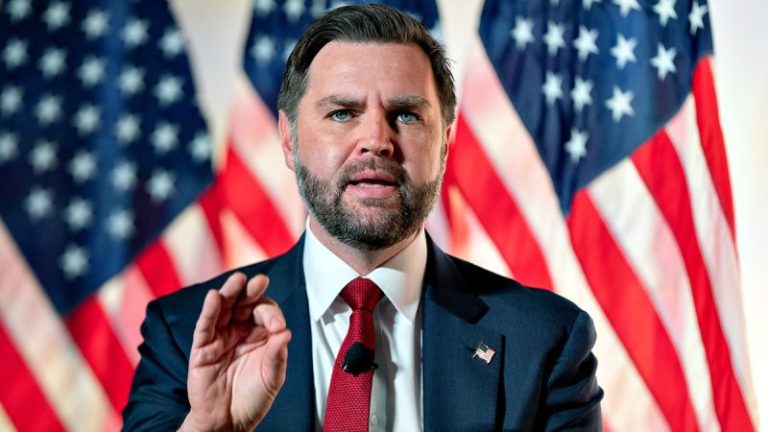
The divisional round of the NFL playoffs is regarded as the best weekend of the season by some fans. Four games over two days, two of them including the regular season’s best teams − insomuch as one might regard the No. 1 postseason seeds as the best squads.

Saturday, the Denver Broncos, the top seed in the AFC, will host the Buffalo Bills in a rematch from the 2024 wild-card round − Josh Allen and Co. cruising best then-rookie Bo Nix and the Broncos 31-7. In the NFC, the San Francisco 49ers and Seattle Seahawks will meet for the third time (and second in three weeks) − the ‘Hawks returning to action at Lumen Field following their bye.

Sunday afternoon, the New England Patriots will try to advance to their first AFC championship game in seven years − by beating a red-hot Houston Texans squad hoping to get that for for the first time. Ever. The final matchup of the weekend quartet will pair the Los Angeles Rams and Chicago Bears, who will square off in the postseason for the first time in 40 years − since the legendary ’85 Bears shut out the Rams at Soldier Field.

Which teams will qualify for the NFL’s version of the Final Four? Our experts make their selections:

(Odds provided by BetMGM)

Divisional round picks, predictions, odds

Bills at Broncos
49ers at Seahawks
Texans at Patriots
Rams at Bears

This post appeared first on USA TODAY