Archive

2026

Browsing

Cal snapped a three-game skid Saturday when the Golden Bears nabbed their second win against a ranked team when they defeated No. 15 North Carolina, 84-78, at Haas Pavilion in Berkeley.

The Golden Bears were led by senior forward John Camden with 20 points. Dai Dai Ames and Justin Pippen, son of Basketball Hall of Famer Scottie Pippen, each scored 17 in the game. Lee Dort had seven points and 12 rebounds.

Cal head coach Mark Madsen was grateful for the loud, raucous environment during their home game at Hass Pavilion.

‘Just really want to thank the Cal coommunity, the students, the alums … the donors and supporters. It was basically a packed house. We’re trying to build something special here at Cal and it takes everybody and I can’t say enough about the environment,’ Madsen told reporters after the game.

Madsen added: ‘Can’t give enough credit to North Carolina. Late in the game they had us on our heels. They did a great job of trying to make us uncomfortable. Credit them and credit some guys of ours that stepped up and made plays late with no timeouts.’

Tar Heels freshman Caleb Wilson had a team-high 17 points for North Carolina. Henri Veesaar and Derek Dixon each had 14. Veesaar grabbed 10 rebounds for UNC.

‘I think there was a sense of urgency that wasn’t there in the first 20, 25 minutes,’ UNC coach Hubert Davis told reporters after the game. ‘There were still mistakes that were made on both ends of the floor but it was done with an urgency, with an effort that allowed us to get back in the game.’

Cal shot 50% from the field and even better from 3-point territory, shooting 54% from deep.

‘It was great to see,’ Madsen said. ‘Everybody knows we put pressure on the rim with attacking the rim with different actions that we have. It was nice to see a few shots drop too, tonight, early, because we can also shoot it, we can do both.’

North Carolina shot 46% from the field and 33% from 3. Additionally, the Tar Heels missed 11 free throws, going 61% (17-of-28).

Despite dominating the paint 32-18, the Tar Heels never led.

Cal advances its record to 14-5 (2-4 in the ACC standings), while North Carolina, 14-4, now has a 2-3 mark in the ACC.

The Tar Heels’ next game is against Notre Dame on Jan. 21 on ESPN2. The Golden Bears visit the Stanford Cardinal at Maples Pavilion on Jan. 24 on the ACC Network.

Cal vs No. 15 North Carolina basketball highlights

This post appeared first on USA TODAY

Iran’s supreme leader has publicly acknowledged for the first time that thousands of people were killed during recent anti-government protests, according to reporting from the BBC, as President Donald Trump escalated his rhetoric and called for new leadership in Iran.

Ayatollah Ali Khamenei made the remarks during a public address Saturday, blaming the U.S. for the unrest and violence and saying some protesters died ‘in an inhuman, savage manner,’ the BBC reported.

The protests, which began in late December over economic conditions, later expanded into calls for an end to Iran’s ruling system. 

U.S.-based Iranian Human Rights Activists News Agency estimates that more than 3,000 people were killed over roughly three weeks of unrest, though Iranian authorities have not released an official death toll.

According to the BBC, nationwide internet shutdowns have made independent verification difficult, with connectivity dropping to roughly 2% of normal levels, citing data from cyber monitoring group NetBlocks.

Videos authenticated by BBC Persian and BBC Verify show Iranian security forces firing on demonstrators during the unrest.

Trump told Politico on Saturday that ‘it’s time to look for new leadership in Iran,’ after being read a series of hostile posts from Khamenei’s X account accusing the president of responsibility for the violence.

‘What he is guilty of, as the leader of a country, is the complete destruction of the country and the use of violence at levels never seen before,’ Trump said, according to Politico. ‘Leadership is about respect, not fear and death.’

Trump went further in personal terms, telling Politico, ‘The man is a sick man who should run his country properly and stop killing people.’

‘His country is the worst place to live anywhere in the world because of poor leadership,’ Trump added.

Trump has previously urged Iranians to continue protesting and ‘take over institutions,’ saying that ‘help is on its way,’ according to Politico. The president later said he had been informed that the killings had stopped.

‘The best decision he ever made was not hanging more than 800 people two days ago,’ Trump told Politico, when asked about the scope of potential U.S. military action.

In a series of posts on X posts, Khamenei accused Trump of responsibility for the violence, writing, ‘We find the US President guilty due to the casualties, damages and slander he inflicted upon the Iranian nation.’

In another post, Khamenei claimed that ‘America’s goal is to devour Iran.’

Trump has said in recent days he was looking at ‘very strong options’ including possible military involvement.

The State Department did not immediately respond to Fox News Digital’s request for comment.

This post appeared first on FOX NEWS

In recent days, the two-time defending World Series champion Los Angeles Dodgers have faced a new round of criticism for ‘ruining baseball’ after signing top free agent Kyle Tucker to a deal that will pay him $60 million per season and take the team’s competitive balance tax payroll CBT above $400 million.

With tensions already high heading into 2026, the furor and jealousy surrounding the Dodgers’ latest big-money move may embolden MLB owners – many of whom decline to invest in the on-field product – to dig their heels in even further in a push to institute a salary cap.

Unlike the NFL or NBA, MLB has never had a hard cap. It’s something the league and owners have always wanted, but the idea is historically dead on arrival with the players association. MLBPA executive director Tony Clark said last year that a salary cap would be further ‘institutionalized collusion’ that suppresses player wages.

Here’s what some of the biggest names in baseball have said in recent years about a potential salary cap:

Bryce Harper, Phillies

The two-time MVP reportedly got ‘face-to-face’ with Manfred during a visit to the Phillies clubhouse in July 2025 and told MLB’s commissioner to ‘get the (expletive) out’ if he was going to be talking about a salary cap.

Harper didn’t dispute the report, telling reporters later that ‘everybody saw the words and everything that happened, but I don’t want to say anything more than that.’

‘I’ve talked labor, and I’ve done it in a way that I don’t need to talk to the media about it,’ Harper said. ‘I don’t need it out there. It has nothing to do with media or anybody else. … I’ve always been very vocal, just not in a way that people can see.’

Scott Boras, Harper’s agent, backed his client and pointed out the MLB draft cap that was instituted two years after Harper was selected No. 1 overall in 2010.

‘Young players need to talk with veterans like Harp. Harp has been fighting the consequences of caps his whole life,’ Boras told The Athletic. ‘… Harp knows what caps can do to players’ rights, especially young players.’

Tony Clark, MLBPA executive director

“Institutionalized collusion, that’s what a salary cap is …’ Clark told the Baseball Writers’ Association of America at the 2025 All-Star Game. “A cap is not about a partnership. A cap isn’t about growing the game. A cap is about franchise values and profits. …

“A salary cap historically has limited contract guarantees associated with it, literally pits one player against another and is often what we share with players as the definitive non-competitive system. It doesn’t reward excellence. It undermines it from an organizational standpoint. That’s why this is not about competitive balance. It’s not about fair versus not fair.’

Clark says plenty of teams have money, based on the financial information they receive, but choose not to be competitive.

“We believe there are ways to incentivize and provide support to those who are in a different market than in LA or New York,’ Clark said. “There’s an opportunity to do that, and do so to the benefit of the group that doesn’t require a restriction on player salaries to do so.’

Rob Manfred, MLB commissioner

“When I talk to the players, I don’t try to convince them that a salary cap system would be a good thing,” Manfred said in 2025. “I identify a problem in the media business and explain to them that owners need to change to address that problem. I then identify a second problem that we need to work together and that is that there are fans in a lot of our markets who feel like we have a competitive balance problem.’

Scott Boras, baseball agent

The most high-profile agent in American sports has always been vocal in his opposition to a salary cap.

“We’ve heard it for 20 years. It’s almost like the childhood fable,” he said in 2025. “This very traditional, same approach is not something that would lead the younger players to the gingerbread house.”

Dave Roberts, Dodgers manager

‘I’m alright with (a salary cap),’ Roberts said in late 2025. ‘I think the NBA has done a nice job of revenue sharing with the players and the owners. But if you’re going to kind of suppress spending at the top, I think that you got to raise the floor to make those bottom-feeders spend money too.’

The MLBPA wasn’t too pleased with the three-time World Series champion manager showing public support for a cap, but Roberts later stood by his thoughts.

“Here’s the thing,’ Roberts said, “I’m entitled to an opinion, as we all are. And so I think that’s one man’s opinion. And fortunately – unfortunately – I don’t have a vote.’

This post appeared first on USA TODAY

Indiana University quarterback Fernando Mendoza and University of Miami coach Mario Cristobal are both Cuban-American and from Miami.
The game features numerous intertwined connections, with many players and coaches having attended the same local high school.
This championship represents a significant cultural moment for Miami’s large Cuban-American community, which has deep ties to both teams.

MIAMI ― Banners flap along South Beach’s Alton Road, heralding both Hoosiers and Hurricanes. 

Digital billboards all over town cheer on both Indiana University, led by their wunderkind hero Fernando Mendoza, and the hometown once-dynastic team, the University of Miami Hurricanes. Local radio and podcast personalities spew endless analyses and interview abuelas, trying to gauge a winner. 

At the coffee window at La Carreta on Bird Road, an epicenter of the Cuban community in Miami’s Westchester neighborhood (pronounced “Weh-ché-te” in the truncated lingo of Cuban-Americans), recent talk pinged between business and politics and an upcoming national college championship game that is roiling this tropical city. 

It’s huge,” said Nicolas Gutierrez, 61, an attorney, as he shared shots of strong Cuban coffee with friends outside La Carreta. “It’s the biggest thing that I can remember we’ve ever had, sports-wise.”

They’re calling it: the ‘Cuban Super Bowl.’

Mendoza is Cuban American and a product of a local Catholic all-boys school. The Hurricanes are led by head coach Mario Cristobal and offensive line coach Alex Mirabal – both also Cuban American from Miami. On Jan. 19, they’ll face off in the College Football Playoff National Championship game just outside, of all places, Miami, where more than 1 million Cubans and Cuban Americans reside.

For weeks during the playoffs, Mirabal drove past a digital billboard near his Miami home heralding the national championship game to be played there. For weeks, the sign didn’t register − just another speck blurring past him on his drive to work.

Then, on Jan. 16, he drove past it again. This time it landed, hitting him like a clean, open field tackle: He and the Hurricanes were playing for the national title in his backyard.

‘It’s a reality,’ Mirabal told USA TODAY. ‘I think you have to be where your feet are at. But, it’s pretty cool. I’m not going to say, ‘It’s just another game.’ There is no other game after this one.’

Having so many Cuban Americans involved in the title game is also a testament to the hard work and grit that comes from the exile community, he said.

‘I’ve known [Cristobal] since he was 14 years old,’ Mirabal said. ‘This program is built under the character, values and morals of his mom and his dad. That came from their Cuban roots, their Cuban ancestry.’

‘Are coach Cristobal and myself proud of the fact that we’re Cuban?’ Mirabal clapped back. ‘Damn right.’

The ‘Natty in Miami’− as the game is heralded in some corners − also features more intertwined storylines than a thicket of mangrove roots. 

Mendoza and younger brother Alberto, his backup QB at Indiana, both graduated from Christopher Columbus High School in Miami – where Cristobal, Mirabal and several Miami players also attended.

Cristobal played football there in the 1980s with Mendoza’s father, Fernando Mendoza IV, and Mendoza’s mom, Elsa, was a standout tennis player at the University of Miami.

South Florida has seen its share of championships, from the Miami Dolphins and Miami Marlins to the Miami Heat and the Hurricanes of the 1980s and ‘90s. But never has such a confluence of Cuban competitors descended on the area.

“In the history of sports in America, there has never been a Cuban moment like this one,” Dan Le Batard, South Florida media personality and head of the “The Dan Le Batard Show with Stugotz” podcast, told USA TODAY. “This hasn’t happened, not even in baseball, which is the preferred sport of Cubans. We’ve had Cuban excellence. We haven’t had this.”

‘This kid is special’

On South Beach, in anticipation of the crowds drawn to the national championship game, city leaders closed parts of Ocean Drive in front of Lummus Park to traffic, converting the stretch of street lined with Art Deco hotels into a pedestrian-only party. Palm trees, still wrapped in holiday lights, dot the iconic avenue, as strollers braced against a cold snap. Passersby paused to take selfies in front of a giant, lighted “2026 National Championship” statue.  

A large stage rests on the beach, overlooking the Atlantic Ocean, where organizers plan to host concerts. On Friday morning, a group of friends from the Los Angeles area strolled on the sand, taking in the brisk, salty air. They weren’t Hoosiers or Hurricanes fans but decided to visit Miami to be near the game. 

Like many around Miami-Dade County, they were split on who they were rooting for. 

Anthony Gagliardi, 24, who regularly vacationed in Miami with his family growing up, would like to see Miami win, given the school’s history and his connection to the area. But he liked the idea of two teams who haven’t recently won a championship – in Indiana’s case, never – battling it out for the title. 

“Regardless of what side wins, you’re happy with the outcome,” he said.  

Joe Vecchione, 53, said he’s been awed by Mendoza’s meteoric rise and marveled at all the overlapping storylines. The storybook ending, he said, would be Mendoza helping Indiana claim its first-ever national title. 

“This kid is special,” Vecchione said. “You hear him talk, his energy, the way he plays the game, the way he carries himself. I just can’t see him not walking off with that trophy.”

Besides the dramatic tension of having a number of Columbus grads playing against each other, the spotlight on the Cuban community is unlike anything they’ve seen before, Gutierrez said.

Rudy Puig, an executive committee member at Columbus High School, said his group met in the days leading to the semifinal games to plan a watch party. When both Miami and Indiana won their matches, they realized they had a much bigger event on their hands.

The school will broadcast the game on the jumbotron screen overlooking the football field, along with food trucks and a caja china, or traditional Cuban pig roast. More than 500 attendees are expected. Classes the next day, Jan. 20, are canceled.

“The Cuban community is going to win on Monday and Columbus is going to win on Monday,” Puig said. “It’s just epic.”

Footballmania in the heart of “Weh-che-te”

Le Batard’s podcast has deployed reporters to La Carreta and Columbus High School to interview people, polled family members for predictions and created a gameshow parody to determine which of its staffers are “most Cuban” and which are cubano arrepentido – or fake Cuban.

“The storyline is the most unusual in the history of a program at Miami that has plenty of history,” Le Batard said.

Before major league baseball was but a glimmer in city leaders’ eyes, before Dwayne Wade and LeBron James brought multiple NBA championships to the city, Miami had football.

The 1972 Miami Dolphins delivered the NFL’s only perfect season and, later, head coach Don Shula and Hall of Fame quarterback Dan Marino captivated local audiences.

Starting in the 1980s, the Miami Hurricanes began its dominance of college football, winning national titles in 1983, 1987, 1989 and 1991, with teams notorious for their bad boy swaggers and legendary coaches like Jimmy Johnson. The last title they won: 2001.

Cuban exiles who had settled in Miami were infected with the winning zeal and passed it down to their children, said Carlos Gobel, 47, a first generation Cuban American and high school football coach who has coached youth sports for more than 20 years in South Florida.

But through the championship runs, Cubans were more spectator than participant, he said. The fact that a Cuban-American quarterback prodigy and Cuban-American head coach – both from Miami – are the headliners of the game give it a surreal, prideful sheen unfelt in previous eras, Gobel said.

“The stars have aligned to make this the perfect, storybook-type game,” Gobel said. “It’s truly incredible.”

Gobel said he’s awed by what Mendoza has achieved but predicted most of Miami will still be rooting – loudly – for Miami. Talk of the Big Game has flooded every text thread, social media channel and watercooler chat he’s been in.

“Miami hasn’t seen the kind of party that’s going to be thrown if the Hurricanes happen to win on Monday,” Gobel said. “Football just reigns supreme here.”

At Media Day on Jan. 17, players from both teams faced questions about strategy, practice − and the fact that they’ll be playing against former high school teammates.

Bryce Fitzgerald, a safety for Miami, played both offensive and defense while at Columbus High School with Alberto Mendoza.

The two remained friends and texted each other almost daily throughout the season. Alberto would tease his former teammate about playing for Miami, Fitzgerald said.

‘He was saying, ‘Miami this, Miami that,” he said, ‘then, it was us proving him wrong.’

That friendly text banter stopped the moment Indiana beat Oregon in the semifinals, paving the way for an Indiana-Miami showdown. The two haven’t communicated since.

‘I’m just ready to see him on the field,’ Fitzgerald said.

Alberto Mendoza recounted for reporters the story of how his grandparents fled communist Cuba to start a new life in Miami. How his paternal grandmother, Marta Menocal Mendoza, arrived in the U.S. via Operation Pedro Pan, a clandestine exodus of more than 14,000 unaccompanied Cuban youth from the island. How his grandfather and namesake, Alberto Espino, came from Cuba as a young man with nothing and had to work his way back up.

‘They came here, they had nothing,’ he said. ‘They built their way from the very bottom to the top.’

He said playing for the national title in Miami in front of his community was ‘incredible.’

‘It’s awesome that we can expand the awareness of what Cuban Americans can do,’ Alberto Mendoza said. ‘We’re not just in Miami: We’re expanding to Indiana and other places.’

Ryan Rodriguez, an offensive lineman for Miami, was also raised in Miami to Cuban American parents. He said the opportunities for others like himself are endless.

‘Like right here, I’m speaking with someone from USA TODAY: Who would’ve thought that?’ he said. ‘I’m just a Cuban American kid from Miami.’

He said he hopes the game and all the media coverage it draws inspire others in his community to follow in his footsteps.

‘Cuban Americans are making the most of our opportunities,’ Rodriguez said. ‘We made an impact, we’ve made a little splash. And there’s a lot of us.’

Andres Fernandez also grew up a rabid fan of the University of Miami football program and today is a season ticket holder. He traveled to each of the Hurricanes’ recent postseason wins in the playoffs, including the team’s dramatic 31-27 victory against Ole Miss at the Peach Bowl in Atlanta.

He’s also Mendoza’s former quarterbacks coach at Columbus High School and is in regular contact with the star college quarterback.

The vast majority of Miamians will root for the Hurricanes, Fernandez said. But many, like himself, will have his allegiance seriously tested.

Best case scenario: Mendoza throws an epic, five-touchdown game – but the Canes still get their first national title in more than two decades, Fernandez said.

“It’s going to be hard to watch, for sure,” he said.

‘These are the pioneers’

Sylvie Galvez-Cuesta, a guidance counselor at Columbus, has a son who attends Columbus and is in close contact with the Cristobal family. She was also a close mentor to Mendoza during his years at Columbus and attended his Heisman Trophy victory party in New York City last month.

Besides his on-field achievements, Mendoza’s religious dedication (he routinely credits God for victories) and relentless praising of others for his success has made him a popular icon in Miami, especially among the city’s abuelas, or grandmothers.

Galvez-Cuesta’s own 85-year-old mother has watched every Indiana University game this season, she said. She’ll be watching the national championship closely and probably pulling for the Hoosiers and their young Cuban-American quarterback.

“People’s loyalties overall are going to lie with UM,” she said. “But I will say that Fernando has made a lot of IU fans in Miami-Dade County.”

Whatever the outcome, the game will signal a major sports flashpoint for the Cuban community and could potentially galvanize future Cuban football players, Le Batard said.

“This is the way that you grab generations: You tether kids to a story that hasn’t been seen before, make them care,” he said. “These are the pioneers. This is the opportunity that you get to shape lifelong fans who will have memories they will never forget.”

That may already be happening: Cristobal’s two sons currently play at Columbus. And Mendoza’s youngest brother, Max Mendoza, was accepted this week, guaranteeing another generation of Mendozas and Cristobals keeping football relevant in the Cuban community – at least for a few more years.

Jervis is a national correspondent based in Austin, Texas. Follow him on X: @MrRJervis.

This post appeared first on USA TODAY

Kids’ sports have a price.

There are likely millions of parents who will pay it, whatever it is.

“I think youth sports have gotten too intense and I think it could lead to coaches’ depression and anxiety, parents’ depression and anxiety and players’ depression and anxiety,” says Carly Ellman, a sports mom in suburban Philadelphia.

She was speaking in “Beyond Stigma,” a new documentary about mental health in women’s and youth sports.

Ellman, a former Division I field hockey player, wasn’t asked specifically how much she spent for her daughter, Gianna, to participate in the portion of the documentary, one of its producers, Linda Flanagan, shared with USA TODAY Sports.

But consider that Gianna, 8, plays field hockey, basketball and soccer and participates in theater and dance.

“It kills me to sit here and say this (but) I feel that it’s dangerous and I still want my daughter to do (it),” Ellman says of sports. “That doesn’t make sense.”

Our money, and our anguish, is not only fueling a $40 billion industry. In many cases, it’s fanning the flames of parent and kids’ unease, the opposite effect of what sports is intended to provide.

“I think that we’ve made youth sports too serious for most kids,” Flanagan, who produced the documentry with Villanova University sociology professor Rick Eckstein and others, tells USA TODAY Sports. “This is like beating a dead horse but the stakes are too high for kids, it’s not fun for kids. There’s a reason why kids are dropping out.”

To truly improve the culture, and how we feel immersed within it, it’s going to require us to think more broadly about not only how much we’re spending, but why we’re spending it.

The average U.S. sports family paid $1,016 for their child’s primary sport in 2024, according to the Aspen Institute’s latest parent survey in partnership with Utah State University and Louisiana Tech University. According to New York Life Insurance’s 2025 Wealth Watch survey, parents spend $3,000 annually on their children’s sports.

“You’re talking 3K for one kid for one club sport,” says Christy Keswick, a sports mom in the Boston area who participated in the club sports world. “And if you’re playing hockey, it’s probably 5(K). And that’s one kid. It’s easy to spend $10,000 or more. If you have two kids playing two sports, you’re over that already. That’s just for the fee. Never mind the equipment.”

How much will you pay? It’s a question we can all take more time to consider. It might even give us better guidance as to what exactly we’re buying (or losing).

Where is youth sports leading you? Maybe to a dead end

Keswick is also president of a nonprofit known as Good Sports, which helps provide equipment and access for kids in high-need communities.

In order to get true numbers as to what families spend, she says, we need to split them into two categories: The ‘haves’ and ‘have-nots.’ The latter are kids whose families can’t afford, in some cases, to pay $100 to play for a season.

“Never mind traveling to games,” says Keswick, whose organization served nearly 522,000 kids in 2025. “Typically the practices are in some community that is equidistant to a bunch of different towns that these programs are pulling kids from. So, transportation becomes a huge issue in addition to cost.

“The kids that we are serving, unless somebody has identified an incredible talent within the programs that we serve, they might get pulled out and then somebody might cover the cost for them to play in a more competitive league or to play in a travel program. But that’s not happening for most of the kids that we serve.”

Much of the travel or club sports world many of us experience takes in our kids, but also our money, to turn a profit. In return, we expect something more than the benefits our kids get just being out on the field.

“Definitely our ego comes into play, whether we want it to, or not,” says Joe Ellman, Carly’s husband. “The kids are in it for the right reasons. They have a great time. When Gianna was on the bench last year, she was having a great time with her friends cheering on the kids. It’s the parents on the sideline who are upset that their kids aren’t in the game.”

His wife, sitting next to him, laughed.

“This year she’s probably one of the best out on the team,” she said. ‘And again, she didn’t start today. Pisses me off.”

Gianna, who was also interviewed, says she likes cheering on her teammates when she’s not playing. She also talked about someday having to choose between field hockey and soccer for college. Remember, she’s 8.

“This is what I think is so sad about the early specialization and the intensity at a young age, is that it, I think, kills your desire to play for the fun of it when it’s so serious,” says Flanagan, also the author of the book “Take Back the Game: How Money and Mania are Ruining Kids’ Sports – and Why It Matters.’

YOUTH SPORTS SURVIVAL GUIDE: Pre-order Coach Steve’s upcoming book for young athletes and their parents

Adults are controlling the action in youth sports. Let’s give it back to the kids. It might save you money.

We think, Flanagan emphasizes in interviews, that our children’s sports success, perceived or otherwise, is a reflection of our own.

“How has sports changed the last 20-25 years?” Neeru Jayanthi, a sports medicine physician and the director of Emory Sports Medicine Research and Education in Atlanta, says in the documentary, which is expected to air this year. “Sports was a child-driven environment where kids determined how much they would play, how often they would play it and what they would play and now it has become adult-driven focus on performance where adults choose for the children what they should play, how much they should play and this includes the whole environment and coaching. … While there are some perceived benefits of that, by and large, it seems like that it’s hurt the overall experience for young athletes.”

During a recent interview with USA TODAY Sports, Harvey Araton, author of ‘The Goal of the Game,” a middle-grade novel that breaks down how our obsession with kids sports can get the better of us, said that ours are the “most scrutinized children’ in history.

Araton says when his two sons, now in their 30s, played youth sports, parents would hang around watching practices. In my experience, you even see moms and dads doing sideline coaching during those times.

The 2025 Aspen Institute parent survey found the average sports parent spends 3 hours, 23 minutes of their time every day their child has a practice or game. That’s time, according to the research, spent driving and attending activities, washing uniforms, maintaining equipment, preparing meals, talking with their child about their sports experiences, and communicating with coaches and other parents.

A suggestion: The next time your kid has practice, watch him or her for a few minutes at the beginning and end, and observe what they are enjoying and learning without your interference. But leave in between.

“Do not go to the practices and watch your children,” USWNT soccer icon Abby Wambach said last fall on a podcast she shares with former teammate Julie Foudy. They are both sports moms.

“This is their time,” Wambach said. “What is the purpose of practice? It’s not for the kid to look over their shoulder and make sure that their mom or dad or parent is sitting on the sideline watching them. Practice is for free play for them (where) there is nothing that’s going to encumber them from trying something new, taking a risk, making a mistake, being successful because what we’re then doing is we’re externalizing all of our motivation.

“ ‘I’m only gonna do this because I am now looking over to the sidelines and I see my mom looking at me and being proud,’ and then it becomes this thing that that becomes very difficult to actually curate in yourself to have internal motivation, because we want our kids to be self starters and internally motivated and if you’re at practice, it outsources that motivation.”

I have learned to drop off my sons at practice and go to a coffee shop or library to work, or even go for a run at a nearby park, finding my own peace and self-satisfaction.

Letting your kids figure out what they like, and don’t like, might cost you a lot less, too.

Your personal wealth, and health, could be at stake with youth sports

Good Sports, the Boston-based nonprofit, conducted a 2024 study with The Harris Poll examining how rising youth sports costs are impacting families and participation.

According to the survey, which included families from a variety of income brackets, 75% of parents whose children have ever played sports say they have strongly considered pulling their children out of sports, with 21% citing the unsustainable cost of participating as a reason why.

Meanwhile, the survey found, 23% of parents of minors whose children have ever played a sport say they have taken on additional work to afford to pay for their children to play sports. Eighteen percent have taken on debt to afford to pay for their children to play sports.

Here are some rules of thumb from Flanagan, a former high school track and cross country coach, via Jayanthi, who has extensively studied kids sports, as well as the National Athletic Trainers’ Association.

They are designed to reduce injuries and burnout for kids, but they might also help you reduce cost.

Don’t exceed a child’s age in the number of hours per week they play a particular sport.
The rate of organized to unorganized play should not be greater than 2 to 1.

For No. 2, think of the high-intensity moments of the games when everyone is shouting vs. the times you’re playing with your friends at recess.

Keswick, the co-founder and president of Good Sports, senses the latter when she drives home the carpool of her 15-year-old son, Anderson.

“The kids (are) hanging out and laughing together, picking on coach in the back seat, what their coach did that day,” Keswick says. ‘And I’m like, ‘this is kind of what it’s all about.’ They’re not particularly stressed about it. There’s good camaraderie. But they’re getting physical and mental benefit from the ability to play.”

You’re investing in the experience. It’s the only guarantee for your money

Keswick says her son Anderson, who plays three school-based sports, isn’t going to play in college.

If your kid is interested in collegiate sports, don’t think of yourself as investing in it through youth sports. You’re investing in the experience they’re having.

“If 80% of kids are paying for travel and club sports, the recreational programs that were cheaper and in town start to go away,” Keswick says, ‘because there’s not enough kids that really want to play at that level or they can’t get towns to play them.

“And that trickle down effect, even in communities that are not of high need, reduces participation. So instead of 100% of those players, you now have 80% of those players playing soccer.”

Parents often cite a fear of missing out as a reason for throwing their time, and their money, into high-cost and high-intensity sports with heavy time commitments from a young age. Sometimes, it’s the same sport.

Wambach, who grew up playing multiple sports, says in the documentary she would have quit if she played in today’s ‘pro system’ sports culture at 10 or 13.

In other words, in your fear of missing out with your kid’s sports, you might miss completely.

“If you’re telling kids they got to specialize when they’re 8 years old, we’ve lost sight,” Keswick says. “I do think about it as an ecosystem. I’m not saying that club sports are bad or travel sports are bad and that there’s not a place for it in the system. But we are definitely doing a disservice to the masses if we do not provide kids with the opportunity to play recreationally across multiple sports, for as long as they want.”

We don’t need to have it all figured out. We might just need more perspective on what we’re doing, and what we’re spending.

Borelli, aka Coach Steve, has been an editor and writer with USA TODAY since 1999. He spent 10 years coaching his two sons’ baseball and basketball teams. He and his wife, Colleen, are now sports parents for two high schoolers. His Coach Steve column is posted weekly. For his past columns, click here.

This post appeared first on USA TODAY
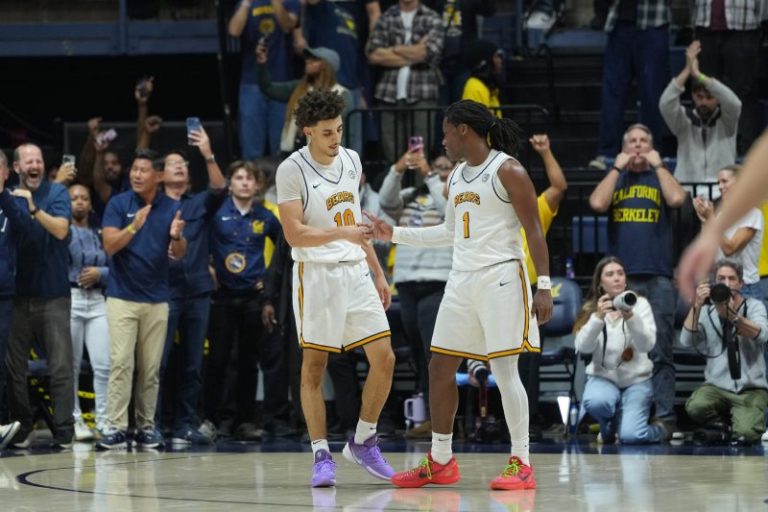
The dream season for Miami (Ohio) continues.

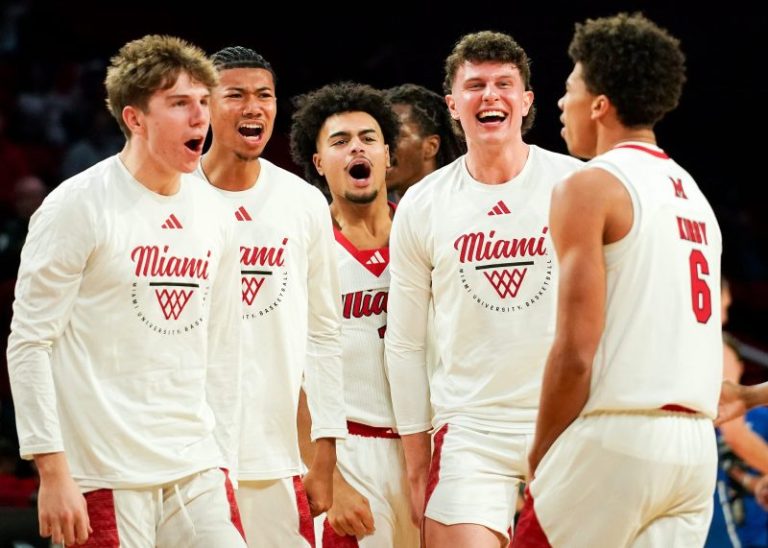
The RedHawks remain undefeated, moving to 19-0 after a dramatic finish on Saturday, Jan. 17 against Buffalo that required two buzzer-beating shots — once in regulation, and again in overtime.

The visiting Bulls gave the RedHawks, one of three undefeated teams left in the country, plenty of trouble in a tight contest. With 12 seconds left, Buffalo guard Daniel Freitag made two free throws to make it a three-point game, putting the pressure on Miami.

Miami (Ohio’s) Peter Suder tried a 3-pointer and missed, but Brant Byers tipped the ball back right into the hands of Eian Elmer, who took one step back behind the arc and knocked down the shot as time expired to send it to overtime.

The surprises continued into the extra period. It remained close with less than 20 seconds left, with Buffalo’s Ezra McKenna hitting a 3-point shot to tie the game at 102. Miami had the chance to end the game, and Suder redeemed himself by drilling a 3-pointer to make it 105-102 with a second left.

Suder let the Bulls know it was time to go when he hit the ‘night-night’ celebration right in front of the bench.

The Bulls were unable to get the game-tying shot to send it to a second overtime.

The thrilling victory extends what has been the best start in program history for Miami (Ohio). At 19-0, it also tied the MAC record for best start to the season, set by Western Michigan in 1975-76. Not only are they the favorite to win the conference and secure an NCAA Tournament bid, but also continue to make a case to be in the field as an at-large, regardless of winning a MAC title.

In the most recent USA TODAY Sports Bracketology, Miami Ohio is a No. 11 seed, which would be its best mark since it was a No. 10 seed in 1999.

Entering the day, Miami (Ohio), Arizona and Nebraska are the only undefeated teams left in the country.

This post appeared first on USA TODAY

The North Carolina Courage are going to look different this NWSL season.

For the first time since 2017, the year the team began playing in Cary, N.C. after moving from Western New York, they’ll play without Denise O’Sullivan.

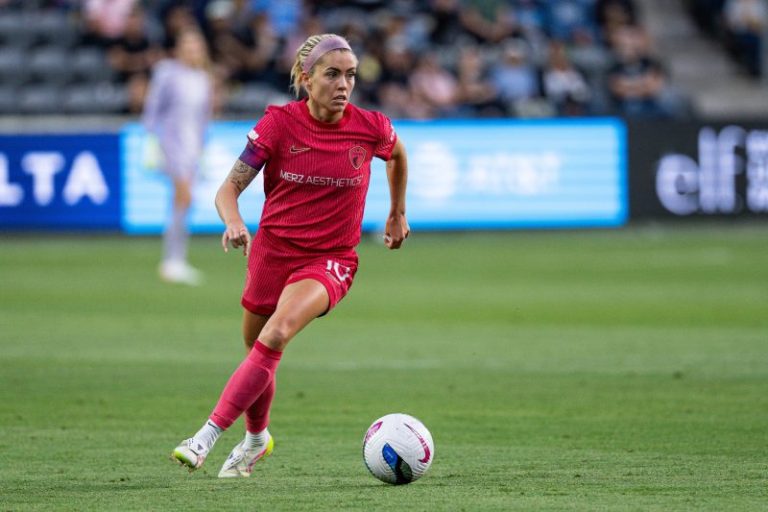
The Courage announced Saturday that they have transferred the Irish midfielder to Liverpool FC of the Barclays Women’s Super League for an undisclosed fee.

Calling O’Sullivan a mainstay for the Courage would be a massive understatement. She arrived to the club during the summer of 2017 looking for a fresh start after being waived by the Houston Dash. Across the nine seasons since, she would become the club’s all-time leader in appearances, featuring in 186 games in all competitions.

“It’s hard to put into words what this club has truly meant to me. North Carolina will always be my home, and I’m forever grateful to the club, my teammates, and the incredible fans who supported and believed in me every step of the way,” O’Sullivan said in a statement. “I’m on to a new challenge now, but I’ll always be a part of Courage Country. From the bottom of my heart, thank you for everything.”

With O’Sullivan on the pitch — mostly as a stout box-to-box defensive midfielder with a knack for winning balls, earning the nicknames “junkyard” and “Savage Sully” for her aggressiveness — the Courage won seven NWSL trophies: three Shields, two Challenge Cups, and a pair of NWSL Championships in 2018 and 2019. The Courage also won the International Champions Cup in 2018.

O’Sullivan tallied three goals and 12 assists in her tenure with the Courage. She made the NWSL’s Best XI team in 2019 and the Second XI in 2023, and has been named one of the “100 Best Female Footballers in the World” by The Guardian.

“Denise has been an integral part of this club since the beginning, and she has helped define the Courage way,” Ceri Bowley, chief soccer officer for the Courage, said in a statement. “She’s been a leader, both on and off the field, and the standard of excellence she set for herself, her teammates, and everyone at this organization will be her legacy. She will be missed, but we understand her desire to be closer to home and wish her all the best in her next chapter.”

A native of Cork, Ireland, the 31-year-old O’Sullivan has 126 caps for the Republic of Ireland national team and has 22 goals for her country. She started in all three games for the Irish in the 2023 World Cup.

With O’Sullivan moving to Liverpool, Kaleigh Kurtz signing with the expansion side Denver Summitt, and Meredith Speck still an unsigned free agent, just one player remains on the Courage’s roster who was part of the club’s last championship team in 2019: defender Ryan Williams.

Nathan Thackeray, the 2019 squad’s goalkeepers coach, also remains. He was promoted to acting head coach last August after Sean Nahas was fired.

This post appeared first on USA TODAY
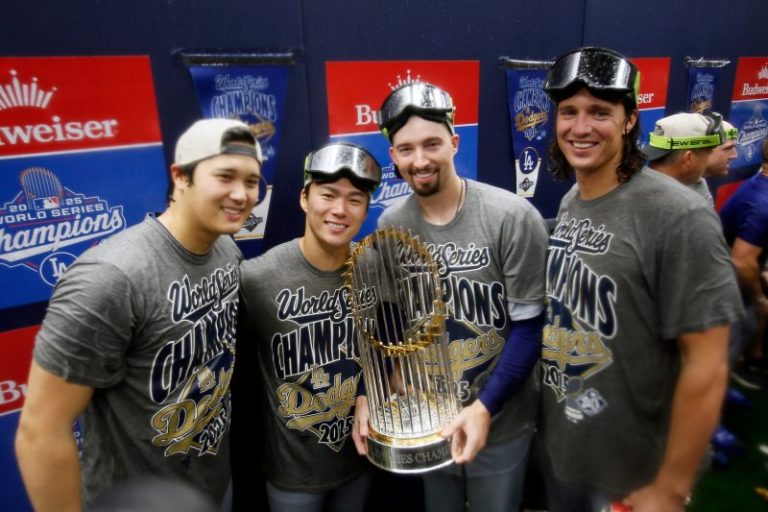
College football coaches have unanimously recommended increasing the redshirt game limit from four to nine games.
The proposal aims to address roster caps and an expanded postseason in modern college football.
The change is being proposed amid legal challenges to the NCAA’s current eligibility rules.

Major college football coaches recently voted to recommend a big change in the redshirt rule for their players. They want players to be able to play in up to nine games before losing their chance to redshirt for one season, up from the current limit of four games.

But why?

The unanimous recommendation came at the annual convention of American Football Coaches Association in Charlotte on Jan. 13. AFCA executive director Craig Bohl explained it in a statement to USA TODAY Sports below.

It’s not a rule change yet and will first need to be considered by NCAA committees. But as NCAA eligibility rules are being challenged in court, the recommendation potentially could lead to compromise after a federal judge in Nashville on Thursday, Jan. 15, rejected a request by five football players to give them a fifth season of eligibility. Those players are part of a class-action lawsuit that sought to give players five seasons of playing eligibility in five years.

Currently, football players are limited to playing four seasons in a five-year window but can play up to four games in one season and not lose a season of eligibility, making it a so-called redshirt year.

Why college football coaches want a nine-game redshirt threshold

Bohl, the former head coach of Wyoming, cited the changing sea of college sports with an expanded postseason and roster caps under the terms of the House vs. NCAA legal settlement. For example, Miami will play its fourth postseason playoff game Jan. 19 when it plays for the national championship against Indiana. Players also are allowed to play in postseason games and not have them count against the redshirt threshold of four games after a 12-game regular season, according to a rule change made last year.

‘College athletics is at an inflection point,” Bohl stated. “The House settlement introduces roster caps and a multi-year period of grandfathering that will materially shrink active rosters and compress depth charts. At the same time, the competitive calendar has expanded through College Football Playoff structures.

‘The current redshirt rule — four games plus championship participation which could be as many as five additional games — was built for a different era: one with larger rosters, fewer total games, and less cumulative physical and mental load. Codifying today’s realities into a modernized redshirt standard with nine games is both a student-athlete well-being issue and a competitive sustainability issue. This also aligns with the nine-game conference schedule.”

Bohl said it’s “not about creating loopholes.”

“It is about aligning policy with today’s environment in a way that prioritizes health, development, and opportunity — while preserving the fundamental purpose of the redshirt year,” Bohl stated.

What a new redshirt rule change could mean

A redshirt year doesn’t count toward the four-season limit of playing time within five years. For example, Colorado freshman Julian Lewis will be a redshirt freshman in 2026 with four seasons of college eligibility remaining after playing in only four games in 2025 and taking a redshirt season. If he had played in five games in 2025, he would have lost his redshirt year and would have been considered a sophomore in 2026 with only three seasons of eligibility left.

If the rule is changed to a nine-game redshirt threshold, football players could play up to nine regular-season games in a redshirt season plus four full seasons.

Judge’s decision doesn’t bode well for five seasons of eligibility

A federal judge in Nashville on Jan. 15 denied a request for a preliminary injunction that would have granted five football players a fifth year of eligibility in 2026 after they already played the NCAA maximum of four seasons.

The ruling by Judge William Campbell grants the NCAA a win in court as their rules have come under attack in various antitrust lawsuits. In this case, the NCAA was sued by athletes in multiple sports who are challenging NCAA rules that limit them to playing four seasons within five years. The athletes said this restriction amounts to an unreasonable restraint on trade after athletes finally were allowed to earn money from schools for the first time last year for their name, image and likeness.

The NCAA fought back and said it wasn’t an unreasonable rule.

The judge found “the plaintiffs have not shown a likelihood of success on the merits of their antitrust claim.” If the judge had ruled in favor of the players, the preliminary injunction would have given a fifth season of eligibility only to five football players, for now, as the larger case moved forward in court. After the judge ruled against the players, their underlying lawsuit still can continue moving forward. But the judge’s ruling doesn’t bode well for the larger case unless the plaintiffs can lay out a stronger basis for a rule change.

“Small changes in the eligibility rules have consequences that likely cannot be fully appreciated without further development of the record,” the judge ruled. “The Court is mindful of its limitations in assessing the consequences of invalidating long-standing eligibility rules.”

This case was separate from the Diego Pavia case

The same judge previously granted a preliminary injunction in favor of Vanderbilt quarterback Diego Pavia, who had challenged other NCAA eligibility rules pertaining to junior college transfers. The injunction gave Pavia, a former player at New Mexico Military Institute, another season of eligibility this year while his underlying case remains pending.

The NCAA said the Pavia case is different than this one because Pavia did not challenge the restriction of four seasons in five years.

Follow reporter Brent Schrotenboer @Schrotenboer. Email: bschrotenb@usatoday.com

This post appeared first on USA TODAY

A conspiracy theory is floating around the NFL and surrounding the San Francisco 49ers, linking their home location, Levi’s Stadium, to a number of injuries sustained by Niners players.

Just next door to Levi’s Stadium, where the 49ers play their home games in Santa Clara, is their practice facility, which is where the 49ers have strapped up for practice since 1988. And, neighboring that venue sits an electrical substation.

What started as a theory has since gone viral, sparking social media debate about the safety of 49ers players and teams who visit Levi’s Stadium for away games. Not to mention, Levi’s Stadium will be the site of Super Bowl LX on Feb. 8.

The theory, which has yet to be scientifically proven true, is that excessive Electromagnetic Field (EMF) exposure can cause negative harm to the body.

‘Low-frequency electromagnetic fields can degrade collagen, weaken tendons, and cause soft-tissue damage at levels regulators call ‘safe’,’ an X user, Peter Cowan, posted on Jan. 6 which has since amassed 22 million views, 5,900 reposts and 35,000 likes.

49ers injury conspiracy: NFL players react

San Francisco has suffered blows to many key players throughout the season, including Brock Purdy, Christian McCaffrey, Nick Bosa, Brandon Aiyuk, Trent Williams and Fred Warner. Many of their injuries were tendon and ligament tears.

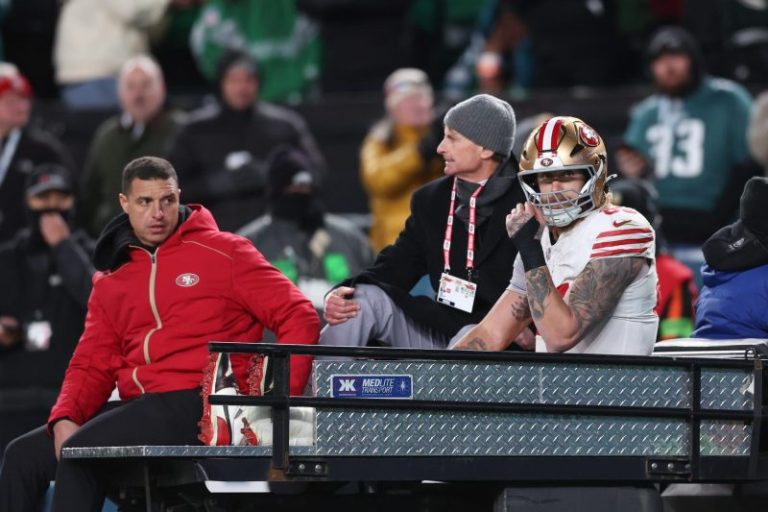
George Kittle is the most recent victim to injury, after suffering a torn right Achilles against the Philadelphia Eagles in the NFC Wild Card Round at Lincoln Financial Field in Philadelphia on Jan. 11.

49ers wide receiver Kendrick Bourne joked about the viral conspiracy theory explaining the team’s injuries during a Jan. 13 scrum with reporters.

‘Yeah, it’s that power plant,’ Bourne said. ‘Nah, I’m just playing. I don’t know. It just sucks, but we do a good job of just working everyday. Injuries are a part of the game. It’s unfortunate but we just have to hold it down keep that good energy and believe in ourselves, believe in the next man up.’

Although, there hasn’t been an official injury tied to the EMF plant, players around the league are allegedly taking caution and reaching out to their agents about any possibility that there’s truth to the conspiracy, according to the Washington Post.

Experts debunk ‘nonsense’ theory

Frank de Vocht, a professor of epidemiology and public health at Bristol Medical School in England, is a leading expert on how EMF affects humans.

He said in an interview with The Post that the conspiracy theory is ‘nonsense’.

UC Davis radiology professor Jerrold Bushberg, who is also a 49ers fan, told Front Office Sports in an interview that there isn’t any established evidence to conclude the conspiracy as accurate.

“These so-called ‘mechanisms’ have not been established,’ Bushberg said. ‘Many of the experiments are contradictory. Many of the experiments have exposures that either don’t relate specifically to 50-, 60-hertz magnetic fields, or are at much, much higher levels than what would be experienced at a practice level.’

It’s a topic that will likely resurface if there are any major injuries during Super Bowl LX at Levi’s Stadium on Feb. 8 in Santa Clara.

While conspiracy fans maintain their belief that there’s truth to their theory, scientists are calling cap.

This post appeared first on USA TODAY
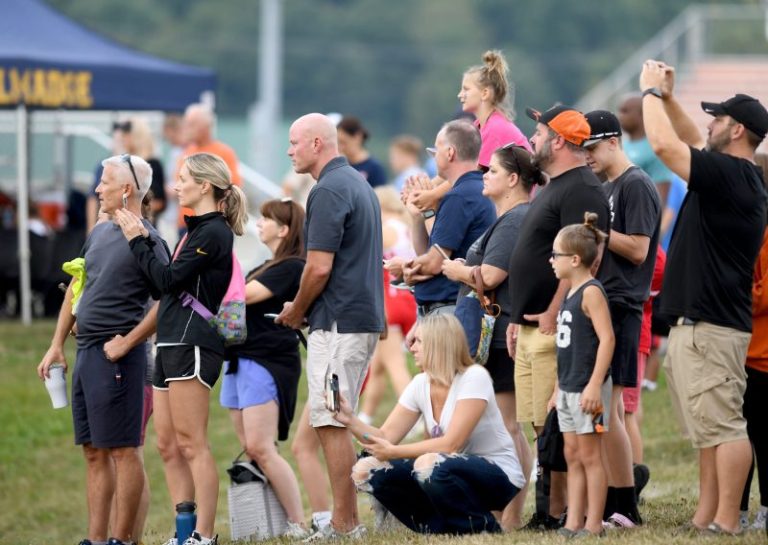
The big boys are off the board. The quick pivots have been exhausted. Now, Major League Baseball teams must make do with whatever’s left on the free agent market a little more than three weeks before spring training camps open.

There have been some notable salvage jobs in the past week, with the Boston Red Sox losing out on Alex Bregman, only to pivot to run prevention and snag lefty Ranger Suárez. Or the Kyle Tucker-to-L.A. stunner prompting the Mets to ambush Bo Bichette with a $42 million annual salary.

Now, the wriggle room is less, the surefire talents all but gone from our list of available players. There are still avenues to improve, but they are narrower. Let’s explore them:

Cody Bellinger: Last big bat standing

And that’s no exaggeration. With Tucker, Bichette and Bregman spoken for, Bellinger represents the lowest-hanging fruit on a board that counts 34-year-old third baseman Eugenio Suárez as the next-best available position player.

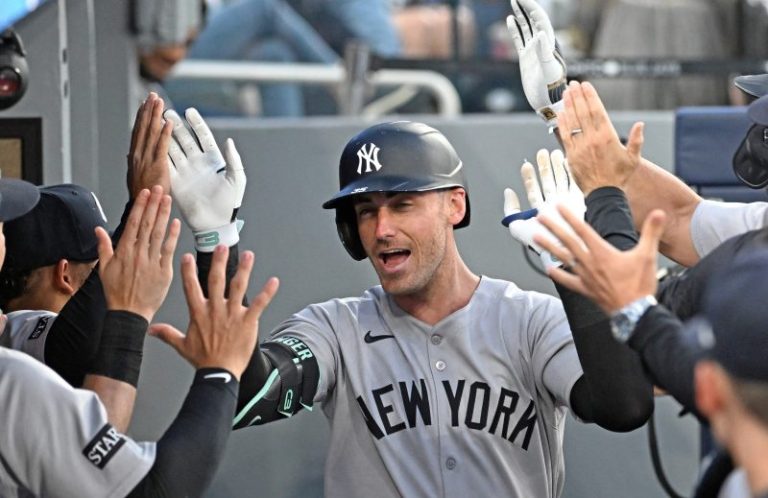
Two questions: How badly do the Yankees want Bellinger back – and do the spurned Mets and Blue Jays loom as legitimate threats?

In one sense, Bellinger was dealt a losing hand with the Tucker-Bichette shuffle, with Citi Field and Dodger Stadium both potential destinations. Tucker closes the door on L.A., but the Mets still have a massive hole in left field. The Blue Jays missed out on Tucker, couldn’t renew vows with Bichette and now it’s unknown if they’re so desirous of an outfield upgrade that they’d be willing to spend the cash on a nine-figure deal for Bellinger, 30, after the 28-year-old Tucker spurned them.

The Yankees, meanwhile, still exist.

Other than welcoming back Trent Grisham once the center fielder accepted the $22 million qualifying offer, and trading for lefty Ryan Weathers to hold down the fort until a group of starting pitchers get healthy, it’s been a virtually silent winter. Sure, their payroll will be north of $250 million, and creeps toward $300 million for tax purposes at the moment.

For now that’s well shy of the Dodgers, Mets and Phillies and even trails the Blue Jays. In a relative sense, they’ve got money to burn. Yet they’ve made it clear so far that Bellinger doesn’t fall into their ‘spare no expense’ bucket. We’ll see if they find a mutually happy zone.

Framber Valdez, Zac Gallen: Last aces* standing

And we say that with the understanding that both fellows have fulfilled that role – the Houston Astros winning all four of Valdez’s postseason starts in their 2022 World Series title run, Gallen earning the starting nod for the NL in the 2023 All-Star Game – yet may not hit the market as such.

Valdez is still plenty good – his 3.66 ERA in 2025 was his worst as a full-time starter, yet still 14% better than league average. At 32, he’s experiencing slippage in almost every peripheral, though he remains a groundball machine. His pitch-mixup kerfuffle wasn’t great, and he may not inspire fans to flock through the turnstiles, but Valdez figures to remain a rotation rock through the term of any contract of reasonable length.

Gallen’s arc is a little more acute. His ERA soared to 4.83 in 2025 as he gave up 31 home runs, and his WHIP settled in at 1.26 each of the past two seasons. Gallen’s pullside flyball and barrel rates were both career worsts, even as his surface-level stuff has remained the same. In short, a little bit of diagnostic work for a signing team to attack.

Still, at 30 and 32, respectively, Gallen and Valdez have far less tread on their arms than the alternatives. Valdez can certainly credibly front a rotation, or at least lend quality innings to someone that needs it; Baltimore and the New York Mets both harbor playoff dreams, though the Mets may not be willing to provide the contract length Valdez prefers.

Chris Bassitt, Max Scherzer, Justin Verlander: Old guys rule?

Come Opening Day, they’ll be 37, 41 and 43 years old, respectively, the latter two bound for the Hall of Fame. And for those averse to long-term entanglements with arms they don’t love, these dudes certainly fold neatly into almost any team’s plans.

Bassitt is coming off a three-year, $63 million deal with the Blue Jays, one that finished with him performing gallantly out of the playoff bullpen, giving up one run in seven appearances. Over 162 games, he’s showing no signs of slowing down, hitting 200 innings in 2023 while throwing 181, 171 and 170 in ’22, ’24 and ’25. Reliable.

Scherzer and Verlander, meanwhile, will seemingly never stop pitching. Verlander posted a 3.85 ERA in his lone season in San Francisco, but a typically defanged Giants attack held him to a 4-11 record – and stuck on 266 wins for his career.

Scherzer, meanwhile, started Game 7 of the World Series for the second time in his career. He pitched capably in the postseason, but crazy stuff tended to follow Mad Max around, as it tends to do: Toronto lost his first Series start in 18 innings, then suffered the 11-inning gut punch that ended their season. Still, Scherzer gritted through an early-season thumb problem to make 17 starts, completing at least six innings in six of them.

That’s what you’ll get with these guys: No promise of ideal health or consistent length, but the occasional magic that comes with a generational talent, for around $15 million a year.

The rest: Buddy, can you spare a reliever?

Do hope that your favorite team got in on the early rush of relievers. Erstwhile Blue Jay Seranthony Dominguez remains the last remaining arm that can be charitably termed high-leverage. A gaggle of itinerant lefties – Danny Coulombe, Brent Suter and Justin Wilson – are available.

And there’s a decent pocket of starters who tuck between the bigger-ticket items and the old dudes, led by Lucas Giolito, who had five starts of seven or more innings and one or no earned runs given up last season; his track record does come with injury concerns.

Zack Littell and Nick Martinez also provide versatile, proven arms that can pad the back of a rotation or a proverbial sixth starter spot.

This post appeared first on USA TODAY