Archive

2026

Browsing

Hockey Hall of Fame goaltender Glenn Hall died Wednesday, the NHL announced.

Hall, who played for the Detroit Red Wings, Chicago Blackhawks and St. Louis Blues, died in a Stony Plain, Alberta, hospital at 94 years old, the league said. Hall had mainly lived on his farm there since retiring as a goalie.

‘Glenn Hall was the very definition of what all hockey goaltenders aspire to be,’ NHL commissioner Gary Bettman said in a statement. ‘Aptly nicknamed ‘Mr. Goalie,’ Glenn was sturdy, dependable, and a spectacular talent in net.’

Hall’s record of 502 consecutive regular-season NHL games is a league record that very likely won’t ever be broken. From Oct. 6, 1955, to Nov. 4, 1962, he did not miss one match. Each of those seven seasons had 70 games, and in 1962-63 when his streak ended due to a back injury, he only missed four games.

That makes Hall the ironman of NHL goaltenders. Considering teams nowadays almost always play backup goalies once during back-to-back games and on other occasions to give the No. 1 netminder a rest, Hall will likely be the NHL ironman goalie forever. And as Bettman said, Hall recorded that streak without wearing a mask.

‘Glenn was a true star, whose career was filled with accomplishment and accolades,’ Bettman said. ‘From the moment he stepped foot in an NHL crease, Hall excelled. He won the Calder Trophy with the Red Wings, earned every win for the Blackhawks in their run to the 1961 Stanley Cup, and captured a Conn Smythe Trophy despite losing in the final with the St. Louis Blues.’

The NHL credited Hall as the ‘pioneering grandfather of the butterfly style of goaltending,’ dropping to his knees to stop low shots instead of standing up.

After retiring as a goaltender, Hall was elected to the Hockey Hall of Fame in 1975 and the St. Louis Blues Hall of Fame in 2023. As a goaltending consultant for the Calgary Flames, Hall won the Cup again in 1988-89.

Hall’s No. 1 is retired by the Blackhawks. The team and chairman-CEO Danny Wirtz called Hall one of the most influential goaltenders in the history of hockey and a franchise cornerstone.

‘On behalf of the Wirtz family and the entire Chicago Blackhawks organization, we extend our deepest condolences to Glenn’s family, friends, and the countless teammates and supporters who loved him,’ Wirtz’s statement said. ‘We are grateful for his extraordinary contributions to hockey and to our club, and we will honor his memory today and always.’

This post appeared first on USA TODAY

When asked about the non-conference schedule after the LSU women’s basketball team’s loss at Vanderbilt, Kim Mulkey said the quiet part out loud.

“If we hadn’t played that schedule, we might be sitting here with a lot of losses,’ Mulkey said.

Indeed. And now, SEC play is underway and LSU’s schedule is a whole lot tougher. The average NET ranking of LSU’s opponents so far is 270th in the nation, which is the second-worst in the SEC to only Georgia.

Through two games — losses to Kentucky and Vanderbilt — it seems like LSU isn’t as good as what their unblemished non-conference record was saying. And the Tigers’ schedule doesn’t get any easier.

The Tigers will host undefeated Texas on Sunday (3 p.m. ET, ESPN), another measuring stick game for Mulkey’s team. A week into January, LSU’s ceiling is unclear.

The opposite feels true for Texas, which tested themselves in non-conference action and passed with flying colors. The Longhorns own wins over six ranked teams and could make LSU their next victim. Led by Madison Booker, Rori Harmon and Jordan Lee, coach Vic Schaefer’s squad has the look and feel of a team capable of reaching its second consecutive Final Four.

So far, the same can’t be said for LSU, which has lost in the Elite Eight in back-to-back seasons since winning the 2023 national title with a team powered by Angel Reese. The Tigers lead the nation in scoring, but lost the rebounding battle to Kentucky by double figures and then committed an astounding 22 turnovers against Vanderbilt.

LSU’s problems are just now being exposed in January. The time to fix them is running out.

Here’s the other games to watch in women’s college basketball this weekend:

Game that could shake up national rankings: Oklahoma at Kentucky

4 p.m. ET, Sunday (SEC Network)

This game could be billed as a literal clash of the titans. On one side you have Raegan Beers, the 6-foot-4 post for the Sooners who is averaging 17.4 points and 10.8 rebounds a game while shooting 59% from the floor. On the other end is Clara Strack, the reigning SEC Defensive Player of the Year posting 16.8 points, 9.8 rebounds and 2.9 blocks per game. Both teams also have dynamic guards, with rookie Aaliyah Chavez shining for Oklahoma and veteran Tonie Morgan guiding Kentucky with superb passing. Kentucky will have to grapple with the absence of starting forward Teonni Key, who is out with an elbow injury.

Must-watch player matchup: North Carolina at Notre Dame

1 p.m. ET, Sunday (ESPN)

Hannah Hidalgo has been the one-woman wrecking crew for the undermanned Fighting Irish this season. She’s second in the nation in scoring with 25.3 points per game and first in steals with 5.9. She and Notre Dame will be going up against a North Carolina team led by sophomore center Ciera Toomey and senior wing Indya Nivar. Toomey is making a case for the ACC’s Most Improved Player, as she’s shooting 74.2% inside the arc, which is third nationally. And like Hidalgo, Nivar has garnered a reputation for being adept at picking pockets, posting 3.3 steals per game.

Mid-major matchup worth watching: Davidson at Richmond

6 p.m. ET, Saturday, (ESPN)

There’s a good chance the Atlantic 10 is a multi-bid league for the NCAA Tournament again this season, and the Wildcats and Spiders are jockeying for position atop the conference standings. Katie Donovan, a junior guard for Davidson, is shooting north of 50% from 3-point land this season. For Richmond, Maggie Doogan is a 6-foot-2 Swiss army knife who is the only player in the nation averaging at least 23 points, eight rebounds and five assists per game.

Sickos game of the week: Rutgers at Northwestern

3 p.m. ET, Sunday (Big Ten Network+)

Both of these teams could have new head coaches next season. Longtime Northwestern head coach Joe McKeown is retiring and things haven’t gone well for Coquese Washington in her four seasons leading Rutgers. Both teams are 0-4 in Big Ten play and look like longshots to make the NCAA Tournament. However, the Wildcats do feature Caroline Lau and Grace Sullivan. Lau leads the nation in assists with nine per game, and Sullivan is fifth nationally in scoring with 23.4 points per game.

Also watch…

Columbia at Harvard: 2 p.m. ET, Saturday (ESPN+)
Arkansas State at Troy: 4:30 p.m. ET, Saturday (ESPN+)
UConn at Creighton: 2 p.m. ET, Sunday (truTV/HBO Max)
Ohio State at Maryland: 4 p.m. ET, Sunday (Peacock)
UCLA at Nebraska: 7 p.m. ET, Sunday (Big Ten Network)

This post appeared first on USA TODAY

Former Vice President Al Gore on Wednesday condemned President Donald Trump’s move to withdraw the U.S. from United Nations-linked climate initiatives.

Gore claimed in a post on X that ‘the most significant challenge of our lifetimes’ is ‘the climate crisis.’ 

‘The ongoing work of the IPCC, UNFCCC, and other global institutions remains essential to safeguarding humanity’s future,’ he asserted, referring to the Intergovernmental Panel on Climate Change (IPCC), the United Nations Framework Convention on Climate Change (UNFCC).

‘By withdrawing from the IPCC, UNFCCC, and the other vital international partnerships, the Trump Administration is undoing decades of hard-won diplomacy, attempting to undermine climate science, and sowing distrust around the world,’ he wrote.

Trump issued a memorandum ordering U.S. withdrawal from the two initiatives that Gore mentioned as well as scads of other entities.

The president’s memorandum lists the Intergovernmental Panel on Climate Change under a grouping of ‘Non-United Nations Organizations.’ But the website ipcc.ch states, ‘The Intergovernmental Panel on Climate Change (IPCC) is the United Nations body for assessing the science related to climate change.’

In the memorandum, the president declared that he has ‘determined that it is contrary to the interests of the United States to remain a member of, participate in, or otherwise provide support to the organizations listed in section 2 of this memorandum.’

Secretary of State Marco Rubio said in a statement, ‘As this list begins to demonstrate, what started as a pragmatic framework of international organizations for peace and cooperation has morphed into a sprawling architecture of global governance, often dominated by progressive ideology and detached from national interests.’

Gore, who served as vice president alongside Democratic President Bill Clinton, lost the 2000 presidential contest to Republican George W. Bush.

This post appeared first on FOX NEWS

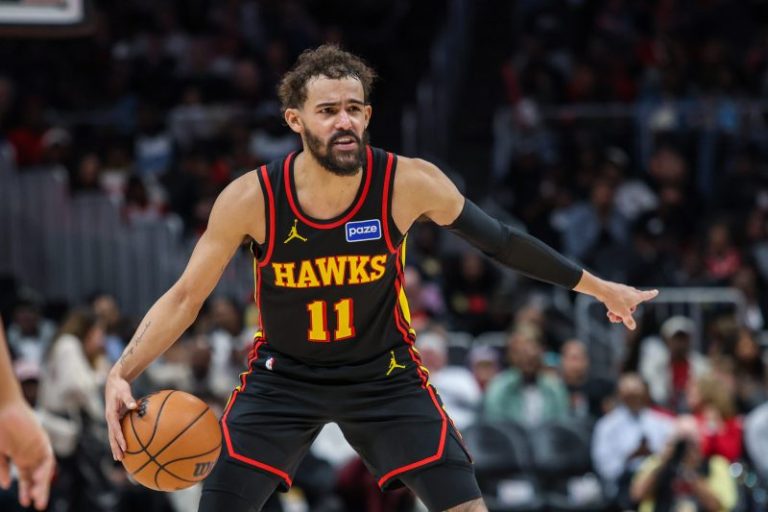
The Trae Young era in Atlanta is over.

The Atlanta Hawks are trading Young to the Washington Wizards in exchange for CJ McCollum and Corey Kispert, a person with knowledge of the deal told USA TODAY Sports.

The person spoke on the condition of anonymity because the deal was not yet official.

A breakup between the Hawks and their longtime face of the franchise had been inevitable for some time, and an ESPN report earlier Wednesday indicated that Washington was Young’s preferred trade destination.

The 27-year-old, four-time All-Star gets his wish and a fresh start in the nation’s capital.

Trae Young trade details

This is a rare player for players deal, with no draft picks involved.

Young, the fifth overall pick in the 2018 NBA Draft who’s spent his whole career in Atlanta, is going to Washington. The Hawks get back 13-year veteran CJ McCollum and Corey Kispert, the 15th overall pick in the 2021 NBA Draft.

Trae Young contract

Young’s cap hit is nearly $46 million this season and he has a player option for 2026-27, which means he could become a free agent this summer. ESPN’s Shams Charania reported that the Wizards ‘are not expected to have immediate extension talks with Young.’

McCollum’s cap hit is close to $31 million and he will be a free agent after the season. Kispert is under contract through 2029 (when including a club option) and he sports a modest cap hit south of $14 million.

Trae Young stats

In 10 games this season, Young has averaged 19.3 points and 8.9 assists.

McCollum, 34, has averaged 18.8 points, 3.5 rebounds and 3.5 assists in 35 games. Kispert, 26, has averaged 9.2 points in 19 games.

This story has been updated with new information.

This post appeared first on USA TODAY

Amber Glenn set a record-breaking score of 83.05 in the short program, placing her in first.
Alysa Liu sits in second place after her own flawless short program earned a score of 81.11.
Defending champions Alisa Efimova and Misha Mitrofanov lead the pairs competition after the short program.
The U.S. Figure Skating Championships is the final event before the 2026 Winter Olympics team is announced on Sunday, Jan. 11.

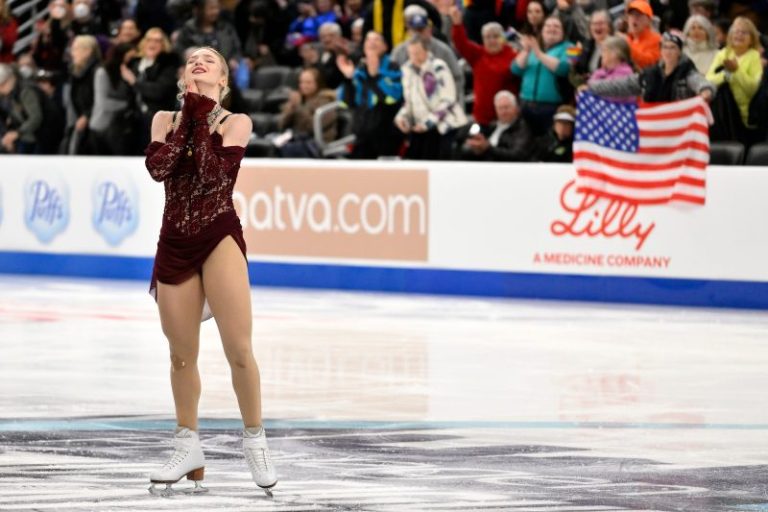
ST. LOUIS — A fist pump was all you needed to know about how Amber Glenn’s short program went Wednesday at the 2026 U.S. figure skating championships.

Her performance to “Like a Prayer” by Madonna was a powerful skate that didn’t have a single miss, a truly sensational outing. Her program boasts has one of the hardest degrees of difficulty, and she knew she nailed it when she finished, punctuating it with that emotional fist pump.

The result? A stunning — and record-breaking — score of 83.05, putting her in first ahead of Alysa Liu and Isabeau Levito. She was still emotional even after hearing the result.

‘I was so ecstatic, and for some reason I just felt my grandma with me today and that meant a lot and I think she really got me through this,’ Glenn said after, tears welling in her eyes. ‘It was a whole new experience for me today.’

Get our Chasing Gold Olympics newsletter in your inbox for coverage of your favorite Team USA athletes

Glenn said of all the moments in her long, winding career that this one is at the top.

‘I’m so grateful and happy to share it with these ladies,’ Glenn said of Alysa Liu and Isabeau Levito, who are in second and third, respectively. ‘And I hope we can continue that for the next, like, month and a half.’

For her part, Liu continued her spectacular season, putting up a score of 81.11, which was also a record until Glenn broke it two skaters later. Liu delivered a flawless “Promise” short program, arguably her best one of the season. She was all smiles getting off the ice, her chill vibe the talk of the broadcast.

‘Well, listen, I have a ton of friends here watching and I’m competing with and we all did really good today, so what’s there to be mad about?’ she said after. ‘And I really liked from my performance specifcally, I liked my Biellmann a lot, I liked by Lutz loop.’

Earlier Wednesday, defending national champions Alisa Efimova and Misha Mitrofanov put up the performance of the night for pairs short program, scoring a 75.31. However, their Olympic fate is in limbo.

The championships continue Thursday with the rhythm dance and the men’s short program, when “Quad God” himself Ilia Malinin will take the ice. This is the final event for American skaters before the 2026 Winter Olympics start in February, the last chance to show why skaters belong in Milano Cortina. U.S. Figure Skating will announce the Olympic team on Sunday, Jan. 11.

US figure skating championships results

Alysa Liu, reigning world champion, put up a monster 81.11 only for defending U.S. champion Amber Glenn to blow past it with an 83.05. Here are standings.

Amber Glenn: 83.05 total segment score, 46.14 technical element score, 36.91 program component score.
Alysa Liu: 81.11 total segment score, 43.68 technical element score, 37.43 program component score.
Isabeau Levito: 75.72 total segment score, 40.10 technical element score, 35.62 program component score.
Sarah Everhardt: 71.10 total segment score, 38.90 technical element score, 32.20 program component score.
Bradie Tennell: 69.53 total segment score, 36.27 technical element score, 33.26 program component score.
Starr Andrew: 65.77 total segment score, 34.09 technical element score, 31.68 program component score.
Elyce Lin-Gracey: 65.24 total segment score, 34.52 technical element score, 30.72 program component score.
Josephine Lee: 62.79 total segment score, 32.96 technical element score, 29.83 program component score.
Sherry Zhang: 60.99 total segment score, 31.11 technical element score, 29.88 program component score.
Sophie Joline von Felten: 60.68 total segment score, 34.36 technical element score, 27.32 program component score.
Alina Bonillo: 58.94 total segment score, 32.10 technical element score, 27.84 program component score.
Logan Higase-Chen: 55.22 total segment score, 29.51 technical element score, 26.71 program component score. She had a one-point deduction for a fall.
Sonja Hilmer: 55.00 total segment score, 26.82 technical element score, 28.18 program component score. The crowd actually groaned when her score was announced.
Emilia Nemirovsky: 53.28 total segment score, 26.16 technical element score, 27.12 program component score.
Anabel Wallace: 52.74 total segment score, 28.84 technical element score, 23.90 program component score. The 17-year-old is competing at her first national championships.
Brook Gewalt: 50.59 total segment score, 25.68 technical element score, 24.91 program component score.
Katie Shen: 49.50 total segment score, 24.15 technical element score, 25.35 program component score.
Erica Machida: 49.41 total segment score, 25.32 technical element score, 24.09 program component score.

Amber Glenn puts up record-breaking score

The two-time defending U.S. champion Amber Glenn put on a beautiful short program to ‘Like a Prayer’ by Madonna, the crowd clapping along as the song and program reached a crescendo. Glenn gave a massive fist bump when she finished, began to cry and put her face in her hands, overcome with emotion. She earned an 83.05, good for first place in the standings after the short program.

‘I think that’s the most intense I’ve reacted to any skate ever I’m usually but there was just a feeling today that was so different,’ she said.

Alysa Liu turns in flawless short program

The spectacular season for reigning world champion Alysa Liu continues. She delivered a flawless “Promise” short program, arguably her best one of the season. She was all smiles getting off the ice, and for good reason, scoring a season-best 81.11.

‘The fact that all of us are that good is just, I guess really good for the crowd, like the more people are coming in to watch us, and that fuels like our performances,’ Liu said.

Amber Glenn, Alysa Liu on their friendship

USA TODAY Sports’ Jordan Mendoza spoke to Amber Glenn and Alysa Liu on the tight friendship they have formed. Here’s what they said.

What Liu said about Glenn: “She’s just such a big sister to me. The idea that we compete against each other, it’s so weird to me. I really just see her as one of my friends and truly one of my teammates. I don’t know, doing things with her is really fun.”

When Glenn said about Liu: “It’s been great to have someone that has such a positive outlook on skating and on her career around me. And then on the flip side, I have an extra pair of tights if she rips them and doesn’t have a backup, or I have the schedule ready because she doesn’t have it.”

Sarah Everhardt turns in season-best short program

Two skaters into the final group and there was a new person in first in Sarah Everhardt. She felt like the crowd helped her remember to smile more, and as a result, that helped lead to a season-best score of 71.10. Elyce Lin-Gracey started the group and although she got a 65.24, it will likely keep her out of the top five by the end of the night

Starr Andrews’ routine a crowd favorite

Through two groups and 12 skaters, Starr Andrew ran the women’s short program to sit in first place. Her Beyoncé routine has always been a crowd pleaser, and it was no different this time around, executing another solid performance.

She earned a 65.77, just ahead of Josephine Lee, who had her own good showing. Lee stumbled with her short program at Skate America in November, but she didn’t have any issues with her Shakira-inspired Tango, getting a season-best score of 62.79. Sherry Zhang’s season-best of 60.99 has her in third.

Sonja Hilmer tap dances on ice

One of the coolest performances so far came from Sonja Hilmer, who incorporated tap dancing into her program. Not only was it unique, but she also executed it perfectly with the music and drew a loud applause from the audience.

“This is a concept I’ve been playing with here and there,” Hilmer said afterward.

The crowd actually groaned when Hilmer’s 55.00 score was announced.

Logan Higase-Chen tops Group 1 in short program

A junior champion is on the top step of the senior championship through Group 1 of the women’s short program. Logan Higase-Chen earned a score of 55.22 to put her in first, nearly two points ahead of Emilia Nemirovsky.

The first group featured a few senior championship debuts, including Higase-Chen, the 2024 U.S. junior champion, and Anabel Wallace, who scored a 52.74 in her short programt.

Erica Machida gains buzz with Chappell Roan program

Erica Machida knew just the music to use in the home state of the “Midwest Princess.” In their national debut, Erica performed their short program to Chappell Roan’s “Kaleidoscope” and “Super Graphic Ultra Modern Girl” that got the crowd amped for their performance. 

They earned a score of 49.41, putting them in sixth place after the first group completed their programs

Alisa Efimova, Misha Mitrofanov sit in first after pairs short program

The defending champions are well-positioned to defend their crown with Alisa Efimova and Misha Mitrofanov comfortably in first place after the short program. Their score of 75.31 is more than seven points ahead of Audrey Shin and Balazs Nagy in second place.

It was a justified score as Efimova and Mitrofanov looked miles ahead of the rest of the field, and some other contenders like Ellie Kam and Danny O’Shea, as well as Emily Chan and Spencer Akira Howe, had some big slips.

Efimova and Mitrofanov are a married couple and their story is an intriguing one as Efimova is not an American citizen. From Finland, Efimova is awaiting a ruling on her American citizenship after obtaining her green card approval in July 2024. If she doesn’t obtain it, the pair will not be eligible for the 2026 Winter Olympics.

Pairs figure skating standings

Here are the pairs standings after Wednesday’s short program. The winners will be decided after Friday’s free skate, which starts at 3 p.m.

Alisa Efimova and Misha Mitrofanov: 75.31 total segment score, 41.58 technical score, 33.73 program components score. The defending champions put on the most impressive performance of the night.
Audrey Shin and Balazs Nagy: 67.67 total segment score, 36.99 technical score and 30.68 program component score. The pair skated with confidence, and Shin put her face in her hands in disbelief after putting together the strong showing.
Ellie Kam and Danny O’Shea: 67.13 total segment score, 36.12 technical score, 32.01 program components score. They had one point deducted.
Valentina Plazas and Maximiliano Fernandez: 67.03 total segment score, 37.91 technical score, 29.12 program components score.
Katie McBeath and Daniil Parkman: 66.81 total segment score, 36.78 technical score, 30.03 program components score.
Olivia Flores and Luke Wang: 63.58 total segment score, 35.57 technical score and 28.01 program components score. This marked the pair’s senior national team debut. Wang pumped both his fists and Flores flashed a huge smile when they finished their program.
Chelsea Liu and Ryan Bedard: 62.34 total segment score, 35.27 technical score and 27.07 program components score. Liu came off the ice coughing, battling through illness this week to be able to compete. The pair just came together in July 2025 and have put on some solid showings early on.
Emily Chan and Spencer Akira Howe: 59.29 total segment score, 32.83 technical score, 29.46 program components score. Chan had three mishaps in succession, each worse than the one before. She had a wonky landing on a attempted triple toe, unable to complete a full final rotation. She fell on a transition and fell on an attempted throw.
Naomi Williams and Lachlan Lewer: 55.09 total segment score, 30.97 technical score and 25.12 program components score. They had a one-point deduction for a fall. The pair, in their third season together, did a chest bump and laughed before starting their program.
Linzy Fitzpatrick and Keyton Bearinger: 54.56 total segment score, 30.41 technical score and 24.15 program components score. The pair had to wait seemingly longer than usual — 8 minutes — for their scores to be announced.

Judges for women’s short program

Judge No. 1: Mr. Richard Perez
Judge No. 2: Ms. Jennifer Thompson
Judge No. 3: Mr. Jeffrey Charbonneau
Judge No. 4: Ms. Stefanie Mathewson
Judge No. 5: Ms. Deborah Currie
Judge No. 6: Ms. Karen Perreault
Judge No. 7: Ms. Joy Jin
Judge No. 8: Ms. Dawn Eyerly
Judge No. 9: Ms. Katherine Specht

Here is the technical panel.

Referee: Ms. Peggy Graham
Technical Controller: Mr. Robert Rosenbluth
Technical Specialist: Ms. Julie Newman
Technical Specialist: Ms. Cynthia Stevenson

Skaters from 2025 plane crash honored

Before the event began, U.S. Figure Skating honored the 28 athletes, coaches and parents that were killed in the January 2025 plane crash. On Jan. 29, 2025 near Ronald Reagan Washington National Airport in Arlington, Virginia, an Army helicopter collided with American Airlines Flight 5342, resulting in 67 deaths.

The skaters, coaches and parents were returning from a development camp in Wichita, Kansas, which was held in conjunction with the 2025 U.S. Figure Skating Championships.

A moment of silence was held and the skaters were shown on the jumbotron inside the arena.

When does Ilia Malinin compete?

The ‘Quad God’ himself takes the first on Thursday night for his short program.

Pairs short program judges

Here were the nine judges for pairs short program.

Judge No. 1: Mr. Hal Marron
Judge No. 2: Ms. Stefanie Mathewson
Judge No. 3: Ms. Sheren Chiang
Judge No. 4: Ms. Dawn Eyerly
Judge No. 5: Ms. Lorrie Parker
Judge No. 6: Ms. Gale Tanger
Judge No. 7: Ms. Katherine Specht
Judge No. 8: Ms. Danielle Hartsell Minnis
Judge No. 9: Ms. Karen Perreault

Here is the technical panel.

Referee: Mr. Aristeo Brito
Technical Controller: Ms. Deveny Deck
Technical Specialist: Mr. Steven Hsu
Technical Specialist: Ms. Dana Graham

Types of figure skating jumps

Toe jump: A skater drives the toe pick of their non-takeoff foot into the ice to launch themselves into the air and generate momentum into the jump.

Toe loop: A skater takes off backward and lands on the same back edge of their blade.
Lutz: A skater moving backward jumps off the back outside edge of their skate and uses the toe-pick of their other skate to catapult into the air in the opposite direction and lands on the back outside edge of the picking leg.
Flip: A skater launches off the back inside edge of one skate and lands on the back outside edge of the other skate.

Edge jump: A skater takes off not with their toe pick but off the edge of their skate.

Salchow: A skater launches off the back inside edge of one skate and lands on the back outside edge of their other skate.
Axel: The only forward-facing jump, a skater lands on the back outside edge of their non-takeoff foot while traveling backward. The axel is the hardest jump because of the extra half-revolution that comes with a forward takeoff and a backward landing.
Loop: The skater jumps off a back outside edge of their skate and lands on the same edge.

When is US Olympic figure skating team named?

The team will be named on Sunday, Jan. 11 at 2 p.m. Three men and three women singles skaters will be chosen, as will three ice dance teams and two pairs, 16 athletes in all. The USFS selection process includes past performances, focusing on the athlete’s body of work over the past two seasons.

Ice dancing vs. figure skating

Ice dancing does not feature jumps or lifts, like you see figure skating pairs execute. Ice dancing is made up of two segments, the rhythm dance and the free dance.

Why US has never won Olympic gold in pairs figure skating

As you watch the pairs short program today at the U.S. national championships and perhaps wonder how the United States has performed in pairs skating over the years at the Olympic Games, here’s a primer, which is short and not-so-sweet. 

Americans have never won an Olympic gold medal in pairs skating. That is not a typo. It has never happened, and Olympic pairs competition goes back to 1908.

The last time a U.S. pair earned an Olympic medal was 1988. That was Jill Watson and Peter Oppegard, who won the bronze medal at the Calgary Olympic Games. Four years earlier, the Carruthers siblings — Kitty and Peter — won silver at the 1984 Sarajevo Olympics. Four other U.S. pairs going back even further in the history books won either silver or bronze from 1932-1964. That’s it: 26 Winter Olympic pairs competitions, six U.S. medals, none of them gold.

The population of the United States is around 340 million. It is one of the great sports mysteries of our time that a nation this big could not find one young woman and one young man talented enough to skate together as a pair to become Olympic champions. But so far, no — and it’s not going to happen this year either as U.S. pairs, try as they might, are not expected to come close to a medal in Milan. 

Why has this happened over and over again? One strong possibility is that the focus and fame in U.S. figure skating traditionally has come in the singles events, from Peggy Fleming and Dorothy Hamill to Scott Hamilton and Brian Boitano. (Although the U.S. definitely has upped its game in ice dance over the past 20 years.) 

Throughout its history, the United States has been known as a nation of individualists. That clearly is true on the ice as well. 

This post appeared first on USA TODAY

Amber Glenn set a record-breaking score of 83.05 in the short program, placing her in first.
Alysa Liu sits in second place after her own flawless short program earned a score of 81.11.
Defending champions Alisa Efimova and Misha Mitrofanov lead the pairs competition after the short program.
The U.S. Figure Skating Championships is the final event before the 2026 Winter Olympics team is announced on Sunday, Jan. 11.

ST. LOUIS — A fist pump was all you needed to know about how Amber Glenn’s short program went Wednesday at the 2026 U.S. figure skating championships.

Her performance to “Like a Prayer” by Madonna was a powerful skate that didn’t have a single miss, a truly sensational outing. Her program boasts has one of the hardest degrees of difficulty, and she knew she nailed it when she finished, punctuating it with that emotional fist pump.

The result? A stunning — and record-breaking — score of 83.05, putting her in first ahead of Alysa Liu and Isabeau Levito. She was still emotional even after hearing the result.

‘I was so ecstatic, and for some reason I just felt my grandma with me today and that meant a lot and I think she really got me through this,’ Glenn said after, tears welling in her eyes. ‘It was a whole new experience for me today.’

Get our Chasing Gold Olympics newsletter in your inbox for coverage of your favorite Team USA athletes

Glenn said of all the moments in her long, winding career that this one is at the top.

‘I’m so grateful and happy to share it with these ladies,’ Glenn said of Alysa Liu and Isabeau Levito, who are in second and third, respectively. ‘And I hope we can continue that for the next, like, month and a half.’

For her part, Liu continued her spectacular season, putting up a score of 81.11, which was also a record until Glenn broke it two skaters later. Liu delivered a flawless “Promise” short program, arguably her best one of the season. She was all smiles getting off the ice, her chill vibe the talk of the broadcast.

‘Well, listen, I have a ton of friends here watching and I’m competing with and we all did really good today, so what’s there to be mad about?’ she said after. ‘And I really liked from my performance specifcally, I liked my Biellmann a lot, I liked by Lutz loop.’

Earlier Wednesday, defending national champions Alisa Efimova and Misha Mitrofanov put up the performance of the night for pairs short program, scoring a 75.31. However, their Olympic fate is in limbo.

The championships continue Thursday with the rhythm dance and the men’s short program, when “Quad God” himself Ilia Malinin will take the ice. This is the final event for American skaters before the 2026 Winter Olympics start in February, the last chance to show why skaters belong in Milano Cortina. U.S. Figure Skating will announce the Olympic team on Sunday, Jan. 11.

US figure skating championships results

Alysa Liu, reigning world champion, put up a monster 81.11 only for defending U.S. champion Amber Glenn to blow past it with an 83.05. Here are standings.

Amber Glenn: 83.05 total segment score, 46.14 technical element score, 36.91 program component score.
Alysa Liu: 81.11 total segment score, 43.68 technical element score, 37.43 program component score.
Isabeau Levito: 75.72 total segment score, 40.10 technical element score, 35.62 program component score.
Sarah Everhardt: 71.10 total segment score, 38.90 technical element score, 32.20 program component score.
Bradie Tennell: 69.53 total segment score, 36.27 technical element score, 33.26 program component score.
Starr Andrew: 65.77 total segment score, 34.09 technical element score, 31.68 program component score.
Elyce Lin-Gracey: 65.24 total segment score, 34.52 technical element score, 30.72 program component score.
Josephine Lee: 62.79 total segment score, 32.96 technical element score, 29.83 program component score.
Sherry Zhang: 60.99 total segment score, 31.11 technical element score, 29.88 program component score.
Sophie Joline von Felten: 60.68 total segment score, 34.36 technical element score, 27.32 program component score.
Alina Bonillo: 58.94 total segment score, 32.10 technical element score, 27.84 program component score.
Logan Higase-Chen: 55.22 total segment score, 29.51 technical element score, 26.71 program component score. She had a one-point deduction for a fall.
Sonja Hilmer: 55.00 total segment score, 26.82 technical element score, 28.18 program component score. The crowd actually groaned when her score was announced.
Emilia Nemirovsky: 53.28 total segment score, 26.16 technical element score, 27.12 program component score.
Anabel Wallace: 52.74 total segment score, 28.84 technical element score, 23.90 program component score. The 17-year-old is competing at her first national championships.
Brook Gewalt: 50.59 total segment score, 25.68 technical element score, 24.91 program component score.
Katie Shen: 49.50 total segment score, 24.15 technical element score, 25.35 program component score.
Erica Machida: 49.41 total segment score, 25.32 technical element score, 24.09 program component score.

Amber Glenn puts up record-breaking score

The two-time defending U.S. champion Amber Glenn put on a beautiful short program to ‘Like a Prayer’ by Madonna, the crowd clapping along as the song and program reached a crescendo. Glenn gave a massive fist bump when she finished, began to cry and put her face in her hands, overcome with emotion. She earned an 83.05, good for first place in the standings after the short program.

‘I think that’s the most intense I’ve reacted to any skate ever I’m usually but there was just a feeling today that was so different,’ she said.

Alysa Liu turns in flawless short program

The spectacular season for reigning world champion Alysa Liu continues. She delivered a flawless “Promise” short program, arguably her best one of the season. She was all smiles getting off the ice, and for good reason, scoring a season-best 81.11.

‘The fact that all of us are that good is just, I guess really good for the crowd, like the more people are coming in to watch us, and that fuels like our performances,’ Liu said.

Amber Glenn, Alysa Liu on their friendship

USA TODAY Sports’ Jordan Mendoza spoke to Amber Glenn and Alysa Liu on the tight friendship they have formed. Here’s what they said.

What Liu said about Glenn: “She’s just such a big sister to me. The idea that we compete against each other, it’s so weird to me. I really just see her as one of my friends and truly one of my teammates. I don’t know, doing things with her is really fun.”

When Glenn said about Liu: “It’s been great to have someone that has such a positive outlook on skating and on her career around me. And then on the flip side, I have an extra pair of tights if she rips them and doesn’t have a backup, or I have the schedule ready because she doesn’t have it.”

Sarah Everhardt turns in season-best short program

Two skaters into the final group and there was a new person in first in Sarah Everhardt. She felt like the crowd helped her remember to smile more, and as a result, that helped lead to a season-best score of 71.10. Elyce Lin-Gracey started the group and although she got a 65.24, it will likely keep her out of the top five by the end of the night

Starr Andrews’ routine a crowd favorite

Through two groups and 12 skaters, Starr Andrew ran the women’s short program to sit in first place. Her Beyoncé routine has always been a crowd pleaser, and it was no different this time around, executing another solid performance.

She earned a 65.77, just ahead of Josephine Lee, who had her own good showing. Lee stumbled with her short program at Skate America in November, but she didn’t have any issues with her Shakira-inspired Tango, getting a season-best score of 62.79. Sherry Zhang’s season-best of 60.99 has her in third.

Sonja Hilmer tap dances on ice

One of the coolest performances so far came from Sonja Hilmer, who incorporated tap dancing into her program. Not only was it unique, but she also executed it perfectly with the music and drew a loud applause from the audience.

“This is a concept I’ve been playing with here and there,” Hilmer said afterward.

The crowd actually groaned when Hilmer’s 55.00 score was announced.

Logan Higase-Chen tops Group 1 in short program

A junior champion is on the top step of the senior championship through Group 1 of the women’s short program. Logan Higase-Chen earned a score of 55.22 to put her in first, nearly two points ahead of Emilia Nemirovsky.

The first group featured a few senior championship debuts, including Higase-Chen, the 2024 U.S. junior champion, and Anabel Wallace, who scored a 52.74 in her short programt.

Erica Machida gains buzz with Chappell Roan program

Erica Machida knew just the music to use in the home state of the “Midwest Princess.” In their national debut, Erica performed their short program to Chappell Roan’s “Kaleidoscope” and “Super Graphic Ultra Modern Girl” that got the crowd amped for their performance. 

They earned a score of 49.41, putting them in sixth place after the first group completed their programs

Alisa Efimova, Misha Mitrofanov sit in first after pairs short program

The defending champions are well-positioned to defend their crown with Alisa Efimova and Misha Mitrofanov comfortably in first place after the short program. Their score of 75.31 is more than seven points ahead of Audrey Shin and Balazs Nagy in second place.

It was a justified score as Efimova and Mitrofanov looked miles ahead of the rest of the field, and some other contenders like Ellie Kam and Danny O’Shea, as well as Emily Chan and Spencer Akira Howe, had some big slips.

Efimova and Mitrofanov are a married couple and their story is an intriguing one as Efimova is not an American citizen. From Finland, Efimova is awaiting a ruling on her American citizenship after obtaining her green card approval in July 2024. If she doesn’t obtain it, the pair will not be eligible for the 2026 Winter Olympics.

Pairs figure skating standings

Here are the pairs standings after Wednesday’s short program. The winners will be decided after Friday’s free skate, which starts at 3 p.m.

Alisa Efimova and Misha Mitrofanov: 75.31 total segment score, 41.58 technical score, 33.73 program components score. The defending champions put on the most impressive performance of the night.
Audrey Shin and Balazs Nagy: 67.67 total segment score, 36.99 technical score and 30.68 program component score. The pair skated with confidence, and Shin put her face in her hands in disbelief after putting together the strong showing.
Ellie Kam and Danny O’Shea: 67.13 total segment score, 36.12 technical score, 32.01 program components score. They had one point deducted.
Valentina Plazas and Maximiliano Fernandez: 67.03 total segment score, 37.91 technical score, 29.12 program components score.
Katie McBeath and Daniil Parkman: 66.81 total segment score, 36.78 technical score, 30.03 program components score.
Olivia Flores and Luke Wang: 63.58 total segment score, 35.57 technical score and 28.01 program components score. This marked the pair’s senior national team debut. Wang pumped both his fists and Flores flashed a huge smile when they finished their program.
Chelsea Liu and Ryan Bedard: 62.34 total segment score, 35.27 technical score and 27.07 program components score. Liu came off the ice coughing, battling through illness this week to be able to compete. The pair just came together in July 2025 and have put on some solid showings early on.
Emily Chan and Spencer Akira Howe: 59.29 total segment score, 32.83 technical score, 29.46 program components score. Chan had three mishaps in succession, each worse than the one before. She had a wonky landing on a attempted triple toe, unable to complete a full final rotation. She fell on a transition and fell on an attempted throw.
Naomi Williams and Lachlan Lewer: 55.09 total segment score, 30.97 technical score and 25.12 program components score. They had a one-point deduction for a fall. The pair, in their third season together, did a chest bump and laughed before starting their program.
Linzy Fitzpatrick and Keyton Bearinger: 54.56 total segment score, 30.41 technical score and 24.15 program components score. The pair had to wait seemingly longer than usual — 8 minutes — for their scores to be announced.

Judges for women’s short program

Judge No. 1: Mr. Richard Perez
Judge No. 2: Ms. Jennifer Thompson
Judge No. 3: Mr. Jeffrey Charbonneau
Judge No. 4: Ms. Stefanie Mathewson
Judge No. 5: Ms. Deborah Currie
Judge No. 6: Ms. Karen Perreault
Judge No. 7: Ms. Joy Jin
Judge No. 8: Ms. Dawn Eyerly
Judge No. 9: Ms. Katherine Specht

Here is the technical panel.

Referee: Ms. Peggy Graham
Technical Controller: Mr. Robert Rosenbluth
Technical Specialist: Ms. Julie Newman
Technical Specialist: Ms. Cynthia Stevenson

Skaters from 2025 plane crash honored

Before the event began, U.S. Figure Skating honored the 28 athletes, coaches and parents that were killed in the January 2025 plane crash. On Jan. 29, 2025 near Ronald Reagan Washington National Airport in Arlington, Virginia, an Army helicopter collided with American Airlines Flight 5342, resulting in 67 deaths.

The skaters, coaches and parents were returning from a development camp in Wichita, Kansas, which was held in conjunction with the 2025 U.S. Figure Skating Championships.

A moment of silence was held and the skaters were shown on the jumbotron inside the arena.

When does Ilia Malinin compete?

The ‘Quad God’ himself takes the first on Thursday night for his short program.

Pairs short program judges

Here were the nine judges for pairs short program.

Judge No. 1: Mr. Hal Marron
Judge No. 2: Ms. Stefanie Mathewson
Judge No. 3: Ms. Sheren Chiang
Judge No. 4: Ms. Dawn Eyerly
Judge No. 5: Ms. Lorrie Parker
Judge No. 6: Ms. Gale Tanger
Judge No. 7: Ms. Katherine Specht
Judge No. 8: Ms. Danielle Hartsell Minnis
Judge No. 9: Ms. Karen Perreault

Here is the technical panel.

Referee: Mr. Aristeo Brito
Technical Controller: Ms. Deveny Deck
Technical Specialist: Mr. Steven Hsu
Technical Specialist: Ms. Dana Graham

Types of figure skating jumps

Toe jump: A skater drives the toe pick of their non-takeoff foot into the ice to launch themselves into the air and generate momentum into the jump.

Toe loop: A skater takes off backward and lands on the same back edge of their blade.
Lutz: A skater moving backward jumps off the back outside edge of their skate and uses the toe-pick of their other skate to catapult into the air in the opposite direction and lands on the back outside edge of the picking leg.
Flip: A skater launches off the back inside edge of one skate and lands on the back outside edge of the other skate.

Edge jump: A skater takes off not with their toe pick but off the edge of their skate.

Salchow: A skater launches off the back inside edge of one skate and lands on the back outside edge of their other skate.
Axel: The only forward-facing jump, a skater lands on the back outside edge of their non-takeoff foot while traveling backward. The axel is the hardest jump because of the extra half-revolution that comes with a forward takeoff and a backward landing.
Loop: The skater jumps off a back outside edge of their skate and lands on the same edge.

When is US Olympic figure skating team named?

The team will be named on Sunday, Jan. 11 at 2 p.m. Three men and three women singles skaters will be chosen, as will three ice dance teams and two pairs, 16 athletes in all. The USFS selection process includes past performances, focusing on the athlete’s body of work over the past two seasons.

Ice dancing vs. figure skating

Ice dancing does not feature jumps or lifts, like you see figure skating pairs execute. Ice dancing is made up of two segments, the rhythm dance and the free dance.

Why US has never won Olympic gold in pairs figure skating

As you watch the pairs short program today at the U.S. national championships and perhaps wonder how the United States has performed in pairs skating over the years at the Olympic Games, here’s a primer, which is short and not-so-sweet. 

Americans have never won an Olympic gold medal in pairs skating. That is not a typo. It has never happened, and Olympic pairs competition goes back to 1908.

The last time a U.S. pair earned an Olympic medal was 1988. That was Jill Watson and Peter Oppegard, who won the bronze medal at the Calgary Olympic Games. Four years earlier, the Carruthers siblings — Kitty and Peter — won silver at the 1984 Sarajevo Olympics. Four other U.S. pairs going back even further in the history books won either silver or bronze from 1932-1964. That’s it: 26 Winter Olympic pairs competitions, six U.S. medals, none of them gold.

The population of the United States is around 340 million. It is one of the great sports mysteries of our time that a nation this big could not find one young woman and one young man talented enough to skate together as a pair to become Olympic champions. But so far, no — and it’s not going to happen this year either as U.S. pairs, try as they might, are not expected to come close to a medal in Milan. 

Why has this happened over and over again? One strong possibility is that the focus and fame in U.S. figure skating traditionally has come in the singles events, from Peggy Fleming and Dorothy Hamill to Scott Hamilton and Brian Boitano. (Although the U.S. definitely has upped its game in ice dance over the past 20 years.) 

Throughout its history, the United States has been known as a nation of individualists. That clearly is true on the ice as well. 

This post appeared first on USA TODAY
Black coaches are rarely given second chances after being fired, unlike many of their white counterparts.
Experts suggest Black coaches are often judged collectively, while white coaches are evaluated as individuals.
The number of Black head coaches in the FBS has decreased from 17 in 2011 to 14 today.

The two most powerful leagues in college football began the 2025 season with a combined four Black head coaches out of 34 schools from coast to coast.

∎ There were no Black head coaches in the Southeastern Conference.

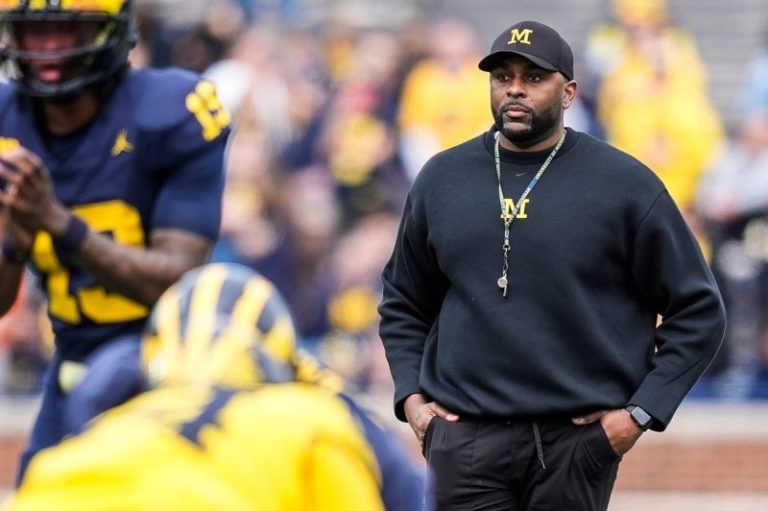
∎ In the Big Ten, there were four, including Sherrone Moore, the first Black head coach in Michigan history.

Four months later, only one remains — Mike Locksley at Maryland. The others were terminated, most notably Moore, who fell from grace in the kind of scandal that can unfairly affect perceptions of other Black coaches in ways that don’t affect white coaches after similar scandals, according to experts contacted by USA TODAY Sports.

“These Black coaches are often evaluated collectively, while white coaches, our peers, are evaluated individually,” said former San Jose State head coach Fitz Hill, who is Black. “That’s the difference. And that’s because when you look at minorities, you group minorities. That’s just a rational cognitive process.”

That doesn’t make it fair, however, Hill said.

After another round of firings and hirings in college football, USA TODAY Sports updated its historical data on Black head coaches and gathered additional context to put the fallout from Moore’s firing into perspective from the standpoint of race. The picture it paints isn’t exactly bright.

What it means and why it might get worse

The data compiled by USA TODAY Sports shows Black coaches still rarely get second chances after failures, primarily because they seldom get first chances. There are only 14 Black head coaches out of 136 schools in the Football Bowl Subdivision (FBS), where nearly half the players are Black. That’s down from 17 out of 120 major college teams in 2011.

Meanwhile, the SEC hasn’t had a non-interim Black head coach since 2020. Out of 34 coaches in the Big Ten and SEC, 33 are white and one is Black.

In the bigger picture, all of this comes against the backdrop of colleges living in fear of the Trump Administration’s crackdown on efforts to improve diversity, equity and inclusion (DEI).

“I’m afraid that in the current climate, where DEI and efforts along those lines have been really sidelined in a major way, that it’s going to get worse, not better,” said Richard Lapchick, founder of Institute for Sport and Social Justice.

Short list of Black coaches with second chances vs. white coaches

In all of college football history, only five Black coaches have been given second chances as non-interim head coaches in the Power Four conferences after previously being fired from another head coaching job in the Football Bowl Subdivision (FBS), according to USA TODAY Sports research. It’s a short list: Tyrone Willingham, Mike Locksley, Kevin Sumlin, Karl Dorrell and James Franklin, who recently was hired at Virginia Tech after getting fired from Penn State in the Big Ten.

Outside the Power Four leagues, only three Black head coaches in FBS history have gotten second chances after firings as FBS coaches: Charlie Strong, Willie Taggart and Derek Mason.

By contrast, 17 current white head coaches in the FBS are on their second or third chance after previously getting fired as an FBS head coach, including three in the Big Ten and two in the SEC. New LSU coach Lane Kiffin, who is white, even was considered the hottest candidate on the market after previously being fired as head coach of Southern California and the NFL’s Oakland Raiders.

White coaches survive scandals, too

Several white head coaches also have survived getting arrested or hiding an extramarital affair with a staff member to get a second chance as head coach. But some don’t think Moore will get that same opportunity despite leading Michigan to a 9-3 record in 2025. He violated school policy for hiding an extramarital affair with a staff member and then got arrested for allegedly invading her home after his firing.

“Will Moore get the same second chances his white counterparts receive?” asked Sandy Young, CEO of J. Walcher Communications, which specializes in crisis communications. “In today’s society, in which race is ‘othered’ and simplified as ‘persons of color bad’ and ‘white people good,’ Moore may have blown his one chance.”

Why don’t Black coaches get second chances?

Several factors help explain it, including that people hiring head coaches are often white and tend to hire those like themselves. Of the 131 athletic directors who oversaw FBS football programs in 2022, 100 were white, according to the most recent leadership report card from the University of Central Florida.

Another reason relates to Hill’s comment about how minorities are unfairly “grouped” together despite their individual differences. For example, after Charlie Strong was fired as head coach at Texas in 2016, he seemed to recognize this effect in comments he made to Fox Sports. He later was hired as head coach at South Florida, outside the power conferences. But he worried his failure at Texas would be symbolic.

‘When you’re the first minority coach at a major university like that, you feel like there’s so many people counting on you,’ Strong said then. ‘I got upset at myself for not being successful, and I got upset at myself because you feel like you let a lot of people down. There are only so many African-American coaches, so when you get on a stage like that. …’

Likewise, former NFL safety Ryan Clark said the same applies to the effect of the Moore firing at Michigan.

“He not only failed himself, but a community of coaches,” Clark said on Instagram. “Had he succeeded the next ‘Sherrone Moore’ would have a favorable comp during his interview process. If you’re Michigan’s AD would you be comfortable hiring someone who reminded you of your dismissed former coach?”

Few schools ever have hired more than two Black coaches

The “grouping” of minority coaches after they have failed also is supported by the evidence only four major college teams have hired at least three Black coaches in their history: Colorado, Stanford, Kent State and Bowling Green.

After Hill was forced out at San Jose State in 2004, he said he told a school administrator he hoped his lack of success didn’t keep the school from considering a person of color as his replacement.

“Do you really think there’s somebody out there we should consider?” the administrator asked, according to Hill.

 “By your statement, I realize you do not understand the challenges,” Hill said he replied.

San Jose State never hired a non-interim Black head coach after that. Its current coach, Ken Niumatalolo, is Samoan.

Deion Sanders made a similar point

Colorado is the only FBS school to have hired four non-interim Black head coaches, two of whom were fired.  

Current Colorado coach Deion Sanders addressed this same issue when he was hired by Colorado athletic director Rick George in December 2022. Sanders, who is Black, replaced Karl Dorrell, who is Black and was fired after an 0-5 start in 2022. Dorrell had replaced Mel Tucker, who is Black and left Colorado after one season in 2019 to become head coach at Michigan State.

“Rick, thank you once again, because there are several African-American head coaches around the country that were terminated, and they were not replaced by an African-American coach,” Sanders said then. “But you had the audacity to do such a thing, not only to do such a thing on this time but several times you’ve done such a thing. So I thank you for your nerve. I thank you for your courage. I thank you for seeing past the color and the ethnicity.”

The Mel Tucker and Sherrone Moore ‘grouping’

Another undercurrent to the firing of Moore was that Michigan State fired Tucker in 2023 after rape survivor Brenda Tracy said Tucker made sexual comments about her and masturbated during a phone call in 2022.

The similarities of their scandals and their firings from two rival Big Ten schools have led to racist jokes on social media and similar grouping of the two.

“The fact that we are so quick to place (Tucker and Moore) in the same pot shows how stereotypes operate about Black men and sexual promiscuity,” said Lou Moore, a sports history professor at Michigan State who is not related to Sherrone Moore.

Both Tucker and Sherrone Moore instead had separate scandals at separate jobs, the same way other white coaches have but weren’t grouped for it negatively based on race.

“I think the way we have to look at it is that, as bad as it is, it certainly does not paint a picture of anybody else in college sports,” Lapchick said of the Sherrone Moore scandal.

So what’s the answer?

After 110 years of college football starting in 1869, the first Black head coach at the major-college level didn’t come until 1979 — Willie Jeffries at Wichita State.

Since then, USA TODAY Sports counted only 70 total non-interim Black head coaches in major college football history.  In 2005, there were only three. Today there are 14.

So what’s the fairest way forward in the meantime? Casting a wider net for candidates always helps. Hill said it’s about Black coaches getting better “access” to these jobs. Unfortunately, unfair perceptions often override reality.

He authored a 2012 book about the subject titled “Crackback! How College Football Blindsides the Hopes of Black Coaches.”

“Perception always impacts the access in the hiring process,” Hill said. He said this in turn has led to unrealized potential among Black coaches who weren’t given first or second chances. Many schools, such as Alabama, never have hired a non-interim Black head coach.

“What would have happened if Nick Saban (the former Alabama coach) would have been born Black?” Hill asked. “He would have been a great coach that never would have been realized at Alabama.”

Another consideration would help Black coaches, too, as evidenced by the successful rehabilitation of white coaches like Lane Kiffin.

Sometimes failures make a coach better, not worse.

Follow reporter Brent Schrotenboer @Schrotenboer. Email: bschrotenb@usatoday.com

This post appeared first on USA TODAY
With the Super Bowl and Winter Olympics going on, February is sure to be a busy month for sports fans.

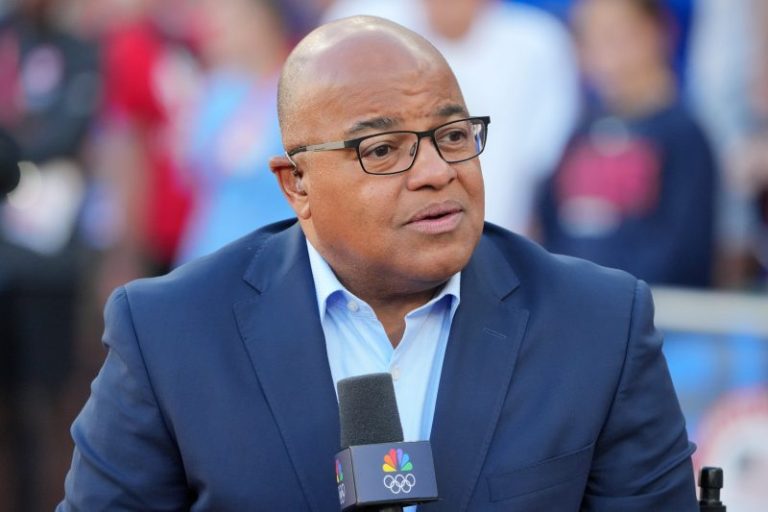
But no one will be busier than NBC Sports broadcaster Mike Tirico.

With his network holding the broadcast rights to arguably the two biggest events on the sports calendar, Tirico will have major roles in both culminate on a single day: Sunday, Feb. 8.

In his first Super Bowl play-by-play assignment, Tirico will call Super Bowl LX from Levi’s Stadium in Santa Clara, Calif. Once the game is over and the Lombardi Trophy has been presented to the winning team, Tirico will shift into Olympic mode and host NBC’s ‘Primetime in Milan’ from the field.

Tirico pulled a similar ‘hosting double’ during the 2022 Winter Olympics in Beijing. He traveled to China to host NBC’s Olympic prime time show for eight days, then flew 6,200 miles to Los Angeles to resume his Olympic hosting role the following night from a special set outside SoFi Stadium, site of Super Bowl 56. (Though Al Michaels handled play-by-play duties for that game.)

This time around, Tirico’s workload has expanded even further. He’s also the network’s lead NBA play-by-play announcer after NBC regained broadcast rights to league games for the 2025-26 season.

Since moving to NBC from ESPN in 2016, Tirico has also covered tentpole events such as the Kentucky Derby, major golf tournaments like the U.S. Open and the Indianapolis 500.

This post appeared first on USA TODAY
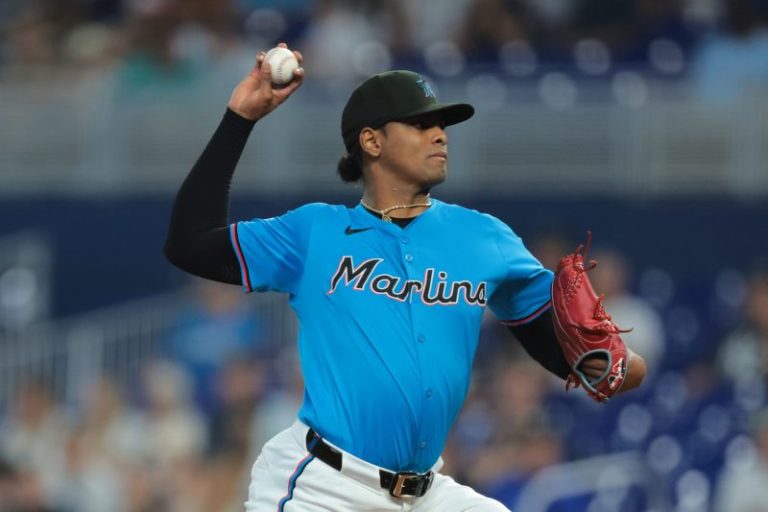
The Chicago Cubs landed one of the top starting pitchers on the trade market, acquiring right-hander Edward Cabrera from the Miami Marlins, according to a person with knowledge of the deal.

The person spoke to USA TODAY Sports on the condition of anonymity because the teams hadn’t yet announced the trade.

The Marlins received top outfield prospect Owen Caissie, Class A infielder Cristian Hernández and 18-year-old infielder Edgardo De Leon in the return package for Cabrera, 27, who struck out 150 batters in 137 innings for Miami last season. The Marlins, who posted a 56-33 record the final four months of the season, dealt from their starting pitching depth to land an outfielder who ranked among the top 65 prospects entering the 2025 season.

The Cubs are sticking to a recent ethos of pursuing improvements on the trade rather than free agent market. They qualified for the playoffs for the first time since 2020 after trading for slugger Kyle Tucker, an impending free agent.

This time, they land Cabrera, who is under club control for three seasons and immediately becomes a key part of a Cubs rotation that saw the emergence of rookie Cade Horton in 2025, but also second-half struggles from left-handers Shota Imanaga and Matthew Boyd.

Cabrera made a career-high 26 starts last season, posting a 3.53 ERA and 3.83 fielding independent pitching mark, his best work in such a large sample. Cabrera missed a handful of second-half starts due to elbow issues; he didn’t pitch for 11 days around the All-Star break after an MRI revealed posterior right elbow discomfort, and spent three weeks on the injured list in September with a right elbow sprain.

Caissie, 23, made a 12-game debut with the Cubs last season, going 5-for-26, and has an .870 career OPS in five minor league seasons. He was recently ranked the Cubs’ No. 2 prospect, behind slugger Moises Ballesteros, by Baseball America.

This post appeared first on USA TODAY
The Toronto Blue Jays have spent the winter impersonating the mighty Los Angeles Dodgers, easily spending more money than any team in baseball, and vowing to do everything possible to return to the World Series.

They’ve dropped $337 million in free agency – $142 million than anyone else – and dramatically improved the starting rotation, upgraded the bullpen, and enhanced their positional depth.

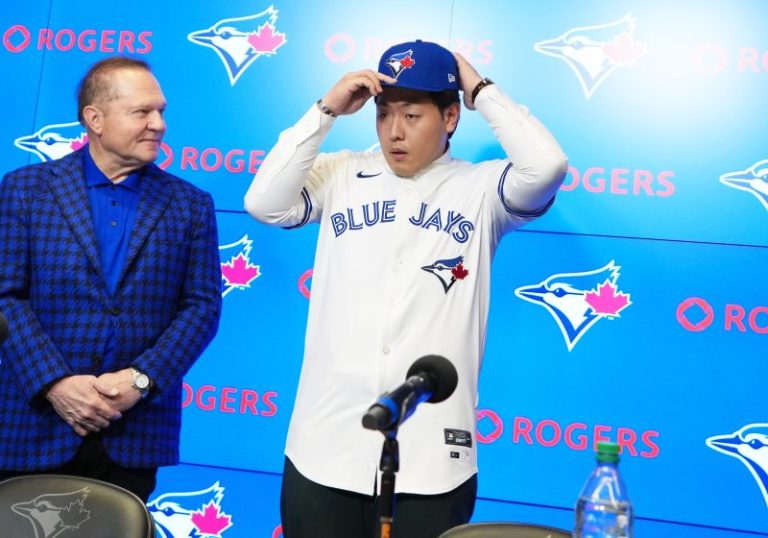
They just spent $60 million on Japanese slugger Kazuma Okamoto without knowing exactly what position he’ll primarily play in 2026.

The only thing known for sure is that the Blue Jays, the most aggressive team of the winter, aren’t done.

“If there’s an opportunity for us to think about improving the organization,’ Blue Jays GM Ross Atkins said Tuesday at the Okamoto press conference, “we’re going to always lean into creative ways to do so.’

Kyle Tucker in play for Toronto?

The Blue Jays still would love to sign the most desired free agent of the winter: outfielder Kyle Tucker, whose $400 million market hasn’t materialized. The Blue Jays have been trying to sign him since he set foot at their Dunedin, Florida workout facility in December. And if Tucker can’t get the long-term deal he wants from the Blue Jays or anyone else, the Los Angeles Dodgers are standing by willing to provide a short-term deal with a huge annual average salary.

The Blue Jays still have the door wide open for infielder Bo Bichette to return, but considering they couldn’t sign him to an extension last season, and have gotten nowhere in two months since he has become a free agent, a reunion appears more unlikely by the day.

The Blue Jays certainly aren’t desperate to bring him back knowing Okamoto could be their primary third baseman, shifting Ernie Clement to second base with Andres Gimenez at shortstop and Vladimir Guerrero Jr. entrenched at first base.

Alex Bregman’s market

The Blue Jays also remain in talks with infielder Alex Bregman, but they could just be trying to drive up the price for the Boston Red Sox, who remain the heavy favorites to bring him back. The Chicago Cubs also are in talks with Bregman, and could slide third baseman Matt Shaw to second base and make veteran Nico Hoerner available in trades.

The Arizona Diamondbacks have expressed interest in Bregman, but club executives make it clear that he’d be an option only if they are able to trade All-Star second baseman Ketel Marte. They want to lower payroll this season, and simply don’t have room in the budget for both players.

The Blue Jays have been in the driver’s seat this winter, signing starters Dylan Cease, Cody Ponce and Shane Bieber; reliever Tyler Rogers; and Okamoto. Their next step will determine the fate for the remaining marquee free agents, including outfielder Cody Bellinger, who the Yankees have been trying to re-sign all winter.

Certainly, the Bregman sweepstakes will impact Bichette. If Bregman, 32, returns to the Red Sox, after opting out of the final two years and $80 million in his contract of a year ago, it slams the door for Bichette in Boston – and increases the Blue Jays’ leverage. It may also leave the Cubs as the favorite for Bichette, though the Dodgers could be ready to pounce with a short-term deal.

If Tucker signs with the Blue Jays, they could move Anthony Santander from right field to left field and likely make George Springer their everyday DH with Daulton Varsho in center field. It would also put outfielder Nathan Lukes on the trade block.

It could also leave the Yankees and Mets in a heated duel for Bellinger’s services, just like a year ago with Soto. Bellinger has been the Yankees’ top priority all winter with the Mets also coveting him.

Blue Jays become a destination

The Blue Jays, trying to win their first World Series since 1993, simply won’t let money or creativity stand in their way. Remember, this is the same organization that also offered Shohei Ohtani $700 million two years ago before he went to the Dodgers and offered Juan Soto nearly the same before he took the Mets’ money.

The only difference now is that free agents are finally taking their money.

The Blue Jays, with a projected payroll of about $280 million, have become one of baseball’s most desired destinations. The love affair between their fans and organization is back in full force with attendance expected to eclipse three million once again.

“Getting into the World Series definitely helps,” Blue Jays manager John Schneider said at the winter meetings. “The two teams that are the last ones standing, they’re shoved down everyone’s throat. I think within that it was a likeable team, that played the game the right way, and players kind of wanted to see what we’re all about.”

The Blue Jays are nearly ready for business and set to defend their American League pennant, but before they head off to spring training next month, they’re letting everyone know they just might have one more move up their sleeve.

Let’s see who steps up next to take their money.

Follow Nightengale on X: @Bnightengale

This post appeared first on USA TODAY