Archive

2026

Browsing

Iran is not merely experiencing another wave of street protests. It is facing a crisis that strikes at the core of the Islamic Republic—and, for the first time in years, places the regime’s survival in real doubt.

Across Iran, demonstrations sparked by economic collapse and corruption have rapidly transformed into direct challenges to clerical rule. Security forces have responded with live fire, mass arrests, and communications blackouts. International reporting cites hundreds of people killed and thousands detained. Internet shutdowns point to a regime determined to suppress not only dissent, but proof of it.

Iran has behaved this way before. What has changed is the strategic environment—and the growing sense among Iranians that the system itself is failing.

Still, one must be clear-eyed: Iran’s leaders will not go quietly. They do not see themselves as ordinary autocrats clinging to power. In their own theology, they see themselves as executing Allah’s will.

A Regime That Sees Repression as Divine Duty

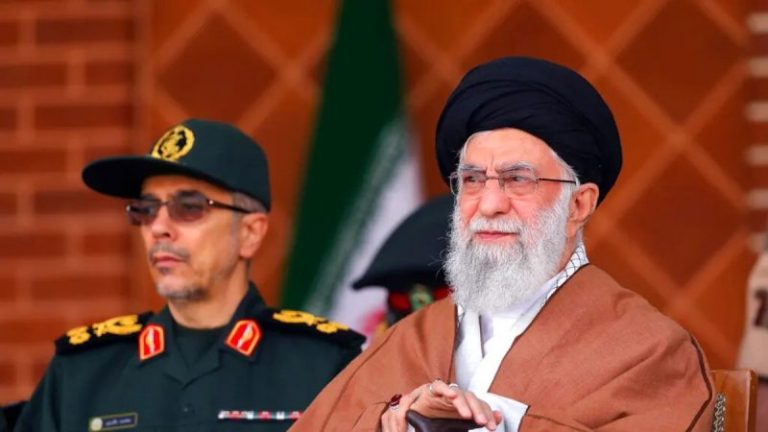
Since 1979, the Islamic Republic has framed its authority through velayat-e faqih—the rule of the Islamic jurist. Under this doctrine, Supreme Leader Ayatollah Ali Khamenei is not simply a political figure. He is the guardian of an Islamic revolution believed to be divinely sanctioned.

That theological worldview directly shapes how the regime responds to dissent. When Iranian security forces fire into crowds, the regime does not see itself as suppressing political opposition; it sees itself as crushing heresy, sedition, and rebellion against God’s order. Protesters are routinely labeled ‘corrupt on earth,’ a Quranic phrase historically used to justify severe punishment.

Public condemnation and moral appeals alone will not move Tehran. Its rulers believe endurance, sacrifice, and violence are virtues—especially when used to preserve the revolution.

Even regimes driven by religious certainty can collapse once their power structures fracture.

Why this moment differs from 2009—or 2022

Iran has seen mass protests before. In 2009, the Green Movement threatened the regime after a disputed election. In 2022, nationwide protests erupted following the death of Mahsa Amini, a 22-year-old Iranian woman who died in morality-police custody after being detained for allegedly violating Iran’s hijab rules. Each time, the regime survived.

Several factors suggest this moment is different.

First, the economy is far worse. Iran faces sustained currency devaluation, unemployment, and inflation that has crushed the middle class and hollowed out state legitimacy. That pressure is compounded by a deepening water crisis that has crippled agriculture, strained urban life, and fueled unrest in multiple provinces. Economic despair is no longer peripheral; it now sits at the center.

Beyond economics, Iran’s external deterrence has eroded. The war with Israel in 2025 inflicted real damage. Senior Iranian commanders were killed. Air defenses were penetrated. Missile and drone infrastructure was disrupted. Iran’s aura of invulnerability—carefully cultivated over decades—was badly shaken.

At the same time, Iran’s proxy network is under strain. Hamas has been devastated. Hezbollah has suffered significant losses and now faces domestic pressure in Lebanon. The Houthis remain disruptive but isolated. Tehran’s so-called ‘axis of resistance’ looks less like an unstoppable force and more like a series of costly liabilities.

Most importantly, the regime’s coercive apparatus is under stress. And this is where the future of Iran will be decided.

Watch the IRGC and the Basij—the outcome may hinge on their choices

No institutions matter more right now than the Islamic Revolutionary Guard Corps (IRGC) and its paramilitary arm, the Basij.

Often described as the regime’s ‘eyes and ears,’ the Basij are not a conventional military force but a nationwide population-control and internal surveillance network. Embedded in neighborhoods, universities, factories, and mosques, they monitor dissent, identify protest organizers, and move quickly to intimidate or detain them—often before demonstrations can spread. 

During past unrest, including the 2009 Green Movement and the 2022 Mahsa Amini protests, Basij units played a central role in suppressing resistance through beatings, arrests, and close coordination with IRGC security forces. Their value to the regime lies not in battlefield strength, but in omnipresence and ideological loyalty.

Their mission is to control dissent at the local level—before it becomes national. As long as the Basij remain loyal and effective in towns, neighborhoods, and campuses, the regime can contain unrest. If they hesitate, defect, or stand aside, Tehran’s grip weakens rapidly.

The Basij are the real instrument of population control. If the regime is forced to deploy the IRGC widely for internal order, it signals that local control has failed—and that the system is under far greater strain.

The Trump administration should be careful not to hand Tehran the propaganda victory it wants. Loud declarations about regime change from Washington risk delegitimizing Iranian voices. Support the people. Isolate the killers. Let the regime own its crimes.

The IRGC, by contrast, controls the military and functions as an economic empire. Beyond internal security, the IRGC also shapes Iran’s foreign policy—overseeing missile forces, regional proxies, and external operations. It exists to defend the revolution abroad, while the Basij exists to control society at home.

Over the past three decades, the IRGC has embedded itself in Iran’s most important industries—energy, construction, telecommunications, transportation, ports, and black-market finance. Entire sectors of the Iranian economy now depend on IRGC-controlled firms and foundations.

This creates a decisive tension. On one hand, the IRGC has every reason to defend the regime that enriched it. On the other, prolonged instability, sanctions, and economic collapse threaten the very assets the Guards control. At some point, self-preservation may begin to compete with ideological loyalty.

That is why Iran’s future may depend less on what protesters do in the streets—and more on whom the IRGC ultimately chooses to back.

Three outcomes appear plausible.

The first is repression. The Basij could maintain local control while the IRGC backs the Supreme Leader, allowing the regime to crush dissent, and impose order through overwhelming force. This would preserve the Islamic Republic, but at the cost of deeper isolation and long-term decay.

The second is continuity without clerical dominance. A ‘soft coup’ could sideline aging clerics in favor of a military-nationalist leadership that preserves core power structures while shedding the regime’s most unpopular religious figures. The system would remain authoritarian—but altered.

The third is fracture. If parts of the Basij splinter or stand aside—and the IRGC hesitates to intervene broadly—the regime’s internal control could unravel quickly. This is the least likely outcome, but the most transformative—and the one most favorable to long-term regional stability.

Revolutions tend to succeed not because crowds grow larger, but because security forces eventually stop obeying orders.

America’s strategic objective: clarity without ownership

The United States must be disciplined about its goal.

America should not seek to ‘run Iran,’ redraw its culture, or impose a leader. That approach has failed elsewhere. But neither should Washington pretend neutrality between an abusive theocracy and a population demanding dignity.

Our strategy is clear:

Prevent Iran from acquiring nuclear weapons.

End Iran’s export of terrorism and proxy war.

Push Iran toward regional stability rather than disruption.

Encourage a government that derives legitimacy from its people, not coercion.

Achieving that outcome requires pressure without provocation.

What the Trump administration and allies should do now

First, expose repression relentlessly. Iran’s internet blackouts are a weapon. The U.S. and allies should support every lawful means of keeping Iranians connected and atrocities visible.

Second, target the regime’s enforcers—not the public. Sanctions should focus on specific IRGC units, Basij commanders, judges, and security officials responsible for killings and mass arrests. Collective punishment only strengthens regime propaganda.

Third, signal consequences—and off-ramps. Those ordering violence must know they will be held accountable. Those who refuse unlawful orders should know the world is watching—and remembering.

Fourth, deter external escalation. Tehran may try to unify the nation through confrontation abroad. Strong regional missile defense, maritime security, and allied coordination reduce the regime’s ability to change the subject with war.

Finally, do not hand Tehran the propaganda victory it wants. Loud declarations about regime change from Washington risk delegitimizing Iranian voices. Support the people. Isolate the killers. Let the regime own its crimes.

The bottom line

Iran’s rulers believe they are carrying out divine will. That makes them dangerous—and stubborn. But it does not make them immortal.

Every revolutionary regime eventually faces a moment when fear stops working, money runs out, and loyalty fractures. Iran may be approaching that moment now.

The outcome will not be decided by speeches in Washington, but by choices in Tehran—especially inside the IRGC.

If the Guards conclude their future lies with the people rather than the clerics, Iran could finally turn a page. If they do not, repression will prevail—for a time.

America’s task is not to force history, but to shape the conditions under which it unfolds—with care, strategy, and moral clarity.

Because when the Islamic Republic finally faces its reckoning, the world must be ready—not to occupy Iran, but to ensure that what replaces the tyranny is not simply the same regime in a different uniform.
This post appeared first on FOX NEWS

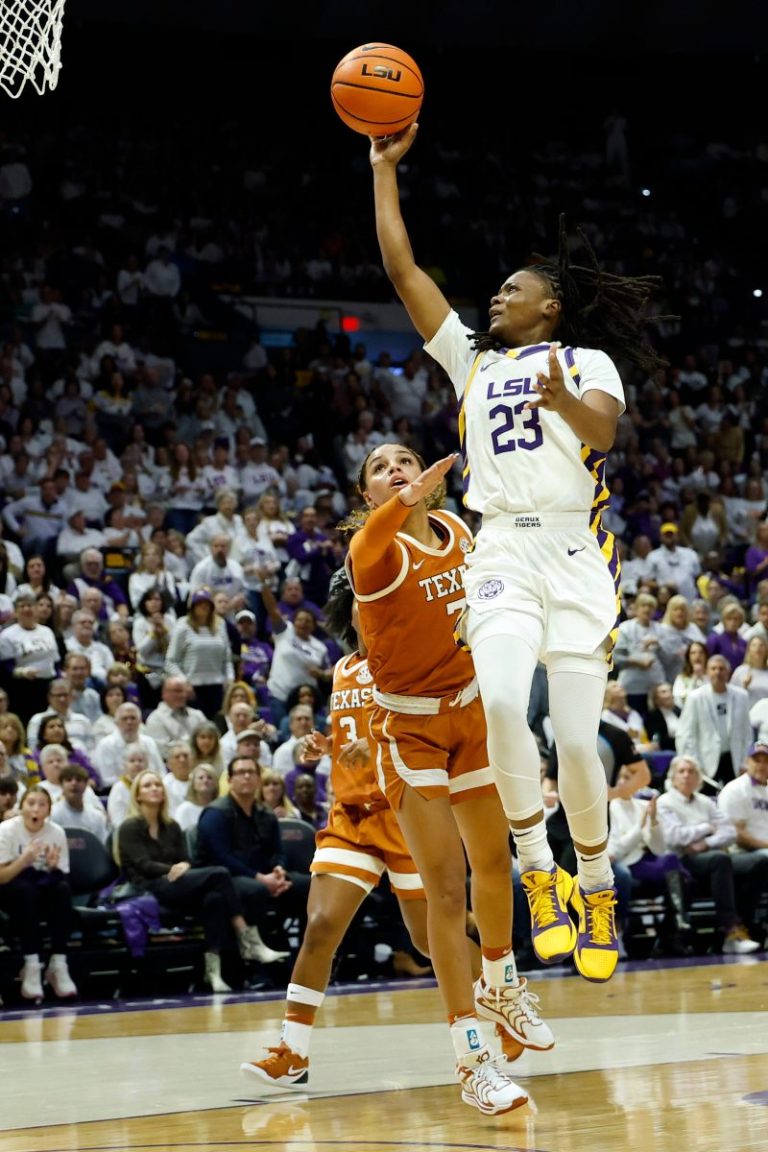
After two losses to start the SEC season, the No. 12-ranked LSU women’s basketball team bounced back in a big way by handing No. 2-ranked Texas its first loss of the season. The Tigers upended the Longorns 70-65 Sunday, Jan. 11 at Pete Maravich Assembly Center in Baton Rouge, Louisiana.

Mikaylah Williams had 20 points to lead five Tigers in double figures. Flau’jae Johnson, Jada Richard, ZaKiyah Johnson and MiLaysia Fulwiley added 10 points each. LSU (16-2, 2-2 SEC) led by as many as 13 points.

Madison Booker had 24 points, and Kyla Oldacre tallied 16 points and 16 rebounds for Texas (18-1, 3-1 SEC). Rori Harmon, who usually pairs with Booker for a Longhorns’ one-two punch, was held to two points.

“They were tougher than us today. This was our worst performance of the year.” Texas coach Vic Shaefer said.

Last week, after back-to-back SEC losses following a 14-0 start, it was LSU coach Kim Mulkey talking about toughness.

‘We’re not tough enough,’ Mulkey said after a loss to then-No. 12 Vanderbilt Commodores.

‘Toughness is either you have it, or you don’t, and we’re not tough enough. And that’s all the players in the locker room tonight. You’re not tough enough to make a play when you need it. You’re not tough enough to get that rebound when we need it. It’s not just one or two. It’s the whole locker room at different times.’

What a difference a week makes. LSU seems to have taken their coach’s message to heart.

Meghan L. Hall contributed to this report.

This post appeared first on USA TODAY

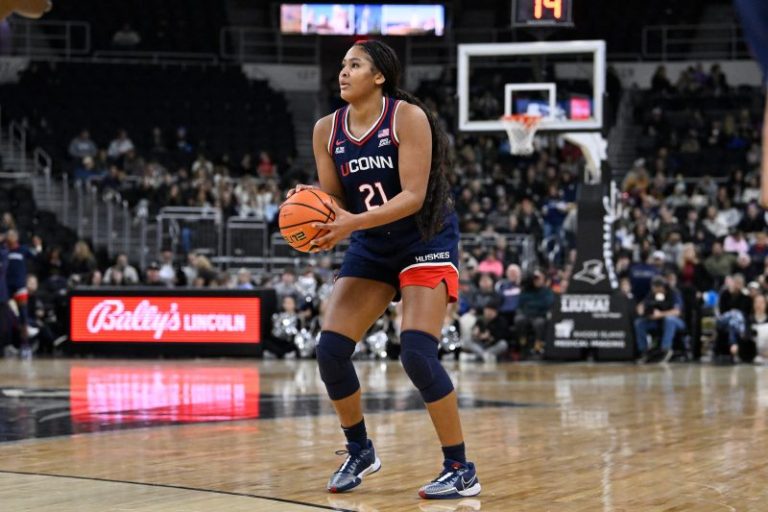
The No. 1-ranked UConn women’s basketball team started slow but, after a big second quarter, cruised to a 95-55 victory over Creighton in Omaha, Nebraska on Sunday, Jan. 11.

Sarah Strong had her fifth double-double of the season with 18 points and 13 rebounds. The sophomore forward added six assists and five steals.

‘I am not really thinking about the game, I am just sort of out there, making reads, seeing what the game gives me and playing off my teammates,’ Strong said postgame when asked about her stat line.

Blanca Quiñonez added 15 points and Azzi Fudd 14 for UConn (17-0, 8-0 Big East). The Huskies continued their dominating defense with 15 steals and 26 points off turnovers. But, UConn also committed an uncharacteristic 21 turnovers.

Ava Zediker had 23 points and Grace Boffeli nine rebounds to lead Creighton (7-10, 3-5 Big East).

UConn is 13-0 all-time vs. Creighton.

What time is UConn vs. Creighton?

The UConn Huskies play the Creighton Bluejays at 2 p.m. ET Sunday, Jan. 10, at the CHI Health Center in Omaha, Nebraska.

UConn vs. Creighton: TV, streaming

Date: Sunday, Jan. 11
Time: 2 p.m. ET (1 p.m. CT)
Location: CHI Health Center (Omaha, Nebraska)
TV: truTV
Stream: Fubo

This post appeared first on USA TODAY

A battle of AFC powerhouses close out a Sunday wild-card round tripleheader, when the Los Angeles Chargers face off against the New England Patriots in Foxborough.

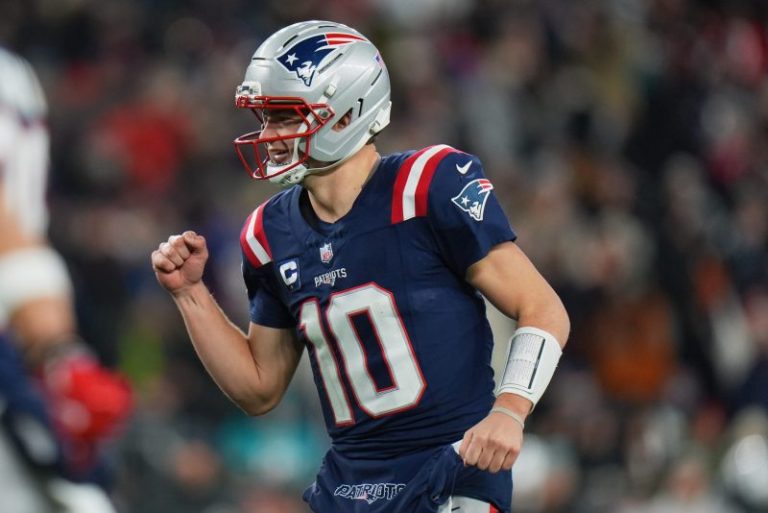
Drake Maye and the Patriots have taken care of business in 2025: While they had one of the NFL’s easiest schedules, they navigated it with ease, resulting in a 14-3 record and an AFC East championship, their first since 2019.

Maye will be standing across the field from a quarterback whom he drew comparisons with when he was draft-eligible. Justin Herbert and the Chargers waded choppy waters this season, thanks in part to a number of key injuries, especially those among the offensive line.

Without starting tackles Joe Alt and Rashawn Slater, Herbert has been under duress, being sacked a career-high 54 times for 301 yards this season.

Will the Patriots find ways to knock Herbert down? Or will the Chargers head east and end New England’s dream of a season? USA TODAY Sports will provide live updates, highlights and more from the Sunday night matchup below. All times are Eastern.

What time is the Patriots vs Chargers game?

Start time: 8:15 p.m. ET

The Patriots-Chargers matchup is set to air at 8:15 p.m. ET on Sunday night. The Chargers travel east to Foxborough, Massachusetts for the matchup.

What channel is the Patriots vs Chargers game on?

TV channel: NBC

The Patriots-Chargers wild-card matchup will air on NBC on Sunday night. Mike Tirico and Cris Collinsworth will be on the call, with

Patriots vs Chargers live stream

Stream: Peacock | NFL+

Peacock, NBC’s proprietary streaming service, will broadcast the Patriots-Chargers matchup. Cord-cutters can also turn to NFL+, the NFL’s streaming service, as an option.

Stream Patriots vs. Chargers on Peacock

Patriots vs Chargers predictions

Here’s how the NFL experts at USA TODAY Sports feel the Patriots vs. Chargers matchup will tilt:

Jarrett Bell: Patriots, 21-17
Nick Brinkerhoff: Chargers, 26-23
Chris Bumbaca: Patriots, 26-23
Nate Davis: Patriots, 24-23
Tyler Dragon: Chargers, 23-22
Mike Middlehurst-Schwartz: Patriots, 26-17

Patriots vs Chargers odds, moneyline, O/U

National Football League odds courtesy of BetMGM. Odds updated Saturday at 9:35 p.m. ET. For a full list of sports betting odds, access USA TODAY Sports Betting Scores Odds Hub.

Spread favorite: Patriots (-3.5)
Moneyline: Patriots (-200), Chargers (+165)
Total: 45.5 points

Patriots inactives today vs. Chargers

QB Tommy DeVito (emergency 3rd)
NT Khyiris Tonga (foot)
WR Jeremiah Webb
OLB Bradyn Swinson
T Marcus Bryant
G Caedan Wallace
TE CJ Dippre

Chargers inactives today vs. Patriots

CB Isas Waxter
S Kendall Williamson
OLB Bud Dupree
OLB Kyle Kennard
OT Austin Deculus
WR Dalevon Campbell
TE Tyler Conklin

NFL games today: Sunday playoff game schedule

3. Jacksonville Jaguars (13-4) vs. 6. Buffalo Bills (12-5)
3. Philadelphia Eagles (11-6) vs. 6. San Francisco 49ers (12-5)
2. New England Patriots (14-3) vs. 7. Los Angeles Chargers (11-6)

NFL playoffs schedule

Divisional round: Jan. 17-18
Conference championships: Jan. 25
Super Bowl 60: Feb. 8

Patriots schedule 2025

4th & Monday: Our NFL newsletter always brings the blitz 

Do you like football? Then you’ll enjoy receiving our NFL newsletter in your inbox.   

This post appeared first on USA TODAY

The Trump administration’s renewed interest in tapping Venezuela’s mineral reserves could carry with it ‘serious risk,’ an expert on illicit economies has warned in the wake of the capture of Nicolás Maduro.

A day after the U.S. military captured Maduro in Caracas, Trump administration officials highlighted their interest in the country’s critical mineral potential.

Commerce Secretary Howard Lutnick told reporters on Jan. 4, ‘You have steel, you have minerals, all the critical minerals. They have a great mining history that’s gone rusty,’ he said aboard Air Force One alongside President Donald Trump.

Lutnick also said that Trump ‘is going to fix it and bring it back – for the Venezuelans.’

‘Venezuela’s gold, critical mineral and rare earth potential is substantial, which makes mining resources very much on the menu for Trump,’ Bram Ebus told Fox News Digital.

‘But this illicit economy involves extreme violence,’ he said, before describing abuses that include forced labor, criminal control of mining zones and punishments such as ‘hands being cut off for theft.’

Ebus cautioned that without strict safeguards, transparency and security, Trump’s efforts to tap Venezuela’s mineral wealth could entangle the U.S. in criminal networks.

‘The sector is already dominated by transnational crime syndicates, deeply implicated in human rights abuses, and intertwined with Chinese corporate interests,’ Ebus, the founder of Amazon Underworld, a research collective covering organized crime, said. ‘If corporations or foreign private security firms were to become directly involved in mining in Venezuela’s Amazon region, the situation could deteriorate rapidly and violently.’

Despite the renewed focus on oil and mineral wealth, ‘when it comes to mining, the situation is more complex than oil,’ Ebus added. ‘The illicit extraction of gold, tungsten, tantalum, and rare earth elements is largely controlled by Colombian guerrilla organizations, often working in collaboration with corrupt Venezuelan state security forces. Much of this output currently ends up in China.’

Ebus also described dire conditions inside mining zones. ‘Mining districts are effectively run by criminal governance,’ he explained. ‘Armed groups decide who can enter or leave an area, tax legal and illegal economic activity, and enforce their own form of justice.’ He also described how ‘punishments for breaking rules can include expulsion, beatings, torture or death.’

‘We have documented summary executions, decapitations, and severe physical mutilation, such as hands being cut off for theft,’ he added. ‘Sexual exploitation, forced labor, and torture are widespread with crimes not limited to non-state actors.’ 

He also noted that ‘Venezuelan state forces, including the army, National Guard, and intelligence services are deeply involved and work in direct collaboration with organized crime groups.’

Ebus described how Colombia’s largest guerrilla organizations, including the ELN and factions such as the Segunda Marquetalia, along with Venezuelan organized crime groups operating locally – or ‘sistemas’ – dominate illegal mining operations, noting that ‘there are at least five major ‘sindicatos’ operating across Bolívar state alone.’

‘Together, all these actors make up the core criminal panorama of Venezuela’s mining sector,’ Ebus added.

In 2016, Maduro established the Orinoco Mining Arc, a 111,843-square-kilometer zone rich in gold, diamonds, coltan and other minerals.

The area has since become synonymous with illicit mining and corrupt officials.

In 2019, the U.S. sanctioned Venezuelan gold exports with at least 86% of the country’s gold reportedly being produced illegally and often controlled by criminal gangs.

However, from a U.S. perspective, Ebus said, the objective behind critical minerals could be limiting China’s access.

‘With gold prices expected to peak around 2026, access to gold represents a major benefit for national economies and government investment stability,’ he said. ‘Beyond gold, controlling critical mineral supply chains offers enormous geopolitical leverage for the U.S., especially if it allows it to deny access to China.’

This post appeared first on FOX NEWS

Arch Manning had an uneven first season as the starting quarterback for a Texas team that lost three games and missed out on the College Football Playoff after being the preseason No. 1 team in the sport.

In his second season in the role, he’ll have one of the best receivers in the country to throw to.

Auburn transfer Cam Coleman has committed to the Longhorns, giving coach Steve Sarkisian and his program one of the most coveted players in the transfer portal.

Coleman announced his decision in an Instagram post on Sunday, Jan. 11.

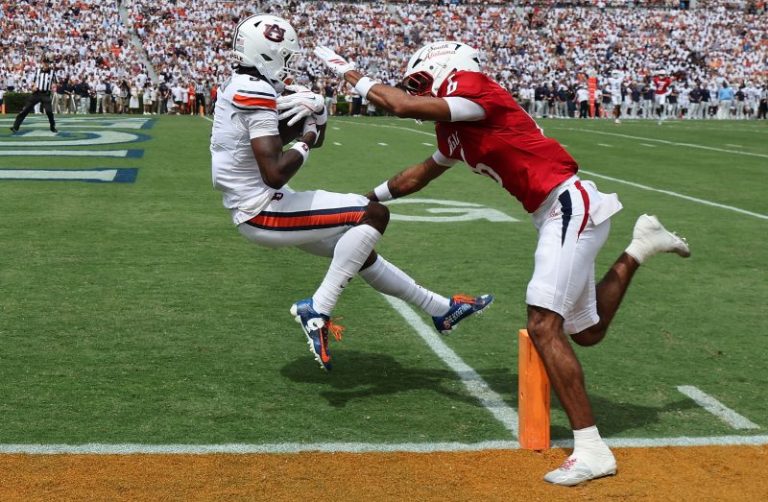
Despite being on the receiving end of shoddy quarterback play last season, Coleman was productive for the Tigers, with 56 catches for 708 yards and five touchdowns.

As a sophomore, Coleman has two seasons of eligibility remaining.

A former five-star recruit, the 6-foot-3, 201-pound Coleman was rated by 247Sports as the No. 4 overall player in the transfer portal and the No. 1 wide receiver.

He’ll join a Texas program that struggled at times through the air last season. Longhorns quarterbacks combined to complete just 61.3% of their passes while averaging 7.7 yards per attempt and 250.7 yards per game

Cam Coleman 247 rankings

As transfer: No. 4 player, No. 1 WR
As high school recruit: No. 3 player, No. 2 WR, No. 1 player from Alabama

Coleman is considered one of the top talents in college football, ranking as the No. 4 player in the transfer portal and the No. 3 player out of high school, per 247Sports’ Composite rankings.

Cam Coleman stats

Through two seasons at Auburn, Coleman has combined to catch 93 passes for 1,306 yards and 13 touchdowns.

2024: 37 catches for 598 yards, eight touchdowns
2025: 56 catches for 708 yards, five touchdowns

This post appeared first on USA TODAY

Two days after Mississippi’s hopes of bringing back Trinidad Chambliss took a significant hit, the Rebels went out and landed what might be their quarterback of the future.

Auburn transfer Deuce Knight, one of the most coveted quarterbacks available in the transfer portal, has committed to Ole Miss, according to multiple reports on Sunday, Jan. 11.

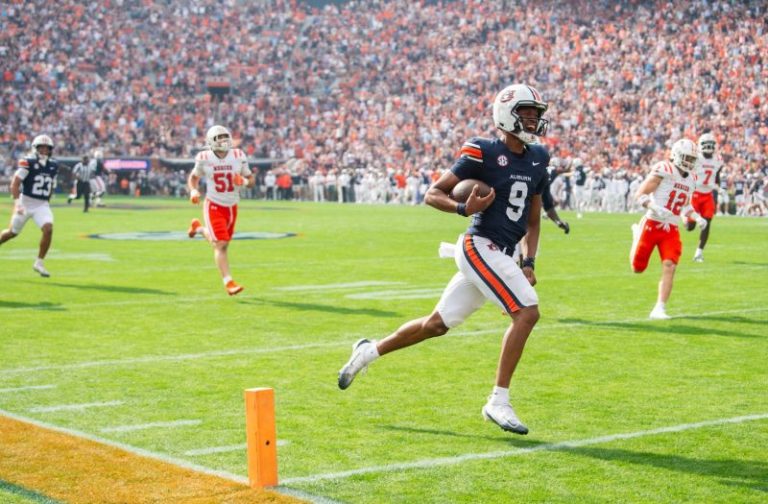
As a freshman with the Tigers last season, Knight completed 17 of 25 passes for 259 yards and two touchdowns, along with 178 rushing yards and four touchdowns on 13 carries. Much of that production came in a Nov. 22 victory against FCS Mercer, a game in which Knight went 15 of 20 for 239 yards and two touchdowns while adding 162 yards and four touchdowns on nine rushing attempts.

Knight was a five-star recruit in the 2025 class coming out of George County High School in Lucedale, Mississippi, with 247Sports’ composite rankings having him as the No. 25 overall prospect and No. 5 quarterback in the country. He’s ranked by 247 as the No. 19 overall transfer and the No. 7 quarterback.

The 6-foot-4, 217-pound Knight has three seasons of eligibility remaining.

His departure from Auburn comes after the Tigers fired coach Hugh Freeze and replaced him with Alex Golesh, who led South Florida to a 9-3 mark this season. Golesh isn’t making the trip alone, either, as quarterback Byrum Brown, who racked up 4,166 total yards for South Florida during the 2025 campaign, has committed to Auburn.

At Ole Miss, Knight will step into a largely vacant quarterback room under new head coach Pete Golding. After a breakthrough season in which he finished eighth in Heisman Trophy voting, Chambliss had a waiver request for a sixth year of eligibility denied by the NCAA, though the university could appeal the decision. Austin Simmons, the Rebels’ starter at the beginning of the season before an injury, transferred to Missouri.

Ole Miss is coming off one of the best seasons in its lengthy history. The Rebels won a program-record 13 games and advanced to the semifinals of the College Football Playoff, where they lost to Miami 31-27 in the Fiesta Bowl on Jan. 8.

This post appeared first on USA TODAY

The Jacksonville Jaguars have been a revelation this season, the freshly crowned AFC South champions set to host their first playoff game in three years when the Buffalo Bills come calling Sunday afternoon. Riding an eight-game winning streak – their 13 regular-season victories the second most in the franchise’s three-decade history – the Jags, one of four NFL teams to have never played in a Super Bowl, are as legit a threat to win the Lombardi Trophy as any in this postseason field.

Fiery Liam Coen is a leading Coach of the Year candidate in his inaugural campaign. He’s helped quarterback Trevor Lawrence play like a league MVP since Thanksgiving. And a reinvigorated defense has more than done its part, swarming to the ball and generating 31 turnovers, most in the AFC.

It’s a stunning turn for a team that, just four months ago, was basically only generating national interest for a decision that might wind up being a regrettable mistake – the selection of 2024 Heisman Trophy winner Travis Hunter after acquiring the second overall pick of last year’s draft.

Is it coincidental that the Jaguars’ season took off in earnest after Hunter went on injured reserve on Halloween, eventually requiring season-ending knee surgery? Probably. Have they struggled to adapt without a guy who was a two-way star for two seasons at the University of Colorado but struggled to make any kind of impact on either side of the ball as a rookie for Jacksonville? Nope.

“Obviously, they don’t miss him at all. They’re one of the hottest teams going into the playoffs right now,” former New York Giants vice president of player personnel Marc Ross told USA TODAY Sports.

“Of course, when he comes back, it’ll be good to have another good player. But this whole notion of him being the savior obviously is not anywhere remotely close to the reality.”

Such assessments are not intended as pointed criticism of Hunter, a fine prospect coming out of college and – by nearly all accounts – an even finer young man. (Were you a married, multi-millionaire college graduate when you were 22? Me either.)

The real rookie mistake here was likely committed by first-year Jags GM James Gladstone, who traded two Round 1 picks (including No. 5 overall last spring) and a second-rounder to the Cleveland Browns as part of a package that allowed Jacksonville to move up and enlist Hunter’s services.

The Jaguars did not make Gladstone available to USA TODAY Sports. But this is what he said April 24, the night Jacksonville drafted Hunter: ‘There are players who have the capacity to alter a game. There are players who have the capacity to alter the trajectory of a team. There are very few players who have the capacity to alter the trajectory of the sport itself. Travis, while he has a lot to still earn, in our eyes, has the potential to do just that.’

No pressure, Trav.

A bold, if curious, move had the full support of the organization’s rebooted front office. It was also the rare one when a team so aggressively climbed the board for a non-quarterback.

“I thought Cleveland got a heist for that,” says Ross. “This guy is not Calvin Johnson. A corner? They’re not worth it (at No. 2), and there was no way he was gonna play both ways (full-time).

“I always thought Hunter was good, but I never thought he was a generational talent. I respected him for what he did in college, but I just didn’t see either skill set transcending to be some sort of playmaker or difference-maker on either side of the ball. And, particularly, what they gave up to get him? I just thought it was incredibly short-sighted.”

It’s absolutely premature to judge Hunter off an inaugural season that lasted seven games. But he only caught 28 passes for 298 yards and a TD – that score coming in garbage time of his final appearance, a 35-7 loss to the Los Angeles Rams in London. Determined to play both ways as a rookie – an endeavor backed by the team – Hunter was even less noticeable defensively, making 15 tackles and breaking up three passes.

He was never going to be Megatron. He was never going to be a guy asked to lock up No. 1 receivers like AFC South rival Nico Collins on a consistent basis. But, certainly, more was expected in 2025 than for Hunter to be an AFC version of Bo Melton. (Who’s Bo Melton? As Indiana coach Curt Cignetti would say, Google him.)

All told, Hunter played 486 snaps this season, roughly two-thirds on offense. By comparison, he had 2,625 during his two seasons with the Buffs, leading the FBS in the 2023 and ’24 seasons, including 1,483 in his final year. Hunter led the Big 12 with 96 catches and 15 TDs in 2024 while racking up 1,258 receiving yards, four interceptions and 11 pass breakups.

“In retrospect, it was almost as if they (Jacksonville) were a bad team, and they were building it up like Travis is the savior,” said Ross, noting the Jaguars are typically a franchise in search of a boost in terms of ticket sales and public relations.

Notably, Gladstone swung midseason trades for veteran cornerback Greg Newsome and wideout Jakobi Meyers. Primarily, Newsome was a better scheme fit, plus his arrival allowed the team to offload corner Tyson Campbell and his bloated contract. Meyers quickly helped to elevate the offense and signed a three-year, $60 million extension after coming over from the Las Vegas Raiders in November. He, second-year receiver Brian Thomas Jr. and Parker Washington, who emerged as Lawrence’s favorite target in 2025, project as fixtures.

“Now that Jakobi’s there, where does Travis fit?” wonders Ross. “It’s really a conundrum.”

ESPN draft analyst Matt Miller also had misgivings – with foresight – about Hunter’s situation.

“I never thought that it was gonna work with him playing both sides,” Miller told USA TODAY Sports. “My concern was, this is not a very big guy. He’s been hurt in college. I worried about the workload in the NFL and then just the size difference in the NFL. I don’t see how tackling A.J. Brown is the best use of his skill set.

“I’m not surprised that he didn’t come out and change the NFL with his two-way ability. It was like a good story more than it was a reality.”

But Hunter and the Jags were seemingly committed to his dual-superstar narrative, Hunter splitting his time between offensive and defensive meetings, offensive and defensive practice reps during his first training camp.

“It don’t faze me at all. I’ve been doing this for a minute,” he told USA TODAY Sports’ Jarrett Bell in August regarding his extraordinary rookie workload.

“I’m not worried about what people say. I’m just out here playing football, doing what I’ve got to do to help my team win.”

“It’s really, really hard for anyone to be great at one position in the NFL,” notes Miller while also pointing out that Hunter didn’t have nearly the same schematic structure in college as he does now.

Miller did have Hunter rated as the 2025 draft’s best wide receiver, yet also notes he would have ranked behind the likes of Marvin Harrison Jr., Malik Nabers, Rome Odunze and Thomas had he been draft-eligible a year earlier.

Adds Miller: “My big pushback to the whole Travis Hunter Experience was he’s gotta get great at one thing before he tries to do another.”

Ross thinks Hunter – once he’s fully healthy, whenever that is – should focus on being a slot receiver and maybe circle back to a DB role down the road.

Yet, down that road, it will eventually become more apparent what opportunity cost – if any – Gladstone will play for his bold gambit. Potentially similar to the San Francisco 49ers’ misguided trade to get quarterback Trey Lance in 2021, if the team continues to excel, all will be forgiven anyway.

“It helps that they’re winning – it masks the blunder,” says Ross. “You keep winning, it cures those kind of mistakes.”

Between the lines, less might be more as Hunter’s career unfolds. But that could quite likely fuel the conclusion that more was way too much to get him in the first place.

This post appeared first on USA TODAY

A viral story from a man claiming to have witnessed the U.S. operation to capture Venezuelan President Nicolas Maduro states that the U.S. used sonic weapons during the mission to incapacitate opposing forces.

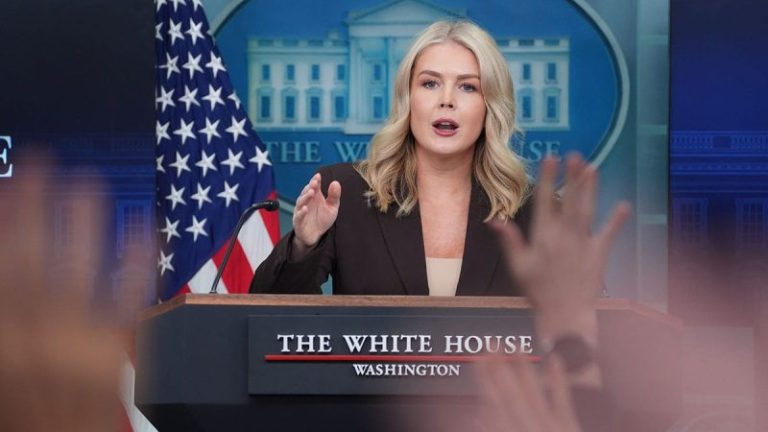
White House press secretary Karoline Leavitt shared the eyewitness interview on X, encouraging her followers to read the statement. The witness in the interview claims to be a guard who was serving at the Caracas military base where the U.S. captured Maduro.

‘We were on guard, but suddenly all our radar systems shut down without any explanation,’ the witness said. ‘The next thing we saw were drones, a lot of drones, flying over our positions. We didn’t know how to react.’

The witness then described watching roughly 20 U.S. soldiers deploy out of roughly eight helicopters over the base.

‘They were technologically very advanced,’ the guard said. ‘They didn’t look like anything we’ve fought against before.’

‘We were hundreds, but we had no chance,’ he said. ‘They were shooting with such precision and speed; it felt like each soldier was firing 300 rounds per minute.’

The witness then describes the U.S. deploying some sort of sonic weapon against Venezuelan forces.

‘At one point, they launched something; I don’t know how to describe it,’ he said. ‘It was like a very intense sound wave. Suddenly I felt like my head was exploding from the inside.’

‘We all started bleeding from the nose,’ he added. ‘Some were vomiting blood. We fell to the ground, unable to move. We couldn’t even stand up after that sonic weapon — or whatever it was.’

‘Those twenty men, without a single casualty, killed hundreds of us,’ the witness claimed. ‘We had no way to compete with their technology, with their weapons. I swear, I’ve never seen anything like it.’

The White House did not immediately respond to Fox News Digital when asked whether Leavitt’s sharing of the post constituted confirmation of its veracity. The Pentagon also did not immediately respond when asked if the U.S. deployed sonic or energy weapons in Venezuela.

This post appeared first on FOX NEWS

Moments after the Chicago Bears put the hands to the Green Bay Packers in their NFC wild-card matchup, another pair of hands took center stage.

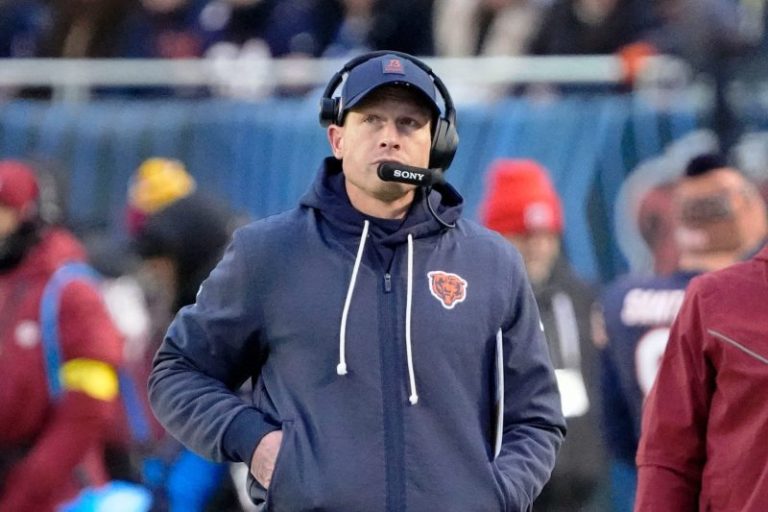
As is custom, NFL players and coaches meet on the field to exchange postgame pleasantries and well wishes, except in rare circumstances. Well, count the meeting between Packers head coach Matt LaFleur and Bears head coach Ben Johnson in that ‘rare’ circumstance category.

After the game, Johnson and LaFleur had a very quick handshake, continuing something of a tradition between the two NFC North coaches:

It’s not the first time that the two have had brief midfield exchanges, but it may be the shortest: Both of LaFleur and Johnson’s midfield meetings have been light on the banter this season, and decreasingly short in length:

There may have been some extra bulletin-board material for Johnson and the Bears to work off of this week. Following the game, Johnson said that there was a bit more ‘noise’ coming from Green Bay leading into the playoff showdown.

‘There was probably a little bit more noise coming out of there, the building up north, to start the week, which we heard loud and clear; players and coaches alike,’ Johnson said. ‘So this one meant something to us.’

During Johnson’s introductory press conference, the Bears head coach made it clear he relished the idea of beating the division-rival Packers – and their head coach – a few times a year.

‘To be quite frank with you, I kinda enjoyed beating Matt LaFleur twice a year,’ he said during his intro presser.

It may have taken more than just the regular season, but ultimately, Johnson and the Bears got that second win over LaFleur and the Packers – and when it mattered most.

This post appeared first on USA TODAY