Archive

2026

Browsing

Australia stayed with defending World Baseball Classic champion Japan step for step for more than six innings during their Sunday pool play clash.

Masataka Yoshida changed that with one swing.

Yoshida, the Red Sox outfielder/designated hitter, hit a two-run home run in the bottom of the seventh inning to wipe out a one-run deficit and ultimately help Japan to a narrow 4-3 win.

Japan scored two more runs in the eighth to provide some breathing room, which proved important when Australia designated hitter Alex Hall AND first baseman Rixon Wingrove blasted solo homers in the ninth.

Australia matched zeroes with Japan for five innings before breaking through with the game’s first run in the sixth.

Center fielder Aaron Whitefield, who had three of Australia’s six hits, was almost single-handedly responsible for that run. Whitefield hit one-out double in the sixth off Japan reliever Chihiro Sumida, then he stole third and scored after a bad throw by Japan catcher Kenya Wakatsuki. It gave Australia a 1-0 lead, which it held going into the bottom of the seventh.

The starting pitchers were stellar with Tomoyuki Sugano leading Japan by working four scoreless innings with two hits and two strikeouts. Australia starter Connor MacDonald blanked Japan on one hit over three innings with one strikeout.

Australia could still advance to the next round by beating Korea on Monday (6 a.m. ET. on FS1).

Japan vs Australia World Baseball Classic highlights

Here are the highlights from Japan’s thrilling 4-3 win against Australia in the World Baseball Classic on Sunday, March 8:

Shohei Ohtani stats today

For the first time in this WBC, Shohei Ohtani did not leave the yard. He didn’t even have a hit.

Ohtani wound up 0-for-3 with two walks, the last of which was intentional in the eighth inning.

Ohtani led off the bottom of the first inning with a groundout to second base, and he ended the second inning with a hard lineout to center field. Ohtani came up to the plate in the bottom of the fourth with the bases loaded and two outs, and he had a 2-2 count when his teammate Shugo Maki was picked off second base by Australia catcher Robbie Perkins to end the inning. Ohtani wound up lining out to right to start the fifth.

Ohtani won his fourth MVP award in 2025 with a career-high 55 home runs and returned to the mound after only hitting in 2024, leading the Dodgers to a second consecutive World Series title.

2025 (LAD): .282 AVG | 55 HR | 102 RBIs | 20 SB | 1.014 OPS
2024 (LAD): .310 AVG | 54 HR | 130 RBIs | 59 SB | 1.036 OPS
2023 (LAA): .304 AVG | 44 HR | 95 RBIs | 20 SB | 1.066 OPS
2022 (LAA): .273 AVG | 34 HR | 95 RBIs | 11 SB | .875 OPS
2021 (LAA): .257 AVG | 46 HR | 100 RBIs | 26 SB | .965 OPS

This post appeared first on USA TODAY

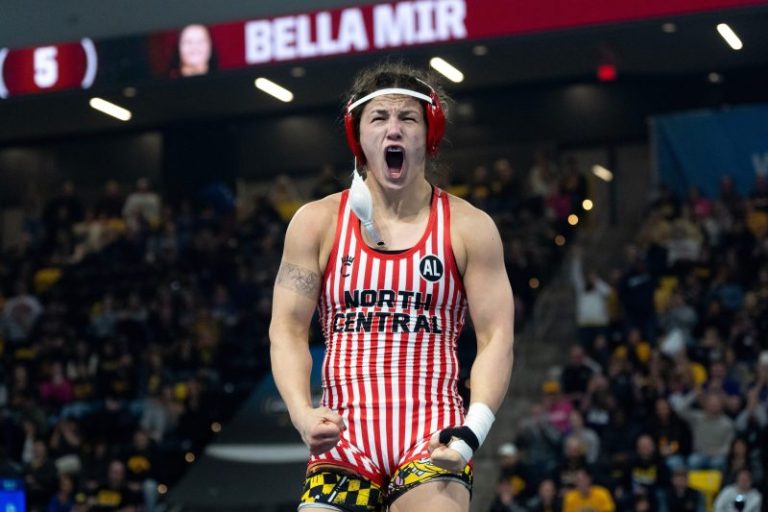
Bella Mir has added to her family’s collection of championships.

Her dad Frank was twice the heavyweight champion of the UFC while helping the sport skyrocket in popularity during his 16-year career. He still holds the record for most submission victories in UFC’s heavyweight division with eight.

And now Bella is writing her own history. On Saturday night in the first-ever NCAA Tournament for women’s collegiate wrestling, second-seeded Mir – wrestling for Division III North Central – upset No. 1 Reese Larramendy of Iowa with a 5-0 victory in the championship bout of the 145-pound weight class in Coralville, Iowa.

Mir built a 5-0 lead on Larramendy before delivering what would be the first-ever pin in an NCAA women’s wrestling final. Mir was in control for much of the match and built that advantage up just 40 seconds into the bout against her former teammate – who handed Mir her only loss of the regular season — with a clinical takedown. Less than three minutes into the match, Mir pulled off a superb reversal of a takedown attempt by Larramendy to put on her back and secure the pin.

It ended a 35-match unbeaten streak for Larramendy.

The 22-year-old who started her collegiate career at Iowa before transferring to North Central – located in Naperville, Illinois – didn’t have a point scored against her at the NCAA championships. She won her opener 11-0, and then took 10-0 victories in the quarterfinals and semifinals.

North Central finished in third place in the overall team standings at the NCAA championships. Division II McKendree won the team title narrowly over second-place Iowa, which is the only Division I school from a Power 4 conference currently sponsoring women’s wrestling at the varsity level.

Mir is viewed by many to be the next great women’s mixed martial arts fighter in UFC. She’s already a two-time world champion in Brazilian jiu-jitsu and owns a 4-0 record as a professional MMA fighter.

Bella was 5 years old when Frank won his second UFC title. Ever since then, she told ESPN in a recent interview, she’s wanted one of her own.

‘There’s been really special people that have stood out in the history of the UFC and the sport,’ UFC president Dana White told ESPN. ‘And I truly believe that Bella will be one of those too.’

This post appeared first on USA TODAY

President Donald Trump said Sunday that Iran’s new leader is ‘not going to last long’ without U.S. approval as Operation Epic Fury continues into its second week.

‘He’s going to have to get approval from us,’ Trump told ABC News in an interview. ‘If he doesn’t get approval from us he’s not going to last long. We want to make sure that we don’t have to go back every 10 years, when you don’t have a president like me that’s not going to do it.’

‘I don’t want people to have to go back in five years and have to do the same thing again or worse let them have a nuclear weapon,’ the president continued.

Trump’s comments come after Iranian state media reported that a majority consensus had been reached on a new supreme leader following the Feb. 28 assassination of Ayatollah Ali Khamenei.

Mohammadmehdi Mirbaqeri, who serves on Iran’s Assembly of Experts, the clerical body tasked with selecting the supreme leader, did not offer any names but acknowledged to the Mehr News Agency that there are still ‘some obstacles.’

ABC News reported that Trump said it’s possible he would be in favor of someone with ties to the old regime.

‘I would, in order to choose a good leader I would, yeah, I would. There are numerous people that could qualify,’ he said.

The Associated Press reported that several figures are being viewed as potential successors to Iran’s supreme leadership. They include:

Mojtaba Khamenei — Son of late Supreme Leader Ali Khamenei
Ali Reza Arafi — Senior Shiite cleric

Hassan Rouhani — Former president of Iran
Hassan Khomeini — Grandson of Ayatollah Ruhollah Khomeini, founder of the Islamic Republic
Mohammed Mehdi Mirbagheri — Head of the Islamic Cultural Center in Qom

Israel’s Defense Minister Israel Katz warned Iranian leadership in a post on X last week that any successor who tries to ‘destroy Israel, to threaten the United States and the free world and the countries of the region, and to suppress the Iranian people’ will be an ‘unequivocal target for elimination.’

‘It does not matter what his name is or the place where he hides,’ Katz said.

Related Article

Iran’s senior clerics ‘exposed’ after building strike in Qom, succession choice looms
This post appeared first on FOX NEWS

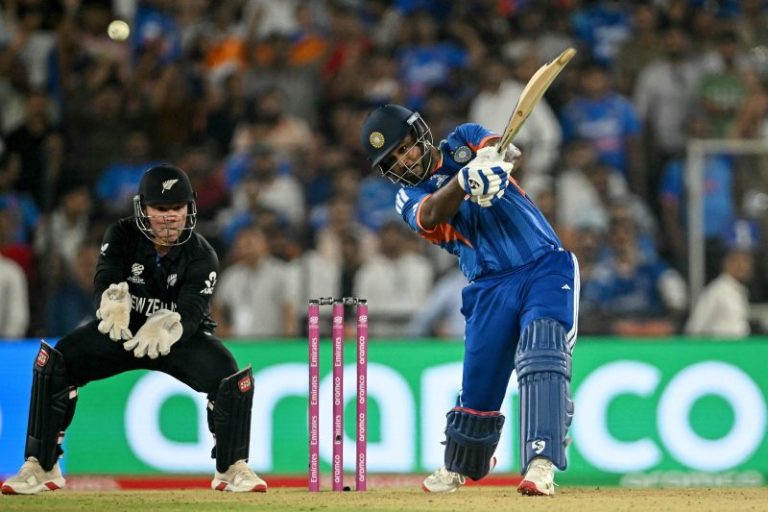
India cricket put together a historic performance in the 2026 T20 World Cup championship match vs. New Zealand.

After New Zealand won the toss and elected to field first, India’s bats made the Kiwis instantly regret the decision. The ‘Men in Blue’ scored a blistering 255 runs in the 20 over match. That is the third-highest score ever for a T20 match and the highest score in a final.

India, which is the defending T20 World Cup champions, bested its own previous record of 176 in the 2024 World Cup Final vs. South Africa. Now England must break tie the second-highest score ever to chase down India to win its first T20 World Cup.

Sanju Samson scored 89 off 46 balls with five 4s and eight 6s to open the batting for the Men in Blue, while fellow opener Abhishek Sharma added 52 runs off 21 balls and Ishan Kishan had 54 runs off 25 balls.

Here’s a look at the records for most runs scores in a T20 Cricket World Cup match and final:

Most runs by single team in T20 Cricket World Cup final

India now owns three of the top scores in the T20 World Cup final. India set the previous record for most run scored in a T20 final with 176 vs. South Africa in 2024.

India, 255, (2026) vs. New Zealand
India, 176 (2024) vs. South Africa
Australia, 173 (2021) vs. New Zealand
New Zealand, 172 (2021) vs. Australia
South Africa, 169 (2024) vs. India
West Indies, 161 (2016) vs. England
India, 157 (2007) vs. Pakistan
England, 155 (2016) vs. West Indies
Pakistan, 152 (2007) vs. India
England, 148 (2010) vs. Australia

Most runs in T20 Cricket World Cup match

1. Sri Lanka, 260 vs. Kenya, Sept. 4, 2007
2. India, 256 vs. Zimbabwe, Feb. 26, 2026
3. India, 255 vs. New Zealand, March 8, 2026
4. West Indies, 254 vs. Zimbabwe, Feb. 23, 2026
5. India, 253 vs. England, March 5, 2026
6. England, 246 vs. India, March 5, 2026
7. Ireland, 235 vs. Oman, Feb. 14, 2026
8. England, 230 vs. South Africa, March 18, 2016
9. South Africa, 229 vs. England, March 18, 2016
10. Sri Lanka, 225 vs. Oman, Feb. 12, 2026

This post appeared first on USA TODAY

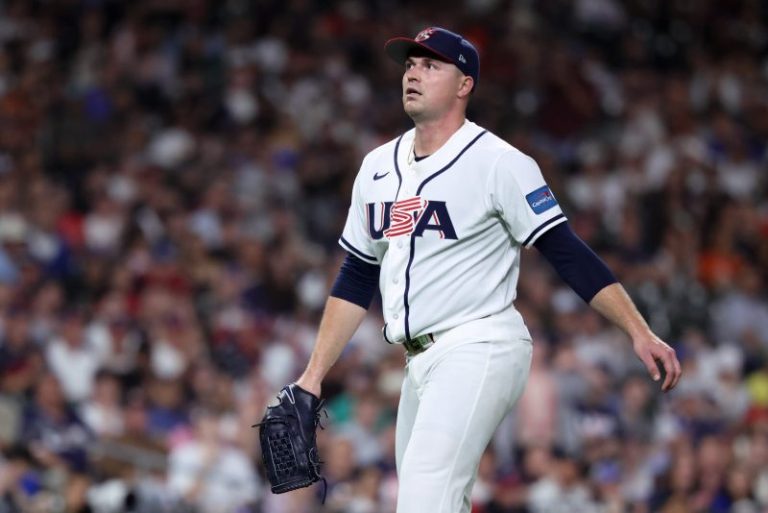
Two-time Cy Young award winner Tarik Skubal planned to make just one start in the World Baseball Classic before returning to spring training with the Detroit Tigers.

But after getting a taste of what it’s like to represent Team USA, he’s not so sure he’s ready to leave.

‘When you get into these environments, when you get this team, it’s hard to walk away from that,’ Skubal said Saturday, March 7, after tossing three strong innings in the Americans’ 9-1 win over Great Britain.

‘I didn’t expect these types of emotions to run through my brain or my thoughts to differ. I was pretty committed to making a start and getting back to camp,’ Skubal said. ‘Things have changed, obviously, that’s why I’m going to have some conversations to try and figure out a plan for me.’

The Tigers left-hander, who is ticketed for free agency – and likely one of the largest contracts in baseball history – at the end of the 2026 season, said he’ll talk with the Tigers, his agent and his family before making what he calls ‘one of the tougher decisions I’ve made in my career.’

He said he’ll make the call ‘in the next couple days.’

Skubal allowed a leadoff home run to Great Britain’s Nate Eaton in the first inning, but he settled down and struck out five over his three-inning stint on Saturday in Houston. But he said he didn’t expect his emotions to take over the way they did after getting on the mound.

‘It just changes your perspective a little bit, you know?’ Skubal said. ‘And how proud I am to be an American and go out there and pitch and compete. (Thinking about) the people that make real sacrifices for me to play a kid’s game. So we’ll see.’

This post appeared first on USA TODAY

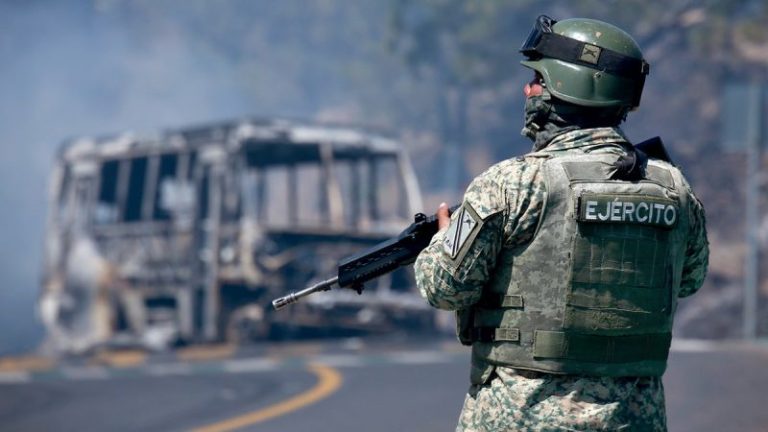
Mexican drug cartels are increasingly calculated in their targeting decisions, often avoiding deliberately attacking American tourists and citizens out of concern it could prompt intensified U.S. retaliation, according to experts.

Following last month’s killing of Ruben ‘Nemesio’ Oseguera Cervantes, known as ‘El Mencho,’ the powerful leader of the Mexican Jalisco New Generation Cartel (CJNG) White House press secretary Karoline Leavitt joined ‘Fox & Friends’ and had a warning for the drug gangs: ‘The Mexican drug cartels know not to lay a finger on a single American, or they will pay severe consequences under this president.’

Analysts say actions by President Donald Trump — including the designation of cartels as foreign terrorist organizations and high-profile operations abroad such as the capture of Nicolás Maduro and the killing of Ayatollah Khamenei in Iran — have reinforced cartel perceptions of heightened risk. 

Mexican drug cartels have long operated with a primary objective: protect revenue streams and avoid actions that could trigger an overwhelming government response. Security analysts and former U.S. officials say that calculus often includes avoiding the deliberate targeting of American tourists and citizens inside Mexico.

‘Of course, drug cartels are afraid of President Trump since he declared them terrorist organizations. That may be one of the reasons why they don’t attack American citizens or tourists,’ cartel expert and activist Elena Chávez told Fox News Digital.

She said the cartels ‘modernized and are well-informed about what is happening, especially because they know there are bounties on their heads. That’s why they fear the United States, even more so since Trump became president and declared the cartels terrorist organizations. Of course, they monitor all of this and have people who keep the leaders informed about how things are moving. The price on ‘El Mencho’s’ head in the United States was very high.’

Adding to the pressure, Trump spoke Saturday at the newly minted Shield of the Americas Summit in Florida — a coalition of 12 Latin American and Caribbean nations — coming together to take on the cartels, among other policies. 

‘We have to knock the hell out of them because they’re getting worse. They’re taking over their country. The cartels are running Mexico. We can’t have that. Too close to us,’ Trump warned.

‘Right now, there must be more than a million Americans coming to Mexico to spend their vacations in their homes. The drug cartels don’t mess with them or their homes. They know there’s no way to avoid a reaction from the United States if they mess with its citizens. There’s an unwritten rule that says you shouldn’t mess with American citizens; if you do, you’ll suffer retaliation from the United States. And even more so now with the Trump administration’ Samuel González, national security expert and former prosecutor of the specialized unit on organized crime, told Fox News Digital.

While high-profile killings of Americans in Mexico have occurred, experts describe them as isolated and liabilities to cartel interests rather than part of a strategic campaign.

‘There are several precedents that demonstrate why the cartels are particularly careful not to touch American citizens. One of the most important was the Camarena case: the kidnapping, torture, and murder of DEA agent Enrique ‘Kiki’ Camarena in 1985 in Mexico, perpetrated by leaders of the Guadalajara Cartel (Rafael Caro Quintero, Miguel Ángel Félix Gallardo, and Ernesto Fonseca Carrillo) in retaliation for the destruction of ‘El Búfalo’ marijuana ranch.

‘This crime marked a turning point in the anti-drug relationship between Mexico and the U.S., prompting the DEA’s ‘Operation Leyenda’ to capture those responsible and revealing the complicity between drug traffickers and high-ranking Mexican officials.’

He added, ‘Another case is that of Agent Zapata. On Feb. 15, 2011, gunmen from ‘Los Zetas’ cartel killed Special Agent Jaime Zapata of Immigration and Customs Enforcement (ICE/HSI) and shot Agent Victor Avila on a highway in San Luis Potosí, Mexico. The murder triggered intense pressure from the United States on Mexico to combat the cartels, resulting in the capture of several implicated Los Zetas members, including Julián Zapata Espinoza, alias ‘El Piolín.’

‘All these precedents are examples of why the cartels learned that it is not in their best interest to attack American citizens.’

Security experts say cartels closely monitor political rhetoric in Washington, particularly statements suggesting unilateral U.S. military action or expanded cross-border operations. Public debate over labeling cartels as terrorist groups has resurfaced in recent years, with some lawmakers arguing it would provide additional tools to disrupt financing and logistics networks.

According to former federal officials, cartels’ avoidance of deliberately targeting Americans is rooted less in ideology and more in risk management. High-profile attacks on U.S. citizens can generate intense media coverage, diplomatic strain and increased enforcement operations that disrupt trafficking routes.

Director General of the National Citizen Observatory, Francisco Rivas, told Fox News Digital: ‘Drug traffickers are much more afraid of attacking a foreigner than a Mexican because crimes against foreigners are prosecuted much more severely by the Mexican authorities. The greater media pressure when the victim is a foreigner creates more incentive for the police and prosecutors to investigate a kidnapping, extortion, disappearance or homicide.’

‘In Mexico, more than 90% of intentional homicides and disappearances are related to people who had specific contact with the cartels, primarily for business reasons. The problems tourists experience in Mexico are the same as they might encounter in Miami, London, Rome or Paris: robberies, fraud and even some extortion, but these are proportionally marginal. Most crimes suffered in Mexico are suffered by Mexicans, and most violent crimes involve Mexican victims linked to cartels,’ he said.

While millions of Americans travel to Mexico each year without incident, law enforcement officials emphasize that criminal violence remains widespread in regions where cartels operate.

Authorities on both sides of the border maintain that cartel decision-making is driven by financial incentives and survival calculations. Actions perceived as likely to trigger direct U.S. retaliation are widely viewed by analysts as counterproductive to those interests.

Related Article

Trump’s ‘total elimination’ strategy paved way for fall of cartel kingpin ‘El Mencho’
This post appeared first on FOX NEWS

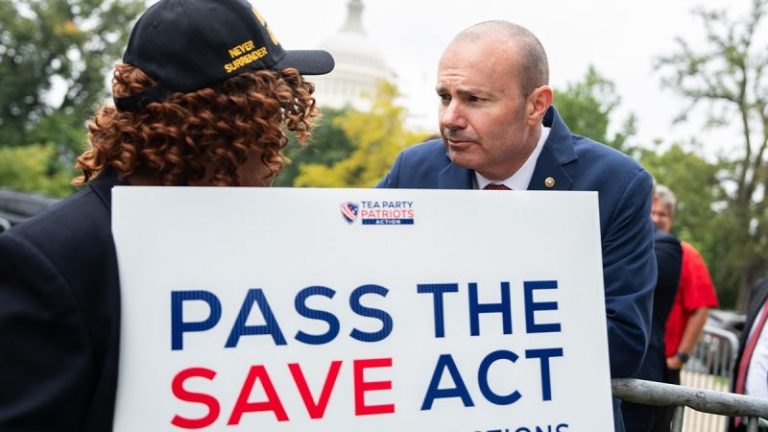
President Donald Trump is vowing to reject signing any new bills into law until the SAVE America Act is passed by the Senate, a tall order with just 53 Republicans seated and the 60-vote filibuster threshold a high hurdle.

‘Great Job by hard working Scott Pressler on Fox & Friends talking about using the Filibuster, or Talking Filibuster, in order to pass THE SAVE AMERICA ACT, an 88% issue with ALL VOTERS,’ Trump wrote Sunday morning on Truth Social. ‘It must be done immediately.’

‘It supersedes everything else,’ Trump added. ‘MUST GO TO THE FRONT OF THE LINE.’

The vow to halt all new law signings is a new one coming from the White House and notable because of the Senate hesitation to follow the urgings of Sen. Mike Lee, R-Utah, to force the Senate to bring the bill forward through the talking filibuster.

‘I, as President, will not sign other Bills until this is passed,’ Trump’s post continued, ‘AND NOT THE WATERED DOWN VERSION – GO FOR THE GOLD: MUST SHOW VOTER I.D. & PROOF OF CITIZENSHIP: NO MAIL-IN BALLOTS EXCEPT FOR MILITARY – ILLNESS, DISABILITY, TRAVEL: NO MEN IN WOMEN’S SPORTS: NO TRANSGENDER MUTILIZATION FOR CHILDREN! DO NOT FAIL!!!’

While Senate Majority Leader John Thune, R-S.D., has publicly acknowledged a willingness to bring a vote on the SAVE America Act before the upper chamber, there is hesitation within the Republican Party about forcing the talking filibuster under the current Senate rules.

The talking filibuster would force Democrats to speak on the Senate floor to argue against a voter identification position widely supported by Americans, as Trump noted, but it would also force Republicans to sit in attendance with a quorum. That has been rebuked by longtime Senate GOP veterans as something that would ‘waste time.’

Former Senate GOP leader Mitch McConnell, R-Ky., has been publicly opposed to forcing a talking filibuster because of the time constraints it would force on the Senate GOP, and he remains one of the few Senate Republicans not signing on to support the SAVE America Act.

Another development that clouds the SAVE America Act filibuster is the recent appointment of Sen. Markwayne Mullin, R-Okla., to serve as the next Department of Homeland Security secretary, perhaps resigning from the Senate by the end of March.

Fox News Digital reached out to Mullin’s office for comment. McConnell’s office declined to comment on Trump’s Truth Social vow to block all new law signings amid the standoff on the DHS funding that has the government in a partial shutdown and the Senate sitting on the House-passed SAVE America Act.

‘We’re going to have a vote on this, but in terms of what the president is willing to sign, Maria, we need to get the Department of Homeland Security funded,’ Senate Majority Whip John Barrasso, R-Wyo., told Maria Bartiromo on ‘Sunday Morning Futures.’

‘The Democrats have blocked that right now. And the greatest threat to the American people today is terrorism. So I want to make sure that the Democrats work with us to pass and fund the Department of Homeland Security, because I’m worried about the lone wolf, the sleeper cells and the cyber terrorism that’s coming our way because of what Iran is telling people around the world to do to continue this reign of terror,’ Barrasso said.

Getting to 60 votes in the Senate is unlikely with just Sen. John Fetterman, D-Pa., as the lone potential Democrat vote to side with the Senate GOP on the SAVE America Act.

‘The Democrats are against so many of the things that I think help this country,’ Barrasso added to Bartiromo. ‘They’d rather stand with illegal immigrant criminals than with the safety and security of the American people. I want to get the SAVE Act to the floor. I want to have a vote.’

‘That’s the next step on this need to get the Department of Homeland Security open and funded,’ he continued. ‘The Democrats are bowing to the liberal left: The people that want to eliminate ICE, the people that want open borders again, and the people that really aren’t looking out for the best interest of the American people.

‘As the president said in the State of the Union, it is the first duty of the American government to protect American citizens, not illegal aliens. But that’s what not one single Democrat stood up for that when every Republican stood and cheered loudly.’

Barrasso, the Senate GOP member whipping up support, considers the SAVE America Act ‘common sense.’

‘You want to make sure that only citizens can vote,’ he concluded to Bartiromo. ‘You want to make sure that when people show up, they have a photo ID to prove they are who they say they are. You need a photo ID to buy a beer, to board a plane, all of those things. And it’s 90% popular with the American people. The only people against this are the Democrats because they want to make it easier to cheat.’

Related Article

DAVID MARCUS: Passing the Save America Act to save Cornyn is a fair deal
This post appeared first on FOX NEWS

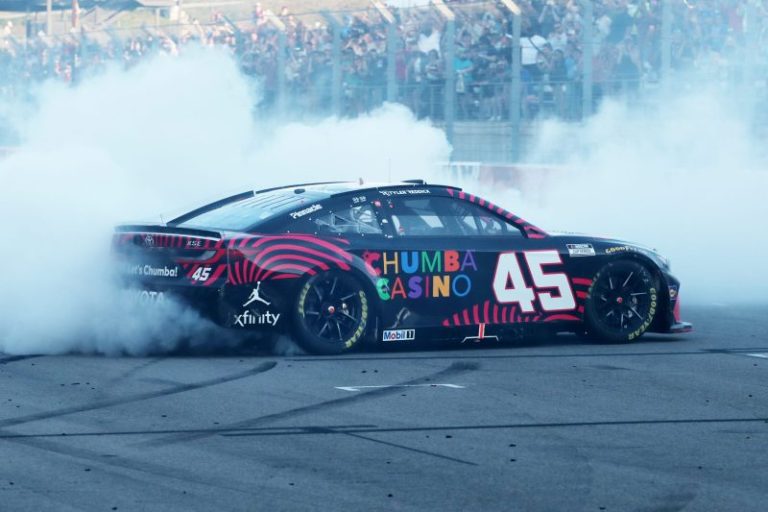
Three races to start the 2026 NASCAR Cup Series season have seen a clean sweep of three victories by 23XI Racing’s Tyler Reddick.

He scored a thrilling win in the Daytona 500 on the final lap while missing part of his front bumper before taking care of business in Atlanta a week later. Last time out, Reddick put the No. 45 Toyota on pole position and kept road course ace Shane van Gisbergen at bay for his record third consecutive win to open the season.

He’s won on a superspeedway, intermediate speedway and a road course. Reddick looks unstoppable.

This week, NASCAR heads to Phoenix – the site of the most recent Cup Series race won by someone other than Reddick.

Team Penske’s Ryan Blaney won the NASCAR Cup Series championship race there last November. He and the rest of the field will be hoping there’s a break from Reddick’s dominance in the desert.

Who can break through to victory lane is the question on everyone’s mind. We’ll find out come Sunday afternoon in Avondale, Arizona. Here’s how to catch all the action of the Straight Talk Wireless 500:

What time does the NASCAR Cup race at Phoenix start?

The Straight Talk Wireless 500 starts at 3:30 p.m. ET (12:30 p.m. local) at Phoenix Raceway in Avondale, Arizona.

What TV channel is the NASCAR Cup race at Phoenix on?

The Straight Talk Wireless 500 marks the first race of the calendar not broadcast on Fox. Instead, it’ll be on FS1. The pre-race show begins at 3 p.m. ET. Fans can also tune in to the radio broadcast on the Performance Racing Network and SiriusXM NASCAR Radio.

NASCAR Cup race at Phoenix live stream

The Straight Talk Wireless 500 can be live streamed on the Fox Sports website (by signing in with your TV or satellite provider), Fox One (free seven day trial) and the Fox Sports app. Viewers can also stream the race on Fubo, which is offering a free trial to new subscribers.

Watch NASCAR Cup Series races on Fubo

How many laps is the NASCAR Cup race at Phoenix?

The Straight Talk Wireless 500 returns the field to the typical format NASCAR fans are used to compared to a week ago. The field will take on 312 laps around the 1-mile oval for a total of 312 miles (502 kilometers). The race will still be broken up into three stages (laps per stage) — Stage 1: 60 laps; Stage 2: 125 laps; Stage 3: 127 laps.

What is the lineup for the Straight Talk Wireless 500 at Phoenix?

Car number in parentheses

(22) Joey Logano, Ford
(5) Kyle Larson, Chevrolet
(2) Austin Cindric, Ford
(7) Daniel Suarez, Chevrolet
(12) Ryan Blaney, Ford
(1) Ross Chastain, Chevrolet
(77) Carson Hocevar, Chevrolet
(45) Tyler Reddick, Toyota
(24) William Byron, Chevrolet
(21) Josh Berry, Ford
(11) Denny Hamlin, Toyota
(20) Christopher Bell, Toyota
(60) Ryan Preece, Ford
(54) Ty Gibbs, Toyota
(42) John Hunter Nemechek, Toyota
(71) Michael McDowell, Chevrolet
(17) Chris Buescher, Ford
(97) Shane Van Gisbergen, Chevrolet
(88) Connor Zilisch, Chevrolet
(19) Chase Briscoe, Toyota
(47) Ricky Stenhouse Jr., Chevrolet
(35) Riley Herbst, Toyota
(16) AJ Allmendinger, Chevrolet
(38) Zane Smith, Ford
(3) Austin Dillon, Chevrolet
(9) Chase Elliott, Chevrolet
(33) Austin Hill, Chevrolet
(23) Bubba Wallace, Toyota
(8) Kyle Busch, Chevrolet
(34) Todd Gilliland, Ford
(48) Anthony Alfredo, Chevrolet
(43) Erik Jones, Toyota
(10) Ty Dillon, Chevrolet
(51) Cody Ware, Chevrolet
(4) Noah Gragson, Ford
(41) Cole Custer, Chevrolet
(6) Brad Keselowski, Ford

This post appeared first on USA TODAY

This article discusses suicidal ideation. If you or someone you know is struggling or in crisis, help is available. Call or text 988 or chat at 988lifeline.org.

Anna Baker wanted validation.

It’s how she was programmed. In a way, it was how she survived.

“I was always kind of the awkward duckling,” Baker says. “Like friendly with everybody, but didn’t have a friend group, didn’t have close friends.”

But she had gymnastics, which she started at 4 or 5.

“When I think of my childhood,” she says, “all that I wanted, all that I thought kind of existed was the world of gymnastics. I thought that would be what my future would be guided by.”

Today, at 26, years removed from a series of injuries that forced her out of her sport, she still feels some of the pain. She trained or competed almost every day, with minimal breaks for an offseason.

“Your first love cuts the deepest,” she tells USA TODAY Sports. “And I think that for a lot of kids that is a sport, at least for a lot of kids that I grew up with, and it really is like a unique heartbreak and has an effect that has stuck with me for a really long time.”

Baker was not alone, as a teenager in this age of manic kids sports, and as a girl, who has a unique injury risk over a boy.

“Girls are at higher risk for overuse injuries in youth sports, period,” says Neeru Jayanthi, a sports medicine physician at the forefront of research on early sports specialization. “And probably serious overuse injuries as well, too.”

Jayanthi, the director of Emory Sports Medicine Research and Education in Atlanta, has a patient, Neva Talari, 14, an elite tennis player who came to him a little less than a year ago after back pain revealed stress fractures in her back.

“We went on a two-year spree without almost a break for her and she was actually taking off well with the results so she was motivated and we were motivated,” says her father, Suneel Talari. “We were thinking we should not hold back when the track is looking good.”

Still, Jayanthi has indicated Neva has a chance to make it back. Baker never could after her experience with specializing in gymnastics sent her down a slippery slope that is becoming more and more familiar as research continues on young female athletes.   

Jayanthi says we need to accept girls’ greater injury risks, which will help us reduce them. USA TODAY Sports spoke with him, as well as Suneel Talari and Baker, about how their experiences with overuse injuries can help athletes and their parents.

What’s at risk for female athletes with overuse injuries?

They comprise more than half of the injuries to young athletes, medical research has found.

However, in a 2024 study of injured athletes aged 10 to 23, Jayanthi and his associates found the odds of sustaining an overuse injury as compared with an acute injury (such as an ankle sprain or concussion) was almost 50% higher in female than male athletes.

Such data isn’t widely known among youth sports parents.

Neva Talari, who plays out of Vander Meer Academy in Hilton Head, South Carolina, once played tennis every day, and for four and a half hours on Monday through Thursday, and then even more (five to seven matches) on weekend in travel tournaments.

Talari, 14, started noticing back pain last May. After resting for two weeks, she tried to play again and her pain got so bad she had to forfeit a match after the first set. She hasn’t played competitively since then.

“It’s a bad lesson for me,” says Suneel Talari, 43. “I never got injured despite playing a physical contact sport. I was thinking like you have to be extremely unlucky to get an injury because somebody like me never trained, never had a coach, never knew about injury management, could go on to play college soccer for a big school in India, and then never get injured.’

Anna Baker is an only child who grew up in Maine. Her mother, Michele LaBotz, is a sports medicine physician, who, like all of us, also was figuring out how to manage her budding athlete’s career.

What happened next blindsided them.

“Just as a preface, when we talk about, kind of best practice in terms of developing athleticism, particularly young children, gymnastics is an amazing sport and activity that way,” LeBotz told USA TODAY Sports in an interview. “When you think about all the sport options that are out there for kids, it’s the one that most closely replicates free play as you’ve kind of gone through the literature, in terms of pediatric development for both mental and physical development. Particularly, huge recreational gymnastic programs are fabulous in terms of developing general athleticism.

‘And so I’m not in any way, shape or form throwing gymnastics under the bus. This has just been our experience with the specialization process.”

Sports specialization drives increased injury risks, especially for girls

Sports specialization, according to medical experts, is the intentional and focused participation in a single sport for a majority of the year that restricts opportunities for other sports and activities.

It’s directed by a pull toward a singular activity for which your child demonstrates ability and passion, which raises the potential of them getting hurt.

LaBotz says girls face an increased risk of overuse injuries, in part, because they have a higher prevalence of REDs, or a syndrome of impaired physiological and/or psychological functioning due to inadequate energy intake in relation to exercise energy expenditure. 

Girls also generally possess less strength and less muscle mass than boys, while their bone density is lower, leading to increased risk of stress fractures.

Her daughter developed them in both her feet and elbows.

“They were honestly really validating,” Anna Baker says. “I think growing up as athletes, we very much look for physical wins. It needs to be something that you can see, whether it’s like a scoreboard or a new skill or a performance. When I would get those injuries and I would just keep training on them, that is when I felt probably the best about myself, being like, ‘Look, here’s the proof that I’m working really hard, and here’s the proof that I’m really strong.’ ”

She developed mysterious hip pain at 14. It was eventually revealed to be avascular necrosis (AVN), which occurs when the ball and socket in the hip loses its blood supply and the bone starts to die.

She had an initial surgery for AVN at Boston Children’s Hospital, but her hip continued to collapse. Her second surgery at Duke University took a fibula out of her lower leg and placed it in her hip for stability.

Her career was over, underscoring the ultimate risk of an overuse injury: Attrition from a sport.

If you choose to specialize in a sport, work backward from your goal

Jayanthi says the risks for overuse injuries are higher for girls who do individual technical sports, such as swim, dive, dance, tennis and gymnastics.

But he doesn’t discourage girls from specializing in sports. If you do, though, he says you need to monitor yourself through vulnerable periods and understand your goals.

For one, are you setting your sights on making a high school team or a college one?

“I recognize that getting on (at) a high school, in some communities, is not easy at all,” Jayanthi says. “We are forced to do it. So figure out when you want to peak in your training. You need to peak at 14 or 15, which means that if you backtrack it four or five years, you actually have to start doing some intensity in training about four years prior to that to get to that point. If you do it, put the best environment around you.

“At the end of the year, each season, do neuromuscular training, and look at your competition/training ratio, and try to get some free play in there, and build the resilience.”

If the goal is college, he says, “just recognize that, ‘Hey, look, let’s not push this girl out of it. Let’s just let her get through a little more maturity, and then go all in (at) 13, 14 or something like that, when their skeletons mature.”

And scale back dramatically when you get hurt. Jayanthi prescribed complete rest to Neva Talari for a number of weeks to heal her stress fractures in her back. She then implemented a 12-week transition plan. The first week, her father says, she played only an hour a day, adding a half hour per week without serves until the fifth or sixth week.

“It took 12 weeks for us to slowly take off,” her father says. “My goal for her is to definitely play in a really top school, like something like Stanford because she’s academically also very good. And she is like a 7.1 UTR (Universal Tennis Rating) now, despite not playing for lost 8 months.

“And for us to get into something like Stanford along those lines, she needs to be close to 10 UTR at a minimum, on the lower end. So my challenge there is I do not have liberty and luxury to have her play two different sports on two different days and then give only two days a week for tennis and expect her to get to 10 UTR when she is 17.”

Realize the importance of rest, and ‘free play’

Suneel Talari speaks with a tinge of caution. He knows he can’t afford for Neva to suffer the injury again, when her chances at a full recovery will be greatly reduced, if not extinguished, like Anna Baker’s were a decade or so ago.

“I don’t remember the last time I watched gymnastics,” Baker says. “There’s still like so many feelings and emotions and like a deep sadness of missing something.”

She wound up getting a hip replacement at around 20, but the hip got infected and she went into septic shock.

“I don’t really remember much, I was in and out of consciousness,” she says, “but they pretty much told my parents to plan for me to not make it through the night. And at the time it was COVID and I was an adult so I was in a cardiac ICU and they were not allowed there. So my parents were sitting at home alone, just getting phone calls and updates on what was going on.”

Baker has since struggled with pain medication abuse and suicidal ideation. She had an extended stay in a psychiatric unit.

She finds solace today with Pilates, which she says, through movements and muscle activation, replicate many similarities of gymnastics.

Her experience with Pilates is in the spirit of what we can do with our young athletes if they decide to specialize.

“Do something that involves motor development outside of your sport,’ Jayanthi says. ‘So if it’s not free play, then play another sport. If it’s not playing another sport, then get in an injury prevention, strength-training program. Not the type that just add more [load] and try to make you faster, ones that actually focus on strength and developing your body.”

Monitor your child’s adolescent growth spurt, when athletes are more susceptible to overuse injuries, and minimize high competition-to-training ratios.

We are considered low-risk or “load tolerant” athletes if our competition to training ratio is less than 1:3. We become a moderate risk when the ratio increases to 1:1 and high-risk when it’s greater than 1-1.

Find the spirit of yourself

Suneel Talari has trimmed the tennis schedule for his younger daughter, Rhea, 11, to two tournaments a month.

Rhea is adopting a training workload adjusted from five days a week, four hours per day, to four days a week.

He observes his daughters’ states after they have been playing for a few hours. Are they fatigued? Are they dragging?

“My goal as a parent is I want to see my kids be happy,” he says. “I want them to be happy in the sport we chose right now. I’m always looking for that happiness aspect.”

The aspect, though, can be broadened within us if we find it outside of our sport. It’s something with which Baker struggled.

The gymnasts with whom she trained had a better handle on that part of their lives.

“When they were injured, they were like, ‘Oh, I can hang out with my friends more. At least I get to go to this school activity (or) hockey game,’ ‘ she says. ‘When I got injured and was out for a significant period of time, I didn’t have any real peers to do it with, not being involved in anything other than gymnastics.

“I would tell younger girls you don’t have to prove your commitment to your sport by dropping everything else. You don’t have to say no to everything else to prove that that is important to you.”  

And, she says, learn to give yourself breaks.

“Physical and mental breaks that are focused on recharging your body and your mind,” she says. “Whether that’s napping or a certain meal, a certain stretch, just figuring out how to have a good conversation within your mind, and then bringing it to others when necessary.”

Borelli, aka Coach Steve, has been an editor and writer with USA TODAY since 1999. He spent 10 years coaching his two sons’ baseball and basketball teams. He and his wife, Colleen, are now sports parents for two high schoolers. His Coach Steve column is posted weekly. For his past columns, click here.

This post appeared first on USA TODAY

The 2025-26 men’s college basketball is set to come to an end on Sunday, March 8.

That means with conference championship week picking up the following week, the 2026 version of the NCAA Tournament and March Madness is almost upon us. Of course, the last weekend of the regular season could not be without drama, too.

Marquette did the unthinkable and knocked off No. 4 Connecticut to likely push the Huskies to a No. 2 seed, while Florida’s convincing win over Kentucky on the road likely secured the final No. 1 seed for the the Gators heading into the conference tournaments.

Entering the conference tournaments, No. 1 Duke is the favorite to win the 2026 NCAA Tournament, with fellow projected 1-seeds Michigan, Arizona and Florida not far behind.

Here’s a look at the top 20 teams with the best odds of winning the national championship:

March Madness favorites: Ranking Top 20 college basketball teams based on odds

Odds courtesy of BetMGM as of 9:30 a.m. ET Sunday, March 8

Duke has emerged as the slight favorite over Michigan to win the 2026 national title. The Blue Devils picked up a major win over the Wolverines on Feb. 21, which likely secured themselves the No. 1 overall seed in the tournament.

Fellow No. 1 projected seeds in Arizona and Florida, round out the top four for most likely cutting down the nets in Indianapolis. The Gators are seeking to join UCLA as the only program to ever win back-to-back championships twice, and will enter the tournament as the defending champs.

1. Duke, +320
2. Michigan, +325
3. Arizona, +475
4. Florida, +575
5. Houston, +1000
6. Connecticut, +1300
7. Illinois, +1800
8. Iowa State, +2200
9. Kansas, +3500
10. Michigan State, +4000
11. Purdue, +5000
12. Gonzaga, +5500
T-13. Arkansas, +6600
T-13. Virginia, +6600
T-15. Alabama, +8000
T-15. Nebraska, +8000
17. Louisville, +9000
T-18. St. John’s, +10000
T-18. Tennessee, +10000
T-18. Vanderbilt, +10000

When does March Madness start?

The NCAA tournament First Four on the men’s side begins on Tuesday, March 17 and continues on Wednesday, March 18. 

The four men’s games, which are held in Dayton, Ohio, feature the final four at-large selections to the field, as well as the four lowest-rated No. 16 seeds. The winner of each matchup advances to the first round. First-round games will take place on March 19 and March 20.

When is March Madness Selection Sunday?

Date: Sunday, March 15

Selection Sunday for the 2025-26 college basketball season will take place on Sunday, March 15, with both the men’s and women’s NCAA Tournament brackets being revealed.

This post appeared first on USA TODAY