Archive

2026

Browsing

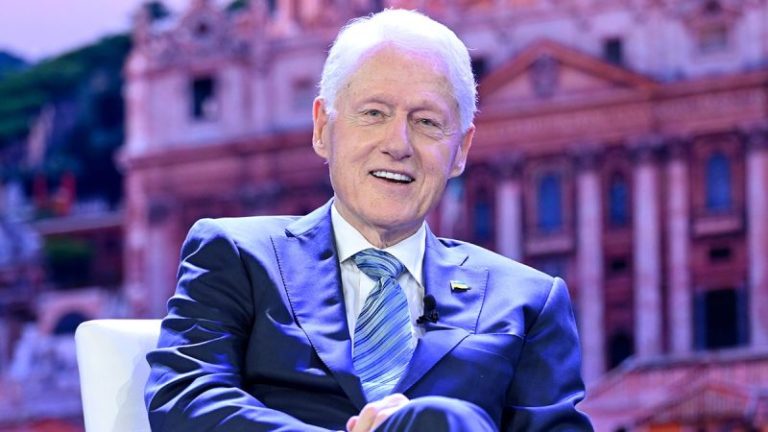
Former President Bill Clinton appears to have defied a congressional subpoena to appear before the House Oversight Committee on Tuesday morning.

Clinton was compelled to sit for a sworn closed-door deposition in the House’s bipartisan probe into Jeffrey Epstein, but Fox News Digital did not see him before or after the scheduled 10 a.m. grilling.

House Oversight Committee Chairman James Comer, R-Ky., had threatened to begin contempt of Congress proceedings against Clinton if he did not appear Tuesday.

Other lawmakers seen going into the committee room include Reps. Lauren Boebert, R-Colo., and Scott Perry, R-Pa.

This story is breaking and will be updated.

This post appeared first on FOX NEWS

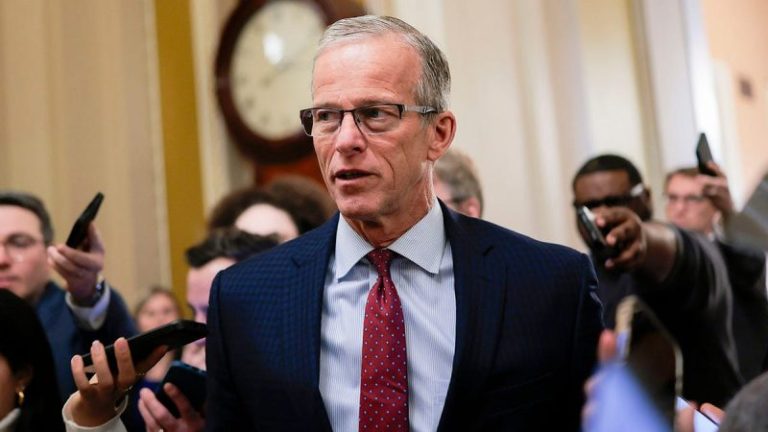
Senate Majority Leader John Thune, R-S.D., warned that the allegations against Federal Reserve Chair Jerome Powell must be legitimate, and not politically influenced, as bipartisan unease over the criminal probe continues to ripple through the Senate. 

‘I haven’t seen the case or whatever the allegations or charges are,’ Thune said. ‘But I would say they better be — they better be real and they better be serious.’

Thune’s comments followed a wave of bipartisan anger over the Department of Justice’s (DOJ) criminal probe into Powell, with Senate Republicans threatening to block any of President Donald Trump’s future Fed nominees until the issue was resolved. 

Sen. Thom Tillis, R-N.C., vowed to ‘oppose the confirmation of any nominee for the Fed — including the upcoming Fed chair vacancy,’ shortly after the news of the probe into Powell broke.

He was later backed up by Sen. Lisa Murkowski, R-Alaska, who said after speaking with the central bank chief that ‘it’s clear the administration’s investigation is nothing more than an attempt at coercion,’ and she threatened a congressional investigation into the DOJ. 

When asked about Tillis’ position, Thune said that people would ‘react to this differently,’ but reiterated that without knowing the full breadth of the investigation, it was hard to jump to conclusions. 

‘But as I’ve said earlier, I think it’s really important that it can resolve quickly and that there not be any appearance of political interference with the Fed or its activities,’ he said.

Powell contended that the investigation was not related to testimony he gave before the Senate Banking Committee last year regarding the $2.5 billion renovation of the Fed’s headquarters in Washington, D.C., but rather a consequence of the Federal Reserve ‘setting interest rates based on our best assessment of what will serve the public, rather than following the preferences of the president.’ 

Thune also acknowledged that Tillis’ hold on Fed nominees would make things difficult moving forward as the investigation plays out, given that Powell’s term atop the central bank expires in May. 

He said that it would be good to ensure continuity at the Fed, and ‘that the central bank maintains its independence.’ 

‘I mean, they’ve got a couple of key missions when it comes to the economy, particularly dealing with inflation, which obviously is impacted by interest rate policy,’ Thune said. ‘And so I want to see them operate in an independent way, free of politics.’

Meanwhile, Senate Minority Leader Chuck Schumer, D-N.Y., railed against the investigation and called the allegations fueling it ‘clearly bogus.’ 

‘Anyone with two eyes and half a brain knows exactly what this criminal probe represents: a brazen attempt by Donald Trump to cannibalize the Fed’s independence,’ he said.

This post appeared first on FOX NEWS

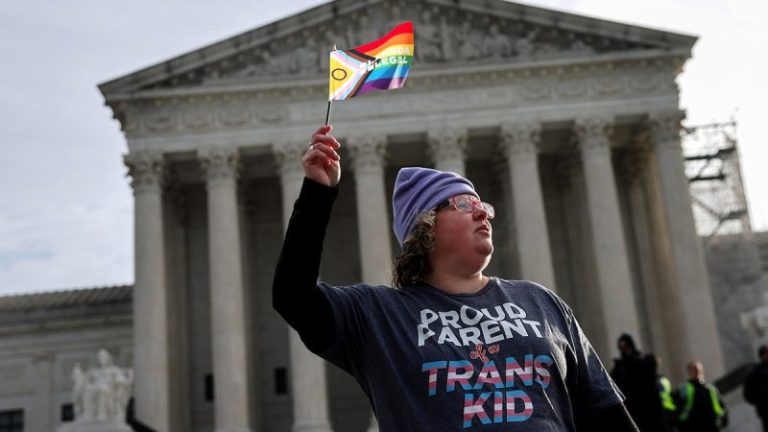
A top House lawmaker and former softball coach is arguing that allowing transgender women who were born male to play on female sports teams is ‘the biggest form of bullying.’

House GOP Conference Chairwoman Lisa McClain, R-Mich., is expected to appear at a rally in support of banning biological males from playing on school sports teams for girls and women on Tuesday.

It’s the same day the Supreme Court is expected to hear oral arguments on the legality of such bans in two states, cases that could have ramifications for school sports across the country.

The cases, challenging state laws by GOP-led governments in Idaho and West Virginia, will decide whether discrimination based on gender identity violates federal civil rights laws.

But McClain, who spent almost a decade coaching girls’ softball, said it was not an issue of left or right.

‘This isn’t a conservative-progressive [issue]. You can’t put a label on it. The label is female versus male. Those are the labels you should be talking about,’ McClain said. ‘It’s, does this Supreme Court recognize females?’

As a business owner before Congress, McClain said she also coached her daughter and other girls, starting when her child was 9 through high school.

She said there would have been ‘intense conversations’ if her team had to face another with a transgender player.

‘I’ll just share with you, it wouldn’t happen,’ she said of the hypothetical face-off.

‘You want to talk about fairness and all that stuff. I’ll compete with any female athlete, any female athlete. Don’t have a guy pretending to be a woman come in, undress in the locker room in front of my daughter or any of the girls that are on my team. Are you kidding me?’

LGBTQ advocates have said a Supreme Court ruling in favor of the state governments would be a step back for transgender rights.

But people who support the bans, like McClain, have said it’s a fight for women’s rights.

‘Where all these feminists that fought so hard for women, for women’s rights, for Title IX?’ she asked. 

‘This is an attack on women. So you can stand with the transgenders, that’s fine. You can be who you want to be, be transgender, if that’s who you want to be. But when who you are decides to infringe on my rights, that’s when I have a problem.’

This post appeared first on FOX NEWS

Patience? Who needs it? Not Curt Cignetti. That word is a loser’s battle cry.
After Indiana goes ‘from outhouse to penthouse,’ coaches elsewhere can’t expect a long runway of patience.
Mario Cristobal benefited from patience at Miami, but he’d previously shown progress in his third season.

These are tough times for college football excuse makers. These are choppy waters for coaches who think they’ll plot the slow route to success.

Patience has become like a four-letter word in Sunday School. Don’t say it, because nobody wants to hear it.

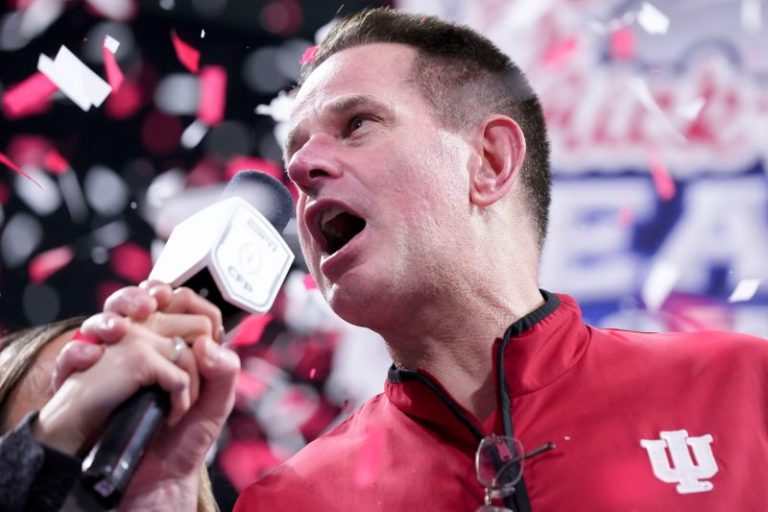
When Curt Cignetti needed just two years to take Indiana from the pit to the national championship game, he incinerated any lingering vestiges of the idea coaches must be allowed to implement a five-year plan before they’re harshly evaluated. He shoved a sock in the mouth of every underachieving coach who’d otherwise like to say, “Wait ’til I get some more of my recruits in here.”

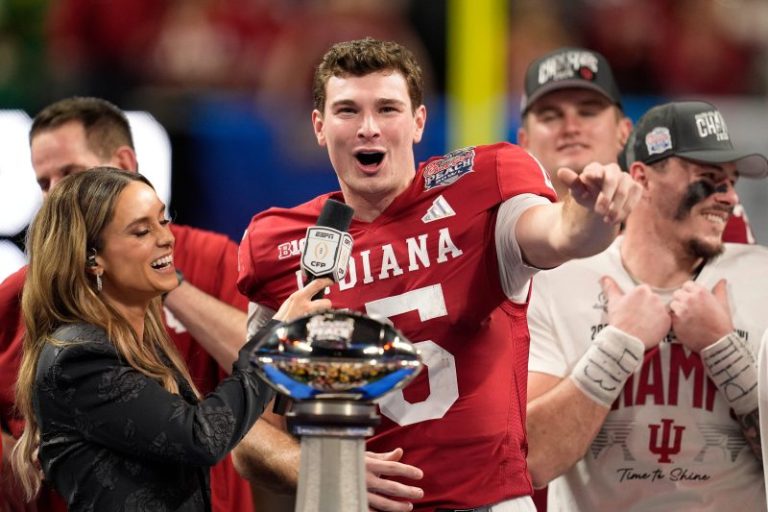
We can debate how this happened. Clearly, Cignetti knows ball. Injecting transfers helped, including those he brought with him from James Madison. He developed some leftovers he inherited. He hit a home run with transfer quarterback Fernando Mendoza.

Cignetti built a smart, veteran team that does not beat itself with blunders, penalties or turnovers, while it beats up opponents. Along the way, he invigorated the nation’s largest alumni base. That’s useful in an NIL era.

Beyond how it happened, though, is what Cignetti’s success means for his profession.

Cignetti’s success ushers in even greater expectation of coaching success at a microwavable rate of efficiency. There’s never been a more perilous time to be a loser proclaiming he’s on the verge of becoming a winner. Ask Hugh Freeze about that.

“I wish I could ask for patience,” Freeze said in November, hours before Auburn fired him, “but that’s not really something people want to give in this day and time.”

I’m not sure anyone ever wanted to wait several years to see results. Cignetti proved you no longer have to wait, not in this era of NIL and transfer free agency.

Curt Cignetti effect: Patience is loser’s battle cry

As Indiana donor Mark Cuban aptly put it, Cignetti ushered Indiana “from the outhouse to the penthouse.” He made it so that if your coach resides in the outhouse after two or three seasons, he probably just stinks.

Freeze spent three years telling Auburn he was close. Maybe, he was. More likely, he wasn’t. Either way, it didn’t matter. Freeze couldn’t expect his bosses or boosters to accept being “close” to competence in Year 3 at Auburn, not when Indiana’s coach is undefeated in his second season.

Boosters and fans whose dollars fund the roster demand either return on investment or a head on a platter. Also, the more accessible the playoff becomes, the less that a reputable program’s backers are willing to accept a trip to the Pinstripe Bowl. James Franklin can attest to that.

On top of all of that, there’s this Cignetti effect. He’s performing like patience is a loser’s battle cry. In two years, he turned one of America’s worst programs into a super squad, capable of wrecking playoff teams by more than 30 points.

Cignetti’s success gives programs that never tasted glory a reason to believe in (and invest in) the possibilities — and to spit out mediocrity and try again with someone else.

Probably, a coach should still be permitted a one-year honeymoon. To be fair, Cignettis don’t grow on trees. But, by Year 2, if no signs of life are detected, then your coach probably isn’t the guy. If the program remains listless in Year 3, then he’s definitely not the guy. Be done with it.

Indiana success cranks up pressure on … Bill Belichick

As I’m beginning to call it, there was the time before Cignetti, B.C., and the time after Cignetti, A.C.

B.C., fans of Kentucky or Rutgers or Purdue or Wake Forest who demanded premier performance were at risk of being declared nutty. If you rooted for North Carolina and asked, “Why not us?” while Alabama ripped off national championships armed with a three-deep of the nation’s best talent, there was an obvious answer to that.

Now, A.C., it’s acceptable for fans from Indiana to Vanderbilt to ask that question. It’s reasonable to demand a pulse be present within two seasons.

That means you, Bill Belichick. His first season went splat. He cannot whiff again. If Cigs can get a basketball school to a national championship in Year 2, then Beli ball must improve next season to justify bringing him back in 2027.

Cignetti’s success dials up pressure on Purdue’s second-year coach Barry Odom. It makes Michigan State look rational for parting with Jonathan Smith after two bad seasons. It makes me wonder why Wisconsin wasted time bringing back Luke Fickell, after three straight bum years.

Inside the SEC, six new coaches were hired. None of them better mention the word patience.

In B.C., and in the time before NIL and transfer free agency, Dabo Swinney was the portrait of what patience could do. He went 6-7 in his second full season. Swinney got it rolling in Year 3, when he began a long stretch of double-digit-win seasons. He delivered his first national title in his eighth season.

Gary Pinkel never won a national title, but he became another testament of patience. Missouri suffered losing records in three of Pinkel’s first four seasons. Missouri let it ride, and Pinkel became the winningest coach in Tigers history, while serving some of their greatest moments.

Order commemorative book about IU’s epic season

Miami provides a present-day portrait of patience paying off.

Mario Cristobal went 12-13 through two seasons. He got Miami to 10 wins last year. Then, the past few months, came a Year 4 breakthrough.

If a coach requires a dose of patience, he better pair patience with progress, as Cristobal did. Treading water or win-loss regression is a recipe for a swift firing.

Cignetti never asked for any patience. He never thought he needed any.

“We’ve been adamant,” Cignetti said, shortly after Indiana hired him, “that we’re going to win, we’re going to win this year, and we’re going to change the brand.”

Cignetti backed up that talk. In doing so, he sped up the clock for his peers. He removed the P-word from a new coach’s vocabulary. That word died when the calendar turned from B.C. to A.C.

Blake Toppmeyer is the USA TODAY Network’s senior national college football columnist. Email him at BToppmeyer@gannett.com and follow him on X @btoppmeyer.

This post appeared first on USA TODAY

The Houston Texans’ defense scored two touchdowns in a 30-6 wild-card victory over the Pittsburgh Steelers.
Quarterback C.J. Stroud overcame two lost fumbles and an interception to lead the offense.
The Texans will now face the New England Patriots in the divisional round.

PITTSBURGH — Stating the obvious here, the Houston Texans’ defense is championship caliber – to the point they may carry the entire roster to northern California themselves within the next month. 

That also means the pressure is on quarterback C.J. Stroud and the other side of the ball, because not supporting what has developed into one of the most simultaneously suffocating and crushing units in recent memory would be to waste a potentially deep postseason run in a weaker AFC field.  

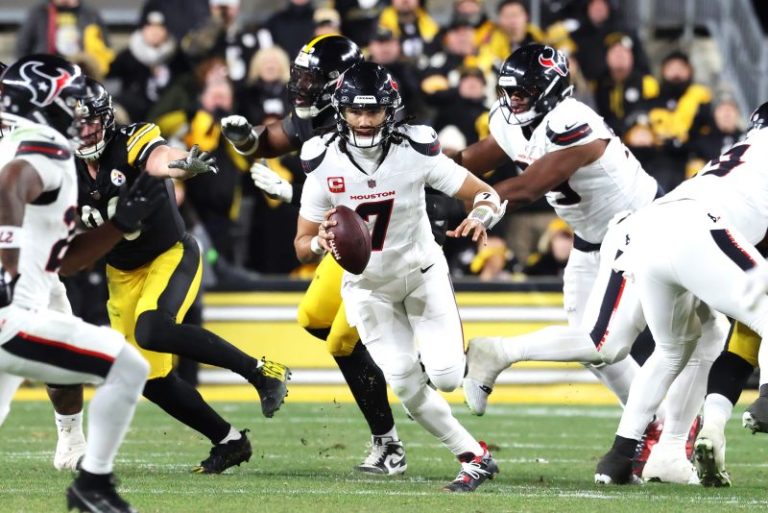
DeMeco Ryans’ unit scored twice in Houston’s 30-6 rout of the Pittsburgh Steelers in the wild-card round Monday, Jan. 13, at Acrisure Stadium. The concerning part is that Stroud’s carelessness with the football, which resulted in two fumbles lost (five fumbles total and several issues with the snap) and a red-zone interception, kept the Steelers in the game for more than three quarters despite the Texans’ defense ultimately surrendering the fewest points and yards in team postseason history. 

‘Bad plays happen, turnovers happen in a game,’ Ryans said. ‘We bounced back and didn’t let that affect us the rest of the game.’

The defense was credited with 12 hits against Steelers quarterback Aaron Rodgers, whom they sacked four times. 

Ryans liked that the offense finished the game strong regardless of prior mistakes. Stroud still displayed his flashes of greatness. There was the first third-down throw of the game to Christian Kirk for 36 yards and a third-and-15 completion to Kirk for 46 yards on the final play of the third quarter, which flipped the field and led to a Ka’imi Fairbairn field goal that made it 10-6. 

‘He didn’t waver,’ Ryans said of Stroud. ‘You can easily go in the tank, but he didn’t waver. That’s who he is. He is a resilient young man who’s able to bounce back. Anybody can go in the tank (after) you drop the ball a few times. You keep battling. Like, the game isn’t over.’

In Ryans’ third season (and Stroud’s), the Texans are 3-0 in wild-card games. They are the second head coach-quarterback duo since 1950 to make it to the divisional round in each of their first three seasons in the NFL. They will try to avoid going 0-3 in that round Sunday on the road against the New England Patriots (3 p.m. ET, ESPN/ABC). 

‘It was an outstanding defensive performance, one of the best that I’ve seen versus a really talented offense, talented quarterback who has played at a high level for a long time,’ Ryans said of facing Rodgers. ‘So, I’m proud of our defensive performance. I think this is the best performance we’ve had in our team history, so I’m proud of our guys for that.’

The dam eventually broke with less than 12 minutes in the fourth quarter when Rodgers dropped back and Will Anderson Jr. curled around the edge to his blind side. The 2023 No. 3 overall pick dislodged the pigskin while demolishing Rodgers, and Sheldon Rankins picked it up and ran 33 yards for a touchdown to make it 17-6. Calen Bullock intercepted Rodgers with the game already out of reach but housed it 50 yards to make it 30-6. 

‘I think our defense has played like this all year,’ Stroud said. ‘They’ve held us up. I think this is one of the best performances I’ve ever seen. It’s crazy to think the last three wild-card games I’ve played in they’ve always had a pick six and some type of two-turnover game. When you have a defense like that it’s really, really encouraging.’

The offensive line, a sore spot for the past two seasons that has clouded Stroud’s development, held up against a Steelers’ front that could have been more disruptive. Instead, the blockers gave Stroud plenty of time and were difference-makers in the run game. Rookie Woody Marks went for a season-high 112 rushing yards on 19 attempts, while Nick Chubb ran hard for 48 yards on 10 carries. Stroud completed 21 of 32 passes for 250 passing yards, and six different receivers caught at least two passes, with Kirk leading the way (8 catches, 144 yards, 1 touchdown). Nico Collins’ concussion will be something to monitor leading into the matchup against New England. 

The line was instrumental in sustaining two lengthy touchdown drives. The first was a 14-play, 92-yard sequence in which the Texans rushed seven times for 55 yards and took 7:01 off the clock. Marks’ 13-yard touchdown with 3:43 left in the fourth capped a five-minute, 51-second possession. Stroud’s efficiency on third down – the Texans started the game 7-for-9 – was another positive. Stroud said every teammate has a high standard of accountability. 

‘It’s not just on C.J., not just on me,’ Stroud said. ‘I’ve been on teams like that, where there is a lot of the pressure (on me). Everybody is, ‘I could have done this better,’ I could have done that better.’ I think it does start with me. I got to take care of the football. Other than that, I thought I played a good game.’

This post appeared first on USA TODAY
Coach Curt Cignetti credits the team’s success to veteran players with strong character and leadership.
Multiple Indiana players, including quarterback Fernando Mendoza, are projected to be high NFL draft picks.

Now that there’s no doubt remaining, seedy skepticism has arrived. 

So before we dive into more nonsense and deconstruct more lunacy, let’s begin where all elite teams do: players. 

Indiana has better players than just about every team in college football. 

Better than Ole Miss and Alabama. Better than Oregon and Texas and USC and Michigan and yep — hold onto your Bucknuts — maybe even better than Ohio State. 

Soon enough, we’ll add Miami to the list. 

“We’ve got a lot of veteran guys that have strong character,” said Indiana coach Curt Cignetti. “Great leaders, great players.”

What Indiana has is a bunch of players who will have long careers in the NFL. It’s so much more than just the perfect storm of motivated outcasts brought together by the coach finally getting his shot. 

This is about talented players, and one the undeniable truth that underscores it all: it’s impossible to hide on a football field ― especially in big games and big moments. Great players rise to it, flawed players wilt in it.

Cignetti, who coached at Alabama under Nick Saban and has seen the overwhelming blue-chip train firsthand, will be the first to tell you this Indiana group is built different. But it doesn’t mean they’re any less talented. 

One AFC scout, speaking on the condition of anonymity to protect his team’s draft process, told USA TODAY Sports the Indiana roster is, “A bunch of guys who will play a long time in this league. Football players, guys who love the game. It will be the most Indiana players ever drafted by a long way.”

Like left tackle Carter Smith, who has handled every team’s best edge rusher, and will do so again in the national championship game against Miami’s Rueben Bain — a projected Top 10 pick.

Like wideout Omar Cooper, who has 22 career touchdown catches. Or linebacker Aiden Fisher, who arrived with Cignetti from James Madison with little hype, and developed into an All-American.

Or center Pat Coogan, edge Mikail Kamara and running back Roman Hemby. By the time the third day of the NFL draft is complete, Indiana will have more players drafted in the Top 100 picks than a majority of FBS schools.

Order commemorative book about IU’s epic season

Not with ridiculous internet allegations of cheating or stealing practice video or — I just love this one — a roster that’s full of grown men older than a majority of the rest of college football. 

I don’t know if internet sleuths are aware, but Vanderbilt and Wake Forest and Northwestern and Oregon State (among others in Indiana’s previous zip code) all routinely had the oldest teams in college football prior to the explosion of NIL. And all — but for a scant breakout season here and there — struggled annually to reach bowl eligibility.

More to the point: Indiana had old(er) teams in the past, and couldn’t bust a grape.

I’m just throwing this out there: maybe it has something to do with talent level of the players this time around, and the men coaching them. Not some 15-second graphic in a weekly three-hour pregame show desperate for content.

Arkansas had 17 fourth- of fifth-year starters in 2025, won two games and fired its coach. Penn State? Loaded with fourth- and fifth-year players. 

So were Nebraska and Arizona State and Wisconsin. 

Weird how no one complained about Ohio State’s loaded, experienced roster in 2024. You remember that roster, right? 

The Buckeyes spent $20 million to build it, including paying stay home money to a handful of critical starters on defense that could’ve left for the NFL. They also paid for a starting senior center, and a fifth-year starting quarterback — because coach Ryan Day wasn’t convinced he had a quarterback on his roster who could win a championship.

Then they went out and did it with an old roster, and the best freshman in the country. 

That team was celebrated as an “all-in” moment. This Indiana team may as well be a bunch of NFL rejects who have returned to the college game to play under their weight class.

This is what happens when you upset the norms, when what should be suddenly becomes what’s old and slow and yesterday. Like LSU, which went all-in by constructing a roster full of fourth- and fifth-year players — and fired its coach before a disastrous season ended. 

The one lasting takeaway from the NIL era is the systematic dismantling of norms. Nobody cares about your blue-blood status anymore. 

Certainly not Ole Miss, which built a roster with 15 starters who were four- or fifth-year players, and was a defensive stop away from reaching the CFP national championship game. 

There were no grassy knolls with the Ole Miss buildout, only the concrete fact of a dumb move by a self-centered coach that galvanized the entirety of college football around a team that prior to 2020, was an historical loser in the modern era of the sport.

Sort of like Indiana before Cignetti arrived and changed everything.

‘There was a lot of skepticism last year, that we were a fluke,’ Cignetti said. ‘That team did a lot of great things and got it all started.’

This one will finish it.

Want to know why Indiana will win the national title, and complete the greatest zero to hero rise in the history of college football? Check out the NFL draft in four months.

Elite players win games. 

This post appeared first on USA TODAY
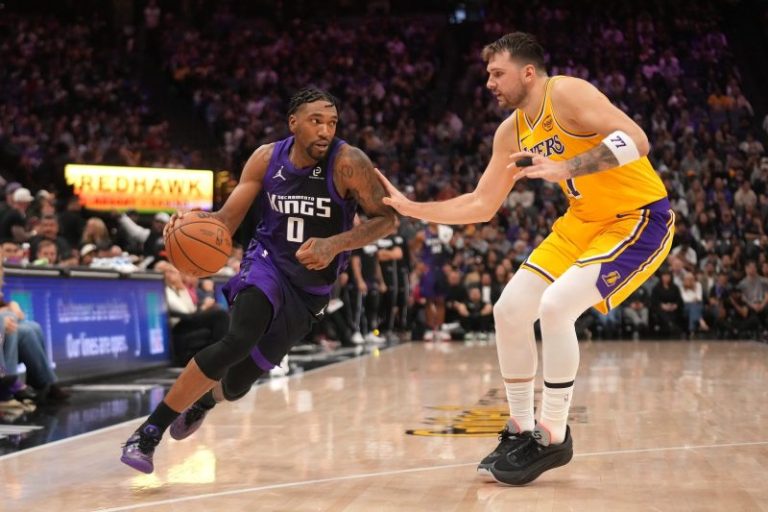
SACRAMENTO, CA — Sacramento Kings guard Malik Monk was a huge spark for his squad in their 124-112 win against the Los Angeles Lakers at Golden 1 Center on Monday, Jan. 12.

Monk led all reserves in scoring as he scored 26 points in the contest, including 18 points in the second quarter, giving the Kings a much-needed huge boost off the bench.

It’s been an interesting season for Monk.

From a team perspective, the Kings are 10-30 overall, and winners of back-to-back games, something they haven’t accomplished since Nov. 22 and 24 against the Denver Nuggets and Minnesota Timberwolves.

Losing is hard for anyone. But combine that with inconsistent playing time and things can get frustrating for players. However, Monk has remained a consummate pro at his job.

‘I want to play 48 minutes a night, man, always,’ Monk told USA TODAY Sports after their win. ‘Whether I’m out there or not, I’m always going to bring energy, I’m always going to smile and always teach the young guys. It doesn’t matter what’s going on.’

That’s the message the Kings head coach Doug Christie has seemingly sent to his team and no one has exemplified that reminder quite like Monk.

‘We just try to work through it, that’s the best that we can do. The biggest thing is regardless who it is, one of our standards is professionalism,’ Christie told USA TODAY Sports about splitting minutes amongst players. ‘So be professional, cheer your teammate on, its his turn right now, the spotlight is on him, let’s encourage him, let’s be excited for him. That time is going to come for you and I expect the same out of him.’

Monk was a heavy rotational piece towards the beginning of the season, but as the losses piled up Christie had to look in other directions and try different lineups.

It resulted in Monk seeing a major decrease in playing time and even not getting in some games, altogether.

Other Kings guards like Keon Ellis and Dennis Schroder moved up in the rotation.

Christie said that it’s a good problem to have.

‘It’s a fantastic problem to have because all of a sudden you have talent you can go in different directions,’ Christie said. ‘Sometimes depending on what the game presents to you, you can coach to that. But it’s a log jam, we’ve known that from the beginning.’

Monk has seen his playing time increase recently following the news about Dennis Schroder and his three-game suspension assessed by the league office after attempting ‘to strike’ Lakers guard Luka Doncic during a feud in the arena hallway following their 125-101 loss to Los Angeles at Crypto.com Arena on Dec. 28.

Schroder was suspended for three games which began against the Houston Rockets. In that game, Monk tallied 15 points and three assists in 26 minutes.

Schroder returns against the Washington Wizards on Jan. 16.

It’s not certain whether Monk will see his minutes decrease but his play in the last two games deserves consideration as Monk has averaged 20.5 points, five assists and made a total of nine three-point field goals.

He averages 11.9 points per game on 43% from the field, including 42% from three-point territory in roughly 21.9 minutes of court time.

Monk is in his fourth season with the Kings. He signed with Sacramento in July 2022 and agreed to an extension in 2024 to remain with the team through 2028.

His nine-year career averages are 12.3 points, 3.1 assists on 43% field-goal shooting and 35% from deep.

Monk had his name rumored in trade talks earlier in the season, however those talks have seemingly calmed down, although the Kings look to be sellers as they approach the Feb. 5 trade deadline.

This post appeared first on USA TODAY
The U.S. Virtual Embassy Iran is telling American citizens who are still in the country to leave immediately. 

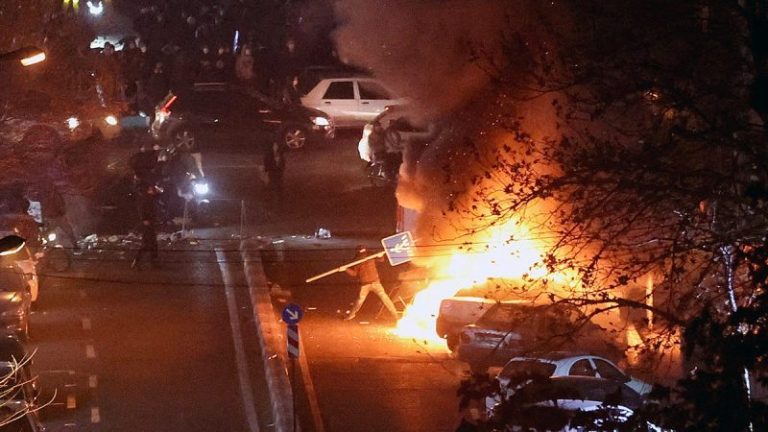
The warning Tuesday comes as more than 600 people have been killed in the ongoing anti-government demonstrations, according to an activist group. The U.S.-based Human Rights Activists News Agency said 512 of the dead were protesters and 134 were members of Iran’s security forces, The Associated Press reported. 

‘Leave Iran now. Have a plan for departing Iran that does not rely on U.S. government help,’ the U.S. Virtual Embassy Iran said on its website, suggesting land crossings into Armenia or Turkey if it is ‘safe to do so.’ 

‘If you cannot leave, find a secure location within your residence or another safe building. Have a supply of food, water, medications, and other essential items,’ it added.

‘Protests across Iran are escalating and may turn violent, resulting in arrests and injuries. Increased security measures, road closures, public transportation disruptions, and internet blockages are ongoing,’ the embassy also said. ‘The Government of Iran has restricted access to mobile, landline, and national internet networks. Airlines continue to limit or cancel flights to and from Iran, with several suspending service until Friday, January 16.’ 

The protests began late last month with shopkeepers and bazaar merchants demonstrating against accelerating inflation and the collapse of the rial, which lost about half its value against the dollar last year. Inflation topped 40% in December.  

The unrest soon spread to universities and provincial cities, with young men clashing with security forces.   

‘U.S.-Iranian dual nationals must exit Iran on Iranian passports. The Iranian government does not recognize dual nationality and will treat U.S.-Iranian dual nationals solely as Iranian citizens,’ according to the embassy. ‘U.S. nationals are at significant risk of questioning, arrest, and detention in Iran. Showing a U.S. passport or demonstrating connections to the United States can be reason enough for Iranian authorities to detain someone.’

The embassy also said, ‘Turkmenistan’s land borders are open, but U.S. citizens need special authorization from the Government of Turkmenistan before approaching the border,’ and that, ‘U.S. citizens with an urgent need to depart Iran via Azerbaijan should be aware that entry into Azerbaijan from Iran has been restricted for U.S. citizens during periods of heightened tension, such as the June 2025 conflict between Iran and Israel.’ 

‘The U.S. government does not have diplomatic or consular relations with the Islamic Republic of Iran,’ the U.S. Virtual Embassy Iran continued. ‘The Swiss government, acting through its embassy in Tehran, serves as the protecting power for U.S. interests in Iran.’

Prior to the ongoing protests, the State Department issued a ‘Level 4 – Do not travel’ advisory for the Islamic Republic of Iran in December. 

At the time, it urged Americans not to visit the country, ‘due to the risk of terrorism, unrest, kidnapping, arbitrary arrest of U.S. citizens, and wrongful detention. ‘

Fox News’ Efrat Lachter contributed to this report.

This post appeared first on FOX NEWS

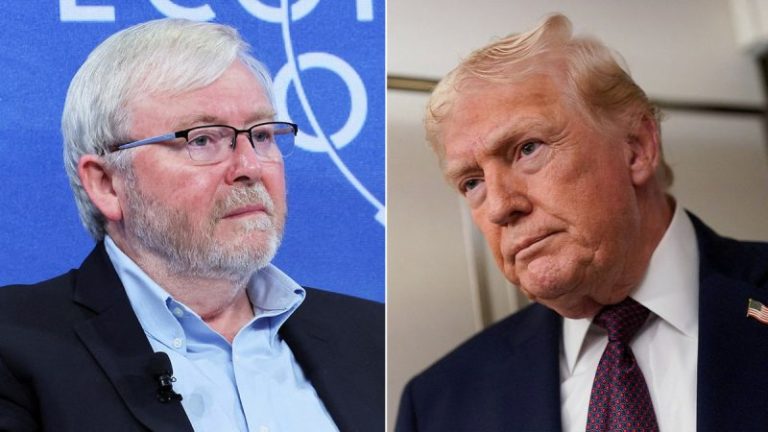
Australia’s ambassador to the U.S. who criticized President Donald Trump is leaving his post early. The announcement comes just a few weeks after the U.S. president made a cutting remark about the diplomat.

‘It is with deep appreciation for his tireless contribution to our national interests over the last three years in Washington that we today announce the Hon Dr. Kevin Rudd AC will conclude his posting as Australia’s Ambassador to the United States at the end of March 2026,’ a joint statement issued by Australian Prime Minister Anthony Albanese MP and Australian Minister of Foreign Affairs Penny Wong read.

In their statement, Albanese and Wong seemed to defend the work that the Hon. Dr. Kevin Rudd AC had done in his position. In what could be seen as a swipe at the Trump administration, the two said that Rudd ‘delivered concrete outcomes for Australia – during both Democrat and Republican Administrations – in collaboration with our closest ally and principal strategic partner.’ 

They also highlighted his knowledge of U.S.-China relations, which is particularly relevant as he takes the helm of the Asia Society, a nonprofit headquartered in New York, which aims to foster relationships between the U.S. and Asia.

Rudd, who previously served as Australia’s prime minister, thanked Albanese and Wong for their ‘kind remarks’ ahead of his departure and gave some insight into his new role.

‘I will be remaining in America working between New York and Washington on the future of U.S.-China relations, which I have always believed to be the core question for the future stability of our region and the world,’ Rudd wrote in an X post from his unofficial account.

On his official X account, Rudd said that ‘It has been an honor to serve as Australia’s Ambassador to the United States over the last three years. I thank the Prime Minister and the Foreign Minister for their kind remarks today.’

Rudd is no stranger to Asia Society, as he served as the organization’s president and CEO 2021-2023. He was also the inaugural President of the Asia Society Policy Institute (ASPI) for nearly 10 years, holding the position from 2015 until 2023. Now, he is set to serve as the president and CEO of the organization and will hold a leading role in the ASPI’s Center for China Analysis, which he established in 2022, according to Asia Society.

In October, when Albanese visited the U.S., Trump was asked about Rudd’s remarks, with one reporter wondering if the comments were the reason why the meeting in Washington was so late in the year. Trump said that he did not know what the ambassador had said before asking Albanese if Rudd was still working for him. In response, Albanese pointed at Rudd who seemed to stumble as he tried to explain the remarks he made, first clarifying that he said them before he took the position as ambassador to the U.S. However, Trump quickly cut him off, saying, ‘I don’t like you either. I don’t and I probably never will.’

Rudd made headlines in November 2024 when he deleted a series of tweets that were critical of Trump after the U.S. president won his second term. Rudd had described Trump in a 2020 post as ‘the most destructive president in history,’ according to reporting from NDTV. Rudd made the comments while serving as the chair of the ASPI. Rudd’s office said that the posts were deleted to prevent others from taking them as remarks made in his capacity as ambassador

‘This has been done to eliminate the possibility of such comments being misconstrued as reflecting his positions as ambassador and, by extension, the views of the Australian Government. Ambassador Rudd looks forward to working with President Trump and his team to continue strengthening the US-Australia alliance,’ a statement from Rudd’s office that was shared with Fox News Digital in November 2024 read.

It is not immediately clear whether these past remarks played a role in Rudd’s departure. However, a Trump administration official told Fox News Digital that Rudd ‘worked well with President Trump and the administration.’ The official added that ‘We wish him well.’

Fox News Digital reached out to Rudd and the White House for comment.

This post appeared first on FOX NEWS

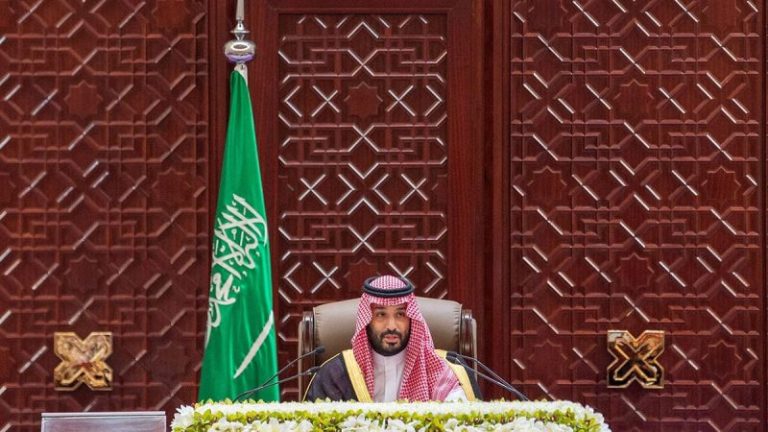
As Iran weakens, a power vacuum is emerging across the Middle East — and Saudi Arabia is moving to fill it by recalibrating relations with former rivals, hedging global partnerships and asserting a more independent foreign policy, according to several experts.

Javed Ali, former senior official at the National Security Council and professor at the University of Michigan, told Fox News Digital that ‘Since Iran’s 1979 revolution, both Saudi Arabia and Iran have vied for influence across the broader Muslim world. Mohammed bin Salman’s consolidation of power in the kingdom has also introduced a markedly different vision from that of his predecessors.’

Riyadh’s recent moves, from Yemen to Turkey, are fueling debate over whether Crown Prince Mohammed bin Salman’s expanding regional role still aligns with U.S. interests. As part of that recalibration, Bloomberg reported on Jan. 9 that Turkey is seeking entry into the Saudi–Pakistan mutual defense pact signed four months earlier, according to people familiar with the talks.

Michael Rubin, a senior fellow at the American Enterprise Institute, said Saudi Arabia’s current trajectory must be viewed through years of accumulated frustration with U.S. policy.

‘To be fair to MBS, previous U.S. administrations did not uphold their end of the bargain either,’ Rubin told Fox News Digital, pointing to repeated Houthi attacks on Saudi territory. ‘The Houthis launched hundreds of drones and rockets that the Obama administration ignored.’

Rubin said tensions deepened as Mohammed bin Salman pursued reforms long urged by U.S. policymakers, only to face sharp criticism from Washington. He cited the Biden administration’s decision to remove the Houthis’ terror designation.

‘By no objective measure should Secretary of State Antony Blinken have removed the terror designation from the Houthis,’ Rubin said, calling the move ‘pure spite directed at MBS and Donald Trump.’

Rubin said that decision marked a turning point. ‘MBS calculated that if the United States did not have his back, he would need to embrace a Plan B,’ he said, describing outreach to Russia and China as tactical signaling rather than ideological realignment.

Saudi geopolitical researcher Salman Al-Ansari rejects claims that Riyadh is drifting ideologically or embracing Islamist movements, framing Saudi policy as interest-driven.

‘Saudi Arabia does not base its foreign policy on ideological alignment, but on pragmatic considerations aimed at stability and development,’ Al-Ansari told Fox News Digital. He said outreach to Turkey reflects an effort to de-escalate rivalries. ‘The rapprochement with Turkey reflects this diplomatic approach, which seeks to transform the Middle East from a region of chronic conflict into one of greater stability.’

Al-Ansari said the shift has already delivered results. ‘This shift has given Riyadh increased flexibility in engaging regional powers, a change Ankara quickly recognized and that has translated into expanding economic cooperation.’

He rejected claims of alignment with the Muslim Brotherhood. ‘Saudi Arabia designated the group as a terrorist organization in 2014, and this position remains unchanged,’ he said.

Those competing interpretations of Saudi intent are now colliding most visibly in Yemen where the Saudi-Emirati alliance originally formed to counter Iran’s Houthi proxy. While both entered the war to roll back Iranian influence, their strategies diverged. Riyadh backs a unified Yemeni state under the internationally recognized government, arguing fragmentation strengthens Iran. The UAE has supported southern separatists, including the Southern Transitional Council, prioritizing control over ports and security corridors.

In the last few days, Saudi and Yemeni government forces have largely recaptured southern and eastern Yemen from the UAE-backed Southern Transitional Council (STC), and the STC’s leader reportedly fled to the UAE amid the group’s reported dissolution, highlighting a sharp rift involving Emirati support for separatists

Rubin called Yemen the clearest warning sign. ‘This is best seen in Yemen, where he has been supporting the Muslim Brotherhood faction militarily and attacking the more secular Southern Forces in a way that only empowers al Qaeda in the Arabian Peninsula and the Houthis,’ he said.

Al-Ansari countered that ‘differences with the UAE stem from its backing of separatist armed actors in Yemen, which complicates the political process, fragments the anti-Houthi front, and ultimately benefits the Iranian-backed Houthi militia.’

Rubin warned of long-term consequences. ‘By ‘blowback’ I mean the same Islamists MBS cultivates today will end up targeting Saudi Arabia in the future,’ he said.

With Iran weakened and regional power shifting, Washington now faces a central question: whether Saudi Arabia’s expanding role will reinforce U.S.-backed stability, or redefine the balance of power in ways that test the limits of the long-standing partnership.

This post appeared first on FOX NEWS