Archive

2026

Browsing

WNBA legend and former Indiana forward Tamika Catchings is rejoining the Fever.

On Tuesday, the organization announced Catchings is reuniting with the franchise in a newly created position, serving as an ambassador for Pacers Sports & Entertainment. In her role, the Hall of Famer is expected to help champion the Fever, Indiana Pacers and Noblesville Boom, the Pacers’ G League affiliate. Catchings’ list of responsibilities includes items such as elevating business initiatives, energizing events, and serving as a representative of the organization’s vision and growth.

“Indiana has been my home since I was drafted by the Indiana Fever, and Pacers Sports & Entertainment played such an important role in my life and my journey,” Catchings said in a statement. “I’m thrilled to step into this new ambassador role and continue serving the communities, families and fans that make this place so special. I can’t wait to work alongside the Fever, the Pacers and my PS&E family to help strengthen the impact we can make together.”

“Tamika Catchings is synonymous with basketball excellence, leadership and community commitment in Indiana,” Pacers Sports & Entertainment president and CEO Mel Raines said. “Her legacy as a champion, along with her deep connection to our fans and her passion for uplifting others, align perfectly with our mission.’

The former Fever forward spent 16 seasons with the team before retiring in 2016. During her time as a pro, she won a championship with Indiana in 2012 and was a 10-time WNBA All-Star. Catchings also earned four Olympic gold medals with Team USA basketball. She was inducted into the Naismith Hall of Fame in 2020.

This post appeared first on USA TODAY

Jalen Hurts was given an opportunity to provide an endorsement for the Philadelphia Eagles’ embattled offensive coordinator Kevin Patullo after the team’s 24-19 postseason loss to the San Francisco 49ers.

The 27-year-old quarterback declined to do so when asked if he wanted Patullo to return in 2026. He simply noted he was going to let Eagles coach Nick Sirianni, general manager Howie Roseman and owner Jeffrey Lurie make a decision about the first-year coordinator’s future.

‘It’s too soon to think about that,’ Hurts told reporters Monday. ‘I put my trust in Howie. Howie, Nick and Mr. Lurie.’

Patullo was promoted to offensive coordinator ahead of the 2025 NFL season after Kellen Moore took the New Orleans Saints’ coaching job. The 44-year-old had spent the previous four seasons on Sirianni’s staff as a passing game coordinator and, starting in 2023, an associate head coach.

The Eagles’ offense struggled to find an identity under Patullo’s leadership. They were a ground-dominant team in 2024 under Moore, but Philadelphia ranked just 17th in rushing yards per game under Patullo. They were also one of the 11 NFL teams to average less than 200 passing yards per game during the 2025 season.

That’s why Hurts is hoping Philadelphia’s offense will find a ‘home base’ – which he clarified was another word for offensive identity – in 2026, even if he isn’t sure exactly what that will look like.

‘We’ve got time to figure it out,’ Hurts said.

Whether Patullo will be a part of that search for answers remains to be seen. But if the Eagles do move on from him, they will begin to search for their fifth different offensive coordinator over a five-season span.

This post appeared first on USA TODAY

The college football transfer portal closes Jan. 16, though Indiana and Miami get an extra five-day window (Jan. 20-24) because they are playing in the national championship game on Jan. 19.

While the majority of the portal business has been wrapped up there are still plenty of notable names and impact players available. We’ll keep you posted with daily live updates of portal commitments.

Transfers by conference: SEC | Big Ten | ACC | Big 12

HIT REFRESH FOR UPDATES.

Today’s CFB transfer portal commitments, signings

QB

KJ Cooper: Texas Southern to South Florida
Nick Evers: UConn to Missouri
Colin Hurley: LSU to Michigan

RB

Steve Chavez-Soto: San Jose State to Utah
Dillin Jones: Wisconsin to LSU
Dennis Moody: North Texas to Oklahoma State

WR

Kyan Berry-Johnson: Wisconsin to Sam Houston
Brock Coffman: Louisville to Kentucky
Rico Flores Jr.: UCLA to Virginia
Emanuel Ross: Syracuse to UConn
Ryder Treadway: Toledo to UConn
Lamason Waller III: BYU to Southern Utah
Landon Wright: Washington State to Boston College

TE

Keyan Burnett: Arizona to UNLV
Kelsey Johnson: Baylor to Liberty

OL

Ethan Calloway: LSU to Wake Forest
Troy Everett: Oklahoma to Ole Miss
Jack Griffin: BYU to Arizona
Tyshon Huff: Tiffin to Penn State
Mack Indestad: Eastern Michigan to UCLA
Aaron Karas: Colorado State to Memphis
Paul Mubenga: LSU to Nebraska

DL

Justin Benton: East Carolina to North Texas
Wendell Gregory: Oklahoma State to Kansas State
Jalen Thompson: Michigan State to Arizona State
Cavan Tuley: Houston to Missouri
Marques White: UMass to SMU

LB

Tylan McNichols: UAB to Wake Forest
Sammy Omosigho: Oklahoma to UCLA
Jayden Parrish: Florida State to Memphis
Kenny Soares: NC State to Michigan State
Cade Uluave: Cal to BYU

DB

Jyaire Brown: UCF to Southern Miss
Cam Jamerson: TCU to Boise State
Ma’khi Jones: Duke to Florida State
Kael Kolarik: Iowa to South Dakota
TJ Metcalf: Michigan to Tennessee
Carl Williams: Baylor to Oregon
Javion White: Tulane to Houston
Gentry Williams: Oklahoma to Georgia

K

Brunno Reus: Florida State to Missouri

P

Chase Barry: Oklahoma State to UCLA

College football 2026 transfer portal dates: When does transfer portal close?

The portal period now runs from Jan. 2-16, with an extra five-day window (Jan. 20-24) for teams playing in the national championship. The spring portal window in April is no longer a part of the schedule, so January is the only open window for teams to add via the portal in 2026.

This post appeared first on USA TODAY

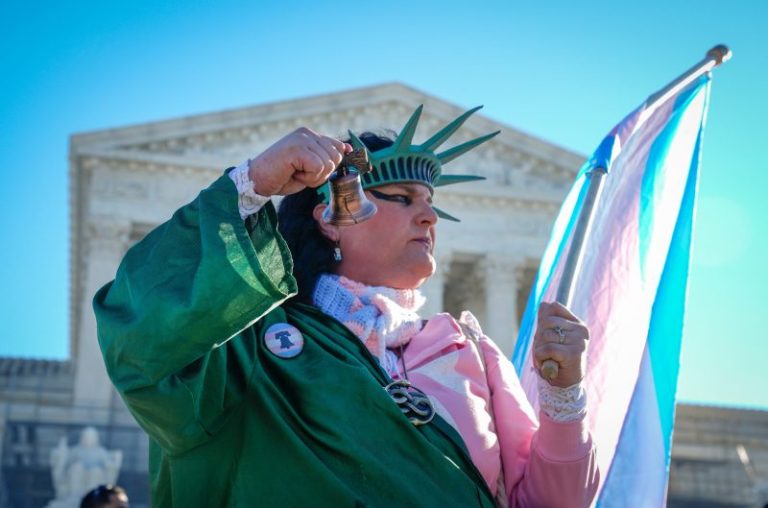
WASHINGTON − The Supreme Court appeared sympathetic on Jan. 13 to state bans on transgender girls competing on female sports teams, one of the nation’s most high-profile and divisive cultural and political issues.

Chief Justice John Roberts, whose vote is likely to be key to the outcome, expressed skepticism about the challenges brought by transgender students to bans in Idaho and West Virginia during Tuesday’s oral arguments.

While the court’s three liberal justices focused on the fact that some transgender students may not have an athletic advantage after undergoing hormone treatments, Roberts said allowing challenges to state law from a fairly small group of people could have broader implications.

“If we adopted that, that would have to apply across board and not simply to the area of athletics,” Roberts said near the end of debate on the first case, a challenge to Idaho’s ban.

There are only three justices on the high court appointed by Democrats, compared to six Republican-appointed justices. That means the three liberal justices need to pull over two conservatives, assuming the court largely breaks down along ideological lines.

Ahead of today’s arguments, Roberts and Justice Neil Gorsuch, two Republican-appointed members of the court, were seen as potentially crucial votes for the transgender athletes to win over.

The transgender students from Idaho and West Virginia who are challenging their states’ bans say the laws don’t take into account individual circumstances, including whether someone who takes puberty-blockers or cross-gender hormones may no longer be bigger, faster or stronger than a typical female.

The states argue that athletic advantages remain even after hormonal treatments and the bans are necessary to ensure fairness and safety in female sports.

Follow along for live coverage of the debate.

Debate concludes in historic case

The historic debate ended after more than three hours of passionate argument.

The last word went to Michael Williams, West Virginia’s solicitor general, who defended his state’s law.

After arguing that the law doesn’t have to be a “perfect fit” in every situation, Williams said states should be able to legislate in areas of “evolving science and medicine,” especially when they involve children.

He said that’s the approach the court took last year when allowing Tennessee to ban puberty blockers and hormone therapy for transgender minors.

And when there are competing interests – the rights of transgender students versus the rights of other athletes – states get to make a policy judgment, Williams said.

Because West Virginia’s law recognizes “enduring and inherent differences between men and women,” he concluded, it should be upheld.

A decision is expected by the end of June or early July.

Maureen Groppe

Barrett asks if boys who identify as boys can play on girls’ teams

Justice Amy Coney Barrett asked the lawyer for a transgender athlete whether he would support a boy who identifies as a boy to play on a team for girls.

Joshua Block, who represents Becky Pepper-Jackson, a 10th-grader in West Virginia, said he did not. Title IX’s separation of men’s and women’s sports wasn’t intended to create good teams and bad teams.

“We don’t think the boys’ team is for better athletes and you have a backup team for other athletes that aren’t as good,” Block said. “The purpose is to control for the variable of sex to provide equality, not to have a good team and a team for people that can’t cut it.”

Bart Jansen

Roberts pushes ACLU lawyer to justify ‘an exception’ for transgender girls

Chief Justice John Roberts, a conservative whose vote could be key, pushed ACLU lawyer Joshua Block to justify ‘requiring an exception’ to the basic classification of girls and boys on sports teams.

‘You’re not challenging the idea of having boys and girls in separate sports. You’re saying that you cannot exclude transgender girls from the definition of girls,’ Roberts said.

Block responded that he’s saying the separation of girls and boys in sports is generally valid, but isn’t valid when it’s applied to his client.

‘I don’t think we’re arguing for an exception,’ he said. ‘It’s a claim saying, ‘It’s, as applied to them, it’s okay. As applied to me, it’s not.’

– Aysha Bagchi

Attorney for West Virginia student argues for a narrow ruling

Joshua Block, the attorney representing the West Virginia student challenging that state’s ban, said the Supreme Court should send the case back to the trial court to examine the evidence about whether the student has an athletic advantage.

“I really do want to make a pitch for resolving it based on the facts,” he said. “Because, look, if they’re right about the facts, then we should lose.”

There’s no need, Block argued, for the court to issue a broad ruling affecting everyone in the country when the evidence could resolve whether West Virginia’s ban should apply to Pepper-Jackson.

“The court wants to get it right and I don’t think the best way to get it right is to rely on cherry-picked studies or assertions,” he said.

The case was appealed to the Supreme Court before the trial court had finished examining the evidence about how student Becky Pepper-Jackson’s medical treatments have affected any natural athletic advantages.

Maureen Groppe

West Virginia ban stigmatizes transgender student, attorney says

Joshua Block, the attorney representing the West Virginia student challenging that state’s ban, opened his arguments by telling the court that Becky Pepper-Jackson wants to play sports because she wants to make new friends and be part of a team.

Excluding her from female teams doesn’t advance fairness and safety, he said, if the evidence shows she has no relevant physiological differences. (Pepper-Jackson received puberty-delaying medication and estrogen so her physical characteristics are typical of non-transgender girls, according to her lawyers.)

Block urged the court to rely on its 2020 ruling that transgender people cannot be discriminated against at work.

Keeping Pepper-Jackson from female track and field teams, he said, “excludes her from all athletic opportunity while stigmatizing and separating her from her peers.”

Maureen Groppe

DOJ lawyer says recognizing transgender athletes would undermine Title IX

Hashim Mooppan, principal deputy solicitor general, told Justice Sonia Sotomayor that Congress approved Title IX and its regulations to protect female participation in sports because of biological differences between the sexes.

“If you purport to separate based on biological sex but then you allow some biological males to play on the female team, you’ve undermined the justification for separating in the first place,” Mooppan said.

In contrast, he said schools couldn’t prevent members of one sex from attending a class on world history.

Bart Jansen

Trump administration lawyer says biological sex is what matters

Justice Department lawyer Hashim Mooppan, who earlier defended Idaho’s ban, is now addressing the West Virginia ban. He said in his opening statement that the justices can avoid addressing questions about whether taking drugs to suppress testosterone eliminatesphysical advantage for transgender women by focusing on biological sex.

Mooppan said government regulations define separation in sports ‘based on sex, based on biology, not based on circulating testosterone levels.’

The other side’s ‘claim that they’ve eliminated the difference just doesn’t matter under the language of the regs, and that’s enough to resolve the case,’ he said.

– Aysha Bagchi

Roberts signals he views transgender sports case as different from earlier challenge

Chief Justice John Roberts signaled that he may view this case differently than one from 2020, in which he joined the court’s liberals in ruling that transgender people cannot be discriminated against at work.

That 2020 case, he said, was about whether firing someone because they’re transgender is discriminating on the basis of sex.

West Virginia Solicitor General Michael Williams took Roberts’ opportunity to say that the Supreme Court can uphold his state’s law – while staying true to 2020 ruling – by saying that laws turning on someone’s biological sex aren’t the same as defining students based on transgender status.

  Maureen Groppe

Transgender uproar comes amid a paucity of transgender athletes

The International Olympic Committee had protocols allowing the participation of transgender athletes ahead of the Summer Games in Athens in 2004, and the NCAA implemented its own rules in 2011. During that time, there were few openly transgender athletes.

There’s been one openly transgender athlete to compete at an Olympics, a weightlifter from New Zealand who went out after the first round of competition in Tokyo in 2021. NCAA president Charlie Baker said in 2024 there were “less than 10” transgender athletes out of the more than 500,000 college athletes.

Sports organizations began moving to exclusion amid public pressure. Several international sports federations now have policies that either outright ban transgender athletes or prohibit anyone who went through male puberty from competing.

The IOC has changed its policy to defer to the individual sports federations and has indicated it is considering a full ban. The NCAA banned transgender women from competition after an executive order from the White House, though it still allows them to practice. 

−USA TODAY Sports columnist Nancy Armour

Barrett: Can state bans lead to discrimination against all women?

Conservative Justice Amy Coney Barrett asked Michael Williams, a lawyer defending West Virginia’s ban, if his legal defense of the ban goes too far. 

She said lawyers on the other side of the debate ‘have basically conceded’ that sex-separated sports teams are permissible, even if they don’t believe transgender women may be categorically excluded from female teams. So, she said, he doesn’t need to defend sex-separated sports. She was more curious about whether some of his arguments could be used to justify other forms of sex segregation.

‘If a state produced some studies saying, ‘Listen, you know, women’s presence in, you know calculus is holding men back,’ … seems to me like there’d be some risk on your understanding that that would be okay,’ Barrett said.

Williams responded that such a policy would be much closer to the type of sex-based exclusion that Title IX was meant to prohibit. Title IX prohibits excluding people from federally-funded educational activities based on sex.

‘That really kind of puts the lie to the position that West Virginia is somehow discriminating, because it’s advancing the very same purpose that Congress itself was trying to advance in enacting Title IX in the first place,’ he said.

– Aysha Bagchi

Transgender debate becomes chess match

Justice Elena Kagan asked whether transgender students would have a legal case if excluded from chess club.

“I think there are a lot of chess grandmasters who would tell you that women, for whatever reason, they’re not as good at this,” Kagan said.

West Virginia Solicitor General Michael Williams said a legal challenge over membership in the chess club “might fail because there’s a lack of evidence of meaningful physiological differences” cited in the athletic regulations.

Justice Brett Kavanaugh noted that the West Virginia law and regulations against transgender athletes focus on sports under federal Title IX. He said a ruling on sports “does not open the door” to challenges about the chess club.

Bart Jansen

W.Va. lawyer argues transgender athletes would upend Title IX

West Virginia Solicitor General Michael Williams said states have long assigned players to teams according to sex, and maintaining separate teams ensures that girls can fairly and safely compete.

He argued that Title IX, which Congress approved to protect access for females to sports, allows for separating teams by sex. But transgender athletes want to place students on teams based on their self-identified gender, which he said would turn Title IX into a law that denies females fair opportunities to compete in sports, he said.

“The court should not embrace that backwards logic,” Williams said.

Bart Jansen

Top Republicans voice support for bans on transgender athletes

Leading Republicans including House Speaker Mike Johnson, Rep. Lisa McClain of Michigan, Sen. Marsha Blackburn of Tennessee, and Sen. Tommy Tuberville of Alabama spoke out in support of the state bans on the steps of the Supreme Court.

Tuberville and former West Virginia Gov. Jim Justice spoke of their experiences coaching sports and said it would be unfair for their athletes to compete against transgender girls.

“Those girls on my team work really hard,” said Justice. “They don’t deserve to be disadvantaged.”

Education Secretary Linda McMahon outlined the steps the Trump administration has taken to expedite Title IX investigations and secure settlements from schools like the University of Pennsylvania, which stripped a record held by transgender swimmer Lia Thomas. McMahon said the administration is committed to an “understanding of sex based on scientific reality.”

“The cases that are being argued today, they’re not abstract legal debates they reflect a real, troubling pattern of harm inflicted by radical forces that are looking to reshape our culture,” she said. “We cannot let it happen.”

– N’dea Yancey-Bragg

Debate turns to West Virginia’s law                 

After the justices spent about two hours debating Idaho’s ban, they’re now considering West Virginia’s law.

This case has a separate legal issue. In addition to the constitutional question of equal protection that was raised in the Idaho challenge, the West Virginia case is also about whether the ban violates the section of a landmark civil rights bill barring sex discrimination in educational programs.

West Virginia is appealing the Richmond-based 4th U.S. Circuit Court of Appeals’ ruling that the law runs afoul of Title IX, in part because it excludes transgender students from girls’ teams regardless of whether they have a competitive advantage.

Becky Pepper-Jackson, the West Virginia high schooler challenging the law, says her physical characteristics are typic of other female athletes because she receives puberty-delaying medication and estrogen.

Maureen Groppe

Barrett questions whether tests of transgender athletes are invasive

Justice Amy Coney Barrett asked the lawyer for a transgender athlete if the state could require a testosterone test for someone to participate in sports.

“Why wouldn’t that be invasive?” Barrett asked.

Kathleen Hartnett, the lawyer representing transgender athlete Lindsay Hecox, said transgender athletes get routine blood tests so requiring test results would be a minimal burden.

Hartnett said Idaho’s law required athletes to get three tests to prove their gender: a physical exam of their anatomy, a chromosomal test and a blood test that would require the athlete to stop hormone treatment.

Bart Jansen

‘Are they bigots?’ Alito asks of women who oppose transgender participation

Conservative Justice Samuel Alito raised the complaints from some female athletes who oppose transgender women being able to compete in women’s sports. He appeared to be pushing back against efforts to label them as narrow-minded, irrational, or hateful.

‘Are they bigots? Are they deluded in thinking that they are subjected to unfair competition?’ Alito asked Kathleen Hartnett, the lawyer representing the Idaho transgender student who has challenged Idaho’s ban.

‘No, your honor, I would never call anyone that,’ Hartnett responded.

Hartnett added that the relevant issue is whether the Idaho law meets constitutional standards. ‘That is not an accusation of animus,’ she said.

– Aysha Bagchi

Lawyer for transgender athlete declines to define ‘sex’

Justice Samuel Alito, asked Kathleen Hartnett, the lawyer representing the Idaho transgender student, to define the term, ‘sex.’ He asked specifically for the definition when it comes to applying a constitutional provision that guarantees equal legal protection for people.

Alito posed a similar question earlier to a lawyer from the Justice Department. That lawyer said, under Title IX – a law that restricts states from excluding people from sports based on sex – ‘sex’ is defined biologically.

‘We do not have a definition for the court,’ Hartnett said. 

Hartnett argued that the Idaho law, in practice, categorically excludes ‘birth sex males’ from women’s teams, and that doesn’t always make sense. She said it was enough for the court to know the Idaho law categorizes the transgender athlete in this case as a birth sex male and excludes her on that basis.

‘We’re taking the statute’s definitions as we find them, and we don’t dispute them,’ Hartnett said.

– Aysha Bagchi

Kavanaugh, a coach, focuses on fairness

Justice Brett Kavanaugh, who coached his daughter’s basketball team, drew attention to the female athletes who don’t make a team or lose out on a medal to a transgender athlete.

“And I think we can’t sweep that aside,” he said. “I think that’s what’s undergirding some of the concerns, big picture.”

Kavanaugh also pointed to the success of Title IX in increasing sports opportunities for girls.

Kathleen Hartnett, the attorney representing the student challenging Idaho’s law, agreed that Title IX has been a “huge triumph.”

“It’s made a huge difference in our society,” she said. “That’s not what we’re talking about here.”

Instead, Hartnett called the case an “important moment” to step back and ask whether the law is responding to a problem “in a rational manner” or whether it overreaches on the presumption that transgender women are always going to have an athletic advantage.

Maureen Groppe

Chief Justice Roberts: Transgender case could go far beyond sports

Chief Justice John Roberts asked whether the court should view the Idaho case as a challenge to the distinction between boys and girls or if the transgender athlete just wants an exception to the biological definition of girls.

Kathleen Hartnett, the lawyer representing transgender athlete Lindsay Hecox, said she wasn’t asking for a definition or an exception. She said states could regulate athletes by requiring testosterone tests, for example.

But Roberts said allowing legal challenges from a fairly small group, perhaps 1% of the population or 12 individuals, could lead to distinctions between boys and girls across a much broader field than just athletics.

“If we adopted that, that would have to apply across board and not simply to the area of athletics,” Roberts said.

Hartnett said the framework is for people to have equal protection of the law. “I think we’re not trying to invent something here,” Hartnett said.

Bart Jansen

`Not our finest hour’

Justice Neil Gorsuch, one of the key conservative votes, returned to a previous issue he’d raised about whether transgender people have been historically discriminated against.

Kathleen Hartnett, the attorney representing the Idaho transgender student challenging the state’s ban, said transgender people were not allowed to immigrate to the United States under the argument that they were psychopaths. The Supreme Court said in a 1967 decision that when Congress used the term “psychopathic personality,” lawmakers meant to include homosexuals and others considered “sex perverts.”

“Not our finest hour,” Gorsuch interjected.

“Well, it’s not your fault,” Hartnett told the justice , who was not yet born at the time of the decision, drawing rare laughter during the serious debate.

Maureen Groppe

Idaho student’s attorney emphasizes her hormone treatments

Kathleen Hartnett, the attorney representing the Idaho student challenging the ban, emphasized in her opening statement that Lindsay Hecox has suppressed her testosterone and takes estrogen.

Hecox, Hartnett said, has no “sex-based biological advantage.”

Because the law turns on whether someone is a biological male or female, she argued, it’s subject to extra scrutiny to make sure the line-drawing between genders is based on evidence.

When the state’s justification for that line-drawing doesn’t apply to some of the people affected, then it’s unconstitutional for those people, Hartnett said.

Maureen Groppe

Alito asks what ‘sex’ means

Justice Samuel Alito, a George W. Bush appointee, asked Justice Department lawyer Hashim Mooppan what the term ‘sex’ means under Title IX, one of the legal provisions at the heart of this case.

Title IX says no one may be excluded from participating in an educational program or activity that receives federal funding on the basis of sex. The transgender challenger to Idaho’s ban argued that her exclusion from women’s sports violated Title IX.

Mooppan responded that ‘sex’ should be defined traditionally, by biological sex. He referenced the time at which Title IX was enacted, and said reproductive biology is probably the ‘best way of understanding that.’

The two sides in this case have wrangled over whether discrimination on the basis of sex under Title IX includes discrimination based on transgender status.

– Aysha Bagchi

Sotomayor: `The numbers don’t talk about the human being’

Justice Sonia Sotomayor continued the liberal justices’ main push that transgender athletes should have a chance to argue that the bans aren’t appropriate to their particular circumstance.

Sotomayor asked the Justice Department attorney, Hashim Mooppan, about his argument that the laws are okay because they’re fair when applied to 99% of biological males.

“The numbers don’t talk about the human being,” she said.

If 1% isn’t a large enough share to matter, what share is? Sotomayor asked.

Mooppan said the challengers would have to show the laws are unfair against a “substantial enough percentage” of people.

Maureen Groppe

DOJ pushes a 99% solution for the question of transgender atheletes

Hashim Mooppan, principal deputy solicitor general at the Justice Department, said challenging a law regulating activity based on sex requires a significant portion of people to overturn.

Mooppan said if one-third of the people covered by a law thought it was tailored badly, courts should review it under an easier standard. But he argued that having a single person challenge a law required a higher level of scrutiny about whether the law is constitutional.

“Why does it have to be that many people? Why? Why?” Justice Ketanji Brown Jackson asked.

She said if a law is unconstitutional for one person, it shouldn’t matter whether the person is outnumbered by the rest of the people covered by the law.

But Mooppan said if the law is reasonably tailored for 99% of the population, courts should review challenges with a higher standard.

“When the numbers get as small as they are here, that claim is not viable,” Mooppan said.

Bart Jansen

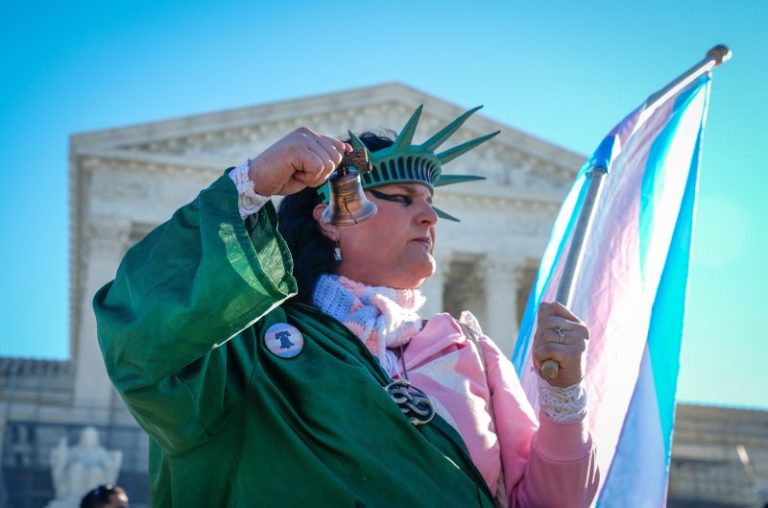
Demonstrators show support for transgender rights

As athletes supporting transgender sports bans rallied on one side of the Supreme Court steps, speakers at a rally organized by the ACLU spoke out in support, as cheerleaders holding pink and blue pompoms performed.

Parents Ali and Shyam Munshi said they felt compelled to support for their transgender daughter.

Shyam Munshi joked that while his daughter ran track in high school she probably wouldn’t consider herself an athlete. But in order for her team not to be penalized, she had to compete on the boy’s team.

“It was hard because, just like every parent, we want our kids to be safe, we want them to be happy, and so it felt risky,” said Ali Munshi. She said her daughter’s teammates were supportive, but that the proliferation of sports bans has been “disheartening.”

‘It’s really hard to quantify the value of being on a team, competing with your friends, making those decisions, to come together through adversity and support each other or celebrate together in these moments of euphoria,” said Shyam Munshi. “These are integral pieces of being a kid, and to exclude someone from that opportunity is just wrong.”

– N’dea Yancey-Bragg

Justice Department backs Idaho’s law

After Idaho’s solicitor general sat down, an attorney for the U.S. Justice Department got a turn. Under the Trump administration, the Justice Department is supporting the state bans and asked the court for time to make their case.

Hashim Mooppan, a Justice Department attorney, said Idaho’s law is “reasonably tailored,” regardless of whether it is “perfectly tailored,” as it applies to any “tiny subset of men” who may not have athletic advantages after medical treatments.

States are not required to monitor testosterone levels of athletes, he said.

He drew a comparison with laws against sexual activity with someone underage that apply differently to men than women because women faced a unique risk of pregnancy.

Taking the other side’s logic, he said, a male rapist could claim the law didn’t apply if either the rapist or the female victim were infertile. That would be ludicrous, he said.

Maureen Groppe

Conservative Justice Barrett asks about young transgender children

Justice Amy Coney Barrett, a Trump appointee, posed a hypothetical to Idaho’s solicitor general, Alan Hurst, that seemed aimed at considering if there are situations in which science does and doesn’t support banning transgender girls and women from women’s sports.

Barrett asked how Hurst’s argument would do if it was applied to a hypothetical ban on transgender six-year-old girls competing on a girl’s team. She said Hurst’s argument is based on testosterone levels and differences in athletic capability, which made her wonder how it would apply in an age group that’s prepubescent. 

Hurst responded that the court record in the Idaho case supports the idea that even at such a young age, males have about a 5% athletic advantage over girls in most situations.

‘Now, if this is not a level of competition where anybody cares about that, the simple solution is the solution you see in most places, which is you have co-ed sports,’ Hurst said. ‘Idaho’s law does nothing to interfere with that.’

– Aysha Bagchi

Idaho argues states shouldn’t be forced to tailor laws for individuals

Idaho Solicitor General Alan Hurst told Justice Elena Kagan it would be unworkable for courts to order exceptions to laws based on a class of litigants any time judges thought they didn’t make sense.

Hurst argued litigants could keep moving the goal lines. For example, he said, if a law was based on taking testosterone, a transgender athlete could argue they are taking so little it provides no advantage.

“It’s going to be enormously burdensome and the state can never win,” Hurst said. “You’d have to make as many exceptions as courts thought you needed to make.”

Bart Jansen

Kavanaugh probes if the constitution requires the state bans

The challenges before the court are about whether states can, under the law, ban transgender girls and women from participating in female athletics.

Justice Brett Kavanaugh, one of the court’s conservatives, raised the question of whether the Constitution’s guarantee of equal protection requires states to draw that line.

Alan Hurst, Idaho’s solicitor general, said he’s not persuaded by a constitutional theory that would let Idaho impose its policy on other states.

Twenty-seven states bar transgender girls and women from joining female sports teams. Other states either prohibit such bans or have not taken a position.

Maureen Groppe

Sotomayor asks why the court should rule on Idaho ban at all

Justice Sonia Sotomayor suggested the court consider dismissing the Idaho case as ‘moot’ – a legal term that means there is no longer a live issue to rule on. 

The plaintiff in the Idaho case, Lindsay Hecox, originally sued because Idaho’s ban blocked her from trying out for the Boise State Universitytrack and cross-country teams. But she has stopped playing women’s sports, and now says that means she no longer has a personal stake in the case. As a result, she argues, her case is moot.

Sotomayor said it’s clear Hecox wasn’t trying to prevent the court from ruling on the legality of state bans on transgender women competing in women’s sports, because the justices are also reviewing a similar ban in West Virginia.

‘So we don’t have a subterfuge in attempting to stop the court from reaching an important legal question,’ Sotomayor said.

Alan Hurst, Idaho’s solicitor general, responded that a lower court in the case had concluded Hecox’s plans had changed before and could change again, so she shouldn’t be able to get the case dropped that way.

– Aysha Bagchi

Do transgender people merit extra protection?

Justice Neil Gorsuch, one of the pivotal votes in the case, directed his first question to whether there’s been a history of discrimination against transgender people. That’s relevant to whether transgender status – similar to sex and race – triggers a higher level of scrutiny for laws affecting them.

Idaho’s solicitor general, Alan Hurst, said there’s no history of laws targeted transgender people the way there is for laws targeted African Americans or women.

“These things don’t compare,” he said.

Hurst also brought up comments Justice Amy Coney Barrett made in last year’s ruling upholding Tennessee’s ban on gender affirming care for transgender minors. Barrett argued that transgender status does not appear to merit heightened protection.

Maureen Groppe

Idaho lawyer says case is about whether law is applied equally

Justice Elena Kagan asked how the court should review the case. She said one approach would resolve the dispute about whether a transgender athlete held an advantage. Another approach would resolve whether everyone is treated the same under the law.

“I don’t really know what you’re suggesting,” Kagan said. “Which way should we think about this case?

Idaho Solicitor General Alan Hurst said the court should resolve whether the classification of athletes is justified generally, not necessarily in each particular case.

“We think that’s the right approach: is the classification justified, not is it justified in each individual instance,” Hurst said.

Bart Jansen

Idaho says student shouldn’t get to drop her challenge

Lindsay Hecox, the senior at Boise State University who is challenging Idaho’s law, in September asked the court to let her dismiss her case, writing that she was no longer playing sports and is afraid she will be harassed and have trouble graduating if the high-profile case continues. The court said it would wait until after oral arguments to decide.

Idaho’s solicitor general, Alan Hurst, argued on Jan. 13 that it was too late for Hecox to drop out.

Hecoz initially said she intended to play throughout college, he told the court.

Maureen Groppe

Liberal Justice Sotomayor suggests tougher test for trans athlete ban

Justice Sonia Sotomayor, an Obama appointee, came out scrutinizing an argument from Alan Hurst, Idaho’s solicitor general, who is defending the state’s ban on transgender women participating in women’s sports. Hurst said the justices should apply a low level of scrutiny – known as ‘rational basis review’ – to analyzing whether the Idaho ban is constitutional.

‘That makes no sense to me,’ Sotomayor responded. She said Idaho’s ban classified athletes based on sex, and the Supreme Court has historically applied a higher level of scrutiny – known as ‘intermediate scrutiny’ – to that kind of law.

– Aysha Bagchi

Idaho makes plea for fairness

Idaho’s solicitor general, Alan Hurst, began his case with an appeal for fairness.

Someone’s sex correlates with “countless athletic advantages,” including muscle mass, bone mass, and heart and lung capacity, he said.

“If women don’t have their own competitions, they won’t be able to compete,” he said.

Hurst said the student challenging the law – Lindsay Hecox — is seeking “special treatment for males who allegedly lack an unfair advantage.” (Hecox, a senior at Boise State University, says her testosterone levels are typical of non-transgender women and her muscle mass and size have decreased because of her hormone treatments.)

Idaho’s law easily applies to 99% of males, he said, and “a perfect fit is not required.”

Maureen Groppe

Debate begins with challenge to Idaho law

The debate, which could last several hours, has begun.

First up is the case from Idaho, which was the first state to pass a ban.

Defending the law is Idaho’s solicitor general, Alan Hurst.

His side goes first because Idaho is appealing the San Francisco-based 9th U.S. Circuit Court of Appeals decision that Idaho’s law likely violates the Constitution’s guarantee of equal protection, which requires the government to have valid reasons for treating people differently.

Idaho’s law is being challenged by Lindsay Hecox, a senior at Boise State University, who says her testosterone levels are typical of non-transgender women and her muscle mass and size have decreased because of her hormone treatments.

Maureen Groppe

Demonstrators show support for sports ban

Dozens of demonstrators gathered outside the Supreme Court on Jan. 13 to show their support for state bans barring transgender women and girls from participating in female sports teams. Many in the crowd held up signs that said “save women’s sports,” “our sports our spaces” and “gender ideology harms kids,” as former Georgia state Rep. Alveda King led the crowd in singing “This Little Light of Mine.”

“The implications are clear, the court’s ruling will provide national guidance on Title IX that will resolve or reshape dozens of lawsuits around the country involving women and girls in athletics,” Stacey Schieffelin, the Women’s Initiative Chair at America First Policy Initiative, told the crowd. “This is a pivotal moment in the fight to preserve fairness, safety and the truth in women’s sports.”

Alexa Anderson, a 19-year-old track and field athlete, said she traveled all the way from Oregon to be in Washington, DC, for oral arguments. Anderson said the issue before the court has affected her personally: She and another athlete stepped off the podium in protest after competing against a transgender athlete in a high jump event during her senior year of high school and filed an ongoing Title IX lawsuit against state officials.

“I want other girls, all future generations, to have that same ability and to be able to feel that safety, that protection, and just the happiness overall that I felt growing up in the world of sports,” she said. “And not to worry about stepping on the field and thinking that there’s a biological man and that their risk of injury might be higher, and that all their hard work didn’t matter because they’re just going to be outperformed because of biology.”

N’dea Yancey-Bragg

An ‘uphill fight’

Lawyers for the transgender students challenging Idaho’s and West Virginia’s bans aren’t boasting about their chances.

“We know we have an uphill fight,” Josh Block, an American Civil Liberties Union lawyer, told reporters last week.

Block pointed to the Supreme Court’s 2025 decision upholding Tennessee’s ban on gender-affirming care for transgender minors. And since then, the court has allowed two of President Trump’s policies targeting transgender people to go into effect as they’re being challenged: Trump’s ban on transgender military troops and his requirement that passports identify someone by their biological sex at birth.

“It’s no secret that the past two years have been a really tough time to be transgender in this country,” Block said.

But he also noted that the court’s 2025 decision for Tennessee in U.S. v. Skrmetti avoided larger issues that would have extended its reach beyond health care.

“The court really went out of its way in Skrmetti to write a narrow decision instead of a broad one,” he said. “So we’re hopeful that the court will continue to be very sensitive to these issues.”

Maureen Groppe

Protesters who’ve competed against trans athletes speak out

Several protesters , including Riley Gaines and others who have competed against transgender girls in the past, spoke out in support of the bans ahead of oral arguments, saying they believe that competing against transgender girls was unsafe, unfair and cost them opportunities in some cases.

“We want to win, we work to win, and we deserve a fair chance at victory,” Madison Kenyon, who competed on Idaho State University’s track and cross-country teams, said at a news conference on Jan. 12. ‘I’ll happily compete against challenging odds, but nobody should lose before the start of the race.’

Mary Marshall, who also competed on the track and cross-country teams at Idaho State University, shared with reporters the effort that goes into athletic training. She said losing to a transgender competitor left her wondering “whether my hard work is even worth that effort.’

Jennifer Sey, former All-Around Gymnastics National Champion and CEO of clothing brand XX-XY, said that even if the challenges to Idaho and West Virginia’s laws are defeated at the Supreme Court, their work won’t be done. She noted that 23 states and Washington, D.C. still wouldn’t have laws explicitly preventing transgender girls from participating in female sports.

“We need to change the cultural conversation,” she said.

– N’dea Yancey-Bragg

More at stake than trans participation in sports

If the Supreme Court decides that West Virginia’s ban doesn’t violate the Title IX civil rights statute barring sex discrimination in school programs, that ruling could affect more than sports.

Josh Block, an American Civil Liberties Union attorney representing the West Virginia student challenging the ban, said sports is just a “tiny part” of Title IX. If the court says that law doesn’t protect transgender students from discrimination, he said, then transgender students could be excluded from using restrooms that match their gender identity and a principal could expel a student for being trans.

“Title IX protects against sex discrimination in all parts of education,” he told reporters last week. “And whatever someone thinks about whether it’s okay to exclude transgender people from sports, I would hope that that ruling isn’t then used to exclude them from all other parts of school life, which would completely be on the table if West Virginia’s arguments prevail in their widest form.”

West Virginia AG says he expects a landslide victory

One day before oral arguments began, West Virginia Attorney General J.B. McCuskey expressed confidence that the states fighting challenges to laws that prevent transgender girls from competing on female sports teams would prevail. Losing the case would have “monumental” consequences, he said at a news conference Jan. 12 alongside several other Republican attorneys general and current and former female athletes.

“We all fully expect that this is going to be a 9-0 decision,” McCuskey said. “We are right on the facts, we’re right on the Constitution, we are right in public opinion, but importantly, we’re right on common sense.”

McCuskey’s Idahoan counterpart, Attorney General Raúl Labrador, however, said he was not as optimistic. Labrador said he expected many of the arguments would revolve around “legal technicalities” rather than the “common sense issues” at the heart of the case.

“And I think some of the justices of the court are going to have some issues with that,” Labrador said.

N’dea Yancey-Bragg

Will Justice Gorsuch speak?

During last year’s oral arguments in a challenge to Tennessee’s ban on gender-affirming care for minors, all eyes were on Justice Neil Gorsuch. That’s because the conservative justice, a Trump appointee, surprised many people in 2020 by authoring a 6-3 ruling that gay and transgender people are protected by a law barring sex discrimination in the workplace.

Last year, however, Gorsuch voted with the 6-3 majority to uphold Tennessee’s ban after not asking any questions during the oral arguments.

A big question going into today’s arguments is whether Gorsuch will stay mum or if he’ll offer any clues about whether the reasoning of the 2020 decision about workplace discrimination helps the transgender students’ challenge.

Maureen Groppe

Is the Trump administration involved in the case?

Although the challenges are based on state laws, the Justice Department has also gotten involved. At the department’s request, Justice Department attorney Hashim M. Mooppan will get time during oral arguments to support the state bans.

President Donald Trump, who campaigned on the issue, has moved to cut off federal funding to schools that allow transgender females to participate in girls’ and women’s sports.

“The whole thing is ridiculous … and it’s so demeaning to women,” Trump said when he mocked transgender athletes during a recent speech to House Republicans.

Maureen Groppe

This post appeared first on USA TODAY

Sen. Lindsey Graham, R-S.C., on Tuesday suggested that the ‘meat and bones’ of President Donald Trump’s message of ‘help’ to Iran’s anti-regime demonstrators should include ‘military, cyber and psychological attacks’ against the regime.

Graham issued the message in a post on X, describing Trump as ‘Reagan Plus’ and ‘certainly not Obama’ when it comes to protecting America’s national security interests.

‘There is no bigger threat to world order than the Iranian ayatollah’s religious Nazi regime that wantonly kills its people, supports international terrorism and has American blood on its hands,’ Graham wrote. ‘The death blow to the ayatollah is going to be a combination of the incredible patriotic bravery of the protestors, and decisive action by President Trump. The protestors go to the streets unarmed, risking their lives because they believe President Trump has their backs.’

Graham wrote that the ‘tipping point’ will be Trump’s ‘resolve.’

‘No boots on the ground, but unleashing holy hell – as he promised – on the regime that has trampled every red line,’ the senator wrote. ‘A massive wave of military, cyber and psychological attacks is the meat and bones of ‘help is on the way.’’

Graham said he would want to destroy the regime’s infrastructure that allows the killing of the Iranian people, and to ‘take down’ the leaders responsible for the killing.

‘The Iranian people’s long nightmare will soon be over,’ he wrote.

Graham was responding to an announcement Trump earlier made on social media.

Trump vowed that those responsible for killing anti-regime demonstrators will ‘pay a big price,’ saying he has canceled all meetings with the Iranian regime until its crackdown on unrest ends. Iran had previously claimed it was in contact with U.S. officials amid the protests.

‘Iranian Patriots, KEEP PROTESTING – TAKE OVER YOUR INSTITUTIONS!’ Trump wrote on Truth Social. ‘Save the names of the killers and abusers. They will pay a big price.’

‘I have canceled all meetings with Iranian Officials until the senseless killing of protesters STOPS. HELP IS ON ITS WAY,’ he added.

As Trump later toured a Ford factory in Detroit, FOX Business White House correspondent Edward Lawrence asked him what kind of ‘help’ he meant.

‘You’re going to have to figure that one out,’ Trump replied.

Since the unrest broke out, Iranian authorities have killed at least 646 protesters, with thousands more deaths expected to be confirmed. Fox News chief foreign correspondent Trey Yingst reported Tuesday that there are reports of at least 3,000 Iranians being killed, though the real number is likely to be higher.

Fox News Digital’s Anders Hagstrom contributed to this report.

This post appeared first on FOX NEWS

A series of corporations have shared new details about donations to President Donald Trump’s White House ballroom, in response to queries by Sen. Elizabeth Warren, D-Mass., and other lawmakers regarding contributions. 

Trump revealed in October 2025 that construction had gotten underway on the ballroom, which led to the demolition of the White House’s historic East Wing. He asserted the ballroom would be privately funded at an estimated cost of $300 million — up from the $200 million estimate first provided in July 2025 when the project was unveiled.

Meanwhile, Democrats have voiced concerns that organizations might have contributed to the project because they are seeking something in return from the administration. 

Microsoft said that a fundraiser contacted the tech giant about a possible donation, and Amazon said that it started communicating with a fundraising group in August, according to letters from several giant corporations released by Warren’s office.

Microsoft said that it was provided information on the Trust for the National Mall’s management of contributions as a partner of the National Park Service, how to donate, and an invitation to a dinner for supporters. Microsoft ultimately contributed to the Trust for the National Mall with the understanding that the funds would go toward the ballroom. 

‘Microsoft understands that these funds (along with contributions from other donors) will be used to support the construction of the ballroom,’ Microsoft counsel Karen Christian said in a letter to lawmakers in December 2025. ‘As Microsoft has publicly stated, Microsoft supported this effort to update a home built more than 200 years ago so that it can meet the needs of the 21st century.’ 

‘The benefits of this project will redound not only to this presidency, but presidencies to come, as they welcome guests to the White House on behalf of the American people. Microsoft is proud to have supported this effort.’ 

Additionally, Amazon said that it started communicating with fundraisers about the project in August 2025, where potential giving amounts and the dinner for donors were discussed. 

‘We worked directly with the Trust for the National Mall to coordinate our payment, and attended the White House program commemorating the launch of the project on October 15, 2025,’ Amazon’s vice president of public policy, Brian Huseman, said in a letter in December 2025. ‘We did not review any construction plans or enter into an agreement related to the donation. Amazon chose to be listed as a donor because we remain committed to supporting projects that celebrate and promote our nation’s heritage.’ 

Warren and Min’s offices did not immediately respond to a request for comment from Fox News Digital about whether they still had concerns following the responses from corporations. 

Warren, along with other lawmakers, have sought to put limits on private donations, amid concerns about potential bribery. 

As a result, Warren and the top Democrat on the House Oversight Committee, Rep. Robert Garcia of California, introduced the Stop Ballroom Bribery Act, which would bar donations from organizations or individuals that present a conflict of interest, and would prohibit the president, vice president or their families and staff from soliciting donations.

Once donations have been made and are cleared by the directors of the National Park Service and the Office of Government Ethics, the measure would then bar displaying donors’ names in recognition of the donation, and would also require a two-year freeze for the donor to lobby the federal government.

Trump has spearheaded multiple renovation projects at the White House during his second term. This includes adding gold accents to the White House’s Oval Office and paving the Rose Garden.

This post appeared first on FOX NEWS

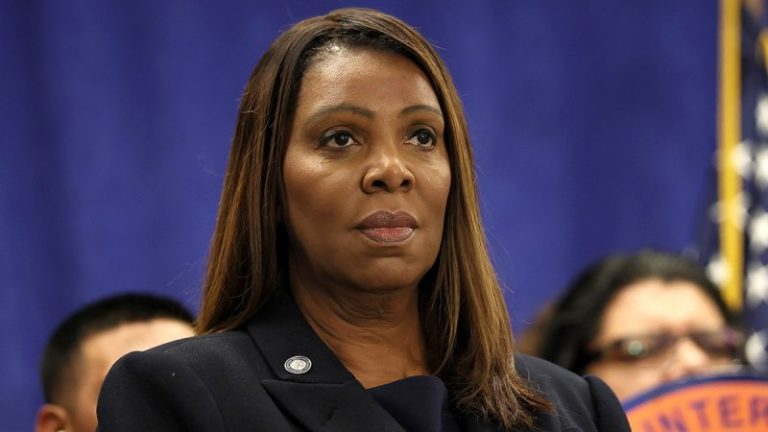
New York Attorney General Letitia James and a coalition of state attorneys general sued the federal government Tuesday, claiming a new Department of Health and Human Services (HHS) policy illegally pressures states to discriminate against transgender people or risk losing critical funding.

The lawsuit challenges a new federal policy that conditions billions of dollars in health, education and research funding on compliance with a presidential executive order regarding sex and gender-related treatments.

‘The federal government is trying to force states to choose between their values and the vital funding their residents depend on,’ James said in a statement. ‘This policy threatens healthcare for families, life-saving research, and education programs that help young people thrive in favor of denying the dignity and existence of transgender people.’

Last month, HHS announced a sweeping package of proposed regulatory actions to end ‘sex-rejecting procedures’ on minors as part of President Donald Trump’s January 2025 executive order calling on the department to protect children from ‘chemical and surgical mutilation.’

The HHS declaration warned doctors that they could be excluded from federal health programs, including Medicare and Medicaid, if they provide treatments such as puberty blockers, hormone therapy and gender surgeries to minors.

Failure to comply with the policy could lead to termination of grants, repayment of funds already spent, or potential civil or criminal penalties, according to the lawsuit.

The attorneys general argue that HHS lacks the authority to impose the conditions and is attempting to rewrite federal law through executive action.

The lawsuit claims that HHS has failed to clearly define what compliance requires, leaving recipients uncertain about which policies or actions could jeopardize funding.

James and the coalition further argue that the executive order conflicts with laws in several states that protect transgender individuals from discrimination.

The lawsuit asks a federal court to declare the policy unlawful and block HHS from enforcing it, allowing states and institutions to continue receiving federal funding without changing existing policies.

Fox News Digital’s Emma Colton and Landon Mion contributed to this report.

This post appeared first on FOX NEWS

Former Trump lawyer Lindsey Halligan argued in a new court filing Tuesday that a judge’s November ruling dismissing two criminal cases does not undermine her authority to serve as U.S. attorney for the Eastern District of Virginia or to represent the federal government in ongoing cases.

The new filing, previewed exclusively to Fox News Digital, comes amid a swirl of leadership questions within the U.S. prosecutor’s office for the Eastern District of Virginia, dubbed the ‘rocket docket’ due to the court’s swift handling of federal cases, including many high-profile national security cases.

It also comes just hours after the news that Robert McBride, a longtime federal prosecutor and second-highest-ranking U.S. attorney in the Eastern District of Virginia, was dismissed from his role amid broader disagreements with DOJ.

U.S. District Judge James Currie in November ruled Halligan was unlawfully appointed to her role as interim U.S. attorney for the district, and ordered dismissed without prejudice the criminal cases she brought against former FBI director James Comey and New York Attorney General Letitia James. (The Justice Department has appealed both dismissals to the Fourth Circuit Court of Appeals.)

The back-and-forth over Halligan’s status came under fresh scrutiny last week, after U.S. District Judge David Novak issued an unprompted court order for Halligan to explain to the court, in writing, her continued representation as the U.S. attorney for the Eastern District of Virginia, and why that ‘does not constitute a false or misleading statement,’ which Novak suggested could be grounds for disciplinary proceedings.

Novak further asserted that Currie’s determination on the unlawful nature of Halligan’s appointment represents ‘binding precedent in this district’ and should not be ignored. 

The response filed Tuesday by U.S. Attorney General Pam Bondi, Deputy Attorney General Todd Blanche, and Halligan, vehemently disputes those claims. 

‘The Court’s thinly veiled threat to use attorney discipline to cudgel the Executive Branch into conforming its legal position in all criminal prosecutions to the views of a single district judge is a gross abuse of power and an affront to the separation of powers,’ they said Tuesday.

‘Compounding those legal errors, the Court fails even to correctly identify the date of the indictment in this case – a factual mistake that forecloses the premise of misconduct on which the Court’s inquiry is based,’ they said.

They stated further that Halligan’s identification ‘is correct and consistent with the Department of Justice’s internal guidance, and at minimum reflects a contested legal position that the United States is entitled to maintain notwithstanding a single district judge’s contrary view.’

In addition, they said, Currie’s determination on the validity of Halligan’s appointment as it relates to Comey’s and James’s criminal cases is not binding – nor does it preclude the Justice Department from challenging that determination, or Halligan from legitimately heading up the U.S. attorney’s office on other cases and matters.

‘A contested legal position does not become a factual misrepresentation simply because one district judge has rejected it,’ the Justice Department said Tuesday. ‘In any event, this Court has no authority to strike Ms. Halligan’s title from the Government’s signature block.’ 

‘The bottom line is that Ms. Halligan has not ‘misrepresented’ anything and the Court is flat wrong to suggest that any change to the Government’s signature block is warranted in this or any other case – particularly where that suggestion rests on an objectively incorrect chronology,’ they said in the filing.

The new filing comes after months of back-and-forth over the decision to install Halligan, Trump’s former personal lawyer with no prosecutorial experience, as the interim U.S. attorney for the Eastern District of Virginia last fall. 

The Justice Department, for its part, has doubled down on its defense of Halligan, and senior Trump officials have blasted the judges in question for engaging in what they described as a ‘campaign of bias and hostility’ against Halligan.   

‘As Attorney General Bondi and President Trump know well, Lindsey Halligan is an effective U.S. Attorney who is prosecuting violent crime at the hands of illegal aliens, prosecuting the alleged distribution by a Democrat operative of child sexual abuse material, and even prosecuting alleged money laundering by a Venezuelan national, which is exactly why her opponents want to stop her,’ a spokesperson for the Justice Department told Fox News Digital. 

McBride’s dismissal from EDVA was confirmed to Fox News Digital by individuals familiar with the matter, citing what they described as a refusal to take on significant cases, such a immigration-related cases — involving sanctuary city policies and drug enforcement issues, which have long been priorities of the Trump administration — and other matters. 

Currie ruled in November that Halligan was unlawfully appointed to the role. Because Halligan was the sole prosecutor who secured the criminal indictments against Comey and James, Currie ruled that the indictments were invalid, dismissed Comey’s case and James’ case ‘without prejudice.’ 

That detail leaves the door open for the government to secure new indictments, should it choose to do so.

This is a developing news story. Check back soon for updates.

This post appeared first on FOX NEWS

WASHINGTON — The Supreme Court appeared sympathetic on Jan. 13 to state bans on transgender girls competing on female sports teams, one of the nation’s most high-profile and divisive cultural and political issues.

Chief Justice John Roberts, whose vote is likely to be key to the outcome, seemed skeptical about the challenges brought by transgender students to bans in Idaho and West Virginia during Tuesday’s oral arguments.

While the court’s three liberal justices focused on the fact that some transgender students may not have an athletic advantage after hormone treatments, Roberts said allowing challenges from a fairly small group of people could have broader implications.

“If we adopted that, that would have to apply across board and not simply to the area of athletics,” Roberts said near the end of debate on the first case, a challenge to Idaho’s ban.

There are only three justices on the high court appointed by Democrats, compared to six Republican-appointed justices. That means the three liberal justices need to pull over two conservatives, assuming the court largely breaks down along ideological lines.

Ahead of today’s arguments, Roberts and Justice Neil Gorsuch, two Republican-appointed members of the court, were seen as potentially crucial votes for the transgender athletes to win over.

The transgender students from Idaho and West Virginia who are challenging their states’ bans say the laws don’t take into account individual circumstances, including whether someone who takes puberty-blockers or cross-gender hormones may no longer be bigger, faster or stronger than a typical female.

The states argue that athletic advantages remain even after hormonal treatments and the bans are necessary to ensure fairness and safety in female sports.

Follow along for live coverage of the debate.

DOJ lawyer says recognizing transgender athletes would undermine Title IX

Hashim Mooppan, principal deputy solicitor general, told Justice Sonia Sotomayor that Congress approved Title IX and its regulations to protect female participation in sports because of biological differences between the sexes.

“If you purport to separate based on biological sex but then you allow some biological males to play on the female team, you’ve undermined the justification for separating in the first place,” Mooppan said.

In contrast, he said schools couldn’t prevent members of one sex from attending a class on world history.

Bart Jansen

Trump administration lawyer says biological sex is what matters

Justice Department lawyer Hashim Mooppan, who earlier defended Idaho’s ban, is now addressing the West Virginia ban. He said in his opening statement that the justices can avoid addressing questions about whether taking drugs to suppress testosterone eliminatesphysical advantage for transgender women by focusing on biological sex.

Mooppan said government regulations define separation in sports ‘based on sex, based on biology, not based on circulating testosterone levels.’

The other side’s ‘claim that they’ve eliminated the difference just doesn’t matter under the language of the regs, and that’s enough to resolve the case,’ he said.

– Aysha Bagchi

Roberts signals he views transgender sports case as different from earlier challenge

Chief Justice John Roberts signaled that he may view this case differently than one from 2020, in which he joined the court’s liberals in ruling that transgender people cannot be discriminated against at work.

That 2020 case, he said, was about whether firing someone because they’re transgender is discriminating on the basis of sex.

West Virginia Solicitor General Michael Williams took Roberts’ opportunity to say that the Supreme Court can uphold his state’s law – while staying true to 2020 ruling – by saying that laws turning on someone’s biological sex aren’t the same as defining students based on transgender status.

  Maureen Groppe

Transgender uproar comes amid a paucity of transgender athletes

The International Olympic Committee had protocols allowing the participation of transgender athletes ahead of the Summer Games in Athens in 2004, and the NCAA implemented its own rules in 2011. During that time, there were few openly transgender athletes.

There’s been one openly transgender athlete to compete at an Olympics, a weightlifter from New Zealand who went out after the first round of competition in Tokyo in 2021. NCAA president Charlie Baker said in 2024 there were “less than 10” transgender athletes out of the more than 500,000 college athletes.

Despite the dearth of trans athletes and and a lack of science proving they have a physiological advantage, sports organizations began moving to exclusion amid public pressure. Several international sports federations now have policies that either outright ban transgender athletes or prohibit anyone who went through male puberty from competing.

The IOC has changed its policy to defer to the individual sports federations and has indicated it is considering a full ban. The NCAA banned transgender women from competition after an executive order from the White House, though it still allows them to practice. 

−Nancy Armour

Barrett: Can state bans lead to discrimination against all women?

Conservative Justice Amy Coney Barrett asked Michael Williams, a lawyer defending West Virginia’s ban, if his legal defense of the ban goes too far. 

She said lawyers on the other side of the debate ‘have basically conceded’ that sex-separated sports teams are permissible, even if they don’t believe transgender women may be categorically excluded from female teams. So, she said, he doesn’t need to defend sex-separated sports. She was more curious about whether some of his arguments could be used to justify other forms of sex segregation.

‘If a state produced some studies saying, ‘Listen, you know, women’s presence in, you know calculus is holding men back,’ … seems to me like there’d be some risk on your understanding that that would be okay,’ Barrett said.

Williams responded that such a policy would be much closer to the type of sex-based exclusion that Title IX was meant to prohibit. Title IX prohibits excluding people from federally-funded educational activities based on sex.

‘That really kind of puts the lie to the position that West Virginia is somehow discriminating, because it’s advancing the very same purpose that Congress itself was trying to advance in enacting Title IX in the first place,’ he said.

– Aysha Bagchi

Transgender debate becomes chess match

Justice Elena Kagan asked whether transgender students would have a legal case if excluded from chess club.

“I think there are a lot of chess grandmasters who would tell you that women, for whatever reason, they’re not as good at this,” Kagan said.

West Virginia Solicitor General Michael Williams said a legal challenge over membership in the chess club “might fail because there’s a lack of evidence of meaningful physiological differences” cited in the athletic regulations.

Justice Brett Kavanaugh noted that the West Virginia law and regulations against transgender athletes focus on sports under federal Title IX. He said a ruling on sports “does not open the door” to challenges about the chess club.

Bart Jansen

W.Va. lawyer argues transgender athletes would upend Title IX

West Virginia Solicitor General Michael Williams said states have long assigned players to teams according to sex, and maintaining separate teams ensures that girls can fairly and safely compete.

He argued that Title IX, which Congress approved to protect access for females to sports, allows for separating teams by sex. But transgender athletes want to place students on teams based on their self-identified gender, which he said would turn Title IX into a law that denies females fair opportunities to compete in sports, he said.

“The court should not embrace that backwards logic,” Williams said.

Bart Jansen

Top Republicans voice support for bans on transgender athletes

Leading Republicans including House Speaker Mike Johnson, Rep. Lisa McClain of Michigan, Sen. Marsha Blackburn of Tennessee, and Sen. Tommy Tuberville of Alabama spoke out in support of the state bans on the steps of the Supreme Court.

Tuberville and former West Virginia Gov. Jim Justice spoke of their experiences coaching sports and said it would be unfair for their athletes to compete against transgender girls.

“Those girls on my team work really hard,” said Justice. “They don’t deserve to be disadvantaged.”

Education Secretary Linda McMahon outlined the steps the Trump administration has taken to expedite Title IX investigations and secure settlements from schools like the University of Pennsylvania, which stripped a record held by transgender swimmer Lia Thomas. McMahon said the administration is committed to an “understanding of sex based on scientific reality.”

“The cases that are being argued today, they’re not abstract legal debates they reflect a real, troubling pattern of harm inflicted by radical forces that are looking to reshape our culture,” she said. “We cannot let it happen.”

– N’dea Yancey-Bragg

Debate turns to West Virginia’s law                 

After the justices spent about two hours debating Idaho’s ban, they’re now considering West Virginia’s law.

This case has a separate legal issue. In addition to the constitutional question of equal protection that was raised in the Idaho challenge, the West Virginia case is also about whether the ban violates the section of a landmark civil rights bill barring sex discrimination in educational programs.

West Virginia is appealing the Richmond-based 4th U.S. Circuit Court of Appeals’ ruling that the law runs afoul of Title IX, in part because it excludes transgender students from girls’ teams regardless of whether they have a competitive advantage.

Becky Pepper-Jackson, the West Virginia 4th grader challenging the law, says her physical characteristics are typic of other female athletes because she receives puberty-delaying medication and estrogen.

Maureen Groppe

Barrett questions whether tests of transgender athletes are invasive

Justice Amy Coney Barrett asked the lawyer for a transgender athlete if the state could require a testosterone test for someone to participate in sports.

“Why wouldn’t that be invasive?” Barrett asked.

Kathleen Hartnett, the lawyer representing transgender athlete Lindsay Hecox, said transgender athletes get routine blood tests so requiring test results would be a minimal burden.

Hartnett said Idaho’s law required athletes to get three tests to prove their gender: a physical exam of their anatomy, a chromosomal test and a blood test that would require the athlete to stop hormone treatment.

Bart Jansen

‘Are they bigots?’ Alito asks of women who oppose transgender participation

Conservative Justice Samuel Alito raised the complaints from some female athletes who oppose transgender women being able to compete in women’s sports. He appeared to be pushing back against efforts to label them as narrow-minded, irrational, or hateful.

‘Are they bigots? Are they deluded in thinking that they are subjected to unfair competition?’ Alito asked Kathleen Hartnett, the lawyer representing the Idaho transgender student who has challenged Idaho’s ban.

‘No, your honor, I would never call anyone that,’ Hartnett responded.

Hartnett added that the relevant issue is whether the Idaho law meets constitutional standards. ‘That is not an accusation of animus,’ she said.

– Aysha Bagchi

Lawyer for transgender athlete declines to define ‘sex’

Justice Samuel Alito, asked Kathleen Hartnett, the lawyer representing the Idaho transgender student, to define the term, ‘sex.’ He asked specifically for the definition when it comes to applying a constitutional provision that guarantees equal legal protection for people.

Alito posed a similar question earlier to a lawyer from the Justice Department. That lawyer said, under Title IX – a law that restricts states from excluding people from sports based on sex – ‘sex’ is defined biologically.

‘We do not have a definition for the court,’ Hartnett said. 

Hartnett argued that the Idaho law, in practice, categorically excludes ‘birth sex males’ from women’s teams, and that doesn’t always make sense. She said it was enough for the court to know the Idaho law categorizes the transgender athlete in this case as a birth sex male and excludes her on that basis.

‘We’re taking the statute’s definitions as we find them, and we don’t dispute them,’ Hartnett said.

– Aysha Bagchi

Kavanaugh, a coach, focuses on fairness

Justice Brett Kavanaugh, who coached his daughter’s basketball team, drew attention to the female athletes who don’t make a team or lose out on a medal to a transgender athlete.

“And I think we can’t sweep that aside,” he said. “I think that’s what’s undergirding some of the concerns, big picture.”

Kavanaugh also pointed to the success of Title IX in increasing sports opportunities for girls.

Kathleen Hartnett, the attorney representing the student challenging Idaho’s law, agreed that Title IX has been a “huge triumph.”

“It’s made a huge difference in our society,” she said. “That’s not what we’re talking about here.”

Instead, Hartnett called the case an “important moment” to step back and ask whether the law is responding to a problem “in a rational manner” or whether it overreaches on the presumption that transgender women are always going to have an athletic advantage.

Maureen Groppe

Chief Justice Roberts: Transgender case could go far beyond sports

Chief Justice John Roberts asked whether the court should view the Idaho case as a challenge to the distinction between boys and girls or if the transgender athlete just wants an exception to the biological definition of girls.

Kathleen Hartnett, the lawyer representing transgender athlete Lindsay Hecox, said she wasn’t asking for a definition or an exception. She said states could regulate athletes by requiring testosterone tests, for example.

But Roberts said allowing legal challenges from a fairly small group, perhaps 1% of the population or 12 individuals, could lead to distinctions between boys and girls across a much broader field than just athletics.

“If we adopted that, that would have to apply across board and not simply to the area of athletics,” Roberts said.

Hartnett said the framework is for people to have equal protection of the law. “I think we’re not trying to invent something here,” Hartnett said.

Bart Jansen

`Not our finest hour’

Justice Neil Gorsuch, one of the key conservative votes, returned to a previous issue he’d raised about whether transgender people have been historically discriminated against.

Kathleen Hartnett, the attorney representing the Idaho transgender student challenging the state’s ban, said transgender people were not allowed to immigrate to the United States under the argument that they were psychopaths. The Supreme Court said in a 1967 decision that when Congress used the term “psychopathic personality,” lawmakers meant to include homosexuals and others considered “sex perverts.”

“Not our finest hour,” Gorsuch interjected.

“Well, it’s not your fault,” Hartnett told the justice , who was not yet born at the time of the decision, drawing rare laughter during the serious debate.

Maureen Groppe

Idaho student’s attorney emphasizes her hormone treatments

Kathleen Hartnett, the attorney representing the Idaho student challenging the ban, emphasized in her opening statement that Lindsay Hecox has suppressed her testosterone and takes estrogen.

Hecox, Hartnett said, has no “sex-based biological advantage.”

Because the law turns on whether someone is a biological male or female, she argued, it’s subject to extra scrutiny to make sure the line-drawing between genders is based on evidence.

When the state’s justification for that line-drawing doesn’t apply to some of the people affected, then it’s unconstitutional for those people, Hartnett said.

Maureen Groppe

Alito asks what ‘sex’ means

Justice Samuel Alito, a George W. Bush appointee, asked Justice Department lawyer Hashim Mooppan what the term ‘sex’ means under Title IX, one of the legal provisions at the heart of this case.

Title IX says no one may be excluded from participating in an educational program or activity that receives federal funding on the basis of sex. The transgender challenger to Idaho’s ban argued that her exclusion from women’s sports violated Title IX.

Mooppan responded that ‘sex’ should be defined traditionally, by biological sex. He referenced the time at which Title IX was enacted, and said reproductive biology is probably the ‘best way of understanding that.’

The two sides in this case have wrangled over whether discrimination on the basis of sex under Title IX includes discrimination based on transgender status.

– Aysha Bagchi

Sotomayor: `The numbers don’t talk about the human being’

Justice Sonia Sotomayor continued the liberal justices’ main push that transgender athletes should have a chance to argue that the bans aren’t appropriate to their particular circumstance.

Sotomayor asked the Justice Department attorney, Hashim Mooppan, about his argument that the laws are okay because they’re fair when applied to 99% of biological males.

“The numbers don’t talk about the human being,” she said.

If 1% isn’t a large enough share to matter, what share is? Sotomayor asked.

Mooppan said the challengers would have to show the laws are unfair against a “substantial enough percentage” of people.

Maureen Groppe

DOJ pushes a 99% solution for the question of transgender atheletes

Hashim Mooppan, principal deputy solicitor general at the Justice Department, said challenging a law regulating activity based on sex requires a significant portion of people to overturn.

Mooppan said if one-third of the people covered by a law thought it was tailored badly, courts should review it under an easier standard. But he argued that having a single person challenge a law required a higher level of scrutiny about whether the law is constitutional.

“Why does it have to be that many people? Why? Why?” Justice Ketanji Brown Jackson asked.

She said if a law is unconstitutional for one person, it shouldn’t matter whether the person is outnumbered by the rest of the people covered by the law.

But Mooppan said if the law is reasonably tailored for 99% of the population, courts should review challenges with a higher standard.

“When the numbers get as small as they are here, that claim is not viable,” Mooppan said.

Bart Jansen

Demonstrators show support for transgender rights

As athletes supporting transgender sports bans rallied on one side of the Supreme Court steps, speakers at a rally organized by the ACLU spoke out in support, as cheerleaders holding pink and blue pompoms performed.

Parents Ali and Shyam Munshi said they felt compelled to support for their transgender daughter.

Shyam Munshi joked that while his daughter ran track in high school she probably wouldn’t consider herself an athlete. But in order for her team not to be penalized, she had to compete on the boy’s team.

“It was hard because, just like every parent, we want our kids to be safe, we want them to be happy, and so it felt risky,” said Ali Munshi. She said her daughter’s teammates were supportive, but that the proliferation of sports bans has been “disheartening.”

‘It’s really hard to quantify the value of being on a team, competing with your friends, making those decisions, to come together through adversity and support each other or celebrate together in these moments of euphoria,” said Shyam Munshi. “These are integral pieces of being a kid, and to exclude someone from that opportunity is just wrong.”

– N’dea Yancey-Bragg

Justice Department backs Idaho’s law

After Idaho’s solicitor general sat down, an attorney for the U.S. Justice Department got a turn. Under the Trump administration, the Justice Department is supporting the state bans and asked the court for time to make their case.

Hashim Mooppan, a Justice Department attorney, said Idaho’s law is “reasonably tailored,” regardless of whether it is “perfectly tailored,” as it applies to any “tiny subset of men” who may not have athletic advantages after medical treatments.

States are not required to monitor testosterone levels of athletes, he said.

He drew a comparison with laws against sexual activity with someone underage that apply differently to men than women because women faced a unique risk of pregnancy.

Taking the other side’s logic, he said, a male rapist could claim the law didn’t apply if either the rapist or the female victim were infertile. That would be ludicrous, he said.

Maureen Groppe

Conservative Justice Barrett asks about young transgender children

Justice Amy Coney Barrett, a Trump appointee, posed a hypothetical to Idaho’s solicitor general, Alan Hurst, that seemed aimed at considering if there are situations in which science does and doesn’t support banning transgender girls and women from women’s sports.

Barrett asked how Hurst’s argument would do if it was applied to a hypothetical ban on transgender six-year-old girls competing on a girl’s team. She said Hurst’s argument is based on testosterone levels and differences in athletic capability, which made her wonder how it would apply in an age group that’s prepubescent. 

Hurst responded that the court record in the Idaho case supports the idea that even at such a young age, males have about a 5% athletic advantage over girls in most situations.

‘Now, if this is not a level of competition where anybody cares about that, the simple solution is the solution you see in most places, which is you have co-ed sports,’ Hurst said. ‘Idaho’s law does nothing to interfere with that.’

– Aysha Bagchi

Idaho argues states shouldn’t be forced to tailor laws for individuals

Idaho Solicitor General Alan Hurst told Justice Elena Kagan it would be unworkable for courts to order exceptions to laws based on a class of litigants any time judges thought they didn’t make sense.

Hurst argued litigants could keep moving the goal lines. For example, he said, if a law was based on taking testosterone, a transgender athlete could argue they are taking so little it provides no advantage.

“It’s going to be enormously burdensome and the state can never win,” Hurst said. “You’d have to make as many exceptions as courts thought you needed to make.”

Bart Jansen

Kavanaugh probes if the constitution requires the state bans

The challenges before the court are about whether states can, under the law, ban transgender girls and women from participating in female athletics.

Justice Brett Kavanaugh, one of the court’s conservatives, raised the question of whether the Constitution’s guarantee of equal protection requires states to draw that line.

Alan Hurst, Idaho’s solicitor general, said he’s not persuaded by a constitutional theory that would let Idaho impose its policy on other states.

Twenty-seven states bar transgender girls and women from joining female sports teams. Other states either prohibit such bans or have not taken a position.

Maureen Groppe

Sotomayor asks why the court should rule on Idaho ban at all

Justice Sonia Sotomayor suggested the court consider dismissing the Idaho case as ‘moot’ – a legal term that means there is no longer a live issue to rule on. 

The plaintiff in the Idaho case, Lindsay Hecox, originally sued because Idaho’s ban blocked her from trying out for the Boise State Universitytrack and cross-country teams. But she has stopped playing women’s sports, and now says that means she no longer has a personal stake in the case. As a result, she argues, her case is moot.

Sotomayor said it’s clear Hecox wasn’t trying to prevent the court from ruling on the legality of state bans on transgender women competing in women’s sports, because the justices are also reviewing a similar ban in West Virginia.

‘So we don’t have a subterfuge in attempting to stop the court from reaching an important legal question,’ Sotomayor said.

Alan Hurst, Idaho’s solicitor general, responded that a lower court in the case had concluded Hecox’s plans had changed before and could change again, so she shouldn’t be able to get the case dropped that way.

– Aysha Bagchi

Do transgender people merit extra protection?

Justice Neil Gorsuch, one of the pivotal votes in the case, directed his first question to whether there’s been a history of discrimination against transgender people. That’s relevant to whether transgender status – similar to sex and race – triggers a higher level of scrutiny for laws affecting them.

Idaho’s solicitor general, Alan Hurst, said there’s no history of laws targeted transgender people the way there is for laws targeted African Americans or women.

“These things don’t compare,” he said.

Hurst also brought up comments Justice Amy Coney Barrett made in last year’s ruling upholding Tennessee’s ban on gender affirming care for transgender minors. Barrett argued that transgender status does not appear to merit heightened protection.

Maureen Groppe

Idaho lawyer says case is about whether law is applied equally

Justice Elena Kagan asked how the court should review the case. She said one approach would resolve the dispute about whether a transgender athlete held an advantage. Another approach would resolve whether everyone is treated the same under the law.

“I don’t really know what you’re suggesting,” Kagan said. “Which way should we think about this case?

Idaho Solicitor General Alan Hurst said the court should resolve whether the classification of athletes is justified generally, not necessarily in each particular case.

“We think that’s the right approach: is the classification justified, not is it justified in each individual instance,” Hurst said.

Bart Jansen

Idaho says student shouldn’t get to drop her challenge

Lindsay Hecox, the senior at Boise State University who is challenging Idaho’s law, in September asked the court to let her dismiss her case, writing that she was no longer playing sports and is afraid she will be harassed and have trouble graduating if the high-profile case continues. The court said it would wait until after oral arguments to decide.

Idaho’s solicitor general, Alan Hurst, argued on Jan. 13 that it was too late for Hecox to drop out.

Hecoz initially said she intended to play throughout college, he told the court.

Maureen Groppe

Liberal Justice Sotomayor suggests tougher test for trans athlete ban

Justice Sonia Sotomayor, an Obama appointee, came out scrutinizing an argument from Alan Hurst, Idaho’s solicitor general, who is defending the state’s ban on transgender women participating in women’s sports. Hurst said the justices should apply a low level of scrutiny – known as ‘rational basis review’ – to analyzing whether the Idaho ban is constitutional.

‘That makes no sense to me,’ Sotomayor responded. She said Idaho’s ban classified athletes based on sex, and the Supreme Court has historically applied a higher level of scrutiny – known as ‘intermediate scrutiny’ – to that kind of law.

– Aysha Bagchi

Idaho makes plea for fairness

Idaho’s solicitor general, Alan Hurst, began his case with an appeal for fairness.

Someone’s sex correlates with “countless athletic advantages,” including muscle mass, bone mass, and heart and lung capacity, he said.

“If women don’t have their own competitions, they won’t be able to compete,” he said.

Hurst said the student challenging the law – Lindsay Hecox — is seeking “special treatment for males who allegedly lack an unfair advantage.” (Hecox, a senior at Boise State University, says her testosterone levels are typical of non-transgender women and her muscle mass and size have decreased because of her hormone treatments.)

Idaho’s law easily applies to 99% of males, he said, and “a perfect fit is not required.”

Maureen Groppe

Debate begins with challenge to Idaho law

The debate, which could last several hours, has begun.

First up is the case from Idaho, which was the first state to pass a ban.

Defending the law is Idaho’s solicitor general, Alan Hurst.

His side goes first because Idaho is appealing the San Francisco-based 9th U.S. Circuit Court of Appeals decision that Idaho’s law likely violates the Constitution’s guarantee of equal protection, which requires the government to have valid reasons for treating people differently.

Idaho’s law is being challenged by Lindsay Hecox, a senior at Boise State University, who says her testosterone levels are typical of non-transgender women and her muscle mass and size have decreased because of her hormone treatments.

Maureen Groppe

Demonstrators show support for sports ban

Dozens of demonstrators gathered outside the Supreme Court on Jan. 13 to show their support for state bans barring transgender women and girls from participating in female sports teams. Many in the crowd held up signs that said “save women’s sports,” “our sports our spaces” and “gender ideology harms kids,” as former Georgia state Rep. Alveda King led the crowd in singing “This Little Light of Mine.”

“The implications are clear, the court’s ruling will provide national guidance on Title IX that will resolve or reshape dozens of lawsuits around the country involving women and girls in athletics,” Stacey Schieffelin, the Women’s Initiative Chair at America First Policy Initiative, told the crowd. “This is a pivotal moment in the fight to preserve fairness, safety and the truth in women’s sports.”

Alexa Anderson, a 19-year-old track and field athlete, said she traveled all the way from Oregon to be in Washington, DC, for oral arguments. Anderson said the issue before the court has affected her personally: She and another athlete stepped off the podium in protest after competing against a transgender athlete in a high jump event during her senior year of high school and filed an ongoing Title IX lawsuit against state officials.

“I want other girls, all future generations, to have that same ability and to be able to feel that safety, that protection, and just the happiness overall that I felt growing up in the world of sports,” she said. “And not to worry about stepping on the field and thinking that there’s a biological man and that their risk of injury might be higher, and that all their hard work didn’t matter because they’re just going to be outperformed because of biology.”

N’dea Yancey-Bragg

An ‘uphill fight’

Lawyers for the transgender students challenging Idaho’s and West Virginia’s bans aren’t boasting about their chances.

“We know we have an uphill fight,” Josh Block, an American Civil Liberties Union lawyer, told reporters last week.

Block pointed to the Supreme Court’s 2025 decision upholding Tennessee’s ban on gender-affirming care for transgender minors. And since then, the court has allowed two of President Trump’s policies targeting transgender people to go into effect as they’re being challenged: Trump’s ban on transgender military troops and his requirement that passports identify someone by their biological sex at birth.

“It’s no secret that the past two years have been a really tough time to be transgender in this country,” Block said.

But he also noted that the court’s 2025 decision for Tennessee in U.S. v. Skrmetti avoided larger issues that would have extended its reach beyond health care.

“The court really went out of its way in Skrmetti to write a narrow decision instead of a broad one,” he said. “So we’re hopeful that the court will continue to be very sensitive to these issues.”

Maureen Groppe

Protesters who’ve competed against trans athletes speak out

Several protesters , including Riley Gaines and others who have competed against transgender girls in the past, spoke out in support of the bans ahead of oral arguments, saying they believe that competing against transgender girls was unsafe, unfair and cost them opportunities in some cases.

“We want to win, we work to win, and we deserve a fair chance at victory,” Madison Kenyon, who competed on Idaho State University’s track and cross-country teams, said at a news conference on Jan. 12. ‘I’ll happily compete against challenging odds, but nobody should lose before the start of the race.’

Mary Marshall, who also competed on the track and cross-country teams at Idaho State University, shared with reporters the effort that goes into athletic training. She said losing to a transgender competitor left her wondering “whether my hard work is even worth that effort.’

Jennifer Sey, former All-Around Gymnastics National Champion and CEO of clothing brand XX-XY, said that even if the challenges to Idaho and West Virginia’s laws are defeated at the Supreme Court, their work won’t be done. She noted that 23 states and Washington, D.C. still wouldn’t have laws explicitly preventing transgender girls from participating in female sports.

“We need to change the cultural conversation,” she said.

– N’dea Yancey-Bragg

More at stake than trans participation in sports

If the Supreme Court decides that West Virginia’s ban doesn’t violate the Title IX civil rights statute barring sex discrimination in school programs, that ruling could affect more than sports.

Josh Block, an American Civil Liberties Union attorney representing the West Virginia student challenging the ban, said sports is just a “tiny part” of Title IX. If the court says that law doesn’t protect transgender students from discrimination, he said, then transgender students could be excluded from using restrooms that match their gender identity and a principal could expel a student for being trans.

“Title IX protects against sex discrimination in all parts of education,” he told reporters last week. “And whatever someone thinks about whether it’s okay to exclude transgender people from sports, I would hope that that ruling isn’t then used to exclude them from all other parts of school life, which would completely be on the table if West Virginia’s arguments prevail in their widest form.”

West Virginia AG says he expects a landslide victory

One day before oral arguments began, West Virginia Attorney General J.B. McCuskey expressed confidence that the states fighting challenges to laws that prevent transgender girls from competing on female sports teams would prevail. Losing the case would have “monumental” consequences, he said at a news conference Jan. 12 alongside several other Republican attorneys general and current and former female athletes.

“We all fully expect that this is going to be a 9-0 decision,” McCuskey said. “We are right on the facts, we’re right on the Constitution, we are right in public opinion, but importantly, we’re right on common sense.”

McCuskey’s Idahoan counterpart, Attorney General Raúl Labrador, however, said he was not as optimistic. Labrador said he expected many of the arguments would revolve around “legal technicalities” rather than the “common sense issues” at the heart of the case.

“And I think some of the justices of the court are going to have some issues with that,” Labrador said.

N’dea Yancey-Bragg

Will Justice Gorsuch speak?

During last year’s oral arguments in a challenge to Tennessee’s ban on gender-affirming care for minors, all eyes were on Justice Neil Gorsuch. That’s because the conservative justice, a Trump appointee, surprised many people in 2020 by authoring a 6-3 ruling that gay and transgender people are protected by a law barring sex discrimination in the workplace.

Last year, however, Gorsuch voted with the 6-3 majority to uphold Tennessee’s ban after not asking any questions during the oral arguments.

A big question going into today’s arguments is whether Gorsuch will stay mum or if he’ll offer any clues about whether the reasoning of the 2020 decision about workplace discrimination helps the transgender students’ challenge.

Maureen Groppe

Is the Trump administration involved in the case?

Although the challenges are based on state laws, the Justice Department has also gotten involved. At the department’s request, Justice Department attorney Hashim M. Mooppan will get time during oral arguments to support the state bans.

President Donald Trump, who campaigned on the issue, has moved to cut off federal funding to schools that allow transgender females to participate in girls’ and women’s sports.

“The whole thing is ridiculous … and it’s so demeaning to women,” Trump said when he mocked transgender athletes during a recent speech to House Republicans.

Maureen Groppe

This post appeared first on USA TODAY
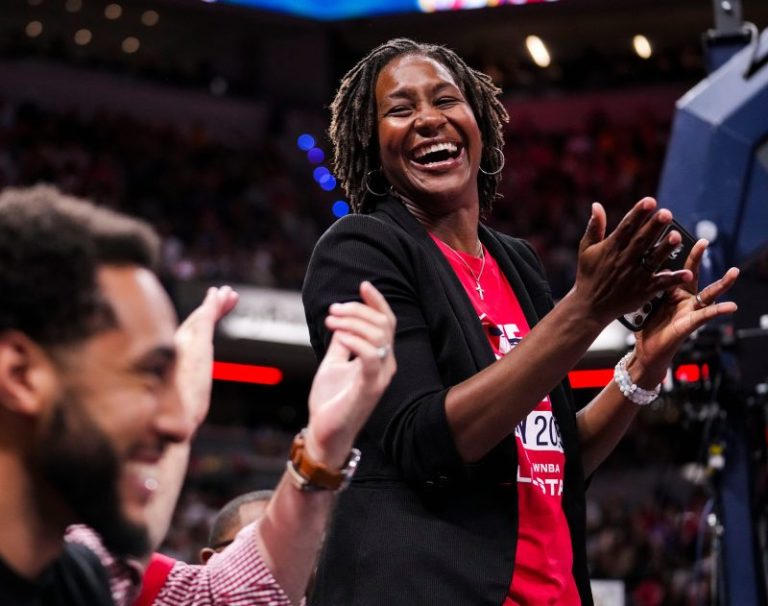
After the Trump administration’s decision to withdraw from dozens of United Nations and other international organizations, experts say more international bodies could soon find themselves on the chopping block.

The announcement that the U.S. wouldexit 66 international organizationswas in response to President Donald Trump’s February 2025 executive order calling for a review of U.S. support to ‘all international organizations.

Secretary of State Marco Rubio said in reaction to the announcement that the U.S. is ‘rejecting an outdated model of multilateralism — one that treats the American taxpayer as the world’s underwriter for a sprawling architecture of global governance.’ Rubio warned the State Department continues to review international organizations, and that those subject to the January cuts ‘are by no means the only offenders.’

Rubio said that the U.S. was not turning its back on the world but was looking to review the ‘international system,’ which he said, ‘is now overrun with hundreds of opaque international organizations, many with overlapping mandates, duplicative actions, ineffective outputs and poor financial and ethical governance.’

Hugh Dugan, former Senior Director for International Organization Affairs at the National Security Council during President Trump’s first term, told Fox News Digital that U.N. Secretary General Antonio Guterres ‘always misread’ the prior executive order ‘as a cost-cutting directive.’ In trying to ‘cut his way to growth’ through the UN80 initiative, 

Dugan said that Guterres ‘meat-cleavered budgets, hitting bone and flesh as much as fat, but at base it was business as usual: no focus on the U.N.’s pitiful return on investment.  Instead of only cutting the bottom line, also he should have grown the top line by working smarter for new efficiencies.’   

Launched in March 2025, the UN80 initiative was designed to identify inefficiencies inside the U.N. system and cut costs across an expansive bureaucracy. In response to Trump’s withdrawal from U.N. entities, Guterres’ spokesperson Stéphane Dujarric said in a statement that the secretary general, ‘regrets the announcement by the White House,’ and stated that ‘assessed contributions to the United Nations’ regular budget and peacekeeping budget…are a legal obligation under the U.N. Charter for all Member States, including the United States.’

Brett Schaefer, a senior fellow at the American Enterprise Institute, told Fox News Digital that impacted organizations external to the U.N. ‘don’t receive very much money,’ and ‘don’t necessarily merit U.S. funding or support.’ Withdrawing from those organizations is ‘more pruning around the margins than a fundamental reassessment of U.S. relationships with international organizations,’ he said.

For the 31 U.N.-affiliated groups on the list, Schaefer said that the withdrawal order is ‘an opportunity to signal to the U.N. where the United States would like to see consolidation or elimination of duplication, which is rather rife within the U.N. system.’

Schaefer said that withdrawing from the U.N. Population Fund and U.N. Framework Convention on Climate Change was ‘very consistent with the Trump administration’s policy.’ Schaefer also indicated that withdrawing from the U.N. Council on Trade and Development (UNCTAD) was a formalization of policy shift that occurred in 2018 when UNCTAD admitted ‘Palestinians as a full member state’ and U.S. law ‘prohibit[ed] U.S. funding’ for the organization.

Other choices, like departing from the U.N. Department for Economic and Social Affairs, ‘didn’t quite make sense,’ Schaefer said. He noted that the department is funded through the regular U.N. budget, which makes the move ‘more of a signal than it is really an effective policy.’

Future rounds of cutting

Schaefer noted several organizations, including the World Meteorological Organization, World Intellectual Property Organization, U.N. Office for the Coordination of Humanitarian Affairs (UNOCHA), Food and Agricultural Organization (FAO), and U.N. Development Programme, that could be subject to future cuts.

While smaller nations utilize the UNDP to administer their humanitarian donations, the U.S. does not need ‘a middleman’ to fund non-governmental organizations and provide aid, Schaefer said. He also noted that the organization ‘has had a problem with corruption’ that included concealing North Korean counterfeit money and providing the country with dual-use technology.

Schaefer said that the U.S. can ‘promote agricultural development in developing countries’ through entities outside the FAO, which he said is ‘currently led by a Chinese national’ who is ‘using that organization to promote Chinese policies and Chinese commercial interests in developing countries.’

On Dec. 31, UNOCHA was a signatory to a memo ‘which was sharply critical of Israel,’ Schaefer said. Schaefer believes the memo constituted ‘a violation of their neutrality’ that should result in reprimand. Schaefer said that Under-Secretary-General for Humanitarian Affairs and Emergency Relief Coordinator Tom Fletcher ‘has made repeated statements echoing false accusations of Israel causing famine and hunger and other humanitarian suffering in Gaza that has since been proved to be false and without basis.’

The WIPO, WMO, and FAO declined to comment about whether they might be a target of future cuts.

A UNDP spokesperson said that the U.S. ‘has been a steadfast partner’ and that the it maintains its commitment to working alongside the U.S. to ‘address urgent humanitarian needs, promote stability, and advance prosperity worldwide.’ The spokesperson noted that ‘UNDP projects are subject to strict oversight and accountability policies and mechanisms,’ with the UNDP ‘consistently rank[ing] amongst the most transparent organizations included in the [Aid Transparency Index.] 

According to the UNDP spokesperson, ‘no evidence of systematic fraud or diversion of funds was found’ when concerns involving the Democratic People’s Republic of Korea were investigated in 2006. The spokesperson said that the DPRK project ‘concluded in 2020. Any future engagement would require consensus from UNDP’s Executive Board and clear directives from Member States.’

A UNOCHA spokesperson noted that the U.S. had just signed an agreement with UNOCHA ‘reinforcing our partnership.’

The U.S. pledged to allocate $2 billion to UNOCHA at the end of December for global humanitarian needs.[iii] In recent years, officials previously told Fox News Digital that the U.S. had contributed between $8 and $10 billion to UNOCHA

This post appeared first on FOX NEWS