Archive

2026

Browsing

Aaron Rodgers has a massive retirement decision to make after the Steelers’ season ended with a thud in a wild-card rout by the Texans.
Pummeled by Houston’s defense all night, Rodgers might see his career end with a pick-six.
In the aftermath of the loss, Rodgers said he wasn’t going to ‘make any emotional decisions’ regarding his future.

Thanks for the memories, Aaron Rodgers.

If that was it, the last hurrah in a 21-year career that will ultimately be stamped with a Hall of Fame induction, you surely deserved a better send-off than the pounding inflicted by the Houston Texans on Monday night.

Then again, it was fitting enough.

No, the season of hope for Rodgers with the Pittsburgh Steelers, where he joined forces with the likes of Mike Tomlin, Cam Heyward and T.J. Watt, didn’t quite turn out to produce a made-for-Hollywood ending.

But at least he gave it a shot.

Sure, the standard is the standard. For a man with four NFL MVP awards and a Super Bowl title on his resume (even if it was 15 years ago), making a cameo appearance in the NFL playoffs was undoubtedly half-empty.

It was fair enough. If there was going to be some magical, turn-back-the-clock run in these unpredictable NFL playoffs, the 42-year-old legend had to start by beating a team that includes a gang of maulers who formulate arguably the league’s best defense.

Turns out, that was way too much to ask.

Instead, Rodgers was issued a cruel reality check from the Texans – who turned two Rodgers turnovers into second-half touchdowns to add insult to the 30-6 shellacking in the AFC wild-card playoff game.

Maybe this was the takeaway message from the Texans: Go ahead, just retire already.

Too bad. Maybe the last throw Rodgers will ever make as an active NFL quarterback was intercepted by Calen Bullock and returned 50 yards for a pick-six with just under three minutes to play.

Mercy Rule stuff, indeed.

Earlier in the fourth quarter, Rodgers, who operated for much of the night with all the space afforded in a phone booth, fumbled as he was pummeled in a collapsing pocket. Sheldon Rankins snatched up the football and rumbled 31 yards with a big-man TD return.

Add other images of frustration – the sacks, misfires, miscommunication with receivers, DK Metcalf’s drop – and the net effect was something that probably led many viewers of the prime-time broadcast to cover their eyes.

Or maybe turn off the TV. After a full slate of nail-biters over the weekend to open the NFL playoffs, it seemed especially cruel that Rodgers went down in the pure beatdown of a blowout – the Steelers were outscored 23-zip in the fourth quarter – rather than with some last-minute drama.

It was not the ideal way for Rodgers to be remembered. He couldn’t even lead the Steelers to a touchdown – the first time that’s happened for Rodgers in the playoffs – and converting on third downs was almost as challenging. On a night the franchise lost a seventh consecutive postseason game, he was not the savior to reverse that pattern.

Rodgers couldn’t run, couldn’t hide and certainly could not compete like he used to as dominant D-linemen Will Anderson Jr., Danielle Hunter, Denico Autrey and Rankins kept messing up the plan. Rodgers was sacked four times and finished with a 50.8 passer rating. And it was worse than those numbers suggest.

Hey, not every legend rides off like John Elway, in a hail of Super Bowl confetti. Most, like Rodgers, have to go out the hard way, reminded of how far removed they are from their prime.

Of course, Rodgers hasn’t definitively declared that this it and he will retire. Understandably, in the immediate aftermath of Monday night’s game, he would not as much as acknowledge that his brutal evening – and the collapse was hardly all on the quarterback – would affect the decision about his future.

“No, I’m not going to make any emotional decisions,” Rodgers said. “Disappointed, obviously. It was such a fun year. A lot of adversity. But a lot of fun. It’s been a great year, you know, obviously in my life, and this is really a good part of that, you know, coming here and being a part of this team. So, it’s disappointing to be sitting here with the season over.”

Stay tuned. If you’ve followed Rodgers’ saga, you realize that it could a while – weeks, perhaps months –before he makes a decision on whether to return. While he sent signals early on, after joining the Steelers in June, that he was likely in his final season, he has more recently softened that stance and left the door open to re-signing with the team for 2026.

There were notable victories, for sure. Rodgers led the Steelers to the AFC North crown, even if it was enabled by a missed field goal on the last snap of the NFL’s final regular-season game. He made it back to the postseason for the first time in four years. And in a violent occupation, where participants are often carted off or hobble off on crutches, Rodgers, two seasons removed from a torn Achilles, walked off the field at Acrisure Stadium on his own power.

In any event, he can take all of that with him to a darkness retreat as his retirement decision again begs for deep contemplation.

Last year, Rodgers didn’t officially commit to joining the Steelers until June, after weeks of courting by Tomlin. Now a decision includes the perspective of meshing within a Steelers culture that is such a contrast to what he experienced in two seasons with the New York Jets.

Even so, there’s the matter of whether he has the desire to try it again.

Surely, Rodgers doesn’t want to go out like Monday night. Yet he should also realize that if he decides to come back, next time might be even worse.

Contact Jarrett Bell at jbell@usatoday.com or follow on X: @JarrettBell
This post appeared first on USA TODAY

NBCUniversal will broadcast the Winter Olympics, Super Bowl 60 and the NBA All-Star Game within a 10-day span in February.
The network has invested billions in media rights for the Olympics, NFL and NBA.
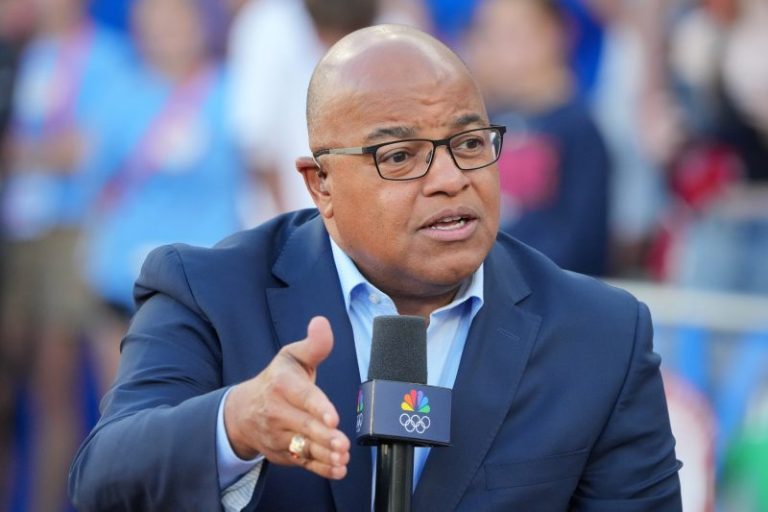
Mike Tirico will become the first U.S. broadcaster to call the Super Bowl and host a Winter Games in the same year.

NEW YORK — For the Peacock network, the shortest month of the year could be the biggest ever for its sports properties.

NBCUniversal and its “Legendary February,” as it is being billed, will air the start of the Winter Olympics, Super Bowl 60 from Levi’s Stadium in Santa Clara, California, and the NBA All-Star Game set for the Intuit Dome in Inglewood, California – all within a 10-day period starting Feb. 6.

When the first pack of athletes representing their country makes its way through Milan’s San Siro stadium, the executives at NBCUniversal will be holding their collective breath, hoping for maximum returns on an investment years in the making.

The network is paying $7.75 billion to air the Olympics through 2032, following a $3 billion extension with the International Olympic Committee in March. They are shelling out another $2 billion a year for their NFL package, which includes the top-rated Sunday Night Football and, this season, the crown jewel of every professional football season – Super Bowl 60. A record 127.7 million viewers tuned in to watch the Philadelphia Eagles’ destruction of the Kansas City Chiefs in Super Bowl 59.

The sound of “Roundball Rock” has been percolating across television screens since October, when the NBA on NBC returned after a 23-year hiatus, costing $2.5 billion a year and part of the 11-year, $76 billion media rights deal the league struck with Amazon and Disney.

NBCUniversal sold out its Olympic inventory, with 100 new advertisers setting a new Winter Olympics ad sales record and securing the advertising allotments for the Super Bowl and the NBA All-Star Game. The Super Bowl ad price for a 30-second spot topped $8 million.

Point blank, NBC is expected to break viewership and revenue records, using stars such as figure skater, Ilia Malinin, the self-proclaimed “Quad God,” skier Mikaela Shiffrin, and downhill skier Lindsey Vonn to maximize exposure on television and social media.

The plan for the three major events was laid out by the executives and key players in charge of bringing viewers hours of programming during a press event at Studio 8H at Rockefeller Center in midtown Manhattan, better known as the home of “Saturday Night Live.”

Molly Solomon, Executive Producer & President, NBC Olympics Production, said there will be some surprises and familiar faces for the Olympics. But Solomon said the main goal is to give the power back to the viewers – because of the audience’s different viewing habits, it’s imperative to give them the “best seat in the house.”

Snoop Dogg is back as a special correspondent after making a splash at the Paris Olympics, and actor Stanley Tucci will be brought on to talk all things Italy and highlight its culture.

The Opening Ceremony of the 2026 Milan Cortina Winter Games on Feb. 6 will be hosted by Savannah Guthrie, Terry Gannon, and three-time Olympic gold medalist Shaun White.

‘Primetime in Milan’ will be hosted by Mike Tirico, who will also handle play-by-play duties for the Super Bowl two days later. Rebecca Lowe will host the Olympics in the daytime, and Maria Taylor is tapped as the late-night host, part of the 82 commentators assigned to cover the Milan Cortina 2026 Olympics.

After the Lombardi Trophy is handed to the winning team in California, Tirico will host the primetime Olympics show on the field at Levi’s Stadium before flying to Italy to start his on-site hosting duties.

“Nothing brings America together like the Super Bowl. No two weeks bring America together like the Olympics. We are blessed to have both,” said Tirico, who will become the first U.S. broadcaster to call the Super Bowl and host a Winter Games in the same year.

The streaming service Peacock, which has 41 million paid subscribers in the United States and will broadcast more than 7,600 hours of live content in 2026, is also a key part of the plan. Peacock will offer fan-first features like “Rinkside Live” and “Courtside Live,” which will introduce several curated alternate camera angles, such as inside the coaching areas for figure skaters and on team benches in ice hockey. 

While the Olympics and the Super Bowl are the headliners, pro basketball aims to make its mark this month.

It begins with the start of “Sunday Night Basketball” on Feb. 1, with the Los Angeles Lakers battling the New York Knicks, followed by the reigning champion Oklahoma City Thunder taking on the Denver Nuggets.

The NBA All-Star Game on Feb. 15 will introduce a new format featuring a U.S. vs. World All-Star Game robin-round tournament, with two teams of U.S. players and one team of international players, and four 12-minute games.

“Courtside Live” will debut during the All-Star Game. Some features include “Star Spotlight,” which highlights standout players on the court, and “Home Team” or “Away Team” views that focus on each team’s bench to capture player reactions. 

The closing ceremony of the Milan Cortina Olympics on Feb. 22 will be followed by a “Sunday Night Basketball” clash between the Boston Celtics and the Lakers.

“Only NBC can pull this off,” said Mike Cavanagh, the co-CEO of NBCUniversal parent Comcast. “Getting ready for the month ahead feels like getting ready for a season ahead. We know we can do it. But you still have butterflies. You still have nerves. This is big time,”

This post appeared first on USA TODAY

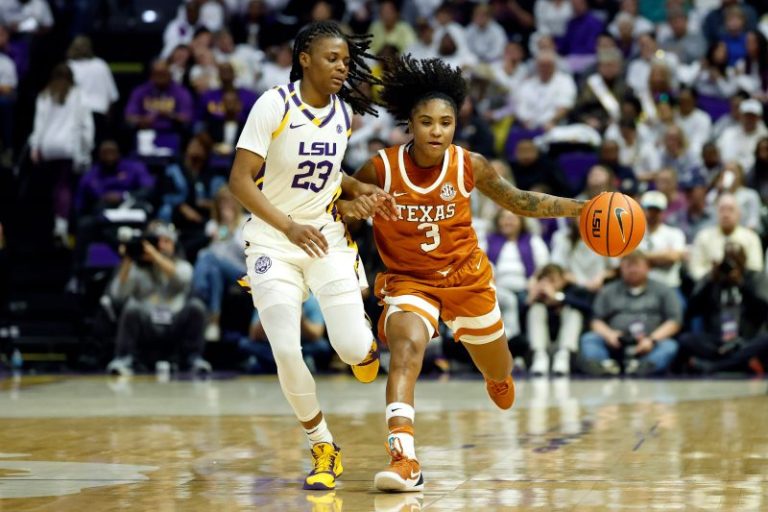
Texas dropped to No. 4 in the USA TODAY Sports women’s college basketball poll after suffering its first loss of the season Sunday, Jan. 11 to LSU.

The Tigers moved up six spots in the poll, from No. 12 to No. 6 after the victory. UConn continues to hold down the top spot in the poll followed by South Carolina, UCLA, Texas and Vanderbilt.

It doesn’t get any easier for the Longhorns this week, as they travel to No. 2 ranked South Carolina on Thursday, Jan. 15. Coach Vic Schaefer voiced his displeasure with the schedule after the Texas game.

‘They obviously have a vendetta against Texas because not only have we started in the league, and I get to play South Carolina twice last year, this year, I get LSU twice,’ Schaefer said.’I have to play South Carolina on the road this year, as well as LSU. I get them back-to-back in the same week. Now, make that make sense.’

Oklahoma fell seven spots to No. 12 after losing to No. 16 Ole Miss and No. 9 Kentucky. Iowa State is down six spots to No. 19 after three consecutive losses to No. 17 Baylor, Cincinnati and No. 25 West Virginia. North Carolina also fell five spots to No. 23 after losses to Stanford and No. 22 Notre Dame.

This post appeared first on USA TODAY

Mikaela Shiffrin has a six-pack.

Shiffrin beat out teammate Paula Moltzan to win the night race in Flachau, Austria, on Tuesday, Jan. 13, finishing 0.41 seconds ahead with a time of 1:50.52. It was the sixth slalom win of this World Cup season for Shiffrin — she’s won all but one of the slalom races — and extended her lead in the overall standings to 170 points with one slalom race left before the Milano Cortina Olympics.

Moltzan was the second-to-last skier, and waited in the finish area for Shiffrin. The two exchanged a long hug after Shiffrin crossed the finish line. It was Moltzan’s third time on the podium this season, but first in a slalom race.

Nina O’Brien had the second-fastest time in the second run, and moved up to 13th.

‘It’s amazing to share this with Paula,’ Shiffrin said. ‘Podiums with teammates are the best thing in the world.’

This was the second consecutive race that the U.S. women had two people on the podium, following Lindsey Vonn and Jackie Wiles finishing 1-3 in the downhill on Saturday, Jan. 10, in Zauchensee, Austria.

Shiffrin had won the previous five races in Flachau, which is held under the lights. On a day when soft snow tripped up many a skier — there were 29 DNFs and two disqualifications in the first run and another four DNFs in the second — that experience showed.

‘It’s always a challenge every time. This hill is super hard,’ Shiffrin said.

Shiffrin and Moltzan finished 1-2 in the first run, separated by 0.16 seconds. The top skiers were all aggressive in the second run, trying to knock Shiffrin and Moltzan out of those top two spots.

But Moltzan didn’t back off in her run, starting fast and continuing to push all the way down. She was in first when she finished, putting the pressure on Shiffrin to deliver. She did, hitting the gas as soon as she left the start gate and never letting up.

The course was challenging, with rollers that took several skiers out of their rhythm. But Shiffrin navigated it almost perfectly, not slowing as she went over the rollers and looking as if the snow was hard and packed rather than soft and mushy.

Shiffrin’s mouth dropped when she crossed the finish line and saw her time. She then found Moltzan to celebrate.

‘It’s been a big push,’ Shiffrin said. ‘There’s such high-level slalom skiing, it was really cool to be part of it today.’

This post appeared first on USA TODAY

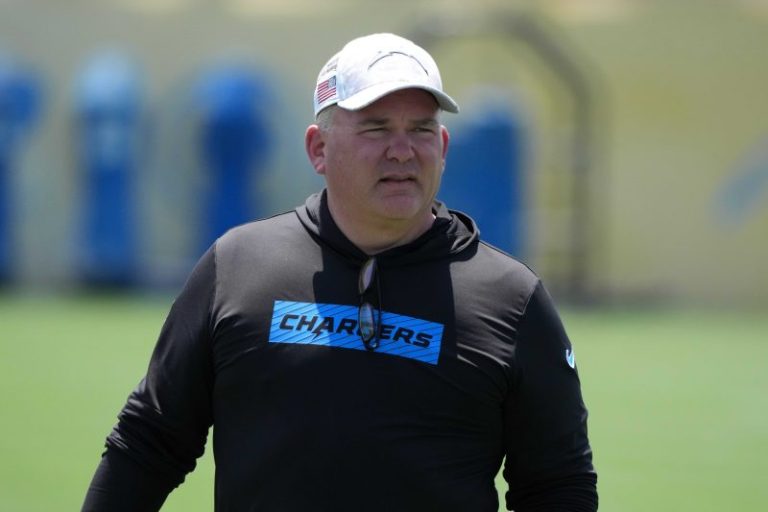
Jim Harbaugh is shaking things up for the Los Angeles Chargers in the wake of the team’s latest playoff disappointment.

The team on Tuesday announced it had fired offensive coordinator Greg Roman after two seasons. Offensive line coach Mike Devlin was also let go.

Roman had been one of Harbaugh’s most trusted longtime assistants, having served under him in previous stops at Stanford and with the San Francisco 49ers. In Los Angeles, he helped engineer a rapid turnaround for quarterback Justin Herbert and Co. that resulted in playoff appearances in each of the last two years.

But the Chargers’ season came to another disappointing end Sunday in a 16-3 wild-card round loss to the New England Patriots. Herbert took six sacks, and the attack was held to just 207 yards and a 1-of-10 mark on third down.

Including last season’s 32-12 wild-card loss to the Houston Texans, the Chargers have scored just one touchdown on their last 22 postseason possessions.

After Sunday’s game, Harbaugh declined to defend Roman when asked whether the coordinator was the right play-caller for he team, saying he didn’t know.

‘We’re going to look at that and everything,’ Harbaugh said.

Season-ending injuries to offensive tackles Rashawn Slater (torn patellar tendon in training camp) and Joe Alt (high-ankle surgery after appearing in just six games) dealt a significant blow to the Chargers’ offensive game plan. Herbert ended up taking 54 sacks – more than all but two other quarterbacks – and was pressured at a league-high 43.3% rate, according to Next Gen Stats.

The Chargers could be facing changes at coordinator spots on both sides of the ball, as defensive coordinator Jesse Minter has had all eight teams with a head-coaching vacancy request him for an interview.

This post appeared first on USA TODAY

From their glory years in the 1980s, through their World Series championship in 2015 and even their surprise playoff appearance in 2024, the Kansas City Royals’ club identity fit hand-in-glove alongside the dimensions at Kauffman Stadium, their home ballpark.

Deep outfield fences, speedy, often elite defensive players to run down balls in the gap and swipe bases on the other side of the ball became imbued in the Royals’ identity – for better and worse.

Now, the club is aiming to take the power back.

The Royals announced Tuesday, Jan. 13, that they will move in the fences at Kauffman Stadium for the 2026 season, a ballpark modification that should dovetail with their burgeoning collection of young bats.

The fences in left and right field will be moved in nine to 10 feet, and the wall lowered from 10 feet to 8 1/2 feet in most locations. It’s not that Kauffman was a hitter’s graveyard in 2025; the K was among 15 ballparks that ranked between 99 and 101 on Statcast’s park factors, with 100 being neutral for both pitchers and hitters.

But it was particularly penal for home runs: Only San Francisco and Pittsburgh ranked lower than Kauffman’s 85 rating for longballs. Those extra few feet should make a difference for perennial MVP candidate Bobby Witt Jr., slugger Vinnie Pasquantino and rookie Jac Caglianone, who struggled in a 62-game audition yet still has more raw power than almost any prospect in the game.

Kauffman Stadium: What are the new outfield dimensions?

Dimensions released by the team indicate that the left- and right-field corners are each moving nine feet closer, from 356 and 353 feet to 347 and 344 feet. Left and right field move from 373 to 364 feet, while the alleys move in 10 feet, from 389 to 379 feet.

Dead center field remains 410 feet.

Who most benefits from the move?

It’s not hard to imagine Witt – who hit 30, 32 and 23 homers his first three full seasons – flourishing even more in this new environment. According to Statcast data, at least four of his doubles and triples in 2025 – all of which would’ve been homers in a majority of big league parks – would have been home runs in the 2026 configuration. Witt turns 26 in June, and only figures to be coming into his peak power years.

The Royals as a team finished 26th in home runs, hitting 56% of their home runs – 89 of 159 – on the road.

Which ballparks have significantly changed their dimensions?

Power costs money, and so does elite starting pitching. And altering the ballpark configuration is one way for teams outside the highest revenue realm to maximize their roster or organizational ethos.

The Detroit Tigers moved their center field fence in by 10 feet in 2023 – and promptly went from 52 homers at Comerica Park to 78 (Oh, there were many other factors, but that didn’t hurt).

At Camden Yards, the Baltimore Orioles took the opposite tack, famously moving the fence in left field back significantly in 2022, drawing pained expressions from their own right-handed hitters to scathing reviews from opponents such as Aaron Judge.

In 2024, they found a reasonable middle spot – and added elite right-handed slugger Pete Alonso this winter.

And in 2013, the San Diego Padres and Seattle Mariners both moved their fences in, with a Padres executive claiming a less pitcher-friendly Petco Park would result in baseball fans seeing ‘the game the way it’s meant to be played.’

This post appeared first on USA TODAY

President Donald Trump said his administration will cease federal payments to sanctuary cities and states with sanctuary policies starting Feb. 1, while citing jurisdictions that protect criminals and fuel fraud and crime.

Speaking at the Detroit Economic Club, Trump said the move was aimed at cities and states that refuse to cooperate with federal immigration enforcement and in the administration’s bid to stamp out fraud.

‘Starting Feb. 1, we’re not making any payments to sanctuary cities or states having sanctuary cities because they do everything possible to protect criminals at the expense of American citizens,’ Trump said.

‘And it breeds fraud and crime and all the other problems that come. So we’re not making any payment to anybody that supports sanctuary,’ he added.

Trump also criticized Minnesota officials while discussing what he described as widespread fraud in the state.

‘We have also suspended payments tied to suspected scammers in Minnesota, of which there are many,’ Trump said. ‘It’s a great state. It was a great state. Now it’s getting destroyed by that stupid governor.’

Trump went on to accuse Gov. Tim Walz of corruption and said the level of fraud could not have gone unnoticed by state leadership.

The administration’s actions come as a federal judge on Jan. 9 temporarily blocked the Trump administration from stopping subsidies tied to childcare programs in five states, including Minnesota, amid allegations of widespread fraud.

U.S. District Judge Arun Subramanian did not rule on the legality of the funding freeze but said the states met the legal threshold to preserve the ‘status quo’ on funding for at least two weeks while legal arguments continue.

The U.S. Department of Health and Human Services (HHS) also announced it would withhold funds for programs in five Democratic-led states, citing concerns over fraud and misuse of federal dollars.

As previously reported by Fox News Digital, those programs include the Child Care and Development Fund, the Temporary Assistance for Needy Families program and the Social Services Block Grant.

‘Families who rely on childcare and family assistance programs deserve confidence that these resources are used lawfully and for their intended purpose,’ HHS Deputy Secretary Jim O’Neill had said in a statement.

The states that challenged the action include California, Colorado, Illinois, Minnesota and New York, which argued in court filings that the federal government does not have the legal authority to end the funding.

This post appeared first on FOX NEWS

President Donald Trump unloaded on a cohort of Senate Republicans who voted to rein in his policing powers in Venezuela, arguing that they couldn’t give a good reason to vote against him.

During remarks at the Detroit Economic Club following a tour of a Ford plant in Dearborn, Mich., Trump harangued Republicans for not staying unified, while declaring that, though congressional Democrats have bad policy, they ‘stick together like glue.’

‘We got some real losers, mostly great,’ Trump said of Republicans before tearing into Sens. Rand Paul, R-Ky., Lisa Murkowski, R-Alaska, Susan Collins, R-Maine, and Todd Young, R-Ind.

That foursome joined all Senate Democrats to vote in favor of Sen. Tim Kaine’s, D-Va., war powers resolution, which, if passed, would require Trump to receive congressional approval before further military force is used in Venezuela.

Lawmakers are expected to take a final vote on the resolution on Wednesday.

When Kaine’s effort initially advanced, Trump blasted the defectors and declared that they should ‘never be elected to office again.’ With the vote fast approaching, Trump didn’t hesitate to make clear that their votes were still fresh on his mind.

He panned Paul for routinely voting against GOP policies, and then turned his sights to Murkowski, Collins and Young.

‘Then you have Lisa Murkowski and you have Susan Collins, disasters,’ Trump said. ‘And you had a gentleman from Indiana that, I don’t believe it, Todd Young, he voted against.’

‘And you say, ‘Why are you voting against?’ They can’t give you an answer. They’re unable to give you an answer. It’s like, why are they against the attack on Venezuela? They’re against the attack,’ he continued. ‘After they found out who was the most successful attack. Probably the most talented, most brilliant tactical attack that we’ve had maybe in 100 years. And they’re against it. Why?’

Paul has routinely voiced opposition to military action with congressional oversight; he’s a co-sponsor of Kaine’s resolution. Murkowski, Collins and Young had no issue with the capture of former Venezuelan President Nicolás Maduro, but they argued that their vote for the resolution last week was to ensure Congress’ authority to weigh in before future action.

The White House and Senate Republican leadership have been working to flip the lawmakers in order to prevent the resolution from passing, but it may not be the successful pressure campaign that they had hoped for.

Collins, when asked if she would still vote in favor of the resolution after leaving the Senate GOP’s weekly closed-door policy lunch, said, ‘Wes.’

There was also a fifth Republican, Sen. Josh Hawley of Missouri, who voted to advance the resolution. Trump notably did not mention him during his speech.

That comes after Hawley spoke with several administration officials on what the next steps in Venezuela would be. Hawley said that he was told by officials that the administration would ‘abide by the statutory notification requirements, and also, if they took action that resulted in major ground operations would come back to Congress.’

Hawley didn’t say if that would flip his vote and noted that he was in ‘listening and receive mode at this time.’ Still, it did go a long way to address his biggest issue of boots on the ground in Venezuela.

‘The administration’s view is that the resolution is way broader than ground troops, and I said, ‘Well, you know, and I didn’t draft the resolution, but my concern is about ground troops in Venezuela without congressional authorization,’’ Hawley said.

This post appeared first on FOX NEWS

The Senate quietly passed legislation on Tuesday that would create stiffer penalties for explicit AI-manipulated images, known as deepfakes. 

The bill from Sen. Dick Durbin, D-Ill., is designed to beef up federal penalties against the creation, distribution or solicitation of ‘non-consensual digital forgeries,’ or deepfakes. It’s geared to act as a companion to a previously passed bill targeting revenge porn.

Durbin’s Disrupt Explicit Forged Images and Non-Consensual Edits, or DEFIANCE Act, passed unanimously through the Senate on a fast-track vote. But it will still require the House to weigh in before it heads to President Donald Trump’s desk. 

His bill, which was co-sponsored by Sen. Lindsey Graham, R-S.C., and introduced in the House by Rep. Alexandria Ocasio-Cortez, D-N.Y., would allow victims of deepfake images to sue people who create, possess with intent to share, solicit, or share non-consensual items, and levy a fine of up to $250,000 per violation. 

‘Give to the victims their day in court to hold those responsible who continue to publish these images at their expense,’ Durbin said on the Senate floor. ‘Today, we are one step closer to making this a reality.’

It also allows courts to order takedowns, deletions and injunctions to stop further spread of the images, provide privacy protections for victims during litigation, and sets up a statute of limitations of up to 10 years. 

Durbin said the backlash of deepfake images can be long-lasting, and people may go through depression, anxiety and fear, ‘and in the worst cases, victims have been driven to suicide.’ 

‘Imagine losing control over your own likeness and identity. Imagine how powerless victims feel when they cannot remove illicit content, cannot prevent it from being reproduced repeatedly, and cannot prevent new images from being created,’ Durbin said. 

The DEFIANCE Act comes as lawmakers on both sides of the aisle have pushed for stiffer regulations and penalties for AI, particularly chatbots and potentially harmful interactions they have with children online. Notably, Durbin and Sen. Josh Hawley, R-Mo., teamed up last year for legislation that defines AI as a product, allowing people to sue for liabilities that stem from using AI systems. 

Durbin’s successful effort in the upper chamber comes after lawmakers passed a separate bill, the Take It Down Act, last year geared to creating penalties for revenge porn. First Lady Melania Trump heavily lobbied for that bill, which was ultimately signed into law by Trump and is set to take effect in May. 

This post appeared first on FOX NEWS

The sister of a former NFL player has renewed her call for help finding him, seven months after he first went missing.

Ex-cornerback Sam Beal was last seen on July 13, 2025, when authorities say he dropped off his girlfriend at her family’s house and headed toward Virginia Beach.

In a Facebook post on Monday, Jan. 10, Essence Zhane asked anyone who may have seen Beal to contact the Kentwood (Virginia) Police Department.

‘We’ve done everything we could on our end to piece things together and at this point we’re in desperate need of support on all ends,’ Zhane wrote, according to a Fox News report. ‘I’m not here to answer a bunch of why’s and how’s I just need this to land in the right direction to gain some form of answers or closure.’

According to the National Missing and Unidentified Persons System database, Beal, 29, ‘did not bring anything with him aside from the clothes he was wearing, a pair of slides, and his wallet that contained his banking card and driver’s license.’

The girlfriend’s car was later recovered in Virginia Beach ‘with Samuel’s shoes and socks on the floor of the front passenger seat.’

Beal − a native of Grand Rapids, Michigan − played three seasons at Western Michigan and was a third-round selection by the Giants in the 2018 NFL supplemental draft.

He played nine games over two seasons, recording 27 tackles and one safety.

This post appeared first on USA TODAY