Archive

2026

Browsing

Iranian Foreign Minister Abbas Araghchi rejected claims of mass casualties amid a recent surge in protests within the Islamic country and blamed any killings that have taken place on an ‘Israeli plot’ intended to create a large number of casualties. 

The claim came during a wide-ranging interview on Fox News’ ‘Special Report with Brett Baier’ Wednesday evening, during which Araghchi was told estimates have indicated the death toll in his country could be anywhere between 2,500 to more than 12,000 protesters. But, according to the top Iranian official, the number is in the hundreds. 

‘When terrorist elements led from outside, entered this, you know, protests and started to shoot, you know, police forces, police officers and security forces. And there were terrorist cells. They came in, they used Daesh-style terrorist operations. They got police officers, burned them alive, they beheaded them, and they started shooting at police officers and also to the people. So as a result, for three days, we had, in fact, fighting against terrorists, and not with the protesters,’ Araghchi said. ‘It was completely a different story.’

According to Araghchi, these rogue, terrorist-like actors he spoke of started shooting at civilians for ‘one reason,’ which he said was to draw the United States into the conflict. 

‘They wanted to increase the number of deaths. Why? Because President Trump has said that if there are killings, he would intervene. And they wanted to drag him into this conflict,’ the Iranian Foreign Minister continued. ‘And that was exactly an Israeli plot. They started to increase the number of deaths by killing ordinary people, by killing police officers, by starting a kind of, you know, fighting inside the different cities.’

Iran has seen widespread unrest since the last week of December, as the country faces a massive economic crash that spurred many in Iran to take to the streets in protest.


Contrary to Araghchi’s claims are eyewitness reports that describe government forces in Iran firing upon unarmed protesters. Some even spoke of snipers taking aim at innocent Iranians, according to testimony shared with the New York Times.

During Baier’s interview with Iran’s Foreign Minister, Araghchi also insisted that there are no imminent plans to hang, or otherwise execute, protesters. The top Iranian official tried to downplay the unrest erupting in his country as well, arguing there is now ‘a calm.’    

‘We are in full control,’ Araghchi added. ‘And let’s, you know, hope that wisdom would prevail. And we don’t go for a high level of tension, which could be disastrous for everybody.’

This post appeared first on FOX NEWS

The House of Representatives passed a roughly $80 billion spending package Wednesday evening, taking a significant step toward averting a government shutdown at the end of this month.

The package combines two of Congress’ 12 annual appropriations bills in what’s called a ‘minibus.’ It covers funding for the State Department and related national security, as well as federal financial services and general government operations.

The bill passed with overwhelming bipartisan support in a 341-79 vote.

Glaring questions still remain, however, over funding for the Department of Homeland Security (DHS) as progressives threaten to withhold support from any such bill unless it’s paired with significant reforms to Immigration and Customs Enforcement (ICE).

The push comes from the left in response to an ICE agent shooting 37-year-old Renee Nicole Good, a U.S. citizen who was driving her car when it made physical contact with a law enforcement official who then fatally shot her.

Partisan divisions have erupted over the narrative, with GOP officials like DHS Secretary Kristi Noem saying the agent acted in self-defense, while Democrats on Capitol Hill have called for criminal investigations.

DHS funding was initially expected to be part of this minibus, but House Appropriations Committee Chairman Tom Cole, R-Okla., told reporters earlier this week he would like to see the bill as part of the final package that’s also expected to include funding for the Department of War, Department of Transportation, Department of Labor, the Education Department and Health and Human Services, among others.

But the top Democrat on the panel, Rep. Rosa DeLauro, D-Conn., told reporters Tuesday she wanted to see DHS funding as a separate bill.

‘It’s got to be by itself,’ DeLauro said. ‘It’s got to be separate.’

Meanwhile, the Congressional Progressive Caucus is formally threatening to oppose any DHS funding that does not change immigration enforcement policy, Rep. Ilhan Omar, D-Minn., announced.

‘Our caucus members will oppose all funding for immigration enforcement in any appropriation bills until meaningful reforms are enacted to end militarized policing practices. We cannot, and we should not continue to fund agencies that operate with impunity,’ she told reporters.

But the bill that passed Wednesday did so with wide bipartisan support, as expected.

All federal spending bills after last year’s government shutdown are a product of bipartisan discussions between the House and Senate.

The recent package totals just over $76 billion in federal funds and is now headed to the Senate for its approval before reaching President Donald Trump’s desk.

The State Department and national security bill includes $850 million for an ‘America First Opportunity Fund,’ aimed at giving the secretary of state funding to respond to potential unforeseen circumstances.

Both Republicans and Democrats touted different victories in the legislation, with a summary by House Appropriations Committee Republicans stating the bill supports ‘President Trump’s America First foreign policy by eliminating wasteful spending on DEI or woke programming, climate change mandates, and divisive gender ideologies.’

Democrats said the bill ‘supports women globally’ by ‘protecting funding for bilateral family planning and the United Nations Population Fund (UNFPA)’ and pointed to $6.8 billion for a new account ‘that supports the activities previously funded under Development Assistance.’ 

The bill also provides millions in security assistance for Israel and Taiwan, among other global partners across the world.

The latter bill provides just over $13 billion for the U.S. Treasury for the remainder of fiscal year 2026, while also including a provision that stops the IRS ‘from targeting individuals or groups for exercising their First Amendment rights or ideological beliefs,’ according to Republicans.

It also provides $872 million for the Executive Office of the President and $9.69 billion in discretionary funding for the Federal Judiciary.

Across the Capitol, the Senate is expected to vote on and pass the previous three-bill funding package on Thursday before leaving Washington, D.C., for a weeklong recess.

Neither side appears willing to thrust the government into another shutdown, with Senate Democrats in particular viewing the package as an opportunity to fund several of their priorities. But there is a growing consensus that a short-term funding patch will be needed to allow lawmakers to finish work on the thornier DHS bill.

‘Homeland is obviously the hardest one, and it’s possible that, if we can’t get agreement, that there could be some sort of CR that funds some of these bills into next year,’ Senate Majority Leader John Thune, R-S.D., said.

Still, bipartisan funding talks are still happening, a stark departure from the last government funding deadline in October. But lawmakers in the upper chamber won’t be able to tackle the two-bill package until they return toward the end of the month.

This post appeared first on FOX NEWS

The Dallas Mavericks are empowering rookie Cooper Flagg to take control of his development, including postgame workouts and recovery.
Since being challenged to be more assertive, Flagg has significantly increased his scoring and shot attempts.
Despite being the youngest player in the NBA, Flagg is earning respect for his fearlessness in critical game moments.

There’s this somewhat unique arrangement Cooper Flagg has worked out with the Dallas Mavericks, but – to properly understand it – we first have to go back.

Back to Bangor, Maine. Back to 2019, when Flagg was in the sixth grade.

His parents had been looking for someone to guide Flagg, who was then 12, as a basketball player. Always the standout, he was already drawing interest from national programs, so the objective was simple: to maximize his potential in a state relatively devoid of elite basketball talent.

And so, the Flaggs found this coach named Matt MacKenzie and walked into his gym, though gym, frankly, is doing a lot of work.

Something between a garage and warehouse with tile floors and a hoop, it’s where MacKenzie soon realized he’d have to invent drills – think micro shot clocks and one-on-one games where Flagg was restricted to a single dribble – to match his unicorn intensity.

Fairly reserved in public, Flagg is notoriously deliberate in trusting people. The family also keeps its inner circle tight. So when they saw the work MacKenzie was putting in, the Flaggs gradually sought his counsel and brought him into their support group for Flagg.

“We’ve just developed a very special bond that goes beyond basketball,” MacKenzie recently told USA TODAY Sports.

Even now, that hasn’t changed.

In fact, the Mavericks (15-25) have empowered Flagg, the No. 1 overall pick and youngest player in the NBA, to assume total ownership of his rookie season. From granting MacKenzie extensive access, to implementing cold tubs and Normatec compression boots that increase blood circulation, to meeting precise dietary and hydration needs, Dallas is allowing Flagg and his inner circle to dictate the terms of his development.

Unique relationship spurs development

The biggest element in that is MacKenzie, who now works for Flagg as a player development coach and advisor. Not only does the arrangement have the team’s full blessing, MacKenzie said he acts as “an extension of the Mavericks coaching staff,” and called the partnership “collaborative.”

He splits time between Maine and Dallas, flying in for most home games, where he sits a few rows behind the bench.

On any given game night, MacKenzie will show up to the arena before shootaround. He’ll observe Flagg’s mechanics and will connect briefly with Mavericks coaches to discuss film they had reviewed with Flagg. Then, MacKenzie may meet with Flagg to discuss any refinements.

On off days, they may spend time in the gym for tune-up work.

“This way, I can be another voice to complement what they’re looking for,” MacKenzie said. “I’m not somebody who’s going to work against them, I’m working with them. Just offering him a perspective, being in his ear if he has things he wants to talk about. If he wants somebody to lean on who will tell him the truth, he can come to me.”

On occasion, to help him navigate the nuances of being on the road, MacKenzie may even travel with Flagg, who turned 19 on Dec. 21. MacKenzie, after all, has known Flagg more than a third of his life, so he also acts as a trusted confidant off the court.

“Matt’s impact on me has been incredible,” Flagg wrote in a testimonial on MacKenzie’s website. “I wouldn’t be the player I am without him.”

This is somewhat atypical in the NBA, even for star players, though not necessarily unheard of. It’s an arrangement that can carry some risk; if any secrecy or communication issues emerge, that can breed resentment or erode trust.

Ironically, Dallas had reportedly developed an issue over a comparable arrangement with its previous star. According to ESPN, the Mavericks bristled when Luka Dončić brought a team of health and performance staffers on his own expense to handle the majority of his treatment after the team fired former trainer Casey Smith in August 2023.

It’s important to note that this came under former general manager Nico Harrison, whom the Mavericks fired Nov. 11, and that Dončić’s team reportedly disagreed about several decisions on Dončić’s health.

For an arrangement like this to succeed, all parties must be engaged, involved and invested in the same outcome, even if that means deferring.

“A lot of times, I’ll just stay out of the way,” MacKenzie added. “But Cooper knows that I’m within earshot. I can be there in just a minute if he needs me.”

So far, it’s hard to argue with the results.

‘Perfect guy’ for where the NBA is going

Through 39 games, Flagg is tied with former Duke teammate Kon Knueppel of the Charlotte Hornets for most points per game among rookies (19.1); Flagg is also averaging 6.4 rebounds and 4.3 assists per game.

Flagg excels most in transition, where he can scoop rebounds and get into space, but he’s supremely versatile. He also backs players down in the post just as easily as he laces mid-range jumpers.

“Cooper is the perfect example of: he can play any position, he can guard any position,” Mavericks icon and Hall of Famer Dirk Nowitzki told USA TODAY Sports. “You can never have enough 6-9 guys who can bring the ball up, put the offense in motion, get downhill at any time, spot up and shoot. He can set the pick-and-roll, but he can also run the pick-and-roll.

“Honestly, he’s a perfect guy for where this game is going. The scary thing to me is that the kid is only 19.”

Even scarier for the rest of the league is that Flagg is finding his rhythm, and it seemingly started with a challenge.

Before a Nov. 29 game at the Los Angeles Clippers, MacKenzie was on site and met with Flagg after shootaround. Echoing feedback he had heard from Mavericks coaches, MacKenzie thought Flagg had been too passive on offense, so he challenged Flagg to take at least 16 shot attempts.

Flagg finished that game, a 114-110 Dallas win, with 35 points on 22 attempts, 16 of which came before halftime. All were career highs.

“After the game he joked, he said, ‘All right, what’s my goal tomorrow?’ ” MacKenzie recalled. “Good things happen when he’s assertive. Once in a while, he may turn the ball over, he may miss a shot, he may make a mistake. It’s a process, and he’s only a rookie.

“This is going to be a marathon. The more he’s willing to step out there, the more he’s willing to make mistakes, the better he’s going to be.”

Since then, Flagg has averaged 22.4 points on 16.8 attempts over 20 games. By comparison, he had averaged 15.7 points on 13.5 shots through the season’s first 19 games.

Signs of steady growth

Early this season, when Flagg was still 18, coach Jason Kidd started him several games at point guard. It was a test.

Though Flagg has now settled at wing, the Mavericks are encouraging him to discover his limitations, to embrace them, practically endorsing failure … in small doses.

“We don’t want any bad habits, but we want him to understand that there’s going to be mistakes – we all make them – turnovers, fouls, missed defensive assignments,” Kidd told USA TODAY Sports recently. “But we want him to learn from them. I think for someone who could be in his freshman year at college, he plays the game the right way and understands what his capabilities are here in the first couple of months. As time goes on, he’s only going to get better.”

That has been evident, even this early, and even in the face of debilitating injuries to star teammates Kyrie Irving (torn anterior cruciate ligament) and Anthony Davis (calf, groin, hand).

Without those two, opposing defenses target Flagg as the primary threat. Despite that, he has found different ways to impact winning. From handling the ball in the clutch, to crashing boards deep in games, to picking up primary defensive assignments, he’s taking on more and more with each passing week:

In a Nov. 24 loss against the Heat, Flagg stole an inbounds pass in the final seconds, giving the Mavericks the chance to tie or win the game.
In a Dec. 18 overtime win over the Pistons, he overcame a tough shooting night (8-of-20) to flush a pullup jumper that gave Dallas a one-point lead with 19.4 seconds remaining.
In a one-point victory Dec. 23 over the Nuggets, he dropped 33 points, nine rebounds and nine assists.

“He’s growing up faster than people think,” Heat center Bam Adebayo said. “By the end of the season, I feel like he’s going to be one of them ones that’s hard to guard cause he’s going through those moments now early in the season.”

Now, Flagg is the heavy favorite to win Rookie of the Year. In the latest All-Star Game fan vote total, he ranked 16th, giving him the chance to break Kobe Bryant’s record as the youngest All-Star in history (19 years, 169 days).

Flagg is succeeding, failing, adapting, growing. And he’s leaning on those who helped him get here.

“I just try to keep my people close to me,” Flagg said recently. “My family and support, obviously, but I think the other part is being optimistic. It’s a long season. We’ve had a lot of guys step up through a lot of injuries, and there have been a lot of positives we’ve been able to take from some of these games.”

This post appeared first on USA TODAY

Though the weather might be frigid in many parts of the country, ballparks in Florida and Arizona will soon be filled with the familiar sounds of bats cracking and mitts popping.

Spring training is just around the corner for the two-time defending World Series champion Los Angeles Dodgers and the 29 other teams looking to knock them off their perch.

In addition to a month’s worth of exhibition games in the Grapefruit and Cactus Leagues, this spring will also include the return of the World Baseball Classic, where we last saw Shohei Ohtani striking out Mike Trout for the final out of Japan’s thrilling 3-2 victory over Team USA in the 2023 final.

Spring training report dates

First date listed is for pitchers and catchers to report to camp. Second date is for position players.

NOTE: Pitchers/catchers participating in the 2026 World Baseball Classic will report to their respective MLB camps no later than Wednesday, Feb. 11. Position players participating in the event will report no later than Thursday, Feb. 12.

American League

Athletics: Feb. 11; Feb. 16
Baltimore Orioles: Feb. 11; Feb. 16
Boston Red Sox: Feb. 10; Feb. 15
Chicago White Sox: Feb. 10; Feb. 15
Cleveland Guardians: Feb. 12; Feb. 17
Detroit Tigers: Feb. 11; Feb. 15
Houston Astros: Feb. 11; Feb. 16
Kansas City Royals: Feb. 11; Feb. 16
Los Angeles Angels: Feb. 11; Feb. 16
Minnesota Twins: Feb. 12; Feb. 16
New York Yankees: Feb. 12; Feb. 16
Seattle Mariners: Feb. 12; Feb. 17
Tampa Bay Rays: Feb. 12; Feb. 17
Texas Rangers: Feb. 10; Feb. 15
Toronto Blue Jays: Feb. 11; Feb. 16

National League

Arizona Diamondbacks: Feb. 10; Feb. 15
Atlanta Braves: Feb. 10; Feb. 15
Chicago Cubs: Feb. 11; Feb. 16
Cincinnati Reds: Feb. 11; Feb. 16
Colorado Rockies: Feb. 12; Feb. 17
Los Angeles Dodgers: Feb. 13; Feb. 17
Miami Marlins: Feb. 11; Feb. 16
Milwaukee Brewers: Feb. 12; Feb. 17
New York Mets: Feb. 11; Feb. 16
Philadelphia Phillies: Feb. 11; Feb. 16
Pittsburgh Pirates: Feb. 11; Feb. 16
St. Louis Cardinals: Feb. 12; Feb. 16
San Diego Padres: Feb. 11; Feb. 15
San Francisco Giants: Feb. 10; Feb. 15
Washington Nationals: Feb. 11; Feb. 16

This post appeared first on USA TODAY

Ole Miss coach Yolett McPhee-McCuin voiced her complaints earlier this week about the Rebels’ ranking in the AP Top 25 Poll — where they checked in at No. 16 — calling the poll “a joke.”

But Coach Yo should know a poll voted on by media members has no bearing on her team’s seeding in the NCAA Tournament. What matters to the selection committee are quality wins and metrics like NET and WAB (wins above bubble). 

And in those areas, Ole Miss is getting it done.

As of Wednesday, Ole Miss is 16th in NET, 20th in WAB, and a combined 5-3 in Quad 1 and 2 games. After losing narrowly to Texas, McPhee-McCuin’s team notched a statement win over Oklahoma and then comfortably beat rival Mississippi State by double figures.

All of this is to say, despite Coach Yo’s complaints with the national rankings, her team is building a resume worthy of consideration for a top 16 seed — something Ole Miss hasn’t captured since 1992 when Van Chancellor led them to the Elite Eight.

The vibes are good right now in Oxford after the Rebels’ football team made an unlikely run to the semifinals of the College Football Playoff. Coach Yo’s team has a chance to keep the party going.

Here’s USA Today’s projection of the top 16 seeds in the women’s NCAA Tournament as of Wednesday, Jan. 14:

1. UConn

2. Texas

3. UCLA

4. South Carolina

5. Michigan

6. LSU

7. Kentucky

8. Vanderbilt

9. TCU

10. Louisville

11. Maryland

12. Michigan State

13. Oklahoma

14. Ole Miss

15. Iowa

16. Texas Tech

In the hunt: Ohio State, Tennessee, Alabama, Duke, West Virginia

The notable absence here in the top 16 from last week’s projections is Iowa State, which is having a rough stretch despite Audi Crooks’ eye-popping scoring totals. The Cyclones have lost three straight games — two of them by double digits against West Virginia and Cincinnati. To add salt to that wound, the Robin to Crooks’ Batman, Addy Brown, is out for the foreseeable future with a lower body injury.

Iowa State is 31st in NET, 39th in WAB and owns just one Quad 1 victory. If coach Bill Fennelly’s team aims to host during the opening weekend of the NCAA Tournament, they’ll have figure out how to win without Brown.

Bubble Watch

Last Four In:Georgia, Clemson, Arizona State, Richmond

First Four Out: South Dakota State, Virginia, Miami, Seton Hall

Clemson and Richmond were the big winners from last week as both notched Quad 2 victories that boosted their resumes. The Tigers beat N.C. State for the first time since 2011, snapping a 16-game losing streak, while the Spiders took down Davidson in triple-overtime behind an astounding 48 points from Maggie Doogan.

The key for both is winning the games they’re supposed to down the stretch. Clemson shouldn’t have lost to Georgia Tech, but it oddly didn’t damage the Tigers’ metrics all that much, with a NET, WAB, Torvik and Her Hoop Stats Rating all in the 40s still. To solidify its standing, Clemson would do itself a big favor to go no worse than 4-1 over its next five games against Wake Forest, Virginia Tech, Notre Dame, SMU and Florida State, before then playing a tough road game at North Carolina.

In a strong A-10, Richmond will have the opportunity to grab a few more signature wins too, playing twice against George Mason and then battling Davidson and Rhode Island again in rematches.

Georgia could have its resume damaged the most in the coming weeks, as four of the Bulldogs next five games are against ranked opponents: Ole Miss, Kentucky, Alabama and Tennessee. The average NET of Georgia’s opponents so far ranks 216th in the nation. The Bulldogs are also currently 0-3 in Quad 1 games.

This post appeared first on USA TODAY

U.S. men’s national team defender Chris Richards has been voted the 2025 U.S. Soccer Male Player of the Year, the federation announced Wednesday.

Richards enjoyed a fine year for club and country, becoming a fixture in the lineup for both while helping Crystal Palace win its first ever major trophy.

This is the first U.S. Soccer Male Player of the Year award for Richards, who becomes the second consecutive defender to win the prize after Antonee Robinson was honored in 2024.

Richards won 48.6% of the weighted total vote, beating out fellow finalists Max Arfsten, Alex Freeman, Matt Freese and Malik Tillman.

Tillman finished second with 21.7% of the vote, with Freeman coming in third at 13%. 

The Alabama native made 12 appearances for the USMNT last year, starting all six games as Mauricio Pochettino’s side reached the Gold Cup final. Richards scored the opener in that match against Mexico, which ultimately came back to defeat the USMNT, 2-1.

Richards scored two goals at the Gold Cup, earning a spot on the tournament’s Best XI.

The news was delivered to Richards live Wednesday during the Pat McAfee Show on ESPN.

‘It means the world to me,’ Richards said. ‘As a defender, people tend to say it’s a lot of pressure, but I think pressure builds diamonds.

‘That’s something with this team, with this country. We’re Americans, we like to win, we like to scrap, we like to fight. And that’s exactly what we’re going do in the summer [at the World Cup] and hopefully by the end of it, we’re holding a big trophy.’

At the club level, Richards was a lock starter for Crystal Palace in 2025. The 25-year-old played every minute of Palace’s run to the FA Cup title, including a 1-0 shutout of high-flying Manchester City in the final.

This post appeared first on USA TODAY
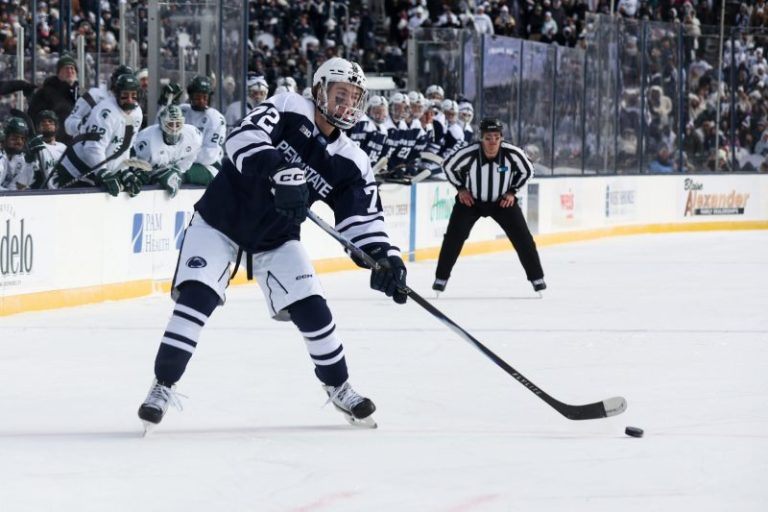
The curious case of Andruw Jones and baseball’s Hall of Fame is nearing a conclusion – a 10-time Gold Glover and 434-homer candidate whose candidacy produces almost as many questions as it answers.

Chief among them: Should a player be penalized for falling so steeply off a cliff at so tender an age?

Jones joined the Atlanta Braves one year after they won the 1995 World Series, famously hitting two home runs in a Fall Classic game as a 19-year-old in 1996, yet never did win a championship.

What he did do was provide elite work in center field – his range giving him the ability to play so shallow that he could cut off bloop hits yet also scamper back for balls over his head – and, at times, elite power.

Yet the offensive era in which he posted the vast majority of those numbers was unprecedented, creating a challenge to properly contextualize his counting statistics. And at the point in his career when he figured to be coasting toward a noble finish, leaving no doubt about his Cooperstown candidacy, he simply vanished.

Now, Jones is in his ninth year of eligibility on the ballot, with just one remaining after 2026. And while his window is closing, the gap is narrowing among voters who value his peak vs. those who’d assign him a grade of Incomplete.

Andruw Jones statistics: A mixed bag

For a variety of factors – the game’s metamorphosis, a wider array of metrics, and perhaps most notably the steroid era through which Jones played – the statistical plateaus that all but ensured Hall election have been muddied.

And Jones finds himself on the fence in almost all of them.

What does 434 home runs get you these days? Well, as a center fielder it should get you to Cooperstown. Mickey Mantle and Willie Mays – with 536 and 660 homers, respectively –  are the only center fielders enshrined who have more longballs as primary center fielders than Jones.

Carlos Beltrán, a superior all-around player than Jones, has one more homer than Jones. He should earn election in this, his fourth year on the ballot.

Yet as a player in the 2000s and beyond, 434 is a crowded neighborhood. On one hand, Jones is even with Juan Gonzalez, a briefly great hitter whose injuries and PED connections crimped his legacy. In another light, 434 is simply “10 more than Edwin Encarnacion, and five fewer than Paul Konerko,” to name a pair of fellows who didn’t come close to Cooperstown.

A far less scientific distinction – Gold Gloves – is kinder to Jones. His 10 Gold Gloves are tied for seventh all-time, with Hall of Famers Ken Griffey Jr., Al Kaline, Mike Schmidt, Roberto Alomar, Johnny Bench and Ichiro Suzuki, along with modern marvel Nolan Arenado, who will have his own interesting case study someday. Anyone with more than 10 save for first baseman Keith Hernandez and shortstop Omar Vizquel is a Hall of Famer.

Pretty good company. So, it’d seem modern metrics might make this a slam-dunk case, right?

Well.

Jones’ 62.7 career WAR – as measured by Baseball-Reference – again puts him in a gray area, albeit one with precedent on his side. Of the 164 major leaguers who out-WAR Jones, 128 – or 78% – are in the Hall of Fame. Factor in the 18 active players, those not yet eligible for Hall election, players significantly tied to PED abuse or named Pete Rose, and that number goes up to 87.6%.

Not unlike his home run total, Jones’ WAR rent district is replete both with all-time greats, borderline cases and more ordinary players. Yogi Berra (59.5), Mike Piazza (59.6) and Suzuki (60) are among those he’s already passed.

Yet he also trails a large trove of players who more or less epitomize the Hall of Really Good – think Willie Randolph (65.9), Buddy Bell (66.3), Dwight Evans (67.2) and Graig Nettles (68). Detroit Tigers infielder Lou Whitaker, still snubbed by the various veterans’ committees, amassed 75 WAR.

 Such ambiguity only makes Jones’ final years more agitating.

Baseball life ends after 30

But goodness, what a beginning. When Jones became the youngest player to homer in a World Series – doing it twice in Game 1 against the Yankees in 1996 – New York’s back pages heralded his arrival in apocalyptic text: HURRICANE ANDRUW.

He needed just one full season to find his footing and by 1998, settled into the great player he’d become: His first Gold Glove, first 30-homer season, an 8.2 WAR campaign driven largely by his defense in the year of Big Mac and Sosa.

Quite a run it was from ’98 through 2005, when his average season looked like this: 30 homers, an .856 OPS, 6.1 WAR, Gold Gloves in every one of those seasons.

It crested in 2005, when Jones hit a career-high 51 home runs and finished second in NL MVP voting, a performance all the more anomalous given that Major League Baseball instituted PED testing with penalties that season, and the Great Shriveling of the game commenced.

They’d ban amphetamines a year later and the game’s offensive numbers began crating further. The balance continued drifting toward the guys on the mound, to the point that 2010 and 2011 both were deemed the year of the pitcher, as if it were 1968 and Bob Gibson was chucking the ball off a mound higher than a Ferris wheel’s apex.

A year later, Jones would be out of the game altogether, his production withering in this new environment. His final All-Star season would come in 2006, a 41-homer, 5.6 WAR season at age 29.

He’d win his final Gold Glove in 2007, though the offensive withering began: A .222/.311/.413 season, with 26 home runs, his last year in Atlanta.

Jones would bottom out at age 31 in 2008, signing with the Los Angeles Dodgers, batting .158 with three homers and, startingly, redlining in WAR, at -1.6. He was booed in L.A., required knee surgery, and the club would eat the $22.1 million owed him in 2009, releasing him while agreeing to pay it out over the next six years.

Jones would eventually retire with a 111 adjusted OPS, or just 11% higher than a league-average player. That was a stat that wildly fluctuated – between 114 and 137 – during his 1998-2006 peak, befitting the Wild West offensive environment of those days.

There are precious few Hall of Famers with adjusted OPSes that low, with Jones’ best comp likely Richie Ashburn, the Phillies legend with the same 111 adjusted OPS yet with 600 more hits than Jones and far more black ink on his baseball card – a two-time batting champ who four times led the NL in OBP.

No, an OPS in the 111 range typically only gets you to Cooperstown – especially on the writers’ vote – with more anomalous achievements. Like Cal Ripken (112), Suzuki (107) or Pudge Rodriguez (106).

Does Jones belong with those guys? Again, this is difficult.

On the fence, until the end

Yet Jones still has a shot. He’s made strong gains on Ryan Thibodaux’s Hall of Fame ballot tracker, clocking 84.2% of ballots, including gains from 11 returning voters.

If 2026 tracks with past years, the integration of non-public ballots will make Jones’ outcome tantalizingly close. A 10th-year boost could be the thing that puts him over the top.

Ultimately, his case may come down to just a handful of ballots. And that’s probably an appropriate fate, given the two phases of an overall fantastic career.

This post appeared first on USA TODAY
The college football transfer portal closes Jan. 16 and players are still popping in.

While the majority of the portal business has been wrapped up plenty of notable names and impact players remain available. We’ll keep you posted with daily live updates of portal commitments.

Indiana and Miami get an extra five-day window (Jan. 20-24) because they are playing in the national championship game on Jan. 19.

Transfers by conference: SEC | Big Ten | ACC | Big 12

HIT REFRESH FOR UPDATES.

Today’s CFB transfer portal signings, commitments

QB

Kirk Francis: Tulsa to Texas Tech
Eli Holstein: Pitt to Virginia
Walker Howard: Louisiana to Ole Miss
Husan Longstreet: USC to LSU
Walter Taylor III: Ball State to Vanderbilt

RB

Joseph Dodds: Baylor to Stephen F. Austin
Justice Haynes: Michigan to Georgia Tech
Jaylen Johnson: South Florida to Bethune-Cookman
Antwan Roberts: Marshall to Arizona

WR

Myles Abernathy: Georgia State to Holy Cross
Jimmy Calloway: Tulane to Tulsa
Noble Johnson: Arizona State to Georgia Southern
Justus Lowe: Oregon to San Diego State
Cooper Perry: Oregon to Cal

TE

Preston Howard: Auburn to Maryland

OL

Joe Brunner: Wisconsin to Indiana
Jeff Burton: Georgia State to Austin Peay
Demetrius Hunter: Houston to Colorado
Dominic Johnson: Georgia State to Toledo
Carter Lavrusky: Kansas to Northern Arizona
Jonte Newman: Texas A&M to Texas
Carde Smith: Colorado to Memphis
Kahlee Tafai: Minnesota to Cal

DL

Elijah Hill: Kennesaw State to Kansas State
Jareb Ramos: Montana to Iowa State
Jeffrey Rush: Ole Miss to Southern Miss
Reese Tripp: Minnesota to Middle Tennessee

LB

Dalton Hughes: South Alabama to Tulane
Blayne Myrick: South Alabama to Miami (Ohio)
Christian Pierce: Western Illinois to Michigan
Alex Sanford Jr.: Purdue to Pitt

DB

Trudell Berry: Vanderbilt to Oklahoma State
Harrison Brun: Minnesota to South Dakota
Tyrone Cotton III: Washington State to Iowa State
Elijah Dotson: Michigan to Missouri
Jaydan Hardy: Oklahoma to Colorado
Malik Hartford: Ohio State to UCLA
Brandyn Hillman: Michigan to Virginia
Rente Hinton: NC State to Marshall
Sione Laulea: Oregon to Missouri
Justin Ross: Navy to Virginia
Roman Tillmon: South Dakota to Boise State
Kenny Woseley: Penn State to Virginia Tech

K

Samuel Hunsaker: Northern Arizona to Pitt

P

LS

Don Volante: West Florida to South Florida
Sam Wolfenden: UNLV to Temple

College football 2026 transfer portal dates: When does transfer portal close?

The portal period now runs from Jan. 2-16, with an extra five-day window (Jan. 20-24) for teams playing in the national championship. The spring portal window in April is no longer a part of the schedule, so January is the only open window for teams to add via the portal in 2026.

This post appeared first on USA TODAY
Texas Tech softball coach Gerry Glasco doesn’t seem to care for the Red Raiders’ No.1 preseason ranking in the Softball America poll.

‘It’s nice to get the attention and nice to get the respect, but it’s rat poison as [Nick] Saban says,’ Glasco said. ‘I’ve never had a team ranked No. 1 in college, so it’s a new thing for me. But it really [means] absolute nothing to me. I just want to work every day, get our team ready.

‘It does mean this time is precious. We’ve got a rare opportunity this year. We’ve got a very unique team with a lot of talent. So it does mean the team’s precious, and we want to really value every opportunity to get better.’

Texas Tech will seek to avenge its 2025 Women’s College World Series loss to the Texas Longhorns. During its first WCWS appearance, the Red Raiders fell 10-4 in Game 3 of the championship series. Their remarkable march to the title series included a 54-14 regular-season record, Big 12 Coach of the Year honors for Glasco and conference regular-season and tournament titles.

The program’s historic run was also led by National Pitcher of the Year NiJaree Canady. The Stanford transfer played in 61 games for the Red Raiders, starting 56 matchups. She finished her junior season with a 34-7 record, 319 strikeouts, and a 1.11 ERA. As a hitter, she had a .278 batting average, 34 RBI, 30 hits and 11 home runs.

Looking ahead to the Red Raiders’ 2026 schedule, Glasco seems excited for the opportunities his roster has to compete and potentially make a run back to the WCWS.

‘The schedule gives up everything we need,’ Galsco said. ‘We’ve got really challenging games with Texas A&M, Florida State, Nebraska ― and then our conference is going to be tough. It’s going to be a great year.’

The Red Raiders open the 2026 NCAA softball season on Feb. 6 against McNeese State.

This post appeared first on USA TODAY
Democrats and Republicans are united in opposing U.S. military strikes against Iran to retaliate for the killing of protesters amid a wave of massive demonstrations against the Iranian government in recent weeks, according to a new national poll.

Seventy percent of voters questioned in a new Quinnipiac University survey said they think the U.S. should not get involved militarily in Iran, with 18% saying the U.S. should take military action.

The vast majority of Independents (80%-11%) and Democrats (79%-7%), as well as a majority of Republicans (53%-35%) said the U.S. should not get involved if protesters in Iran are killed while demonstrating against the regime.

The poll, conducted Jan. 9–12, comes as President Donald Trump has turned up the heat on the regime in Tehran, threatening strikes on Iran if its forces continue to kill demonstrators.

The U.S.-based Human Rights Activists News Agency announced Tuesday that nearly 2,000 people have been killed in the protests. Other reports say the death toll is over 3,000, with the real number likely to be even higher. 

The protests against Iran’s dire economic conditions, which have rapidly escalated in recent days, are seen as some of the most violent since the 1979 Islamic Revolution that installed the current system of clerical rule.

Trump took to social media earlier this week, urging ‘Iranian Patriots, KEEP PROTESTING — TAKE OVER YOUR INSTITUTIONS.’

The president also said that ‘HELP IS ON ITS WAY,’ and apparently pointing to Iranian authorities, he warned, ‘They will pay a big price.’

Pointing to the possibility of Iranian authorities executing some of the protesters, Trump said in a CBS News interview this week, ‘If they do such a thing, we will take very strong action.’

And the White House confirmed on Monday that Trump was weighing whether to bomb Iran in reaction to the crackdown.

But seven in 10 questioned in the poll said that, in general, a president should first receive congressional approval before deciding to take military action against another country.

‘Talk of the U.S. military potentially intervening in Iran’s internal chaos gets a vigorous thumbs down, while voters signal congressional approval should be a backstop against military involvement in any foreign crisis,’ Quinnipiac University polling analyst Tim Malloy said.

But there’s a partisan divide, with 95% of Democrats and 78% of Independents saying a president should first receive approval from Congress, but Republicans, by a 54%-35% margin, saying congressional approval is not needed.

Trump last June ordered U.S. military strikes on three Iranian nuclear facilities as part of Operation Midnight Hammer, amid fighting between Tehran and Israel.

Voters are also divided on Trump’s move earlier this month to capture Venezuelan President Nicolás Maduro and his wife and bring them to the U.S. to face drug trafficking charges. Forty-seven percent supported the president’s decision, with 45% opposed.

And there was an expected partisan divide, with 85% of Republicans supporting the military action to capture Maduro, with 79% of Democrats opposed. Independents were divided.

More than half of voters (57%) opposed the U.S. running Venezuela until Washington is satisfied that the government there will operate the way the U.S. wants it to. Nearly three-quarters (73%) said they opposed sending U.S. ground troops to Venezuela and 55% opposed the U.S. taking over the South American country’s oil sales.

‘Voters are divided on the merits of overthrowing Maduro. And while split on whether in the long run the people of Venezuela will be better off, they strongly disapprove of America’s temporary domain over Venezuela and are heartily against putting U.S. troops on the ground,’ Malloy noted.

Trump has also turned up the volume in his efforts to acquire Greenland from Denmark.

‘The United States needs Greenland for the purpose of national security,’ the president argued in a social media post Wednesday.

Trump’s push for the U.S. to acquire Greenland is causing tension with Denmark and other NATO allies who insist that the semiautonomous Danish territory should determine its own future. 

Trump officials are openly considering all options, including military force, to take Greenland, spurring bipartisan opposition from some in Congress.

According to the poll, 86% of voters said they would oppose military action to take over Greenland. And by a 55%-37% margin, voters said they opposed trying to buy Greenland.

But there’s a stark political divide, with more than two-thirds of Republicans supporting efforts to buy or capture Greenland.

This post appeared first on FOX NEWS