Archive

2026

Browsing

The Senate advanced a three-bill spending package through its final procedural hurdle on Thursday, teeing up a final vote later in the day.

Lawmakers are in a mad dash to avert a partial government shutdown after just exiting the longest closure in history a few short months ago, and they have a deadline on Jan. 30 to beat.

Thursday’s first vote was a key test of whether the warring parties could come together or again fall victim to political divisions as they did in September. The overwhelmingly bipartisan vote proved, for now, that Senate Republicans and Democrats have a truce in the government funding battle.

The roughly $174 billion package, which cruised through the House last week, includes funding bills for commerce, justice, science and related agencies; energy and water development and related agencies; and interior, environment and related agencies.

If passed later on Thursday, it’ll mark six total spending bills that lawmakers have put on President Donald Trump’s desk.

But it’s only halfway to the magic dozen that are needed to fund the government. Many lawmakers acknowledge that given the short amount of time left before the deadline, and lingering issues with the Department of Homeland Security (DHS) funding bill, a short-term funding extension, known as a continuing resolution (CR), will be needed to prevent a shutdown.

Senate Majority Leader John Thune, R-S.D., was hopeful that another round of funding bills brewing in the House could solve the DHS issue. But he didn’t shut down the possibility that lawmakers may need to use a CR just for that agency as political divisions bubble up.

‘That will be the hardest one for sure,’ Thune said. ‘And I can’t predict what happens, but I think you have to, you know, reserve some optionality.’

Congressional Democrats have put their foot down on the DHS funding bill, demanding restrictions on Immigration and Customs Enforcement (ICE) agents in the wake of the shooting of Renee Nicole Good by an ICE agent.

But it’s unlikely Republicans will play ball with that request, meaning the bill will stay in limbo for the time being. That divide won’t be an easy mountain to climb, and the Senate is gearing up to leave for a week, returning to Washington, D.C., the week of the funding deadline.

Senate Democrats also don’t want to turn to a year-long CR, a good sign that Senate Minority Leader Chuck Schumer, D-N.Y., and his caucus are serious about finishing the work of funding the government.

Earlier this week, Schumer lauded Democratic negotiators who worked on the package, and noted that it was full of their own spending priorities meant to push back against Trump.

‘Their leadership stopped the worst of Donald Trump’s devastating cuts, protected investments that millions of Americans depend on, from education to housing to jobs,’ Schumer said. ‘Though this isn’t the finish line, it’s a good step in the right direction.’

This post appeared first on FOX NEWS

The company that owns the iconic luxury retailer Saks Fifth Avenue filed for bankruptcy late Tuesday.

The move comes after Saks Global struggled with debt it took on to buy rival Neiman Marcus, lagging department store sales and a rising online market.

It’s one of the largest retail collapses since the Covid pandemic, and casts further doubt over the future of luxury fashion.

The retailer, which also owns Bergdorf Goodman, said early Wednesday its stores would remain open for now after it finalized a $1.75 billion financing package and appointed a new CEO.

The court process is meant to give the luxury retailer room to negotiate a debt restructuring with creditors or sell itself to a new owner to stave off liquidation. Failing that, the company may be forced to shutter.

Former Neiman Marcus CEO Geoffroy van Raemdonck will replace Richard Baker, who was the architect of the acquisition strategy that left Saks Global saddled with debt.

The company also appointed former Neiman Marcus executives Darcy Penick and Lana Todorovich as chief commercial officer and chief of global brand partnerships at Saks Global, respectively.

Saks Fifth Avenue, the retail arm of Saks Global, listed $1 billion to $10 billion in assets and liabilities, according to court documents filed in U.S. Bankruptcy Court in Houston.

A retailer long loved by the rich and famous, from Gary Cooper to Grace Kelly, Saks fell on hard times after the pandemic, as competition from online outlets rose, and brands started more frequently selling items through their own stores.

The original Saks Fifth Avenue store, known for displaying the likes of Chanel, Cucinelli and Burberry, was opened by retail pioneer Andrew Saks in 1867.

The new financing deal would provide an immediate cash infusion of $1 billion through ‌a loan from an investor group, Saks Global said.

A host of luxury brands were among the unsecured creditors, led by Chanel and Gucci owner Kering at about $136 million and $60 million respectively, the court filing said. The world’s biggest luxury conglomerate, LVMH, was listed as an unsecured creditor at $26 million. In total, Saks Global estimated there were between 10,001 and 25,000 creditors.

In 2024, Baker had masterminded the takeover of Neiman Marcus by Canada’s Hudson’s Bay Co, which had owned Saks since 2013, and later spun off the U.S. luxury assets to create Saks Global, bringing together three names that have defined American high fashion for more than a century.

The deal was designed to create a luxury powerhouse, but it saddled Saks Global with debt at a time when global luxury sales were slowing, complicating an already difficult turnaround for CEO and veteran executive Marc Metrick.

Saks Global struggled last year to pay vendors, who began withholding inventory, disrupting the company’s supply chain and leaving it with insufficient stock.

The thinly stocked shelves may have driven shoppers away to rivals like Bloomingdale’s, which posted strong sales in 2025, compounding pressure on Saks Global.

“Rich people are still buying,” Morningstar analyst David Swartz said last month, “just not so much at Saks.”

Running out of cash, Saks Global last month sold the real estate of the Neiman Marcus Beverly Hills flagship store for an undisclosed amount. It had also been looking to sell a minority stake in exclusive department store Bergdorf Goodman to help cut debt.

On Dec. 30, it failed to make an interest payment of more than $100 million to bondholders.

This post appeared first on NBC NEWS

As college basketball fans well know, the only bracket that matters is the official one, and we’re still over two months away from seeing that one on Selection Sunday. That doesn’t stop the analysts and pundits from speculating, of course, so in that spirit we add our collective voice to the chorus with our initial attempt to project the NCAA men’s tournament field.

Arizona currently holds the mantle as the top overall seed. Joining the Wildcats as projected No. 1 regional seeds are a couple of usual suspects, Connecticut and Duke, and a not-so-usual one, Michigan. Iowa State, which just lost Tuesday for the first time all season, and Vanderbilt, which had its first defeat Wednesday, are on the No. 2 seed line along with Purdue, and Gonzaga.

For the moment, the Big Ten leads all conferences with 10 teams in the field, although a couple of them are among the last four in. The SEC is unlikely to match its record 14 tournament berths from a year ago but does have a healthy nine in the field. As usual the power conferences occupy a vast majority of the at-large slots, but Saint Louis of the Atlantic 10 and long-time WCC contender Saint Mary’s have strong cases for inclusion.

Bracketology: NCAA tournament field projection

Last four in

Indiana, New Mexico, Ohio State, TCU.

First four out

UCLA, Baylor, Creighton, Texas.

NCAA tournament bids conference breakdown

Multi-bid leagues: Big Ten (10), SEC (9), Big 12 (8), ACC (8) Big East (4), Mountain West (2), West Coast (2).

This post appeared first on USA TODAY

The Miami Hurricanes are one game away from winning their first national championship since 2001.
Coach Mario Cristobal and former players emphasize the importance of the Greentree practice fields to the program’s success.
This year’s team is said to embody the intense, competitive practice culture of Miami’s past championship teams.

It’s there off San Amaro Drive, rows of oak trees rustling in the South Florida breeze and paving a path on the pristine Coral Gables campus.

Right into Greentree. 

‘It’s everything,’ Cristobal says.

It’s the foundation of all Miami championship teams of the past, the one undeniable link to this year’s team that’s one game away from winning it all ― and bringing the national title back to Miami for the first time since 2001.

Or as former players proudly declare, when you officially join the club.

“This offseason, I was talking to Mario and he said they were finally practicing like we did,” said former Miami All-American offensive lineman Leon Searcy, who along with Cristobal, were bookend tackles on the Canes’ 1991 national championship team. “I told him, ‘Be careful saying that.’ When we practiced against each other, we tried to kill each other. Good on good, All-American vs. All-American. 

“I told him, ‘You’ve got something if those guys are doing that.’”

And here we are, days from the College Football Playoff national championship game against No. 1 Indiana, and Miami — the program lost in mediocrity for more than two decades — is still standing. Still trading blows, still persevering through a win-or-go-home hole it dug itself in early November. 

Still getting closer and closer to reaching the rare national championship air that five previous Miami teams breathed and bathed in. So many teams since 2001 have talked about winning it all, and reviving the Cane Thing.

None could replicate it. 

All of those coaches who desperately tried to follow Howard Schnellenberger and Jimmy Johnson and Dennis Erickson and Larry Coker. All of those players who talked the Miami talk, who acted like Jerome Brown and Jesse Armstead and Andre Johnson and Jeremy Shockey — and always finished the season in some meaningless bowl game. 

So when Cristobal told Searcy this offseason it looks like the days of old at Greentree, it was like a bolt out of the blue. Especially after the Canes tanked in 2024, losing two of three to finish the season and missing the CFP. 

After Miami wasted an elite talent at quarterback in Cam Ward, and after the failed two-year run of defensive coordinator Lance Guidry — who became the only person who could stop All-World edge Rueben Bain and the rest of the high-level talent on defense. 

If you’re making comparisons to Greentree, it’s about to get serious. And then it did. 

They’re now a game away from ending a 24-year drought for the program that once owned the sport. A near quarter century in the college football hinterlands for the program’s players that once bled for each other in Greentree. 

“It’s all business at Greentree,” says Canes safety Keionte Scott, who arrived in Miami this year after spending three seasons at Auburn. “That was very clear from the moment I stepped on the field.” 

They fight on Greentree, they love on Greentree. They push each other to unheard and unseen limits. 

There was a time, early in his career at Miami, when Canes legend Ed Reed finally realized what Greentree was all about. The team was going through its annual preseason conditioning in the 1999 fall camp, running a timed test of 16 110s .

That’s 110-yard runs, 16 times, with 45 seconds in between runs. And every position had a time limit — or everyone in that group ran again. 

Reed was a sophomore, recruited a year earlier by Butch Davis to help return Miami to its rightful status among the college football elite after NCAA sanctions crippled the program. He and the defensive backs finished one of their 110s, and turned to watch the offensive linemen. 

There was freshman Vernon Carey, who would grow into one of the best linemen in the game, 50 yards shy of completing the 110 and struggling to stay afloat. It was then that the foundational ideal of Greentree hit home.  

The rest of the offensive linemen ran back to Carey, and ran back to the finish line with him — encouraging him to dig deep and find it. 

“That’s Greentree, that (expletive) is real,” Reed said. ‘We aren’t just talking about what we did, we’re telling you how it was. You need to hold yourself accountable for those players who came before you, and what you do now. It’s different when you wear that orange and green, and walk around Miami when you’ve actually done something.”

It should come as no surprise then that Michael Irvin and Ray Lewis — among many other legendary former Canes — have been stalking the sidelines this season. It’s not just about this Miami team, it’s about all the champions of the past and the sweat equity they paid.

“If you want to fit in with the greats,” Searcy said, “You’ve got to be great.”     

They’re one game from the pinnacle moment, one game against white-hot Indiana strolling into Hard Rock Stadium to take what’s rightfully Miami’s. You better believe that’s how these Canes are treating it.

Just like the old Canes would. It’s their home, it’s their party. 

They paid for it on Greentree.

This post appeared first on USA TODAY

The SEC no longer rules college football’s postseason. This next week will test whether the conference can bend the Big Ten to its will at the negotiating table.
The SEC wants an expanded playoff to include 16 teams. The Big Ten reportedly desires 24. Stalemate!
SEC commissioner Greg Sankey usually gets his way, but Tony Petitti isn’t giving in.

The SEC no longer rules college football’s postseason. This next week will be a litmus test of whether the conference still rules the boardroom to determine the postseason format.

Whatever you might say about the SEC’s performance in the College Football Playoff the past few seasons — and, there are plenty of wisecracks to make — Greg Sankey still garners widespread respect and wields power within the commissioner ranks, while his Big Ten counterpart Tony Petitti occupies the lane of fly in the ointment.

These two commissioners of rival super-conferences each have one hand on the wheel of playoff expansion. They remain divided on the destination.

If the Big Ten and SEC cannot agree on an expanded playoff format by a Jan. 23 deadline, the current 12-team format is set to continue for the 2026 season.

Sankey wants 16 teams. He’s used his bully pulpit to campaign for that landing place.

This will test Sankey’s influence. His playoff preference aligns with that of the ACC and Big 12, for whatever that’s worth, but he cannot expand the playoff to 16 without the Big Ten’s support.

“The move to 16 should be a priority for all of us in conference leadership,” Sankey said in mid-November.

The Big Ten, best we can tell, doesn’t care for 16. Or, at least, it opposes the 5+11 format supported by the SEC, ACC and Big 12.

Can SEC get Big Ten on board with 16-team CFP format?

A 5+11 format would expand the 12-team playoff by adding four at-large bids. The past two seasons, the Big Ten would not have qualified any additional teams, if a 5+11 format had been in place.

Petitti makes fewer public remarks than his Power Four peers, making it more difficult to gauge the Big Ten’s truest and latest desires. The Big Ten’s playoff preferences have shifted so frequently you start to wonder whether Petitti is all that serious about expanding the bracket beyond its current size and shape, or whether he’s just presenting untenable ideas to prolong the current format.

The Big Ten’s current preference? It wants 24 teams, according to multiple reports.

In other words, he wants a pathway for 8-4 Iowa to make the playoff.

Greg Sankey usually gets what he wants

Sankey is accustomed to getting what he wants in playoff talks. The SEC dominated the four-team playoff for a decade, and Sankey staunchly opposed an eight-team playoff proposal loaded up with automatic bids.

Sankey wanted either an eight-team bracket with no auto bids or to grow the field to 12, with the latter creating several more at-large bids for the SEC to chase than an eight-team format that included auto bids would have had.

The playoff went to 12. Sankey served as one of the architects of this format.

After the Big Ten raided the Pac-12 and turned that conference into a husk, Sankey swiftly took a spot at the vanguard of altering the 12-team bracket from its initially approved 6+6 format to 5+7, creating another at-large bid. He got his wish.

He took one look at the 12-team playoff, and, after Boise State and Arizona State received first-round byes last year, Sankey called for structural change, so that the top four teams got byes, regardless of whether they were conference champs.

Once again, he lobbied successfully, although that change did not substantially benefit the SEC this season.

At every turn up, Sankey has achieved his goals. His maneuverings included some upsides for conference peers, too.

The 12-team playoff ensured Group of Five representation. The Big Ten is thriving in this structure. The ACC and Big 12 continue to earn representation, which wouldn’t always have been the case if the playoff had stayed at four teams.

Sankey, since the summer, has tried to advance the ball on a 5+11 model. It’s debatable whether playoff expansion would help the SEC end its national championship drought, but, the past two seasons, four extra at-large bids would’ve meant three additional SEC qualifiers last season, and two extra from the SEC this year.

So, you can see why he’d like 16. Four more at-large spots would grease the wheels for the SEC teams that finish 9-3, a record that could become more common next season after the conference adds a ninth conference game.

Sankey has had a yearslong preference of nine conference games. His conference membership resisted for a while, but Sankey eventually achieved the outcome he desired.

Sankey, in his capacity as SEC commissioner, has earned a reputation as “the person that can get things done,” Oklahoma athletic director Joe Castiglione told me before this season.

That quote wasn’t specific to playoff negotiations, but the shoe fits. Generally, Sankey gets his way, but these latest CFP talks are proving to be one of his toughest negotiations.

Twelve works for the Big Ten. If the SEC won’t bite on 24, there’s no obvious reason for Petitti to suddenly embrace a 5+11 model he’s steadfastly resisted.

Blake Toppmeyer is the USA TODAY Network’s senior national college football columnist. Email him at BToppmeyer@gannett.com and follow him on X @btoppmeyer.

This post appeared first on USA TODAY

The man has accomplished virtually everything imaginable on the basketball court.

He’s an NBA champion, but on this day, he wants to talk about the Texas Rangers’ World Series championship.

He’s a 10-time All-Star and six-time first team All-NBA player, but is reminiscing about the lunch he had one day with Ken Griffey Jr. and Alex Rodriguez.

He’s a two-time Olympic gold medal winner, but is looking forward to the upcoming World Baseball Classic.

He is considered one of the greatest players in basketball history, but worships his three favorite Oakland A’s heroes: Vida Blue, Rickey Henderson and Dave Stewart.

He was a teammate in the Olympics with Kobe Bryant, LeBron James and Kevin Garnett, but still is in awe of taking batting practice one afternoon with Mark McGwire when the St. Louis Cardinals came to Phoenix.

He has been the head coach for three NBA franchises, but reveres Baseball Hall of Fame manager Tony LaRussa.

He’s in the Naismith Basketball Hall of Fame, but was thrilled to see Vallejo, California, native CC Sabathia inducted last summer into Baseball’s Hall of Fame.

He is NBA Hall of Famer Jason Kidd, head coach of the Dallas Mavericks.

He’s on the phone Wednesday afternoon, hours before the Mavericks played the Denver Nuggets at home, and is talking all things baseball.

Yes, one of the greatest point guards in NBA history is a fanatical baseball fan.

He can tell you all about Randy Johnson’s Cy Young seasons, Barry Bonds’ home runs and Henderson’s stolen bases.

He was a baseball player himself, right up until college when he snubbed powers like Kentucky and Kansas to enroll at Cal-Berkeley, where he grew up, largely because he was promised he could play basketball and baseball.

“I grew up loving baseball,’’ said Kidd, a catcher and outfielder. “I love it. That’s one of the reasons I came to Cal, because they said I could play baseball after basketball season. I never got the opportunity, though. When I was working out with the guys in basketball, they advised me to pass on baseball in case I got hurt.

“It’s one of the few times I listened.’’

Kidd became a star at Cal, was drafted with the No. 2 pick by the Mavericks, was co-rookie of the year with Grant Hill, and became a superstar in the NBA.

Certainly, he knew he made the right choice picking basketball over baseball, but never lost his passion for baseball.

He is now launching JK Select Baseball, a nationwide youth baseball initiative under the umbrella of the Jason Kidd Foundation.

The program is designed to help create opportunities for kids to receive the best instruction for baseball while receiving mentorship and guidance, whether they want to pursue sports or other careers. Kidd hopes that the baseball initiative builds off the success of the JK Select Girls Basketball program, which has produced more than 45 NCAA Division I athletes.

“Watching the young ladies play basketball, I started wondering if I should participate in youth baseball,’ Kidd said. “I started talking to my wife and others who were in the baseball world. I thought if I could help in women’s youth basketball, I can help in youth baseball. This conversation started getting traction.’’

The baseball initiative will have a three-tiered model for athletes from 7 to 18 years old, emphasizing skill development and education. It will begin in the Dallas area, with hopes of expanding to Washington, California and Pennsylvania.

“I’m in a position to give back and with youth sports,’’ Kidd said, “and sometimes we forget how important coaches are. A lot of us were blessed to have good coaches to help us go where we want to go. That helps create not just athletes, but lawyers and doctors and teachers. If the coaches are better, our youth will be better.’’

Kidd, who played travel baseball himself − although those trips never went further than two hours and not two time zones − also has been reacquainted with youth baseball through his 15-year-old son, Chance. He’s a 6-foot-4, 225-pound catcher who has been drawing attention. He has been invited to MLB’s Dream Series this weekend in Tempe, Arizona, a program designed to help develop minority pitchers and catchers.

“I love watching baseball, it’s just such a great game,’’ Kidd said. “It’s a game of failure. How do you deal with failure? And learning how to deal with failure helps you in all phases of life.’’

Kidd, 52, marvels at the athletes who have been able to have success at both sports. He raves about Kenny Lofton, who led the University of Arizona to the Final Four in 1988, and became a six-time All-Star center fielder who played in the 1995 World Series with Cleveland. He teases Chris Young, the Texas Rangers’ president of baseball operations, saying he should have gone to the NBA. Young was an All-Ivy League center for Princeton’s basketball team before becoming an All-Star pitcher. Sabathia and Jimmy Rollins, who grew up in Oakland, were fabulous multi-sports athletes.

“Growing up in the Bay Area, we were rich in athletes that can play multiple sports,’’ Kidd said. “I’m hoping with our program, we can help kids do whatever they choose. If they don’t want to play sports, helping them become doctors and lawyers and teachers would be great, too.

“I just want to give them the opportunity to grow, not just as players, but as people.’’

Follow Nightengale on X: @Bnightengale

This post appeared first on USA TODAY

President Donald Trump is slated to meet with Venezuela’s opposition leader and 2025 Nobel Peace Prize recipient María Corina Machado at the White House Thursday. 

Trump announced Jan. 3 that the U.S. had captured dictator Nicolás Maduro and that the U.S. would be running Venezuela until a safe transition could occur. But instead of endorsing Machado, Trump cast doubt on her abilities to lead the country. 

‘I think it would be very tough for her to be the leader,’ Trump told reporters on Jan. 3. ‘She doesn’t have the support within or the respect within the country. She’s a very nice woman, but she doesn’t have the respect.’ 

Secretary of State Marco Rubio said that the administration chose not to support Machado because the U.S. didn’t want to make similar mistakes to the ones it’s previously made in the Middle East in Latin America, although he said he had ‘tremendous admiration’ for Machado.

‘But there’s the mission that we are on right now. … A lot of people analyze everything that happens in foreign policy through the lens of Iraq, Libya, or Afghanistan,’ Rubio said Jan. 4 in an interview with CBS. ‘This is not the Middle East. This is the Western Hemisphere, and our mission here is very different.’

A classified CIA assessment, which senior policymakers requested and presented to Trump, evaluated who would be the best fit to oversee an interim government in Venezuela following the overthrow of Maduro, a source familiar with the intelligence told Fox News Digital. Ultimately, it determined that Marduro’s vice president, Maduro’s vice president, Delcy Rodríguez, would be best situated to lead the country. 

Although the Washington Post reported that Trump was annoyed Machado won the Nobel Peace Prize in 2025 — an award he had hoped to receive and that Machado dedicated to him — the White House claimed that Trump’s choices were based on ‘realistic decisions.’ 

As a result, Trump has put his support behind Rodríguez who is now serving as interim president. On Wednesday, Trump shared he had a call with Rodríguez, and later described her as a ‘terrific’ person.’  

‘We are making tremendous progress, as we help Venezuela stabilize and recover,’ Trump said in a social media post Wednesday.

‘This partnership between the United States of America and Venezuela will be a spectacular one FOR ALL,’ Trump said. ‘Venezuela will soon be great and prosperous again, perhaps more so than ever before!’

Specifically, Trump said that he and Rodríguez discussed oil, minerals and national security matters. On Jan. 7, Trump announced that Venezuela would provide the U.S. with 50 million barrels of oil that would be sold ‘immediately.’

Rodríguez voiced similar sentiments following the call, and said that the two’s ‘courteous’ call ‘addressed a bilateral work agenda for the benefit of our peoples, as well as pending matters between our governments.’ 

Meanwhile, Machado has praised Trump for his role overthrowing Maduro, and told CBS News that the president and the U.S. have ‘done much more than anybody thought was possible.’

The White House did not immediately respond to a request for comment from Fox News Digital on what Trump and Machado planned to discuss. 

Fox News’ Morgan Phillips contributed to this report. 

This post appeared first on FOX NEWS

Israel will reportedly honor slain conservative activist Charlie Kirk with an award for his efforts battling antisemitism.

Israeli Prime Minister Benjamin Netanyahu’s office indicated that this recognition will take place at the International Conference on Combating Antisemitism, The Associated Press reported.

Kirk, who founded the conservative organization Turning Point USA, was assassinated while holding an event at Utah Valley University in September.

‘A lion-hearted friend of Israel, he fought the lies and stood tall for Judeo-Christian civilization,’ Netanyahu said in a post on X on the day Kirk was fatally shot.

In the post, the Israeli leader called Kirk ‘an incredible human being’ whose ‘boundless pride in America and his valiant belief in free speech will leave a lasting impact.’

Kirk asserted in a post on X less than a month before he was killed, ‘Jew hate has no place in civil society. It rots the brain, reject it.’ 

Kirk, who was a supporter of Israel, indicated last year on ‘The Megyn Kelly Show’ that some in the pro-Israel camp had unfairly criticized him.

‘The behavior by a lot, both privately and publicly, are pushing people like you and me away. Not like we’re gonna be pro-Hamas,’ he said. ‘But we’re like, honestly, the way you are treating me is so repulsive.’

‘I have text messages, Megyn, calling me an antisemite. I am learning biblical Hebrew and writing a book on the Shabbat. I honor the Shabbat, literally the Jewish sabbath. I visit Israel and fight for it,’ he noted at the time.

The Associated Press contributed to this report.

This post appeared first on FOX NEWS

A Senate Republican wants to codify President Donald Trump’s desire to cap credit card interest rates, but it’s an idea that’s already been met with resistance among top Republicans.

Sen. Roger Marshall, R-Kan., plans to introduce legislation that would make good on Trump’s push to cap credit card interest rates at 10% for one year. However, Republican leadership in both chambers has already pushed back against the idea, arguing that it could lead to credit scarcity.

Marshall’s bill, the Consumer Affordability Protection Act, would limit the amount that credit card companies could charge for one year, capping the ceiling at Trump’s desired rate of 10%.

That cap would only apply to banks and financial institutions with over $100 billion in assets, with the idea being that smaller community banks and most credit unions would not be affected.

Marshall said in a statement to Fox News Digital that the legislation was about ‘giving families breathing room, restoring fairness in the marketplace, and making sure the American Dream is still within reach for everyone who works hard and plays by the rules.’

‘Credit cards were meant to be a tool — not a trap,’ Marshall said. ‘Right now, millions of hard-working Americans are getting crushed by outrageous interest rates that make it nearly impossible to pay down debt and get ahead.’

The bill follows Trump’s demand that Americans no longer be ‘‘ripped off’ by credit card companies that are charging interest rates of 20 to 30%, and even more, which festered unimpeded during the Sleepy Joe Biden Administration.’

He set a target date for the cap of Jan. 20, the one-year anniversary of his inauguration to his second term in office.

‘AFFORDABILITY! Effective January 20, 2026, I, as President of the United States, am calling for a one year cap on Credit Card Interest Rates of 10%,’ Trump said on Truth Social.

Marshall’s push isn’t his first foray into the world of credit — he and Senate Minority Whip Dick Durbin, D-Ill., have a long-simmering bill that would boost competition among credit card payment networks. Trump endorsed that legislation earlier this week, and the bipartisan duo reintroduced it in the Senate shortly after.

Durbin and Sen. Peter Welch, D-Vt., are co-sponsors of Marshall’s latest bill. Trump and Marshall also have an unlikely ally in Sen. Elizabeth Warren, D-Mass. The progressive lawmaker spoke with the president earlier this week about affordability, and both found middle ground on their desire to cap credit card interest rates. But she was wary that any real action, either from the White House or the GOP-controlled Congress, would come to fruition. 

‘I supported it for years,’ Warren said. ‘And when he first floated the idea over a year ago, I said, ‘I’m all in,’ and so far, Trump hasn’t done anything.’

But despite Trump’s edict and the patchwork of bipartisan support, the top Republicans in Congress aren’t completely sold on the idea.

Senate Majority Leader John Thune, R-S.D., warned that capping credit card interest rates could ‘probably deprive an awful lot of people of access to credit around the country.’

‘Credit cards will probably become debit cards,’ Thune said. ‘So, yeah, I mean, that’s not something I’m out there advocating for.’

And House Speaker Mike Johnson, R-La., warned of ‘unintended consequences’ of such a change.

‘One of the things that the president probably had not thought through is the negative secondary effect: they would just stop lending money, and maybe they cap what people are able to borrow at a very low amount,’ Johnson said.

This post appeared first on FOX NEWS
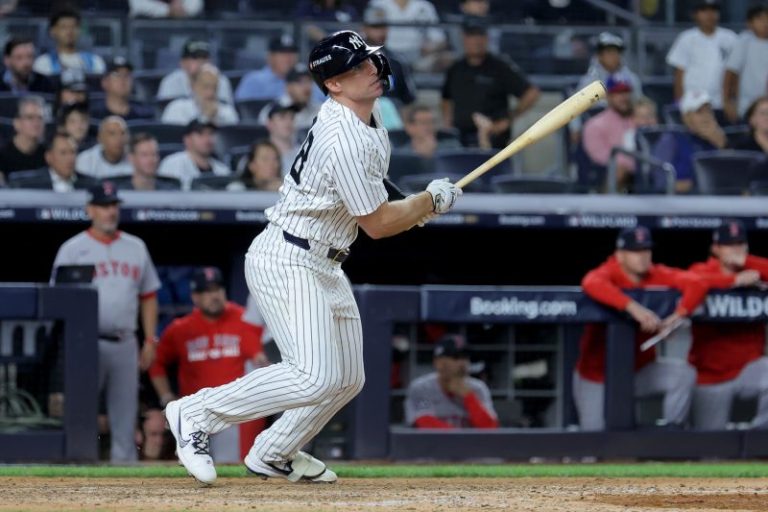
Tense scenes played out in the House of Representatives on Tuesday night as a group of moderate Republicans took a stand against a trio of GOP-led labor rule bills.

One of those bills failed to pass, while the other two were quickly scuttled to avoid the same fate — an embarrassing blow to House Republican leadership and the majority of GOP lawmakers who supported them.

It’s an example of a situation that has been growing increasingly common in Congress’ lower chamber as Republicans wrestle with a party-line majority of anywhere between three and one vote, depending on attendance that day.

‘We’ve got simple bills like this that should be a no-brainer, and we’ve got several moderate Rs that are going to kill the bill,’ Rep. Greg Steube, R-Fla., told Fox News Digital on the sidelines just before the first bill failed. ‘What I foresee, and you’re seeing it in appropriations bills, they don’t care about guys like me … they’re just working with the Democrats to pass them.’

Several Republicans who spoke with Fox News Digital this week said there’s growing concern about Democrats growing their number of legislative victories despite Republicans holding the gavel — or potentially using their numbers to take over the agenda.

As Rep. Tim Burchett, R-Tenn., put to reporters last week, ‘We are one flu season away from losing the majority.’

Steube said he did not believe Democrats could actually take the speaker’s gavel but conceded the situation was tenuous. He pointed to the recent sudden death of Rep. Doug LaMalfa, R-Calif., as an example.

‘You’re a heart attack and a car accident away from the majority. There’s people in our conference that are not young people. I mean, you saw what just happened with LaMalfa. In my opinion, he was young, 65. We have people who are much older in the conference,’ he said Tuesday night.

‘Now, Democrats couldn’t take over the gavel, but like, what you’re seeing here, you’ve got attendance issues, you’ve got seven Republicans voting with the Democrats. You lose more than two, you’re toast.’

Despite that, however, Speaker Mike Johnson, R-La., denied there was a fight for the agenda on Tuesday night.

‘We’re totally in control of the House,’ he told reporters. 

He added, however, that leaders were watching attendance closely.

‘They’d better be here,’ Johnson said of his members. ‘I told everybody, and not in jest, I said, no adventure sports, no risk-taking, take your vitamins. Stay healthy and be here.’

It comes after several recent incidents that have put their tenuous grasp on the House in perspective for Republicans.

Former Rep. Marjorie Taylor Greene, R-Ga., abruptly resigned earlier this year after publicly falling out with President Donald Trump. Rep. Jim Baird, R-Ind., returned on Tuesday badly bruised from a car accident that he spent the week prior recovering from.

And just this week, Rep. Greg Murphy, R-N.C., said he is home recovering from major brain surgery. Rep. Derrick Van Orden, R-Wis., is in his district caring for his ill wife.

Beyond conversations about their own mortality, it’s also spurred discussion among some Republicans about what unexpected life events could do to their majority.

‘The margins are really, really close. A few of us were in a car the other day, driving … if that became an accident, that would have tipped the scale. So I think it’s a concern to be vigilant, prudent, and just understand that the consequences of an accident may have, you know, consequences outside of the norm,’ Rep. Ryan Zinke, R-Mont., told Fox News Digital.

He also warned his fellow Republicans, as a former Navy SEAL, to be mindful of unsafe situations.

‘Say some evil mind wants to change the majority in the House — we don’t have the same protection that the president does. And that’s why I say just remain vigilant,’ Zinke said. ‘I have faith that we’ll continue, but I think it should be a concern, because it’s a big deal to change power outside of a normal election cycle.’

One House Republican speaking to Fox News Digital anonymously pointed out that there appeared to be more Democrats than Republicans voting on a slate of bills — albeit, relatively uncontroversial ones — on Monday night.

‘I’d guess they’re terrified,’ the lawmaker said of GOP leaders on Tuesday. ‘Sometimes life happens — look at Derrick Van Orden … car accidents, COVID, or flu. I mean, I don’t think we had the majority last night.’

‘They’re going to have to get smart about the calendar, probably break some arms,’ that GOP lawmaker said. ‘It’s kind of unprecedented. I don’t know how it would work. Say, unfortunately, someone else passed. You can’t fix that. You may have to wait a few months. You might have to strip committees. There’s a whole lot of uncharted waters to deal with.’

There are also more than a dozen GOP lawmakers running for higher office — something that could also spur absences, as South Carolina gubernatorial candidate Rep. Nancy Mace, R-S.C., pointed out.

She dismissed fears of Democrats taking over the agenda, however.

‘Certainly there’s concern with the slim majority. There are many of us that are running for higher office as well, and as the debate season gets underway, there’s going to be members that miss votes to make debates and to be campaigning,’ Mace said.

Rep. Andy Ogles, R-Tenn., told Fox News Digital he was not worried about Democrats taking over the floor but conceded there was tension over the slim margins for Republicans.

‘I know they’re carefully watching attendance,’ Ogles said. ‘I think the joke is that no two members should travel together at this point.’

But not all House Republicans are agonizing over how the politics of the situation are playing out.

One moderate GOP lawmaker who spoke with Fox News Digital anonymously said the thin majority could save Republicans in the middle from taking politically perilous votes.

‘It gives folks in the center a little more juice on preventing bills from coming to the floor,’ they said.

An example they used is Thursday morning’s expected vote on a bill dealing with the joint-employer labor rule, telling Fox News Digital, ‘There’s an active effort among pro-labor Republicans to block that from coming to the floor, and we can only really get that done in our majority.’

This post appeared first on FOX NEWS