Archive

2026

Browsing

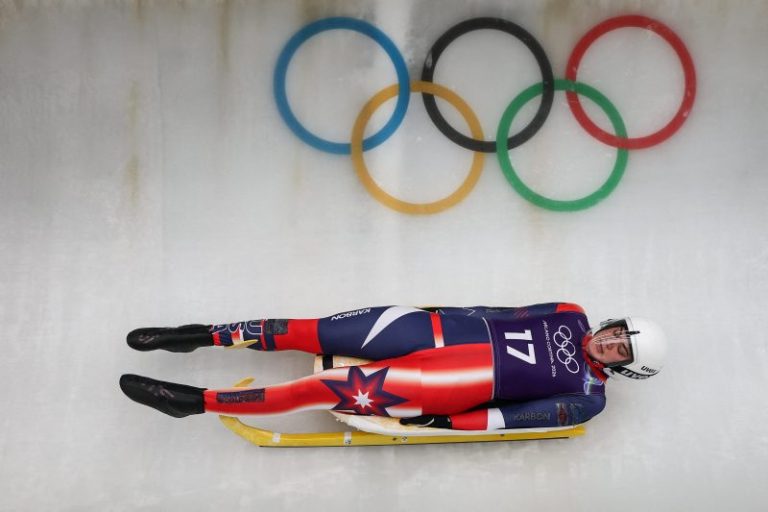
Summer Britcher posted the fastest times for the Team USA during women’s singles luge training runs at the Cortina Sliding Centre on Sunday, Feb. 8.

Britcher’s time of 53.172 seconds on her fifth run was the ninth-best time recorded during the training session, tops among the three American competitors. The women’s luge course at the 2026 Winter Olympics is approximately 1,201 meters (1,313 yards) long.

Germany’s Merle Malou Fraebel and Julia Taubitz posted the top times in Sunday’s two training runs. Taubitz had the fastest time in the six training runs at 52.750, flying down the Cortina Sliding Centre track at a top speed of 119.4 kilometers per hour (approximately 74 mph).

The women’s singles luge medal competition starts Monday, Feb. 9 with two timed runs for each competitor beginning at 11 a.m. ET. There will be two more final timed runs beginning at 11 a.m. ET on Tuesday, Feb. 10. The combined times from all four runs determines the medal winners.

Germany, which won gold and silver in women’s singles luge at the 2022 Olympics, has won the most luge Olympic medals of any country, with 43 overall and 22 gold.

Emily Fischnaller is Team USA’s most decorated women’s luge competitor at the 2026 Winter Olympics. The 32-year-old is the second American to have won multiple luge singles medals, winning bronze at both the 2019 and 2025 World Championships.

Women’s singles luge fastest times for each run

Run 1 — Sandra Robatscher, Italy: 53.553 (Top Team USA finish: Emily Fischnaller, ninth: 53.820)

Run 2 — Elina Bota, Latvia: 53.541 (Top Team USA finish: Ashley Farquharson, eighth: 53.753)

Run 3 — Julia Taubitz, Germany: 53.268 (Top Team USA finish: Emily Fischnaller, 11th: 53.583)

Run 4 — Julia Taubitz, Germany: 53.408 (Top Team USA finish: Emily Fischnaller, fifth: 53.642

Run 5 – Merle Malou Fraebel, Germany: 52.855 (Top Team USA finish: Summer Britcher, seventh: 53.152)

Run 6 — Julia Taubitz, Germany: 52.750 (Top Team USA finish: Summer Britcher, third: 53.172)

This post appeared first on USA TODAY

Japan took gold and silver in men’s snowboarding big air thanks to some big tricks from Kira Kimura and Ryoma Kimata. Defending gold medalist Su Yiming of China overtook 17-year-old American Ollie Martin for bronze to keep Team USA from winning its first medal of the 2026 Milano Cortina Winter Olympics.

But apparently, that all wasn’t enough for NBC broadcaster Todd Richards.

‘That was boring,’ he was caught saying on a hot mic immediately after the event concluded on Peacock. ‘That was so boring. The qualifier was way more exciting.’

Richards is commentating his sixth Winter Olympics. A former professional snowboarder, he competed in halfpipe at the 1998 Nagano Games, where snowboarding made its Olympic debut. He’s also a four-time Winter X Games medalist, winning gold in the halfpipe in 1997, the inaugural year of the Winter X Games.

NBC referred USA TODAY Sports to Richards’ Instagram post on the topic when reached for comment:

Richards stood by his opinion but also expressed his admiration for the competitors.

This story has been updated with new information.

This post appeared first on USA TODAY

The 285th and final game of the 2025 NFL season − Super Bowl 60 − has arrived after five months in the making.

In the ever unpredictable league, the Seattle Seahawks and New England Patriots will meet for the second time in 11 years − this matchup a far bigger surprise than the first given neither of these teams reached the playoffs a year ago. The next question will be whether their second Super Sunday showdown, if not exactly a rematch with Tom Brady and the Legion of Boom having left the stage years ago, can somehow approach the unforgettable Super Bowl 49 classic.

For the final time this season, USA TODAY Sports’ NFL experts submit their predictions − including Super Bowl 60’s MVP:

(Odds provided by BetMGM)

Super Bowl 60 picks, predictions, odds

Seahawks vs. Patriots

This post appeared first on USA TODAY

SAN FRANCISCO − What probably won’t be a very robust NFL free agent market a month from now is apparently already losing some luster.

According to ESPN, the Dallas Cowboys plan to apply the franchise tag to wideout George Pickens, whose rookie contract is set to expire in March. Acquired in a trade from the Pittsburgh Steelers after last year’s draft, Pickens responded with a career season − his 93 receptions, 1,429 receiving yards and nine touchdown catches all career highs.

The franchise tag for wide receivers in 2025 was roughly $24 million but will doubtless increase by a few million this year.

‘I feel like, if anything, it went up,’ Pickens told the Cowboys’ website earlier this week during the Pro Bowl Games when asked about his price tag for 2026.

‘But me personally, my value is just a playmaker type of guy. I feel like any team or wherever I play, I can be playing in Canada, I just want them to know that I’m definitely a playmaker.’

Pickens, a second-round draft pick by Pittsburgh in 2022, also said he ‘would love to’ remain in Dallas.

‘But when you can’t control it,’ he added, ‘you kind of just hope for the best.’

Cowboys owner Jerry Jones has already expressed a desire to retain Pickens.

‘I’m talking to George all the time by virtue of my excitement for him,’ Jones told his team’s website.

‘He’s better than, as far as what he contributed to our team, showing the potential that he could contribute. I’m looking forward to getting things worked out so George can be a Cowboy a long time.’

Dallas wideout CeeDee Lamb has three years left on a four-year, $136 million extension.

This post appeared first on USA TODAY

Kirk Cousins’ time in Atlanta appears to have run its course.

Cousins is expected to be released by the Falcons before the NFL’s new league year begins in March, a person close to the situation confirmed to USA TODAY Sports. The person spoke on the condition of anonymity because of the sensitivity of the matter.

ESPN was the first to report the news.

Cousins’ contract was amended at the end of the regular season to pave the way for his imminent release from the Falcons, a person familiar with the situation told USA TODAY Sports. They spoke on the condition of anonymity because the of the sensitivity of the matter.

USA TODAY Sports interviewed Cousins this week in San Francisco at Super Bowl 60’s radio row. The quarterback was measured and vague about his playing future with the Falcons.

Cousins began the 2025 season as a backup to Michael Penix Jr. However, the veteran quarterback took over as Atlanta’s starter when Penix suffered a season-ending torn ACL in November. Cousins registered eight starts and played in 10 games. He averaged 172 passing yards per game and threw 10 touchdowns and five interceptions. He went 5-3 in his eight starts.

The Falcons originally signed Cousins to a four-year deal worth up to $180 million in 2024. But Cousins lost his starting job to Penix before the end of the 2024 season.

Cousins’ expected release from Atlanta currently makes Penix the early front-runner to resume the starting role. But the Falcons’ new regime has been noncommittal about Penix being the team’s starting quarterback following an up-and-down campaign.

The biggest question for Falcons president of football Matt Ryan, general manager Ian Cunningham and new coach Kevin Stefanski is who’s going to be Atlanta’s starting quarterback in 2026? The new regime, however, has apparently figured out it won’t be Cousins.

Follow USA TODAY Sports’ Tyler Dragon on X @TheTylerDragon.

This post appeared first on USA TODAY

MILAN — Police fired tear gas and used water canons to disperse demonstrators Saturday, Feb. 7 near a Winter Olympics venue, according to the Associated Press and a travel alert issued by international security company Global Guardian.

The confrontation was brief and occurred at the end of a peaceful march by thousands against the environmental impact of the Games and the presence of U.S. agents in Italy, the AP reported. The incident took place near the Santagiulia Olympic ice hockey rink.

At least five demonstrators were arrested on Marocchetti and Monpiani in Milan as of Friday afternoon, according to Global Guardian’s security alert. The company cited local media as the source of details.

‘Anticipate heightened security and associated disruptions in the affected area over the next several hours,’ the security alert reads. ‘Plot route bypasses. Avoid all protests.’

It was unclear if AP and Guardian Global were citing the same protest, but both reports included similar details and locations.

Reuters reported demonstrators carried placards in protest of the environmental, economic and social impact of the Milano-Cortina 2026 Winter Olympics carried placards. One placard, according to Reuters, read, ‘I want a state governed by the rule of law, not by force and privileges for the rich, ICE out.’

‘Normally, we do put a notice up to the delegation, just letting them know where the protests are,’ U.S. Olympic & Paralympic Committee Chief Security Officer Nicole Deal said. ‘So when they’re reading about the city, they’re aware.’

That led to U.S. Figure Skating, USA Hockey and U.S. Speedskating changing the name of their hospitality venue from The Ice House to The Winter House.

‘Our hospitality concept was designed to be a private space free of distractions where athletes, their families, and friends can come together to celebrate the unique experience of the Winter Games,’ the NGBs said in a joint statement provided to USA TODAY Sports, which was the first to report the change. ‘This name captures that vision and connects to the season and the event.’

USA TODAY Sports reporters Jordan Mendoza and Christine Brennan contributed to this report.

This post appeared first on USA TODAY

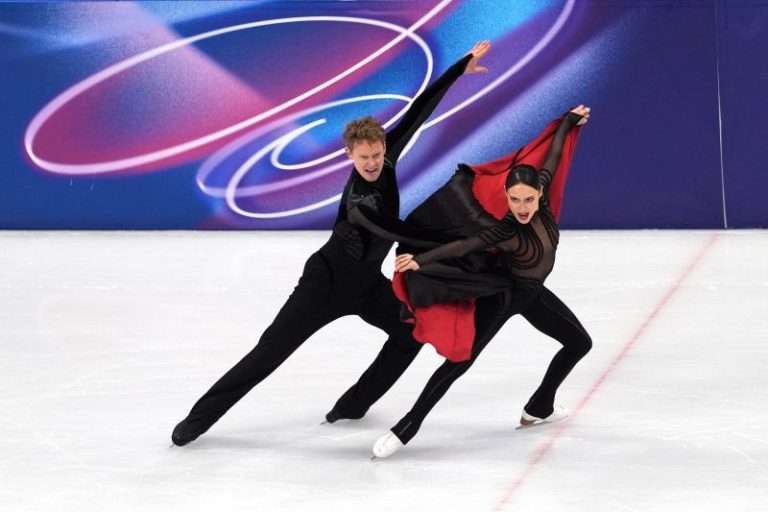
Madison Chock and Evan Bates helped Team USA take the lead in the figure skating team event at the 2026 Winter Olympics.
The ice dance pair faces a demanding schedule of four programs in six days, more than many of their competitors.
Chock and Bates are aiming for an individual ice dance gold medal in addition to a team medal.
Despite the challenging schedule, the duo feels mentally and physically prepared for the competition ahead.

MILAN — You wouldn’t have guessed Madison Chock and Evan Bates just put on another season-best performance, no less on the biggest stage at the 2026 Winter Olympics.

The couple were calm and unceremonious with reporters after their free dance in the team event on Saturday, Feb. 7, which put the U.S. in first place with a five-point lead heading into the medal-deciding final day on Sunday.

Were they not happy? Far from it. Were they mad? Doesn’t seem so.

So what was it? Maybe it’s because they have their eyes set on a bigger prize, but are working through a gauntlet to get to it. Simply put, they’re buckling up for arguably the biggest week of their lives.

Get our Chasing Gold Olympics newsletter in your inbox for coverage of your favorite Team USA athletes

Chock and Bates by far have the most challenging schedule of any figure skaters in the Games: Four programs in six days, including back-to-back duty in the team event on Feb. 6 and 7. Now, they have 48 hours until the ice dance competition opens Feb. 9 with the rhythm dance and concludes on Feb. 11 with the free dance. Their performances in the team event set up Team USA for its second straight gold medal.

“Our team is incredibly strong, arguably as strong as it’s ever been, and I have the utmost faith in them,” Chock said. “I’ll be proud of them no matter what the outcome is.”

But the most decorated ice dance pair in U.S. figure skating history wants more than a team medal in Milan — they want the ice dance gold medal, the one achievement they’ve been chasing for years. But while they did so much heavy lifting for their team, their competition got extra rest.

Laurence Fournier Beaudry and Guillaume Cizeron (France) and Lilah Fear and Lewis Gibson (Great Britain) didn’t skate the free dance because France and Great Britain didn’t qualify for the final. Canada did made the final, but it opted to go with Marjorie Lajoie and Zachary Lagha for the free dance, saving the legs of Piper Gilles and Paul Poirier. They’ll all be well-rested for the ice dance while Chock and Bates will still be recovering.

On paper, it seems like Chock and Bates are at a disadvantage. However, if you’ve seen this duo at all this season, you know that’s far from the case.

“We came into the event knowing that that was a possibility,” Chock said. “We’re mentally and physically prepared.”

For as crowded and deep the ice dance field is, the Americans don’t see it as a competition with others. Bates said they are just competing with themselves.

And every single time, they keep on winning.

“It’s just a progression,” he said. “It’s very cliche, but it is our mindset, and it is our approach, and it’s how we have stayed focused, and it’s how we’ve been training.”

A whirlwind of a week halfway done, but the job is far from over. It’s the biggest challenge of their careers, and this pair is ready for it.

This post appeared first on USA TODAY

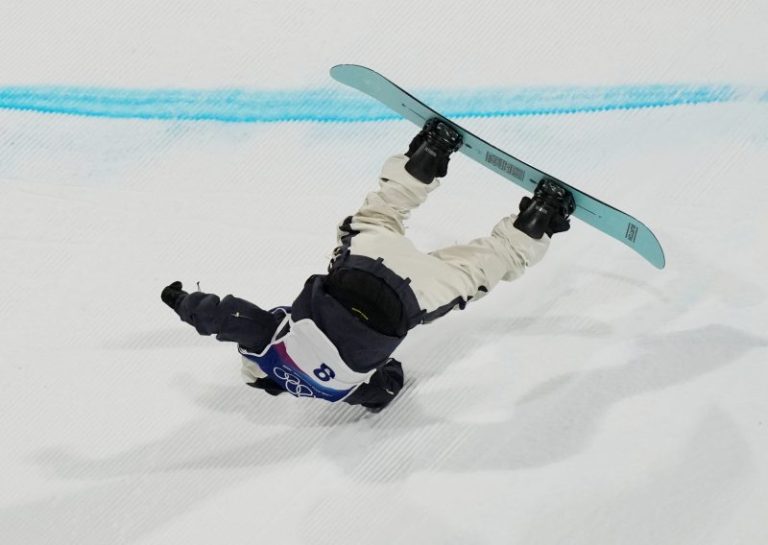
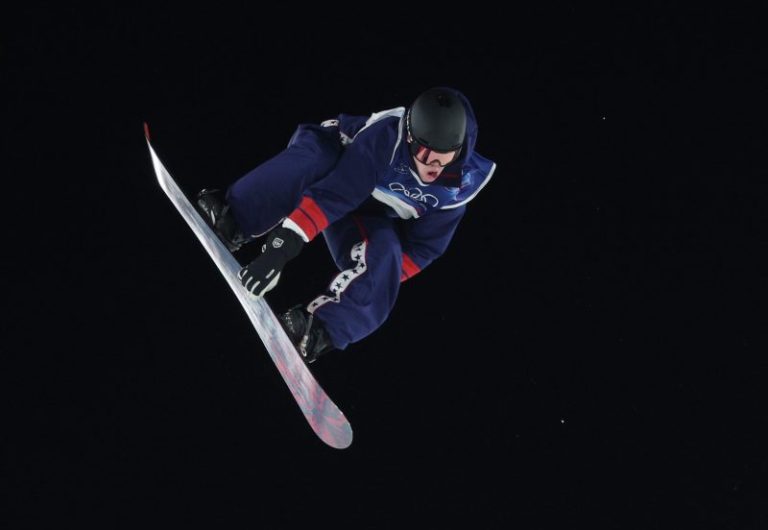
American snowboarder Ollie Martin, 17, finished fourth in the men’s big air final at the 2026 Milano Cortina Winter Olympics.
Martin was pushed off the podium by China’s Su Yiming on the final jump, a move that created some controversy.
He competed with a broken arm sustained just two weeks prior to the Games.

LIVIGNO, Italy – The first competitive controversy of the 2026 Winter Olympics manifested in Team USA missing out on the chance to earn its first medal on the first official day of the Games.

Richards, though, was not wrong. The qualifiers two nights ago here at Livigno Snow Park were more enthralling. An event that gives boarders three chances to do their biggest trick turned into a toned-down display.

Get our Chasing Gold Olympics newsletter in your inbox for coverage of your favorite Team USA athletes

But it gave Martin a real shot at the podium, a position he held until China’s Su Yiming – the reigning gold-medalist in the event – did another switch backside 1900 melon. Yiming caught himself on the ground with both hands, but that didn’t matter to the judges. They rewarded him for going big with a score that allowed him to leapfrog Martin, pushing him off the podium and giving the bronze to Yiming.

“We’re not trying to compete just on difficulty level or who is the best,” Yiming said. “ … It’s about being able to have the best tactics and strategy, other than just challenging yourself to the highest difficulty. Consistency is the most important. I have really prepared many high-difficulty tricks in competition. And I did finish them in my previous training. It’s a pity that I could not present it today.”

Martin declined to speak to reporters, with U.S. Ski and Snowboard saying he was disappointed in the result. A trio of U.S.-based reporters managed to wrangle his mother Anne.

Anne didn’t want to say anything about Yiming’s final jump and subsequent score.

Instead, she passed on an opportunity to acknowledge a fantastic finish to his Olympic debut, as he was the lone American of the four slopestyle/big air members to advance to finals. He qualified ninth and was in 10th going into his last run, when a frontside double 1800 mute propelled him into second.

“I was surprised he was still there for so long,” Anne said.

She added: “I have an incredible amount of faith in Ollie. He knows what he’s doing. He’s very smart about it.”

Anne said it was harder for Martin to make the Olympics and that competing here is more of a celebration. She knew that the frontside double 1800 was in the bag, because he grabs with his left arm – and he broke his right arm two weeks ago while training for the X Games in Aspen, Colorado. He underwent surgery the next day and eventually made his way over to Italy.

“I think he’s doing great,” she said.

Martin is certainly a shy kid who possesses negative interest in the spotlight at this point in his career, it seems.

“He’s just quiet,” Anne said.

But it definitely would have been nice to hear from the kid about that.

“If he was going to do his pullback (1600 – 4.5 revolutions), that would have been crazy and dangerous,” Anne said.

Japan’s Kira Kimura and Ryoma Kimata finished with gold and silver, respectively. Martin will compete next in the men’s slopestyle competition. Qualifying begins Monday, Feb. 16.

Martin owns a snowboarding figure that he brings with him on trips and puts it through flips and tricks to help with his own visualization on jumps and rails. It made the trip to the Alps with him.

“My mom made me bring it,” Martin told reporters during a pre-Games news conference. “Honestly, that toy was really helpful for me. I could use it to visualize. I was able to come up with some tricks with that toy.”

A relative newcomer, Martin placed second in big air at the Youth Winter Games in Gangwon, South Korea, in 2024. Last year, he finished third in both big air and slopestyle at the world championships in Switzerland. His best finish this season came at a World Cup in Steamboat Springs, Colorado (third in big air).

Then came qualifying for the Olympics, then finals – and nearly a podium.

“It’s all going to plan so far,” he said. “It’s really great.”

Imagine how a medal would have fit into said plan.

This post appeared first on USA TODAY

The WNBA made concessions in two areas in its latest collective bargaining agreement proposal, a person with knowledge of the situation told USA Today Sports. The person spoke on condition of anonymity because they’re not authorized to speak publicly about ongoing negotiations.

Coming off a three-hour meeting on Monday in New York, the WNBA promised it would have a counter to the proposal the players’ union submitted six weeks ago. That offer came on Friday evening.

In the Friday proposal, the WNBA made a concession on team-provided housing, the person with knowledge of the situation said. In the revised agreement, one bedroom apartments will be available for players making the minimum salary. The two developmental players on each roster would be provided with studio apartments.

The players’ union also voiced setting a standard for team facilities that would be codified in the new CBA, the person with knowledge of the situation said.

Nothing has changed in terms of revenue sharing or player salaries. The WNBA is offering more than 70% of league and team net revenue. The players’ union has asked for 30% of gross revenue. The salary cap would be $5.65 million per year, rising with league revenues.

The WNBA offer continues to include a maximum $1 million base salary, with a projected revenue-sharing component that raises players’ max total earnings to more than $1.3 million in 2026. The league’s maximum salary would grow to nearly $2 million over the life of the agreement, which would end in 2031. The minimum salary would be more than $250,000 and average salary more than $530,000.

The players’ union plans to meet with leadership to review and assess the league’s counterproposal, a person with knowledge of the situation told USA TODAY Sports.

The regular-season is supposed to tipoff May 8. But before that can happen the Toronto Tempo and Portland Fire will have an expansion draft. Free agency and the WNBA draft also need to take place.

WNBA players authorized the union executive committee to ‘call a strike when necessary’ in December.

‘Having the strike on the table is something that we’re very much aware of, but there’s so many more conversations that have to happen,’ Ogwumike told the AP on Friday. ‘You know, we’re not just going to say, ‘Hey, today’s the day (we’ll strike).’ You know, I think that’s what we’re demonstrating right now is negotiating in good faith.’

This post appeared first on USA TODAY
MILAN — Everything about Ilia Malinin’s Olympic debut was off Saturday night. From the ice to the interviews in the mixed zone, he didn’t quite seem to be himself.

What began as an uncharacteristically shaky, second-place performance in the men’s short program of the team figure skating competition ended with a bizarre comment to journalists in which he said he came into the team competition “with only 50% of my full potential.”

“So that’s what I felt like here today, that’s the way I pace myself, leading up to the individual (men’s) event,” he added.

An hour later, Ari Zakarian, Malinin’s agent, exclusively told USA TODAY Sports that Malinin didn’t mean to infer that he was giving only 50% of his energy to the team event.

“He didn’t mean it the way it sounded,” Zakarian said. “He is pacing himself because of the few days ahead of him, but he always gives 100%. This is a chess game, the team competition and then the men’s event. You have to be smart and be prepared for a long week.” 

Malinin will also skate the men’s long program for the United States Sunday on the final night of the team competition, as first reported by USA TODAY Sports. The two-time world champion and four-time national champion has far more experience on the international stage than either of the other two men on the U.S. team, Andrew Torgashev or Max Naumov. The United States is ahead of second-place Japan by five points with three long programs in pairs, women and men yet to come, but that margin is expected to tighten. 

Malinin then has a quick turnaround to the more important men’s individual event Tuesday and Friday. He is the strong gold medal favorite in that event.

However, Malinin, the 21-year-old self-proclaimed “Quad God,” lost to Japan’s Yuma Kagiyama by a significant amount in the team men’s event Saturday: 108.67 points for Kagiyama to 98 for Malinin. Kagiyama, 22, won the silver medal in the men’s individual event at the 2022 Winter Olympics.

Said Malinin of the evening’s developments: “Of course that wasn’t the perfect, ideal, 100 percent skate that I would’ve wanted to have, but for the standard I set myself today, I think I achieved that.”

Listen to ‘Milan Magic’ on Apple, Spotify, or wherever you get your podcasts. Watch full episodes on YouTube or on USA TODAY.

This post appeared first on USA TODAY