Archive

2026

Browsing

A cousin of the man accused of killing a healthcare executive signed a deal with the professional soccer team Brooklyn FC.  

Peter Mangione, 24, whose cousin Luigi Mangione is awaiting trial for the Dec. 4, 2024, murder of UnitedHealthcare CEO Brian Thompson, inked a deal with the United Soccer League squad that will begin its first year in the league in March. The deal is pending league and federation approval, the team announced.

Mangione played collegiately at Penn State, was named Big Ten Offensive Player of the Year in 2021 and 2023, and finished his career with 32 goals.

Mangione suited up for FC Cincinnati 2 in 2025, making 26 starts and scoring two goals with 5 assists.

Brooklyn FC starts its 2026 campaign at home in the USL Championship on March 8 against Indy Eleven.

Luigi Mangione, who has pleaded not guilty, has been at the Metropolitan Detention Center in Brooklyn and faces a second-degree murder charge and multiple counts of illegal weapons possession.

This post appeared first on USA TODAY

An Iranian cleric has called for the death penalty for protesters detained during a nationwide crackdown amid ongoing unrest against the Islamic regime. 

The cleric’s calls follow President Donald Trump’s threats of U.S. intervention if protesters were met with violence.

Ayatollah Ahmad Khatami’s sermon, which was broadcast by Iranian state radio, reportedly sparked chants from those gathered for prayers. The Associated Press reported that the chants included, ‘Armed hypocrites should be put to death!’

During his sermon, Khatami gave the first overall statistics of the damage from the protests, which began in late December, according to the AP. This information provides a look at the scale of the protests after the regime instituted a nationwide internet blackout on Jan. 8.

The cleric claimed 350 mosques, 126 prayer halls and 20 other holy places had sustained damage, the AP reported. Khatami also claimed that 400 hospitals, 106 ambulances, 71 fire department vehicles and another 50 emergency vehicles sustained damage.

Another 80 homes of Friday prayer leaders had also reportedly been damaged, the AP reported, adding that it could be a sign of demonstrators taking out their frustrations against the government as the leaders hold an important position within Iran’s theocracy.

‘They want you to withdraw from religion,’ Khatami said, according to the AP. ‘They planned these crimes from a long time ago.’

Khatami, who was appointed by Iran’s Supreme Leader Ayatollah Ali Khamenei and serves on the country’s Assembly of Experts and Guardian Council, had previously spoken out against protesters. He described them as being ‘butlers’ of Israeli Prime Minister Benjamin Netanyahu and ‘Trump’s soldiers.’

Khamenei made similar remarks, saying that the protesters were ‘ruining their own streets to make the president of another country happy,’ referring to Trump.

Trump has been vocal in his support for the Iranian people and said early on that the U.S. was ‘locked and loaded’ and ready to intervene if the regime used violence against protesters. It is unclear if and when the U.S. will take concrete action in Iran, but speculation has circulated following the bombing of the country’s nuclear sites in 2025 and the U.S. capture of Venezuelan dictator Nicolás Maduro.

Fox News Digital reached out to the White House and the State Department for comment.

The Associated Press contributed to this report.

This post appeared first on FOX NEWS

President Donald Trump’s administration formally launched the second phase of its plan to end the war between Israel and Hamas this week, shifting from a ceasefire framework toward a post-ceasefire political and security phase for Gaza. The announcement immediately raised a central question that now dominates expert analysis: who will actually disarm Hamas.

U.S. Special Envoy to the Middle East Steve Witkoff announced Wednesday that phase two is underway, describing it as a transition ‘from ceasefire to demilitarization, technocratic governance and reconstruction.’ He warned that Hamas must fully comply with its obligations under the deal, including the immediate return of the final deceased Israeli hostage.

‘The U.S. expects Hamas to comply fully with its obligations, including the immediate return of the final deceased hostage,’ Witkoff wrote on X. ‘Failure to do so will bring serious consequences.’

President Donald Trump reinforced the administration’s announcement on Thursday, writing on Truth Social that the United States had ‘OFFICIALLY entered the next phase of Gaza’s 20-Point Peace Plan,’ following Witkoff’s remarks. Trump said that since the ceasefire, his team had helped deliver ‘RECORD LEVELS of Humanitarian Aid to Gaza, reaching Civilians at HISTORIC speed and scale,’ adding that ‘even the United Nations has acknowledged this achievement as UNPRECEDENTED.’ 

Trump wrote that these developments had ‘set the stage for this next phase,’ which he said would include backing a newly appointed Palestinian technocratic government, the National Committee for the Administration of Gaza, to govern the territory during a transitional period. Trump described himself as chairman of the Board of Peace and said the committee would be supported by the board’s high representative. 

Trump again warned that Hamas must ‘IMMEDIATELY honor its commitments, including the return of the final body to Israel, and proceed without delay to full Demilitarization,’ adding, ‘They can do this the easy way, or the hard way.’ Trump concluded the post by saying, ‘The people of Gaza have suffered long enough. The time is NOW. PEACE THROUGH STRENGTH.’

The new phase envisions the establishment of a transitional technocratic Palestinian administration in Gaza, while the United States works with Egypt and other regional partners to ensure compliance and stability. Yet the announcement offered few operational details, particularly regarding how Hamas would be disarmed after more than two decades of military control in the enclave.

France backs ceasefire, aid and long-term demilitarization

In an exclusive interview with Fox News Digital, Jérôme Bonnafont, France’s ambassador to the United Nations, called the ceasefire an ‘incredible achievement’ and said phase two could help lay the groundwork for peace without Hamas.

‘The Trump plan is establishing a ceasefire, which is an incredible achievement,’ Bonnafont said. ‘It has to go to a massive reopening of humanitarian aid, and it is going to be announced within a couple of days.’

He said the next stage includes an international stabilization force that would support reconstruction and contribute to Hamas’s disarmament.

‘That would help disarm Hamas, and that will help the Palestinian Authority return and democratically restart the management of Gaza as part of the Palestinian territory,’ he said.

Bonnafont emphasized that France views Israel’s security as a priority, particularly in the face of regional threats. ‘We have always been on the side of Israel when it comes, for example, to the threats by Iran to the existence of Israel,’ he said.

At the same time, he said France believes long-term security depends on the creation of a demilitarized Palestinian state living in peace with Israel. ‘We believe that security for Israel in the long term comes with the creation of Palestine,’ Bonnafont said. ‘A Palestine that has to be independent but demilitarized and in peace with Israel.’

The United Nations also welcomed the announcement of phase two, calling it ‘an important step’ while emphasizing adherence to international law and existing U.N. resolutions.

A plan advances, but the hardest problem remains

Israeli and U.S. security analysts broadly agree that phase two cannot succeed without addressing Hamas’s weapons and coercive power.

Dr. Avner Golov, vice president of the Israeli policy institute Mind Israel, told Fox News Digital that, ‘The central challenge is Hamas’s demilitarization,’ Golov said. ‘The only actors truly willing to dismantle Hamas’s military capabilities are the Israelis, and as long as Hamas remains armed, there should be no rebuilding and no IDF withdrawal from the current defensive line.’

‘In the end, there must be a credible military threat from the IDF against Hamas,’ he said. ‘Without such a threat, I see no chance that Hamas will voluntarily disarm.’

Golov also pointed to what he described as a gap between diplomatic commitments and action by regional actors. ‘The key test is Turkey and Qatar,’ he said. ‘They signed a document committing to Hamas’s disarmament, but since then they have not demonstrated real commitment to implementing it.’

Reconstruction without security seen as unrealistic

Jonathan Ruhe, a fellow for American Strategy at the Jewish Institute for National Security of America (JINSA), argued that phase two presents a detailed reconstruction framework but avoids the most politically difficult decision.

‘The peace plan offers a detailed framework for rebuilding Gaza and promoting better governance,’ Ruhe said. ‘But it’s silent on the ‘who’ and ‘how’ of disarming Hamas.’

‘As long as Hamas can interrupt aid distribution, intimidate and kill Gazans who want a better future, and threaten renewed war with Israel, international investment in reconstruction and reform will be near zero,’ he said.

While Trump’s plan calls for Hamas to disarm voluntarily, Ruhe also said Hamas has little reason to do so. ‘Hamas refuses because it thinks it won the war,’ he said. ‘Now there is an urgent need to decide who will disarm Hamas forcefully.’

Ruhe noted that a U.N. Security Council resolution authorizes an International Stabilization Force to disarm Hamas, but he said no country has been willing to put troops in that role. Instead, he said the Trump plan outlines a more limited mission for international forces, focused on guarding aid sites and preventing Hamas resupply.

‘Trump and Netanyahu both said Israel might have to disarm Hamas,’ Ruhe said. ‘But the IDF ground forces need to rest and refit after two years of grueling combat, and a major offensive risks blowing up the international coalition needed for phase two.’

He suggested that well-vetted private military contractors, overseen by U.S. security officials rather than U.S. Central Command, could play a role, though he acknowledged such a move would involve ‘hard fighting.’

A narrowing window

Despite diplomatic momentum, analysts interviewed by Fox News Digital cautioned that time may be working against the plan. ‘The status quo favors Hamas as it continues tightening its grip over its half of Gaza,’ Ruhe said. ‘Announcing the Board of Peace serves important diplomatic purposes, but it won’t mean much on the ground unless and until Hamas is disarmed.’

Golov echoed that assessment. ‘As long as Hamas remains armed, there should be no rebuilding and no IDF withdrawal from the current defensive line,’ he said.

This post appeared first on FOX NEWS

The College Football Playoff national championship game can be a fun stage for final statements from NFL draft prospects, even if it doesn’t end up being a particularly consequential one for pro assessments.

A title itself is plenty compelling when it comes to the stakes for Monday night’s tilt between the Indiana Hoosiers and Miami Hurricanes. But while the matchup might serve as a valuable introduction to a handful of prospects for a few NFL fan bases and amount to good theater, it might not actually swing any player’s fortunes drastically, as an isolated contest can only do so much to reshape a more voluminous body of work.

Still, there will be ample professional intrigue surrounding a showdown that features two of the 2026 NFL draft class’ top players as well as a host of other figures who could hear their names called in the early-to-middle rounds.

Here are the top 10 prospects set to square off in the game:

1. Fernando Mendoza, QB, Indiana

What’s left to say about the Heisman Trophy winner and runaway favorite to be the No. 1 overall pick? Mendoza has been nearly flawless in guiding the Hoosiers to heretofore unknown heights, dicing apart defenses while seldom slipping up. The 6-foot-5, 225-pound passer is about as consistent as it gets from behind center, establishing a clear rhythm while operating with poise and precision. His improvisational skills leave him short of the ‘generational’ prospect label that some might want to affix to him. But between his skill set and readily apparent leadership ability, Mendoza is the kind of player any franchise would be thrilled to put at the center of a rebuild.

2. Rueben Bain Jr., DE, Miami (Fla.)

As a debate about his arm length and pro projection raged on in some far-flung corners of the internet, Bain continued in the CFP doing what he had done for most of the season: dominating all comers. The Atlantic Coast Conference Defensive Player of the Year has notched four sacks in his last three games while helping propel the Hurricanes to the title game, further entrenching himself as college football’s most forceful entity off the edge. Listed at 6-foot-3 and 275 pounds, he’ll surely force some teams to reckon with their positional thresholds − and some still might end up preferring his rangier peers. But there’s little doubt that Bain’s physicality makes him a matchup that offensive linemen dread, and that should remain the case in the NFL.

3. Francis Mauigoa, OT, Miami (Fla.)

The former five-star recruit has enjoyed a steady ascent over his three years with the Hurricanes, remaining a stout presence at right tackle along the way. Mauigoa has long exhibited a penchant for dispatching defenders in the run game, but he’s taken his pass protection to new heights this season. Listed at 6-foot-6 and 315 pounds, he might be seen by some as a guard due to questions about his arm length and recovery ability. But as a potential linchpin for a line, he should have no trouble cracking the early-to-middle first round.

4. Akheem Mesidor, DE, Miami (Fla.)

Bain’s brilliance might typically blot out all other contributors on a formidable defensive line. Mesidor, however, has emerged as a serious riser this season. The Ottawa native and former West Virginia transfer has racked up 10½ sacks, with his production unlocked by his tenacity and savvy as a pass rusher. The 6-foot-3, 280-pound Senior Bowl invitee will turn 25 in April and could be an early liability in the run game, but he shapes up as an instant impact presence in creating pressure off the edge.

5. Carter Smith, OT, Indiana

The Big Ten Offensive Lineman of the Year has been the picture of reliability up front for the Hoosiers, seldom ceding pressure and setting the tone for a line that has surrendered just 22 sacks in 15 games. Smith himself hasn’t been responsible for a single sack on 372 pass-blocking snaps, according to Pro Football Focus. The 6-foot-5, 315-pound blocker might be headed for a move inside due to his frame, but his overall toughness in all phases of blocking should earn him plenty of fans among coaches and front offices in the pre-draft process.

6. D’Angelo Ponds, CB, Indiana

Some teams simply might not be able to look past Ponds’ 5-foot-9, 173-pound frame. For those that don’t see it as a sticking point, however, a supremely talented nickel corner could be within reach. As one of several players who followed Curt Cignetti from James Madison to Indiana, Ponds has maintained his level of excellence in coverage even as his competition became considerably more imposing. Advanced instincts and ball skills keep him in the mix for any throws made underneath. While his size will always leave him vulnerable in matchups with bulkier wideouts, there’s a clear path for Ponds to excel if he’s positioned properly within a defense.

7. Omar Cooper Jr., WR, Indiana

Many probably know him as the receiver responsible for this season’s most impressive catch with his incredible toe-tapping end-zone grab against Penn State. That play was just a window into what Cooper can offer a passing attack. The 6-foot, 201-pound target should become a fast favorite of the quarterback in any offense, thanks in part to his knack for racking up yards after the catch. He’s also adept at pulling off a contortionist act when he has to haul in difficult throws near the sideline. Cooper likely won’t have a significant role in the downfield game, but he’ll elevate the floor of whatever team he joins by handling lots of underappreciated tasks.

8. Elijah Sarratt, WR, Indiana

Choosing between Cooper and Sarratt might just be a matter of taste. Sarratt just barely trails Cooper in catches (62) and receiving yards (802) but has the advantage on touchdowns (15). He’s not a towering target, but the 6-foot-2, 209-pound catcher is adept at walling off defenders to come down with contested catches. That skill set should make him an attractive asset to teams searching for someone to own the middle of the field, though his role might need to be reworked − perhaps operating as a big slot is in his future − to account for some athletic limitations.

9. Keionte Scott, CB, Miami (Fla.)

When one hears of a player with Scott’s level of consistent disruption, they might envision an edge rusher or a linebacker. Scott creates all of his havoc as a nickel corner. The 6-foot, 192-pound cover man had to take the junior college route out of high school before stops at Auburn and Houston, and his hardscrabble path is reflected by his hyperaggressive play. He’s cut from the Amik Robertson or Upton Stout cloth as a hyperaggressive playmaker, but his larger build should allow him to remain a force in the run game at the next level. Scott will need to land with a team that can carve out a role that caters to his strengths, as he can be prone to breakdowns in coverage, particularly if forced outside. In the right scheme, however, he could generate a good number of splash plays.

10. Carson Beck, QB, Miami (Fla.) 

There’s an inherent strangeness to Beck ending up here. It’s no doubt odd that a player who began the 2024 season as the prohibitive favorite to go No. 1 overall would be so far back in the pecking order. Yet it’s also confounding that a passer whose stock seemed so damaged after his unraveling at Georgia could resuscitate his pro outlook by turning things around with the Hurricanes. Fading into the background a bit has served Beck well, as he and Miami’s offense have thrived when he has embraced operating as a quick-triggered distributor. But limitations with his arm strength and mobility leave him ill-equipped to find solutions when his initial plan goes awry, and his lapses in judgment in airmailing turnover-worthy throws is concerning for a signal-caller who likely will have to find his way as a backup for at least a few years to start his career. Yet in a paper-thin quarterback class, he’s among the more enticing second-tier options.

This post appeared first on USA TODAY

The debut of Cole Hamels on the Hall of Fame ballot this year is rekindling memories of 2008, making this year’s voting even more, for fans in Philly, special.

Three members of the Philadelphia Phillies’ World Series-winning team from that magical season 18 years ago are up for election in the Hall’s Class of 2026. In addition to Hamels, second baseman Chase Utley is making his third appearance on the ballot and shortstop Jimmy Rollins is entering his fifth year of consideration.

While their vote totals on publicly revealed ballots indicate all three will fall short, momentum does seem to be building for the trio.

While it may not be this year, it is possible BBWAA voters could eventually give them a brotherly shove across the 75% threshold to qualify for induction. Let’s examine their individual cases a bit more closely.

Chase Utley: Hall of Fame calling?

In his second year on the ballot in 2025, Utley collected just under 40% of the vote, gaining 11 percentage points from his rookie year. So far in this cycle, he’s up to 68% out of 171 public ballots on the 2026 Baseball Hall of Fame vote tracker (as of Jan. 13).

I’ve voted for him all three years because of his sustained excellence, both offensively and defensively, at second base. A six-time All-Star and four-time Silver Slugger award winner, Utley was the glue that held those talented Phillies teams together. He was a fixture at the top of the order during Philadelphia’s dominant run of five consecutive NL East titles from 2007-2011, leading the National League in runs scored in 2006 with 131, and finishing in the top five twice more.

He also had great defensive metrics (131 fielding runs ranks seventh all-time at second base), but he never won a Gold Glove. And for the decade between 2005 and 2014, only Albert Pujols accumulated a higher Wins Above Replacement (WAR). In the words of longtime Phillies broadcaster Harry Kalas, Utley was ‘The Man.’

MY 2026 HALL OF FAME BALLOT: Are Hamels, other Philly stars worthy?

Cole Hamels a Hall of Fame surprise?

Hamels seems to be off to a strong start in his ballot debut. Currently receiving support from 32.6% of the public voters, he’s tracking ahead of the 20.6% Felix Hernandez received in his first year of eligibility. (Hernandez, meanwhile, is up to 59% currently.)

The lanky lefty with a mid-90s fastball, an above-average curve and a devastating changeup spent 15 seasons in the majors, 10 of them with the Phillies. While his overall numbers − especially his 157 career wins − don’t quite match up to those of other starting pitchers in the Hall, they do compare favorably with his contemporaries.

While ballotmates Andy Pettitte and Mark Buehrle each won over 200 games, Hamels’ modest win total is just six behind Fernandez. But in terms of adjusted ERA (taking defense, park factors and other elements into consideration), Hamels’ 123 is the best of the bunch. And there’s that stellar postseason run in 2008, when Hamels went 4-0 with a 1.80 ERA in five starts, leading the Phillies to their first championship in 28 years. That October, he was named MVP of both the NL Championship Series and the World Series.

Jimmy Rollins’ Hall of Fame vote rising

Rollins may have the weakest case of the three former Phils, but he’s seen his vote percentage steadlily increase over his previous four years on the ballot to 18.0% last year. Currently, he’s at 23.6% on the Tracker.

The undersized (5-7, 175) Rollins was an extremely well-rounded and durable player throughout his 17-year career, winning four Gold Gloves and one Silver Slugger. He was the NL MVP in 2007 and although he made just three All-Star teams, he was the leadoff man and everyday shortstop on each of those five consecutive division championship teams.

A speedy switch-hitter, Rollins stole 470 bases with a success rate of 81.7%. He also had four seasons of at least 20 homers and he led the league in triples four times. He’s the only shortstop in baseball history with 200 home runs and 400 stolen bases in his career.

This post appeared first on USA TODAY
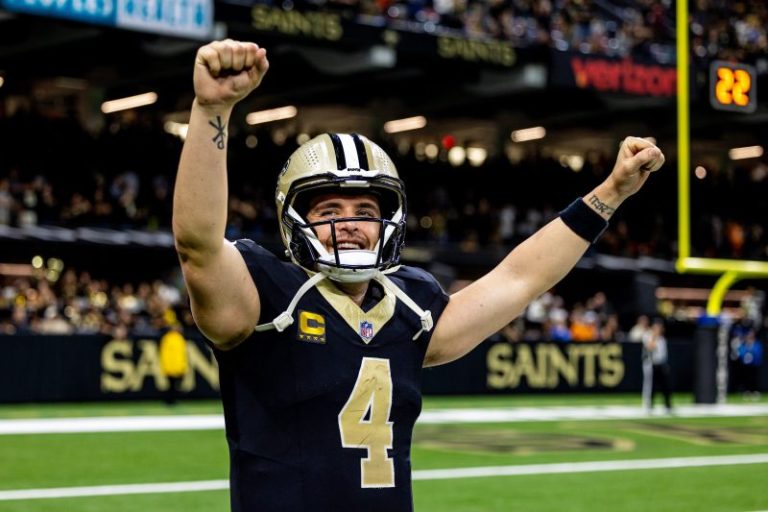
U.S. Ambassador to the United Nations Mike Waltz warned Iran during an emergency meeting of the Security Council that President Donald Trump ‘is a man of action’ who has ‘made it clear all options are on the table to stop the slaughter.’ 

Waltz said Thursday that, ‘We all have a responsibility to support the Iranian people and to put an end to the regime’s neglect and oppression of the Iranian nation.’ 

Iran has been plunged into turmoil amid recent anti-government protests, with the death toll from those being at least 2,677, the U.S.-based Human Rights Activists News Agency told The Associated Press. 

‘Colleagues, let me be clear. President Trump is a man of action, not endless talk like we see at the United Nations. He has made it clear all options are on the table to stop the slaughter. And no one should know that better than the leadership of the Iranian regime,’ Waltz added. 

Waltz’s remarks came as Gholam Hossein Darzi, the deputy Iranian ambassador to the U.N., accused the U.S. of trying to destabilize the Islamic Republic.

‘Under the hollow pretext of concern for the Iranian people and claims of support for human rights, the United States regime is attempting to portray itself as a friend of the Iranian people, while simultaneously laying the groundwork for political destabilization and military intervention under a so-called humanitarian narrative,’ Darzi said. 

Waltz dismissed the claim, telling diplomats at U.N. headquarters on Thursday that Iran’s leaders are ‘afraid of their own people.’ 

‘I would like to address the allegation put forward by the regime that these inspired protests are somehow a foreign plot to give a precursor to military action. Everyone in the world needs to know that the regime is weaker than ever before, and therefore is putting forward this lie because of the power of the Iranian people in the streets,’ Waltz said.

‘They are afraid. They’re afraid of their own people. Iran says it’s ready for dialogue, but its actions say otherwise. This is a regime that rules through oppression, through violence, and through intimidation, and has destabilized the Middle East for decades. Well, enough is enough,’ he added. 

‘The regime’s dereliction of duty to its own citizens is what has put the ayatollahs in the positions they are in today with hundreds of thousands, if not millions, protesting in the streets after decades of neglect and abuse. So everyone should ask themselves, everyone sitting here today, how many people are dead?’ Waltz also said.

White House press secretary Karoline Leavitt told reporters on Thursday that Trump and his team ‘have communicated to the Iranian regime that if the killing continues, there will be grave consequences.’ 

‘And the president received a message as he revealed to all of you and the whole world yesterday, that the killing and the executions will stop. And the president understands today that 800 executions that were scheduled and supposed to take place yesterday were halted. And so the president and his team are closely monitoring this situation, and all options remain on the table for the president,’ she added. 

This post appeared first on FOX NEWS

The divisional round of the NFL playoffs is regarded as the best weekend of the season by some fans. Four games over two days, two of them including the regular season’s best teams − insomuch as one might regard the No. 1 postseason seeds as the best squads.

Saturday, the Denver Broncos, the top seed in the AFC, will host the Buffalo Bills in a rematch from the 2024 wild-card round − Josh Allen and Co. cruising best then-rookie Bo Nix and the Broncos 31-7. In the NFC, the San Francisco 49ers and Seattle Seahawks will meet for the third time (and second in three weeks) − the ‘Hawks returning to action at Lumen Field following their bye.

Sunday afternoon, the New England Patriots will try to advance to their first AFC championship game in seven years − by beating a red-hot Houston Texans squad hoping to get that for for the first time. Ever. The final matchup of the weekend quartet will pair the Los Angeles Rams and Chicago Bears, who will square off in the postseason for the first time in 40 years − since the legendary ’85 Bears shut out the Rams at Soldier Field.

Which teams will qualify for the NFL’s version of the Final Four? Our experts make their selections:

(Odds provided by BetMGM)

Divisional round picks, predictions, odds

Bills at Broncos
49ers at Seahawks
Texans at Patriots
Rams at Bears

This post appeared first on USA TODAY
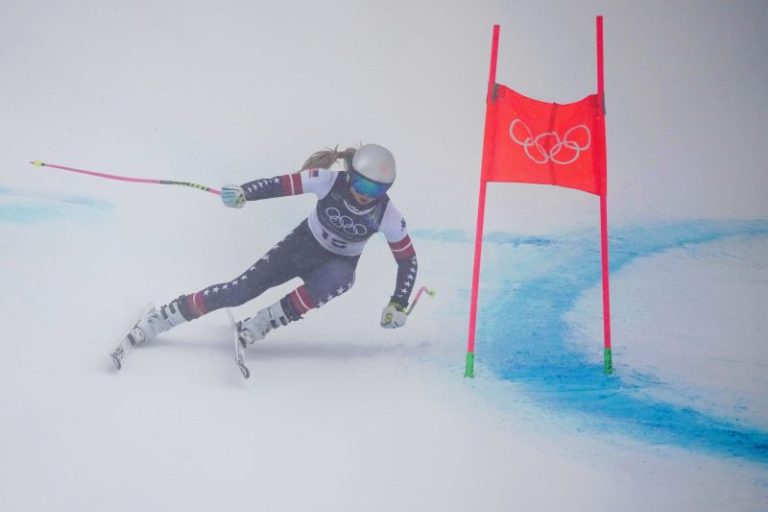
The Texans’ defense ranked among the league’s best during the regular season in yards allowed, points allowed, and takeaways.
Players credit their success to a close-knit, ‘college-esque’ camaraderie and the ‘swarm culture’ instilled by head coach DeMeco Ryans.

PITTSBURGH – Will Anderson Jr. had a dream. 

“I said ‘Look, I’m not Martin Luther King,’” Anderson said about his interaction with teammate Sheldon Rankins before the Houston Texans departed for Pittsburgh to face the Steelers in the wild-card round. “But, ‘I had a dream that you had a scoop. But I don’t know what’s going to happen.’ The dream went blank after that.”

Lost to Anderson’s REM cycle was something that played out perfectly for the Texans. In the fourth quarter of their eventual 30-6 thrashing of the Steelers, Anderson Jr. and Rankins combined to sack Aaron Rodgers, who lost the ball (Anderson received credit for the forced fumble). Rankins picked up the pigskin and scampered 33 yards for a touchdown that took a 10-6 game to a 17-6 difference with 11:23 remaining. Houston’s defense wasn’t done scoring – Calen Bullock iced the game, and potentially Rodgers’ career, by picking off a pass and returning it 50 yards for the game’s final score. 

The Texans’ defense, led by head coach DeMeco Ryans and defensive coordinator Matt Burke, has been dominant for an entire season. The Seattle Seahawks are the lone Super Bowl contender with a claim as legitimate as the Texans’ for best defense in the league. Houston finished the regular season first in yards allowed per game (277.2) and then surrendered 175 net yards to the Steelers. They allowed the second-fewest points per game (17.4, while the Seahawks were 17.2). The Texans were third in total takeaways (29) and finished tied for seventh in sacks. No team allowed fewer first downs per game than them (16.2). 

“The biggest thing that we were talking about – like, OK what we did in the regular season, it ain’t going to matter when we get into the playoffs” Anderson said. 

He wanted his teammates to keep the same energy while raising the bar and got just that. According to Next Gen Stats, he and Danielle Hunter combined for 15 pressures. The Texans, as a team, generated a 45.9% pressure rate (17 total times). Rodgers had been pressured a league-low 21.5% of his dropbacks during the regular season. The minus-33.4 expected points added (EPA) is the lowest mark by any playoff defense in the last decade. They haven’t allowed a positive EPA-per-dropback since a Week 2 loss to the Tampa Bay Buccaneers.

“I thought everybody was dialed in,” Anderson, the former Alabama standout, said. “You talking about popping it off, big plays, taking the ball – doing whatever it takes to win the game.” 

With a divisional-round matchup on the road against the New England Patriots on deck, the Texans’ defense has designs on something more than recognition.

“We’re here for it all,” Rankins said. “I won’t sugarcoat or dance around that topic. We’re here for the whole thing. This is just a stepping stone for where we want to go.” 

Texans’ defense being the best ‘for each other’

A 10-year veteran, Rankins would like to think he’s been a part of defenses in which he’s been able to trust the other 10 guys on the field as he has done with the 2025 Texans. But this group takes the cake, he said.

“I also think we have a special, close group,” he said. “I think I’ve been a part of some special groups, but the closeness hasn’t always been to this level. It almost, to a degree – especially with how many younger playmakers we have, it almost has a college-esque feel.” 

The inside jokes and light-hearded ribbing. That not only breeds camaraderie in the locker room, Rankins said, but spills over onto the field. 

“How we play for each other,” he said, “not just with each other.”   

Coaches can use that to their advantage. Because guys know one another so well, communication is easier. 

“Instead of a guy having to shout something, it can be a look, it can be a hand signal, a wink here, a wink there, or just even if it’s getting a guy’s attention, a guy can know exactly what that means and go out there and execute it fast,” Rankins explained. “I think that camaraderie, that togetherness that we have throughout the building, throughout the locker room, definitely spills over. It allows us to just go out there and play for each other, but play fast while doing it.” 

Houston safety Jalen Pitre said having guys who think of themselves as offensive players has made the Texans’ other unit lethal. 

“These are offensive players that play defense,” he said. 

Pitre said they’ll let those outside the locker room determine whether they are the best unit in the NFL. 

“I never really think about that,” he said. “I know we have a talented group. But I never really think about ‘Who is the best?’ and all that stuff. Like, we just show up ready to execute and let the numbers speak for themselves.”

“We take pride in that,” said Rankins, who gave the offense props for controlling the clock and converting third downs to stay on the field against Pittsburgh. 

Any defense would sign up for that type of performance from the other side of the ball, Rankins said. 

“That allows us to really pin our ears back and put pressure on teams,” he said. “Because if our offense is doing that, the pressure is on their offense to match it.”  

Ryans tells his team they can shut any offense down. The confidence flows from the coaching staff to the players, who keep a chip on their shoulder every time they show up for work. 

“That’s our mindset: we’re the best defense,” Bullock said. “So we got to show it and work throughout the week to prove that we’re a great defense. So when we go out there, we got that confidence, nothing can hold us back.” 

Texans surge from 0-3 to earn opponents’ respect

Texans cornerback Kamari Lassiter knew the unit had the potential to dominate based on offseason workouts. 

“Seeing guys doing what they’re doing now,” he said. “Seeing the d-line go hunt. Seeing the (linebackers) do what they do. Communicate, lead, seeing the back end play sticky, play physical, play fast. We knew we had something special.” 

A lot of people counted out the Texans after their 0-3 start, Bullock said. 

“We set a goal. We knew we had the guys,” he said. “We worked every single day to be the best defense.

“We just kept our head down, and we kept pushing.”

When they were 0-3, and Andreson saw how the team kept responding, “everybody rallying together, that’s when I knew what our foundation was.” He tipped his hat to Ryans and “what he’s instilled.” The coach wanted a ‘swarm culture. “

“That’s what’s been built here,” Anderson said.  

It’s something Patriots head coach Mike Vrabel noticed. 

“They’re not only talented,” Vrabel said Wednesday, “but they have a play demeanor that I can appreciate.”

What does that mean? Houston chases the football, Vrabel said. Having two demons on the edge in Anderson and Hunter – both of whom also are effective against the run – also helps.  

“If they get blocked,” Vrabel said, “they don’t stay blocked long.” 

“All the hype is deserving from what I’ve seen,” he said. “We’ve got to be able to stay ahead of the chains. We’ve got a tough task. We’ll have our hands full.”

Patriots center Garrett Bradbury said he sees the San Francisco 49ers and Robert Saleh’s influence on Ryans’ scheme. Houston will dare New England to run the ball. So the Patriots must do so efficiently. That’s a challenge every offensive lineman wants, Bradbury said. 

“I think what you see is who they are,” Bradbury told USA TODAY Sports. “It’s what DeMeco prides that team on. They’re a really good defense.

“They want to rush the passer every single play, and they’re gonna rush the passer on the way to stopping the run.” 

“It’ll be a great matchup,” Bradbury added. “I’m excited for the game.”

This post appeared first on USA TODAY
With the conclusion of the world juniors and the NHL season beyond its halfway point, the 2026 draft is quickly entering the forefront of discussions across the hockey world. 

NHL commissioner Gary Bettman announced this week the draft will be hosted at Buffalo’s KeyBank Center in June, becoming the first arena to host the event in its decentralized format since it was introduced at The Peacock Theater in Los Angeles last year.

The NHL’s Central Scouting department also released its mid-term rankings, headlined by Gavin McKenna, Ivar Stenberg and Keaton Verhoeff, sparking debate among scouts and prospect enthusiasts. Player evaluation for this class is becoming more intriguing with each passing day.

Considering the current NHL standings and the organizational needs of the teams positioned to select in the lottery, let’s look at one of many ways the top 16 picks in the draft could fall next summer.

(Draft order determined by standings, sorted by points percentage, before games on Jan. 15, 2026)

NHL mock draft: Top 16 picks

1. Vancouver Canucks: Frolunda (Sweden) left wing Ivar Stenberg

Stenberg took his game to new heights in the biggest moments of the world juniors. He was just as dangerous as a distributor as he was a finisher, and his ability to break down defenses and make high-end plays under pressure made him one of the tournament’s best players. He scored a game-winning goal in his return to Frolunda, and his historic scoring pace in the Swedish League will make him a top-three pick this summer.

2. Winnipeg Jets: Penn State (NCAA) left wing Gavin McKenna

McKenna’s showing at the world juniors was cause for debate. He finished second in tournament scoring while being a catalyst on the best power play at the event. His play off the puck and his overall compete level still left a lot to be desired, however. He has the tools to be a generational offensive talent, but his spot as the No. 1 pick in this draft is no longer a lock. Winnipeg needs another top-end winger anyway.

3. Calgary Flames: North Dakota (NCAA) defenseman Keaton Verhoeff

With Rasmus Andersson trade rumors intensifying, the Flames could land a long-term replacement in Verhoeff as a right-shot defenseman who can log big minutes and play in all on-ice situations. There wasn’t a ton of opportunity for him at the world juniors to showcase his skills with Team Canada, but a big second half at North Dakota should reinforce his status as the top blueliner in this class.

4. St. Louis Blues: Boston University (NCAA) center Tynan Lawrence

Lawrence suited up for his first three games of college hockey after leaving the USHL’s Muskegon Lumberjacks to join Boston University. He centered the team’s top line alongside two top prospects in the NCAA, Cole Eiserman and Ryder Ritchie. While there’s clearly going to be an adjustment period, his motor, defensive contributions and ability to elevate teammates will translate well and should make for an intriguing push to become the top pick in this draft.

5. New York Rangers: Jukurit (Finland) defenseman Alberts Smits

Smits’ draft stock skyrocketed after his showing at the world juniors. He averaged the second-most ice time in the tournament at 23:40, was responsible for handling every tough matchup Latvia faced, and was the driving force of the team’s offense. The 18-year-old was named to Latvia’s Olympic team, and with another impressive showing, he could be the first defender off the board this summer.

6. Chicago Blackhawks: Windsor (OHL) left wing Ethan Belchetz

At 6-foot-5 and 228 pounds, Belchetz has the frame of an enforcer with the vision and IQ of a playmaker, making him a one-of-a-kind prospect in this class. His biggest concern this season has been his skating and overall pace, but he still feels like a solid top-six forward with a set of tools that teams don’t typically let slide beyond the top five. The Blackhawks could eventually play him with Connor Bedard or Frank Nazar.

7. Anaheim Ducks: Sault Ste. Marie (OHL) defenseman Chase Reid

Reid is a talented athlete who processes offense at a very high level while defending with purpose. There are few players with his tools in this class. There were times when his aggressiveness in driving play at the world juniors worked against him, but he never let mistakes discourage him. His willingness to be a difference-maker with each shift is admirable, and he could help an aging right side of the Ducks’ defense.

8. Columbus Blue Jackets: Djurgarden (Sweden) center Viggo Bjorck

Despite being Sweden’s youngest player at the world juniors, Bjorck was right there with Stenberg as one of the most effective forwards of the tournament. He stood out on the power play and penalty kill, was an aggressive forechecker who won more battles than he lost despite being 5-foot-9 and displayed his crafty playmaking ability with a pace of play that few could match. He proved he has a skill set that can’t be overlooked.

9. Nashville Predators: Tappara (Finland) center Oliver Suvanto

Suvanto feels like a center the Predators wouldn’t pass on at this point in the draft, regardless of where his talents rank among the top forwards in this class. His skating issues were the biggest factor preventing him from creating offense at the world juniors, but there’s still a ton to like about what he could bring to the NHL level with his defensive details, proficiency as a net-front presence and tenacious forechecking.

10. Utah Mammoth: Blainville-Boisbriand (QMJHL) defenseman Xavier Villeneuve

Villeneuve would bring an element of offense to the Mammoth’s defensive core that the team doesn’t have. He’s earned comparisons to Montreal Canadiens defenseman Lane Hutson with his dynamic skating ability, offensive deception and willingness to drive play from the back end. He projects as a high-end power-play quarterback at the NHL level and could put up strong production in a high-octane offensive system like Utah’s.

11. New Jersey Devils: Vancouver (WHL) defenseman Ryan Lin

The Devils could go in a few directions with this selection, considering their issues with preventing and generating offense this season. That said, Lin’s defensive maturity makes it hard to believe he’ll be on the board beyond this point in the draft. As trade rumors involving Dougie Hamilton continue to circulate, there could be some runway for Lin to develop and show off his offensive capabilities in this Devils’ system as well.

12. Ottawa Senators: Forfeited draft pick

The Ottawa Senators must forfeit this year’s draft pick after failing to disclose Evgenii Dadonov’s limited no-trade clause when they moved him to Vegas in 2021, leading to an invalidated trade between the Golden Knights and Anaheim Ducks in 2022. They had to forfeit one first-round pick in either 2024, 2025 or 2026, and they already drafted Carter Yakemchuk and Logan Hensler. If they trade for another first-rounder, they could use a winger.

13. Los Angeles Kings: Prince Albert (WHL) defenseman Daxon Rudolph

It’s no secret that the Kings’ defensive core is aging aside from Brandt Clarke and Mikey Anderson, so taking Rudolph here makes sense. Rudolph has been on an offensive tear as of late, going on a 13-game point streak in which he put up 11 goals and 24 points with the Prince Albert Raiders. That layer of offense could easily make him a top-10 pick on top of what he provides with his smooth skating, size and defensive ability.

14. San Jose Sharks: Peterborough (OHL) left wing Adam Novotny

Novotny had a much better world juniors with Czechia than his three assists would indicate. He led the tournament in total shots and showed some playmaking flashes despite primarily making an impact in his forechecking and penalty-killing. The Sharks already have high-end offensive skill within their system and could use a player of Novotny’s defensive stature to round out what is already one of the top prospect pools in the NHL.

15. Chicago Blackhawks (via Florida): Prince George (WHL) defenseman Carson Carels

Much like Verhoeff, Carels was sheltered in his role with Team Canada, but he’s proven to be trusted in all on-ice situations at the WHL level. He’s great at defending on the rush and can problem-solve effectively when facing oncoming pressure. Offensively, he doesn’t shy away from jumping in the rush and creates chances for himself and others in a way that’s projectable in the NHL.

16. Seattle Kraken: Vancouver Giants (WHL) right wing Mathis Preston

Preston was recently traded to the Vancouver Giants and has fit seamlessly, putting up three points in his first two games. He provides a combination of speed, skill and compete that could have him be a top-six forward in the NHL. With some older players on the wing in Seattle, Preston could fit well within the Kraken’s organizational timeline and would be a great selection in this range.

This post appeared first on USA TODAY
Indiana, LSU, and Texas Tech are highlighted for having some of the best transfer classes this cycle.
New coaches, like Eric Morris at Oklahoma State, often use the portal to bring in a large number of new players.
Key player acquisitions include quarterbacks Josh Hoover to Indiana and Brendan Sorsby to Texas Tech.

Smart teams approach the transfer portal with specific needs and goals, identifying plug-and-play additions who can lift a program from eight wins to the quarterfinals of the College Football Playoff — as was the case with Texas Tech this season.

Or, in the case of Indiana, from the cellar of the Big Ten nearly to the top of the Football Bowl Subdivision.

But there are also cases where new coaches need to use the big-tent approach of grabbing as many new players as they can to rapidly rebuild a roster. The best example of that in this year’s cycle is Oklahoma State and new coach Eric Morris.

Transfers by conference: SEC | Big Ten | ACC | Big 12

The portal is closing Friday night but the fun isn’t quite over yet, as players who entered before the deadline can still sign with a new program and be eligible this season.

While there will be more additions in the coming weeks, here are the best transfer classes to date, starting with the Hoosiers, LSU and Red Raiders:

Indiana

Best transfers: QB Josh Hoover, WR Nick Marsh, OG Joe Brunner

The unbeaten Hoosiers found their next starting quarterback in Hoover (TCU). They found a new top-level receiver in Marsh (Michigan State) and a productive Power Four back in Turbo Richard (Boston College). They’ll rebuild up front behind Brunner (Wisconsin), maybe the best offensive lineman on the market. And to top things off, Indiana added immediate help on the defensive line and an all-conference defensive back in A.J. Harris (Penn State).

LSU

Best transfers: QB Sam Leavitt, S Ty Benefield, WR Jayce Brown

Leavitt (Arizona State) is one of three transfer quarterbacks in this class, along with Husan Longstreet (Southern California) and Landen Clark (Elon). Lane Kiffin also added maybe the portal’s most impactful defensive back in Benefield (Boise State) while rebuilding the Tigers’ receiver corps with Brown (Kansas State), Eugene Wilson (Florida), Winston Watkins (Ole Miss) and Tre’ Brown III (Old Dominion).

Texas Tech

Best transfers: QB Brendan Sorsby, DT Mateen Ibirogba, LB Austin Romaine

One of the top overall players in the portal, Sorsby (Cincinnati) brings Big 12 experience and an NFL-ready skill set to the starting job. Tech added another experienced Big 12 contributor in Romaine (Kansas State), a starter since midway through his freshman year. Ibirogba (Wake Forest) was an all-conference pick in the ACC and one of six linemen set to join the roster, including edge Adam Trick (Maryland) and defensive tackle Bryce Butler (Washington).

Virginia Tech

Best transfers: EDGE Javion Hilson, WR Que’Sean Brown, EDGE Kamauryn Morgan

James Franklin pulled over several players from Penn State, including tight end Luke Reynolds and quarterback Ethan Grunkemeyer. The Hokies were especially productive in adding edge rushers, with Morgan (Baylor) and Hilson (Missouri) joined by a run of ex-Nittany Lions in Cortez Harris, Mylachi Williams and Daniel Jennings.

Texas

Best transfers: WR Cam Coleman, DT Ian Geffrard, RB Hollywood Smothers

This is a smaller transfer class headlined by the type of players who can lift the Longhorns back into the playoff. That includes high-profile newcomers who can support Arch Manning’s development in Coleman (Auburn) and Smothers (North Carolina State). Defensively, Texas added two huge pieces to the front seven in Geffrard (Arkansas) and former All-ACC linebacker Rasheem Biles (Pittsburgh).

Ole Miss

Best transfers: OT Carius Curne, WR Darrell Gill Jr., CB Jay Crawford

Along with Curne (LSU) and Gill (Syracuse), the Rebels’ offense adds quarterback Deuce Knight (Auburn) as the potential new starter. While young, Curne has the frame and athleticism to develop into one of the best in the SEC. Crawford (Auburn) is a proven starter on the outside with room for growth. Running back Kewan Lacy doesn’t count in this group, but retaining him for another year might’ve been the biggest off-field win of the newly minted Pete Golding era.

Penn State

Best transfers: QB Rocco Becht, S Marcus Neal Jr., WR Chase Sowell

Penn State’s 36-player class includes a bunch of big pieces from last year’s offense under Matt Campbell at Iowa State, including Becht, Sowell, running back Carson Hansen, tight end Ben Brahmer and interior lineman Trevor Buhr. Likewise with the defense: Neal, fellow safeties Jeremiah Cooper and Jamison Patton, tackle Ikenna Ezeogu and linebackers Caleb Bacon and Kooper Ebel will help ease the transition to a new staff and make the Nittany Lions a Big Ten contender.

Louisville

Best transfers: S Koen Entringer, TE Brody Foley, WR Tre Richardson

Louisville and coach Jeff Brohm continue to do excellent work in the portal. Entringer (Iowa) is a huge get for a defense that really needs his experience and proven production; he considered the NFL draft before joining the Cardinals. The offense added quarterback Lincoln Kienholz (Ohio State) and one of the cycle’s strongest collections of pass-catchers, including Foley (Tulsa), Richardson (Vanderbilt) and Lawayne McCoy (Florida State).

Kentucky

Best transfers: QB Kenny Minchey, OT Lance Heard, S Jordan Castell

Kentucky and new coach Will Stein have made some noise. Minchey (Notre Dame) was briefly committed to Nebraska before being flipped to the Wildcats. Castell (Florida) is a veteran SEC starter who can help with the development of a young but talented transfer haul at linebacker. Where the Wildcats have excelled is in overhauling the offensive line with Heard (Tennessee) and guards Tegra Tshabola (Ohio State) and Coleton Price (Baylor). Stein also remade the backfield by bringing in CJ Baxter (Texas) and Jovantae Barnes (Oklahoma).

Oklahoma State

Best transfers: QB Drew Mestemaker, LB Isaiah Chisom, RB Caleb Hawkins

Like Campbell at Penn State, Morris brought in a huge chunk of his key players from North Texas, led by Mestemaker, Hawkins and wide receiver Wyatt Young. These pieces will lead to a huge improvement from this season’s putrid offense. The defense will feature an influx of Power Four transfers such as Chisom (UCLA), Louisville lineman Jerry Lawson, linebacker Tate Romney (Arizona State) and cornerback Trudell Berry (Vanderbilt).

This post appeared first on USA TODAY