Archive

2026

Browsing

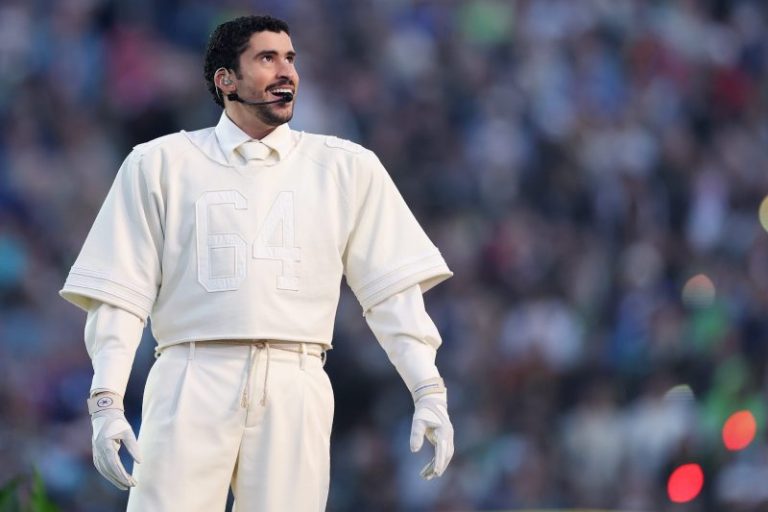
Super Bowl 60 took a brief break to become the Benito Bowl at halftime.

The New England Patriots and Seattle Seahawks spent a longer than usual halftime likely going over what they could change in the second half of a defensive battle from Levi’s Stadium.

While they were talking things over, Puerto Rican superstar Bad Bunny took to the field for the Apple Music halftime show.

Bad Bunny took football fans through a brief run through some of hits like ‘Tití Me Preguntó’ and ‘BAILE INoLVIDABLE.’ He also welcomed some special guests to the field as Ricky Martin and Lady Gaga performed with the Grammy Award-winning artist.

He closed with ‘DeBÍ TiRAR MáS FOToS’ – the title track from his most recent album. Performers carrying flags from many countries flocked to a side of the field with him.

In the final number, Bad Bunny spiked a football in the end zone to make way for the second half of Super Bowl 60. Fans may have missed a specific message on the football. Here’s what to know:

What did Bad Bunny’s football say?

He rotated the football towards the closest camera at the end zone with the message ‘Together, We Are America.’

Bad Bunny setlist

Here’s the full list of songs he performed during the halftime show:

‘Tití Me Preguntó’
‘Yo Perreo Sola’
‘Safaera’
‘Party’
‘Voy a Llevarte Pa’ PR’
‘EoO’
‘Monaco’
‘Die with a Smile’ feat. Lady Gaga
‘BAILE INoLVIDABLE’
NUEVAYoL’
‘LO QUE LE PASÓ A HAWAii’ feat. Ricky Martin
‘El Apagón’
‘Café Con Ron’
‘DeBÍ TiRAR MáS FOToS’

This post appeared first on USA TODAY

Watch and rate every Super Bowl commercial

Since 1989, USA TODAY Ad Meter has awarded the best commercial from the big game – and we need your help.

Sign up and rate every national commercial from the 2026 Super Bowl, from familiar favorites like Budweiser and Pepsi to AI and pharma start-ups. Budweiser won last year’s contest and was back with a patriotic ad this year features a Clydesdale horse and a bald eagle.

The cost for a Super Bowl ad topped $10 million for the first time in 2026 with the New England Patriots and Seattle Seahawks facing off at Levi’s Stadium.

Ad Meter: Help decide the best commercial

This post appeared first on USA TODAY

CORTINA D’AMPEZZO, Italy — This was always the risk Lindsey Vonn was willing to take.

She knew skiing at these Olympics was a gamble, as likely to end in pain and disappointment as in glory and gold. But life favors the bold. Whatever her physical injuries are now, that pain and those scars will eventually fade.

Regrets and what ifs last forever.                                                                                                                                        

But there was a horrifying numbness to it, too, knowing that a story that’s captivated so many was not going to end triumphantly or even happily. Vonn had brought everyone along on her ride, giving the mere mortals among us a glimpse of what it’s like to live life with abandon. And now it was done.

“She just dared greatly and she put it all out there,” Vonn’s sister, Karin Kildow, told NBC after the crash.

“She always goes 110%. There’s never anything less,” Kildow added. “So I know she put her whole heart into it, and sometimes just like things happen.”

When we’re kids, we charge at life head-first because we don’t know any better. The world is one of endless possibilities, where we really can be an astronaut or a superhero.

Or an Olympic champion.

For most of us, though, that fearlessness fades. Our audaciousness is tempered by consequences and repercussions. By the mundane responsibilities that come with growing up. We learn to live with good rather than dreaming of great.

Not Vonn.

Part of her appeal has always been her refusal to give up or accept defeat. Vonn has endured injuries and heartbreaks too many to count, and she keeps coming back for more. Tell her she can’t do something, and she’ll work two, three, four times as hard. Suggest something is not a good idea, and she takes it as a challenge.

She lives life on her terms, uninterested in someone else’s constraints.

“It’s kind of the way we operated as a family. We always wanted to do the best that we could and we had always high ambitions for ourselves,” Vonn said last fall.

“And I think it’s also a lot easier for yourself if you reframe everything in a way that gives you the power,” Vonn added. “I don’t like external pressure in the sense that I’m doing something for somebody else. I’m doing it for me, and I’m driven by my own aspirations.”

It’s why she was on this mountain in the first place.

But her decision to retire in 2019 was not really a choice. Her body was broken down, her right knee, in particular, ravaged from her many injuries. So when she felt better than she had in decades after a partial replacement of her right knee in April 2024, Vonn decided to give ski racing a go again.

And so many of us cheered it because we were living vicariously through her, having the guts to do something we wanted without caring what anyone else thought or worrying about what could go wrong. Vonn was living in the moment, and she was doing it at full volume.

Even after a crash nine days ago left her with a torn ACL, bone bruising and meniscus damage in her left knee, Vonn was undaunted.

The easy thing would have been to head home and recuperate, accepting that maybe it wasn’t meant to be. But where’s the fun in that? Why not at least try?

Maybe she’d succeed. Maybe she’d fail. Maybe she’d end somewhere in between.

But she’d never have to wonder.

“I will race tomorrow in my final Olympic Downhill and while I can’t guarantee a good result, I can guarantee I will give it everything I have,” Vonn wrote in an Instagram post the night before the race.

“But no matter what happens, I have already won.”

Yes, Lindsey Vonn crashed. In spectacular fashion. But at least she was brave enough to take the risk, which is more than most of us can ever say.

Follow USA TODAY Sports columnist Nancy Armour on social media @nrarmour.

This post appeared first on USA TODAY

CORTINA D’AMPEZZO, Italy —The No. 1 rule in sports journalism is no cheering or jeering in the press box.

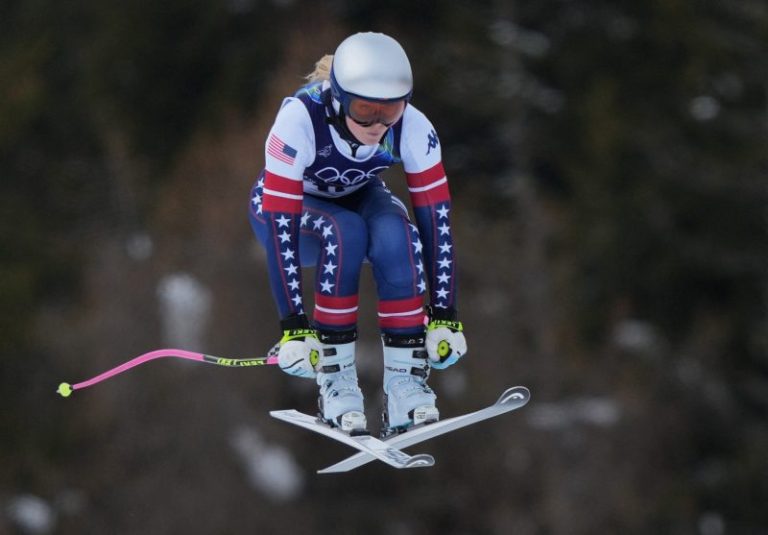
More than a Dozen of reporters with more than a century of experience covering America’s most revered and reviled athletes and coaches crammed into the mixed zone at the Tofane Alpine Skiing Center Sunday for Lindsey Vonn’s final downhill race at a Winter Olympics. She left the starting gate at high noon. And about 13 seconds later, her right arm hooked the fourth gate, spun her off balance, and sent her head first into the snow.

Every journalist in the mixed zone gasped in horror. They couldn’t help but react.

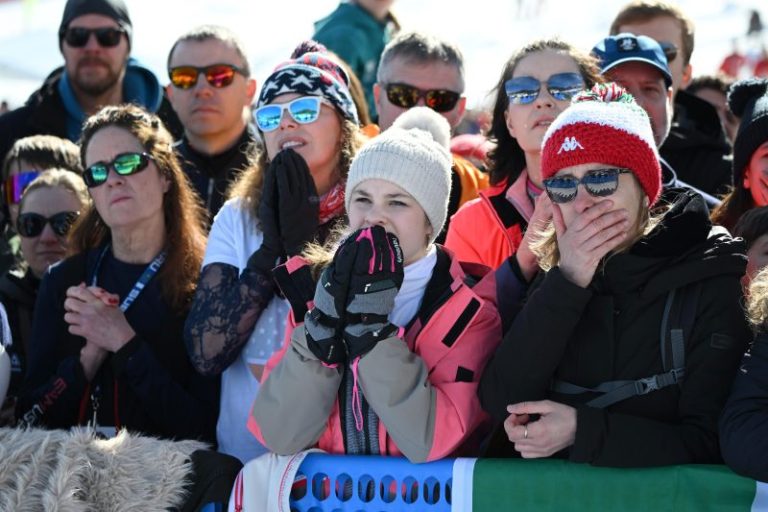
And neither could anyone else on the mountain. Fans, coaches, Olympic volunteers, Vonn’s competitors. Everyone panicked. Audibly. They grimaced and groaned, covering their eyes and mouths as they saw Vonn’s terrifying tumble on the jumbotron.

While Vonn’s harrowing cries haunted those watching on TV at home, the finish area in Cortina fell silent. Deafeningly so.

Sympathetic applause followed several taut minutes later, as everyone on the mountain waited for the medical helicopter to come. For the second time in nine days, Vonn had to be airlifted to a hospital. 

‘It looked like Lindsey had incredible speed out of that turn, and then she hooked her arm, and it’s just over. Just like that,” American teammate Bella Wright said. “After all the preparation, after years of hard work and rehabilitation and all the things, it’s the last thing you want to see somebody go through. It’s the last thing you want to see for Lindsey. But she should be really proud of everything that she has gone through to get back here.”

Vonn made a miraculous comeback within a miraculous comeback to ski in these Winter Games. After coming out of retirement to become world No. 1 in the downhill at age 41, she tore her ACL in a crash at the World Cup run in Crans Montana on Jan. 30. On Tuesday, she announced her intention to compete.

Olympic legend Shaun White said before the Games he couldn’t remember an Olympic story of such magnitude since Kerri Strug’s iconic vault in 1996. Strug’s broken-ankle performance made her a media darling in 1996. But that response has since been relitigated and ruled irresponsible.

Similarly, Vonn was hurrahed and hissed for her decision to ski injured. Naysayers couldn’t believe she’d set such a poor example for young athletes by sacrificing her body in such a way.

But Vonn isn’t an 18-year-old gymnast. And there were no infamous Romanian coaches who pressured her into racing. She is an adult. Who loves skiing. She already sat out one Olympics due to injury (2014). But she wanted 2026 to be where she ended her career on her terms, not because her body forced her to be done.

Vonn retired, reluctantly, in 2019. “My body is broken beyond repair,” she said at the time. But after six years in the valley and a partial right knee replacement, Vonn returned to World Cup racing in 2024. The surgery allowed her to get back into competition shape and return to the summit – yes, of the mountain, but also of her sport.  

Vonn has podiumed at every downhill race this season and won two of them. She finished in the top three twice in a trio of super-G events she raced as well. Vonn’s stellar results allowed her to meet the U.S. Skiing Olympic qualifying criteria in December.

She is widely regarded as the greatest speed skier of all time. And she was determined to punctuate her resume with an individual Olympic medal.

Instead, she left Tofona strapped to the side of a canary yellow chopper with three nasty letters by her name: DNF. (Did not finish).

American Breezy Johnson raced sixth, seven spots ahead of Vonn. The eventual gold-medal winner saw her teammate crash from the hot seat, wide-eyed with her hand over her mouth in shock.

“I can’t imagine the pain that she’s going through,” Johnson said. “And it’s not the physical pain. We can deal with physical pain. But the emotional pain is something else. And I wish her the best, and I hope that this isn’t the end.”

As Vonn flew overhead, the finish line announcer rallied the crowd: “Putting it all on the line, Lindsey Vonn, the queen of Cortina, you will be missed … Everybody up on your feet, so she can hear you.’

Triumphant cheers followed, much louder than the tepid applause from about 15 minutes earlier when Vonn first left her skis. 

Italian Sophia Goggia, who went 15th en route to a bronze medal, wished Vonn a quick recovery. She and Vonn are also good friends. When Goggia won silver in Beijing 23 days after fracturing her fibula and partially tearing her ACL on a downhill run in Cortina, Vonn was the first person she video called after the ceremony.

It is not yet known the severity of Vonn’s injury. Her wails could have stemmed from physical pain, anguish over the accident or a chilling combination of both. U.S. Skiing said she is stable and being treated by Italian and American doctors.

Johnson said she received word that Vonn was cheering her on from the helicopter. American Jackie Wiles, who finished fourth from the 17th start position, said she knew Vonn would’ve wanted her and Wright (who went 24th) to stay in the race. But Wiles said it was hard to go down the mountain after watching her friend and teammate go out like that.

“We have such a sisterhood. I mean, we travel with each other on the road. We’re a family,’ Wiles said. ‘And to watch someone that you care about so much, it really sucks. And my heart kind of just broke for her in that moment.”

Reach USA TODAY Network sports reporter Payton Titus at ptitus@gannett.com, and follow her on X @petitus25.

This post appeared first on USA TODAY

How would you rate Bad Bunny’s Super Bowl 60 halftime show? For several professional athletes, sports teams and sports media sites, the show was a hit.

Various figures from around the sports world gave their reactions on social media throughout the show’s runtime in Santa Clara, California. Many expressed excitement about the Boricua singer’s performance, with a few referring to Bad Bunny by his given name, Benito.

Among those reacting to the halftime spectacle were New Orleans Saints defensive end Cam Jordan, New York Knicks point guard Jalen Brunson and ESPN personality Pat McAfee.

Here’s a look at a few reactions to Bad Bunny’s halftime show from around the wide world of sports:

Sports world reacts to Bad Bunny’s Super Bowl 60 halftime show

See which athletes, teams and other sports-focused accounts reacted to Bad Bunny’s halftime show, which also featured Lady Gaga and Ricky Martin:

Translated into English, the Seahawks’ post reads: ‘Much more than an artist. A voice that represents millions. Thank you Benito.’

This post appeared first on USA TODAY
Super Bowl 60 isn’t just a big deal for the New England Patriots and Seattle Seahawks players on the field. Several NFL stars also appeared in Super Bowl commercials on Feb. 8.

Thanks to the spectacle of the NFL’s annual big game, Super Bowl commercials have become star-studded affairs in their own right. High-profile actors often make cameos for various companies shelling out the big bucks to advertise during the big game. This year, more than a couple of current and former NFL stars and other professional athletes appeared in Super Bowl commercials.

Here’s a comprehensive list of all of the athletes that appeared in a commercial during Super Bowl 60, which USA TODAY Sports will keep updated throughout the game:

NFL players, pro athletes in Super Bowl 60 commercials

Several NFL stars – both active and former – and professional athletes have appeared in a Super Bowl 60 commercial. Here’s who they are, listed with the company that included them in the advertisement:

Joe Montana, former NFL quarterback: FanDuel
Rob Gronkowski, former NFL tight end: FanDuel
Adam Vinatieri, former NFL kicker: FanDuel
Jason Kelce, former NFL center: YouTube TV
Christian McCaffrey, San Francisco 49ers running back: YouTube TV
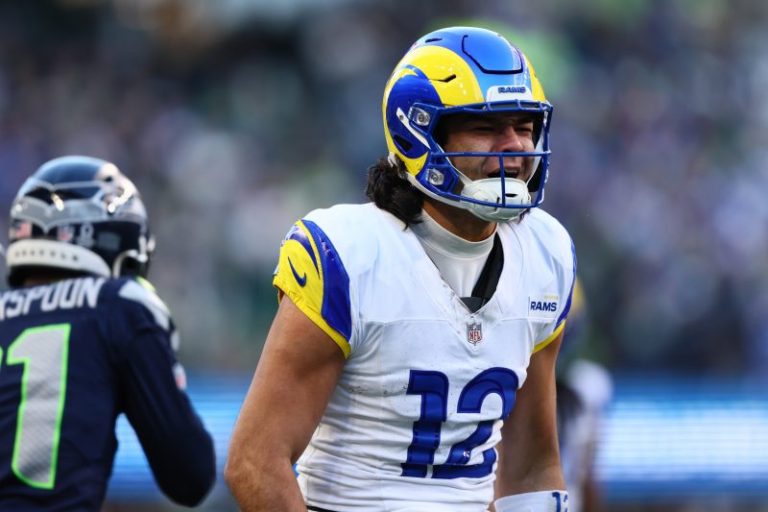
Puka Nacua, Los Angeles Rams wide receiver: Toyota
Serena Williams, former professional tennis player: Ro
Marshawn Lynch, former NFL running back: Meta
Tom Brady, former NFL quarterback: Dunkin’
Derrick Henry, Baltimore Ravens running back: Oikos
Peyton Manning, former NFL quarterback: Bud Light
Mike Tyson, professional boxer: RealFood.gov
George Kittle, San Francisco 49ers tight end: Novartis
Rob Gronkowski, former NFL tight end: Novartis
Vernon Davis, former NFL tight end: Novartis
Delanie Walker, former NFL tight end: Novartis
Greg Olsen, former NFL tight end: Novartis
Tony Gonzalez, former NFL tight end: Novartis

Super Bowl 2026 commercials

Rate the best and worst Super Bowl ads

This post appeared first on USA TODAY

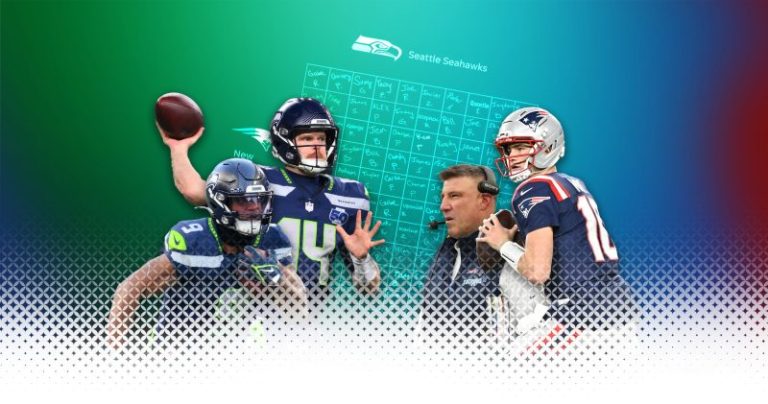
Super Sunday is here, and we’re only hours away from the Seattle Seahawks and New England Patriots’ Super Bowl 60 showdown, which airs at 6:30 p.m. ET on NBC, Peacock and NFL+.

Maybe you’re a diehard 12th Man or Pats Nation devotee. Maybe you’ll just tune in for the commercials or go to a party for the snacks. Or maybe you’re a fan of the halftime entertainment, Bad Bunny. Whatever the case may be, why not give yourself something more to care about, like some cold hard cash?

One of the easiest, no-skills way to play is the Super Bowl squares game. And now’s the perfect time to get a game going with family, friends or co-workers:

Super Bowl 60 first-quarter winning numbers

With the Seahawks leading 3-0 after the first quarter, square 3, 0 is your first winner of the game. We’ll update the winning numbers after each quarter.

Super Bowl 60 halftime winning numbers

Two more Jason Myers field goals put the Seahawks up 9-0 at halftime, so those are your halftime numbers.

How to play Super Bowl squares

1. A 10×10 grid is used to play the game. Often, a paper copy of the grid is printed out.

2. People buy squares on the grid for a fixed price. We’ll use $5 a square here. Generally, in an office setting, you can write your name on the official grid.

Unable to view our graphics? Click here to see them.

3. Once all squares are sold (It’s OK if some are not sold, more on that later) the pool organizer draws random numbers between 0-9 and assigns them across the top and side of the grid. The organizer then shares the grid with all players who purchased squares.

4. At the end of every quarter, the last digit of the score for each team is plotted on the grid. For example, if the score at the end of the first quarter was the Seahawks 14 and Patriots 7, the winning numbers of 4 and 7 are plotted on the grid. Here, ‘Rick P.’ is the winner for the first quarter.

What if you haven’t sold all the squares and a blank square wins? That quarter’s prize rolls over into the next quarter. Just use your best judgment. You don’t want a game where there are too few squares and nobody wins.

Super Bowl squares best numbers

Since the game relies on scoring, it comes as no surprise that the best numbers are among the most common in the sport.

Participants will feel good to walk away with 0, 1, 3, 4 or 7.

Touchdowns are worth six points, but frequently turn into seven with a made extra point. Field goals are worth three. However, two-point conversions, missed extra points and safeties, which are worth two points, can make for some funky scoring outcomes.

While there are preferred numbers to have, anything can happen, which could make even the worst numbers look the best.

Super Bowl squares worst numbers

The worst Super Bowl squares numbers would be 2, 5 or 9. Unlike the best numbers, these require a little more work to get to. If things get weird in Santa Clara, you might be in luck then.

According to Print Your Brackets, the combinations of 1-1, 1-2, 2-3, 6-2, 5-3, 5-4, 5-5, 6-5, 8-7, 8-8 and 9-9 are the only 11 combinations to never register at the end of any quarter or be part of the final score at any of the first 50 Super Bowls.

How Super Bowl squares winnings are distributed

How winnings are divided among quarters can differ. Traditionally, the final quarter pays out the most. In our example, we assume we sold all 100 squares, making a $500 pot. The first, second and third quarters are awarded $100 and the final score is awarded $200.

Download a the Super Bowl squares grid

Click here to download your own Super Bowl Squares template and start a game with your friends. Tip: print the document in landscape mode.

This post appeared first on USA TODAY
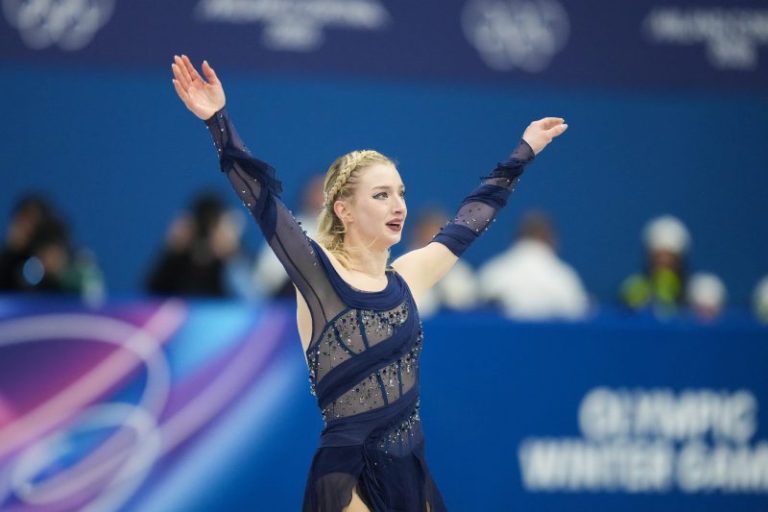
MILAN — Even though she’s a gold-medalist, Amber Glenn considered her Winter Olympics debut ‘lackluster.’

The three-time reigning U.S. champion skated for the first time in Milan with the women’s free skate portion of the team event Sunday, Feb. 8. She was shaky on her first two elements, a triple Axel and the triple flip-triple toe loop combination, which made for a concerning start to the program. She did regain control after that and landed her jumps, notably hitting the sequence of the triple loop-double Axel-double Axel.

Despite the recovery, she didn’t get a great score, earning a 138.62, with 70.91 technical score and 67.71 in the components category. She dropped to third overall after Japan’s Kaori Sakamoto scored a 148.62 for first place. Second place went to Anastasiia Gubanova 140.17.

Glenn left many points on the table and didn’t feel her best, she said.

‘I just did not feel wonderful, like even in the warm ups,’ she said. ‘My leg was just sore, and it’s not an injury, it’s nothing that we need to worry about. It’s just something that I need that rest and recovery time.’

There was a noticeable sense of disappointment from Glenn as she left the ice and heard her score. She knew it was a battle going against Sakamoto, but Gubanova’s exceptional performance put her in a great spot.

‘I feel guilty,’ she said. ‘My team has done so well, and my performance was lackluster. I scored lower than my median and what they were counting on, and I placed lower than what would have been expected.’

Amber Glenn relieved by Ilia Malinin’s performance

The women’s free skates results put the U.S. and Japan at 59 points entering the final event of the night, the men’s free skate. That put the pressure on Ilia Malinin to win in order to take home the gold medal. Glenn felt bad for putting more on Malinin’s shoulders.

 ‘I’m so sorry that I had to put this pressure onto him,’ she said. ‘I wish that I could have kept that lead for us, but unfortunately, I lost it.’

Watch Olympic figure skating on Peacock

However, all was forgiven. Malinin came in clutch in his performance, beating out Japan’s Shun Sato. When it was confirmed Team USA won gold and he made his way to the rest of his teammates, Glenn greeted him by lifting him up in the air, which Malinin said was ‘really refreshing and honestly the moment is still not settling in yet.’

‘I was ecstatic, of course, because I felt guilty,’ Glenn said. ‘I felt like I left so much pressure on him, and he’s already under so much pressure being hailed as ‘Quad God’ and all that. He stepped up, like we all knew he would, but I was just really grateful.’

A day off is likely in store for Glenn since she has been constantly training, with rest needed to get her ready for the women’s single. When she does get back to training, she plans to do it ‘somewhere else’ so ‘hopefully can feel like a whole new competition.’

Luckily, Glenn will have plenty of time to reset. It will be nine days until she has to compete again, with the short program Tuesday, Feb. 17. It could bode well since Glenn is one of the medal contenders in the women’s singles competition.

This post appeared first on USA TODAY
Nearly everyone on the planet, and possibly Mars, has weighed in on who they think will win Super Bowl 60.

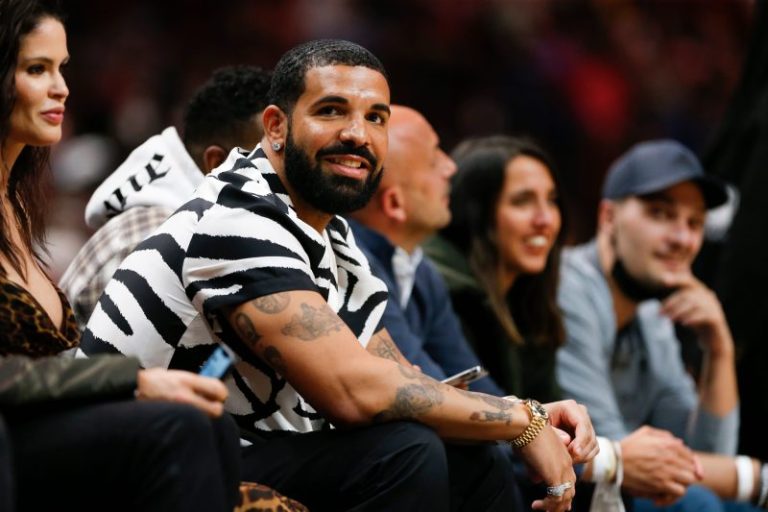
Everyone except for the one that matters – Drake. Fans and sports bettors have been eagerly awaiting the rapper’s selection for the big game, considering the long-running ‘Drake Curse’ that hangs over sporting events.

After keeping everyone in the dark for a long time, Drake finally made his pick for the Super Bowl winner between the New England Patriots and Seattle Seahawks.

Patriots.

And in typical Drake fashion, he’s putting his money where his mouth is to the tune of a $1 million wager. If victorious, the bet would pay an additional $1.95 million, meaning the rapper would walk away with $2.95 million for about three-plus hours of football watching.

Not too shabby.

Except that Drake has proven to be on the wrong side of history time and time again. Here’s a breakdown of Drake’s bets.

Who did Drake bet to win the Super Bowl in 2026?

Drake bet the Patriots to win Super Bowl 60, placing a $1 million wager for a total payout of $2.95 million.

Drake Super Bowl betting history

According to TheDrakeCurse.com, Drake has made 11 Super Bowl bets since 2022. He is 4-7 in those bets, with the 12th wager pending in Super Bowl 60.

He successfully predicted that the Kansas City Chiefs would defeat the San Francisco 49ers in Super Bowl 58, taking home a payout of $2.3 million.

This post appeared first on USA TODAY

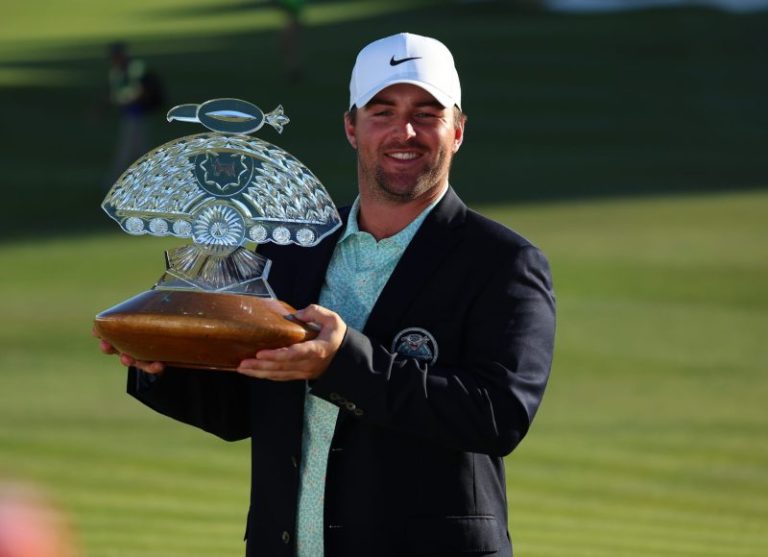
Chris Gotterup earned a victory at the Waste Management Phoenix Open after defeating Hideki Matsuyama in a playoff.

Gotterup won with a long birdie putt on the first hole of the playoff at TPC Scottsdale. 

It was his fourth career PGA Tour title and second of the year.

Matsuyama held a one-shot lead entering the final hole, but his struggles late led to a playoff situation. The Japanese star pulled his drive into the water on the 18th hole.

Matsuyama was also seen visibly frustrated with the fans watching the Open, which is known for its rowdy crowds. Matsuyama had to back off mid-swing with a distraction coming from the direction of the crowd.

2026 WM Phoenix Open payouts

1. Chris Gotterup — $1.728 million
2. Hideki Matsuyama — $1.0464 million
T3. Nicolai Højgaard — $439,680
T3. Michael Thorbjornsen — $439,680
T3. Si Woo Kim — $439,680
T3. Akshay Bhatia — $439,680
T3. Scottie Scheffler — $439,680
8. Jake Knapp — $300,000
9. Matt Fitzpatrick — $280,800
T10. Pierceson Coody — $242,400
T10. Viktor Hovland — $242,400
T10. Ryo Hisatsune — $242,400
T13. Zecheng Dou  — $188,000
T13. Kevin Roy — $188,000
T13. Maverick McNealy — $188,000
T16. Daniel Berger —  $160,800
T16. Jordan Smith —  $160,800
T18. Michael Kim — $122,720
T18. Jacob Bridgeman — $122,720
T18. Rickie Fowler — $122,720
T18. Mac Meissner — $122,720
T18. Sepp Straka — $122,720
T18. Sahith Theegala — $122,720
T24. Ryan Fox — $82,320
T24. Rico Hoey — $82,320
T24. Kurt Kitayama — $82,320
T24. Rasmus Højgaard — $82,320
T28. Harris English — $62,949
T28. A.J. Ewart — $62,949
T28. Nick Taylor — $62,949
T28. Ben Griffin — $62,949
T28. Mackenzie Hughes — $62,949
T28. Stephan Jaeger — $62,949
T28. Min Woo Lee — $62,949
T35. Sam Stevens — $46,800
T35. Wyndham Clark — $46,800
T35. Alex Smalley — $46,800
T35. Tom Kim — $46,800
T35. J.T. Poston — $46,800
T35. John Parry — $46,800
T41. Rasmus Neergaard-Petersen — $34,080
T41. Keith Mitchell — $34,080
T41. Cam Young — $34,080
T41. Johnny Keefer — $34,080
T41. Sami Valimaki — $34,080
T41. Kristoffer Reitan — $34,080
T41. Xander Schauffele — $34,080
T48. Christo Lamprecht — $24,608
T48. Zach Bauchou — $24,608
T48. Max McGreevy — $24,608
T48. Chad Ramey — $24,608
T48. Michael Brennan — $24,608
T48. S.T. Lee — $24,608
T54. S.H. Kim — $22,272
T54. Sudarshan Yellamaraju — $22,272
T54. Joe Highsmith — $22,272
T54. Brian Campbell — $22,272
T54. Kensei Hirata — $22,272
T54. Collin Morikawa — $22,272
T60. Patrick Rodgers — $21,312
T60. John VanDerLaan — $21,312
T60. Takumi Kanaya — $21,312
T60. Adrien Saddier — $21,312
T64. Davis Thompson — $20,736
T64. Gary Woodland — $20,736
T66. Max Homa  — $20,352
T66. Chandler Phillips — $20,352
T68. Bud Cauley — $19,872
T68. Hank Lebioda — $19,872
T68. Neal Shipley — $19,872
71. Keita Nakajima — $19,488
72. Patton Kizzire — $19,296
73. Cam Davis — $19,104

This post appeared first on USA TODAY