Archive

2026

Browsing

The dream season for Miami (Ohio) continues.

The RedHawks remain undefeated, moving to 19-0 after a dramatic finish on Saturday, Jan. 17 against Buffalo that required two buzzer-beating shots — once in regulation, and again in overtime.

The visiting Bulls gave the RedHawks, one of three undefeated teams left in the country, plenty of trouble in a tight contest. With 12 seconds left, Buffalo guard Daniel Freitag made two free throws to make it a three-point game, putting the pressure on Miami.

Miami (Ohio’s) Peter Suder tried a 3-pointer and missed, but Brant Byers tipped the ball back right into the hands of Eian Elmer, who took one step back behind the arc and knocked down the shot as time expired to send it to overtime.

The surprises continued into the extra period. It remained close with less than 20 seconds left, with Buffalo’s Ezra McKenna hitting a 3-point shot to tie the game at 102. Miami had the chance to end the game, and Suder redeemed himself by drilling a 3-pointer to make it 105-102 with a second left.

Suder let the Bulls know it was time to go when he hit the ‘night-night’ celebration right in front of the bench.

The Bulls were unable to get the game-tying shot to send it to a second overtime.

The thrilling victory extends what has been the best start in program history for Miami (Ohio). At 19-0, it also tied the MAC record for best start to the season, set by Western Michigan in 1975-76. Not only are they the favorite to win the conference and secure an NCAA Tournament bid, but also continue to make a case to be in the field as an at-large, regardless of winning a MAC title.

In the most recent USA TODAY Sports Bracketology, Miami Ohio is a No. 11 seed, which would be its best mark since it was a No. 10 seed in 1999.

Entering the day, Miami (Ohio), Arizona and Nebraska are the only undefeated teams left in the country.

This post appeared first on USA TODAY

The North Carolina Courage are going to look different this NWSL season.

For the first time since 2017, the year the team began playing in Cary, N.C. after moving from Western New York, they’ll play without Denise O’Sullivan.

The Courage announced Saturday that they have transferred the Irish midfielder to Liverpool FC of the Barclays Women’s Super League for an undisclosed fee.

Calling O’Sullivan a mainstay for the Courage would be a massive understatement. She arrived to the club during the summer of 2017 looking for a fresh start after being waived by the Houston Dash. Across the nine seasons since, she would become the club’s all-time leader in appearances, featuring in 186 games in all competitions.

“It’s hard to put into words what this club has truly meant to me. North Carolina will always be my home, and I’m forever grateful to the club, my teammates, and the incredible fans who supported and believed in me every step of the way,” O’Sullivan said in a statement. “I’m on to a new challenge now, but I’ll always be a part of Courage Country. From the bottom of my heart, thank you for everything.”

With O’Sullivan on the pitch — mostly as a stout box-to-box defensive midfielder with a knack for winning balls, earning the nicknames “junkyard” and “Savage Sully” for her aggressiveness — the Courage won seven NWSL trophies: three Shields, two Challenge Cups, and a pair of NWSL Championships in 2018 and 2019. The Courage also won the International Champions Cup in 2018.

O’Sullivan tallied three goals and 12 assists in her tenure with the Courage. She made the NWSL’s Best XI team in 2019 and the Second XI in 2023, and has been named one of the “100 Best Female Footballers in the World” by The Guardian.

“Denise has been an integral part of this club since the beginning, and she has helped define the Courage way,” Ceri Bowley, chief soccer officer for the Courage, said in a statement. “She’s been a leader, both on and off the field, and the standard of excellence she set for herself, her teammates, and everyone at this organization will be her legacy. She will be missed, but we understand her desire to be closer to home and wish her all the best in her next chapter.”

A native of Cork, Ireland, the 31-year-old O’Sullivan has 126 caps for the Republic of Ireland national team and has 22 goals for her country. She started in all three games for the Irish in the 2023 World Cup.

With O’Sullivan moving to Liverpool, Kaleigh Kurtz signing with the expansion side Denver Summitt, and Meredith Speck still an unsigned free agent, just one player remains on the Courage’s roster who was part of the club’s last championship team in 2019: defender Ryan Williams.

Nathan Thackeray, the 2019 squad’s goalkeepers coach, also remains. He was promoted to acting head coach last August after Sean Nahas was fired.

This post appeared first on USA TODAY
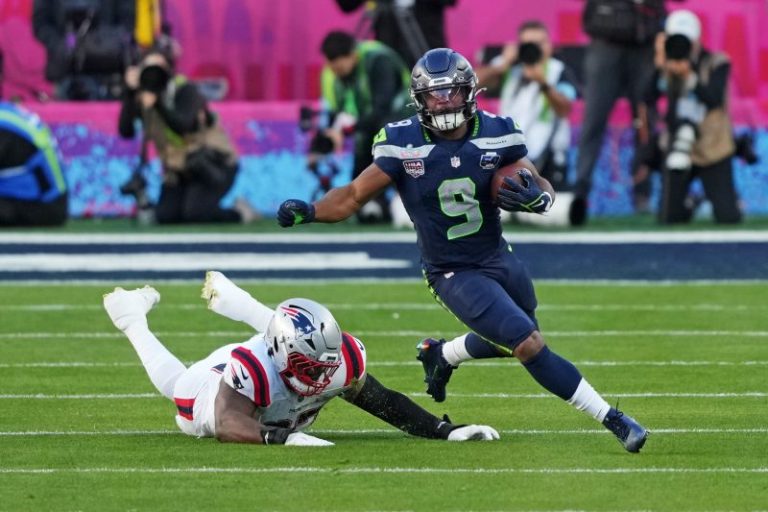
College football coaches have unanimously recommended increasing the redshirt game limit from four to nine games.
The proposal aims to address roster caps and an expanded postseason in modern college football.
The change is being proposed amid legal challenges to the NCAA’s current eligibility rules.

Major college football coaches recently voted to recommend a big change in the redshirt rule for their players. They want players to be able to play in up to nine games before losing their chance to redshirt for one season, up from the current limit of four games.

But why?

The unanimous recommendation came at the annual convention of American Football Coaches Association in Charlotte on Jan. 13. AFCA executive director Craig Bohl explained it in a statement to USA TODAY Sports below.

It’s not a rule change yet and will first need to be considered by NCAA committees. But as NCAA eligibility rules are being challenged in court, the recommendation potentially could lead to compromise after a federal judge in Nashville on Thursday, Jan. 15, rejected a request by five football players to give them a fifth season of eligibility. Those players are part of a class-action lawsuit that sought to give players five seasons of playing eligibility in five years.

Currently, football players are limited to playing four seasons in a five-year window but can play up to four games in one season and not lose a season of eligibility, making it a so-called redshirt year.

Why college football coaches want a nine-game redshirt threshold

Bohl, the former head coach of Wyoming, cited the changing sea of college sports with an expanded postseason and roster caps under the terms of the House vs. NCAA legal settlement. For example, Miami will play its fourth postseason playoff game Jan. 19 when it plays for the national championship against Indiana. Players also are allowed to play in postseason games and not have them count against the redshirt threshold of four games after a 12-game regular season, according to a rule change made last year.

‘College athletics is at an inflection point,” Bohl stated. “The House settlement introduces roster caps and a multi-year period of grandfathering that will materially shrink active rosters and compress depth charts. At the same time, the competitive calendar has expanded through College Football Playoff structures.

‘The current redshirt rule — four games plus championship participation which could be as many as five additional games — was built for a different era: one with larger rosters, fewer total games, and less cumulative physical and mental load. Codifying today’s realities into a modernized redshirt standard with nine games is both a student-athlete well-being issue and a competitive sustainability issue. This also aligns with the nine-game conference schedule.”

Bohl said it’s “not about creating loopholes.”

“It is about aligning policy with today’s environment in a way that prioritizes health, development, and opportunity — while preserving the fundamental purpose of the redshirt year,” Bohl stated.

What a new redshirt rule change could mean

A redshirt year doesn’t count toward the four-season limit of playing time within five years. For example, Colorado freshman Julian Lewis will be a redshirt freshman in 2026 with four seasons of college eligibility remaining after playing in only four games in 2025 and taking a redshirt season. If he had played in five games in 2025, he would have lost his redshirt year and would have been considered a sophomore in 2026 with only three seasons of eligibility left.

If the rule is changed to a nine-game redshirt threshold, football players could play up to nine regular-season games in a redshirt season plus four full seasons.

Judge’s decision doesn’t bode well for five seasons of eligibility

A federal judge in Nashville on Jan. 15 denied a request for a preliminary injunction that would have granted five football players a fifth year of eligibility in 2026 after they already played the NCAA maximum of four seasons.

The ruling by Judge William Campbell grants the NCAA a win in court as their rules have come under attack in various antitrust lawsuits. In this case, the NCAA was sued by athletes in multiple sports who are challenging NCAA rules that limit them to playing four seasons within five years. The athletes said this restriction amounts to an unreasonable restraint on trade after athletes finally were allowed to earn money from schools for the first time last year for their name, image and likeness.

The NCAA fought back and said it wasn’t an unreasonable rule.

The judge found “the plaintiffs have not shown a likelihood of success on the merits of their antitrust claim.” If the judge had ruled in favor of the players, the preliminary injunction would have given a fifth season of eligibility only to five football players, for now, as the larger case moved forward in court. After the judge ruled against the players, their underlying lawsuit still can continue moving forward. But the judge’s ruling doesn’t bode well for the larger case unless the plaintiffs can lay out a stronger basis for a rule change.

“Small changes in the eligibility rules have consequences that likely cannot be fully appreciated without further development of the record,” the judge ruled. “The Court is mindful of its limitations in assessing the consequences of invalidating long-standing eligibility rules.”

This case was separate from the Diego Pavia case

The same judge previously granted a preliminary injunction in favor of Vanderbilt quarterback Diego Pavia, who had challenged other NCAA eligibility rules pertaining to junior college transfers. The injunction gave Pavia, a former player at New Mexico Military Institute, another season of eligibility this year while his underlying case remains pending.

The NCAA said the Pavia case is different than this one because Pavia did not challenge the restriction of four seasons in five years.

Follow reporter Brent Schrotenboer @Schrotenboer. Email: bschrotenb@usatoday.com

This post appeared first on USA TODAY
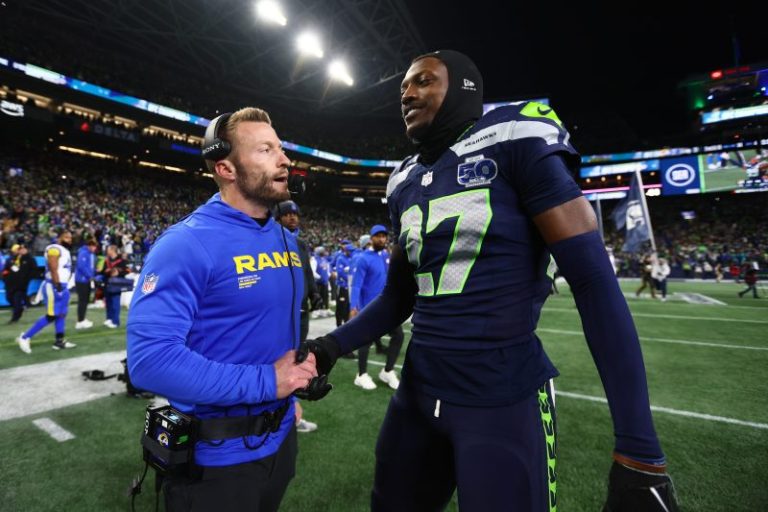
A conspiracy theory is floating around the NFL and surrounding the San Francisco 49ers, linking their home location, Levi’s Stadium, to a number of injuries sustained by Niners players.

Just next door to Levi’s Stadium, where the 49ers play their home games in Santa Clara, is their practice facility, which is where the 49ers have strapped up for practice since 1988. And, neighboring that venue sits an electrical substation.

What started as a theory has since gone viral, sparking social media debate about the safety of 49ers players and teams who visit Levi’s Stadium for away games. Not to mention, Levi’s Stadium will be the site of Super Bowl LX on Feb. 8.

The theory, which has yet to be scientifically proven true, is that excessive Electromagnetic Field (EMF) exposure can cause negative harm to the body.

‘Low-frequency electromagnetic fields can degrade collagen, weaken tendons, and cause soft-tissue damage at levels regulators call ‘safe’,’ an X user, Peter Cowan, posted on Jan. 6 which has since amassed 22 million views, 5,900 reposts and 35,000 likes.

49ers injury conspiracy: NFL players react

San Francisco has suffered blows to many key players throughout the season, including Brock Purdy, Christian McCaffrey, Nick Bosa, Brandon Aiyuk, Trent Williams and Fred Warner. Many of their injuries were tendon and ligament tears.

George Kittle is the most recent victim to injury, after suffering a torn right Achilles against the Philadelphia Eagles in the NFC Wild Card Round at Lincoln Financial Field in Philadelphia on Jan. 11.

49ers wide receiver Kendrick Bourne joked about the viral conspiracy theory explaining the team’s injuries during a Jan. 13 scrum with reporters.

‘Yeah, it’s that power plant,’ Bourne said. ‘Nah, I’m just playing. I don’t know. It just sucks, but we do a good job of just working everyday. Injuries are a part of the game. It’s unfortunate but we just have to hold it down keep that good energy and believe in ourselves, believe in the next man up.’

Although, there hasn’t been an official injury tied to the EMF plant, players around the league are allegedly taking caution and reaching out to their agents about any possibility that there’s truth to the conspiracy, according to the Washington Post.

Experts debunk ‘nonsense’ theory

Frank de Vocht, a professor of epidemiology and public health at Bristol Medical School in England, is a leading expert on how EMF affects humans.

He said in an interview with The Post that the conspiracy theory is ‘nonsense’.

UC Davis radiology professor Jerrold Bushberg, who is also a 49ers fan, told Front Office Sports in an interview that there isn’t any established evidence to conclude the conspiracy as accurate.

“These so-called ‘mechanisms’ have not been established,’ Bushberg said. ‘Many of the experiments are contradictory. Many of the experiments have exposures that either don’t relate specifically to 50-, 60-hertz magnetic fields, or are at much, much higher levels than what would be experienced at a practice level.’

It’s a topic that will likely resurface if there are any major injuries during Super Bowl LX at Levi’s Stadium on Feb. 8 in Santa Clara.

While conspiracy fans maintain their belief that there’s truth to their theory, scientists are calling cap.

This post appeared first on USA TODAY
The big boys are off the board. The quick pivots have been exhausted. Now, Major League Baseball teams must make do with whatever’s left on the free agent market a little more than three weeks before spring training camps open.

There have been some notable salvage jobs in the past week, with the Boston Red Sox losing out on Alex Bregman, only to pivot to run prevention and snag lefty Ranger Suárez. Or the Kyle Tucker-to-L.A. stunner prompting the Mets to ambush Bo Bichette with a $42 million annual salary.

Now, the wriggle room is less, the surefire talents all but gone from our list of available players. There are still avenues to improve, but they are narrower. Let’s explore them:

Cody Bellinger: Last big bat standing

And that’s no exaggeration. With Tucker, Bichette and Bregman spoken for, Bellinger represents the lowest-hanging fruit on a board that counts 34-year-old third baseman Eugenio Suárez as the next-best available position player.

Two questions: How badly do the Yankees want Bellinger back – and do the spurned Mets and Blue Jays loom as legitimate threats?

In one sense, Bellinger was dealt a losing hand with the Tucker-Bichette shuffle, with Citi Field and Dodger Stadium both potential destinations. Tucker closes the door on L.A., but the Mets still have a massive hole in left field. The Blue Jays missed out on Tucker, couldn’t renew vows with Bichette and now it’s unknown if they’re so desirous of an outfield upgrade that they’d be willing to spend the cash on a nine-figure deal for Bellinger, 30, after the 28-year-old Tucker spurned them.

The Yankees, meanwhile, still exist.

Other than welcoming back Trent Grisham once the center fielder accepted the $22 million qualifying offer, and trading for lefty Ryan Weathers to hold down the fort until a group of starting pitchers get healthy, it’s been a virtually silent winter. Sure, their payroll will be north of $250 million, and creeps toward $300 million for tax purposes at the moment.

For now that’s well shy of the Dodgers, Mets and Phillies and even trails the Blue Jays. In a relative sense, they’ve got money to burn. Yet they’ve made it clear so far that Bellinger doesn’t fall into their ‘spare no expense’ bucket. We’ll see if they find a mutually happy zone.

Framber Valdez, Zac Gallen: Last aces* standing

And we say that with the understanding that both fellows have fulfilled that role – the Houston Astros winning all four of Valdez’s postseason starts in their 2022 World Series title run, Gallen earning the starting nod for the NL in the 2023 All-Star Game – yet may not hit the market as such.

Valdez is still plenty good – his 3.66 ERA in 2025 was his worst as a full-time starter, yet still 14% better than league average. At 32, he’s experiencing slippage in almost every peripheral, though he remains a groundball machine. His pitch-mixup kerfuffle wasn’t great, and he may not inspire fans to flock through the turnstiles, but Valdez figures to remain a rotation rock through the term of any contract of reasonable length.

Gallen’s arc is a little more acute. His ERA soared to 4.83 in 2025 as he gave up 31 home runs, and his WHIP settled in at 1.26 each of the past two seasons. Gallen’s pullside flyball and barrel rates were both career worsts, even as his surface-level stuff has remained the same. In short, a little bit of diagnostic work for a signing team to attack.

Still, at 30 and 32, respectively, Gallen and Valdez have far less tread on their arms than the alternatives. Valdez can certainly credibly front a rotation, or at least lend quality innings to someone that needs it; Baltimore and the New York Mets both harbor playoff dreams, though the Mets may not be willing to provide the contract length Valdez prefers.

Chris Bassitt, Max Scherzer, Justin Verlander: Old guys rule?

Come Opening Day, they’ll be 37, 41 and 43 years old, respectively, the latter two bound for the Hall of Fame. And for those averse to long-term entanglements with arms they don’t love, these dudes certainly fold neatly into almost any team’s plans.

Bassitt is coming off a three-year, $63 million deal with the Blue Jays, one that finished with him performing gallantly out of the playoff bullpen, giving up one run in seven appearances. Over 162 games, he’s showing no signs of slowing down, hitting 200 innings in 2023 while throwing 181, 171 and 170 in ’22, ’24 and ’25. Reliable.

Scherzer and Verlander, meanwhile, will seemingly never stop pitching. Verlander posted a 3.85 ERA in his lone season in San Francisco, but a typically defanged Giants attack held him to a 4-11 record – and stuck on 266 wins for his career.

Scherzer, meanwhile, started Game 7 of the World Series for the second time in his career. He pitched capably in the postseason, but crazy stuff tended to follow Mad Max around, as it tends to do: Toronto lost his first Series start in 18 innings, then suffered the 11-inning gut punch that ended their season. Still, Scherzer gritted through an early-season thumb problem to make 17 starts, completing at least six innings in six of them.

That’s what you’ll get with these guys: No promise of ideal health or consistent length, but the occasional magic that comes with a generational talent, for around $15 million a year.

The rest: Buddy, can you spare a reliever?

Do hope that your favorite team got in on the early rush of relievers. Erstwhile Blue Jay Seranthony Dominguez remains the last remaining arm that can be charitably termed high-leverage. A gaggle of itinerant lefties – Danny Coulombe, Brent Suter and Justin Wilson – are available.

And there’s a decent pocket of starters who tuck between the bigger-ticket items and the old dudes, led by Lucas Giolito, who had five starts of seven or more innings and one or no earned runs given up last season; his track record does come with injury concerns.

Zack Littell and Nick Martinez also provide versatile, proven arms that can pad the back of a rotation or a proverbial sixth starter spot.

This post appeared first on USA TODAY
Curt Cignetti shot down any discussion he would leave Indiana football for a job in the NFL.

Speculation the 64-year-old coach could make the move over to the NFL has come from several of media personalities throwing his name out in the mix for NFL head coaching openings in recent weeks amid the Hoosiers’ run to the College Football Playoff national championship game.

‘I’m not an NFL guy. I made that decision a long time ago when I went with Chuck Amato to NC State in 2000. I had a chance to go with the Packers,’ Cignetti said Saturday, Jan. 17 from CFP media day in Miami. ‘… I declined the opportunity. I almost took it. That’s when I made the final decision, and I’ve always been more of a college football guy.’

Cignetti’s name being thrown into the mix for NFL jobs began shortly after the first round of firings, which included the Las Vegas Raiders’ firing of Pete Carroll. The Raiders hold the No. 1 pick in the NFL draft, where they are widely expected to use that pick Indiana’s Heisman Trophy winning QB Fernando Mendoza.

The backing of Cignetti to the Raiders idea was floated out by Rich Eisen on Jan. 5 during his weekly radio show, and later endorsed by ESPN’s Peter Schrager during an appearance on ‘Get Up.’

Following Mike Tomlin’s decision to step down from his post with the Pittsburgh Steelers, former NFL defensive end and ‘NFL Live’ analyst Marcus Spears threw Cignetti’s name into the mix of candidates in Pittsburgh, Cignetti’s hometown.

‘Cignetti out of Indiana. I think his personality would fit with Pittsburgh,’ Spears said on ‘NFL Live’ on Jan. 13. ‘Now I’m not sure how all that business part goes, but what I’ve watched this dude do at a university that was absolutely not even thought of potentially ever winning a national championship in this landscape of college football and the rapport that he has as a head coach and what he has done with this team would make him a very enticing hire.’

In two seasons at Indiana, Cignetti is 26-2 and has orchestrated one of the more remarkable turnarounds in college football, as he has taken the Hoosiers from the sport’s losingest program to the No. 1 seed in the College Football Playoff, where they are one win from winning their first national championship.

He was awarded a new eight-year deal that is worth $93 million back in October, which came around the time there was speculation he was being targeted for Penn State’s open coaching position. Cignetti’s new contract with the Hoosiers has made him one of the highest-paid coaches in college football with an average annual value of $11.6 million per year.

When, where is CFP national championship Indiana vs Miami time?

Date: Monday, Jan. 19
Time: 7:30 p.m. ET

The 2026 CFP national championship game between No. 1 Indiana and No. 10 Miami is scheduled for a 7:30 p.m. ET kickoff on Monday, Jan. 19.

Location: Hard Rock Stadium (Miami Gardens, Florida)

The 2026 CFP national title game will be played at Hard Rock Stadium in Miami Gardens, Florida, which is coincidentally the home stadium for the Hurricanes. The venue is also home to the NFL’s Miami Dolphins.

How to watch CFP national championship game Miami vs Indiana:

TV channel: ESPN
Streaming: ESPN app | Fubo (free trial)

The CFP national championship game will air live on ESPN. Streaming options for the game include the ESPN app or Fubo, which offers a free trial. ESPN2 will have an alternative viewing with ‘Field Pass with ‘The Pat McAfee Show,” while ESPNU will have a ‘Film Room’ telecast.

The USA TODAY app gets you to the heart of the news — fastDownload for award-winning coverage, crosswords, audio storytelling, the eNewspaper and more.

This post appeared first on USA TODAY
The window for college football players to enter the transfer portal has officially passed (except for Indiana and Miami who get an extra five-day window for playing in the national championship game).

While players can’t enter the portal after the deadline, they can commit anytime, though most will want to be in place by the spring semester to participate in spring practice.

And there’s some added drama with the situation surrounding Duke’s standout QB Darian Mensah, who entered the portal despite having an NIL contract and previously announcing his return to Durham.

We’ll keep you posted with daily live updates of portal commitments.

Transfers by conference: SEC | Big Ten | ACC | Big 12

HIT REFRESH FOR UPDATES.

Today’s CFB transfer portal commitments, signings

QB

Lucian Anderson III: Bowling Green to South Carolina
Bryson Beaver: Oregon to Georgia
EJ Colson: Incarnate Word to UTEP

RB

Keith Adams Jr.: Clemson to Georgia State
Javin Gordon: Tulane to Tennessee
Tavorus Jones: Missouri to UTEP

WR

Da’Shawn Martin: Kent State to Virginia
Salesi Moa: Utah to Michigan

TE

Ben Haulmark: Central Arkansas to Iowa State
Trent Thomas: South Alabama to Tennessee

OL

Leon Bell: Cal to Colorado
Nick Brooks: Texas to Alabama
Jordan Church: Louisville to Texas Tech
Ethan Fields: Ole Miss to Alabama
Donovan Haslam: West Virginia to Tennessee
Shalik Hubbard: Monmouth to South Alabama
Ibrahim Kebe: Ohio to UTSA
Tyreek Major: South Florida to Western Kentucky
Davion Weatherspoon: Ohio to Arkansas

DL

Jamorie Flagg: Florida State to FIU
C.J. May: Louisville to Missouri
Jordan Sanders: Texas State to Florida State
Isaiah Thornton: Bowling Green to Illinois
Jayden Williams: North Texas to Cal
Da’Shawn Womack: Ole Miss to Auburn

LB

Steve Bracey: Virginia to Buffalo
TJ Dottery: Ole Miss to LSU
Terrance Green: Oregon to Alabama
Seidrion Langston: Louisiana-Monroe to South Alabama
Aisea Moa: Michigan State to Michigan
DaKaari Nelson: Penn State to NC State
Melvin Spriggs: Akron to Southern Miss

DB

Omillio Agard: Wisconsin to Virginia
Key Crowell: East Carolina to Illinois State
Mason Dossett: Baylor to LSU
Lamarcus Hicks: Iowa State to Arkansas
Tevis Metcalf: Michigan to Tennessee
D.J. Moore: Georgia Tech to South Alabama
Jaylen Moson: Utah to South Alabama
Chance Rucker: Michigan State to Arizona State
Aaron Scott: Ohio State to Oregon

K

P

College football 2026 transfer portal dates: When does transfer portal close? How long do players have to commit after deadline?

The portal period now runs from Jan. 2-16, with an extra five-day window (Jan. 20-24) for teams playing in the national championship. The spring portal window in April is no longer a part of the schedule, so January is the only open window for players to enter the portal in 2026.

While no new players can enter the portal after the deadline, they can commit anytime, though most will want to be in place by the spring semester to participate in spring practice.

This post appeared first on USA TODAY
The Falcons announced Scott’s suspension in a statement ahead of Air Force’s game against Nevada on Saturday, Jan. 17.

‘Air Force Men’s Basketball Head Coach Joe Scott has been suspended indefinitely pending an investigation into the treatment of cadet-athletes. Assistant Coach Jon Jordon (USAFA ’85) will serve as interim head coach,’ the statement read.

In his sixth season of his second tenure leading the Air Force program, Scott has the Falcons sitting 3-14 overall on the season and at the bottom of the Mountain West with a 0-6 record in league play.

He was hired back at Air Force ahead of the 2020-21 men’s college basketball season following a two-year stint serving as an assistant coach on Tom Crean’s staff at Georgia. He has led the Falcons to a combined 97-183 record in his two stints.

Taking over in Scott’s place will be assistant coach Jon Jordon, who graduated from the Air Force in 1985. Jordon has been on Scott’s staff since 2022 and was also a member of his first staff at Air Force from 2000-2004 as well.

Air Force and Nevada are slated for a 4 p.m. ET tipoff at Clune Arena in Colorado Springs, Colorado on Saturday.

The USA TODAY app gets you to the heart of the news — fastDownload for award-winning coverage, crosswords, audio storytelling, the eNewspaper and more.

This post appeared first on USA TODAY
FOXBOROUGH, MA – They might not be the Harbaugh brothers, and it might not be the Super Bowl, but the McDaniels brothers find themselves in a similar situation as the Houston Texans and New England Patriots prepare for a Jan. 18 divisional-round matchup.

“Obviously these are interesting situations when you find yourself competing with your sibling,” Patriots offensive coordinator Josh McDaniels said. “A little more interesting for my parents than anybody else.” 

Ben McDaniels, four years younger than Josh, is the Texans’ wide receivers coach and passing game coordinator. Both McDaniels will do everything he can to help his team win and expects the same of his brother. One will lose. One will win. They are both well aware of that. 

“He’s trying to beat us,” Josh McDaniels said, “just like we’re trying to beat him.” 

Josh McDaniels, in the first season of his third stint as New England’s offensive coordinator, has been instrumental in the Patriots’ turnaround and emergence of quarterback Drake Maye into the MVP conversation. Maye, famously the youngest of four boys in an athletic family, has enjoyed being a part of the McDaniels family drama. 

“There’s some friendly banter going on between Drake and Josh,” quarterbacks coach Ashton Grant said. 

“He’s trying to get Josh riled up a little bit,” Grant added. “Josh is a very competitive person himself. So, I think Drake tries to nudge him a little bit, which is fun for the room.” 

The McDaniels brothers grew up in a coach’s household. Their father, Thom, is one of the most successful high school coaches in Ohio history. Once they followed in dad’s footsteps and established their own careers, Ben worked for Josh when the latter was the head coach of the Denver Broncos and the former served as his elder brother’s offensive assistant and quarterbacks coach. Their paths diverged after that – Josh back to New England, to the Las Vegas Raiders, and back to New England again. Ben had various roles at the college level (Columbia, Rutgers, Michigan) and rejoined the pros with the Texans in 2021 and has been in his current role since 2022. 

“We compete in almost anything we do, honestly, which is kind of fun,” Josh McDaniels said. “This will be no different.” 

There is a bit more at stake this time. It is the fourth time their teams have faced one another, but the first in the playoffs. The difference between the other three meetings and this postseason matchup is noticeable. 

“Again, I’m not competing against him. We’re competing against the Texans,” Josh McDaniels said. “It’s gonna be a helluva game and it’s going to be an enormous challenge.” 

This post appeared first on USA TODAY
Curt Cignetti got his first head coaching job at Division II Indiana University of Pennsylvania in 2011.
Cignetti’s former players said he brought intensity to IUP, and he was an elite recruiter that knew how to get the best out of players.

Johnny Franco and the rest of the Indiana University of Pennsylvania football team were fired up.

It’s January 2011 and the Crimson Hawks in Western Pennsylvania were about to meet their new coach, a former Alabama wide receivers coach not far removed from winning a national championship: Curt Cignetti.

The team was gathered in their team meeting when Cignetti walked in. It wasn’t a long introduction. He came in and said IUP was going to win, how they were going to win and be disciplined doing so. It was no more than five minutes, and then Cignetti walked out of the room.

“We were all just sitting there, like, what just happened?’ Franco told USA TODAY Sports. “That hit us hard.”

It was a bold, intense introduction — yet it wasn’t a prediction, rather a spoiler. 

After nearly three decades as an assistant, Cignetti finally had the keys to his own program, at the school his dad became a College Football Hall of Fame coach. 

Division II football is far from where Cignetti is now, one win away from completing one of the most remarkable turnarounds in football history with the otherIndiana facing Miami in the 2026 College Football Playoff National Championship. However, the Hoosiers don’t get to their first title game without Cignetti starting at IUP.

It was there Cignetti developed his craft, perfected how to run a program so success never ends. That’s why despite how insane it is to think Indiana is close to winning its first football championship, it’s not a shock to those that lived the early days and knew their coach was far from ordinary.

“Me and my teammates all talk about it all the time,” said former IUP guard Ethan Cooper. “We’re not really that surprised by it, just because we know how he is.”

Curt Cignetti is ‘all football’

After four seasons as an assistant at Alabama, Cignetti was ready to be in charge. He showed interest in taking over IUP, which was still trying to continue the success his father, Frank Sr., sustained for 20 seasons. Despite Cignetti’s familiarity with the program, it caught then-athletic director Frank Condino by surprise.

“Most Division I guys really don’t want to take that step,” he said. “That was a bold, bold move on Curt’s part. Really bold.”

Being at Division II meant “rolling up your sleeves and going to work,” Condino added, as the resources are far less than those at Division I, especially coming from Alabama. Yet he did bring some Alabama with him, mostly coming from the man he spent the previous few years working for.

“He tried to bring the Nick Saban personality to IUP, where you see him, where he’s not ever happy, and it’s business is business. He never lets you see him get too high or too low,” Franco said. 

That meant having extreme attention to detail, trusting the process and getting players to buy in. Being so locked in meant being intense. Those annoyed looks you see when Indiana is up by 50 points? Absolutely a thing at IUP. He demanded perfection, and made it be known it is never the time to let down. 

“We used to sort of think Coach Cig was almost like a robot,” Cooper said. “It’s like he never turned it off.”

There wasn’t really anything else on the mind of Cignetti. He wanted to run a tight ship, which was something that caught the eye of former tight end Brock DeCicco. A former player at Pittsburgh and Wisconsin that played for eight coaches, he hadn’t been around a coach who was so hands-on.

Schemes, play-calling, even all the drills at practice. You name it, Cignetti wanted it to run his way.

“All football, all the time,” DeCicco said. “That is who he is. That’s his personality.”

The players adopted the poise and understood what the mission was. Cooper said the intensity was even apparent in team walkthroughs. He recalled how focused everyone was during these simple meetings, even if they lasted just 15 minutes. More often than not, they knew they’d play well if it was a great walkthrough. 

They became so focused they hardly got rattled, which made for some funny moments, like when IUP once trailed at halftime.

“He’s yelling, ‘Keep your composure! Can’t have anyone freak out!’” Franco said. “After he walked out of the locker room, I’m like, well, that was the exact scene from ‘Old School’ where he was the only one yelling and getting on us.”

That’s why most of Cignetti’s former players can’t help but laugh seeing his antics displayed in front of a national audience, knowing he hasn’t changed a bit.

The intensity was always apparent, but that didn’t mean Cignetti couldn’t have some fun. Former star receiver Walt Pegues said Cignetti is “a lot funnier and goofier than people would believe.” If there were jokes being made, Cignetti would sometimes get in on it, surprising the room any time it happened.

An elite eye at recruiting

Recruiting star players as an assistant really helped finding players at IUP, especially with how different it is in Division II. Condino said it’s probably the most challenging aspect of the job because it’s about projecting if players can be developed and fit the system.

That meant a rigorous recruiting process, and Franco got to see it firsthand. After he was an All-American safety for the Crimson Hawks, he later joined Cignetti’s staff. 

“He’d be in the office at like, 3:30 in the morning, watching recruits,” he said. “He would come in early and just watch every possible recruit and figure out where they fit and who he wanted and who he liked.”

It was a process unlike any other. There were often times coaches didn’t understand players he was interested in, only for them to end up as star players. Talent didn’t matter as much if he believed that player could fit the mold. When he was fixated on bringing a player in, Cignetti knew how to bring them to IUP.

Cooper said he committed the day after he took his official visit, as less than 24 hours was all he needed. Not only did he quickly understand the process, but he appreciated how straightforward Cignetti was.

“It was a no-brainer to me,” Cooper said.

Pegues recalled Cignetti being one of the few coaches who was in constant communication with him, and he was a “straight shooter” in the conversations with him and his family about what he could do to help him gain a scholarship. It also helped when he met with Pegues, he would not-so-discreetly flash his Alabama national championship ring, letting the receiver know he knows how to win.

It was during the recruiting process Cignetti planted the seeds of confidence and leadership, leading to a player-led team. His former players all praised the leadership council that let the players hold themselves accountable.

Cignetti often went to them to seek opinions and input on how to improve things. It was the same with his assistants, always listening and making time for those around him. 

“He’s someone that always empowered me and saw something in me. Even though as a football player, I always knew I was talented, but as a leader, finding my voice,” Pegues said. “He always had this interesting ability to be able to elevate the talent to a certain level that maybe many people didn’t see.”

Indiana football success not a surprise

As Indiana continues to defy its perception with each win, the college football world becomes more enamored how this man from Pennsylvania flipped the sports on its head. It doesn’t seem possible nor real, but it makes more sense to those that took the field for him at Miller Stadium where Cignetti posted a 53–17 record, made three NCAA playoff appearances and won two conference titles.

They knew this would happen. Some may be surprised it happened quicker than they expected. 

“I don’t know if there was anybody that thought by Year 2, you’re going to be No. 1 in the country, playing for a national title after being the historically worst program in history,” Franco said.

Others figured it would go down like this.

“He’s legit won everywhere he’s been,” Pegues said. “I’m not surprised at that. He’s able to win no matter where he goes. It’s been cool to see it at the biggest stage of college sports.”

It also has made for a cool experience for those former Crimson Hawks. Several players mentioned there are group chats where they keep in touch, and the talk of it all has been seeing where Cignetti is taking Indiana. They have loved seeing the same assistants part of it, like offensive coordinator Mike Shanahan and defensive coordinator Bryant Haines.

They all watch the games. If the Hoosiers are playing near where they live, they’ll make sure they’re in the stadium and be amazed like the rest of the country. There’s even a joke they are also IU — just with a “p in parenthesis” at the end.

They’ll remain tuned in on Monday, Jan. 19, eager to see their former coach reach the mountain top, knowing the foundation started with them.

“We’re so invested, because we know the work that he’s put in to get to this point,” Cooper said. “We’re so eager to see where everything goes for him, and excited for them.”

This post appeared first on USA TODAY