Archive

2026

Browsing

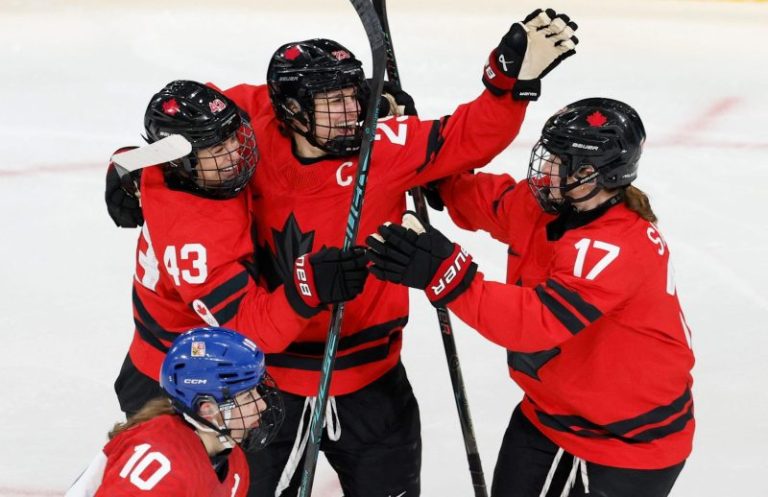
MILAN The Canadian women’s hockey team is gearing up for its toughest matchup of the 2026 Winter Olympics and the reigning champions will be without their trusted leader.

Captain Marie-Philip Poulin has been ruled out of Canada’s preliminary matchup against the United States on Tuesday due to a lower body injury suffered in the team’s 5-1 win over Czechia on Monday, Team Canada confirmed to USA TODAY Sports hours ahead of puck drop at the Santagiulia Ice Hockey Arena in Milan at 2:10 p.m. ET.

Poulin, 34, is listed as day-to-day.

Poulin took a shoulder from Czechia’s Kristyna Kaltounkova in the first period and hit the boards hard. The five-time Olympian appeared to be visibly shaken by the hit and remained down on her hands and knees for several moments. Poulin skated to the bench, but avoided putting any pressure on her right leg while leaving the ice and grimaced in pain on the bench.

Kaltounkova received a two-minute penalty for an illegal hit.

Poulin tried to return to the ice during the Canadian power play, but she appeared to be unstable on her feet and returned to the bench less than a minute later in visible pain. The broadcast showed her heading back to the dressing room and she didn’t return with the team following the intermission. She exited the victory with one assist.

Tuesday’s matchup against the USA was supposed to be Canada’s final preliminary matchup in Group A play, but the Canadians will now play Finland on Feb. 12 after the matchup got rescheduled due to a norovirus outbreak among the Finnish team. The USA TODAY app gets you to the heart of the news — fastDownload for award-winning coverage, crosswords, audio storytelling, the eNewspaper and more.

This post appeared first on USA TODAY

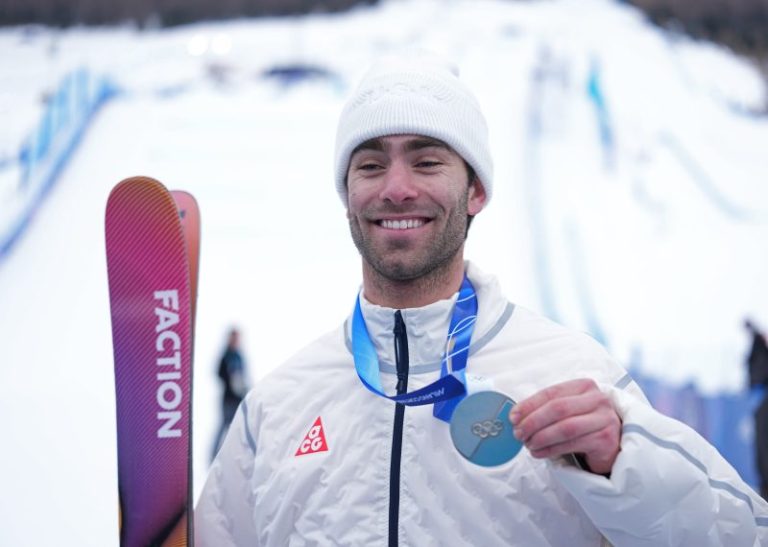
LIVIGNO, Italy – After his third and final run, U.S. freestyle skier Alex Hall knew he’d be waiting on fate.

But he didn’t wait on the judges. He’d fallen in that last try. Hall knew his only score that counted was his second score, and he also knew that score wouldn’t be enough for him to repeat as Olympic gold medalist in men’s slopestyle.

But the silver? Maybe.

Norway’s Birk Ruud had posted a first-run score of 86.28 that was slightly better than Hall’s second run (85.75), which was slightly better than the 85.15 that New Zealand’s Luca Harrington picked up in the third run to jump into position for the bronze. It was close, delicately balanced.

After Hall, there were six skiers (not counting Ruud) left to go who could change any of that.

At the bottom of the hill, Harrington welcomed Hall into limbo with an embrace. Theirs was a position unique in freestyle skiing, emblematic of the odd coupling of their sport into a medal-driven atmosphere like an Olympics:

These two, basically, had to root for friends and colleagues to fail.

As natural as that sounds to any world-class competition, freestyle skiing isn’t like that. At least, it doesn’t wish to be.

‘It’s like a weird, mixed emotion,” Hall said. ‘You don’t want to celebrate when someone doesn’t land, but in some regard, you are happy that maybe you have a better chance at the podium now. But I think I can speak for everyone: We’re always rooting for each other.’

Hall personifies the spirit of his sport well. Because he’s a cool guy. Laid-back. He’s known as an elite freestyle skier who doesn’t take competition all that seriously. He just likes to ski.

After winning his second Olympic medal (and – spoiler – he did end up winning that second Olympic medal in this Feb. 10 competition in Livigno), Hall shrugged off the buildup by saying, ‘The four years in between (Olympics), it didn’t ever feel like there was a day where I was like, ‘Oh, I’ve really got to go train so I can get this medal. I’ve got to go train so I can beat this person.’ It’s just ‘I’m just going to go ski.’

‘I like skiing.’

In freestyle skiing, athletes like Hall root for ‘progression’ of their sport. They want to see and experience something cool, especially in a setting like the X Games or Olympics.

What they don’t do is root for failure (or God forbid, someone getting hurt attempting these crazy flips and twists on skis) just so they win.

‘That’s so rare in a sport,” said Hall, praising the mentality. ‘That’s what’s so cool about freeskiing. Like, yeah, I’m at the bottom (of the hill), and I’m hanging in there, hopefully going to get a medal. But we’re all still rooting for each other, and we’re so hyped when people do good runs.’

Yes.

This was still the Olympics, though.

Six competitors left to go.

Harrington and Hall kept it light. They chatted, joked, looked at phones and warmly greeted peers arriving at the base of the hill as, one after another, none hoisted the duo out of their places.

Two to go. This guy fell. Hall knew he’d at least have a medal.

One to go. That guy fell, too.

So Hall had a silver, combined with his gold from Beijing, and Harrington teared up to learn that he’d won the bronze in what was ‘probably the most emotional moment of my life,” he said.

‘He started crying. I was so happy for him,’ Hall said of Harrington. ‘Like I was starting to cry. I didn’t even care about my medal, really. I was so stoked for him. It was just a cool moment. Harrington teared up to know he’d be taking home a bronze medal.’

As for Hall? Soon as it ended, he got his congratulations, too, as well as a hug from U.S. teammate Grace Henderson, who was watching and cheering Hall alongside other American skiers.

‘I’ve got a gold. It’s nice to have a silver now, too,’ he said. ‘Like the collection is sweet, you know? … The scoring was so close. It could have gone anyone’s way today, and that’s both the curse and the beauty of freestyle skiing.

‘You get to do exactly what you want, but it is a judged sport.’

Such is life, right?

Reach Tennessean sports columnist Gentry Estes at gestes@tennessean.com and hang out with him on Bluesky @gentryestes.bsky.social

This post appeared first on USA TODAY

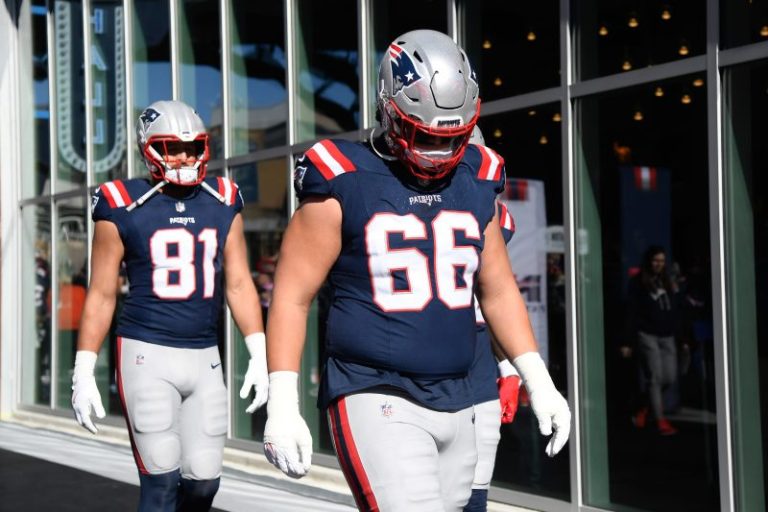
New England Patriots left tackle Will Campbell broke his media silence with a significant revelation on Feb. 10.

After leaving the Patriots’ locker room after the Super Bowl without talking to members of the media, Campbell spoke to reporters a couple of days later. According to Mark Daniels of MassLive, the first-year offensive lineman said he tore a ligament in his knee during the season.

Campbell said he played at less than 100% during the Patriots’ Super Bowl run but also said it was not an excuse for his struggles down the stretch.

Campbell missed all of December after landing on injured reserve with a knee injury he sustained in a Week 12 game against the Cincinnati Bengals. Campbell had to be carted to the locker room after the injury, and he landed on injured reserve the following week. After missing the minimum four games on IR, Campbell returned for Week 18 and the playoffs.

The No. 4 overall pick in the 2025 NFL Draft allowed 14 pressures against the Seattle Seahawks in Super Bowl 60, according to Next Gen Stats. That was the most allowed by a single player in any game during the 2025 season, including the playoffs.

Next Gen Stats also attributed 29 total pressures allowed to Campbell over the course of the Patriots’ playoff run, which is the most of any player since 2016, the beginning of the Next Gen Stats era.

In the days after the Super Bowl, more than a handful of current and former offensive linemen took to social media to analyze Campbell’s struggles. Several pointed to a lack of solid base/foundation in his stance, which could be chalked up to the knee injury he was still recovering from.

Patriots head coach Mike Vrabel said on Feb. 10 that he and the team have no plans to move Campbell to the interior after his rough outing.

‘Will’s 22 years old. He’s our left tackle,’ Vrabel said. ‘He’ll get better and get stronger. (There were) moments where he played well, moments where he blocked a guy. There’s plays he’d like to have back; we’re not moving him to guard or center or tight end or anywhere else.’

This post appeared first on USA TODAY

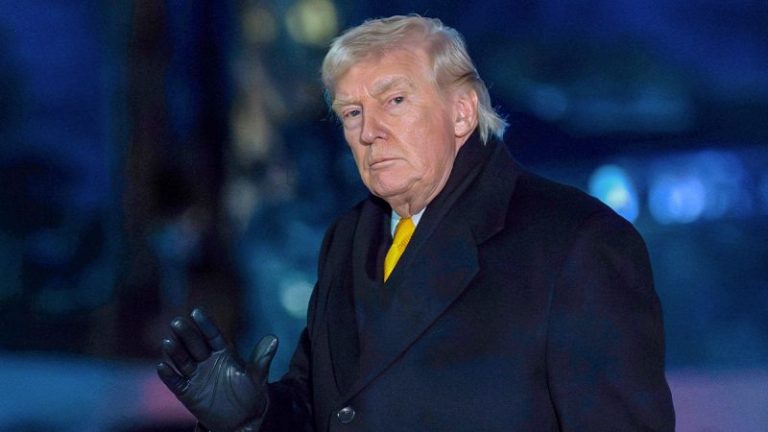
An association representing governors from across the country will not be holding a formal meeting with President Donald Trump after the White House reportedly snubbed Democrats, only inviting Republican governors to attend.

‘The bipartisan White House governors meeting is an important tradition, and we are disappointed in the administration’s decision to make it a partisan occasion this year. To disinvite individual governors to the White House sessions undermines an important opportunity for federal-state collaboration,’ Bandon Tatum, CEO of the National Governors Association, said in a statement provided to Fox News Digital. 

‘At this moment in our nation’s history, it is critical that institutions continue to stand for unity, dignity, and constructive engagement,’ he added.

‘NGA will remain focused on serving all governors as they deliver solutions and model leadership for the American people. Traditionally, the White House has played a role in fostering these moments during NGA’s annual meeting. This year, they will not,’ Tatum added.

Oklahoma Gov. Kevin Stitt, a Republican who is the chairman of the NGA, said in a Monday letter to fellow governors that the association was ‘no longer serving as the facilitator’ for an event scheduled for Feb 20, according to The Associated Press, which obtained Stitt’s letter. Stitt said the NGA was meant to represent all governors — those of the 50 states as well as the governors of American Samoa, Guam, the Northern Mariana Islands, Puerto Rico and the Virgin Islands.

In response to the reported snub, Democratic governors from across the country said they would not be attending White House events. The statement was issued by Democratic Governors Association (DGA) Chair Kentucky Gov. Andy Beshear, DGA Vice Chair Michigan Gov. Gretchen Whitmer, Wisconsin Gov. Tony Evers, Massachusetts Gov. Maura Healey, New York Gov. Kathy Hochul, Kansas Gov. Laura Kelly, Connecticut Gov. Ned Lamont, New Mexico Gov. Michelle Lujan Grisham, Rhode Island Gov. Dan McKee, Maryland Gov. Wes Moore, Delaware Gov. Matt Meyer, Maine Gov. Janet Mills, California Gov. Gavin Newsom, Colorado Gov. Jared Polis, Illinois Gov. JB Pritzker, Pennsylvanie Gov. Josh Shapiro, New Jersey Gov. Mikie Sherrill and Minnesota Gov. Tim Walz.

‘Democratic governors have a long record of working across the aisle to deliver results, and we remain committed to this effort. But it’s disappointing this administration doesn’t seem to share the same goal. At every turn, President Trump is creating chaos and division, and it is the American people who are hurting as a result,’ the statement read. ‘If the reports are true that not all governors are invited to these events, which have historically been productive and bipartisan opportunities for collaboration, we will not be attending the White House dinner this year. Democratic governors remain united and will never stop fighting to protect and make life better for people in our states.’

The White House did not immediately respond to Fox News Digital’s request for comment.

The NGA was scheduled to meet in Washington from Feb. 19-21, according to the AP.

During last year’s meeting, Trump and Maine’s then-Gov. Janet Mills traded barbs, showing signs of tensions between the White House and Democrats, the AP noted. At the time, Trump singled out Mills over his administration’s push to bar transgender athletes from girls’ and women’s sports. Mills retorted, ‘We’ll see you in court.’ Trump then predicted that opposing the order would end Mills’ political career. She is now runing for U.S. Senate.

The Associated Press contributed to this report.

This post appeared first on FOX NEWS

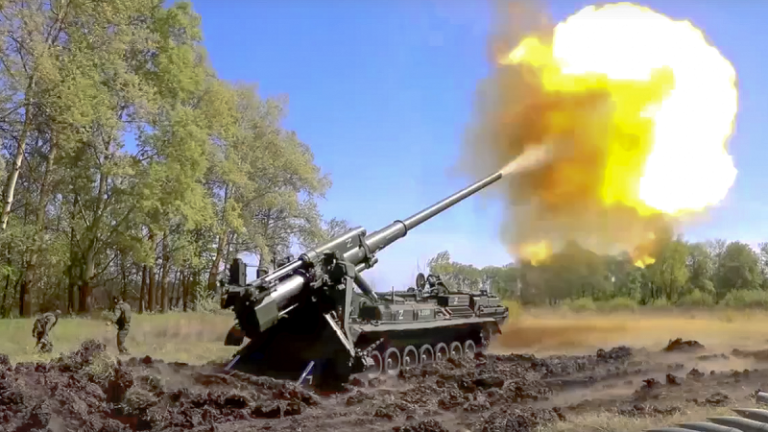
Russia’s military has been badly battered by its failure to conquer Ukraine, but Moscow is now rebuilding its war machine for the long haul, according to a new assessment from Estonia’s foreign intelligence service, even as the force it is fielding relies more on mass and attrition than military quality. 

The report says Russia has suffered catastrophic losses since its full-scale invasion of Ukraine, with an estimated 1 million soldiers killed or severely wounded, draining its ranks and forcing the Kremlin to rely on mass mobilization rather than professional military strength.

Despite those losses, Estonian intelligence says the Kremlin is compensating by shifting toward mass and attrition, dramatically expanding weapons production and reorganizing its military around volume rather than quality, even as fighting in Ukraine continues.

Taken together, the assessment portrays a Russian military that has failed to defeat Ukraine, suffered historic manpower losses, and rebuilt around quantity over quality — leaving its true combat effectiveness increasingly in question.

Russia’s military-industrial complex has increased artillery ammunition production more than 17 times that of 2021, a surge the report says points to preparation for future conflicts rather than short-term battle needs, including the rebuilding of strategic stockpiles depleted during the war. Russia produced roughly 7 million artillery rounds in 2025 alone, according to the assessment.

The assessment cautions that Russia remains a diminished force compared with pre-war expectations — reliant on poorly trained recruits, convicts, foreign nationals and aging equipment — but warns that a degraded military rebuilt around attrition still poses a long-term challenge for Ukraine, NATO and European security.

Estonia, a frontline NATO state bordering Russia, has built one of Europe’s most detailed intelligence pictures of Russian military activity through its proximity, regional expertise and intelligence sharing with allies. Its annual assessments are closely read within NATO for its granular focus on Russia’s capabilities, limitations and long-term planning.

Nearly four years into the war, Estonia’s intelligence service says Russia has failed to achieve its core objective of subjugating Ukraine, which it describes as ‘more determinedly independent than ever before.’

President Donald Trump recently mocked Moscow’s performance, calling Russia a ‘paper tiger’ in a Truth Social post and questioning how a superpower could spend ‘four years fighting a war that should have taken a week.’

President Vladimir Putin has dismissed Western assessments of Russian military exhaustion as ‘wishful thinking.’ Speaking in Minsk, Belarus, Putin claimed Russia is actually preparing to ‘reduce defense spending’ starting in 2026, framing the surge in production as a completed objective rather than a sign of desperation. 

‘We keep moving, keep advancing, and feel confident,’ Putin retorted to ‘paper tiger’ claims. ‘If we are a paper tiger, then what is NATO?’

But, the report concludes, ‘Russia remains dangerous despite its incompetence.’

The intelligence service also stresses that Russia is not expected to launch a military attack against Estonia or any other NATO member in the coming year, a judgment it says is likely to remain unchanged if current levels of deterrence are maintained.

According to the report, Russia is ‘merely feigning interest in peace talks,’ using negotiations to buy time, ease pressure on its economy and reset conditions for a longer confrontation rather than to end the war on terms acceptable to Ukraine.

To offset its manpower losses, Russian authorities have built a nationwide recruitment system that increasingly relies on coercion and desperation rather than voluntary service, with regional governments under pressure to meet monthly enlistment quotas at any cost, the report says. 

Recruitment efforts now focus heavily on ‘socially vulnerable groups,’ including the unemployed, chronic debtors, detainees, individuals under judicial supervision, and those suffering from alcohol or drug addiction, according to the assessment. Labor migrants and foreign nationals have also been swept up into the system as traditional recruitment pools dry up.

The report ties Russia’s military strategy to mounting economic and social strain at home, saying the prolonged war has hollowed out civilian sectors of the economy while pushing the state to prioritize defense spending at the expense of living standards. Nearly all nonmilitary sectors are either in recession or stagnation, the assessment says, increasing the risk of social instability in the years ahead.

The intelligence service also documents the use of foreign students — particularly from African countries — who are lured with promises of employment or residency extensions, then redirected into military training and sent to the front. Hundreds of foreign nationals from countries including Zambia, Tanzania, Cameroon and Nigeria have been deployed to Russian combat units, often with little training and limited understanding of the terms they agreed to.

These foreign recruits are frequently assigned to units used to absorb heavy losses, shielding better-trained formations and underscoring what the report describes as Russia’s growing reliance on expendable manpower rather than professional soldiers.

The assessment describes widespread lawlessness inside the armed forces, citing abuse of power, corruption, theft, alcoholism and drug use as persistent problems that have eroded discipline and combat effectiveness. Frontline units, the report says, are increasingly composed of individuals who ‘under normal circumstances should not be entrusted with weapons.’

Russia also has relied heavily on convicts to replenish its ranks. Between 150,000 prisoners and 200,000 prisoners were recruited from Russian detention facilities between 2022 and 2025, many of them convicted of serious violent crimes and granted pardons in exchange for frontline service, according to the report.

Despite the erosion of professionalism across its ranks, Estonian intelligence cautions against interpreting Russia’s military shortcomings as a reduction in threat. Instead, it says Moscow has adapted by embracing a model built around attrition, firepower and expendability, rather than maneuver warfare or elite units.

For NATO planners, the concern is that a Russia rebuilt around mass firepower and expendable manpower lowers the threshold for prolonged, high-casualty conflicts, even if Moscow struggles with complex operations.

The report emphasizes that Russia has exhausted much of the military stockpiles it inherited from the Soviet Union and exposed systemic problems within its armed forces, yet continues to invest heavily in rebuilding ammunition reserves and unmanned systems that could be used beyond Ukraine.

Not all analysts agree that ‘mass’ is Russia’s only path. A recent report from the Royal United Services Institute (RUSI) suggests 2026 will instead be the ‘year of hybrid escalation.’ With conventional options ‘foreclosed by economic constraints,’ researchers William Dixon and Maksym Beznosiuk argue the Kremlin is pivoting to a ‘thousand cuts’ strategy of cheaper, deniable sabotage across Europe.

‘We must prepare not for a resurgent Russia but for a desperate one,’ the report warns. 

This shift replaces traditional combat with an agile network of ‘disposable’ saboteurs— recruited via encrypted apps for arson and infrastructure attacks — designed to fracture Western support for Ukraine from within.

This post appeared first on FOX NEWS

A top Iranian security official was spotted in Oman just days after Tehran and the U.S. held indirect nuclear talks in the Mideast sultanate.

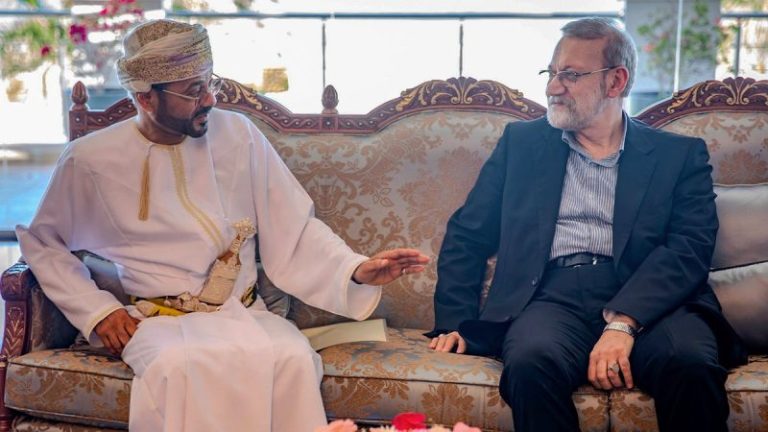
Ali Larijani, a former Iranian parliament speaker who now serves as the secretary to the country’s Supreme National Security Council, was likely in the country to discuss what comes next after the initial round of talks, The Associated Press reported. The outlet noted that Larijani’s team shared photos of him with Omani Foreign Minister Badr al-Busaidi, the chief intermediary in the U.S.-Iran talks.

Iranian media reportedly said Larijani would deliver an important message, but later state television said al-Busaidi ‘handed over a letter’ to the Iranian official without elaborating on the letter’s origins, according to the AP.

While in Oman, Larijani also met with Omani Sultan Haitham bin Tariq for nearly three hours, according to the AP, which cited the Iranian state-run IRNA news agency. Additionally, the outlet said that Larijani was set to travel to Qatar, which houses the U.S. military installation that bombed Iran’s nuclear sites in 2025.

Larijani accused Israel of playing a ‘destructive role’ in the talks just before Israeli Prime Minister Benjamin Netanyahu’s expected visit to Washington, D.C.

‘Netanyahu is now on his way to the United States. Americans must think wisely and not allow him, through posturing, to imply before his flight that ‘I want to go and teach Americans the framework of the nuclear negotiations.’ They must remain alert to the destructive role of the Zionists,’ Larijani wrote on X.

Israel and Iran engaged in a 12-day war in the summer of 2025 which culminated in the U.S. bombing Tehran’s nuclear facilities. Iran, which has been grappling with mass anti-government protests, has blamed Israel and the U.S. for various grievances.

Officials from both the U.S. and Iran have said that the first round of talks went well and suggested that they would continue.

‘The Muscat meeting, which was not a long one, it was a half-day meeting. For us, it was a way to measure the seriousness of the other side, and to find out how we could continue the process. Therefore, we mostly addressed the generalities,’ Iranian Foreign Ministry spokesman Esmail Baghaei said at a news conference Tuesday in Tehran, according to the AP.

‘Our principles are clear. Our demand is to secure the interests of the Iranian nation based on international norms and the Non-Proliferation Treaty and peaceful use of nuclear energy,’ Baghaei said, according to the AP. ‘So as for the details, we should wait for the next steps and see how this diplomatic process will continue.’

Iranian foreign minister Abbas Araghchi said that indirect nuclear talks with the U.S. in Oman were ‘a good start’ and that there was a ‘consensus’ that the negotiations would continue.

‘After a long period without dialogue, our viewpoints were conveyed, and our concerns were expressed. Our interests, the rights of the Iranian people, and all matters that needed to be stated were presented in a very positive atmosphere, and the other side’s views were also heard,’ Araghchi said.

‘It was a good start, but its continuation depends on consultations in our respective capitals and deciding on how to proceed,’ he added.

President Donald Trump also expressed optimism about the indirect talks, telling reporters aboard Air Force One on Friday that ‘Iran looks like it wants to make a deal very badly. We’ll have to see what that deal is.’

When he was pressed on how long the U.S. would be willing to wait to make a deal with Iran, the president indicated some flexibility, saying he believes the two nations can reach an agreement.

‘It can be reached. Well, we have to get in position. We have plenty of time. If you remember Venezuela, we waited around for a while, and we’re in no rush. We have very good [talks] with Iran,’ Trump said.

‘They know the consequences if they don’t make a deal. The consequences are very steep. So, we’ll see what happens. But they had a very good meeting with a very high representative of Iran,’ the president added.

American and Iranian representatives held separate meetings with Omani officials on Friday amid flaring tensions between Washington and Tehran. Oman’s Foreign Ministry said the meetings were ‘focused on preparing the appropriate conditions for resuming diplomatic and technical negotiations.’

The Associated Press contributed to this report.

This post appeared first on FOX NEWS
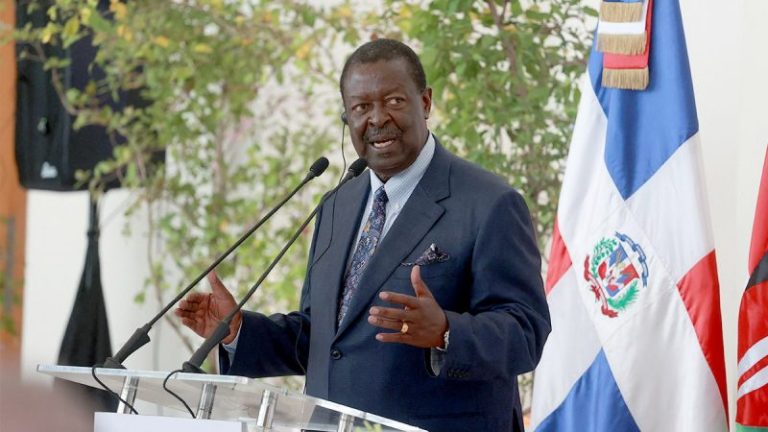
Kenya will press Russia for answers after reports emerged that its citizens are being recruited to fight in Ukraine, the country’s foreign minister said.

Musalia Mudavadi told the BBC in an interview on Tuesday that the recruitment was ‘unacceptable and clandestine.’

He said the government has shut down illegal recruiters and would urge Moscow to sign an agreement barring the conscription of Kenyan citizens. 

Nairobi estimates that about 200 nationals have been recruited to fight for Russia, and Mudavadi explained that families have struggled to recover the bodies of loved ones killed in the conflict.

‘It is difficult because, remember, it depends on where the body has been found,’ the foreign minister told the BBC. ‘There some have been found in Ukraine – we are also working with the government of Ukraine to try and get the remains of those people repatriated.’

In a November post on X, Ukraine’s Foreign Minister Andrii Sybiha said Kyiv estimates that at least 1,436 foreign nationals from 36 African countries have been recruited to fight for Russia in its war against Ukraine, warning the true number may be higher.

Sybiha said Russia uses a range of tactics to recruit foreigners, including financial incentives, deception and coercion.

‘Signing a contract is equivalent to signing a death sentence,’ he wrote. ‘Foreign citizens in the Russian army have a sad fate. Most of them are immediately sent to the so-called ‘meat assaults,’ where they are quickly killed.’

Mudavadi said in December that the government had received multiple emails and urgent communications from Kenyans in distress at military camps in Russia.

‘Several of them have reported injuries among our nationals and others stranded, following attempted recruitment into the violent conflicts,’ he told the Kenya News Agency, the country’s state-run news service.

Mudavadi said the government has since tightened recruitment regulations, deregistering more than 600 non-compliant agencies and strengthening job verification through the Diaspora Placement Agency to curb exploitation.

This post appeared first on FOX NEWS
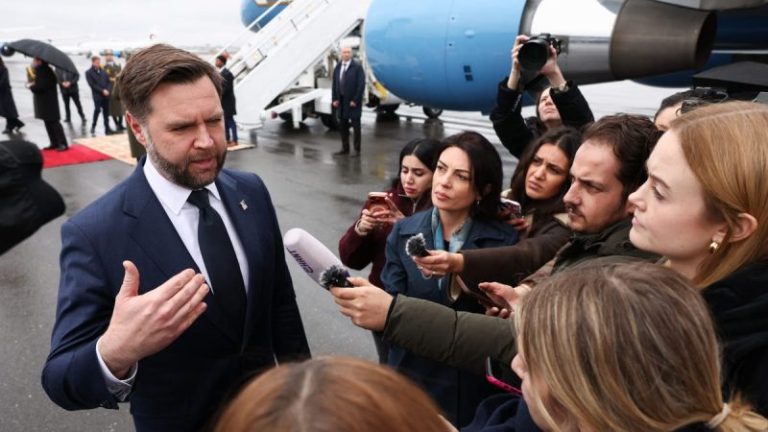
Vice President JD Vance said Tuesday that the United States should get ‘some benefit’ from Greenland if it’s going to ‘be on the hook for protecting this massive landmass.’ 

Vance told reporters in Armenia that, ‘it’s very early in the Greenland talks,’ amid the Trump administration’s push to acquire the Danish territory.  

‘We’ve been working quite a bit on this over the last few weeks, but it’s just very simple. Greenland is very important to the national security of the United States of America,’ Vance added. 

‘I do think that some of our allies have under-invested in Arctic security, and if we’re going to invest in Arctic security, if we’re basically going to pay a lot of money and be on the hook for protecting this massive landmass, I think it’s only reasonable for the United States to get some benefit out of that, and that’s going to be the focus of the negotiations here over the next few months,’ Vance said.

President Donald Trump said in mid-January that the U.S. needs Greenland ‘for the purpose of national security.’ 

‘It is vital for the Golden Dome that we are building. NATO should be leading the way for us to get it. IF WE DON’T, RUSSIA OR CHINA WILL, AND THAT IS NOT GOING TO HAPPEN!’ Trump said at the time. 

A week later, Trump said, ‘Based upon a very productive meeting that I have had with the Secretary General of NATO, Mark Rutte, we have formed the framework of a future deal with respect to Greenland and, in fact, the entire Arctic Region.’

‘This solution, if consummated, will be a great one for the United States of America, and all NATO Nations,’ the president said on Truth Social. 

However, Danish Prime Minister Mette Frederiksen then insisted that Denmark would not negotiate on its sovereignty despite Trump announcing the ‘framework’ of a deal. 

‘Security in the Arctic is a matter for the entire NATO alliance. Therefore, it is good and natural that it is also discussed between NATO’s Secretary General and the President of the United States. The Kingdom of Denmark has long worked for NATO to increase its engagement in the Arctic,’ Frederiksen noted in a statement, which was written in Danish. 

‘We have been in close dialogue with NATO and I have spoken to NATO Secretary General Mark Rutte on an ongoing basis, including both before and after his meeting with President Trump in Davos. NATO is fully aware of the position of the Kingdom of Denmark. We can negotiate on everything political; security, investments, economy. But we cannot negotiate on our sovereignty,’ she asserted. 

Greenlandic Foreign Minister Vivian Motzfeldt said earlier this month that, ‘We are pursuing a diplomatic solution through negotiations’ with the U.S. and that she is ‘hopeful and optimistic that we will find common ground that respect our red lines,’ according to Reuters. 

Fox News Digital’s Alex Nitzberg contributed to this report. 

This post appeared first on FOX NEWS
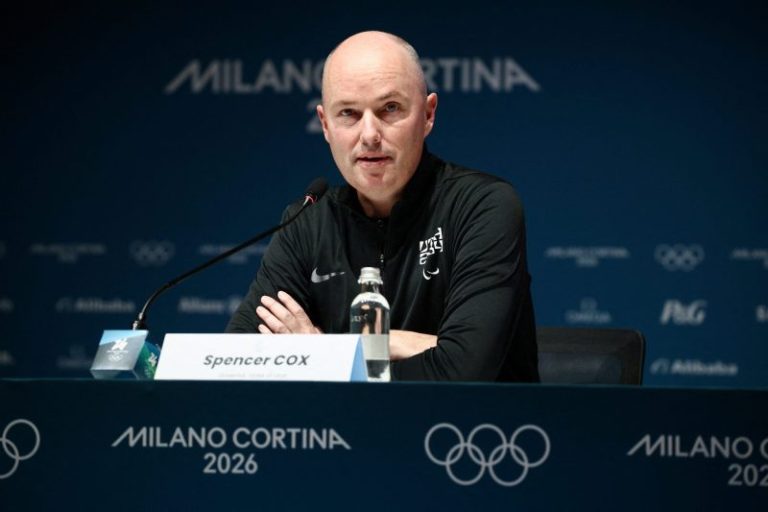
MILAN, Italy – Utah Gov. Spencer Cox chided reporters at the 2026 Winter Olympics on Tuesday, Feb. 10 when asked about President Trump calling a US athlete “a real loser’’ and political division in the United States.

“I know the media loves this stuff,’’ Cox said at a press conference about the 2034 Winter Olympics that will be hosted in Salt Lake City, Utah. “It gets a lot of clicks.

“I hate the questions you ask the athletes. These are kids out there competing. I think you should be asking them about their sports and about their competition and let the politics take care of the politics.’’

Hunter Hess, an American freestyle skier, was asked in a press conference Feb. 4 about representing the United States at a fraught time that includes ICE agents killing two protesters in Minnesota during immigration raids.

Hess said he had “mixed emotions” and it was “a little hard.”

Trump lashed out with a Truth Social post, writing in part that Hess was “a real Loser.’’

Later, freestyle skier Eileen Gu and snowboarder Chloe Kim were asked about Trump’s comments and seemed to take issue with the hostile tone of the president’s post.

Cox, a Republican, sidestepped controversy when asked if Olympic athletes were losers.

“Look, we love our athletes and we’re grateful for our athletes,’’ he said. “We recognize there are lots of divisions in our country and in our world today and I love that we get to live in a country where people get to speak their minds.

“That’s true of athletes, it’s true of governors, it’s true of presidents, it’s true of every individuals in our country. And I’m grateful for that and again we care about unity, we believe this (the 2034 Olympics) is an opportunity to bring people together.’’

Cox delved into politics, saying, “We have laws in the United States and those laws need to be enforced. I think that’s very important. I think that’s true in every country. I had to show my documents when I came here to Italy…But again those are political issues that will be worked through.’’

Sarah Hirshland, CEO of the United States Olympic & Paralympic Committee, pointed out that Hess on Feb. 9 posted on Instagram a comment that began, “I love my country.’’

Said Hirshland, “I’ve been in touch with Hunter, we’ve been in touch with folks in the United States to ensure that everyone understands the context and intention behind all of these comments.’’

This post appeared first on USA TODAY

Tight end David Njoku’s ninth season with the Cleveland Browns may be his last.

Njoku, 29, is set to hit free agency for the first time in his career this offseason. He announced in an Instagram post on Feb. 9 that he does not intend to re-sign with the Browns once his free agency begins in March.

‘Cleveland, first off I love you,’ he wrote in the post. ‘These 9 years have been a beautiful journey. I’m am so grateful for all the memories we shared together. Thank you to The Haslams, Andrew Berry and the whole browns organization for everything!! All my teammates I shared the battle with I’m so grateful for you guys. The time for me to find a new home has come and all I can think of is just the gratefulness in my heart. The city of Cleveland will forever be home #ChiefOut.’

If Njoku’s time in Cleveland is over as he intends it, he finishes his tenure as one of the most prolific pass-catchers in Browns franchise history.

Over the course of his nine years in Cleveland, the tight end tallied 384 catches for 4,062 yards and 34 touchdowns in 118 games (88 starts). Njoku’s reception total ranks third all-time among Browns pass-catchers, his receiving yards are 12th-most by a Brown and his 34 touchdowns are sixth-most in franchise history.

Njoku began his NFL career with the Browns as a first-round draft pick in 2017. After playing out the four years on his rookie contract plus a fifth-year option, the tight end signed a four-year, $56.75 million contract extension. The deal made Njoku one of the highest-paid players at his position at the time.

In 2025, the Browns’ veteran dealt with a couple of knee injuries that limited him to 12 games. As a result, Browns rookie tight end Harold Fannin Jr. stepped up in Njoku’s place and finished the season as Cleveland’s leading pass-catcher by receptions (72), receiving yards (731) and touchdowns (six).

Njoku will enter free agency as one of a wide range of tight end options on the market. Atlanta Falcons 2021 first-round pick Kyle Pitts is set to become a free agent, as are Cade Otton, Travis Kelce and Dallas Goedert.

This post appeared first on USA TODAY