Archive

2026

Browsing

Indiana coach Curt Cignetti made a crucial decision to go for it on fourth down late in the College Football Playoff championship game.
Quarterback Fernando Mendoza scored a 12-yard rushing touchdown on a quarterback draw to give Indiana a 24-14 lead.
The play call gave Mendoza, the Heisman winner, the option to either run or pass based on the defensive alignment.

MIAMI GARDENS, FL — Curt Cignetti faced the toughest coaching decision of his career.

Indiana led Miami 17-14 with 9:27 to play in the College Football Playoff championship game but faced fourth-and-4 from the Hurricanes’ 12-yard line, with two options at Cignetti’s disposal:

To attempt a 29-yard field goal that would push the Hoosiers ahead 20-14 but leave Miami’s rejuvenated offense with a chance to take a narrow lead. An extended scoring drive in response might leave IU with little time to mount a potential game-winning response.

Or to go for it on fourth down, something the offense had done just three plays earlier. Lined up on fourth-and-5 from the Miami 37, quarterback Fernando Mendoza found wide receiver Charlie Becker for a 19-yard gain to extend the drive.

LOOKING AHEAD: Our way-too-early college football Top 25 for 2026

At first, the offense stayed on the field after Mendoza’s third-down pass to receiver E.J. Williams fell incomplete. With about 24 seconds left on the play clock, the offense came off the field, replaced by the field-goal unit.

“So much going on there,” said special teams and tight ends coach Grant Cain. “What personnel do you want to be in? What do you think they’re going to be in?”

Then Cignetti called timeout. The Hoosiers came to the sideline.

“I didn’t know what we wanted to do, if we wanted to kick it or go for it,” said wide receiver Elijah Sarratt.

Offensive coordinator Mike Shanahan thought about Cignetti’s message to his staff during the pregame meal earlier that afternoon: I want to be aggressive, he had said, and I want to play to win.

The offense went back on the field. Cignetti called Mendoza’s number, handing him a play designed to be a quarterback draw but with the built-in option to shift into a pass based on the alignment of Miami’s defense.

“I don’t think there was any doubt in coach’s mind he was going to go for it,” said Cain. “He’s an offensive guy and he believes in putting our players in position to make plays. And that’s what he did. He put the ball in the Heisman winner’s hands and spread them out.”

While he could’ve shifted to a pass and had routes on the outside heading toward the corners of the end zone, Mendoza stayed in the original call.

In shotgun, he took the snap and took two steps back, as if to pass, with his heels landing on the 20-yard line. He then tucked the ball in his left arm, cut back to his right at the line of scrimmage and crossed the 7-yard line to get the first down.

Mendoza bulldozed into two would-be Miami tacklers and pulled off a slow-motion spin move 2 yards shy of the goal line — “All of a sudden he has a spin move, you know, a suspect spin move, obviously,” tight end Riley Nowakowski said — and leaped: Mendoza turned horizontally, stretched out his arms and flopped toward the end zone as three Miami defenders simultaneously converged, one drilling him in the back as he crossed the plane.

Indiana pushed its lead to 10 and would secure its first football national title with a 27-21 victory

“He keeps the ball, dives for the end zone and does what the Heisman does,” said Nowakowski. “Obviously, any time you put the ball in Fernando’s hands it’s not a gamble. It seems more like a guarantee at this point.”

Forget just Indiana history; the touchdown run was maybe the deciding play in the Hoosiers’ first national title, and is guaranteed to last forever in the program’s highlight reel.

“Fernando didn’t throw a dime,” Sarratt said. “He ran. He ran. He did a great job running. That boy’s a dog, and he made a place for us when we needed it.”

Mendoza’s run, put into place by Cignetti’s gutsy decision on the play call shared with Shanahan, stands out as one of the most indelible moments in playoff history.

“Let me tell you, Fernando,” Cignetti said, “I know he’s great in interviews and comes off as the All-American guy, but he has the heart of a lion when it comes to competition. That guy competes like a warrior.”

This isn’t the first time IU has used this play in a key moment. Earlier this year, the Hoosiers made the same call to notch a road win against Oregon, using a slightly different alignment, in a game that was then tied 20-20 with 6:30 left to play.

That time, Mendoza switched to the pass and found Sarratt from 8 yards out for the go-ahead score. It’s a design the Hoosiers like to use in the red zone, where there are tighter windows amid the more condensed space for their passing tree.

“That was just an instance where we had a good play in mind and trusted our guys to get it done,” Shanahan said. “The cool thing about that one is you put the ball in your best player’s hands and let him make a play.”

On Monday night, Mendoza saw the picture clearly: Miami wasn’t bunched at the line of scrimmage and rushed just four. On the snap, the second level of the defense inched back toward the first-down stripe, clearly anticipating a pass and looking to keep the Hoosiers short of the line to convert.

And he had the numbers. Miami dropped seven defenders. With four players spread out wide, Indiana had five linemen — one, left guard Drew Evans, raced up to help block linebacker Wesley Bissainthe — and an extra blocker in running back Kaelon Black, who helped blaze a trail for Mendoza once he reached the line of scrimmage.

He saw it all, and then got it done. One play sums up how Indiana went from the basement to the penthouse of college football: Coaching, talent, execution and toughness were the hallmarks of this play and of the most unexpected title run in FBS history.

“It wasn’t the perfect coverage for it, but I trust my linemen,” Mendoza said. “And everybody in that entire offense, that entire team had a gritty performance today. And we were all putting our bodies on the line, so it was the least I could do for my brothers.”

This post appeared first on USA TODAY

The defending champion, Rose, who started 1-4 last season, is already off to a solid start and near the top of the league standings. However, the team isn’t alone. Unrivaled’s field is bringing the elite competition. The Laces, Breeze and Phantom all have something to say about which team might be the best in the league.

What’s more, Breeze guard Paige Bueckers isn’t letting anyone, including Rose guard Chelsea Gray, who has been on a tear, get in the way of her money or her mission to elevate her team to the top. As expected, Bueckers’ potential breakout season is already loading.

Here’s USA TODAY’s Unrivaled power rankings through the first five games:

8. Lunar Owls BC (1-4)

The Lunar Owls finally got in the win column on Monday, Jan. 19, after a 68-57 win over Vinyl. It was almost becoming painful to watch guard Marina Mabrey and forward Aaliyah Edwards carry the team with not much production elsewhere. Mabrey is second in scoring (27.8 points per game) and assists (6.4 per game) and top 10 in rebounds (7.8 per game). Edwards, who is averaging a double-double, is sixth in scoring (21.8 points per game) and leads Unrivaled in rebounds (12.2).

It also helps that guard Skylar Diggins, who was out with a lower extremity injury, made her Season Two debut on January 17. Having Diggins back is a major boost to overall production. The Lunar Owls guard was ninth in scoring (17.9 points per game), second in assists per game (4.7) and third in steals (1.5 per matchup) last season.

7. Hive BC (1-4)

Hive BC isn’t as terrible as their record would seem to indicate, but they certainly need more collective effort on both sides of the ball. On paper, four players averaging double figures, including guard Kelsey Mitchell with 16.2 points, should be enough to stack wins. However, it’s the shot selection that seems to be hurting Hive the most. The team has yet to figure out how to take the easy baskets and play inside-out, with center Ezi Magbegor as the anchor. Hive also isn’t moving the ball well at just 8.8 assists per matchup, the worst in Unrivaled.

Defensively, Hive has already allowed 380 points, the second most in the league. That can’t happen if the team wants any chance at a championship. Hive must lock in defensively and use its speed and ball pressure to its advantage.

6. Vinyl BC (2-3)

Vinyl is loaded with talent, but it is struggling to be as consistent as it needs to be. Both guard Rhyne Howard and forward Dearica Hamby are doing their best to carry the load, but they need more help. Unfortunately, no other Vinyl players are averaging double figures. Guard Courtney Williams is the closest at nearly nine points per contest, but if Vinyl wants to put games in the win column, it needs more from Williams and at least one other bench player.

Furthermore, Vinyl’s perimeter production has to improve if it wants to keep up. Two of its three losses this season have come when the team shot fewer than five 3-pointers, including a painful January 19 loss to the Lunar Owls. Vinyl was just 2-of-12 behind the arc.

5. Mist BC (3-2)

Guard Allisha Gray has been phenomenal in leading Mist. She currently averages 23 points and assists 3.6 per matchup, and the 3-on-3 Olympian is right in her element. Forward Breanna Stewart has also been a nice compliment to Gray, averaging nearly 20 points and 8.4 rebounds a game. Mist has the potential to do more in Unrivaled if it can get more consistent production from its other guards, Arike Ogunbowale and Veronica Burton.

While Ogunbowale and Burton have been more than solid through the first five games, a bump in production to get both into double-figures nightly would go far. Add in additional minutes for forward Alanna Smith, and it wouldn’t be shocking to see Mist make a push up the rankings.

4. Breeze BC (3-2)

After overcoming a few growing pains, coach Noelle Quinn’s roster, the youngest in the league, is doing a commendable job of leaving no doubt that it belongs. Following a 2-0 start, Breeze dropped its next two games before earning a much-needed January 19 win, 83-64, over Mist. Guard Paige Bueckers had a sensational 37-point performance, which included 18 first-quarter points.

Bueckers, who is unsurprisingly leading the league in assists (6.8 per game), is also third in scoring (23.4 points per game) and eighth in rebounds (8.0 per game). Her teammates, centers Cameron Brink and Dominique Malonga, are fifth and sixth in blocks per game, respectively, with 1.2 per contest. Malonga is also averaging a double-double (15.8 points and 11.2 rebounds per game). Forward Rickea Jackson (15 points per game) also deserves a mention for her steady presence. Once guard Aari McDonald returns from her injury absence, Breeze’s potential could skyrocket.

3. Phantom BC (3-2)

Phantom is a sleeper team to watch that could be an early contender for the Unrivaled title. They have four players averaging double figures, plenty of depth and a fast pace that seems to be working against opposing teams. Guards Kelsey Plum and Tiffany Hayes have re-ignited their synergy from previously playing together on the Las Vegas Aces, and center Aliyah Boston has been a nice interior presence alongside Plum and Hayes.

Boston has truly found her stride on both sides of the ball, particularly defensively, where she leads the league in blocks per game (2.0) and is fourth in steals (1.8 per matchup). Rounding out Phantom is catch-all guard Natasha Cloud and forward Kiki Iriafen, who have been trustworthy in their roles off the bench. It should frighten other teams that Phantom is playing this well and still missing guard Dana Evans, who is out with a lower extremity injury.

2. Rose BC (3-2)

Despite dropping its last two matches to Hive and Laces, Rose is still a top team in the league. Guard Chelsea Gray has been on fire and already has three 30-point performances on the season. Gray also leads the league in scoring (30.6 points per game) and is fourth in assists per game (5.6). Yet, the Rose guard’s production isn’t enough.

Rose has gotten itself into trouble with its late-game execution and defense. The team lost a 78-75 heartbreaker to a winless Hive team and lost again to the Laces, after leading by as many as nine points in the third quarter. Ultimately, head coach Nola Henry must ask more out of her team on the defensive end and more from her bench if Rose wants a chance at repeating.

1. Laces BC (4-1)

The Laces have quietly put together a great start to the Unrivaled season. After opening with a 1-1 record, head coach Andrew Wade’s roster has rattled off three consecutive wins over the Lunar Owls, Phantom and Rose. The January 18 70-66 victory against Rose was a fantastic masterclass in tenacity. Wade’s team was down by as much as nine points before mounting a gritty comeback win to push the Laces to the top of the league standings.

Brittney Sykes (20.4 points per game) leads the charge for the Laces, often being a catalyst with her defense. (Sykes is second in steals per game with 2.4 per matchup). However, guard Jackie Young (20.2 points per game) has emerged as a nice one-two punch with Sykes. Against Rose, the Laces guard tallied 35 points on 68 percent shooting, plus three assists and a steal, during a standout performance.

This post appeared first on USA TODAY

One year into President Donald Trump’s second term, the federal agency responsible for managing government buildings, contracts and technology says it has delivered tens of billions of dollars in savings for taxpayers.

The U.S. General Services Administration (GSA) announced on Tuesday that it has driven more than $60 billion in federal contract savings since January 2025, as part of the agency’s push to shrink the federal real estate footprint in the era of DOGE, cutting red tape for small businesses and rewriting decades-old procurement rules that critics long said fueled waste and inefficiency.

Over the past year, the agency disposed of 90 federal properties, cutting more than 3 million square feet from its portfolio and avoiding an estimated $415 million in repairs and operating costs. Property sales generated an additional $182 million in revenue, while renegotiated leases and portfolio reductions avoided another $730 million in future costs.

GSA officials say they have also identified 45 additional high-cost, underused properties for accelerated sale, moves that could save taxpayers more than $3 billion in repairs and operating expenses if completed.

GSA, established in 1949, manages more than 360 million rentable square feet nationwide.

‘Under President Trump’s leadership, we’re delivering on our promise to create a leaner, smarter, and more accountable government,’ GSA Administrator Edward C. Forst said in a statement to Fox News Digital. ‘GSA is right-sizing our federal real estate portfolio, streamlining operations, and using the buying power of the United States government to get the best deals in procurement for American taxpayers.’ 

The agency is also touting significant changes in the area of federal contracting.

GSA, working in partnership with the Office of Management and Budget, the Department of Defense and NASA, also completed a historic rewrite of the Federal Acquisition Regulation (FAR), a rulebook governing federal purchasing.

The rewrite cut roughly one-quarter of the FAR, eliminating 484 pages and 230,000 words, while removing more than 2,700 ‘shall’ and ‘must’ mandates that officials say slowed procurement and discouraged competition.

The agency also says it canceled more than $500 million in unnecessary or underperforming contracts and reduced the federal vehicle fleet by over 1,000 vehicles.

Cutting red tape for small businesses has also been an objective GSA says it has made headway on, including reducing the Federal Management Regulation by about 72% and streamlining the Federal Travel Regulation by roughly 50%, while eliminating 84 outdated policy bulletins from the Federal Register.

For small businesses specifically, officials say compliance burdens have been cut by 70%, and vendor onboarding, previously taking up to 30 days, has been reduced to same-day approval.

The regulatory changes are projected to save $900 million over the next decade, according to the agency.

The federal government has also moved to modernize the way payments are made and the way Americans access their federal services and the GSA highlighted the expanded use of Login.gov as part of a broader effort to combat improper federal payments, an issue the government estimates costs taxpayers roughly $200 billion each year. 

The agency says the system now blocks thousands of suspected fraudulent identity verification attempts daily and has upgraded major partner agencies to a higher level of identity assurance, including biometric facial matching, to better protect access to federal benefits and services.

GSA also pointed to expanded use of artificial intelligence and automation, which Fox News Digital has previously reported on, as part of its effort to modernize federal operations without expanding the size of government.

The agency highlighted its development of a new USAi platform to support federal AI testing and deployment, allowing agencies to evaluate and adopt emerging technologies while maintaining security and oversight.

In a press release, the agency voiced its belief that the first-year accomplishments as part of Trump’s ‘vision’ of streamlining government ‘sets the tone for a results-driven second term.’

‘The results speak for themselves,’ Forst said. 

This post appeared first on FOX NEWS

Plans are being put together at President Donald Trump’s direction to hold a signing ceremony in Davos, Switzerland, for the Gaza Board of Peace, Fox News confirmed on Tuesday.

Bloomberg was first to report the plans.

The Trump administration began sending invitations to countries over the weekend, asking them to become founding members of the so-called Board of Peace.

‘Dozens’ of countries have been invited to join the board, Fox News confirmed. The official invites went out Friday.

Trump extended invitations to leaders from Russia, Belarus, China, Ukraine, India, Canada, Argentina, Jordan, Egypt, Hungary and Vietnam, among others.

Some invited countries have raised concerns about the terms of the proposed Gaza peace board, as participation would come with a substantial financial commitment, according to Bloomberg. 

European allies are seeking to adjust the proposal and organize a joint response, including enlisting Arab nations to push for changes to the $1 billion permanent membership fee, the outlet reported.

When questioned on Tuesday about French President Emmanuel Macron seemingly signaling reluctance to accept the invitation, Trump said, ‘Did he say that? Well, nobody wants him because he’s going to be out of office very soon. So, you know, that’s alright.’

‘What I’ll do is if they feel like hostile, I’ll put a 200% tariff on his wines and champagnes and he’ll join,’ Trump said. ‘But, he doesn’t have to join.’

Israeli Prime Minister Benjamin Netanyahu has also pushed back on the proposal after Turkey’s Foreign Minister Hakan Fidan and Qatari diplomat Ali Al-Thawadi were named as appointed members to a separate ‘Gaza Executive Board.’

Netanyahu’s office said the move was not coordinated with Israel and ‘runs contrary to its policy.’

The White House said on Friday that Trump will chair the Board of Peace and be joined by a group of senior political, diplomatic and business figures, including his son-in-law Jared Kushner, Secretary of State Marco Rubio, U.S. special envoy Steve Witkoff and billionaire Marc Rowan, among others.

This post appeared first on FOX NEWS

Miami quarterback Carson Beck shocked college football when he exited the NFL draft and transferred to the Hurricanes from Georgia last offseason, and it turned out to be a great move for the sixth-year signal caller.

Beck led the Hurricanes to the College Football Playoff national championship game, completing 19-of-32 passes for 232 yards and one touchdown to one interception in the 27-21 loss. That capped a season in which he completed 338-of-467 passes (72.4%) for 3,813 yards and 30 touchdowns to 12 interceptions.

But who will replace Beck, who led Miami to the national championship game against Indiana?

The Hurricanes don’t have an obvious backup to take over the reins. Emory Williams has appeared in a reserve role for three seasons, and has been passed up for a transfer portal quarterback in two consecutive seasons with Beck and former No. 1 overall pick Cam Ward.

Miami has found tons of success finding its quarterback in the portal, just like Indiana, who it faced for a national title.

Here’s a look at what the Hurricanes will do at quarterback in 2026:

Who will be Miami’s quarterback next year?

Duke QB Darian Mensah

The quarterback tied most closely to Miami is Duke’s Darian Mensah, who entered the transfer portal on Friday, Jan. 16 — the final day to enter.

Mensah was instantly linked to Miami, who still didn’t have a quarterback for 2026, on the day of his transfer. The Hurricanes had also tried to lure former Alabama quarterback Ty Simpson out of the NFL draft to transfer to Miami.

If Miami can land Mensah, who was reportedly earning $4 million annually at Duke, it would be quite the consolation prize. The first-year Duke quarterback passed for 3,973 yards with 34 touchdowns to six interceptions this season after transferring from Tulane. He ranked second nationally in passing yards and tied-for second in passing touchdowns, leading the Blue Devils to an ACC Championship Game win over Virginia.

ESPN’s Pete Thamel reported Dec. 19 that Mensah was returning to Duke for the 2026 season after briefly exploring the NFL draft. He changed his mind a few weeks later, posting a short message on X of his decision-making process.

‘I’m forever grateful for Duke and the coaching staff,’ Mensah wrote. ‘Thank you Duke family for everything. This wasn’t an easy decision, but after talking with my family, I believe it’s in my best interest to enter the transfer portal.’

Mensah is rated as the No. 18 player and No. 6 quarterback in the transfer portal, per 247Sports.

Indiana QB Alberto Mendoza

Could the Hurricanes turn to a Mendoza to lead the offense next season?

The younger brother of Heisman Trophy-winning quarterback Fernando Mendoza reportedly entered the transfer portal on Tuesday, Jan. 20 — the day after the Hoosiers downed the hometown Hurricanes in the national championship game.

Mendoza’s future at Indiana was in flux ever since Curt Cignetti landed TCU quarterback Josh Hoover out of the portal. The redshirt-freshman Miami native played at Christopher Columbus High School and could be an enticing option for the Hurricanes.

Mendoza was a three-star recruit in the 2024 class coming out of high school and was rated by 247Sports’ composite rankings as the No. 84 quarterback in the class. After enrolling at Indiana in June 2024, he was joined by his older brother, who transferred in from Cal after the 2024 season and went on to become the Hoosiers’ first Heisman winner in program history.

Alberto appeared in nine games, often relieving his older brother late in lopsided wins. Across those games, he completed 18 of 24 passes for 286 yards, five touchdowns and one interception. He was a threat on the ground, too, rushing for 190 yards and a touchdown on 13 attempts.

This post appeared first on USA TODAY
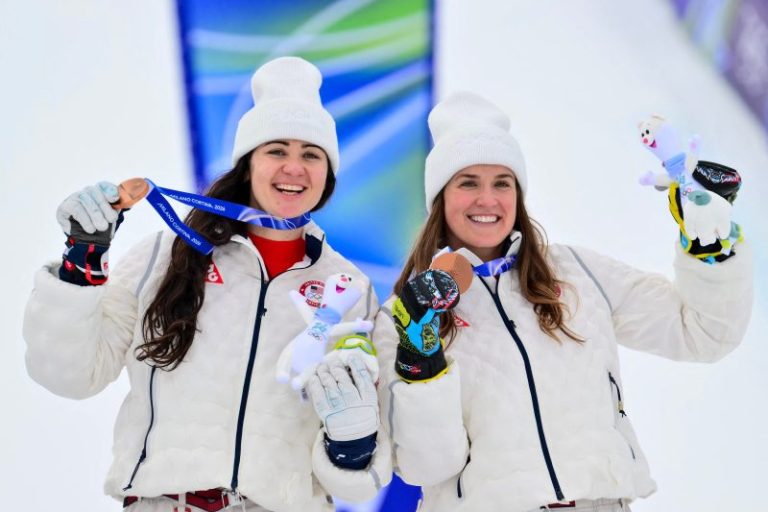
Savy King has returned to team training with Angel City for the first time since her collapse during a game last May.

The 20-year-old defender was present as Angel City kicked off its 2026 preseason last week.

‘I feel great. I have been really working hard, especially over the last six months or so, and especially over this offseason trying to get ready to be back to play this season,’ King told reporters in a video Angel City posted on its Instagram account.

‘I’m feeling really good. I’m in a really good place. I’m really excited about it. A lot of work to do to continue to get ready. But I’m really happy with where I’m at, and I’m feeling really good. Some may say better than ever.’

King collapsed during a game against the Utah Royals on May 9, 2025, leading to a terrifying scene on the pitch at BMO Stadium.

King was rushed to the hospital, where she underwent surgery after doctors discovered an underlying congenital heart abnormality.

“The left coronary is the most important blood vessel in your heart, and when it’s anomalous it means that it’s in a slightly different location than normal.”

Bay FC selected King with the second overall pick in the 2024 NWSL Draft. After spending her rookie season with Bay, King was traded to her hometown club Angel City in the offseason. She started every game for Angel City last year prior to her heart issue.

The defender has featured for the U.S. at various youth international levels and has been considered a future senior national team player.

King is still listed with a season-ending injury (SEI) designation on Angel City’s preseason roster. The defender would need to be activated before she is able to return in a game.

This post appeared first on USA TODAY
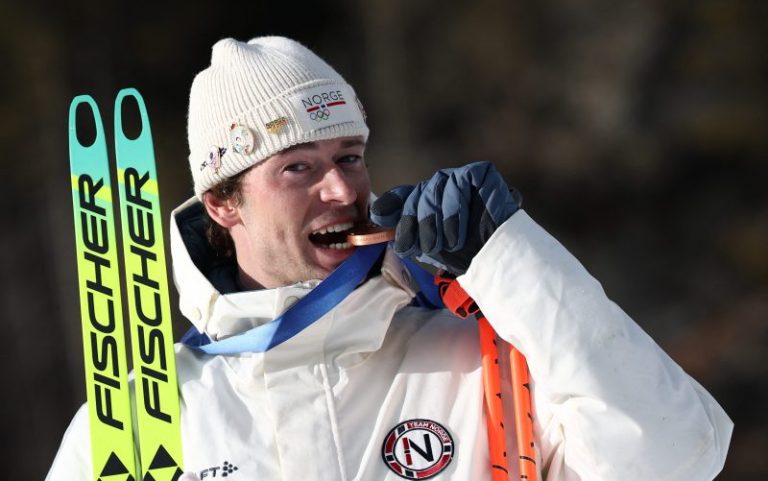
Hours away from the reveal of the 2026 Baseball Hall of Fame voting results, things are looking good for Carlos Beltrán and Andruw Jones.

Two of the greatest center fielders of the late-90s and 2000s, Beltrán and Jones are each topping the 75% threshold in early ballot voting via Ryan Thibodaux’s Baseball Hall of Fame Voting Tracker. Beltrán is in his fourth year on the ballot and got up to 70.3% of the vote, while this is Jones is in year nine, his second-to-last chance to join an elite group in Cooperstown, N.Y.

Official results will be announced at 6 p.m. ET on Tuesday, Jan. 20.

Here’s the latest early voting results:

2026 Baseball Hall of Fame vote tracker

Ryan Thibodaux’s Baseball Hall of Fame Voting Tracker is an invaluable resource and the entire baseball community is so very appreciative of the work he and his team put in.

Full Baseball Hall of Fame 2026 ballot tracker

As of 10 a.m. ET, Tuesday Jan. 20

Carlos Beltrán: 89.6%
Andruw Jones: 82.6%
Chase Utley: 68.3%
Andy Pettitte: 57.0%
Félix Hernández: 55.7%
Alex Rodriguez: 43.5%
Manny Ramirez: 40.9%
Bobby Abreu: 39.1%

Check out individual Hall of Fame ballots

This post appeared first on USA TODAY
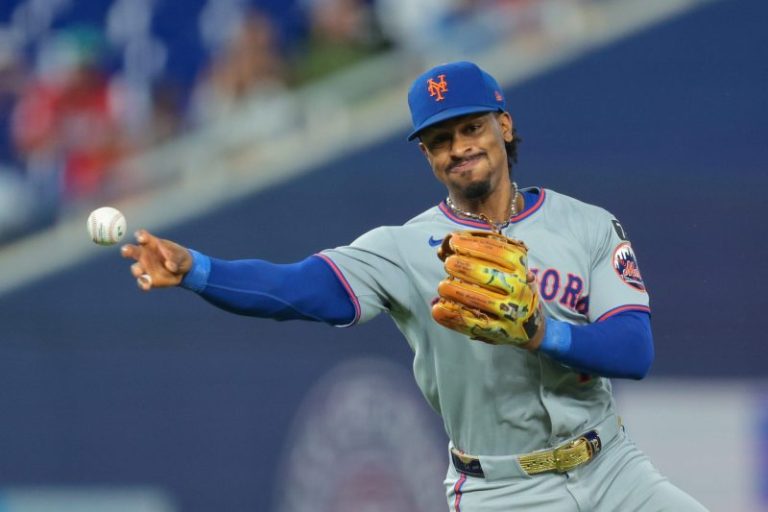
Curt Cignetti brought to life Indiana’s corpse of a program. In two years, he turned a doormat into royalty. Incredible, truly.
Fernando Mendoza makes enough winning plays against Miami. That’s your Heisman winner, folks.

MIAMI GARDENS, FL — Do not allow yourself to slip into the trap of believing Curt Cignetti awakened a sleeping giant.

That’s a misnomer.

No football giant ever existed in the basketball country known as Bloomington, Indiana, before the Hoosiers hired a Yinzer old enough to retire but determined enough to achieve the unthinkable.

Cignetti brought life into Indiana’s corpse of a program.

In two years, he turned a doormat into royalty.

Buy IU championship books, newspapers, gear

This isn’t so much awakening a giant as it is transforming a zombie into a vibrant king wearing college football’s crown. In doing so, Cignetti hatched one of the most unfathomable national champions in college football history.

Indiana just achieved an undefeated season. In football.

Let that sink in.

Incredible.

Historic.

Transformative.

All of that, and more.

Before Cignetti, in the time of B.C., Indiana was a nobody.

After Cignetti, the Hoosiers are lords.

“Seeing the confetti come down,’ said Indiana’s Isaiah Jones, who scored a touchdown on a blocked punt recovery, ‘it’s surreal.’

I’m still struggling to believe it, because of Indiana’s history, but nothing about this particular season or Indiana’s postseason run felt fluky.

The Hoosiers owned this season, and they controlled this College Football Playoff, and although Miami kept counterpunching in a cardiac finish, Indiana was just a little better, a bit closer to complete, in a 27-21 triumph while cementing a perfect season.

Buy IU championship books, newspapers

There will be time in the days and weeks to come to debate where this 16-0 Hoosiers team ranks among the greatest teams of all time.

No matter where you land in that debate, there should be no debating the remarkableness that Indiana, one of the sport’s meekest programs throughout most of its existence, found its way into the conversation.

NIL not only reason for Indiana success

When they try to explain this season, obvious narratives will emerge.

NIL. Transfers. Veteran roster.

Truth can be found in each of those ideas, but none of those realities should cheapen what Indiana achieved.

Indiana’s squad is seasoned, but Cignetti did not invent the concept of veterans. Miami teemed with experienced players, too, and it showed in this heavyweight finish.

Transfers fueled Indiana, undoubtedly. This feat wouldn’t have been possible without transfers. But, Cignetti did not raid blue-blooded cupboards. He built a winner with guys from James Madison and California, Maryland, and Kent State.

NIL aided the possibility of leveling the playing field, but Indiana did not pace the pack for spending, nor is this roster overflowing with former blue-chippers.

In the first four seasons of the NIL era, the national champions were Georgia, Georgia again, Michigan and Ohio State.

Not exactly a run of plucky underdogs.

Perhaps, Indiana will be at the vanguard of ex-doormat dominance, and Northwestern, Rutgers, Wake Forest and Kansas will follow in its footsteps. I sort of doubt that, don’t you?

This being a copycat industry, coaches will try to mimic Cignetti’s strokes of genius, but attempts to imitate excellence so often come up empty.

There was something special about this team. Something unbeatable.

These Hoosiers, many of them former two- and three-stars and even no-stars, jelled and developed into premier talent under Cignetti’s watch.

“It’s an emotional moment, to know what we did for Indiana,” said cornerback D’Angelo Ponds, one of Indiana’s many impact transfers.

Fernando Mendoza unleashes another Heisman moment

Indiana’s defense controlled the first half, and Jamari Sharpe sealed the win with an interception. Its offense made winning plays in the second half. The Hoosiers scored on a blocked punt. It took that kind of complete effort to fend off Miami.

Fernando Mendoza, the quarterback almost nobody wanted out of high school, wasn’t consistently at his best. Miami’s vaunted defense had much to do with that, persistently harassing and hitting the Indiana quarterback. But, Mendoza made two critical fourth-down conversions on a pivotal scoring drive. He pinballed his way into the end zone on a run that will live forever in Indiana lore.

That’s your Heisman winner, folks. The one who played high school football in the shadow of Miami’s campus. Another remarkable plot point of this inimitable story.

It’s not hyperbole to call this a once-in-a-lifetime season. You could’ve lived two lifetimes and never witnessed another Indiana season comparable to this one.

Talk to someone who’s followed the Hoosiers for longer than the past two seasons, and they could tell you about how, if you wanted to see Indiana’s stadium packed to the gills with color resembling crimson, you might need to wait until Ohio State came to town, when road fans lended an assist.

Who could blame Indiana fans if they weren’t consistently selling out the stadium for teams that finished with three, four and two wins in the three seasons before Cignetti’s arrival?

Ah, but that was the time of B.C.

Once Cignetti turned the clock into the era of A.C., Indiana fans dwarfed Alabama fans at the Rose Bowl. They turned Atlanta into South Indy in the CFP semifinals.

In this culmination played at Miami’s home stadium, the crimson and cream outnumbered the green and orange. Tucked into a crowd that included America’s president were flags with the stars and stripes and Cignetti’s face on it. Yes, Cignetti has taken a place among the heroes. He transformed a forever zombie into a first-of-its-kind giant that could not be stopped.

Blake Toppmeyer is the USA TODAY Network’s senior national college football columnist. Email him at BToppmeyer@gannett.com and follow him on X @btoppmeyer.

This post appeared first on USA TODAY
The game featured numerous players and coaches with ties to Miami’s Christopher Columbus High School.
Indiana’s Heisman-winning quarterback, Fernando Mendoza, is seen as an inspiration to younger student-athletes in Miami.
The matchup was notable for featuring several prominent Cuban Americans, including Mendoza and Miami’s head coach.

MIAMI ― John Allen watched the college football national championship game intently, seeing a lot of himself in Indiana University’s star quarterback.

Not so much what Fernando Mendoza is able to do with the football, though Allen, a high school punter and kicker, sees some of that, too. But for nearly everything else.

Allen, 17, is a senior at Christopher Columbus High School, where Mendoza and his brother, Alberto, graduated from. Like Fernando Mendoza, he joined the Mas Family Program, Columbus’ honors track, and is a Miami Herald Silver Knight candidate. Mendoza graduated Columbus with a 5.2 grade point average, something Allen aspires to.

“It’s huge,” said Allen, who, a minority in this city, was rooting for the Hoosiers. “It makes younger kids want to work harder because they see it’s possible. It’s not just dreaming big: It’s like you’re literally watching it happen.”

Celebrate Indiana’s title with books, page prints, more

The highly-anticipated showdown between Heisman-Trophy-winner Mendoza, and the squad’s no-nonsense coach Curt Cignetti on one side, and the once-dynastic University of Miami Hurricanes on the other, led by head coach Mario Cristobal and quarterback Carson Beck, delivered in a game that stayed close all the way to the final seconds. 

For months leading up to the Jan. 19 game, the intertwined storylines marveled college football fandom. Mendoza and younger brother Alberto, his backup QB at Indiana, both graduated from Christopher Columbus High School in Miami – where Cristobal, Offensive Line Coach Alex Mirabal and several Miami players also attended.

Cristobal played football there in the 1980s with Fernando and Alberto’s father, Fernando Mendoza IV.

‘The game itself was always a win. It was a great Miami storyline,’ Fernando Mendoza IV told USA TODAY on the field, after the game. ‘Players and coaches from the same community playing together.’

The matchup also featured multiple Cuban Americans – the Mendozas, Cristobal, Mirabal and Miami offensive lineman Ryan Rodriguez – in a rare top-billing for a major college football game.

Allen relished the outcome. 

But the final score hardly mattered.

Miami at a standstill, watching National Championship

Across Miami – and particularly in the heavily Cuban-populated neighborhood of Westchester, where the Mendozas went to high school – youngsters pulled on crimson T-shirts and rooted for the Mendoza-led Hoosiers, signaling his growing influence among young players and non-athletes alike.

At an outdoor watch party at Columbus High School, a jumbotron screen blared the game as students, families and alumni sprawled on blankets on the football field to watch.

Manny Lopez, 16, proudly wore a crimson “INDIANA” T-shirt. He said relatives have attended Indiana University for years, creating a family tradition of studying in Bloomington. Those family members alerted Lopez to Mendoza after the quarterback won the Heisman Trophy in November, becoming the first Cuban-American to do so.

Asked what he admired about Mendoza, Lopez didn’t name any of his athletic or scholastic achievements.

“Mainly, I like his focus,” said Lopez, who is on the school’s water polo team, “how he keeps up with school, sports, his family, his faith – all of it.”

He added: “It really inspires me.”

Also attending the watch party was Robert Lewis, 27, a counselor at Columbus. He wore a maroon “MENDOZA MANIA” sweater. He was there with his mom, Maty Lewis, 55, who donned a green Miami Hurricanes sweater – and a white Hoosiers cap.

Born and raised in Miami, Maty Lewis said she is a longtime Canes fan but also respects the way Mendoza has raised money and awareness for her mom’s disease, multiple sclerosis, and is vocal about his faith and devotion to God.

“He’s just a great kid,” she said, her eyes misting. “We’re all winners tonight.”

Mendoza inspires next generation of high school football players

Mendoza has made inspiring others – especially younger student athletes – a cornerstone of his speeches and post-game talks. After winning the Heisman, Mendoza thanked his family, God, coaches and his teammates before turning his attention to kids growing up with similar dreams.

‘This is an important one, I want every kid out there who feels overlooked and underestimated, I was you. I was that kid too, I was in your shoes,” said Mendoza, who was a two-star recruit out of high school and was overlooked by many Division 1 football schools. “The truth is, you don’t need the most stars, hype or rankings, you just need discipline, heart and people who believe in you and your own abilities. I hope this moment shows you that chasing your dreams are worth it no matter how big or impossible they seem.”

Florida, of course, has long been a perennial powerhouse for recruiting high school football talent. But the past two decades has seen a noticeable shift in Cuban Americans and other Latinos in South Florida becoming focused on football.

Spurred on by the past successes of the Miami Dolphins perfect 1972 season and the state’s juggernaut status appearing in every national title game until 2002, Gen Xers took to playing football in high school. By the time they had kids, they placed them into rec leagues.

Today, their kids are the young players competing for spots in Catholic and private schools all over South Florida for a chance to be among the 7.5% that will make it to the college level. Just like Mendoza once did.

Lazaro Medina, 17, a senior, plays offensive line for the Columbus football squad. Before the game, he said he hopes the University of Miami wins its sixth national title, uniting the city and uncorking a party unseen in South Florida in decades.

But if the Canes were to lose, he’d like it to be against Mendoza, he said. 

Medina won a state championship with younger brother Alberto, while he was still at Columbus. Both Mendozas have always displayed a classiness and moral fiber rare for young athletes, he said.

“If Mendoza wins, I’m fine with that,” he said.

Allen said he started following the Mendozas as an 8th grader in middle school, when his older brother, Rowe, played with the brothers at Columbus. He followed Mendoza’s path after high school. When he transferred to Indiana to join Alberto, Allen caught nearly every Hoosiers football game.

He snuck in glimpses of Mendoza accepting the Heisman on his smartphone while attending a formal dance in November. Mendoza’s acceptance speech was awe-inspiring, he said.

A win on Jan. 19 would cap an extraordinary journey for the Columbus alum, Allen said before the game. And the victory would further inspire a legion of feet to follow in his footsteps.

“I can’t wait for his postgame speech,” Allen said.

Jervis is a national correspondent based in Austin, Texas. Follow him on X: @MrRJervis.

This post appeared first on USA TODAY
Olympic gold medalist Chloe Kim and Olympian and Stanley Cup champion T. J. Oshie are taking their talents to one of the biggest stages in sports: Super Bowl 60.

On Tuesday, Jan. 20, Michelob Ultra, the official beer sponsor of Team USA, released a commercial teaser, directed by ‘Top Gun: Maverick’ and ‘F1’ filmmaker Joseph Kosinski, which brings the 2026 Winter Olympic Games to the Super Bowl.

In the preview, entitled ‘The Jump’, an amateur skier named Greg is quickly traveling down the slopes while Kim and Oshie watch from afar. ‘Do it from the Ultras, Greg,’ a mysterious voice says as Greg picks up speed. ‘Holy (expletive)’, Oshie says, seemingly in awe. Kim eventually chimes in as well, adding, ‘There’s only one man who could’ve taught him that.’

Kim is a two-time Olympic gold medalist who, at 17 years old, became the youngest woman to win a snowboarding gold medal during the women’s snowboard halfpipe.

Oshie retired from the NHL in 2025 after 16 seasons, winning a Stanley Cup with the Washington Capitals in 2018. The Olympian was also part of the 2014 Team USA men’s hockey team, which competed in the 2014 Winter Olympics in Sochi, Russia.

The 2026 Winter Olympics will take place from Feb. 6 to Feb. 22, 2026, in Milan and Cortina d’Ampezzo, Italy. Super Bowl 60 is on Feb. 8, 2026, at Levi’s Stadium in Santa Clara, California.

This post appeared first on USA TODAY