Archive

2026

Browsing

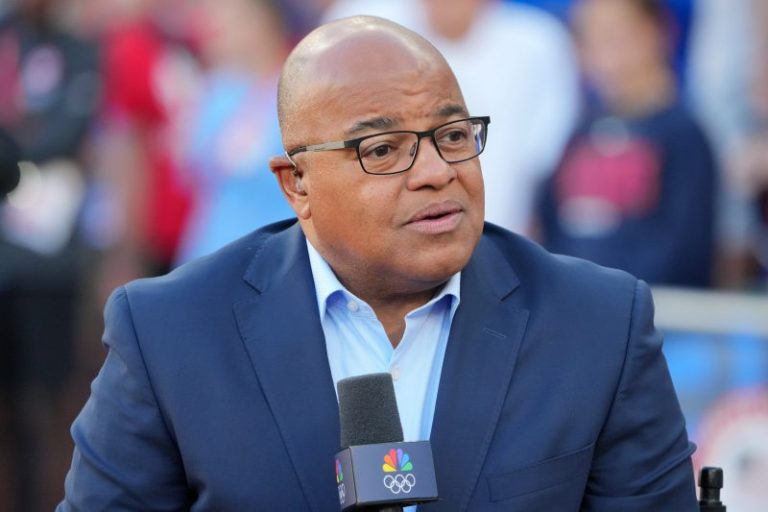
Mike Tirico simultaneously hosted NBC’s Super Bowl 60 and 2026 Winter Olympics coverage.
This was Tirico’s first time calling a Super Bowl.
Immediately after the Super Bowl, Tirico flew from California to Milan to continue his Olympic hosting duties.

LIVIGNO, Italy – This is not Mike Tirico’s first rodeo – or first February trip crisscrossing the globe to announce the world’s most popular sporting events, the Super Bowl and the Olympics.

Tirico was simultaneously the centerpiece of NBC’s Super Bowl 60 production and the network’s 2026 Milano Cortina Winter Olympics coverage. He hosted the opening ceremony from Beijing in 2022 ahead of Super Bowl 56 coverage, flew to Los Angeles for his ‘Football Night in America’ hosting duties on top of his Olympic responsibilities and stayed stateside (at NBC headquarters in Stamford, Connecticut) for the remainder of the Games.

But this year was the first time Tirico led play-by-play for the Super Bowl, a 29-13 Seattle Seahawks victory over the New England Patriots, before hopping a plane for Italy and the Olympics.

“It was as great as I could have imagined,” Tirico told USA TODAY Sports by phone from Milan. “At no point did I sit there and go ‘It’s over a billion people watching.’ There was none of that.”

NBC Sports executive producer Rob Hyland checked in with Tirico last week and reminded him to enjoy the experience. That remained in the back of his mind. The gorgeous California day that greeted Super Bowl attendees only reinforced it.

“I had a blast … it was as enjoyable a day as I’ve had in this business,” he said.

Tirico spent the halftime show featuring Bad Bunny on an Olympics production call – Bruce Springsteen was the only act he would have skipped it for, he joked. He was part of Sunday night’s Olympics coverage and contributed with confetti strewn at his feet from the field at Levi’s Stadium in Santa Clara, California. There was the familiarity with hosting in that environment from Super Bowl 56, but he didn’t have to host the Lombardi Trophy presentation onstage this time.

“It was actually easier this time around,” he said.

Lindsey Vonn’s crash starts Tirico’s Super Sunday at 2:30 a.m.

Earlier that morning, at roughly 2:30 a.m. Pacific time, Tirico woke up to watch Lindsey Vonn, whose crash resulted in a complex tibia fracture.  

“You just feel awful for her,” said Tirico, who’s gotten to know Vonn over the past three Winter Games cycles.

Although he missed Breezy Johnson’s gold-medal-winning women’s downhill run live, he stayed awake to watch her clinch the top spot. Then he went back to sleep for 90 minutes before starting his day.

After the Super Bowl, Tirico and about a dozen fellow NBC staffers boarded a private Bombardier Global 7500 for the 10.5-hour flight from the West Coast to Milan.

“So appreciative that we were able to get over on time, and very comfortabl(y),” Tirico said. “It’s, again, not something that you get to do ever in life and it was just the ideal way to get off the plane and be ready to do the prime-time show (Feb. 9), with enough time to do it as well.”

Tirico slept for about half of the flight and spent the other half watching the prime-time show. He also reviewed materials for the Feb. 9 show. Tirico said he’s watched highlights of the Super Bowl but hasn’t sat down to rewatch the broadcast and critique it, something that might not happen until after the Olympics. He’ll have plenty of time during his NBA travels once the Olympics end or during his eventual, actual offseason, he said.

Wheels down in Milan, Tirico stays prepped for East Coast time

The group landed just before 9 p.m. Milan time and Tirico was in another production meeting during the drive from the airport to his hotel. After about an hour there, he was at the International Broadcast Center and hosted “Primetime in Milan” from 11:30 p.m. local time. After the show, he was even able to unpack back at the hotel.

But there was a point Monday night that the travel and work had Tirico feeling tired for a few minutes. But hardly 16 hours after landing in Italy, he’s back in his Paris 2024 Summer Olympics routine – and the key is to keep his body on East Coast time.

After the Feb. 9 show, he slept for five hours, snuck in a 25-minute session on the treadmill and headed to work.

Tirico’s Olympic preparation has lasted years, he said. He hosted the World Figure Skating Championships in March 2025. He sat down with stars such as Vonn and Mikaela Shiffrin prior to the NFL season and was able to concentrate on the Super Bowl throughout January – once NBC’s playoff games during the wild-card round and divisional round concluded.

“All these building blocks were in place, and you’re just adding on,” Tirico said. “So I’d say it was probably a little heavier toward the Super Bowl, but a lot of the Olympics planning was hay in the barn already.”

Tirico said he has full trust and confidence in NBC’s producers and editorial crew to address topics that expand beyond the realm of sport, such as president Donald Trump’s social-media criticism of men’s free skier Hunter Hess.

“That’s not what Americans are tuning in for in prime time,” Tirico said.

Tirico said he’d love to have the chance to pop up to Cortina were it a 40-minute train ride, but that’s not the case. He still expects these games to be “a helluva lot better than Beijing” in terms of having the chance to showcase Milan and the rest of northern Italy where the Olympics are taking place.

“There’s a feel in Milan of things that are going on,” said Tirico, who had only been in Italy for one night.

Not that he needed much sleep anyway.

This post appeared first on USA TODAY

Team USA captain Hilary Knight, appearing in her fifth Olympics, has tied two career U.S. Olympic records at the 2026 Winter Olympics in Milan.

Her assist against Canada on Tuesday, Feb. 10, gave her 32 career points, tying U.S. recordholder Jenny Potter. She picked up an assist on Caroline Harvey’s opening goal, though it wasn’t awarded until later in the game.

Knight earlier tied a U.S. Olympics women’s hockey record when she scored in the 5-0 win against Finland on Saturday, Feb. 7. That gave Knight her 14th career Olympic goal, matching the U.S. record jointly held by Natalie Darwitz and Katie King.

Knight next suits up in the quarterfinals against host Italy (time and date TBA).

Here’s what to know about Team USA women’s hockey captain Hilary Knight:

How many Olympic goals and points does Hilary Knight have?

Knight has 14 goals, tying the U.S. Olympic record shared by Natalie Darwitz and Katie King. She has 32 points, tying Jenny Potter’s U.S. Olympic record. Her 18 assists are three behind Potter’s record of 21.

How many Olympics has Hilary Knight played in?

Milano Cortina is Hilary Knight’s fifth Olympic appearance. She also played in Vancouver (2010), Sochi (2014), Pyeongchang (2018) and Beijing (2022).

How many medals does Hilary Knight have?

She won a gold medal in 2018 and silver medals in 2010, 2014 and 2022.

Where does Hilary Knight play in the PWHL?

Knight plays for the expansion Seattle Torrent in the Professional Women’s Hockey League. She played for Boston the previous two seasons.

How old is Hilary Knight?

Knight is 36 years old.

This post appeared first on USA TODAY

MILAN — The men of figure skating took their first turn in the singles competition at the 2026 Winter Olympics on Tuesday, and ‘Quad God’ Ilia Malinin lived up to the hype with a short program that scored a 108.16 and drew a massive standing ovation from the crowd.

“I definitely felt like I was in a better zone this time,” he said.

The gold medal favorite sits atop the standings entering the free skate on Feb. 13, after which medals will be awarded.

“Having that attention, all those eyes on you, that pressure really shows you who you truly are on the ice,” he said. “It’s another skill to be able to perform it under pressure. I think that’s something I really enjoy.”

Watch Olympics figure skating on Peacock

Teammate Maxim Naumov, making his Olympic debut, skated second in the lineup, scoring a season-best 85.65. In the kiss-and-cry section after, the 24-year-old held with him a photo of him as a 3-year-old with his parents, who died the plane crash that killed 67 people near Washington D.C. just more than a year ago. Fellow American Andrew Torgashev turned in a score of 88.94, putting him in second through Group 3.

The men’s singles competition began just two days after Malinin’s clutch performance earned the U.S. gold in the team event. There were 29 skaters in the field and the top 20 advance to the free skate on Feb. 13, after which medals will be awarded.

Follow along below for USA TODAY Sports’ live results and highlights from the men’s short program.

Ilia Malinin short program

Ilia Malinin screamed in joy halfway through his short program in the men’s competition Tuesday night at the 2026 Winter Olympics. He had just completed his three industrial strength jumping passes without a hitch, including two majestic quadruple jumps. Now he was flying past center ice, and his emotions got the better of him, and he let out a yelp into the icy arena air. He was back, and he knew it.

His score? 108.16 points, a healthy five points ahead of Japan’s Yuma Kagiyama, who had 103.07. With a long program packed with his record-breaking seven quads, Malinin is back to being the strong favorite to win the gold medal Friday night. How things have changed for him since his shaky short program in the team event over the weekend. 

Figure skating live results, updates

Here are the standings after the short program of the men’s singles competition.

Ilia Malinin (United States): 108.16 total segment score, 62.35 technical elements score, 45.81 program components score.
Yuma Kagiyama (Japan): 103.07 total segment score, 56.50 technical elements score, 46.57 program components score.
Adam Siao Him Fa (France): 102.55 total segment score, 57.27 technical elements score, 45.28 program components score.
Daniel Grassl (Italy): 93.46 total segment score, 52.73 technical elements score, 40.73 program components score.
Mikhail Shaidorov (Kazakhstan): 92.90 total segment score, 52.45 technical elements score, 40.49 program components score.
Junhwan Cha (Korea): 92.72 total segment score, 50.08 technical elements score, 42.64 program components score.
Kevin Aymoz (France): 92.64 total segment score, 48.55 technical elements score, 44.09 program components score.
Andrew Torgashev (United States): 88.94 total segment score, 48.56 technical elements score, 40.38 program components score.
Shun Sato (Japan): 88.70 total segment score, 46.77 technical elements score, 41.93 program components score.
Stephen Gogolev (Canada): 87.41 total segment score, 48.23 technical elements score, 39.18 program components score.
Kyrylo Marsak (Ukraine): 86.99 total segment score, 49.20 technical elements score, 37.69 program components score.
Petr Gumennik (Neutral Athlete): 86.72 total segment score, 48.43 technical elements score, 38.29 program components score.
Boyang Jin (China): 86.55 total segment score, 47.79 technical elements score, 38.76 program components score.
Maxim Naumov (United States): 85.65 total segment score, 47.77 technical elements score, 37.88 program components score.
Nika Egadze (Georgia): 85.11 total segment score, 45.85 technical elements score, 39.26 program components score.
Matteo Rizzo (Italy): 84.30 total segment score, 42.49 technical elements score, 41.81 program components score.
Deniss Vasiljevs (Latvia): 82.44 total segment score, 42.34 technical elements score, 40.10 program components score.
Aleksandr Selevko (Estonia): 82.02 total segment score, 41.33 technical elements score, 41.69 program components score.
Lukas Britschgi (Switzerland): 80.87 total segment score, 40.61 technical elements score, 40.26 program components score.
Adam Hagara (Slovakia): 80.30 total segment score, 45.17 technical elements score, 35.13 program components score.
Vladimir Samoilov (Poland): 77.57 total segment score, 40.88 technical elements score, 36.69 program components score.
Kao Miura (Japan): 76.77 total segment score, 37.44 technical elements score, 40.33 program components score.
Donovan Carrillo (Mexico): 75.56 total segment score, 39.71 technical elements score, 36.85 program components score.
Yu-Hsiang Li (Chinese Taipei): 72.41 total segment score, 39.84 technical elements score, 32.57 program components score.
Tomàs-Llorenç Guarino Sabaté (Spain): 69.80 total segment score, 34.25 technical elements score, 35.55 program components score.
Hyungyeom Kim (Korea): 69.30 total segment score, 37.92 technical elements score, 32.38 program components score.
Andreas Nordeback (Sweden): 67.15 total segment score, 31.45 technical elements score, 35.70 program components score.
Fedora Kuliss (Latvia): 66.86 total segment score, 35.83 technical elements score, 32.03 program components score.
Vladimir Litvintsev (Azerbaijan): 63.63 total segment score, 31.13 technical elements score, 32.50 program components score.

When does Ilia Malinin skate next?

After the short program Tuesday, Malinin will next perform his free skate Friday, Feb. 13 at 1 p.m. ET. After the free skate, medals will be awarded for the men’s individual competition, which combines scores from both the long and short programs.

Are backflips allowed in figure skating?

They are now. For nearly 50 years, the backflip was banned in figure skating, after American skater Terry Kubicka became the first one to execute it at the 1976 Innsbruck Games. French skater Surya Bonaly did it at the 1998 Winter Olympics, landing it on one blade, but the move was illegal and she was deducted for it. 

The International Skating Union reversed course and made the move legal in 2024, paving the way for it to be done at the 2026 Winter Olympics, 50 years after it was first done.

Maxim Naumov’s parents

Maxim Naumov made sure to bring the memory of his parents to the 2026 Winter Olympics. 

The U.S. figure skater made his Olympic debut Tuesday, Feb. 10 in the men’s short program, fulfilling the lifelong dream of his parents, former skaters Vadim Naumov and Evgenia Shishkova. 

Naumov’s parents died in the midair collision between American Airlines Flight 5342 and an Army helicopter near Washington, D.C in January 2025 that killed 67 people. Vadim and Evgenia were among the 28 figure skating coaches, young athletes and parents killed who were returning from a development camp.

After delivering an emotional performance inside the Milano Ice Skating Arena, Naumov held up a picture of his parents in the kiss-and-cry section as he waited to hear his scores. Before a skater begins their program, a message from them is displayed on the Jumbotron inside Milano Ice Skating Arena. His message was, ‘Mom and Dad, this is for you.’

He was the second skater of the 29 scheduled to compete on the day, and Naumov was clean in his program, starting it off strong with a quad Salchow. By the end of it, he earned a score of 86.65, a season-best.

Andrew Torgashev nails program

There were no misses from the “pizza king,” as Andrew Torgashev stunned on the ice to deliver a season-best performance and catapult himself up the leaderboard for the moment.

He executed his first two elements in the quad toeloop and the triple Axel in perfect fashion, with no slip-ups for the rest of the performance. He got a score of 88.94, becoming the second American to have a season-best on the night after Maxim Naumov did it earlier.

It’s a stellar start for Torgashev as the short program wasn’t necessarily his strong suit; the free skate is where he has really shined. But he has carried a huge amount of momentum ever since 2026 began, and it puts him in the conversation for a high finish in the long program.

AIN at Olympics? It’s not a country

Officially, Russia is banned from the Olympics because Russian president Vladimir Putin ordered the invasion of Ukraine in 2022. At the 2026 Winter Games in Milano Cortina, there will be no Russian flags, no Russian anthems and no Russian national colors incoporated in the competition. (The same holds true for Belarus, which has supported Russia in the war.)

But there will be athletes with Russian and Belarussian passports competing as ‘Individual Neutral Athletes,’ or AINs for short, if they meet specific conditions. That contingent will include 13 Russians and seven Belarussians, the International Olympic Committee (IOC) announced Jan. 29. Read the full explainer about AIN. — Josh Peter

When did figure skating start in the Olympics?

Figure skating first made its Olympic debut at the Summer Games in London in 1908 and made another appearance in Antwerp in 1920, before becoming a Winter Olympic staple at the inaugural 1924 Chamonix Winter Games with men’s singles, women’s singles and pair skating events. Ice dancing was added to the program at the 1976 Innsbruck Winter Olympics, and the team event was first contested at the 2014 Sochi Winter Olympics.

Ilia Malinin backflip

The ‘Quad God’ performed his first skate during the team event Saturday, Feb. 7, and he became the first skater since 1998 to perform a backflip at the Games, and the first since it was unbanned.

Malinin closed his performance with the stunning move than wowed the crowd at the Milano Ice Skating Arena. However, Malinin finished second in the event with a score of 98.00 after Japan’s Yuma Kagiyama pulled off a stunning routine that received 108.67 points.

Malinin then landed a backflip on one foot during his long program of the team event. Malinin was the first to pull off the one-foot move since French figure skater Surya Bonaly at the 1998 Nagano Winter Games. Bonaly landed it on one blade despite it being banned at the time and was deducted for it.

Tomàs-Llorenç Guarino Sabaté‘s short program

After a whirlwind of a saga over music, Tomàs-Llorenç Guarino Sabaté got to skate his beloved program at the 2026 Winter Olympics in the men’s short program on Tuesday, Feb. 10. Donning the signature Minion outfit, he skated to the music from the animated movie, with the crowd happily cheering him on every step of the way.

Sabaté was able to skate to his program after he revealed one week before the Olympics began he wouldn’t be able to use it due to copyright issues. It drew outrage from fans and even U.S. figure skaters who were eager to see it.

Shortly afterward, ClicknClear, a company that helps figure skaters use licensed music, got involved and worked with Universal Pictures and Sony to get all of the music approved just in time before the men’s singles event began.

Andrew Torgashev, what to know

An up-and-down 2025-26 season ended on high with Torgashev making his first Olympics. It didn’t seem possible a few months ago, when he didn’t finish in the top five of his Grand Prix events. However, all was fixed when he came up big at the U.S. championships, capped by a stellar outing in the free skate that earned him a second-place finish at nationals for the second straight year.

‘Took some time to just completely reset, reconnected with family, reconnected with my roots, and got back to skating,” Torgashev said after he made Team USA. “I knew I was capable, and some things were tight. Worked out the kinks and performed when I needed to.”

Facts about figure skating

Athleticism meets grace in figure skating, one of the most popular sports at the Winter Olympics. Whether skaters are performing gravity-defying jumps or experiencing a wide array of emotions in the designated ‘Kiss and Cry’ area, figure skating has captivated Olympic audiences across the world for more than a century. The 2026 Milano Cortina Games will be no different.

Here’s everything you need to know about figure skating and how it works at the 2026 Winter Olympics.

Team USA figure skating roster

Men: Ilia Malinin, Maxim Naumov, Andrew Torgashev
Women:Amber Glenn, Alysa Liu, Isabeau Levito
Pairs: Ellie Kam and Danny O’Shea; Emily Chan and Spencer Akira Howe
Ice dance: Madison Chock and Evan Bates; Emilea Zingas and Vadym Kolesnik; Christina Carreira and Anthony Ponomarenko

How is figure skating scored?

A figure skating routine is made up of two scores: Technical elements score and program components score. The technical elements score is exactly what it sounds like: It’s for the jumps, spins and step sequences in a performance. The program components score is made of up composition, presentation and skating skills.

Why was the backflip banned in figure skating?

After American skater Terry Kubicka became the first person to execute a backflip at the 1976 Innsbruck Games, the International Skating Union banned it within a year because it believed it was too dangerous of a move.

Quad axel in figure skating

Malinin is the only skater in history to achieve a quadruple axel in competition. That feat earned him the nickname ‘Quad God.’

What is a quad axel though? Here’s a full explanation of Malinin’s iconic move. A quadruple axel requires four-and-a-half rotations in order to complete. It’s so difficult, in fact, that it was once considered impossible to perform.

Who is Maxim Naumov?

After Maxim Naumov finished in fourth place at the 2025 U.S. figure skating championships for the third straight year, his father, Vadim, wanted to game plan.

Vadim and Maxim’s mother, Evgenia Shishkova, were two-time Olympic pair skaters for Russia, and they knew Maxim’s upcoming year was critical with the 2026 Winter Olympics on the horizon.

A few days later, Vadim and Shishkova were among the 67 people killed in the midair collision between American Airlines Flight 5342 and an Army helicopter near Washington, D.C. They were among the 28 figure skating coaches, young athletes and parents who were returning from a development camp. An unimaginable tragedy, and Naumov didn’t know if he could skate anymore.

Read the full story from reporter Jordan Mendoza.

Listen to ‘Milan Magic’ on Apple, Spotify, or wherever you get your podcasts. Watch full episodes on YouTube or on USA TODAY.

Figure skating jump types

Toe jump: A skater drives the toe pick of their non-takeoff foot into the ice to launch themselves into the air and generate momentum into the jump.

Toe loop: A skater takes off backward and lands on the same back edge of their blade.
Lutz: A skater moving backward jumps off the back outside edge of their skate and uses the toe-pick of their other skate to catapult into the air in the opposite direction and lands on the back outside edge of the picking leg.
Flip: A skater launches off the back inside edge of one skate and lands on the back outside edge of the other skate.

Edge jump: A skater takes off not with their toe pick but off the edge of their skate.

Salchow: A skater launches off the back inside edge of one skate and lands on the back outside edge of their other skate.
Axel: The only forward-facing jump, a skater lands on the back outside edge of their non-takeoff foot while traveling backward. The axel is the hardest jump because of the extra half-revolution that comes with a forward takeoff and a backward landing.
Loop: The skater jumps off a back outside edge of their skate and lands on the same edge.

This post appeared first on USA TODAY

The Justice Department is signaling a broader use of federal civil rights law against protesters accused of disrupting religious worship, with officials pointing to synagogue cases as a model for future enforcement.

Assistant Attorney General Harmeet Dhillon, who leads the Justice Department’s Civil Rights Division, said the department has applied the Freedom of Access to Clinic Entrances (FACE) Act — a law historically associated with abortion clinic protests — to cases involving disruptions at Jewish houses of worship.

‘It was our pioneering application of the FACE Act to defend Jewish synagogues that paved the way for its use to defend churches,’ Dhillon said during remarks at an antisemitism and extremism conference at George Washington University Tuesday, describing the enforcement approach as a way to draw clear legal lines between protected speech and unlawful conduct.

The FACE Act makes it a federal offense to use force, threats of force or physical obstruction to intentionally interfere with individuals because they are exercising their right to religious worship or to an abortion. Dhillon said the statute allows federal authorities to intervene when protests cross into obstruction, intimidation or trespass at places of worship.

Dhillon cited a civil lawsuit filed by the Justice Department against protesters accused of disrupting services at a synagogue in West Orange, New Jersey, calling the case a first-of-its-kind application of the law in that context. She said the department is also reviewing similar incidents elsewhere and warned that additional enforcement actions could follow.

According to Dhillon, the Civil Rights Division has shifted toward more aggressive enforcement in response to a rise in antisemitic incidents since the Oct. 7, 2023, Hamas attacks on Israel, including harassment, vandalism and disruptions of religious services.

‘Antisemitism is an American problem, not a Jewish problem,’ Dhillon said. ‘It strikes at the heart of who we are as a nation.’

She argued that allowing unlawful conduct targeting one religious group risks eroding civil rights protections more broadly, adding that the department’s approach is meant to protect all faith communities.

Beyond the synagogue protest cases, Dhillon pointed to a series of recent Justice Department actions addressing antisemitism, including major settlement agreements with Columbia University and Northwestern University to resolve federal investigations into alleged discriminatory environments, as well as civil litigation against an Oakland, California, coffeehouse accused of refusing service to visibly Jewish customers.

Dhillon also cited federal hate crime prosecutions tied to violent antisemitic attacks, saying the department is moving quickly in cases where evidence supports criminal charges.

While emphasizing that lawful protest remains protected under the First Amendment, Dhillon said physically blocking access to religious services, trespassing on synagogue property, or defying lawful police orders fall outside constitutional protections.

‘We are not just reacting,’ she said. ‘We are proactively defending the freedoms that make this nation exceptional.’

This post appeared first on FOX NEWS

Senate Democrats aren’t ready to concede in their push for stringent reforms to the Department of Homeland Security (DHS) and are ready to buck Senate Republicans’ plans to avert a partial shutdown. 

Their resistance comes as Senate Republicans and the White House have floated a counteroffer to Democrats’ proposed DHS and Immigration and Customs Enforcement (ICE) reforms. But the two sides remain far apart on a deal to fund the agency, and they are quickly running out of time.

Sen. Chris Murphy, D-Conn., the top-ranking Senate Democrat on the Homeland Security spending panel, said he would not support another short-term DHS funding extension unless Republicans made meaningful concessions on immigration enforcement.

Murphy also dismissed the White House’s proposal as a list of ‘sophomoric talking points.’

‘We had plenty of time, they wasted two weeks,’ Murphy said. ‘They still haven’t given us any meaningful answer or response.’ 

His position is shared by several Senate Democrats who have unified around a push to codify a list of 10 DHS reforms. Those include requirements that ICE agents obtain judicial warrants, unmask and display identification, provisions Republicans have labeled red lines.

The standoff follows criticism late Monday from Senate Minority Leader Chuck Schumer, D-N.Y., and House Minority Leader Hakeem Jeffries, D-N.Y., who rejected President Donald Trump’s counteroffer.

In a joint statement, the leaders said the proposal ‘is both incomplete and insufficient in terms of addressing the concerns Americans have about ICE’s lawless conduct.’ Jeffries added he would not support another short-term funding patch, known as a continuing resolution (CR), Tuesday morning. 

Schumer argued that there was plenty of time to hash out a deal. 

‘There’s no reason we can’t get this done by Thursday,’ he said. 

With Friday’s funding deadline approaching, Senate Majority Leader John Thune, R-S.D., teed up a backup plan Tuesday night as the risk of a shutdown grew.

Thune and Senate Republicans have warned since Trump and Schumer finalized a broader funding agreement earlier this month that Congress did not have enough time to negotiate and pass a revised DHS funding bill in just two weeks.

‘I understand that, on the other side of the Capitol, the Democrats are already objecting to that, which is no big surprise since they haven’t voted for anything yet,’ Thune said.

‘I think there are Democrats in both the House and the Senate who do want to see this addressed,’ he added. ‘I’m hopeful the conversations lead to an outcome, but we probably won’t know by the time the current CR expires.’

As with most funding fights, both parties accuse the other of failing to negotiate in good faith.

‘I’m not for putting DHS on a CR until they show us they are serious about doing something,’ Sen. Patty Murray, D-Wash., the top-ranking Democrat on the Senate Appropriations Committee, told Fox News Digital.

Republicans counter that Democrats spent more than a week drafting their proposal, while the White House produced a counteroffer in less than two days.

Sen. Markwayne Mullin, R-Okla., told Fox News Digital Republicans didn’t expect their counterparts to accept their offer, ‘but we didn’t accept theirs either.’ 

‘Hopefully, this is a working footprint,’ Mullin said. ‘We can start negotiating because we’re definitely not accepting their things. But the thing is, what we’re trying to do is protect the ability for ICE and our border agents to do their job. I think it’s pretty clear, though, unless the Democrats want to shut down DHS, we’re going to have to do another CR.’

This post appeared first on FOX NEWS

The Justice Department has installed a Missouri-based U.S. prosecutor to head the Trump administration’s election probe in Fulton County, Georgia, according to recent court records, marking the latest instance in which an out-of-state prosecutor has been tasked with a leading role in a politically charged case.

The involvement of Thomas Albus, U.S. attorney for the Eastern District of Missouri, was revealed last month when he signed off on a Fulton County search warrant that authorized the FBI’s raid of a key Georgia election hub. The warrant authorized federal agents to seize a broad range of election records, voting rolls, and other data tied to the 2020 election, according to a copy reviewed by Fox News Digital.

The news, and the timing of Albus’ appointment, have sparked questions over the scope of the effort, including whether it is a one-off designed to shore up election-related vulnerabilities ahead of the midterms or part of a broader test case for expanded federal authority.

It also prompted Fulton County officials to sue the FBI earlier this month, demanding the return of the seized ballots.

The FBI’s decision to order the raid remains unclear, adding further uncertainty as to why Trump may have tapped Albus.

But the scope of the case is significant. Fulton County officials told reporters this month that FBI agents were seen carrying some 700 boxes of ballots from a warehouse near the election hub and loading them into a truck.

More answers could be revealed soon. The judge assigned to rule on Fulton County’s motion ordered the Justice Department to file by 5 p.m. Tuesday the arguments it made in its effort to obtain the search warrant. 

But it’s unclear how much information will be revealed as many of the documents are widely expected to remain under seal. 

Still, the installation comes as Fulton County emerged as ‘ground zero’ for complaints about voter fraud in the wake of the 2020 presidential elections, including from Trump, who lost the state to former President Joe Biden by a razor-thin margin.

And while it’s not the first time Trump’s Justice Department has sought to assign prosecutors to issues outside their district lines, unlike other efforts, the legality of Albus’s role in the district is likely to be upheld. 

Attorney General Pam Bondi reportedly tapped Albus last month to oversee election integrity cases nationwide, according to multiple news outlets. 

The DOJ did not immediately return Fox News Digital’s request for comment on the nature of his role in Georgia or elsewhere.

Under federal law — 28 U.S. Code § 515 — Bondi has the legal authority to appoint an individual to coordinate civil and criminal cases, including grand jury proceedings, across all federal districts nationwide. 

Albus also spent years as an assistant U.S. attorney for the Justice Department, where he helped prosecute hundreds of federal cases and jury trials, including on charges of white-collar crime, tax offenses, public corruption, and more.

Still, his installment is not completely without criticism. 

Some have played up his role as a former deputy attorney for then-Missouri Attorney General Eric Schmitt in 2020. 

Schmitt, now a U.S. senator, was one of 17 Republican attorneys general who filed a brief supporting Trump’s push to invalidate the election results of four battleground states after the election. 

There are key differences between his installment and the installment of former Trump lawyer Lindsey Halligan, tapped last year to serve as interim U.S. attorney for the Eastern District of Virginia. She was also the sole prosecutor who secured the indictments against former FBI director James Comey and New York Attorney General Letitia James.

A judge ruled in November she was illegally appointed to her role, prompting the dismissals of both cases.

Legal experts have cited differences between Halligan’s role and Albus’s role, which appears to enjoy wide protection under federal law.

‘Unlike Halligan, Albus’ appointment appears to be lawful under a federal statute that permits the attorney general to direct ‘any other officer of the Department of Justice’ to ‘conduct any kind of legal proceeding, civil or criminal … whether or not he is a resident of the district in which the proceeding is brought,’’ Barbara McQuade, a former U.S. attorney and University of Michigan Law School professor, said in a Bloomberg op-ed.

‘But sidelining Atlanta U.S. Attorney Theodore Hertzberg in favor of Albus is concerning nonetheless — especially given his ties to Trump allies.’

This post appeared first on FOX NEWS

CORTINA d’AMPEZZO, Italy ― There was no way the number could be right.

Next to Mikaela Shiffrin’s name was a 15, and it wasn’t her bib number.

The greatest slalom skier of all time had finished 15th in her run in the team combined, dropping her and Breezy Johnson to fourth place Tuesday, Feb. 10. It is shocking enough when Shiffrin isn’t on the podium after a slalom race, let alone being outside the top five.

But 15th? Aside from a few ‘did not finishes,’ that hasn’t happened in a slalom race in more than a decade, since before she won her first Olympic gold medal and rewrote the record book.

‘I was so inspired and proud of (Breezy),’ a somber Shiffrin said, referring to Johnson winning the downhill run two days after winning the Olympic downhill title. “And I was really taking that into my own mentality coming out for the solemn run and didn’t quite nail — I didn’t quite find a comfort level that allows me to produce full speed.”

Shiffrin is never one to make excuses, and she wasn’t about to start now. Asked why she couldn’t find that comfort level, she said it’s a “feeling under the feet.” But what prompted that, she didn’t want to get into the details.

Besides, does it really matter? In a season when Shiffrin has been near-unbeatable in slalom races — she has won seven and been second in the other — she was third-to-last. A full second slower than Germany’s Emma Aicher, who had the fastest slalom run to boost her and Kira Weidle-Winkelmann to the silver medal.

‘It comes from a lot of different variables. It is a sport of fine margins and a lot of variables,” Shiffrin said. ‘This kind of thing happens more often than not in training where it’s like, ‘Oh, I don’t quite feel comfortable enough.’

‘There’s a certain amount of luck when it goes right, but there’s also a feeling that I’m going to work to achieve for the slalom race coming up.”

But hanging over Shiffrin, like the clouds and snow that had descended over the Olimpia delle Tofane course, is the specter of Beijing.

Shiffrin won three medals, two of them gold, in her first two Olympics, and she went to the 2022 Winter Games favored to add a few more to her collection. Instead, she skied out of three races: the slalom, the giant slalom and the slalom portion of the individual combined. Her best individual finish was a ninth in the super-G.

It’s an aberration in her illustrious career, something to be written off as a fluke or the convergence of a perfect storm of circumstances. Especially since she hasn’t experienced anything like that since.

Until now.

In a race when other skiers were going all out, Shiffrin appeared almost tentative. Instead of her usual almost hypnotic rhythm that carries her from one gate right into the next, she seemed to be picking her way down the course.

‘It’s very specific in the conditions we saw today where it’s the first time that we’ve seen any conditions like that this season,’ Shiffrin said. ‘And I didn’t adjust to it, not yet. But that was a great opportunity to learn.’

It is far too soon to say that Shiffrin has a mental bloc about the Olympics. This is one race, and there is more potential for unexpected results in slalom than other disciplines. Austria’s Katharina Truppe, who is fourth in the slalom standings this season, was 13th. Switzerland’s Melanie Meillard, who was eighth in slalom last year, DNFd.

But there is a different standard for Shiffrin, whose 108 World Cup wins are more than any other skier, male or female, and a record that is unlikely to ever be broken. Fairly or not, until Shiffrin steps on an Olympic podium again, the doubts caused by Beijing will follow her.

‘The work we’ve done, I’ve been so prepared for so much, for all the slaloms this year,’ Shiffrin said. “So there’s something to learn from this day and I’m going to learn it.”

A bad day is sometimes just a bad day. At the Olympics, though, everything is magnified, and for no one more than Shiffrin.

Follow USA TODAY Sports columnist Nancy Armour on social media @nrarmour.

This post appeared first on USA TODAY
Todd Lyons, the acting director of U.S. Immigration and Customs Enforcement (ICE), would not commit to pausing operations for the 2026 World Cup during a hearing on Tuesday, Feb 10.

Lyons was one of three senior immigration officials called to testify before the U.S. House Department of Homeland Security Committee.

It was the first hearing since federal law enforcement officers fatally shot two U.S. citizens last month in Minneapolis.

The incidents in Minneapolis occurred amid a widespread immigration crackdown under the Trump administration, which has impacted U.S. citizens and non-citizens alike.

With the U.S. set to serve as a co-host of the Men’s World Cup this summer, there have been concerns over how welcoming the country will be to visitors, as well as how it will treat some residents of the United States.

Even former FIFA president Sepp Blatter said last month that he believes fans should avoid traveling to the United States for the tournament.

One of the U.S. lawmakers who expressed concern during the hearing on Tuesday was Rep. Nellie Pou, a New Jersey Democrat whose district includes MetLife Stadium, which will host eight matches during the World Cup, including the final.

‘My district will host World Cup matches and hundreds of thousands of visitors will come,’ Pou said during the hearing. ‘Visitors’ confidence is plummeting and jeopardizing the World Cup.’

Pou asked if Lyons and ICE would commit to pausing operations at World Cup games and ‘other FIFA-sanctioned public events.’

‘ICE, specifically Homeland Security Investigations, is a key part of the overall security apparatus for the World Cup,’ Lyons responded. ‘We’re dedicated to securing that operation, and we’re dedicated to the security of all our participants as well as visitors.’

‘You realize that if they feel that they’re going to be wrongfully incarcerated or wrongfully pulled out, that’s going to hurt this entire process?’ Pou said. ‘I hope you realize that.’

Lyons replied, ‘Yes, ma’am, and ICE is dedicated to ensuring that everyone that visits the facilities will have a safe and secure event.’

Pou replied: ‘Without these assurances, our local communities and national reputations will indeed be (harmed).’

Lyons’ words echoed those of Andrew Giuliani, the executive director of the White House’s 2026 World Cup task force.

In December, Giuliani was asked directly if the Trump administration would rule out conducting immigration raids at World Cup matches.

‘The president does not rule out anything that will help make American citizens safer,’ Giuliani replied.

This post appeared first on USA TODAY

It’s been a decade since the Rams franchise returned to Los Angeles from St. Louis. Only one player on the Rams’ 2025 roster had played for the franchise in St. Louis.

Today, he called it a career.

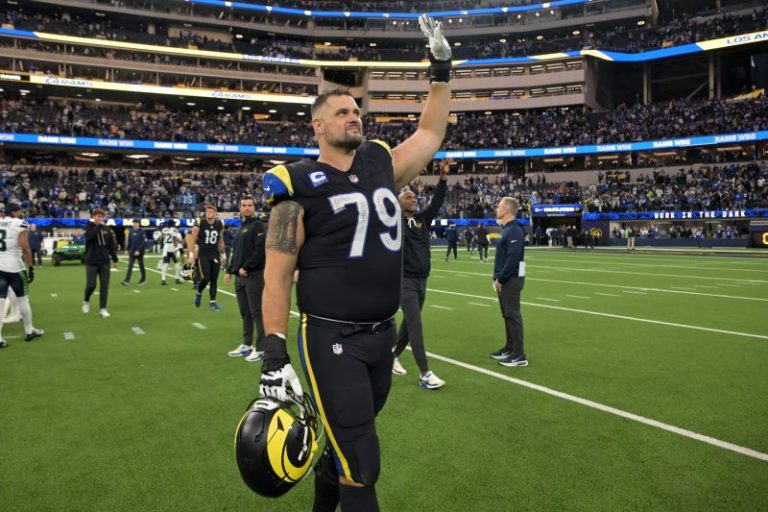
Right tackle Rob Havenstein announced on his Instagram page that he is retiring from the NFL after 11 years with the Rams franchise.

’11 years, 150+ starts, 4 time captain, 4 NFC West Championships, 2 NFC Championships and 1x Super Bowl Champion. What a ride it’s been! I can look back on my career and smile knowing I have given everything I had and more to the game I love,’ Havenstein wrote.

‘In saying that, I am officially retiring from the NFL.’

The then-St. Louis Rams selected Havenstein in the second round, No. 57 overall from Wisconsin in the 2015 NFL Draft.

He was in the same Rams draft class as running back Todd Gurley and quarterback Sean Mannion, who was recently signed by the Philadelphia Eagles to be the team’s offensive coordinator.

‘Thank you to all my teammates, coaches, and fans who have supported me and helped me over these past 11 years,’ Havenstein wrote. ‘I have had the time of my life with the Los Angeles Rams (formerly known as the St. Louis Rams) and can’t thank the whole organization enough for giving me a shot back in 2015.’

Havenstein thanked his wife, Meaghan, and his parents.

‘I need to thank my wonderful wife [Meaghan] for being by my side the entire way,’ he wrote. ‘The support you have given me over the years can’t be put into words. But I see it every time I look at our 3 beautiful daughter’s faces. Love you always.

Mom and Dad, from when I picked up the game freshman year at Linganore, through my time at the University of Wisconsin, and still to this day you have supported me in every venture of life. I can’t thank you enough.’

Havenstein played in 148 games for the Rams over his 11 seasons in the league.

‘As this chapter ends, I couldn’t be more grateful, hopeful, and excited to see what comes next!’ he said.

Havenstein’s retirement leaves just two players from the 2015 St. Louis Rams still in the NFL: punter Johnny Hekker and quarterback Case Keenum. Hekker played for the Tennessee Titans and Keenum for the Chicago Bears in 2025.

This post appeared first on USA TODAY

Andrew Torgashev is becoming a household name as one of three Americans competing in the figure skating competition at the 2026 Winter Olympics. But he ate his way into one of the more distinct nicknames at the Milan Cortina Games.

As Torgashev completed his short program during the men’s individual skate on Tuesday, Feb. 10, the NBC broadcast made sure to highlight that the 24-year-old also goes by ‘The Pizza King.’ It’s even in his official Team USA bio and stems from an unorthodox ‘pizza diet’ a few years ago in which Torgashev ate pizza for 53 days in a row.

‘My relationship with pizza started (in) 2022,’ Torgashez said last month at U.S. Nationals. ‘I ended up losing weight and getting my quad toeloop back during this time. So it was successful. Since then, I’ve ramped down the amount of pizzas I eat.’

Whatever he’s doing seemed to be working in his first individual skate at the 2026 Winter Olympics. Torgashev notched a score of 88.94 and was in second place with the short program about halfway complete. He also won a gold medal representing the United States in the team event earlier this week.

Torgashev, when asked about his favorite pizza last month, said ‘barbecue chicken is awesome, and if you do like honey and prosciutto.’

USA TODAY Sports reporter Jordan Mendoza contributed to this story

This post appeared first on USA TODAY