Archive

2026

Browsing

The House of Representatives is readying to vote on a bill that would mandate photo identification for voters across the United States in the coming 2026 midterm elections.

The House Rules Committee, the final gatekeeper before most bills see a chamber-wide vote, advanced the SAVE America Act on Tuesday as conservatives continue to pressure the Senate to take up the bill after its likely House passage.

It’s a sweeping piece of legislation aimed at keeping non-citizens from participating in U.S. elections.

Democrats have attacked the bill as tantamount to voter suppression, while Republicans argue that it’s necessary after the influx of millions of illegal immigrants who came to the U.S. during the four years of the Biden administration.

Speaker Mike Johnson, R-La., told reporters it would get a vote on Wednesday.

The legislation is led by Rep. Chip Roy, R-Texas, in the House, and Sen. Mike Lee, R-Utah, in the Senate.

It is an updated version of Roy’s Safeguarding American Voter Eligibility (SAVE) Act, which passed the House in April 2025 but was never taken up in the Senate.

Whereas the SAVE Act would create a new federal proof of citizenship mandate in the voter registration process and impose requirements for states to keep their rolls clear of ineligible voters, the updated bill would also require photo ID to vote in any federal elections.

It would also require information-sharing between state election officials and federal authorities in verifying citizenship on current voter rolls and enable the Department of Homeland Security (DHS) to pursue immigration cases if non-citizens were found to be listed as eligible to vote.

The legislation is highly likely to pass the House, where the vast majority — if not virtually all — Republicans have supported similar pushes in the past.

But in the Senate, where current rules say 60 votes are needed to overcome a filibuster and hold a final vote on a bill, at least seven Democrats would be needed even if all Republicans stuck together.

It’s why House conservatives are pushing Senate GOP leaders to change rules in a way that would effectively do away with the 60-vote threshold, even if alternative paths mean paralyzing the upper chamber with hours of nonstop debate.

‘[Senate Majority Leader John Thune, R-S.D.] will take it up. The only question is, will he take it up in an environment where it can pass?’ Roy posed to Fox News Digital on Tuesday. 

‘My view is that the majority leader can and should. I’m not afraid of amendment votes…we should table all their amendments, force them to run through all their speaking, make them take the floor and filibuster.’

This post appeared first on FOX NEWS

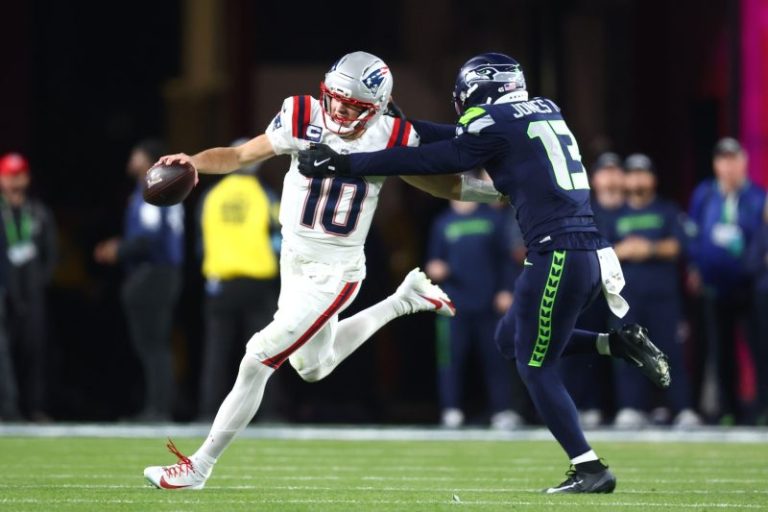
Super Bowl 60 was a defensive battle for the first three quarters of play. The Seattle Seahawks held the upper hand all game over the New England Patriots en route to a second Super Bowl title in franchise history.

Behind a dominant effort up front, Seattle harassed Patriots quarterback Drake Maye and left little room for his playmakers to get open. Super Bowl MVP running back Kenneth Walker III paced the Seahawks’ offense until they finally broke through and reached the end zone in the fourth quarter.

Seattle led 9-0 at halftime before Grammy Award-winning artist Bad Bunny put on a show featuring the likes of Lady Gaga and Ricky Martin.

Super Bowl 60 had something for everyone – casual fans and NFL enthusiasts alike. Seattle’s dominant defense, late scoring, Bad Bunny’s performances and the usual array of interesting commercials.

Now that the dust’s settled on the biggest television event of the year, how many people tuned in to watch Super Bowl 60? Here’s what we know.

How many people watched the Super Bowl?

That average is second all-time behind the record set by Super Bowl 59 of 127.71 million viewers. The Philadelphia Eagles’ victory over the Kansas City Chiefs was the most-watched television event in U.S. history.

Super Bowl viewership history

Here’s a history of the total viewership of each Super Bowl dating back to the first one on Jan. 15, 1967, according to Nielsen Media Research:

Super Bowl 60: 124.9 million
Super Bowl 59: 127.71 million
Super Bowl 58: 123.71 million
Super Bowl 57: 115.09 million
Super Bowl 56: 101.57 million
Super Bowl 55: 95.87 million
Super Bowl 54: 102.08 million
Super Bowl 53: 98.95 million
Super Bowl 52: 104.01 million
Super Bowl 51: 111.97 million
Super Bowl 50: 112.33 million
Super Bowl 49: 114.81 million
Super Bowl 48: 112.75 million
Super Bowl 47: 108.69 million
Super Bowl 46: 111.34 million
Super Bowl 45: 111.04 million
Super Bowl 44: 106.47 million
Super Bowl 43: 98.73 million
Super Bowl 42: 97.44 million
Super Bowl 41: 93.18 million
Super Bowl 40: 90.74 million
Super Bowl 39: 86.07 million
Super Bowl 38: 89.79 million
Super Bowl 37: 88.63 million
Super Bowl 36: 86.80 million
Super Bowl 35: 84.33 million
Super Bowl 34: 88.46 million
Super Bowl 33: 83.72 million
Super Bowl 32: 90.00 million
Super Bowl 31: 87.87 million
Super Bowl 30: 94.08 million
Super Bowl 29: 83.42 million
Super Bowl 28: 90.00 million
Super Bowl 27: 90.99 million
Super Bowl 26: 79.59 million
Super Bowl 25: 79.51 million
Super Bowl 24: 73.85 million
Super Bowl 23: 81.59 million
Super Bowl 22: 80.14 million
Super Bowl 21: 87.19 million
Super Bowl 20: 92.57 million
Super Bowl 19: 85.53 million
Super Bowl 18: 77.62 million
Super Bowl 17: 81.77 million
Super Bowl 16: 85.24 million
Super Bowl 15: 68.29 million
Super Bowl 14: 76.24 million
Super Bowl 13: 74.74 million
Super Bowl 12: 78.94 million
Super Bowl 11: 62.05 million
Super Bowl 10: 57.71 million
Super Bowl 9: 56.05 million
Super Bowl 8: 51.70 million
Super Bowl 7: 53.32 million
Super Bowl 6: 56.64 million
Super Bowl 5: 46.04 million
Super Bowl 4: 44.27 million
Super Bowl 3: 41.66 million
Super Bowl 2: 39.12 million
Super Bowl 1: 26.75 million

This post appeared first on USA TODAY

Ilia Malinin delivered a strong performance in the men’s short program at the 2026 Winter Olympics.
He earned a score of 108.16, placing him in first ahead of Japan’s Yuma Kagiyama.
Malinin holds a five-point lead going into the free skate on Friday, Feb. 13.
The American skater is the only one to land a backflip multiple times in a Winter Olympics.

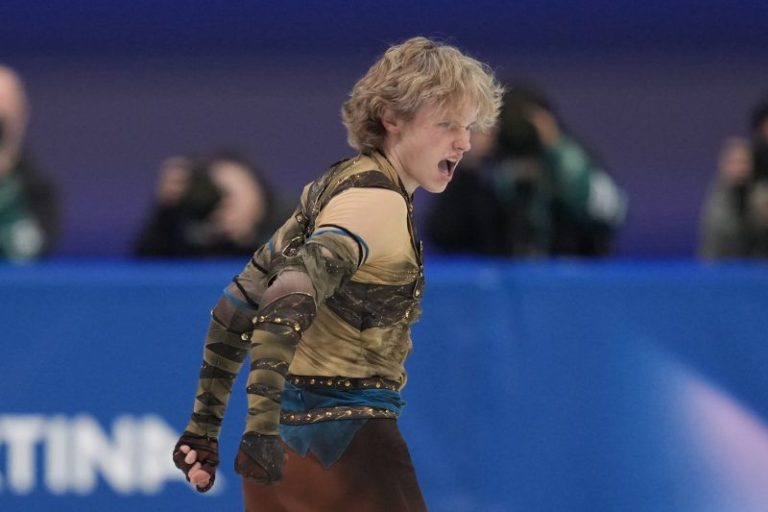
MILAN — When Ilia Malinin came out for the men’s short program warmups, he delivered a combination of jabs and uppercuts to the camera, simulating a boxer right before a prize-fight.

It was a preview to the rest of the field: The No. 1 contender is coming to the ring, and he’s coming for the world championship.

After his sensational free skate secured Team USA gold in the team event on Sunday, Malinin returned to the ice on Tuesday and looked every bit like what everyone expected him to be at the 2026 Winter Olympics.

Malinin was the man in the arena, and he earned a standing ovation for it. 

“I definitely felt like I was in a better zone this time,” he said.

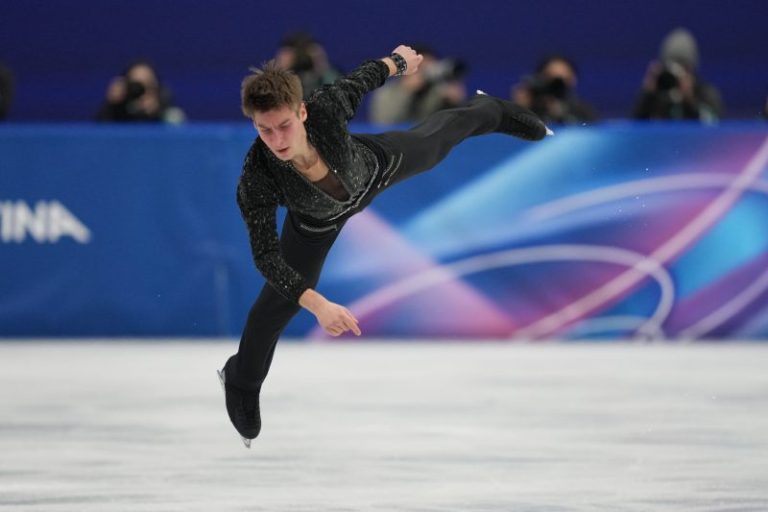
There wasn’t a quad Axel, but Malinin did just about everything right in his second go-around with the program after his first run wasn’t as sharp as it was expected to be. His opening quad flip wasn’t perfect, but it was right on the edge of it. He only improved from there, including the outstanding quad lutz-triple toe loop combination that really proved he was on top of his game.

He topped it off with the signature backflip, the third time he’s executed it in his three performances here, the only skater to ever land it multiple times in a Winter Olympics. 

The scary part? He said he was just cruising the entire time.

“I really just push the autopilot button and just let it produce,” Malinin said. 

The 21-year-old got a much better score this time around compared to what he had in the team event — a whopping 108.16 to put himself in first place, with Yuma Kagiyama of Japan – who beat him in the team event – left to compete.

Kagiyama couldn’t replicate the performance and finished second with a score of 103.07.

Will Ilia Malinin win a gold medal?

Although not large, a five-point lead is substantial for Malinin heading into the free skate on Friday, Feb. 13, after which an Olympic champion will be crowned. Kagiyama and Adam Siao Him Fa of France, who sit in second and third, respectively, after the short program, will need the performances of their lives — or a disastrous outing from Malinin — to spoil the coronation.

Malinin’s free skate effort in the team competition was heroic, but it wasn’t a perfect outing for the “Quad God,” and he scored a 200.03. Kagiyama didn’t handle the free skate duties for Japan, but his season-best in it is a 193.64. Siao Him Fa’s best free skate of the season is a 196.08.

The pressure could be on Malinin, but he isn’t fazed.

“Having that attention, all those eyes on you, that pressure really shows you who you truly are on the ice,” he said. “It’s another skill to be able to perform it under pressure. I think that’s something I really enjoy.”

The rest of the field better prepare, because Malinin is one punch away from landing the knockout blow.

This post appeared first on USA TODAY

MILAN — Laila Edwards made history as the first Black woman to represent the U.S. women’s hockey team at the Olympics. The 22-year-old added another historic first to her resume on Tuesday.

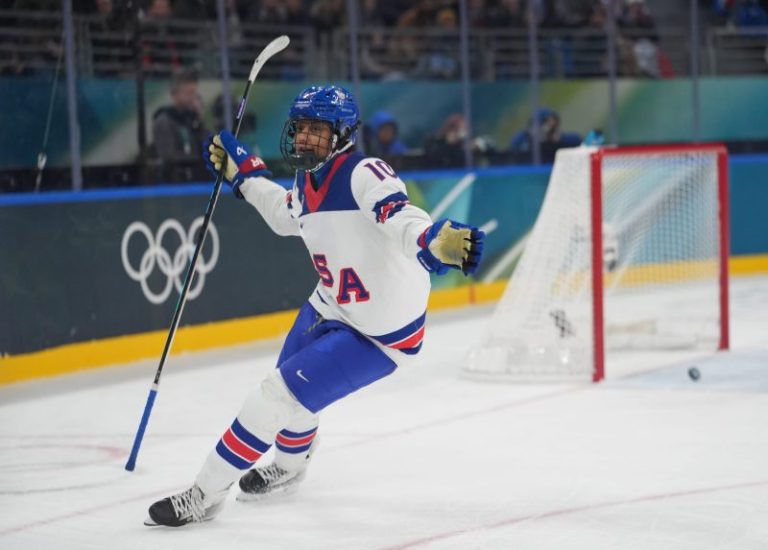
Edwards scored a goal in the third period to put an emphasis on Team USA’s 5-0 shutout win over the reigning Olympic champion Canadian team. With the goal, Edwards becomes the first Black woman to score for the U.S. women’s Olympic hockey team.

Edwards was one of three Black players on the ice during USA’s win over Canada joining Canada forward Sarah Nurse and Canada defender Sophie Jaques — marking another Olympic first. 

‘That makes me really happy. I think it just shows the growth,’ said Edwards, who also has two assists through four games, bringing her to three total points in her first Olympic appearance. ‘Representation matters, especially at the very highest level. To have three (Black women) out there, it just really makes me proud and gives me hope for the future.’

Edwards said it ‘feels good to get that first (goal),’ against archrival Canada no less. Kendall Coyne Schofield said she wasn’t surprised that Edwards found the back of the net. The University of Wisconsin’s hockey defender has eight goals, 28 assists and 36 points for the Badgers this season.

‘It was awesome. I couldn’t wait to get down to the other end of the bench as fast as I could (to celebrate), but I’ve seen it before,’ Schofield said. ‘It was an incredible goal and something she does quite often, but so proud of her, so happy for her and like I said, I wasn’t surprised to see that come out of her arsenal.’

That wasn’t the only history made on Tuesday. Five-time Olympian Hilary Knight assisted on Caroline Harvey’s goal to improve to 32 career points and tie Jenny Potter’s all-time U.S. Olympic points record.

‘She’s the best player in the world,’ U.S. forward Taylor Heise said after Team USA’s 5-0 win over Finland on Saturday.

On Tuesday, Aerin Frankel made 20 saves as the Canadian women’s hockey team was shut out for the first time in Olympic history. Canada was playing without injured captain Marie-Philip Poulin.

‘We needed players to step up today, obviously with Poulin not being there and I guess I should have made more saves,’ goaltender Ann-Renée Desbiens said. ‘So. it’s just learning from that … going, playing against Finland in our last round-robin game and then after that, obviously quarterfinals are going to start.’

Desbiens added: ‘I think with (Poulin) not finishing the last game … we want her to rest and recover and obviously get better. So once we get her back, she’s going to be there to have an impact. She’s the heart of the team. There’s no secret about that.’

Harvey opened the scoring for the U.S. less than four minutes into the game and Team USA never let its foot off the gas. Hannah Bilka scored two goals, Kirsten Simms had one and Abbey Murphy added three assists.

Team USA advances to the quarterfinals with a perfect 4-0 record and leads the 10-team field in goals scored on the tournament with 20 in four games. It has three consecutive shutouts and will face host Italy next.

USA TODAY Sports was on the ground in Milan and providing live updates from the showdown between USA and Canada. Here are highlights:

Final score: USA 5, Canada 0

The USA will face Italy in the quarterfinals.

2 minutes left

5-0 USA.

Canada goalie change

Emerance Maschmeyer comes in for Ann-Renee Desbiens after the Laila Edwards goal.

USA goal: Laila Edwards scores

Laila Edwards gets the puck at center ice, skates into the zone and rips a shot through a screen for her first goal of the tournament. USA 5, Canada 0

Hilary Knight ties U.S. points record

USA captain Hilary Knight was belatedly awarded an assist on the USA’s first goal. That gives her 32 career Olympic points, tying Jenny Potter’s U.S. record.

USA power play

Jocelyne Larocque is called for holding. That’s the fourth penalty drawn by Abbey Murphy. Laila Edwards hits the post. Canada kills it off. USA now 1-for-5 on the night.

Third period underway

Canada on the power play to start. The USA kills it off.

Line change paying off for the USA

The USA moved Hannah Bilka to the Abbey Murphy-Taylor Heise line for the Canada game, and Bilka has two goals. ‘Both incredible players and Murph just made the really nice two passes and I just put them in,’ Bilka told NBC.

End of second period: USA 4, Canada 0

The Americans have pitched a shutout of the Canadians through two periods. Team USA added two goals (Kirsten Simms, Hannah Bilka) in the period to improve to 4-0 over the reigning Olympic champions. Canada was outshot 11-6 in the period and 22-10 in the entire game.

What’s an illegal hit penalty?

Bodychecking used to be illegal in international women’s hockey, but the rules were changed to allow it if it occurs in an attempt to get the puck. The penalty is called if there’s checking without an attempt to get the puck.

Canada power play

Taylor Heise is called for an illegal hit. But there’s less than eight seconds left in the second period, so the power play will carry over to the third period.

USA goal: Hannah Bilka scores again

Hannah Bilka is up to two goals on the night and Abbey Murphy has three assists after the two connected for Team USA’s fourth score of the night. Caroline Harvey was also credited with her second assist. Harvey is up to three points against Canada. USA 4, Canada 0

Canada power play

Kirsten Simms is called for an illegal hit. The USA kills it off and remains ahead 3-0.

USA power play

Kristin O’Neill is called for cross-checking. Canada kills it off.

USA power play

Canada goes short-handed after the unsuccessful challenge but kills the penalty.

USA goal: Kirsten Simms goal upheld on review

Canada’s challenge was ruled unsuccessful and the American women now lead 3-0. Simms’ goal was assisted by Tessa Janecke and Abbey Murphy, her second of the night. USA 3, Canada 0

Goal review

Kirsten Simms puts the puck in the net. A review confirms the puck went over the line. Canada challenging for goaltender interference.

USA power play

Sarah Fillier is called for interference.

Abbey Murphy injury update

Abbey Murphy appeared to be shaken up after taking a blindside hit from Canada’s Sarah Fillier. Murphy remained down on the ice and remained hunched over when she got to her feet and skated to the bench. Fillier was assessed an interference penalty for the play after review. Murphy has one assist on the night. 

Second period underway

2-0 USA.

USA men cheering on the women’s team

The U.S. men’s hockey team is at Santagiulia Ice Hockey Arena cheering on the women’s team. Dylan Larkin, the Red Wings, told NBC it looked like the USA is ‘having a blast.’

End of first period: USA 2, Canada 0

The first period belonged to the Americans, who thoroughly dominated and kept the Canadians on defense a majority of the time. The U.S. women are outshooting the Canadians 11-4 and have already built a 2-0 lead heading into the second period. Team USA could be leading by more, but they were unable to convert on a power play opportunity after Canada’s Blayre Turnbill was called for an illegal hit. 

USA goal: Hannah Bilka scores

Team USA recorded a Sportscenter-worthy goal to extend its lead to 2-0 over the Canadians. Caroline Harvey connected with Abbey Murphy, who found Hannah Bilka in front of the net with an insane pass. Bilka found the back of the net at the 17:18 mark for her second goal of the 2026 Winter Olympics. USA 2, Canada 0

Midway through first period

USA leads 1-0 and leads 9-2 in shots.

USA power play

Blayre Turnbull is called for an illegal hit. Canada kills it off.

USA goal: Caroline Harvey scores

Caroline Harvey got the Americans on the board early in the first period at the 3:45 mark. Harvey buried a perfect pass from Haley Winn that to give USA a 1-0 advantage over Canada. It marked Harvey’s second goal of the 2026 Winter Olympics. She also has three assists. USA 1, Canada 0

Game underway

USA’s Aerin Frankel vs. Canada’s Ann-Renee Desbiens in net. It’s the second consecutive start for Desbiens. Frankel was rested on Monday.

What time is USA women’s hockey vs. Canada today?

Date: Tuesday, Feb. 10
Time: 2:10 p.m. ET
Location: Santagiulia Ice Hockey Arena (Milan)

Puck drop between the U.S. women’s hockey team and Switzerland is set for 2:10 p.m. ET on Tuesday, Feb. 10 from Santagiulia Ice Hockey Arena in Milan.

Where to watch USA women’s hockey vs Canada today

TV channel: USA Network
Streaming options: NBCOlympics.com | NBC Olympic App | Peacock

USA Network will broadcast Monday’s U.S. women’s hockey Group A matchup against Canada at the 2026 Winter Olympics. Streaming options for the game include NBCOlympics.com and the NBC Olympic App (with a TV login).

You can also stream the game on Peacock, NBC’s subscription streaming service.

2026 Milano Cortina Winter Olympics ice hockey scores, results today: Monday, Feb. 10

This section will be updated as games are finished

Group B (Women’s): Japan vs. Sweden | Sweden 4, Japan 0
Group B (Women’s): Germany vs. Italy | Germany 2, Italy 1
Group A (Women’s): United States vs. Canada | USA 5, Canada 0
Group A (Women’s): Finland vs. Switzerland | Finland 3, Switzerland 1

Team USA lines vs. Canada

USA is swapping the left wing on the top two lines.

Team Canada lines vs. USA

What USA-Canada game means for the standings

The 3-0 USA has nine points and the 2-0 Canadians have six points heading into the game. If the USA wins in its final game in group play, it clinches the top seed in Group A. Canada would win the group if it wins in regulation. If the Canadians win in overtime, Canada’s rescheduled game against Finland on Feb. 12 would come into play.

Marie-Philip Poulin injury update

Captain Marie-Philip Poulin has been ruled out of Canada’s preliminary round matchup against the United States on Tuesday due to a lower body injury suffered in the team’s 5-1 win over Czechia on Monday, Team Canada confirmed to USA TODAY Sports hours ahead of puck drop at the Santagiulia Ice Hockey Arena in Milan at 2:10 p.m. ET.

Poulin, 34, is listed as day-to-day.

Poulin took a shoulder from Czechia’s Kristyna Kaltounkova in the first period and hit the boards hard. The five-time Olympian appeared to be visibly shaken by the hit and remained down on her hands and knees for several moments. Poulin skated to the bench, but avoided putting any pressure on her right leg while leaving the ice and grimaced in pain on the bench.

U.S. women’s hockey roster for 2026 Milano Cortina Winter Olympics

Here is the full U.S. women’s hockey roster for the Milano Cortina Olympics:

Goaltenders: Ava McNaughton; Aerin Frankel; Gwyneth Philips.
Defenders: Lee Stecklein; Cayla Barnes; Caroline Harvey; Megan Keller; Rory Guilday; Haley Winn; Laila Edwards.
Forwards: Kirsten Simms; Kelly Pannek; Grace Zumwinkle; Hayley Scamurra; Britta Curl-Salemme; Hilary Knight; Tessa Janecke; Hannah Bilka; Joy Dunne; Alex Carpenter; Kendall Coyne Schofield; Taylor Heise; Abbey Murphy.

The USA TODAY app gets you to the heart of the news — fastDownload for award-winning coverage, crosswords, audio storytelling, the eNewspaper and more.

This post appeared first on USA TODAY

MILAN — Andrew Torgashev wondered why he was doing this to himself. Then he decided to embrace the experience.

Having traded in pizza and Panda Express for healthy cooking, Torgashev looks and feels like an Olympian athlete. He put the exclamation point on that with his performance in the 2026 Winter Games men’s short program. The 24-year-old performed so well he was in lead with an 88.94 score after his program, and while that didn’t last long, he secured his advance to the free skate with a performance nothing short of exuberant.

‘I chose to embrace the rock and roll of my program,’ Torgashev said Tuesday, Feb. 10 at Milano Ice Skating Arena. ‘I always feel like I want to be a rock star on the stage, like breaking the guitar, like having the time of my life so I was able to do that and it’s pretty sick.’

Torgashev’s performance caps a turbulent stretch in which he didn’t finish in the top five of his Grand Prix events, only to reset and rebound with a stellar outing in the free skate that earned him a second-place finish at nationals.

Still, the Olympics are a different stage, and in the lead-up to the short program, Torgashev’s nerves prickled.

‘I was shaking, I was like, why did I wish this for myself,’ he said. ‘But once I got out there, the training just took over. I have so much muscle memory with this program and with these elements that no matter how much I doubt myself, I hope it will always pull through now.

‘The first toe that I did out there before the music started, it was so wonky, I was not confident for the quad. But I’ve done this program every single day at this quality since I’ve been here so I have the reps and it’s just about executing in the moment so I’m glad I did that.’

The 5-foot-7 Floridian credited his fluidity partly to being in the best shape he’s been since he was 18.

‘I’m learning that it helps a lot to eat cleaner and be skinny, to jump and jump easily and have better consistency,’ he said. ‘The skinnier you are, the easier it is so I’m in great shape.’

Torgashev had gotten into a habit of having food delivered after long training sessions, and his choices weren’t what dietitians would prescribe for anyone. Now he eats lean proteins and vegetables and food that infuses energy rather than drains it.

‘There’s no door dashing with my mom around,’ he said. ‘I was at the rink so long, from like 9 to 6 every day, that afterwards I can get lazy at times and anytime you eat out consistently, even if you’re trying to be healthy, the calories just add up and especially at night, it’s just not good. It was everything – pizza, Panda Express, tacos.’

It’s not all lentils and lean protein now though, Torgashev planned to celebrate his short program success with a ‘slice of pizza,’ he said, and come Friday’s free skate, ‘just know I’m going to go ham.’

This post appeared first on USA TODAY

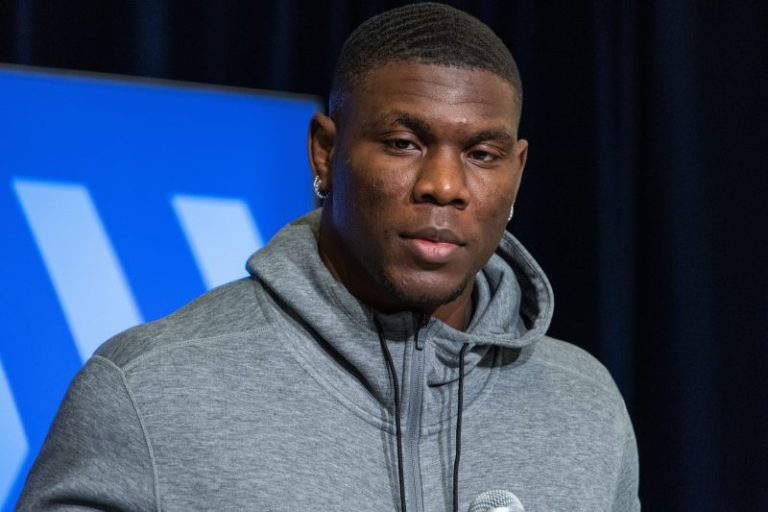
More information is emerging regarding the early morning shooting of San Francisco 49ers defensive lineman Keion White on Feb. 9.

According to the San Francisco Police Department, officers responded to a business located on the 1700 block of Mission Street in San Francisco regarding a shooting. When officers arrived at the scene, they found a victim suffering from an apparent gunshot wound.

It was later revealed it was White who suffered a gunshot wound to his ankle.

Paramedics arrived at the scene and transported White to a local hospital for treatment for non-life-threatening injuries. White underwent surgery on Monday and USA TODAY Sports received a statement from the 49ers about the procedure.

“Keion underwent successful surgery (Monday),” the 49ers said in a statement.

A preliminary investigation revealed a verbal altercation occurred between two groups inside a business, per the San Francisco Police Department.

Jonah Owen Lamb of the San Francisco Standard reported that the altercation involved White and Grammy-award winning rapper Lil Baby, who’s real name is Dominique Jones, when the rapper and his entourage tried to enter White’s private event. Lamb noted a witness went upstairs to get assistance from management to deescalate the situation and heard two gun shots. When they returned downstairs, White had been shot in the left leg.

According to the San Francisco Police Department, the shots were fired by an unknown suspect and the preliminary investigation is still ongoing.

White is the second 49ers player to be shot in recent years. Wide receiver Ricky Pearsall was shot in August of 2024 in an attempted robbery. Fortunately, Pearsall returned to the playing field. The 49ers didn’t provide a timetable for White to return to play.

The 49ers acquired White in a trade with the New England Patriots in October 2025. He had 12 tackles, 1.5 sacks and two tackles for loss in nine regular-season games with San Francisco.  

This post appeared first on USA TODAY
Another day of competition is in the books at the 2026 Milano Cortina Winter Olympics.

Athletes from more than 90 countries are battling in 116 events over 16 days, and USA TODAY is keeping a tally of every nation finishing on the podium. Here’s a look at the latest medal standings after all the action wrapped up on Tuesday, Feb. 10.

Find the upcoming medal event schedule below.

USA TODAY Sports has a team of more than a dozen journalists on the ground in Italy to bring you behind the scenes with Team USA and keep you up to date with every medal win, big moment and triumphant finish. Get our Chasing Gold newsletter in your inbox every morning and join our WhatsApp channel to get the latest updates right in your texts.

Broadcast coverage of the 2026 Milano Cortino Winter Olympics is airing exclusively airing across NBC’s suite of networks with many competitions airing live on its streaming service, Peacock, which you can sign up for here .

What is the medal count at the 2026 Milano Cortina Olympics?

All data accurate as of Tuesday, Feb. 10, 2026, at 6:02 a.m.

Meet Team USA 2026: Get to know the athletes behind the games

1. Norway: 12 Total (6 Gold, 2 Silver, 4 Bronze)
2. Italy: 11 Total (2 Gold, 2 Silver, 7 Bronze)
3. Japan: 8 Total (2 Gold, 2 Silver, 4 Bronze)
4. United States: 7 Total (2 Gold, 3 Silver, 2 Bronze)
5. Germany: 6 Total (3 Gold, 2 Silver, 1 Bronze)
6. Sweden: 6 Total (3 Gold, 2 Silver, 1 Bronze)
7. Switzerland: 5 Total (3 Gold, 1 Silver, 1 Bronze)
8. Austria: 5 Total (2 Gold, 3 Silver, 0 Bronze)
9. France: 3 Total (1 Gold, 2 Silver, 0 Bronze)
10. Canada: 3 Total (0 Gold, 1 Silver, 2 Bronze)
11. Czech Republic: 2 Total (1 Gold, 1 Silver, 0 Bronze)
12. Netherlands: 2 Total (1 Gold, 1 Silver, 0 Bronze)
13. Slovenia: 2 Total (1 Gold, 1 Silver, 0 Bronze) Bulgaria: 1 Total (0 Gold, 0 Silver, 1 Bronze)
14. China: 2 Total (0 Gold, 1 Silver, 1 Bronze)
15. New Zealand: 2 Total (0 Gold, 1 Silver, 1 Bronze)
16. South Korea: 2 Total (0 Gold, 1 Silver, 1 Bronze)
17. Latvia: 1 Total (0 Gold, 1 Silver, 0 Bronze)
18. Poland: 1 Total (0 Gold, 1 Silver, 0 Bronze)
19. Belgium: 1 Total (0 Gold, 0 Silver, 1 Bronze)
20. Bulgaria: 1 Total (0 Gold, 0 Silver, 1 Bronze)

2026 Winter Olympics medal events upcoming schedule

Feb. 11

ALPINE SKIING: Men’s Super-G
NORDIC COMBINED: Men’s Normal Hill 10km
FREESTYLE SKIING: Women’s Moguls
BIATHLON: Women’s 15km Individual
LUGE: Women’s, Men’s Doubles Run 2
FIGURE SKATING: Ice Dance Free Dance
SPEED SKATING: Men’s 1000m

Feb. 12

ALPINE SKIING: Women’s Super-G
FREESTYLE SKIING: Men’s Moguls Final
CROSS-COUNTRY SKIING: Women’s 10km Interval Start Free
SNOWBOARDING: Men’s Cross Final
SPEED SKATING: Women’s 5000m
LUGE: Team Relay
SNOWBOARDING: Women’s Halfpipe Final
SHORT TRACK: Women’s 500m & Men’s

Feb. 13

CROSS-COUNTRY SKIING: Men’s 10km Interval Start Free
BIATHLON: Men’s 10km Sprint
SNOWBOARDING: Women’s Cross Final
SPEED SKATING: Men’s 10000m
FIGURE SKATING: Men’s Free Skate
SNOWBOARDING: Men’s Halfpipe Final
SKELETON: Men’s Heat 4

Feb. 14

FREESTYLE SKIING: Women’s Dual Moguls Final
CROSS-COUNTRY SKIING: Women’s 4×7.5km Relay
ALPINE SKIING: Men’s Giant Slalom Final
BIATHLON: Women’s 7.5km Sprint
SPEED SKATING: Men’s 500m
SKELETON: Women’s Final
SKI JUMPING: Men’s Large Hill
SHORT TRACK: Men’s 1500m

Feb. 15

BIATHLON: Men’s 12.5km Pursuit
FREESTYLE SKIING: Men’s Dual Moguls Final
CROSS-COUNTRY SKIING: Men’s 4×7.5km Relay
ALPINE SKIING: Women’s Giant Slalom
SNOWBOARDING: Mixed Team Cross Final
BIATHLON: Women’s 10km Pursuit
SPEED SKATING: Women’s 500m
SKELETON: Mixed Team
SKI JUMPING: Women’s Large Hill

Feb. 16

SHORT TRACK: Women’s 1000m
ALPINE SKIING: Men’s Slalom
FIGURE SKATING: Pair Skating Free Skate
FREESTYLE SKIING: Women’s Big Air Final
SKI JUMPING: Men’s Super Team Final Round
BOBSLED: Women’s Singles

Feb. 17

NORDIC COMBINED: Large Hill/10km: 10km
SNOWBOARDING: Women’s Slopestyle Final
BIATHLON: Men’s 4×7.5km Relay
SPEED SKATING: Men’s, Women’s Team Pursuit Finals
BOBSLED: Men’s Doubles

Feb. 18

CROSS-COUNTRY SKIING: Women’s, Men’s Team Sprint Free Final
FREESTYLE SKIING: Women’s Aerials Final
SNOWBOARDING: Men’s Slopestyle Final
ALPINE SKIING: Women’s Slalom
BIATHLON: Women’s 4x6km Relay
SHORT TRACK: Women’s 3000m Relay
SHORT TRACK: Men’s 500m

Feb. 19

FREESTYLE SKIING: Men’s Aerials Final
SKI MOUNTAINEERING: Women’s, Men’s Sprint
NORDIC COMBINED: Team Sprint/Large Hill 2×7.5km
ICE HOCKEY: Women’s Final
SPEED SKATING: Men’s 1500m
FIGURE SKATING: Women’s Free Skate

Feb. 20

FREESTYLE SKIING: Women’s Cross Final
BIATHLON: Men’s 15km Mass Start
SPEED SKATING: Women’s 1500m
CURLING: Men’s Bronze Medal Game
FREESTYLE SKIING: Men’s Halfpipe Final
SHORT TRACK: Men’s 5000m Relay Final
SHORT TRACK: Women’s 1500m Final

Feb. 21

CROSS-COUNTRY SKIING: Men’s 50km Mass Start Classic
FREESTYLE SKIING: Mixed Team Aerials Final
FREESTYLE SKIING: Men’s Cross Final
SKI MOUNTAINEERING: Mixed Relay
CURLING: Men’s Gold Medal Game, Women’s Bronze Medal Game
BIATHLON: Women’s 12.5km Mass Start
SPEED SKATING: Men’s, Women’s Mass Start
FREESTYLE SKIING: Women’s Halfpipe Final
ICE HOCKEY: Men’s Bronze Medal Game
BOBSLED: Women’s Doubles: Heat 4

Feb. 22

CROSS-COUNTRY SKIING: Women’s 50km Mass Start Classic
CURLING: Women’s Gold Medal Game
BOBSLED: Men’s Quads Final
ICE HOCKEY: Men’s Gold Medal Game

This post appeared first on USA TODAY
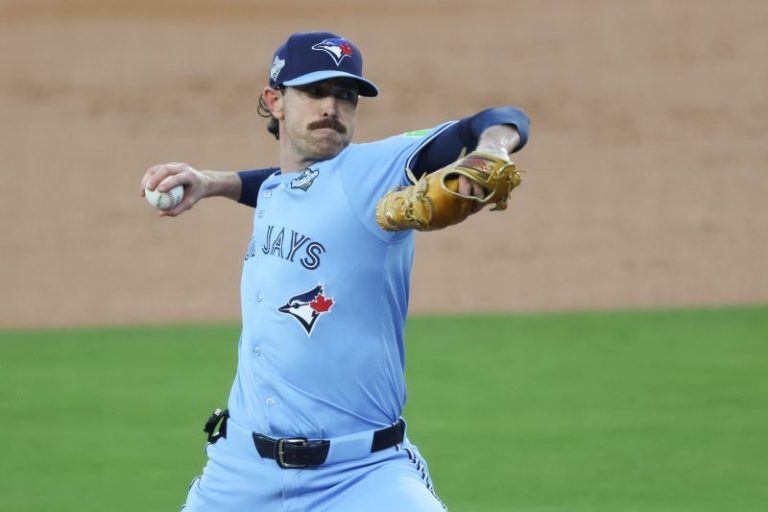
The defending American League champions have been rocked by injury before spring training even begins.

And finally, right-hander Bowden Francis, who started 14 games last season, will undergo UCL reconstruction surgery and miss the entire season, Schneider said.

Santander, 31, was limited to just 54 regular season games in 2025, the first year of a five-year, $92.5 million contract, due to a left shoulder subluxation. He returned in time to play in five playoff games, but a back injury forced his removal from the ALCS roster, ending his season.

His loss will put additional pressure on a bevy of Blue Jays − infielder/outfielder Addison Barger, utilityman Davis Schneider and newcomer Kazuma Okamoto, an infielder, will all bear some of that burden.

‘We built this team planned for setbacks. Different guys will have to step up,’ general manager Ross Atkins said. ‘That versatility we have and the depth we have, hopefully, we’ll be able to do that again.’

Bieber, who returned from Tommy John surgery late last season, had an offseason MRI that revealed only fatigue, Schneider said. Given his ramp-up, slow playing Bieber’s progression made sense this spring, though it will leave a void initially.

‘We’re going to make sure he’s in a very, very strong position to help us win as many games as possible,’ Atkins said.

The Blue Jays acquired Bieber at the trade deadline before he’d made his season debut. He made his season debut Aug. 22, started seven regular season games and four more in the postseason before giving up Will Smith’s go-ahead home run in the 11th inning of the Blue Jays’ Game 7 World Series loss to the Los Angeles Dodgers.

He picked up his player option for 2025, fueling speculation that his health was still shy of optimal.

Fortunately for the Blue Jays, they invested heavily in pitching this offseason, signing Dylan Cease to a seven-year, $210 million contract and Cody Ponce − returning from Japan − to a three-year, $30 million deal. They’ll join Kevin Gausman and Trey Yesavage atop the opening-day rotation, though Yesavage may face innings limits this season after unexpectedly pitching into November as a rookie.

This post appeared first on USA TODAY
Yet another bowl game has disappeared from college football’s postseason calendar.

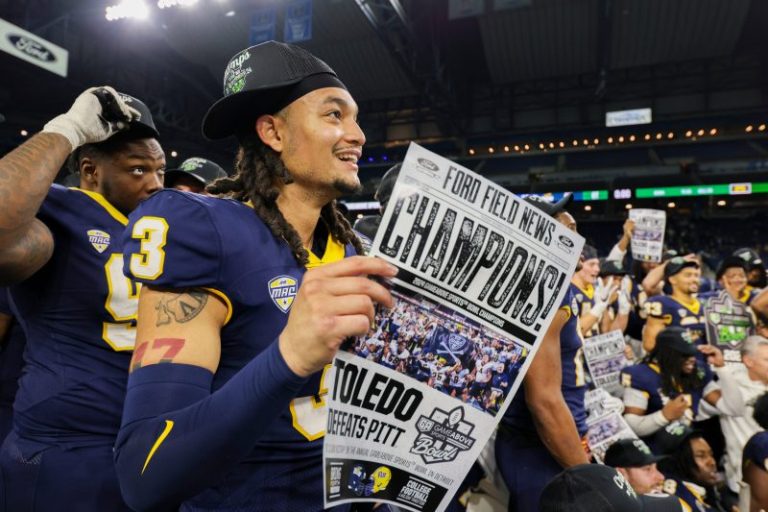
The GameAbove Sports Bowl, which has been played annually in Detroit for nearly 30 years, is folding, according to a report from On3 Sports on Tuesday, February 10.

It becomes the third bowl game to cease operations in the past year. The LA Bowl confirmed it was shutting down last month after just five years. The Bahamas Bowl was canceled before the start of the 2025 season and was replaced by the Xbox Bowl in Frisco, Texas.

The GameAbove Sports Bowl was the latest sponsor name for a game that debuted in 1997 as the Motor City Bowl. It was known as the Little Caesars Pizza Bowl from 2009-13 and the Quick Lane Bowl from 2014-23.

The game, which was often played in the days immediately after Christmas, regularly featured a team from the Mid-American Conference going up against a program from either the ACC (which had a tie-in from 2014-19) or the Big Ten (from 2020-25). In what would be the final GameAbove Sports Bowl, Northwestern defeated Central Michigan 34-7.

Though the College Football Playoff has made lower-tier bowl games more nakedly irrelevant, and as those same bowls have increasingly struggled to get bowl-eligible teams to accept invitations, bowl games continue to be a valuable source of inventory for television networks. 

ESPN’s broadcasts of the 33 non-College Football Playoff postseason games drew an average viewership of 3.1 million people, up 13% from the previous year. Northwestern’s win against Central Michigan in the final GameAbove Sports Bowl peaked at 2.7 million viewers.

Like many bowls, though, the GameAbove Sports Bowl struggled with attendance in its final years. The 2025 iteration of the game had only 27,857 fans inside 65,000-seat Ford Field, the home stadium of the NFL’s Detroit Lions. The previous year, just 26,219 fans were on hand for Toledo’s thrilling 48-46 win over Pitt in six overtimes.

This post appeared first on USA TODAY
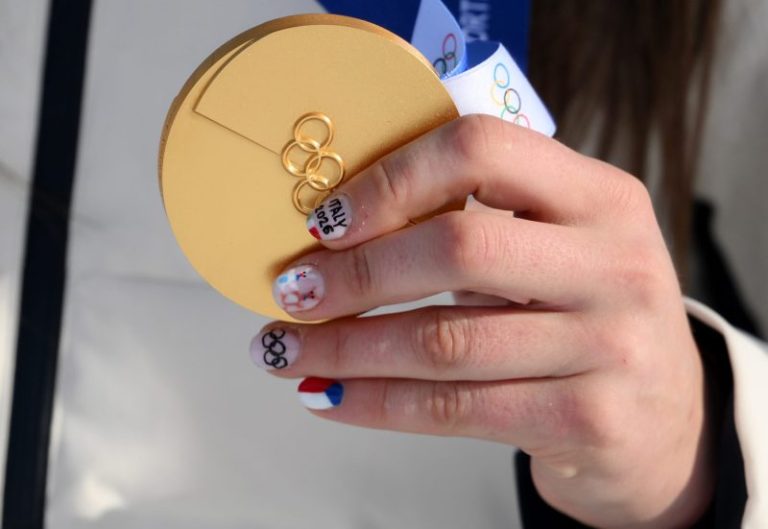
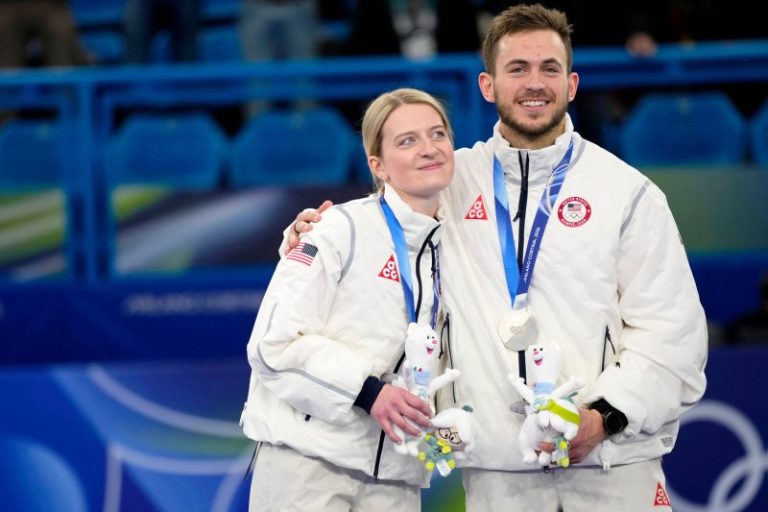
CORTINA D’AMPEZZO, Italy — Cory Thiesse and Korey Dropkin are Olympic medalists.

The tandem, known affectionately as “Girl Cory” and “Boy Korey,” won silver in the mixed doubles curling event Tuesday, Feb. 10, after falling 6-5 to Sweden in the gold-medal match.

The 2026 Winter Olympic Games were the third to include mixed doubles curling, and Thiesse and Dropkin’s performance earned Team USA its first ever medal in the event.

‘It’s certainly bittersweet. We would have loved to have won the gold today, but it’s huge to be on that podium,’ Thiesse said. ‘… the whole goal of this team was to make it to the Olympics, and we made it here, and we’re going home with a medal. We just can’t ask for much more.’

Watch Winter Olympics on Peacock

With the Americans in second, and the Swedes in first, the Italians rounded out the podium defeating Great Britain 5-3 in the bronze-medal game, which was also played Tuesday.

Thiesse and Dropkin defeated Sweden 8-7 in round-robin play to clinch a spot in the semifinals. After dropping their last match of round-robin play to Italy 7-6 Monday morning, they bested the home team 9-8 for a shot at gold. In falling to Sweden Tuesday, Thiesse and Dropkin finished with a 7-4 overall record.

Their bus was caught in heavy traffic on the way to the game. Thiesse and Dropkin could see Cortina Curling Olympic Stadium from the logjam and asked the driver if they could just get out and walk. ‘Luckily he let us,’ Thiesse said. She was adamant that the unplanned stroll had no impact on the gold medal game and gave a shoutout to sports psychologist Carly Anderson for helping the team ‘expect the unexpected’ this week in the Dolomites.

In the gold-medal match, Team USA won the first and third ends 1-0, but a 2-0 Sweden advantage in the second set gave sibling duo Isabella and Rasmus Wranaa the 3-2 edge after four ends. Isabella had a 97% shot success rate heading the break.

A perfectly placed yellow stone in the fifth end pulled Thiesse and Dropkin even 3-3 with the Wranaas and prompted ‘USA’ chants from the mostly American crowd. As 20 or so full-sized American flags billowed in the stands, Dropkin pumped his arms for more.

‘We love them, and we loved having them here cheering us on,’ Dropkin said. ‘Because, who knows what would have happened without them? It helped energize me and helped energize us, and it just added to how surreal the environment out there was. Everyone who came out to support their their team, not just from the U.S., but Team Sweden, the Italians that were out there, the Swiss, the Great British folks. I mean, it was an amazing atmosphere. And it adds to just the moment and how special this whole week has been.’

Team USA took a 5-4 lead into the eighth end after getting two on the board in the seventh. The Americans weren’t as accurate as the Swedes, putting together a shot success percentage of 73% to their 83%. But the margin was much closer in take-outs, with a 70% shot success metric for the U.S. and 72% for Sweden.

Thiesse and Dropkin’s second-to-last stone of the eighth end had too much power behind it, sliding past the button. Which meant their last stone had to be perfect. It did knock the Swedes’ red stone off the middle, but they had the final stone of the game.

Their silver medal is a culmination of two lifetimes on the ice. Thiesse, 31, and Dropkin, 30, came up in the sport together, at first succeeding separately. Each won their first junior national title in 2012 and their first senior national title nine years later.

In April of 2022, Dropkin asked Thiesse for a drink at Pickwick Restaurant & Pub in Duluth, Minnesota. The establishment, owned by two national champion curlers Tim and Amy Wright, is where Dropkin asked Thiesse to be his doubles partner. A year later, they became the first U.S. mixed doubles pair to win a world championship.

Now, they’re Olympic medalists.

Where will the mercury-testing lab technician and realtor keep their new hardware?

‘That’s a great question, I have not thought about yet,’ Thiesse said.

‘Right now,’ Dropkin chimed in, ‘it’s around my neck. And it’s gonna stay there for a little while.’

Thiesse agreed: ‘Might sleep with it for a little while.’

Reach USA TODAY Network sports reporter Payton Titus at ptitus@gannett.com, and follow her on X @petitus25.

This post appeared first on USA TODAY