Archive

2026

Browsing

Texas, Georgia are top national championship contenders from SEC.
Big Ten contenders start with Ohio State, Indiana but don’t end there.
Looking for a sleeper pick? Try USC Trojans or longshot Utah.

Can the SEC put an end to Big Ten football’s national championship streak? That quest begins with four SEC teams, although you could make a compelling case Miami of the ACC is the most dangerous threat in 2026 to the Big Ten’s string of dominance.

The SEC runs deeper than either the ACC or the Big 12, though, so it remains the biggest threat to the Big Ten’s throne. And, yes, it is the Big Ten’s throne now. No escaping that reality anymore, unless your head is buried deep, deep in the sand in the Deep South.

On this edition of “SEC Football Unfiltered,” a podcast from the USA TODAY Network, hosts Blake Toppmeyer and John Adams go head-to-head drafting their top six national championship contenders.

Adams gets the No. 1 pick in their draft, which unfolds in snake-draft fashion. Each team may only be picked once. In other words, once a team is off the board, it cannot be picked by the other host.

In the end, four SEC teams come off the board, plus four from the Big Ten, while each host builds out his six-team roster in search of the 2026 national champion.

Drafting 2026 college football national championship contenders

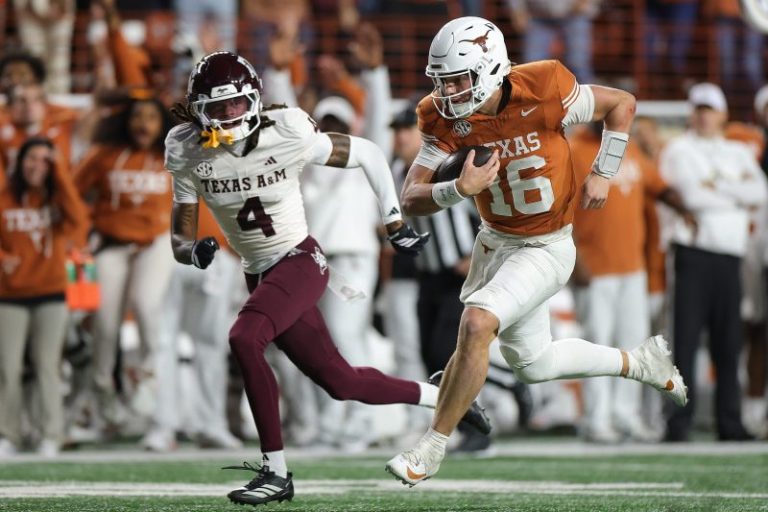
Adams’ first pick: Texas. The Longhorns cleaned up in the portal, and Arch Manning finished the season looking more like the quarterback we expected him to be all along.

Toppmeyer’s first pick: Ohio State. The Buckeyes always produce one of the nation’s most-talented rosters. The schedule is tough, but Julian Sayin, Jeremiah Smith and Bo Jackson are a good start toward a third straight playoff bid.

Toppmeyer’s second pick: Notre Dame. With CJ Carr back as starting quarterback and another accommodating schedule, the Irish are pointed toward the playoff.

Adams’ second pick: Miami. Mark Fletcher and Malachi Toney return as offensive linchpins, and Darian Mensah could be a quarterback upgrade.

Adams’ third pick: LSU. Lane Kiffin’s done it again, with another tremendous transfer class, and he’s proven he knows how to assemble a roster full of fresh faces.

Toppmeyer’s third pick: Georgia. I’d like Georgia even more if it had done more in the portal. Even as is, Georgia is probably the SEC’s best-positioned team for a playoff bid, with only a few major landmines on the schedule.

Toppmeyer’s fourth pick: Indiana. Several key departures, but Josh Hoover should keep Curt Cignetti’s assembly line of good transfer quarterbacks rolling. He’s part of a good portal class.

Adams’ fourth pick: Texas Tech. Mega booster Cody Campbell promised to “double down” after Texas Tech’s CFP quarterfinal exit. When a billionaire doubles down, I buy in. The Red Raiders spent big for quarterback Brendan Sorsby.

Adams’ fifth pick: Oregon. The Ducks’ script the past two years: Look really good until folding in the playoff against the eventual national champion. Will they fold again in January 2027? Maybe, but they’re the best bet at this stage of the draft.

Toppmeyer’s fifth pick: Texas A&M. A tough schedule makes me wonder if the Aggies are ripe for win-loss regression. But, when a playoff team returns its quarterback, it can’t be ignored at this stage. The Aggies need their transfer class to hit to offset notable losses.

Toppmeyer’s sixth pick: Southern Cal. Trusting a Lincoln Riley defense is a fool’s errand, even after the hire of TCU legend Gary Patterson as defensive coordinator. Quarterback Jayden Maiava should keep the completions and the points coming, at least.

Adams’ sixth pick: Utah. How’s this for a shot in the dark? Am I bold or just crazy? Before you answer that, consider how well quarterback Devon Dampier played in the final few games of last season.

Also considered: Mississippi, Alabama.

Eyeing college football’s next champ? Start here

Adams’ roster of national champion picks: Texas, Miami, LSU, Texas Tech, Oregon, Utah

Toppmeyer’s thoughts on Adams’ lineup: I wanted Miami with my No. 3 pick. Alas. That one stings.

***

Toppmeyer’s roster of national champion picks: Ohio State, Notre Dame, Georgia, Indiana, Texas A&M, USC.

Adams’ thoughts on Toppmeyer’s lineup: You’re heavy on the Big Ten. If the B1G’s streak continues, that’s trouble for my team, unless Oregon saves the day.

Where to listen to SEC Football Unfiltered

Apple
Spotify
iHeart
Google

Blake Toppmeyer is the USA TODAY Network’s national college football columnist. John Adams is the senior sports columnist for the Knoxville News Sentinel. Subscribe to the SEC Football Unfiltered podcast, and check out the SEC Unfiltered newsletter, delivered straight to your inbox.
This post appeared first on USA TODAY

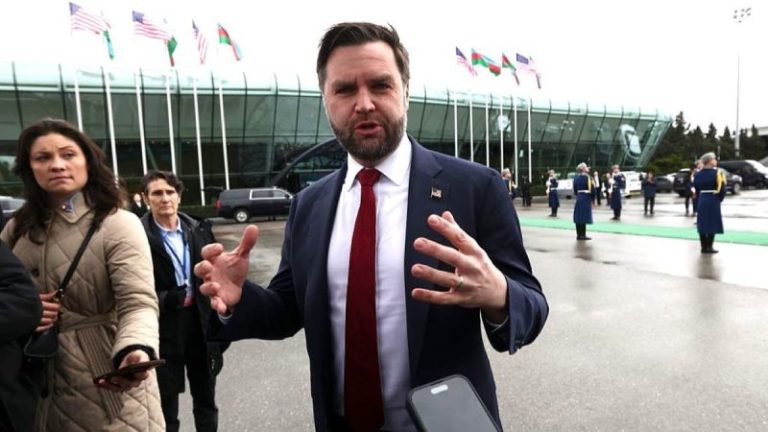
Vice President JD Vance warned Iran that there is ‘another option on the table’ if the regime does not make a nuclear deal with the U.S.

Vance made the statement while speaking to reporters before boarding Air Force Two on Tuesday. A reporter referenced President Donald Trump’s musings about potentially deploying a second aircraft carrier strike group to the Middle East.

‘How confident are you in going the diplomatic route? Do you think that is still going to be successful or are we leaning more towards a military strike?’ the reporter asked.

‘The president has told his entire senior team that we should be trying to cut a deal that ensures the Iranians don’t have nuclear weapons,’ Vance responded.

‘But if we can’t cut that deal, then there’s another option on the table. So I think the president is going to continue to preserve his options. He’s going to have a lot of options because we have the most powerful military in the world. But until the president tells us to stop, we’re going to engage in these conversations and try to reach a good outcome through negotiation,’ he continued.

Vance went on to downplay pushes for regime change in Iran, saying a removal of Ayatollah Ali Khamenei’s regime would be up to ‘the Iranian people.’

He said the Trump administration’s only focus is preventing the current Iranian regime from obtaining a nuclear weapon.

Vance’s comments come a day before Israeli Prime Minister Benjamin Netanyahu is set to meet with Trump at the White House on Wednesday, with Iran expected to take center stage in the meeting.

In a phone interview with Axios, the president said Tehran ‘very much wants to reach a deal,’ but warned, ‘Either we make a deal, or we’ll have to do something very tough — like last time.’

Netanyahu, speaking before departing Israel for Washington, said he intends to present Israel’s position. 

‘I will present to the president our concept regarding the principles of the negotiations — the essential principles that are important not only to Israel but to anyone who wants peace and security in the Middle East,’ he told reporters.

U.S. and Iranian officials resumed talks in Oman this week for the first time since last summer’s 12-day war. The United States continues to maintain a significant military presence in the Gulf, a posture widely viewed as both deterrence and for holding leverage in negotiations with Tehran.

This post appeared first on FOX NEWS

Let me see if I’ve got this straight, because I’m a little fuzzy on the particulars. 

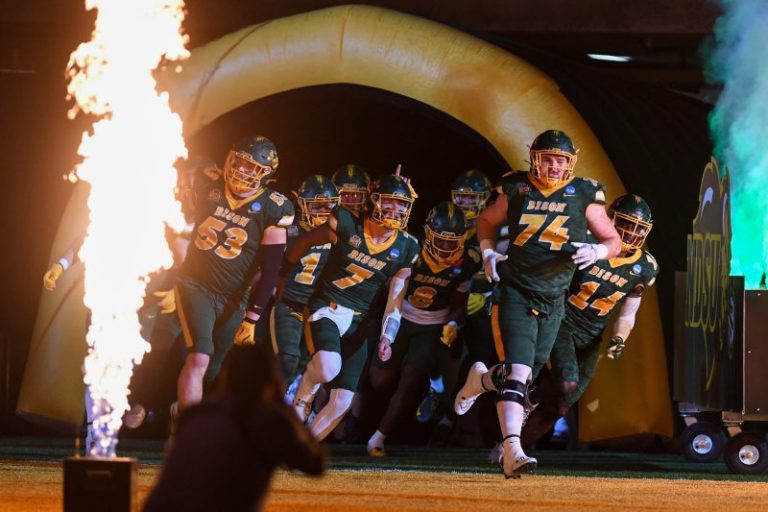
The most successful FCS program in the modern era, and the third-largest oil producing state in the country have joined FBS football. 

To this I say: What took so long? 

North Dakota State has joined the Mountain West Conference in football beginning this fall, and if you’re looking for some quick analysis, here it is: only Texas and New Mexico produce more oil than North Dakota, the black gold that can change everything in college sports.

Hello, private NIL. 

If there’s one thing we’ve learned in this upside-down world of get yours, it’s money talks and tradition walks. 

Indiana just won a national title. I still can’t believe it, so I’m going to write it again: Indiana, lovable loser of Division I football for decades upon decades, found the perfect coach and won the whole thing.

And is now set up to take over the sport with an elite coach (Curt Cignetti), a billionaire booster (Mark Cuban) and the largest alumni base in college sports (800,000-strong).

Texas Tech, which never before won an outright major conference championship, won the Big 12 in 2025 with a school-record 12 wins. Only a quarterback playing with a broken leg kept the billionaire-fueled ― and black gold-infused ― Red Raiders from doing more damage in the College Football Playoff. 

Duke, my god, Duke, won the ACC with a $4 million-a-year quarterback. And Steve Spurrier wasn’t the coach. 

Why in God’s green earth would North Dakota State not attempt to move up to FBS? 

The Bison — that’s pronounced Bizon, everyone — aren’t competing against the Power conference heavyweights, they’re competing against the rest of the Group of 6 for the one CFP charity spot. 

That immediately changes the calculus of it all. 

You’re not banging heads with established programs, you’re playing — ready for this? — Air Force, Hawaii, Nevada, New Mexico, Northern Illinois, San Jose State, UNLV, UTEP and Wyoming. 

I mean, really? 

None of those nine teams would’ve won 10 of 15 FCS titles from 2011-2025. And more than likely, not more than one ― if that.

Four coaches (Craig Bohl, Chris Klieman, Matt Entz, Tim Polasek) won national titles at NDSU in that 15-year span, a line of succession that’s almost unthinkable in this era of quick-change college football. The plan to win hasn’t changed much from when Bohl built the beast, and Klieman perfected it. 

They recruit players to fit their culture and system, and then develop them to reach their ceiling. Since 2020, eight NDSU players have been selected in the NFL draft. 

The 2025 national champion (that would be Indiana, everyone) had six. Six! 

Vanderbilt had three, Duke had seven, and if you want me to continue this exercise in Power conference draft futility, we’ll be here all damn day. Suffice to say, NDSU knows how to develop players. 

Yet that point brings us to the intriguing intersection of culture and cash, the very thing that could dismantle what NDSU has worked so hard to build. Or make it even more dangerous. 

Because if Polasek — an assistant for 10 years with the Bison before getting the job in 2024 and winning 26 of 29 games — can mold the valuable NDSU culture with a handful of impact starters from the transfer portal, this thing could get big. Quickly. 

Again, you’re not reinventing the wheel, you’re giving the hard-driving 18-wheeler a little more horsepower and a refined suspension with a handful of talented transfers. How do you get those transfers?

Oil money. 

If Texas Tech can do it, NDSU sure can. Lubbock is in the middle of nowhere; at least Fargo is across the river from Minnesota.

Also, the middle of nowhere, but you get the point.

Money changes everything. It breathes life into recruiting efforts, and extends the arm of possibility. It can turn a wildly underrated college town into a hotbed of FBS college football. 

Just like it did in Lubbock. Just like it will do in Fargo. 

It was only a matter of time before this inevitable happened. There was too much good going on at NDSU, and not enough challenge. 

There’s only so many times you can beat the brakes off everyone else, and still be satisfied to do it again the following season. Before the advent of NIL and free player movement, the climb to FBS made no sense for the team no one wanted to see on the nonconference body bag circuit.

NDSU has a 9-5 all-time record vs. FBS schools since beginning Division I play in 2004, including wins over Minnesota, Kansas State, Iowa and Iowa State. But think about this all-telling reality: the Bison have been playing FCS football for 21 years, and have been asked to play only 14 FBS guarantee games.    

There was nothing to gain, and more than likely everything to lose for anyone playing NDSU. Now the FBS has to play them — at least, in the Mountain West. 

If things progress how NDSU has envisioned, the Power conferences will have to deal with Bison cash in the transfer portal, and in a perfect, oil-driven private NIL world, on the biggest stage of all in the CFP.

The most successful FCS program of our time, and the third-largest oil production state in the country teaming up in the new private NIL world of college football. 

What took so long?

This post appeared first on USA TODAY

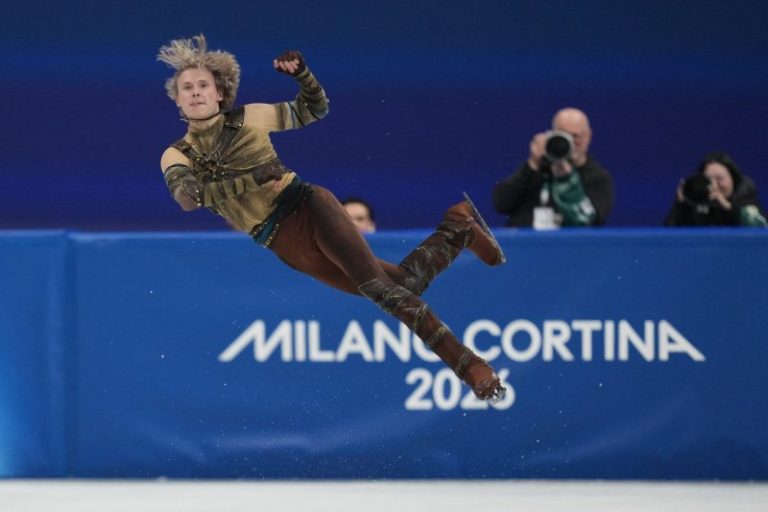
MILAN — Ilia Malinin wagged his tongue in joy halfway through his short program in the men’s competition Tuesday night at the 2026 Winter Olympics. He had just completed his three industrial strength jumping passes without a hitch, including two majestic quadruple jumps. Now he was flying past center ice, and his emotions got the better of him, and he was singing along with his music in the icy arena air. He was back, and he knew it.

The 21-year-old self-proclaimed “Quad God” had already lived a lifetime at these Olympic Games. He had experienced the interesting combination of being both tested and, now, rested. The Olympic team figure skating competition had challenged him in ways he hadn’t expected. But he had passed that test, leading the Americans to the gold medal by doing double duty in both the short and long programs when he hadn’t originally planned to. 

“I definitely felt like I was in a better zone this time,” Malinin said after he won the short program, setting himself up beautifully to win a second gold medal here on Friday. “It was, I think I want to call it, Olympic pressure, going out there the first time, hitting that Olympic ice and feeling the atmosphere, it was like, I didn’t expect it to be so much. 

“I mentioned earlier in the week that it took me a little while to understand what really happened, but now that I understand it, I took a different approach today. Really, just take things nice and calm, nice and slow, just relax. Then really just push the autopilot button and just let it cruise.”

An Olympic rookie, he is so much better off having gone through the team experience, which left him with “an incredible feeling,” he said Sunday night.

Now it was 48 hours later, and Malinin was on his own in the individual men’s event. On his own and back to his old self, the skater who has won four consecutive U.S. championships and the last two world titles.

His score? 108.16 points, a healthy five points ahead of Japan’s Yuma Kagiyama, who had 103.07. With a long program likely packed with his record-breaking seven quads, Malinin is back to being the strong favorite to win the gold medal Friday night. How things have changed for him since his shaky short program in the team event over the weekend. 

“I definitely feel like I’ve reached where I want to be for the individual event, and just take a refresh and just nice and slow and calm for that free skate program. … and just let everything happen naturally.”

He now has more free time than he has had all week, with three days off between the short program and the long program (free skate). Asked how he is resting in his spare time, Malinin delightfully subtracted a couple years off his age.

“What would any teenager really do?” he replied with a smile. “I’m not really a teenager, but I feel like one a lot of the time, you know, just watching funny videos or funny fails, like video games and, you know, enjoying the Olympic Village. It’s such a cool place. They have their own gaming room as well. So I go there.”

This is the Malinin the skating world has come to know, a funny, laid back young man who loves to chat, almost always smiles and has the confidence to know how he’ll handle what’s next. For example, after the team competition ended Sunday, he predicted that nail-biter “really set me up for the individual event.” 

Turns out he knew exactly what he was talking about.

Get our Chasing Gold Olympics newsletter in your inbox for coverage of your favorite Team USA athletes

This post appeared first on USA TODAY

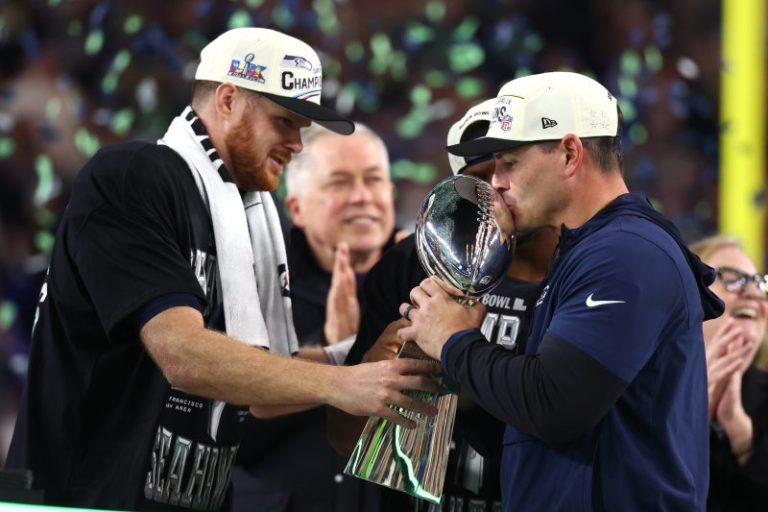
The Seattle Seahawks are celebrating the franchise’s second Super Bowl win with their fans, notoriously known as ‘The 12s,’ in a hometown parade on Wednesday.

USA TODAY Sports is providing live coverage of the parade beginning around 1 p.m. ET. You can watch the festivities live via the embedded video at the top of this page or on the USA TODAY Sports YouTube Channel.

The Seahawks beat the Patriots 29-13 in Super Bowl 60 on Sunday at Levi’s Stadium in Santa Clara, California. It marks the franchise’s first Super Bowl win since the 2013 season, when Seattle defeated the Denver Broncos 43-8 in Super Bowl 48.

Buy Seahawks championship pages, gear

What time does the Seahawks Super Bowl parade start?

According to the Seahawks, the parade is scheduled to begin with a trophy celebration at Lumen Field at 1 p.m. ET (10 a.m. local time), followed by the main parade at 2 p.m. ET (11 a.m. local time).

Seattle Seahawks Super Bowl parade route

The Seahawks’ Super Bowl parade route will run along 4th Avenue in downtown Seattle. It will begin at 2 p.m. ET at 4th Avenue and Washington Street, travel northbound on 4th Avenue and end at 4th Avenue and Cedar Street.

The 2026 version of the route is notably different from the 2014 route: it begins at the stadium instead of ending there. The parade route is just over two miles long through downtown Seattle and is expected to take two hours.

The city of Seattle expects between 750,000 and 1 million fans to attend the parade.

For information on road closures, click here.

This post appeared first on USA TODAY

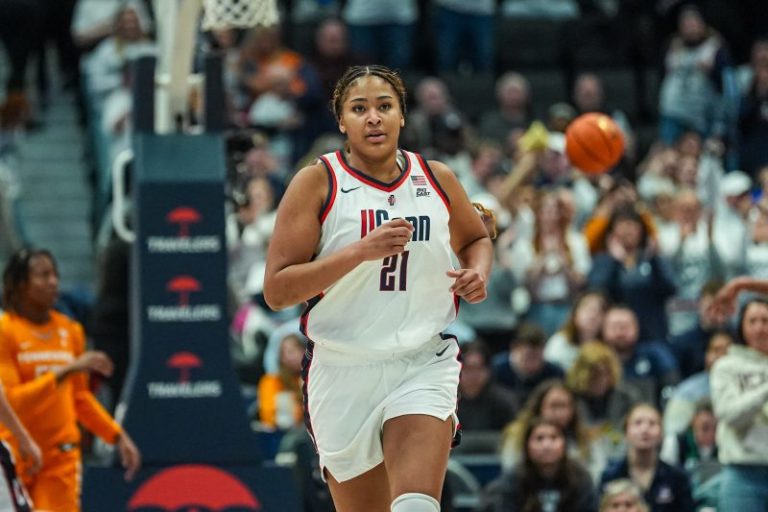
STORRS, CT − The No. 1-ranked UConn women’s basketball team played Saturday’s game without top scorer Sarah Strong, who took the game off to rest.

‘We just want to make sure any tightness she might feel doesn’t become anything,’ UConn coach Geno Auriemma said. ‘She could have played.

‘It’s the college version of load management.’

Strong is expected to return on Wednesday, Feb. 11 against Creighton at Gampel Pavilion. Strong is averaging 19.2 points and 8.0 rebounds a game for the Huskies. UConn (25-0, 14-0 Big East) is looking to extend a 40-game win streak.

Ava Zediker, who scored 25 in a victory over Marquette on Sunday, is averaging 13.8 points for the Bluejays (12-12, 8-7 Big East).

UConn beat Creighton, 95-54, in Omaha on Jan. 11.

What time is UConn vs. Creighton?

The UConn Huskies plays host to the Creighton Bluejays at 7 p.m. ET on Wednesday, Feb. 11 at Gampel Pavilion in Storrs, Connecticut.

UConn vs. Creighton: Streaming

Date: Wednesday, Feb. 11
Time: 7 p.m. ET (4 p.m. PT)
Location: Gampel Pavilion (Storrs, Connecticut)
Stream: Peacock

STREAM: UConn vs. Creighton

This post appeared first on USA TODAY

Bea Kim is a 19-year-old newcomer on the U.S. women’s halfpipe team for the 2026 Winter Olympics.
Inspired by teammate Chloe Kim, she is also a passionate climate advocate with Protect Our Winters.
Kim is set to attend Columbia University to study environmental science.

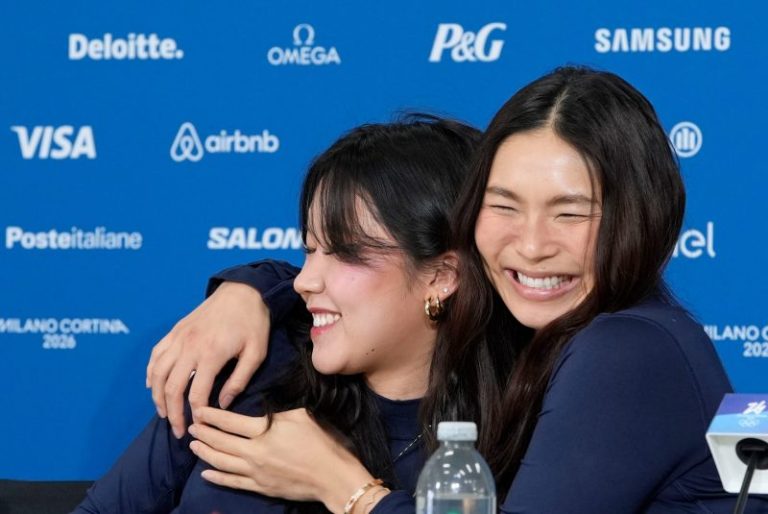
LIVIGNO, Italy – The 19-year-old grabbed the microphone without hesitation, before looking to her right and her left at her older, more experienced teammates.

Assuredness is not something Bea Kim lacks, even if she is the newcomer on the United States’ women’s halfpipe team, which includes Chloe Kim – the event’s back-to-back Olympic champion – three-time Olympian Maddie Mastro and 31-year-old Maddy Schaffrick.

At the group’s news conference in the Italian Alps ahead of their qualifying round at these 2026 Milano Cortina Winter Olympics, the last question revolved around President Donald Trump’s criticism of men’s free skier Hunter Hess over Hess’ pre-Games comments about representing the United States (Trump did not properly reflect what Hess said). It’s a hot-button topic, one that can ignite social media and reach the halls of the West Wing. Shying away would have been a normal response.

Bea Kim didn’t.

‘I think there are a lot of different opinions in the U.S. right now. Obviously, we’re very divided,’ she said. ‘I personally am very proud to represent the United States. That being said, I think diversity is what makes us a very strong country and what makes us so special.

‘I think the four of us sitting here (Monday) are an example of that. We all came from very different backgrounds.’

If that’s not an example of the field Kim is playing, then perhaps it’s her passion for the environment and involvement in Protect Our Winters (POW), an organization that has led her to address the United Nations and speak at the White House regarding climate change. Or that she is bound for Columbia University in the fall. Or maybe it’s the fact that she could be the breakout star of a U.S. women’s halfpipe team that already features one of the biggest names in the entire delegation, who happens to have the same surname as her.

Bea Kim and Chloe Kim, along with Mastro, actually all grew up going to Mammoth Mountain in California and refer to it as their home mountain. Mastro and Chloe Kim have been her role models for a while, Bea Kim said.

“To be able to be on the same team as them, go to the Olympics together and kind of call them my friends has been just so special,” she told USA TODAY Sports in January through her sponsor, Delta Airlines.

The two Kims are not related, though, even if Bea Kim understands why it might be easy for snowboarding casuals to make the assumption. She actually gets a kick that two of her teammates have the same first name – different spellings, though – and that she and Chloe share a last name.

Bea Kim, who is Korean-Japanese-American, attended the 2018 Winter Olympics in South Korea − where Chloe Kim won her first of two halfpipe gold medals − with her parents, younger brother and grandparents. They spent time in Seoul, South Korea, and also visited Japan for the first time. It’s a special family memory.

“That was, I think, a pretty pivotal moment in my own career of seeing someone who looked like me just do something super incredible and be able to inspire me to kind of go after this career path,” Bea Kim said.

Chloe Kim was 17 at that time, with Bea Kim six years her junior.

“I mean, honestly, when I was that young, I don’t think I realized how incredible what she was (doing),” Bea Kim said. “I knew what she was doing was amazing, but I didn’t realize how young she was to be able to do something like that. And then now that I’m closer to that age, it’s definitely like, ‘Wow, that was insane.’”

In fourth grade, Bea Kim penned a poem shortly after she joined the Mammoth snowboarding team.

‘I am the gold medalist at the 2022 Winter Olympics,’ she wrote in the piece shared with USA TODAY Sports. ‘I cry tears of joy when the gold medal is placed around my neck.’

Bea Kim may have been a little premature in the premonition. But who says she can’t live up to the final stanza?

‘I dream of being,’ it reads, ‘the best snowboarder in the world.’

Bea Kim’s passion for outdoors, sport fuels academic ambition

Bea Kim’s passion for the outdoors and career in snowboarding is as full-circle as it gets, she said. Everything her family did – whether it was camping, hiking, snowboarding or surfing – took place in nature.

The family memories built are unforgettable and eventually led to competitive snowboarding, which led to dropping out of school and starting online school so that she could travel with the U.S. snowboarding team.

Those global treks have shown her the world, but competitive snow sports follow a similar travel schedule year over year, and athletes often wind up in the same places at the same time of year.  

“It’s really easy to kind of see how climate’s affecting all of everything,” Kim said.

From glaciers receding to fluctuating snow levels, it is impossible to ignore. She eventually made contact with the non-profit POW.

“They’ve really opened me up to a lot of new experiences where I’ve gotten to kind of share my story and just talk about climate and the snow sports industry and life as an athlete on the road,” Kim said. “So that’s kind of led me to Columbia where I’m going to study that hopefully.”

Kim’s sport is dependent on the weather – not just snow, either. If the winds are howling, it’s harder for her to do her job. If it’s dumping snow, it’s harder than a “bluebird day” when riders can actually tell the difference between the sky and the wall of a halfpipe.

“And those bluebird days are kind of a little bit further and far between now,” said Kim.

Two summers ago, Kim was scheduled to be in Australia for three weeks for a training camp. But it was the warmest season they had on record in years. She spoke to locals, they had never seen it that warm before. “Crazy weather” prevented the training group from even going up to the mountain, and Kim ended up leaving the camp early because the conditions made it unrideable.

The Olympic halfpipe site in Livigno was supposed to host a test event prior to the Games, but the lack of snow in the Alps nixed the dry run.

“It’s wild,” she said.

Bea Kim’s most crucial opponent? Herself

Bea Kim’s first competition in more than 11 months came at Copper Mountain in December 2025. On Christmas Eve the prior year, she underwent shoulder surgery after a series of subluxations destabilized her arm. The goal, she said, was to tighten the joints and muscles before the Olympic year.

Kim described her week at Copper as “actually a crazy little week.”

It was the first Olympic qualifier. The practice days leading into the qualifying round were tough. She was not feeling like herself at all.

“But once I dropped into the competition, I kind of was just reminding myself, ‘You know how to do this, your body knows how to do this.’ It’s all muscle memory,” she said.  

Kim is the type of competitor who believes the pressure of the competition makes her a better performer.

“It’s always kind of a testament to willpower, I think,” she said.

Kim finished third at Copper, which went a long way to securing her spot on the Olympic roster. To be on the podium in Italy, Kim will have to beat out her own teammates, an impressive international contingent with competitors from Australia to Japan to Switzerland and another opponent she’s quite familiar with.

Herself.

“I often say that my biggest competitor is myself, my own brain,” she said. “I think to make it on the podium, I need to really push myself to my limits and do things that scare me.”

All she knows is that she’ll leave everything in the pipe and won’t finish with any regrets.

“Hopefully that ends up standing on the box with a medal,” Kim said. “So, we’ll see. (I’ll) get back to you.”

This post appeared first on USA TODAY

Israeli Prime Minister Benjamin Netanyahu will meet President Donald Trump at the White House on Wednesday in a visit expected to center on Iran, as Washington weighs diplomacy against the threat of military action and Israel pushes to shape the scope of negotiations.

Trump has signaled the Iranian file will dominate the agenda. In a phone interview with Axios, the president said Tehran ‘very much wants to reach a deal,’ but warned, ‘Either we make a deal, or we’ll have to do something very tough — like last time.’

Netanyahu, speaking before departing Israel for Washington, said he intends to present Israel’s position. ‘I will present to the president our concept regarding the principles of the negotiations — the essential principles that are important not only to Israel but to anyone who wants peace and security in the Middle East,’ he told reporters.

The meeting comes days after U.S. and Iranian officials resumed talks in Oman for the first time since last summer’s 12-day war, while the United States continues to maintain a significant military presence in the Gulf — a posture widely viewed as both deterrence and for holding leverage in negotiations with Tehran.

From the U.S. perspective, Iran is seen as a global security challenge rather than a regional one, according to Jacob Olidort, chief research officer and director of American security at the America First Policy Institute. ‘It’s an important historic time of potentially seismic proportions,’ he told Fox News Digital.

‘Iran is not so much a Middle East issue. It’s a global issue affecting U.S. interests around the world,’ he added, calling the regime ‘probably the world’s oldest global terror network… [with] thousands of Americans killed through proxies.’

Olidort said the administration’s strategy appears to combine diplomacy with visible military pressure. ‘The president has been clear… should talks not be successful, the military option cannot be off the table,’ he said. ‘Military assets in the region serve as part of the negotiation strategy with Iran.’

For Israel, the main concern is not only Iran’s nuclear program but also its ballistic missile arsenal and regional network of armed groups.

Trump indicated to Axios that the United States shares at least part of that view, saying any agreement would need to address not only nuclear issues but also Iran’s ballistic missiles. 

Israeli intelligence expert Sima Shein has warned that negotiations narrowly focused on nuclear restrictions could leave Israel exposed. ‘The visit signals a lack of confidence that American envoys, Witkoff and Kushner, alone can represent Israel’s interests in the best way. They were in Israel just a week ago — but Netanyahu wants to speak directly with Trump, so there is no ambiguity about Israel’s position,’ she added.

Shein says Iran may be stalling diplomatically to see whether Washington limits talks to nuclear issues while avoiding missile constraints. Her analysis further suggests that a sanctions-relief agreement that leaves Iran’s broader capabilities intact could stabilize the regime at a moment of internal pressure while preserving its military leverage. 

‘An agreement now would effectively save the regime at a time when it has no real solutions to its internal problems. Lifting sanctions through a deal would give it breathing room and help stabilize it,’ she said.

‘If there is an agreement, the United States must demand the release of all detainees and insist on humanitarian measures, including medical support for those who have been severely injured. Washington would need to be directly involved in enforcing those provisions.’

Netanyahu said before leaving Israel that he and Trump would discuss ‘a series of topics,’ including Gaza, where a U.S.-backed postwar framework and ceasefire implementation remain stalled. 

According to Israeli reporting, Netanyahu plans to tell Trump that phase two of the Gaza peace plan ‘is not moving,’ reflecting continued disputes over disarmament, governance and security arrangements.

The timing of Netanyahu’s visit may also allow him to avoid returning to Washington the following week for the inaugural session of the Board of Peace, Shein said, noting the initiative is controversial in Israel’s parliament. 

‘Israel is deeply concerned about the presence of Turkey and Qatar on the board of peace and their malign influence on other members as well as on the Palestinian authority’s technocratic government,’ Dan Diker, president of the Jerusalem Center for Security and Foreign Affairs, told Fox News Digital.

‘Hamas’s control of Gaza has not weakened, while international commitments to disarm Hamas have appeared to weaken,’ he added, ‘The longer the U.S. waits before taking action against the Iranian regime, the more compromised Israel is in its ability and determination to forcibly disarm Hamas, both of which require the sanction and the blessing of the new international structures on Gaza.’

‘The prime minister’s deep concern is the stalled state of affairs both against the Iranian regime and apparently in Gaza. Timing is critical on both fronts. And for Israel, the window seems to be closing,’ Diker said.  


This post appeared first on FOX NEWS

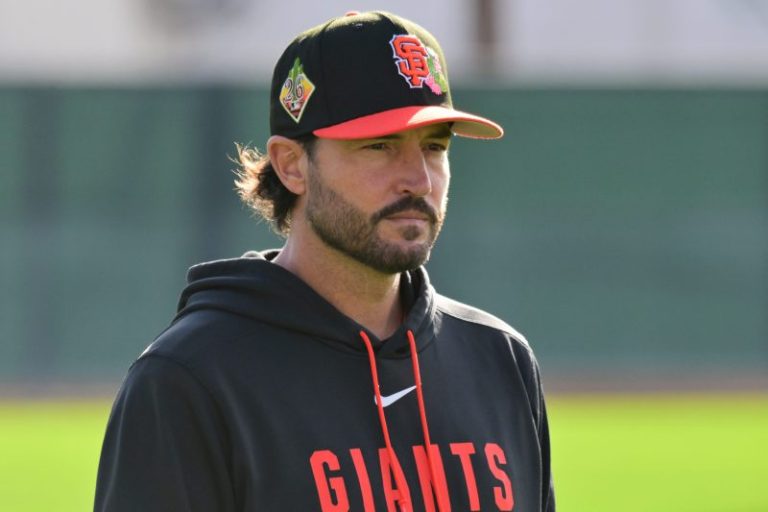
SCOTTSDALE, AZ — Tony Vitello was more nervous Tuesday talking about a Waymo trip he planned to take in a driverless car this spring than he was for his first day on the job as manager of the San Francisco Giants.

Vitello, in his first spring-training press conference, rambled, philosophized, cajoled, and turned the first day of the Giants’ camp into a businessmen’s meet-and-greet. He didn’t give out name-tags, but required everyone to wear their official spring training jerseys with their names on the back.

“You want to set a vibe,’’ Vitello said, “for what you want your team to be.’’

It’s a new era in San Franciso, where the Giants took the biggest gamble in all of baseball this winter with the hiring of Vitello, a wildly successful college coach at Tennessee, but the first to transition directly from a college to MLB manager in baseball history.

“The one thing I will say without hopefully sounding too preachy,’’ Vitello said, “is college coaches deserve a lot of credit.’’

The biggest challenge Vitello immediately faces is his lack of familiarity with his own team. He coached two of the Giants’ players at Tennessee: outfielder Drew Gilbert and pitcher Blade Tidwell. He recruited, albeit unsuccessfully, two Giants to be on his college team: Sam Hentges when he was at Arkansas and first baseman Bryce Eldridge at Tennessee.

But, for the rest, well, there was a reason he traveled to meet Jung Hoo Lee in South Korea, Willy Adames in the Dominican Republic, and moved into his spring-training home three weeks ago to meet early arrivals and players who live in the Phoenix area.

“It’s a little different when you don’t have the recruiting background as far as relationships go,’’ Vitello said. “I just wanted to let everyone know where I was coming from. … I think there’s decisions and conversations that come with any role, so by now at least everybody hopefully knows my name.’’

While Vitello claims he rambled during his introductory speech with the team, arriving about 20 minutes late for his first spring training press conference, his boss, Buster Posey, and the Giants’ players disagreed.

Nothing personal against former manager Bob Melvin, who was fired after the season − just two months after his option was exercised − but the Giants raved about the energy and passion exhibited by Vitello.

“It was inspiring, pretty amped up in a good way,’’ Giants reliever Ryan Walker told USA TODAY Sports. “Bo-Mel was like chill. He’s at one level. He would introduce himself, tell us what the goal for the season is, and that kind of stuff. It was all in a chill-like voice.

“Then, you get Vitello, who’s more energetic. He’s coming from college so he’s got this louder voice, bringing more energy to the meeting.’’

It was no different than back in 2014, Hentges says, when Vitello recruited him out of high school in Shoreview, Minnesota Hentges was drafted by Cleveland in the fourth round and turned pro. Still, he kept in touch with Vitello over the years, and when it was time for him to decide where he wanted to pitch after missing last season with shoulder surgery, Vitello was the difference-maker.

“We haven’t been super, super tight,’’ Hentges said, “but I kept tabs with him. So, I was super excited, and obviously it’s super cool to see him again. He gave me a little jab about finally coming to join him, but I told him that he did all right for himself the last 10 years without me.

“Guys in here who have played for him at Tennessee keep raving about him. He’s got a great baseball mind, (is) a great motivator, and I’ve heard he’s a great leader. A big, big energy guy. I know it’s a different situation going straight from college to the big leagues, but I think he’s fully capable of it.’’

Giants All-Star third baseman Matt Chapman says he has spent quality time with Vitello the last few weeks working out in Phoenix, exchanging ideas and thoughts to help the Giants get back to the postseason for the first time in five years. The Giants won 107 games in 2021, interrupting the Dodgers’ NL West division title dynasty, but haven’t produced a winning record since, and are now on their third manager in four years.

“We have high hopes for this team,’’ said Posey, president of baseball operations, who could have brought back future Hall of Fame manager Bruce Bochy, but instead took the gamble with Vitello. Bochy was hired as a special advisor, joining Dusty Baker.

Certainly, one spring training morning is not going to validate Posey’s bold move to hire Vitello, but being with him in the back fields, watching how he interacted and worked with players, only cemented his decision.

“The first time I got to see him (coaching players) was when we were in Korea and he started working with some high schoolers,’’ Posey said, “and I just saw a switch come on. I saw it today in the meeting when he’s addressing the pitchers. What I’ve learned about him is that he’s really good about turning that switch on when he needs to carry himself very confidently.

“He talked a lot about mentality and mindset, which I’m a big believer in as well. It’s hard to glean too much from the first day of pitchers and catchers, but we’re off to a good start.’’

The players immediately embraced the idea of wearing their spring-training uniforms with their names across the back. It was a professional look, straight out of the pages of Hall of Fame managers Bobby Cox and Tony La Russa.

You look like a professional ballplayer, you play like one.

“Putting on your jersey and going out there was like putting on a Superman cape,’’ Walker said. “You got out there with a certain composure and a certain mindset.’’

It was Vitello saying, “There’s a new sheriff in town, and his name is Tony Vitello.’’

“He loves the game and he’s passionate about teaching,’’ Posey said. “I think that’s why he had a successful career in the college ranks, and why I think he’ll be successful here as well because those two things will take you a long ways as a coach. I think the guys will feel quickly that he’ll be in the trenches with them. And he’ll care about them. But if he needs to push them, he’ll push them as well. …

“I think Tony’s authentic, and for me if you’re true to yourself and authentic, I think people will buy into it.’’

You don’t need to convince Chapman, a nine-year veteran, who already is a Vitello believer.

“From all of my interactions with him,’’ Chapman said, “I’m super excited to have him in charge. I feel like he’s going to do a great job for us. I feel like he’s got a really good baseball mind. You can tell he’s smart and is intense and competitive. I think he’s going to be a good fit for us.’’

And yes, even without a single day of professional experience.

“I mean, whether you’re playing at the highest level in college or the major leagues or the minor leagues,’’ Chapman said, “winning baseball looks the same. It’s pitching, defense, knowing how to run the bases and then managing personalities and managing guys. So, he has a lot of experience doing that.

“There is obviously going to be a learning curve in some areas. You can’t fully know how to run a major league clubhouse unless you’ve been in one. But I think it’s not something foreign to him. He’s a baseball guy, you know? He’s done things at a high level, so I think the transition will be smooth.’’

The Giants are confident Vitello can make the transition, even giving him the largest contract in history for a first-year manager, paying him $3.5 million annually for three years. If it works, the Giants could be trend-setters. If it fails, well, maybe there was a reason this has never happened before in MLB history.

But … why hasn’t anyone ever hired a manager directly from the college ranks before?

“I’m assuming like all of the things that have been written,’’ Posey said, “it’s 162 games versus 60. You’re dealing with players that are making a lot of money. I do think that there used to be a bigger gap between college and professional baseball. Now, I think that gap has shrunk some.’’

If the Giants win, and Vitello gets strong reviews, could it open the door for other collegiate coaches?

“We’ll see,’’ Posey said. “I hope I’m not hiring a manager for 20 years.’’

And for Vitello, well, the two words he lives by are risk and challenge, whether it’s the risk and challenge of managing the Giants, or the risk and challenge of taking that first autonomous Waymo ride.

“We’re in the Waymo capital of the world, which is kind of creepy,’’ Vitello said. “I think I maybe got to do it just for the experience. I’ll probably jump in one at some point. Maybe I’ll take a video and document it.

“But I think I’m going to make sure it’s a very short ride.’’

And long ride as manager of the Giants.

Follow Nightengale on X: @BNightengale

This post appeared first on USA TODAY

Maddy Schaffrick, 31, has returned to professional snowboarding after a decade-long hiatus that included coaching and plumbing.
She is now teammates with several athletes she previously coached, including Chloe Kim and Maddie Mastro.
Schaffrick overcame numerous injuries and a period of burnout to make the U.S. Ski and Snowboard team.
Her teammates and coaches praise her positive energy and inspiring comeback story.

LIVIGNO, Italy – Maddy Schaffrick asked to pause the interview. Not for any selfish reason. Quite the opposite, actually.

She was trying something. The 31-year-old wanted to be present and watch teammate Chase Josey execute his run in the men’s halfpipe finals of the 2026 Aspen Grand Prix in January. Maybe it was the former coach in her, too, that was keen on keeping a watchful eye on Josey as he flipped and turned around the U-ditch.  

“Let’s go! Yeah dude!” Schaffrick yelled, eventually hugging Josey at the bottom of the run once he was done. “So sick! Oh yeah!”

Schaffrick turned around.   

“Where were we?”

Great question. It’s one Schaffrick has asked herself over the past decade or so, but in the present tense. Where am I? And the answer could have been anywhere from the operating table – countless knee surgeries – to a plumbing job – the career she temporarily turned to after snowboarding didn’t love her back, and she grew to hate it – to the top of a halfpipe, where she fell back in love with the sport as a coach. She was part of the U.S. Ski and Snowboard staff for the 2022 Winter Games in China.

And four years later, Schaffrick is on that very team, alongside two riders she coached – Chloe Kim and Maddie Mastro – and the up-and-coming Bea Kim.

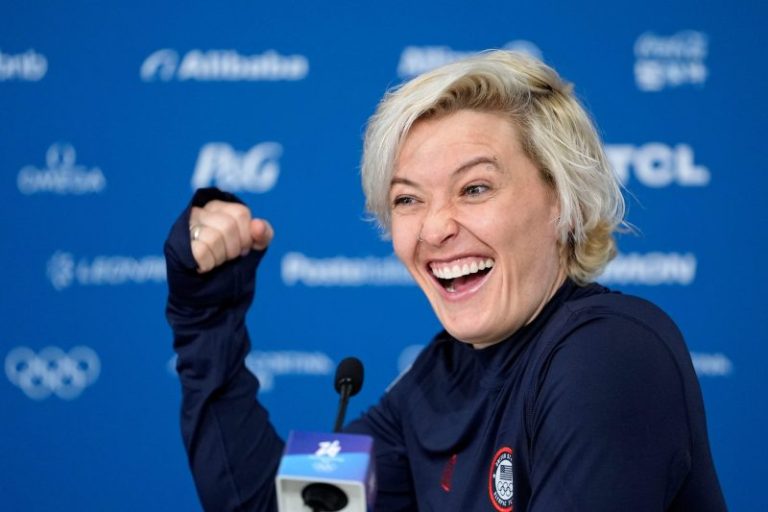
“I feel like Maddy is the vibes on our team,” Chloe Kim said. “She always has the biggest smile on her face, such good energy, so positive, and I think that’s so special to have. So, I’m really grateful that she’s here with us because she always brightens our day.”

Kim and Schaffrick were teammates when Kim first arrived on the pro team. For her, it’s even more exciting to have Schaffrick by her side.

“And now we’re here,” Kim said from a dais ahead of the women’s halfpipe qualification (Wednesday Feb. 11, 4:30 a.m. ET). 

“It’s been really fun to compete with Maddy and have her as a teammate,” Mastro said. “I feel like it’s built our relationship to a fun, new friendship level, which has been great. And I look forward to building it more.”

Mastro added: “You’ve been fun to hang out with.”

“Back at you,” Schaffrick shot back.

‘A totally new person’

Schaffrick, 31, competed in her first World Cup more than 15 years ago. For somebody who has been in the snowboarding world for so long, there is an element of freshness in everything she’s done.

“In some ways, I’m in the same place,” said Mastro, who has battled deep depression and even had suicidal thoughts. “But I feel like a totally new person. This does feel new. And I’m approaching things so much differently than I used to.”

Bea Kim, a member of a legitimately different generation than Schaffrick, is often left speechless by her teammate and former coach.  

“I’m blown away … not only just (to) come back, but to be able to put down runs to be on the U.S. team, to make the Olympic team, to make finals, to be on podiums has – I’m very inspired by just watching her do that and I think it just shows how capable women are of everything that they’re doing,” Kim told USA TODAY Sports. “Age is just a number.

“Not that she’s old or anything like that.”

At times, Schaffrick wishes the coaching part of herself influenced her riding more.

“Honestly, it’s sometimes hard because I’ll watch my videos or get real analytical with my own riding,” she said, “and it just makes me frustrated because it’s so much easier said than done. And I’m like ‘Why don’t I just ride through the lip? Why am I going early? Gah!’ 

“So I’ve had to kind of learn to turn off the coach side and be compassionate with myself and have some fun. But also, yeah, click in when I need to. It’s funny. That coach side hasn’t helped at all.”

Schaffrick would not describe herself as coachable in her youth.

“For real,” she said. “I was the worst.”

U.S. Snowboard director Rick Bower was her pro coach from ages 16 to 20, the peak burnout and disappointing years of Schaffrick’s life, “during my glory days of being a little (expletive).”

“In many ways, making this team is even harder than the Olympics themselves,” Bower said in a statement announcing the team. “The depth of our field is incredible and selection truly came down to the wire. These athletes pushed each other all season and every spot was earned.”

Being present for family – and self

At that Aspen Grand Prix, where she took second to essentially lock up her spot in Italy, Schaffrick had many of her cousins in attendance. As an only child, her cousins are like her siblings. They hadn’t seen her compete in nearly a decade and a half.

She spoke with her sports psychologist about the pressure that came with that. They talked about wanting to do well in front of them.

“What you can lean into is wanting to show them what you do well,” the therapist said.

“It was about me really leaning into ‘OK, what do I feel like I do well?’” Schaffrick said.

That would be going big. Looking smooth. Trying to add style.

“When I am leaning into that aspect of my snowboarding, it’s so much fun. I have a lot of fun. Opposed to just forcing things,” she said.

The contingent brought the energy for her to unlock that.

Schaffrick dislocated her shoulder during her second finals run at the Copper Mountain Grand Prix in December. The next event was in Aspen and the first day of practice consisted of her “faking it until I made it,” she said.  

“That instability or pain, awareness of my brace restricting me, that really held me back,” Schaffrick admitted in Italy. “When I dropped into the rest of my body and felt that confidence, it didn’t hold me back.”

“I feel like what’s helped me here is going to help me there,” she said in Aspen. “It’s just about being present.”

And what a gift that is for Schaffrick. 

Additional reporting for this story took place in Aspen, Colorado.

This post appeared first on USA TODAY