Archive

2026

Browsing

Sen. Rand Paul, R-Ky., said a personal experience with Big Tech has led him to change his thinking, and he now believes companies should be liable for the content posted on their platforms.

Paul asserted that YouTube and its parent Google had refused to remove a video that falsely claimed that he had taken money from Venezuela’s Nicolás Maduro.

‘I’ve formally notified Google that this video is unsupported by facts, defames me, harasses me and now endangers my life. Google responded that they don’t investigate the truth of accusations… and refused to take down the video,’ the senator asserted in the opinion piece published by the New York Post on Monday.

Paul also noted that the person who posted the offending video removed it ‘under threat of legal penalty.’

‘My default position as a libertarian/conservative has been to defend the internet liability protections known in law as Section 230 of the Communications Act. The courts have largely ruled that Section 230 shields social-media companies from being sued for content created by third parties,’ he wrote. ‘Until now, I had not sufficiently considered the effects of internet providers hosting content accusing people of committing crimes.’

The experience was a turning point in his thinking.

‘The arrogance of Google to continue hosting this defamatory video and the resultant threats on my life have caused me to rethink Congress’ blind allegiance to liability shields,’ he asserted.

Paul accused the company of being inconsistent.

‘So Google does not have a blanket policy of refraining to evaluate truth. Google chooses to evaluate what it believes to be true when it is convenient and consistent with its own particular biases,’ he wrote.

‘This complete lack of decency, this inconsistent moderation of truthfulness, this conscious refusal to remove illegal and defamatory content has led me to conclude that the internet exemption from liability, a governmentally granted privilege and a special exemption from our common law traditions, should not be encouraged by liability shields and I will pursue legislation toward that goal,’ the senator explained.

‘I think Google is, or should be, liable for hosting this defamatory video that accuses me of treason, at least from the point in time when Google was made aware of the defamation and danger,’ he asserted.

Fox News Digital reached out to Google for comment on Wednesday — YouTube noted that the video had been pulled down by the user and is no longer on the platform. YouTube added that it relies on its openly available community guidelines to decide what material it will yank, and only takes down material ‘that poses a serious risk of egregious harm such as terrorist content.’ 

The video platform also claimed that it has always advocated for anyone to be able to share their view, asserting that it does not check the accuracy of individual videos ‘and the vast majority of content stays up.’

This post appeared first on FOX NEWS

The 2025 college football season is in the books. It’s time to hand out report cards to the Bowl Subdivision — and no, there is no chance for extra credit after the final exam.

Every year, USA TODAY Sports caps the season by handing out report cards for all 136 teams in the FBS, with grades ranging from the rare A+ all the way down to D-.

For just the second time, no team drew the dreaded F grade. But eight teams were handed a D-, led by 7-6 Clemson and 7-6 LSU. Both rank as the biggest disappointments in the Power Four.

Other teams with dismal grades include 4-8 North Carolina (D+), 4-8 Florida (D), 4-8 South Carolina (D), 7-6 Penn State (D+) and Colorado (D+).

On the other hand, nine teams earned an A+, led by national champion Indiana. Runner-up Miami finished with an A after finishing 13-2 with a 27-21 loss to the Hoosiers.

Another nine teams finished with an A, including 12-2 Brigham Young, 9-5 and ACC champion Duke and 11-2 Texas A&M. There was a logjam of 13 teams on the A- line, highlighted by 13-2 Georgia, 10-3 Oklahoma and 11-2 Utah.

The grades are assigned on a relative curve based on preseason expectations weighed against in-season performance, with attention to special circumstances such as injuries or marquee wins.

For example, Kent State went 5-7 but earned an A- after going 0-12 last season and firing former coach Kenni Burns in March. But Florida State was handed a D grade after also going 5-7, due to the high annual expectations for the Seminoles and the belief that this year’s team would rebound and contend for the ACC crown.

College football season grades report card for 2025

This post appeared first on USA TODAY

The Colorado athletic department reported record revenue but relied on $43.5 million in university support to avoid a deficit in fiscal year 2025.
Football ticket revenue decreased to $24 million in fiscal 2025 from a record $31.2 million the previous year.
Despite the ‘Prime Effect,’ the department projects a $27 million deficit for fiscal year 2026 due to rising costs.

The Colorado athletic department reported record revenues of $161.7 million in fiscal year 2025, but that included a decrease in football ticket revenue from the year before under coach Deion Sanders and a school-record $43.5 million in combined “revenue” from university support and student fees.

Colorado recently released its annual NCAA financial report for fiscal year 2025, which ended on June 30, 2025. It covers Sanders’ second season in Boulder in 2024, when his team finished with a 9-4 record.

The report obtained by USA TODAY Sports shows the limits of the “Prime Effect” under Sanders. It also shows the university is helping pay increasingly big bills in athletics at a turbulent time in college sports.

Colorado reported a bottom-line budget surplus of $160,189 in fiscal 2025 but couldn’t have avoided a deficit without $24.5 million in direct university support, a record $17.3 million in “indirect” university support and $1.7 million in student fees ($43.5 million combined).

Big deficit still projected at Colorado for fiscal 2026

Only six public schools had more than $43.5 million in combined university support in the prior fiscal year (2024), including Arizona State, Air Force and South Florida, according to public records collected by USA TODAY Sports in conjunction with the Knight-Newhouse College Athletics Database at Syracuse University.

Colorado faces bigger financial headwinds in the current fiscal year, fiscal 2026, which ends on June 30, 2026. Colorado’s athletic department is projecting a $27 million deficit for fiscal 2026 even though it still expects to get $11.9 million in institutional support revenue from the university and $2.2 million in student fees. The final numbers for fiscal 2026 won’t be publicly reported until January 2027.

Limits of the ‘Prime Effect’ under Deion Sanders

Sanders has helped provide more than $3 billion in publicity value for the university since his hiring in December 2022 while reviving a program that was 1-11 before he arrived. Colorado sold out every home game in his first season in 2023 (fiscal 2024), leading to a record $31.2 million in football ticket sales that year. This was known as the “Prime Effect” under Coach Prime.

But football ticket revenue went down to $24 million in fiscal 2025, according to the report, which includes the 2024 season and 2025 spring game. Four games sold out in 2024 instead of six in 2023 even though the Buffaloes had their best season under Sanders in 2024.

Colorado explains football revenue decrease

The athletic department said the reason for this decrease stems in part from an accounting issue.

“Total ticket revenue is essentially split into three categories, season tickets, individual game tickets, and seat contributions,” the Colorado athletic department said in response to questions from USA TODAY Sports. “The amount allocated toward seat contributions has fluctuated from year to year, creating a variance in straight ticket revenue. Holistically, the total revenue from season tickets, individual game tickets, and seat contributions from 2023 to 2024 is $37M to $32M, with the difference coming from a reduction in the commission we received in 2024 from our third-party ticket partner.”

Meanwhile, football coaching salaries and benefits went up in fiscal 2025 to a record $14.4 million from $12.5 million in fiscal 2024.

Those expenses will go up even more in fiscal 2026 after Sanders got a new contract in March 2025 that nearly doubled his pay to $10 million annually. That expense increase is one reason that Colorado faces a huge deficit in fiscal 2026. The other biggest reason for that deficit is the new $20.5 million cost of revenue-sharing with players, which started for all schools on July 1, 2025 in fiscal 2026.

‘Indirect’ institutional support shot way up

One big item that stuck out in Colorado’s latest annual financial report is that “indirect” institutional support shot up to $17.3 million in fiscal 2025 from $3.1 million the previous year, which was the previous school record in that category.

Of the 236 Division I schools tracked by USA TODAY Sports, none had more than $11.4 million in indirect institutional support in fiscal 2024.

Indirect institutional support is defined as costs and services covered by the university but not charged to the athletic department. This includes utilities, security, information technology, human resources, accounting and facilities maintenance – expenses that the athletic department would have to pay for on its own or do without if the university didn’t cover it.

In this case, the athletic department said this increase stemmed from a new scoreboard and turf at Folsom Field.

“The bulk of that increase in funding was for the construction of the south scoreboard and the installation of turf at Folsom Field, which was supplemented by campus auxiliary reserves,” the athletic department said. “No tuition dollars or state funding were used for these projects.”  

Colorado’s media rights revenue demonstrates gap

Colorado reported $19.6 million in media rights revenue for fiscal 2024, its first year back in the Big 12 Conference. This is down from $21.9 million in fiscal 2020, when Colorado was part of the Pac-12. This money largely comes from through the conference and shows the media revenue gap between the Power Four leagues.

By contrast, several Big Ten schools earned more than $50 million each in media-rights revenue in fiscal 2024, according to the USA TODAY data for that year.

“This number is indicative of the first year of the newly constructed Big 12 and we anticipate revenue to increase in the years to come as the conference continues to be a major force in collegiate athletics,” the department stated.

Colorado revenue booms with university support

Colorado revenue has boomed to $161.7 million in fiscal 2025, up from $146.6 in fiscal 2024 and $94.9 million in fiscal 2022. But that’s because combined support from the university also has boomed to boost those numbers. The $43.5 million in combined university support in fiscal 2025 is up from a then-record $31.9 million in combined university support in fiscal 2024 and just $11.9 million in fiscal 2022.

This shows how university leaders have been willing to cover rising costs in athletics because they think it’s important for the university’s brand and student experience even as costs continue to rise in the changing world of college sports.

New Colorado athletic director Fernando Lovo has been tasked with raising money to decrease the deficit and university support.

“We’re gonna find innovative and creative ways to drive our revenue,” he said Jan. 5.

He gets a $200,000 bonus if he raises $25 million by June 30, 2026, according to his employment contract.

Follow reporter Brent Schrotenboer @Schrotenboer. Email: bschrotenb@usatoday.com

This post appeared first on USA TODAY

Gilberto Mora has been forced to withdraw from the Mexico national team roster due to injury, the Mexican Football Federation (FMF) said on Tuesday.

The teenage star will miss Mexico’s friendlies against Panama on Thursday, Jan. 22 and Bolivia on Sunday, Jan. 25.

According to Claro Sports, the 17-year-old midfielder could be out for two months or longer with pubalgia — a chronic groin pain.

That could leave Mexico sweating over the fitness of one of the country’s best prospects in years ahead of a home World Cup this summer.

The FMF said that the Club Tijuana playmaker has dealt with the injury for several weeks.

‘Gilberto Mora will be dropped from training camp,’ read a statement.

‘The decision was made due to the physical discomfort the player has been experiencing since the early stages of the Liga MX season. In coordination with his club, it was determined that the player will continue his treatment and recovery process under the supervision of his team.’

Club América midfielder Alexis Gutiérrez was called up in Mora’s place.

Mora burst onto the international scene last year, becoming the youngest Mexico national team player ever at 16 years, three months, and two days on his debut in January.

The teenager started the Gold Cup semifinal, picking up a game-winning assist, then started the final as Mexico defeated the U.S. to win the Concacaf tournament.

This post appeared first on USA TODAY

The Texas softball team is the defending national champion and checks in at No. 1 in the D1Softball’s preseason top 25 poll. The season opens Feb. 5.

The eight teams that played in the Women’s College World Series last spring all appear in the rankings, including No. 2 Texas Tech, No. 3 Oklahoma, No. 4 Tennessee, No. 5 Florida, No. 6 Oregon, No. 10 UCLA, and No. 24 Ole Miss.

The SEC has 12 ranked teams, the ACC six, the Big Ten four and Big 12 three.

This post appeared first on USA TODAY
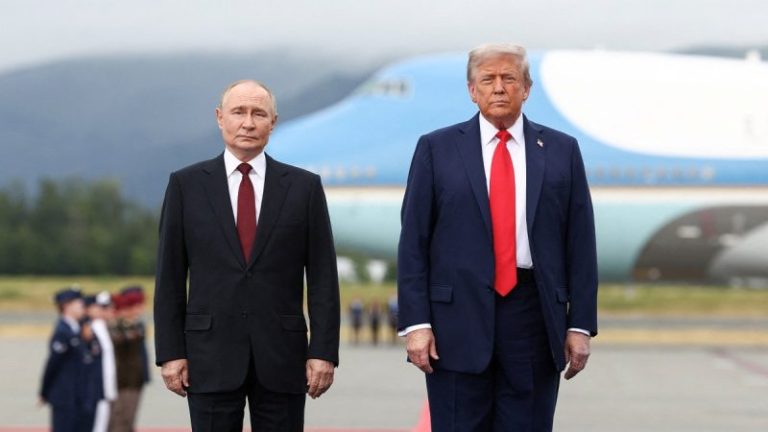
The next several weeks will be busy for the NBA calendar.

First, the trading deadline is a little more than two weeks away, and any blockbuster deals could alter the balance of power within the league. Then, All-Star Game weekend is set for Feb. 15, and starters were already announced.

Yet, as several teams that started the season hot have cooled somewhat, the action on the court has continued. The most obvious example of that is the New York Knicks, who have lost nine of their last 11 games.

Here are USA TODAY Sports’ NBA power rankings after Week 12 of the 2025-26 regular season:

USA TODAY Sports NBA power rankings

Note: Records and stats through Jan. 20. Parentheses show movement from last week’s rankings.

NBA Week 13 power rankings: Top 10

1. Oklahoma City Thunder, 36-8 (—)

2. Detroit Pistons, 31-10 (—)

3. San Antonio Spurs, 30-14 (—)

4. Denver Nuggets, 29-15 (—)

5. Boston Celtics, 26-16 (—)

6. Phoenix Suns, 27-17 (+2)

7. Toronto Raptors, 26-19 (+2)

8. Houston Rockets, 26-15 (+7)

9. Minnesota Timberwolves, 27-17 (-2)

10. Los Angeles Lakers, 26-16

While the Thunder won’t challenge for the best record in NBA history, and while they may drop the occasional game, it’s clear they remain a threat to repeat. Their defense is elite and Shai Gilgeous-Alexander might be marching toward his second consecutive Most Valuable Player award. Speaking of MVP candidates, the Nuggets have remained competitive in the absence of Nikola Jokić, and still boast the league’s top offensive rating (122.9). With the slide the Knicks have taken, Boston is now in the No. 2 seed in the East, and there may need to be a serious conversation about what to do if and when Jayson Tatum is cleared to return from his torn Achilles.

NBA Week 13 power rankings: Nos. 11-20

11. New York Knicks, 25-18 (-5)

12. Philadelphia 76ers, 23-19 (-1)

13. Cleveland Cavaliers, 24-20 (—)

14. Golden State Warriors, 25-20 (+2)

15. Orlando Magic, 23-19 (-3)

16. Miami Heat, 23-21 (+1)

17. Portland Trail Blazers, 22-22 (+1)

18. Chicago Bulls, 21-22 (+2)

19. Los Angeles Clippers, 19-24 (+2)

20. Atlanta Hawks, 20-25 (-6)

The Knicks held a players-only meeting amid a four-game losing streak. Their offense has stagnated as the actions rely on Jalen Brunson far too much. The Warriors had been playing better recently, but don’t be surprised if they tumble down this list soon; with Jimmy Butler (torn anterior cruciate ligament) out for the season, their offense should struggle significantly. And the Trail Blazers and Clippers are a pair of teams out west who have found their rhythm.

NBA Week 13 power rankings: Nos. 21-30

21. Memphis Grizzlies, 18-23 (+1)

22. Milwaukee Bucks, 18-24 (-3)

23. Dallas Mavericks, 18-26 (+2)

24. Charlotte Hornets, 16-27 (-1)

25. Utah Jazz, 15-29 (-1)

26. Brooklyn Nets, 12-29 (+1)

27. Sacramento Kings, 12-32 (+2)

28. Indiana Pacers, 10-34 (—)

29. Washington Wizards, 10-32 (-3)

30. New Orleans Pelicans, 10-35 (—)

The Grizzlies got Ja Morant (right calf contusion) back, and he delivered, dropping 24-13-5 in a win over the Magic. Memphis, though, will need to determine if his fit on the roster is sustainable, or if it can flip him for any assets in a trade. Dallas has been something of a surprise recently, winning three consecutive, including a 17-point blowout against the Knicks. Even without Anthony Davis, No. 1 rookie Cooper Flagg continues to improve with each passing week. And the Wizards showed some promise in late December, but have since lost seven consecutive games, and are tied with the Hawks for the worst offensive rating (107.6) in January.

This post appeared first on USA TODAY
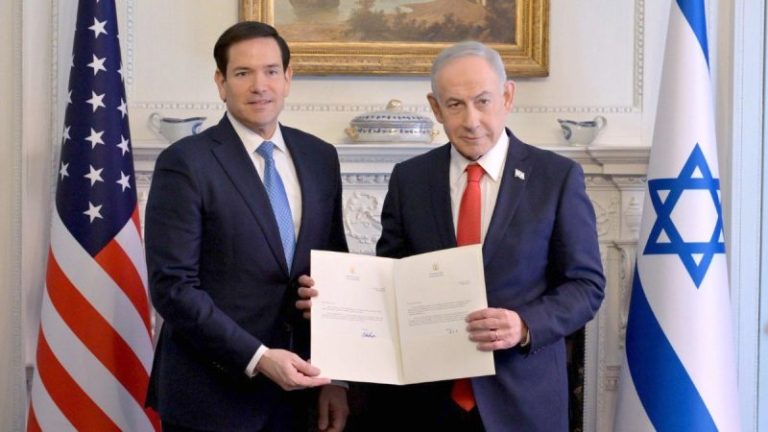
President Donald Trump took a shot at Somalia and claimed that the investigations Minnesota faces alleged fraud schemes is a reminder that the West cannot allow mass migration from ‘failed’ societies. 

Minnesota has encountered heightened scrutiny in recent months as the state faces investigations into multiple alleged fraud schemes plaguing the state’s social services system. 

The majority of those charged are part of Minnesota’s Somali population, and Trump unveiled plans in November 2025 to end the temporary protected status for Somali migrants in Minnesota that offers protections against deportation.

‘The situation in Minnesota reminds us that the West cannot mass import foreign cultures, which have failed to ever build a successful society of their own,’ Trump said Wednesday at the World Economic Forum in Davos, Switzerland. ‘I mean, we’re taking people from Somalia, and Somalia is a failed — it’s not a nation — got no government, got no police … got no nothing.’

Secretary of the Treasury Scott Bessent announced in December 2025 that his agency was launching an investigation evaluating whether Minnesota’s funds were potentially diverted to al-Shabab, a terrorist organization based in Somalia. 

Lawmakers also initiated probes into Minnesota’s alleged ‘Feeding Our Future’ $250 million fraud scheme that allegedly targeted a children’s nutrition program the Department of Agriculture funded and that Minnesota oversaw during the COVID-19 pandemic.

At least 77 people have been charged in that scheme, which took advantage of the U.S. Department of Agriculture’s decision to waive certain Federal Child Nutrition Program requirements.

Likewise, another alleged fraud scheme in the state stems from the Housing Stability Services Program, which allegedly offered Medicaid coverage for housing stabilization services in an attempt to help those with disabilities, mental illnesses and substance-use disorders receive housing.

The Justice Department so far has charged less than a dozen people for allegedly defrauding the program that runs through Minnesota’s Medicaid service, but more charges are expected.

Minnesota Gov. Tim Walz, a Democrat, has claimed that he believes that reports indicating the fraud could total over $9 billion are exaggerated and ‘sensationalized,’ but he’s also promised to address the issue. 

‘I am accountable for this, and more importantly, I am the one that will fix it,’ Walz told reporters in December 2025.

This post appeared first on FOX NEWS

Justice Brett Kavanaugh voiced concern during oral arguments on Wednesday that a Supreme Court case involving Federal Reserve Governor Lisa Cook could erode the central bank’s independence if the justices were to side with President Donald Trump in it.

Kavanaugh asked Solicitor General John Sauer, who argued on behalf of the administration, about his position that Trump alone can decide what ’cause’ means when firing a Federal Reserve governor.

‘That’s your position, no judicial review, no process required, no remedy available,’ Kavanaugh said, describing it as a ‘very low bar for cause that the president alone determines.’

Kavanaugh, a Trump appointee, added that that would ‘weaken, if not shatter, the independence of the Federal Reserve.’

Sauer said he disagreed and that the law requiring a Federal Reserve governor to be fired for cause was, in fact, a ‘high bar.’

‘It’s our very strong protection because it does protect them from the one thing that Congress was apparently most worried about, which is a removal for policy disagreement,’ Sauer said. 

The high-stakes case stems from Cook, who was represented during oral arguments by renowned conservative attorney Paul Clement, suing over Trump removing her from the Federal Reserve’s powerful seven-member board of governors.

Cook was appointed by former President Joe Biden. Board members serve 14-year terms, and no president has ever fired a single one.

The justices are weighing whether to keep in place a lower court injunction that has allowed Cook to remain in her post while her lawsuit proceeds.

Trump has argued he has broad authority to fire Cook, alleging she committed private mortgage fraud. Cook has denied those claims and said she has received no due process. She has not been charged with any crime.

While the conservative justices appeared largely sympathetic during a separate case examining Trump’s stance that he could fire members of independent agencies, such as the Federal Trade Commission, the justices appeared to view the Federal Reserve as more insulated during Wednesday’s arguments.

The Federal Reserve, created in 1913, moderates interest rates and, unlike other independent agencies, it is not funded by Congress and its policy decisions do not need presidential or legislative approval.

Trump has repeatedly blasted Chairman Jerome Powell and the Federal Reserve for lowering benchmark interest rates at a slower pace than the president wants. The president’s feud with the Federal Reserve recently expanded after Powell revealed that the Department of Justice was investigating him over an allegation he lied to Congress, which Powell denies.

Kavanaugh also raised a bigger picture question, asking Sauer what the implications of deciding in favor of Trump would mean for future administrations.

‘Let’s talk about the real-world, downstream effects of this, because if this were set as a precedent, it seems to me, just thinking big picture, what goes around, comes around,’ Kavanaugh said. ‘All the current president’s appointees would likely be removed for cause on Jan. 20, 2029, if there’s a Democratic president or Jan. 20, 2033. And then, we’re really at at-will removal.’

Justices across the ideological spectrum voiced skepticism about Trump’s ability to fire Cook. Justice Sonia Sotomayor, an Obama appointee, said she found the whole case unusual, noting that Trump first raised Cook’s termination through social media.

‘This whole case is irregular, starting with a Truth Social notice, or thinking of it as notice at all, certainly didn’t invite an opportunity to be heard. But that’s where we are,’ Sotomayor said.

Fox News’ Bill Mears contributed to this report.

This post appeared first on FOX NEWS

Nigerian authorities have admitted that more than 160 Christians were kidnapped during worship services Sunday after initially denying the simultaneous attacks on three churches.

‘Subsequent verification from operational units and intelligence sources has confirmed that the incident did occur,’ Benjamin Hundeyin, the police spokesperson for the unit in northwestern Kaduna, Nigeria, state, said in a statement.

A state lawmaker, Usman Danlami Stingo, had told The Associated Press that 177 people were abducted during simultaneous in northwestern Kaduna, Nigeria, Sunday. Eleven reportedly escaped, while 168 are still missing, according to Stingo. The attacks reportedly took place at the Evangelical Church Winning All (ECWA), at another church belonging to the denomination Cherubim and Seraphim, and at a Catholic church. 

Kaduna, Nigeria, State Police Commissioner Muhammad Rabiu initially described news reports of the attacks Monday as rumors, saying the police visited one of the three churches in the district of Kajuru and ‘there was no evidence of the attack.’

Joseph Hayab, chairman of the Northern Christian Association of Nigeria, claimed on Nigerian broadcast network Africa Independent that the issue had become ‘politicized.’

‘I don’t know the politics being played by the deniers, but this is quite sad. Whoever is asking for a list, we have shown them the list, let them tell us the list does not exist.’

‘This incident happened,’ he said. ‘All we want is for the security services to do is to go after them.’ 

The Chikun/Kajuru Active Citizens Congress (CKACC), a local advocacy group, published a list of hostages that has not been verified. 

Rights group Amnesty International condemned the ‘desperate denial’ of the attack by the police and government.

‘The latest mass abduction clearly shows President Bola Tinubu and his government have no effective plan for ending years of atrocities by armed groups and gunmen that killed thousands of people,’ the group said in a statement.

In response to the recent kidnappings, a senior Trump administration official told Fox News Digital, ‘President Trump made his position clear. Nigeria is facing a complex array of threats from terrorist groups and violent extremist organizations that is affecting wide portions of the country. We hope that the Nigerian government will work to take swift and immediate action in collaboration with the United States to address the violence that is affecting Christians, as well as countless other innocent civilians across Nigeria.’

Two Christian groups, Northern Christian Association of Nigeria and Christian Solidarity Worldwide Nigeria (CSWN), said they sent representatives to the region to investigate, but they were turned away by military and local government officials. 

A local resident allegedly told CSWN that bandits had rounded up congregants and ‘forced them into a bush,’ later releasing elderly women and children. 

Kaduna State Police Commissioner Muhammad Rabiu said Monday police visited one of the three churches and ‘there was no evidence of the attack.’

He said the ‘rumors’ were ‘sponsored by people who are not happy with the relative peace that Kajuru has been enjoying since the coming of this administration.’

The kidnapping reports come just weeks after the U.S. carried out airstrikes against Islamist targets in northern Nigeria.

On Dec. 25, 2025, U.S. Africa Command confirmed it conducted precision strikes targeting Islamic State-linked militants in Sokoto State, a Muslim-majority region in northwest Nigeria. The Pentagon said the operation was carried out in coordination with Nigerian authorities and was intended to degrade ISIS-West Africa Province capabilities. 

Officials said multiple militants were killed. 

The Christmas Day strikes marked one of the most significant U.S. military actions in Nigeria in recent years and came amid warnings from U.S. officials that ISIS affiliates were exploiting Nigeria’s vast ungoverned spaces, porous borders and limited security presence in rural areas.

In recent months, armed groups have abducted hundreds of schoolgirls and students from multiple northern Nigerian schools, incidents that reignited U.S. political debate over whether the violence constitutes religious persecution or criminal banditry — and whether Nigeria’s government is capable of protecting vulnerable populations. Religious freedom advocates and some U.S. lawmakers have urged stronger diplomatic and security engagement, arguing that repeated attacks on Christian communities are being minimized by Nigerian authorities.

Nigeria’s government has consistently rejected claims of a coordinated campaign against Christians, insisting the violence is driven primarily by criminal groups seeking ransom rather than ideology. Security officials have warned that misinformation surrounding attacks risks inflaming tensions in already volatile regions.

This post appeared first on FOX NEWS

A ‘limited number’ of U.S. personnel are operating in Caracas as Washington looks to resume diplomatic relations with Venezuela after the historic capture of Nicolás Maduro, Fox News has learned.

A senior State Department official told Fox News that the Trump administration plan to resume official diplomacy with Venezuela is under way. This is the first time a State Department official has commented on reporting about the diplomatic team on the ground.

‘A limited number of U.S. diplomatic and technical personnel are in Caracas conducting initial assessments for a potential phased resumption of operations,’ the official said.

The official did not specify exactly what ‘a limited number’ meant, and it is not immediately clear exactly how many people are on the ground. The phased resumption of operations would include the re-opening of the U.S. Embassy and consulate offices in Venezuela.

Since Maduro was captured, the Trump administration has been cautious in its approach to Venezuela. President Donald Trump initially said that the U.S. would ‘run’ the country for an undetermined period of time. 

Since then, Trump has met with Venezuelan opposition leader María Corina Machado, who he said he doubts has the support necessary to take over the country.

After her meeting with Trump, Machado spoke at a news conference hosted by the conservative think tank, the Heritage Foundation, in Washington, D.C. She said that Venezuela would hold ‘free and fair’ elections ‘eventually.’ However, she did not offer a timeline for how long the current interim government would be allowed to rule, only that elections would happen ‘as soon as possible.’

Machado also attempted to downplay the appearance of competition between herself and Maduro’s successor, interim Venezuelan President Delcy Rodriguez, for Trump’s support.

‘This has nothing to do with a tension or decision between Delcy Rodríguez and myself,’ Machado said when asked about Trump’s openness to working with the interim government. ‘This is about a criminal structure that is a regime and the mandate of the Venezuelan people.’

On Jan. 15, Rodriguez, who was sworn-in as Venezuela’s interim president following the capture of Maduro, met with CIA Director John Ratcliffe. A U.S. official told CBS News that the purpose of the meeting was to ‘deliver the message that the United States looks forward to an improved working relationship.’

Rodriguez’s meeting with Ratcliffe took place one day after she had a phone call with Trump, who said the conversation was ‘very good.’

‘We are making tremendous progress, as we help Venezuela stabilize and recover. Many topics were discussed, including oil, minerals, trade and, of course, national security,’ Trump wrote on Truth Social. ‘This partnership between the United States of America and Venezuela will be a spectacular one FOR ALL. Venezuela will soon be great and prosperous again, perhaps more so than ever before!’

Fox News Digital’s Morgan Phillips contributed to this report.

This post appeared first on FOX NEWS