Archive

2026

Browsing

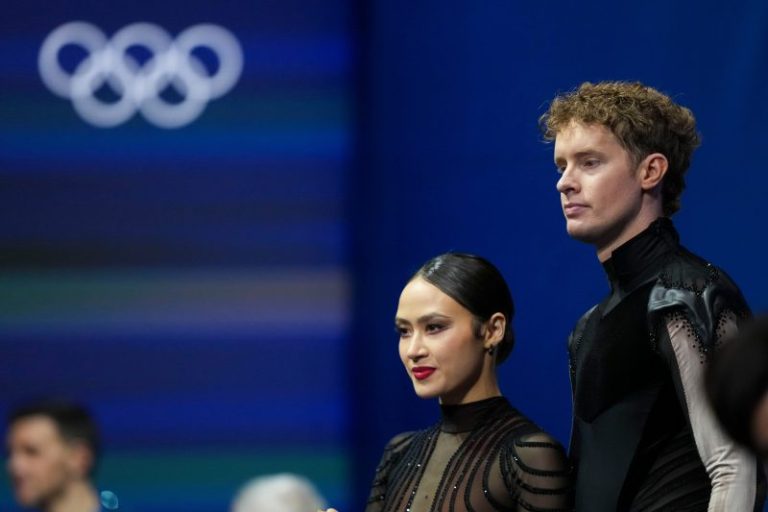
MILAN — Madison Chock took a long pause to gather her thoughts. Her eyes already red, and tears on the verge of flowing again.

With the lights at their brightest, they gave the performance of a lifetime. Ice dance gold was on the line, and what transpired over four minutes on the ice indicated it was in sight. After falling short so many times, Chock and Evan Bates weren’t going to be denied from reaching figure skating immortality.

When the dust settled, they had done it. Chock and Bates finally won a Winter Olympic ice dance medal. 

Just one thing: it wasn’t gold. 

In a result that has sent shockwaves through the figure skating world, one of the most decorated U.S. duos was upset, taking silver as the controversial French team of Laurence Fournier Beaudry and Guillaume Cizeron were crowned Olympic champions.

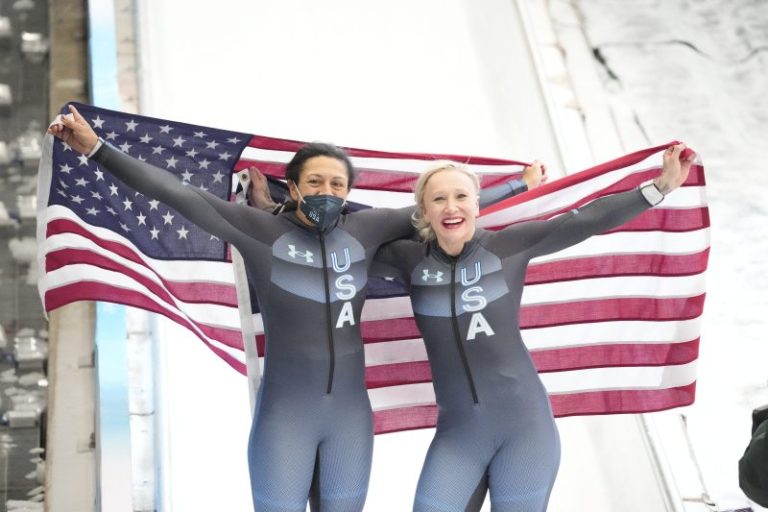
In the immediate aftermath, Chock and Bates stayed stoic. They smiled and waved when their name was called as the second-place team. They smiled with their fellow medalists for a picture. They carried the U.S. flag around the ice with pride, sending love to the crowd.

The husband-and-wife tried to keep it together, but eventually, as they went away from the crowd, the emotions couldn’t be held back any longer. 

More than an hour after the results were finalized, Chock and Bates were still trying to grasp the result. It was two days ago when Bates said the goal was gold, but it wouldn’t be a failure if they weren’t at the top of the podium.

Yet after their second-place finish, it felt like the ultimate let down.

“It’s definitely a little bittersweet,” Chock said with tissues in hand. 

Most figure skating fans – and even the casual viewer – would argue Chock and Bates outperformed Beaudry and Cizeron. Even though the French team started the night in first place, only .46 separated them in the standings. The slightest advantage could help the Americans leap over them.

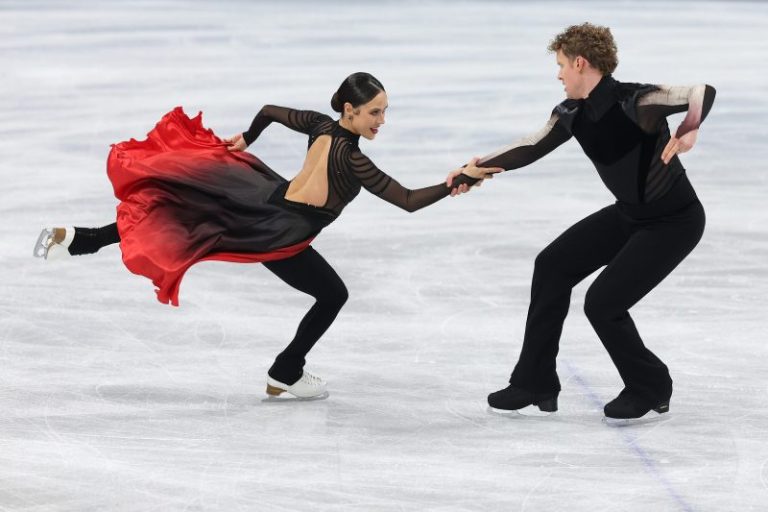
It was done with a free dance that has captivated audiences every single time it was performed. Chock and Bates brought the fire and intensity with their matadora and bull story, and most importantly, skated clean. 

Like so many times before, they achieved a season-best score of 134.67. In their eyes, they secured what they set out to get. 

Chock went on to say how happy they were with their performance, trying to speak through the tears that started to flow. Neither of them said it, but there was a real belief the competition was decided by the time their performance was done.

‘It was our gold medal performance,” Bates said. ‘It was the best that we could skate.”

Yet, there were still the leaders going into the night. Beaudry and Cizeron did exceptionally well, but it didn’t feel as clean as it needed to be. It definitely wasn’t obvious or a given they would keep the lead. The crowd collectively stilled waiting for the results.

The judges thought the opposite. The French score was .97 better, finishing with a victory margin of 1.43.

You couldn’t have asked for more from Chock and Bates, who had a chaotic schedule of four performances in six days. It took so much physical and mental work to go through such a rigorous grind, and they still found a way to collect a medal.

Even with a literal silver lining, they struggled to find the happiness in finally crossing off that Olympic achievement. There are plenty of people who feel like Chock and Bates, who have been the face of American ice dance for nearly a decade, were robbed, with teammates vouching for the symbolic mom and dad of Team USA.

‘It’s disappointing to me that they didn’t get the gold,’ said fellow U.S. ice dancer Emilea Zingas, who finished fifth with partner Vadym Kolesnik.

It’s going to take some time to process the result for Chock and Bates.

“There’s so many emotions that come through after a week like this,” Bates said. “I think when things settle, we’ll be super proud and look back on our time here and be happy with everything that was up to us. We really did our best.”

The night was building toward a coronation where Chock and Bates would cement themselves as one of the most successful ice dance pairs to grace the ice. They still did that, even if it wasn’t with a gold medal. Neither have said this is the end of the line for their Olympic careers, Chock being 33 and Bates nearly 37, but it very well could be.

‘I wouldn’t change anything about how we approached each performance. What we delivered in each performance, we really gave it our best,” Chock said. ‘Sometimes that’s just how it shakes out. This is the story for us, and I wouldn’t change anything.”

Get Olympics updates in your texts! Join USA TODAY Sports’ WhatsApp Channel
This post appeared first on USA TODAY

LIVIGNO, Italy — You haven’t seen anything yet.

That was Alessandro Barbieri’s message after the 17-year-old American finished fourth in the Olympic men’s halfpipe qualifier on Feb. 11 at Livigno Snow Park.

Barbieri, the highest finisher of the three Americans who advanced into the 12-man final on Feb. 13, posted an 88.50 on the third overall run of the competition. Though he’d ultimately finish behind Australian star Scotty James (94) and Japan’s Yuto Totuska (91.25) and Ryusei Yamada (90.25), it was a highly encouraging Olympics debut for the confident youngster from Portland, Oregon.

And get this:

‘What I really have in my head is a 10. That was more like a six,’ Barbieri said. ‘I have a lot more in the tank. … I kind of expect myself to be near the top after all this hard work I’ve put. I’m pleased, but not too shocked.’

On a second run that set up more as a practice run, Barbieri suffered an odd fall, slipping after landing a trick and setting up for the next.

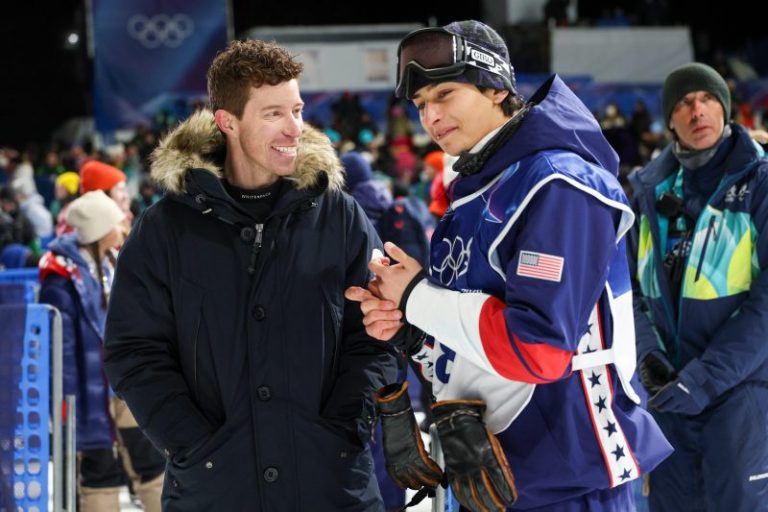
Barbieri’s big Olympic debut in Livigno happening in front of snowboarding legend Shaun White, who pointed to Barbieri as one to watch in these Games.

‘We need another guy like Shaun,’ Barbieri said. ‘We have really good snowboarders. Obviously, no one to the level of Shaun and his dominance. But we need the U.S. back on the podium or even on the top step.

Barbieri will be joined in the final by American teammates Chase Josey and Jake Pates, who finished 11th and 12th, making them the final two riders to advance out of the 25-man qualifying event after a tense wait until the finish line.

Josey, 30, fell on his second run after earning a 76.50 score on an initial run that was based largely on execution – he grabbed the board mid-air through his legs at one point – than high-flying acrobatics.

‘Those are the little things that the judges look for,’ Josey said, ‘and that’s what I’ve got to do to compete with some of these Japanese guys who are doing triples and really at the top of the game. I’m fighting for this opportunity to be in the finals, but it’s nice to see that run get rewarded.’

Pates, 27, fell on his first run and responded with a clutch performance, scoring 75.50 when he needed to exceed a 74 to move into 12th place, placing him right on the cut line.

From there, he and Josey each had to wait out nine more competitors.

‘When I was put into 12th. I had a crazy level of anxiety kind of come over me,’ Pates said with a laugh. ‘I’m just excited to be here and to be a part of this.’

A fourth Team USA rider in the field, Chase Blackwell, scored a 69 and finished 15th.

This post appeared first on USA TODAY

American ice dancers Madison Chock and Evan Bates won a silver medal at the 2026 Winter Olympics.
The husband-and-wife duo fell just short of the gold, which went to a French pair.
Chock and Bates are undecided about their future in the sport following their fourth Olympic appearance.
The pair expressed pride in their performance, calling it their ‘gold medal performance’ despite the results.

MILAN  — Madison Chock and Evan Bates are undecided on their future after the American husband-and-wife duo won silver in ice dance at the 2026 Winter Olympics, falling 1.43 points short of gold-medal winners Laurence Fournier Beaudry and Guillaume Cizeron of France despite turning in a season-best free skate.

When asked if this was their last dance, Bates candidly said, ‘I’m not sure.’

‘We’ve got a lot to be proud of and a lot to be grateful for because we’ve had an incredible career,’ added Chock. ‘Sometimes that’s just how it shakes out. This is this story for us and I wouldn’t change anything.’

Milano Cortina was widely expected to be Chock and Bates’ fourth and final Games. Although the couple didn’t implicitly state they would retire afterwards, Bates said they ‘put all of our effort and emphasis to peak at this event.’

‘Immediately right now it’s really hard to say what the career plans will be, but TBD,’ Bates added. 

Chock and Bates fell short of the ice dance podium at the 2022 Beijing Winter Olympics with a fourth-place finish, but helped USA win gold in the team event. The pair won three consecutive world championships leading up to the Winter Games and performed both the rhythm and free dance portion of the team event here to help Team USA clinch its second consecutive gold.

All that was missing from their resume was an Olympic medal in ice dance. Chock and Bates turned in a season-best 134.67 in their matador-themed free skate for a total score of 224.39. After their performance, Bates fell to his knees and pounded the ice before sharing a long embrace with his wife. But they had to settle for silver after Beaudry and Cizeron posted a total score of 225.82.

‘It was our gold medal performance. It was the best that we could skate,’ Bates said. ‘It was a personal best score. It was a fourth performance over six days. It took a lot of mental strength and discipline to be locked in and to continue to go out and skate well and we did everything that we could.’

Chock, 33, described the silver-medal win as ‘bittersweet’ as she fought back tears. When asked about being unfairly judged, she said they ‘put out our very best skates every time we took Olympic ice.’

‘All four performances we had here at the Olympics, we’re very proud of. They were flawless for us,’ she reiterated. ‘We couldn’t have skated any better and we’re super proud with how we took the ice, how we handled ourselves every time, and the rest is out of our hands. ‘

Bates, who turns 37 on Feb. 23, said the couple would need time to process the results and reflect on the experience before making any decisions.

‘When things settle we’ll be super proud and look back on our time here and be happy with everything that was up to us,’ he added. ‘We really did our best.’

Only one figure skating duo has competed in five different Games together in Olympic history — Margarita Drobiazko and Povilas Vanagas of Lithuania competed in the 1992, 1994 , 1998, 2002 and 2006 Games. 

The USA TODAY app gets you to the heart of the news — fastDownload for award-winning coverage, crosswords, audio storytelling, the eNewspaper and more.

This post appeared first on USA TODAY

MILAN, Italy — For Jordan Stolz, it’s one down and three to go.

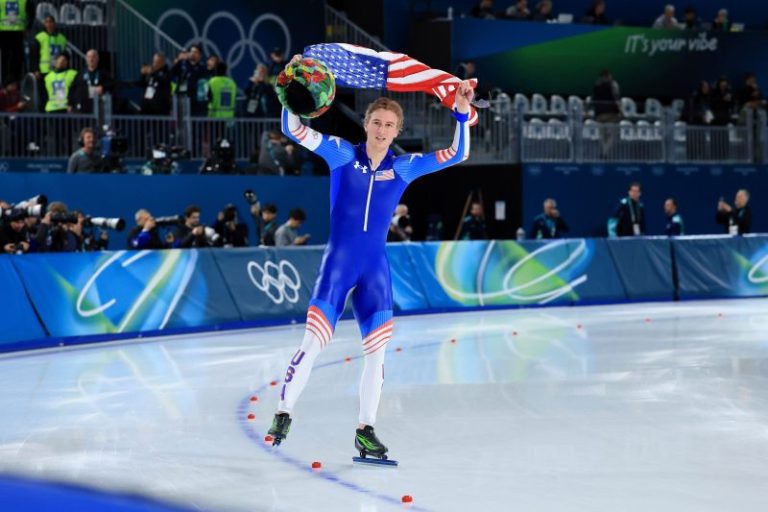
The American speed skating phenom won the gold medal in the men’s 1,000 meters Wednesday, Feb. 11, officially starting his quest for four golds at the 2026 Winter Olympics.

In his first race at the Milano Speed Skating Stadium, Stolz set a new Olympic record with a time of 1:06.28 to go along with the world record he already owned (1:05.37), while racing in front of  Snoop Dogg and speed skating legend Eric Heiden.

“Yeah, it’s really cool that I was able to win in front of both of them, I guess,’’ Stolz said. “I’m sure they were enjoying it. I definitely didn’t disappoint them.’’

Jenning de Boo of the Netherlands took silver with a time 1:06.78, and Zhongyan Ning earned bronze in 1:07.34.

To collect four golds, Stolze, the 21-year-old from Wisconsin, will need to win each of his remaining races: the 500 meters on Saturday, Feb. 14, 1,500 meters on Feb. 19 and the mass start on Feb. 21.

“There’s a little less pressure now that I’ve got one gold medal,’’ he said, later adding, “The pressure was kind of rising towards this one. I could definitely feel it.’’

The achievement would elevate him to legendary status possessed by Heiden, the U.S. speed skater who in 1980 became the only athlete to win five gold medals in a single Winter Olympics.

“That would be a little bit crazy, super historical,’’ Stolz said. “I don’t know if it’s going to happen, right? It’s hard enough to get one gold medal.

“But one is huge.’’

The sound of Stolz on ice

Stolz raced against Jenning de Boo of the Netherlands, and 600 meters into race Stolz trained de Boo by 0.4 seconds.

“I had high hopes but his last lap it just incredible and I heard him coming at 800 meters,’’ De Boo said. “And then I just knew it was too late.’’

“You hear his skates coming and it’s pretty creepy. It’s as creepy and of course I’m getting used to it now. …That feeling when you know he’s coming, it’s not a nice feeling, of course.’’

De Boo had to settle for the silver medal.

Stil, Stolz acknowledged being nervous with 400 meters left to go in the race and de Boo leading.

“I knew I’d have to have a really good last lap,’’ he said. “I thought about it before the race …that I’d have to try to catch him over the last lap. I threw two arms down just because I really didn’t want to lose.’’

Waiting, and waiting some more

The crowd seemed gripped by the clock as it counted down 15 minutes. That’s how much time waited until a reskate by Dutch skater Joep Wennemars, who nearly fell when he was obstructed by his paired opponent in his first run.

The officials granted Wennemars a solo reskate, and he came back on the ice roughly 15 minutes after all the scheduled pairs had race.

Wennemars won the world championship in the 1,000 last year. But Stolz indicated he was far less nervous about the reskate than he was anxious to take a celebratory lap around the rink while holding the flag.

Stolz said he knew it would be hard to reskate 30 minutes after skating 1,000 meters. Sure enough, Wennemars failed to improve on his initial time, and then it was official. The gold belonged to Stolz.

“It’s pretty unlucky what happened to him,’’ Stolz said of Wennemars. “I wouldn’t want to have that to anybody…’’

What seems to have been more agonizing was the four years Stolz had to wait since his Olympic debut to get another shot at medaling, starting in the 1,000.

“It’s one thing to win all of them in the World Cup,’’ he said. “To finally have it right to do it in the Olympics, that’s something that takes a lot of planning and I think I did it well.’’

Watch Winter Olympics on Peacock

When does Jordan Stolz compete at Olympics?

Stolz will do four individual races at the Olympics: the 500 meters, the 1,000 meters, the 1,500 meters and the mass start. All begin at night in Italy, meaning he’ll be racing live when it’s daytime in the United States.

The 1,000 meters begins at 12:30 p.m. ET on Wednesday, Feb. 11.
The 500 meters begins at 11 a.m. ET on Saturday, Feb. 14.
The 1,500 meters begins at 10:30 a.m. ET on Thursday, Feb. 19.
The mass start is on Saturday, Feb. 21, with the semifinals at 9 a.m. ET and the finals at 10:40 a.m. ET.

Will Jordan Stolz be a medal favorite?

Stolz has dominated speed skating over the last three seasons. He won the 500-, 1,000- and 1,500-meter titles at the world championships in 2023 and 2024, and claimed the season titles in all three distances last year.

This year he’s unbeaten in the 1,000 and 1,500 meters in the World Cups, and has won five of the seven 500-meter races. He’s also made the podium twice in the mass start, including a win at the World Cup in Hamar, Norway, after not racing it in international competition the past two seasons.

Should Stolz win those four races in Milano Cortina, he would be second only to Eric Heiden for most medals at a single Winter Olympics. Heiden won a record five when he famously swept the speed skating events at the 1980 Olympics in Lake Placid.

Norwegian biathlon great Ole Einar Bjørndalen (2002) and Soviet speed skater Lidiya Skoblikova (1964) are the only athletes to win four golds at a single Winter Olympics.

This post appeared first on USA TODAY

Former Colorado tight end Christian Fauria criticized coach Deion Sanders on a recent podcast.
Fauria said Sanders isn’t ‘very bright’ and said he has ‘brainwashed’ supporters.
Fauria’s son, Caleb, transferred from Colorado after Sanders was hired.

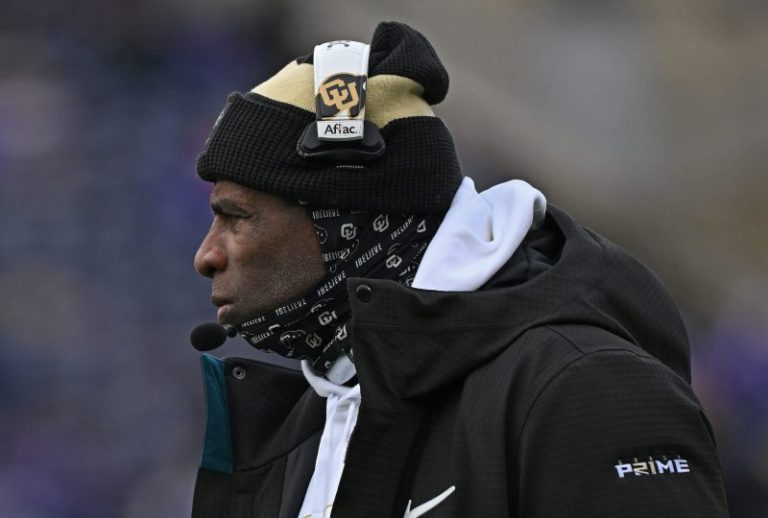
Two-time Super Bowl champion and former Colorado tight end Christian Fauria lambasted coach Deion Sanders for how he’s run the football program at Colorado, saying he’s not “very bright” and that “brainwashed” people support him “regardless of how stupid he is sometimes.”

Fauria, 54, made these comments this week when asked about Sanders on “The Zach Gelb Show.” Fauria played at Colorado from 1990 to 1994 under coach Bill McCartney before moving on to the NFL, where he won two Super Bowls as a member of the New England Patriots. Fauria’s son Caleb also was on theColoradoteam when Sanders was hired in December 2022 but then transferred to Delaware for the 2024 season.

“I’m just not a fan of the coach,” Fauria said on the podcast. “I’m not. I’ll never be a fan of the coach. I love the school. And this isn’t me picking on Deion Sanders, because I pick on (former NFL coach) Joe Gibbs. The worst coach I’ve ever had was Joe Gibbs (with the Washington NFL team), so me picking on Deion Sanders is nothing. I just don’t like the way he coaches football. I don’t think he’s very bright. I don’t think he can manage a game. I think there’s a lot of flash, but I think there’s no substance, you know. And he’s got a lot of people, like, brainwashed.”

Christian Fauria explains his issues with Deion Sanders

Fauria alluded to some issues other former Colorado players have had with Sanders, whose three-year record in Boulder is 16-21, including 3-9 in 2025. Some have been skeptical about how he flips the roster over every year with transfer players from other colleges, questioning how that builds a winning team culture, especially when they don’t learn the Colorado fight song. Sanders’ clock management also has been a sore subject among Colorado fans and alumni.

“Not a fan of his coaching style, not a fan of his messaging,” Fauria said. “There’s a lot of things internally that I know about that I’m not a fan of. And it’s just not worth my energy to sit there and follow it and then go back and forth with the emperor-has-no-clothes crowd that support him regardless of how stupid he is sometimes. So, yeah, that’s the way I feel about it, and it bugs me that a lot of alumni don’t just speak up about it.”

Gelb then asked Fauria about the notion Sanders at least has made Colorado “relevant” again after many years of futility before his arrival, including a 1-11 season in 2022. Colorado went 9-4 under Sanders in 2024 while winning a Heisman Trophy with two-way star Travis Hunter.

Fauria said he understands it’s “hard to win at Colorado” and that it takes a “special person” to do so, such as McCartney, who won a national championship there in 1990. Fauria said he backed Sanders initially and was “all for it.”

“But as time went on, I was just like, wait, none of this makes any sense,” Fauria said. “I’m like, ‘How long are they gonna to put up with this?’ And what else are we going to do? So if relevancy and having a sold-out crowd, having people talk about you on Twitter, if that’s what you want, well then congratulations. You’ve achieved it.”

‘Learn the fight song,’ former Colorado tight end says

Fauria outlined some things he’d like to see in Sanders’ program.

“Win games,” he said. “The way you win games. The way you recruit. Know everybody’s name. Give everybody the same attention. Sing the fight song. Learn the fight song. I would say then you’ve got business.”

Fauria closed the interview by making himself perfectly clear. He didn’t immediately return a message from USA TODAY Sports on whether he’d like to clarify any of these remarks.

“I’m not a fan,” he said on the podcast. “And I can really care less if anybody likes it or not. My give-a-(expletive) level is zero right now with people caring about my opinion of Deion Sanders.”

Follow reporter Brent Schrotenboer @Schrotenboer. Email: bschrotenb@usatoday.com

This post appeared first on USA TODAY

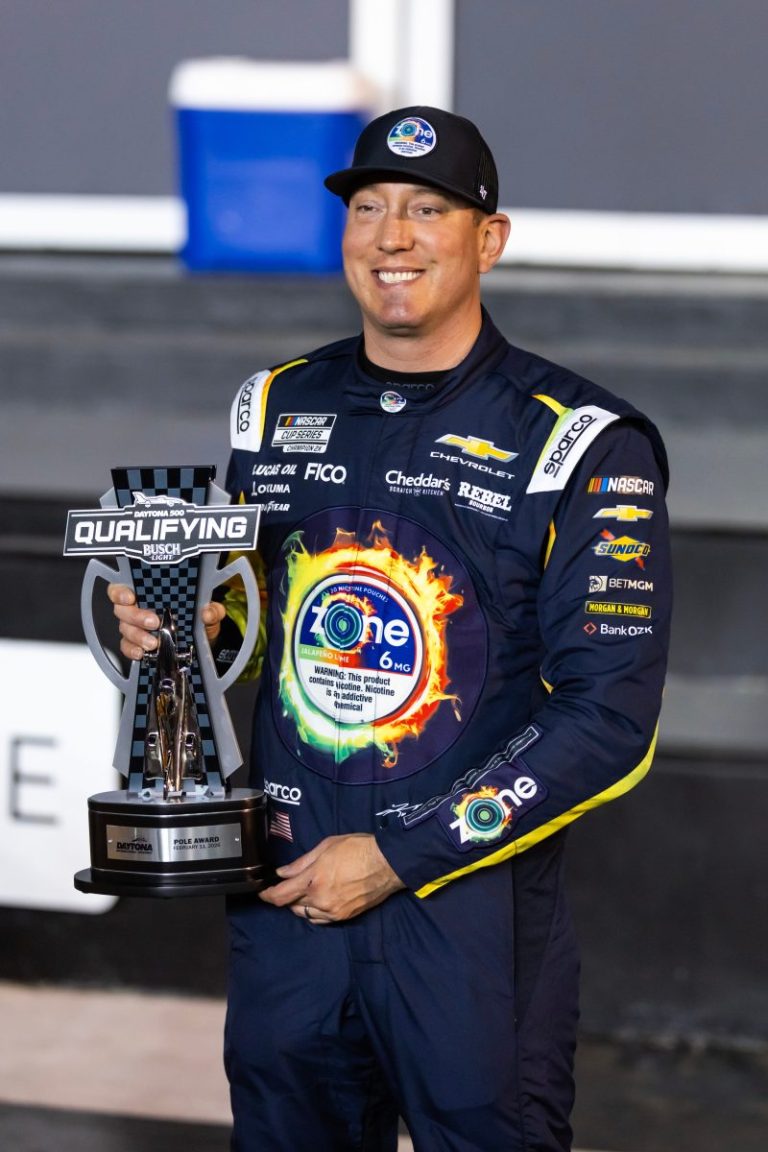
Kyle Busch will start on the pole for the 68th annual Daytona 500 at Daytona International Speedway on Sunday, Feb. 15.

It’s Busch’s first time on the pole for the big race during a career that’s spanned over two decades.

‘It sounds really good right now,’ Busch said on the FS1 broadcast. ‘This feels really good. It would be really nice to be doing an interview like this on Sunday night after finishing No. 1.’

Busch will be one of just seven NASCAR Cup champs in the field this weekend. Chase Briscoe will start from the second position.

The rest of the Daytona 500 lineup will be set Thursday following two Daytona Duel races.

The Daytona Duel races use Wednesday’s qualifying results to determine the starting order. Whichever driver qualifies on the pole will start first in Duel 1 and the second-fastest driver will lead the way in Duel 2.

This year’s Daytona 500 marks the Cup Series debut of Connor Zilisch with Trackhouse Racing. Nine drivers are attempting to race without a charter and will have to qualify via the Duel races. There are 41 spots in the race and 45 drivers vying to compete.

Here’s the results from Wednesday night’s qualifying:

Kyle Busch on pole for Daytona 500

Kyle Busch will be on the pole for the Daytona 500 this weekend. Busch claimed the top spot with a time of 49.006 in the final round of qualifying on Wednesday. Chase Briscoe will start in the second position.

Dayton 500 final qualifying round results

Kyle Busch (49.006)
Chase Briscoe (49.023)
Ryan Preece (49.061)
Denny Hamlin (49.100)
Corey Heim (49.148)
Alex Bowman (49.152)
Kyle Larson (49.158)
Chris Buescher (49.184)
Chase Elliott (49.220)
Joey Logano (49.275)

Justin Allgaier qualifies for Daytona 500 as open driver

Justin Allgaier locked in a spot for the 2026 Daytona 500 after finishing the first round of qualifying with a time of 49.201. He also bumped Corey LaJoie out of the top 10.

Allgaier was also bumped out of the top 10 moments later after Joey Logano (49.138) jumped into the top 10. Regardless of his placement at the end of the round, Allgaier secured a spot in the Daytona 500 as one of the two fastest non-chartered drivers along with Corey Heim.

Corey Heim qualifies for Daytona 500

Corey Haim of 23XI Racing qualified for the Dayton 500 on time on Wednesday evening. Heim was ranked third with a time of 49.14 seconds (183.16 MPH) in the first round when he officially qualified.

Kyle Busch (48.932) and Ryan Preece (49.081) remain in first and second, respectively.

Noah Gragson’s time disallowed

Noah Gragson had his initial first-round time disallowed after he broke a new window rule.

NASCAR set a new rule that penalizes drivers who put their hand in the side window. Gragson was seen sticking his hand out of the netting of his car. The rule was set in place by NASCAR to prevent drivers from taking their hands off the wheel, according to the FS1 broadcast.

‘I forgot about that rule, … ‘ Gragson said on the FS1 broadcast. ‘I feel like an idiot.’

Gragson will return on Thursday to compete in the Duels. The duels will be two 150-mile qualifying races that help determine the third to 40th positions for the Daytona 500.

Kyle Busch, Ryan Preece lead pack early

Kyle Busch has jumped ahead of the field early, with the fastest qualifying time in round one so far, at 48.932 seconds through the first 17 drivers. Ryan Preece is currently second with a time of 49.081.

How to watch Daytona 500 pole qualifying

Date: Wednesday, Feb. 11
Time: 8:15 p.m. ET
Location: Daytona International Speedway in Daytona Beach, Florida
TV: FS1
Stream:Fubo, foxsports.com, Fox Sports app

How to watch and stream 2026 Daytona 500

Date: Sunday, Feb. 15
Time: 2:30 p.m. ET
Location: Daytona International Speedway in Daytona Beach, Florida
TV: Fox
Stream: Fubo, foxsports.com, Fox Sports app

Watch the 2026 Daytona 500 with a Fubo subscription

This post appeared first on USA TODAY

After the men’s Olympic hockey tournament kicked off at the 2026 Winter Olympics with a doubleheader on Wednesday with National Hockey League players participating for the first time in 12 years, eight nations will take the ice on Thursday.

Canada won the last two Olympics to feature NHL players, in 2010 and 2014, and looks to add their 10th gold overall, but Finland is the defending Olympic champion after its triumph at the 2022 Beijing Olympics.

The United States last won a gold medal in the event in 1980, part of the ‘Miracle on Ice’ run, and last medaled in 2010, taking home the silver after an overtime loss to Canada at the Vancouver games.

Here is the full men’s hockey Olympic schedule for Thursday, Feb. 12:

6:10 a.m. – Switzerland vs. France | Milano Santagiulia Ice Hockey Arena | Peacock, NBCOlympics.com
10:40 a.m. – Canada vs. Czechia | Milano Santagiulia Ice Hockey Arena | USA Network, Peacock, NBCOlympics.com
3:10 p.m. – USA vs. Latvia | Milano Santagiulia Ice Hockey Arena | USA Network, Peacock, NBCOlympics.com
3:10 p.m. –  Germany vs. Denmark | Milano Rho Ice Hockey Arena | Peacock, NBCOlympics.com

This post appeared first on USA TODAY

Bobsled, one of the oldest sports at the Winter Olympics, returns to the 2026 Milano Cortina Games and will showcase athletes with nerves of steel as they steer a high-tech sled down a fast, icy track with multiple turns.

Veteran U.S. bobsledders Kaillie Humphries and Elana Meyers Taylor are set to make their fifth appearance at the Winter Games and are heavy favorites to podium. Humphries and Meyers Taylor finished first and second respectively in the inaugural women’s monobob event at the 2022 Beijing Winter Olympics.

Bobsled includes a total of four events, which will be contested at the Cortina Sliding Centre in Cortina d’Ampezzo.

When did bobsled become a Winter Olympic sport?

Bobsled has been part of the Winter Olympics since the inaugural 1924 Chamonix Winter Games, although it wasn’t contested in Squaw Valley in 1960 to cut down expenses by not building a bobsled track. The two-man event was added to the program at the 1932 Lake Placid Winter Games and the two-woman race made its Olympic debut in Salt Lake in 2002. The Olympic women’s monobob was first held at the 2022 Games in Beijing.

How does Olympic bobsled work?

Each sled has one driver, while others push the sled from the starting gate before jumping into the back of the sled for the rest of the ride. Bobsled events each last two days, with two runs each day. The fastest combined time determines the winner. Men and women each compete in their own events:

Men

4-man bobsled: One driver and three pushers in each sled
2-man bobsled: One driver and one pusher in each sled

Women

2-women bobsled: One driver and one pusher in each sled
Monobob: One driver, no pushers

Top Team USA athletes

Kaillie Humphries: The 40-year-old pilot won gold for the U.S. in monobob at the 2022 Beijing Games and also won gold in two-man in 2014 and 2010 while representing Canada. She joined short-track speedskater Viktor Ahn as the only Winter Olympians to win gold for different countries. Milano Cortina marks her fifth Games and first as a mother after giving birth to son Aulden in June 2024.
Elana Meyers Taylor: The 41-year-old pilot/brakeman enters Milano Cortina, her fifth Winter Games, with five Olympic medals, including three silvers and two bronzes. She earned a silver medal in the inaugural women’s monobob at the 2022 Beijing Winter Olympics and a bronze in the two-woman bobsled race with Sylvia Hoffman to become the most decorated Black athlete in Winter Olympics history.
Kaysha Love: The up-and-coming bobsledder won gold in women’s monobob at the 2025 IBSF World Championships. Love, 28, made her Olympic debut at the 2022 Beijing Winter Games, less than two years after beginning bobsled following a track and field career at the University of Nevada, Las Vegas.

International landscape

German bobsledder Francesco Friedrich is in pursuit of a record fifth gold medal. His four gold medals are tied for the most in the sport after winning the two-man and four-man event in Pyeongchang in 2018 and Beijing in 2022. Milano Cortina will mark his fourth Winter Games. Germany’s Laura Nolte is also a top contender after winning gold in the two-woman bobsleigh in 2022 in Beijing.

The USA TODAY app gets you to the heart of the news — fastDownload for award-winning coverage, crosswords, audio storytelling, the eNewspaper and more.

This post appeared first on USA TODAY

Director of National Intelligence Tulsi Gabbard announced she was ending the work of a task force that sought to reform the U.S. intelligence community, including rooting out what she described as the politicization of intelligence gathering, after less than a year since its creation.

Gabbard established the group in April, when it was also tasked with probing ways to reduce spending on intelligence and whether reports on high-profile topics such as COVID-19 should be declassified.

In a statement on Wednesday, Gabbard said the task force’s work was always intended to be temporary after she was tapped to oversee coordination of the 18 U.S. intelligence agencies.

‘In less than one year, we’ve brought a historic level of transparency to the intelligence community,’ Gabbard said in her statement. ‘My commitment to transparency, truth, and eliminating politicization and weaponization within the intelligence community remains central to all that we do.’

The number of officers assigned to the task force, as well as their identities, are classified, according to Gabbard’s office.

The officers will now return to other intelligence agencies to continue the work the group started, her office added.

The group sparked criticism against Gabbard after its creation, with Democrats and some intelligence insiders raising questions about whether it would be used to undermine intelligence agencies and bring them under tighter control of President Donald Trump.

Sen. Mark Warner, D-VA, vice chairman of the Senate Intelligence Committee, said last year that the group appeared to be a ‘pass for a witch hunt’ designed to target intelligence officers deemed disloyal to Trump.

‘This seems to be just a pass for a witch hunt and that’s going to further undermine our national security,’ Warner told Reuters at the time.

Gabbard has implemented significant changes to the country’s intelligence gathering in the last year, including by using agencies to back up Trump’s claims about alleged interference in the 2016 and 2020 elections.

In August, she revealed plans to cut her office’s workforce and slash more than $700 million from its annual budget. She also fired two top intelligence officials in May after concluding that they opposed Trump.

Since Gabbard took over as director, the federal government has revoked the security clearances of dozens of former and current officials, including high-profile political opponents of the president, which critics have panned as being a punishment for siding against Trump rather than posing security risks.

Gabbard’s presence for a recent FBI search of a Georgia election office in connection to the 2020 election has led to criticism from Democrats who argue she is blurring the traditional lines between foreign intelligence collection and domestic law enforcement.

The CIA has also released additional information about its investigations into the origins of COVID-19, such as an assessment released last year that affirmed the position that it most likely originated in a lab in China.

The Associated Press contributed to this report.

This post appeared first on FOX NEWS

The Dallas Mavericks announced that Cooper Flagg underwent an MRI, which revealed a left midfoot sprain.

The injury is expected to keep him out of action for the rest of the week, including the Mavericks’ game against the Los Angeles Lakers on Thursday, Feb. 12.

Flagg suffered the injury during a game against the Phoenix Suns on Tuesday, Feb. 10.

The injury will also keep him out of the NBA’s All-Star weekend festivities, according to reporter Marc Stein.

The rookie was expected to compete for Team Melo in the Rising Stars Challenge on Friday.

Flagg had averaged 20.4 points, 6.6 rebounds and 4.1 assists in 49 games played this season. He’s considered the favorite for the NBA’s Rookie of the Year based on odds at BetMGM.

This post appeared first on USA TODAY