Archive

2026

Browsing

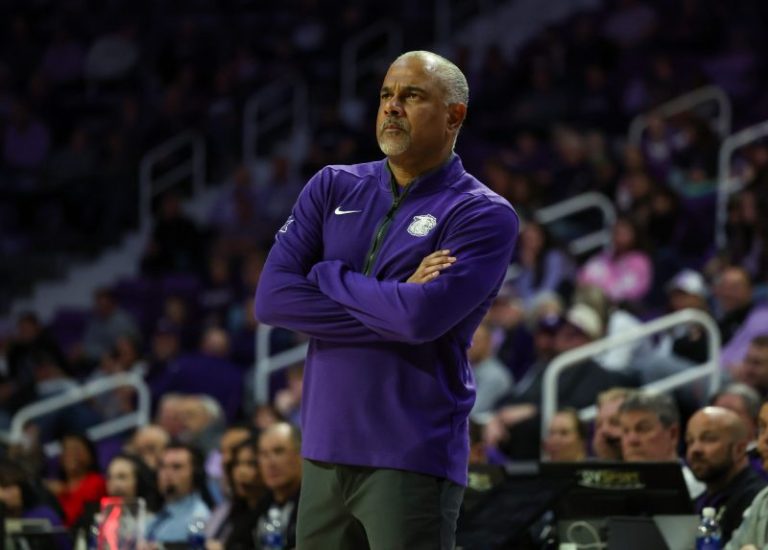
Tang ripped his team following the Wildcats’ 91-62 home loss to Cincinnati — a third straight home loss by 24 or more points and fifth straight loss overall.

‘This was embarrassing,’ Tang said. ‘These dudes do not deserve to wear this uniform, and there will be very few of them in it next year. I’m embarrassed for the university, I’m embarrassed for our fans, and our student section. It’s just ridiculous.

‘We have practice at 6 a.m. tomorrow. I have no answers or no words. Y’all got two questions, so whoever wants to ask two questions, I’ll answer ’em to the best of my ability right now. But right now, I’m pissed.’

The Wildcats (10-14, 1-10 Big 12) allowed 16 Cincinnati 3-pointers, second-most ever by a K-State opponent. The team’s lack of effort was highlighted by a failed block out on a missed free throw allowing a Bearcats player get the rebound and dunk.

About 20 Kansas State students wore paper bags over their heads with messages pleading for someone to pay Tang’s $18.6 million buyout. Fans booed the Wildcats during a first-half timeout when they were down by 22 at the under-eight timeout.

‘These dudes have to have some pride, man,’ Tang said. ‘It means something to wear a K-State uniform. It means something to put on this purple, man. Our university’s all about that, and it’s why I love this place, man. They don’t love this place, so they don’t deserve to be here.’

The next question was about the paper bags and the booing.

‘I’d wear a paper bag, too, if I was them,’ Tang said as he got up and walked away.

This post appeared first on USA TODAY

Croix Bethune’s trade from the Washington Spirit left her teammate Trinity Rodman ‘sad’ after their potent partnership was dismantled.

Bethune was traded to the Kansas City Current in a blockbuster move on Wednesday, Feb. 11, with the Spirit receiving $1 million in return for the playmaker.

The 24-year-old emerged as a star during two seasons with the Spirit, winning the NWSL Rookie of the Year award in 2024 before being named to the NWSL Second XI in 2025.

Bethune has also earned seven caps with the U.S. women’s national team after making her debut in 2024, scoring her first international goal last month against Chile.

In a club release, Spirit president of soccer operations Haley Carter said Bethune requested the move.

“After conversations about her desire to explore development opportunities in a different environment, we were able to structure a deal that honored her request while securing significant value for our club, making it the third-highest intra-league transfer in NWSL history and a top ten mark globally,’ Carter said.

Bethune and Rodman developed a strong connection on and off the field during their time together with the Spirit, and Rodman posted a series of photos of the duo on Instagram after the trade was announced.

‘I’m sad,’ Rodman wrote.

The pair will at least have the opportunity to continue playing together with the USWNT.

Claire Hutton traded to Bay FC

The Current were busy on Wednesday, as they also traded midfielder Claire Hutton to Bay FC in a second major transaction.

Hutton, 20, moves to the Bay Area in exchange for $1.1 million.

The holding midfielder has put together an impressive resume despite her age, earning NWSL Best XI First Team honors last season.

Hutton also has 13 caps already with the USWNT. During a January match against Paraguay, Hutton wore the captain’s armband for the final portion of the game, becoming the youngest USWNT player to do so in the modern era.

‘Claire is an important signing for us. She’s a top-quality player who is tight on the ball, and she has the mobility and physical presence to break up play,” Bay FC head coach Emma Coates said.

“Despite her age she brings experience and a strong mentality, and we believe she has the potential to become one of the best midfielders in the world.’

This post appeared first on USA TODAY

MILAN — Jessie Diggins, the most decorated cross-country skier in U.S. history, is adding to her collection of Olympic hardware.

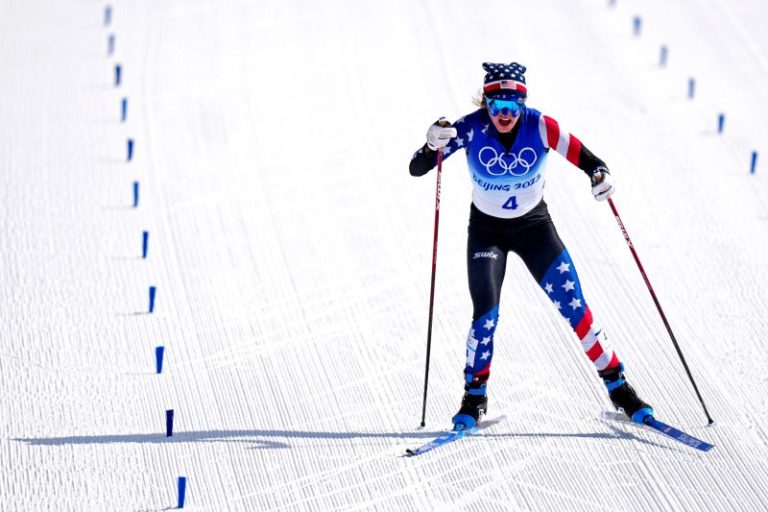
Following two disappointing results to start the 2026 Winter Olympics, Diggins returned to the podium and claimed a bronze medal in the women’s 10km freestyle interval start on Thursday following a gutsy performance that ended with her wailing in pain.

The 34-year-old competed with bruised ribs suffered in a ‘big crash’ on Saturday, which made it difficult to breathe and ski, Diggins told NBC. Diggins collapsed in exhaustion after crossing the finish line in bronze-medal position with a time of 23:38.9. Her effort secured her fourth career Olympic medal in her fourth and final Games.

Watch Winter Olympics on Peacock

Diggins immediately grabbed at the right side of her abdomen after she collapsed in the snow. She remained down for several minutes as American teammate Hailey Swirbul took off her skis and consoled her. Swirbul eventually helped Diggins to her feet and they shared an embrace, before Diggins’ signature smile emerged.

Diggins had to dig deep into the pain cave during the race, a “special place” she goes when things get tough.

“It’s metaphorical,” she explained to USA TODAY Sports in November. “When everything hurts, your whole body is screaming at you to stop, your lungs are on fire, your muscles are seizing up, and you just figure out how to keep moving forward anyway. So then you’re in the pain cave, you’re slogging through it.”

Sweden’s Frida Karlsson (22:49.2) and Ebba Andersson (23:35.8) finished in first and second place. Sweden has dominated the women’s cross-country events so far at the 2026 Winter Games. Karlsson and Andersson finished first and second in the 10km + 10km skiathlon and the Swedes swept the podium in the women’s sprint classic.

Thursday’s result marks Diggins’ best Olympic finish in the 10km freestyle after previously finishing fifth at the 2018 Pyeongchang Games and eighth at the 2022 Beijing Games. Her medal follows U.S. skier Ben Ogden’s silver medal finish in the men’s sprint classic on Tuesday.

Diggins bounced back from a disappointing start to the 2026 Winter Games. She finished in fifth place in the women’s 10km + 10km skiathlon on Saturday after the crash and failed to qualify for the women’s sprint classic quarterfinals on Tuesday, the same event she medaled in at the 2022 Beijing Games. The women’s sprint classic result ended Diggins’ streak of finishing in the top 10 in all six women’s events in both the 2018 and 2022 Games.

Despite the injury, Diggins was all smiles before pushing out the starting gate from the 44th position in the women’s 10km freestyle. She sported purple sparkles on her cheeks, continuing a pre-race ritual she’s done for as long as she can remember.

Her parents Clay and Debra Diggins were in the stands to cheer her on as she jumped for joy on the podium at the medal ceremony. Chants of ‘Jes-sie! Jes-sie!’ broke out among the crowd.

Diggins credits her parents with sparking her passion for skiing, reminiscing of riding in a backpack on her father’s back as her parents skied every weekend. ‘Some of my formative memories (are) pulling on my dad’s hair and yelling at him to go faster,’ she told USA TODAY Sports with a smile. 

Diggins won Team USA’s first Olympic gold in cross country skiing in the team sprint alongside Kikkan Randall at the 2018 Pyeongchang Games. She claimed bronze in the sprint classic at the 2022 Beijing Winter Olympics, and Diggins added to her set with a silver in the 30k freestyle at the Beijing Games.

In the 10km interval start free, skiers start one by one at 30-second intervals. The freestyle technique, where skiers makes lateral movements relative to the direction of travel, is used throughout the race. 

In addition to Diggins, Americans Novie McCabe (finished 31st; 25:12.8), Kendall Kramer (37th; 25:34.9) and Hailey Swirbul (38th; 24:45.3) were also in the field.

The USA TODAY app gets you to the heart of the news — fastDownload for award-winning coverage, crosswords, audio storytelling, the eNewspaper and more.

This post appeared first on USA TODAY

We know who will start from the front row of the 2026 Daytona 500.

Now it’s time to sort out the rest of the starting grid.

Wednesday night’s pole qualifying session ended with Kyle Busch and Chase Briscoe securing their spots at the front of the field for the 68th running of the biggest event in NASCAR. That also means they lead the field for today’s two Daytona Duels to determine almost the whole starting grid.

The Duel at Daytona sets the field for the 2026 Daytona 500 using lineups determined by last night’s pole qualifying results. As the polesitter, Busch will lead the way from the front for Duel 1 at Daytona. Subsequently, and Briscoe leads the way for Duel 2 at Daytona.

The Duels are two 60-lap (150-mile) races tonight to finalize the starting order for Sunday’s race. Both Daytona Duels include regular season points for the Cup Series drivers.

Here’s everything to know about the Daytona Duels:

Buy your copy of our commemorative Dale Earnhardt book!

How to watch the Duels at Daytona: Time, TV channel, live stream

Date: Thursday, Feb. 12
Duel 1 Time: 7 p.m. ET
Duel 2 Time: 8:45 p.m. ET (approximate)
TV: FS1 (both duel races)
Streaming: Fubo, FoxSports.com and the Fox Sports app

What are the Duels at Daytona? What to know about unique qualifying

For the biggest race of the year, the Daytona 500 uses a unique qualifying format. Things start off with the usual time-based format last night for pole qualifying. From there, everything changes.

The Duels at Daytona use two 60-lap races to set the grid. Duel 1, led by the pole winner from pole qualifying, features the odd-numbered finishers from qualifying. The finishing order from Duel 1 will determine the inside lane order for Sunday’s Daytona 500.

Duel 2, led by the second-fastest driver in pole qualifying, includes the even-numbered finishers from the qualifying session. This race’s finishing order determines the outside lane order for Sunday’s Daytona 500.

This post appeared first on USA TODAY

In the face of President Donald Trump’s concerns about Arctic security and his calls for the U.S. to acquire Greenland, NATO has launched a security effort called ‘Arctic Sentry.’

‘Still, in the face of Russia’s increased military activity and China’s growing interest in the High North, it was crucial that we do more, which is why we have just two hours ago launched Arctic Sentry,’ NATO Secretary General Mark Rutte said during remarks on Wednesday.

‘Initially, it will bring together exercises like Denmark’s Arctic Endurance and Norway’s Cold Response,’ he noted. 

Last month, U.S. President Donald Trump said in a Truth Social post that he had a ‘very productive meeting’ with NATO’s Rutte.

‘We have formed the framework of a future deal with respect to Greenland and, in fact, the entire Arctic Region. This solution, if consummated, will be a great one for the United States of America, and all NATO Nations,’ Trump wrote at the time.

In a statement provided to Fox News Digital on Thursday, a White House official said, ‘The Arctic is a critical region for U.S. national security and the economy. As an Arctic nation, the United States will pursue its security and economic interests and ensure safety, stability, and prosperity in the face of growing competition from China and Russia.’

A Wednesday press release from Supreme Headquarters Allied Powers Europe noted, ‘Allied Command Operations (ACO), which is responsible for the planning and execution of all NATO exercises, activities and operations, began Arctic Sentry today.’

‘The preparations for Arctic Sentry provided NATO planners with full visibility of Allied nations’ activities in the Arctic and High North. Moving forward, ACO will use Arctic Sentry to cohere these actions into one overarching operational approach to Allies’ increasing activities, which will enhance NATO’s presence there,’ the press release notes. 

‘These activities include, among others, Denmark’s Arctic Endurance, a series of multi-domain exercises designed to enhance Allied ability to operate in the region, and Norway’s upcoming exercise Cold Response, where troops from across the Alliance have already begun to arrive,’ the release states.

This post appeared first on FOX NEWS

MILAN ― What an awful message the sport of figure skating just sent to sexual abuse survivors and victims, and parents who want their children to participate in a safe sport.

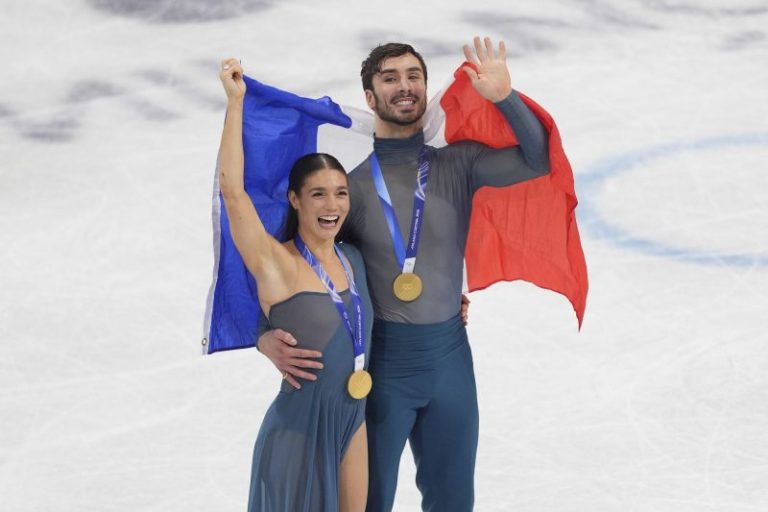
Figure skating just put Olympic gold medals around the necks of a French ice dance team that exists only because of the investigation and subsequent suspension of an alleged sexual abuser, Nikolaj Sorensen, who has been consistently and publicly supported by that team of Laurence Fournier Beaudry and Guillaume Cizeron.

Fournier Beaudry, 33, who is Sorensen’s girlfriend, joined forces with Cizeron a year ago after Sorensen was banned for a minimum of six years for allegedly sexually assaulting a U.S. skater in 2012. His suspension was overturned last year but is being reviewed, meaning the ban could be put back into place. He was in the Olympic arena Wednesday night, and when the French team spotted him in the crowd, they joyously waved from the podium, and he whistled back. 

Figure skating also just gave a second consecutive Olympic gold medal to Cizeron, 31, who was described by his former ice dance partner, 2022 Olympic gold medalist Gabriella Papadakis, as ‘often controlling, demanding and critical.” She said she would not skate with him unless a coach was present at practices. 

During an interview with USA TODAY’s podcast Milan Magic about her new memoir ‘To Not Disappear,’ Papadakis said her skating relationship with Cizeron ‘was a dynamic that was profoundly harmful and dangerous to me, that took me a very, very, very long time to understand.”

‘I was trying to write about how these dynamics creep (into) a partnership and in a relationship,” Papadakis said, ‘how these dynamics can become incredibly dangerous.”

That guy now has a second gold medal.

Fournier Beaudry and Cizeron upset three-time reigning world champions Madison Chock and Evan Bates of the United States by nearly a point and a half, 225.82 points to 224.39, adding to the slight lead they held after Monday’s rhythm dance. 

What a slap in the face this result is to Chock and Bates, four-time Olympians and seven-time national champions who had never won an individual Olympic medal until Wednesday’s silver. They have been the heart and soul of the American team for the past four years at least. At the 2022 Olympics in Beijing, they were the American team figure skating captains, tasked with consistently and calmly handling the most excruciatingly ridiculous series of events precipitated by yet another Russian doping scandal at the Olympics, this one the Kamila Valieva saga. 

Their patience paid off when they stood in the sunshine at the base of the Eiffel Tower at the 2024 Summer Olympics, receiving their gold medals. 

If you’re picking role models for your kids, you go with Chock and Bates 100 times out of 100.

And talk about taking one for the team: Their performance in the free dance Wednesday was their fourth program skated in six days. That’s a lot, especially for athletes who are not in their teens or 20s. Bates is almost 37. Chock is 33. That is not young in skating years.

But by winning both of their programs in the team competition, they put their teammates, especially Ilia Malinin, in position to win the gold medal, which they did Sunday night. So they have two team golds, which matter to them greatly, but not the gold they were most dreaming of.

It was a sad evening for them, and a sadder one for their sport. 

This post appeared first on USA TODAY

Unlike college athletes, Olympic curlers often remain loyal to their national teams for multiple Olympic Games.
U.S. curler Tabitha Peterson is also a pharmacist. Olympics medalist Cory Thiesse is a lab technician.
Put college basketball on hold, in favor of Cory Thiesse at Olympics.

So, I hear fans say they’re a bit exhausted by the number of transfers in college sports. Flip on a college basketball game on a Saturday afternoon, and you might need a cheat sheet to keep up with who’s on which team.

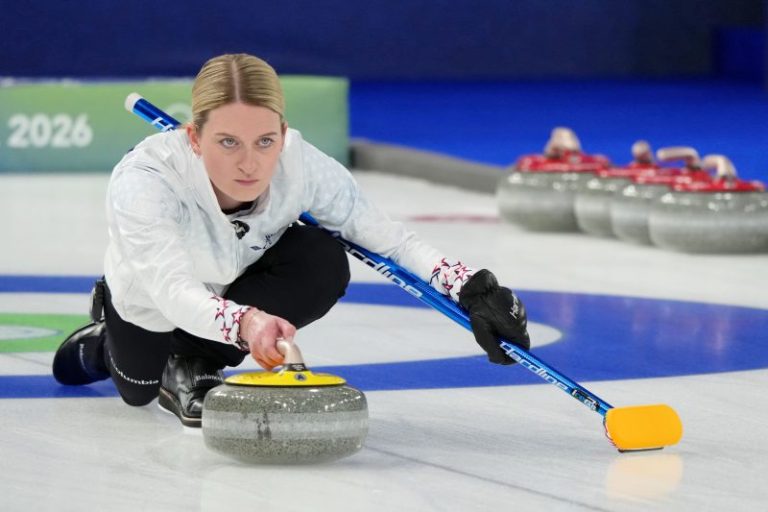
If you find this all a little dizzying, well, I have a solution: Turn on Olympic curling. Yes, that’s the sport in which the athletes send a 42-pound granite stone down a sheet of ice toward a target while teammates use brooms to sweep the ice ahead of the rock.

Strategy meets precision meets teamwork as two teams try to place their stones closest to the center, knock the opponent’s rocks out of the way or curl the stone around guards.

Think of it as table shuffleboard on ice — with a lot of sweeping.

You might need a crash course on the rules. That’s why we have Wikipedia. But, watch curling for any length of time, and you won’t need a roster cheat sheet.

Tabitha Peterson still with USA curling for third Olympics

Take the case of Tabitha Peterson. She’s the skip, aka team captain, of the U.S. women’s team. This is her third Olympics. All with the United States! She didn’t transfer to Czechia or Italy, even though the payday is better for Olympic medalists from those countries and many others. Sister Tara Peterson is on the U.S. team, too, back for her second Olympics.

Then, there’s Cory Thiesse. This queen of the ice teamed up with sweet-sweeping American man Korey Dropkin to win silver in the mixed doubles competition.

Thiesse was an alternate for the U.S. women’s team way back at the 2018 Games. She traveled to South Korea but never got into a match. If curling was college basketball, she would’ve transferred after those Olympics to a country where she’d have a starting spot.

Instead, Thiesse waited her time, plied her craft and partnered with Dropkin to win America’s affection and stoke our patriotism during their stampede to the championship match.

As Thiesse and Dropkin toppled teams from Italy, Estonia and Canada, chants of “U-S-A! U-S-A! U-S-A!” rang out inside the curling center.

Who among us doesn’t love a good USA chant? I’m just trying to imagine such a chant at an Illinois college basketball game, while the Balkan boys David Mirkovic, Tomislav Ivisic and his twin brother, Zvonimir Ivisic, pour in the points for the Euro-Illini.

Thiesse became the first American woman to win a medal in curling. Now, she’ll join the Peterson sisters and Olympic rookie Taylor Anderson-Heide on America’s women’s team. They all live in Minnesota, a curling mecca.

Olympic curlers have jobs outside of their sport

Although the days of Division I athletes spending their offseasons working on an oil rig or baling hay are a thing of the past, these curlers hold down jobs outside of their sport.

When Thiesse isn’t slinging stones, she’s a lab tech at a mercury analysis facility. Tabitha Peterson works as a pharmacist when she’s not leading the American women. Her sister, Tara, is a dentist. Sweeping stones one week, fixing teeth the next.

How can you not admire it?

Here’s the other thing about Olympic curling: You can’t change up the squad in the middle of the event. No adding players from the NBA G League. Nate Oats would be lost as a curling coach. Better stick to college basketball.

Up for an inspirational story? Try this: Danny Casper skips the U.S. men’s team. Two years ago, he was diagnosed with Guillain-Barré Syndrome, a rare medical condition in which the body’s immune system attacks the nerves. At the Olympic Trials, Casper’s team dethroned John Shuster’s team.

If you have even the foggiest knowledge of curling, you know of Shuster. He led the American men at five straight Olympics, and they won gold in 2018. Imagine what Shuster would’ve fetched from the transfer market after the 2018 Olympics from an Eastern European country in need of a skip. Alas, no transfer portal in curling.

I don’t mean to dunk on college basketball. The NCAA tournament remains sacred, the greatest postseason event in all of sports, even if I need a March Madness cheat sheet to remind me 3-point sharpshooter Devin Askew plays for Villanova now, his fifth team in a six-year college career.

March still belongs to college basketball, but for two weeks in February, I’ve transferred my attention to curling, a sport with no portal, and a competition in which a Minnesota lab tech who spent years training to compete for her country makes you chant “U-S-A! U-S-A!”

Blake Toppmeyer is a columnist for the USA TODAY Network. Email him at BToppmeyer@gannett.com and follow him on X @btoppmeyer.

This post appeared first on USA TODAY

From high-speed downhill racing to high-flying big air jumps, the six snowboarding events featured at the 2026 Milano Cortina Olympics have something for everyone. All events will take place at the Livigno Snow Park located near the Rhaetian Alps near the Swiss border.

Women’s Halfpipe promises to be a must-watch event for U.S. audiences, featuring two-time gold medalist Chloe Kim. The 25-year-old is seeking her third-straight Olympic medal. It wouldn’t be the Olympics without some drama: Kim tore her labrum in early January and will not be able to snowboard until ‘right before the Olympics.’ 

For those unfamiliar with Halfpipe, let’s take a closer look at the event and how it’s scored:

Olympic snowboard halfpipe

What is it?: Participants take a full run down a halfpipe performing a combination of jumping tricks such as inverts and rotations on each side of the 22-foot wall.

Scoring: The snowboarders get two attempts in qualifying rounds and three attempts in the finals. They keep the highest scores from their best single run. Each run is ranked from 0-100 by up to six judges and the highest and lowest scores are dropped. The remaining scores are averaged and points are established for the run.

Scoring is based on a variety of categories including how high they get in the air (amplitude), the difficulty of the trick, variety, execution and progression — meaning are they doing something that has never been done before.

Chloe Kim could attempt a jump called a 1260, which is 3 and a half rotations or 1260 degrees. Kim nearly landed the trick at the Beijing Olympics. A woman has never landed the 1260 in Olympic competition.

How to watch: Snowboard halfpipe competition will follow this schedule, check for local times.

Wednesday, Feb. 11, 4:30 a.m. ET: Women’s qualifying also airing at 6:45 a.m. ET
Wednesday, Feb. 11, 1:30 p.m. ET: Men’s qualifying also airing at 2:15 p.m. ET and 6:30 p.m. ET
Thursday, Feb. 12, 1:30 p.m. ET: Women’s final
Friday, Feb. 13, 1:30 p.m. ET: Men’s final

Here’s a breakdown of the other snowboarding events:

Big air

What is it?: Each participant jumps from a massive ramp (over 164 feet) and attempts to do a number a flips and spins before trying to stick the landing.

Scoring: The snowboarders get a ‘best two out of three’ format where they keep the highest scores from two jumps. Each jump is scored from 0-100 by up to six judges and the highest and lowest scores are dropped. The remaining scores are averaged and points are established for the jump.

How to watch: Big air will follow the below schedule, check for local times.

Thursday, Feb. 5, 1:30 p.m. ET: Men’s qualifying
Saturday, Feb. 7, 1:30 p.m. ET: Men’s final also airing 3:15 p.m. ET and Primetime In Milan 8 p.m. ET.
Sunday, Feb. 8, 1:30 p.m. ET: Women’s qualifying also airing 6:30 p.m. ET
Monday, Feb. 9, 1:30 p.m. ET: Women’s final

Snowboard slopestyle

What is it?: Think of slopestyle as a mixture of of halfpipe and big air. Participants travel down a hillside featuring several park-style jumps, with rails and big air jumps. The course must have at least six sections and three must be jump sections.

Each snowboarder takes a full run of the course performing unique tricks at each section. No two runs will look the same as riders can choose between at least two options at each trick location.

Scoring: The snowboarders get two attempts in qualifying rounds and three attempts in the finals. They keep the highest scores from their best single run. Each run is scored by nine judges. Two judge the overall impression of the run. The remaining judges are typically broken up into three groups of two to evaluate each section of the course. Final scores from 0-100 are combined: 60% for the tricks and 40% for the overall impression.

Scoring is based on a variety of categories including how high they get in the air (amplitude), the difficulty of the trick, diversity of tricks, execution and for progression.

How to watch: Slopestyle snowboarding will follow this following schedule.

Monday, Feb. 16, 4:30 a.m. ET: Women’s qualifying
Monday, Feb. 16, 8 a.m. ET: Men’s qualifying
Tuesday, Feb. 17, 7 a.m. ET: Women’s final also airing 12:45 p.m. ET
Wednesday, Feb. 18, 6:30 a.m. ET: Men’s final also airing 2:15 p.m. ET

Snowboard cross

What is it?: A fast-paced head-to-head matchup where four to six riders riders race downhill on a track filled with curves, berms, hills and jumps. There can be photo finishes, and crashes. It’s like a snowboarding version of Formula 1 on snow with large jumps.

Scoring: Riders first complete individual rounds for seeding. After seeding, group knockout riding begins and the top two riders from each heat advance. Higher seeds don’t meet until later rounds.

How to watch: Check for local airtimes on the below days.

Thursday, Feb. 12, 4 a.m. ET: Men’s snowboard cross qualifying
Thursday, Feb. 12, 7:45 a.m. ET: Men’s snowboard cross finals
Friday, Feb. 13, 4 a.m. ET: Women’s snowboard cross qualifying
Friday, Feb. 13, 7:30 a.m. ET: Women’s snowboard cross finals

Mixed team snowboarding

What is it?: Using the same course as snowboard cross, riders race side-by-side down a track, however this is a team event which includes one woman and one man.

Scoring: There are 16 teams that race in heats. The man races first and his time advantage is then passed onto the woman as a head start. The best two teams advance until there are only four teams left to compete in the final.

How to watch: Check for local airtimes on the below day.

Sunday, Feb. 15, 7:45 a.m. ET: Mixed team snowboard cross finals, re-airs 1 p.m. ET

Parallel giant slalom

What is it?: Similar to slalom on skis, two snowboarders race downhill side-by-side weaving back and forth past gates or flags. The player who reaches the bottom fastest while clearing each gate wins that heat. Missing a gate results in the rider being disqualified.

In elimination rounds riders are placed in a head to head bracket. Whoever finishes first advances.

Scoring: To qualify each rider rides one race on the blue course and another on the red course. The times are added together and the fastest 16 riders qualify to race in the next round. In qualifying rounds losing a race doesn’t mean you are eliminated since riders are qualifying on time alone.

How to watch: Check for local airtimes on the below day.

Sunday, Feb. 8, 3 a.m. ET: Mixed team snowboard cross qualifying
Sunday, Feb. 8, 7 a.m. ET: Mixed team snowboard cross finals re-airing 10:30 a.m. ET

What states do the US Snowboarding team call home?

The U.S. Snowboarding team consists of 24 athletes announced in late January. Colorado is sending more snowboarding athletes to compete in the 2026 Milan Winter Olympics than any other state. Colorado is sending nine competitors, followed by California.

2026 Winter Olympics schedule for Snowboarding events

SOURCE Olympics.com; NBC Olympics; USA TODAY research

This post appeared first on USA TODAY

CORTINA D’AMPEZZO, Italy — Simply getting to the Milano Cortina Olympics was a triumph enough, and Federica Brignone arrived with no illusions about her medal chances.

Ten months ago, the Italian Alpine skiing star was simply hoping to be able to walk again, her left leg shattered in a crash during the Italian national championships. Even now her leg is not completely healed, and she’s still in pain.

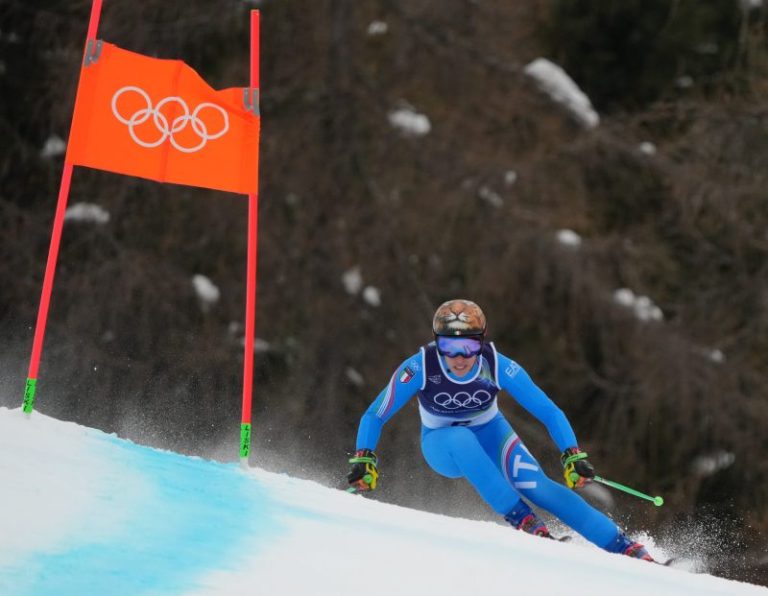
Yet Brignone never lost hope or faith in herself. And on her beloved Olimpia della Tofane course, with Italian fans raucously cheering her on, she became an Olympic champion, winning gold in the super-G on Thursday, Feb. 12.

‘Every day was difficult. There were many days when I was tired, I felt pain. I couldn’t do what I wanted,’ said Brignone, who also has a silver (giant slalom) and a bronze (individual combined) from the Beijing Olympics in 2022.

‘In other words, today was an incredible day.’

As the race finished, eight Italian military jets did a flyover, green, white and red smoke streaming behind them. The entire grandstand remained filled for the medals ceremony, with fans letting out a huge roar as Brignone, who was one of Italy’s flag bearers for the opening ceremony, hopped on the top podium with her arms raised in triumph.

‘I was for sure not the favorite today. But this is the Olympics. It’s a one-day race. Anything can happen,’ Brignone said.

Especially on a day when the course took out most of the contenders.

The super-G course had several jumps and rollers feeding straight into gates. Add to that snow that got soft between the inspection and the race, and anyone who tried to be too aggressive found themselves in trouble.

There were 17 DNFs in the race, including newly minted downhill gold medalist Breezy Johnson and fellow American Mary Bocock, who crashed in her Olympic debut. Jackie Wiles was the top American, in 13th, while Keely Cashman finished 15th.

‘It was really hard to create energy and to push. You had to just be really smooth the whole way,’ said Alice Robinson, who is second in the super-G standings but finished in a tie for eighth. ‘People that were charging and trying to push the line too much, it just wasn’t working.’

But Brignone was in control her entire run. Even when she appeared on the edge of chaos, she was smooth, trusting her skis to guide her. She finished with a top time of 1:23.41, then had to wait as all the other contenders went.

No one got close. France’s Romane Miradoli took silver with a time of 1:23.82, and Austria’s Cornelia Huetter earned bronze 1:23.93.

‘I was proud of myself, really proud of myself. But I was thinking, ‘Oh, (winning) is not possible,” Brignone said.

Brignone’s win is one of those feel-good stories that make the Olympics so compelling. She tore her left ACL and had several fractures in her fibula and tibial plateau in April after crashing during the giant slalom.

But Brignone’s sunny and congenial personality also makes her favorite among her fellow competitors, and there was almost universal happiness for her win. Lindsey Vonn, who is recovering after a nasty crash of her own, posted photos of Brignone after the crash and after the super-G on her Instagram story, writing, ‘What a comeback,’ adding clapping hands, bicep and heart emojis.

‘It’s so incredible seeing Federica back on top of the podium. She’s been through so much with the injury and I think it’s a really cool, full circle moment for her,’ Johnson said. ‘I’m so happy for her. She’s one of the kindest people on the World Cup.’

USA TODAY had full coverage of the Olympic women’s super-G. Scroll below for full results and highlights:

Olympic women’s super-G results

Federica Brignone, Italy ….. 1:23.41
Romane Miradoli, France ….. 1:23.82
Cornelia Huetter, Austria ….. 1:23.93
Ariane Raedler, Austria ….. 1:23.94
Kajsa Vickhoff Lie, Norway ….. 1:24.17
Laura Pirovano, Italy ….. 1:24.17
Elena Curtoni, Italy ….. 1:24.18
Camille Cerutti, France ….. 1:24.44
Alice Robinson, New Zealand ….. 1:24.44
Malorie Blanc, Switzerland ….. 1:24.65
Corinne Suter, Switzerland ….. 1:24.80
Laura Gauche, France ….. 1:25.02
Jackie Wiles, USA ….. 1:25.40
Barbora Novakova, Czechia ….. 1:25.58
Keely Cashman, USA ….. 1:25.61
Elvedina Muzaferija, Bosnia and Herzegovina ….. 1:25.85
Delia Durrer, Switzerland ….. 1:25.95
Maryna Gasienica-Daniel, Poland ….. 1:26.07
Julia Pleshkova, Individual Neutral Athletes ….. 1:26.32
Alena Labastova, Czech Republic ….. 1:27.94
Rebeka Jancova, Slovakia ….. 1:28.51
Nicole Bedue, Argentina ….. 1:28.68
Rosa Pohjolainen, Finland ….. 1:29.18
Elisa Maria Negri, Czechia ….. 1:29.21
Alexandra Skorokhodova, Kazakhstan ….. 1:31.22
Sarah Schleper, Mexico ….. 1:31.37
Kira Weidle-Winkelmann ….. DNF
Mirjam Puchner, Austria ….. DNF
Emma Aicher, Germany ….. DNF
Ester Ledecka, Czech Republic ….. DNF
Sofia Goggia, Italy ….. DNF
Ilka Stuhec, Slovenia ….. DNF
Breezy Johnson, USA ….. DNF
Mary Bocock, USA ….. DNF
Nina Ortlieb, Austria ….. DNF
Janine Schmitt, Switzerland ….. DNF
Valerie Grenier, Canada ….. DNF
Jordina Caminal Santure, Andorra ….. DNF
Cassidy Gray, Canada …. DNF
Francesca Baruzzi Farriol, Argentina ….. DNF
Anastasiia Shepilenko, Ukraine ….. DNF
Matile Schwencke, Chile ….. DNF
Kiana Kryeziu, Kosovo …..DNF

Stream the 2026 Winter Olympics on Peacock

Flyover in Cortina commemorates Italian gold

Italian military completed a flyover – trailing red, white and green behind them – over Tofane Alpine Skiing Centre in Cortina d’Ampezzo to celebrate the gold medal won by Federica Brignone in super-G.

Mexican Mom make history in super-G

Mexico’s Sarah Schleper, who turns 47 next week, was last in the super-G and she didn’t care one bit. Schleper was celebrating when she was in the start gate and wore a big smile when she skied into the finish area. She pumped her first at the cheering crowd, then shook her head like, “Whew!”

Schleper is now the oldest female Alpine skier to compete in a Olympic Winter Games

US skiers shut out of super-G medals

There’ll be no medal for the Americans.

Jackie Wiles, the last U.s. skier to go in the super-G, skied into 13th place, one spot ahead of Keely Cashman. There are still more than a dozen skiers to go.

But at least Wiles and Cashman finished. teammates Breezy Johnson and Mary Bocock both crashed during their runs

American Mary Bocock goes for wild ride

Mary Bocock has crashed in her Olympic debut. She got too much air off a jump, was already off-balance in the air and landed sideways, her skis splayed in front  of her.

Nasty as the crash looked, Bocock was able to get right back up. Breezy Johnson skied down to the finish during the break between the runs of Bocock and another American Jackie Wiles, smiling and waving at the crowd. 

Downhill champ Breezy Johnson crashes in super-G

About 20 seconds into her run, American star Breezy Johnson got off her line off a jump and clipped the next gate. It spun her around and launched her into the safety netting at the side of the course.

Johnson, who won the gold medal in downhill earlier this week, was able to get back up and ski away from the fence.

Add Italian star Sofia Goggia to DNF list

Make that five of nine DNFs in the Olympic women’s super-G. Italian star Sofia Goggia was going hair on fire and it bit her. The 2026 downhill bronze medalist couldn’t make the turn in time and missed a gate

Czech star Ester Ledeka also can’t finish

Ester Ledecka is out, too. The Czech star was within sight of the finish line and got off balance on the landing of a jump. Looked as if she might be able to save it but then gravity kicked in.

For those counting, that’s four DNFs in first eight skiers

Germany’s top skiing star out

Emma Aicher’s hopes for a medal in a third consecutive event are over. The German skied out during her super-G run, becoming the third DNF in seven skiers so far.

Italian star Federica Brignone takes the lead

And Brignone has the lead! The Italian fans are going nuts in the grandstands as Brignone waves and pumps her first at them.

Olympic super-G produces two early DNFs

Got some early carnage at the super-G! Two of the first four skiers have skied out. There are some very tricky turns and it’s a fine line between carrying speed and being able to navigate the curves

Who are the favorites in Olympic women’s super-G?

This is the rare race where the U.S. women don’t have a medal contender. So who is favored? Italy’s Sofia Goggia leads the season super-G standings. Also keep an eye on New Zealand’s Alice Robinson and Switzerland’s Malorie Blanc, who won the last World Cup race. 

It’d be a great story if Italy’s Federica Brignone got on the podium. Last year’s overall champion blew out her knee in April and is still working her way back. When she’s healthy, she’s absolutely a medal threat.

And keep an eye on Ester Ledecka. The 2018 Olympic champ skied in parallel snowboard earlier in the Games – and that took place nowhere close to Cortina!

What time is the women’s super-G at the 2026 Olympics?

Women will compete in Alpine skiing’s super-G beginning at 5:30 a.m. ET (11:30 a.m. local time).

What TV channel is the Olympic women’s super-G on?

USA Network will have live coverage of the women’s super-G at the 2026 Winter Olympics, beginning at 5:30 a.m. ET.

Where is the women’s super-G held at the 2026 Olympics?

The women’s super-G takes place on the world renowned Olympia delle Tofane course at the Tofane Alpine Skiing Centre in Cortina d’Ampezzo, Italy.

Is there a live stream of the Olympc women’s super-G?

The women’s super-G at the 2026 Winter Olympics can be streamed on Peacock.

This post appeared first on USA TODAY

The United States is warning Peru that China’s growing control over a major Pacific port could threaten the country’s sovereignty, escalating tensions over Beijing’s expanding footprint in Latin America.

The concern centers on the $1.3 billion deep-water port in Chancay, north of Lima, which has become a flashpoint between Washington and Beijing after a Peruvian court ruling limited government regulatory oversight of the project.

The State Department’s Bureau of Western Hemisphere Affairs said on social media that it was ‘concerned about latest reports that Peru could be powerless to oversee Chancay, one of its largest ports, which is under the jurisdiction of predatory Chinese owners,’ adding: ‘We support Peru’s sovereign right to oversee critical infrastructure in its own territory. Let this be a cautionary tale for the region and the world: cheap Chinese money costs sovereignty.’

China’s foreign ministry rejected the comments as ‘rumor-mongering and smearing’ and insisted the project remains under Peruvian authority, according to the Associate Press report.

Asia analyst Gordon Chang told Fox News Digital: ‘Chancay is so central that analysts say it will redirect trade across the South Pacific. We know Beijing considers ports to be dual-use and strategic. China, held up the BlackRock deal to acquire the CK Hutchinson port operations in the Panama Canal Zone even though the ports are nowhere near China itself.’

‘In times of war, China will not allow its port operations to load, unload, or service American ships or ships coming from or going to U.S. ports,’ he warned.

Jack Burnham, senior analyst in the China Program at the Foundation for Defense of Democracies, said the port reflects a broader strategic push by Beijing in the region.

‘The Chancay port is a keystone in China’s investment in Latin America — its size and proximity provide a bridge across the Pacific and access to another market to fuel Beijing’s export-driven economic engine,’ Burnham said.

‘China’s investment in Peru is predicated on Beijing grasping the sinews of Lima’s critical infrastructure to gain influence. With effective control over the port cemented for now by a lower Peruvian court ruling, China gains access to one of the largest critical infrastructure projects in the region, a position from which it could exercise significant control.’

The dispute comes as Washington and Beijing compete for influence across Latin America, where China has expanded investment through infrastructure projects and trade, analysts say.

China’s state-owned shipping giant COSCO, which holds a majority stake in the project, dismissed U.S. concerns and said the court ruling ‘in no way involves aspects of sovereignty,’ adding that Peruvian authorities still oversee security, environmental compliance and customs, according to the Associated Press.

Peru’s transport infrastructure regulator, Ositran, has said it plans to appeal the ruling, arguing the port should not be exempt from the same oversight applied to other major facilities.

China’s Embassy in Washington DC did not provide a comment in time for publication.

The Associated Press contributed to this report.

This post appeared first on FOX NEWS