Archive

2026

Browsing

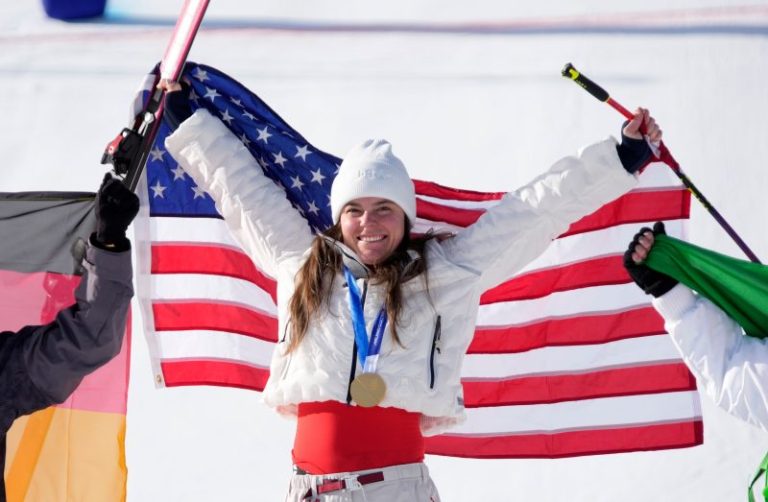
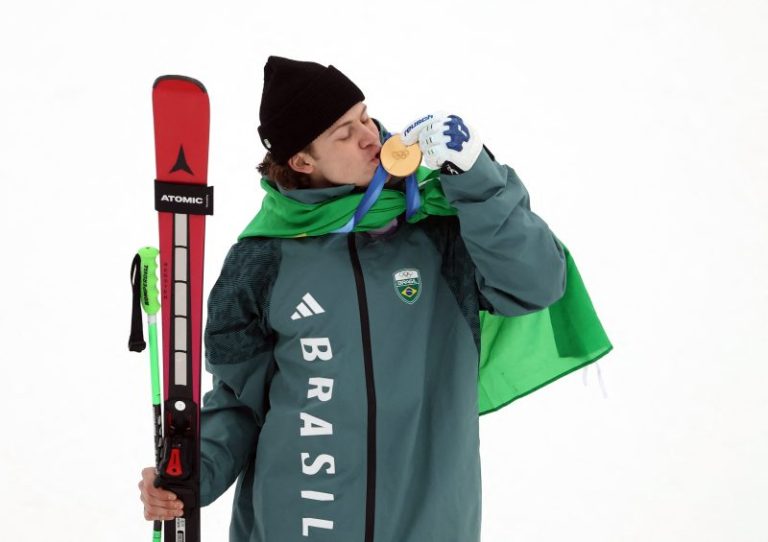
Lucas Pinheiro Braathen won the first-ever Winter Olympics medal for a South American country.
Born in Norway to a Brazilian mother, the skier now represents Brazil after a dispute with the Norwegian Ski Federation.
Braathen briefly retired from skiing at age 23 to pursue other interests like modeling and being a DJ.
He won the men’s giant slalom gold medal, finishing ahead of Swiss skiers Marco Odermatt and Loic Meillard.

BORMIO, Italy — Other skiers will tell you that Lucas Pinheiro Braathen is really a Norwegian athlete to them, since he trained in that system to become of the world’s best alpine skiers.

Pinheiro Braathen, on the other hand, wants you to know how he was a soccer player first. He tells you about visiting family in Brazil when he was little and becoming so entranced by one-named Brazilian soccer megastars that he even informed his father around age 6 that he wanted to become the world’s best on the pitch.

“Somehow, I’m a skier now,” said Pinheiro Braathen, looking down at a freshly awarded Olympic gold medal in his hand. “But at least I’m a champ.”

Watch Winter Olympics on Peacock

This brief contradiction – with a men’s giant slalom gold-medalist from Norway talking about soccer with a Brazilian flag tied around him – represents the nature of this 25-year-old’s complicated journey to reach a historic moment in Olympic history.

The medal around his neck is the first ever awarded to a South American country during the Winter Olympics. Pinheiro Braathen’s mother is Brazilian, but he was born in Oslo and grew up in Norway.

It is important to Pinheiro Braathen, though, that he isn’t just a skier.

He’s a celebrity. He’s a model. He’s a DJ. He’s also a world-class skier, of course, but those other pursuits prompted him to announce his shock retirement from skiing at age 23. He’d been representing Norway. Before long, he was back in the sport and competing for Brazil.

“Daring to trust one’s self is something that is very universal,” Pinheiro Braathen said. “It’s very difficult, and it only gets more difficult with every day that passes, with social media and constant exposure to other peoples’ live sand perspectives and opinions. If it’s anything I hope that I can be the source of inspiration of today: You have to be who you are.”

Pinheiro Braathen’s initial retirement from skiing “came after weeks of rumored disputes with the Norwegian Ski Federation regarding image rights,” per Olympics.com.

“For him, that was super important,” said Norway’s Alte Lie McGarth, a childhood friend of Pinheiro Braathen who finished fifth in the giant slalom in Bormio. “He needed to have the space to do exactly what he needed. He wants to do a bunch of stuff outside of skiing, and now he has the space to be who he wants to be. I’m just proud of him for taking the choice.”

Despite the novelty of Brazil winning a medal in Alpine skiing, Pinheiro Braathen’s victory wasn’t some huge upset. He’s considered one of the world’s best slalom racers. In November, Pinheiro Braathen won a World Cup race in Finland, a first for Brazil, and he arrived at these Olympics No. 2 in the World Cup rankings for slalom and giant slalom.

Blessed with the leadoff spot for the first run in Bormio on Feb. 14, he threw down a 1:13.92 in the morning to open the event. Odermatt was the only competitor to get within 1.57 seconds of that time, and even he was nearly a second (0.95) behind Pinheiro Braathen.

“Conditions are always a factor. He got a clean course, and he took advantage of it,” said River Radamus, the United States’ top finisher at 17th. “That’s part of the game. But he didn’t make any mistakes.”

The gold medal was clearly Pinheiro Braathen’s to lose in the afternoon’s second run, and he didn’t lose it, posting a 2:25 total – when added to his first time – that was still 0.58 seconds ahead of silver-medalist Marco Odermatt of Switzerland. Another Swiss skier, Loic Meillard, took the bronze.

After Pinheiro Braathen’s second run, the Swiss tandem celebrated with him on the course, and that continued until after the medal ceremony.

“It’s funny to sit here today at this moment,” Pinheiro Braathen said, “because I cannot tell you how many comments I’ve read through from the day I started representing Brazil until becoming an Olympic champion today that have been along the lines of, ‘I have no idea what’s going on, but let’s go Brazil! Let’s go Lucas!

“I think it’s that unconditional love and support from the Brazilians, even though we’re still in the journey of introducing ski racing to Brazil, that I really brough with me today and allowed me to ski as fast as I did.”
This post appeared first on USA TODAY

INGLEWOOD, Calif. — If it takes the young upstarts of the NBA, the eventual stars-to-be, to reinvigorate the NBA All-Star break, then we owe them considerable gratitude.

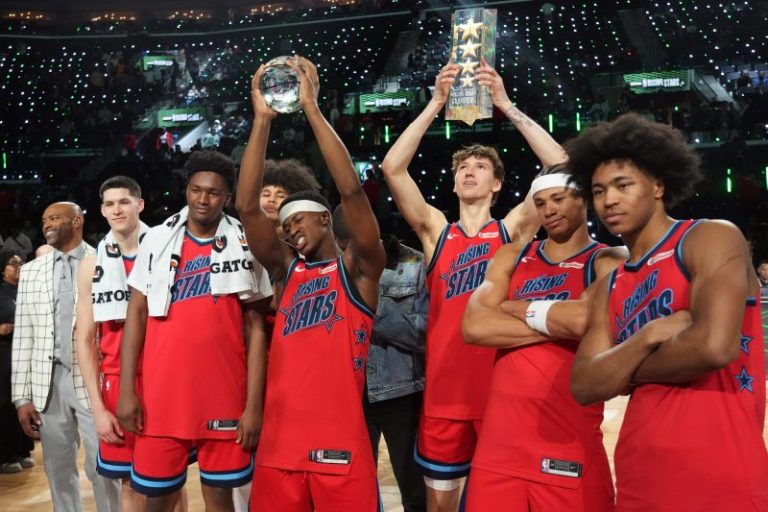
The NBA’s Rising Stars set the tone Friday, Feb. 13 in an engaging and entertaining showcase that culminated with a stellar performance from Philadelphia 76ers rookie VJ Edgecombe to carry Team Vince — as in Vince Carter — to the Rising Stars championship. And as the NBA All-Star Game has faced widespread criticism for its lack of competitive spirit, let’s hope that the league’s biggest stars draw inspiration from its “Rising” ones.

In the semifinal round, Edgecombe scored his team’s final 10 points to win and carried Team Vince with 23 combined points across both games, including a pair of clutch, game-winning free throws in the championship.

“I appreciate people tuning in, even to the Rising Stars game,” Edgecombe told reporters after the game. “We just tried to make it fun, make it competitive, where it’s worth your time.”

Edgecombe wasn’t alone. On the whole, the entire crop of 28 first- and second-year players who participated Friday in the Rising Stars Game established a baseline spirit of competition that has been painfully absent from the supposed gem of the weekend, the actual All-Star Game.

Did the Rising Stars unleash relentless, playoff-level competition? No, of course not. They didn’t need to. What matters here is that they didn’t do the bare minimum. They didn’t sleepwalk and loaf through the exhibition in a way that insults fans investing their time and capital in the experience.

This is what’s crucial for the survival of the NBA All-Star Game, and the All-Star games of all the major domestic sports leagues, if we’re being honest. There’s a way to strike a balance of elevated competition without compromising safety or risking injury.

This was what the four coaches of the Rising Stars — Carter, Carmelo Anthony, Tracy McGrady and Austin Rivers — preached to their players.

“(The message) was compete hard but be smart,” Rockets guard Reef Sheppard, who played for Team Melo, told reporters. “This All-Star Weekend is supposed to be fun. At the same time, don’t go out there and just run around. Compete and play, but be smart and have fun.”

Said second-year Bulls forward Matas Buzelis, another emerging NBA star and one who combined to score 10 points across the two mini-games for Team Vince: “We weren’t trying to just lay back and cruise.”

The only shame Friday night was that, understandably, NBC prioritized its Olympic coverage for its primetime national broadcast and was forced to relegate the Rising Stars showcase to streaming-only broadcast Peacock, meaning a chunk of fans missed the showcase.

Several players said they noticed the handful of NBA All-Stars who spent their Friday night in the cosmopolitan city of Los Angeles court-side at the Intuit Dome, taking in the Rising Stars competition.

Donovan Mitchell of the Cavaliers, Scottie Barnes of the Raptors, De’Aaron Fox of the Spurs and Tyrese Maxey of the 76ers were all in attendance. All were shown on the jumbotron to applause from the fans in attendance.

It was this last player who, in part, inspired Edgecombe.

“Tyrese is my dog, man,” Edgecombe said. “I was like, he ain’t coming to watch if I ain’t going to play hard. So I was like, I’m going to play hard so at least it’s not a waste of his time.

“I know he has a whole lot of stuff he could probably be doing right now, especially being an All-Star. Tyrese is my dog. I love him.”

Here’s to hoping Maxey and his fellow All-Stars take after these young players to give fans the showcase they deserve.

This post appeared first on USA TODAY

The White House on Saturday marked the one-year anniversary of President Donald Trump’s National Energy Dominance Council by drawing a sharp contrast with the Biden-era, including Interior Secretary Doug Burgum citing higher production and lower gas prices as proof of ‘real savings’ for Americans.

‘Under the President’s leadership and through the Council’s relentless execution, we have delivered historic gains in energy production, affordability, and security,’ Interior Secretary Doug Burgum, chair of the National Energy Dominance Council, told Fox News Digital. 

‘Gasoline prices have fallen to some of the lowest levels in years, permitting has been streamlined, and American energy exports are surging,’ he added. ‘These achievements are not abstract, they mean real savings for families, farmers, and small businesses, and they are strengthening our position on the world stage.’ 

Trump signed an executive order creating the National Energy Dominance Council on Feb. 14, 2025, which was tasked with cutting red tape and coordinating agencies to boost U.S. energy production, speed up permitting approvals, expand exports and deliver a national ‘energy dominance’ strategy. 

A year later, the administration pointed to a series of metrics showing the U.S. has accelerated past Biden-era data on production — while driving down energy costs that ripple through household budgets, from gas and heating to shipping and groceries.

U.S. crude oil production, for example, reached a record 13.6 million barrels per day in 2025, with the White House calling it the highest output of any country in the world. In comparison, the Biden administration took four years for production to climb from 11.3 million to 13.2 million barrels per day, a figure ‘Trump blew past in months,’ according to the White House. 

On the natural gas production front, the administration said the U.S. produced 110.1 billion cubic feet per day in November 2025, the highest level recorded since federal tracking began in 1973. All in, production is about 8% above the Biden-era average, and 4% above the previous record for U.S. natural gas production, according to the data. 

While the U.S. has also widened its lead as the world’s top liquefied natural gas (LNG) exporter, with average LNG exports rising to 15 billion cubic feet per day in 2025, up from 11 under the Biden administration. 

‘As we mark this anniversary, we reaffirm our commitment to advancing American Energy Dominance and ensuring that our nation’s energy abundance continues to power prosperity, security, and freedom for generations to come,’ Burgum added in a comment to Fox News Digital. 

Lowering prices through an expanded energy grid was crucial to the executive order establishing the council itself, calling for ‘reliable and affordable energy production to drive down inflation, grow our economy, create good-paying jobs.’

Energy has emerged as a key piece of the administration’s puzzle of addressing affordability concerns stemming from the Biden era when inflation hit a 40-year-high, as cheaper energy typically ripples through the economy by cutting transportation and shipping costs and lowering the power bills factories pay to make everything from groceries to building materials. 

The White House cast cheaper gas as a kitchen-table win this year, touting pump prices are about $2.90 a gallon, which is 16% below the Biden-era average and a roughly 42% drop from the $5.02 peak in June 2022.  The administration celebrated that affordable energy benefits Americans from working families and rural communities, to small businesses and farmers who typically frequently drive farther for gas or those on a budget. 

Crude oil prices have fallen by roughly 18% in 2025, dropping to $65 a barrel from the $79 Biden-era average, according to the data. 

Environmental groups have meanwhile slammed Trump’s ‘energy dominance’ push as a fossil-fuel expansion that undercuts climate goals and could increase pollution and impacts on public lands and communities. 

‘One year ago, President Donald J. Trump launched the National Energy Dominance Council to restore America’s Energy Dominance and make life more affordable for hardworking families. Today, the results speak for themselves,’ Burgum said of the data. 

This post appeared first on FOX NEWS

Senate Republicans gained a key ally in their quest to enshrine voter ID into law, but the lawmaker’s support comes with a condition.

A trio of lawmakers, led by Sen. Mike Lee, R-Utah, have undertaken a campaign to convince their colleagues to support the Safeguarding American Voter Eligibility (SAVE) America Act, working social media and closed-door meetings to secure the votes.

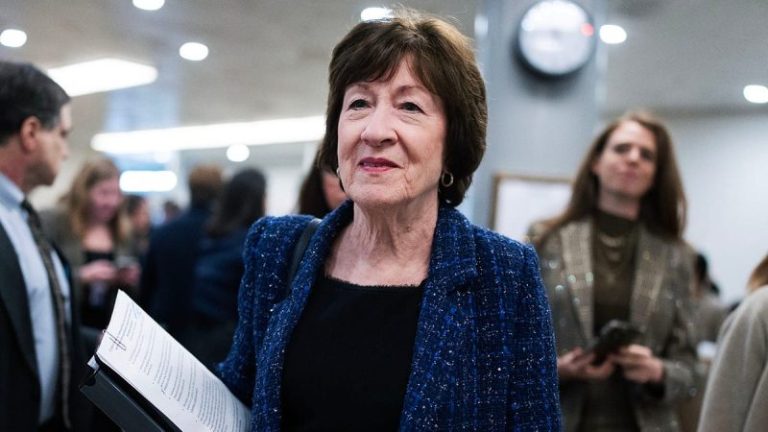
The campaign has proven successful, with the cohort gaining a crucial vote from Sen. Susan Collins, R-Maine, who announced that she would back the SAVE America Act, which recently passed the House. With Collins, Senate Republicans have at least a slim majority backing the act.

‘I support the version of the SAVE America Act that recently passed the House,’ Collins said in a statement first reported by the Maine Wire. ‘The law is clear that in this country only American citizens are eligible to vote in federal elections.’

‘In addition, having people provide an ID at the polls, just as they have to do before boarding an airplane, checking into a hotel, or buying an alcoholic beverage, is a simple reform that will improve the security of our federal elections and will help give people more confidence in the results,’ she continued.

Collins noted that she did not support the previous version of the bill, known simply as the SAVE Act, because it ‘would have required people to prove their citizenship every single time they cast a ballot.’

Her decision gives Lee and Senate Republicans the votes needed to clear a key procedural hurdle in the Senate.

‘We now have enough votes to pass a motion to proceed to the House-passed bill — even without any additional votes — with Vice President JD Vance breaking the tie,’ Lee said in a post on X.

That tie-breaking scenario would only present itself if Republicans turn to the standing, or talking, filibuster. It’s a move that Lee has been pushing his colleagues to make, and one that would require actual, physical debate over the bill. 

It’s the precursor to the current version of the filibuster, where the only hill lawmakers have to climb is acquiring 60 votes. Lee and other conservatives believe that if they turn to the standing filibuster, rather than the ‘zombie filibuster,’ they can barrel through Democratic resistance.

But some fear that turning to that tool could paralyze the Senate floor for weeks or even months, depending on Senate Democrats’ resolve.  

And Collins’ support is not enough to smash through the 60-vote Senate filibuster.

Complicating matters, Collins made clear that she does not support doing away with the filibuster, as do several other Senate Republicans, including Senate Majority Leader John Thune, R-S.D., who reiterated earlier this week that the GOP doesn’t have the votes to eliminate the legislative tool.

‘I oppose eliminating the legislative filibuster,’ Collins said. ‘The filibuster is an important protection for the rights of the minority party that requires Senators to work together in the best interest of the country.’

‘Removing that protection would, for example, allow a future Congress controlled by Democrats to pass provisions on anything they want — D.C. statehood, open borders, or packing the Supreme Court — with just a simple majority of Senators,’ she continued.

GOP senators Mitch McConnell of Kentucky, and Lisa Murkowski, of Alaska, remain the only Republicans who have not pledged support for the SAVE Act.

This post appeared first on FOX NEWS

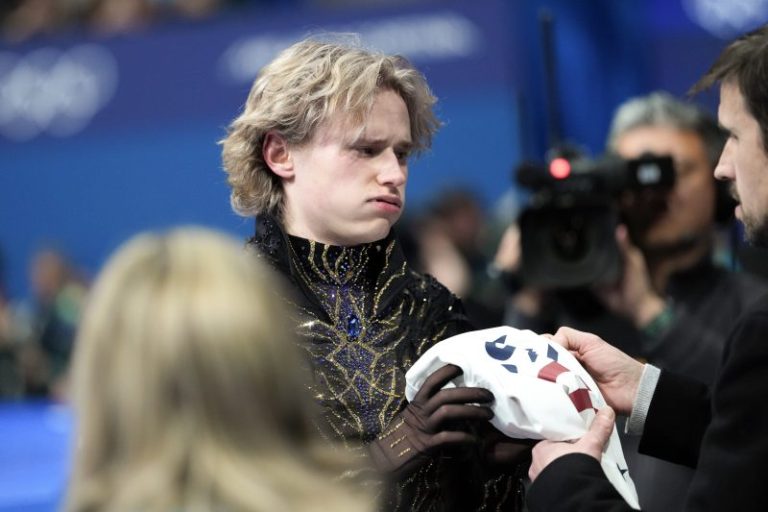
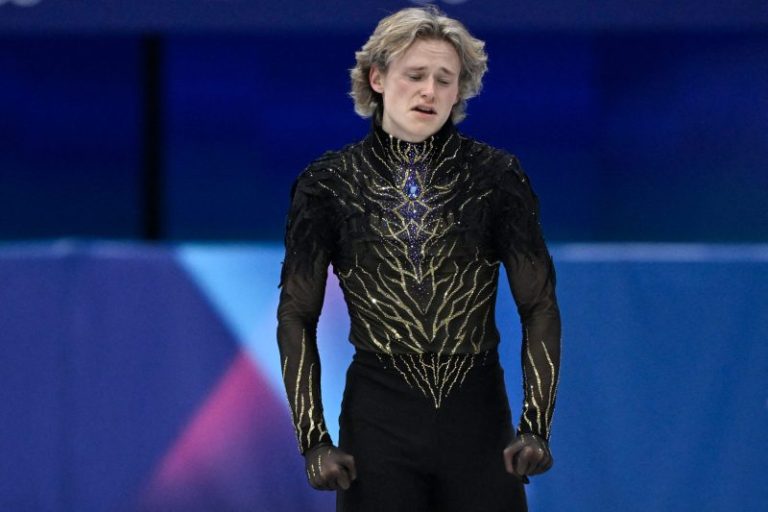
MILAN — Ilia Malinin finished his long program in tears, not triumph. In the most shockingly devastating performance by a favorite in Olympic figure skating history, the skater who was expected to win the gold medal in the men’s figure skating competition finished eighth.

Yes, eighth.

The Quad God was eighth. 

If anyone ever wondered just how intense Olympic pressure is, well, now we know. Malinin, 21, came into the men’s final with a solid five-point lead. He looked invincible. Then the other skaters closest to him started making all kinds of mistakes, not skating well. What a gift this was for Malinin. All he had to do was land a few of his patented quadruple jumps and the Olympic gold medal was his. 

But he couldn’t do it. Early in the long program, he popped his quad axel into thin air, then doubled a quad loop and fell on other jumps not once but twice. 

‘The pressure of the Olympics really gets you,” Malinin said afterward, answering every question calmly and completely. “The pressure is unreal. It’s almost like I wasn’t aware of where I was in the program. Usually I have more time and more feeling of how it is, but this time, it all went by so fast, and I really didn’t have time to make those changes or make that process different.”

The skater most in control of the sport the past four years was lost on the ice.

‘Coming into the free program, I was really confident,” he said, “just really feeling good about it, and then it’s like it’s right there, and it just left your hands.’

Malinin was so loose going into the final group of skaters for the long program that he teasingly faked doing a backflip as he walked out for his warmup, shaking a finger to the audience as if to say, not yet. Who does that as they march out for the most nerve-wracking moment of their lives? No one, except Malinin. 

But then he had a long wait through the five other skaters right behind him in the standings, 40 minutes in all. Something happened when he came out for his long program. His face looked tense. His bravado was gone. He looked worried, nervous. 

When the mistakes started happening, he couldn’t stop them. 

‘My life has been through a lot of ups and downs, and just before getting into my starting pose, I just felt all of those experiences, memories, thoughts really just rush in, and it just felt so overwhelming. I didn’t really know how to handle it in that moment,” he said.

Delightfully brash, but always with an impish smile, Malinin had been preparing for this moment for quite a few years, winning the last four U.S. titles and last two world championships. He hadn’t lost a competition since 2023. He had welcomed and even embraced the pressure building along the way. It had all been part of his dream.

Until that dream turned into a nightmare.

Get our Chasing Gold Olympics newsletter in your inbox for coverage of your favorite Team USA athletes

This post appeared first on USA TODAY

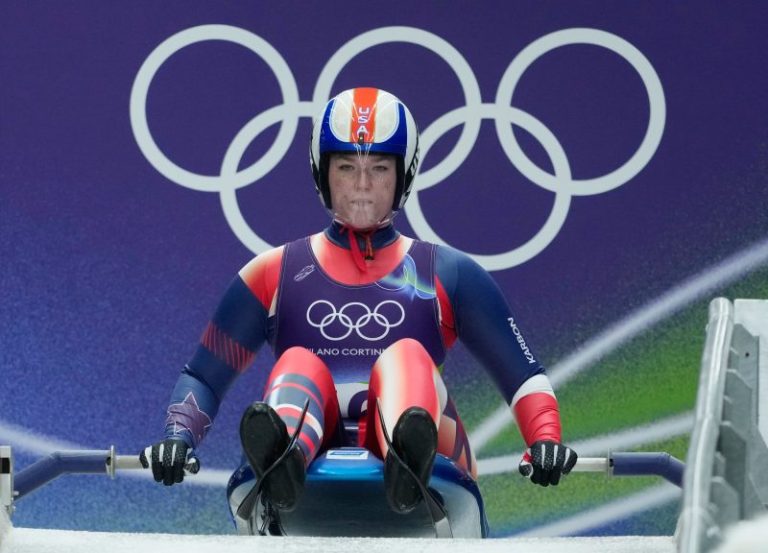
CORTINA D’AMPEZZO, Italy – Growing up in Park City, Utah, home of several sports for the 2002 Winter Olympics, Ashley Farquharson was surprised to learn not everyone in America knew what luge was.

Not every child grows up lying flat on their backs and sliding down an ice track feet first under six Gs of pressure?

As she’s gotten older, Farquharson has realized her experience was the unique one. With access to the same venues used in 2002 and after school programs like the Youth Sports Alliance (YSA), 41 Park City athletes are competing in the 2026 Winter Olympics. Farquharson, 26, said she’s part of the first generation to benefit from 2002’s legacy.

Looking ahead to 2034, when the Olympics return to Utah, Farquharson is passionate about making winter sports more accessible. Team USA’s third women’s luge medalist could be anywhere right now. So, what does increasing accessibility to winter sports look like?

“It looks like dismantling systems that have monetized it for their own personal gain,” Farquharson told USA TODAY. “Not only is it becoming inaccessible because of climate change and because of capitalism, but also because kids are being forced to specialize so early. So there’s a lot of components that go into it, but I want youth to know that if they want to pursue a sport, it will be possible for them, and it should be fun for them.”

A 2015 study out of Harvard defines sport specialization as “year-round training (greater than 8 months per year), choosing a single main sport, and/or quitting all other sports to focus on 1 sport.” The same study found that specialized training in young athletes leads to increased risk of injury and burnout. 

A 2020 study in the Orthopaedic Journal of Sports Medicine found highly specialized athletes had 1.72 times greater odds of injury. Johns Hopkins Medicine reported that an estimated 70% of young athletes quit organized sports by age 13, and athletes who specialize at a young age are at risk of mental health problems like depression, stress, anxiety, unhealthy perfectionism and associating winning with self-worth. The American Academy of Pediatrics’ recommends delaying specialization until late adolescence, or 15-16 years old.

That’s about the age Farquharson decided to take luge more seriously, leaving behind a promising softball career in favor of Olympic pursuits. “I did love softball,” she said. “I do miss it still.”

Coaches told her she could’ve earned a college scholarship, but her family reminded her she could go to college whenever. She’s currently pursuing a business degree from Purdue.

“Don’t let the idea that you have to go to college right now hold you back from something potentially greater,” they said.

Farquharson wants athletes to know specializing any earlier than 15-16 would risk damaging their bodies before they have a chance to grow into them.

“When you’re a kid, you’re still developing every possible form of athleticism, right? It’s not like you need to have super fast sprints when you’re 7. You don’t even have legs yet!

“So I guess I would just say that it’s OK to not be good at something and still enjoy it. It’s OK not to be good at something and still want to pursue it. And it’s OK to do more than one thing.”

Skeleton Olympian Mystique Ro broke it down in aGoFundMepost last month.

Each season, she wrote, costs “well over $25,000.” Logistics – such as flights, rental cars, lodging – around $12,000; Training – gym fees, sliding fees and race fees – around $6,000; Nutrition – supplements and food – around $5,000-$7,000; and equipment, more than $11,000. 

“There are pieces of our sled (runners) that cost $700-1,000 per set,” she added. “One training run down the track costs, on average, 45 euro/trip.” As the top-ranked U.S. skeleton athlete regardless of gender, Ro posted on TikTok in July that she received a team-high stipend of $2,250 per month, or $27,000 per year.

Then there’s climate change. A 2024 study published in Current Issues in Tourism found that of 93 past and potential Winter Olympics and Paralympic host cities, only 52 would be reliable for the Games. Even if countries live up to their policies and pledges, which isn’t guaranteed. 

All the more reason Utah’s existing infrastructure is crucial for Team USA’s Winter Olympic pipeline. The same way NCAA sports are touted as a feeder system for the Summer Games, YSA’s Get Out & Play and ACTiV8 programs give children in Park City the opportunity to try winter sports. More than 3,200 children participate annually, up from 800 when YSA first began after the 2002 Games.

Seven athletes competing in 2026 participated in YSA’s Get Out & Play program or received direct funding from the alliance. Another 17 came up through YSA-affiliated clubs.

Farquharson has been sliding since age 11, having enrolled in YSA while attending Ecker Hill Middle School. Now she’s part of the White Castle USA Luge Slider Search, the program’s largest national recruiting effort established in 1985 to extend luge’s reach. Athletes age 10-13 are targeted and taught positioning, steering and stopping on wheeled sleds at stops around the country. 

Those who show the most promise are invited to Lake Placid, New York; Muskegon, Michigan; or Park City for an opportunity to slide on ice and be selected to the next year’s development team.

As far as her participation in a home Games eight years from now, Farquharson said she “can’t rule it out,” though competing at 34 “feels like a big ask.

“It would definitely be a very cool full-circle moment for me.”

Reach USA TODAY Network sports reporter Payton Titus at ptitus@gannett.com, and follow her on X @petitus25.

This post appeared first on USA TODAY

MILAN − Lindsey Vonn posted another injury update following her devastating crash at the 2026 Winter Olympics, saying she has more surgeries on deck.

In an Instagram video shared on Friday, Feb. 13, the downhill skier thanked people who have been sending her flowers and gifts, saying, ‘It’s just been so amazing and really helped me a lot,’ before detailing what’s next in her recovery.

‘It’s been a quite hard few days here in the hospital here. I’m finally feeling more like myself, but I have a long way to go,’ Vonn said. ‘Tomorrow, I’ll have another surgery and hopefully that goes well. Then I can potentially leave and go back home, at which point I’ll need another surgery. Don’t know exactly what that entails until I get some better imaging.

‘That’s kind of where I’m at right now. I am just in the hospital, very much immobile, but I have a lot of friends and family coming to visit,’ she said.

Vonn has already undergone three surgeries since the crash. The surgery she said she is scheduled for Saturday will mark four and a fifth is slated for when she is able to return home. She thanked the medical team for starting the road to her recovery, and offered some words of encouragement to the rest of the U.S. Olympians in Milano Cortina.

‘Go Team USA, it’s been great to watch and really lifted my spirit,’ Vonn said.

What happened to Lindsey Vonn?

Vonn hooked the fourth gate with her right arm, which sent her spinning and hurtling into the hard, packed snow. She tumbled end over end several times before coming to a stop.

‘Things just happen so quick in this sport,’ U.S. teammate Bella Wright said after the race. ‘It looked like Lindsey had incredible speed out of that turn, and she hooked her arm and it’s just over just like that.’

The three-time Olympic medalist remained prone in the snow, and she could be heard wailing in pain. The gasps and groans from fans faded into shocked silence as medics worked on her. Vonn remained on the course for approximately 13 minutes before being loaded into a helicopter.

What is Lindsey Vonn’s injury?

In an Instagram post on Feb. 9, Vonn shared the devastating news that she suffered a complex tibia fracture that will require multiple surgeries. The 41-year-old updated fans on Feb. 11 after a third surgery in Italy and included some gruseome photos of her progress .

A tibia fracture is a break in the shin bone that is an emergency needing immediate treatment. ‘Your tibias are some of the strongest bones in your body. It usually takes a lot of force to break one,’ according to the Cleveland Clinic. ‘You probably won’t be able to stand, walk or put weight on your leg if you have a broken shin bone.’

A complex fracture involves multiple breaks in a bone and damaged soft tissue, according Yale Medicine. Symptoms include extreme pain, numbness and, sometimes, a bone that protrudes through the skin. Treatment involves stabilization and surgery.

Lindsey Vonn crash video

NBC broadcasts the Olympics and posted video of Vonn’s crash .

USA TODAY Sports’ Samantha Cardona-Norberg breaks down Linsdey Vonn’s crash just after it happened.

Fans went silent as soon as Vonn crash, reacting with shock, grief and later support as the helicopter lifted her into the sky. USA TODAY Sports talked to some fans after the crash .

Is Lindsey Vonn OK?

Vonn was in obvious pain after the crash, but she was moving her arms, head and neck.

About 18 minutes after the crash, the helicopter slowly began flying toward Cortina. ‘Let’s let Lindsey Vonn hear us!’ the American announcer said as the chopper flew away with her, and the crowd cheered and applauded.

Vonn’s sister Karin Kildow was at the course today for the downhill and spoke to NBC reporters during their live broadcast:

‘I mean that definitely was the last thing we wanted to see and it happened quick and when that happens, you’re just immediately hoping she’s okay. And it was scary because when you start to see the stretchers being put out, it’s not a good sign,’ Kildow said. ‘But she really … She just dared greatly and she put it all out there. So it’s really hard to see, but we just really hope she’s okay.

‘She does have all of her surgeons and her PT staff here and her doctors, so I’m sure they’ll give us a report and we’ll meet her at whatever hospital she’s at.’

Lindsey Vonn torn ACL

It was second time in as many weeks Vonn left a mountaintop on a chopper. She fully ruptured her left ACL, sustaining meniscus damage and bone bruising , in a downhill crash on Jan. 30, in the final World Cup event prior to the start of the Olympics.

Vonn is also skiing with a partial replacement of her right knee. She had dominated the sport before the crash, making the podium in all five downhill races this season and winning two of them.

Despite the latest injury, Vonn was determined to race at her fifth and final Olympics. She said her knee felt stable and strong, and she had spent the last week doing intense rehab , pool workouts, weight lifting and plyometrics. She skied both training runs, posting the third-fastest time in the second run before it was canceled because of fog and snow.

Lindsey Vonn torn ACL

Vonn is 41 and was skiing in her fifth Winter Olympics (2002, 2006, 2010, 2018, 2026). She has won three Olympic medals (1 gold, 2 bronze).

This post appeared first on USA TODAY

Athletes from more than 90 countries will compete for Winter Olympic medals in 116 events over 16 days, and USA TODAY is keeping a tally of every nation finishing on the podium. Here’s a look at the latest medal standings on the morning of Saturday, Feb. 14, as well as when each medal event will take place.

USA TODAY Sports has a team of more than a dozen journalists on the ground in Italy to bring you behind the scenes with Team USA and keep you up to date with every medal win, big moment and triumphant finish. Get our Chasing Gold newsletter in your inbox every morning and join our WhatsApp channel to get the latest updates right in your texts.

Broadcast coverage of the 2026 Milano Cortino Winter Olympics is airing exclusively airing across NBC’s suite of networks with many competitions airing live on its streaming service, Peacock, which you can sign up for here .

What is the medal count at the 2026 Milano Cortina Olympics?

All data accurate as of Saturday, Feb. 14, 2026, at 8:49 a.m.

Meet Team USA 2026: Get to know the athletes behind the games

1. Norway: 19 Total (9 Gold, 3 Silver, 7 Bronze)
2. Italy: 18 Total (6 Gold, 3 Silver, 9 Bronze)
3. United States: 16 Total (4 Gold, 8 Silver, 4 Bronze)
4. Japan: 14 Total (3 Gold, 3 Silver, 8 Bronze)
5. Austria: 12 Total (3 Gold, 6 Silver, 3 Bronze)
6. Germany: 11 Total (4 Gold, 4 Silver, 3 Bronze)
7. France: 10 Total (4 Gold, 5 Silver, 1 Bronze)
8. Sweden: 9 Total (4 Gold, 4 Silver, 1 Bronze)
9. Switzerland: 7 Total (4 Gold, 1 Silver, 2 Bronze)
10. Netherlands: 7 Total (3 Gold, 3 Silver, 1 Bronze)
11. Canada: 7 Total (0 Gold, 3 Silver, 4 Bronze)
12. Czech Republic: 4 Total (2 Gold, 2 Silver, 0 Bronze)
13. South Korea: 4 Total (1 Gold, 1 Silver, 2 Bronze)
14. China: 4 Total (0 Gold, 2 Silver, 2 Bronze)
15. Australia: 4 Total (3 Gold, 1 Silver, 0 Bronze)
16. Slovenia: 2 Total (1 Gold, 1 Silver, 0 Bronze)
17. Poland: 2 Total (0 Gold, 2 Silver, 0 Bronze)
18. New Zealand: 2 Total (0 Gold, 1 Silver, 1 Bronze)
19. Bulgaria: 2 Total (0 Gold, 0 Silver, 2 Bronze)
20. Finland: 2 Total (0 Gold, 0 Silver, 2 Bronze)
21. Kazakhstan: 1 Total (1 Gold, 0 Silver, 0 Bronze)
22. Latvia: 1 Total (0 Gold, 1 Silver, 0 Bronze)
23. Belgium: 1 Total (0 Gold, 0 Silver, 1 Bronze)
24. Great Britain: 1 Total (1 Gold, 0 Silver, 0 Bronze)

2026 Winter Olympics medal events schedule

Feb. 14

FREESTYLE SKIING: Women’s Dual Moguls Final
CROSS-COUNTRY SKIING: Women’s 4×7.5km Relay
ALPINE SKIING: Men’s Giant Slalom Final
BIATHLON: Women’s 7.5km Sprint
SPEED SKATING: Men’s 500m
SKELETON: Women’s Final
SKI JUMPING: Men’s Large Hill
SHORT TRACK: Men’s 1500m

Feb. 15

BIATHLON: Men’s 12.5km Pursuit
FREESTYLE SKIING: Men’s Dual Moguls Final
CROSS-COUNTRY SKIING: Men’s 4×7.5km Relay
ALPINE SKIING: Women’s Giant Slalom
SNOWBOARDING: Mixed Team Cross Final
BIATHLON: Women’s 10km Pursuit
SPEED SKATING: Women’s 500m
SKELETON: Mixed Team
SKI JUMPING: Women’s Large Hill

Feb. 16

SHORT TRACK: Women’s 1000m
ALPINE SKIING: Men’s Slalom
FIGURE SKATING: Pair Skating Free Skate
FREESTYLE SKIING: Women’s Big Air Final
SKI JUMPING: Men’s Super Team Final Round
BOBSLED: Women’s Singles

Feb. 17

NORDIC COMBINED: Large Hill/10km: 10km
SNOWBOARDING: Women’s Slopestyle Final
BIATHLON: Men’s 4×7.5km Relay
SPEED SKATING: Men’s, Women’s Team Pursuit Finals
BOBSLED: Men’s Doubles

Feb. 18

CROSS-COUNTRY SKIING: Women’s, Men’s Team Sprint Free Final
FREESTYLE SKIING: Women’s Aerials Final
SNOWBOARDING: Men’s Slopestyle Final
ALPINE SKIING: Women’s Slalom
BIATHLON: Women’s 4x6km Relay
SHORT TRACK: Women’s 3000m Relay
SHORT TRACK: Men’s 500m

Feb. 19

FREESTYLE SKIING: Men’s Aerials Final
SKI MOUNTAINEERING: Women’s, Men’s Sprint
NORDIC COMBINED: Team Sprint/Large Hill 2×7.5km
ICE HOCKEY: Women’s Final
SPEED SKATING: Men’s 1500m
FIGURE SKATING: Women’s Free Skate

Feb. 20

FREESTYLE SKIING: Women’s Cross Final
BIATHLON: Men’s 15km Mass Start
SPEED SKATING: Women’s 1500m
CURLING: Men’s Bronze Medal Game
FREESTYLE SKIING: Men’s Halfpipe Final
SHORT TRACK: Men’s 5000m Relay Final
SHORT TRACK: Women’s 1500m Final

Feb. 21

CROSS-COUNTRY SKIING: Men’s 50km Mass Start Classic
FREESTYLE SKIING: Mixed Team Aerials Final
FREESTYLE SKIING: Men’s Cross Final
SKI MOUNTAINEERING: Mixed Relay
CURLING: Men’s Gold Medal Game, Women’s Bronze Medal Game
BIATHLON: Women’s 12.5km Mass Start
SPEED SKATING: Men’s, Women’s Mass Start
FREESTYLE SKIING: Women’s Halfpipe Final
ICE HOCKEY: Men’s Bronze Medal Game
BOBSLED: Women’s Doubles: Heat 4

Feb. 22

CROSS-COUNTRY SKIING: Women’s 50km Mass Start Classic
CURLING: Women’s Gold Medal Game
BOBSLED: Men’s Quads Final
ICE HOCKEY: Men’s Gold Medal Game

This post appeared first on USA TODAY

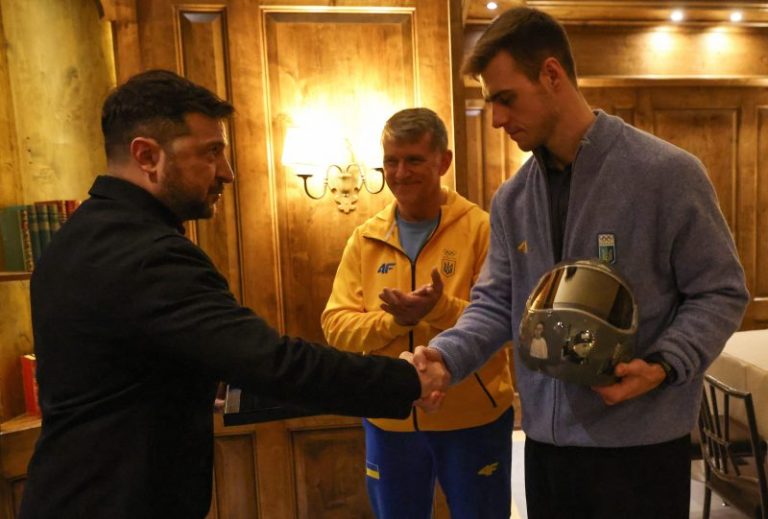
CORTINA D’AMPEZZO, Italy — The Ukrainian skeleton racer disqualified from the 2026 Milano Cortina Olympics over his remembrance helmet has received his country’s Order of Freedom.

Ukraine president Volodymyr Zelenskyy presented Vladyslav Heraskevych with the honor during a meeting in Munich, Germany, on Friday, Feb. 13, hours after the Court of Arbitration for Sport denied the athlete’s appeal of his disqualification. CAS said that while it sympathized with Heraskevych’s wish to memorialize athletes killed in Russia’s unprovoked war on Ukraine, the helmet was a violation of the International Olympic Committee’s ban on political statements on the field of play.

‘Remembrance is not a violation,’ Zelenskyy wrote in a social media post that included photos of him meeting with Heraskevych and his father, Mykhailo, who is also his coach.

‘Ukraine will always have champions and Olympians. But above all, Ukraine’s greatest asset is Ukrainians – those who cherish the truth and the memory of the athletes killed by Russia, athletes who will never compete again because of the Russian aggression,’ Zelenskyy said. ‘Thank you for your stance, your strength, and your courage. Glory to Ukraine!’

Heraskevych’s helmet has images of more than 20 athletes and coaches killed since Russia invaded Ukraine almost four years ago. They include figure skater Dmytro Sharpar, who competed with Heraskevych during the 2016 Winter Youth Olympics.

The IOC had told Heraskevych repeatedly he could not wear the helmet during competition and offered him alternatives, including a black armband while he raced and the ability to carry the helmet with him afterward. But Heraskevych resisted, saying the helmet was a remembrance, not a political statement.

He met with IOC president Kirsty Coventry Thursday, Feb. 12, hours before the men’s skeleton competition was to begin. When he said he still intended to wear the helmet, he was disqualified.

Heraskevych’s case has roiled the Winter Olympics, with his defenders saying this is yet another example of the IOC going out of its way to accommodate Russia. Ukrainian athletes in other sports, as well as some of Heraskevych’s competitors, have knelt in protest or expressed their support for his cause.

This is not the first time Heraskevych has used his Olympic platform to protest Russia’s aggression toward his country. He displayed a small sign with ‘No war in Ukraine’ after his final run at the 2022 Olympics in Beijing.

Russia invaded Ukraine two weeks later.

This post appeared first on USA TODAY

MILAN — It was set to be a coronation inside Milano Ice Skating Arena. The American prodigy, the “Quad God” Ilia Malinin was going to take his place in figure skating lore and become the 2026 Winter Olympic champion.

He felt good throughout Friday, Feb. 13. He figured all he needed to was just trust the process he had gone through for the past two years of his dominant run. He has trained and practiced his whole life for this moment. 

All was well — until it was time to take the ice. 

Before he stepped out into a full arena, eager to celebrate an historic achievement, he knew something was wrong, and it planted the first seeds of a disastrous night.

“Going into that starting post,” Malinin said. “I just felt like all the just traumatic moments of my life really just started flooding my head. There’s just so many negative thoughts that just flooded into there.

‘I just did not handle it.’

It was a stunner in the men’s singles free skate, as not only did the 21-year-old U.S. star not win gold, but he didn’t even reach the podium, finishing in eighth place, the worst competition result of his senior career since March 2022.

There are so many questions as to what happened. After the short program, Malinin set himself up for another victory. After so many other skaters before him struggled, it was as if the gold medal was being handed to him on a golden platter.

Even though he had a bad feeling, immediately after the program he was still trying to understand how everything unraveled.

‘I still haven’t been able to process what just happened,’ he said. ‘It’s a lot of mixed emotions.”

The first sign of trouble came on his planned quad Axel; his signature move, and one he had yet to do in Milano Cortina. He geared up for it — only to bail on it midair, resulting in just a single Axel.

Still, everything felt fine. Then there was the botched quad loop, scored as a double loop. The quad lutz? Also missed. Things just continued to unravel, and by the time he landed a backflip in the later part of his program, it didn’t matter. Gold, and an Olympic medal, just slipped through his hands.

For such a shocking result, everyone wants to know what happened. Given how so many skaters prior to Malinin kept falling, was there something up with the ice?

‘Maybe the ice was also not the best condition for what I would like to have,” Malinin said. ‘That’s something I cannot complain about, because we’re all put in that situation where we have to skate no matter what happens.’

Was this some sort of karma for him not making the 2022 Olympic team in Beijing?

‘I think if I went to ’22, then I would have had more experience and know how to handle this Olympic environment. But also, I don’t know what the next stages of my life would look like if I went there,’ Malinin said.

OK, so what was it?

If he had to pinpoint it, the pressure just got to him, at the worst possible time.

“People only realized the pressure and the nerves that actually happened from the inside. It was really just something that overwhelmed me,” he said. ‘I just felt like I had no control.’

You didn’t need to really know figure skating to know the expectations for Malinin. He was hyped up as the next great American athlete, a once-in-a-generation skater. All the build-up around the Winter Olympics was he didn’t just have a chance to win gold, he was going to win it. The only real question was if he was going to shatter Nathan Chen’s Olympic and world record scores.

But then we were reminded: nothing is guaranteed in sports. When the lights are at its brightest, when the world is watching – and expecting – perfection, it can break you. Especially for someone that was just able to order alcohol in the U.S. two months ago, and still feels like a teenager.

‘It’s not easy,” he said. ‘Being the Olympic gold hopeful is really just a lot to deal with, especially for my age.”

There is no doubt this will be something that will sting for some time. It’s going to be something that will hover above his head, and something he will have to work to shake off for the next four years until the 2030 Winter Olympics in the French Alps. Until then, people are going to remember what happened in 2026.

So where does the ‘Quad God’ go from here?

‘It wasn’t my best skate, and it was definitely something I wasn’t expecting, and it’s done,” he said. ‘I can’t go back and change it, even though I would love to do it. But from here, it’s just regrouping, figuring out what to do next.”

A devastating outcome that turned a coronation into a funeral.

‘I felt like this is what I wanted to do. This is what we plan. This is what I practice, and really just needed to go out there and just do what I always do,” he added. ‘That did not happen, and I don’t know why.”

This post appeared first on USA TODAY