Archive

2026

Browsing

Médecins Sans Frontières (MSF), commonly known as Doctors Without Borders, suspended noncritical medical operations at Gaza’s Nasser Hospital in Khan Younis, citing security concerns.

MSF said it made the decision, as of Jan. 20, due to concerns about the management of the hospital and what it described as a pattern of unacceptable incidents within the compound. 

The suspension had not been widely reported at the time, and it was not immediately clear when the decision was first publicly posted.

MSF’s frequently asked questions page, where the update appears, shows it was last revised on Feb. 11.

In recent months, the international medical humanitarian aid group said staff and patients have reported the presence of armed and sometimes masked men, intimidation, arbitrary arrests of patients and the suspected movement of weapons on hospital grounds.

‘While none of these incidents occurred in parts of the hospital compound where MSF works, they pose serious security threats to our teams and patients,’ MSF wrote on its website.

‘MSF formally expressed its strong concern to relevant authorities and emphasized the incompatibility of such violations with our medical mission. Hospitals must remain neutral, civilian spaces, free from military presence or activity, to ensure the safe and impartial delivery of medical care,’ the group continued. ‘MSF calls on all armed groups, Hamas, and Israeli forces to respect medical facilities and ensure the protection of civilians.’

In a statement issued Saturday, Nasser Hospital rejected what it called ‘false, unsubstantiated, and misleading allegations’ by MSF regarding the presence of weapons or armed groups inside the facility.

‘These allegations are factually incorrect, irresponsible, and pose a serious risk to a protected civilian medical facility. The Gaza Strip is under an extreme and prolonged state of emergency resulting from systematic attacks on civilian institutions,’ it said. ‘Under these conditions, isolated unlawful actions by uncontrolled individuals and groups have occurred across society, including attempts by some to carry weapons.’

Hospital officials said a civilian police presence had been arranged to help safeguard patients, staff and infrastructure and called on MSF to retract its claims and reaffirm its commitment to medical neutrality.

The Israel Defense Forces (IDF) said Sunday on X that it has intelligence indicating Hamas is using Nasser Hospital as a headquarters and military post, reiterating long-standing allegations that the militant group embeds operations within civilian facilities in Gaza.

‘For over two years, the IDF and the defense establishment has warned about the cynical use by terrorist organizations in Gaza of hospitals and humanitarian shelters as human shields to conceal terrorist activity,’ it wrote.  

Hamas has previously denied using hospitals or other civilian facilities for military purposes.

This post appeared first on FOX NEWS

MILAN — Figure skating is more than halfway done at the 2026 Winter Olympics, with the pairs next to take the ice in Milano Cortina.

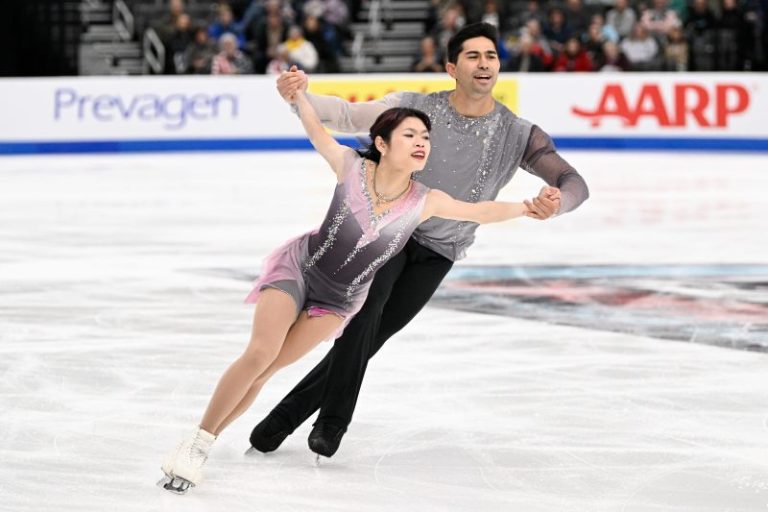
The U.S. will have two teams competing on Sunday, Feb. 15, with team gold medalists Danny O’Shea and Ellie Kam, as well as Spencer Akira Howe and Emily Chan. While Team USA boasts top contenders in nearly every figure skating discipline, it’s not necessarily the strongest in pairs. Team USA hasn’t won a medal in pairs since 1988, and while that doesn’t appear it will be broken in 2026, there has been plenty of figure skating surprises throughout the Games, and more could be in store.

See the 2026 Medal Count Here

Olympic figure skating start time

The pairs’ short program begins at 1:30 p.m. ET.

How to watch Olympics figure skating today

The pairs’ event will air on USA Network at 1:30 p.m. ET. It will then air on NBC beginning at 3 p.m. ET. The entire event will stream on Peacock.

This post appeared first on USA TODAY

PHOENIX — One was a 36-year-old career journeyman infielder from Venezuela who hadn’t produced a hit in more than a month.

The other a 26-year-old reliever with his fourth team in 11 months who wasn’t even on the playoff roster the first three rounds.

Who would have imagined that in a clubhouse full of All-Stars and future Hall of Famers, Miguel Rojas and Will Klein would be honest-to-goodness Los Angeles Dodgers World Series heroes, still basking three months later from the most glorious moments of their careers?

Rojas, who hit perhaps the most unlikely home run in World Series history, will not only forever be remembered in Dodgers lore for not that ninth-inning Game 7 homer, but also saving the game with a spectacular defensive play in the bottom of the frame.

“I’ve watched that moment over and over so many times, but it’s still hard to believe it happened,’ Rojas tells USA TODAY Sports. “It’s just overwhelming. I’ve always wanted to have a moment in my career where I feel valuable, especially on the offensive side. And then when you do something like that, you know it’s going to be remembered for a long time.

“Probably forever.’

Klein was working out in Arizona and wasn’t even on the Dodgers’ postseason roster until Alex Vesia left the team before the World Series to be with his wife after the loss of their newborn daughter. He was summoned in the 15th inning of Game 3, and then pitched four shutout innings in the 6-5, 18-inning victory.

“It’s still crazy to think about,’ Klein says. “I mean, I was hearing from people I went to high school with and old teams. There were people I went to middle school and high school with that didn’t even know I was playing baseball. They saw me on TV, and started sending me random stuff.’

‘No one expected’ Miguel Rojas home run

The Dodgers were down to their last two outs, trailing the Toronto Blue Jays, 4-3, in the ninth inning of Game 7. Rojas, who hadn’t had a hit in an entire month, stepped to the plate facing Blue Jays closer Jeff Hoffman. Rojas worked the count to 3-and-2 when Hoffman tried to fool him with a slider. Rojas belted it over the left field wall and the screaming crowd at the Rogers Centre went dead silent.

The only sound you heard was the Dodger bench and scattered fans screaming in euphoria with Rojas barely able to feel his feet trotting around the bases.

“No one expected Miguel Rojas to hit that home run,’ Dodgers manager Dave Roberts says. “No one.’

Still, it looked like it might be all forgotten when the Blue Jays loaded the bases with one out in the bottom of the ninth. The Dodgers pulled the infield in, and Daulton Varsho hit a bouncer to the right side of Rojas. He snared the ball, but then slipped, and had his momentum carrying him towards second base. Rojas set, and fired home just in the nick of time to nail Isiah Kiner-Falefa at the plate and prevent the winning run.

Two innings later – and after Yoshinobu Yamamto’s 2 ⅔ shutout innings in relief on no days’ rest – the Dodgers were back-to-back World Series champions with Yamamoto winning the World Series MVP.

With the Dodgers all gathering for the first time since their World Series parade, everyone still is talking about Rojas and Klein’s heroics.

“(Rojas) is one of the best teammates I ever had, and just one of the best people in baseball,’ says third baseman Max Muncy, who delivered an eighth-inning homer in Game 7 then made his own big defensive play. “So, for something like that to happen to him, after all of the work he out in and the mentality he had about certain situations, it was so well deserved.

“It was like how the game was rewarding him for how he handled his role last year.’

Rojas, who didn’t even play the first five games of the World Series, and was informed only a text message from manager Dave Roberts that he was starting Game 6 in Toronto, never complained about his role. Sure, he wanted to play more, but once Mookie Betts shifted from right field to shortstop, he did everything possible to help Betts improve so dramatically defensively that Betts became a Gold Glove finalist.

And in one glorious moment, it was Rojas who went from an understudy to an Academy Award winning performance, getting congratulatory messages from the likes of Hall of Famer Derek Jeter, Don Mattingly, and the scout who signed him out of Venezuela.

“That’s why I felt so great after it happened, not just because I hit a home run that tied the game,’ Rojas says, “but seeing the reaction of the people that I really care about. It was so cool. And everybody in the media had something good to say about me.

“The biggest compliment for me is that a guy like me, in front of the whole team, Doc [Roberts] told them that the game honors me because I did things the right way. I’ll remember those words forever. That makes me feel like after the 20 years that I’ve been in professional baseball, I’ve been doing something good.’

Rojas, who plans to retire after the season and stay with the Dodgers in player development with hopes one day of being a manager, still has strangers stopping him and thanking him for his home run. He has had more autograph requests during the winter than he’s had in his entire life.

Yet, the question no one asks is which play meant to  him, the game-tying home run or the game-saving play in the bottom of the ninth inning that forced the game into extra innings.

“The home run is going to be something that people will remember forever because you’re two outs away from being done,’ Rojas says. “But the play, I mean that’s the hardest play I ever made because it’s do-or-die to not only win the game but lose your season. If I don’t make the play, the home run and everything is kind of our of the window.

“So, it’s really tough to put it into context because if I don’t hit the home run, I don’t make the play, and then if I don’t make the play, the homer doesn’t count. I’m just so proud I was able to come through when it counted.’

Will Klein: ‘No one knows who I am’

Klein was working out at the Dodgers’ spring-training complex in Phoenix when he got the emergency call to join the team in Toronto. Klein, who had spent most of the season pitching in Triple-A, threw a grueling 72 pitches across four innings in Game 3, the most he had thrown since he was at Eastern Illinois, and became an overnight hero.

He was congratulated by legendary Dodger Sandy Koufax, who shook his hand after the game.

“I didn’t think most people,’ Klein says, “even knew who I was.’

So now that he’s a World Series hero, do people recognize him now wherever he goes?

“I heard people say that everybody would know me now,’ Klein says, “but it hasn’t really changed. My wife and I went to Disneyland and Universal Studios, and maybe like two people recognized me. We’ll walk around Pasadena and LA, and no one knows who I am.’

Besides, Klein says laughing, it’s not like he’s Heisman winner Fernando Mendoza of Indiana University. Klein, born and raised in Indiana, is a diehard Hoosiers fan and says he may have celebrated the school’s football national championship harder than he did the Dodgers’ World Series win.

“I mean, to be the losingest team ever in college football history before that, and then win it all,’ Klein says, “it’s something I’ll remember forever. I remember going to games when Wisconsin would beat us like 82 to 20, and losing to teams like North Texas and Ball State, so it’s been a long ride.

“I can’t even imagine how many kids are going to be born in Indiana now named Fernando.’

While Rojas will be retiring after the 2026 season, Klein is hoping his World Series performance will kick-start his career. Hey, if you can throw four shutout innings in a World Series game, you’re sure not going to be fazed by a regular season relief appearance against the San Francisco Giants.

“It’s easy to look at it like that,’ Klein says, “but that doesn’t mean I’m going to automatically pitch well this year. I’ve still got to go out and put the work in each day, and use that confidence. But I can’t get lazy and think, ‘Oh, I’m going to be great just because I did that in one game of the World Series.”

It’s the same with the Dodgers, Roberts says. They had a bullseye on their back then, and they’ll have it now.

The Dodgers can’t simply throw $400 million worth of talent on the field each night and expect to automatically win. They have to move forward and focus on 2026 if they have a chance to make history, but still, no matter what transpires, those memories of that glorious 2025 World Series will live forever.

“Man, when I think about it,’ Roberts says, “it still blows my mind. Who would ever have thought that Miggy would hit that home run? Who could have ever thought that Will Klein was going to throw four scoreless innings in a World Series?

“But you have to have stuff like that go right for you.’

No matter who steps up as the hero.

Follow Nightengale on X: @Bnightengale

This post appeared first on USA TODAY

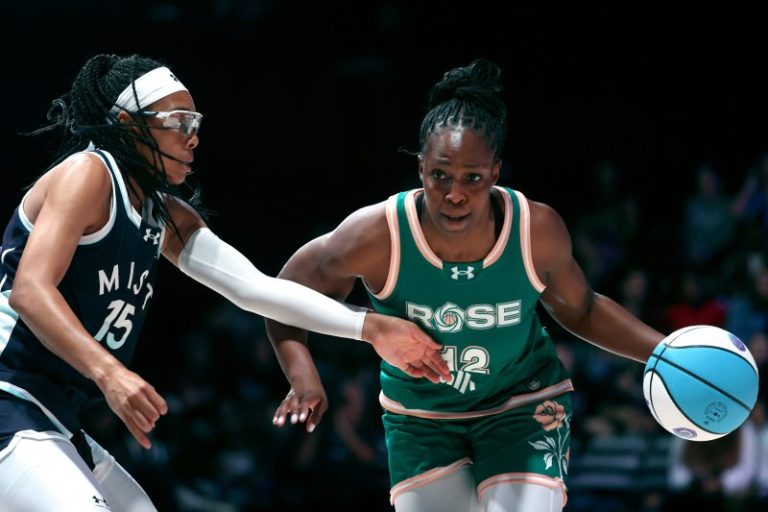
It was a battle of the Grays in Unrivaled 1-on-1 championship on Saturday night at Sephora Arena in Miami.

Rose BC’s Chelsea Gray fought back to defeat Mist BC’s Allisha Gray in the best two-out-of-three-games format. Chelsea won $200,000 as champion. Allisha Gray earned $50,000 as runner-up and Phantom BC’s Kelsey Plum and Phantom BC’s Aliyah Boston nabbed $25,000 each as semifinalists.

“Exhausted,” Chelsea said postgame. “Grateful. Humbled. Excited. Everything, man. I said it out there, a lot of people didn’t pick me to be sitting here talking to y’all. Keep on, you know, surprising people, I love it.”

Allisha won the first game, 7-0, before Chelsea came back to take the second game, 8-3. Allisha fought to a 6-0 lead in the final game before Chelsea went on a run to take the 7-6 victory and the big pay day. Chelsea is four-time WNBA champion, winning her first with the Los Angeles Sparks before three, including last season, with the Las Vegas Aces.

In the semifinals, Chelsea Gray fought back from a 8-0 deficit to Kelsey Plum and won, 12-8. Allisha Gray beat Aliyah Boston, 12-10.

This post appeared first on USA TODAY
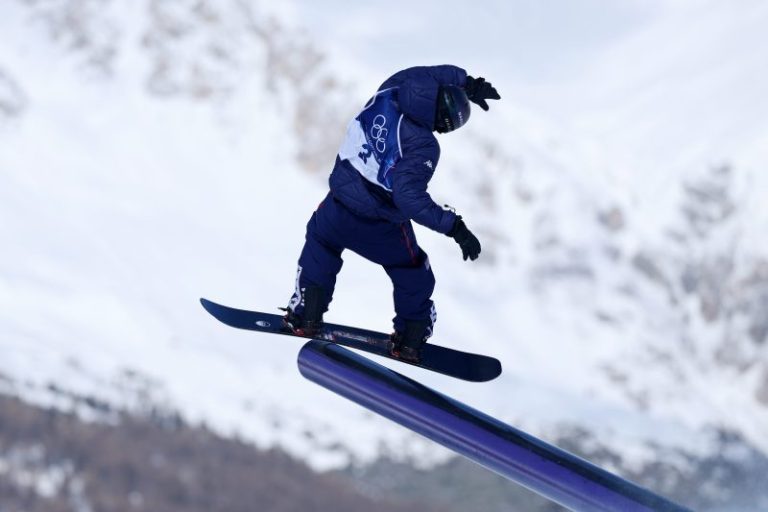
LIVIGNO, Italy – All’s well that ends well. Indeed, snowboarding’s Red Gerard is still alive in his pursuit of a second Olympic gold medal in the men’s slopestyle.

But as for the ordeal he’d just endured? ‘It was awful,’ he said.

Out of 12 riders to advance out of the 30-man qualifying field on Feb. 15 at Livigno Snow Park, Gerard finished 11th. Despite two relatively clean runs without an obvious stumble, his high score on the second (70.00) put him squarely on the bubble with more than 20 riders to go after him.

Two of those riders – Mons Rosland of Norway (69.63) and Eli Bouchard of Canada (69.51) – received scores just shy of 70. Others got close, too.

Yet Gerard, just barely, held a strong enough position to qualify for the Olympic men’s slopestyle finals Feb. 18.

‘Slopestyle is in this point right now where there’s 30 riders in here, and all 30 of those riders can win the contest,’ Gerard said. ‘It’s just such a heavy game. So you’re sitting there just nervous as all heck.’

Of the 12 finalists, three were Americans. Jake Canter posted a score of 70.53 early in the competition and had it hold up until the end. He finished 10th, just ahead of Gerard.

Meanwhile, Ollie Martin (78.30), the 17-year-old who just missed a medal in the big air competition earlier in these Games, placed a solid sixth in slopestyle qualifying.

‘It was definitely good motivation to keep doing better and hopefully get on this podium,” Martin said. ‘… I definitely like slopestyle more. It just feels safer. You’re able to have a run going. It’s more creative. You’re about to show your personality more with the course.”

Event organizers moved up the men’s and women’s slopestyle qualifications a day for fears of poor weather on Feb. 16, which caused an adjustment in plans for the competitors.

Canter’s girlfriend had just arrived, he said, and was ‘cruising around town just thinking I had another practice’ day when he got a text informing him otherwise.

‘It was a gift and a curse,” he said. ‘I didn’t have enough time to really think about it or overthink. But at the same time, didn’t prepare the way I wanted to.”

Gerard said he didn’t find out about the change until about 6 p.m. the night before.

‘We had ideas (of a schedule change) after practice at 2,” Gerard said, ‘but they did do a good job. They told us weather was coming in, and I think they made the right call. I don’t know. From my weather forecast, it looks like the next two, three days are going to be pretty hairy.’

Gerard won gold in slopestyle in Pyeongchang in 2018 and has been critical of the format that lumps together competitors in big air and slopestyle.

After this latest qualifying in Livigno, he bristled a bit about the slopestyle judging and said he’ll be going back to look at his run as well as others in preparation for the final.

‘Definitely re-look at probably the top section of the course, the rails,’ he said, “and try to probably go look at other peoples’ runs on what they liked and stuff. Just kind of do a little bit more homework.”

This post appeared first on USA TODAY

Members of President Donald Trump’s Board of Peace have pledged more than $5 billion in aid for Gaza, the president announced Sunday.

Trump made the announcement on Truth Social, saying the funding would be formally pledged during a Feb. 19 meeting in Washington, D.C. The Board of Peace was chartered in January and currently includes nearly 20 countries.

‘On February 19th, 2026, I will again be joined by Board of Peace Members at the Donald J. Trump Institute of Peace in Washington, D.C., where we will announce that Member States have pledged more than $5 BILLION DOLLARS toward the Gaza Humanitarian and Reconstruction efforts, and have committed thousands of personnel to the International Stabilization Force and Local Police to maintain Security and Peace for Gazans,’ Trump wrote.

‘Very importantly, Hamas must uphold its commitment to Full and Immediate Demilitarization. The Board of Peace will prove to be the most consequential International Body in History, and it is my honor to serve as its Chairman,’ he added.

Israel formally joined the Board of Peace last week ahead of Prime Minister Benjamin Netanyahu’s meeting with Trump at the White House.

Leaders from 17 countries participated in the initial Gaza Board of Peace charter signing ceremony in Davos, Switzerland, in late January, including presidents and other senior government officials from Latin America, Europe, the Middle East, and Central and Southeast Asia.

A handful of other countries were also invited by the White House to join, including Russia, Belarus, France, Germany, Vietnam, Finland, Ukraine, Ireland, Greece and China, among others. Poland and Italy on Wednesday said they would not join.

Trump has deployed the USS Abraham Lincoln carrier strike group and the USS Michael Murphy, a guided-missile destroyer, as his envoys meet with Iranian officials in Oman.

Other U.S. naval assets, including the USS Bulkeley, USS Roosevelt, USS Delbert D. Black, USS McFaul, USS Mitscher, USS Spruance and USS Frank E. Petersen Jr., are positioned across key waterways surrounding Iran, from the eastern Mediterranean and Red Sea to the Persian Gulf, and Arabian Sea.

Fox News’ Ashley Carnahan contributed to this report.

This post appeared first on FOX NEWS

Noahkai Banks may be young and still looking for his first U.S. men’s national team cap, but that hasn’t stopped Landon Donovan from predicting the defender will start at the 2026 World Cup.

Banks has become a regular starter this season for Augsburg, despite only recently turning 19. The 6-foot-4 defender is considered one of the best American center-back prospects in many years and has earned one USMNT call-up.

But the defender did not see the field last fall during his only USMNT camp, making next month’s camp massive for his World Cup hopes.

If he is to make a late charge toward a World Cup spot, Banks will likely need to earn a call-up for friendlies against Belgium and Portugal – the team’s last two games before Mauricio Pochettino names his World Cup squad.

Donovan is feeling bullish on the young defender’s chances. On his ‘Unfiltered Soccer’ show, the USMNT legend explained why he believes Banks won’t just make Pochettino’s World Cup squad, but will start this summer.

‘Tim Ream is locked and going to play. Chris Richards is more than locked and going to play. I think Pochettino wants this team to have the ability to play in a back three,’ he said. ‘I think the team performs best in a back three.

‘So your options become (Mark) McKenzie, Miles Robinson and even Noahkai Banks. You can maybe move Joe Scally if he makes the team. Alex Freeman can play there, maybe Antonee Robinson can play on the (right).

‘But I think (Banks is) a kid who’s played on the right side of a (back) three earlier this season, played on the left side of a (back) three. So he’s clearly comfortable. He’s playing in the Bundesliga every week as an 18-year-old. And I just think when push comes to shove, Pochettino might go, ‘OK, yeah, he’s young. But what are the alternatives?”

The teenager insisted that his only focus for now is on Augsburg, which is currently battling to avoid relegation from the Bundesliga.

‘I think it’s not the right moment to think about the World Cup, because we have a lot of games left here, and we want to win those games because we have goals for the season,’ he said.

‘A lot of players say it, but I really mean it: I really just focus on the games we have here. And then let’s see what happens in the summer.’

This post appeared first on USA TODAY
All season, it seemed as if the narrative around the Texas Tech basketball team has been they’re just sort of there.

In a long season such as this, when the college basketball is as good as ever, there are more great teams than ever and so much attention is given to the star-studded freshman class, players like JT Toppin and teams like the Red Raiders can go under the radar.

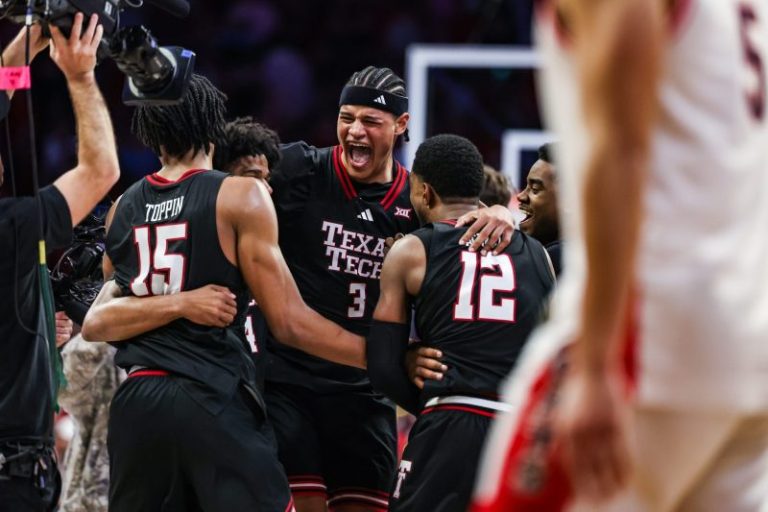
That shouldn’t be the case after the team’s latest triumph over one of the presumed No. 1 seeds in the NCAA tournament. Beating Arizona 78-75 in overtime on the Wildcats’ home floor may be a shock to some, but it’s merely more of what can be expected of Grant McCasland’s team.

You just have to be paying attention long enough to understand that.

Granted, the Red Raiders have taken their lumps this season. There’s no erasing that 30-point drubbing at the hands of Purdue in November. Losing to UCF in Orlando also wasn’t great — Kansas did it too, but they didn’t have Darryn Peterson, so it can be forgiven, to some extent.

Winning against Duke in Madison Square Garden got some deserved attention, though that didn’t last long. Having that win come just before Christmas made some forget about Tech being the only team (until last week) to hand the Blue Devils an L.

Even when Texas Tech’s gotten the better of Houston (nobody beats Houston in Big 12 play) and BYU, the focus coming out of those games was that the Red Raiders are really tough at home and most of the attention went to Kingston Flemings doing well and AJ Dybantsa not doing so well.

Some of that will follow Texas Tech again after this victory. Arizona’s own star freshman Koa Peat left the game with an injury and did not return. That certainly changed how the Wildcats were able to operate. That, too, will be a big talking point that will detract from what was achieved by the Red Raiders.

Shame, since the Red Raiders didn’t get that same benefit of the doubt when Christian Anderson missed the Kansas game. Sure, that was mentioned (briefly) before it became the, ‘Did you see what Darryn Peterson did?’ news cycle.

All of these freshmen are terrific. No doubt about it. Surefire lottery picks in the 2026 NBA draft. The issue at hand, though, is college is not the pros, and what those freshmen are doing isn’t anywhere near what Toppin has done this season, and he showed once again why any conversation around the Big 12 player of the year and first team All-America honors can’t continue without Toppin being at or near the top.

Toppin went for 31 points on 13-of-22 shooting and grabbed 13 rebounds, seven coming on the offensive glass against a much lengthier and physical Arizona frontline, with or without Peat. These are run-of-the-mill numbers for Toppin at this point, so commonplace they can be taken for granted.

It wasn’t just another manimal-like performance from Toppin, it was historic. He’s just the second player in the past 30 years to total 30 points and 10 rebounds in a road win against the No. 1 team in the country. It was just fourth similar stat line against nationally ranked teams this season, which is the most for any player of the past 20 years.

The two biggest plays of the night by Toppin didn’t involve him looking for a bucket. The first came with 2:05 left in overtime, when Toppin kicked it out to Donovan Atwell for what was a crucial 3-pointer.

And in the final seconds of the game, he collected an offensive rebound and got it to LeJuan Watts, who hit the free throw to make it a three-point game with four seconds left.

This Texas Tech team isn’t perfect, not by any stretch. But knocking off the Arizonas and Dukes and Houstons of the world is what this team is capable of on any given night. They probably won’t win every game the rest of the way (road trips to Iowa State and BYU await), but don’t forget the Red Raiders when filling out your March Madness bracket.

And in the meantime, remember the reigning Big 12 Player of the Year is also the player most deserving of the award again this season.

This post appeared first on USA TODAY
MILAN — Representing Team USA at the 2026 Winter Olympics carries a little more weight for Spencer Akira Howe. 

The pairs figure skater makes his Olympic debut in Milano Cortina, completing what has been a whirlwind past year for the California native. As he and partner Emily Chan fought for their spot on Team USA, it all came with Howe’s not typical job for a current athlete: a U.S. Army soldier.

It was always something Howe envisioned doing, but it seemed like it would have to go on the backburner.

‘From a very young age, had that thought in me, and I guess that drive to want to serve my country in that kind of capacity as a soldier,” Howe told USA TODAY Sports. “As I grew up and moved up in the ranks of skating, you could say that became less and less of a reality.”

That all changed in 2024.

Howe met a track and field runner who was in the U.S. Army’s World Class Athlete Program (WCAP), which “allows top-ranked Soldier-athletes to perform at the international level while also serving their nation in the military,” according to the U.S. Army. Active duty, National Guard and reserve soldiers can join while competing in national and international events. 

“A spark lit up in me,” Howe said. ‘It was a win-win.”

The skater enlisted in the U.S. Army in October 2024 and four months later, basic training began, becoming the first figure skater to be part of WCAP. Based in Fort Carson, Colorado, Howe was getting to do something he always wanted, going through all of the rigors new soldiers endure.

However, his problems switched. After being the primary focus for so long, figure skating was now in the back seat. Not ideal when an Olympic season is on the horizon.

“I wasn’t able to skate for the four months that I was gone during those trainings. I think that was definitely one of the most difficult things, logistically,” he said. “Being off of the ice for that long, it’s definitely not ideal. There was no way around it.”

Howe didn’t skate for nearly five months, returning to the ice in late June. It took a month for him to get reacclimated with the sport. However, he feels like it was a blessing in disguise; he was refreshed and learned to approach things differently after going through basic training.

“I come with more of a soldier mindset, and I look at things as tasks that as a soldier I need to complete,” he said. “Everything was so different, but for good reason.”

The 2025-26 season showed potential. Howe and Chan won bronze at the 2025 Trialeti Trophy and were fourth at 2025 Skate America. It all led to the 2026 U.S. figure skating championships, where Olympic spots were on the line.

It was a rocky start. The pair struggled in their short program with several falls, standings in eighth place out of 10 teams. Chan called it her worst nightmare and began to spiral. Then Howe remembered despite it all, there still was a job to do – and they got it done.

The duo responded emphatically with a stellar free skate. It was the third best scored one of the group, and it pushed them to a fourth place finish, the second straight pewter medal in nationals.

With champions Alisa Efimova and Misha Mitrofanov, as well as third-place finishers Katie McBeath and Daniil Parkman, not eligible for the Olympics due to Efimova and Parkman not having U.S. citizenship, it paved the way for Howe and Chan to get the second pairs Olympic spot.

Uncertain if they’d be selected, Howe and Chan got the news: they’d be going to their first Winter Olympics.

“It was definitely just a crazy journey for us,” Howe said.

Howe and Chan will compete in the pairs portion on Feb. 15-16, and during his time in the Olympic village, the soldier continues to have remote check-ins with his platoon sergeant. He won’t be the only one with this experience, as he’s one of nine Team USA members who are also part of the WCAP.

When the Games are over, he’ll go back to his duties. A motor transport operator, Howe has the goal of becoming a military chaplain. He is currently going through his education requirements. 

But first, Howe will soak up the Olympic experience. It’s not often you get to serve and represent the U.S. in more ways than one, making for a thrilling time in Milano Cortina.

“It was a door of opportunity that I ended up taking,’Howe said, ‘and I have no regrets.’

This post appeared first on USA TODAY

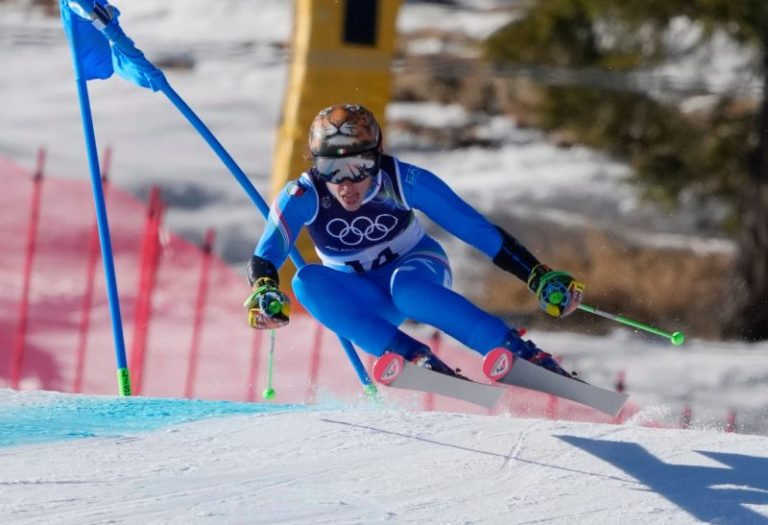
CORTINA D’AMPEZZO, Italy — When Italy’s Federica Brignone crossed the finish line for a second time Sunday, Feb. 15 in the women’s giant slalom, Swedish skier Sara Hector and Norwegian Thea Louise Stjernesund fell to their knees and bowed before the queen of Olimpia delle Tofane.

Brignone won her second gold medal of the 2026 Milan Cortina Winter Olympics, adding the top prize from today’s giant slalom to her super-G gold from Thursday, Feb. 12.

The golds come less than less than 10 months after the Italian star shattered her left leg in a crash, tearing her ACL and fracturing two bones.

Brignone finished with a two-run time of 2:13.50, a whopping 0.62 seconds ahead of the field. Hector and Stjernesund tied for silver at 2:14.12. They were part of a three-way tie for fourth after run No. 1.

Mikaela Shiffrin was the top American, finishing in 11th with a total time 2:14.42, followed by Paula Moltzan in 15th (2:14.77) and Nina O’Brien in 20th (2:15.31). O’Brien jumped nine spots between runs No. 1 and 2, after tying for the fastest run of the second round (1:09.50).

USA TODAY had full results from both round as well as highlights from the all the giant slalom action below.

Women’s giant slalom results

(Round 2 times followed by total time for the top 30 skiers. Four skiers did not finish second run):

1. Federica Brignone, Italy ….. (Round 2: 1:10.27) | 2:13.50
2. (Tie) Sara Hector, Sweden ….. (Round 2: 1:10.15) | 2:14.12
2. (Tie) Thea Louise Stjernesund, Norway ….. (Round 2: 1:10.15) | 2:14.12
4. Lara Della Mea, Italy ….. (Round 2: 1:09.75) | 2:14.17
5. Julia Scheib, Austria ….. (Round 2: 1:09.83) | 2:14.19
6. Mina Fuerst Holtmann, Norway ….. (Round 2: 1:09.96) | 2:14.24
7. Maryna, Gasienica-Daniel, Poland ….. (Round 2: 1:09.86) | 2:14.25
8. Alice Robinson, New Zealand ….. (Round 2: 1:09.98) | 2:14.30
9. Lena Duerr, Germany ….. (Round 2: 1:10.74) | 2:14.31
10. Sofia Goggia, Italy ….. (Round 2: 1:10.68) | 2:14.37
11. Mikaela Shiffrin, USA ….. (Round 2: 1:10.17) | 2:14.42
12. Camille Rast, Switzerland ….. (Round 2: 1:10.12) | 2:14.49
13. Valerie Grenier, Canada ….. (Round 2: 1:10.32) | 2:14.58
14. Asja Zenere, Italy ….. (Round 2: 1:09.50) | 2:14.63
15. Paula Moltzan, USA ….. (Round 2: 1:10.38) | 2:14.77
16. Lara Colturi, Albania ….. (Round 2: 1:10.85) | 2:14.82
17. Zrinka Ljutic, Croatia ….. (Round 2: 1:09.67) | 2:15.01
18. Nina Aster, Austria ….. (Round 2: 1:10.61) | 2:15.08
19. Emma Aicher, Germany ….. (Round 2: 1:10.65) | 2:15.13
20. Nina O’Brien, USA ….. (Round 2: 1:09.50) | 2:15.31
21. Hanna Aronsson Elfman, Sweden …. (Round 2: 1:09.85) | 2:15.35
22. Doriane Escane, France ….. (Round 2: 1:10.57) | 2:15.39
23. Vanessa Kasper, Switzerland …. (Round 2: 1:10.48) | 2:15.82
24. Sue Piller, Switzerland …. (Round 2: 1:10.29) | 2:15.85
25. Madeleine Sylvester-Davik ….. (Round 2: 1:10.43) | 2:15.92
26. Britt Richardson, Canada ….. (Round 2: 1:11.68) | 2:16.65
Kajsa Vickhoff Lie, Norway ….. DNF
Stephanie Brunner, Austria ….. DNF
Camille Cerutti, France ….. DNF
Ana Bucik Jogan, Slovenia …. DNF

Italy’s Brignone wins second gold

Oh my God, Federica Brignone has done it again! Less than 10 months after shattering her left leg in a crash, the Italian now has a second gold medal of these Olympics.

Just three days after winning gold in the super-G, Brignone posts the top times in both the first and second runs to win the giant slalom with ease. The Italian star posted a combined time of 2:13.50, 0.62 seconds ahead Sweden’s Sara Hector and Norway’s Thea Louise Stjernesund, who tied for silver.

When Brignone crossed the finish line, she put her hands on her helmet, which had the image of a tiger in it. Her fellow competitors heard her roar, indeed, falling to their knees and bowing down to the Italian star.

Italy’s Lara Della Mea, whom Brigone knocked off the podium, embraced her countrywoman, jumping up and down with Brigone in her arms to celebrate another gold for the host country. Della Mea finished fourth, 0.67 seconds behind the leader, but just 0.05 behind the co-silver medalists.

How the Americans fared in women’s giant slalom

Mikaela Shiffrin finished 11th in the giant slalom, while Paula Moltzan was 15th. Nina O’Brien jumped up to 20th, thanks to the fastest time in the second run, 1:09.50, tied with Italy’s Asja Zenere.

Tie for first place with just a few skiers to go

The ties keep coming! After a three-way tie for fourth in first run, Sweden’s Sara Hector and Norway’s Thea Louise Stjernesund are tied atop the leaderboard. The Scandinavian skiers posted the exact same time in both the first and second runs.

Shiffrin misses the giant slalom podium

Big cheer at bottom of the hill when American star Mikaela Shiffrin is introduced.

Shiffrin produced another solid effor, but it was not enough to crack the top 3. She started fast and didn’t appear to be backing off at all, even when she lost speed toward the bottom.

Great conditions for second run

American Nina O’Brien says conditions are still perfect.

“We call it hero snow. I mean, it can be tricky to be fast on it because it feels so smooth and good.”

Team USA’s Moltzan aggressive once again

That was a bit of a roller coaster from Paula Moltzan. Picked up speed at the top, which few others have managed to do, but then got slowed further down, where the course got turny. She’s in third with 12 still to go.

Podium changing quickly

Germany’s Emma Aicher, who has a pair of silvers already at these Games, with the third fastest two-run time of the day so far at 2:15.13, officially bumping American Nina O’Brien to fourth. One skier later, Nina Aster of Austria bumps Aicher off the podium.

Italy’s Asja Zenere leads after 14 skiers, followed by Croatia’s Zrinka Ljutic and Aster.

New leader after second run of giant slalom

Nina O’Brien’s time in the hot seat is done. Croatia’s Zrinka Ljutic has bumped her into second.

American Nina O’Brien lays down a good time

Nina O’Brien is the clubhouse leader! OK, she was the second skier in this run and the first skier did not finish.

Still, O’Brien can give Paula Moltzan and Mikaela Shiffrin valuable intel on the course and the snow conditions

Giant slalom second run begins

And we’re off again! Second run has started, but it’ll be a while before the medal contenders are up. The first skier, Camille Cerutti of France, could not finish her run.

Women’s giant slalom results — First run

Federica Brignone, Italy ….. 1:03.23
Lena Duerr, Germany ….. 1:03.57
Sofia Goggia, Italy ….. 1:03.69
Thea Louise Stjernesund, Norway ….. 1:03.97
Sara Hector, Sweden ….. 1:03.97
Lara Colturi, Albania ….. 1:03.97
Mikaela Shiffrin, USA ….. 1:04.25
Valerie Grenier, Canada ….. 1:04.26
Mina Fuerst Holtmann, Norway ….. 1:04.28
Alice Robinson, New Zealand ….. 1:04.32
Julia Scheib, Austria ….. 1:04.36
Camille Rast, Switzerland ….. 1:04.37
Paula Moltzan, USA ….. 1:04.39
Maryna, Gasienica-Daniel, Poland ….. 1:04.39
Lara Della Mea, Italy ….. 1:04.42
Nina Aster, Austria ….. 1:04.47
Emma Aicher, Germany ….. 1:04.48
Kajsa Vickhoff Lie, Norway ….. 1:04.65
Doriane Escane, France ….. 1:04.82
Britt Richardson, Canada ….. 1:04.97
Stephanie Brunner, Austria ….. 1:04.97
Asja Zenere, Italy ….. 1:05.13
Zrinka Ljutic, Croatia ….. 1:05.34
Vanessa Kasper, Switzerland …. 1:05.34
Ana Bucik Jogan, Slovenia …. 1:05.35
Madeleine Sylvester-Davik, Norway ….. 1:05.49
Hanna Aronsson Elfman, Sweden …. 1:05.50
Sue Piller, Switzerland …. 1:05.56
Nina O’Brien, USA ….. 1:05.81
Camille Cerutti, France …. 1:05.98
Estelle Alphand, Sweden ….. 1:06.02
Justine LaMontagne, Canada ….. 1:06.34
Lisa Hoerhager, Austria …. 1:06.47
Gwyneth Ten Raa, Luxembourg …. 1:06.60
Noa Szollos, Israel …. 1:06.73
Elvedina Muzaferija, Bosnia and Herzegovina ….. 1:06.83
Francesca Baruzzi Farriol, Argentina …. 1:06.83
Madeleine Beck, Liechtenstein ….. 1:07.08
Caterina Sinigoi, Slovenia …. 1:07.10
Phoebe Heaydon, Austria ….. 1:07.33
Nika Tomsic, Slovenia ….. 1:07.54
Piera Hudson, United Arab Emirates ….. 1:08.01
Zita Toth, Hungary ….. 1:08.69
Alexandra Skorokhodova, Kazakhstan ….. 1:08.82
Sara Schleper, Mexico ….. 1:08.95
Anastasiia Shepilenko, Ukraine …. 1:08.97
Alena Labastova, Czechia …. 1:09.05
Sohui Sim, South Korea ….. 1:09.59
Vanina Suerillot, Portugal ….. 1:10.07
Elin van Pelt, Iceland ….. 1:10.28
Emma Gatcliffe, Trinidad and Tobago ….. 1:10.48
Semire Dauti, Albania ….. 1:10.95
Lara Markthaler, South Africa ….. 1:12.17
Sonja Li Kristinsdottir, Iceland ….. 1:12.31
Mialitiana Clerc, Madagascar ….. 1:12.35
Nino Tsiklauri, Georgia ….. 1:12.39
Sofia Maria Moldovan, Romania ….. 1:12.46
Anabelle Zurbay, Ireland ….. 1:12.82
Esma Alic, Bosnia and Herzegovina ….. 1:14.48
Tallulah Proulix, Philippines ….. 1:17.15
Maria Eleni Tsiovolou, Greece ….. 1:17.44
Yuying Zhang, China ….. 1:22.49
Cassidy Gray, Canada …. DNF
A.J. Hurt, USA ….. DNF
Clara Direz, France ….. DNF
Rebeka Jancova, Slovakia …. DNF
Anina Zurbriggen, Bulgaria …. DNF
Nicole Begue, Argentina ….. DNF
Aruwin Salehhuddin, Malaysia ….. DNF
Seoyun Park, South Korea, DNF
Pia Vucinic, Croatia ….. DNF
Jana Atanasovska, North Macedonia ….. DNF
Elisa Maria Negri, Czechia ….. DNF
Neringa Stepanauskaite, Lithuania ….. DNF
Kiana Kryeziu, Kosovo ….. DNF
Wendy Holdener, Switzerland …. DNS

USA’s Hurt records first DNF of the day

A.J. hurt is out, missing a gate on the bottom of the third of the course. Waved as she came into the finish line, then gave a shrug as if to say, “What are you going to do.” 

Can Shiffrin overcome deficit in Run 2?

For those asking, Mikaela Shiffrin earlier this season erased a 0.54-second deficit to win the slalom World Cup in Semmering, Austria. It was the largest gap she’d overcome in more than a decade, at least on slalom.

Host country making a statement in first run

The Italians are having a great day. Sofia Goggia just skied into third place after a strong finish. Goggia looked shocked, putting her hands to her helmet before turning and waving to the cheering crowd.

This gives Italy two in the top three right now, with Federica Brignone still in first

Germany’s Duerr nearly matches leader

Germany’s Lena Duerr made a furious push at the bottom of the course and it paid off. She’s into second place, trailing Italy’s Federica Brignone by 0.34 seconds.

Olympic gold medalist jumps into lead

Federica Brignone is putting herself in position for a second gold medal, zooming past a three-way tie to claim first outright after 14 skiers. The Italian took a 0.74-second lead after her first run, a couple of days after dominating the super-G. Almost hard to believe Brignone shattered her left leg less than 10 months ago.

The home crowd cheered her on as she burst from the starting gate, getting louder with each negative split down the course. When she crossed the finish line, fans in the stands jumped to their feet.

American Nina O’Brien would like a do-over

Nina O’Brien cost herself some time by getting airborne on the last jump. She knew it, too, throwing her head back after she crossed the finish line in 1:05.81, the slowest time of the first run so far.

Colturi makes it a three-way tie for first

Albania’s Lara Colturi made it a three-way tie for first with Norway’s Thea Louise Stjernesund and Sweden’s Sara Hector. All three skiers turned in a time of 1:03.97.

Colturi, 19, had been on a hot streak earlier this season but couldn’t find the podium recently. Looks like he’s found her groove again

Shiffrin lays down clean run

Mikaela Shiffrin is keeping herself in the mix. Shiffrin skied a solid run, showing none of the tentativeness she did in the combined, and was 0.28 seconds behind clubhouse leader Sara Hector of Sweden. Lot of skiers to go, but this is a positive performance from Shiffrin.

Hector was the gold medalist in this event four years ago.

USA’s Paula Moltzan throws down aggressive run

Paula Moltzan was flirting with taking over the lead until getting a little chaotic at the end. The American, who won a bronze in the combined, had to make a spectacular save on the last turn, landing in one leg. She is 0.42 out of first place.

Moltzan had to make a wild save rounding the last turn, landing on one leg before crossing the finish line in 5th place at 1:04.39.

What time is the Olympic women’s giant slalom?

The first run of the women’s giant slalom is scheduled to begin at 4 a.m. ET (10 a.m. local), and the second run is scheduled to start at 7:30 a.m. ET (1:30 p.m. local).

What TV channel is the Olympic women’s giant slalom on?

USA Network will have live coverage of Round 1 of the women’s giant slalom at 4 a.m. ET, while NBC will broadcast Round 2 at 7:30 a.m. ET.

Stream the 2026 Winter Olympics on Peacock

Is there a live stream of the Olympic women’s giant slalom?

Both rounds of the Olympic women’s giant slaom can be streamed on Peacock or or on NBCOlympics.com (must sign on with your cable or satellite provider).

Where is the Olympic women’s giant slalom race?

The women’s giant slalom event at the 2026 Milano Cortina Winter Olympics is being held at the Tofane Alpine Skiing Centre in Cortina d’Ampezzo, Italy.

What is the start list for the women’s giant slalom?

Thea Louise Stjernesund
Sara Hector, Sweden
Mikaela Shiffrin, USA
Camille Rast, Switzerland
Paula Moltzan, USA
Alice Robinson, New Zealand
Julia Scheib, Austria
Zrinka Ljutic, Croatia
Valerie Grenier, Canada
Lara Colturi, Albania
Nina O’Brien, USA
Lara Della Mea, Italy
Maryna, Gasienica-Daniel, Poland
Federica Brignone, Italy
Britt Richardson, Canada
Lena Duerr, Germany
Sofia Goggia, Italy
Wendy Holdener, Switzerland
Emma Aicher, Germany
Kajsa Vickhoff Lie, Norway
Mina Fuerst Holtmann, Norway
Stephanie Brunner, Austria
AJ Hurt, USA
Estelle Alphand, Sweden
Asja Zenere, Italy
Nina Aster, Austria
Vanessa Kasper, Switzerland
Clara Direz, France
Sue Piller, Switzerland
Madeleine Sylvester-Davik, Norway
Sohui Sim, South Korea
Hanna Aronsson Elfman, Sweden
Francesca Baruzzi Farriol, Argentina
Cassidy Gray, Canada
Camille Cerutti, France
Lisa Hoerhager, Austria
Doriane Escane, France
Noa Szollos, Israel
Ana Bucik Jogan, Slovenia
Gwyneth Ten Raa, Luxembourg
Rebeka Jancova, Slovakia
Justine LaMontagne, Canada
Caterina Sinigoi, Slovenia
Nika Tomsic, Slovenia
Anina Zurbriggen, Bulgaria
Anastasiia Shepilenko, Ukraine
Madeleine Beck, Liechtenstein
Elvedina Muzaferija, Bosnia and Herzegovina
Sara Schleper, Mexico
Piera Hudson, United Arab Emirates
Alexandra Skorokhodova, Kazakhstan
Phoebe Heaydon, Austria
Nicole Begue, Argentina
Aruwin Salehhuddin, Malaysia
Seoyun Park, South Korea
Lara Markthaler, South Africa
Semire Dauti, Albania
Pia Vucinic, Croatia
Alena Labastova, Czechia
Sofia Maria Moldovan, Romania
Jana Atanasovska, North Macedonia
Emma Gatcliffe, Trinidad and Tobago
Anabelle Zurbay, Ireland
Elisa Maria Negri, Czechia
Elin van Pelt, Iceland
Vanina Suerillot, Portugal
Zita Toth, Hungary
Yuying Zhang, China
Nino Tsiklauri, Georgia
Esma Alic, Bosnia and Herzegovina
Neringa Stepanauskaite, Lithuania
Kiana Kryeziu, Kosovo
Sonja Li Kristinsdottir, Iceland
Tallulah Proulix, Philippines
Maria Eleni Tsiovolou, Greece
Mialitiana Clerc, Madagascar

Who are the other top contenders?

In addition to the Americans, keep your eyes on Austria’s Julia Scheib, Switzerland’s Camille Rast, Sweden’s Sara Hector and New Zealand’s Alice Robinson.

Scheib leads the GS standings, having been on the podium in all but two of the eight World Cup races this year. She’s won four of them and was second in the other two. 

Rast is second in the overall standings, with one GS win and two other podium finishes. Hector won the last GS race, while Robinson won two of the first three GS races.

This post appeared first on USA TODAY