Archive

2026

Browsing

With the future of Congress and President Donald Trump’s legislative agenda on the line in this midterm election, the Honest Elections Project is warning of critical loopholes in the voting system, including the expansion of noncitizen voting and foreign influence.

With many state legislatures convening their final sessions before the 2026 midterms, HEP believes they have ‘one last opportunity’ to pass the ‘critical reforms’ needed to close loopholes breaking down legitimacy and trust in the electoral process.

In a report shared first with Fox News Digital, HEP identified 14 key electoral integrity vulnerabilities it says must be remedied ahead of the midterms.

Among these vulnerabilities is hundreds of millions in foreign-linked money that have helped shape ballot measures in 26 states, according to HEP.

The report says that while foreign individuals are banned from donating to political candidates, bad actors have found a legal loophole by contributing both directly and indirectly to ballot measure campaigns that can include initiatives changing constitutions and election laws. The report refers to these campaigns as a ‘Trojan Horse for foreign influence,’ including from ‘hostile foreign powers like China and Russia.’

To combat this, HEP laid out model legislation called the Prohibiting Foreign Funding from Ballot Measures Act to bar direct and indirect foreign funding, including through intermediary nonprofits, of ballot initiatives. In addition to this, the legislation requires that donors and ballot committees affirm they are free of foreign money to qualify and imposes strict penalties for violations.

The report also warns of a ‘growing number’ of blue cities, including Washington, D.C., and New York that it says have been working to enfranchise noncitizens and illegal aliens. HEP said that most state constitutions grant voting rights to ‘any’ or ‘every’ citizen, open-ended language that it says allows ‘liberal activists [to] argue permits localities to authorize noncitizen and even illegal alien voting.’

According to HEP, this problem is further compounded by current federal law that allows dishonest individuals to simply check a box to claim they are citizens on the National Mail Voter Registration Form.

To push back on this, HEP urges states to amend their constitutions to explicitly permit only citizens to vote. The group said that such language was passed by wide margins in 15 states: Alabama, Arizona, Colorado, Florida, Louisiana, North Dakota, Ohio, Iowa, Idaho, Kentucky, Missouri, North Carolina, Oklahoma, South Carolina and Wisconsin.

Additionally, HEP is urging states to pass the Documentary Proof of Citizenship Act, requiring voters to provide proof of citizenship to participate in state and local elections. The bill also makes it a criminal offense for noncitizens to apply to register to vote or for election officials to register a voter without proof of citizenship or to count illegal votes. This is an approach HEP believes is ‘consistent with Federal law and serves to protect the integrity of state-level voting processes.’

HEP lays out another five pieces of model legislation: The Interstate Voter Assistance Act, the Never Resided Act, the Procedural Election Audits Act, the Uniform Election Dates Act and a bill to prohibit government entities from using donations or in-kind goods or services from a private or non-governmental entity for election administration.

Addressing the issues, HEP Executive Director Jason Snead said, ‘Many states have made tremendous strides in making it easy to vote and hard to cheat in recent years, but there is still more work to be done.

‘State lawmakers have one last opportunity to shore up their election laws ahead of the extremely important 2026 midterms,’ Snead added. ‘Honest Elections Project is proud to provide a roadmap for lawmakers to continue promoting election integrity across the country.’

This post appeared first on FOX NEWS

U.S. appeals courts have overturned or stayed lower court rulings blocking President Donald Trump’s policy priorities at a rate far higher than during the Biden administration, a disparity Trump allies point to as evidence of the president’s strong track record in higher courts.

The contrast was highlighted by Chad Mizelle, a former senior Justice Department official, who noted that district court rulings against the Trump administration are being reversed or paused on appeal far more frequently than similar rulings issued during President Joe Biden’s time in office — even when the relief is temporary.

‘Over 4 years of the Biden administration, 9 district court rulings against the administration were later overturned on appeal,’ Mizelle said in a post on X. ‘About 2.25 per year.’

Mizelle compared that average to Trump’s first year back in office in 2025, when he said that ’32 district judges issued 133 rulings against the Trump administration that were stayed or overturned on appeal,’ adding: ‘Simplified, district judges are now issuing rulings that ultimately fail on appeal at more than 50x the rate compared to the previous presidency.’

His post comes as senior Trump officials have blasted district court judges who have blocked or paused the president’s most sweeping policy initiatives in his first year back in office, arguing that what they call ‘activist judges’ have overstepped their bounds and are intruding on the president’s executive authority.

As court watchers have previously pointed out to Fox News Digital and other outlets, the post presents a somewhat incomplete picture of the legal landscape during Trump’s second term. While Trump’s appeals court wins indeed far outpace those of his predecessors, they were also issued in response to an unprecedented surge of executive orders and actions.

Trump spent much of his first year in office signing hundreds of executive orders aimed at enacting his biggest policy priorities, including slashing government spending, cracking down on illegal immigration and eliminating many diversity and equity initiatives enacted under the Biden administration. Those actions also triggered a torrent of lawsuits seeking to block or pause his policies from taking effect, teeing up a high-stakes showdown over how far Trump can push his Article II powers before the courts can or should intervene.

Many of the early lawsuits filed sought relief by way of temporary restraining orders and universal injunctions, which paused or blocked executive action temporarily to give the court time to hear the case on its merits.

Other lawsuits sought a longer-lasting form of relief via preliminary injunctions, which require plaintiffs to satisfy a higher legal burden in court.

The Supreme Court in June narrowed the ability of district court judges to issue so-called ‘universal injunctions’ blocking a president’s policy from taking effect nationwide. The high court’s 6-3 ruling allowed district courts to issue injunctions only in limited instances.

As of this writing, 597 lawsuits have been filed against the Trump administration’s actions, according to Just Security’s litigation tracker.

Few cases have been fully adjudicated by the lower courts. Rather, the temporary rulings are almost always appealed by the Trump administration to a higher appeals court for relief — often in the form of an emergency or temporary stay.

As Fox News Digital previously reported, the Trump administration has indeed seen a record number of Supreme Court victories in the last 12 months. 

That trend is overwhelmingly due to the so-called emergency or ‘shadow docket’ challenges, which allowed the administration to appeal cases to the court’s 6-3 conservative supermajority for immediate intervention.

Mizelle concluded the post by touting Trump’s Supreme Court ‘win rate,’ which he said ‘is roughly 90%,’ though he appeared to be referring to the same practice. 

Though they are not intended to be permanent, the Supreme Court ‘shadow docket’ rulings have allowed the Trump administration to proceed with a wide range of its policies, including its ban on transgender service members in the military, its termination of millions of dollars in Education Department grants and DEI funding, among many other things.

Attorney General Pam Bondi touted similar numbers during a Cabinet meeting last month. ‘We have been sued 575 times,’ she said then. ‘More than every administration going back to Reagan combined.’ 

She also echoed similar numbers shared by Mizelle. ‘Twenty-four Supreme Court wins, President Trump,’ Bondi told the president in December. ‘A 92% success rate.’ 

This post appeared first on FOX NEWS

Jordan Chiles is one step closer to keeping her Olympic bronze medal.

The highest court in Switzerland handed Chiles a key legal victory, announcing Thursday, Jan. 29, that it had granted part of her appeal and was kicking her case back to the Court of Arbitration for Sport for reconsideration. It cited video that shows Chiles’ coach making an inquiry over her score within the allotted time.

‘In the highly exceptional circumstances of the case in question, it considers that there is a likelihood for the audio-visual recording of the final on 5 August 2024 to lead to a modification of the contested award in favour of the applicants, since the CAS could consider, in the light of this audio-visual sequence, that the verbal inquiry made on behalf of Jordan Chiles had been made before the expiry of the regulatory one-minute time limit,’ the Swiss Federal Tribunal said in a statement announcing the decision, which was issued Jan. 23.

The tribunal rejected Chiles’ appeal over the independence of the head of the arbitration panel, who had done work for the Romanian government. It also rejected the appeal by a Romanian gymnast of an out-of-bounds decision, saying it was not reviewable.

Jordan Chiles’ attorney: ‘Righted a wrong’

Maurice Suh, the U.S.-based attorney for Chiles, said the gymnast appreciates the opportunity for a new hearing and will fight ‘vigorously’ to keep her medal.

‘We are delighted that the Swiss Federal Supreme Court has righted a wrong and given Jordan the chance she deserves to reclaim her bronze medal,’ Suh said in a statement. ‘As the Court recognized, there is ‘conclusive’ video evidence that Jordan was the rightful winner of the bronze medal. 

‘We also appreciate the Court’s recognition that ‘extraordinary time pressure’ and notification defects prevented Jordan from presenting this important evidence in August 2024,’ Suh added. ‘We appreciate that Jordan will receive a full and fair opportunity to defend her bronze medal.’

USA Gymnastics supports Chiles

USA Gymnastics, which had submitted evidence and statements on Chiles’ behalf through the appeals process, said it looks forward to the gymnast getting a ‘fair’ hearing.

‘We are pleased the Swiss Federal Supreme Court recognized the flaws in the initial process and that Jordan’s case can now be heard inclusive of all relevant evidence,’ the federation said in a statement. ‘We look forward to a fair arbitration that includes the clear evidence proving the inquiry into Jordan’s score was filed well within 1 minute as required by FIG rules.’

USOPC praises Childs

The U.S. Olympic and Paralympic Committee echoed Suh and USA Gymnastics’ appreciation for the Swiss tribunal recognizing that Chiles wasn’t given a full opportunity to defend herself.

It also praised the gymnast, who was subjected to vicious and racist attacks online in the days after competition.

‘Jordan has handled this movement with strenghth and professionalism, and we remain firmly behind her as she continues to pursue the result she earned,’ the USOPC said in a statement.

No date for new CAS hearing yet 

It’s not clear when CAS will hold a new hearing, with a spokesperson saying it was ‘too soon’ to know a date.

But CAS did say in a statement that it accepted the tribunal’s ruling that the video evidence ‘justifies’ a new hearing.

‘Following the SFT decision, CAS can now ensure a thorough judicial review of the new evidence that has since been made available,’ CAS said in its statement.

Case has dragged on for 18 months

The ruling brings Chiles closer to resolving the messy, error-filled dispute that initially resulted in the American being stripped of her bronze medal from the floor exercise on the last day of the Paris Olympics.

The Romanian Gymnastics Federation had claimed that Chiles’ scoring inquiry had been filed too late, but video footage discovered after CAS’ initial ruling shows that her coach, Cecile Landi, had made the inquiry well within the 60 seconds allowed. CAS declined to reconsider its decision upon receiving the video, which prompted Chiles, USA Gymnastics and the U.S. Olympic and Paralympic Committee to take the matter to the Swiss Federal Tribunal.

Following the Swiss court’s decision, the final order of finish on the floor exercise will once again be in the hands of CAS.

Timing of inquiry key to case

The decision to strip Chiles’ of her medal caused an international furor that overshadowed the end of the Games, in large part because it involved a dispute over the minutiae of gymnastics rules rather than any mistake or wrongdoing by Chiles − or, for that matter, any of the other gymnasts involved.

Unlike other cases of medal reallocation, which often follow doping or cheating violations, this case hinged on an apparent error by officials with the International Gymnastics Federation (FIG), which oversees the sport.

Chiles initially finished fifth in the floor exercise final on Aug. 5 with a score of 13.666, leaving her behind Romanian gymnasts Ana Barbosu and Sabrina Maneca-Voinea. (The pair had each scored 13.7, but Barbosu has placed higher because of a better execution score.)

But Landi, who was Chiles’ personal coach in addition to being the U.S. coach in Paris, appealed her difficulty score, arguing Chiles had not been given full credit for a leap called a tour jete. A review panel on site agreed, and the additional 0.100 elevated the American ahead of both Romanians into third place. Romania then appealed to CAS the next day, challenging the timing of Chiles’ appeal.

Data from Omega, the official timing system, showed Chiles’ inquiry had been registered four seconds too late, and CAS used that as the basis for its first decision. But Chiles’ lawyers have pointed out that the verbal inquiry would have had to have been made at least a few seconds before an official entered it into the timing system. The FIG acknowledged during the CAS hearing that it had not put safeguards in place so officials would immediately know whether verbal appeals were submitted on time or late.

USA Gymnastics said on Aug. 11, 2024, the day after the first CAS ruling, that it had obtained footage showing Landi made the first verbal inquiry 47 seconds, within the 60 seconds allotted. But CAS said it could not accept evidence after the fact.

Though CAS ordered the FIG to re-order the results to what they were before Chiles’ appeal, it blasted the federation, both for its ineptitude and the grief Chiles and the Romanians endured.

‘If the Panel had been in a position to apply equitable principles, it would surely have attributed a bronze medal to all three gymnasts in view of their performance, good faith and the injustice and pain to which they have been subjected,’ according to the CAS decision, released Aug. 14.

‘The Panel expresses the hope that the FIG will draw the consequences of this case, in relation to these three extraordinary Athletes and also for other Athletes and their supporting personnel, in the future, so that this never happens again.’

The IOC accepted the re-ordered results and said Chiles’ medal should be reallocated. Romania then awarded Barbosu a bronze medal Aug. 16.

That was never going to be the end of it, however. The Americans had vowed to pursue the case all the way to the Swiss Federal Tribunal on behalf of Chiles, knowing she and Landi had not done anything wrong.

Notification errors were CAS’ fault

In addition to their evidence showing the inquiry had been submitted in time, and the unfairness for punishing Chiles for the FIG’s error, the Americans cited process errors by CAS. They argued that the arbitration panel had sent emails to the wrong parties for three days after Romania had filed its appeal. That meant Chiles and U.S. officials had less than 24 hours to read all the documents in the case, analyze them, craft a response and prepare for the hearing.

In its statement, Suh’s office said the Swiss Federal Tribunal recognized that ‘extraordinary time pressure’ was a factor in why Chiles didn’t submit the video evidence at the hearing. The tribunal decided those notification errors were CAS’ fault, Suh’s office said, and “caused an imbalance between the parties’ in the case.

This post appeared first on USA TODAY

It is a scourge that has reemerged throughout Tony Gonzalez’s life, that continues bedeviling his family, yet he is grateful for the chance to take some small action against it.

Prostate cancer claimed Gonzalez’s grandfather in 1981, when he was barely a kindergartener, and also took the life of his uncle only a couple years after Gonzalez was elected to the Pro Football Hall of Fame. Now, another uncle faces a similar battle with the disease.

At 49, Gonzalez has been getting screened for several years, particularly given his family history. Now, he is all too eager to amplify the message behind a blood test that can aid in early detection of prostate cancer without the traditionally invasive screening previous generations endured.

Rate the best and worst Super Bowl commercials!

Gonzalez, along with a half-dozen other tight ends and Super Bowl-winning coach and prostate cancer survivor Bruce Arians appear in “Relax Your Tight End,” a Novartis Super Bowl advertisement that urges early screening and use of the new blood test.

Gonzalez, along with retired luminaries like Rob Gronkowski and Greg Olsen and two-time All-Pro George Kittle, are shown in various stages of repose, floating in a pool or frozen in a yoga pose, their typically keyed-up personalities soothed by the notion of a less-invasive prostate cancer screening at their disposal.

It is a light touch applied to a subject that’s been far too heavy for Gonzalez.

“It’s something that’s personal to me,” Gonzalez tells USA TODAY Sports in a video interview. “It runs in my family. And obviously I’m somebody at risk for it. I’ve teamed up with them mainly because of that – to get the word out and let people know about early detection, that there’s a better way than what it used to be.

“A blood test is a better way than getting it done the old way. I’ve had it done the old way and I think it’s great to get the word out there about early detection and the survival rate that goes along with that.”

Roughly one in eight men will be diagnosed with prostate cancer, according to the American Cancer Society, but early detection produces a more than 99% five-year survival rate. The PSA test measures the amount of prostate-specific antigen in the blood, according to the Mayo Clinic.

While it can detect high levels of PSA, the blood test does not provide precise diagnostic information on the prostate. An elevated level of PSA, though, could prompt a doctor to order further testing or a biopsy.

Gonzalez views it as an easier first step to prevention than the more common digital rectum examination.

“So much easier,” says Gonzalez. “I was in that camp who had it done the old way. And it’s not very comfortable. It’s just another way to test for it, and it’s just a simple blood test.

“It lets you take a sigh. A lot of men don’t do it because of the way it’s been tested before. It’s an alternative to the old test and it’s much easier than the old test.”

Ad Meter: Help decide 2026 big game’s best commercial

Arians, 73, narrates the spot, noting he was around to coach Gronkowski and the 2020 Tampa Bay Buccaneers to a Super Bowl title because his 2007 prostate cancer was diagnosed early in the process. Arians also had cancerous cells removed from his nose in 2013, and 2017 surgery to remove a cancerous spot on a kidney.

Gonzalez ranks third in NFL history in receptions (1,325), sixth in receiving yards (15,127) and ninth in touchdown catches (111). Though he never played for Arians, Gonzalez, a 14-time Pro Bowler and six-time All-Pro, crossed paths with Arians at myriad league events and calls the coach “a hoot and a fun guy, who obviously represents us well.”

The spot also curates almost every Canton-worthy tight end not named Travis Kelce over the years in one place.

“The cultural phenomenon of tight ends over the years – I’ve always said, man, there’s no better example of a football player than a tight end,” says Gonzalez. “You get to block. You get to run the ball. You’re so diversified when you’re on that field and it’s so cool.

“Mike Ditka. Shannon Sharpe. You got Greg Olsen. Travis. Kittle. Huge personalities, media-type people, people who act. It’s all over the board. And I always wonder, ‘Why is that?’ Except maybe the quarterback position you don’t see that.

“And I think maybe it’s because we do everything.”

That includes Gonzalez, part of the high-energy pre- and postgame crew on Amazon’s Thursdayfootball broadcasts. He gleans great joy as the old head alongside Andrew Whitworth, Richard Sherman, Ryan Fitzpatrick and host Charissa Thompson – “The glue that keeps us all together,” he says – and calls Wednesdays through Fridays the highlights of his week.

Gonzalez maintains contact with old Chiefs and Falcons teammates via two massive group texts, and as he nears his 50th birthday, has discovered the tenor of the chats can turn more serious.

“This is something we talk about,” he says of prostate caoncer. “’Did you get tested? Did you do this?’

“It’s a lot more talked-about subject when you get into the age of retired players.”

This post appeared first on USA TODAY

Organizers behind the Fiesta Bowl are getting involved in a different kind of college football.

The Fiesta Sports Foundation announced Thursday it will host the first-of-its-kind national championship for Division I women’s flag football. The two-day showcase will be staged April 18 and 19 on the campus of Arizona State University in Tempe, Arizona.

Dubbed the Fiesta Bowl Flag Football Classic presented by Oakley, the inaugural tournament will feature eight teams from the Division I NCAA ranks, the majority of whom currently sponsor women’s flag football at only the club level. Alabama State is the only program invited that is committed to launching the sport at the varsity level. The other club teams invited are Arizona State, Charlotte, Florida, Georgia, Grand Canyon, UCF and USC.

Erik Moses, the executive director and CEO of the Fiesta Sports Foundation, says this tournament represents the organization’s commitment to innovation, hospitality “and creating unforgettable experiences.”

“From youth and high school programs to now the collegiate level, we are committed to helping flag football grow in a meaningful and sustainable way,” Moses said in a statement. “This tournament is about building a tradition, creating opportunity and providing these athletes an elite experience.”

The Fiesta Bowl Flag Football Classic will feature a multi-day championship format, with three-game pool play on the first day leading into a title game playoff bracket on the second day. Once teams arrive in Tempe, the Fiesta Sports Foundation will provide accommodations, meals, ground transportation, gifts and a player hospitality lounge.

“This Fiesta Bowl Flag Football Classic tournament invite is huge for us and for women’s flag football,” Alabama State coach Tyrone Poole said. “It’s a national stage that validates our sport and inspires the next generation.”

According to the NFL, more than 30 states are offering girls high school football programs and 17 states have officially state sanctioned championships — one of which is Arizona. The Fiesta Sports Foundation serves as a presenting partner of the Arizona Interscholastic Association girls flag football state championships.

With support from the NFL, and with the sport’s Olympic debut looming in 2028, flag football is growing across the youth and college level.

According to the National Sporting Goods Association, flag football was the sport that grew the most at the youth level in 2024, with participation increasing by 21%. And earlier this month, the NCAA added women’s flag football to its Emerging Sports for Women program, putting it on a path to become a championship sport that could have its own NCAA Tournament in the future.

With the recent announcements from Nebraska and Charleston Southern, at least 12 Division I schools have launched or made public plans to start a varsity women’s flag football team.

The NCAA reported in 2025 at least 65 schools across all divisions planned to sponsor women’s flag football at the varsity or club level. The Division III Atlantic East played a full varsity season last year, Division II Conference Carolinas will play a full varsity season this spring, and the Division II CIAA will play a varsity season next year. With investment from the New York Jets, the ECAC will begin a women’s flag football league this year too with a mix of club and varsity teams.

Elsewhere in collegiate athletics, the NAIA has been hosting a national championship for women’s flag football since 2021, with the Ottawa University Braves of Kansas winning all five titles.

“This tournament is more than a game, it’s a special moment,” said Sierra Smith, Arizona State’s team captain. “… It shows the unstoppable growth of women’s flag football, especially with the recent NCAA announcement recognizing the sport. We are ready and excited to make history.”

This post appeared first on USA TODAY
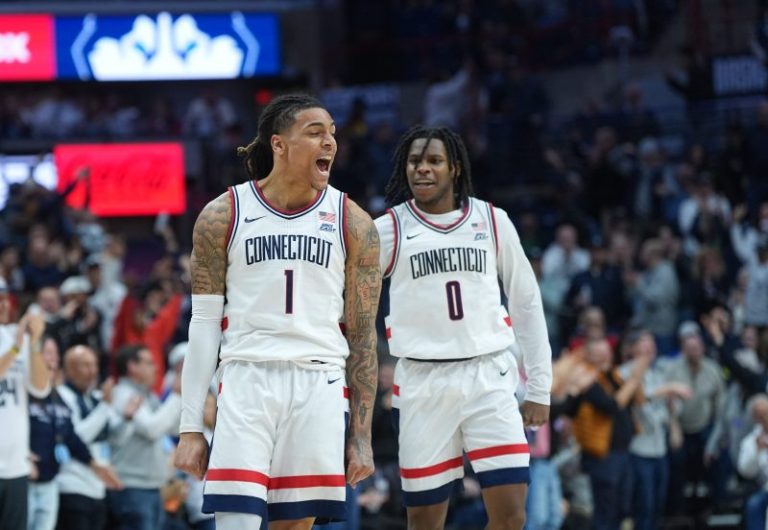
Television ratings would indicate that most NFL fans don’t care much about the Pro Bowl. NFL players, on the other hand, still hold value in playing well enough to earn a spot in the league’s annual all-star event.

Minnesota Vikings wide receiver Justin Jefferson let USA TODAY Sports know he was not happy about missing out on the Pro Bowl for just the second time in his six-year career this season.

‘Oh, trust me, I was pissed off I wasn’t a Pro Bowler this year,’ Jefferson said. ‘Just with the (difficult) season and still having 1,000 yards, I always try to be consistent and in the Pro Bowls.’

The four-time Pro Bowler told USA TODAY Sports that his ultimate goal is to pass the Vikings’ franchise record for career Pro Bowl appearances by a single player. Right now, that mark is at eight, set by Pro Football Hall of Fame wide receiver Cris Carter between 1993 and 2000.

Jefferson pointed to Carter’s Pro Bowl record as a sign of prestige.

‘[A Pro Bowl selection] classifies you as one of the best in the league,’ Jefferson said. ‘So it’s definitely tough not being a part of that this year, but I’m determined. That gives me more juice to put that work in for me not to be in this situation next year.’

The two-time All-Pro receiver had the worst year of his career statistically in 2025, posting career-low marks in receiving yards (1,048), touchdowns (2) and yards per reception (12.5) despite playing in all 17 games. Jefferson’s second-worst statistical season was in 2023, the other year he missed the Pro Bowl, when he also missed seven games with a hamstring injury. That year, he still managed more yards and touchdowns on fewer catches.

This year’s initial Pro Bowl wide receiver selections in the NFC were Puka Nacua, George Pickens, Jaxon Smith-Njigba and Amon-Ra St. Brown. Since Smith-Njigba will play in Super Bowl 60, CeeDee Lamb has been announced as his replacement.

The Vikings did not have a single player named to the NFC Pro Bowl roster.

The 2026 Pro Bowl Games will air live on Tuesday, Feb. 3 at 6:30 p.m. ET on ESPN. The AFC vs. NFC flag football game will begin at 8 p.m. ET, also on ESPN.

This post appeared first on USA TODAY

The NHL announced the Dallas Stars’ opponent for the 2027 Stadium Series on Thursday.

Dallas will host the Vegas Golden Knights at AT&T Stadium, the home of the NFL’s Dallas Cowboys, on Feb. 20, 2027.

The NHL already announced the Stars would host the outdoor game back on Nov. 3, with commissioner Gary Bettman saying Cowboys owner Jerry Jones had advocated for a matchup at the football stadium ever since it opened in 2009.

Now, the Golden Knights will get to play their third outdoor game, while Dallas will play its second.

The Golden Knights have yet to win outdoors, losing 3-0 to the Seattle Kraken in the 2024 NHL Winter Classic and 3-2 to the Colorado Avalanche at Edgewood Tahoe Resort in 2021, which was held without fans due to the COVID-19 pandemic.

Hockey News video: Favorite outdoor game venue

The NHL Outdoors at Lake Tahoe game, which started at 3:12 p.m. ET, was suspended after the first period because of poor ice conditions caused by extreme sunlight. It resumed after midnight ET.

Dallas, meanwhile, hosted and beat the Nashville Predators 4-2 in the 2020 NHL Winter Classic. A sold-out crowd of 85,630 filled Cotton Bowl Stadium in Dallas.

AT&T Stadium has a seating capacity of 80,000 and hosted the Super Bowl in 2011 and the College Football Playoff National Championship Game in 2015. It’s also hosted the Goodyear Cotton Bowl Classic football game annually since 2010.

But the stadium has hosted more sports than football. It held the 2010 NBA All-Star Game, the 2014 NCAA Men’s Division I Basketball Final Four, WWE’s WrestleMania in 2016 and 2022, and Concacaf soccer matches. This summer, it will host nine FIFA World Cup matches as well.

The 2027 Stadium Series matchup will come over a month after the 2027 NHL Winter Classic in Utah, between the Mammoth and Avalanche.

That said, there’s still one more outdoor game to play in the 2025-26 season. 

The 2026 NHL Stadium Series takes place on Sunday, Feb. 1, between the Tampa Bay Lightning and Boston Bruins at Raymond James Stadium in Tampa.

For action-packed issues, access to the entire magazine archive and a free issue, subscribe to The Hockey News at THN.com/free. Get the latest news and trending stories by subscribing to our newsletter here. And share your thoughts by commenting below the article on THN.com or creating your own post in our community forum.

This post appeared first on USA TODAY
A cohort of Senate Republicans broke ranks with their leadership on Thursday to help Senate Democrats tank a massive funding package, and most aren’t planning on changing their minds. 

Seven GOP lawmakers joined Senate Minority Leader Chuck Schumer, D-N.Y., and all Senate Democrats to torpedo the six-bill funding package geared toward averting a partial government shutdown. 

The gang of seven have varying issues with the package, including billions in earmarks, lack of legislation to prevent future shutdowns and the fact that the White House and Republican leadership are leaning toward splitting the Department of Homeland Security (DHS) funding bill from the broader funding bunch. 

Among the group was Sens. Ron Johnson, R-Wis., Rand Paul, R-Ky., Rick Scott, R-Fla., Ted Budd, R-N.C., Ashley Moody, R-Fla., Mike Lee, R-Utah, and Tommy Tuberville, R-Ala.

Johnson told Fox News Digital, ‘There’s a bunch of reasons, [I] don’t even want to get into it,’ on why he voted no. When pressed, he said that billions in earmarks were a major problem and noted that the GOP conference had an agreement to not include any in funding bills.

‘Here we are in the majority,’ Johnson said, ‘and we’re loading it up.’ 

He was also unhappy with the DHS bill likely being stripped out from the package and angered over his legislation, the No Shutdown Fairness Act, not being included or even considered on the Senate floor.

‘I mean, we haven’t taken care of that yet,’ Johnson said. ‘Without addressing the root cause here, it’s like, you know, why do we continue to allow these shutdowns to even occur?’

‘I’m tired of it,’ he continued. 

Scott was similarly incensed over earmarks, as was Budd.

A spokesperson for Budd told Fox News Digital that the lawmaker ‘has expressed longstanding concerns with earmarks in the Labor-HHS title, including multiple earmarks for both abortion providers and facilities that perform gender transitions on children.’

While some stew over the current state of the funding package, Senate Democrats and Senate Republicans are going back and forth on the length of a possible short-term funding extension, known as a continuing resolution (CR), specifically for the DHS bill. 

Sources familiar with negotiations told Fox News Digital that Republicans are looking for a longer, six-week patch for the agency, while Democrats want a two-week CR. The hope is negotiations between Schumer and the White House land somewhere in between.

If a deal is struck, that means that the funding package would come back to the floor at some point on Thursday. From there, lawmakers could procedurally fast-track the process and wrap up late Thursday night, well ahead of the funding deadline.

But, that requires agreement from everybody, and the GOP rebels may not allow the process to move swiftly in order to strike deals on amendment votes.

Paul, who perennially votes against funding packages big and small, signaled he may slow down any momentum, unless he gets a vote on an amendment to carve out millions in ‘refugee welfare money.’ 

‘If we get at least a vote on that, we’ll agree to condense time,’ Paul said.

This post appeared first on FOX NEWS

A likely emerging deal in the Senate aimed at averting a prolonged government shutdown could face significant headwinds in the House of Representatives.

Senate Democrats are demanding that funding for the Department of Homeland Security (DHS) be removed from a larger package of six spending bills needed to finish funding the government for fiscal year (FY) 2026. A growing number of senators on both sides appear to be warming to do so, while passing a short-term extension of current funding levels for DHS called a ‘continuing resolution’ (CR).

Any changes to the current legislation would need to pass the House again. With lawmakers there not expected back in Washington until Feb. 2, three days after the Jan. 30 funding deadline, a brief partial government shutdown is all but certain.

Meanwhile, a number of House Republicans are already balking at the prospect of funding DHS through a short-term CR.

The conservative House Freedom Caucus sent President Donald Trump a letter earlier this week signaling that its members would reject attempts to get DHS funding through the House again.

Caucus member Rep. Ralph Norman, R-S.C., told Fox News Digital via text message on Thursday, ‘THE HOUSE DID OUR JOB BY PASSING THE REMAINING SIX APPROPRIATION BILLS TO THE SENATE AND THERE IS NO RATIONAL REASON TO REMOVE DHS FROM THE APPROVAL PROCESS.’

Norman accused Democrats of trying to ‘demonize’ and ‘bludgeon’ DHS, adding, ‘IF THE DEMOCRATS WANT TO SHUT THE GOVERNMENT DOWN, ‘DO IT’!!’

Two sources told Fox News Digital that Democrats and Republicans in the Senate are trying to bridge the divide between a two-week CR for DHS, which Democrats want, and Republicans’ preference for six weeks.

But House Freedom Caucus Chairman Andy Harris, R-Md., told Fox News Digital, ‘The Democrats’ desire to keep millions of illegal aliens in the United States will not suddenly disappear in a week or a month with a Continuing Resolution. Delaying full year funding for the Department of Homeland Security any further is a bad idea.’

And a senior GOP aide close to House conservatives said a two-week CR ‘hands more leverage to Democrats to derail immigration enforcement’ and that ‘we’d be right back here again in two weeks with more crazy demands from the radical Left.’

It’s not just the House’s rightmost flank criticizing the emerging deal, however.

House Appropriations Committee Chairman Tom Cole, R-Okla., told Fox News Digital on Wednesday that a CR, though he did not specify length, ‘would be very unlikely to pass the House.’

Rep. Stephanie Bice, R-Okla., another appropriator and a member of the pragmatic Republican Main Street Caucus, said Thursday that spinning the DHS bill off from the larger package as a CR was the ‘wrong strategy.’

‘We’ve negotiated these bills in a bipartisan fashion. They should pass the [legislation] as packaged by the House. And again, we can negotiate changes that they feel are necessary if that’s their demand. But not funding,’ Bice said.

Democrats have been up in arms over Trump’s immigration crackdown in Minneapolis, demanding stricter guardrails on Immigrations and Customs Enforcement (ICE), part of DHS, in any federal funding bill. The original DHS funding bill, which passed the House, included some of those wins for Democrats, like mandating body-worn cameras on ICE agents and enhanced training for crisis management and public engagement.

But Democrats balked at that bipartisan deal after federal officers in Minneapolis shooting and killing nurse Alex Pretti caused an uproar among progressives. He’s the second of two U.S. citizens killed by federal law enforcement during demonstrations in the Midwest city.

Bice pointed out that risking the fate of the DHS funding bill would risk more than just funding for ICE — which Republicans’ ‘big, beautiful bill’ injected billions of dollars into last summer — and affect other agencies in DHS’ purview.

‘They are threatening to potentially not fund [Transportation Security Administration] agents again, not fund our air traffic controllers again. These folks have already spent 43 days not getting paid under the last shutdown. Holding them hostage because you’re upset about how DHS is operating is not, is, is, it’s ridiculous in my opinion,’ Bice said.

Air traffic controllers are under the purview of the Department of Transportation, one of the five other bills being held up during Senate negotiations.

House Democrats, on the other hand, could be willing to back a short-term CR for DHS.

House Minority Leader Hakeem Jeffries, D-N.Y., told Fox News Digital on Thursday that such a bill would ‘have to be evaluated’ but said his caucus would reject anything that did not put DHS ‘on a path for dramatic, immediate, transformative change.’

Jeffries also told Fox News Digital that he’s been in ‘close communication’ with Senate Minority Leader Chuck Schumer, D-N.Y., as he’s been negotiating with the White House.

‘The White House also knows that the only group of people who speak for House Democrats are House Democrats,’ he said.

The current circumstances put any compromise out of the Senate on shaky ground in the House. Even if the Senate did pass something before the Jan. 30 federal funding deadline, how long any shutdown goes on will heavily depend on how long it takes Speaker Mike Johnson, R-La., to corral House lawmakers on a vote.

And while the legislation itself could likely survive a House-wide vote, Johnson could run into trouble with a procedural mechanism called a ‘rule vote’ needed to allow for debate and final consideration of a given measure.

Rule votes traditionally fall along partisan lines, and Johnson wields just a razor-thin majority of House Republicans. Appropriators like Bice and Cole have not shown any willingness to vote against their own party on rule votes, but House Freedom Caucus members have done exactly that on multiple occasions in recent years in order to block legislation they did not deem conservative enough.

The other option would be to fast-track the bill via a process called suspension of the rules, though it would require raising the threshold for passage from a simple majority to two-thirds, meaning significant support would be needed from House Democrats.

This post appeared first on FOX NEWS

A start-up track league, led by Olympic gold medalist Michael Johnson, owes more than $40 million to dozens of creditors, according to court filings.

The track league, Grand Slam Track, didn’t make it out of its first season before problems arose.

According to court documents obtained by USA TODAY Sports, Grand Slam Track filed for Chapter 11 bankruptcy, and a new filing from the U.S. Bankruptcy Court for the District of Delaware shows the extent of the financial issues.

Johnson, a four-time Olympic gold medalist, was the commissioner of the league, and touted itself as ‘a revolutionary Track League to Elevate the Sport’s Global Footprint. Grand Slam Track will center around fan-focused storytelling and promotion of track’s biggest stars.’

The first season ran from April to June 2025 and signed 48 premiere track athletes.

Johnson put more than $2.7 million of his own money ($2,245,565 of that loan is still an outstanding balance) into the league, but records show that Grand Slam Track, which filed for bankruptcy last month, only made $1.8 million in revenue during the first season. Documents show that nearly $36 million of its $40.6 million debt owed came in the form of nonpriority unsecured claims.

Some of the biggest names in the sport are listed as creditors: Sydney McLaughlin-Levrone is owed $268,750; Kenny Bednarek, $195,000; Gabby Thomas, $185,625; Melissa Jefferson-Wooden, $174,375; and Marileidy Paulino, $173,125.

Others owed money include U.S. Anti-Doping Agency ($31,000) and $25,000 to World Athletics.

The league’s Chapter 11 plan is due on Friday, Jan. 30.

This post appeared first on USA TODAY