Archive

2026

Browsing

Soccer phenom Trinity Rodman slept in until 1:30 p.m. on Wednesday.

‘I was supposed to hang out with my family, and they knew not to call me,’ she said at NWSL media day. ‘I didn’t leave my bed, didn’t take my bonnet off.’

It was a much needed reset for the Washington Spirit star after a whirlwind of an offseason. Other than scoring two goals with the United States Women’s National Team in the last week, Rodman has been at the center of arguably the biggest contract dispute in women’s sports that reached its end last week. Rodman signed a new deal with the Spirit reportedly worth more than $1 million a year through 2028, making her the highest-paid player in league history and women’s player in the world.

‘I couldn’t even really imagine leaving,’ Rodman told USA TODAY Sports. ‘Not even just my house, the fans in the stadium. I can’t imagine a different feeling than what you get in DC. It’s just like every match day, you’re just so excited to interact and feel that from the crowd. And it’s not even just game day. It’s game day with them.’

Rodman — a free agent after her contract with the Spirit expired at the end of 2025 — originally agreed to terms with the club on a multi-million dollar contract in December, but NWSL commissioner Jessica Berman vetoed the deal because she believed it ‘violated the spirt of the league.’ The NWSL Players Association filed a grievance on Rodman’s behalf.

Meanwhile, Rodman was reportedly receiving interest from several European clubs just months after other high-profile NWSL stars such as Alyssa Thompson and Naomi Girma left for million-dollar transfers overseas. The NWSL’s response to try and keep their top talent came in the form of the high impact player rule, which allowed clubs to exceed the league’s salary cap by up to $1 million for players that met the following criteria:

Player is on SportsPro Media Top 150 Most Marketable Athletes within the one year prior to the current league season; or,
Player is selected in the Top 30 in Ballon d’Or voting in the two years prior to the current league season; or
Player is selected in the Top 40 of the Guardian Top 100 football players in the world in the two years prior; or
Player is selected in the Top 40 of ESPN FC Top 50 football players in the world in the two years prior; or
Top 11 minutes played for the USWNT in the prior two calendar years for field players for all competition types; or
Top one minutes played for USWNT in the prior two calendar years for goalkeepers for all competition types; or
Player selected as NWSL MVP Finalist within previous the two league seasons; or
Player selected to the End of Year NWSL Best XI First Team within the previous two league seasons.

The rule quickly came under fire for its restrictive criteria. USWNT head coach Emma Hayes said she had no knowledge of the deal until it was announced. The NWSLPA filed a lawsuit a month later, saying the league violated federal labor law and the collective bargaining agreement by unilaterally implementing the salary change and calling for the ‘immediate rescission of the HIP rule.’

As an alternative solution, the union proposed the league could raise the salary cap, which would not have violated the terms of the CBA.

But for all the controversy, the players at media day seemed to overwhelmingly be in favor of the rule.

‘It’s great that that happened,’ Mallory Swanson, Rodman’s USWNT teammate, said. ‘That’s changing the game.’

Swanson said she isn’t fully caught up on the rule itself due to caring for her newborn child, but was mainly expressing support for Rodman.

Angel City FC right back Gisele Thompson, whose sister Alyssa signed a record-breaking $1.3 million transfer with Chelsea last September, said the HIP rule is a good starting point for the direction the league and sport need to go in.

‘This is obviously a start to the growth of women’s soccer and how we should be paid,’ she told USA TODAY Sports. ‘This shouldn’t even be a problem. Like, I think Trinity deserves to be paid more. Yeah, that is a lot of money, but she deserves more than that, and I know a lot of players do as well.’

Forward Ivonne Chacón started her career in her home country of Colombia before making the move to Spain’s Liga F, where she played for Valencia and Levantes UD before transferring to San Diego Wave FC last summer. In recalling her journey, Chacón told USA TODAY Sports she was attracted to the NWSL because she wanted to play against the best. Everything, from the professionalism of the players to the fan support, was top-tier.

With the implementation of the HIP rule, Chacón sees an opportunity for the NWSL to not just retain its top talent, but to attract more of it.

‘That has a worldwide impact,’ Chacón said in Spanish. ‘It makes the top players want to come to this league, and honestly it’s little compared to what we really deserve. I feel like women’s football should pay the players significantly more. But it’s great that the league has these kind of contracts and inspires players to come to the league.’

Mia Fishel was drafted fifth overall by the Orlando Pride in the 2021 NWSL draft. One month later however, Fishel instead signed with Tigres UANL of Liga MX Femenil in a sharp rejection of the NWSL’s draft system. She went on to play at Tigres for two years and helped her club win the 2022 Apertura in her first season. She transferred to Chelsea in 2023 and spent two more years in the Women’s Super League before signing with Seattle Reign FC last summer.

Fishel told USA TODAY Sports she believes the HIP rule is the best way for the NWSL to keep up with big-spending European leagues like the WSL, which has no salary cap and therefore, no limits.

‘We all want what we deserve,’ she said. ‘… I’m happy that (Rodman’s) team and her put it out to the public and are pushing the envelope of like, ‘Hey, this what we deserve, this is the future,’ and continue to push that. I think it’s huge.

‘It’s amazing. I’m glad that it happened.’

At the outset of the whole saga, Rodman did expect some things to turn out the way they did. For her, it was a necessary and inevitable part of growing the game.

‘Ultimately, the goal is to get as much as you can, or get what you’re worth,’ Rodman said. ‘And for me to toot my own horn, I do feel like I bring a lot to the league. There’s obviously a lot I need to improve on, and on the field I can be so much better year to year, but I think it’s the off the field stuff that brings so much to the league. And I think we’re growing that, and you’re seeing that.’

The HIP rule has flaws. But in it, players see a glimmer of the progress they’ve been pushing for, and the players before them pushed for, for decades.

‘I’m hoping that that impact is kind of what is carrying the weight of all of this, rather than it just being like, ‘OK, she’s a fun player. She got paid a lot,” Rodman said. ‘I want it to hold more than that, and I hope it does and continues to.’

This post appeared first on USA TODAY

There’s a reason why midterm winter grades are a foolish exercise in Major League Baseball: Simply, some teams do not yet begin to cook until well after the New Year.

With just one of the top 10 consensus free agents still available, and two of the best arms on the trade market changing hands, the heavy lifting is all but over. Certainly, we’ll see some end-of-roster and depth moves, and perhaps more trades during the course of spring training.

But with most of that tranasactional hay in the proverbial barn, USA TODAY Sports issues grades for all 30 teams this offseason:

American League

By Gabe Lacques

Athletics: C+

They locked down another piece of their ostensibly Vegas-bound core, signing slugger Tyler Soderstrom to a seven-year deal, and acquired Jeff McNeil to add some seasoning to their talented young infield. Yet serious competition doesn’t seem to be reality in the second of these three Yolo County years.

Baltimore Orioles: B+

This becomes an easy A if left-hander Framber Valdez falls to them in free agency, giving them admirable pitching depth. As it is, trades for right-hander Shane Baz and power-hitting outfielder Taylor Ward and the signing of Pete Alonso brings significant improvement. Ryan Helsley capably locking down the ninth would make this a fine winter.

Boston Red Sox: C

Picking apart the remains of the Cardinals organization for Sonny Gray and Willson Contreras was wise. Yet Alex Bregman was the guy they had to have and they let him slip away to Wrigley Field. Nice of them to pivot to Ranger Suárez to buff out the rotation, but too many potential holes and injury history in the everyday lineup.

Chicago White Sox: C-

Hey, it’s movement. The White Sox will more closely resemble a big league team this year, their fortunes largely hinging on seeing something in Japanese slugger Munetaka Murakami that apparently everyone else missed.

Cleveland Guardians: C

Fairly standard winter here: A Jose Ramírez extension some onramp granted to young players like Chase DeLauter and little material external gains. At least Steven Kwan is still a Guardian.

Detroit Tigers: C

They held onto Tarik Skubal, thank goodness, and buffed out their late-inning look by re-signing Kyle Finnegan and adding Kenley Jansen. A really good team, one that should be prohibitive favorites to win the Central again. Just a bummer the activity wasn’t commensurate with the opportunity Skubal’s final year offers.

Houston Astros: B-

They finished 87-75 and three games out of the division race, and essentially swapped lefty Framber Valdez for Japanese right-hander Tatsuya Imai, while Mike Burrows was a nice low-key rotation add from Pittsburgh. Carlos Correa’s acquisition in August crowded the roster, with Isaac Paredes and prospect Zach Cole ticketed for part-time roles.

Kansas City Royals: B

Does moving the fences in count toward the grade? There were a few tucks around the edges, too, most notably a contract extension for Maikel Garcia and acquiring Isaac Collins and Nick Mears from Milwaukee, and reuniting with lefty reliever Matt Strahm.

Los Angeles Angels: C-

Just a little more snipping around the edges: A flyer on Grayson Rodriguez. Reuniting with Yoan Moncada. Vaughn Grissom is here. You get the idea.

Minnesota Twins: D+

The roster thoroughly flattened by the 2025 trade deadline added Josh Bell along with the more cost-effective Rogers relief twin. At least Pablo Lopez and Joe Ryan are still here.

New York Yankees: C

Trent Grisham: Back. Cody Bellinger: Back. Ryan Weathers: Aiming to hold down the fort for the injured starters. A dynamic winter, this was not, but still an all right ballclub.

Seattle Mariners: B+

Something tells us they may not be done yet but it’s been a nice offseason anyway. Locking up productive glue guy Josh Naylor early on was huge and they probably hopped off the Jorge Polanco train at the right time. Probably one infielder short still.

Tampa Bay Rays: C+

A real classic Rays winter – Shane Baz, Brandon Lowe, Josh Lowe and Pete Fairbanks are out, Gavin Lux, Cedric Mullins and Steven Matz are in. They received an impressive haul for Baz, but it’s tough to ascertain how much more they improved for 2026.

Texas Rangers: A-

They needed a fairly big reset and got it, exchanging Marcus Semien for Brandon Nimmo and trading for coveted lefty MacKenzie Gore to immediately rebrand them as contenders. Winning that trade – and any shot at the West – must involve unlocking greater consistency from Gore.

Toronto Blue Jays: A

That’s not to say we’re thrilled with an endgame that includes no Bo Bichette. But the early strikes for Dylan Cease and Cody Ponce solidify a very good rotation beyond 2026, and the price for Kazuma Okamoto was not exorbitant. They may miss the elites like Bichette and Kyle Tucker not so much in topline production, but overall depth.

National League

By Bob Nightengale

Arizona Diamondbacks: C-

The Diamondbacks were able to pull off a couple of moves in their hopes of getting back to the playoffs, but they still have holes. The D-backs re-signed Merrill Kelly to a one-year, $20 million contract after trading him to the Texas Rangers in July. They acquired former Gold Glove third baseman Nolan Arenado to replace Eugenio Suarez. They took a flier on starter Michael Soroka. And they re-signed backup catcher James McCann.

Still, they have yet to address their bullpen. Their best two closing options are A.J. Puk and Justin Martinez, but each are recovering from elbow surgeries. Puk could return in mid-season while Martinez is expected to be out until late season. They will rely on Kevin Ginkel and Ryan Thompson for the time-being.

Atlanta: C

Some nice under-the-radar moves by signing former Padres closer Robert Suarez to a three-year, $45 million contract, infielder Mauricio Dubón and outfielder Mike Yastrzemski. They also re-signed Gold Glove shortstop Ha-Seong Kim, who will now be out until mid-May after fracturing his finger when he slipped on ice, and reliever Raisel Iglesias.

Still, they need a front-line starter if they’re going to return to being the class of the division. It’s hard to believe they won’t sign a free-agent starter to join Chris Sale, Spencer Schwellenbach and Spencer Strider in the rotation.

Chicago Cubs: A-

Oh, what a difference a year makes.

A year ago, the Cubs were bidding for All-Star third baseman Alex Bregman, but finished third in the sweepstakes to Boston and Detroit. Well, after making the playoffs, and having their zealous fanbase feeling like it’s 2016 all over again, the Cubs went out and made sure they got Bregman this time around.

They also rebuilt their bullpen with veterans Phil Maton, Hunter Harvey, Jacob Webb and Hoby Milner.

Now, after watching their little brothers up north in Milwaukee pound them year after year – winning three consecutive division titles and four of the last five – the Cubs believe this is the year it all changes.

They not only are favorites to win the NL Central, but perhaps could be a legitimate threat to the Dodgers too.

Cincinnati Reds: F

The Reds did make a strong push to bring Kyle Schwarber back to his home state and were willing to offer even more than the Phillies’ five-year, $150 million deal, but couldn’t make up for his loyalty and love for Philadelphia.

Instead of pivoting, they stopped and still haven’t added to their offense.

They did bring back closer Emilio Pagán, signed relievers Pierce Johnson and Caleb Ferguson and traded for reliever Brock Burke. They also acquired outfield depth with Dane Myers and JJ Bleday.

Still, there were no big moves for a team that made great strides and reached the playoffs last year.

Colorado Rockies: F

The Rockies have had three consecutive 100-loss seasons, including a 43-119 record last year.

They have done nothing this winter to believe it won’t be a fourth in a row.

The Rockies turned over the reins of the franchise to Paul DePodesta, who had been out of baseball for a decade, but their only notable moves were signing Michael Lorenzen to a one-year, $8 million deal and acquiring outfielder Jake McCarthy from the Arizona Diamondbacks.

It will take years before the Rockies are even a .500 team again.

Los Angeles Dodgers: A

The Dodgers became the first team to win consecutive World Series since the New York Yankees in 1996-2000, so what did they do?

Got even better, positioning themselves for a three-peat.

The Dodgers’ biggest nemesis last season was their bullpen, becoming such a mess that starters Roki Sasaki, Yoshinobu Yamamoto, Tyler Glasnow and even Clayton Kershaw pitched in relief in the postseason.

So instead of simply hoping that their bullpen would improve and Tanner Scott would bounce back from his horrific year, they went out and grabbed perhaps the best closer in baseball in Edwin Diaz. And if the Mets weren’t infuriated enough by the Diaz signing, the Dodgers took their No. 1 free-agent target away from them in right fielder Kyle Tucker, paying him a sunning four-year, $240 million contract.

Just like that, the Dodgers become Exhibit 1-A for a labor war with their $413 million payroll, and mocking the mantra that the “Dodgers are ruining baseball.’’

Miami Marlins: D

The Marlins still want to contend in the powerful NL East, but how is that possible when you trade away starters Edward Cabrera and Ryan Weathers, and your only free-agent signing is closer Pete Fairbanks?

They at least kept former Cy Young winner Sandy Alcantara, but that could change dramatically at the trade deadline. If Alcantara can improve on his finish – yielding a 2.68 ERA while giving up just 36 hits while striking out 42 in 53.2 innings – he can be an invaluable trade chip.

The Marlins offense should be improved, grabbing Cubs outfield prospect Owen Caisse in the Cabrera deal, but for a rotation that ranked 26th in baseball with a 4.84 ERA last season, things got worse.

Milwaukee Brewers: D

The Brewers were able to keep veteran starter Brandon Woodruff, but dealt ace Freddy Peralta.They also let starter Jose Quintana and first baseman Rhys Hoskins walk, while trading outfielder Isaac Collins to the Royals for left-hander Angel Zerpa.

The small-market Brewers, who spent a grand total of $1.25 million on free agents this winter (outfielder Akil Baddoo), but every time you think they’ve got no shot, they find a way to playi in October.

Still, the cold-hearted reality in 2026 is that the Cubs got better, and  the Brewers got worse.

New York Mets: B

David Stearns, Mets president of baseball operations, isn’t going to win any popularity contests in New York after letting Pete Alonso and Edwin Diaz walk away.

Yet, he badly wanted to re-shape the team after their historic collapse, remained patient, and then struck last week. In a matter of six days, he signed Bo Bichette to a three-year, $126 million contract, traded for Brewers ace Freddy Peralta and reliever Tobias Myers, and White Sox center fielder Luis Robert Jr.

Just like that, the Mets are back in business, but it’s a $343 million gamble in their new players. Bichette has never played third base. Jorge Polanco, who replaces Alonso, has never played first base. Robert has played more than 110 games just once in six years. And what if Bichette exercises his opt-out, costing them $47 million and $15.2 million in luxury tax penalties for one season?

Is this really an improved team over the one that won 83 games last season and missed the playoffs by a day?

We’re about to find out.

Philadelphia Phillies: D+

The Phillies wanted to shake things up after fizzing out the last three years in the postseason, and were poised to do so with a seven-year, $200 million offer to Bo Bichette – until the Mets swooped in at the last second.

So, now they’re running it back again with an infusion of youth led by rookie center fielder Justin Crawford, and the gamble that new outfielder Adolis Garcia can resemble the player who hit 39 homers with 107 RBIs two years ago with the Texas Rangers.

Yet, for the most part, it’s the same team, but a year older.

They had to re-sign DH Kyle Schwarber. They re-signed catcher J.T. Realmuto to a three-year, $45 million contract once Bichette left them at the altar. But outside Garcia, their only other notable acquisition is reliever Brad Keller (two years, $22 million).

The fanbase is upset they’re running it back, but it’s still a team that won 96 games last season and 95 games in 2024.

Pittsburgh Pirates: B-

The Pirates recognized they needed some offense, and this time actually opened up their wallet, giving Cy Young winner Paul Skenes and the rotation a real chance to win some games.

The Pirates brought in Brandon Lowe, Ryan O’Hearn and Jhostynxon Garcia to their lineup in what has been GM Ben Cherington’s most aggressive winter.

Lowe was their big acquisition after hitting 31 homers with 83 RBIs last season for the Rays. They spent $29 million on O’Hearn for two years after he slashed .281/.366/.437 with 21 doubles and 17 home runs. And Garcia was a Red Sox prized prospect who could make the team after hitting 21 homers with 75 RBIs last season at Class AA and Triple-A.

And, yes, don’t forget about having the game’s best prospect in Konnor Griffin, who turns 20 in April, and produced a.941 OPS across three levels in his first pro season last year. He’ll arrive at some point.

Who knows, maybe the Pirates will be a playoff contender before Skenes departs.

San Diego Padres: F

The Padres spent wildly for years, but suddenly the money has dried up, and so have the hopes of knocking off the Dodgers.

They were engaged in plenty of trade talks early in the winter, but since have flat-lined, losing starter Dylan Cease, closer Robert Suarez, and first base/outfielder Ryan O’Hearn.

They were able to bring back starter Michael King and signed backup infielder Sung-Mun Song, but that’s it.

Their best chance of improving the roster is if Yu Darvish walks away from the remaining three year and $45 million in his contract, and using that money to acquire more help.

San Francisco Giants: C-

The Giants’ offseason wasn’t bad, but acquiring a defensive center fielder and adding back-end starters were hardly the moves to make the Los Angeles Dodgers sweat.

After all, this is a team that is 18-40 against the Dodgers the last four years.

“Obviously, it’s not fun for me to watch the team that won it and the team that kicked our ass a lot last year,’ ace Logan Web said at the club’s Fanfest, “go out and get some really good players just to make it more difficult. But at the end of the day, you just got to play better and be better. Hopefully we do that.’

The Giants did make a nice pickup signing defensive whiz Harrison Bader, 31, to a two-year, $20.5 million contract, helping shore up an outfield that ranked last in outs above average last season. He will play center field, pushing Jung Hoo Lee to right field and helping cover ground in left field for defensively-challenged Heliot Ramos.

The Giants added starters Tyler Mahle and Adrian Houser to fill out their rotation behind Webb, Robbie Ray and Landen Loup, along with relievers Sam Hentges and Jason Foley.

Their best chance to make the playoffs is for Rafael Devers to start hitting like he did in Boston and Willy Adames to play like the shortstop who earned a $182 million contract.

St. Louis Cardinals: D-

The Cardinals, for the first time in 30 years, are going into a full-scale rebuild.

They dumped three veterans – Sonny Gray, Nolan Arenado and Willson Contreras – and tossed in $59 million for them to go away, picking up horde of prospects.

And they still are hoping to trade infielder/outfielder Brendan Donovan before spring training.

The Cardinals’ highest-paid player now is Dustin May ($12.5 million) and they don’t have a single player under contract past 2026.

This is going to be the first of several long years for the passionate Cardinals’ fanbase.

Washington Nationals: F

The Nationals were on their way to contention, with their front office believing they were about three free agent players shy of making ground.

Instead, president Mike Rizzo and Davey Martinez were fired, and with Paul Toboni taking over, they have embarked on another rebuild. They already traded starter MacKenzie Gore with shortstop CJ Abrams on the trade block. And all they spent in free agency this winter was $5.5 million on Foster Griffin, who had been pitching for the Yomiuri Giants since 2023.

They did receive a nice package for Gore, highlighted by third baseman Gavin Fien, the Rangers’ first-round draft pick of a year ago and wound up getting five of the Rangers’ top 15 prospects.

Still, with a team so young that their only player under contract past 2026 is catcher Keibert Ruiz, it will be years before this team is competitive again.

This post appeared first on USA TODAY

The top of the order in the 2026 NBA Draft offers hope for several franchises around the league who are looking to turn their trajectory around and there are a handful of prospects who can deliver that promise.

Most fans know the names Darryn Peterson, Cameron Boozer and AJ Dybantsa if they have followed high school or college basketball to any degree. But other names are emerging as bona fide lottery locks, too, with a few breakout prospects such as Illinois freshman Keaton Wagler and Alabama freshman Amari Allen who are moving up big boards.

There are no wrong answers between Peterson, Boozer and Dybantsa as all offer special traits for their future pro franchise. But the rest of the first round has plenty of intrigue hiding in plain sight, too.

Our draft order is based on ESPN’s projected records and factors in trades, including swaps and protections.

1. Washington Wizards: Darryn Peterson

TEAM: Kansas
POSITION: Guard
BORN: Ohio
HEIGHT: 6-5
DRAFT AGE: 19

Despite trading for Trae Young, the Washington Wizards could have one of the strongest backcourts in the Eastern Conference if they land the No. 1 overall pick and select Darryn Peterson. When healthy, the Kansas freshman looks like one of the most talented prospects in recent memory and so this would immediately change their trajectory as a franchise.

2. Brooklyn Nets: Cameron Boozer

TEAM: Duke
POSITION: Big
BORN: Florida
HEIGHT: 6-9
DRAFT AGE: 18

After the Nets took five bites at the apple in the first round of the 2025 NBA Draft, they will likely have yet another opportunity to add a difference-maker in the lottery. Any of the players at the top of the draft will return tremendous value for Brooklyn, but Cameron Boozer should excite their front office. He isn’t a human highlight reel but his statistical profile jumps off the page as a prospect who offers a complete package to evaluators.

3. Sacramento Kings: AJ Dybantsa

TEAM: BYU
POSITION: Wing
BORN: Massachusetts
HEIGHT: 6-9
DRAFT AGE: 19

The Sacramento Kings have had an utterly disappointing season and could use a new identity. Drafting a player like BYU freshman AJ Dybantsa would given them that. The young star recently became the youngest player in NCAA history with a 30-point triple-double against Eastern Washington on Dec. 22, then he had 43 dominant points against in-state rival Utah on Jan. 24.  

4. Indiana Pacers: Caleb Wilson 

TEAM: North Carolina
POSITION: Big
BORN: Georgia
HEIGHT: 6-10
DRAFT AGE: 19

Just one year removed from an appearance in the NBA Finals, the Pacers are now in a position to add one of the top prospects to their rotation once Tyrese Haliburton returns from his Achilles tendon injury. Now that Myles Turner is no longer on the roster, North Carolina freshman Caleb Wilson is a name they should consider. The double-double machine leads the nation in dunks, per Bart Torvik, and would bolster the frontcourt next to Pascal Siakam.  

5. Atlanta Hawks (via Pelicans): Kingston Flemings

TEAM: Houston
POSITION: Guard
BORN: Texas
HEIGHT: 6-4
DRAFT AGE: 19

With an unprotected pick acquired from the New Orleans Pelicans in the Derik Queen trade during the 2025 NBA Draft, the Atlanta Hawks will have a chance to find a great young player. Following a trade that sent former franchise guard Trae Young to the Wizards, the Hawks could build a strong defensive backcourt next to Dyson Daniels by selecting Kingston Flemings. This freshman recorded 42 points, six assists and two steals against No. 11 Texas Tech on Jan. 24. 

6. Utah Jazz: Keaton Wagler

TEAM: Illinois
POSITION: Wing
BORN: Kansas
HEIGHT: 6-6
DRAFT AGE: 19

The highest riser in the 2026 NBA Draft cycle so far is Illinois freshman Keaton Wagler, who continues to exceed all expectations as a one-and-done breakout star. The 18-year-old guard scored 46 points while shooting 9-of-11 on 3-pointers against No. 12 Purdue on Jan. 24 and he is now shooting 43.5 percent from beyond the arc on 5.8 attempts per game. As a cerebral guard and secondary playmaker, he would make for a perfect counterpart to Keyonte George in the backcourt for the Jazz.

7. Milwaukee Bucks: Mikel Brown Jr.

TEAM: Louisville
POSITION: Guard
BORN: Florida
HEIGHT: 6-5
DRAFT AGE: 20

If the Bucks decide to trade away Giannis Antetokounmpo, they are going to need to take some home run swings. Louisville freshman Mikel Brown Jr., a former McDonald’s All-American who was a standout for Team USA during the FIBA U-19 World Cup, represents exactly that. He isn’t scoring or shooting efficiently but he is a high-impact playmaker as a passer who could blossom into a promising lead guard.  

8. Charlotte Hornets: Jayden Quaintance

TEAM: Kentucky
POSITION: Big
BORN: Ohio
HEIGHT: 6-9
DRAFT AGE: 18

Jayden Quaintance has had a late start to the season as he recovers from a torn ACL, meniscus and fractured knee. But the sophomore big man showed immediate flashes once he debuted for Kentucky. Despite a slow start after his transfer from Arizona State, he is arguably the most talented defender in this draft class and could help a team that has struggled on defense like the Charlotte Hornets.

9. Dallas Mavericks: Darius Acuff Jr.

TEAM: Arkansas
POSITION: Guard
BORN: Michigan
HEIGHT: 6-3
DRAFT AGE: 19

The Mavericks should feel excited about Arkansas freshman Darius Acuff Jr., who is sensational at creating a basket for himself and has become a fantastic playmaker for head coach John Calipari. He looks like one of the most promising lead guards in the 2026 NBA Draft, already thriving as a ball handler when operating in pick-and-roll for the Razorbacks. While he is a bit undersized, Acuff Jr. has now scored at least 15 points in 15 consecutive games for Arkansas. 

10. Chicago Bulls: Yaxel Lendeborg

TEAM: Michigan
POSITION: Big
BORN: New Jersey
HEIGHT: 6-9
DRAFT AGE: 23

Chicago has two solid players with Josh Giddey and Matas Buzelis both playing fairly well this season. They could add to their core by selecting Yaxel Lendeborg, who is perhaps the most NBA-ready player in this draft class. Lendeborg offers a bit of everything on both sides of the ball and has silenced skeptics who were unsure how his game would scale after transferring from mid-major UAB to high-major Michigan. 

11. Memphis Grizzlies: Labaron Philon

TEAM: Alabama
POSITION: Guard
BORN: Alabama
HEIGHT: 6-4
DRAFT AGE: 20

Whether or not the Grizzlies decide to move on from Ja Morant, they could use some help in the backcourt and could find a fairly compelling player in Alabama sophomore Labaron Philon. The guard is now averaging 22.0 points per game and has improved his 3-point shooting from 31.5 percent as a freshman to 37.0 percent as a sophomore, also managing 5.1 assists per game in the process. 

12. Portland Trail Blazers: Koa Peat

TEAM: Arizona
POSITION: Big
BORN: Arizona
HEIGHT: 6-8
DRAFT AGE: 19

The Portland Trail Blazers have drafted several prospects known for their athleticism, which means a player like Koa Peat will probably have some appeal. Add in that Trail Blazers assistant general manager Mike Schmitz went to college at Arizona, where Peat is currently thriving, and this seems like an ideal match given his versatility as a playmaking forward. He just needs a jumper to carve out regular minutes as a high-impact pro. 

13. Oklahoma City Thunder (via Clippers): Hannes Steinbach

TEAM: Washington
POSITION: Big
BORN: Germany
HEIGHT: 6-11
DRAFT AGE: 20

After winning the 2025 NBA Finals, the Oklahoma City Thunder are projected to somehow add even more lottery talent in the 2026 NBA Draft. They could use it to potentially replace Isaiah Hartenstein by drafting a younger German big man: Hannes Steinbach. He is an instinctive rebounder with great hands, especially on the offensive glass. He shined during the FIBA U19 World Cup and scouts love that he is a smart basketball player who can make great reads. 

14. San Antonio Spurs (via Hawks): Nate Ament

TEAM: Tennessee
POSITION: Wing
BORN: Virginia
HEIGHT: 6-10
DRAFT AGE: 19

Scouts might feel divided about Tennessee freshman Nate Ament, who has struggled with his shooting efficiency in college so far and isn’t showing tremendous athleticism. But with his 6-foot-10 frame and a recent 29-point performance against No. 23 Alabama on Jan. 24, it only takes one team to fall in love with what he brings to the table. Maybe the San Antonio Spurs could use this pick from the Atlanta Hawks to swing for the fences on someone with his unique upside.   

15. Golden State Warriors: Cameron Carr

TEAM: Baylor
POSITION: Wing
BORN: Minnesota
HEIGHT: 6-5
DRAFT AGE: 21

One of the players who has improved his draft stock the most since the season began is Baylor junior Cameron Carr. He is able to dunk and shoot from beyond the arc at a high clip and, per Bart Torvik, is the only player to reach 30 field goals that were dunks and 30 field goals that were 3-pointers so far this season. He also provides high-end value as a defender, too. His 7-foot-2 wingspan can help him find a role on any team. 

16. Memphis Grizzlies (via Magic): Joshua Jefferson

TEAM: Iowa State
POSITION: Big
BORN: Nevada
HEIGHT: 6-9
DRAFT AGE: 22

A few years ago, research indicated that the Grizzlies tend to value a few statistical similarities in their draftees: Efficient shot selection, added value beyond scoring and defensive playmaking. Iowa State do-it-all senior Joshua Jefferson is a dribble-pass-shoot forward who meets many of the qualifications that led Memphis to find players still on their roster including Brandon Clarke and John Konchar. He is someone who looks destined to have a sustainable NBA career.

17. Oklahoma City Thunder (via 76ers): Karim López

TEAM: International (Australia)
POSITION: Forward
BORN: Mexico
HEIGHT: 6-8
DRAFT AGE: 19

The Thunder have drafted several players from Australia’s NBL, including Josh Giddey. They could dip into this well again by selecting Karim López with their pick from the Philadelphia 76ers. While the Mexican-born forward still needs some development, the physically gifted forward is widely seen as the top prospect from this class currently playing overseas. Even if he is a draft-and-stash player, that is ideal for a team with a rotation as crowded as the Thunder. 

18. Miami Heat: Thomas Haugh

TEAM: Florida
POSITION: Wing
BORN: Pennsylvania
HEIGHT: 6-9
DRAFT AGE: 22

After winning a national championship with Florida last season, Thomas Haugh was instantly regarded as one of the most interesting players who elected to return to college. Haugh has one of the top motors in the NCAA and he is an incredibly skilled basketball player. He does not need the ball in his hands very often to make a difference on the floor for his team, and he can serve as a glue guy for a consistently competitive team such as the Heat.

19. Charlotte Hornets (via Suns): Brayden Burries

TEAM: Arizona
POSITION: Guard
BORN: California
HEIGHT: 6-4
DRAFT AGE: 20

Arizona freshman Brayden Burries had two breakout games in January: He recorded 28 points with nine rebounds, four assists, four steals and one block against Kansas State on Jan. 7, and then he had 29 points with five rebounds, four assists, three steals and two blocks against BYU on Jan. 26. Burries has shown genuine productivity and he is able to defend, cut, relocate, move the ball and make open 3-pointers.    

20. Los Angeles Lakers: Patrick Ngongba II

TEAM: Duke
POSITION: Big
BORN: Virginia
HEIGHT: 6-11
DRAFT AGE: 20

The Lakers could use a big man like Patrick Ngongba II, who is an above-average passer for his position. His assist rate is the highest among underclassmen listed at 6-foot-11 or taller, per Bart Torvik, and he is at the top of his game when passing to a cutting perimeter player. Ngongba is a big-bodied prospect who can carve out space and he is on an encouraging development track, displaying year-over-year improvement from his freshman to sophomore campaign.

21. Toronto Raptors: Bennett Stirtz

TEAM: Iowa
POSITION: Guard
BORN: Missouri
HEIGHT: 6-4
DRAFT AGE: 22

The Raptors could use another guard and should have Bennett Stirtz on their priority list. Despite transferring from Division II to a mid-major and then to a high-major program, he is at the top of the class in creating his own shot off the dribble. Stirtz, however, struggled against highly-ranked teams like Iowa State, Illinois and Michigan State. But the Raptors play at a slow pace, which would translate well for Stirtz, who is doing the same at Iowa.

22. Minnesota Timberwolves: Christian Anderson

TEAM: Texas Tech
POSITION: Guard
BORN: Georgia
HEIGHT: 6-3
DRAFT AGE: 20

Another notable breakout player on mock drafts and big boards right now is Texas Tech sophomore Christian Anderson. Now playing point guard, Anderson is recording more than twice as many assists per 100 possessions as a sophomore now compared to when he was a freshman. He has turned himself into one of the best scorers and most prolific 3-point shooters in the NCAA and his game should scale well to the next level.   

23. Atlanta Hawks (via Cavaliers): Tounde Yessoufou

TEAM: Baylor
POSITION: Wing
BORN: Benin
HEIGHT: 6-5
DRAFT AGE: 20

Baylor freshman Tounde Yessoufou is a force of nature in transition and does not have that same polish in a half-court offense. Still raw but with a respected work ethic, there are a lot of traits to admire about what he might blossom into as he continues his development. Already, however, his athleticism and his defensive playmaking will at least intrigue teams looking to improve their wing depth like the Hawks.   

24. New York Knicks: Henri Veesaar

TEAM: North Carolina
POSITION: Big
BORN: Estonia
HEIGHT: 7-0
DRAFT AGE: 22

After transferring from Arizona to North Carolina, we have seen a remarkable improvement from Henri Veesaar. The 7-foot big man from Estonia has an excellent shot diet on offense. He is scoring efficiently at the rim and on 3-pointers, while also holding his own as a rebounder and passer. Any team looking for a big man who can provide NBA minutes on an expedited timeline, like the Knicks, will have him high on their priority list.

25. Boston Celtics: Aday Mara

TEAM: Michigan
POSITION: Big
BORN: Spain
HEIGHT: 7-3
DRAFT AGE: 21

As the Celtics continue to exceed expectations, they do have some holes to fill in their frontcourt after losing both Kristaps Porziņģis and Al Horford. After selecting Hugo González from Spain in the draft last season, they could potentially target his former FIBA U18 European Championship tournament teammate Aday Mara. The giant 7-foot-3 big man is a fantastic rim protector and he can pass well, finding some awesome outlet looks in transition. 

26. Cleveland Cavaliers (via Spurs): Braylon Mullins

TEAM: Connecticut
POSITION: Wing
BORN: Indiana
HEIGHT: 6-6
DRAFT AGE: 19

Braylon Mullins, a five-star recruit and former McDonald’s All-American, missed the start of the season due to an ankle injury. But he has returned to action for the Huskies and has shown what makes him such an appealing player. He is a useful off-ball threat, which gives him an immediately practical role at the next level. Mullins is already shooting over 40 percent on 3-pointers since moving into the starting lineup. 

27. Denver Nuggets: JT Toppin

TEAM: Texas Tech
POSITION: Big
BORN: Texas
HEIGHT: 6-9
DRAFT AGE: 21

Texas Tech junior JT Toppin has somehow become underrated this season despite averaging 22.1 points and 10.9 rebounds per game. Despite going up against one of the best defenses in the country vs. Houston on Jan. 24, he had 31 points with 12 rebounds and three assists. It was his fifth game with at least 30 points and his 13th double-double out of 19 appearances. 

28. Oklahoma City Thunder (via Rockets): Amari Allen

TEAM: Alabama
POSITION: Wing
BORN: Wisconsin
HEIGHT: 6-7
DRAFT AGE: 20

Alabama freshman Amari Allen is a 6-foot-7 freshman who averaged 14.4 points, 9.2 rebounds and 3.4 assists with 2.2 stocks (steals and blocks) per game for the Crimson Tide during SEC conference play in January. He also shot 42.1 percent on 3-pointers while attempting 3.8 shots per game beyond the arc. Allen is a good connective piece who plays hard and knows how to make the right play. 

29. Detroit Pistons: Milan Momcilovic

TEAM: Iowa State
POSITION: Wing
BORN: Wisconsin
HEIGHT: 6-8
DRAFT AGE: 21

While they are surprisingly one of the best teams in the league this season, the Pistons are still struggling from the perimeter and could use more talented 3-point shooters on their roster. A simple fix would be drafting Iowa State’s Milan Momcilovic, who is having one of the most statistically dominant shooting seasons, both from beyond the arc and from mid-range, among any prospect in the nation.

30. Washington Wizards (via Thunder): Morez Johnson Jr.

TEAM: Michigan
POSITION: Big
BORN: Illinois
HEIGHT: 6-9
DRAFT AGE: 20

Morez Johnson Jr. is one of the best, most underrated two-way players in the NCAA. He is a crucial part of the Michigan identity this season and has thrived since transferring to the Wolverines from Illinois. Johnson’s shooting form at the free throw line looks good, and he scores well near the basket. The former FIBA U-19 Team USA standout is a trustworthy defensive playmaker, too, and should find minutes at the next level.

This post appeared first on USA TODAY

Secretary of State Marco Rubio recently revoked Iranian senior officials and their family members’ privilege to travel to the U.S., citing ongoing oppression by the regime.

Iranian Supreme Leader Ayatollah Ali Khamenei’s regime is accused of killing more than 6,200 protesters since Dec. 28, with nearly 17,100 additional arrests as internet communications remain halted, according to the Human Rights Activists News Agency (HRANA).

‘As the people of Iran continue to fight for their basic rights, [Rubio] took action this week to revoke the privilege of Iranian senior officials and their family members to be in the United States,’ the State Department wrote in an X post. ‘Those who profit from the Iranian regime’s brutal oppression are not welcome to benefit from our immigration system.’

In addition to the potential civil rights violations in Iran, tensions have flared between Khamenei and President Donald Trump, as the U.S. attempts to strike a nuclear deal.

Iranian Foreign Minister Seyed Abbas Araghchi warned on Wednesday the nation’s military is ‘prepared—with their fingers on the trigger—to immediately and powerfully respond to ANY aggression against our beloved land, air, and sea.’

Araghchi claimed that Iran has ‘always welcomed’ a mutually beneficial, fair and equitable nuclear deal that would ensure Iran’s rights to peaceful nuclear technology, and guarantee no nuclear weapons.

Trump fired back on Truth Social, warning a ‘massive’ armada was heading to Iran ‘with speed and violence, if necessary.’

‘Time is running out, it is truly of the essence!’ Trump wrote in a post. ‘As I told Iran once before, MAKE A DEAL! They didn’t, and there was ‘Operation Midnight Hammer,’ a major destruction of Iran. The next attack will be far worse! Don’t make that happen again.’

The president said Thursday night it would be ‘great’ if the U.S. did not have to use the military fleet.

The State Department on Wednesday also demanded Tehran overturn the death penalty for 19-year-old Saleh Mohammadi, a decorated Iranian wrestler who was arrested while peacefully protesting against the regime earlier this month.

Fox News Digital’s Alex Nitzberg contributed to this report.

This post appeared first on FOX NEWS
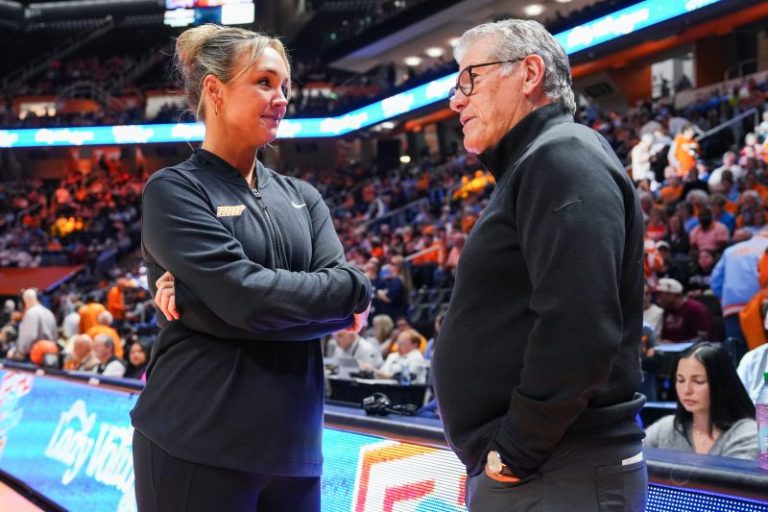
House conservatives are expressing skepticism after Senate Democrats and the White House announced a deal had been reached to fund the government without a long-term Department of Homeland Security funding bill. One House member warned that Republicans should not give in to demands to ‘handcuff ICE.’  

With any deal reached in the Senate needing approval in the House of Representatives, Rep. Mark Harris, R-N.C., told Fox News Digital, ‘[Senate Minority Leader Chuck] Schumer’s current demands, compounded by a lack of conservative priorities, are an absolute non-starter’ in the lower chamber.  

‘With Chuck Schumer’s demands to handcuff ICE and his Democrat colleagues threatening to shut down the government over it, this is yet another example of the radical left prioritizing criminals over American citizens,’ said Harris.

Schumer, D-N.Y., and President Donald Trump labored over a deal from late night Wednesday into Thursday evening after the top Senate Democrat unleashed several funding demands and the White House accused Schumer of blocking a meeting with rank-and-file Democrats.

‘The separation of the five bipartisan bills the Democrats asked for, plus the two-week DHS [continuing resolution] has been agreed to,’ Schumer said in a statement. 

In response, one House conservative remarked to Fox News Digital, ‘We’re still looking at what is being discussed in the deal, but 14 days is awfully short.’

‘We sure think we should be getting something out of this deal when it’s Democrats who are threatening a shutdown, not Republicans,’ the House member said.

Not all House Republicans were against the compromise. Rep. Marlin Stutzman, R-Ind., reacted on X, ‘I stand with @POTUS, a shutdown will only hurt the American people. I will vote YES on this package should it make it through the Senate!’ 

In a Truth Social post on Thursday evening, Trump urged the GOP to agree to the deal, saying, ‘Hopefully, both Republicans and Democrats will give a very much-needed bipartisan ‘YES’ Vote.’

The president added that the ‘only thing that can slow our Country down is another long and damaging Government Shutdown.’ 

‘I am working hard with Congress to ensure that we are able to fully fund the Government, without delay,’ Trump said. ‘Republicans and Democrats in Congress have come together to get the vast majority of the Government funded until September, while at the same time providing an extension to the Department of Homeland Security (including the very important Coast Guard, which we are expanding and rebuilding like never before).’

The deal brokered between the two would see the Department of Homeland Security (DHS) funding bill stripped from the broader six-bill package. Schumer and Democrats have been adamant that if the bill is sidelined, they’d vote for the remaining five, which includes funding for the Pentagon. 

Their agreement also tees up a short-term funding extension, known as a continuing resolution (CR), for two weeks to keep the agency funded while lawmakers negotiate restrictions on Immigration and Customs Enforcement (ICE). 

If passed in the Senate, the deal would still need to pass the House again. With lawmakers there not expected back in Washington until Feb. 2, three days after the Jan. 30 funding deadline, a brief partial government shutdown is all but certain.

Tensions have been boiling over in the House over the prospect of the Senate’s compromise on DHS.

Caucus member Rep. Ralph Norman, R-S.C., told Fox News Digital via text message on Thursday, ‘THE HOUSE DID OUR JOB BY PASSING THE REMAINING SIX APPROPRIATION BILLS TO THE SENATE AND THERE IS NO RATIONAL REASON TO REMOVE DHS FROM THE APPROVAL PROCESS.’

Norman accused Democrats of trying to ‘demonize’ and ‘bludgeon’ DHS, adding, ‘IF THE DEMOCRATS WANT TO SHUT THE GOVERNMENT DOWN, ‘DO IT’!!’

Meanwhile, Mark Bednar, a GOP strategist and former spokesperson for then Speaker Kevin McCarthy, told Fox News Digital, ‘President Trump wants to ensure that our troops, air traffic controllers and DHS patriots are on the job and get paid, and this path will help ensure they do that.

‘It’s now on Democrats to negotiate in good faith with President Trump so that the homeland is secured with a long-term funding bill — because that’s what the American people want and deserve.’

Fox News Digital’s Alex Miller contributed to this report.

This post appeared first on FOX NEWS
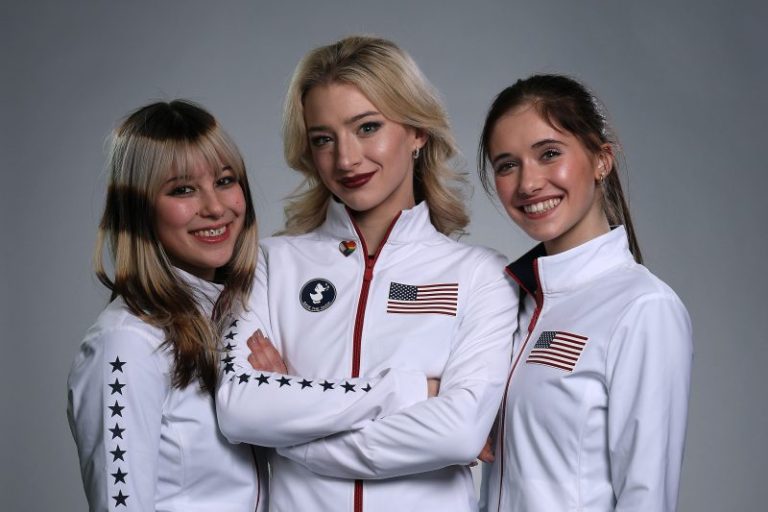
President Donald Trump has filed a $10 billion lawsuit against the IRS, accusing the agency of unlawfully leaking his confidential tax returns in a politically motivated violation of federal privacy laws.

A spokesman for Trump’s legal team told Fox News ‘a rogue, politically motivated’ IRS employee disclosed private and confidential tax information involving Trump, his family and the Trump Organization to outlets, including The New York Times and ProPublica.

The suit claims the disclosures were illegal and harmed millions by violating federal privacy laws.

That contractor at the heart of the leak, Charles Littlejohn, pleaded guilty in October 2023 to a single felony count of unauthorized disclosure of tax return information and is serving a five-year prison sentence.

Littlejohn admitted to stealing and leaking Trump’s tax records to The New York Times and to disclosing confidential tax data involving wealthy individuals to ProPublica.

According to the lawsuit, Littlejohn testified in a 2024 deposition that the Trump materials he leaked included information on all of Trump’s business holdings.

As previously reported by Fox News Digital, Littlejohn refused to testify before Congress, invoking his Fifth Amendment rights while appealing his sentence.

According to a June 2025 Judiciary Committee press release, DOJ prosecutors said Littlejohn’s disclosures were ‘unprecedented in its scope and scale.’ 

This is a developing story. Check back for updates.

This post appeared first on FOX NEWS
Trinity Rodman was determined to get her United States Women’s National Team coach Emma Hayes to celebrate with her. No matter how much Hayes refused, the star forward was determined.

‘She tries to act like she doesn’t like attention. And I told her, I literally said this to her. I was like, ‘You love it. You would do it,” Rodman said at NWSL media day on Thursday. ‘And I know it’s in there.”

That was days before Rodman took Hayes by surprise by hitting the ‘Sexy Dexy’ in front of her after scoring a goal in USA’s 6-0 win against Paraguay on Saturday, Jan. 24.

Her coach refused.

‘I’m 49 years of age,’ Hayes told reporters at the time. ‘There’s no chance I’m doing that!’

But according to Rodman, even assistant coach Denise Reddy agreed in her assessment that despite her public comments, Hayes secretly loved the dance. Sure enough, in the three days between the USWNT’s two friendlies, the coach began to practice her dance moves. Feeling like she was too stiff, she initially enlisted center back Tara Rudd’s help — who then gave Rodman a call.

Rodman was getting her nails done when she heard from Rudd.

‘I’ll be right there,’ she remembers telling her teammate.

Then on Tuesday, Jan. 27, Rodman got the ball on the wing, entered the box, side-stepped a Chile defender and fired a shot into the net just past the outstretched arms of the diving goalkeeper to put USA up 5-0. She ran over to the sideline again. And this time, Hayes joined in on the celebration.

‘Game day, I was like, ‘If you don’t do it, it’s gonna be an issue,” Rodman said. ‘And then she did it, and she had a great time.’

This post appeared first on USA TODAY

Alex Freeman has joined La Liga side Villarreal in a transfer from MLS side Orlando City, both clubs confirmed Thursday.

The U.S. men’s national team right back will move for around $4 million with another $3 million in possible add-ons, per multiple reports. He has signed a contract with Villarreal through June 2032.

Orlando City will also retain a sell-on percentage in the event of a future transfer.

Freeman enjoyed a breakout 2025 campaign. The 21-year-old had only made three MLS appearances prior to the season, but he won Orlando’s starting right back role and immediately became one of the top fullbacks in the league.

The right back was named a MLS All-Star, earned a spot on the 2025 MLS Best XI and won the league’s Young Player of the Year award. 

“He showed maturity and commitment at every level, rising from a young prospect to an MLS All-Star and one of the league’s top emerging talents. Watching his development up close has been incredibly rewarding for all of us at the club,’ said Ricardo Moreira, Orlando City general manager and sporting director.

‘We’re proud of everything Alex has accomplished here and wish him continued success as he takes this next step in his professional career.” 

Freeman, the son of former Green Bay Packers wide receiver Antonio Freeman, earned his first USMNT cap in June and quickly became an important player under head coach Mauricio Pochettino.

Freeman made 13 appearances total for the USMNT in 2025, scoring two goals in the team’s 5-1 win over Uruguay on Nov. 19.

He appears to be a good bet to make the World Cup roster, but will need to hit the ground running in Spain to assure he doesn’t fall down the USMNT depth chart.

At Villarreal, Freeman will join a club that currently resides in fourth place in La Liga behind Barcelona, Real Madrid and Atlético Madrid. 

This post appeared first on USA TODAY

Tennessee’s Attorney General, who helped sue the NCAA to allow unlimited annual transfers, now calls the unrestricted portal a ‘train wreck.’
The lawsuit, joined by other states, successfully argued that NCAA transfer restrictions illegally limited athletes’ earning potential.
Despite the ensuing chaos, the attorney general does not regret the lawsuit, stating it was necessary to dismantle an illegal system.

One of the state government officials who sued the NCAA and won unlimited annual transfers for college athletes now calls the unrestricted transfer portal a “train wreck” and says it is “sucking the life out of college sports.”

“I think the portal is probably the single biggest problem that needs to be solved…” Tennessee Attorney General Jonathan Skrmetti told USA TODAY Sports. “The portal is just sucking the life out of college sports and putting student-athletes in a bad position. And if there is one change in the immediate future that needs to happen, it’s fixing the portal.”

Skrmetti effectively created this new system of unlimited annual player transfers, along with the attorneys general of several other states. They filed an antitrust lawsuit against the NCAA in December 2023 seeking to eliminate rules that restricted undergraduate players from transferring to a new school more than once in their college careers.

They later were joined by the federal justice department before winning a settlement with the NCAA in 2024 that gave Division I athletes more freedom of movement than athletes have in the NFL, NBA or other pro sports.

Bedlam has ensued as a result. In one case, a prominent head coach quit over it.  In another case, a football player is about to join his seventh college in seven years. In another, a university sued its own quarterback to prevent him from leaving for another school.

But the Tennessee attorney general doesn’t regret it

Skrmetti views the transfer restriction he helped eliminate as an illegal rule that unfairly prevented players from maximizing their earnings after finally being allowed to make money for their names, images and likenesses (NIL). He said that old system needed to be torn down because it illegally restricted player compensation and freedom. The mess that’s ensued as a result is not the responsibility of the state attorneys general who sued to remove the rule, according to him. He said building a new system with better rules that can withstand legal scrutiny is up to college sports leaders and perhaps the U.S. Congress.

“It’s not that the NCAA got sued by states. It’s that the NCAA was behaving illegally,” Skrmetti said. “And so just like with the NIL stuff,  it was going to happen, like somebody was going to push back. And the point of the litigation is not to carve in stone the Wild West. It’s to get conclusive rulings that the old ways are broken, and it’s time to start creating what the next college sports regime looks like.”

Portal is The Wild West without transfer restrictions

Skrmetti said the transition to a new system to replace the old one is “taking way longer than it should.” In the meantime, he called the current transfer system “just awful.” Some examples show what’s happened after the old rule was eliminated:

∎ One player, quarterback TJ Finley, will be playing for his seventh school since his freshman year in 2020. Finley is headed to Incarnate Word after previous stops at LSU, Auburn, Texas State, Tulane, Western Kentucky and Georgia State.

∎ ESPN reported more than 6,500 Division I football players entered the transfer portal this year from Jan. 2 to Jan. 16, virtually all of them looking for more playing time, more money or a bigger spotlight. More than 10,500 combined entered the portal in Division I, II and III, according to NCAA.com. In Division I alone, that’s enough to create 62 new teams of 105 players each. (The NCAA declined to confirm any numbers but said Division I player volume in the transfer portal was down from the year before.)

∎ Some schools did create mostly all-new teams by flipping their rosters and starting over with transfer players. Colorado football coach Deion Sanders flipped his roster again with 47 new incoming transfer players including non-scholarship players, offsetting more than 35  Colorado players who entered the transfer portal to leave the team after a 3-9 season in 2025. New Oklahoma State football coach Eric Morris took more than 50 new transfers while more than 60 transferred out.

∎ Like Sanders, some coaches are using the transfer portal as a pro-style waiver wire to nudge certain players off the team, overtly or not. Indiana running back Roman Hemby said he was pushed into the portal at Maryland by coach Mike Locksley.

∎ The head coach at Kansas State, Chris Klieman, quit because of the chaos at age 58, telling The Mercury in Manhattan, Kansas, he was at his “wits’ end” with the roster upheaval caused by unlimited transfers.

∎ Duke University recently sued its own quarterback, Darian Mensah, after he said he was transferring out. That’s because Duke had a contract with Mensah through Dec. 31, 2026 and wanted to prevent him from joining another school after he previously transferred from Tulane. The two sides recently reached a settlement.

High school recruits getting squeezed out by transfer portal?

The University of Colorado’s Board of Regents also recently expressed concern about opportunities for local high school recruits as Sanders fills most of his roster with transfers from out of state instead. The board wanted assurances from Colorado’s new athletic director, Fernando Lovo, he would improve relations with high schools in the state.

Meanwhile, the search for playing time continues for some transfer players every year while they’re supposed to be making progress toward a college degree. For example, quarterback Walter Taylor III started at Vanderbilt in 2022, transferred to Colorado for 2024, moved to Ball State in 2025 and now is back at Vanderbilt at a different position in 2026 — tight end. He’s been searching for playing time but hasn’t appeared in a game since he left Vanderbilt the first time.

“When you combine unlimited transfers with NIL and zero enforcement, you create instability,” said former Penn State tight end Adam Breneman, co-founder The College Sports Company. “A player moving to seven schools is not healthy for college football, roster building, locker rooms, or player development. There has to be a middle ground where athletes have freedom, but also accountability, especially now that many are being paid.”

Other state attorneys general no longer bragging?

The attorneys general bragged about their legal victory in press releases May 30, 2024. The news release from Ohio Attorney General Dave Yost came with a headline that said, “AG Yost and Allies Score Major Win for College Athletes.”

“This long-term change is exactly what we set out to accomplish,” Yost said in that 2024 release about unrestricted transfers.

But now when asked about the consequences of that action, none of them discussed it except Skrmetti. Yost’s press office didn’t respond to three detailed emails and a phone call since Jan. 12. New York’s attorney general office didn’t want to talk about it on the record. The federal Justice Department declined comment.

The office of Colorado Attorney General Phil Weiser recommended USA TODAY Sports contact the attorney general offices in Ohio and Tennessee with questions about the fallout because they “were the lead states on this litigation and settlement.”

USA TODAY Sports contacted the press offices of all seven original plaintiffs in the case: the then-attorney generals of Ohio, Colorado, Illinois, New York, North Carolina, Tennessee and West Virginia. USA TODAY Sports also contacted the offices of attorneys general who joined the case later — Mississippi, Virginia, Minnesota and Washington, D.C., plus the federal Justice Department. USA TODAY Sports e-mailed each office at least twice since Jan. 12 and followed up with phone calls, each explaining the topic of inquiry in detail.

Only Skrmetti agreed to an interview.

“Tearing things down is sometimes necessary,” Skrmetti said. “But that’s never the end of the story. This is the time when we need to be building what comes next. And I don’t think we want state political figures doing that through litigation. I think it really needs to be a conversation between the coaches, the student-athletes, the conferences, the universities, the NCAA leadership, everybody who’s involved in this.”

Did education get lost in NCAA argument?

NCAA rules that previously restricted players from transferring once were based on promoting education.

Before 2021, NCAA rules generally prohibited undergraduate players from transferring at all without first sitting out a season at their new school — unless they played sports besides football, basketball, baseball and men’s hockey. The NCAA said this was designed to help transfers catch up academically after transferring in with credits that might not be accepted at their new school.

In 2006, players who graduated college also were allowed to transfer without sitting out a year if they still had NCAA eligibility — a way to reward those who already graduated. The NCAA then further eased transfer restrictions in 2021 by allowing players to transfer one time without sitting out a year.

“The academic ties to college sports are being eroded by a deluge of lawsuits in both state and federal courts,” the NCAA said in a statement to USA TODAY Sports. “In some cases, student-athletes are seeking eighth years of collegiate eligibility — despite the fact that an average student completes their undergraduate degree in five years or fewer. The NCAA’s transfer rules were challenged by several state attorneys general, usually in service of one student-athlete on one team at one university in their state.”

The West Virginia battleground

One example of how an attorney general got involved and used the case to score points with local fans came in West Virginia. In 2023, men’s basketball player RaeQuan Battle wanted to transfer from Montana State to West Virginia and play right away. But he had already transferred once, from Washington to Montana State, leading to his request being rejected by the NCAA.

Then-West Virginia Attorney General Patrick Morrisey got involved by writing a letter to the NCAA on Battle’s behalf and then joining the lawsuit to strike down the transfer restriction, saying it unfairly restrained athletes’ ability to maximize their economic opportunities after the NCAA finally allowed players to earn NIL money in 2021.

The NCAA eventually decided to relent and settle the case after U.S. District Judge John Preston Bailey in West Virginia issued a preliminary injunction against the NCAA at the states’ request in December 2023.

“WVU took a chance on RaeQuan Battle, who faced a disadvantage by being restricted by the Transfer Eligibility Rule,” the judge noted in his ruling.

Morrisey is now the governor of West Virginia after being elected in November 2024.

Will there ever be new NCAA transfer rules?

There’s no going back now, not without Congressional intervention or massive change that deems athletes as employees who can form a union to collectively bargain for a different system. But why would athletes want the system to change given how much freedom and leverage they currently have?

“Re-imposing restrictions at the NCAA level would be an antitrust violation,” said Mit Winter, an attorney specializing in NIL issues and a former basketball player at William & Mary.

The notion of making or enforcing rules to promote college education also now might seem quaint, given the amount of money coursing through the system to coaches, facilities and now players.

“The athletes are recruited to play their sport and their life is completely built around their sport,” Winter told USA TODAY Sports. “So to me, the frequent movement we see now is a natural occurrence of what college athletics really is at the highest level: pro sports. And the athletes didn’t bring this about. The schools did by deciding their sports teams are going to be marketing and entertainment vehicles for the universities instead of just another part of the educational experience.”

Skrmetti said it’s up to college sports leaders and/or Congress to build a better system in place of the “illegal” rule he helped knock down.

“There has to be something that can survive a lawsuit but that resolves this so that people can get back to enjoying college sports and not wonder, you know, what constellation of players they are going to be looking at in their team’s uniform next year,” Skrmetti said.

Follow reporter Brent Schrotenboer @Schrotenboer. Email: bschrotenb@usatoday.com

This post appeared first on USA TODAY

Senate Democrats and the White House reached a deal to fund the government, but lawmakers aren’t out of the woods yet in averting a partial shutdown. 

Senate Minority Leader Chuck Schumer, D-N.Y., and President Donald Trump labored over a deal from late night Wednesday until Thursday evening after the top Senate Democrat unleashed several funding demands and the White House accused Schumer of blocking a meeting with rank-and-file Democrats. 

‘The separation of the five bipartisan bills the Democrats asked for + the two-week DHS [continuing resolution] has been agreed to,’ Schumer said in a statement. 

Trump, in a post on Truth Social, said that the ‘only thing that can slow our Country down is another long and damaging Government Shutdown.’ 

‘I am working hard with Congress to ensure that we are able to fully fund the Government, without delay,’ Trump said. ‘Republicans and Democrats in Congress have come together to get the vast majority of the Government funded until September, while at the same time providing an extension to the Department of Homeland Security (including the very important Coast Guard, which we are expanding and rebuilding like never before).’ 

‘Hopefully, both Republicans and Democrats will give a very much-needed Bipartisan ‘YES’ Vote,’ he continued. 

The deal brokered between the two would see the Department of Homeland Security (DHS) funding bill stripped from the broader six-bill package. Schumer and Democrats have been adamant that if the bill were sidelined, they’d vote for the remaining five, which includes funding for the Pentagon. 

Their agreement also tees up a short-term funding extension, known as a continuing resolution (CR), for two weeks to keep the agency funded while lawmakers negotiate restrictions on Immigration and Customs Enforcement (ICE). 

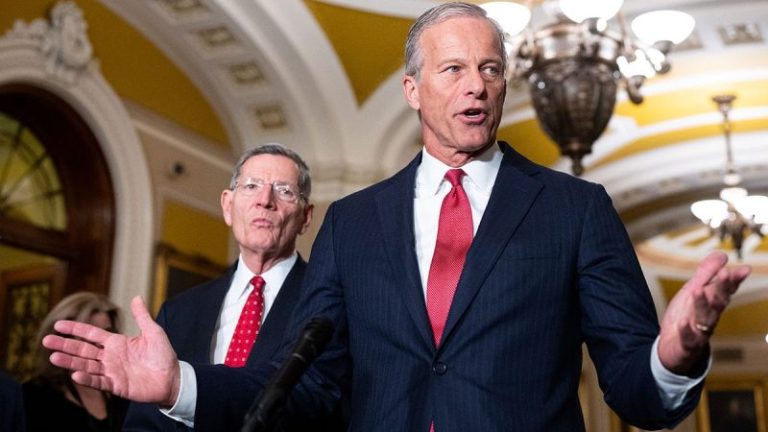
Trump and Schumer’s bipartisan truce comes after Senate Majority Leader John Thune, R-S.D., and Senate Republicans barreled ahead with a test vote on the funding package that was ultimately torpedoed by Senate Democrats and a cohort of seven Republicans earlier in the day. 

Republicans again have the opportunity to bring the package back to the floor, but to speed up the process, they would need consent from lawmakers on both sides of the aisle.

And they are still working out the kinks on their own end through the hotline process, where the package is scrutinized by every Senate Republican before being given the go-ahead for a floor vote. 

Speedig up the process may prove tricky, given that several of the Republican defectors, including Sens. Ron Johnson, R-Wis., Rick Scott, R-Fla., and Ted Budd, R-N.C., were upset with earmarks baked into the bill. 

And Sen. Rand Paul, R-Ky., wants an amendment vote on his provision to strip the bill of millions in ‘refugee welfare money‘ and signaled that he may slow the process down if he doesn’t. 

Many Senate Republicans recognize that stripping the DHS bill is not the best outcome but contended that it was better than not funding the government and entering into yet another shutdown.

‘That’s the only way we’re going to get through this without a long government shutdown,’ Sen. Steve Daines, R-Mont., said. 

To his point, despite lawmakers reaching an agreement that will likely see the remaining bills passed and keep DHS funded for a month, the House will have to agree. They don’t return until next week, and fiscal hawks are already publicly panning the plan.

This post appeared first on FOX NEWS