Archive

2026

Browsing

Drake Maye appeared on the New England Patriots’ injury report for the first time of the 2025 NFL season less than two weeks ahead of his team’s Super Bowl 60 matchup with the Seattle Seahawks.

Maye was estimated to be a ‘limited’ participant on the Patriots’ Jan. 28 practice report because of an injury to his right shoulder.

The Patriots did not actually practice on Jan. 28, and Mike Vrabel expressed little concern about Maye’s injury during a news conference the previous day. Nonetheless, many will be watching the second-year quarterback’s status with a keen eye as he battles an injury in his throwing shoulder.

Here are the latest updates about Maye’s injury as the 23-year-old prepares to make his first-ever Super Bowl start in just his second season.

Drake Maye injury update

Maye provided a positive update about his shoulder injury when asked about it by reporters during a post-practice media availability on Jan. 29.

‘Yeah, I feel good,’ Maye said. ‘Got out there, moved around a good bit today, and went in to do some jog-throughs, so, feeling good.’

Maye also indicated he would be ready to play in Super Bowl 60, which is set to kick off on Feb. 8.

‘I’m looking forward to be ready to go,’ Maye said. ‘This is the game you dream of playing in, so looking forward to getting out there and getting a chance to play in the Super Bowl.’

Maye further expressed his belief that his shoulder injury isn’t anything severe and shouldn’t limit him greatly as he prepares to suit up for the Super Bowl.

‘I think it’s just been one of those things where it’s a long season,’ Maye explained. ‘Sometimes, things show up. I’ll do whatever I can to, you know, feel 100% and I’m sure I’ll get if not there as close as I can or 99[%] or do whatever I can to make sure, I’m throwing and, like I said, do whatever I can to help the team win.’

Vrabel also addressed Maye’s injury during his Jan. 29 media availability. Notably, he told reporters the 23-year-old quarterback’s injury was new and not an aggravation of a previous injury, as such a malady would have been listed on the injury report.

Additionally, Vrabel expressed he wasn’t overly concerned about Maye’s injury as Super Bowl 60 approaches.

‘I try not to have a whole lot of concern,’ Vrabel said. ‘I just want to try to prepare the football team, make sure that everybody’s read, that we all have a plan, not to surprise anybody and make sure that our guys are focusing on the first and second down plan.’

This post appeared first on USA TODAY

The Atlanta Falcons’ organizational remodel is nearing completion.

The Falcons are expected to hire Ian Cunningham to be the team’s next general manager, according to multiple reports.

Cunningham is a longtime NFL scout who spent the last four seasons as the Chicago Bears’ assistant general manager. The 40-year-old worked closely with Bears general manager Ryan Poles – a college teammate of new Falcons president of football operations Matt Ryan – to rebuild Chicago into a playoff team.

That, plus Cunningham’s experience working under Ozzie Newsome with the Baltimore Ravens (2008-16) and Howie Roseman with the Philadelphia Eagles (2017-21), helped him earn general manager interviews in recent seasons.

Ultimately, Atlanta was the team to give Cunningham his first general manager opportunity. He will now work with Ryan and new Falcons coach Kevin Stefanski to try to get Atlanta to the playoffs for the first time since the 2017 NFL season.

First up on Cunningham’s to-do list will be figuring out what to do at quarterback. Michael Penix Jr. suffered a torn ACL midway through the season while Kirk Cousins could be a cap casualty ahead of the third season of his four-year, $180 million free-agent deal.

The Falcons went 8-9 last season under the leadership of coach Raheem Morris and general manager Terry Fontenot. They have not had a winning season since 2017.

This post appeared first on USA TODAY

New Buffalo Bills coach Joe Brady wasted little time endorsing Keon Coleman, the 2024 second-round pick who had a difficult second season in the NFL.

Brady told reporters after his introductory news conference that the 22-year-old receiver ‘is going to be a Buffalo Bill’ in 2026.

‘I told Keon when I got hired, the best thing that happened to Keon Coleman was me being his head coach,’ Brady told reporters Jan. 29, per ESPN’s Alaina Getzenberg. ‘I was one of the ones that stood on the table for Keon Coleman, and I believe in Keon Coleman.’

Brady’s backing of Coleman comes after the Florida State product indirectly drew the ire of Bills owner Terry Pegula during a postseason news conference announcing the firing of Sean McDermott.

Pegula was seeking to absolve Brandon Beane – now Buffalo’s president of football operations and general manager – of blame for the Coleman selection and the receiver’s shortcomings across his NFL career to date.

‘The coaching staff pushed to draft Keon,’ Pegula said. ‘I’m not saying saying Brandon wouldn’t have drafted him, but he wasn’t his next choice. That was Brandon being a team player and taking advice of his coaching staff, who felt strongly about the player.

‘He’s taking, for some reason, heat over it and not saying a word about it, but I’m here to tell you the true story.’

Many assumed Coleman would be on his last legs in Buffalo after Pegula’s comments. He was often a late-season scratch despite the Bills lacking a consistent receiver target across from Khalil Shakir.

Instead, Brady found himself uniquely positioned to absorb Pegula’s criticism – having been an internal hire who was involved in the Coleman selection, as he affirmed – and expressed confidence Coleman would bounce back after a ‘learning year’ in 2025.

‘He’s going to continue to grow, but the elements that we saw in the draft process – the confidence that I have in him and his ability – and as long as he’s handling what he needs to do off the field, I have no doubt that he’s going to be successful on the field,’ Brady said of Coleman, per ESPN.

Brady wasn’t the only prominent member of Buffalo’s organization to back Coleman. Star quarterback Josh Allen did during a news conference of his own.

‘I’m not going to give up on zero,’ Allen told reporters, referring to Coleman by his jersey number. ‘He’s got too much ability, and I will not give up on him. We’re going to work tirelessly, him and me, and as well as everybody else in this building, to make sure that whenever we step foot on the field that we’re going to find ways to win football games. And he’s going to be part of that.’

Coleman generated 38 catches for 404 catches and four touchdowns across 13 games (six starts) during the 2025 NFL season. He was a healthy scratch for four of the team’s final eight regular-season games and generated just two catches for 46 yards and a touchdown in the playoffs.

This post appeared first on USA TODAY
Super Bowls are inherently staged between great teams. The Seattle Seahawks and New England Patriots, who will face off on Feb. 8 in Super Bowl 60, both hope to stake a claim among the NFL’s champions.

But how will history ultimately view them?

The 2025 Pats are a distinct group from the New England dynasties led by Tom Brady and Bill Belichick, who last joined forces to win the Lombardi Trophy seven years ago. This season’s Seahawks are also charting their own path 11 years after Seattle’s legendary ‘Legion of Boom’ era fizzled out against the Patriots in Super Bowl 49.

And while the 21st century has been dominated by the Kansas City Chiefs and New England dynasties, it hasn’t necessarily seen a lot of dominant teams over the span of a single season. But a decisive showing on Super Sunday might help one of these teams rank near the 2013 Seahawks, 2016 Patriots or even last season’s Philadelphia Eagles.

With that in mind as Super Bowl 60 (LX) approaches, here are what I believe to be the 60 greatest teams to play on Super Sunday – and not all of them won:

1. 1985 Chicago Bears, won Super Bowl 20 (XX)

Pure dominance. Their 15 regular-season wins came by an average of 18.1 points. The defense collected 64 sacks while allowing just 12.4 points weekly. Chicago shut out the Giants and Los Angeles Rams in the NFC playoffs before an epic 46-10 Super Bowl dismantling of New England. All told, the Bears outscored their postseason opponents 91-10. Sure, it would have been nice to see a rematch with QB Dan Marino and the Dolphins, who handed Chicago its only loss of 1985, on Super Sunday. And maybe you’d like the best team of all time – arguably – to feature a more renowned quarterback than Jim McMahon. But the fact that an offense led by RB Walter Payton (1,551 rushing yards) was almost extraneous also illustrates just how transcendent coordinator Buddy Ryan’s ’46 defense’ was. And a little flair should count for something, and with McMahon, Payton, Ryan, DT William ‘Refrigerator’ Perry, MLB Mike Singletary, coach Mike Ditka and many others – most getting star turns with ‘The Super Bowl Shuffle’ – the ’85 Bears had character(s) in spades.

2. 1984 San Francisco 49ers, won Super Bowl 19 (XIX)

They lacked the pizzazz of the ’85 Bears and perhaps don’t get their due given the historical proximity to that Chicago team. It’s also challenging to distinguish the great Bill Walsh-Joe Montana San Francisco teams that dominated the 1980s. But this bunch was unique. These Niners were the first to win 15 regular-season games (average margin of victory was nearly 17 points), a feat Chicago would match a year later – and they remain the only teams to finish 18-1 and claim rings. Before suffocating a spectacular Dolphins team, Marino’s best, 38-16 in the Super Bowl, the 49ers vanquished the Giants and Bears by a combined score of 44-10 in the NFC playoffs. (Those franchises would win the next two Super Bowls with teams ranking among the best ever.) And this all occurred a year before WR Jerry Rice arrived.

3. 1989 49ers, won Super Bowl 24 (XXIV)

Comparing them to their ’84 brethren engenders a chocolate versus vanilla debate. The ’89 Niners – Rice by now the league’s top wideout – were a touch less formidable in the regular season, going 14-2 with an average victory margin just short of 14 points. But boy did that ’89 juggernaut hit overdrive in the playoffs, winning its three games by a combined 126-26. Their 55-10 beatdown of the Broncos is the most lopsided in Super Bowl history and also represents the most points scored by one team. However, the postseason competition for the ’89 Niners didn’t approach what the ’84 team faced. With a career-best 112.4 QB rating, Montana earned league (and, later, Super Bowl) MVP honors.

4. 1972 Miami Dolphins, won Super Bowl 7 (VII)

Yes, it’s the only team to win a Super Bowl without dropping a game (17-0), and there’s no real counterargument for ‘perfection.’ But it’s also a lazy argument. Miami won its three postseason games by a combined 17 points. It also feasted on a horrid regular-season schedule that included just two teams finishing with winning records (both a middling 8-6). This isn’t meant to shade the Fins and their ‘No-Name Defense,’ a roster with six Hall of Famers plus Don Shula, the winningest coach in NFL history. But context matters, and it already seems a concession ranking the ’72 Dolphins ahead of 1970s contemporaries in Pittsburgh, Dallas and even Oakland. A special group indeed, but not the most special for my money.

5. 1991 Washington, won Super Bowl 26 (XXVI)

After going 14-2 and outscoring its foes by 261 points in the regular season, this team swept through the playoffs with an average margin of victory better than 20 points. The only Washington team to win a Super Bowl in a non-strike season, this underappreciated band would have gone all the way in most years. Washington topped 40 points five times and blanked three teams, so excellent balance – and that extended to special teams and return man extraordinaire Brian Mitchell.

6. 1994 49ers, won Super Bowl 29 (XXIX)

With QB Steve Young now at the helm, they became the only Niners team to surpass 500 points in the regular season. After thwarting a three-peat bid by the Cowboys, they cruised past the outclassed San Diego Chargers in the Super Bowl, when Young threw a game-record six TD passes (while Rice and RB Ricky Watters found the end zone three times apiece). And don’t forget the other side of the ball, which featured Defensive Player of the Year Deion Sanders.

7. 1975 Pittsburgh Steelers, won Super Bowl 10 (X)

It feels a touch disrespectful waiting this long to mention the Steel Curtain dynasty, perhaps the league’s greatest. The issue? None of those teams seemed to feature its wealth of Hall of Famers at a simultaneous apex, the defense largely showing the way in the early ’70s before the offense truly flourished later in the decade. (The 1976 Steelers, who did not win or even reach the Super Bowl, might have been the best of their era, but injuries waylaid them in postseason.) Still, the ’75 team’s case is compelling given a 12-2 record and the largest point differential (+211) in franchise history. Throw in a Super Bowl win against a Cowboys team that was nearly as good, and you have the makings of a powerhouse deserving recognition as one of the NFL’s 10 greatest teams.

8. 1999 St. Louis Rams, won Super Bowl 34 (XXXIV)

Though many sophisticated passing attacks had shined previously, the ‘Greatest Show on Turf’ was in some ways the vanguard of today’s pass-oriented game. QB Kurt Warner, RB Marshall Faulk and WRs Isaac Bruce and Torry Holt truly resembled a game of ‘Madden’ come to life, St. Louis’ 13 regular-season wins coming by an average of nearly 23 points. Remarkably consistent, the Rams were held to fewer than 20 points just once (in the NFC title round by Tampa Bay) and eclipsed 30 points 13 times. And Warner’s ascension from complete unknown to league MVP and, ultimately, a Hall of Famer is a quintessential rags-to-riches tale. If there’s a blemish, it would be a labored playoff run that included a semi-controversial win in the aforementioned 11-6 defeat of the Bucs and a near escape from the Tennessee Titans in the Super Bowl.

9. 1996 Green Bay Packers, won Super Bowl 31 (XXXI)

It may seem heretical to list QB Brett Favre’s Packers ahead of Vince Lombardi’s teams. But the 1960s dynasty – it won five NFL championships in seven years – was at its zenith before the Super Bowl came into existence, the 1962 edition the premier collection of talent. Three decades later, Favre was in the midst of becoming the only player to earn MVP hardware in three consecutive seasons. Reggie White, arguably the best defensive lineman ever, remained a force, collecting a record three sacks of Patriots QB Drew Bledsoe in the Super Bowl. And from a numbers standpoint, this club ranks favorably with any in Green Bay’s vaunted history, going 13-3 in the regular season before trashing its playoff opponents by an average of 17.3 points.

10. 1973 Dolphins, won Super Bowl 8 (VIII)

Though they ‘only’ went 15-2, playoffs included, its proponents believe this Miami team might have been superior to the undefeated ’72 squad. The ’73 Fins were certainly more dominant in postseason, their average margin of victory 17.3 points.

11. 2013 Seattle Seahawks, won Super Bowl 48 (XLVIII)

They get my vote as the preeminent single-season team of the 21st century. Patriots fans will doubtless disagree, citing Seattle’s loss to New England in the following year’s Super Bowl – though many observers contend Seahawks coach Pete Carroll gifted the Pats that title. Perhaps more germane, the ‘LOB’ and Co. thoroughly throttled Denver, sporting the most prolific offense in league history, 43-8 in the Super Bowl two weeks after the Broncos handled the Patriots in the AFC championship game. Be interesting to see how history regards the LOB given what it accomplished in this era, surrendering a paltry 172 passing yards per game in 2013.

12. 1978 Steelers, won Super Bowl 13 (XIII)

The offense had perhaps overtaken the famed defense by then, evidenced by a 35-31 victory over Dallas when league MVP Terry Bradshaw won the first of his two Super Bowl MVPs.

13. 1998 Denver Broncos, won Super Bowl 33 (XXXIII)

Their title defense was shaping up as legendary, what with a 13-0 start to the season and RB Terrell Davis on his way to 2,008 rushing yards and the MVP trophy. Denver fans loved seeing QB John Elway retire as the Super Bowl MVP … and probably breathed a sigh of relief that the Broncos drew the Atlanta Falcons instead of an explosive Vikings group on Super Sunday.

14. 1966 Packers, won Super Bowl 1 (I)

After a slow start, they pulled away to win the first Super Bowl 35-10 – for you nitpickers, the game was officially dubbed the ‘AFL-NFL World Championship Game’ at the time – which came with quite a bit of pressure for Lombardi since the world assumed such an outcome was a foregone conclusion.

15. 1968 New York Jets, won Super Bowl 3 (III)

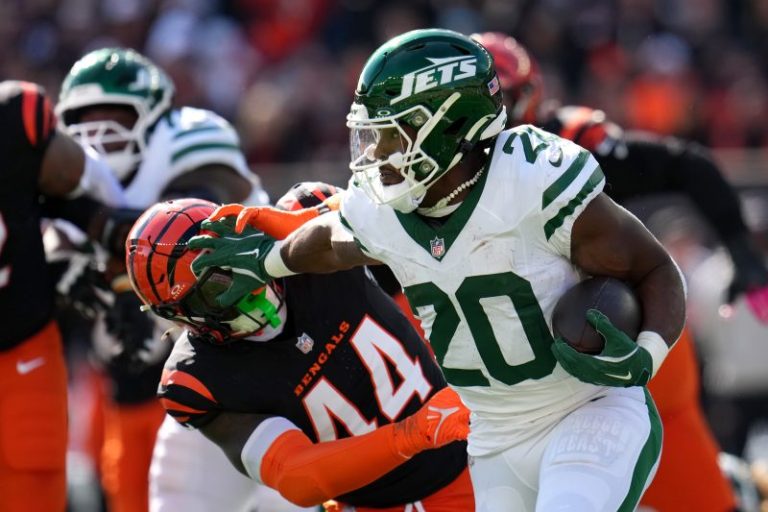
Their landmark Super Bowl defeat of the Baltimore Colts, guaranteed by brash QB Joe Namath, is widely regarded as the most important game in the history of professional football for legitimizing the pending merger of the AFL and NFL. Though deserved underdogs against an imposing Baltimore outfit, the Jets weren’t a fluke, fueled by Hall of Famer Namath’s deep passing to a pair of 1,100-yard receivers (George Sauer and HOFer Don Maynard). Yet it was RB Matt Snell’s running and an underrated defense that put the vise on the Colts in a 16-7 triumph that wasn’t that close.

16. 2024 Philadelphia Eagles, won Super Bowl 59 (LIX)

They sported that season’s No. 1 defense. A solid offense was ignited by RB Saquon Barkley, who rushed for more than 2,000 yards and wound up with more (2,504) than anyone in league history over a single campaign when combining the regular season and playoffs. Philly won 16 of its final 17 games and mostly rolled through postseason, winning the NFC title game and Super Bowl by a combined score of 95-45 − and that disparity isn’t fully illustrative of the Eagles’ dominance. They led the Chiefs, who were aiming for a historic Super Bowl three-peat in 2024, 34-0 late in the third quarter. Best Eagles team in history? Good luck finding a better one.

17. 2007 New England Patriots, lost Super Bowl 42 (XLII)

They had a bad game at the worst time, narrowly losing the Super Bowl 17-14 to the Giants. Point conceded, but still – this New England squad will forever be the only team to navigate a 16-0 regular season. QB Tom Brady became the first player to throw 50 TDs in a season, 23 to WR Randy Moss – still a single-season record for scoring grabs. The Pats outscored the opposition by an average of 19.7 points, easily the best in this proud franchise’s history, exceeding 30 points scored in 13 of 19 games. They couldn’t close with an unprecedented 19-0 season, but they still deserve a lofty perch on this list … even without a trophy.

18. 2016 Patriots, won Super Bowl 51 (LI)

They overcame Brady’s four-game ‘Deflategate’ suspension, TE Rob Gronkowski’s season-ending injury and a 28-3 third-quarter deficit against Atlanta to emerge with the first overtime victory in Super Bowl history.

19. 1971 Dallas Cowboys, won Super Bowl 6 (VI)

With coach Tom Landry, QB Roger Staubach and the Bob Lilly-led ‘Doomsday Defense,’ good luck finding a better edition of what would become ‘America’s Team.’ Dallas limited the Dolphins, who would go undefeated the following year, to a Super Bowl record-low three points.

20. 1969 Kansas City Chiefs, won Super Bowl 4 (IV)

They get overshadowed by the ’68 Jets but had the better collection of talent while giving the AFL its second Super Bowl win before the 1970 merger. A defense that boasted six Hall of Famers deserves more acclaim after allowing the fewest points, rushing yards, passing yards and total yards in the AFL that year while posting a league-high 47 takeaways.

21. 1992 Cowboys, won Super Bowl 27 (XXVII)

Let’s anoint them the best of the 1990s ‘Triplets’ Cowboys. Dallas set a franchise record with 13 regular-season wins before WR Michael Irvin, RB Emmitt Smith and Super Bowl MVP Troy Aikman planted their dynasty flag with a 52-17 Super Bowl rout of Buffalo … though DT Leon Lett’s showboating cost his team the Super Sunday scoring record.

22. 1968 Baltimore Colts, lost Super Bowl 3 (III)

They’ll forever bear the cross of surrendering the NFL’s perceived dominance after getting blasted by the Jets. But prior to that, Baltimore was making its case as the best team ever, even with Hall of Fame QB Johnny Unitas sidelined. Led by league MVP Earl Morrall, the Colts went 13-1, winning their regular-season games by an average of 20.6 points. Baltimore took the NFL crown by collectively beating the Vikings and Cleveland Browns 58-14 in the playoffs.

23. 1986 New York Giants, won Super Bowl 21 (XXI)

Big Blue’s first Super Bowl team was led by LB Lawrence Taylor, the last defensive player named league MVP. But QB Phil Simms stole the show on Super Sunday, completing 22 of 25 passes in a 39-20 defeat of Elway’s Broncos. New York won its three playoff games by an average of 27.3 points, including a 49-3 beatdown of Montana’s Niners.

24. 2017 Eagles, won Super Bowl 52 (LII)

When presumed league MVP Carson Wentz was lost to a torn ACL in Week 14, it seemed a foregone conclusion that Philadelphia’s decades-long championship drought would endure. But QB Nick Foles stepped into the breach and won Super Bowl MVP honors, winning a thrilling 41-33 shootout with Brady that included a record 1,151 yards of offense. ‘Philly Special’ indeed.

25. 2009 New Orleans Saints, won Super Bowl 44 (XLIV)

They started 13-0, but a three-game slide to end the regular season suggested another chapter of playoff futility. Coach Sean Payton and QB Drew Brees, however, wound up throwing a Lombardi Gras party four years after the city suffered Hurricane Katrina, beating teams quarterbacked by Warner, Favre and Peyton Manning in postseason.

26. 2004 Patriots, won Super Bowl 39 (XXXIX)

The second time a franchise won three Super Bowls in four years, these Patriots established a record by winning 21 games in a row, a streak initiated by the 2003 crew.

27. 2000 Baltimore Ravens, won Super Bowl 35 (XXXV)

Their dominion is all the more impressive considering they didn’t win the AFC Central nor averaged even 21 points a week. Naturally, defense was the story of this team, which allowed just 10.3 points per game, fewest since the schedule expanded to 16 games in 1978. In four playoff wins, Baltimore ceded a meager 23 points, and Super Bowl MVP Ray Lewis’ unit pitched a shutout against the Giants (New York’s points came off a kickoff return).

28. 1976 Oakland Raiders, won Super Bowl 11 (XI)

Though their 13-1 record suggests a cakewalk, Oakland scuffled through the first part of the season, even suffering a 31-point loss at New England. But the Silver and Black peaked late, rolling over Minnesota’s ‘Purple People Eaters’ 32-14 in the Super Bowl.

29. 2002 Tampa Bay Buccaneers, won Super Bowl 37 (XXXVII)

Using their famed ‘Tampa 2’ defense – with help from first-year coach Jon Gruden – the Bucs notched their first title with a thorough Super Bowl defeat of the Raiders, whom Gruden coached the previous year. Tampa Bay picked off league MVP Rich Gannon five times, three of those swipes of the pick-six variety.

30. 1997 Broncos, won Super Bowl 32 (XXXII)

They didn’t win the AFC West but did finally notch the franchise’s first championship, exacting playoff revenge on the Jacksonville Jaguars before Elway, Davis and Co. dethroned Favre’s Packers.

31. 2020 Buccaneers, won Super Bowl 55 (LV)

A free agent for the first time, Brady surprisingly bolted New England and popped up in Tampa. He didn’t need long to work his magic with the Bucs, who went 4-0 on the postseason wild-card route … and routed the defending champion Chiefs 31-9 in the Super Bowl. Brady was named the game’s MVP for a record fifth time, and his seventh ring gave him more than any NFL franchise. However, the Buccaneers defense’s steamrolling of a 14-2 Kansas City team while terrorizing QB Patrick Mahomes was the story of Super Sunday.

32. 2014 Patriots, won Super Bowl 49 (XLIX)

Lombardi No. 4 arrived 10 years after Lombardi No. 3. But New England ended its mini-drought in dramatic fashion, rookie DB Malcolm Butler snuffing Seattle’s repeat bid with his goal-line pick of QB Russell Wilson.

33. 1979 Steelers, won Super Bowl 14 (XIV)

The Steel Curtain labored for its fourth and final Super Bowl victory against a 9-7 LA Rams team before pulling away in the fourth quarter.

34. 1977 Cowboys, won Super Bowl 12 (XII)

‘Doomsday II’ showed up in the Super Bowl, forcing eight Denver turnovers. D-linemen Harvey Martin and Randy White are the only players to share Super Bowl MVP honors. Dallas’ average margin of victory in postseason was 21.3 points.

35. 1983 Los Angeles Raiders, won Super Bowl 18 (XVIII)

They were very good in the regular season, going 12-4, but hit the afterburners in the playoffs, winning three games by an average of 24.3 points while dismantling a Washington squad in the Super Bowl that had the makings of greatness. The first team to bring a Lombardi Trophy to LA.

36. 2019 Chiefs, won Super Bowl 54 (LIV)

They returned the Lombardi Trophy to Kansas City, ending an absence of half a century. The offense wasn’t as lethal as the version from 2018, when Mahomes had his breakout MVP season. But this better-balanced squad overcame double-digit deficits in all three playoff wins, including a 31-20 Super Bowl triumph over the 49ers, Mahomes the game’s MVP despite a pair of INTs.

37. 1993 Cowboys, won Super Bowl 28 (XXVIII)

They were virtually unstoppable once Smith ended his two-game holdout. The running back went on to win league and Super Bowl MVP honors.

38. 2010 Packers, won Super Bowl 45 (XLV)

Their fourth Super Bowl victory came via a wild-card playoff run as QB Aaron Rodgers officially emerged from Favre’s shadow.

39. 2022 Chiefs, won Super Bowl 57 (LVII)

Crown No. 2 for the Mahomes, Andy Reid, Travis Kelce Chiefs came with little margin for error. After cruising to a 14-3 regular-season mark, K.C. won its three playoff encounters by 13 points – total. A late holding penalty on Philadelphia’s James Bradberry enabled Harrison Butker to complete a 38-35 Super Bowl win with a 27-yard field goal in the final seconds. Mahomes was again the MVP, but Eagles QB Jalen Hurts played better.

40. 2013 Broncos, lost Super Bowl 48 (XLVIII)

The only team to top 600 points (606), courtesy largely of Manning’s record 5,477 yards and 55 TDs through the air. However, they’re forever tainted for getting smoked by Seattle in the Super Bowl.

41. 1967 Packers, won Super Bowl 2 (II)

The dynasty was winding down in Lombardi’s final season but good enough to slip past Dallas in the legendary ‘Ice Bowl’ before thrashing the AFL’s Raiders for what was effectively a Green Bay three-peat given the Pack also won the 1965 NFL title.

42. 1995 Cowboys, won Super Bowl 30 (XXX)

The first time a club won the Super Bowl three times in four years. Glitz beyond the Triplets with Sanders’ arrival.

43. 1967 Oakland Raiders, lost Super Bowl 2 (II)

Thoroughly dominant on road to the AFL crown, going 13-1 before embarrassing the Houston Oilers 40-7 for the championship. But Oakland was no match for the fading Packers, losing the Super Bowl 33-14.

44. 1969 Minnesota Vikings, lost Super Bowl 4 (IV)

Like the Colts the previous year, they were expected to cruise to a title over the AFL’s entry. But Minnesota, boasting what was probably the fiercest edition of the ‘Purple People Eaters,’ suffered the first of its four Super Bowl setbacks in an eight-year span.

45. 1983 Washington, lost Super Bowl 18 (XVIII)

They scored 541 points in the regular season, a record that stood for 15 years, but were shockingly thrashed by the Raiders while fumbling a Super Bowl repeat opportunity.

46. 1990 Giants, won Super Bowl 25 (XXV)

Bold coaching from Bill Parcells and great relief pitching from QB Jeff Hostetler – Simms went down with a broken foot in Week 15 – allowed New York to upset San Francisco, ending the Niners’ three-peat bid, and Buffalo on the way to its second Super Bowl win in five seasons.

47. 2003 Patriots, won Super Bowl 38 (XXXVIII)

They went 14-2, yet eight of their wins were by only one score. That trend continued in the Super Bowl, when New England survived the Carolina Panthers 32-29.

48. 1981 49ers, won Super Bowl 16 (XVI)

Vaulted by ‘The Catch’ – Montana to WR Dwight Clark – in the NFC championship game vanquishing of Dallas, a relative group of unknowns brought home the first of San Francisco’s five titles in a 14-season stretch.

49. 2005 Steelers, won Super Bowl 40 (XL)

They didn’t look nearly as impressive in the regular season as the previous year’s 15-1 squad. But the wild-card Steelers (11-5), helped by some playoff luck (Carson Palmer’s injury, Mike Vanderjagt’s missed FG, Jerome Bettis’ survived goal-line fumble in Indianapolis, favorable Super Bowl officiating against Seattle) sent the Bus into the sunset in style.

50. 2011 Patriots, lost Super Bowl 46 (XLVI)

Would Gronkowski have snared Brady’s Hail Mary for a Super Bowl miracle had the star tight end not been saddled with a high ankle sprain? What if wide-open WR Wes Welker hadn’t dropped that pass with room to run and just four minutes to go? We’ll never know. If only TB12 could throw to himself, right, Gisele?

51. 1978 Cowboys, lost Super Bowl 13 (XIII)

If only Hall of Fame TE Jackie Smith had held on to what would have been a TD, Dallas might have salvaged a Super Bowl split with the Steelers and staked its own claim as team of the ’70s.

52. 1988 49ers, won Super Bowl 23 (XXIII)

They compensated for a forgettable regular season (10-6 record) by smoking Minnesota and Chicago in the NFC’s playoff bracket by combined 62-12 score before Montana engineered his signature 92-yard drive to oust Cincinnati in the Super Bowl’s final minute.

53. 1974 Steelers, won Super Bowl 9 (IX)

Aided by the finest rookie class ever (WR Lynn Swann, MLB Jack Lambert, WR John Stallworth, C Mike Webster and S Donnie Shell), they brought home Pittsburgh’s first championship by suffocating Minnesota.

54. 2018 Patriots, won Super Bowl 53 (LIII)

55. 2008 Steelers, won Super Bowl 43 (XLIII)

QB Ben Roethlisberger and WR Santonio Holmes snatched ring No. 6 for Pittsburgh, though struggling to beat the lightly regarded Arizona Cardinals in a highly entertaining Super Bowl probably cost this top-ranked defense a place in the pantheon.

56. 2001 Patriots, won Super Bowl 36 (XXXVI)

Despite Brady’s magical debut as a starter, including that controversial ‘Tuck Rule’ win over Oakland in postseason, no one gave them a shot against the Rams. Oops. A brilliant game plan from Bill Belichick, effective game management from TB12, and K Adam Vinatieri’s clutch kick launched a dynasty no one foresaw.

57. 2021 Los Angeles Rams, won Super Bowl 56 (LVI)

They finally won a Lombardi for LA – in LA’s SoFi Stadium. Odd journey for a team that was blown out several times during the regular season and won its final three playoff games, including a 23-20 ouster of Cincinnati on Super Sunday, by three points apiece. But a star-studded crew benefited from Matthew Stafford emerging as a championship-caliber quarterback during his first Hollywood season, DL Aaron Donald wreaking havoc against the Bengals, and Super Bowl MVP Cooper Kupp putting together what was probably the best season – playoff performance included – by a wide receiver in NFL history.

58. 2007 Giants, won Super Bowl 42 (XLII)

They overcame an ugly 0-2 start to notch a wild-card berth, a path that culminated with that epic upset of the previously undefeated Patriots. WR David Tyree’s ‘Helmet Catch’ became one of league’s signature moments.

59. 2001 St. Louis Rams, lost Super Bowl 36 (XXXVI)

The only team in franchise history to win 14 regular-season games, they were on cusp of dynasty status before getting ambushed by New England’s nascent empire.

60. 2023 Chiefs, won Super Bowl 58 (LVIII)

Since Mahomes became QB1 in 2018, K.C. managed its fewest regular-season wins (11), most coming by one-score margins, forcing the quarterback to play on the road in postseason for the first time. Still, the Chiefs prevailed at Buffalo and top-seeded Baltimore before requiring overtime to trump a strong 49ers squad in Las Vegas’ first Super Bowl. In the process, Kansas City became the first team to win back-to-back titles in nearly two decades.

Other Super Bowl winners: 1970 Baltimore Colts, 1980 Oakland Raiders, 1982 Washington, 1987 Washington, 2006 Indianapolis Colts, 2011 Giants, 2012 Ravens, 2015 Broncos

This post appeared first on USA TODAY
Giannis Antetokounmpo and the Milwaukee Bucks are on the verge of a breakup after months of intense speculation about his future, and it is the potential move that looms over the entire NBA trade deadline this year. The Bucks are finally listening to offers for the two-time MVP, according to multiple reports, as the team’s hopes of being an Eastern Conference contender again dwindle and Antetokounmpo is on the shelf with a calf injury.

Teams are lining up their best assets to try to pry Antetokounmpo away from Milwaukee before the Feb. 4 NBA trade deadline, with front offices willing to part with players and assets not previously mentioned as available with a superstar still in the back-end of his prime on the market. But that could also slow trade talks for other players over the next week, as everybody holds off until Antetokounmpo’s situation is resolved. The Bucks also may wait until the offseason to move Antetokounmpo, when draft picks are settled.

It nonetheless adds another layer to this year’s NBA trade deadline and the list of notable players who could be on the move keeps growing. What happens in the coming days may shake up the playoff race and, in Antetokounmpo’s case, change the trajectory of the only NBA franchise he’s called home.

Here’s a breakdown of the top candidates potentially available at the 2026 NBA trade deadline and how they rank:

Other players to monitor: Ochai Agbaji, Jose Alvarado, Lonzo Ball, Nic Claxton, DeMar DeRozan, Ayo Dosunmu, Keon Ellis, Daniel Gafford, Jerami Grant, Jrue Holiday, De’Andre Hunter, Tyus Jones, Kyle Kuzma, Zach LaVine, Naji Marshall, Bennedict Mathurin, Khris Middleton, Malik Monk, Jusuf Nurkic, Immanuel Quickley, Chris Paul, Jakob Poeltl, Jordan Poole, Bobby Portis, Kristaps Porzingis, Collin Sexton, Dennis Schroder, Anfernee Simons, Jeremy Sochan, Nikola Vucevic, Coby White, Guerschon Yabusele

10. Jonathan Kuminga, Golden State Warriors

Golden State’s situation at the NBA trade deadline changed when Jimmy Butler suffered a season-ending knee injury, but Kuminga is still a player who could be traded. He filled in well for Butler in one game before suffering his own knee injury that has him currently sidelined. Now, with Antetokounmpo talks heating up, the Warriors are being mentioned as a prime candidate to land the Bucks’ superstar. That potential deal would likely include Kuminga’s contract, which has a team option for next season.

9. RJ Barrett, Toronto Raptors

The Raptors are reportedly looking to upgrade their roster after a strong start to the 2025-26 season and their No. 3 overall pick from the 2019 NBA Draft could be the piece Toronto is willing to part with to find another player to team with Scottie Barnes and Brandon Ingram. Jakob Poeltl and Ochai Agbaji have also been mentioned as possible trade chips.

8. Domantas Sabonis, Sacramento Kings

Sabonis has returned from a knee injury just as the Kings appear ready to move on from most of the veterans on their roster, including Zach Lavine and DeMar DeRozan. Sabonis is more intriguing because he’s younger and more accomplished. But he has two more years left on his contract and serious defensive limitations that have muted his effectiveness in the playoffs. Sabonis is just a year removed from consecutive all-NBA nods and could help a playoff contender with a need at center. A trade involving Barrett has been mentioned as a possibility.

7. Ja Morant, Memphis Grizzlies

The Grizzlies are listening to trade offers for Morant, though it’s unclear exactly what his trade value is after several years marred by durability issues, off-court concerns and declining production. Morant indicated publicly he wants to remain in Memphis. He’s injured again and unlikely to return before the trade deadline, complicating any potential deal. When properly motivated, the 26-year-old point guard can still impact NBA games in a major way.

6. Tyler Herro, Miami Heat

Herro is having an injury-riddled season, but he was an all-star last season and continues to be an effective offensive threat from multiple levels when he does play. The Heat have long been rumored as a team that would go all-in to get Antetokounmpo if he were made available, and they would certainly part with Herro to get a deal done.

5. Julius Randle, Minnesota Timberwolves

Randle has performed well with the Timberwolves since coming over in the Karl-Anthony Towns trade before the 2024-25 season and agreed to a 3-year, $100-million extension with Minnesota less than a year ago. But like Herro, Randle is on this list now because of recent developments surrounding Antetokounmpo. The Timberwolves are among the teams pursuing the Bucks’ star and Randle (and perhaps Naz Reid and/or Jaden McDaniels) would likely have to be part of a potential deal to make it work.

4. Michael Porter, Jr., Brooklyn Nets

Porter has turned into a potential trade-deadline asset after taking on a leading role and producing a career year in Brooklyn following an offseason trade from the Nuggets. Porter’s combination of size and shooting would help any contender, much like he did as a role player in Denver during its 2023 NBA title run.

3. Anthony Davis, Dallas Mavericks

Trading Davis is complicated due to his ongoing hand injury, but he could be available for the postseason and remains a dominant two-way player when he’s available. His lengthy injury history and contract, with two years and more than $120 million remaining after this season, will limit his options. But he could nonetheless alter the postseason picture if he goes to the right contender.

2. Karl-Anthony Towns, New York Knicks

There have been conflicting reports about Towns’ potential availability at the NBA trade deadline over the past week, but Antetokounmpo’s status change in Milwaukee means speculation about Towns’ future with the Knicks will persist. If New York were to pull off an Antetokounmpo trade ‒ the Knicks reportedly held trade talks with the Bucks this past offseason – Towns would likely be the major salary in the deal. His transition under new Knicks coach Mike Brown hasn’t gone as smoothly as hoped.

1. Giannis Antetokounmpo, Milwaukee Bucks

There is little doubt at this point that Antetokounmpo is the biggest prize at this trade deadline and reports this week suggest he and the team have reached a breaking point after 13 seasons together. But it still remains to be seen if the Bucks can get the kind of haul they want, like a young star and a plethora of first-round picks. The Miami Heat, New York Knicks, Minnesota Timberwolves and Golden State Warriors are considered serious suitors, according to ESPN, but the Bucks might be able to extract more by waiting to trade Antetokounmpo.

This post appeared first on USA TODAY
LSU offensive coordinator Charlie Weis Jr. is praised for his loyalty and commitment in college football.
Weis turned down an offer from the Philadelphia Eagles to honor his commitment to LSU.
Weis is considered a rising star in coaching, earning high praise from figures like Gil Brandt.

Just when you can’t take another selfish, me-first college football story, do I have the remedy for you. 

When you can’t watch another player or coach using one job to find another, and can’t stomach money becoming the driving force of all things success and stature, let me introduce LSU offensive coordinator Charlie Weis Jr. 

The next big thing in college football.

Doesn’t care about job hopping. Doesn’t care that the NFL desperately wants him, or about his current boss’ sophomoric spite.

He cares about his word and commitment.  

In the rapidly-evolving era of get yours — from coaches and players and university presidents — Weis is standing in the middle of it all and giving his. To his boss and his players, without fear of consequence. 

In the last two months alone, Weis, 32, made three moves that should have every university president and NFL owner thinking seriously about making the big hire before it’s too late.

In December, days after Lane Kiffin left his job at Ole Miss for LSU — after Kiffin told his Ole Miss assistants if they wanted to keep their job, they’d get on a plane with him to Baton Rouge — Weis walked into Kiffin’s office and told him he couldn’t take it anymore.

He simply couldn’t walk away from the players he developed and coached into the rare position of competing for a national championship in the College Football Playoff. He felt so strongly about it, felt so loyal to the players, that he was willing to risk his job at LSU to return to Ole Miss and coach those players in the CFP while also spending his time working for LSU.

Not long after Ole Miss’ magical run in the CFP, where Weis’ offensive ingenuity and play-calling skills were showcased — and it was clear that Weis, not Kiffin (as Kiffin has said many times), was the primary play-caller of the most creative offense in college football — new Rebels coach Pete Golding made a push for Weis’ permanent return to Ole Miss.

They’d buy out his LSU contract. They’d do what it took to bring him back into the fold. 

Weis told Golding he’d already made a commitment to Kiffin and LSU, and wasn’t going back on it. No matter how much money Ole Miss threw at him. 

Not long after that, after the Philadelphia Eagles were bounced in the first round of the NFL playoffs, Eagles coach Nick Sirianni offered Weis the offensive coordinator/play-caller job. He’d work at the highest level of football, and work with a dynamic Eagles offense that arguably has the best collection of skill talent in the league.

The Eagles, like Ole Miss, would pay him what he wanted. But Weis told Sirianni he made a commitment to LSU and Kiffin, and wasn’t going back on it.

You want the next big thing in college football? Here’s your man.

Years ago, when Weis first officially worked for Kiffin as a 24-year-old at Florida Atlantic, I spoke with legendary NFL personnel man Gil Brandt — the iconic NFL general manager who built the Dallas Cowboys into America’s Team.

Brandt met Weis at Florida in 2011, where he was an 18-year-old student as his dad, Charlie Weis Sr., was offensive coordinator for the Gators under then-coach Will Muschamp. They sat down for nearly 90 minutes and talked ball on a brisk spring day, analyzing everything from coverages and fronts, to passing and run-game concepts, to organizational planning and growth. 

All of it, from soup to nuts.  

“So Charlie Jr. leaves, and his dad walks in and asks me, ‘So what did you think of him?’” Brandt told me in 2018. “I told (Charlie Sr.) that I’ve met two people in my life where I knew, without a doubt, he would be a successful coach. One was Bill Belichick. Then (Charlie Sr.) asks me, ‘Who was the other?’ I said he just got up and walked away.”

Not long after that, Weis met Kiffin, then the Alabama offensive coordinator. Nick Saban needed an offensive analyst, and Eric Kiesau, another analyst on staff, told Saban and Kiffin about this young guy who would blow them away if they talked to him. Two years later, near the end of Kiffin’s run with the Tide, Kiffin admitted Weis had become such a factor with game-planing annd opponent evaluation, that he could predict Kiffin’s play calls.

The young coach with the photographic memory, who can recite play calls and down and distance situations from games and years past on demand, then left for a season to work as an offensive assistant with the NFL’s Atlanta Falcons. A year later, Kiffin got the Florida Atlantic job and hired Weis as his offensive coordinator.

And wouldn’t you know it ― to bring this story full circle ― then Falcons offensive coordinator Steve Sarkisian offered to keep Weis with a position job in the NFL at 24 years old. 

But Weis stayed with Kiffin because he made the commitment. Just like he did with the Ole Miss players. Like he did with Kiffin again after Ole Miss tried to poach him back, and after the NFL came calling again.

Soon enough, when the right job comes along with the right president and athletic director — or NFL owner — Weis will finally accept his first head-coaching gig.

That’ll be the best story of all.

This post appeared first on USA TODAY
President Donald Trump warned the U.K. Thursday against strengthening ties with China, hours after Prime Minister Keir Starmer met President Xi Jinping in Beijing to reset relations after a long period of strain.

Trump’s remarks came as Starmer and Xi had called for a renewed ‘strategic partnership,’ highlighting the pressures facing them amid global instability.

Speaking to Fox News while traveling to Florida for the premiere of first lady Melania Trump’s documentary, Trump was asked about the U.K. ‘getting into business with China.’

‘Well, it’s very dangerous for them to do that,’ Trump said. ‘And it’s even more dangerous, I think, for Canada to get into business with China.’

Trump added that China was not the solution for Western economies despite his personal relationship with Xi. ‘I know China very well. I know President Xi is a friend of mine, and I know him very well, but that’s a big hurdle to get over,’ he said, before joking that Beijing might ban Canada from playing ice hockey. 

‘That’s not good. Canada’s not going to like that,’ he added. 

Trump had previously criticized Canadian Prime Minister Mark Carney after Carney’s visit to China and warned then that ‘China will eat Canada alive.’

Trump’s latest comments followed an 80-minute meeting in Beijing between Starmer and Xi in which the leaders sought to thaw relations after several years of diplomatic chill.

The Associated Press reported that neither leader mentioned Trump directly in their discussions Thursday.

‘In the current turbulent and ever-changing international situation, China and the United Kingdom need to strengthen dialogue and cooperation to maintain world peace and stability,’ Xi told Starmer, according to Chinese state broadcaster CCTV.

Xi also warned that if major powers failed to uphold international law, the world risked sliding into a ‘jungle.’

Starmer said cooperation on climate change and global stability was ‘precisely what we should be doing,’ The Associated Press also reported.

The outlet also reported that Starmer described the meeting as ‘very productive,’ and mentioned progress on whisky tariffs, visa-free travel to China for British citizens and cooperation on migration.

As previously reported by Fox News Digital, Starmer sought Xi’s help to disrupt the supply of China-made small boat engines that the U.K. leader’s office says are used to smuggle people across the English Channel.

He also raised human rights concerns and the Iran nuclear program.

Starmer is the first British prime minister to visit China in eight years and the fourth U.S.-allied leader to do so this month, signaling a push by Beijing to re-engage Western partners.

The visit also came as the U.K. navigates trade alignment with the U.S., defense cooperation in Arctic regions and negotiations over the sovereignty of the Chagos Islands.

In November, the U.S. and China reached a deal easing some tariffs and export controls, boosting U.S. agricultural exports, curbing fentanyl precursor flows and relieving pressure on American semiconductor and shipping companies.

Fox News Digital has reached out to the White House for comment.

This post appeared first on FOX NEWS

President Donald Trump on Thursday declared a national emergency via an executive order over Cuba, accusing the communist regime of aligning with hostile foreign powers and terrorist groups while moving to punish countries that supply the island nation with oil.

Thursday’s executive order states that the policies and actions of the Cuban government constitute ‘an unusual and extraordinary threat, which has its source in whole or substantial part outside the United States, to the national security and foreign policy of the United States.’

To address that threat, Trump ordered the creation of a tariff mechanism that allows the U.S. to impose additional duties on imports from foreign countries that ‘directly or indirectly sell or otherwise provide any oil to Cuba,’ according to the order.

The White House said the move marks a significant escalation in U.S. pressure on the Cuban government, aimed at protecting American national security and foreign policy interests.

In the order, Trump said Cuba aligns itself with and provides support for ‘numerous hostile countries, transnational terrorist groups, and malign actors adverse to the United States,’ naming Russia, China, Iran, Hamas and Hezbollah.

The administration said Cuba hosts Russia’s largest overseas signals intelligence facility, which the order states attempts to steal sensitive U.S. national security information. The order also says Cuba continues to deepen intelligence and defense cooperation with China.

According to the order, Cuba ‘welcomes transnational terrorist groups, such as Hezbollah and Hamas.’

Trump also cited the Cuban government’s human rights record, accusing the regime of persecuting and torturing political opponents, denying free speech and press freedoms, and retaliating against families of political prisoners who protest peacefully.

‘The United States has zero tolerance for the depredations of the communist Cuban regime,’ Trump said in the order, adding that the administration will act to hold the regime accountable while supporting the Cuban people’s aspirations for a free and democratic society.

Under the order, the Commerce Department will determine whether a foreign country is supplying oil to Cuba, either directly or through intermediaries. The State Department, working with Treasury, Homeland Security, Commerce and the U.S. Trade Representative, will decide whether and how steep the new tariffs should be if so.

Secretary of State Marco Rubio is tasked with monitoring the national emergency and reporting to Congress, while the Commerce Department will continue tracking which countries are supplying oil to Cuba.

In a fact sheet, the White House said the order is designed to protect U.S. national security and foreign policy from the Cuban regime’s ‘malign actions and policies,’ and described the move as part of Trump’s broader effort to confront regimes that threaten American interests.

The administration said the action builds on Trump’s first-term Cuba policy, which reversed Obama-era engagement and reinstated tougher measures against the communist government.

The executive order is set to take effect Friday.

The White House did not immediately respond to Fox News Digital’s request for additional comment.

This post appeared first on FOX NEWS

The Trump administration announced Thursday it was easing sanctions on the Venezuelan oil industry, as the U.S. aims to ramp up production in the South American country following the capture of dictator Nicolás Maduro earlier this month.

The U.S. Treasury said it is authorizing transactions involving the government of Venezuela and state-owned oil company PdVSA that are ‘ordinarily incident and necessary to the lifting, exportation, reexportation, sale, resale, supply, storage, marketing, purchase, delivery, or transportation of Venezuelan-origin oil, including the refining of such oil, by an established U.S. entity.’

The new license includes significant carve-outs, with sanctions remaining fully intact for persons or entities in Russia, Iran, North Korea or Cuba.

It also excludes transactions with blocked vessels, Chinese-owned or controlled entities operating in Venezuela or the U.S., and debt swaps, gold payments, or cryptocurrency payments, including Venezuela’s petro.

The announcement came as President Donald Trump pushes for the expansion of oil production in Venezuela.

‘We have the major oil companies going to Venezuela now, scouting it out and picking their locations, and they’ll be bringing back tremendous wealth for Venezuela and for the United States and the oil companies will do fine too.’ Trump said during a cabinet meeting Thursday.

Trump also announced during the meeting that commercial airspace over Venezuela would reopen, after the Federal Aviation Administration (FAA) released an emergency notice earlier this month blocking civil flight operations by U.S. aircraft over the South American country.

‘I just spoke to the president of Venezuela and informed her that we’re going to be opening up all commercial airspace over Venezuela,’ Trump said. ‘American citizens will be very shortly able to go to Venezuela, and they’ll be safe there and be safe. It’s under very strong control.’

 Earlier Thursday, Venezuela’s government approved opening the nation’s oil sector to privatization, with Acting President Delcy Rodríguez signing the reform into law — a move that reverses a core principle of the socialist movement that has ruled the country for more than two decades.

Fox News Digital’s Diana Stancy and The Associated Press contributed to this report.

This post appeared first on FOX NEWS

Amazon said Wednesday it was slashing another 16,000 jobs across the company in an ongoing bid to restructure the sprawling trillion-dollar firm.

‘The reductions we are making today will impact approximately 16,000 roles across Amazon, and we’re again working hard to support everyone whose role is impacted,’ Beth Galetti, Amazon’s senior vice president of people experience and technology, said in a memo to employees.

‘That starts with offering most US-based employees 90 days to look for a new role internally,’ she said. Amazon will ‘continue hiring and investing in strategic areas and functions that are critical to our future.’

Galetti said the cuts would ‘strengthen our organization by reducing layers, increasing ownership, and removing bureaucracy.’

In October, Amazon cut 14,000 jobs primarily at the corporate level. At the time, Galetti cited artificial intelligence as being the “most transformative technology we’ve seen since the internet.”

Amazon has 1.55 million employees worldwide, the company said in a filing last year.

It said Tuesday that it would close some of its Amazon Go and Amazon Fresh physical stores, planning to convert some into Whole Foods Market stores.

While AI was not explicitly cited in Wednesday’s note to Amazon workers, the cuts come as workers nationwide brace for the impact of artificial intelligence in a sluggish labor market.

Companies have started citing ‘efficiency’ as they pursue the implementation of AI.

On Monday, Goldman Sachs CEO David Solomon said that his firm’s headcount would be ‘more constrained in 2026’ as the company sees ‘opportunities for efficiency and we try to deploy those.’

On Tuesday, Pinterest said it would cut 15% of its workforce as it pivoted ‘resources to AI-focused roles and teams that drive AI adoption and execution.’

Last year, Microsoft said it was eliminating 9,000 jobs to improve efficiency. Target also cut 1,800 corporate jobs to reduce ‘complexity.’ Instagram and Facebook owner Meta Platforms also reduced its workforce by around 600 jobs as it shifted toward artificial intelligence.

At the same time, hiring nationwide is slowing and inflation remains elevated.

After three months of contraction last year, the U.S. economy added only 56,000 jobs in November and just 50,000 in December. Meanwhile, inflation remains at 2.7%, well above the Federal Reserve’s target of 2%.

This post appeared first on NBC NEWS