Archive

2026

Browsing

Jon Gruden has denied reports that the New York Jets ‘reached out’ to him about joining Aaron Glenn’s staff ahead of the 2026 NFL season.

The Barstool Sports personality and former NFL coach addressed the rumors when asked about them by Tom Krasniqi in an appearance on 95.3 WDAE radio in the Tampa Bay area.

‘There’s a lot of stupid rumors out there. Some of these reports are ridiculous,’ Gruden said. ‘Let’s just say there was never anything from the Jets and I wish them well in their search for a new offensive coordinator.’

Gruden’s comments came after rumors circulated Jan. 28 tying him to the Jets. The Athletic’s Zack Rosenblatt reported the Jets had reached out to the 62-year-old coach about ‘the idea of joining Aaron Glenn’s staff,’ but that Gruden ‘wasn’t interested’ in the role.

No additional information was provided about the role the Jets had allegedly offered Gruden.

Gruden hasn’t held an NFL coaching job since the 2021 season, when he resigned from his head coaching job with the Las Vegas Raiders after emails he sent containing racist, homophobic and misogynistic remarks during his time at ESPN were leaked to the media.

Gruden consulted in an unofficial capacity with the New Orleans Saints during the 2023 NFL season. More recently, he has worked producing content for Barstool Sports.

Despite his NFL absence, Gruden’s name has routinely been bandied about in the rumor mill. In addition to the recent Jets rumor, NFL Media’s Tom Pelissero mentioned teams had done ‘extensive homework’ on the Super Bowl 37-winning coach prior to the 2025 NFL coaching cycle.

It remains unclear whether any NFL team will ever interview Gruden in an official capacity – let alone give him a chance to return to the league.

This post appeared first on USA TODAY
The trading deadline isn’t the only major event currently happening in the NBA calendar.

The league will reveal its reserves for the 2026 All-Star Game Sunday, Feb. 1 at 6 p.m. ET during the pregame show of the “Sunday Night Basketball” premier on NBC.

This comes after the league on Jan. 19 announced the 10 players — five from each conference — who were named All-Star starters.

Of course, there are more than 10 players deserving of the honor, and NBA coaches will determine the 14 reserves — seven from each conference — who will be making the trip to Los Angeles for the All-Star Game Feb. 15.

NBA All-Star Game reserve selection process

There are 24 All-Stars, with 12 per conference. Players are selected without regard for position.

The 10 starters (five per conference) are selected through three tranches: fan votes (50%), current NBA player votes (25%) and a media panel (25%).

For reserves, the collection of NBA coaches will cast votes for the players they think deserve the honor, and the totals are tallied, regardless of position.

There is one wrinkle this year, however.

Because the league is using a USA versus the world format in which three, 8-player teams will compete in a round-robin tournament, NBA commissioner Adam Silver will intervene and appoint additional All-Stars so that there are enough players to reach the quota of at least 16 U.S.-born players and eight international players. If necessary, the international players can include American players with ties to other countries.

NBA All-Star Game reserves predictions

Based on their performance from this season, here are the players I would pick as All-Star reserves.

Eastern Conference

Donovan Mitchell, Cleveland Cavaliers

Jalen Johnson, Atlanta Hawks

Jalen Duren, Detroit Pistons

Scottie Barnes, Toronto Raptors

Brandon Ingram, Toronto Raptors

Michael Porter Jr., Brooklyn Nets

Norman Powell, Miami Heat

Western Conference

Anthony Edwards, Minnesota Timberwolves

Jamal Murray, Denver Nuggets

Devin Booker, Phoenix Suns

Kevin Durant, Houston Rockets

Deni Avdija, Portland Trail Blazers

Kawhi Leonard, Los Angeles Clippers

LeBron James, Los Angeles Lakers

NBA All-Star Game starters

Here are the players already selected as All-Star starters.

Eastern Conference

Cade Cunningham, Detroit Pistons (second All-Star selection)

Jalen Brunson, New York Knicks (third)

Tyrese Maxey, Philadelphia 76ers (second)

Jaylen Brown, Boston Celtics (fifth)

Giannis Antetokounmpo, Milwaukee Bucks (10th)

Western Conference

Stephen Curry, Golden State Warriors (12th All-Star selection)

Shai Gilgeous-Alexander, Oklahoma City Thunder (fourth)

Luka Dončić, Los Angeles Lakers (sixth)

Victor Wembanyama, San Antonio Spurs (second)

Nikola Jokić, Denver Nuggets (eighth)

This post appeared first on USA TODAY
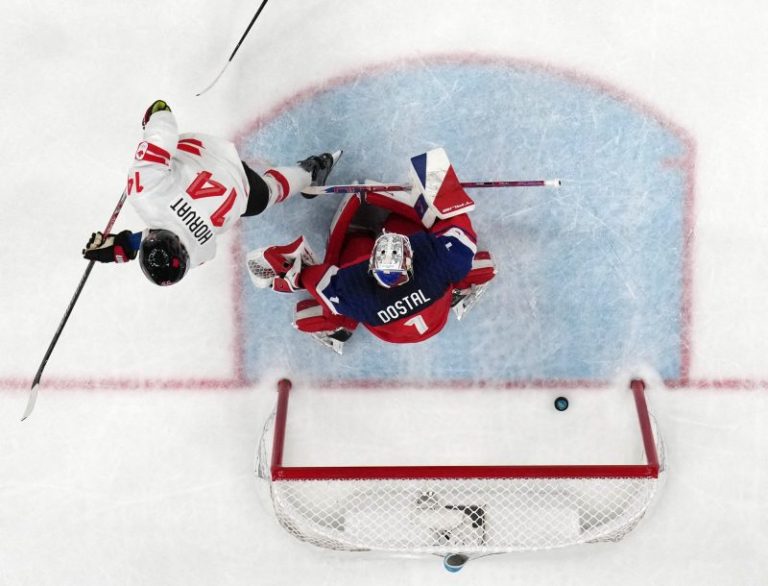
United States Olympian Sha’Carri Richardson was arrested for speeding on Thursday, according to WFTV9 and other reports.

The Orange County (Florida) Sheriff’s Office told the television station that the 25-year-old was driving 104 miles per hour and ‘dangerously tailgating’ and passing other motorists on Florida’s Stoneybrook Parkway.

The Dallas native was reportedly taken into custody and booked into the Orange County jail on a $500 bond.

Camera footage showed Richardson pushing her boyfriend, sprinter Christian Coleman, at the airport, but she was cleared after Coleman declined to participate in the investigation or be recognized as a victim in the case.

USA TODAY submitted a request to the Orange County Sheriff’s Office and the Orange County Jail to confirm Richardson’s arrest.

Richardson won two medals for the U.S. during the 2024 Olympic Games in Paris, including a gold in the 4×100 relay.

This post appeared first on USA TODAY
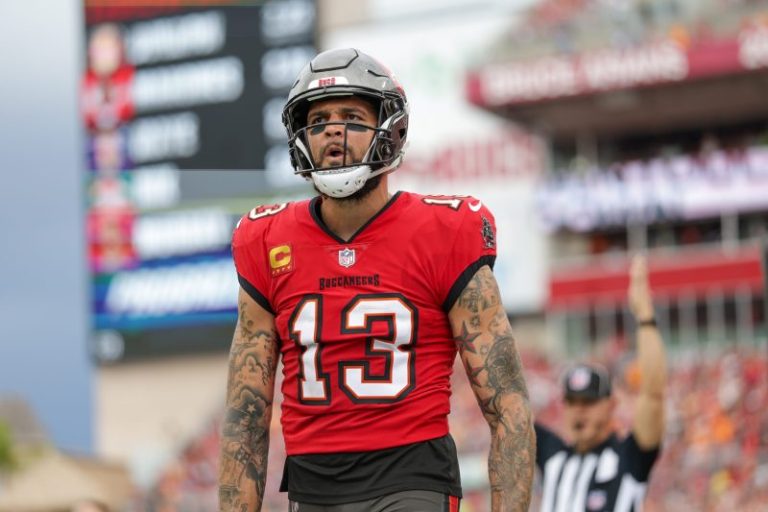
As the scouting cycle for the upcoming NHL draft progresses, the gaps between the top talent in the 2026 class are closing at a rapid rate.

Headlined by Gavin McKenna, Ivar Stenberg and Keaton Verhoeff, this group features a ton of players making second-half surges, such as Chase Reid and Caleb Malhotra, proving the rankings of these prospects are far from decided.

The NHL standings are far from decided as well. The Vancouver Canucks are still in last place, but the St. Louis Blues slid, while the Winnipeg Jets climbed up three spots in the past two weeks.

Considering the standings and the needs of the teams positioned to select in the top 16 of the first round, let’s take a crack at what those picks could look like in June.

(Draft order determined by standings, sorted by points percentage, before games on Jan. 29, 2026)

NHL mock draft: Top 16 picks

1. Vancouver Canucks: Frolunda (Sweden) left wing Ivar Stenberg

With 28 points in 29 games, Stenberg is scoring at a rate we rarely see among draft-eligible players in pro hockey, challenging Daniel Sedin’s record for the most points by a Swedish League player in their draft year. Production is one thing, but his ability to create offense through contact, his vision, shooting, playmaking and two-way game have him projected as a top-end talent that will give opposing teams nightmares at both ends of the ice.

2. St. Louis Blues: Penn State (NCAA) left wing Gavin McKenna

McKenna has really found his confidence since returning to Penn State after the world juniors, putting together 11 points in his last five games, including a hat trick in a four-point effort against Wisconsin. If he continues to string together games where he shows how overwhelming and assertive he can be offensively, while also finding ways to impact the game away from the puck, he’ll reclaim the top spot in this class.

3. Calgary Flames: Boston University (NCAA) center Tynan Lawrence

There are few players who can match Lawrence’s pace of play in this class. His ability to transport the puck through the neutral zone remains elite, and there were times this season in the USHL when he looked two steps ahead of every other player, creating dangerous chances. There have been some growing pains since switching to the NCAA, but Lawrence still possesses high-end tools that make him worthy of being selected in this range.

4. New York Rangers: North Dakota (NCAA) defenseman Keaton Verhoeff

As a 6-foot-4, 208-pound right-shot defenseman, Verhoeff possesses one of the most sought-after physical profiles in today’s NHL. On top of that, he handles a heavy workload at the NCAA level, often playing over 20 minutes a night while displaying a mature defensive foundation and consistently improving as an offensive threat with his shot and playmaking vision. There are others pushing Verhoeff as the top defender in this class, but he remains the top choice.

5. Winnipeg Jets: Sault Ste. Marie (OHL) defenseman Chase Reid

Chase Reid is truly the total package. His length, mobility, and hockey IQ makes it very difficult for opposing players to create advantages over him while defending. He’s also arguably the best player at creating transition offense next to Lawrence in this class with his feel for anticipating offense, developing into a breakout threat with his passing and skating. There’s not much separating him from Verhoeff, and he could easily be a top-3 pick this summer.

6. Chicago Blackhawks: Jukurit (Finland) defenseman Alberts Smits

Smits may have the highest compete level among all players in this class. His game oozes confidence in his willingness to engage in the rush, and he looks to be a difference-maker every time he steps on the ice despite playing against grown men in Finland. Smits is on Latvia’s roster for the Winter Olympics in Milan, and it should be a treat to watch him play against the top competition in the world.

7. Nashville Predators: Vancouver (WHL) defenseman Ryan Lin

While concerns regarding Lin’s size may have others leap him on draft day, he’s easily the most detailed defender in this class. He’s not overly physical, but he competes incredibly hard and wins puck battles at a high rate without compromising his positioning. His offensive production may be misleading, as he doesn’t have any standout tools that would suggest he’ll be a top point producer in the NHL, but he’s a reliable top-four D-man nonetheless.

8. Washington Capitals: Djurgarden (Sweden) center Viggo Bjorck

Bjorck plays with a motor that has allowed a lot of scouts to overlook his size disadvantages and skating issues this season. He’s constantly putting pressure on opponents while on the forecheck and wins a ton of battles that turn into dangerous scoring chances thanks to his crafty playmaking. It’s unlikely he’ll remain a center as he develops, but he’ll undoubtedly be a great complementary winger with top-six potential at the NHL level someday.

9. New Jersey Devils: Windsor (OHL) left wing Ethan Belchetz

Things have trended downward a bit for Belchetz over the past few weeks. He’s continued to show flashes of high-end playmaking, and his physical tools alone will still make him highly sought after on draft day. However, with his offensive production slowing down, he must find a way to impose his will as he did early in the season to overcome his skating issues and maintain his status as a top-10 prospect.

10. Ottawa Senators: Forfeited draft pick

The Ottawa Senators will forfeit this year’s draft pick after failing to disclose Evgenii Dadonov’s limited no-trade clause when they sent him to Vegas in 2021, leading to an invalidated trade between the Golden Knights and Anaheim Ducks the following year. The Senators drafted in the top 10 four times in the last six years, choosing Tim Stutzle, Jake Sanderson, Tyler Boucher and Carter Yakemchuk.

11. Boston Bruins (via Toronto): Prince George (WHL) defenseman Carson Carels

Carels has some of the best hockey sense in this class, and it’s reflected in the trust he’s gained in Prince George, playing on the power play and penalty kill. What makes Carels so special is that he projects as a top-pairing defender who could play in a shutdown role or use his playmaking instincts to affect the game offensively, depending on what the assignment is on any given night.

12. Seattle Kraken: Prince Albert (WHL) defenseman Daxon Rudolph

Rudolph is a smooth skater who uses his feet effectively to lead rushes and shut down plays in the defensive end. While he’s not overly physical, he has great range at 6-foot-2 and is smart with his stick in breaking up plays in zone and off the rush. As Rudolph continues to stack dominant offensive performances with the Prince Albert Raiders, he’s inching closer to being a top-10 player in this class.

13. Philadelphia Flyers: Blainville-Boisbriand (QMJHL) defenseman Xavier Villeneuve

There is no defenseman in this class who’s more gifted with the puck than Villeneuve. He uses his deception and skating ability to create separation at the blueline very similarly to Lane Hutson. Villeneuve’s defensive game leaves a lot to be desired, and as an undersized defender, that could be a cause for concern. However, his compete level and foundation of skills are worth betting on as a potential top power-play quarterback in the NHL.

14. Columbus Blue Jackets: Brantford (OHL) center Caleb Malhotra

Malhotra’s skill, decision-making and mature two-way habits undeniably make him worthy of being picked in this range. He’s been a standout offensive producer in his first OHL season on a Brantford team filled with NHL-drafted talent, and in a class without many high-end options at the center position, don’t be surprised if he’s taken much higher on draft day. 

15. Anaheim Ducks: Peterborough (OHL) left wing Adam Novotny

Novotny has continued to be an offensive threat for Peterborough after a solid world juniors showing with Czechia, displaying his high-end skating and wicked shot that beats goaltenders regularly from just outside the dots. Novotny feels like a player coaches at the NHL level will gravitate toward, given his stick habits and polished defensive game. He projects as a middle-six winger with scoring upside who is capable of playing both special-teams roles.

16. San Jose Sharks: HV71 (Sweden) defensemen Malte Gustafsson

Gustafsson is a 6-foot-4 defenseman with good mobility. He’s shown flashes of playmaking as of late, earning him some power play opportunities at the Swedish men’s level while playing an overall bigger role on a weak HV71 team. He’s hovered in this range for a while, but if he shows that he can truly add an offensive layer to his game, there’s a good shot he’ll end up as a lottery pick this year.

This post appeared first on USA TODAY
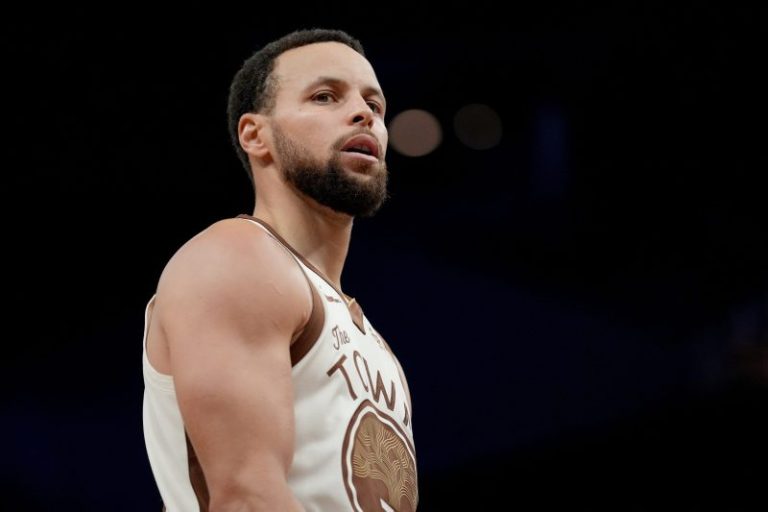
Detroit Red Wings star Patrick Kane passed Hockey Hall of Famer Mike Modano to become the top U.S.-born scorer in NHL history.

Kane, 37, had an assist in the second period on Thursday, Jan. 29 against the Washington Capitals to give him 1,375 points, one more than Modano, the former Minnesota North Stars/Dallas Stars standout who finished his career in Detroit.

It was the second milestone that Kane reached this month. He scored his 500th goal on Jan. 8, becoming the fifth U.S.-born player and 50th overall to hit that mark.

He drew the second assist on a goal by Ben Chiarot to break the points record Thursday. Teammates poured onto the ice to congratulate him.

Kane, who was born in Buffalo, New York, has 500 goals and 875 assists with the Chicago Blackhawks, New York Rangers and Red Wings.

Kane also scored his record 54th shootout goal in Thursday’s 4-3 loss, though shootout goals don’t count toward his 1,375 points.

Kane needs two attempts to break record

Kane looked like he might have the record early in the first period when he set up an Alex DeBrincat power play goal, but the play was ruled offsides after a Capitals challenge.

It was the second time in three games in which he lost a point. He was originally awarded an assist on a goal against the Winnipeg Jets on Jan. 24, but it was later taken away. He had an assist late in that game to move within one point of Modano and then tied the record on Jan. 27 with an assist against the Los Angeles Kings.

Patrick Kane vs. Mike Modano

Modano, who was born in Michigan, played 1,499 games. Kane has played 1,343. Modano had been the U.S. leader for 18-plus years, passing Phil Housley in November 2007 shortly after Kane’s NHL debut.

Modano (1988) and Kane (2007) are former No. 1 overall picks. Modano won a Stanley Cup with the Stars in 1999 and Kane won with the Blackhawks in 2010, 2013 and 2015. He won a scoring title with 106 points in 2015-16, the only American to do so, and also took home the Hart Trophy that season, ending a 91-year drought for U.S.-born players. His career best was 110 points in 2018-19.

Kane had a brief stint with the Rangers after a 2023 trade, then had hip surgery in the offseason. He signed with the Red Wings in November 2023 after recovering and has been in Detroit since.

Modano was not in the building but the Red Wings played a video message in which he praised Kane’s skill level and the influence he has had on young American players.

‘They all wanted to be Patrick Kane growing up,’ Modano said.

Modano’s U.S. record of 561 goals (Brett Hull, who played internationally for the USA, was born in Canada) might hold up as the standard for a while. Kane is the next-closest active player at 500. Between him and Modano are Joe Mullen (502), Jeremy Roenick (513) and Keith Tkachuk (538).

Toronto Maple Leafs center Auston Matthew is the next active U.S.-born player at 427 goals and 772 points. He’s averaging 1.14 points per game to Kane’s 1.03.

This post appeared first on USA TODAY

Several teams are on the bubble for the NCAA men’s basketball tournament as the regular season nears its end.
UCLA and Indiana have improved their tournament chances with recent significant victories.
Teams like TCU and Seton Hall are currently projected as among the ‘first four out’ after recent losses.

It’s quite fascinating how when the NCAA men’s basketball tournament picture gets magnified, the bubble for teams hoping to make the field begins to move in all sorts of ways.

Teams like UCLA and Indiana pick up major victories that put them on track to avoid this uncomfortable position in the March Madness conversation. Then you get ones like TCU and Seton Hall that start to get punched in the mouth by their conference foes and are having a hard time recovering.

The bubble watch has taken notice and now reaches another critical point: January is wrapping up, which means there’s about one month left in the regular season, and teams can be worry free or completely stressed by the time conference tournaments begin.

Here are the teams currently on the bubble in the latest USA TODAY Sports Bracketology.

UCLA

Record: 15-6 (7-3)
NET Ranking: 42
Quad 1 record: 2-5
Projected seed: No. 11 (first four)
Quality wins: vs. Purdue
Bad losses: vs. California (neutral)

The Bruins are in a resurgence at the right time, with its win against Purdue kick starting a three-game win streak. While a Quad 2 game, this weekend’s home contest against Indiana will be a big opportunity to get out of the bubble. In the top half of the Big Ten, UCLA must stay in that group before the schedule gets tough in the middle of February.

New Mexico

Record: 17-4 (8-2)
NET Ranking: 38
Quad 1 record: 1-3
Projected seed: No. 11 (first four)
Quality wins: at Virginia Commonwealth
Bad losses: at New Mexico State, at Boise State

The Lobos are doing all they can to maintain their stock while the opportunities to impress aren’t necessarily there, bumping the Quad 2 record to 4-0. However, New Mexico needs to handle San Jose State to set up a monster Mountain West showdown with Utah State on Feb. 4, which is shaping up to be a Quad 1 chance, one it needs to get off the bubble.

Miami (Fla.)

Record: 17-4 (6-2)
NET Ranking: 36
Quad 1 record: 1-3
Projected seed: No. 11 (first four)
Quality wins: At Wake Forest.
Bad losses: vs. Florida State

A team that has tumbled down the bracket, the Hurricanes find themselves in the bubble thanks to a missed opportunity against Clemson and a bad Quad 3 loss to Florida State. The lone Quad 1 victory is against Wake Forest, not really impressive. Miami has at least responded accordingly with two consecutive wins, and it will have to keep it going with California and Boston College on deck to avoid falling completely out of the field.

Indiana

Record: 14-7 (5-5)
NET Ranking: 32
Quad 1 record: 1-6
Projected seed: No. 11 (first four)
Quality wins: vs. Purdue
Bad losses: at Minnesota

Has some of the football magic rubbed off on Hoosier basketball? Whatever it is, things are going great in Bloomington with the hoops team trending up. Indiana finally got the much-needed Quad 1 win, and it’s even sweeter it came against rival Purdue. Hopefully, the momentum travels to Los Angeles for a massive West Coast trip, with Quad 1 games in UCLA and Southern California up next. At least a split is needed, but a perfect visit would keep the good times rolling.

TCU

Record: 13-8 (3-5)
NET Ranking: 46
Quad 1 record: 3-5
Projected seed: First four out
Quality wins: vs. Florida (netural), vs. Wisconsin (neutral)
Bad losses: vs. New Orleans, vs. Notre Dame, at Utah

The Horned Frogs now see themselves currently on the outside looking in as the Big 12 gauntlet rages on. They did get a Quad 1 win against Baylor but couldn’t build upon it by losing to Houston. There’s no reason to panic yet since TCU does have a slight break facing Colorado and Kansas State next, so just win those games to get back to .500 in conference play.

Seton Hall

Record: 15-6 (5-5)
NET Ranking: 50
Quad 1 record: 1-3
Projected seed: First four out
Quality wins: vs. North Carolina State (neutral)
Bad losses: at DePaul

What started off as a promising season for Shaheen Holloway’s team has fizzled out of a bit. The Pirates lost four consecutive games, including games against Butler and DePaul, that resulted in Seton Hall falling out of the field. It needs to improve its conference record and capture those few Quad 1 opportunities to boost that NET ranking, which is possible with trips to Villanova and Creighton on the horizon.

Missouri

Record: 14-7 (4-4)
NET Ranking: 73
Quad 1 record: 3-4
Projected seed: First four out
Quality wins: vs. Florida, at Kentucky
Bad losses: at Notre Dame, at Mississippi

Missouri really helped its case when it won three of its first four SEC games, but regressed when it proceeded to lose three of the next four. The Tigers have some quality wins, but their No. 73 NET ranking is extremely high for an at-large team. The Tigers need to handle Mississippi State and South Carolina when their resume can’t afford to lose those contests.

Virginia Tech

Record: 16-6 (5-4)
NET Ranking: 54
Quad 1 record: 1-5
Projected seed: First four out
Quality wins: vs. Virginia
Bad losses: vs. Stanford

The Hokies are making progress toward being a major in the bubble, with three wins in the last four games. It only makes Virginia Tech think what if it were able to close out some of those conference losses, as two of them were by one point and another by three points. Regardless, Virginia Tech is trending upward, and there is no greater chance to continue them climb with Duke coming to town and then another Quad 1 chance at North Carolina State.

This post appeared first on USA TODAY
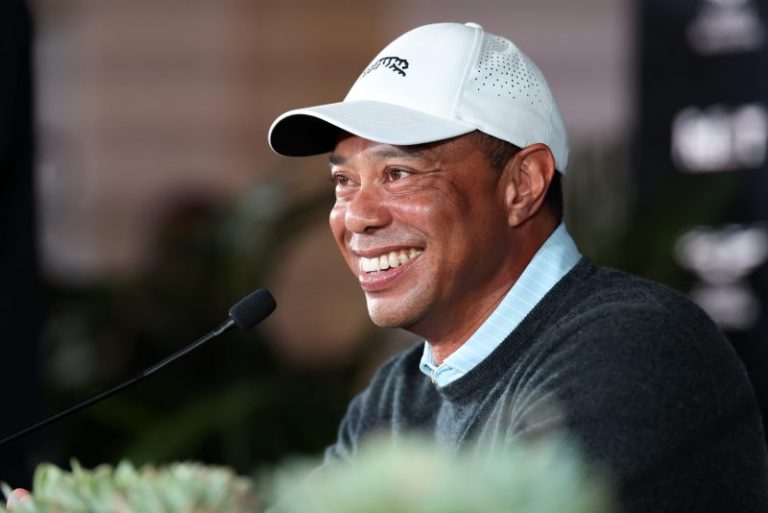
President Donald Trump likes the idea of holding the GOP’s first ever midterm convention later this year in Nevada or Texas, people involved in the discussions tell Fox News Digital.

But those sources say that the president’s initial preferences don’t mean that other cities are off the list of convention host city contenders.

As Fox News Digital first reported, the Republican National Committee (RNC) last week took a big step toward holding the convention by approving a change to the party’s rules that would allow Chair Joe Gruters to convene a convention during a midterm election year.

Gruters, speaking with reporters after the RNC greenlighted the midterm convention, called it a ‘Trump-a-palooza’ where ‘we can really highlight all the incredible things that this president has done.’

National political conventions, where party delegates from around the country formally nominate their party’s presidential candidates, normally take place during presidential election years.

But with Republicans aiming to protect their narrow control of the Senate and their razor-thin House majority in this year’s elections, Trump announced in September that the GOP would hold a convention ahead of the midterms ‘in order to show the great things we have done’ since recapturing the White House.

Details on the date and location of the midterm convention are expected to be revealed in the weeks ahead and will likely be announced by the president.

In the meantime, here’s a possible list of five strategic cities for the midterm convention. The locations, which anchor key battleground states or could serve as gateways to shifting demographic blocks, are aimed at giving Republicans an electoral edge in the midterms.

Las Vegas, Nevada

The city that touts that it’s the world’s entertainment capital due to its nightlife, shows and its long role as the nation’s legalized gambling mecca is also the largest city in swing state Nevada, which Trump narrowly carried in 2024.

Nevada will once again play a crucial role in the 2026 midterms, with Republicans aiming to flip three Democrat-held House seats. And the state will also likely hold a competitive gubernatorial election, as GOP Gov. Joe Lombardo seeks a second term.

Holding their midterm convention in Las Vegas might give the GOP a ballot box boost, similar to the likely bounce Trump received as he narrowly won battleground Wisconsin in 2024 after Republicans held their national nominating convention in Milwaukee.

And a party gathering in Las Vegas could help the GOP further appeal to the growing block of Hispanic voters and ‘service-class’ workers who have been increasingly attracted to the party’s economic agenda and messaging.

Dallas, Texas

Though Texas has been reliably red for a couple of decades, Republicans are working to protect GOP Sen. John Cornyn’s seat this year in a state that Democrats have long tried to stay competitive.

And the GOP aims to go on offense in Texas as they defend their House majority, looking to flip up to five congressional seats from blue to red after Lone Star State Republicans took the lead in the redistricting battle.

Plus, similar to Las Vegas, holding a convention in Texas puts Latino voters front and center for Republicans.

Phoenix, Arizona

Holding their convention in the nation’s fifth most populous city may boost Republicans as they strive to win back control of Arizona’s governor’s office in the midterms, as well as defend a handful of GOP-controlled House seats as they defend the majority in the chamber.

Choosing Phoenix as host city would also allow the GOP to hammer home themes of border security and inflation in the crucial southwestern battleground.

And hosting in Phoenix, similar to Las Vegas and Dallas, would give Republicans an opportunity to showcase outreach to Latino voters.

Detroit, Michigan

With ballot box showdowns for a Democrat-held open Senate seat and governor’s office, swing state Michigan is a top GOP target.

And with four competitive House races, the results in the Great Lakes State may determine if Republicans keep their majority.

Holding the convention in Detroit also allows the GOP to focus on manufacturing, energy prices and trade.

Atlanta, Georgia

Republicans view Sen. Jon Ossoff as the most vulnerable Democratic senator seeking re-election this year.

And the GOP’s also defending the governor’s office, as popular Gov. Brian Kemp is term-limited.

Plus, naming Atlanta as host city would give Republicans a chance to showcase their efforts to court Black voters.

This post appeared first on FOX NEWS

Last week, Secretary of War Pete Hegseth released the 2026 National Defense Strategy (NDS), a Pentagon blueprint that elevates Israel as a ‘model ally’ and translates President Trump’s national security doctrine into concrete military policy.

‘Israel has long demonstrated that it is both willing and able to defend itself with critical but limited support from the United States. Israel is a model ally, and we have an opportunity now to further empower it to defend itself and promote our shared interests, building on President Trump’s historic efforts to secure peace in the Middle East,’ the NDS states.

The document is now influencing parallel debates over the future of U.S. security assistance to Israel and whether the next Memorandum of Understanding, or MOU, should continue delivering traditional U.S. military aid to Israel, amid dissenting voices that portray the alliance as a burden rather than a strategic asset.

According to the strategy, Israel proved its ability and willingness to defend itself following the Oct. 7 attacks, demonstrating that it is not a passive partner but an operational force that supports U.S. interests in the region. The strategy emphasizes empowering capable allies rather than constraining them, building on President Trump’s earlier push for regional integration through the Abraham Accords.

Jonathan Ruhe, director of foreign policy at the Jewish Institute for National Security of America, said the strategy reflects a broader American shift toward partnerships that strengthen both U.S. security and domestic industry.

‘U.S. defense assistance to Israel in the MOU is spent in dollars here in America to support our industry,’ Ruhe told Fox News Digital. ‘And like in the national security strategy, it then enables Israel to go and do more to protect U.S. interests.’

He said a future agreement would likely extend beyond funding alone. ‘A new MOU would also likely be broader and include things that are more 50-50 partnership, like joint research and development, co-production, intelligence sharing and things like that to reflect the changing partnership going forward,’ Ruhe said.

The strategy also highlights the importance of revitalizing the American defense industrial base, noting that allies purchasing U.S. systems help strengthen domestic production while enabling partners to shoulder greater responsibility for regional security.

Avner Golov, vice president of the Israeli think tank Mind Israel, said the document makes clear that Israel is viewed not merely as a recipient of aid, ‘Israel is in the fight. We are protecting ourselves by ourselves. We just need the tools to do that. And by doing so, we enhance not only America’s standing in the Middle East, but also worldwide and contribute to the American economy.’

That framing comes as Israel and the United States prepare for negotiations over the next 10-year MOU, which governs U.S. military assistance to Israel. The current agreement, signed in 2016, provides $3.3 billion annually in foreign military financing, along with $500 million a year for missile defense cooperation.

The debate follows tensions during the Biden administration, when the White House paused the delivery of certain U.S. weapons to Israel in May 2024, including a shipment of 2,000-pound bombs. At the time, Netanyahu warned that Israel ‘will stand alone’ if Washington halted weapons deliveries, reflecting concern that limits or delays in U.S. military support could undermine Israel’s readiness and deterrence. 

Experts have noted that U.S. leaders have not always approved every Israeli weapons request and that roughly 70% of Israel’s military imports come from the United States, underscoring the strategic calculus behind Prime Minister Netanyahu’s recent push for greater independent production.

Golov criticized that approach, arguing it risks prioritizing optics over readiness. ‘I believe that is a short-term vision,’ Golov said. ‘In the long term, Israel must first be prepared for the next round of escalation. If we are not ready, we will face another war. If we are prepared, perhaps we can deter it.’

‘Israel must remain the strongest army in the region, and that is also a fundamental American interest,’ Golov said.

Ruhe said the debate reflects lessons learned from nearly two years of war. ‘You’ve got this sort of topsy-turvy world now where the Israelis are saying we don’t want to take any more U.S. money, and the Americans are saying, no, you’re going to take our money,’ he said.

According to Ruhe, the conflict exposed vulnerabilities created by heavy dependence on U.S. supply chains and political delays.

‘The war of the last two years showed that Israel can’t afford to be as dependent on the U.S. or continue to maintain the same defense partnership that it has because that creates a dependence,’ he said. ‘Israel becomes vulnerable to U.S. shortages in weapons output or politically motivated embargoes and holdups that can impact Israel’s readiness.’

At the same time, Ruhe noted that Israel remains reliant on the United States for major platforms.

‘Even Israel will say we’re utterly dependent on the U.S. for those big-ticket platforms,’ he said, pointing to aircraft such as the F-15 and F-35 that Israel has already committed to purchasing.

For that reason, Ruhe argued that maintaining stable funding under the next MOU may be the most practical path forward.

‘It’s actually much easier for Congress just to go ahead and approve that money,’ he said, explaining that predictable funding reduces annual political battles on Capitol Hill.

Golov said Israel’s long-term objective should not be reducing ties with Washington, but deepening them. ‘I don’t want to reduce dependency,’ he said. ‘I want to increase contribution to America.’

He described the emerging vision as a fundamental shift in how the alliance is structured. ‘We are moving from a 20th-century aid model to a 21st-century strategic merger,’ Golov said. ‘Israel is the only partner that delivers a 400% return on investment without asking for a single American soldier.’

Golov said the proposed framework is built around three pillars: an industrial defense ecosystem, a joint technology ecosystem and a regional ecosystem connecting Israeli innovation, Gulf infrastructure and American power.

He emphasized that maintaining U.S. security assistance during the transition period is critical.

‘We need a final ten-year ‘bridge’ with the current security aid MOU,’ Golov said. ‘A sudden cut would be a dangerous signal of American retreat to our enemies and may hinder IDF preparedness.’

‘I don’t know who the next president of the United States will be,’ he added. ‘This is where our enemies can read it in a very dangerous way.’

This post appeared first on FOX NEWS

A mid-air collision over Washington D.C. in January 2025 resulted in the deaths of 67 people.
The crash killed 28 members of the U.S. figure skating community, including 11 young skaters.
The skaters were returning from a national development camp in Wichita, Kansas.
Coaches and family members reflect on the loss of the talented young athletes one year after the tragedy.

As 1998 Olympic men’s figure skating gold medalist Ilia Kulik and two-time Olympic coach Audrey Weisiger stepped outside Fairfax Ice Arena in Northern Virginia on a cold January morning a year ago, there was so much they feared, yet so much they still didn’t know.

They were well aware there had been a midair collision over the Potomac River at Washington Reagan National Airport less than 12 hours earlier. They knew a group of young figure skaters, coaches and families had been on the plane. But they weren’t certain who exactly was on that flight, or perhaps on a different flight coming back from the national development camp for up-and-coming skaters after the 2025 U.S. championships in Wichita, Kansas. 

It was 8 a.m. Thursday, January 30, 2025. “Olivia has a lesson now,” said Kulik, who competed for his native Russia but now coaches in the Washington, D.C., suburbs. Olivia Eve Ter, 12, was one of Kulik’s top young skaters.

Weisiger looked at him, steeling herself. “Did you text her mom to see if they were on the flight?”

“I can’t do it,” Kulik said. “I’m shaking.” 

So Weisiger took his phone and texted Olivia’s mother as they stood outside in the parking lot in front of the rink. 

They waited a couple of minutes, staring at the phone. There was no reply. 

“Ilia, I don’t think they’re coming,” Weisiger said.

“No, she’ll be here,” he insisted. 

They stood in excruciating silence for several more minutes.

“Ilia, they aren’t coming,” Weisiger finally said, softly, as Kulik, one of his sport’s great champions, collapsed to the pavement, sobbing uncontrollably. 

Olivia Eve Ter was one of 11 skaters to perish on American Airlines Flight 5342. Her mother, Olesya Taylor, also was killed. In all, 28 members of the figure skating community and a total of 64 passengers and crew died when a Black Hawk helicopter collided with the plane as it was about to land in Washington at 8:47 p.m. Wednesday, Jan. 29, 2025. Three on the helicopter also were killed. 

That same Thursday morning, 10 miles away from Fairfax Ice Arena at his home rink in Reston, Virginia, world and national champion Ilia Malinin arrived to spend what should have been four to six hours practicing on the ice. He left after 30 minutes.

“I knew I had to go to the rink,” Malinin told USA TODAY Sports later that day, “but it got so bad that I had no strength, mentally or physically, to skate. It was very hard for me to be around a skating rink, especially after what happened, knowing that a lot of them were part of my skating club and clubs that I knew. It’s really heartbreaking. It’s like their chances just disappear.” 

Malinin knew them as the talented youngsters in the Washington area who took lessons at different rinks and occasionally buzzed near him on the ice as he was practicing his famous quadruple jumps and they were learning their triples. 

Weisiger was one of the people teaching them. Figure skating coaching is so different from what we’re used to in major league sports. In baseball, a major league manager doesn’t also coach little leaguers. But in figure skating, that’s exactly what happens. The top coaches also train the younger skaters. So while Weisiger coached Olympians and U.S. champions like Michael Weiss and Timothy Goebel, she also was giving lessons to young children and teenagers.

Four of them were on the plane: 12-year-old Brielle Beyer, 16-year-old Edward Zhou, 16-year-old Cory Haynos and Olivia. A year later, Weisiger proudly talked about each for USA TODAY’s Milan Magic podcast: How they learned a new jump, how they tore across the ice, how proud they were to be selected for the national development camp. 

Brielle, she said, “was this little sprite that motored around the rink and she was unstoppable.” 

Edward? “There was something so magical about little Eddie. … He was one of those kids that everybody felt joyful around.” 

Cory? “Right before they went to (Kansas), Cory achieved his triple axel, which was unbelievable.” 

And Olivia? “She was my last lesson with those kids before they went to Kansas. She said, ‘Coach Audrey, this is the biggest moment of my life, I’ve been working for so long to try and get to this camp. I’ll make you proud.’’

Now, when Weisiger visits the kids’ gravesites, disbelief often sets in. “I had never been to so many funerals for children in my life,” she said. 

Birthdays still come. Brielle’s father, Andy Beyer, just hosted a celebration at his house to honor his daughter on what would have been her 13th birthday. Brielle’s friends from the neighborhood and from skating observed a moment of silence when they lit the candle on a birthday cake and listened to one of the poems she had written, which he had set to music, “a really special but hard and tearful moment,” he said. 

They released balloons into the night sky and walked through Brielle’s bedroom, which was also where Andy was set up remotely to speak on the Milan Magic podcast. He proudly held up Post-It notes she left with her goals written on them. 

And he cherishes the red jacket she earned for being invited to the national development camp. “I still have that national development team jacket that they sent me because, you know, unfortunately, she died wearing hers on the airplane.” 

Sad reminders of the young lives lost began for Weisiger the day after the plane crash when a delivery came to Fairfax Ice Arena. The pro shop manager beckoned Weisiger to come see what it was, so she did. 

It was a box addressed to Edward Zhou. She opened it. Inside was a new pair of skates.

This post appeared first on USA TODAY

NFL coaching vacancies continue to fill across the league. Ten teams will start the 2026 season with a different head coach this September than they had in Week 1 of the 2025 season: Arizona, Atlanta, Baltimore, Buffalo, Cleveland, Las Vegas, Miami, Pittsburgh, Tennessee and the New York Giants.

As of Jan. 29, eight of those positions have been filled. Only the Cardinals and Raiders are without a new leader for 2026.

One major name has removed himself from consideration for the Raiders’ job: Denver Broncos assistant Davis Webb, per multiple reports.

Webb was on four teams in his six-year NFL career before getting into the coaching ranks. He joined the Broncos in 2023 as the team’s quarterbacks coach under Sean Payton and was promoted to passing game coordinator in 2025.

The Raiders have interviewed 15 people for their head coach opening, including Webb. Six were hired to either head coaching or offensive coordinator positions with other teams.

The other eight people the Raiders have interviewed for their head coaching vacancy include:

Klay Kubiak (San Francisco 49ers offensive coordinator)
Mike LaFleur (Los Angeles Rams offensive coordinator)
Nate Scheelhaase (Los Angeles Rams pass game coordinator)
Chris Shula (Los Angeles Rams defensive coordinator)
Ejiro Evero (Carolina Panthers defensive coordinator)
Klint Kubiak (Seattle Seahawks offensive coordinator)
Vance Joseph (Denver Broncos defensive coordinator)
Matt Nagy (former Kansas City Chiefs offensive coordinator)

NFL head coaching hires

Eight head coach positions have been filled at time of publishing. Here’s the list of new hires:

Atlanta Falcons: Kevin Stefanski
Baltimore Ravens: Jesse Minter
Buffalo Bills: Joe Brady
Cleveland Browns: Todd Monken
Miami Dolphins: Mike McDaniel
New York Giants: John Harbaugh
Pittsburgh Steelers: Mike McCarthy
Tennessee Titans: Robert Saleh

This post appeared first on USA TODAY