Archive

2026

Browsing

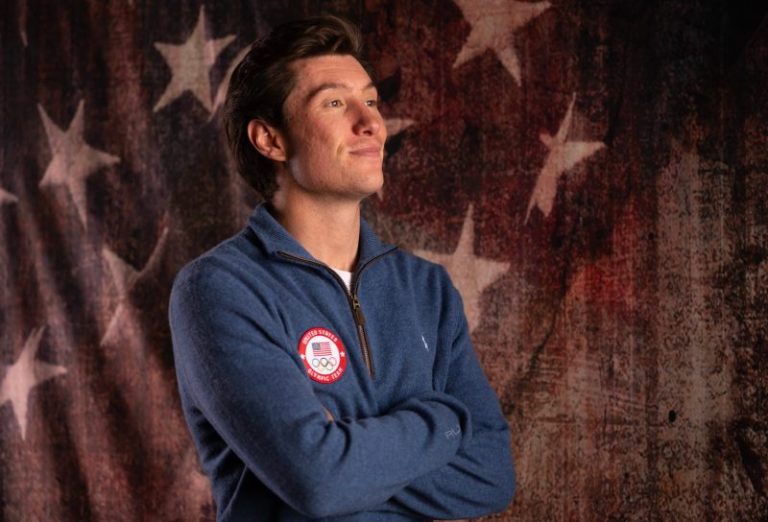
LIVIGNO, Italy — Normally, like most people, the holidays are the busiest time of year for United States free skier Alex Hall. From Thanksgiving to New Years, he’s booked. Sometimes he’s competing.

Most of the time? He’s filming. Whether it’s riding rails in public places or finding the gnarliest, steepest staircase to jump over, Hall’s passion has become making ski videos.

Ski videos, consumed on YouTube or social media by the general public, have become more than passion projects for athletes in their free time. They are a commercial vehicle – branding opportunities for a sport that receives the spotlight for two weeks and then largely disappears for the next 306.

To end 2025, though, Hall, 27, took the year off. Not because he wanted to.

“Honestly, it just didn’t line up with the schedule,” Hall said before competing at the 2026 Milano Cortina Winter Olympics.  

Hall had skipped the last five Christmases and had some obligations with his girlfriend’s family this time. The lack of snow in the United States made it easier, but he was still fiending for content creation. And as he started his Olympic training at the slopestyle and big air course in Livigno, Italy, his friends back home were filming.

‘It’s weird having FOMO at the Olympics, but I can’t lie,’ he said, ‘I have a little bit of FOMO.”

Hall knew once he was finished at the Olympics, which included a silver medal in the slopestyle event, he would have plenty of time to film.  

Hall prefers urban-style filming. Rather than waste time on TikTok or YouTube, he spends his hours after dinner scouring the next city on his path he can exploit. He researches cities via Google Earth, which he uses to scout handrails and staircases.

 ‘When I’m on a trip, that’s my guilty pleasure,’ he said.

Hall and Hunter Hess have a YouTube channel called ‘MAGMA’ that chronicles their careers from competition to cityscape. Their friend, Owen Dahlberg, films.  Whoever else wants to join can participate in the videos. The channel is home to 70 videos and nearly 25,000 subscribers.

During the season, they drive from event to event and stop along the way for content purposes.

‘When you do the competing and the filming, you have to make sure you balance both,” Hall said, ‘which is really tough to do.”

What’s special for them is that they love the work, whether it’s training for 10 hours per day on the mountain or driving around a municipality looking for rails to jump down.

‘We’re consumed by it,’ he said. ‘We’re super lucky. I always count my blessings of how lucky we are. That being said, as happy and as fortunate as we are, I think a lot of us work incredibly hard.’

In October, manufacturing brand Armada released a full-length film in front of a sold-out crowd at a warehouse in Salt Lake City. During the ‘Ornada” premiere, fans cheered like they were watching a basketball game as skiers found their lines in the powder or nailed tricks in urban spaces, according to Powder Magazine.

Getting to build and find the rails is the best part, said USA free skier Marin Hamill.

‘I think filming street is so fun because it’s so different than a contest,’ she said.

Ski movies – at least ones made by skiers for skiers – have been popular for three decades. Films such as the ‘Blizzard of Aahhh’s” (1988) and ‘Aspen Extreme” (1993) are solidified in their place within the culture.

2022 free ski Olympian and silver-medalist Colby Stevenson saw filming in the backcountry and riding bigger mountains as a natural progression from competing.

‘It’s really gratifying to get out where there’s nobody else and basically turn a whole mountain range into a playground,” Stevenson said. ‘I can’t tell you the freedom you feel out there on a snowmobile when you’re looking at a couple peaks in the distance and you’re just with your buddies like ‘All right!’ and going through the trees. It’s completely out of this world. You feel like you’re on a spaceship flying around. It’s insane.’

There are the obvious pitfalls of social media to consider, Stevenson said, because the image presented is inherently skewed from reality.

‘For people who don’t get to travel as much and experience these things – obviously you want to get out there and experience that stuff – it’s great for that as well,’ Stevenson said, ‘because we’re showing the beauty of the world and how awesome it is we have this planet as a playground.”

It is an ideal way to discover what his friends in the skiing community are up to, and he often finds himself motivated by his friends’ videos.

The way U.S. men’s halfpipe skier Alex Ferreira became involved, he said, was by “getting more serious with our fun, basically.’

And so the character ‘Hotdog Hans’ was born. Anyone familiar with NBA star Kyrie Irving’s ‘Uncle Drew’ bit will instantly understand the similarities. ‘Hotdog Hans’ comes out when Ferreira dresses up like an old man and messes with other slope-goers, pulling pranks on them or making them worry about his age before executing some ridiculous trick.

Hotdog Hans has 322,000 Instagram followers and 238,000 subscribers on YouTube. The sixth official Hotdog Hans video, released a month ago, has already racked up 254,000 YouTube views. Ferreira’s own Instagram checks in at 78,100 followers. 

What started as a clickbait mechanism instantly matured into a branding opportunity for Ferreira and his team. Within 15 minutes, Ferreira said, he realized the power of the character. Ferreira never fancied himself an actor, yet there he was, method acting.

‘We were having a lot of fun and we realized after the first one, we were just bringing a lot of joy to people,’ Ferreira told USA TODAY Sports. ‘It wasn’t just the average skier that loved it, it was a young kid, a young adult, a parent, and a grandparent. The four quadrants were all hit and everyone loved it.’

Those who take on backcountry skiing shoots are warriors for the manual labor involved, Ferreira said.

Why free skiers excel in content creation isn’t much of mystery to figure out. They are responsible for formulating tricks and then must be daring enough to execute them.

‘Honestly, I would say if you are creative or if you have some sort of ambition, put your kid in skiing because the options are limitless,’ Ferreira said.

The only difference between his and Hall’s ventures, Ferreira said, is the tone.

‘Their mind keeps wandering and wandering and wandering of things that they could potentially do, and they see it in their head and then they go and want to try it on snow, and I’m the same way, just in a bit more of a humorous aspect,’ Ferreira explained. ‘I hear a joke or I see a scene in my head and I think, ‘All right, well, maybe we could pull this off and get some laughs out of it.”

This post appeared first on USA TODAY

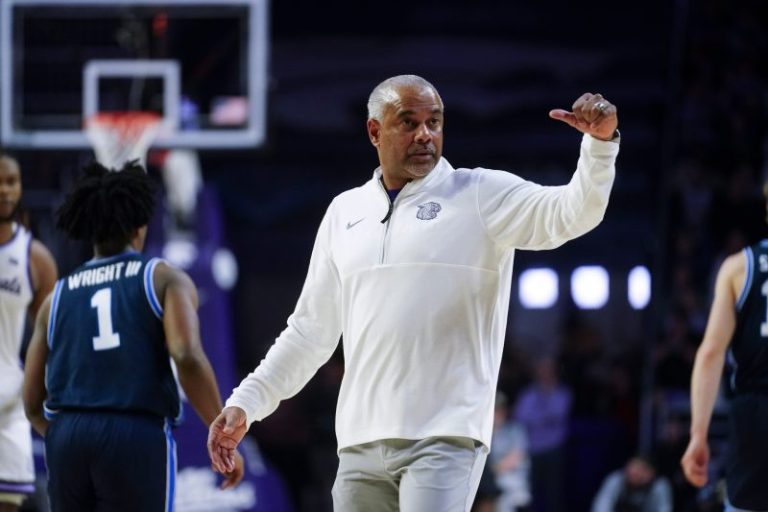
The two parties are in agreement on this: Jerome Tang is no longer the men’s basketball coach at Kansas State.

Things get dramatically more complicated from there. Kansas State holds that Tang, who was fired on Sunday, can be dismissed “for cause,” which would invalidate the $18.7 million buyout associated with his contract.

“This was a decision that was made in the best interest of our university and men’s basketball program,’ athletics director Gene Taylor said in a statement.

“Recent public comments and conduct, in addition to the program’s overall direction, have not aligned with K-State’s standards for supporting student-athletes and representing the university. We wish Coach Tang and his family all the best moving forward.”

Taylor’s remarks refer to comments Tang made following a 91-62 loss to Cincinnati on Feb. 11, which dropped the Wildcats’ record to 10-15 overall and 1-11 in Big 12 play.

“This was embarrassing,” Tang had said. “These dudes do not deserve to wear this uniform, and there will be very few of them in it next year. I’m embarrassed for the university, I’m embarrassed for our fans, and our student section. It’s just ridiculous.”

Tang’s attorneys, Tom Mars and Bennett Speyer, pushed back on the school’s characterization.

If Taylor and university president Richard Linton “really think the school was embarrassed by recent events,” they said in a statement shared with ESPN, “that’s nothing compared to the embarrassment that both of them are about to experience.”

What does it mean to be fired “for cause”?

Dozens of major-conference men’s basketball and football coaches will be fired in any given year, the wide majority for simply failing to win enough games.

That’s certainly the case with Tang, who led Kansas State to an unexpected Elite Eight appearance as the first-year coach in 2023 but was unable to capitalize on that early success. Since losing to Florida Atlantic in the regional final that March, the Wildcats have gone a combined 45-47 with one postseason appearance, a trip to the NIT in 2024 that ended in the first round.

Occasionally, however, schools are able to fire coaches for contractual violations that can minimize or even outright negate agreed-upon buyout figures.

“The most important part of a contract is not what is being paid, but how you get fired, how you get terminated,” said Martin Greenberg, a sports lawyer and professor of sports law at Marquette University. “That’s the most important part of a contract these days.”

In these scenarios, universities can dismiss a coach for missteps related to NCAA penalties, inappropriate behavior or, as stated in Tang’s contract, a “failure or refusal to perform his duties and responsibilities as head coach.”

“A university’s most realistic options often are to: (1) continue to employ the coach because of the coach’s success or because it is cost prohibitive to terminate the coach’s employment without cause; or (2) attempt to terminate the coach with cause and likely encounter litigation,” University of Iowa Professor Josh Lens wrote in a 2022 article for the Villanova Law Review.

One recent example is former Ohio football coach Brian Smith, who was placed on leave in early December and then fired later that month for ‘serious professional misconduct and activities that reflect unfavorably on the University,” the school said.

Another is former Michigan coach Sherrone Moore. The Wolverines’ second-year coach was terminated with cause in December after an investigation unearthed an inappropriate relationship with a staff member, saving the school from paying the roughly $14 million buyout he was owed in his contract.

Did Jerome Tang violate his contract?

According to a contract signed in 2023, Tang agreed he could be fired for cause without being “entitled to the payment of any compensation, benefits, or damages.”

In addition to “serious or multiple violations” of NCAA rules or “material fraud or dishonesty,” issues that could lead to a for-cause firing were “insubordination” or “objectional behavior” and “intentional, negligent or other failure or refusal in any material respect to perform the duties and responsibilities of Head Coach required under this Agreement.”

Kansas State’s efforts to obtain a for-cause firing seem to hinge on responsibilities outlined to Tang under the category of “Specific Duties and Responsibilities.”

In addition to requiring Tang to devoting his “full professional time” to serving as the Wildcats’ head coach, the list of responsibilities included two key requests:

One, “promoting and encouraging support of the Team’s student-athletes. And two, to avoid engaging in “any behaviors, actions, or activities” that could subject the university “to public disrepute, embarrassment, ridicule, or scandal.”

By absolving itself of the need to pay Tang’s buyout, Kansas State could save a significant sum of money at a time when many major-conference athletics departments are attempting to piece together revenue-sharing payments given directly to student-athletes under last year’s House v. NCAA settlement.

The crux of Kansas State’s argument comes down to this: By disparaging members of the team, did Tang fail to conduct himself in a manner consistent with being the Wildcats’ head coach?

“I am deeply disappointed with the university’s decision and strongly disagree with the characterization of my termination,’ Tang said in a statement. “I have always acted with integrity and faithfully fulfilled my responsibilities as head coach.”

What happens next with Jerome Tang and Kansas State?

Tang and Kansas State should eventually come to an undisclosed financial agreement that ends any potential litigation and permanently severs the relationship between both parties.

This is what unfolded in the high-profile disagreement between LSU and former football coach Brian Kelly. Two weeks after relieving Kelly in late October, the school informed his representatives it would be attempting to fire him for cause. If successful, LSU would have been off the hook for Kelly’s full buyout of $54 million.

According to Kelly’s contract, he could have been fired for cause because of “substantial” rules violations, a felony conviction or conduct that damaged the university’s brand. By the end of November, LSU agreed to pay Kelly’s full buyout, which became the second-largest in NCAA history.

One factor that stands to complicate Kansas State’s argument is Taylor’s willingness to allow Tang to remain as coach through the end of the season with a renegotiated buyout number, Taylor said on Monday.

If open to retaining Tang for another month, Tang’s lawyers could contend, how could the school find his behavior to be inappropriate enough to warrant an immediate for-cause dismissal?

In the end, both Kansas State and Tang will likely find a sort of common ground, one that absolves the school of some financial commitment and avoids a very public and possibly embarrassing legal back-and-forth that could cause damage to both parties’ reputation.

“It’s better to settle these things in the boardroom rather than the courtroom,” Greenberg said. “To let out the dirty laundry in public doesn’t do any good for the school, doesn’t do any good for the students, doesn’t do any good for recruiting or for donations.”

This post appeared first on USA TODAY

MILAN — There are roughly 2,900 athletes in the Milano Cortina Winter Olympics, all trying to win medals — except for one.

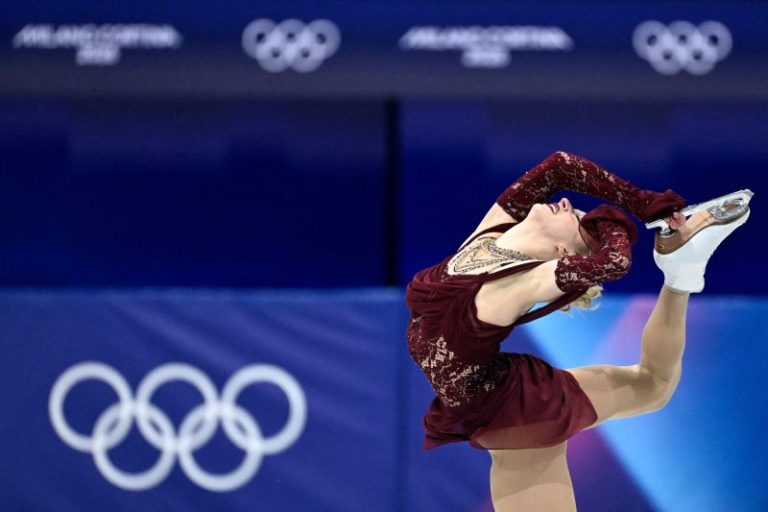
Already a gold medalist in the figure skating team event, Alysa Liu has a chance to add to the haul by taking home another piece of hardware in the all-important women’s singles. After the short program, she’s in position to do so, standing in third place behind the Japanese pair of Ami Nakai and Kaori Sakamoto.

Yet that’s not the top prize on Liu’s mind.

‘I just really want to be invited to the Olympic Gala, so I’m just putting it out there,” she said. ‘I have a really cool gala program that I’m working on, and it’s basically done. I have a dress for it and everything. I just got it today. So I’m thinking about it.’

OK, what about a medal?

“A medal?” Liu chuckles. “I don’t need a medal. I just need to be here, and I just need to be present. And I need people to see what I do next.”

While that’s all fine and dandy for Liu, not everyone else in U.S. figure skating is feeling the same way. They desperately need her to be on the podium.

During a night billed as the grand reveal of the ‘Blade Angels,’ Liu is the only one still flying. Tapping into the emotions of her ‘Promise’ program, she shined on the stage, capturing the audience’s hearts. 

She knew she did great when she was done, and almost couldn’t believe it. Her coaches Phillip Digugliemo and Massimo Scali were off the rink hugging, high-fiving and jumping for joy. The score reflected the outing, with Liu earning a season-best 76.59. 

The 20-year-old was the first U.S. skater to go, but the fellow Americans couldn’t replicate. Isabeau Levito was solid, but got pushed to eighth place after the Japanese skaters powered their way up the leaderboards. Amber Glenn had an impeccable start with the triple Axel and looked like she would be joining Liu up on the leaderboard.

Then the dreaded triple loop that wasn’t. Judges ruled it an invalid element, a devastating blow to the potential score Glenn could’ve received. She knew what happened, and understood the agony of ending up in 13th place. 

All three American women were considered possible medal contenders. Glenn is likely too far behind to get close to the podium, and while Levito is closer, the gap is still significant. 

Heading into the free skate, Liu is really the only hope left for the U.S.

Coming into the Winter Olympics, there was a belief the U.S. could end up winning gold in three of the four disciplines. After it opened the team event with a win, the possibility of four golds seemed in reach. There was also talk of an American sweep of women’s medals.

Now nearly two weeks later, it may end up being the only gold U.S. figure skating gets. Madison Chock and Evan Bates controversially settled for silver in ice dance and Ilia Malinin’s tough free skate resulted in no medal in men’s singles. The pairs did well but nowhere near medal contention.

The U.S. needs to salvage this trip and end with a women’s medal. Gold is preferred, but Liu has a tough challenge going against Nakai and Sakamoto. You also can’t forget the other Japanese skater Mone Chiba, who is in fourth place. If Liu holds her own, she can hang. 

The doomsday scenario is if Liu doesn’t medal – and that could mean a Japan sweep. That could also mean Russian skater Adeliia Petrosian, in fifth, getting on the podium as an Individual Neutral Athlete — what would be the final nail in the coffin for the U.S. hopes.

Not only that, but no medal continues a drought of no U.S. women’s singles medalist the past 20 years, already its longest in Olympic history.

No pressure, right? Well, Liu isn’t feeling it. 

‘I do have a new dress for the free skate, so I’m really excited for that,” she said.

Some might find the nonchalant attitude concerning, but remember this is who Liu is, and honestly, what makes her great. She skates because she loves it and has fun doing it. Her world-class talent is just a bonus.

Maybe it will help, because Team USA needs her to save the Olympics.

This post appeared first on USA TODAY

He walked into the place as players were filing out, beginning the buildout as they were pulling up stakes.

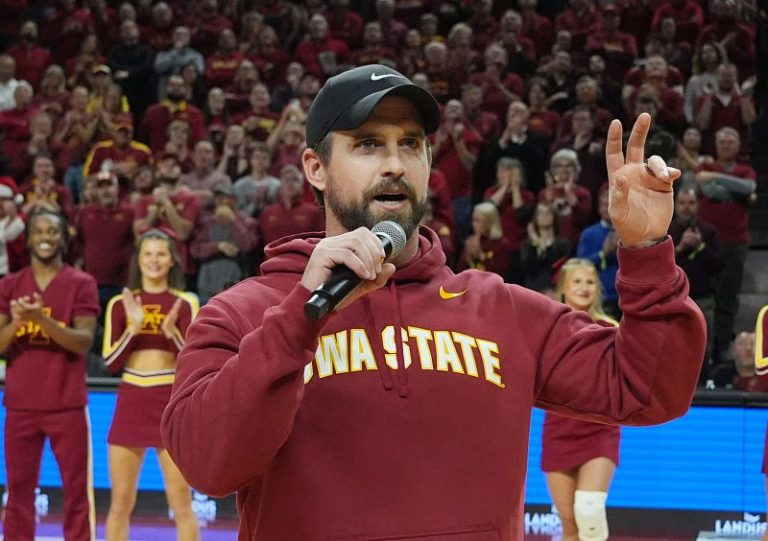
By the time the whirlwind of player procurement ended at Iowa State for new coach Jimmy Rogers, there were 81 players on the current roster that weren’t part of the program a season ago.

That’s 81 of 105 players.

“It’s college football now,” Rogers says. “It’s speed dating.”

But a strange thing happened during that rushed roster buildout, one that probably shouldn’t be odd at all considering the source. The outgoing coach and his replacement spoke at length — while many of the more than 50 players from the 2025 roster eventually hit the transfer portal.

They spoke of player strengths and weaknesses, and floors and ceilings. They spoke of priorities and projects. 

Matt Campbell, whose successful coaching career at Iowa State was equal parts winning and loyalty to the university and city he loved for a decade, couldn’t walk away and watch it crumble after taking the Penn State job.

So he went over the roster with Rogers, and did his best to help find some continuity. And this was after Campbell took a whopping 23 I-State players with him to Penn State.

If that shocks you, so should this: Rogers did the same thing when he left South Dakota State after the 2024 season for his first FBS job at Washington State — and after a group of players followed him from SDSU to Wazzu. 

There’s no hard feelings, just stone-cold realities. It’s a cutthroat, hired-to-be-fired business, so why make it more difficult than it should be? 

Surely this kind of coaching camaraderie happens all the time at the Power conference level. Or never at all.

“Had a really great conversation with the staff that left,” Rogers said. “No hard feelings on my end for the players that left with them. They want to play for their coach. It’s where we are in this sport. You love them while you’ve got them, and and wish them the best as things come their way.”

Then get down to the business of roster building. 

For starters, the move to Ames left Rogers and his staff — many of whom worked with Rogers at South Dakota State when they won the national title in 2022 (Rogers was defensive coordinator) and again in 2023 (head coach) — in a familiar recruiting territory. They knew the geographic footprint, they knew the high school coaches, they knew transfer portal players because they recruited many to SDSU.

But that doesn’t make the 24-hour process any easier. No matter what Rogers did with high school recruits, the foundation of the buildout would be the transfer portal and the quick interview process. 

So while they’re recruiting a player in one room, another player entered the portal from another. While they felt good about a handful of these players from the portal, a few of those just won’t cut it.

“You have to be willing to let talented players walk if they don’t fit with your vision,” Rogers said. “There were numerous players we walked away from because I didn’t have the best feeling in my stomach.”

So they kept grinding and kept pushing, from the day Rogers was hired on Dec. 5 (two days after the 72-hour early high school signing period began), to the day the transfer portal opened (Jan. 2) and long into February. 

They watched video, and graded game tape. They made calls to former coaches, trying to glean anything that could help make critical decisions. 

There’s is no grace period in college football. It’s now or never, every single season.

No one cares the greatest coach in the history of the program just walked out the door with his starting quarterback, top four receivers, leading rusher, top four tacklers and four offensive linemen from a team that lost three one-possession games in a four-loss season.

They want to know what you’re going to do — right now — to make it even better than the guy before. 

By the time the nearly 10-week controlled chaos was complete, Iowa State signed 28 freshmen (including eight early enrollees) and 53 players from the portal. Add that to the 21 scholarship players who stayed, and you’re three players under the NCAA limit of 105. 

Rogers pulled off a near identical flip at Washington State last season, and won six games — and did it with almost no ties to high school coaches in the Northwest and the reality of recruiting portal players to a program without a conference home.

The Cougars lost to College Football Playoff teams Ole Miss and James Madison by a combined seven points, and lost to Virginia by two and Oregon State by three.

That’s a handful of plays from 10 wins in less than one season of transition on The Palouse.

Not long after he completed his Iowa State rebuild, after he and his staff began preparing for spring practice, he marveled at how quickly this patchwork group had bonded. They like each other, they like their environment.

Then Rogers read an early breakdown of the Big 12 race in 2026. 

“They had us last out of 16 teams,” he said. 

Imagine that, a coach who has never had a losing season as an assistant or head coach. Who has a 33-9 career record, including 6-1 in FCS playoffs.

A coach who, as a player, has never been part of a losing team. His Hamilton High School team in Arizona won 58 of 61 games, and his South Dakota State teams not only didn’t have a losing season, they reached the FCS playoffs for the first time in 30 years in his senior season of 2009.

So yeah, he knows how to win. 

“I can promise you,” Rogers said, “We won’t finish 16th.”

No hard feelings, just stone-cold realities.

This post appeared first on USA TODAY

The NHL draft is a fluid process. 

Nothing ever really stays the same, and from team to team, opinions on players vary widely. 

There is a group of players every year that rise up boards, however. This year, that ranges from players who have put themselves in the top-10 conversation to prospects who have proven they are worth consideration in the first round. 

Prospects can rise up draft lists because of elite-level play or a physical tool kit that oozes potential. A prospect improving through the latter half of the season tantalizes NHL teams looking to select the hot hand

Let’s dive into 10 of the names who are rising up the draft boards.

10 NHL draft risers

Jukurit (Finland) defenseman Alberts Smits

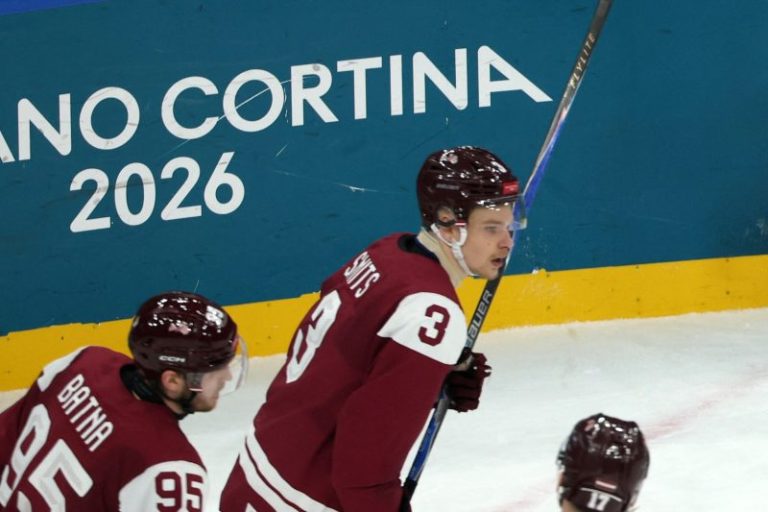
It’s been said a million times at this point, but the rise of Alberts Smits has been impressive beyond belief. He’s the closest thing to Moritz Seider in his draft year, considering he’s a big, mobile defender who showcases two-way dominance at every level. Smits could be a legitimate top-five prospect in this draft class after starting the year as a potentially intriguing prospect going outside of the first round. He had two points in four games for Latvia at the Olympics.

Djurgarden (Sweden) center Viggo Bjorck

If Bjorck hadn’t proven over the last two months that he’s a legitimate center prospect, he probably would have faced a much tougher climb up draft boards. Bjorck was a very reliable center at the world juniors and has been a top-six center in the Swedish League. In a weak year for centers, he’s becoming a topic of conversation among the top pivots in the class.

Boston University (NCAA) left wing Oscar Hemming

After not playing hockey for the first few months of the season, Hemming joined the Boston University Terriers and immediately started to tear it up. Hemming has brought the scoring touch he’s been known for, along with a physical edge. His pace has been immediately noticeable against college competition, and his eight points in 12 games have been well above expectations. 

Peterborough (OHL) left wing Adam Novotny

Novotny’s impressive transition ability, dual-threat offensive game and sound two-way play have taken a bit to garner recognition, but he has started to show up in the top 20 on many draft boards. Novotny is a well-rounded player who impressed at the world juniors despite only recording three assists. He may not have the offensive upside of some players around the top half of the first round, but he has a very clear floor to build on. 

U.S. NTDP (USHL) left wing Wyatt Cullen

An impressive USHL prospects game helped get more attention on him, but Cullen has been a catalyst offensively for the USA Hockey National Team Development Program. His speed and skill make him a gamebreaker at times. The NTDP doesn’t have many true difference-makers, but Cullen has emerged throughout this season. His scoring totals aren’t quite as high as we are used to seeing in the top NTDP players, but he paces the squad this year. 

Prince George (WHL) defenseman Carson Carels

It was impressive enough that Carels made the world junior squad for Team Canada, but he has shown a well-rounded game in the WHL. He’s physically mature and shows a willingness to get involved physically along the boards. Carels isn’t a silky smooth puck-mover, but he’s a rock-solid two-way player who is showing himself capable of more as the season progresses. 

Quebec (QMJHL) center Maddox Dagenais

Dagenais is a big center with a physical edge and a willingness to play simple hockey. He has been throwing big reverse hits, getting in on the forecheck and playing dump-and-chase hockey while attacking the net front once he has possession in the offensive zone. Dagenais plays the game like an NHLer in a lot of ways, which isn’t typical coming out of the QMJHL. With so few centers in this year’s class, he could easily fly up boards.

Miami (NCAA) center Ilya Morozov

Last year, Morozov had a perfectly good season in the USHL. He was a solid forward who showed flashes of skill. When he got to the NCAA, expectations were fairly low, given he is one of the youngest players in the draft class and the youngest in college hockey. That said, he’s been a top power-play threat, a penalty-killer and a top-six center consistently throughout this season. Although he’s not playing the highest level of competition, he’s been excelling at every turn. 

Lulea (Sweden) center Casper Juustovaara Karlsson

There are very few players who play with the edge, the motor and the relentless pace of Casper Juustovaara Karlsson. The undersized forward plays north-south hockey, driving the net. He doesn’t shy away from physical play either and oftentimes invites it. Not every team will be able to get by his 5-foot-9 size, but if they can, they’ll get one of the hardest workers in the draft.

London (OHL) left wing Jaxon Cover

After building up his skill level and creativity while dominating the roller hockey circuits, Cover made the jump to ice hockey full-time, and he’s one of the London Knights’ scoring leaders. Cover is a highly skilled yet very raw prospect who has only been playing ice hockey for about half a decade. With the growth he’s shown already, the sky is the limit for the silky-skilled left winger.

This post appeared first on USA TODAY

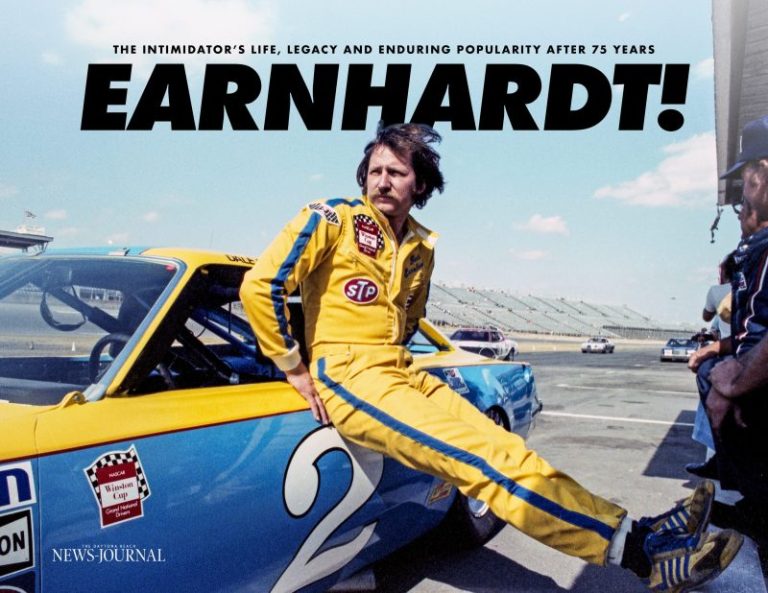
Twenty-five years ago — on Feb. 18, 2001 — the Man in Black suffered his tragic fate on the final lap of the Daytona 500. The sport of stock car racing has never been the same.

Now, you can remind yourself and also show others why generations of NASCAR fans consider Dale Earnhardt to be the great racer of all time. The Daytona Beach News-Journal has crafted two tributes to the Intimidator, who would have turned 75 in April.   

Buy our Earnhardt tribute book now!

The second is a special newspaper edition that documents Earnhardt’s storied career and enduring legacy.

Buy our Earnhardt commemorative edition!

At 160 pages, the hardcover book provides flag-to-flag coverage of  Earnhardt’s long run as NASCAR’s leading man, with tons of classic photos and plenty of stories — old and new.

The special edition — with the big headline of LEGEND FOREVER — only costs $10 (plus shipping and handling) through the USA TODAY Store. The eight-page edition will be printed on heavier stock and will not be sold in stores. It includes stunning photos and a commemorative page print. Order at onlinestore.usatoday.com and search “Earnhardt.”

The hardcover book and sturdy edition will make great gifts for the racing fans in your life. And because Moms, Dads and Grads season will be upon us soon, why not check something off the to-do list early, eh?

Order Dale Earnhardt tribute book now! Order our Earnhardt commemorative edition!

A few copies also remain of “High Banks & Heroes: 65 years at Daytona International Speedway,” a News-Journal hardcover book published in 2024. It chronicles the first 65 years of the Great American Race and also details, in words and pictures, the earlier racing days in Daytona on the sands of the World’s Most Famous Beach, as well as the clearing of ground and building of the speedway. Order “High Banks & Heroes” at Daytona.PictorialBook.com. 

Buy our Daytona 500 collector’s book!

Contact Gene Myers at gmyers@usatodayco.com. Check out books and page prints from the USA TODAY Network — includingthe Florida Gators’ basketball championship, the Florida Panthers’ Stanley Cup and Lee Corso, the soul of college football. Also available are Coach Steve’s youth sports survival guide anda book marking100 years of the Grand Ole Opry.

This post appeared first on USA TODAY

If there’s an American Olympic athlete who can relate to what Ilia Malinin went through on Friday, Feb. 13, it would be Simone Biles.

Malinin — nicknamed ‘The Quad God’ — entered the 2026 Milano Cortina Winter Olympics as the favorite in the men’s figure skating competition — he was a two-time reigning world champion and four-time U.S. national champion. But, there’s a different level of pressure to perform on the Olympic stage. Malinin’s long program turned into a nightmare, and the skater finished outside of the medals in eighth place.

At the Tokyo Olympics in 2021, Biles — a seven-time Olympic gold medalist — entered those Games with expectations to win five gold medals, only to struggle with the ‘twisties’ and withdraw from some events. She went home with silver (team event) and bronze (balance beam) medals.

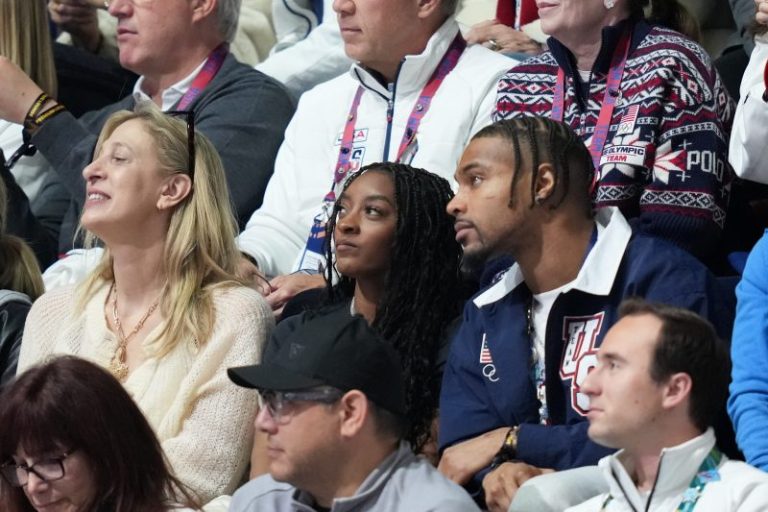
Biles was in attendance at Milano Ice Skating Arena for Malinin’s disappointing long program on Feb. 13, after which Malinin admitted that he ‘was not ready to handle’ the Olympic pressure.

In the aftermath of Malinin’s upsetting performance, Biles was among a number of notable athletes who reached out to him, and the two spoke on Tuesday, Feb. 17.

‘Just for someone to validate his feelings and to know we’ve gone through the same things, but you can still come out on top,’ Biles told Olympics.com. ‘While I was telling him some of what I thought he might be going through or how to move forward from this, he was like, ‘Exactly this. Exactly.’ He was like, ‘You finally just said it.”

Malinin had a seemingly comfortable five-point lead after the short program, but fell twice and did not fully complete other elements of his difficult long program.

‘I was really worried about how his mental health was going to be,” Biles told Olympics.com. ‘When you’re expected to skate a performance of your lifetime and you don’t deliver, I worry how that affects his mental (health) and how the world is going to view that.

‘I’ve been through that firsthand and so I really went into protection mode.’

This post appeared first on USA TODAY

Milan — American hopes were sky high coming into the Olympic women’s figure skating competition. Could there be a U.S. sweep of the medals? Would the 20-year U.S. medal drought finally end? Who would be the breakout star among the trio known on social media as the Blade Angels: Amber Glenn, Alysa Liu and Isabeau Levito?

Then they all skated the short program Tuesday night, and two of the ‘Angels’ fell back to earth, becoming so upset they didn’t stop to speak to waiting journalists — in stark contrast with how Ilia Malinin handled his horrible long program Friday night.

Liu, 20, the reigning world champion, was the one who did answer reporters’ questions after a terrific short program that landed her in third place, a perfect position for her going into Thursday’s deciding long program. 

‘It just humbles me so much and I’m just really grateful for it all, the good and the bad,” she said. ‘I want to keep growing. I just want to keep experiencing new things.’

Levito, 18, also skated quite well in her first appearance in these Games but finished in eighth place due to the plethora of well-skated programs ahead of her.

But Glenn, the reigning three-time U.S. champion, made a massive mistake in her short program, popping her planned triple loop into a double, which then received no points because the jump must be a triple, dropping her into 13th place overall. That happened after she landed the best triple axel of the evening, which made her error all the more devastating. 

Glenn, 26, broke into tears when she finished her program and was doubled over, crying, as she received her scores. A U.S. Figure Skating spokesperson then said Glenn would not be speaking to reporters. Meanwhile, Levito just walked by the assembled U.S. journalists without stopping for reasons unknown.

While sadness enveloped the American trio, there was nothing but joy for the incredibly deep Japanese team. Ami Nakai, an entertaining 17-year-old with a triple axel to die for, won the short program with 78.71 points, just ahead of veteran countrywoman Kaori Sakamoto, the three-time world champion and 2022 Olympic bronze medalist, who finished with 77.23. Liu was next with 76.59 points, followed by the third member of the Japanese team, Mone Chiba with 74.00. If anyone is sweeping the medals in this event, it’s Japan. 

Meanwhile, the fallout for the Americans is clear: With the quality of skaters ahead of them, both Levito and Glenn are all but out of the medal hunt. But Liu? She’s right where she wants to be. 

This post appeared first on USA TODAY

With NBA commissioner Adam Silver fining teams for tanking and making statements about repercussions, there has been a lot of talk in league circles about the process and strategy of tanking its effectiveness and fairness.

The Utah Jazz received a $500,000 fine and the Indiana Pacers got a $100,000 fine for recent game management and roster decisions, the league announced on Feb. 12.

Tanking, in a nutshell, is strategically and effectively losing games through playing or not playing players that can help win. In the long run, the hope is to position oneself in the draft and in free agency to improve the team long term.

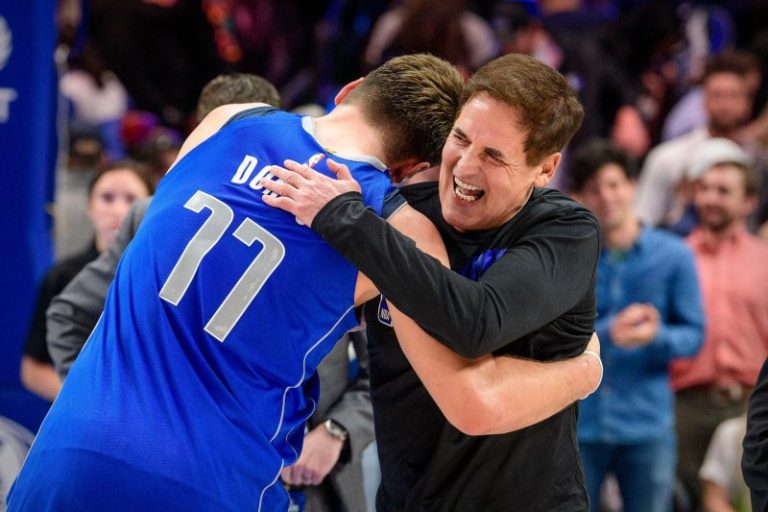
One of the latest sports figures to partake in the conversation was Dallas Mavericks minority owner and basketball advisor Mark Cuban, who took to social media to express his take.

‘The NBA has [quite] been misguided thinking that fans want to see their teams compete every night with a chance to win. It’s never been that way that way,’ Cuban wrote. ‘When I got into the NBA, they thought they were in the basketball business. They aren’t.’

‘They are in the business of creating experiences for fans. Few can remember the score from the last game they saw or went to. They can’t remember the dunks or shots. What they remember is who they were with. Their family, friends, a date. That’s what makes the experience special.’

Cuban, the Mavericks’ majority owner for 23 years and now minority owner, said that fans understand when their team isn’t good. What fans prioritize more is hope, he implied.

‘Fans know their team can’t win every game. They know only one team can win a ring. What fan that care about their team’s record want is hope. Hope they will get better and have a chance to compete for the playoffs and then maybe a ring,’ Cuban wrote. ‘The one way to get closer to that is via the draft. And trades. And cap room. You have a better chance of improving via all 3, when you tank.’

Did Mark Cuban, Mavericks lose intentionally?

Tanking happens often in the NBA and it has for a better part of the last two decades. At least Cuban said so on X.

He also added that fans ‘appreciated it’ whenever they would willfully lose games.

‘We didn’t tank often. Only a few times over 23 years, but when we did, our fans appreciated it. And it got us to where we could improve, trade up to get Luka [Doncic] and improve our team,’ Cuban wrote on X.

Cuban and the Mavericks acquired Doncic via a trade with the Atlanta Hawks, who selected Doncic with the third overall pick in the 2018 NBA Draft, for Trae Young, who Dallas chose at the fifth pick, and a protected future first-round pick.

Positioning themselves for that pick, they finished the previous season with a 24–58 record, which included a 3-15 start through their first 18 games, and finished the season winning just two of 14 games.

In the 2025 NBA Draft, the Mavericks received the No. 1 pick, selecting Cooper Flagg out of Duke.

During the 2024-25 season, the Mavericks sent Doncic, along with Maxi Kleber and Markieff Morris, to the Los Angeles Lakers in a controversial blockbuster trade in return for Anthony Davis, Max Christie and a first-round pick.

Dallas finished the 2024-25 season with a 39-43 record, losing in a postseason play-in qualification game to the Memphis Grizzlies.

The Mavericks became the second straight team, after the Hawks, to qualify for postseason play and to receive the first overall pick despite only having a 1.8% chance to win the NBA draft lottery.

The bottom NBA standings in the 2025-26 season

The Sacramento Kings have the worst record in the league at 12-44, just above them are the Washington Wizards at 14-39. Here are the bottom ten teams in the NBA standings through the All-Star break in the 2025-26 season.

Sacramento Kings, 12-44
Washington Wizards, 14-39
New Orleans Pelicans,15-41
Indiana Pacers, 15-40
Brooklyn Nets,15-38
Utah Jazz, 18-38
Dallas Mavericks, 19-35
Memphis Grizzlies, 20-33
Milwaukee Bucks, 23-30
Chicago Bulls, 24-31

Tank-a-thon predicts 2026 NBA Draft through All-Star break

The following order in the 2026 NBA Draft, according to Tankathon.com, predicts the Kings with the No. 1 pick and the Wizards at No. 2.

The Pelicans would have the No. 3 pick but it goes to the Hawks after a they acquired an unprotected 2026 first-round pick from New Orleans during the 2025 NBA Draft as part of a deal for the 13th pick, which was Derik Queen. The Hawks secured the right to the most favorable 2026 first-round pick between the Pelicans and the Bucks.

Here’s the hypothetical order of the 2026 NBA Draft as of Feb. 17, according to Tankathon.com:

No. 1: Sacramento Kings
No. 2: Washington Wizards
No. 3: New Orleans Pelicans (traded to Hawks)
No. 4: Indiana Pacers
No. 5: Brooklyn Nets
No. 6: Utah Jazz
No. 7: Dallas Mavericks
No. 8: Memphis Grizzlies
No. 9: Milwaukee Bucks
No. 10: Chicago Bulls

Cuban: Bigger issue in NBA than tanking

Cuban stands by that tanking is one of least of the NBA’s concerns, or should be. Rather he insisted that the NBA should focus on game attendance.

‘The NBA should worry more about fan experience than tanking,’ Cuban wrote on X. ‘It should worry more about pricing fans out of games than tanking. You know who cares the least about tanking , a parent who cant afford to bring their three kids to a game and buy their kids a jersey of their [favorite] player. Tanking isn’t the issue. Affordability and quality of game presentation are.’

The average cost for a family of four to attend an NBA game during the 2025-26 season is $277.65 for the cheapest available tickets, a parking spot, two beers, two sodas and four hot dogs, according to Bookies.com.

This post appeared first on USA TODAY

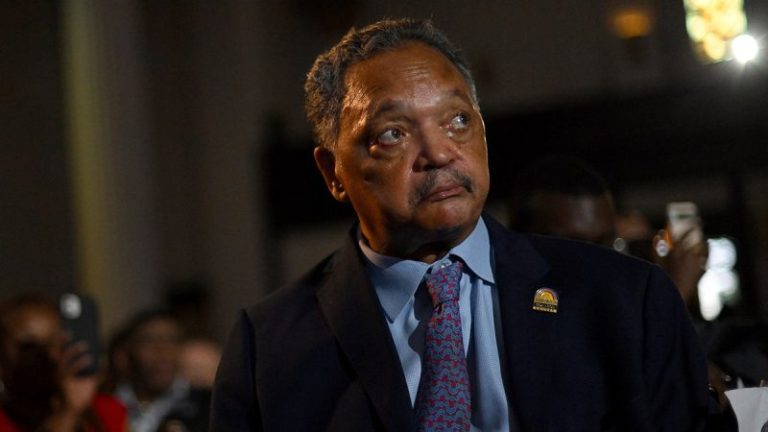
Vice President JD Vance, former Vice President Kamala Harris and former President Barack Obama were among the prominent political figures who issued statements following the death of Rev. Jesse Jackson Sr. The civil rights leader and two-time Democratic presidential primary candidate was 84.

Vance indicated that one of his family members voted for Jackson in the 1988 Democratic presidential primary and for Trump in the 2016 Republican presidential primary.

‘I have a close family member who voted in two presidential primaries in her entire life. Donald Trump in 2016 and Jesse Jackson in 1988,’ Vance wrote in a post on X. ‘RIP Jesse Jackson.’

Former Vice President Kamala Harris recalled getting positive reactions from others when she had a ‘Jesse Jackson for President’ bumper sticker on her car when she was a law student.

‘As a young law student, I would drive back and forth from Oakland, where I lived, to San Francisco, where I went to school. I had a bumper sticker in the back window of my car that read: ‘Jesse Jackson for President.’ As I would drive across the Bay Bridge, you would not believe how people from every walk of life would give me a thumbs up or honk of support. They were small interactions, but they exemplified Reverend Jackson’s life work — lifting up the dignity of working people, building community and coalitions, and strengthening our democracy and nation,’ she noted in a post on X.

‘I was proud to partner with and learn from him on this work throughout my career, and I am so grateful for the time we spent together this January. Reverend Jackson was a selfless leader, mentor, and friend to me and so many others,’ she wrote.

Former President Barack Obama noted in a statement that he and former first lady Michelle Obama ‘were deeply saddened to hear about the passing of a true giant, the Reverend Jesse Jackson.’

‘Michelle got her first glimpse of political organizing at the Jacksons’ kitchen table when she was a teenager. And in his two historic runs for president, he laid the foundation for my own campaign to the highest office of the land,’ Obama noted. ‘Michelle and I will always be grateful for Jesse’s lifetime of service, and the friendship our families share.’

This post appeared first on FOX NEWS