Archive

2026

Browsing

Ukraine is racing to reinforce its air defenses as a brief pause in Russian strikes on Kyiv and other cities approaches its expiration, and military and diplomatic experts warn the move may do little to change conditions on the battlefield and could ultimately strengthen Moscow’s negotiating position.

Earlier Friday, President Donald Trump said at the White House, ‘I think we’re getting very close to getting a settlement,’ expressing optimism about the upcoming Russia-Ukraine talks. ‘Zelenskyy and Putin hate each other, and it makes it very difficult, but I think we have a good chance of getting it settled.’

The Kremlin said President Vladimir Putin agreed to a personal request from Trump to halt airstrikes on Kyiv until Feb. 1 to create what it described as favorable conditions for negotiations. Ukrainian officials stressed there is no formal ceasefire.

As temperatures in Kyiv are expected to plunge to minus-26 degrees Celsius beginning Sunday, President Volodymyr Zelenskyy said Ukraine is moving to strengthen short-range air defenses against drones to protect frontline cities in the south and northeast.

‘Protection against Russian drones must be reinforced in our cities, such as Kherson and Nikopol, as well as in the border communities of the Sumy region, where the Russians have essentially set up an ongoing ‘safari’ against civilians,’ Zelenskyy said on Telegram.

Despite the pause, Russian lawmakers and regional leaders have publicly urged escalation. Russian parliament speaker Vyacheslav Volodin said deputies are calling for the use of more powerful ‘weapons of retribution,’ while Chechen leader Ramzan Kadyrov said he opposed negotiations altogether.

Against that backdrop, experts told Fox News Digital the pause appears far more symbolic than transformative.

Vice Adm. Robert S. Harward, a retired Navy SEAL and deputy commander of U.S. Central Command, said the halt in strikes reflects political signaling rather than a military shift.

‘It’s symbolic in the sense of the dialogue and where we are in the negotiations,’ Harward told Fox News Digital. ‘President Trump wants to illustrate to the U.S. that his relationship with Putin delivers results. This is a validation of that relationship, which could be an indicator of where the overall negotiations are on ending the war.’

Carrie Filipetti, executive director of the Vandenberg Coalition and a former senior State Department and U.S. Mission to the United Nations official, said Russia’s agreement should not be misread as a move toward peace.

‘While I am certain that Ukrainian civilians welcome any brief pause, they also aren’t holding their breath because Putin’s war machine will not stop until his calculus is changed on the risks of continuing his war,’ Filipetti said.

She added that the short duration of the pause leaves Ukraine exposed.

‘Given how short the pause is and the duplicity of Russia saying it agreed to a week-long pause that expires in two days, this does not meaningfully change any conditions on the battlefield,’ she said.

Harward said Ukraine could face diplomatic consequences once the pause expires.

‘The risk to Ukraine is that this further weakens and isolates their role and position in the negotiations,’ he said.

Zelenskyy has also warned that Ukraine’s ability to defend civilians has been strained by delays in Western funding. He said European allies delayed payments under the PURL weapons purchase program, leaving Ukraine without Patriot air defense missiles ahead of recent Russian strikes that knocked out power across parts of Kyiv.

‘This is a critical issue for protecting civilians and Ukrainian cities and Ukraine’s energy infrastructure during the brutally cold winter months,’ Filipetti said. ‘As President Zelenskyy has said, there will be no electricity and therefore no heat for civilians if they don’t have enough Patriot missiles to defend against Russia’s ballistic missiles.’

Harward noted that the problem extends beyond Ukraine. 

‘Air Defense has been in high demand globally, considering the threats from Russia and China,’ he said. ‘Resources, expenses and the increased time to deliver and implement the capabilities add to the challenge.’

On whether the pause could open the door to broader de-escalation, both experts expressed caution.

‘This tactical pause only serves to reinforce Russia’s negotiating position,’ Harward said. ‘Putin is showing the worldthat he is willing to listen and respond. In return, he’ll want more support of his position and demands.’

‘Only time will tell,’ Filipetti said. ‘Diplomacy can always appear fruitless until there is a real deal. If this short pause, delivered by President Trump’s continued engagement and pressure on Putin, can be used to build additional progress in the trilateral talks, that would be a very positive outcome.’

Reuters contributed to this report.

This post appeared first on FOX NEWS

As the threat of a possible U.S. attack against Iran looms, President Donald Trump’s administration has announced additional sanctions targeting Iranian figures.

The Treasury Department announced Friday that its Office of Foreign Assets Control (OFAC) ‘took additional action against Iranian officials responsible for the regime’s brutal crackdown on its own people.’

‘Among the officials sanctioned today is Eskandar Momeni Kalagari, Iran’s minister of the interior who oversees the murderous Law Enforcement Forces of the Islamic Republic of Iran (LEF), a key entity responsible for the deaths of thousands of peaceful protesters,’ the department said.

‘OFAC also designated Babak Morteza Zanjani, a criminal Iranian investor who previously embezzled billions of dollars in Iranian oil revenue that rightfully belonged to the Iranian people and was never fully recovered. Freed from imprisonment in order to launder money for the regime, Zanjani has provided financial backing for major projects that support the Islamic Revolutionary Guard Corps (IRGC) and the Iranian regime more broadly.’

The Treasury Department also noted that OFAC designated two digital asset exchanges linked to Zanjani that ‘have processed large volumes of funds associated with IRGC-linked counterparties.’

The announcement comes as the Trump administration prepares for the possibility of military action against Iran.

Trump issued a saber-rattling Truth Social post Wednesday warning that the U.S. will attack if Iran does not negotiate a nuclear deal.

Trump suggested in a Truth Social post Wednesday that the U.S. could use force against Iran if a nuclear deal is not reached soon.

‘A massive Armada is heading to Iran. It is moving quickly, with great power, enthusiasm, and purpose. It is a larger fleet, headed by the great Aircraft Carrier Abraham Lincoln, than that sent to Venezuela. Like with Venezuela, it is, ready, willing, and able to rapidly fulfill its mission, with speed and violence, if necessary. Hopefully Iran will quickly ‘Come to the Table’ and negotiate a fair and equitable deal – NO NUCLEAR WEAPONS – one that is good for all parties,’ the president warned in a Truth Social post Wednesday.

The commander in chief has in recent days been supplied with an expanded list of possible military actions against Iran to inflict additional damage on the foreign nation’s nuclear and missile sites or weaken the Islamic Republic’s supreme leader, The New York Times reported on Thursday, citing U.S. officials.

The military options go further than those the president was previously mulling earlier this month to fulfill his pledge to stop the slaughter of protesters, officials reportedly said.

The current list of options includes the prospect of U.S. forces executing raids inside the nation of Iran, according to the Times, which indicated that the protests have been crushed.

This post appeared first on FOX NEWS

Israel announced Thursday that it will reopen the Rafah border crossing for people to travel between Gaza and Egypt for the first time since May 2024. 

Israel’s Coordinator for Government Activities in the Territories (COGAT), which oversees humanitarian and civil efforts in Gaza, said the crossing ‘will open this coming Sunday (February 1st) in both directions, for limited movement of people only.’ 

‘The return of residents from Egypt to the Gaza Strip will be permitted, in coordination with Egypt, for residents who left Gaza during the course of the war only, and only after prior security clearance by Israel,’ COGAT said. 

‘In addition to initial identification and screening at the Rafah Crossing by the European Union mission, an additional screening and identification process will be conducted at a designated corridor, operated by the defense establishment in an area under IDF control,’ it continued.

This will be the first opening of the Rafah crossing for people since Israel seized the area in May 2024, according to Reuters. Israeli forces captured the territory as part of an effort to prevent arms smuggling into Gaza by the terrorist group Hamas. 

In early 2025, there was an evacuation of medical patients along the route during a temporary ceasefire, The Associated Press reported.

Israeli Prime Minister Benjamin Netanyahu’s office had said Sunday that Israel agreed to a ‘limited reopening’ of the crossing under President Donald Trump’s 20-point peace plan.

‘As part of President Trump’s 20-point plan, Israel has agreed to a limited reopening of the Rafah Crossing for pedestrian passage only, subject to a full Israeli inspection mechanism,’ the Office of the Prime Minister of Israel wrote. 

The Prime Minister’s Office said the reopening was contingent on the return of all living hostages and what it described as a ‘100 percent effort’ by Hamas to locate and return the remains of all deceased hostages.

Israel on Monday then confirmed that the remains of Staff Sgt. Ran Gvili, the last Israeli hostage held in Gaza, have been recovered and returned home after 842 days. 

Fox News Digital’s Rachel Wolf and Ashley Carnahan contributed to this report. 

This post appeared first on FOX NEWS

Sen. Lindsey Graham, R-S.C., unloaded his frustrations with the latest iteration of a government funding package backed by President Donald Trump and laid out a stark warning to the top House Republican and the White House in the process. 

Graham is one of the few remaining holdouts blocking the Senate from moving on to a government funding package brokered by Trump and Senate Minority Leader Chuck Schumer, D-N.Y., as lawmakers race to beat the government funding deadline at midnight on Friday. 

The top Trump ally’s frustrations with the funding package have little to do with the president or the deal struck with Schumer. Much of his ire is directed at a provision tucked in by the House last week that would repeal a law that allows senators whose phone records were subpoenaed by former special counsel Jack Smith to sue for up to $500,000 per infraction. 

And Graham was not happy that House Speaker Mike Johnson, R-La., let the repeal slip through.

‘You could have called me about the $500,000,’ Graham said. ‘I’d be glad to work with you. You jammed me, Speaker Johnson. I won’t forget this. I got a lot of good friends in the House. If you think I’m going to give up on this, you really don’t know me.’

Graham has been a vocal proponent of that law, which was slipped into the last funding patch by Senate Majority Leader John Thune, R-S.D., with a green light from Schumer. 

He also turned his frustration on the White House.

‘I’ve been told the White House doesn’t like this, and I told the White House last night, ‘I don’t care if you like it or not.’ I literally texted my friends at the White House, ‘If I were you, I would not call me tonight.’’ 

‘And they didn’t call me,’ he continued. ‘I don’t work for the White House. They’re my political allies. I’m close to President Trump. I don’t work for him.’ 

Lawmakers on both sides of the aisle have charged that it’s a law designed to allow their colleagues to enrich themselves off the taxpayers’ dime, and tried on several occasions in the Senate to repeal it.

Graham is willing to lift his hold on the package if he gets a vote on expanding the number of people and organizations who were affected by Smith’s Arctic Frost probe that can sue, along with a vote on his legislation that would criminalize the conduct of officials who operate sanctuary cities. 

Several other lawmakers are demanding amendment votes, too, which Republican leaders are currently working to address. A positive sign, however, is that none appear to be demanding a guaranteed outcome.

This post appeared first on FOX NEWS

Former CNN host Don Lemon retained a high-priced attorney familiar with defending clients against the Trump administration following his arrest related to his involvement in a protest at a St. Paul, Minnesota, church.

Lemon is being represented by Abbe Lowell, an attorney well known for taking on cases where a prominent political figure needs legal help; most notably Hunter Biden.

Biden, the surviving son of former President Joe Biden, is Lowell’s most visible recent client. The younger Biden has been one of the Trump administration’s top foils, and Lowell guided the 55-year-old author, businessman and recovering addict through a web of legal problems largely centered in his home state of Delaware.

After Lemon was arrested in Los Angeles, where he was preparing to cover an awards show for his podcast, Lowell confirmed his client was taken into custody late Thursday and said that, as a journalist, his ‘constitutionally protected work in Minneapolis was no different than what he has always done.’

Lowell slammed the Justice Department for pursuing Lemon instead of federal immigration agents involved in law enforcement shootings of alleged agitators Renee Good and Alex Pretti in recent days.

‘This unprecedented attack on the First Amendment and transparent attempt to distract attention from the many crises facing this administration will not stand. Don will fight these charges vigorously and thoroughly in court.’

During Biden’s tax and gun-charge case, Lowell often spoke out pointedly in defense of his client.

‘Based on the facts and the law, if Hunter’s last name was anything other than Biden, the charges in Delaware, and now California, would not have been brought,’ Lowell said, while also accusing Delaware federal prosecutor David Weiss of bowing to pressure from the Republican Party in pursuing the case.

Amid a countersuit against Delaware computer repairman John Paul Mac Isaac, Lowell wrote to the Justice Departments in Washington and Dover, also calling for investigations into former New York City Mayor Rudy Giuliani and former Breitbart editor Steve Bannon over the laptop fiasco.

During scrutiny of Biden’s lucrative globe-trotting, Lowell depicted his client as the beloved remaining son of a doting father, saying that when ‘the President calls his son every day and it goes on the speakerphone, he says ‘hello’ to the people in the room. That is not an offense, that is nothing other than a loving father.’

Biden later, however, retained high-powered attorney and South Carolina State Sen. Dick Harpootlian, D-Charleston, in a separate defamation case against Overstock CEO Patrick Byrne. Harpootlian had just represented Low Country legal eagle–turned–convicted killer Richard ‘Alex’ Murdaugh.

Besides Biden and Lemon, Lowell has represented imprisoned former Sen. Robert Menendez Sr., D-N.J., during his 2017 corruption investigation that ended in a mistrial.

He also defended former Sen. John Edwards, the Democrats’ vice presidential nominee in 2004, as the scandal-plagued Carolinian fought allegations that he used $1 million in campaign donations to hide a mistress and child.

Then-Rep. Gary Condit, D-Calif., who was a person of interest in Chandra Levy’s disappearance; Federal Reserve Board Gov. Lisa Cook, who has been fighting attempted firing by the Trump administration; and lobbyist Jack Abramoff all counted Lowell as a legal defender.

He also represented first daughter Ivanka Trump and her husband, Jared Kushner, during a 2016 election-season probe into alleged Russian interference.

This post appeared first on FOX NEWS

The House of Representatives is preparing a rare weekend meeting as congressional leaders race against the clock on a partial government shutdown.

The House Rules Committee, which acts as a gatekeeper before most legislation sees a chamber-wide vote, is expected to meet on Sunday at 4 p.m. to consider a federal funding deal that is poised to pass the Senate on Friday.

It means the full House could vote on the bill as early as Monday, three days after Congress’ deadline to avert a shutdown.

The plans are still tentative and expected to be finalized ahead of a 4:30 p.m. House GOP strategy call on Friday afternoon, but they are a sign that Speaker Mike Johnson, R-La., is looking to move with urgency once the deal passes the Senate.

Senate Democrats walked away from a bipartisan deal to fully fund the federal government for the remainder of fiscal year (FY) 2026 amid fallout over President Donald Trump’s surge of federal law enforcement in Minneapolis.

Federal officers shot and killed two U.S. citizens in the Midwest city during separate demonstrations against Trump’s immigration crackdown. In response, Democrats threatened to hold up a massive federal funding bill that also includes dollars for the departments of War, Labor, Health and Human Services, Transportation and others unless funding for the Department of Homeland Security (DHS) were stripped out.

The deal reached would fund all but DHS through Sept. 30, while funding DHS with a two-week extension of current spending levels to give Congress time to hash out a compromise that would include stricter guardrails on immigration enforcement agencies under the department’s purview.

It rankled House Republicans all the way up to Johnson, who signaled he was not happy with the outcome but would work with his counterparts in the Senate to quickly end the expected shutdown.

‘I’ve been very consistent and insistent that they should take the House’s bills that we sent over and negotiated very carefully in bipartisan fashion, and pass them,’ Johnson told reporters on Friday. ‘We can work out decisions in the area of DHS, but we should not interrupt the funding of government in the meantime.’

A senior GOP aide close to House conservatives said the two-week stopgap for DHS was ‘crazy.’

‘That hands more leverage to Democrats to derail immigration enforcement, and we’d be right back here again in two weeks with more crazy demands from the radical Left,’ the aide told Fox News Digital.

Whether the legislation will survive the House Rules Committee remains to be seen.

Three members of the conservative House Freedom Caucus — Reps. Chip Roy, R-Texas, Ralph Norman, R-S.C., and Morgan Griffith, R-Va. — sit on the panel. Roy and Griffith have not said how they feel about the deal.

But Norman told Fox News Digital after details emerged on Thursday, ‘THERE IS NO RATIONAL REASON TO REMOVE DHS FROM THE APPROVAL PROCESS.’

Norman accused Democrats of trying to ‘demonize’ and ‘bludgeon’ DHS, adding, ‘IF THE DEMOCRATS WANT TO SHUT THE GOVERNMENT DOWN, ‘DO IT’!!’

This post appeared first on FOX NEWS

President Donald Trump said Friday that the United States has directly communicated expectations to Iran as pressure mounts for Tehran to accept a nuclear deal, even as Iranian officials publicly signal interest in talks.

Asked whether Iran faces a deadline to make a deal, Trump suggested the timeline already had been conveyed privately. 

‘Only they know for sure,’ he said, confirming when pressed that the message had been delivered directly to Iranian leaders.

Trump also tied the growing U.S. naval presence in the region explicitly to Iran, saying American warships ‘have to float someplace’ and ‘might as well float near Iran’ as Washington weighs its next steps.

Meanwhile, Iran is ready to discuss its nuclear program with the U.S. ‘on an equal footing,’ Iranian Foreign Minister Abbas Araghchi said Friday, as Washington dramatically ramps up military pressure in the Middle East amid growing doubts about Tehran’s willingness to accept verifiable limits on its nuclear ambitions.

The U.S. has long insisted Iran give up its ability to enrich uranium — the material used to build a nuclear weapon — while Iran maintains it has never pursued a bomb and says its nuclear program is intended for energy and civilian purposes.

Araghchi said no meeting was currently scheduled with U.S. officials, but left the door open to talks under specific conditions.

‘If the negotiations are fair and on an equal footing, the Islamic Republic of Iran is ready to participate,’ he said, adding that talks could not happen immediately. ‘Preparations are needed, both in terms of the form and subject of the discussions and the venue.’

U.S. and allied officials, however, remain deeply skeptical. 

Iran’s record under the 2015 nuclear deal — agreeing to stringent limits and international inspections only to later exceed enrichment caps and restrict monitoring — has fueled doubts about whether its latest overtures would translate into meaningful action.

That trust deficit was further strained in 2025, when diplomatic efforts unfolded alongside military action. 

In June 2025, the U.S. military joined Israel in striking three Iranian nuclear facilities — including the Fordo, Natanz and Isfahan sites — in an operation aimed at degrading Tehran’s nuclear capabilities even as indirect talks were underway. Iranian officials later cited the strikes as evidence that Washington was unwilling to negotiate in good faith.

But time may be running out for diplomacy. Trump warned Thursday that Iran must end its nuclear program and halt the killing of protesters or face the possibility of U.S. military action.

‘We have a lot of very big, very powerful ships sailing to Iran right now, and it would be great if we didn’t have to use them,’ Trump said.

The USS Abraham Lincoln, which arrived in the region at the end of January, is operating with a carrier strike group that includes multiple destroyers and air squadrons flying F-35C Lightning II jets, F/A-18E/F Super Hornets, EA-18G Growlers, E-2D Hawkeyes, CMV-22B Ospreys and MH-60R/S Seahawk helicopters.

Trump reinforced his message Wednesday on Truth Social, writing: ‘Hopefully Iran will quickly ‘Come to the Table’ and negotiate a fair and equitable deal – NO NUCLEAR WEAPONS.’

Tensions broke out once again at the start of January amid mass anti-government protests in Iran and a brutal crackdown resulting in thousands of deaths.

Trump envoy Steve Witkoff has called for an end to Iran’s nuclear program, the transfer of enriched uranium out of the country, limits on its missile program and an end to financial support for proxy groups such as Hezbollah, the Houthis and Hamas.

Iran has long denied seeking nuclear weapons — an assertion U.S. and Israeli officials continue to dispute, arguing Tehran’s enrichment advances and reduced cooperation with international inspectors have brought it closer than ever to a potential nuclear breakout.

This post appeared first on FOX NEWS

Spotting Matthew McConaughey at a Texas game is like playing ‘Where’s Waldo?’
Georgia football serves up feast in press box before a November home game.
Lee Corso enjoys a memorable hotdog after final ‘College GameDay’ appearance at Ohio State.

There comes a time in every sportswriter’s life when you realize life on the road is not all it’s cracked up to be.

For me, that time occurred several years ago.

After covering a night game at The Swamp and filing a couple of columns from the press box, I returned to my hotel in Jacksonville Beach, Florida, around 3 a.m.

As I entered the hotel room, I realized I was not alone.

A cockroach juicy enough to feed a family of four was waiting for me inside.

He was quick. I was quicker. RIP.

Anyway, I’m pleased to report I made it through this college football season without spotting any hotel room roaches, although I did smash a roach in an SEC press box after it fell from the ceiling and landed atop my work station.

The speedy critter probably could’ve written a better lede than I did that day, but I didn’t give him the chance. Splat! He didn’t make it to kickoff.

Other than a handful of flight delays, my top life-on-the-road complication occurred in Atlanta, where I got sealed out of my hotel room after the SEC championship game. With the door malfunctioning and my possessions trapped inside, a marvelous off-the-clock maintenance man came to my rescue and crowbarred the door open.

Enough about the lowlights, though. Here are my superlatives from my season’s travels that took me to 15 college football games:

Best game day atmosphere

Kyle Field is a college football mecca. It’s worth visiting on any game day. It’s particularly spectacular on a sunny December morning created for playoff football. As “POWER” played on the sound system and flames shot into the sky from the pyro machines, the Aggies ran out of the tunnel behind the south end zone, and the stadium shook.

As I wrote that day: The scene at Kyle Field set a high bar for heaven to clear.

Best pregame sight

Ohio State pregame beer die.

While creeping along the skinny streets toward Ohio Stadium, I soaked up scenes of tailgaters enjoying morning beverages on a gorgeous Week 1 Saturday in Columbus before Texas visited Ohio State. College football was back, and so were cold ones on game day.

As revelers played beer die games on front lawns, it gave me great hope for the future of our country when I saw several college-age students hoist a die high into the air, before it went splish-splash into a plastic cup. Drink!

I would’ve loved to have stopped and played a game, but duty called.

Best Friday hike

Natchez Trace delivers tranquility.

The day before a game, I try to find a scenic hike or walking trail in or around the city where I’m staying. Getting a few miles in on Friday makes me feel ever so slightly better about the calories I’ll pile up in the press box the next day.

One of my favorites to hit on a fall Friday is the Natchez Trace National Scenic Trail, just north of Tupelo, Mississippi. I park at the Chickasaw Village Site and set out from there. I logged more than three miles on a September visit this season, the day before covering LSU-Ole Miss.

Best Friday night out

Pool with Captain Picard.

I found myself in Austin on Halloween on a Friday night before covering Vanderbilt-Texas the next day.

I’m not a huge Halloween guy, and I didn’t pack a costume, but I couldn’t pass up the opportunity to see Austin in action.

I wanted nothing to do with Sixth Street on Halloween, so after enjoying some enchiladas for dinner at El Alma, just south of the Colorado River, I ventured to Frazier’s Long & Low for a beer, served by a bartender dressed as Poison Ivy. A man dressed as Captain Picard from ‘Star Trek: The Next Generation’ grabbed the barstool next to me and invited me to join him for a game of 8-ball.

We teamed up against another duo. I didn’t let down Captain Picard and sank a few shots. We smoothly cleared our balls off the table without too much trouble, but we failed to pocket the 8-ball, and our opponents stole the victory.

Runner-up finish: A stop at the Blue Canoe in Tupelo is mandatory when covering a Mississippi game. I paid my respects and enjoyed a burger and a brew the night before covering LSU-Ole Miss. As a band’s live music filled the establishment, I watched on TV while Virginia fans stormed the field following a Friday night overtime win against Florida State.

Best press box meal

Georgia serves a feast.

Georgia did it up right for its pregame press box meal before a mid-November game against Texas. The menu that night included roasted turkey with gravy, the best stuffing I’ve ever had, macaroni and cheese and green beans. Facing some tough caloric decisions, I skipped the Hawaiian roll, but I won’t deny grabbing a slice of pumpkin pie for dessert.

Some might say the pregame meal outperformed the game.

Brush with celebrity

Alright, alright, alright.

It’s not unusual to see Matthew McConaughey on the sideline before a Texas game, but I also brushed right past him in a hallway while I motored to the Longhorns’ postgame news conference.

McConaughey was graciously posing for a photo with a young Texas fan celebrating his birthday.

The birthday boy did not ask for a picture with me.

Strange but cool press box sighting

A legend enjoys a dog.

Lee Corso made his final “College GameDay” appearance before Texas-Ohio State, then made a stop at the press box, where I watched him eat a hot dog, including the bun, with a knife and fork. Respect.

As Costanza would say: How do you eat it? With your hands?

Blake Toppmeyer is the USA TODAY Network’s senior national college football columnist. Email him at BToppmeyer@gannett.com and follow him on X @btoppmeyer.

This post appeared first on USA TODAY

Lindsey Vonn injured her left knee in a crash just before the Milano Cortina Olympics.
Vonn stated on social media that she is consulting with doctors but has not ruled out competing.
The skier has a long history of significant injuries and subsequent comebacks throughout her career.

Lindsey Vonn is better equipped to come back from an injury than pretty much anyone else.

Vonn injured her left knee in a crash during the final downhill before the Milano Cortina Olympics on Jan. 30. She was able to get back up and ski down to the bottom of the course, but stopped several times to rest or check her knee.

In a social media post several hours after the crash, Vonn said she was still consulting with her doctors and having tests but is not ruling out competing at the Olympics. The Milano Cortina Games begin Feb. 6, and the downhill is Feb. 8.

‘This is a very difficult outcome one week before the Olympics … but if there’s one thing I know how to do, it’s a comeback,’ Vonn wrote.

Here’s a list of Vonn’s significant injuries throughout her career:

January 2019: Impact injury to peroneal nerve.

November 2018: Torn lateral collateral ligament and meniscus in left knee, three tibial plateau fractures from crash during training at Copper Mountain, Colorado.

November 2016: Fractured humerus in right arm from crash during training at Copper Mountain, Colorado.

August 2015: Broken ankle from crash during training in New Zealand.

February 2016: Multiple fractures in left knee from crash during World Cup super-G in Andorra.

December 2013: MCL sprain in right knee.

November 2013: Torn right ACL from crash in training at Copper Mountain, Colorado.

February 2013: Torn ACL and MCL in right knee and tibial plateau fracture in right leg following crash in super-G at world championships.

February 2010: Broken right pinkie from crash in giant slalom at Vancouver Olympics. (Where she’d previously won the downhill gold.)

December 2009: Microfractures in left forearm after crash during giant slalom in Lienz, Austria.

February 2009: Severed tendon in right thumb cutting open champagne bottle at world championships in Val d’Isère, France.

February 2007: Sprained right ACL after crash during training at the world championships in Åre, Sweden.

This post appeared first on USA TODAY
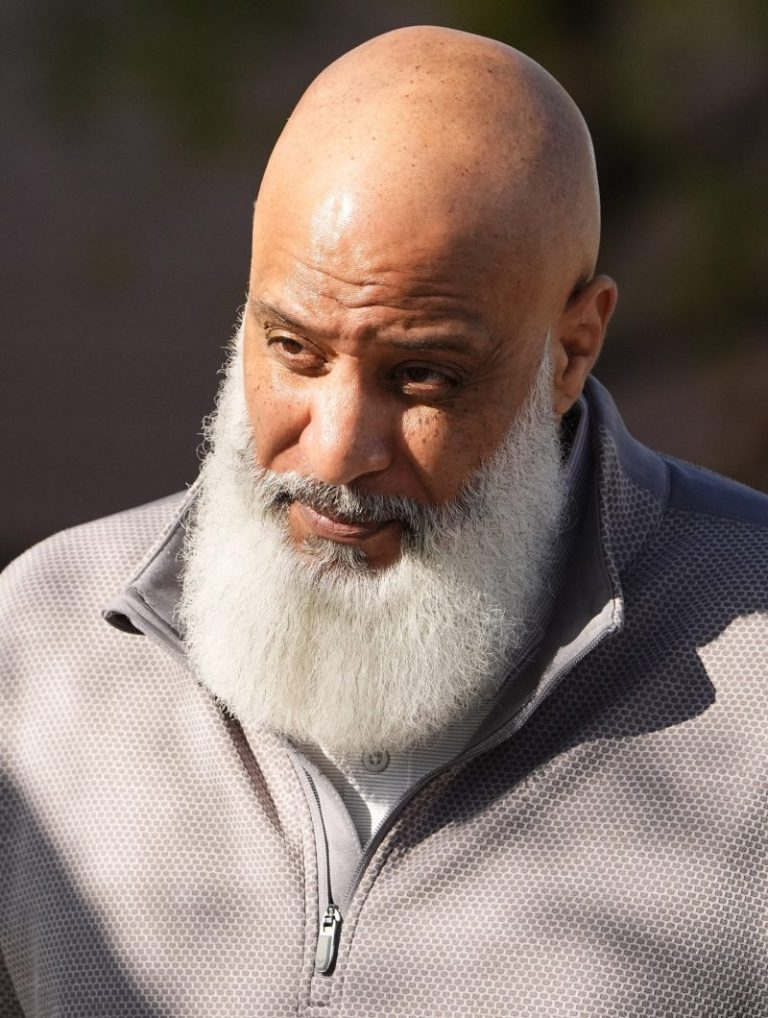
A new year will apparently not bring any less chaos to the Minnesota Twins.

Derek Falvey, chief baseball officer since 2016, and the Twins are mutually parting ways, the team announced Jan. 30, the latest twist in a saga that’s seen the club put up for sale, take on additional investors, strip-mine the active roster for parts at the 2025 trade deadline and fire manager Rocco Baldelli.

Falvey, 43, was promoted to president of baseball operations in 2019 and elevated to president of business operations in March 2025. They won three American League Central titles in his tenure, including a 101-win season in 2019, Baldelli’s first as manager.

Yet the Pohlad family, ‘after months of thoughtful consideration,’ announced in October 2024 it was aiming to sell the team. They pulled the club off the market in 2025 and announced they were seeking new investors; in December, the club announced the addition of three limited partners and that Tom Pohlad would take over as both the club’s control person, from his uncle Jim, and as head of their day-today operations from his brother Joe.

Given two months to reflect on these changes, Falvey and Tom Pohlad determined separation was the prudent move.

‘Following a series of thoughtful conversations with Tom that began after the ownership transition and progressed over the past few weeks, we both agreed this was the right time for us to part ways,’ Falvey said in a statement released by the club. ‘Ownership transitions naturally create moments for reflection and honest dialogue about leadership, vision, and how an organization wants to move forward.

‘Over the past several weeks we had those conversations openly and constructively and ultimately reached a shared understanding that this was the right step both for the organization and for me personally.’

Said Tom Pohlad: ‘We reached a shared understanding that the needs of the organization are evolving and that a leadership transition is the best way to move forward. I want to thank Derek for everything he has contributed to this organization. When he joined the Twins nine years ago, it was, in many ways, a watershed moment for this franchise. His leadership was transformational. He helped modernize every aspect of our baseball operations and led with strong values, intention, and purpose.

‘Derek created a culture grounded in learning and in the belief that organizations grow when people grow. Under his leadership, the Twins captured three division titles and made four postseason appearances. We are grateful for his dedication, his integrity, and the impact he made here.’

“While we value our foundation, our commitment to building a championship caliber organization requires decisiveness and urgency. We will immediately begin a search for a President of Business Operations who, along with General Manager Jeremy Zoll, will report to me.”

The Twins collapsed at the end of the 2024 season and failed to defend their Central title, then lost 92 games in 2025. At the trade deadline, the Twins dumped nearly a roster’s worth of salary and talent: Carlos Correa, five relievers, outfielder Harrison Bader, first baseman Ty France and utilityman Willi Castro were all traded.

This post appeared first on USA TODAY